QUICK START GUIDE TURBO HD SERIES DVR DS-72XXHGHI-SH DS-73XXHQHI-SH DS-90XXHQHI-SH
←
→
Page content transcription
If your browser does not render page correctly, please read the page content below
Quick Start Guide

                                                                                           Turbo HD Series DVR
                                                                                               DS-72xxHGHI-SH
                                                                                               DS-73xxHQHI-SH
                                                                                               DS-90xxHQHI-SH

     NOTE: For more information refer to the complete User Manual located on the CD-ROM

© 2015 Hikvision USA Inc. All rights reserved. Hikvision is a registered trademark of Hikvision Digital Technology Co., Ltd. in the US,
    Canada, and other countries. All other trademarks, service marks, and product or service names are    www.hikvision.com/en/us
                                                                                                             trademarks or registered
              trademarks of their respective owners. Product specifications and availability are subject to change without notice.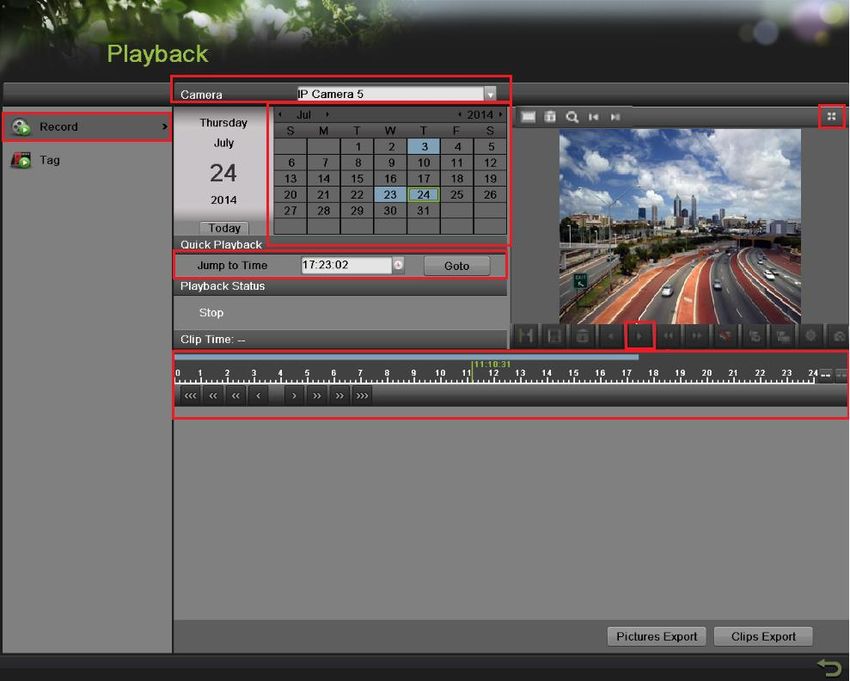
Contents
               1. Overview
               2. Device Activation
               3. Main Menu Layout
               4. Formatting the HDD
               5. Date and Time Setup
               6. Setting up Network Access
               7. Adding IP cameras
               8. Setting up Recording
               9. Configuring the Mobile APP
               10. Playing Back Recorded Video
               11. Making a Backup

     Connect a monitor and a USB mouse (supplied) to the DVR for configuration purposes.

1. OVERVIEW

                                 THE BOX CONTAINS:
                                         :

                                  USB Mouse           IR Remote                               Hard Drive Mounting
                DVR                                                            Power Cord
                                                (Batteries not included)                      Screws and Brackets

            Hard Drive      Hard Drive Cables   Rack Mount Ears            Quick Start      Manual/Software CD
           (Preinstalled)                        (not included in            Guide
                                                4-ch model box)

This Guide is compiled for the latest firmware versions. Upgrade the DVR firmware to the
latest version before proceeding. Also note, the CD may contain outdated manuals and software

For latest firmware, manuals, and software downloads visit: www.hikvision.com/en/us/download.asp

                                                                                             www.hikvision.com/en/us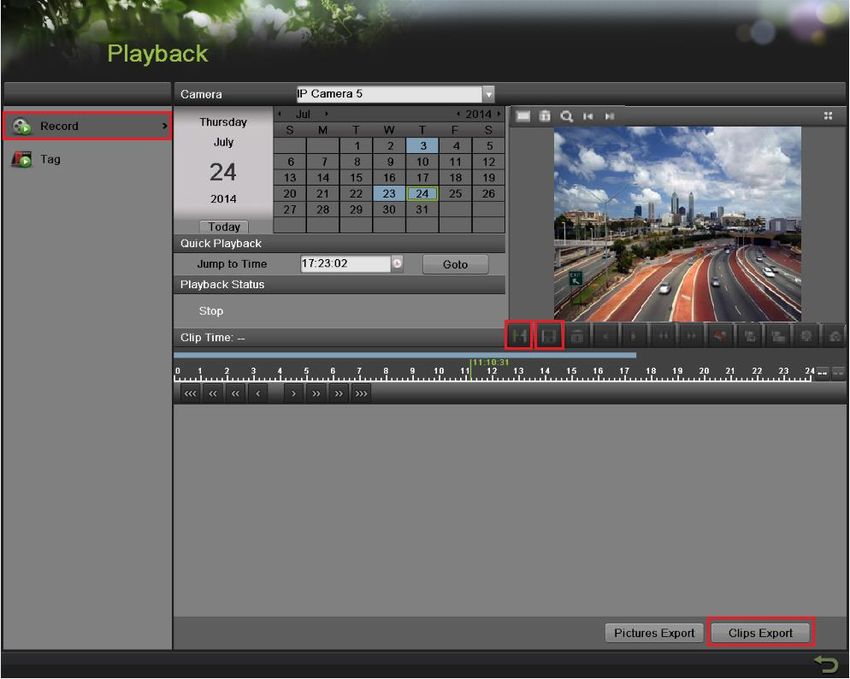
DS-72xxHGHI-SH

         REAR VIEW                      FRONT VIEW
1. Video In                        1. Power, Status and Tx/Rx
2. Audio In                           indicators
3. Audio Out                       2. IR Receiver
4. VGA output                      3. USB Interface
5. HDMI output
6. USB Interface
7. Network Interface (RJ45)
8. RS-485 Interface
9. Power Supply Port
10. Power Switch
11. Grounding Screw
12. Alarm In/Out

                                                  www.hikvision.com/en/us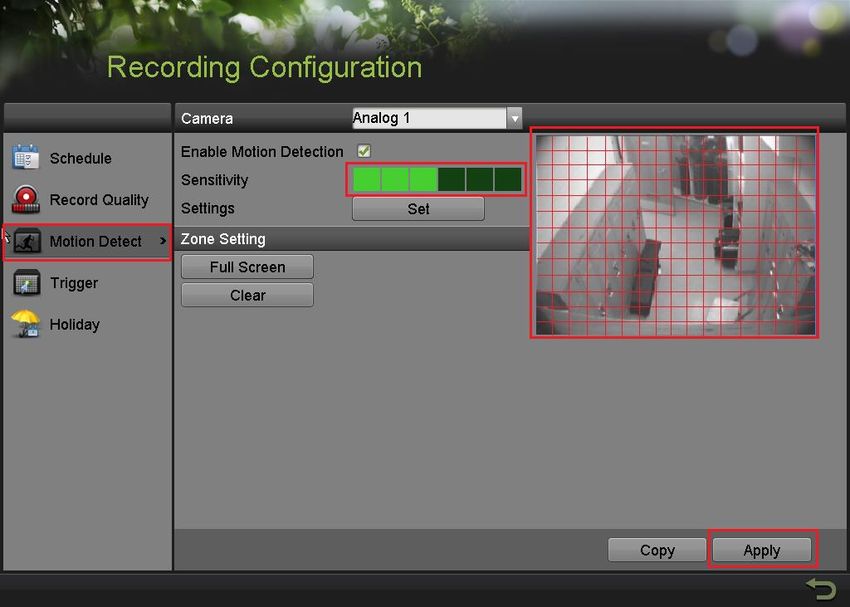
DS-73xxHQHI-SH

     REAR VIEW                           FRONT VIEW
1. Video In                        1. Power, Ready, Status, Alarm, HDD
2. Video Out                          and Tx/Rx Indicators
3. Audio In                        2. DVD-R/W
4. USB Interface                   3. Composite Keys
5. HDMI output                     4. Direction/Enter Keys
6. VGA output                      5. Power
7. Audio Out                       6. Jog Shuttle Control
8. Network Interface               7. USB Interface
9. RS-485 Interface                8. IR Receiver
10. Power Supply
11. Power Switch
12. GND
13. Line In
14. eSATA
15. RS-232 Interface

                                            www.hikvision.com/en/us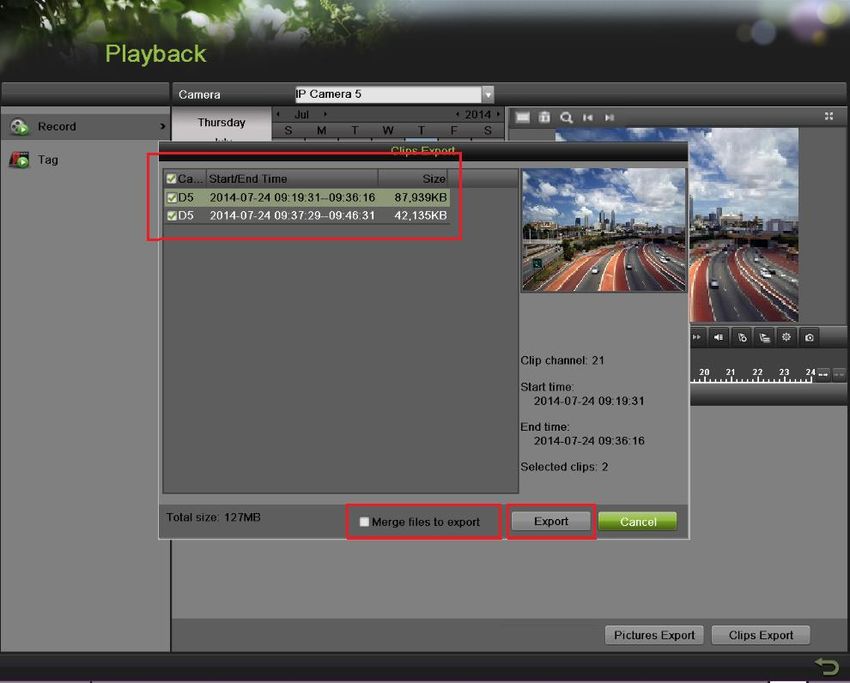
DS-90xxHQHI-SH

     REAR VIEW                           FRONT VIEW
1. Video In                        1. Power, Ready, Status, Alarm, HDD
2. Video Out                           and Tx/Rx Indicators
3. Audio In                        2. IR Receiver
4. USB Interface                   3. Front Panel Lock
5. HDMI output                     4. DVD-R/W
6. VGA output                      5. Alphanumeric Buttons
7. Audio Out                       6. USB Interfaces
8. Network Interface               7. Function Keys
9. RS-485 Interface                8. Direction/Enter Keys
10. Power Supply                   9. JOG SHUTTLE Control
11. Power Switch                   10. Power
12. GND
13. Line In
14. eSATA
15. RS-232 Interface

                                            www.hikvision.com/en/us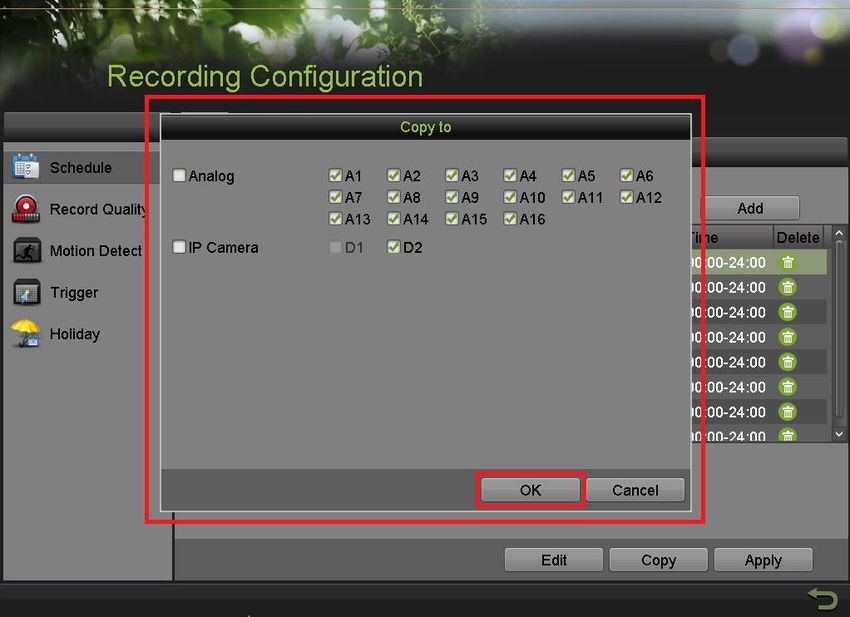
2. Device Activation
To ensure the highest level of protection, Hikvision requires users to create a new
password for the admin account upon first login to a device. The system will check the
password strength; “Risky” passwords will not be accepted.
Device Firmware with Secure Activation
Device Type Model Number Firmware Version
Value Series IP Camera DS-2CD2xxx V5.3.0
Smart Series IP Camera DS-2CD4xxx V5.3.0
NVR/Hybrid DS-9016HWI-ST V3.1.5
DS-96xxNI-ST
DS-7716NI-SP/16
Plug-n-Play NVR DS-76xxNI-EI(E2)/P V3.1.0
Turbo DVR DS-72xxHGHI-SH V3.1.6
DS-73xxHQHI-SH
Super NVR DS-96128NI-E24/H TBD
DS-96256NI-E24/H
NOTE: DVRs/NVRs starting with the latest firmware (see chart, above) WILL NO
LONGER HAVE A DEFAULT PASSWORD. The user must activate the
DVR/NVR by creating a password for the admin account in one of four ways:
• Local Activation
1. Power on the DVR/NVR.
- A message will appear, prompting user to activate the device.
- The username field will be greyed-out with the username set to admin.
2. Type in a password of your choosing (see “Password Strength Levels” table for
guidelines).
- The password strength will be displayed, accompanied by a color indicator:
• Level 0–Risky (red indicator): Not acceptable
• Level 1–Weak (red indicator): Acceptable
• Level 2–Fair (orange indicator): Acceptable
• Level 3–Strong (blue indicator): Acceptable
- Activation will not be allowed unless the password is of acceptable strength.
NOTE: The strength level indicator colors can vary by activation process, model number, and
device type.
www.hikvision.com/en/us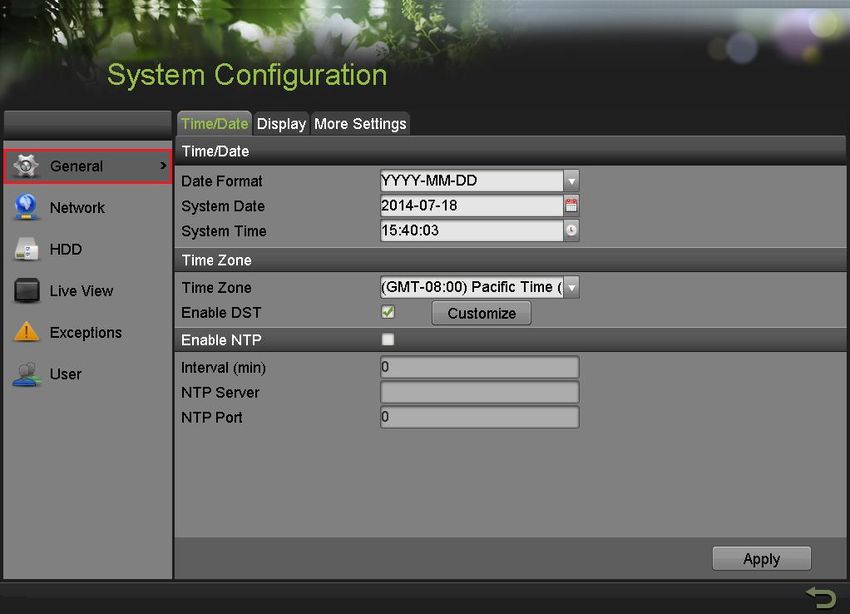
3. Retype the password into the “Confirm Password” field.

    4. After an acceptable password has been created, a confirmation message will
       appear on the screen.

    5. Press the OK button to proceed.

•   SADP Software Activation (v2.2.3.5 or higher)

    1. Launch the new version of the SADP software (v2.2.3.5).

       -   The software will display all Hikvision devices on the network.
       -   A new field called “Security” will be displayed

    2. If the DVR/NVR is “Inactive,” highlight the DVR/NVR and enter a new password
       into the “New Password” field on the bottom right of the screen.

       -   The password strength will be displayed, accompanied by a color indicator:

           •   Level 0–Risky (no indicator): Not acceptable
           •   Level 1–Weak (pink indicator): Acceptable
           •   Level 2–Medium (yellow indicator): Acceptable
           •   Level 3–Strong (green indicator): Acceptable

       -   Bar length indicates strength level.

       -   Activation will not be allowed unless the password is of acceptable strength. If
           the password is unacceptable strength (“Risky”), a warning box will be
           displayed.

    3. Retype the password into the “Confirm Password” field.

    4. After the password has been entered and confirmed, press the OK button to
       display the pop-up confirmation window.

    5. Press the “X” in the top right corner of the pop-up confirmation window to dismiss
       the window.

                                                                     www.hikvision.com/en/us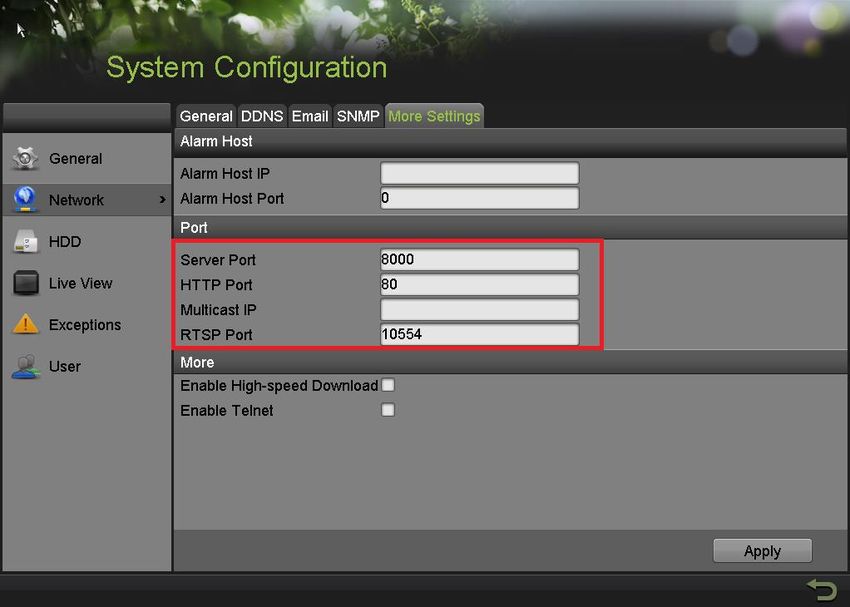
• iVMS-4200 Windows Client Software (v2.3.1.3 or higher) Activation
1. Launch the iVMS-4200 software.
2. Go to Control PanelDevice Management.
- On the bottom of the screen in the Online Devices section the screen will
display all Hikvision devices on the network.
- A new field called “Security” will be displayed.
3. If the DVR/NVR is “Inactive,” highlight the DVR/NVR and press the Activate
button to display the “Activation” window.
4. Enter a new password into the “Password” field.
- The password strength will be displayed, accompanied by a color indicator:
• Level 0–Risky (no indicator): Not acceptable
• Level 1–Weak (pink indicator): Acceptable
• Level 2–Medium (yellow indicator): Acceptable
• Level 3–Strong (green indicator): Acceptable
- Bar length indicates strength level.
- Activation will be allowed if the password is of acceptable strength.
- If the password is of unacceptable strength (“Risky”), a warning box will be
displayed explaining the requirements for an acceptable password.
5. Retype the password into the “Confirm Password” field.
6. After the password has been entered and confirmed, press the OK button.
- The DVR’s/NVR’s status will change to “Active.”
www.hikvision.com/en/us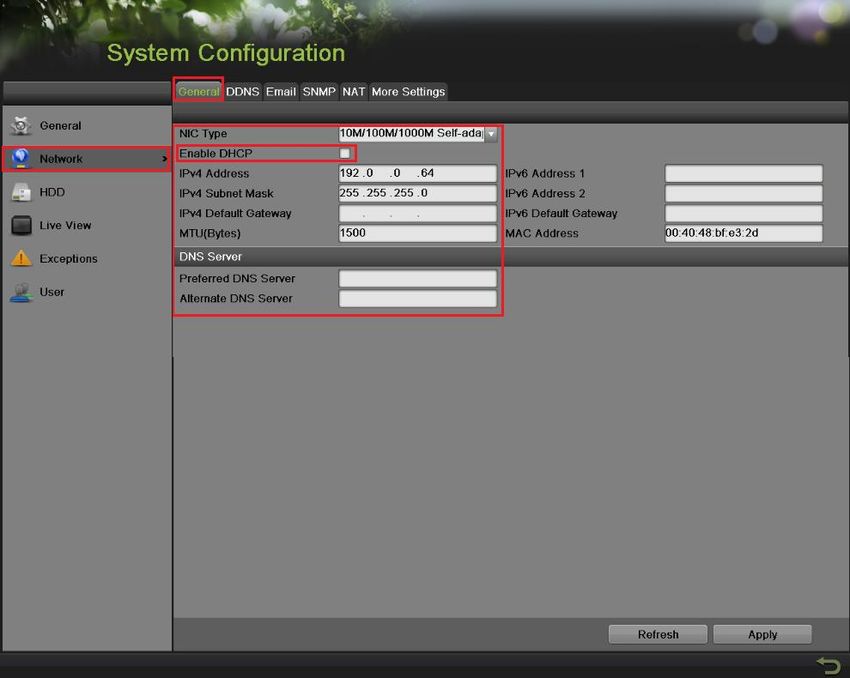
•   Web Interface Activation

    1. In a Web browser, type the DVR’s/NVR’s IP address and press Enter.

       -   The Activation Window will appear instead of the login page.

    2. Enter a new password into the “Password” field.

       -   The password strength will be displayed, accompanied by a color indicator:
           • Level 0–Risky (no indicator): Not acceptable
           • Level 1–Weak (pink indicator): Acceptable
           • Level 2–Medium (yellow indicator): Acceptable
           • Level 3–Strong (green indicator): Acceptable

       -   Bar length indicates strength level.

       -   Activation will be allowed if the password is of acceptable strength. A white
           checkmark will appear in a green circle to the right of the password field.

       -   If the password is unacceptable strength (“Risky”, a white X will appear in a
           red circle to the right of the password field and a warning dialog box will be
           displayed explaining the requirements for an acceptable password.

    3. Press the OK button.

       -   Upon successful activation, user will be logged in to the DVR’s/NVR’s live
           view page.

                                                                      www.hikvision.com/en/us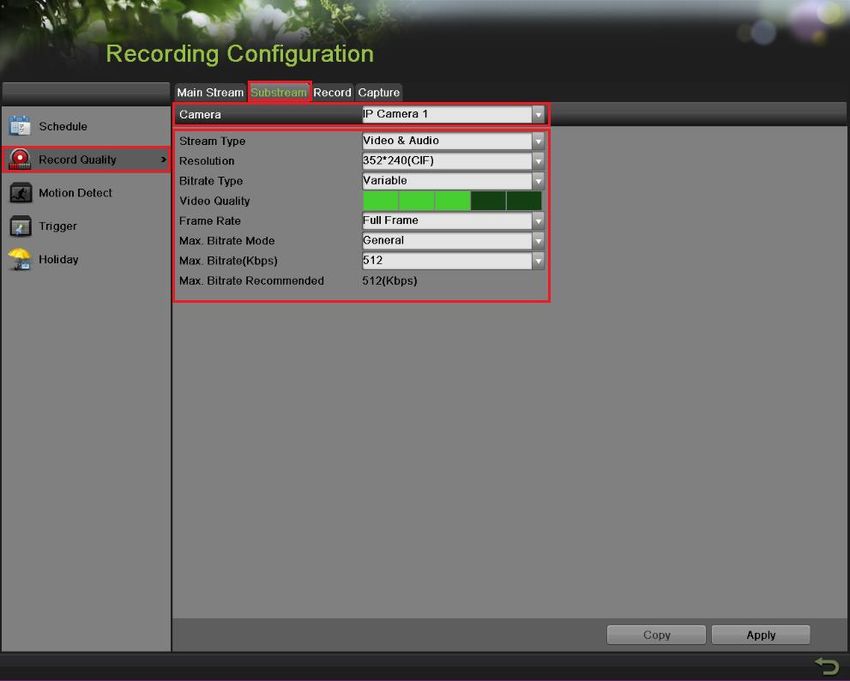
Password Strength Levels
         STRENGTH LEVEL                                    DESCRIPTION
                                          Password length is fewer than eight characters,
                                          contains only one type of character, is the same
            Level 0 (Risky)
                                          as the user name, and/or is the mirror writing of
NVRs will not accept a Level 0 password
                                          the user name. This type of password will not be
                                          accepted.
                                          Password contains two kinds of characters. The
                                          combination is number + lowercase letter or
            Level 1 (Weak)
                                          number + uppercase letter, and the password
  NVRs will accept a Level 1 password
                                          length is at least eight characters. This type of
                                          password will be accepted.
                                          Password contains two types of characters. The
                                          combination is neither number + lowercase letter
        Level 2 (Medium/Fair)
                                          nor number + uppercase letter, and the password
  NVRs will accept a Level 2 password
                                          length is at least eight characters. This type of
                                          password will be accepted.
                                          Password contains more than three types of
            Level 3 (Strong)              characters, and the password length is at least
  NVRs will accept a Level 3 password     eight characters. This type of password will be
                                          accepted.

            NOTE:     Types of characters are lowercase letters, uppercase letters,
                      numbers, and special characters. Only ASCII characters are
                      allowed.

                                                                            www.hikvision.com/en/us
3. MAIN MENU LAYOUT
DEFAULT USERNAME: admin
(Please note, the username and password are case sensitive)
View recorded
video and make
backup
Search for
snapshots, make
Setup recording large backups
type, motion
detection,
resolution and
frame rate, and Add cameras,
more change brightness,
contrast… camera
Set up date/time, name, PTZ, privacy
network, screen mask
settings, user
accounts, and
more Upgrade firmware,
factory default,
Model number, system logs,
firmware version, import/export
camera status, settings
HDD status and
more
Log Out and Lock Displays the Exit MENU to
the DVR current logged in Live View
user
www.hikvision.com/en/us4. FORMATTING THE HARD DRIVE
If the Hard Drive (HDD) is not formatted (initialized), the DVR will begin to beep. The beeping
will continue until the HDD is formatted. To format the HDD, go to:
“MENU” > “SYSTEM CONFIGURATION” > “HDD”
Select the HDDs that need to be formatted and press “INIT”
List of HDDs
Total HDD Space
Free Space
NOTE:
Units purchased with HDDs come
with HDDs already formatted.
Formatting the HDDs also erases
the recorded video from the
HDDs (this does not affect the
settings).
www.hikvision.com/en/us5. DATE AND TIME SETUP
To set up the Time and Date on a DVR, please go to:
“MENU” > “SYSTEM CONFIGURATION” > “GENERAL”
NTP Settings Time Zone Date and
and Daylight Time settings
Savings Time
settings
www.hikvision.com/en/us6. SETTING UP NETWORK ACCESS
Networking a DVR requires 3 steps:
1. Assign an IP address, Default Gateway, Subnet Mask, and a DNS server (NOTE:
DNS, not DDNS) to the DVR
2. Forward the appropriate ports on the router (Port Forwarding).
3. Register DDNS (DDNS registration is required only if the public IP address is Dynamic).
To assign an IP ADDRESS, go to “MENU”>”SYSTEM CONFIGURATION”>”NETWORK”
General
Enable
DHCP
With DHCP
Select enabled,
NIC the router
Type will assign
an IP
NETWORK address to
Sub Menu the DVR
IP CONFIGURATION
Please note that the DVR’s default IP Address is 192.0.0.64
www.hikvision.com/en/usAfter assigning the IP information, click on the “MORE SETTINGS” tab.
The “MORE SETTINGS” tab contains the ports that need to be forwarded for remote access.
The SERVER PORT is responsible for the MOBILE APP and CLIENT SOFTWARE log-in.
The HTTP PORT is responsible for WEB BROWSER log-in.
The RTSP PORT is responsible for VIDEO/AUDIO STREAMING.
The HTTP PORT and the SERVER PORT can be changed if desired, in order to avoid
conflicts with the ISP or the existing network configuration.
www.hikvision.com/en/usPort Forwarding
After assigning the IP information to the DVR, connect a computer to the same router that the
DVR is connected to (wired connection is recommended, to avoid complications). Log into the
ROUTER, and proceed with PORT FORWARDING.
For PORT FORWARDING assistance contact the Internet Service Provider (ISP) or the router
manufacturer. Also refer to www.portforward.com for port forwarding step-by-step instructions.
Please be aware that Hikvision USA is not associated with www.portforward.com and not
responsible for any activity between the user and www.portforward.com. Please refrain from
downloading any software from the abovementioned website.
Proceed to the “ROUTERS” section for step-by-step instructions.
DDNS Setup
DDNS registration has been made more user friendly and takes only a few seconds to
complete. Legacy units require user registration on www.hik-online.com. This step is no longer
needed.
Click on the DDNS tab.
In the DDNS tab:
a. Enable DDNS
b. Change the DDNS TYPE to HiDDNS (in some cases HkDDNS)
c. Make sure that the SERVER ADDRESS is set to www.hik-online.com
d. Create a DEVICE DOMAIN NAME (the domain name CANNOT contain spaces,
special characters and/or upper case letters
www.hikvision.com/en/usEZVIZ is used for a
connection through
Enable DDNS and
a secure server.
create a DOMAIN
In this case port
NAME
forwarding is not
required.
Contact Technical
Support for
detailed
information
After the changes have been made, press “APPLY.” A “SUCCESS” message will pop up.
If the Domain Name does not meet the acceptable criteria, and/or is already registered, an
error message will appear (the domain name cannot contain upper case characters, begin with
a number, spaces, special characters…).
www.hikvision.com/en/us7. ADDING IP CAMERAS
Go to:
“MENU”>”CAMERAS SETUP”
Press the “GARBAGE CAN”
icon to delete an added
camera
Press “EDIT”
Press “+” to add
to change the camera’s
the camera to the
IP address.
DVR
Please refer to “REFRESH” List of detected
the manual for to find cameras cameras
detailed connected to the (YELLOW) List of added
information network cameras (WHITE)
NOTE: To change the CAMERA NAME go to OSD
www.hikvision.com/en/us8. SETTING UP RECORDING
Hikvision DVRs are defaulted to CONTINUOUS RECORDING.
Please go to: “MENU”>”RECORDING CONFIGURATION”
The color of the calendar is what This field is used to
constitutes the recording schedule: customize a part of the
1. Blue=Continuous existing schedule
2. Yellow=Event This can be ignored if
Set Up Recording (Motion/Alarm) setting up motion only
Schedule 3. Grey= No Recording recording
(Continuous/Motion)
Select the camera.
NOTE: If ENABLE SCHEDULE is not checked, Enable/Disable the schedule
then that camera would not be recording
www.hikvision.com/en/usTo set the DVR to MOTION RECORDING, go to:
1. “MENU”>”RECORDING CONFIGURATION”
2. Click on the “EVENT” under the calendar (yellow). After this the mouse cursor will
change to a WAND.
3. Select the calendar, and it will turn YELLOW (just like on a computer, click on the top-
left corner of the calendar and drag to the bottom-right corner).
4. Press APPLY.
5. Press COPY to copy the new schedule to the remaining cameras.
www.hikvision.com/en/usAfter the recording has been set to “EVENT RECORDING,” go to “MOTION DETECT” to set
the motion detection for every camera. In this step, the “COPY” option is available only for
analog cameras, IP cameras need to be configured individually.
Motion Detection
Setup
Motion Area
The grid indicates
Motion Sensitivity the area where
The number of bright motion will be
green squares detected
indicates the
sensitivity level (in
this photo, the
sensitivity is set to 3)
www.hikvision.com/en/usTo set the recording RESOLUTION/FRAMERATE/BITRATE settings, please go to:
“RECORD QUALITY” in the “RECORDING CONFIGURATION” submenu.
Select
Main
Stream
Record
Quality
Select
Camera
Continuous Event
Pertains to live Pertains to event
view image as well recording only
as continuous (motion or alarm)
recording
www.hikvision.com/en/usStream Type enables/disables audio streaming from the camera (if the camera does not have
audio capabilities, then the Stream Type will only have Video option).
Resolution allows setting of the recording resolution.
Bitrate Type allows the DVR to save HDD space when set to Variable (available choices:
Variable and Constant)
Video Quality adjusts picture clarity (medium setting/3 green squares) is recommended.
Medium setting is the balance between good picture and saving HDD space).
Frame Rate allows setting of the recording frame rate (12-15 fps is recommended to save
HDD space and not to have a “choppy” image)
Max Bitrate Mode allows choosing between preset bitrate values and customizing the values
(General setting is recommended)
Max Bitrate (KBPS) is the chosen bitrate for streaming the video.
Max Bitrate Recommended is the DVR’s recommended bitrate according to the parameters
set above.
Record Audio allows turning the audio recording on or off (for IPC, this option is only available
if the camera has a microphone connected to it).
Video Stream allows changing the recording stream between Main Stream and Sub Stream
(this step requires a restart).
Input Resolution shows the resolution of video stream from camera.
Recording Time (days) shows how much time left for recording, based on current HDD
volume and recording parameters.
Please refer to the table below for recommended recording parameters
Resolution Video Quality Frame Rate (FPS) Bitrate (KBPS)
320x240 (QVGA) Medium (3 squares) 12-15 207
352x240 (CIF) Medium (3 squares) 12-15 384
640x480 (VGA) Medium (3 squares) 12-15 768
704x480 (4CIF) Medium (3 squares) 12-15 1024
1280x720 (720P) Medium (3 squares) 12-15 2048
1280x960 (960P) Medium (3 squares) 12-15 2048
1600x1200 (2MP) Medium (3 squares) 12-15 2560
1920x1080 (1080P) Medium (3 squares) 12-15 3072
www.hikvision.com/en/usLast step in the recording setup is setting up the Sub Stream.
The Sub Stream is used for streaming on mobile devices, as well as displaying multiple
cameras on the local output.
Select
Sub
Stream
Record
Quality
Unlike Main Stream, Select
Sub Stream can only go up to 4CIF Camera
NOTE: If the upload speed is not sufficient, consider lowering the frame rate/bitrate/resolution
for more fluent mobile app viewing.
www.hikvision.com/en/us9. CONFIGURING THE MOBILE APP
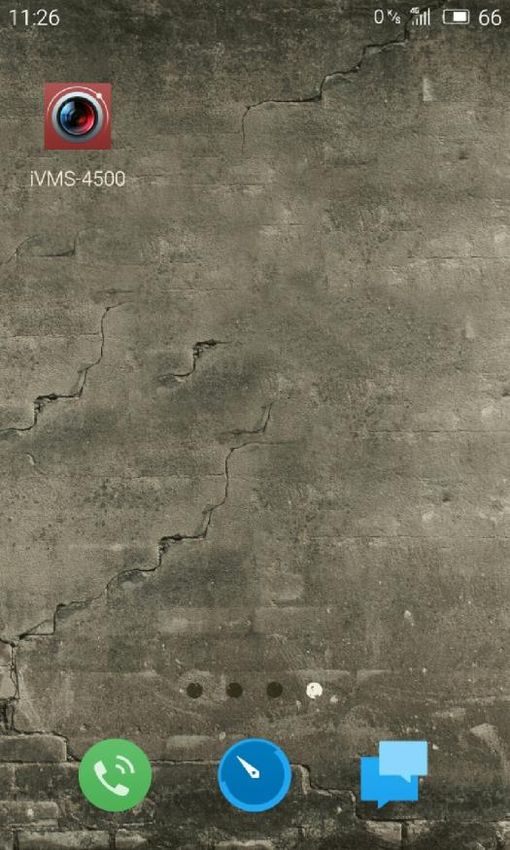
All HikVision DVRs, NVRs and IP Cameras can be accessed with iVMS-4500 application.
The APP can be downloaded from the APP STORE (iPhone/iPad), PLAYSTORE (Android).
The app is also available for WINDOWS MOBILE devices (Nokia Phones and tablets).
Download the app from the appropriate place and launch it. When the APP is launched for the
first time, a tutorial screen will be displayed, and it can be easily skipped.
Launch Select
the APP your
region
www.hikvision.com/en/us“MENU” BUTTON DEVICES BUTTON
“ADD” BUTTON
Manual Adding ENTER THE INFO “REGISTER MODE”
Please Note:
If free HikVision
DDNS is
configured for
the device,
change the
“REGISTER
MODE” to
HiDDNS
www.hikvision.com/en/usPlease Note:
CHANGE THE MODE ENTER “DEVICE DOMAIN” COMPLETE THE PAGE Alias is just a
friendly name for
the address book
(i.e. Home/Office)
User Name and
Password are
the DVR’s/NVR’s
username and
password
Please note:
The “CAMERA
NUMBER” is set
to 1.
After saving the
changes, the
number will
resemble the
correct amount of
cameras
“SAVE” BUTTON
Please note:
The “CAMERA
NUMBER” has
changed to the
correct number
of cameras
connected to
the DVR/NVR
Please note:
“START LIVE
VIEW” button
will begin live
camera stream
www.hikvision.com/en/us10. PLAYING BACK RECORDED VIDEO
To initiate a PLAYBACK, go to “MENU”>”PLAYBACK.”
Select a
camera to “Full Screen”
playback button
Going to a full
screen will allow
Select the multiple channel
desired date to playback
playback
Select the
desired time of Press PLAY to
playback begin playback
Click on the
timeline to
select the
desired time of
playback
Steps to initiate PLAYBACK
1. Select the desired camera
2. Select the desired date (days that contain recording will be highlighted on the calendar)
3. Select the desired time using the Timeline or “Jump to Time” feature
4. Press “PLAY”
www.hikvision.com/en/us11. MAKING A BACKUP
START/END Save clip
Clipping
Export Clips
Select the Select the
“START TIME” “END TIME”
Steps to make a BACKUP of recorded video:
1. Insert a USB FLASH Drive or a USB HDD into an available USB Port
2. Go to “MENU”>”PLAYBACK”
3. Select the DATE and beginning time of the incident
4. Click “START CLIPPING”
5. Select the ending time of the incident
6. Click “END CLIPPING” (same button as “Start Clipping”)
7. Click “SAVE CLIP”
8. Repeat steps 1-7 as many times as required
9. Click “CLIPS EXPORT”
www.hikvision.com/en/usAfter pressing “CLIPS EXPORT” a new window opens up containing all saved clips.
Select the
desired clips
If selected, multiple EXPORT THE
clips created from CLIPS TO USB
the same camera DEVICE
will be stitched
together
10. Select the desired clips
11. Press “EXPORT”
12. After the backup is complete, remove the USB FLASH Drive or the USB HDD
www.hikvision.com/en/usYou can also read


