Software Libero e Business - Paolo Storti Ivrea | 26 giugno 2015
←
→
Page content transcription
If your browser does not render page correctly, please read the page content below
Software Libero e Business
           Paolo Storti
              STUDIOSTORTI

       Ivrea | 26 giugno 2015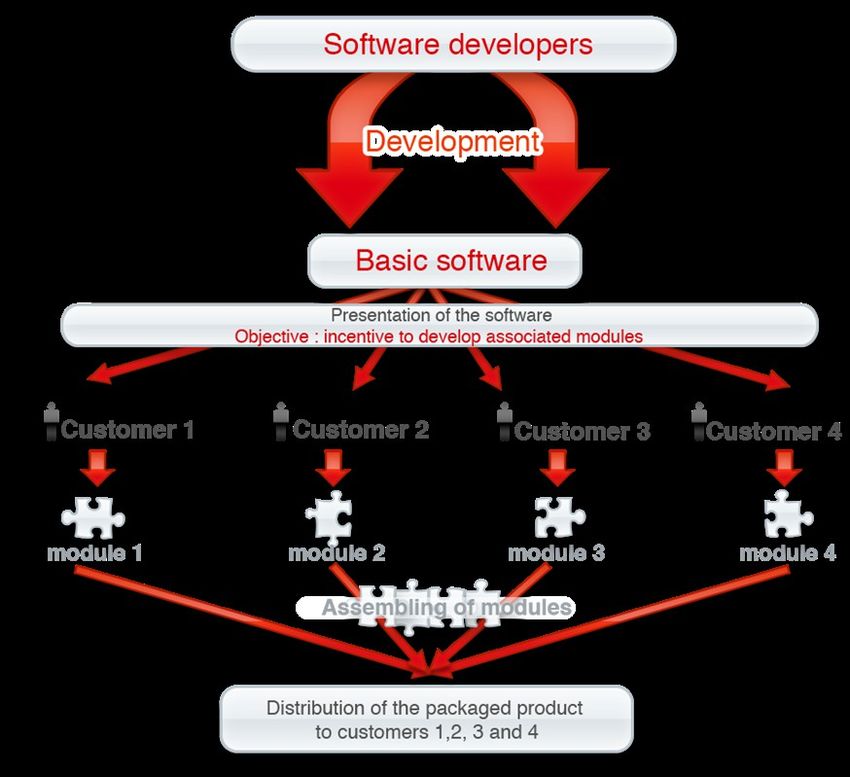
“le pubbliche amministrazioni acquisiscono programmi informatici o

  Art.68
                                                    parti di essi nel rispetto dei principi di economicità e di efficienza, tutela
                                                    degli investimenti, riuso e neutralità tecnologica, a seguito di una
                                                    valutazione comparativa di tipo tecnico ed economico tra le seguenti
                                                    soluzioni disponibili sul mercato:”
  Codice dell'Amministrazione Digitale

  Software sviluppato per conto della                                                 Software fruibile in modalità cloud
  pubblica amministrazione;                                                           computing;

  Riutilizzo di software o parti di esso                                              Riutilizzo di tipo proprietario mediante
  sviluppati per conto della pubblica                                                 ricorso a licenza d'uso;
  amministrazione;

  Software libero o a codice sorgente                                                 Software combinazione delle
  aperto;                                                                             precedenti soluzioni;

  http://www.agid.gov.it/cad/analisi-comparativa-soluzioni

Ivrea | 26 giugno 2015                            Paolo Storti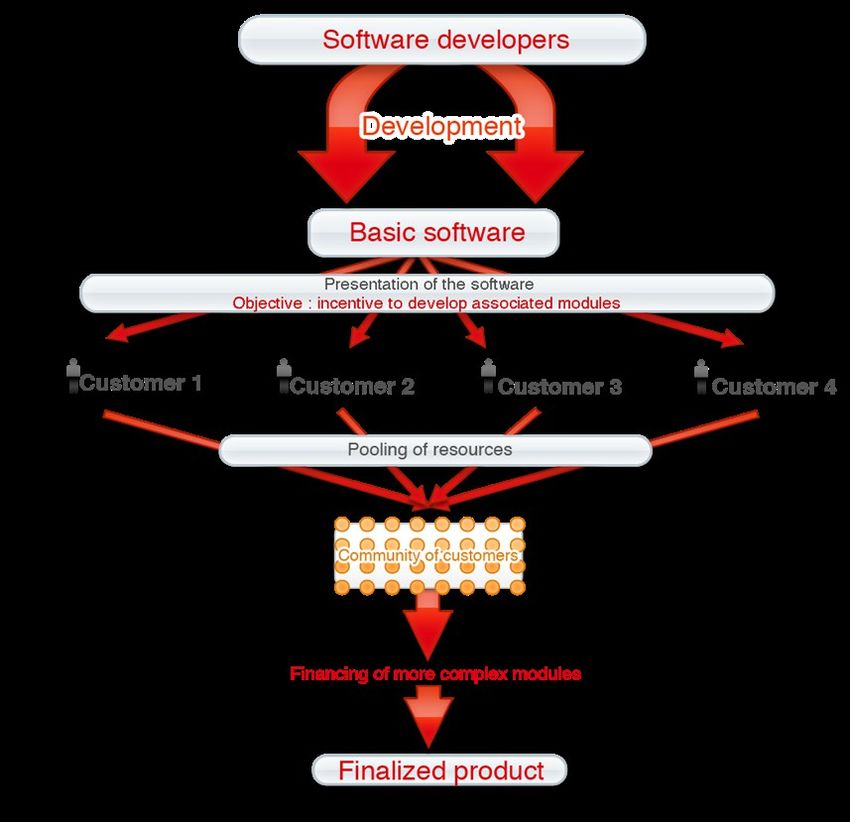
Art.68
  Codice dell'Amministrazione Digitale

                             1-ter
                             “Ove dalla valutazione comparativa di tipo tecnico ed
                             economico, secondo i criteri di cui al comma 1-bis, risulti
                             motivatamente l'impossibilità di accedere a soluzioni già
                             disponibili all'interno della pubblica amministrazione, o a
                             software liberi o a codici sorgente aperto, adeguati alle
                             esigenze da soddisfare, è consentita l'acquisizione di
                             programmi informatici di tipo proprietario mediante ricorso
                             a licenza d'uso.”

  http://www.agid.gov.it/cad/analisi-comparativa-soluzioni

Ivrea | 26 giugno 2015                            Paolo Storti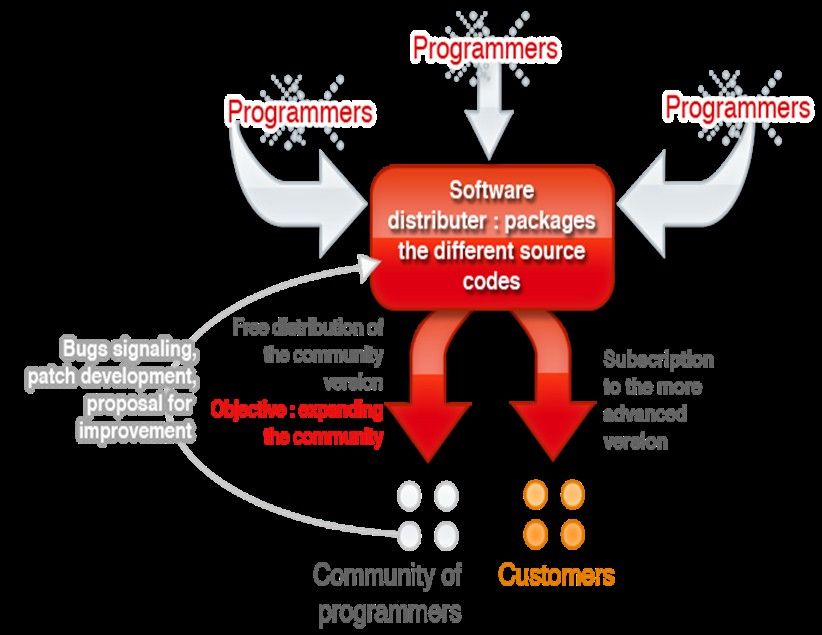
Circ.63                  Linee guida per la valutazione comparativa prevista dall’art. 68

                              Art. 4.1.1 Le licenze d'uso di prodotti
                              software c.d. proprietari
                              “Si fa inoltre presente che possono appartenere alla famiglia dei
                              software proprietari anche alcuni applicativi nominalmente
                              dichiarati liberi, quali ad esempio MySQL, Zimbra, Alfresco. Infatti i
                              titolari del copyright di questa tipologia di software, anche se
                              rilasciato sotto condizioni copyleft, quindi di software libero,
                              possono distribuirli con una doppia licenza, di cui una proprietaria
                              e una di software libero. La licenza proprietaria è legata tipicamente
                              ai livelli garantiti di assistenza, oppure alla possibilità di includere il
                              prodotto in opere derivate altrettanto proprietarie (opzione che
                              sarebbe esclusa se si facesse affidamento sulla licenza copyleft).”

                              Software OpenSource “Commerciale”?
                  ULTIME
                  NOVITÀ      di Italo Vignoli
                              http://www.cwi.it/software-open-source-commerciale-22547

  http://www.agid.gov.it/cad/analisi-comparativa-soluzioni

Ivrea | 26 giugno 2015                             Paolo Storti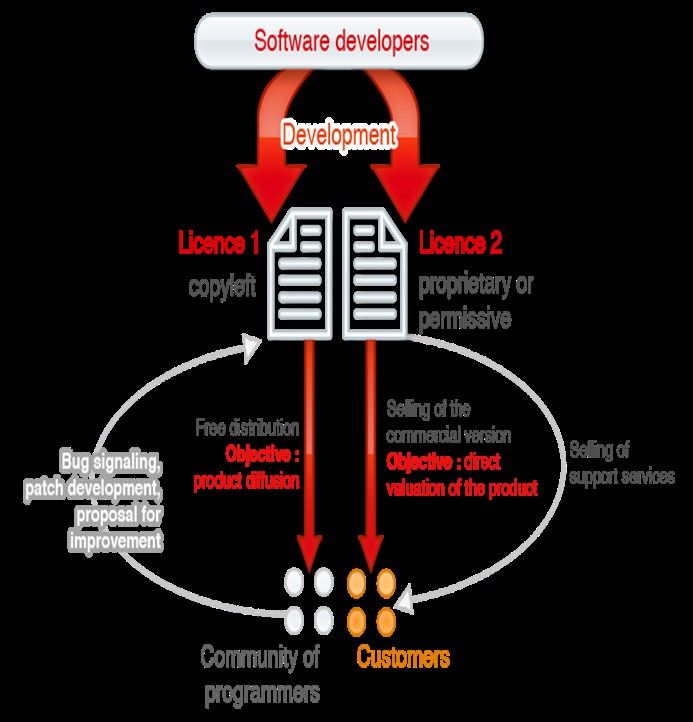
Art. 52                Accesso telematico e riutilizzo dei dati delle pubbliche amministrazioni

                             Comma 1
                             ...“I dati e i documenti che le amministrazioni titolari pubblicano, con
                             qualsiasi modalità, senza l'espressa adozione di una licenza di cui
                             all'articolo 2, comma 1, lettera h), del decreto legislativo 24 gennaio
                             2006, n. 36, si intendono rilasciati come dati di tipo aperto ai sensi
                             all'articolo 68, comma 3, del presente Codice.

                             L'eventuale adozione di una licenza di cui al citato articolo 2, comma
                             1, lettera h), è motivata ai sensi delle linee guida nazionali di cui al
                             comma 7..”...

  http://www.agid.gov.it/dati-pubblici-condivisione/open-data

Ivrea | 26 giugno 2015                            Paolo Storti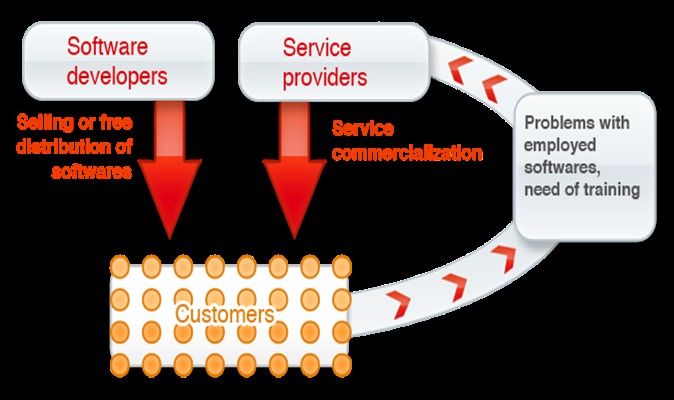
Come scegliere l'azienda:
                                                Per avere
                                                la garanzia
MERCATO                                         del risultato
open source
                                                ESPERIENZA
                                                di attività analoghe per
                          +95%                  tipologia e dimensione
                          -5                    DIPENDENTI
                                                garanzia di costante e
                          +                     tempestiva assistenza
                                                FOCALIZZAZIONE
                                                dei servizi
                                                LIBERTÀ
                                                da vincoli contrattuali
                                                sui software richiesti

 Ivrea | 26 giugno 2015          Paolo Storti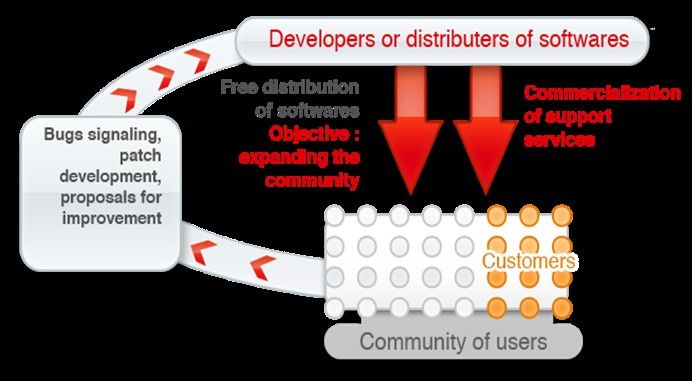
Three kinds of licenses can be identified according to their permissiveness
                                                                                                                             - permissive

       They require that any modified software
       and any program including this software
       in a derived product must be placed
       under the same license
       Examples:

                                                                                               Extent to which licenses can be claimed
               General Public License (GPL)                                 Free
               Mozilla Public License (MPL)                              Proliferate
                                                                         Copylefted
                                                                          licenses

       They contain a clause allowing users to mix
       the software with proprietary software and
       place it under a proprietary license, on the
       condition that the free module remains under
       a free license                                                  Free copylefted
       Examples:                                                          Persistent
               Lesser General Public License (LGPL)                        licenses
               Berkeley Software Distribution (BSD)
               License MIT

       Anyone can transform a source code under
       this license withoutacknowledging its original
       developer
       Examples:                                                Free non-copylefted licenses
               Xfree86
               X Consortium
               License Apache

                                                                                                                             + permissive

 Ivrea | 26 giugno 2015                                 Paolo Storti
The objective of this paper is to analyse the different open source business models
Broadly, a business model is made up of two elements:
The revenue model The cost structure
Value creation: definition of the offer Definition according to the cost
generating the highest willingness to categories (raw materials, marketing,
pay R&D, administrative) and their types
(fixed or variable)
Capture of the value created through:
The sale of rights (sale of Identification of the company’s
patents, licenses or even client files) specific skills which give a
The sale of products competitive advantage
The sale of services
Determination of the capital sources
A feature of the open source business models is that their main difference lies
in their revenue models. For the sake of clarity, we will present a typology
centred around these models
Ivrea | 26 giugno 2015 Paolo StortiFour business models can be identified
The services or indirect The value added
valorisation model distribution model
Business
Model
The double license or The mutualization model
commercial open source
license model
Whichever model is chosen, all the companies offer complementary
services for their products that can represent a quarter or half of their
sales figure
Ivrea | 26 giugno 2015 Paolo StortiThe service model
The service model takes two forms
Simple service model:
commercialization of services that have
no link to a specific product
« Our job is to be the Switzerland of
open source software components »
(M. Halsey, Alliances and international sales vice-president for
Spikesource)
A variant of this model involves
providing an application service without
any direct link to the open source
software used via an Internet network
using a standard protocol (ASP model)
Indirect monetization model:
commercialization of services
associated to software developed or
packaged internally
Ivrea | 26 giugno 2015 Paolo StortiThe service model
The service offered are of different types
S u rv e illa n ce
F o rm a tio n
•A lgorithm s control
•B ug detection
•S urveillance of security
problem s com ing from
other open source
softw are
•H elp •H elp w ith the integration of
•P ublication of support tested softw are
docum ents •G uaranteed
•C reation of patches should interoperability
a problem occur
T e ch n ica l a ss ista n ce T e sts a n d g u a ra n te e
Ivrea | 26 giugno 2015 Paolo StortiThe simple service model relies The service model
on two opposite levers
Growth levers
Specializing the services offered
Extending the number
to develop a competitive
of services offered
advantage
Segments of the market available: The competition’s level of intensity on
depending on the number of companies the services offered: the stronger the
commercializing open source solutions competition is, the more it is in the open
without offering complementary source company’s interest to develop
services of satisfying quality specific skills around a few products
The company’s faculty to offer services The consumer’s need and their
on a great number of software that it did willingness to pay: if potential clients
not develop itself have specific needs and are not very
sensitive to price, it would be better for
the open source co pany to specialize
around a few profitable services for
Evolution which the company can charge a lot
Factors
Ivrea | 26 giugno 2015 Paolo StortiThe success of the indirect The service model
Monetization model relies on two levers
Levers of growth
Increasing the size of the market Increasing the monetization rate
by preferring a wide diffusion of by offering services to a maximum
the solutions number of users
The competition’s level of intensity on The competition’s level of intensity on
the software offered, which depends complementary services offered
on the forking1) risk
The choice of the product’s level of
The license’s choice: refinement:
If the products are made for a direct A product that is too sophisticated only
use, no other software will be developed needs a few complementary services
with the source code made by the A product that is not related enough to the
company. As a consequence, a copyleft operational product will be rejected by
type license is adapted because there is users and developers
no risk of contamination
If the products are modules
instead, meant to be inserted in other
programs, it is imperative that the
company uses a copylefted persistent
Evolution
license or a non-copylefted one
Factors
Ivrea | 26 giugno 2015 Paolo StortiThe value added distribution model consist The value added
in selling a standard version distribution model
of an existing product
With this model, open source
software is not developed by
the firms that commercialize
their services: they already
exist and are packaged in a
standard version that can be
downloaded, pre-installed on
computers or sold on
physical bases
The « sale» is generally
made as a yearly
subscription to the product
and a set of attached
services*
*: the subscription accounts for 85% of Red Hat revenues in 2006
Ivrea | 26 giugno 2015 Paolo StortiThis model offers a triple client value The value added
distribution model
C lie n t V a lu e
T r a n s fe r of th e r is k s
r e la te d to th e u s e o f o p e n
s o u r c e s o lu tio n s , fr o m th e
c lie n t to th e fir m :
S a v in g tim e : th e c lie n t • T e s te d , c e r tifie d and
d ir e c tly g e ts a packaged g u a r a n te e d v e r s io n s
R e g u la r O b te n tio n o f n e w
a n d te s te d v e r s io n o f th e
p a tc h e s and u p d a te s fo r
s o ftw a r e , w h ic h is • In d e m n ific a tio n in
th e le n g th of th e
im m e d ia te ly c o m p a tib le case of s e r io u s
s u b s c r ip tio n
w ith h is c o m p u t e r a n d h is p r o b le m s
s o ftw a r e
• T e c h n ic a l a s s is ta n c e
s e r v ic e s in t e g r a te d in
th e p a c k a g in g
Ivrea | 26 giugno 2015 Paolo StortiThe double license model relies The value added
on a discrimination of the users distribution model
T his m od el re sts on a double license system :
A n op en source license fo r the sta ndard p rod uct
A license th at is m o re pro tected, w hich com es w ith a
gu arantee and is ge nerally linke d to a prod uct that
offers m o re functio nalitie s
T he open source license has to be proliferate
copylefted because eve ry ente rprise w ishing to
integrate the so urce code to a larger set of
products an d keep it under p roprietary license
w ill then have to buy the com m ercial ve rsion of
the solution offere d
S ym etrically, the com m ercial versio n m ust be
und er proprietary license to a void forking risks,
or free n on-co pylefted or persistent to avoid
proliferation effects if the client com pany w ishes
to inte grate th e source cod e in a la rg er system
T his solution allow s the com bination of the free
licenses’ a dvantage s (creating a com m unity of
program m ers, fa st diffusion to benefit from
netw ork effects) and those o f the proprietary
license (stable and kno w n reven ue flow , no
co nta m ination risk fro m open source licenses)
Ivrea | 26 giugno 2015 Paolo StortiOpen source companies using this double
The double license model
license model have to arbitrate twice
Arbitration type
Percentage of the commercial
Level of finishing of the
version’s code included in the
commercialized products
community version
Role played by the community: the more The company’s internal resources and skills:
important its role is, the higher the commercial the double license model is perfectly suited for
version’s code should be included in the companies which develop their components.
community version Companies which make the choice to develop
finished products must have the internal resources
necessary to lead a community of developers,
Product renown: the better-known the product convince corporate customers to buy the
and the need it answers are, the easier users will commercial version, offer technical support for an
see its usefulness. The company will not have to extended customer base, etc.
divulge much in the community version then.
Company renown:
The better-known the company is, the lower the
forking risk. The community open source version
can thus contain a very important part of the
commercial version’s code, without taking the risk
of seeing fierce competitors emerge
The better-known the comapny is, the less
dependent on the community version’s trial the
Factors
purchase of the commercial version is. For this
reason, the community version does not need to
be close to the commercial version
of choice
Ivrea | 26 giugno 2015 Paolo StortiThe “mutualization” model rests on the
Successive development The mutualization model
of several modules…
The mutualization model consists in the development of a relatively simple
version of the product and the subsequent development of modules on
demand
Ivrea | 26 giugno 2015 Paolo Storti… and generally results in the creation
of a community of clients The mutualization model
To make the development of
expensive modules easier, the
open source company can create
a community of clients, pooling
their resources to fund the
module’s development
This community can become
durable and turn into an investors’
club, which regularly orders new
modules
Ivrea | 26 giugno 2015 Paolo StortiThe mutualization model only applies
to very specific conditions The mutualization model
Solutions for very
targeted needs
allowing the fast pre-
em ption of the m arket
and the curbing of the
com petition
M utualization
m odel
C om plex product
that can occasion the H igh rhythm s of
developm ent of obsolescence of the
num erous additional solutions developed
m odules
Ivrea | 26 giugno 2015 Paolo StortiFour key factors must be taken into account
in the success of an open source company
Established
market
Key Alleviation of
Community of
developers success the managers’
factors fears
Stable
commercial
infrastructure
Ivrea | 26 giugno 2015 Paolo StortiGrazie a tutti
Paolo Storti
STUDIOSTORTI
Ivrea | 26 giugno 2015You can also read


