Stable Isotope Tracer Addition Reveals the Trophic Status of Benthic Infauna at an Intertidal Area Adjacent to a Seagrass Bed
←
→
Page content transcription
If your browser does not render page correctly, please read the page content below
ORIGINAL RESEARCH
                                                                                                                                             published: 18 October 2021
                                                                                                                                       doi: 10.3389/fmars.2021.657044

                                             Stable Isotope Tracer Addition
                                             Reveals the Trophic Status of Benthic
                                             Infauna at an Intertidal Area Adjacent
                                             to a Seagrass Bed
                                             Wenzhe Xu 1,2*, Yongxin Dang 1 , Siu Gin Cheung 3,4 , Zhinan Zhang 5 , Jun Sun 1,2 ,
                                             Ankang Teng 5 and Paul K. S. Shin 3,4*
                                             1
                                              College of Marine and Environmental Sciences, Tianjin University of Science and Technology, Tianjin, China, 2 Tianjin Key
                                             Laboratory of Marine Resources and Chemistry, Tianjin University of Science and Technology, Tianjin, China, 3 Department of
                             Edited by:      Chemistry, City University of Hong Kong, Hong Kong SAR, China, 4 State Key Laboratory in Marine Pollution, City University
                   Punyasloke Bhadury,       of Hong Kong, Hong Kong SAR, China, 5 College of Marine Life Science, Ocean University of China, Qingdao, China
  Indian Institute of Science Education
           and Research Kolkata, India
                          Reviewed by:       Stable isotope tracer addition can enhance the isotopic differences of primary producers
                       Prasanta Sanyal,      for a wider food-web resolution than the use of natural abundance stable isotopes (NASIs)
  Indian Institute of Science Education
           and Research Kolkata, India
                                             alone, particularly in ecosystems where primary producers have similar NASI values. To
                         Menghong Hu,        investigate the food sources and the trophic status of benthic infauna in an intertidal
     Shanghai Ocean University, China        area near a Halophila minor seagrass bed within inner Tai Tam Bay, Hong Kong, China,
                  *Correspondence:           a 15 N addition experiment was conducted, and the results were compared with those
                           Wenzhe Xu
                 wenzhexu@126.com            from NASI data. Only benthic microalgae (BMA) were labeled by applying 15 N-enriched
                       Paul K. S. Shin       NH4 Cl to the sediment daily for the first 7 days during a 21-day study. In contrast to the
                paulksshin@gmail.com
                                             NASI results, Bayesian mixing models based on the isotope tracer experiment suggested
                    Specialty section:
                                             a larger dietary contribution of BMA for nematode Daptonema sp. and copepods,
          This article was submitted to      whereas a higher reliance on phytoplankton and seagrass detritus was noted for
                        Marine Biology,
                                             polychaete Neanthes sp. However, both NASI and isotope tracer addition demonstrated
                a section of the journal
           Frontiers in Marine Science       that seagrass detritus was a major food source for nematode Spilophorella sp. The
         Received: 22 January 2021           present isotope tracer experiment also revealed a contrasting result of the relatively
      Accepted: 15 September 2021            lower contribution of meiofauna in the diets of carnivores/omnivores as compared to
        Published: 18 October 2021
                                             the results of NASIs. This finding suggested that the isotope values in these consumers
                               Citation:
 Xu W, Dang Y, Cheung SG, Zhang Z,
                                             may have not reached an equilibrium with the added isotope in the study period. Thus,
   Sun J, Teng A and Shin PKS (2021)         there is a need for applying NASI coupled with isotope tracer addition in the investigation
Stable Isotope Tracer Addition Reveals
                                             of ecosystems in which primary producers have similar isotope values, especially in
 the Trophic Status of Benthic Infauna
     at an Intertidal Area Adjacent to a     ecosystems with lower tissue turnover rates, in order for a more accurate determination
                         Seagrass Bed.       of dietary contribution and trophic status of consumers in the food-web study.
             Front. Mar. Sci. 8:657044.
     doi: 10.3389/fmars.2021.657044          Keywords: stable isotope, trophic study, meiofauna, nematodes, polychaetes, isotope tracer addition, infauna

Frontiers in Marine Science | www.frontiersin.org                                   1                                          October 2021 | Volume 8 | Article 657044
Xu et al. Isotope Addition Reveals Trophic Status
INTRODUCTION consumers in marine food webs where primary producers have
similar isotope values (Galván et al., 2011).
Intertidal seagrass habitat offers a variety of primary producers In this study, a 15 N addition experiment was conducted
that support secondary production. Apart from seagrass, benthic in combination with the analysis of NASI data to reveal the
microalgae (BMA) and phytoplankton transported by incoming contribution of primary producers to the diets of marine infauna
tides may also serve as food sources for a wide range of and the meio-macrofaunal trophic linkage in a subtropical
consumers (Lebreton et al., 2012; Ouisse et al., 2012). Being a intertidal area adjacent to a Halophila minor seagrass bed. The
primary consumer and serving as prey for larger animals such NASI data have been published, showing that benthic microalgae
as fish, shellfish, and infauna (Gee, 1989), meiofauna acts as (BMA) were a dominant food source for most consumers, except
a key intermediate consumer linking the basal primary food for nematode Spilophorella sp., which mainly relied on seagrass
sources to higher trophic levels within an ecosystem. Meiofauna detritus (Xu et al., 2018). The isotope mixing model results
also exhibits a range of feeding modes such as microvorous, based on the NASI data also indicated a higher contribution of
deposit feeding, and epigrowth feeding (Wieser, 1953; Moens nematodes and copepods to the diet of carnivorous polychaete
and Vincx, 1997), which allow them to exploit a variety of Eunice sp. and a relatively lower proportion of meiofauna
living or detrital primary producers from local sediment or in the diets of omnivorous polychaete Neanthes sp. and
imported by tides (Buffan-Dubau and Carman, 2000; Lebreton carnivorous/omnivorous nematode Ditlevsenella sp. However,
et al., 2012; Cnudde et al., 2015). As the food sources of the similar NASI values of BMA and particulate organic matter
seagrass ecosystems typically show large variations of quality and (POM) in the study area may preclude an accurate identification
quantity depending on locations and seasons (Lebreton et al., of the diet sources from the isotope mixing model. Our aims of
2009; Ha et al., 2014), such natural variability coupled with the this study were to examine the importance of primary producers
small size of meiofauna has made it difficult to identify the (i.e., from local sources and that transported by the incoming
food sources supporting the secondary production in seagrass tide) to infauna and the dietary contribution in key predatory
ecosystems. However, the determination of food sources and infauna, using the mixing model based on stable isotope tracer
trophic status of benthic infauna is important to understand the data, in an intertidal area near a seagrass bed. The results were
food-web linkage and ecology in seagrass habitat (Lebreton et al., then compared with the same model output from NASIs. As the
2012). study area is exposed at low tide and only has intermittent access
The use of multiple natural abundance stable isotopes (NASIs) to food resources imported by tides, we hypothesized that most
has become an important tool in investigating the food sources infauna will have enriched isotope tracer values that more closely
and trophic interactions in marine benthic food webs (Herman reflect the use of isotope-labeled BMA similar to the results
et al., 2000; Vafeiadou et al., 2014; Braeckman et al., 2015; Qu from NASIs.
et al., 2019; Yang et al., 2020). Based on such stable isotope data,
new Bayesian mixing models (e.g., MixSIR, SIAR, and IsotopeR)
MATERIALS AND METHODS
have also been developed to overcome the limitation of the simple
linear mixing models (e.g., IsoError, IsoConc, and IsoSource), Experiment Setup
allowing to determine the contributions of more than n + 1 food The investigation was carried out in an intertidal area
sources (n = number of elemental tracers) (Moore and Semmens, (22◦ 14′ 32.6′′ N, 114◦ 13′ 31.8′ E) within inner Tai Tam Bay, a
2008; Jackson et al., 2009; Parnell et al., 2010; Solomon et al., 2011; semi-enclosed embayment on the southern side of Hong Kong
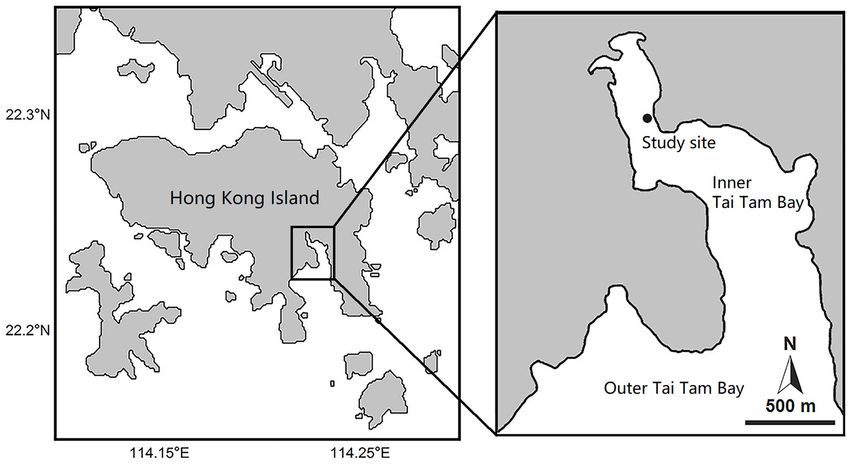
Hopkins and Ferguson, 2012). These models can also incorporate Island, Hong Kong, China, during the summertime (Figure 1).
uncertainty and variation in input parameters, such as changes in Hong Kong experiences a subtropical climate with an average
the consumers, food sources, and trophic discrimination factors, summer temperature of around 28◦ C, and the study area is
which often occur in natural ecosystems, and thus provide a more pristine without much human disturbance, with mean dissolved
accurate assessment of consumer diets (Moore and Semmens, oxygen of about 9.67 mg/L, pH 8.0, and salinity 32 (Chiu et al.,
2008; Swan et al., 2020). However, the application of NASI is most 1994; Chan and Morton, 2001; Cheung et al., 2003; Liu et al.,
useful in ecosystems in which primary producers have distinct 2011). Inner Tai Tam Bay has been designated as a Site of Special
isotope values from their consumers (Moncreiff and Sullivan, Scientific Interest by the Hong Kong government, as the area
2001). The utility of NASI to identify dietary sources may be covers a diversity of intertidal habitats with various plant and
reduced within systems where primary producers have similar animal communities (Che and Morton, 1991). The investigation
isotope values. One way of solving this problem is to use NASI site chosen for this study was an intertidal area adjacent to an H.
coupled with isotope tracer addition (Carman and Fry, 2002; minor seagrass bed.
Levin et al., 2006; Mäkelä et al., 2017; Braeckman et al., 2018; The field investigation was conducted during the summer
Yorke et al., 2019). This is based on the rationale that isotope (August), in which potential food sources including BMA, POM,
tracer addition can enhance the differences in the isotope values and seagrass detritus of H. minor, as well as consumers including
of the primary producers by creating a unique isotope label, and dominant meio- and macrofauna, were collected during the
the label then enters the food web through consumption of the pre- and post-isotope tracer addition at the study site. Isotope
labeled primary producers. Hence, in combination with NASIs, tracer addition was carried out in three 1 × 1 m experimental
isotope tracer addition allows for a better resolution of food plots in the first 7 days during a 21-day experiment. Each plot
source contribution and determination of the trophic status of was separated by a linear distance of 10 m and was marked at
Frontiers in Marine Science | www.frontiersin.org 2 October 2021 | Volume 8 | Article 657044Xu et al. Isotope Addition Reveals Trophic Status
FIGURE 1 | The study site at inner Tai Tam Bay on the southern coast of Hong Kong Island, Hong Kong SAR, China.
the corners with PVC poles. Within each plot, the sediment the suspended material (without sand) was filtered onto a pre-
was directly sprayed with 250 ml of 15 NH4 Cl solution (18.5 mg combusted Whatman GF/F filter with 0.7 µm retention. Filter
15 NH Cl m−2 , Carman and Fry, 2002) daily at low tide during papers were acidified in HCl vapor for 24 h to remove carbonates
4
the 7-day isotope tracer addition. 15 NH4 Cl (Sigma-Aldrich, St. and dried at 60◦ C to a constant weight prior to stable isotope
Louis, USA) was dissolved in Whatman GF/F filtered seawater analysis. POM was collected as an indication of phytoplankton
collected on site and applied in the field using a common by filtering near-bottom seawater in situ on pre-combusted
garden sprayer. The tracer was unlikely to be absorbed by Whatman GF/F filter (0.7 µm porosity). Water samples were
phytoplankton and seagrass detritus because of the dilution of collected at high tide (± 1 h) by hand pumping near-bottom
the isotope addition by the tide, and there was no take-up of water into nine 2 L Nalgene bottles near the experimental area
isotope label by the dead detritus as shown by Galván et al. where isotope tracer addition was conducted. Samples were
(2008). sieved by a 63 µm mesh to remove large zooplankton, and
Samples of potential food sources and consumers were the residues were then examined microscopically. The portion
collected adjacent to the experimental plots prior to the dailyXu et al. Isotope Addition Reveals Trophic Status
TABLE 1 | Natural abundance stable isotope δ13 C and δ15 N values of primary producers and infauna (data from Xu et al., 2018), and δE (highest observed enrichment
values minus natural abundance isotope values) over the 21-day experiment and average natural abundance (NA) δ13 C values from the 21-day experiment.
Natural abundance δ13 C (n) δ15 N (n) Feeding type
Food sources
Seagrass −10.0 ± 0.4 (3) 5.8 ± 0.5 (3)
BMA −22.3 ± 0.3 (9) 6.4 ± 0.4 (9)
POM −23.6 ± 0.5 (9) 5.5 ± 0.4 (9)
Consumers
(1) Nematodes
Daptonema sp. −19.6 ± 0.4 (3) 8.7 ± 0.4 (3) Non-selective deposit feedera
Ditlevsenella sp. −16.6 ± 1.3 (3) 9.9 ± 0.2 (3) Carnivore/omnivorea
Spilophorella sp. −9.8 ± 0.4 (3) 8.7 ± 0.0 (3) Epigrowth feeder (grazer)a
Bulk nematodes −19.7 ± 0.7 (3) 8.9 ± 0.6 (3) –
(2) Copepods −20.9 ± 0.2 (3) 9.7 ± 0.6 (3) Herbivore/omnivoreb
(3) Polychaetes
Neanthes sp. −16.9 ± 1.2 (5) 9.7 ± 0.6 (5) Omnivorec,d
Eunice sp. −15.4 ± 0.7 (3) 15.2 ± 1.1 (3) Carnivorec,d
15 13 E
N-enriched Average NA δ C Highest δ
Food source
BMA −22.1 2578.9
Consumers
(1) Nematodes
Daptonema sp. −19.5 973.0 Non-selective deposit feedera
Ditlevsenella sp. −16.4 115.3 Carnivore/omnivorea
Spilophorella sp. −9.7 514.0 Epigrowth feeder (grazer)a
Bulk nematodes −14.4 876.8 –
(2) Copepods −20.7 2,046.0 Herbivore/omnivoreb
(3) Polychaetes
Neanthes sp. −16.7 174.4 Omnivorec,d
Eunice sp. −15.7 150.7 Carnivorec,d
a (Wieser,1953); b (De Troch et al., 2006); c (Fauchald and Jumars, 1979); d (Jumars et al., 2015).
Single values represent pooled samples; other values are means ± SD of pooled samples (number of replicates are shown in parentheses).
of polychaetes was used for stable isotope analysis. At least five such as Ditlevsenella sp., at least 100 individuals were pooled
individuals were pooled, oven-dried at 60◦ C, and homogenized to represent one replicate. For average-sized nematodes such as
through grinding. Then, 1 mg of homogenized materials was Daptonema sp. and Spilophorella sp., at least 1,000 individuals
transferred to a pre-combusted tin capsule for stable isotope were pooled as one replicate. For harpacticoid copepods, at least
analysis. Sediments for meiofaunal samples were processed 1,000 individuals were also pooled as one replicate. While for
according to Heip et al. (1985) by centrifugation with colloidal isotope-enriched samples, the number of individuals of the same
Ludox solution diluted to gravity of 1.15 with distilled water, in meiofaunal species/group required per sample was half of that
which the process would not significantly change the 13 C and 15 N used for NASIs. Dried biomass of the same genus of polychaetes
isotope values of meiofauna (e.g., nematodes) as demonstrated and nematodes and all the harpacticoid copepod individuals were
by Moens et al. (2002). The supernatant containing meiofauna pooled together to obtain adequate sample mass for stable isotope
was then rinsed through a 38 µm screen with distilled water. analysis and to homogenize spatial variability in the study area.
The residues on the screen were washed onto a Petri dish, then,
nematodes and copepods were handpicked and rinsed to remove
adhering particles, and transferred to a drop of distilled water in
Stable Isotope Analysis
All the samples including NASIs and stable isotope tracer were
pre-combusted tin capsules. Sorting of nematodes was conducted
analyzed in the Stable Isotope Facility, University of California,
under a stereomicroscope only for those dominant and easily
Davis, USA. Isotope values were reported in the standard δ-
recognizable specimens that could be identified to genus level.
unit notation:
Other small-sized nematodes that could not be identified to genus
level were pooled together as bulk nematode samples. To obtain
enough biomass for NASI analysis, for large-sized nematodes δX = [(Rsample /Rreference ) − 1]×1, 000‰
Frontiers in Marine Science | www.frontiersin.org 4 October 2021 | Volume 8 | Article 657044Xu et al. Isotope Addition Reveals Trophic Status
15
TABLE 2 | N enrichment and natural abundance δ13 C in primary producers and infauna over the 21-day isotope tracer study.
Day 3 Day 7 Day 14 Day 21
δ13 C δE δ13 C δE δ13 C δE δ13 C δE
BMA −21.9 825.4 −22.9 2578.9 −22.0 131.9 −21.6 16.1
Daptonema sp. −19.7 24.9 −18.9 762.8 −19.4 973.0 −19.9 373.9
Ditlevsenella sp. −16.7 6.6 −16.3 76.4 −16.7 91.0 −16.0 115.3
Spilophorella sp. −9.2 69.5 −9.7 514.0 −9.8 337.4 −10.0 56.9
Bulk nematodes −14.7 59.9 −13.6 876.8 −16.7 409.5 −12.5 135.4
Copepods −21.2 480.7 −21.1 2046.0 −20.3 972.3 −20.3 330.9
Neanthes sp. −17.0 34.5 −16.4 136.7 −16.8 174.4 −16.4 138.4
Eunice sp. −15.7 7.4 −15.9 48.1 −16.2 111.1 −14.9 150.7
Day 7 was the last day of 15 N addition; Days 14 and 21 were the first and second weeks after cessation of 15 N addition. δ E is the enriched δ 15 N value for that sampling day minus
natural abundance δ 15 N from Day 0.
where X is 13 C or 15 N, and R is 13 C:12 C or 15 N:14 N, respectively. mass similar to polychaetes studied in the present experiment.
These values were reported relative to standards, the Vienna- Moreover, it tends to take a longer time for carnivores to reach
PeeDee Belemnite (V-PDB), and air N2 . tissue equilibrium with isotope addition than herbivores, due
to their higher trophic levels. To determine the food source
Data Analysis contribution of diets in the isotope tracer addition experiment,
The possible contributions of potential food sources to the mean natural abundance δ13 C values and highest δ15 N values
consumers (nematodes, copepods, and polychaetes) from the were used from the results of the 21-day study.
NASI data before isotope tracer addition (published in Xu
et al., 2018) and from the 15 N addition experiment were
determined using the Bayesian mixing model developed in RESULTS
the software IsotopeR 0.4 package (Hopkins and Ferguson,
2012) under the R 3.10 software (R Core Development Team, Natural abundance stable isotope values of primary producers
2014). Trophic enrichment factors used for computations were and consumers prior to the isotope tracer addition experiment
based on the published values from various sources reported are listed in Table 1, as extracted from Xu et al. (2018). Briefly,
in Vander Zanden and Rasmussen (2001). For herbivores, the the NASI values of the food sources ranged from −23.6‰
values adopted were −0.4‰ ± 1.1 (Mean ± SD) for δ13 C and (POM) to −10.0‰ (seagrass detritus) for δ13 C and ranged from
2.5‰ ± 2.5 for δ15 N. For carnivores/omnivores, the values used 5.5‰ (POM) to 6.4‰ (BMA) for δ15 N before the isotope tracer
were 0.9‰ ± 1.0 for δ13 C and 3.2‰ ± 0.4 for δ15 N. The addition commenced. BMA and POM had similar NASI values,
proportional contribution of food sources in the isotope tracer while seagrass detritus showed more 13 C enriched than other
addition experiment was calculated following the method by food sources. The δ13 C signatures of the consumers ranged
Galván et al. (2008), in which δE (highest δ15 N observed during from −20.9‰ (copepods) to −9.8‰ (nematode Spilophorella
the 21-day experiment minus natural abundance δ15 N before sp.). The δ15 N signatures of the consumers spanned 6.5‰
isotope tracer addition) of BMA and benthic consumers were and their δ15 N values were at least 3‰ higher than their
used instead of natural abundance δ15 N in the Bayesian mixing food sources. The carnivorous polychaetes Eunice sp. showed
model. The highest observed values were used because the tissue an increase in δ15 N compared with other consumers, which
turnover rates of the consumers are assumed to be rapid and reflected a higher contribution of nematodes and copepods to
that all the fauna can reach an isotope steady-state equilibrium their diets. However, the omnivorous polychaete Neanthes sp.
with the new labeled food sources. The interspecific differences in and carnivorous/omnivorous nematode Ditlevsenella sp. showed
15 N addition during the 21-day experiment may be resulted from relatively lower δ15 N than polychaete Eunice sp., indicating a
different tissue turnover times or different labeled and unlabeled lower dependence of animals in their diets.
food source contributions in their diets. Consumers with smaller For the results of the 15 N addition experiment (Table 2),
body sizes are considered to reach their tissue equilibrium more the 15 N-enriched label was taken up by the BMA quickly, as
quickly than larger ones and may assimilate more 15 N-enriched the enrichment above NASI values was observed on Day 3, the
isotopes over a short period of time. The duration of the present earliest sampling time after the start of the tracer addition. The
experiment was based on information from a previous stable δ15 N isotope values of BMA increased over the 7-day addition
isotope study with a tissue turnover time of about 3 days for period, with a peak enrichment value of 2,578.9‰ higher than
meiofauna (Carman and Fry, 2002). For larger-sized consumers, the NASI levels (Tables 1, 2). All the nematodes, copepods,
such as polychaetes, the tissue turnover times were assumed in and polychaetes investigated became 15 N-enriched beyond the
the range of 6–9 days, based on the findings by Doi et al. (2007) NASI values during the 21-day study (Table 2). Copepods were
for stable isotopes in deposit-feeding chironomids with a body highly enriched and quickly reached a value of 2,046.0‰ on
Frontiers in Marine Science | www.frontiersin.org 5 October 2021 | Volume 8 | Article 657044Xu et al. Isotope Addition Reveals Trophic Status
TABLE 3 | Mixing model results from natural abundance stable isotopes (data from Xu et al., 2018) and isotope tracer addition data for mean percentage (SD) of food
sources in the diet of animals (– = food source was not included).
BMA POM Seagrass detritus Nematodes Copepods
Natural abundance
Daptonema sp. 40.9 (39.3) 31.1 (33.8) 28.0 (17.9) – –
Ditlevsenella sp. 23.0 (36.6) 15.5 (30.2) 31.4 (38.2) 22.1 (37.3) 8.0 (22.8)
Spilophorella sp. 1.3 (10.9) 1.0 (9.8) 97.7 (14.5) – –
Copepods 59.4 (45.8) 33.1 (43.0) 7.5 (11.5) – –
Neanthes sp. 34.9 (20.7) 11.3 (21.1) 38.0 (13.4) 8.4 (15.5) 7.3 (11.8)
Eunice sp. 0.3 (5.0) 0.5 (4.9) 4.8 (15.1) 76.4 (41.1) 18.0 (34.5)
15
N-enriched
Daptonema sp. 69.1 (29.2) 10.1 (22.9) 20.8 (11.8) – –
Ditlevsenella sp. 0.6 (3.7) 38.5 (15.6) 53.7 (10.2) 0.4 (2.3) 6.8 (17.8)
Spilophorella sp. 0.5 (6.5) 0.6 (7.5) 98.9 (9.9) – –
Copepods 92.5 (21.8) 4.2 (18.5) 3.3 (8.6) – –
Neanthes sp. 1.2 (6.6) 40.8 (17.1) 44.3 (20.4) 12.8 (30.4) 1.1 (8.61)
Eunice sp. 0.4 (2.5) 15.5 (18.9) 46.9 (25.9) 18.4 (37.2) 18.8 (24.6)
Day 7, the last day of isotope tracer addition, and the values resources to the benthic food web. This can be illustrated by the
decreased to 972.3 and 330.9‰, respectively, on 7 and 14 days results of the isotope tracer addition that BMA was in fact an
after the addition of isotope tracer was stopped. Nematodes important diet for some infauna only. Hence, such isotope tracer
Daptonema sp. and Spilophorella sp. were enriched to 973.0 and addition experiments can allow for a wider food-web resolution
514.0‰ on Day 14 and Day 7, respectively. Polychaetes Eunice than the use of NASIs alone, particularly in ecosystems where
sp. and Neanthes sp. showed an increase in their enriched isotope NASI values of primary producers are similar (Galván et al.,
values progressively and reached the highest values of 150.7 and 2008).
174.4‰, respectively, on Days 21 and 14, 2 weeks and 1 week A high 15 N label uptake found in nematode Daptonema
after 15 N addition was completed. sp. and copepods confirmed the importance of BMA and
Results of the Bayesian mixing model from the isotope tracer indicated a higher contribution of BMA in their diets than
addition data in Table 3 suggested a larger contribution of BMA based on NASI alone. The present findings agreed with many
in the diets of nematode Daptonema sp. and copepods than the studies showing that grazing on diatoms is a common feeding
model output from NASI data alone. For nematode Spilophorella strategy of harpacticoid copepods and nematode Daptonema
sp., both model results from NASIs and isotope tracer addition sp. in shallow sediments (Moens and Vincx, 1997; Moens
data supported a dominant diet of seagrass detritus. However, et al., 2005; De Troch et al., 2006; Cnudde et al., 2015; van
for polychaete Neanthes sp., model results from the isotope der Heijden et al., 2019). The 15 N label uptake by nematode
tracer addition data did not reveal the importance of BMA in Spilophorella sp. was found much lower compared with its
their diet, which contradicted the model output from the NASI counterpart nematode Daptonema sp. and copepods, suggesting
values. Although data from isotope tracer addition indicated the a much lesser contribution of BMA and the importance of
importance of both POM (40.8%) and seagrass detritus (44.3%) other isotope-unlabeled food sources in its diet. Mixing model
to the diet of Neanthes sp., results of the mixing model based outputs from both NASI and isotope tracer addition data also
on NASI data revealed that POM contributed little to its diet. supported the finding that seagrass detritus contributed the
For polychaete Eunice sp., the model output from NASI data most in the food source of nematode Spilophorella sp., with
showed that nematodes and copepods supported more than 94% more than 97% in its dietary contribution (Table 3). However,
of its diet; however, model results from the isotope tracer addition with a heavily cuticularized mouthpart structure, nematode
study indicated that meiofaunal prey only constitutedXu et al. Isotope Addition Reveals Trophic Status
as the major contribution to the diet of Neanthes japonica in
an estuarine environment (Kikuchi and Wada, 1996), while the
same species also consumed decomposed macrophytes much
faster than fresh materials (Tsuchiya and Kurihara, 1979). As
reported in the literature, meiofauna, small crustaceans, and
polychaetes are also found consumed by various Neanthes species
[Kay and Brafield, 1973; Cammen, 1980; Pardo and Dauer,
2003; National Introduced Marine Pest Information System
(NIMPIS), 2006]. The polychaete Eunice sp. is classified as a
carnivore, which has a pair of mandibles and a complex set of
maxillae with a strong muscular, eversible pharynx (Fauchald
and Jumars, 1979; Jumars et al., 2015). The relatively high
natural abundance δ15 N in Eunice sp. also suggested a predatory
feeding mode (Figure 2). During the isotope tracer addition
experiment, Eunice sp. reached a maximum nitrogen value of
150.7‰ (Table 2), suggesting that it fed on 15 N-enriched prey in
the experimental plots.
Seagrass as a Food Source
Epigrowth and deposit-feeding infauna are widely distributed
on shallow intertidal mudflats, regardless of whether they were
proximate to macrophytes (Da Rocha et al., 2006; Galván
et al., 2008). Epigrowth feeders, however, are characterized
by the presence of a buccal armature, supposedly used to
either scrape off particles from a substrate or to damage
and open food items before emptying them (Moens and
Vincx, 1997). Most published isotope studies showed that they
mainly feed on BMA and phytoplankton (van Oevelen et al.,
2006; Kanaya et al., 2008; Lebreton et al., 2011; Christianen
et al., 2017). However, some studies have indicated macrophyte
detritus in the diets of meiofauna as well as some polychaetes
(Lebreton et al., 2012; Vafeiadou et al., 2013; Ha et al., 2014;
Rossi et al., 2015). Most of these previous studies revealed
limited assimilation of macrophyte detritus by the benthos.
However, this study showed a very high contribution of
seagrass detritus in the diet of nematode Spilophorella sp. from
FIGURE 2 | (A) Natural abundance stable isotope bi-plot (δ15 N and δ13 C; prior the model results of both NASI and isotope tracer addition
to isotope addition, data from Xu et al., 2018) and (B) 15 N-addition (δE ) stable data. The present observations, which are also indicated by
isotope values of primary producers and consumers during the 21-day other studies (Carman and Fry, 2002; Galván et al., 2008;
experiment plotted against average δ13 C (±SD) values over the 21-day study.
Nematodes are shown in circles, copepods in squares, polychaetes in
Vafeiadou et al., 2014), suggested that infaunal organisms
diamonds, and primary producers in triangles. have flexible dietary needs and feeding strategies that may
change spatially and temporally as well as vary among species,
making a generalization of the food-web position of infauna
difficult. Thus, the feeding ecology of benthic infauna should
the contribution of 15 N-labeled BMA to the diet of Neanthes sp. be interpreted with caution and cannot be relied on buccal
was minimal (circa 1%), implying a greater reliance on isotope- morphology alone.
unlabeled food sources, such as POM and seagrass detritus The refractory nature of macrophytes may make them
in this study (Table 3). The model output from isotope tracer difficult to serve as a food source for the infauna (Campanyà-
addition data also revealed a certain amount of nematodes and Llovet et al., 2017). However, microbial activities are shown
copepods in the diet of polychaete Neanthes sp. The progressive to be able to enhance nutritional quality (Holmer et al.,
increase of the 15 N-enriched values in the present isotope tracer 2004; Guy, 2010). Microbial decomposition of macrophyte
addition experiment could be a result of its feeding on the detritus has been widely reported, and there are also studies
15 N-enriched prey. Neanthes sp. is an opportunistic feeder. Its illustrating the consumption of such bacteria by infauna
jawed, eversible proboscis is used primarily to ingest sediment through microbial grazing (Danovaro, 1996; Vafeiadou et al.,
deposits, but it is also capable of grazing some plant material 2013). Majdi et al. (2012) found that grazing on BMA
and facultatively capturing small invertebrates (Craig et al., 2003). only covered a small part of the energetic requirements for
In agreement with our findings, phytoplankton was identified Chromadoridae nematode Chromadorina sp., suggesting that
Frontiers in Marine Science | www.frontiersin.org 7 October 2021 | Volume 8 | Article 657044Xu et al. Isotope Addition Reveals Trophic Status
this species probably feeds on other biofilm food sources. such slow-turnover ecosystems (Fry, 2006). The application
Nevertheless, the isotope values of these bacteria which can of NASIs also helps distinguish trophic levels in food-web
decompose macrophyte detritus and are subsequently consumed ecology. A joint strategy of using NASIs coupled with isotope
by bacteria-feeding infauna should reflect the isotope values tracer addition is thus recommended in the investigation of
of the macrophyte detritus originally present in the sediment. ecosystems where primary producers have similar isotope values,
Our mixing model results from both NASIs and isotope especially in ecosystems in which lower tissue turnover rates
tracer addition also revealed that nematode Spilophorella sp., are apparent.
belonging to the same family Chromadoridae, consumed a
large part of seagrass (>97%) in their diet. Hence, it is CONCLUSION
possible that Spilophorella may also graze on a large amount of
bacteria associated with the decomposition of seagrass in the This study demonstrated that the application of 15 N-
study area. enriched NH4 Cl to the surface sediment created distinct
isotope values of primary producers, which increased the
Comparison of Isotope Tracer Addition and resolution for the determination of the dietary contribution
Natural Abundance Stable Isotopes of the consumers. However, it should be noted that isotope
For nematode Daptonema sp. and copepods, the model output addition may also generate confusing information if the
from the NASI values overestimated the proportion of POM results are not interpreted carefully. One problem is the
but underestimated the proportion of BMA in its diets time lag of enrichment of stable isotope tracer, as shown
comparing with the model results from isotope tracer addition in the findings of carnivorous/omnivorous infauna in this
data (Table 3). However, for polychaete Neanthes sp., only study, as tissue equilibrium with the isotope tracer addition
the addition of a 15 N-enriched tracer elucidated the dietary may not have been reached over a short period of time.
importance of phytoplankton and seagrass detritus. These As such, a combination of NASIs coupled with isotope
findings highlight the difficulty for the mixing model to output tracer addition would be a better approach to investigate
accurate assessments when food sources have similar isotope dietary contributions and trophic status of consumers
values and may lead to a false conclusion in the dietary in ecosystems where primary producers have similar
composition if using NASIs alone. However, the isotope tracer isotope values, especially in ecosystems with lower tissue
addition method may also provide confusing information if turnover rates.
it is not applied carefully. For nematode Ditlevsenella sp. and
polychaete Eunice sp., the present isotope tracer data indicated DATA AVAILABILITY STATEMENT
a contrasting result of the relatively lower contribution of
meiofauna in its diets as compared to the model results from The original contributions presented in the study are included
NASIs (Table 3). An overestimation of POM and seagrass by in the article/supplementary material, further inquiries can be
the present isotope tracer addition experiment might be caused directed to the corresponding author/s.
by the error that an equilibrium of isotopic signatures has
not been reached in these consumers during the 21-day study AUTHOR CONTRIBUTIONS
period. There are also possibilities that the labeled BMA was
not utilized by some consumers, and/or BMA produced before PS designed the experiment and revised and edited the
the application of 15 N tracer addition contributed to the diet manuscript. WX conducted the experiment with the help of AT
of some consumers. In the present experiment, overestimations and wrote the manuscript. YD, SC, ZZ, and JS gave constructive
of POM were found in the omnivorous/carnivorous species comments and revised the manuscript. All the authors approved
(nematode Ditlevsenella sp. and polychaete Eunice sp.), with the final manuscript.
relatively larger body size and lower tissue turnover rate. There
is most likely a time lag in the isotope enrichment of their body FUNDING
tissues because they have not reached tissue equilibrium with
15 N over a short-term (7-day) provision of the isotope-labeled
This work was supported by the National Key Research and
food sources. Development Project of China (No. 2019YFC1407803), the
Overall, there are complementary strengths and weaknesses Natural Science Foundation of China (No. 41706184), and the
for the NASI and isotope tracer addition approaches. The isotope General Research Fund (No. CityU 161009) from the Research
tracer addition is capable of distinguishing the importance Grants Council of the HKSAR Government.
of the isotope-labeled source in ecosystems where primary
producers have similar isotope values. However, isotope tracer ACKNOWLEDGMENTS
does not readily infiltrate in systems with lower tissue
turnover rates, especially in short-term experiments. Hence, We thank Prof. Xiaoshou Liu for his advice on meiofaunal
in this regard, the use of NASIs can provide a better sampling and Prof. Youji Wang for his technical assistance in the
solution to identify food sources and trophic pathways in field and laboratory.
Frontiers in Marine Science | www.frontiersin.org 8 October 2021 | Volume 8 | Article 657044Xu et al. Isotope Addition Reveals Trophic Status
REFERENCES saltmarsh infauna. Mar. Ecol. Prog. Ser. 359, 37–49. doi: 10.3354/meps
07321
Braeckman, U., Janssen, F., Lavik, G., Elvert, M., Marchant, H., Buckner, C., Galván, K., Fleeger, J. W., Peterson, B., Drake, D., Deegan, L. A., and Johnson, D.
et al. (2018). Carbon and nitrogen turnover in the Arctic deep sea: in situ S. (2011). Natural abundance stable isotopes and dual isotope tracer additions
benthic community response to diatom and coccolithophorid phytodetritus. help to resolve resources supporting a saltmarsh food web. J. Exp. Mar. Biol.
Biogeosciences 15, 6537–6557. doi: 10.5194/bg-15-6537-2018 Ecol. 410, 1–11. doi: 10.1016/j.jembe.2011.08.007
Braeckman, U., Provoost, P., Sabbe, K., Soetaert, K., Middelburg, J. J., Vincx, M., Gee, J. M. (1989). An ecological and economic review of meiofauna as food
et al. (2015). Temporal dynamics in a shallow coastal benthic food web: insights for fish. Zool. J. Linn. Soc. 96, 243–261. doi: 10.1111/j.1096-3642.1989.tb0
from fatty acid biomarkers and their stable isotopes. Mar. Environ. Res. 108, 2259.x
55–68. doi: 10.1016/j.marenvres.2015.04.010 Guy, H. (2010). The microbial role in carbon cycling within seagrass sediments.
Buffan-Dubau, E., and Carman, K. R. (2000). Diel feeding behavior of meiofauna Plymouth Student Sci. 3, 234–244. Available online at: http://hdl.handle.net/
and their relationships with microalgal resources. Limnol. Oceanogr. 45, 10026.1/13905
381–395. doi: 10.4319/lo.2000.45.2.0381 Ha, S. Y., Min, W.-K., Kim, D.-S., and Shin, K.-H. (2014). Trophic
Bunn, S. E., Loneragan, N. R., and Kempster, M. A. (1995). Effects of acid washing importance of meiofauna to polychaetes in a seagrass (Zostera marina)
on stable isotope ratios of C and N in penaeid shrimp and seagrass: implications bed as traced by stable isotopes. J. Mar. Biol. Assoc. U.K. 94, 121–127.
for food-web studies using multiple stable isotopes. Limnol. Oceanogr. 40, doi: 10.1017/S0025315413001148
622–625. doi: 10.4319/lo.1995.40.3.0622 Heip, C., Vincx, M., and Vranken, G. (1985). The ecology of marine nematodes.
Cammen, L. M. (1980). The significance of microbial carbon in the nutrition Oceanogr. Mar. Bio. Ann. Rev. 23, 313–328.
of the deposit feeding polychaete Nereis succinea. Mar. Biol. 61, 9–20. Herman, P. M. J., Middelburg, J. J., Widdows, J., Lucas, C. H., and Heip, C. H.
doi: 10.1007/BF00410337 R. (2000). Stable isotopes as trophic tracers: combining field sampling and
Campanyà-Llovet, N., Snelgrove, P. V. R., and Parrish, C. C. (2017). Rethinking the manipulative labelling of food resources for macrobenthos. Mar. Ecol. Prog. Ser.
importance of food quality in marine benthic food webs. Prog. Oceanogr. 156, 204, 79–92. doi: 10.3354 /Meps204079
240–251. doi: 10.1016/j.pocean.2017.07.006 Holmer, M., Duarte, C. M., Boschker, H. T. S., and Barrón, C. (2004). Carbon
Carman, K. R., and Fry, B. (2002). Small-sample methods for δ13 C and δ15 N cycling and bacterial carbon sources in pristine and impacted Mediterranean
analysis of the diets of marsh meiofaunal species using natural-abundance seagrass sediments. Aquat. Microb. Ecol. 36, 227–237. doi: 10.3354/ame036227
and tracer-addition isotope techniques. Mar. Ecol. Prog. Ser. 240, 85–92. Hopkins, I. I. I. J. B., and Ferguson, J. M. (2012). Estimating the diets of animals
doi: 10.3354/meps240085 using stable isotopes and a comprehensive Bayesian mixing model. PloS ONE
Chan, K., and Morton, B. (2001). The distribution of Nassarius festivus in Hong 7:e28478. doi: 10.1371/journal.pone.0028478
Kong with a description and hydrographic analysis of three study sites at Jackson, A. L., Inger, R., Bearhop, S., and Parnell, A. (2009). Erroneous
Starfish Bay, Tai Tam Bay and Tai Mong Tsai. Asian Mar. Biol. 18, 143–162. behaviour of MixSIR, a recently published Bayesian isotope mixing model:
Che, R. G. O., and Morton, B. (1991). Spatial and temporal variations in the a discussion of Moore and Semmens (2008). Ecol. Lett. 12, E1–E5.
subtidal microbenthic community of Tai Tam Bay, Hong Kong. Asian Mar. Biol. doi: 10.1111/j.1461-0248.2008.01233.x
8, 193–216. Jumars, P. A., Dorgan, K. M., and Lindsay, S. M. (2015). Diet of worms emended:
Cheung, K. C., Wong, M. H., and Yung, Y. K. (2003). Toxicity assessment of an update of polychaete feeding guilds. Annu. Rev. Mar. Sci. 7, 497–520.
sediments containing tributyltin around Hong Kong harbour. Toxicol. Lett. doi: 10.1146/annurev-marine-010814-020007
137, 121–131. doi: 10.1016/s0378-4274(02)00386-7 Kanaya, G., Takagi, S., and Kikuchi, E. (2008). Dietary contribution of the
Chiu, H. M. C., Hodgkiss, I. J., and Chan, B. S. S. (1994). Ecological studies microphytobenthos to infaunal deposit feeders in an estuarine mudflat in Japan.
of phytoplankton in Tai Tam Bay, Hong Kong. Hydrobiologia 273, 81–94. Mar. Biol. 155, 543–553. doi: 10.1007/s00227-008-1053-5
doi: 10.1007/bf00006850 Kay, D. G., and Brafield, A. E. (1973). The Energy Relations of the Polychaete
Christianen, M. J. A., Middelburg, J. J., Holthuijsen, S. J., Jouta, J., Compton, T. J., Neanthes (= Nereis) virens (Sars). J. Anim. Ecol. 42, 673–692.
van der Heide, T., et al. (2017). Benthic primary producers are key to sustain the Kikuchi, E., and Wada, E. (1996). Carbon and nitrogen stable isotope
Wadden Sea food web: stable carbon isotope analysis at landscape scale. Ecology ratios of deposit-feeding polychaetes in the Nanakita River Estuary, Japan.
98, 1498–1512. doi: 10.1002/ecy.1837 Hydrobiologia 321, 69–75. doi: 10.1007/BF00018678
Cnudde, C., Moens, T., Werbrouck, E., Lepoint, G., Van Gansbeke, D., and Lebreton, B., Richard, P., Galois, R., Radenac, G., Brahmia, A., Colli, G., et al.
De Troch, M. (2015). Trophodynamics of estuarine intertidal harpacticoid (2012). Food sources used by sediment meiofauna in an intertidal Zostera
copepods based on stable isotope composition and fatty acid profiles. Mar. Ecol. noltii seagrass bed: a seasonal stable isotope study. Mar. Biol. 159, 1537–1550.
Prog. Ser. 524, 225–239. doi: 10.3354/meps11161 doi: 10.1007/s00227-012-1940-7
Craig, S. F., Thoney, D. A., Schlager, N., and Hutchins, M. (eds.) (2003). Grzimek’s Lebreton, B., Richard, P., Galois, R., Radenac, G., Pfléger, C., Guillou, G., et al.
Animal Life Encyclopedia: vol. 2, Protostomes. Florence, KY: Cengage Gale. (2011). Trophic importance of diatoms in an intertidal Zostera noltii seagrass
Da Rocha, C. M. C., Venekey, V., Bezerra, T. N. C., and Souza, J. R. B. (2006). bed: Evidence from stable isotope and fatty acid analyses. Estuar. Coast. Shelf
Phytal marine nematode assemblages and their relation with the macrophytes Sci. 92, 140–153. doi: 10.1016/j.ecss.2010.12.027
structural complexity in a Brazilian Tropical Rocky Beach. Hydrobiologia 553, Lebreton, B., Richard, P., Radenac, G., Bordes, M., Bréret, M., Arnaud,
219–230. doi: 10.1007/s10750-005-0923-9 C., et al. (2009). Are epiphytes a significant component of intertidal
Danovaro, R. (1996). Detritus-Bacteria-Meiofauna interactions in a seagrass Zostera noltii beds? Aquat. Bot. 91, 82–90. doi: 10.1016/j.aquabot.2009.
bed (Posidonia oceanica) of the NW Mediterranean. Mar. Biol. 127, 1–13. 03.003
doi: 10.1007/BF00993638 Levin, L. A., Neira, C., and Grosholz, E. D. (2006). Invasive cordgrass modifies
De Troch, M., Chepurnov, V., Gheerardyn, H., and Vanreusel, A., Ólafsson, E. wetland trophic function. Ecology 87, 419–432. doi: 10.2307/20068956
(2006). Is diatom size selection by harpacticoid copepods related to grazer body Liu, X., Cheung, S. G., and Shin, P. K. S. (2011). Response of meiofaunal and
size? J. Exp. Mar. Biol. Ecol. 332, 1–11. doi: 10.1016/j.jembe.2005.10.017 nematode communities to sewage pollution abatement: a field transplantation
Doi, H., Kikuchi, E., Takagi, S., and Shikano, S. (2007). Changes in experiment. Chin. J. Oceanol. Limnol. 29, 1174–1185. doi: 10.1007/s00343-011-
carbon and nitrogen stable isotopes of chironomid larvae during growth, 0144-1
starvation and metamorphosis. Rapid Commun. Mass Spectrom. 21, 997–1002. Majdi, N., Tackx, M., Traunspurger, W., and Buffan-Dubau, E. (2012).
doi: 10.1002/rcm.2925 Feeding of biofilm-dwelling nematodes examined using HPLC-analysis of
Fauchald, K., and Jumars, P. A. (1979). The diet of worms: a study of polychaete gut pigment contents. Hydrobiologia 680, 219–232. doi: 10.1007/s10750-011-
feeding guilds. Oceanogr. Mar. Biol. Annu. Rev. 17, 193–284. 0920-0
Fry, B. (2006). Stable Isotope Ecology. New York, NY: Springer. Mäkelä, A., Witte, U., and Archambault, P. (2017). Ice algae versus phytoplankton:
Galván, K., Fleeger, J. W., and Fry, B. (2008). Stable isotope addition resource utilization by Arctic deep sea macroinfauna revealed through isotope
reveals dietary importance of phytoplankton and microphytobenthos to labelling experiments. Mar. Ecol. Prog. Ser. 572, 1–18. doi: 10.3354/meps12157
Frontiers in Marine Science | www.frontiersin.org 9 October 2021 | Volume 8 | Article 657044Xu et al. Isotope Addition Reveals Trophic Status
Moens, T., Bouillon, S., and Gallucci, F. (2005). Dual stable isotope abundances Vafeiadou, A. M., Materatski, P., Adão, H., De Troch, M., and Moens, T. (2014).
unravel trophic position of estuarine nematodes. J. Mar. Biol. Assoc. U.K. 85, Resource utilization and trophic position of nematodes and harpacticoid
1401–1407. doi: 10.1017/S0025315405012580 copepods in and adjacent to Zostera noltii beds. Biogeosciences 11, 4001–4014.
Moens, T., Luyten, C., Middelburg, J. J., Herman, P. M. J., and Vincx, M. (2002). doi: 10.5194/bg-11-4001-2014
Tracing organic matter sources of estuarine tidal flat nematodes with stable van der Heijden, L. H., Graeve, M., Asmus, R., Rzeznik-Orignac, J., Niquil,
carbon isotopes. Mar. Ecol. Prog. Ser. 234, 127–137. doi: 10.3354/meps234127 N., Bernier, Q., et al. (2019). Trophic importance of microphytobenthos
Moens, T., and Vincx, M. (1997). Observations on the feeding ecology and bacteria to meiofauna in soft-bottom intertidal habitats: a
of estuarine nematodes. J. Mar. Biol. Assoc. U.K. 77, 211–227. combined trophic marker approach. Mar. Environ. Res. 149, 50–66.
doi: 10.1017/s0025315400033889 doi: 10.1016/j.marenvres.2019.05.014
Moncreiff, C. A., and Sullivan, M. J. (2001). Trophic importance of epiphytic algae van Oevelen, D., Soetaert, K., Middelburg, J. J., Herman, P. M. J., Moodley,
in subtropical seagrass beds: evidence from multiple stable isotope analyses. L., Hamels, I., et al. (2006). Carbon flows through a benthic food web:
Mar. Ecol. Prog. Ser. 215, 93–106. doi: 10.3354/meps215093 Integrating biomass, isotope and tracer data. J. Mar. Res. 64, 453–482.
Moore, J. W., and Semmens, B. X. (2008). Incorporating uncertainty and prior doi: 10.1357/002224006778189581
information into stable isotope mixing models. Ecol. Lett. 11, 470–480. Vander Zanden, M. J., and Rasmussen, J. B. (2001). Variation in δ15 N and
doi: 10.1111/j.1461-0248.2008.01163.x δ13 C trophic fractionation: implications for aquatic food web studies. Limnol.
National Introduced Marine Pest Information System (NIMPIS) (2006). Alitta Oceanogr. 46, 2061–2066. doi: 10.4319/lo.2001.46.8.2061
Succina Information Page. NIMPIS Wainright, S. C., Weinstein, M. P., Able, K. W., and Currin, C. A. (2000).
Ouisse, V., Riera, P., Migne, A., Leroux, C., and Davoult, D. (2012). Food web Relative importance of benthic microalgae, phytoplankton and the detritus
analysis in intertidal Zostera marina and Zostera noltii communities in winter of smooth cordgrass Spartina alterniflora and the common reed Phragmites
and summer. Mar. Biol. 159, 165–175. doi: 10.1007/s00227-011-1796-2 australis to brackish-marsh food webs. Mar. Ecol. Prog. Ser. 200, 77–91.
Pardo, E. V., and Dauer, D. M. (2003). Particle size selection in individuals doi: 10.3354/meps200077
from epifaunal versus infaunal populations of the nereidid polychaete Wieser, W. (1953). Die Beziehungen zwischen Mundhöhlengestalt,
Neanthes succinea (Polychaeta: Nereididae). Hydrobiologia 496, 355–360. Ernährungsweise und Vorkommen bei freilebenden marinen Nematoden.
doi: 10.1023/A:1026181823273 Eine ökologisch-morphologische Studie. Ark. Zool. 4, 439–484.
Parnell, A. C., Inger, R., Bearhop, S., and Jackson, A. L. (2010). Source partitioning Xu, W. Z., Cheung, S. G., Zhang, Z.-N., and Shin, P. K. S. (2018).
using stable isotopes: coping with too much variation. PLoS ONE 5:e9672. Dual isotope assessment of trophic dynamics of an intertidal infaunal
doi: 10.1371/journal.pone.0009672 community with seasonal shifts in food sources. Mar. Biol. 165:221.
Qu, P., Zhang, Z., Pang, M., Li, Z., Zhao, L., Zhou, X., et al. (2019). Stable isotope doi: 10.1007/s00227-017-3278-7
analysis of food sources sustaining the subtidal food web of the Yellow River Yang, Z., Chen, J., Wang, C., Zhang, D., Lu, B., Wang, K., et al. (2020). Food sources
Estuary. Ecol. Indic. 101, 303–312. doi: 10.1016/j.ecolind.2019.01.021 of benthic communities at the Caiwei Guyot and Yap Trench, Northwestern
R Core Development Team. (2014). R: A Language and Environment for Statistical Pacific Ocean: inferences from carbon and nitrogen isotopes. J. Geophys. Res.
Computing. Vienna: R Foundation for Statistical Computing. Available online Biogeosci. 125:e2019JG005432. doi: 10.1029/2019jg005432
at: http://www.R-project.org/ Yorke, C. E., Page, H. M., and Miller, R. J. (2019). Sea urchins mediate the
Rossi, F., Baeta, A., and Marques, J. C. (2015). Stable isotopes reveal habitat- availability of kelp detritus to benthic consumers. Proc. Biol. Sci. 286:20190846.
related diet shifts in facultative deposit-feeders. J. Sea Res. 95, 172–179. doi: 10.1098/rspb.2019.0846
doi: 10.1016/j.seares.2014.07.004
Solomon, C. T., Carpenter, S. R., Clayton, M. K., Cole, J. J., Coloso, J. J., Pace, Conflict of Interest: The authors declare that the research was conducted in the
M. L., et al. (2011). Terrestrial, benthic, and pelagic resource use in lakes: absence of any commercial or financial relationships that could be construed as a
results from a three-isotope Bayesian mixing model. Ecology 92, 1115–1125. potential conflict of interest.
doi: 10.1890/10-1185.1
Swan, G. J. F., Bearhop, S., Redpath, S. M., Silk, M. J., Goodwin, C. E. D.,
Publisher’s Note: All claims expressed in this article are solely those of the authors
Inger, R., et al. (2020). Evaluating Bayesian stable isotope mixing models
and do not necessarily represent those of their affiliated organizations, or those of
of wild animal diet and the effects of trophic discrimination factors and
informative priors. Methods Ecol. Evol. 11, 139–149. doi: 10.1111/2041-210X. the publisher, the editors and the reviewers. Any product that may be evaluated in
13311 this article, or claim that may be made by its manufacturer, is not guaranteed or
Tsuchiya, M., and Kurihara, Y. (1979). The feeding habits and food endorsed by the publisher.
sources of the deposit-feeding polychaete, Neanthes japonica (Izuka).
J. Exp. Mar. Biol. Ecol. 36, 79–89. doi: 10.1016/0022-0981(79) Copyright © 2021 Xu, Dang, Cheung, Zhang, Sun, Teng and Shin. This is an open-
90101-1 access article distributed under the terms of the Creative Commons Attribution
Vafeiadou, A. M., Materatski, P., Adão, H., De Troch, M., and License (CC BY). The use, distribution or reproduction in other forums is permitted,
Moens, T. (2013). Food sources of macrobenthos in an estuarine provided the original author(s) and the copyright owner(s) are credited and that the
seagrass habitat (Zostera noltii) as revealed by dual stable isotope original publication in this journal is cited, in accordance with accepted academic
signatures. Mar. Biol. 160, 2517–2523. doi: 10.1007/s00227-013- practice. No use, distribution or reproduction is permitted which does not comply
2238-0 with these terms.
Frontiers in Marine Science | www.frontiersin.org 10 October 2021 | Volume 8 | Article 657044You can also read


