Supplementary Planning Guidance Waste Collection and Storage Facilities - Approved October 2016 - Cardiff Council
←
→
Page content transcription
If your browser does not render page correctly, please read the page content below
Supplementary Planning Guidance
Waste Collection and Storage Facilities
                    Approved October 2016

                                    Environment
                                            1
                       The City of Cardiff Council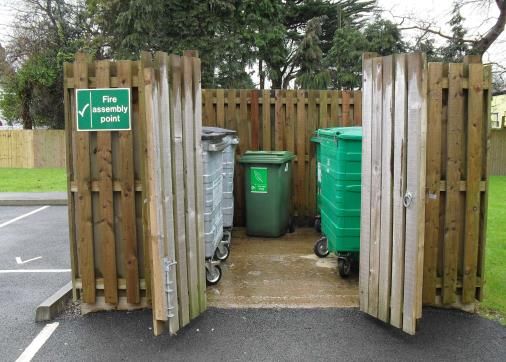
WASTE COLLECTION AND STORAGE FACILITIES SUPPLEMENTARY
                 PLANNING GUIDANCE OCTOBER 2016

Chapters                                                                        Page
           1   Introduction                                                        3
           2   Planning and Waste Policy                                           4
           3   Submitting Planning Applications                                    5
           4   Residential Developments                                            7
           5   Commercial Developments                                            12
           6   Bin Storage Enclosure and Design Specification                     14
           7   Collection Access                                                  18
           8   After Planning Approval                                            19

Appendices
         1 Key Policy 2 (KP2) and Waste Policy 2 (W2) from the                      20
           Local Development Plan
         2 Planning Condition Examples                                              21
         3 Bin Specification                                                        23
         4 Commercial Storage                                                       26
         5 Refuse Collection Vehicle Dimensions                                     27
         6 Consultation Representations and Responses                               28

           This document is available in Welsh / Mae’r ddogfen hon ar gael yn
                                        Gymraeg.

                                                                                2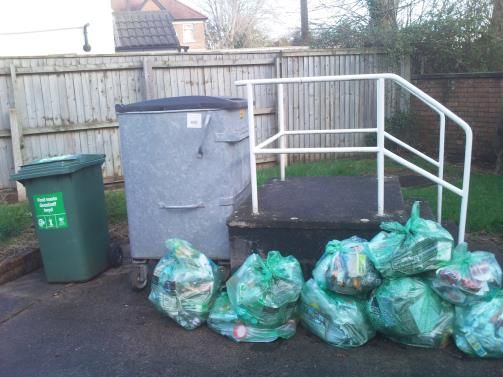
1 Introduction
1.1   This Supplementary Planning Guidance Note (SPG) supplements policies in the adopted
      Cardiff Local Development Plan (LDP) relating to the provision of waste management
      facilities in new development. This SPG was approved by Council on 20th October 2016.

1.2   Welsh Government support the use of Supplementary Guidance (SPG) to set out detailed
      guidance on the way in which development plan policies will be applied in particular
      circumstances or areas. SPG must be consistent with development plan polices and
      national planning policy guidance. SPG helps to ensure certain policies and proposals
      are better understood and applied more effectively. They do not have the same status as
      the adopted development plan but are a material consideration in the determination of
      planning applications. Policies in the LDP to which this SPG relates are identified in
      Chapter 2

1.3   This guide acts as a practical guide of minimum standards for planners, architects,
      developers and property managers, to assist in planning and designing storage and
      collection of refuse and recycling facilities in domestic and commercial developments.
      This will ensure they accord with the Council’s waste management strategies and
      collection arrangements.

1.4   Throughout this guide, development includes any new or altered building, any
      redevelopment and any change of use or conversion of existing buildings which requires
      planning permission.

1.5   The Council will work in partnership with developers to implement guidance on waste
      collection and storage facilities. However, where refuse storage accommodation is not
      provided in accordance with this guide, or with any agreed alternative arrangements,
      the council has a variety of powers either to secure compliance or to decline to accept
      adoption or waste collection proposals from developers.

1.6   The Council’s waste and recycling service is reviewed on a regular basis and
      applicants/agents are advised to contact us to ascertain that the details outlined within
      this document are still applicable at the time.

1.7   Where a specific issue is not covered, or clarification is required, enquiries can be made
      to:

      Waste Strategy
      City Operations
      Lamby Way Depot,
      Rumney
      CARDIFF
      CF3 2HP

      Telephone: 029 20717 500
      Fax: 029 2036 3420

      Email: WasteManagementPlanning@cardiff.gov.uk

                                                                                              3
2. Planning and Waste Policy
2.1   The European Union’s Directive on Waste has set many targets for waste and recycling
      for the member states, which are designed to allow greater sustainability of waste
      management. These targets include recycling 65% of municipal waste by 2030.

2.2   In response to the European Union’s Directive on Waste, the Welsh Government has
      developed further recycling targets in the Towards Zero Waste (2010) policy document.
      These targets are an obligation for every local authority in Wales with the long term goal
      to be a zero waste nation by 2050.

2.3   In light of these targets, further policy documents have been created to support the aim
      of sustainable waste management.

Planning Policy Wales (PPW)

2.4   The PPW document sets out the land use policies of the Welsh Government. Included are
      references for the consideration of waste provisions. Paragraph 12.7.3 states:

      “Adequate facilities and space for the collection, composting and recycling of waste
      materials should be incorporated into the design of any development and waste prevention
      efforts at the design, construction and demolition stage should be made by developers9. All
      opportunities should be explored to incorporate re-used or recyclable materials or
      products into a new building or structure.”

Technical Advice Note 21: Waste (TAN 21)

2.5   In support of the PPW, TAN 21 further implements the sustainable approach to waste
      management. Paragraph 2.1 states:

      “When considering development proposals for all types of waste management facilities,
      planning authorities should take into account their potential contribution to the objectives,
      principles and strategic waste assessments set out in Towards Zero Waste and the relevant
      waste sector plans and the relevant development plan for the area.”

Local Development Plan 2006-2026 (LDP)

2.6   This SPG has been produced in line with the most recent LDP which was adopted in
      2016.

2.7   The adopted LDP provides the statutory framework for the development and use of land
      within Cardiff over the Plan period (2006-2026).

2.8   Key Policy 12 (KP12) in the LDP outlines the waste management requirements for all
      new developments. See Appendix 1 for further details.

2.9   This document also supports Policy W2 from the LDP which outlines the requirement
      for appropriate waste provisions in all new developments. For further details see
      Appendix 1.

                                                                                                 4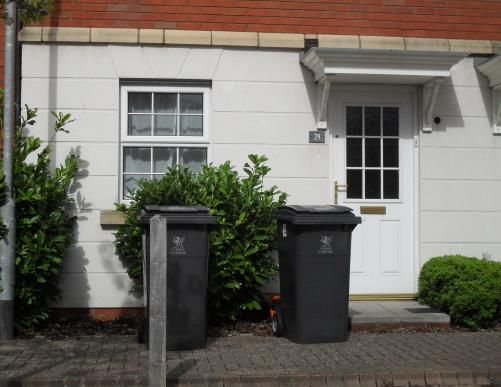
3 Submitting Planning Applications
3.1 Details of the location, volume, management and collection arrangements for waste and
recycling must be submitted as part of the following planning applications:
All full or reserved matters applications
Proposals of additional dwellings (including flat conversions)
Proposals of houses of multiple occupation (HMO)
Proposals of additional commercial floor space
Change of use applications
3.2 Relocated storage areas should be highlighted on site plans so that it can be confirmed
that they comply with current Waste Management requirements.
3.3 Applications should clearly identify;
An adequate footprint for the internal and external storage of all waste and
recycling
The proposed location for the storage of food waste, recycling and residual
waste (plus garden waste where required)
The type and design of the proposed food, recycling, garden and waste
facilities
The kerbside presentation point (or other agreed) location for collection
Access routes for collection vehicles (including manoeuvres and vehicle
tracking), operatives, residents and staff
3.4 If the construction of a dedicated bin store is proposed, further details of this
construction should also be provided. See Chapter 5 for further guidance.
Building regulations
3.5 Domestic and commercial building works involving new build developments, extensions
and alterations to existing buildings are subject to the Building Regulations 2010 (as
amended). Regulation H6 and the supporting Approved Document to Part H make
requirements for the provision of facilities for the storage of solid waste and removal of
solid waste, the regulations also refer to BS 5906:1980 Storage and on-site treatment of
solid waste from buildings.
3.6 Chapter 6 provides information in respect to the design and specification for waste
enclosures.
3.7 Designers and developers should give due consideration to the requirements as
outlined; further information can also be obtained from Building Control Services at
Cardiff County Council (www.Cardiff.gov.uk/buildingcontrol.htm; and e-mail:
buildingcontrol@cardiff.gov.uk; ) or from Local Authority Building Control (LABC)
www.labc.co.uk;
Planning Conditions
3.8 Development Control will consult and take into account the views of Waste Management
on all types of commercial and residential developments. Planning Conditions will be
imposed to ensure that satisfactory waste storage and collection details have been
received and agreed before development commences. The beneficial use of a
5
development will not normally be granted until the agreed waste management facilities
and arrangements are put in place. See Appendix 2 for examples of waste Planning
Conditions.
3.9 Applicants should seek to discharge waste Planning Conditions at the earliest
opportunity. Where problems arise, Waste Management will be pro-active in perusing
the discharge of the condition.
3.10 Where specific conditions of planning permission are breached or where development is
not carried out in accordance with the approved proposals, a referral to Planning
Enforcement will be made.
Site Waste Management Plans
3.11 In 2013, the Welsh Government held a consultation on Site Waste Management Plans
(SWMP’s). They concluded the SWMPs for Construction and Demolition (C&D) projects
in Wales will be voluntary. Although SWMP’s remains voluntary SWMP’s are considered
best practise in the C&D industry and are supported by The City of Cardiff Council.
Waste Strategy and Management Plans
3.12 Large mixed use, commercial and retail proposals (of 50 or more dwellings or any
commercial development which includes public access) should include an operational
Waste Strategy and Management Plan as part of the planning permission application.
This should include:
Estimated volumes and types of waste produced by the development
The size and location of waste and recycling stores, and how the waste will be delivered
to these facilities.
The size and quantity of containers for waste
Any proposed separate collection point, and the method for transferring waste to this
location
Planning Obligations
3.13 For details of the waste Section 106 Obligations for new developments,
refer to the Planning Obligations Supplementary Planning Guidance (2016).
6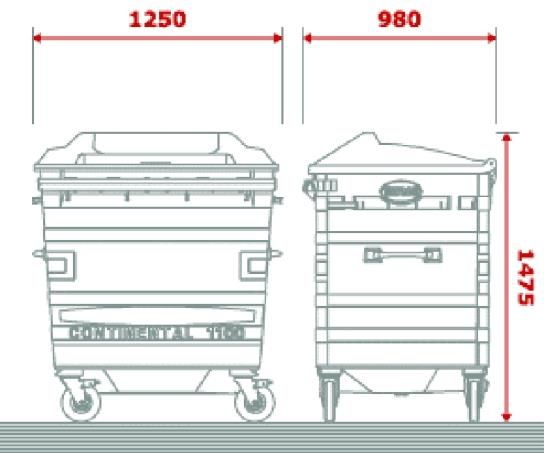
4. Residential developments
4.1 All residential developments are entitled to domestic waste collections provided by the
Council, providing they meet minimum requirements.
4.2 The following information gives a guide as to the predicted volume of waste for
residential developments. Some developments may vary from these predicted volumes
and applicants are advised to contact the Council for more specific advice.
4.3 All residential developments are required to provide adequate storage for 4 dedicated
waste streams; recycling, garden, food and residual waste. Provision must be made for
the total volume of all waste streams produced over a 14 day period. This storage must
be separate from the dwelling it serves. It is not acceptable for waste to be stored for
a long period of time within the dwelling.
4.4 To enable and encourage occupants of new residential units to recycle their waste,
developers should provide adequate internal storage, usually within the kitchen, for
the segregation of recyclable materials from other waste. All dwellings should have four
internal storage containers, each with a minimum capacity of 60 Litres for dry
recyclables, compostable waste and general waste, and a 7 Litre storage capacity for
food waste.
4.5 If residential developments are located on new access roads, these must be designed to
allow safe use by waste collection vehicles. Refer to Chapter 6 to ensure adequate
access.
4.6 There are currently two methods for storing and presenting domestic waste for
collection:
Bags* – All waste is to be stored in bespoke bags (supplied by the Council)
for collection (with the exception of the food caddy); no bins will be
provided for the storage of general or garden waste.
Bins – The development will be allocated a bin for general waste. Recycling
bags will still be used.
* Only suitable for re-developments, where limited storage space prevents bins from being accommodated.
4.7 The method for storing waste is dependent on location. The Council retains the right to
determine the method of waste collection for any residential development.
4.8 Developments which utilise the bag collection method MUST provide a waste storage
facility for the safe storage of waste bags between collections. It must be capable of
storing the maximum number of bags required for the development.
4.9 For details on collection frequency, please go to the Council’s website:
www.cardiff.gov.uk
4.10 For full details of the bin specification for domestic properties refer to Appendix 3.
Houses
4.11 The bin provision for houses will be:
7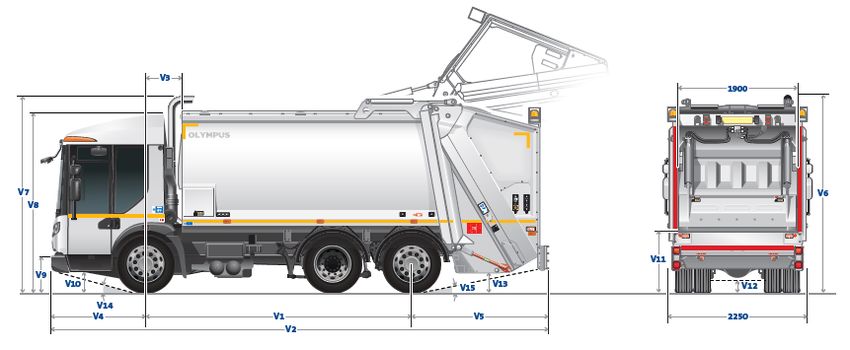
140L black wheeled bin or bags (equivalent to 140L) for residual waste
240L green wheeled bin or re-usable sacks for garden waste
25L kerbside brown caddy for food waste
7L kitchen brown caddy for food waste
Green bags for recyclable waste (equivalent to 140L)
4.12 Additional provision should be made for houses with 6+ residents. Houses which use the
bin collection method, will be allocated larger or additional bins. Houses which use bags
will be allocated more bags.
Food
Number of Residents Recycling General Garden
1-5 Bags (140L) 1 x 140L 240L 1 x 25L
6-8 Bags (240L) 1 x 240L 240L 2 x 25L
9-10 Bags (380L) 1 x 240L and 240L 3 x 25L
1 x 140L
11+ Bags (480L) 2 x 240L 240L 3 x 25L
Table 1: Waste storage capacities in houses of multiple occupation (HMO)
4.13 Where possible, a bin store should be constructed to store the bin provision for houses.
See Chapter 5 for further guidance.
Houses of Multiple Occupation (HMO)
4.14 Additional consideration should be made for those properties being converted into
HMOs. Bin provisions will be based on how many residents are in each unit (see Table
1).
4.15 Developers of high density, multiple occupancy dwellings or five or more flats must
provide a dedicated refuse store or screened storage area for bins/bags. The bin store
must be capable of housing the maximum number of containers required, based on an
assessment of projected arising’s.
Houses converted to flats
4.16 For houses being converted into flats, the preferred option is individual bin allocation.
Each flat would be allocated:
140L wheeled bin or bags (equivalent to 140L) for general waste
25L kerbside caddy for food waste
Green bags for recycling
8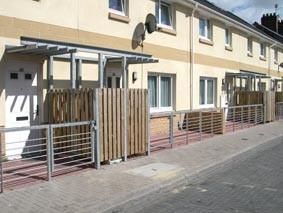
4.17      There is also the option for communal bins which can be comprised of large 660L or
          1100L bulk bins or smaller 240L wheeled bins. Table 2 shows the bin provision of
          smaller wheeled bins for converted flats, and Table 3 shows the potential provision for
          larger bulk bins.

   Number of flats               Recycling                 General                   Garden                     Food
        3                           n/a                  1 x 240L and                 240L                     1 x 25L
                                                           1 x 140L
             4                       n/a                   2 x 240L                    240L                    2 x 25L
             5                       n/a                   3 x 240L                    240L                    2 x 25L

                                                       3 x 240L and 1 x                                         240L
             6                       n/a                     140L                      240L
             7                       n/a                   4 x 240L                    240L                     240L

                                                       4 x 240L and 1 x                                         240L
             8                       n/a                     140L                      240L
             9                       n/a                   5 x 240L                    240L                     240L

Table 2: Bin provision for houses converted to flats

Purpose built flats

4.18      Developers should allow a degree of flexibility with the storage of waste, particularly for
          purpose built flats, to accommodate possible future changes to the Council’s waste
          collection method.

4.19      For large developments of purpose built flats and apartments, refer to the waste storage
          requirements shown in Table 3. The calculations for recycling and general are based on
          an allocation of 140L per each flat, with the minimum number of bins.

  Number of Flats            Recycling           General              Garden*             Food**        Reuse/Bulky
(up to 3 Bedrooms)              (L)                (L)                  (L)                 (L)           Storage
          5                     660                660                   -                 240               -
         10                    1100               1100                   -                 240              5m2
         15                    2200               2200                   -                 240              5m2
         20                    2200               2200                   -                 240              5m2
         25                    3300               3300                   -                 480              5m2
         30                    4400               4400                   -                 480              5m2
         35                    4400               4400                   -                 480              5m2
         40                    5500               5500                   -                 480              5m2
         45                    6600               6600                   -                 720             10m2
         50                    6600               6600                   -                 720             10m2

Table 3: Waste and recycling storage capacities for larger developments
*Garden waste is not supplied under the assumption that the flats do not have individual gardens/amenity areas. If the proposed
development has individual gardens, waste bins can be provided in 240L containers on request.
**Receptacles for food waste must be no larger than 240L wheeled containers, due to the weight and the resulting health and safety
implications for collection operatives.

4.20      In the instance where the proposed flats are “cluster flats” (multiple bedrooms with
          multiple occupancy, and a shared kitchen) the storage requirements are based on the

                                                                                                                                9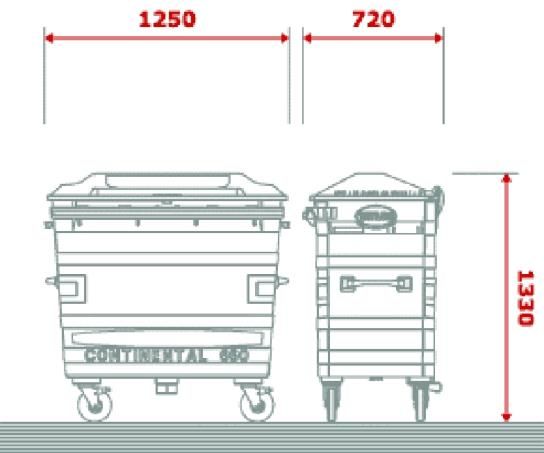
number of bedrooms. See Table 4. These calculations were based the following expected
waste volumes per week per bedroom:
60 litres of general waste
60 litres of recycled waste
7 litres of food waste
Number of
Bedrooms Recycling General Garden* Food** Reuse/Bulky
(L) (L) (L) (L) Storage
10 1100 1100 - 240 5m2
20 2200 2200 - 240 5m2
30 2200 2200 - 240 5m2
40 3300 3300 - 480 5m2
50 3300 3300 - 480 5m2
60 4400 4400 - 480 10m2
70 4400 4400 - 480 10m2
80 5500 5500 - 720 10m2
90 5500 5500 - 720 10m2
100 6600 6600 - 720 10m2
Table 4: Waste and recycling storage capacities for large developments of studio or cluster flats
*Garden waste is not supplied under the assumption that the flats do not have individual gardens/amenity areas. If the proposed
development has individual gardens, waste bins can be provided in 240L containers on request.
**Receptacles for food waste must be no larger than 240L wheeled containers, due to the weight and the resulting health and safety
implications for collection operatives.
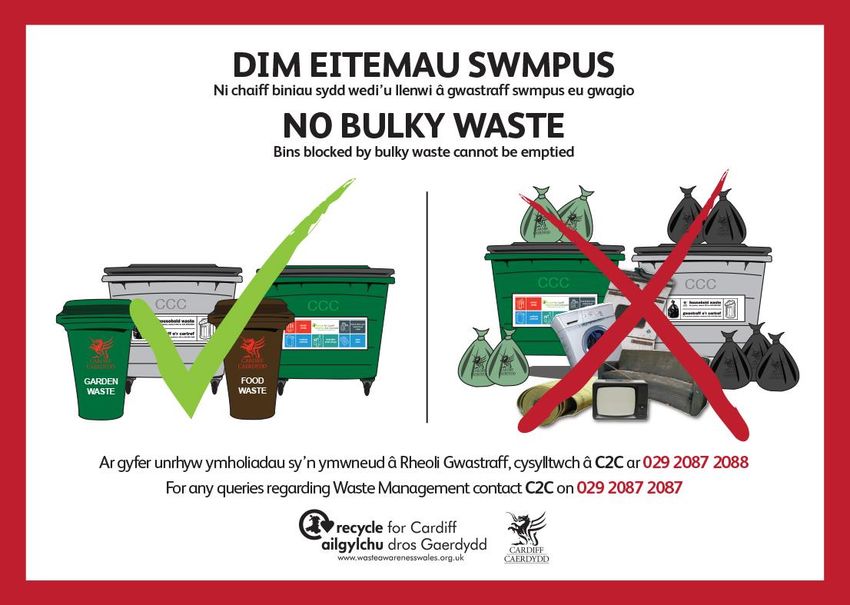
4.21 The City of Cardiff Council currently operates a chargeable collection for large, bulky
items from domestic properties. Due to statutory targets, under cover storage for the
reuse/recycling of bulky waste items is now a compulsory element for purpose built
flats. The proposed storage area should be a dedicated area, so that bulky items awaiting
collection do not interfere with the collection of other bins.
High Rise
4.22 In high rise developments where it is not always convenient for residents to take waste
to a single storage area, or a large enough waste storage area cannot be found,
alternative arrangements need to be considered. The developer should contact Waste
Management at the earliest opportunity before confirming alternative arrangements.
4.23 High rise buildings present a number of challenges for the designer in respect of waste
management strategies and in this respect we recommend that the designer / developer
10takes the opportunity to discuss the proposals at an early stage with the Waste
Management Team, Development Control and Building Control.
Communal Storage
4.24 Options for communal storage areas include small storage areas on each floor (which
can be collected by building maintenance staff), or a large communal storage in a ground
floor/basement location that requires residents to take waste/recyclables to the ground
floor/basement level. If containers are to be moved by a lift, the lift must be large
enough to safely accommodate a container and a member of staff.
4.25 Where waste containers are to be taken to a collection point (other than the kerbside)
by residents or staff, a method statement must be provided. The statement must
describe the proposed method of transporting containers to the dedicated collection
point, and the access and turning space for refuse collection vehicles.
4.26 If the full bin provision is unable to be accommodated in a communal bin store it is
possible to pay for additional collections using a commercial waste contract. This will
allow the development to have a smaller volume of storage, as the frequency of
collection is increased. For more advice please contact Waste Management.
(Note: the free domestic collection service offered by the Council may not be compatible
with other commercial waste contractors. The Council’s commercial waste service is
compatible and can therefore be used in conjunction with the domestic service.)
Composting
4.27 Consideration should be given to the provision of composting facilities in developments
with gardens. Home composting should take place in all new dwellings where space is
not restricted. Home composting bins can be purchased from The City of Cardiff Council
by calling Connect to Cardiff on 029 20872087.
Equality considerations
4.28 Equality of residents should be considered when designing waste storage and collection
facilities on new residential developments. This is especially important in affordable
housing, where houses should be designed to be able to function as “life-long homes”.
4.29 Residents who are elderly or disabled, and are therefore unable to move waste from a
bin store to the collection point (i.e. kerbside), are entitled to the Council’s Assisted Lift
service. This is an arrangement for the collection crews to collect waste from a more
suitable area. In order to facilitate this service, developments should be designed with
suitable space to store waste which is within 25m of the collection point and 10m of the
dwelling.
4.30 For developments which feature a communal bin store with doors should make special
considerations for residents with limited dexterity or strength. Thought should be given
to suitable door handles and door weight.
115. Commercial developments
5.1 By law all industrial and commercial premises have a duty of care to ensure their waste
is managed and disposed of correctly.
5.2 Owners or developers of industrial and commercial developments/properties who
require The City of Cardiff Council to collect and dispose of their waste and recycling can
contact the commercial services department on 02920 717501.
5.3 Table 5 shows approximate total waste storage capacities for a range of commercial
developments. The actual capacity required will vary according to the exact nature of
the commercial activities and the frequency of collections. At least two day’s additional
contingency waste storage should be provided for, over and above the regular volumes
stored prior to collection.
Type of Premises Storage Capacity
Offices 2500L per 1000m2 gross floor space
Retail 5000L per 1000m2 gross floor space
*500L per 20 Dining Spaces or 600L per
Premises Serving Food 100 meals served
Hotels and 35L per room / day or **1500L per 20
Accommodation dining spaces
Table 5: Waste Storage Capacities in Commercial Premises
* certain food outlets such as fast food restaurants and takeaways will produce substantially more waste
** the volume of waste depends to a large extent on the type of hotel and facilities offered
5.4 Commercial contracts will offer a range of collection frequencies with varying waste
storage receptacles. Please contact the preferred commercial contractor to discuss
potential arrangements before submitting planning applications. See Appendix 4 for
details of receptacles provided by the Council’s commercial waste collection service.
5.5 The provision of a compactor or baler should be considered. Compacting waste before
collection can significantly reduce the storage space required and the frequency of
collections. Compaction also offers a secure containment of waste. However, it should be
noted that The City of Cardiff Council does not collect compacted waste for operational
purposes, and alternative collection arrangements will need to be made.
5.6 Providing space for recyclable material not only encourages recycling, but can reduce
collection costs for commercial tenants.
5.7 Please see Chapters 6 and 7 to ensure storage facilities are suitable before submitting
applications.
5.8 Class A3 units will be required to supply litter bins, in order to prevent littering which
could occur as a direct result of the development. These litter bins must be owned and
maintained by the management.
Hazardous Waste
5.9 All hazardous wastes should be correctly identified, segregated and stored separately in
accordance with guidance from the Environment Agency and specialist hazardous waste
contactors.
5.10 Hazardous waste must not be mixed with general waste, composting or recycling.
12Mixed Use Developments
5.11 In a mixed development, a strict separation of waste is required to ensure that
commercial waste does not enter the domestic waste stream. Two refuse storage areas
must be identified on site plans detailing this separation.
136. Waste enclosure design and specification
6.1 The requirements for waste storage are set out in the Building Regulations 2010 (Section
H6).
6.2 Storage of waste on the public highway or footway is not permitted.
Location of External Bin Storage Areas
External bin storage areas should:
Be within 25m of collection point and 30m from Be away from windows or ventilation and
the dwelling preferably under cover or shade.
Be accessible (See Chapter 7) Not be situated as to interfere with pedestrian or
vehicular access to a building.
Be at the side or rear of the property. As a last Where possible, screened from external view using
resort it should be placed on the front. planting, fencing, walls and other appropriate
structures.
Be located so that any potential nuisance from Be sensitively integrated within their surroundings
the spillage, odour, noise and visual impact is and reflect the building design, materials and
prevented. architecture.
Have access paths with a suitable width of
1.2m for the use of residents in wheelchairs.
6.3 All developments must provide a dedicated storage area for waste and recycling
containers, which must be shown on submitted site plans. All enclosures and storage
areas should be located within the property boundary and be visible and easily
accessible to users/residents to encourage use.
6.4 All waste and recycling must only be contained in either bins/bags as specified by The
City of Cardiff Council, and stored in a purpose built refuse store or in a bulk
containerised system held within the boundary of the site.
6.5 Bin storage and enclosure design should take into account ease of user access the
collection of containers and any maintenance requirements. All storage
chambers/housings should be constructed to BS 5906 (1980) and conform to Building
Regulations 2010, Part H6.
Bulk bin enclosure requirements:
Any double doors should open outwards, with a Allow the container to be withdrawn horizontally,
clear opening of at least 1.5m and a facility to without removing another container
hold doors during collection.
Allow the lid of the bin to be fully opened Be screened to a height of 1.8m if a roof is not
required
Allow a headroom of 2m for pedestrians Any roller doors must have a clearance of 2.4m.
Must not obstruct sight lines for pedestrians, No access doors should open onto/over public
drivers or cyclists highway
Surfaces should be smooth and impervious to Artificial lights are required to allow safe handling
permit cleaning and drainage. of bins.
146.6 The storage area must be maintained to an acceptable standard. Failure to do so could
result in non-collection.
Size of Enclosures
6.7 The size of the enclosure will depend on the anticipated waste quantity from the site, the
size of containers chosen and the collection frequency.
6.8 The footprint requirement for each residence or premises, should allow adequate space
around each bin (ideally 200mm between and around each container or 500mm if
residents are required to lift the lid of a container). This is applicable only to the 660L or
1100L bins.
Below is an example footprint.
6.9 There should be a minimum clearance of 500 mm width through any doorway over and
above the bin size.
Communal refuse storage examples:
CORRECT: level access and wide INCORRECT: no formal storage
access for collections. All bins are area, with insufficient bins which
accessible with room for could potentially lead to waste
manoeuvring. Natural ventilation. escaping. No level access for
residents.
15Individual refuse storage examples:
CORRECT: bins concealed in INCORRECT: terraced
keeping with the townhouses with no frontage
design of the buildings. leading to bins being stored on
the pavement.
Signage and Labelling
6.10 Storage areas for waste and recycling must be clearly designated for this use only and be
clearly labelled, on walls, doors and floors as appropriate and also on the relevant
container itself. If a shared facility, signage should also indicate which properties are
entitled to use the facility.
6.11 If bins and containers are to be collected by the Council, they must be individually
identified with bar codes and other appropriate labels where specified by the Council.
16Wash Down Provisions
6.12 Where wet waste is generated (including food), the waste enclosure should have either
a concrete or paved floor graded to a silt trap, with the trap connected to the sewer. A
cold-water tap should be provided either in or adjacent to the enclosure, so the waste
container can be cleaned.
177. Collection access
Access for Collection Vehicles
7.1 The construction of all access roads for refuse collection vehicles should be in
accordance with the Department of Transport’s Design Bulletin 32: Residential Roads and
Footpaths and Places, Streets and Movement: A Companion Guide to Design Bulletin 32,
supplemented by the council’s County Highway Design Standards for Residential
Developments.
7.2 Roads and parking areas should be laid out to ensure reasonable convenience for the
collection vehicles.
Access requirements for collection vehicles:
Vertical clearance of 4.5m Must not need to reverse into or from highway for
collection
Minimum working area of 3.5m; 4m where Ideally the vehicle should pull into a dedicated off
emptying containers is to take place road bay, without the necessity of reversing into or
out of the bay.
The emptying location the vehicle operates from Suitable foundations and surfaces which can
should be relatively level and flat for the entire withstand the maximum payload of the vehicle (30
length of vehicle and container. Any slopes or tonnes). Also includes gully gratings, manholes etc.
gradients (other than those necessary for
surface water drainage) should be avoided.
Sufficient turning circles or hammerheads on If inaccessible by vehicle, alternative presentation
site if manoeuvring on site is required (requires points can be arranged with Waste Management
vehicle tracking on site plans)
See Appendix 5 for the dimensions of collection
vehicles.
Access requirements for collection crews:
Access paths for transferring refuse should be Where communal bins are used, for health and
relatively level. Incline should be no greater safety reasons, dropped kerbs must be in place and
than 1:12. resulting gradients should be minimal.
Refuse is not collected from private drives. Access paths need to have a smooth, non-slip
surface
All refuse must be presented at kerbside (unless Collection operatives must not be required to move
discussed with Waste Management). a bulk container (660L or 1100L) more than 25m.
Access paths must at least 1.5m wide and free Any paths should be free from obstructions
from kerbs and steps
In some cases, illumination of access path may
be required
7.3 Any gradients that pose manual handling issues will require the use of a tow truck to
move bins. The City of Cardiff Council does not supply bins that are suitable for towing.
An alternative collection contractor will need to be arranged in this instance.
7.4 Note - Where foundations have eroded and trip hazards have formed, the landowner
will be responsible for any and all appropriate repairs. Failure to maintain foundations
and surfaces to a satisfactory standard may result in collections being halted for health
and safety reasons.
188. After Planning Approval
8.1 Since 27th July 2015, the developers of all new residential units are required to purchase
the bin provision required for each unit. The bins have to meet the Council’s
specifications (shown in Appendix 3) and can be purchased directly by contacting the
Waste Management’s Commercial Team on 02920 717500. See Table 6 for prices.
Please note these prices are for domestic developments only. For commercial
developments please contact the Commercial Team.
Bin type Price
140 litre wheeled bin £25 (+ VAT)
240 litre wheeled bin £25 (+ VAT)
7 litre food caddy £0
25 litre food caddy £0
660 litre bulk bin £300 (+ VAT)
1100 litre bulk bin £390 (+ VAT)
Table 6: Prices of domestic bins, as of 27th July 2015.
Note – 140 litre and 240 litre wheeled bins must be purchased from The City of Cardiff
Council, whereas, the 660 and 1100 litre bulk bins can be purchased elsewhere.
8.2 For any other potential payments required via Section 106 agreements are detailed in
the Planning Obligations SPG.
8.3 If the waste receptacles are to be purchased from an organisation other than the
Council, details will need to be submitted to Waste Management after planning approval.
Details of the bin dimensions, material, colour and supplier will be required. The bin
specifications will have to match those shown in Appendix 3, in order to ensure bins are
compatible with collection vehicles and health and safety standards are met. If details
are not provided and as a result the waste receptacles are not safe to collect, the Council
reserves the right to refuse collection until suitable bin specifications are met. Please
forward this information on using the contact details shown on page 3.
8.4 If the use of 1100L or 660L bins has been approved on a residential development, a risk
assessment will need to be completed by Waste Management before bin delivery or
waste collections can commence. If this applies to your development, please contact
Waste Management once construction has been completed.
8.5 If written communication material is used to educate new occupants of the development
on the waste strategy and collection method, efforts should be made to offer bi-lingual
material; in Welsh and English.
8.6 It is the landlord/landowners responsibility to ensure the occupants are provided with
the full bin provision for new developments.
19Appendices
Appendix 1: Key Policy 2 (KP2) and Waste Policy 2 (W2) from the Local
Development Plan (2016)
KP12: WASTE
Waste arisings from Cardiff will be managed by:
i. Promoting and supporting additional sustainable waste management facilities,
measures and strategies in accordance with the Collections, Infrastructure and
Markets Sector Plan (2012) and TAN 21 (2014) in a manner that follows the
waste hierarchy and the principles of an integrated and adequate network of
waste installations; nearest appropriate installation; self-sufficiency and
protection of human health and the environment;
ii. Encouraging the provision of in-building treatment facilities on existing and
allocated areas of general industry;
iii. Supporting the provision and maintenance of sustainable waste management
storage and collection arrangements in all appropriate new developments;
and
iv. Supporting waste prevention and reuse and the provision of facilities that use
recycled or composted products.
W2: PROVISION FOR WASTE MANAGEMENT FACILITIES IN DEVELOPMENT
Where appropriate, provision will be sought in all new development for facilities for the
storage, recycling and other management of waste.
20Appendix 2: Planning Condition Examples
PLANNING Description
CONDITION
STANDARD No development shall take place until details of facilities for the
storage of refuse containers have been submitted and approved in
writing by the Local Planning Authority. The facilities approved
shall be provided before the development is brought into beneficial
use and thereafter retained
APPROVED PLANS The refuse storage facilities shown on the approved plans shall be
(ref: 09/00817/C) provided prior to the beneficial occupation of the development and
shall thereafter be retained and maintained unless otherwise
agreed in writing by the Local Planning Authority. Reason: To
ensure an orderly form of development
SPECIFIC TO Details of refuse storage facilities for the x flats shall be provided
FLATS within 1 month of the date of this consent and the approved details
shall be implemented prior to occupation. The approved scheme
shall consist of:
QTY x 1100/660 Recycling bins
QTY x 1100/660 Residual waste bins
QTY x 240 Food waste bins
QTY x 240 Garden Waste Bins
The approved scheme shall thereafter be retained and maintained
unless otherwise agreed in writing by the Local Planning Authority.
Reason: To ensure an orderly form of development and to protect
the amenities of the area.
INTERNAL Internal refuse storage facilities shall be provided within 3 months
STORAGE of the date of this permission in accordance with the floor plan/site
(ref:09/00658/W) layout dated xxxxx and thereafter maintained. Reason: To secure an
orderly form of development and to protect the amenities of the
area.
MORE INFO Prior to any of the flats hereby permitted being brought into
(ref:09/00307/W) beneficial use, details of collection arrangements (to include a
location plan showing both the presentation point for collection and
a method statement of who is to be responsible for presenting the
bins kerbside) shall be submitted to and approved in writing by the
Local Planning Authority. Those arrangements shall be
implemented as approved on first occupation of any of any of the
flats hereby permitted and shall be maintained thereafter. Reason:
To secure an orderly form of development, and in the interests of
highway safety and public amenity.
COMMERCIAL Prior to the beneficial occupation of the development, a scheme for
(ref:09/00751/W) the storage of commercial waste shall be submitted to and
approved in writing by the Local Planning Authority, and the
approved scheme shall be implemented prior to the first use of the
XXX, and thereafter retained
SMOKING LITTER Prior to the development hereby permitted being brought into
(ref:08/02288/C) beneficial use provision shall be made, and thereafter maintained,
for the disposal of smoking related litter. Reason: In the interests of
amenity.
LITTER BINS No development shall take place until details of facilities for the
(ref:07/03021/C) storage of refuse containers, to include a Double Derby
litter/recycling bin (reference number BX45 2552-240 DD) have
21been submitted to and approved in writing by the Local Planning
Authority. The facilities approved shall be provided before the
development is brought into beneficial use. Reason: To secure an
orderly form of development and to protect the amenities of the
area
WASTE STRATEGY Details of a comprehensive waste strategy, which includes facilities
FOR MAJOR for the storage of refuse containers shall be submitted to and
COMMERCIAL approved in writing by the local planning authority. The approved
DEVELOPMENTS strategy shall be implemented before the development is brought
(ref: 09/02175/C) into beneficial use and be thereafter retained and maintained at all
times. Reason: To secure an orderly form of development and to
protect the amenities of the area.
CONSTRUCTION Immediately following demolition of the building, the site shall be
LITTER cleared of debris; thereafter the site shall be kept from litter and
(ref:08/01621/C) other refuse pending its development. Reason: To protect the visual
amenities of the surrounding area.
22Appendix 3: Bin Specification
The following information describes the dimensions of the various waste containers and
wheeled bins specified by The City of Cardiff Council for domestic properties.
Size (mm) Waste Stream Colours
Heigh Widt Dept Wheel Materia Genera Compos
Bin Type t h h s l l Recycling t Food
140 Litres 950 500 555 2 Plastic Black n/a Green n/a
Brow
240 Litres 1100 580 740 2 Plastic Black n/a Green n
660 Litre Bulk Bright
Bin 1330 1250 720 4 Steel Silver Green n/a n/a
940 Litre
Chamberlain 1410 940 1010 4 Steel Silver n/a n/a n/a
1100 Litre Bright
Bulk Bin 1250 1250 980 4 Steel Silver Green n/a n/a
Bulk bins must meet the British Standard as follows:
Handles – BS EN 840
Comb lifting bar – BS EN 840-2
7 litre Kitchen Caddy (internal storage): Food waste: brown
25 litre Kerbside Caddy (external storage): Food waste: brown
23140 litre Wheeled Bin: Residual Waste: black, Green Waste: green
240 litre Wheeled Bin: Residual Waste: black, Green Waste: green
660 litre Wheeled Bin (steel): Residual Waste (silver body, black lid), Recycling (green body,
green lid)
241100 litre Wheeled Bin (steel): Residual Waste (silver body, black lid), Recycling (green body,
green lid)
25Appendix 4: Commercial Storage
Recommended segregation
of waste
Cardboard
Litter bins
Recycling
Compost
Residual
Glass
Development Recommended capacity
Food
Type requirements
Office 2500 litres per 1000m2 X X X
COMMERCIAL
Retail & Mixed Use 5000 litres per 1000m2 X X X
Food & Drink 500 litres per 20 dining spaces X X X X X X
Hotels & 1500 litres per 20 dining
Accommodation spaces X X X X X X X
Other Commercial Further details required X X X X X X
Bin Specification:
As in Appendix 3 for 240, 660 and 1100 litre bins, but also includes the following:
35 litre Caddy for Food Waste: green, plastic
Width: 390mm
Depth: 317mm
Height: 500mm
Height with vertical handle: 740mm
26Appendix 5: Refuse Collection Vehicle Dimensions
Olympus 6x2RS Narrow, Smooth Body RCV (19N)
Drawing Dimensions
Reference Vehicle Part in mm
V1 Overall wheelbase 5250
V2 Overall length 9190
V2 Overall length with tailgate raised 10270
V3 Front axle to front of compaction body 650
V4 Front overhang 1665
V4 Front overhang with cab tilted 3465
V5 Rear overhang 2285
V5 Rear overhang with tailgate raised 3145
V6 Overall height 3450
V6 Overall height with tailgate raised 5100
V7 Height at exhaust tip - nominal 3500
V8 Cab roof height 3130
V8 Cab roof height with cab tilted 3690
V9 Cab floor height 885
V10 First cab step height from ground 495
V11 Rave rail height 1050
V12 Ground clearance at lowest part of vehicle 250
V13 Ground clearance with tailgate 410
27Appendix 6: Consultation Representations and Responses
Public consultation was undertaken between 9th May and the 20th June 2016. A press
notice was placed in a local newspaper on Monday 9th May 2016. Copies of the draft
guidance were placed in all Cardiff libraries and at County Hall Reception. The draft
guidance was also published on the Council website. Letters notifying that consultation
was being undertaken on the draft guidance were sent to all Councillors***, the Welsh
Government, Community Councils in Cardiff and any interested persons and the
following organisations known to have general interest in planning in Cardiff or a
potential interest in this guidance:
2Let2 Cardiff Letting Agents Belvoir Estate Agents
4LET Bentleys Student Lettings Agency
A Space in the City Biffa
A1 Property Lettings Black Environment Network
A2Z Property Lettings Blake Morgan LLP
Abraham Estates Blue Bay Estate Agents
Absolute Lettings and Sales BNP Paribas Real Estate
Accommodation For Students Boulton & Griffiths - Professionals Relocating
ACJ Properties Limited
Acorn Estates Bovis Homes
Adam Waddington Boyer Planning
AJM Property Management Brilliant Student Services
Albany Properties Bristol City Council
Alder King Bryant Homes (South West)
Alternatives for Transport BT Group plc
AMEC Environment & Infrastructure UK LimitedBurnett Davies
Apple Estates Cardiff Business in the Community Wales
Arts Council of Wales BusyMost Ltd Cardiff
Arup bValued
Asbri Planning Ltd C2J
Ashi Properties Cadwyn Housing Association
Aspire Residential Caerphilly County Borough Council
Associated British Ports CAIS
Association of Inland Navigation Authorities Campaign for the Protection of Rural Wales
Astra Properties Capital Properties Cardiff
Atkins Cardiff & District Allotments Association
Atlantic Properties Cardiff & Vale Parents Federation
Austin-Smith: Lord Cardiff & Vale University Health Board Cardiff
Baker Associates Cardiff Access Group
Bannits Lettings Cardiff Against the Incinerator
Barbara Cunningham Cardiff and Vale University Local Health Board
Barbara Rees Estate Agents Cardiff Bus
Barton Willmore (Cardiff) Cardiff Bus Users
Barton Willmore Planning Partnership Cardiff Civic Society
Barton Wilmore (Cardiff) Cardiff Community Housing Association
Bay City Living Cardiff Cycling Campaign
Bellway Homes (Wales Division) Ltd Cardiff Ethnic Minority Elders
28Cardiff Greenpeace DavisMeade Agricultural
Cardiff Heliport Derek Prosser Associates
Cardiff Homes Design Circle RSAW South
Cardiff International Airport Ltd. Design Commission for Wales
Cardiff Lettings Development Planning Partnership
Cardiff Local Access Forum Development, Land & Planning Consultants Ltd
Cardiff Metropolitan University Disability Arts Cymru
Cardiff Naturalists Disability Wales
Cardiff Pedestrian Liberation DJ Skinner Property Services
Cardiff Student Lets DLP Consultants
Cardiff Student Letting DPP Cardiff
Cardiff Transition Drivers Jonas
Cardiff University DTB Design
Carolyn Jones Planning Services DTZ Consulting
CDN Planning Dwr Cymru Welsh Water
Cedar Properties Easy Rent
Celsa Manufacturing (UK) LTD Edenstone Homes
Celtic Properties Edmond Estate Agents
Cemex Uk Operations Ltd Edwards & Co Property
CFW Architects Elite Property Estate Agents
CGMS Consulting Equality and Human Rights Commission
Chambers Estate Agents Ethnic Business Support Project
Chartered Institute of Housing in Wales Ezee Let
Cherry Bird Estate Agents Federation of Small Businesses
Chichester Nunns Partnership First City Limited
Chris Davies Estate Agents First4 Rentals
Chris Johns FirstGroup plc
Chris Morgan Firstplan
Chris Watkins Flat Homes
Chwarae Teg Forestry Commission Wales
Civil Aviation Authority Fortis Properties
CK- Residential Lettings Freight Transport Association
Coach House Lettings Friends of Nantfawr Community Woodland
Coal Authority Friends of the Earth (Cymru)
Coleg Glan Hafren Fulfords Land & Planning
Community Land Advisory Service Cymru G Powys Jones
Confederation of British Industry Garden History Society
Confederation of Passenger Transport Geraint John Planning Ltd
Connections Design GL Hearn Ltd
Country Land and Business Association GL Hearn Planning
CPS Homes Glamorgan - Gwent Archaeological Trust Ltd
CPS Properties-Cardiff Glamorgan Gwent Housing Association
Crofts Davies & Co Estate Agents Globe Property Services
Cymdeithas yr Iaith Gymraeg GMA Planning
Danescourt Community Association Graham Griffiths Estate Agents
Darlows Graig Community Council
David Lock Associates Graig Protection Society
David Ricketts Estate Agents Great Western Trains Company Limited
Davies Sutton Architects Gregory Grey Associates
29Grosvenor Waterside Kingstons Letting Agents Cardiff
Guardian Property Management Knight Estate Agents
GVA Knight Frank
GVA Grimley La Maison Properties
H and M Property Services Landlord Direct
H O W Commercial Planning Advisors Landscape Institute Wales
Haford Housing Association Limited/ Hafod Care
Let -Save
Association Limited Let Wise
Halcrow Letz Move
Harmers Levvel Ltd
Harry Harper Lewis Property Maintenance
Health & Safety Executive Linc-Cymru
Heath Residents Association Lisvane Community Council
Heledd Williams Llandaff Conservation Group
Hentons Llandaff Society
Herbert R Thomas LLP Lovell Partnership
Hern-Crabtree Loyn & Co Architects
HJF & Co Property Lts Property
Home Builders Federation LucKey Lettings
Home Finder Pro Lyn Powell
Homeline Cardiff M & D Properties
Horizon Properties MAC Homes Cardiff
Hoskins Johnson Madley Construction
Hutchinson 3G UK Maison Letting Agents
Hyland Edgar Driver Mango Planning and Development Limited
Igbal Homes Mansells Estate Agents
Imperial Services Marshfield Community Council
Institute of Civil Engineering Martel Property Services Ltd
Inter Let Properties Martin & Co Cardiff Estate Agents
Interfaith Wales Martin Robeson Planning Practice
Jacobs Babtie MC Letting Software
James Douglas Sales and Lettings McCarthy & Stone (plc)
Jeffrey Ross Mead Property
Jeremy Peter Associates Meadgate Homes Ltd
Jet Developments Michael Graham Young
John Lewis Partnership Michael Jones & Co
John Robinson Planning & Design Mineral Products Association
John Williams Rental Moginie James
John Wotton Architects Mohammed Shahid Munir Property
Jones Lang LaSalle Morgan Cole
JP Morgan Asset Management Morgans Residential
JPE Executive Lettings Mott MacDonald
Jupiter Property Services Mr Homes
Just Proprerty Wales Nathaniel Lichfield & Partners
Keep Wales Tidy National Youth Arts
Kelly Taylor & Associates Natural Resources Wales
Kelvin Francis Neame Sutton
KeyLet Network Rail
Kingsmeade Assets Limited Network Rail Infrastructure Ltd
30Newport City Council Redrow Homes (South Wales) Ltd
NFU Cymru Reservoir Action Group (RAG)
Nina Estate Agents Residential Landlords Association
North West Cardiff Group Rhiwbina Civic Society
Northover & Williamson Sales and Letting Rhondda Cynon Taf County Borough Council
Agents RICS Wales
Northwood Letting & Estate Agents Rio Architects
Norton Estate Agents Robert Turely Associates
Nova Properties Robertson Francis Partnership
Novell Tullet Rochefort Shugar Property Management
O2 UK Roger North Long Surveyors
Oakgrove Nurseries Royal Commission on the Ancient & Historical
Old St Mellons Community Council Monuments of Wales
Orange Royal National Institute for the Blind
Pantmawr Residents Association RPS Group Plc
PDM Properties RSPB Cymru
Peace Mala Save Creigiau Action Group
Peacock & Smith Savills
Pentyrch Community Council Scope Cymru
Persimmon Homes Sequence Homes
Persimmon Homes East Wales Seraph Estates
Peter Wood Residential Shawn Cullen
Peter Alan Simpson Estates
Peter Davies SK Designs
Peter Mulcahy SLR Consulting
Peterson Williams South Wales Chamber of Commerce Cardiff
Peterstone Community Council South Wales Estates
Philippa Cole South Wales Lettings
Pinnacle Group South Wales Mgi Ltd
Planning Aid Wales South Wales Police
Planning Inspectorate South Wales Police Crime Prevention Design Adviser
Planning Officers Society Wales South Wales WIN
Plaza Property Management Services Sower Estate Agents
PM Premier Square Foot Estate Agents
Police & Crime Commissioner SSE Energy Supply Ltd
Powergen St Fagans Community Council
Prestige Sales & Lettings Stedman Architectural
Profile Wide Estates Stewart Ross Associates
Property Direct Agents Stonewall Cymru
Quarry Products Association Stride Treglown Town Planning
Quin & CO Stuart Coventry Scott Wilson
Quin & Co Ltd Student Houses Cardiff
R H Seel Sullivan Land & Planning
Race Equality First SuperLet Cardiff
Radyr & Morganstown Association Sustrans Cymru
Radyr and Morganstown Community Council SWALEC
Radyr and Morganstown Partnership and Taff Housing Association
Community Trust (PACT) Tanner & Tilley
Radyr Golf Club Taylor Estate Agents
31Temp2Perm Housing White Young Green Planning
Terry Nunns Architects Wigley Fox Partnership
The 20th Century Society Williams Rentals
The Boarding Centre Ltd Willmott Dixon
The Design Group 3 Wimpey Homes
The Georgian Group X Factor Properties
The Institute of Cemetery and Crematorium Zenith Design Solutions
Management
The Planning Bureau
The Royal Town Planning Institute Comments specifically or generally
The Umbrella Homes relevant to the draft guidance were
The Victorian Society received from the above consultees
The Wildlife Trust of South & West Wales indicated ***
Theatres Trust
Thomas & Rose Agents
Thomas George Estate Agents
Thomas H Wood Letting & Estate Agents
Thomas Joseph Lettings Management
& Maintenance
T-Mobile (UK) Ltd
Tongwynlais Community Council
Torfaen County Borough Council
Town Planning & Development
Turley Associates
Ty Seren Lettings
United Welsh Housing Association
Urban City Ltd
Urdd Youth Group
Vale of Glamorgan Council
Velindre NHS Trust Corporate Headquarters
Veolia
View Property Wales
Virgin Media
Vivaz Homes Ltd
Vodaphone
Wales & West Housing Association
Wales Council for Voluntary Action
Wales Women's Aid
Watts Morgan
Welsh Ambulance Services NHS Trust
- South East Region
Welsh Federation of Housing Association
Welsh Government
Welsh Language Commissioner
Welsh Tenants Federation Ltd
Wenlock Lettings
Wentloog Community Council
Wentworth Properties
Western Permanent Property Management
32Name Comment Response/Action
Cllr E Clark Section 4.16 needs to make the The SPG is not able to
expectation to provide covered stipulate that storage
containers at the rear of properties containers must be
for bag waste clearer. I suggest the provided in rear areas of
wording is amended to “Developers the property, as this is
of high density, multiple occupancy private land and it does
dwellings or five or more flats must not impact on waste
provide covered containers for collections. A comment on
waste bags or screened storage for the need to require
bins. The covered containers must storage containers for bag
be capable of housing the maximum collections is already
number of bags required, based on included in paragraph 4.8.
an assessment of projected waste.
Where houses have no frontages
these need to be provided to the
rear of the property.
Page 18: I don’t agree with the No action. All new
encouragement of bins being stored developments should be
to the front of properties with no using the bin collection
frontage. The individual refuse method, so for terraced
storage example pictures and properties it is necessary
references should be deleted. for bins to be stored at
the front. The pictures in
question show bins being
suitably contained within
a frontage.
I agree that waste storage No action
requirements within flats should be
generous and the waste storage
requirements for the numbers living
at a property specified.
Landlords should be required to This comment will be
ensure that brown food caddies and included in Section 8 of
sufficient other waste receptacles the SPG.
are provided for new tenants
The enforcement process and This comment does not
penalties for not following the waste have a place in this SPG.
SPG need to be clear This document is for
developers/architects
who are not required to
understand the
enforcement process.
The SPG should deter large The SPG already specifies
commercial waste containers from that waste storage needs
being stored on the street when not to be provided (see
presented for waste collection. paragraph 6.4)
33Supplementary Planning Guidance Waste Collection and Storage Facilities
Cllr Merry, We strongly the support the No action
Cllr Weaver, proposal that developments should
Cllr Knight not be allowed with internal storage
for waste: if followed by residents it
is unhygienic and almost inevitably
leads to waste being put out as bags
are full as understandably residents
do not want to store waste inside.
We also believe that waste storage No action
should be concealed from view and
not simply stacked up in front
gardens, that it should be adequate
for the number of tenants and
preferable secure to prevent spillage
and pests.
34You can also read


