THE ADVANCED TOKAMAK MODELING ENVIRONMENT (ATOM) FOR FUSION PLASMAS
←
→
Page content transcription
If your browser does not render page correctly, please read the page content below
The Advanced Tokamak Modeling Environment
(AToM) for Fusion Plasmas

by
J. Candy1 on behalf of the AToM team2
1 General   Atomics, San Diego, CA
2 See   presentation

Presented at the
2018 SciDAC-4 PI Meeting
Rockville, MD
23-24 July 2018

 1                                      Candy/SciDAC-PI/July 2018   AT M
AToM Modeling Scope and Vision

    Present-day tokamaks   Upcoming burning plasma           Future reactor design
           DIII-D                      ITER                         DEMO

2                                Candy/SciDAC-PI/July 2018               AT M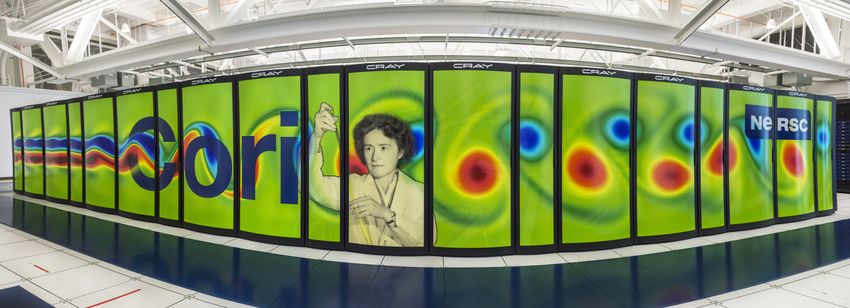
AToM (2017-2022) Research Thrusts

    • AToM0 was a 3-year SciDAC-3 project (2014-2017)
    • AToM is a new 5-year SciDAC-4 project (2017-2022)
    • The scope of AToM is broad, with six research thrusts

3                                      Candy/SciDAC-PI/July 2018   AT M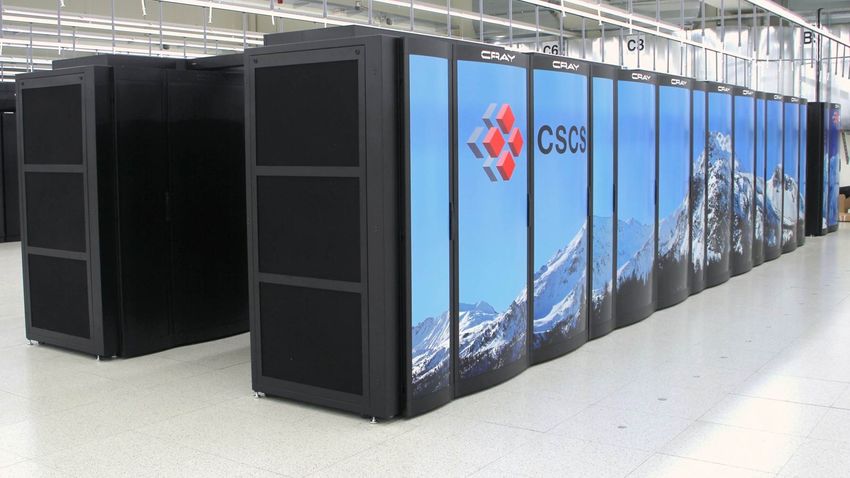
AToM (2017-2022) Research Thrusts

    • AToM0 was a 3-year SciDAC-3 project (2014-2017)
    • AToM is a new 5-year SciDAC-4 project (2017-2022)
    • The scope of AToM is broad, with six research thrusts

                                scidac.github.io/atom/

4                                      Candy/SciDAC-PI/July 2018   AT M
AToM (2017-2022) Research Thrusts

    • AToM0 was a 3-year SciDAC-3 project (2014-2017)
    • AToM is a new 5-year SciDAC-4 project (2017-2022)
    • The scope of AToM is broad, with six research thrusts

                                  scidac.github.io/atom/

    1   AToM environment, performance and packaging
    2   Physics component integration
    3   Validation and uncertainty quantification
    4   Physics and scenario exploration
    5   Data and metadata management

                                                                       AT M
    6   Liaisons to SciDAC partnerships

5                                          Candy/SciDAC-PI/July 2018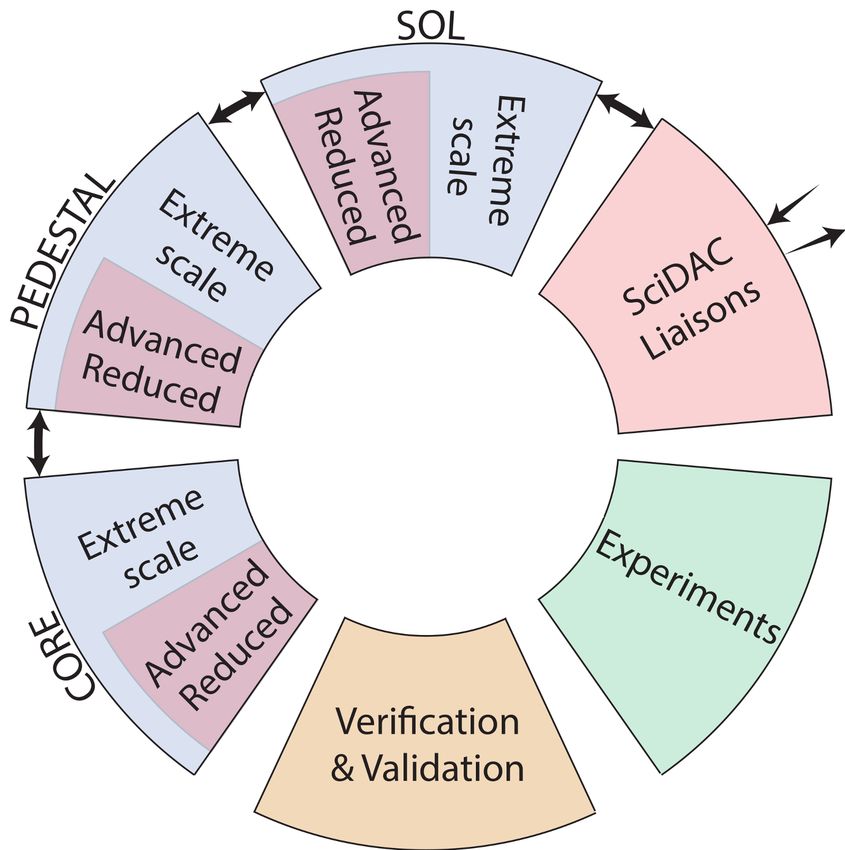
AToM Team

Institutional Principal Investigators (FES)
    Jeff Candy            General Atomics
    Mikhail Dorf          Lawrence Livermore National Laboratory
    David Green           Oak Ridge National Laboratory
    Chris Holland         University of California, San Diego
    Charles Kessel        Princeton Plasma Physics Laboratory

Institutional Principal Investigators (ASCR)
    David Bernholdt       Oak Ridge National Laboratory
    Milo Dorr             Lawrence Livermore National Laboratory
    David Schissel        General Atomics

6                                   Candy/SciDAC-PI/July 2018      AT M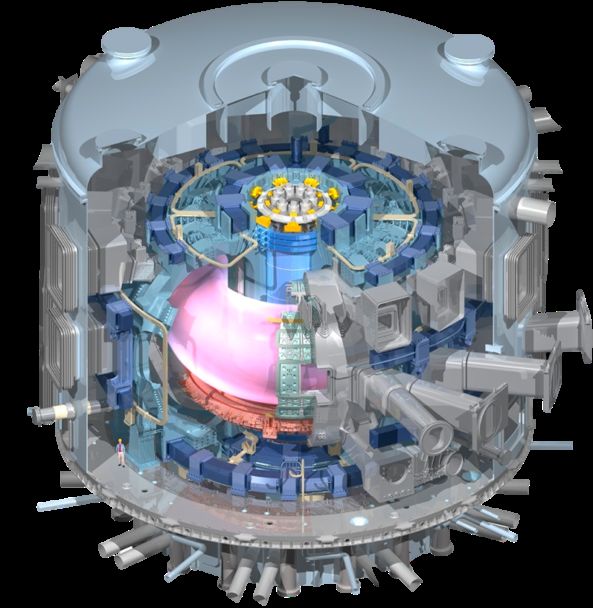
AToM Team

Funded collaborators (subcontractors in green)
    O. Meneghini, S. Smith, P. Snyder,
       D. Eldon, E. Belli, M. Kostuk        GA
    W. Elwasif, M. Cianciosa, J.M. Park,
       G. Fann, K. Law, D. Batchelor        ORNL
    N. Howard                               MIT
    D. Orlov                                UCSD
    J. Sachdev                              PPPL
    M. Umansky                              LLNL
    P. Bonoli                               MIT
    Y. Chen                                 UC Boulder
    R. Kalling                              Kalling Software

                                                                  AT M
    A. Pankin                               Tech-X
7                                     Candy/SciDAC-PI/July 2018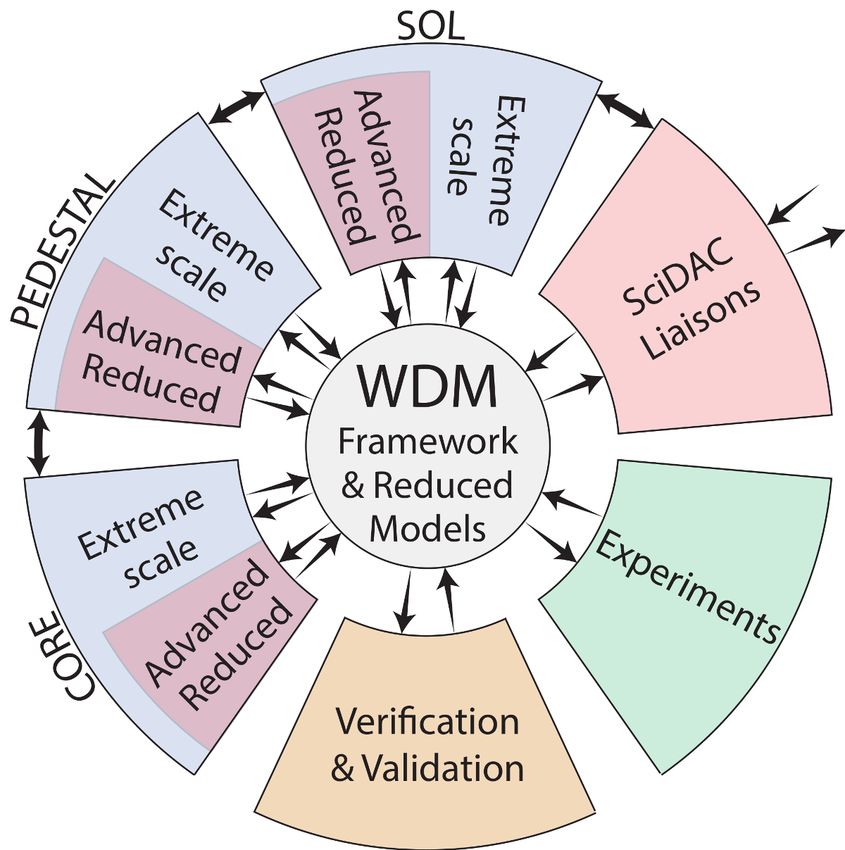
AToM Conceptual Structure

                                    1    Access to experimental data

8                           Candy/SciDAC-PI/July 2018                  AT M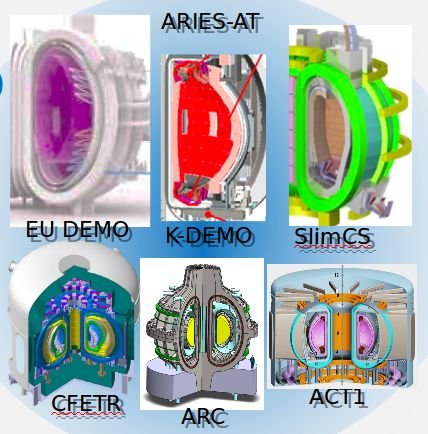
AToM Conceptual Structure

                                    1    Access to experimental data
                                    2    Outreach (liaisons) to other SciDACs

9                           Candy/SciDAC-PI/July 2018                    AT M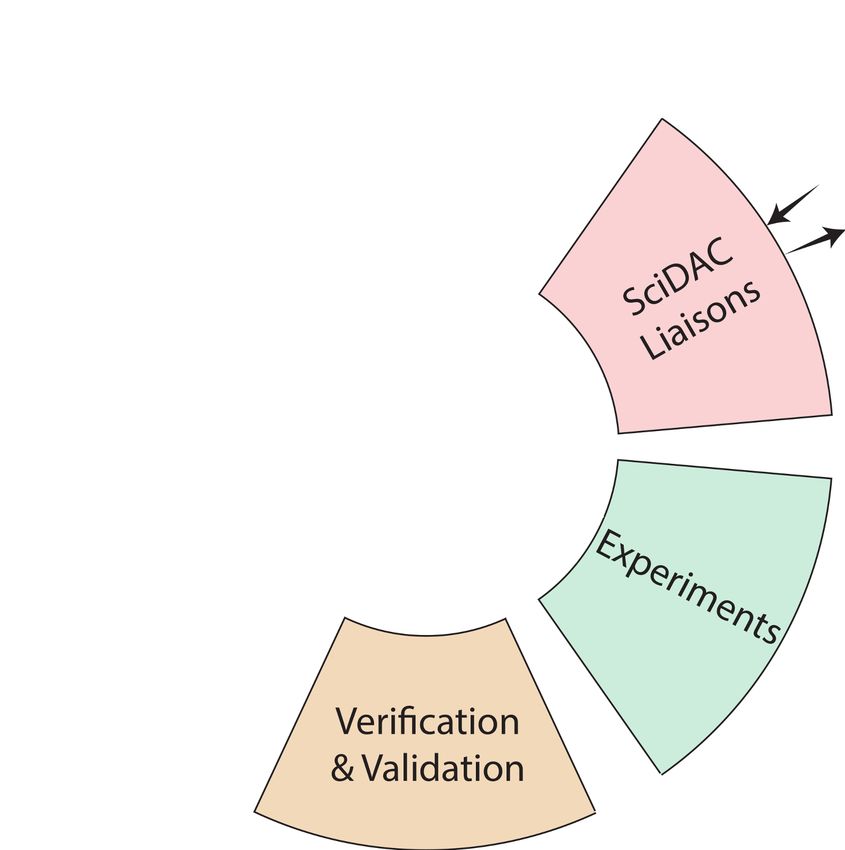
AToM Conceptual Structure

                                    1   Access to experimental data
                                    2   Outreach (liaisons) to other SciDACs
                                    3   Verification and validation, UQ, machine
                                        learning

10                          Candy/SciDAC-PI/July 2018                   AT M
AToM Conceptual Structure
1 Access to experimental data
2 Outreach (liaisons) to other SciDACs
3 Verification and validation, UQ, machine
learning
4 Support HPC components
11 Candy/SciDAC-PI/July 2018 AT MAToM Conceptual Structure
1 Access to experimental data
2 Outreach (liaisons) to other SciDACs
3 Verification and validation, UQ, machine
learning
4 Support HPC components
5 Framework provides glue
Adapted from Fig. 24 of
Report of the Workshop on Integrated Simulations for
Magnetic Fusion Energy Sciences (June 2-4, 2015)
12 Candy/SciDAC-PI/July 2018 AT MTokamak physics spans multiple space/timescales
Core-edge-SOL (CESOL) region coupling
CESOL
Core Edge SOL
Profile
AT M
Ψ
13 Candy/SciDAC-PI/July 2018Fidelity Hierarchy (Pyramid)
Range of models all the way up to leadership codes
One-off heroic simulation
Physics Leadership-class computing
Development highest fidelity simulations
Calibrate Inform
Physics
Reduced models for validation
Validation
Train Inform
Physics Machine-learning models for
optimization & real-time control
Application
14 Candy/SciDAC-PI/July 2018 AT MStrive for true WDM capability
Core-edge-SOL (CESOL) region coupling
• Iterative solution procedure to match boundary conditions between regions
• 15 components (equilibrium, transport, heating) coupled
• Please visit posters by Park and Meneghini
1.5
Te Ti ne nn
1.0
0.5
Z (m)
0.0
−0.5
−1.0
−1.5
AT M
1 R (m) 2 1 R (m) 2 1 R (m) 2 1 R (m) 2
15 Candy/SciDAC-PI/July 2018AToM Supports two core-edge integrated workflows
OMFIT-TGYRO and IPS-FASTRAN
• OMFIT-based core-edge (FAST) workflow:
− Workflow manager with flexible tree-based data handling/exchange
− Can use NN-accelerated models for EPED/NEO/TGLF
− Transport solver based on TGYRO+TGLF
16 Candy/SciDAC-PI/July 2018 AT MAToM Supports two core-edge integrated workflows
OMFIT-TGYRO and IPS-FASTRAN
• OMFIT-based core-edge (FAST) workflow:
− Workflow manager with flexible tree-based data handling/exchange
− Can use NN-accelerated models for EPED/NEO/TGLF
− Transport solver based on TGYRO+TGLF
• IPS-based core-edge-SOL (HPC) workflow:
− Framework/component architecture using existing codes
− File-based communication (plasma state)
− Multi-level (HPC) parallelism
− Transport solver based on FASTRAN+TGLF
17 Candy/SciDAC-PI/July 2018 AT MAToM Supports two core-edge integrated workflows
OMFIT-TGYRO and IPS-FASTRAN
• OMFIT-based core-edge (FAST) workflow:
− Workflow manager with flexible tree-based data handling/exchange
− Can use NN-accelerated models for EPED/NEO/TGLF
− Transport solver based on TGYRO+TGLF
• IPS-based core-edge-SOL (HPC) workflow:
− Framework/component architecture using existing codes
− File-based communication (plasma state)
− Multi-level (HPC) parallelism
− Transport solver based on FASTRAN+TGLF
72 users in NERSC atom repository
18 Candy/SciDAC-PI/July 2018 AT MAToM Supports two core-edge integrated workflows
(1) OMFIT-TGYRO
Fast self-consistent stationary whole device modeling
OMFIT
Exploration Initialization
GA-system code MODEL-PROFILES
Core profiles and pedestal structure
Turbulent TGYRO
transport
TGLF-NN
Pedestal structure Impurity transport
EPED1-NN STRAHL
Neoclassical
transport
NEO-NN
Bootstrap current Current and Closed boundary Stability
power sources equilibrium
NEOjbs-NN GPEC/GATO/ELITE
NBEAMS/FREYA/TORBEAM EFIT/VMOMS/TEQ
19 Candy/SciDAC-PI/July 2018 AT MAToM Supports two core-edge integrated workflows
�����������������������������������������������������
(2) IPS-FASTRAN
�������������������
��������������������������������
Plasma State 2-D Plasma State
FASTRAN EFIT NUBEAM C2 GTNEUT ADAS/PREACT
Plasma Neutral Atomic
TGLF DCON TORAY Transport Transport Reaction
NCLASS GATO GENRAY
Driver: Iteration to d/dt = 0 Driver: Time stepping, Steady-State
������
����������� EPED State
TOQ ELITE BALOO
Driver: Root finding of growth rate>1
���������
�����������������������������
20 Candy/SciDAC-PI/July 2018 AT MAToM Supports two core-edge integrated workflows
(2) IPS-FASTRAN: DIII-D high-βN discharge
FASTRAN/TGLF EPED1 C2
6
ne(1019/m3)
4
• Manage execution of 15 component codes
2
FASTRAN+TGLF+NCLASS+EPED(ELITE+TOQ)+
0 NUBEAM+TORAY+EFIT+C2+GTNEUT+CARRE+
1.7 1.8 1.9 2.0 2.1 2.2 2.3 2.4
6 C2MESH+CHEASE+DCON+PEST3
• Iterative coupling of core, edge, SOL
Te(keV)
4
− AToM CESOL workflow
2
• Self-consistent heating and current drive
0
1.7 1.8 1.9 2.0 2.1 2.2 2.3 2.4 − NUBEAM, TORAY, GENRAY
6
• Theory-based except for D/χ in SOL, Zeff and rotation
Ti(keV)
4
at pedestal top.
2
21
0
1.7 1.8 1.9 2.0 2.1 2.2
Outer Midplane R (m)
2.3 2.4
Candy/SciDAC-PI/July 2018 AT MAToM Supports two core-edge integrated workflows
(2) IPS-FASTRAN: DIII-D high-βN discharge
FASTRAN/TGLF EPED1 C2
6
ne(1019/m3)
4
• Manage execution of 15 component codes
2
FASTRAN+TGLF+NCLASS+EPED(ELITE+TOQ)+
0 NUBEAM+TORAY+EFIT+C2+GTNEUT+CARRE+
1.7 1.8 1.9 2.0 2.1 2.2 2.3 2.4
6 C2MESH+CHEASE+DCON+PEST3
• Iterative coupling of core, edge, SOL
Te(keV)
4
− AToM CESOL workflow
2
• Self-consistent heating and current drive
0
1.7 1.8 1.9 2.0 2.1 2.2 2.3 2.4 − NUBEAM, TORAY, GENRAY
6
• Theory-based except for D/χ in SOL, Zeff and rotation
Ti(keV)
4
at pedestal top.
2
• Accuracy highly dependent on TGLF and EPED
22
0
1.7 1.8 1.9 2.0 2.1 2.2
Outer Midplane R (m)
2.3 2.4
Candy/SciDAC-PI/July 2018 AT MApplication: Present day tokamaks
DIII-D (San Diego)
Core-edge impurity profile prediction (OMFIT-based)
3.2 4.0 10
Te 3.2
Ti 8
ne
2.4
2.4 6
1.6
1.6 4
0.8 Experiment 0.8 2
TGLF-NN
TGLF-NN + EPED1-NN
0.0 0.0 0
1.4.0 3.0 2.0
Carbon VI impurity density
0
3.2
a/Lte experiment
Z eff,ped = 4.02
Z eff,ped =2.4
2.68
a/Lti 1.6
a/Lne
Z eff,ped = 1.34
0. 8
2.4 1.8 1.2
[1e13 cm-3 ]
0. 6
1.6 1.2 0.8
0.8 0.6 0.4
0. 4
0.0 0.0 0.0
0.0 0.2 0.4 0.6 0.8 1.0 0.0 0.2 0.4 0.6 0.8 1.0 0.0 0.2 0.4 0.6 0.8 1.0
0. 2 ρ ρ ρ
AT M
DIII-D 168830 @ 3500 ms
0. 0
0. 0 0. 2 0. 4 0. 6 0. 8 1. 0
ρ
23 Candy/SciDAC-PI/July 2018Upcoming burning plasma
ITER (Provence, France)
ITER steady-state hybrid scenario modeling (IPS-based)
24 Candy/SciDAC-PI/July 2018 AT MFuture reactor design
DEMO
C-AT DEMO reactor modeling (IPS-based)
25 Candy/SciDAC-PI/July 2018 AT MCreate EPED1-NN neural net from EPED1 model
• 10 inputs → 12 outputs • Database of 20K EPED1 runs (2M CPU hours)
• normal H mode solution • DIII-D(3K), KSTAR(700), JET(200), ITER(15K),
CFETR (1.2K)
• Super-H mode solution
0.12 PGH H 0.075 wGH H 0.12 PGH Super-H 0.075 wGH Super-H
• EPED1-NN tightly coupled in 0.09 0.060 0.09 0.060
TGYRO 0.06 0.045 0.06 0.045
0.03 0.03
0.030 0.030
GH 0.030.060.090.12 0.030
0.045
0.060
0.075 0.03
0.06
0.09
0.12 0.030
0.045
0.060
0.075
H
G 0.12 PG H 0.075 wG H PG Super-H 0.08 wG Super-H
super super 0.12
0.09
0.060 0.06
0.08
0.06
0.045
0.03 0.04 0.04
0.030
0.02
0.030.060.090.12 0.030
0.045
0.060
0.075 0.040.080.12 0.020.040.060.08
0.10
0.12 PH H 0.08 wH H 0.12 PH Super-H wH Super-H
0.08
0.09 0.09
0.06
0.06 0.06 0.06
0.04
AT M
0.03 0.03 0.04
0.03
0.06
0.09
0.12 0.040.060.08 0.030.060.090.12 0.040.060.080.10
26 Candy/SciDAC-PI/July 2018Create TGLF-NN neural net from TGLF reduced model
• 23 inputs → 4 outputs
• Each dataset has 500K cases from 2300 multi-machine discharges
• Trained with TENSORFLOW
• Must be retrained as TGLF model is updated
• TGLF itself derived from HPC CGYRO simulation
ExB
27 Candy/SciDAC-PI/July 2018 AT MTGLF
Centerpiece of all AToM predictive modeling workflows
• Reduced model of nonlinear gyrokinetic flux (1 second at 1 radial point)
28 Candy/SciDAC-PI/July 2018 AT MTGLF
Centerpiece of all AToM predictive modeling workflows
• Reduced model of nonlinear gyrokinetic flux (1 second at 1 radial point)
• Determines quality of profile prediction
29 Candy/SciDAC-PI/July 2018 AT MTGLF
Centerpiece of all AToM predictive modeling workflows
• Reduced model of nonlinear gyrokinetic flux (1 second at 1 radial point)
• Determines quality of profile prediction
• TGLF is the heart of AToM profile-prediction capability
− linear gyro-Landau-fluid eigenvalue solver
− coupled with sophisticated saturation rule
− evaluate quasilinear fluxes over range 0.1 < kθ ρ < 24
i
30 Candy/SciDAC-PI/July 2018 AT MTGLF
Centerpiece of all AToM predictive modeling workflows
• Reduced model of nonlinear gyrokinetic flux (1 second at 1 radial point)
• Determines quality of profile prediction
• TGLF is the heart of AToM profile-prediction capability
− linear gyro-Landau-fluid eigenvalue solver
− coupled with sophisticated saturation rule
− evaluate quasilinear fluxes over range 0.1 < kθ ρ < 24
i
• Saturated potential intensity
− derived from a database of nonlinear GYRO simulations
− database resolves only long-wavelength turbulence: k ρ < 1
θ i
31 Candy/SciDAC-PI/July 2018 AT MTGLF
Centerpiece of all AToM predictive modeling workflows
• Reduced model of nonlinear gyrokinetic flux (1 second at 1 radial point)
• Determines quality of profile prediction
• TGLF is the heart of AToM profile-prediction capability
− linear gyro-Landau-fluid eigenvalue solver
− coupled with sophisticated saturation rule
− evaluate quasilinear fluxes over range 0.1 < kθ ρ < 24
i
• Saturated potential intensity
− derived from a database of nonlinear GYRO simulations
− database resolves only long-wavelength turbulence: k ρ < 1
θ i
• 10 million to one billion times faster than nonlinear gyrokinetics
32 Candy/SciDAC-PI/July 2018 AT MTGLF
Ongoing calibration with CGYRO leadership simulations
• Theory-based approach – must be calibrated with nonlinear simulations
• Predictions validated with ITPA database
• Discrepanies: L-mode edge, EM saturation
• CGYRO multiscale simulations needed
33 Candy/SciDAC-PI/July 2018 AT MCGYRO
New nonlocal spectral solver for collisional plasma edge
• New coordinates, discretization, array distribution
− Pseudospectral velocity space (ξ, v)
− Fluid limit recovered as ν → ∞ (Hallatschek)
e
− 5th-order conservative upwind in θ
34 Candy/SciDAC-PI/July 2018 AT MCGYRO
New nonlocal spectral solver for collisional plasma edge
• New coordinates, discretization, array distribution
− Pseudospectral velocity space (ξ, v)
− Fluid limit recovered as ν → ∞ (Hallatschek)
e
− 5th-order conservative upwind in θ
• Extended physics for edge plasma
− Sugama collision operator (numerically self-adjoint)
− Sonic rotation including modified Grad-Shafranov
35 Candy/SciDAC-PI/July 2018 AT MCGYRO
New nonlocal spectral solver for collisional plasma edge
• New coordinates, discretization, array distribution
− Pseudospectral velocity space (ξ, v)
− Fluid limit recovered as ν → ∞ (Hallatschek)
e
− 5th-order conservative upwind in θ
• Extended physics for edge plasma
− Sugama collision operator (numerically self-adjoint)
− Sonic rotation including modified Grad-Shafranov
• Arbitrary wavelength formulation targets multiscale regime
36 Candy/SciDAC-PI/July 2018 AT MCGYRO
New nonlocal spectral solver for collisional plasma edge
• New coordinates, discretization, array distribution
− Pseudospectral velocity space (ξ, v)
− Fluid limit recovered as ν → ∞ (Hallatschek)
e
− 5th-order conservative upwind in θ
• Extended physics for edge plasma
− Sugama collision operator (numerically self-adjoint)
− Sonic rotation including modified Grad-Shafranov
• Arbitrary wavelength formulation targets multiscale regime
• Wavenumber advection scheme (profile shear/nonlocality)
37 Candy/SciDAC-PI/July 2018 AT MCGYRO
New nonlocal spectral solver for collisional plasma edge
• New coordinates, discretization, array distribution
− Pseudospectral velocity space (ξ, v)
− Fluid limit recovered as ν → ∞ (Hallatschek)
e
− 5th-order conservative upwind in θ
• Extended physics for edge plasma
− Sugama collision operator (numerically self-adjoint)
− Sonic rotation including modified Grad-Shafranov
• Arbitrary wavelength formulation targets multiscale regime
• Wavenumber advection scheme (profile shear/nonlocality)
• Target petascale and exascale architectures (GPU/multicore)
− cuFFT/FFTW
− GPUDirect MPI on compatible systems
− All kernels hybrid OpenACC/OpenMP
38 Candy/SciDAC-PI/July 2018 AT MCGYRO
New nonlocal spectral solver for collisional plasma edge
• New coordinates, discretization, array distribution
− Pseudospectral velocity space (ξ, v)
− Fluid limit recovered as ν → ∞ (Hallatschek)
e
− 5th-order conservative upwind in θ
• Extended physics for edge plasma
− Sugama collision operator (numerically self-adjoint)
− Sonic rotation including modified Grad-Shafranov
• Arbitrary wavelength formulation targets multiscale regime
• Wavenumber advection scheme (profile shear/nonlocality)
• Target petascale and exascale architectures (GPU/multicore)
− cuFFT/FFTW
− GPUDirect MPI on compatible systems
− All kernels hybrid OpenACC/OpenMP
39
• Generate future database for TGLF edge calibration
Candy/SciDAC-PI/July 2018 AT MCarefully optimized for leadership systems
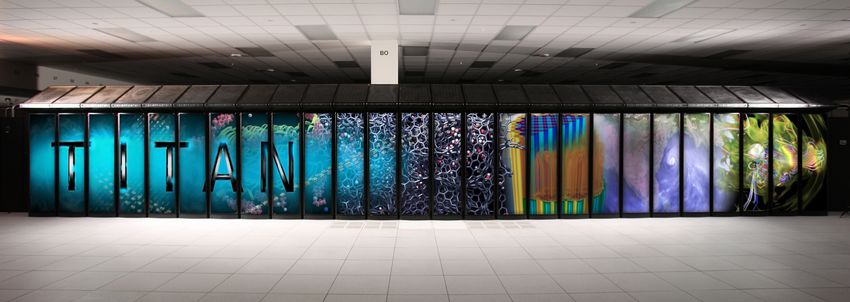
Cori Stampede2 Skylake Titan Piz Daint
Architecture CPU CPU CPU CPU/GPU CPU/GPU
CPU Model Xeon Phi 7250 Xeon Phi 7250 Xeon Plat 8160 Opteron 6274 Xeon ES-2690 v3
GPU Model Tesla K20X 6GB Tesla P100 16GB
Threads/node 272 (128 used) 272 (128 used) 96 16/2688 12/3584
TFLOP/node 3.0 3.0 3.5 1.5 (0.2+1.3) 4.5 (0.5+4.0)
Nodes 9668 4200 1736 18688 5320
40 Candy/SciDAC-PI/July 2018 AT MMeasuring Performance versus advertised peak
Kernel timning (left) and strong scaling (right)
Equal 1.6 PFLOP Increasing fraction of peak
100
str nl field coll Skylake Piz Daint
400 Stampede2 Titan
80 Cori KNL
Wallclock time (s)
Wallclock time (s)
200
60
100
40
50
20
0 0.1 1 10
Stampede2 Cori Titan Piz Daint Skylake
Peak PFLOPS
str = field-line streaming
nl = nonlinear Poisson Bracket • lower is better (closer to advertised)
field = field solve • Xeon (Stampede2 Skylake) performing
41
coll = collisions (implict)
Candy/SciDAC-PI/July 2018
well
AT MExcellent OpenMP performance
• Results for NERSC Cori KNL (use 128 threads per node)
• Almost perfect tradeoff between MPI tasks and OpenMP threads
OMP vs MPI strong scaling OMP-MPI tradeoff
MPI = 512 OMP = 8 400
800
Wallclock time (s)
Wallclock time (s)
400 200
200
100
100
50
1k 2k 4k 8k 16k 2 4 8 16 32 64
AT M
Total number of Threads Number of OpenMP threads per MPI task
42 Candy/SciDAC-PI/July 2018GPUDirect MPI Recently Implemented General Atomics Power9+V100 nodes 43 Candy/SciDAC-PI/July 2018 AT M
Arbitrary-wavelength formulation for multiscale
     Experimental DIII-D ITER-baseline discharge reproduced

                       Traditional ion-scale domain shown in blue
                0.18

                0.16

                0.14

                0.12
Fractional Qe

                0.10

                0.08

                0.06

                0.04

                0.02

                0.00

                                                                                       AT M
                    0        5      10      15        20       25             30
                                             k y ρs

     44                                                    Candy/SciDAC-PI/July 2018
Arbitrary-wavelength formulation for multiscale
Experimental DIII-D ITER-baseline discharge reproduced
Traditional ion-scale domain shown in blue
0.18
0.16
0.14
0.12
Fractional Qe
0.10
0.08
0.06
0.04
0.02
0.00
AT M
0 5 10 15 20 25 30
k y ρs
45 Candy/SciDAC-PI/July 2018
COGENT:
−��� Direct
−��� Kinetic Eulerian
−��� Edge Simulation
Provide
� ��� �
future theory-based ��� � �
transport fluxes
���
��� �
in SOL ��� � ���
Fig.
1.
Magnetic
flux
data
and
a
sample
flux-‐aligned
COGENT
grid: (a)
o riginal
EFIT
data;
(b)
RBF
least
square
•fit,
Kineticwhich
ignores
the
o riginal
data
transport
cross-separatrix b elow
z=-‐1.3;
(c)
smoothed
computed by RBF
interpolation;
(d)
a
sample
COGENT
grid.
COGENT
• Includes 2D potential and Fokker-Planck ion-ion collisions
���������������� ������������������
���������������
�������������������������� eφ/T0 x300eV
1.5
1 Ti (300%eV)
0.5 ni (5%x%1019% m+3) ���� ����
0
D,! (1.7%m2/s)
!0.5
Er (20%kV/m)
!1
!6 !4 !2 0 2
���� ����
������ ����
46 and
2 D
s2018
Candy/SciDAC-PI/July elf-‐consistent
potential
variations.
The
AT M
Fig.
2.
Illustrative
results
of
COGENT
simulations
for
cross-‐separatrix
plasma
t ransport
including
the
effects
of
Fokker-‐Plank
ion-‐ion
collisions,
anomalous
transport,
AToM Use Cases
Entry point for collaboration with AToM (UCSD)

     • Validation and scenario modeling will be organized about benchmark use cases
         − datasets describing key plasma discharges for component and workflow validation

         − effective way to benchmark models, track improvements, assess performance

                    Key concept for AToM interaction with other SciDACs

47                                        Candy/SciDAC-PI/July 2018               AT M
AToM Use Cases
Entry point for collaboration with AToM (UCSD)
• Validation and scenario modeling will be organized about benchmark use cases
− datasets describing key plasma discharges for component and workflow validation
− effective way to benchmark models, track improvements, assess performance
• Each use case will include
− Magnetic equilibria and profile data in accessible format
− Repository of calculated quantities (code results)
− Provenance documentation (shots/publications/models)
Key concept for AToM interaction with other SciDACs
48 Candy/SciDAC-PI/July 2018 AT MAToM Use Cases
Entry point for collaboration with AToM (UCSD)
• Validation and scenario modeling will be organized about benchmark use cases
− datasets describing key plasma discharges for component and workflow validation
− effective way to benchmark models, track improvements, assess performance
• Each use case will include
− Magnetic equilibria and profile data in accessible format
− Repository of calculated quantities (code results)
− Provenance documentation (shots/publications/models)
• Candidate Use Cases
1 DIII-D L-mode shortfall, ITER baseline, steady-state discharges
2 Alcator C-Mod LOC/SOC plasmas, EDA H-mode toroidal field scan
3 ITER inductive, hybrid, and steady-state scenarios
4 ARIES ACT-1/ACT-2 reactor scenarios
Key concept for AToM interaction with other SciDACs
49 Candy/SciDAC-PI/July 2018 AT MCompliance with the ITER IMAS data model
https://gafusion.github.io/omas
Stability Transport Equilibrium Pedestal
Controller & Optimizer
OMFITprofiles
TGYRO Experimental profiles
Transport + Pedestal
TGLF-NN EPED1-NN
• Transfer data between components using
OMAS (python)
Sources & current
Impurity Sources
ONETWO
STRAHL
evolution
OMAS
• API stores data in format compatible with
IMAS data model
• Use storage systems other than native IMAS
EFIT
Equilibrium
imas
50 Candy/SciDAC-PI/July 2018 AT MCompliance with the ITER IMAS data model
https://gafusion.github.io/omas
IMAS is a set of codes, an execution framework, a data schema, data storage
infrastructure to support ITER plasma operations and research
51 Candy/SciDAC-PI/July 2018 AT MCompliance with the ITER IMAS data model
https://gafusion.github.io/omas
IMAS is a set of codes, an execution framework, a data schema, data storage
infrastructure to support ITER plasma operations and research
• We confirmed that IMAS has several functional shortcomings
− issues with speed, stability, portability, useability
52 Candy/SciDAC-PI/July 2018 AT MCompliance with the ITER IMAS data model
https://gafusion.github.io/omas
IMAS is a set of codes, an execution framework, a data schema, data storage
infrastructure to support ITER plasma operations and research
• We confirmed that IMAS has several functional shortcomings
− issues with speed, stability, portability, useability
• OMAS solution:
− store data according to IMAS schema
− do not use the IMAS infrastructure itself
− facilitate data translation to/from IMAS schema
− lightweight Python library
53 Candy/SciDAC-PI/July 2018 AT MAToM Environment: Dependency Specification
Managing the zoo of physics codes
• Component challenge
− deal with a zoo of physics codes
− legacy/modern, different languages, compiled/interpreted, serial/HPC/leadership
• AToM Approach
− Add new dependencies in a single location
− Generate recipes/specs/etc and build installer packages
− Upload packages to package manager, build images
Installer Packages
Spack Run Environments
HPC Installs
Conda
Dependency
Specification Local Installs
Pip
Docker Image
AT M
Mac Ports
54 Candy/SciDAC-PI/July 2018AToM HPC Environment: Spack
AToM components installable from AToM Spack repository
• Spack manages installation of dependencies
− list available packages
$ spack list -t atom
− install package
$ spack install [package]
− install AToM tier1 package
$ spack install atom-tier1
• CONDA for local instal and distribution of pre-built environment
• PIP/MACPORTS provide options for Python/OSX
55 Candy/SciDAC-PI/July 2018 AT MAToM Environment: Docker
Deploy without building −→ up and running quickly
Docker Image Linux
AToM Tutorials, Examples, Test
Data & Benchmarks
AToM Components
AToM Frameworks Deploys On MacOS
AToM Dependencies
Linux Application
Environment
Windows
• Single monolithic image
• Common user environment across multiple platform
• Enables users on nontarget platform to run components locally
56
• OMFIT runtime environment currently available as Docker image
Candy/SciDAC-PI/July 2018 AT MYou can also read


