The Athens Platform (Release B) - Deliverable D4.2
←
→
Page content transcription
If your browser does not render page correctly, please read the page content below
5GENESIS                                    D4.2 • Athens Platform (Release B)

Deliverable D4.2

The Athens Platform (Release B)

           Editor G. Xilouris (NCSRD)

  Contributors COS (COSMOTE), NCSRD (NATIONAL CENTER FOR
               SCIENTIFIC RESEARCH “DEMOKRITOS”), FOG (FOGUS),
               REL (RUNEL), ATH (ATHONET), ECM (EURECOM)

       Version 1.0

            Date January 31st, 2020

   Distribution PUBLIC (PU)

© 5GENESIS Consortium
                                                                         Page 1 of 70
5GENESIS                                                       D4.2 • Athens Platform (Release B)

List of Authors
NCSRD           National Center for Scientific Research “Demokritos”
G. Xilouris, T. Anagnostopoulos, T. Sarlas, M. Christopoulou, H. Koumaras, S. Kolometsos
COS             COSMOTE
F. Setaki, I. Mesogiti
FOG             FOGUS
D. Tsolkas
ECM             EURECOM
F. Kaltenberger, P. Matzakos
ATH             ATHONET SRL
D.Munaretto, F. Giust
REL             RUNEL NGMT LTD
I. Koffman

© 5GENESIS Consortium
                                                                                            Page 2 of 70
5GENESIS                                                     D4.2 • Athens Platform (Release B)

Disclaimer
The information, documentation and figures available in this deliverable are written by the
5GENESIS Consortium partners under EC co-financing (project H2020-ICT-815178) and do not
necessarily reflect the view of the European Commission.
The information in this document is provided “as is”, and no guarantee or warranty is given
that the information is fit for any particular purpose. The reader uses the information at his/her
sole risk and liability.

© 5GENESIS Consortium
                                                                                            Page 3 of 70
5GENESIS                                                 D4.2 • Athens Platform (Release B)

Copyright
  Copyright © 2020 the 5GENESIS Consortium. All rights reserved.
  The 5GENESIS Consortium consists of:
NATIONAL CENTER FOR SCIENTIFIC RESEARCH “DEMOKRITOS”                         Greece
AIRBUS DS SLC                                                                France
ATHONET SRL                                                                  Italy
ATOS SPAIN SA                                                                Spain
AVANTI HYLAS 2 CYPRUS LIMITED                                                Cyprus
AYUNTAMIENTO DE MALAGA                                                       Spain
COSMOTE KINITES TILEPIKOINONIES AE                                           Greece
EURECOM                                                                      France
FOGUS INNOVATIONS & SERVICES P.C.                                            Greece
FON TECHNOLOGY SL                                                            Spain
FRAUNHOFER GESELLSCHAFT ZUR FOERDERUNG DER ANGEWANDTEN FORSCHUNG
                                                                             Germany
E.V.
IHP GMBH – INNOVATIONS FOR HIGH PERFORMANCE MICROELECTRONICS/LEIBNIZ-
                                                                             Germany
INSTITUT FUER INNOVATIVE MIKROELEKTRONIK
INFOLYSIS P.C.                                                               Greece
INSTITUTO DE TELECOMUNICACOES                                                Portugal
INTEL DEUTSCHLAND GMBH                                                       Germany
KARLSTADS UNIVERSITET                                                        Sweden
L.M. ERICSSON LIMITED                                                        Ireland
MARAN (UK) LIMITED                                                           UK
MUNICIPALITY OF EGALEO                                                       Greece
NEMERGENT SOLUTIONS S.L.                                                     Spain
ONEACCESS                                                                    France
PRIMETEL PLC                                                                 Cyprus
RUNEL NGMT LTD                                                               Israel
SIMULA RESEARCH LABORATORY AS                                                Norway
SPACE HELLAS (CYPRUS) LTD                                                    Cyprus
TELEFONICA INVESTIGACION Y DESARROLLO SA                                     Spain
UNIVERSIDAD DE MALAGA                                                        Spain
UNIVERSITAT POLITECNICA DE VALENCIA                                          Spain
UNIVERSITY OF SURREY                                                         UK

This document may not be copied, reproduced or modified in whole or in part for any purpose
without written permission from the 5GENESIS Consortium. In addition to such written
permission to copy, reproduce or modify this document in whole or part, an acknowledgement
of the authors of the document and all applicable portions of the copyright notice must be
clearly referenced.

© 5GENESIS Consortium
                                                                                        Page 4 of 70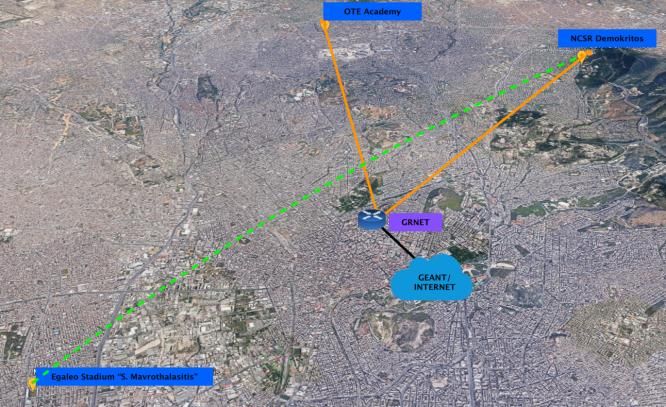
5GENESIS                                          D4.2 • Athens Platform (Release B)

Version History
Rev. N     Description       Author                                     Date
1.0        Release of D4.2   G.Xilouris (NCSRD)                         31.1.2020

© 5GENESIS Consortium
                                                                               Page 5 of 70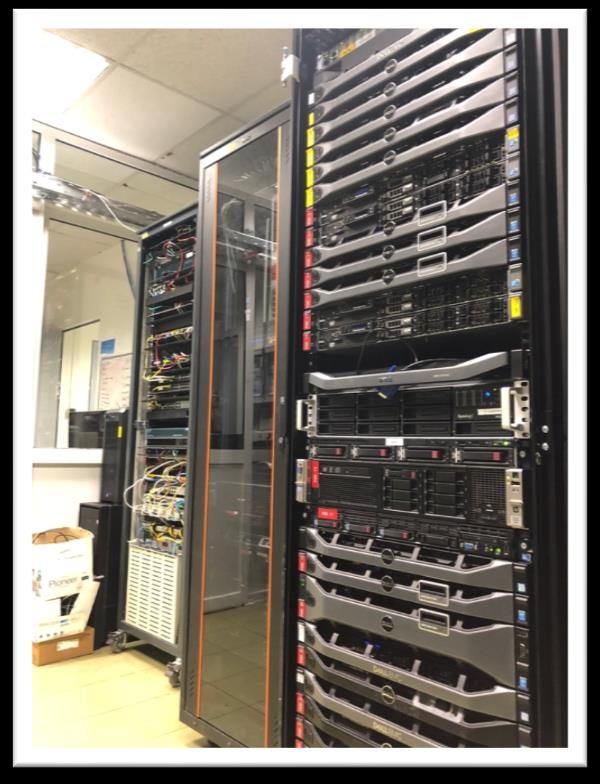
5GENESIS                                             D4.2 • Athens Platform (Release B)

LIST OF ACRONYMS
Acronym            Meaning
5G PPP             5G Infrastructure Public Private Partnership
5GC                5G Core
5G-IA              The 5G Infrastructure Association
AP                 Access Point
AR                 Augmented Reality
BYOD               Bring Your Own Device
CA                 Carrier Aggregation
CESC               Cloud-Enabled Small Cell
CO                 Central Office
CoMP               Coordinated Multi-Point transmission/reception
COTS               Components off the self
CPRI               Common Public Radio Interface
C-RAN              Cloud-RAN
CSP                Content Service Provider
CUPS               Control and User Plane Separation
DoS                Denial of Service
DDoS               Distributed Denial of Service
DU                 Digital Unit
E2E                E2E
ECM                Eurecom
eICIC              Enhanced Inter-Cell Interference Coordination
eMBB               Enhanced Mobile Broadband-5G Generic Service
eMBMS              Evolved Multimedia Broadcast Multicast Services
EMS                Element Management System
eNB                eNodeB, evolved NodeB, LTE eq. of base station
EU                 European Union
EPC                Evolved Packet Core
EUTRAN             Evolved Universal Terrestrial Radio Access Network
FDD                Frequency Division Duplexing
gNB                gNodeB, 5G NR, next generation NR eq. of base station
GPP                General Purpose Processor
HetNet             Heterogeneous Network
H-RAN              Heterogeneous RAN
ICIC               Inter-Cell Interference Coordination
ICMP               Internet Control Message protocol
IDS                Intrusion Detection System
IoT                Internet of Things
KPI                Key Performance Indicator
LPWA               Low Power Wide Area
LTE                Long-Term Evolution
LTE-A              Long-Term Evolution - Advanced

© 5GENESIS Consortium
                                                                                  Page 6 of 70
5GENESIS                                           D4.2 • Athens Platform (Release B)

Acronym            Meaning
MANO               MANagement and Orchestration
MCS                Mission Critical Services
MEC                Mobile Edge Computing
MIMO               Multiple Input Multiple Output
MME                Mobility Management Entity
mMTC               Massive Machine Type Communications-5G Generic Service
MONROE             Measuring Mobile Broadband Networks in Europe.
MPTCP              MultiPath TCP
NFV                Network Function Virtualisation
NFVI               Network Function Virtualisation Infrastructure
NSMF               Network Slice Management Function
NR                 New Radio
OAI                Open Air Interface
OAM                Operations, Administration & Management
ODL                OpenDayLight SDN Controller
OF                 OpenFlow
OFDM               Orthogonal Frequency Division Multiplexing
ONAP               Open Networking Automation Platform
ORI                Open Radio Interface
OSM                Open Source MANO
OTT                Over-The-Top
PCell              Primary Cell
PCI                Physical Cell ID
PCRF               Policy and Charging Rules Function
PDCP               Packet Data Convergence Protocol (PDCP)
PoP                Point of Presence
P-GW               Packet data node GateWay
PNF                Physical Network Functions
PPDR               Public Protection and Disaster Relief systems
RAN                Radio Access Network
RRH                Remote Radio Head
RRM                Radio Resource management
RU                 Radio Unit
SDN                Software Defined Network
SDR                Software Defined Radio
SGW                Serving Gateway (3GPP)
STA                Station
TCP                Transmission Control Protocol
UAV                Unmanned Aerial Vehicles
UDP                User Datagram Protocol
UE                 User Equipment
UPF                User Plane Function
uRLLC              Ultra-Reliable, Low-Latency Communications
VIM                Virtualised Infrastructure Manager

© 5GENESIS Consortium
                                                                                Page 7 of 70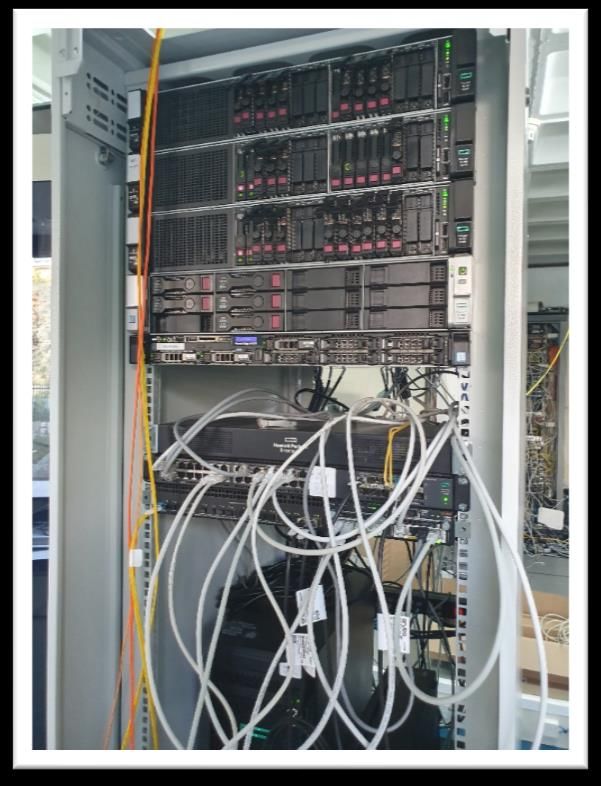
5GENESIS                                              D4.2 • Athens Platform (Release B)

Acronym            Meaning
WIM                WAN Infrastructure Manager
WSMP               Wifi Service Management Platform

© 5GENESIS Consortium
                                                                                   Page 8 of 70
5GENESIS                                                     D4.2 • Athens Platform (Release B)

Executive Summary
This document serves as an overview of the implementation efforts for the transformation
of the Athens platform to an E2E 5G facility in the framework of the 5GENESIS project.
This document extends the content of the previous deliverable D4.1 and describes the
advances of the platform. The Athens platform is one of the 5GENESIS six 5G experimental
platforms located in Europe, aiming to validate several Key Performance Indicators (KPIs) defined
by 5G-PPP, i.e. latency, throughput, speed, capacity, service creation time, etc. These
platforms, located in Athens, Berlin, Limassol, Málaga and Surrey, plus a portable version, are
instances of a common reference architecture already defined in deliverable D2.2 “Initial
overall facility design and specifications”, in response to the project requirements identified in
deliverable D2.1 “Requirements of the facility”.

The Athens platform is comprised of the NCSRD Campus, the OTE Academy fac ilities and
the “Stavros Mavrothalasitis” Municipal Stadium of Egaleo. The evolution of the Athens
platform is achieved through a series of optimizations as new specifications and
components are being made available either commercially or within the consortium. In
this context, each 5GENESIS facility will follow a 3-phase integration and testing regime,
where new features, functionalities and HW components will be integrated in the
infrastructure. Each integration cycle is followed by testing and validation. This document
highlights the changes and advances from phase 1 (Release A) to phase 2 (Release B) and
the next steps towards the final deployment and operation of 5GENESIS facility.

Release B (Rel. B) of the Athens platform has the privilege of deploying an integrated
Coordination Layer and Slice Manager (Release B). This is a very significant advancement
compared to Release A of the platform. It instantiates an operation Coordination Layer
and includes a full blown 4G based deployment with a series of enhancements. These
enhancements allow the demonstration of some early 5G features. Moreover, there is
progress in terms of availability of 5G radio components, some being provided by consortium
partners and others that are commercially available. All enhancements are thoroughly
discussed in the document. Delays in acquiring certain 5G radio components and 5G Core
functions (out of the consortium partners) has prolonged the integration process beyond
the deliverable due date. According to the plan, the deployed configurations will be used
during WP6 experimentation and validation phase. If further integrations happen during
that period, they will be annexed to D6.2 WP6 deliverable. More specifically, the following
were achieved during the second integration phase:
   •   Deployment of Release A of Coordination Layer components
   •   Deployment of Release A of Slice Manager
   •   Partial installation of commercial 5G RAN at OTEAcademy

© 5GENESIS Consortium
                                                                                            Page 9 of 70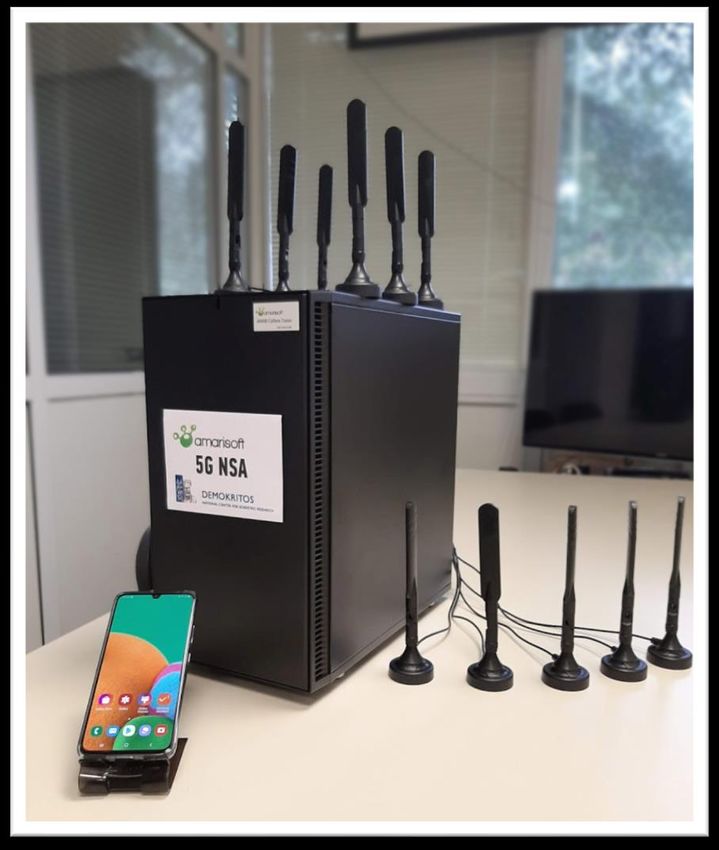
5GENESIS                                                    D4.2 • Athens Platform (Release B)

   •   Partial installation of commercial 5G RAN and Core Non-Stand Alone (NSA) - NCSR
       Demokritos
   •   Upgrade of MANO Layer components
           o Network Function Virtualisation Orchestrator (NFVO) OSM v6 upgrade
   •   Additions and enhancement at the Infrastructure Monitoring.
   •   Integration of MONROE probes

Furthermore, the document presents a summary of the supported use cases, namely “Big
Event”, “Eye in the Sky” and “Security-as-a-Service”, and their relevance to the Athens
platform sites and their components.

During the last three months of this cycle, extensive tests will be performed to ensure that all
the newly integrated services and components work as expected and, in parallel, the platform
partners will continue their efforts towards integrating any pending elements and technologies.
The platform will be used for the second round of experiments until March 2020, and the report
on the KPIs will be available in deliverable D6.2 in March 2020. This document will be followed
by the deliverable describing the Release C of the platform in December 2020 (deliverable
D4.3).

© 5GENESIS Consortium
                                                                                          Page 10 of 70
5GENESIS D4.2 • Athens Platform (Release B)
Table of Contents
LIST OF ACRONYMS .............................................................................................................. 6
1. INTRODUCTION .............................................................................................................. 16
Purpose of the document .............................................................................................. 16
Structure of the document ............................................................................................ 17
Target Audience ............................................................................................................. 17
2. ATHENS PLATFORM OVERVIEW ....................................................................................... 18
Platform Sites Overview................................................................................................. 18
2.1.1. Overall topology ..................................................................................................... 18
2.1.2. Site 1 - NCSRD Campus ........................................................................................... 19
2.1.3. Site 2 - COSMOTE Site ............................................................................................. 20
2.1.4. Site 3 - Egaleo Site .................................................................................................. 21
Target Deployment ........................................................................................................ 22
2.2.1. Platform Infrastructure Layer ................................................................................. 23
2.2.1.1. Mobile Network Technology................................................................................ 24
2.2.1.2. Main Data Center................................................................................................. 31
2.2.1.3. Edge Data Centers ............................................................................................... 32
2.2.1.4. Transport Network .............................................................................................. 33
2.2.2. Management & Orchestration Layer ...................................................................... 36
2.2.2.1. Slice Manager ...................................................................................................... 37
2.2.2.2. NFV Management and Orchestration .................................................................. 37
2.2.2.3. Element Management System ............................................................................. 38
2.2.2.4. SDN Controller ..................................................................................................... 38
2.2.3. Coordination Layer ................................................................................................. 39
3. ATHENS PLATFORM EVOLUTION ........................................................................................ 40
Phase 2 Instantiation of the 5GENESIS Architecture ..................................................... 40
Phase 1 Accomplishments ............................................................................................. 42
Phase 2 Accomplishments ............................................................................................. 43
3.3.1. 5GNR and 5GC integration and testing ................................................................... 43
3.3.2. Integration of 5GENESIS 5GNR solutions ................................................................ 44
3.3.3. Integration of 5GENESIS Management and Orchestration Layer ........................... 44
3.3.4. Integration 5GENESIS Coordination Layer .............................................................. 46
Next Milestones ............................................................................................................. 47
© 5GENESIS Consortium
Page 11 of 705GENESIS D4.2 • Athens Platform (Release B)
4. ATHENS USE CASES-SPECIFIC EXTENSIONS .......................................................................... 48
Use Cases Target Deployment ....................................................................................... 48
4.1.1. Use Case Big Event in a soccer stadium .................................................................. 48
4.1.2. Use Case “Eye in the sky” applications ................................................................... 49
4.1.3. Use Case Security-as-a-Service ............................................................................... 50
Use Cases Phase 1 Accomplishments ............................................................................ 51
Use Cases Phase 2 Accomplishments ............................................................................ 52
Next Steps ...................................................................................................................... 52
5. CONCLUSIONS ............................................................................................................... 54
REFERENCES...................................................................................................................... 55
APPENDIX 1: 5GENESIS ATHENS PLATFORM MOBILE CORE NETWORK....................................... 57
ATHONET Core ...................................................................................................................... 57
OpenAirInterface Εvolved Packet Core (EPC) ....................................................................... 59
Amarisoft Evolved Packet Core ............................................................................................. 61
APPENDIX 2: 5GENESIS ATHENS PLATFORM RADIO ACCESS PRODUCTS ................................... 62
4G Radio Access .................................................................................................................... 62
Nokia Flexi Zone Multiband Indoor Pico BTS (FZ MBI) eNB .............................................. 62
Amarisoft eNB................................................................................................................... 62
OpenairInterface eNB ....................................................................................................... 64
5G Radio Access .................................................................................................................... 65
Amarisoft 5G NR ............................................................................................................... 65
OpenAirInterface (OAI) ..................................................................................................... 67
RunEL 5G NR ..................................................................................................................... 68
User Equipment (UE) ............................................................................................................ 69
© 5GENESIS Consortium
Page 12 of 705GENESIS D4.2 • Athens Platform (Release B)
List of Figures
Figure 1: Athens Platform Sites Overview ............................................................................................. 19
Figure 2: NCSRD Site ........................................................................................................................... 20
Figure 3: COSMOTE Site ...................................................................................................................... 21
Figure 4 Egaleo Site .............................................................................................................................. 21
Figure 5: 5GENESIS Athens platform physical topology ...................................................................... 23
Figure 6 Macro Cell at NCSRD Site ...................................................................................................... 26
Figure 7 a. Nokia AirScale 5G BBU, b. AirScale Micro 4T4R ............................................................... 27
Figure 8 USRPs N310 utilized as gNB and nr-UE in NCSRD ............................................................... 28
Figure 9 Amarisoft Callbox 5G NSA/SA Solution .................................................................................. 29
Figure 10 5G NR UE using USRP N300 ............................................................................................... 30
Figure 11 Samsung A90 5G (NSA) ....................................................................................................... 31
Figure 12 NCSRD Site (left) and COSMOTE Site (right) Main DC ....................................................... 31
Figure 13 Edge Computing Infrastructure at NCSRD (left) and COSMOTE (right) .............................. 32
Figure 14: Egaleo Site Cabinets for edge equipment ........................................................................... 33
Figure 15 NCSRD spine – leaf network topology .................................................................................. 34
Figure 16: Transport Network at NCSRD Site ....................................................................................... 34
Figure 17 WAN Emulator example simulated network topology ........................................................... 35
Figure 18: a) High-Mast Antenna at NCSRD Campus and b) Egaleo Stadium antenna ...................... 36
Figure 19 Per-phase instantiation of the 5GENESIS architectural blueprint in the Athens Platform .... 40
Figure 20 Throughput Test (Athonet Core, Amarisoft RAN) ................................................................. 44
Figure 21 Deployment of MANO Components in OpenStack ............................................................... 45
Figure 22 Deployment of MANO Monitoring Components in ESXi ....................................................... 46
Figure 23 Coordination Layer Components .......................................................................................... 47
Figure 24 Components and deployment of the Big Event use case ..................................................... 49
Figure 25 Components and deployment of the “eye in the sky” use case ............................................ 50
Figure 26: SeCaas Service at OTEAcademy Use Case Topology ....................................................... 51
Figure 27 360 multimedia video streaming ........................................................................................... 52
Figure 28: ATHONET Virtualised EPC Server ...................................................................................... 57
Figure 29 Intel NUC6i7KYK (left) hosting OAI vEPC ............................................................................ 59
Figure 30 OAI MME console depicting successful COTS UE connection ............................................ 60
Figure 31 Iperf3 results using a COTS UE with IP 10.21.1.2 over the OAI based network .................. 60
Figure 32 USRP N210 ........................................................................................................................... 63
Figure 33 OAI eNB implementation ....................................................................................................... 64
Figure 34 OAI eNB interoperating with ATH EPC while serving multiple COTS UEs ........................... 65
Figure 35 Amarisoft Monitoring GUI Overview ...................................................................................... 66
Figure 36 Constellation Report of Uplink 16 QAM Transmission .......................................................... 67
Figure 37 OAI 5G-NR Xforms utility for RAN monitoring ...................................................................... 68
© 5GENESIS Consortium
Page 13 of 705GENESIS D4.2 • Athens Platform (Release B)
Figure 38 RunEL 5G distributed Architecture........................................................................................ 68
Figure 39 DRAN and RRH Block diagram ............................................................................................ 69
© 5GENESIS Consortium
Page 14 of 705GENESIS D4.2 • Athens Platform (Release B)
List of Tables
Table 1 Document interdependencies ................................................................................................... 16
Table 2 Infrastructure layer components and technologies in the 5GENESIS Athens platform ........... 23
Table 3 Athens Platform 5G Release B Radio Equipment Deployment ............................................... 25
Table 4 Management and Monitoring tools ........................................................................................... 36
Table 5 Coordination Layer Components .............................................................................................. 39
Table 6 4G LTE Legacy Deployment Configurations ............................................................................ 41
Table 7 Athens Platform Deployment Configurations ........................................................................... 42
Table 8 Athens Platform MANO Components (OpenStack) ................................................................. 44
Table 9 Athens Platform MANO Components (ESXi) ........................................................................... 45
Table 10 Nokia Small Cell Key Features ............................................................................................... 62
Table 11 UEs available in Athens Platform ........................................................................................... 69
© 5GENESIS Consortium
Page 15 of 705GENESIS D4.2 • Athens Platform (Release B)
1. INTRODUCTION
Purpose of the document
This document presents the work in progress for the integration activities currently underway
in the Athens Platform. More specifically, the purpose of this deliverable is to meet the
following WP4 objectives:
• Accommodate WP2 requirements and specifications.
• Integrate the components that will be implemented in WP3 within each platform in
order to constitute the 5GENESIS facility.
• Support and facilitate the deployment of the described Use Cases.
• Enable system level validations as per WP5 specifications.
• Provide the means for the WP6 KPI validation and verification campaigns.
Currently, the project has released the following documents that are used as inputs for this
document (see Table 1).
Table 1 Document interdependencies
id Document title Relevance
The document sets the ground for the
first set of requirements related to
D2.1 [1] Requirements of the Facility
supported features at the testbed for the
facilitation of the Use Cases.
The 5GENESIS facility architecture is
5GENESIS Overall Facility Design defined in this document. The list of
D2.2 [2]
and Specifications functional components to be deployed in
each testbed is defined.
Testing and experimentation
Initial planning of tests and specifications that influence the testbed
D2.3 [3]
experimentation definition, operation and maintenance
are defined.
The document presents the MANO
Management and orchestration solutions that are integrated in the
D3.1 [4]
(Release A) infrastructure. Interfaces and
deployment options are also described.
The document details the Slice Manager
D3.3 [5] Slice management WP3 (Release A) solution, its interfaces towards the
MANO and NMS components.
Monitoring and WP3 analytics The document details the Infrastructure
D3.5 [6] (Release A) Monitoring components and the
interfaces with infrastructure elements.
© 5GENESIS Consortium
Page 16 of 705GENESIS D4.2 • Athens Platform (Release B)
The document details the 5G Core
5G Core Network WP3 Functions network functions and provides input on
D3.9 [7]
(Release A) their integration with the infrastructure
and management components.
5G Access Components and User The document details the 5G Radio
D3.11 [8]
Equipment (Release A) Access components and UE devices.
This is the initial deliverable for the
D4.1 [10] The Athens Platform
Athens platform.
This document provides guidelines,
integration tests and software packages
D5.1 [11] System level tests and verifications
for the realization of the 5GENESIS
facility coordination layer components.
Structure of the document
The document is structured as follows:
Section 2 provides an overview of the target topology of the Athens platform, the platform
sites, as well as the technologies used for the platform components at the three logical layers
(Coordination Layer, MANO Layer, Infrastructure Layer).
Section 3 follows with a description of the intended evolution of the platform, listing the current
accomplishments during Phase 1 and Phase 2, as well as the milestones to reach in the
deployment of Phase 3.
Section 4 is devoted to the three use cases that will be tested in the final version of the platform,
describing their components, the scenarios of utilization and the expected outcome.
Target Audience
This deliverable is released to the public, with the intention to expose the technical approach,
the advancements, as well as the capabilities of the Athens platform deployment. In addition,
it allows to:
• Understand the requirements and risks for each deployed module and component
within the Athens platform.
• Facilitate technology selection and design decisions for their components.
• Understand the limitations and restrictions in technology deployment and usage.
Finally, this document may help to justify design decisions for the deployment of 5G
components and evaluate the progress in adoption and deployment of the 5G infrastructure.
© 5GENESIS Consortium
Page 17 of 705GENESIS D4.2 • Athens Platform (Release B)
2. ATHENS PLATFORM OVERVIEW
This section presents an overview of the Athens platform topology, the constituting sites and
the related technology components. It is a distilled summary of the extensive platform
deployment description as presented in deliverable D4.1 [10].
The section is structured in three subsections and presents the platform implementation on
the basis of the layered approach proposed by the 5GENESIS Reference Architecture as defined
in D2.2 [2].
Platform Sites Overview
2.1.1. Overall topology
The Athens 5G platform comprises three dispersed sites in the Athens metropolitan area
forming an E2E (E2E) experimental 5G testbed. It features 5G and 4G radio access technologies
(RATs) deployed in both indoor and outdoor environments combining software network
technologies (i.e. NFV and SDN) and edge computing deployments. The sites that comprise the
platform are illustrated in Figure 1 and they are described below.
• Site 1: The campus of NCSR "Demokritos", in north-east Athens, is a 150-acre area,
combining indoor and outdoor environments, dispersed around the campus and
interconnected by an optical fiber backbone; NCSRD is directly connected to Greek
Educational, Academic and Research Network (GRNET)1, which provides access to
Internet and GÉANT (pan-European data network for the research and education
community). This site will be responsible for hosting most of the infrastructure required
for the management, orchestration and coordination of the Athens platform.
• Site 2: The COSMOTE building (OTEAcademy), in the north of the city, is a multi-
functional complex, combining various indoor and outdoor usage scenarios; It is also
directly connected to GRNET which provides for access to GÉANT. Internet access is
provided by OTE network. This site will host infrastructure components, radio access
components and NFV/Edge Computing infrastructure.
• Site 3: The stadium of Egaleo (Stavros Mavrothalasitis), in west Athens, that will be used
to host demonstrations in a more “realistic” environment and suitable to investigate
terrestrial wireless backhaul related metrics (i.e. latency, throughput, etc.). Currently,
the location’s connectivity is based on a wireless point-to-point link to NCSRD. This site
will host infrastructure components that will allow the experimentation and support of
use cases related with the edge computing, and Control Plane – User Plane separation
in a realistic environment.
1
GRNET http://grnet.gr
© 5GENESIS Consortium
Page 18 of 705GENESIS D4.2 • Athens Platform (Release B)
Figure 1: Athens Platform Sites Overview
2.1.2. Site 1 - NCSRD Campus
NCSRD, one of the biggest research centers in Greece, has an extended campus area that is
used to cover both indoor and outdoor testing scenarios. NCSRD provides to the Athens
platform a reliable operation of the network, computing and RAT deployments within its
premises. In addition, NCSRD provides virtualized resources in its datacenter facilities as well as
edge computing domains at specific locations. A variety of cloud and virtualization
infrastructure is available to support core and edge deployments.
In order to cater for outdoor coverage, a MacroCell is installed at a high mast, providing
coverage to the whole campus area. Indoor coverage is provided by four small cells that
operate in selected locations. The Administration and Library deployments are based on eNBs
that run the Amarisoft RAN software and connect to the Amarisoft core network component
via the backhaul network. The backhaul network is enabled by the campus’s optical network.
Both eNBs are using SDR hardware for the radio part (i.e USRP B210 and PCIe SDR board
respectively). Finally, two Nokia Flexi Zone Multiband Indoor Pico BTS small cells are deployed
at the Institute of Informatics and Telecommunications (IIT) building which connect the
backhaul network to the Athonet LTE EPC through 10Gbps Ethernet. In addition, the Media
Networks Laboratory includes an open source mobile network implementation based on ECM’s
OpenAirInterface (OAI) elements that interoperate with COTS UEs. The OAI eNB has been
deployed on an x86 physical host connected to a USRP B210, transmitting on FDD mode in band
7 (2600 MHz), while a second machine is running the virtualized OAI core network. Regarding
the evolution towards 5G, NCSRD is granted an experimental license for 5G trials for
transmission in the 3.6 GHz spectrum with 100 MHz bandwidth. 5G RAN and 5G New Core
elements will be developed and deployed from RunEL andOAI and Athonet respectively, in
parallel with Amarisoft commercial 5G RAN and Core.
Wi-Fi access points (APs) are deployed to provide coverage to the gaps of the Mobile Network
Cells. Wi-Fi APs are deployed in every building to help maximize the coverage and capacity of
the access network. Typically, they operate at the 5 GHz Frequency Band using the IEEE
802.11ac standard.
A physical deployment topology illustrating the radio coverage is provided in Figure 2.
© 5GENESIS Consortium
Page 19 of 705GENESIS D4.2 • Athens Platform (Release B)
Figure 2: NCSRD Site
2.1.3. Site 2 - COSMOTE Site
COSMOTE’s testbeds for supporting research and development activities are located in
OTEAcademy’s site in Marousi, Athens. The site can offer extensive data center infrastructure
(more than 720 CPU cores, 1700GB RAM and 120TB storage space), and is interconnected
(mostly) via 10Gbps fiber/copper links. More specifically, the setup can be split into one or more
cloud slices (controllers/ compute nodes/ hypervisors) of various sizes, either in bare metal or
virtualized form, and allows high degrees of freedom for customized configurations.
In the context of 5GENESIS Facility and the Athens Platform, COSMOTE shall host edge network
capabilities empowered by the lab’s cloud infrastructure and 5G outdoor and indoor
deployments based on commercial equipment. The COSMOTE’s OpenStack implementation
provides to 5GENESIS a private cloud service model, as Infrastructure as a Service (IaaS), where
required use case VNFs are deployed. Furthermore, complementarily to the NCSRD core
network deployment an LTE/EPC/IMS edge network is used to support the Security as a Service
(SecaaS use case and exhibit edge computing capabilities. The setup is based on a lightweight
4G EPC/IMS – Evolved Packet Core/IP Multimedia Subsystem provided by ATHONET. The
deployment is complemented by a number of small cells connected to the EPC; namely a
number of “Flexi Zone Multiband Indoor Pico BTS” (FZ MBI) provided by NOKIA. Recently
installation and configuration activities for the 5G Nokia Airscale indoor/outdoor NSA (option
3) system has started with the purpose of integrating it with the Athens Platform for the testing
and validation of 5G KPIs. Figure 3 illustrates the current deployment. It can be observed that
the MANO and coordination components are installed in separate cloud infrastructure (IaaS
cloud), and the actual mobile network is operating over two edge clouds supporting local break
out (LBO) to enable MEC traffic redirection.
© 5GENESIS Consortium
Page 20 of 705GENESIS D4.2 • Athens Platform (Release B)
Figure 3: COSMOTE Site
2.1.4. Site 3 - Egaleo Site
Figure 4 presents the deployed architecture at the Egaleo Stadium. The RAN is composed of
three small cells placed in cabinets providing coverage to the entire stadium. In addition, three
cabinets that will accommodate the 5G gNB components are already installed at the stadium.
The stadium premises will be also equipped by small footprint edge computing infrastructure
for the use case demonstration.
BH to NCSRD
1Gbps
Wifi 5G Wifi 5G Wifi 5G
1Gbps 1Gbps 1Gbps 1Gbps 1Gbps 1Gbps
1Gbps 1Gbps
MEC
Egaleo
Stadium
Figure 4 Egaleo Site
© 5GENESIS Consortium
Page 21 of 705GENESIS D4.2 • Athens Platform (Release B)
It should be highlighted that the equipment used in the stadium is available only during testing.
This means that there is no fixed infrastructure deployed apart from the backhaul connecting
to the NCSRD site and the cabinets that host the equipment during the test campaigns. This is
due to precautionary reasons for equipment safety. During experiments, the required
equipment is transferred to the site and configured specifically for the event.
Target Deployment
The target physical topology of the Athens platform is depicted in Figure 5. The platform has
already most of the main components deployed and inter-connecting links are in place,
exploiting NCSRD site as the central node.
The core of the platform is supported by two OpenStack installations, one at NCSRD premises
and one at the COSMOTE premises. Both installations may be seen as NFV Infrastructure with
OpenStack Virtualisation Infrastructure Manager (VIM), able to instantiate NFV services.
The Slice Manager and the Management and Orchestration layer (MANO) are able to provision
network slices and manage and orchestrate infrastructure resources. These components along
with the Coordination layer components are deployed in the infrastructure core data center as
virtual machines.
The 4G and 5G Core network functions are deployed at the available NFVIs, in the case where
the virtualized instantiation is available, otherwise in stand-alone servers.
Finally, a small cluster is exploited by the infrastructure monitoring platform that monitors all
components and collects performance monitoring data. The monitoring platform utilizes
opensource software for the Network Management System (NMS), the time series monitoring
database and alert system.
On the interconnection part among remote sites, the link between NCSRD and COSMOTE sites
is realized on top of GRNET optical fiber infrastructure at rates up to 1 Gbps, whereas the link
between NCSRD and Egaleo stadium is realized via terrestrial wireless backhaul technology
using a microwave link at 5 GHz. The link supports speeds up to 200 Mbps depending on the
link quality.
© 5GENESIS Consortium
Page 22 of 705GENESIS D4.2 • Athens Platform (Release B)
Figure 5: 5GENESIS Athens platform physical topology
The sections to follow present in detail the components of the platform.
2.2.1. Platform Infrastructure Layer
Table 2 below provides an overview of the infrastructure layer components and associated
technologies deployed in the Athens platform.
Table 2 Infrastructure layer components and technologies in the 5GENESIS Athens platform
Component Product/Technology Mode of Implementation
Main DC COTS servers OpenStack / VMware ESXi
Edge/Cloud COTS Servers / SFF x86 PCs OpenStack / K8s
Computing
EPC/5GC ECM OAI Core Multiple instances
Athonet 5GC (constant evolution)
Amarisoft Rel 15.5 5GC
Amarisoft Rel 14 4G LTE
5GNR Prototypes from REL and ECM Multiple instances & SDR HW
Amarisoft NSA/SA
Nokia Airscale System and 5G Small
Cell (RRH)
Commercial 5G smartphones
© 5GENESIS Consortium
Page 23 of 705GENESIS D4.2 • Athens Platform (Release B)
LTE EUTRAN Eurecom OAI / Amarisoft / Nokia multiple instances & SDR HW
AirScale / Nokia FlexiZone
Commercial 4G mobile phones
compatible with OAI (Samsung A40,
A90) and commercial 5G mobile
phones (Samsung A90) plus USB
dongles
Non-3GPP Access WiFi 802.11ac Bespoke devices
Networks
Probes MONROE Multiple instances deployed
across the network
Traffic Generator Open-source traffic generator (e.g. COTS devices and SW
Ostinato, Seagull, WARP17, TRex)
IxChariot
2.2.1.1. Mobile Network Technology
The Athens platform mobile network technology is based on a multiplicity of RAN and Core
solutions. The deployment already supports the 4G LTE Core open source implementations (i.e.
NextEPC / OpenAir Interface EPC) as well as commercial ones (i.e. Athonet/Amarisoft). The
evolved 5G version of the platform uses Athonet and Amarisoft 5G Core and OAI, Amarisoft
and RunEL 5G radio.
The Athens platform has already deployed and tested a fully operational 4G LTE based
infrastructure that has been successfully exploited in previous 5G-PPP Phase 1 and 2 projects
(SONATA, 5GTANGO, SESAME, and 5GESSENCE). In Release A of 5GENESIS, the initially
deployed infrastructure was re-designed and re-deployed in order to be able to support the
new 5G RAN and Core components for experimental purposes). In Release B, new features in
the 5G RAN and Core are being integrated as the technology matures and components are
made available.
The roadmap for deploying the mobile network technologies deployment in the Athens
platform is tentatively defined as follows:
• Phase1 (integration of Release A):
o Network planning and redesign of mobile network
o Installation and deployment of all available elements (4G Core and RAN as well
as non-3GPP)
o E2E testing with 4G LTE equipment
• Phase 2 (integration of Release B):
o Deployment of 5G RAN elements
▪ Commercial Solutions: Nokia 5G NR, Amarisoft 5G NR and 5GC
▪ Partners Solutions: Athonet 5GC, RunEL 5GNR, OAI 5GNR, OAI 5GC.
o RunEL 5G (no 5GCore supported), testing
o OAI 5GNR and UE (no 5GCore supported), testing
o Amarisoft 5G NC – Amarisoft 5G gNB – COTS UE (NSA)
© 5GENESIS Consortium
Page 24 of 705GENESIS D4.2 • Athens Platform (Release B)
• Phase 3:
o Upgrades and enhancements over deployed components
o 5G SA and NSA deployment integration with the MANO and Coordinator
o Full E2E operation
▪ Athonet 5GC – RunEL 5G gNB – OAI UE (SA)/Commercial UE (SA)
▪ Athonet 5GC – OAI 5G gNB – OAI UE (NSA)/Commercial UE (NSA)
▪ Athonet 5GC – Amarisoft 5G gNB – Commercial UE (SA)
Radio Access
5G New Radio (NR), is one of the most highlighted features of 5G. 5GNR encompasses a new
OFDM-based air interface, designed to support the wide variation of 5G device-types, services,
deployments and spectrum. 5GENESIS proposes two alternative implementations of 5GNR,
provided by the vendors RunEL and ECM (i.e. OAI). In addition, the Athens platform integrates
two commercial solutions Amarisoft 5G CallBox which supports both NSA and SA 5G Core and
RAN deployments and Nokia Airscale 5G Macro Cell. With respect to Release 2 of the Athens
platform, Table 3 summarises the Radio Access components currently deployed in the Athens
platform.
Table 3 Athens Platform 5G Release B Radio Equipment Deployment
Site Deployed Radio Access Equipment
NCSRD • 2 NOKIA “Flexi Zone Multiband Indoor Pico BTS” (FZ MBI) small cells – IIT building /
• 1 Amarisoft eNB running on x86 server (SDR) – administration building
• 1 Amarisoft eNB (USRP B210) on x86 server (SDR) – library building
• 1 Amarisoft eNB (N210) for the Macro Cell at outdoor location (high mast)
providing coverage to a large part of NCSRD campus.
• 1 Amarisoft Callbox Classic 5G NSA (3.5 GHz, N78 Band)
• 1 OAI gNB (USRP N310) and x86 server (prototype) – Laboratory / IIT building
COSMOTE • 8 NOKIA “Flexi Zone Multiband Indoor Pico BTS” (FZ MBI) small cells
• NOKIA Airscale System and 5G Small Cell (RRH)
Egaleo • Installation of three cabins that hosts small cells providing coverage to the stadium.
Stadium
Outdoor LTE Deployments
The Athens platform has installed an antenna array at a high mast in order to provide coverage
in a large part of the NCSRD campus. A Kathrein 80010682 antenna is used with a carrier
frequency of 2.6 GHz. The MacroCell implementation is based on an N210 USRP board
connected to an eNB (x86 server) that runs Amarisoft RAN software. The installation is depicted
© 5GENESIS Consortium
Page 25 of 705GENESIS D4.2 • Athens Platform (Release B)
in Figure 6. Moving to Phase 3 the antenna array will be upgraded with an array suitable for
5GNR operation at 3.5GHz.
Figure 6 Macro Cell at NCSRD Site
Indoor LTE Deployments
The Indoor LTE deployments of the Athens platform are based initially on OAI stable software
implementation combined with Ettus SDR cards. Details on the implementation are provided
in APPENDIX 2: 5GENESIS Athens Platform Radio Access Products. As a legacy
technology/infrastructure, this setup is not discussed in this document.
In addition to the ECM OAI, 4G eNB implementations are also available using Amarisoft
Licensed Software. Finally, commercial solutions from Nokia are also available using the
FlexiZone Indoor Pico BTS.
Detailed specifications of the products in use, are provided in APPENDIX 2: 5GENESIS Athens
Platform Radio Access Products.
Outdoor 5GNR Deployments
At the COSMOTE site, commercial 5G equipment based on Nokia AirScale platform has been
procured and is now being installed at OTE Academy premises. So far the electrical and physical
installations have taken place. However, as there is a need for equipment configuration in order
to become operational as well as proper setup of the already operational radio network, this
deliverable will not provide details on the deployment.
The current installation includes notably the following modules and supports indoor/outdoor
operation with 5G NSA Core:
© 5GENESIS Consortium
Page 26 of 705GENESIS D4.2 • Athens Platform (Release B)
• 1 x AirScale BBU
• 1 x LTE BTS (ASIA) – Capacity Module (ABIA)
• 1 x 5G BTS (ASIK) – Capacity Module (ABIL)
• 2 x n78 AirScale Micro RRH 4T/4R 20W (AWHQF)
• 2 x AirScale Micro 4T4R B7 20W (AHHA)
Figure 7 a) and b) present the equipment currently installed at COSMOTE premises.
(a) (b)
Figure 7 a. Nokia AirScale 5G BBU, b. AirScale Micro 4T4R
In addition to the above described system at NCSRD premises an upgrade of the MacroCell
antenna will allow outdoor transmission for testing.
Indoor 5GNR Deployments
NCSRD is using two USRPs N310 for the OAI based 5G NR implementation as depicted in Figure
8.
© 5GENESIS Consortium
Page 27 of 705GENESIS D4.2 • Athens Platform (Release B)
Figure 8 USRPs N310 utilized as gNB and nr-UE in NCSRD
In the context of the Athens Platform, these USRPs will be integrated in a server grade
deployment of OAI to support the future MIMO configurations in NSA and SA mode once they
become available in 5GENESIS. In the picture, the initial tests and integrations are performed
with powerful (i9) laptop computers. It should be noted that currently, they are utilized in the
context of the Portable Demonstrator, as described in deliverable D4.17 – Portable 5G
Demonstrator2. The Portable demonstrator is considered as a spin-off of the Athens Platform
and as such it integrates components that are tested and validated within the Athens platform
environment.
Additionally, during this phase the Amarisoft 5G CallBox solutions has been installed in the
Athens Platform (Figure 9).
2
https://5genesis.eu/deliverables/
© 5GENESIS Consortium
Page 28 of 705GENESIS D4.2 • Athens Platform (Release B)
Figure 9 Amarisoft Callbox 5G NSA/SA Solution
Detailed specification of the products involved is provided in APPENDIX 2: 5GENESIS Athens
Platform Radio Access Products.
Mobile Core Network
The existing mobile core establishment of Athens Platform is a full 4G mobile core that
implements 3GPP defined network functions including MME, PGW, SGW, PCRF and
HSS. Various products are part of the solution based on their technology readiness, and the
proper integration with respective radio access components is respectively trialed per phase.
The targeted implementation considers the Athonet’s 5GC solution, which as a commercial
product, then can be connected to commercial OSS/BSS systems to enforce regulatory
obligations and billing by means of standard interfaces, i.e., X1, X2 and X3 for lawful intercept
and Bx and Gy for charging.
In the course of the project, the core component will be continuously enhanced with the latest
features needed for the fifth-generation network deployment. Currently the running version at
the Athens platform fully supports NSA 5G deployment.
Detailed information on the capabilities of the core products that are part of Athens platform
can be found in [1] and [2].
© 5GENESIS Consortium
Page 29 of 705GENESIS D4.2 • Athens Platform (Release B)
User Equipment (UEs)
The LTE UEs used in Athens platform experiments are listed in APPENDIX 2: 5GENESIS Athens
Platform Radio Access Products-User Equipment (UE).
The list of prototypes 5G UEs available in the Athens platform currently is as follows:
• ECM’s OAI 5G NR-UE implementation with N310 USRP as radio frontend.
• ECM’s OAI 5G NR-UE implementation with N300 USRP as radio frontend. This will be
deployed along with RunEL 5G NR implementation.
Both solutions above are a prototype implementation and currently only operates is a testing
mode and only in tandem with a similar setup of OAI running as gNB. Figure 10 presents the
current implementation of OAI 5G-NR UE.
Figure 10 5G NR UE using USRP N300
As defined in the project’s WP3 implementation roadmap, the protocol stack extensions for
5G-NR UE will be made gradually available throughout the different phases of 5GENESIS,
starting from the physical layer (phase 1) and continuing with the rest of the RAN protocol stack
(MAC, RRC, PDCP). The current implementation supports operation without a core (i.e. no S1
interface) between a set of OAI equipment running gNB and UE respectively.
In addition, a commercial 5G UE is available, namely a Samsung A90 5G mobile device that
supports 5G NSA configurations with TDD transmission at frequency bands n41(2500 MHz) and
n78 (3500 MHz). Figure 11, presents the UE while under video streaming using 5G mobile
network operated by Athonet core and Amarisoft 5G RAN.
© 5GENESIS Consortium
Page 30 of 705GENESIS D4.2 • Athens Platform (Release B)
Figure 11 Samsung A90 5G (NSA)
2.2.1.2. Main Data Center
The Main Data Center (DC) of the Athens platform (see Figure 12) lifts the burden of hosting all
the Coordination Layer components, the Slice Manager and all the MANO Layer components
(i.e. NMS, EMS, NFVO etc). In addition, the Main DC also hosts the integration environment that
will used during WP5 integration activities. Moreover, it is also hosting an NFV infrastructure
Figure 12 NCSRD Site (left) and COSMOTE Site (right) Main DC
© 5GENESIS Consortium
Page 31 of 705GENESIS D4.2 • Athens Platform (Release B)
(NFVI) that is orchestrated by the NFVO in order to instantiate network services and/or VNFs
that relate to the test cases. For example, it is capable of hosting a 5GC instance or a proxy VNF.
Currently the Main DC comprises of 3 compute nodes, operating with OpenStack3 release
“Queens” providing multiple tenants (OpenStack Projects) in order to respond to both roles of
Virtual Infrastructure Manager (VIM) and for 5GENESIS software components deployment.
Currently, it is deployed over three physical R630 DELL servers (2 x Intel Xeon CPU E5-2650 v4
@ 2.20GHz, 8C/16T, 96GB RAM, 2x1.2TB HDD), with the plan to add more nodes if necessary,
when resources are needed. The core OpenStack DC supports three provider flat layer-2
networks (i.e. no VLANs), which are directly connected to the rest of the platform.
In addition to the above infrastructure and in order to facilitate for Virtual Machines that have
more stringent requirements (i.e. Windows based) two VMware ESXi (2 x Intel Xeon CPU X5677
@ 3.47GHz, 4C/8T, 96GB RAM) nodes are provided also. These nodes are running Ixia IxChariot
traffic generation instances and Prometheus infrastructure monitoring instances.
Finally, to support redundancy and also allow for isolated execution a Main DC infrastructure is
also deployed in COSMOTE for additional deployment of Coordination and MANO Layer
components.
2.2.1.3. Edge Data Centers
The Athens Platform integrates edge computing infrastructure in various locations within its
topology. The existing infrastructure can be later upgraded to a complete MEC infrastructure
for deployment of edge applications and Network Service components. In order to achieve that,
traffic that would normally reach the services sitting behind the 4G/5G core utilizing the
backhaul connection can now be steered locally and either reach services instantiated at the
edge or reach through the internet using local connections. In order to achieve that there is a
need to deploy a 5GC function locally at the edge. This function is named User Plane Function
(UPF) and provides this kind of functionality. For 4G and 5G NSA deployments there are
solutions that can achieve similar behavior. The capability of allowing edge computing and
traffic routing locally greatly benefits latency sensitive services. In addition, it allows for better
scaling of backhaul connections and cost reductions.
Figure 13 Edge Computing Infrastructure at NCSRD (left) and COSMOTE (right)
3
Open source software for creating private and public clouds, https://www.OpenStack.org/
© 5GENESIS Consortium
Page 32 of 705GENESIS D4.2 • Athens Platform (Release B)
The sites of NCSRD and COSMOTE stand primarily as permanent edge sites of the Athens
Platform. In NCSRD there are two types of edge computing infrastructures that are deployed.
As shown in Figure 13, on one side is an all-in-one installation of OpenStack small form factor
(SFF) x86 PCs and on the other side K8s based docker orchestration infrastructure.
In COSMOTE site the edge cloud is implemented using OpenStack Rocky installation over x86
workstation equipment as illustrated in Figure 13.
An edge cloud domain is also activated in the Egaleo campus, supported by an all-in-one
OpenStack NUC based nodes. The edge nodes are installed in the permanent cabinets that are
installed at the Egaleo stadium for this purpose. As depicted in Figure 14, three cabinets, are
available to host the gNB components as well as the edge computing infrastructure to support
the 5GENESIS activities.
Figure 14: Egaleo Site Cabinets for edge equipment
2.2.1.4. Transport Network
A. SDN Spine - Leaf Network
The WAN backbone network on the NCSRD site is composed by several physical SDN Switches
forming a spine – leaf architecture. All the switches are OpenFlow enabled and support
OpenFlow protocol version 1.3. They are controlled by a centralized OpenDayLight (ODL) SDN
controller, which is responsible for installing forwarding rules (flows) on each switch. Figure 15
presents the NCSRD spine-leaf network topology of Site 1 of Athens platform. Every lower-tier
switch (leaf layer) is connected to each of the top-tier switches (spine layer) in a full-mesh
topology. The leaf layer consists of access switches that connect to any physical or virtual device
located on the NCSDR site, while the spine layer is the backbone of the network and is
responsible for interconnecting all leaf switches and establish connectivity with the Internet
and the other sites of the Athens Platform. The SDN backbone network can offer isolation and
QoS policies for each network slice instantiated on the platform.
© 5GENESIS Consortium
Page 33 of 705GENESIS D4.2 • Athens Platform (Release B)
Figure 15 NCSRD spine – leaf network topology
The physical topology of this transport network along with its interconnections is depicted in
Figure 16.
Figure 16: Transport Network at NCSRD Site
B. IP Core Network Gateway
An Integrated Services Router (ISR) by Cisco, alongside a Firewall (i.e. Cisco ASA 5510), are used
for the realization of the core network gateway on the NCSRD site. Through these nodes the
NCSRD core network is connected to the Internet, via the access provided by Greek Academic
network provider (GRNET). Moreover, it is also used as the endpoint for the interconnection
between NCSRD and COSMOTE sites using the QinQ Ethernet transport (see section E). Finally,
a VPN concentrator server allows remote users to connect to the NCSRD testbed via VPN
offering all the standard tunnel types (i.e. OpenVPN, IPSec, Anyconnect).
C. WAN Emulator
The WAN emulator is implemented by the Mininet (Mininet, n.d.) network emulator, running
on a physical server on NCSRD site. It provides an easy way to get correct system behavior
© 5GENESIS Consortium
Page 34 of 70You can also read


