Web Browser Privacy: What Do Browsers Say When They Phone Home? - Trinity College Dublin
←
→
Page content transcription
If your browser does not render page correctly, please read the page content below
1

        Web Browser Privacy: What Do Browsers Say
                When They Phone Home?
                                                            Douglas J. Leith
                                                School of Computer Science & Statistics,
                                                    Trinity College Dublin, Ireland
                                                            24th Feb 2020∗

Abstract—We measure the connections to backend servers made                   potentially a surrogate for location tracking) and (ii) Does the
by six browsers: Google Chrome, Mozilla Firefox, Apple Safari,                browser leak details of the web pages visited.
Brave Browser, Microsoft Edge and Yandex Browser, during
normal web browsing. Our aim is to assess the privacy risks                   We study six browsers: Google Chrome, Mozilla Firefox,
associated with this back-end data exchange. We find that                     Apple Safari, Brave Browser, Microsoft Edge and Yandex
the browsers split into three distinct groups from this privacy               Browser. Chrome is by far the most popular browser, followed
perspective. In the first (most private) group lies Brave, in the
second Chrome, Firefox and Safari and in the third (least private)            by Safari and Firefox. Between them these browsers are used
group lie Edge and Yandex.                                                    for the great majority of web access. Brave is a recent privacy-
                                                                              orientated browser, Edge is the new Microsoft browser and
                                                                              Yandex is popular amongst Russian speakers (second only to
                         I. I NTRODUCTION                                     Chrome). Notable omissions include Internet Explorer, since
While web browsing privacy has been much studied, most                        this is a largely confined to legacy devices, browsers specific
of this work has focussed either on (i) measurement of                        to mobile handsets such as the Samsung browser, and the UC
the web tracking/advertising ecosystem, or (ii) methods for                   browser which is popular in Asia.
detecting and blocking trackers. For example, see [1], [2], [3]               We define a family of tests that are easily reproducible and can
and references therein. This line of work has also included                   be applied uniformly across different browsers and collect data
consideration of browser private browsing modes, e.g. [4], [5].               on the network connections that browsers generate in response
However, all of this work typically assumes that the browser                  to these tests, including the content of the connections. In
itself is a trustworthy platform, and it is this assumption that              these tests we evaluate the data shared: (i) on first startup
we interrogate here.                                                          of a fresh browser install, (ii) on browser close and restart,
Browsers do not operate in a standalone fashion but rather                    (iii) on pasting a URL into the top bar, (iv) on typing a
operate in conjunction with backend infrastucture. For exam-                  URL into the top bar and (v) when a browser is sitting
ple, most browsers make use of safe browsing services [6] to                  idle. We note that these tests can be automated and used for
protect users from phishing and malware sites. Most browsers                  browser privacy benchmarking that tracks changes in browser
also contact backend servers to check for updates [7], to                     behaviour over time as new versions are released. However,
faciltate running of field trials (e.g. to test new features before           analysis of the content of network connections for identifiers
full rollout), to provide telemetry, and so on [8], [9], [10].                probably cannot be easily automated since it is potentially
Hence, while users are browsing the web Chrome shares data                    an adversarial situation where statistical learning methods can
with Google servers, Firefox with Mozilla servers etc as part                 easily be defeated.
of normal internal browser operation.                                         In summary, based on our measurements we find that the
Before proceeding, it is worth noting that most popular                       browsers split into three distinct groups from this privacy
browsers are developed by companies that also provide online                  perspective. In the first (most private) group lies Brave, in
services accessed via a browser. For example, Google, Apple                   the second Chrome, Firefox and Safari and in the third (least
and Microsoft all provide browsers but also are major suppliers               private) group lie Edge and Yandex.
of online services and of course integrate support for these                  Used “out of the box” with its default settings Brave is by
services into their browsers. Here we try to keep these two                   far the most private of the browsers studied. We did not find
aspects separate and to focus solely on the backend services                  any use of identifiers allowing tracking of IP address over
accessed during general web browsing.                                         time, and no sharing of the details of web pages visited with
Our aim is to assess the privacy risks associated with this back-             backend servers.
end data exchange during general web browsing. Questions we
                                                                              Chrome, Firefox and Safari all tag requests with identifiers
try to answer include: (i) Does this data allow servers to track
                                                                              that are linked to the browser instance (i.e. which persist across
the IP address of a browser instance over time (rough location
                                                                              browser restarts but are reset upon a fresh browser install). All
can be deduced from an IP address, so IP address tracking is
                                                                              three share details of web pages visited with backend servers.
   ∗ Updated 11th March 2020 to include additional information from discus-   This happens via the search autocomplete feature, which sends
sions with Apple and Microsoft.                                               web addresses to backend servers in realtime as they are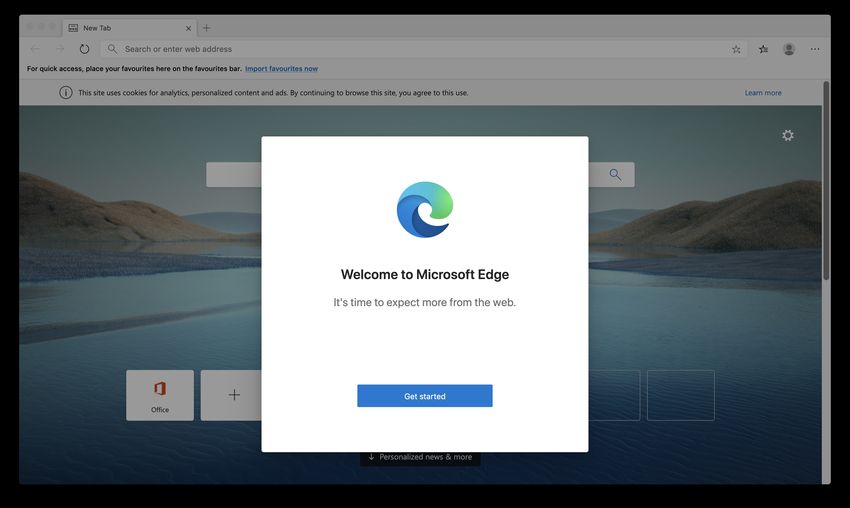
2

typed1 . Chrome tags these web addresses with a persistent                      Microsoft. Interaction with the privacy contacts that Google,
identifier that allows them to be linked together. Safari uses                  Apple, Mozilla etc publicise was wholly ineffective: either
an emphemeral identifier while Firefox sends no identifiers                     they simply did not reply or the reply was a pro forma message
alongside the web addresses. The search autocomplete func-                      directing us to their product support pages.
tionality can be disabled by users, but in all three browsers is
silently enabled by default. Chrome sets a persistent cookie on                  II. T HREAT M ODEL : W HAT D O W E M EAN B Y P RIVACY ?
first startup that is transmitted to Google upon browser restart.               It is important to note that transmission of user data to backend
Firefox includes identifiers in its telemetry transmissions to                  servers is not intrinsically a privacy intrusion. For example, it
Mozilla that are used to link these over time. Telemetry can                    can be useful to share details of the user device model/version
be disabled, but again is silently enabled by default. Firefox                  and the locale/country of the device (which most browsers do)
also maintains an open websocket for push notifications that                    and this carries few privacy risks if this data is common to
is linked to a unique identifier and so potentially can also                    many users since the data itself cannot then be easily linked
be used for tracking and which cannot be easily disabled.                       back to a specific user [11], [12]. Similarly, sharing coarse
Safari defaults to a choice of start page that prefetches pages                 telemetry data such as the average page load time carries few
from multiple third parties (Facebook, Twitter etc, sites not                   risks.
well known for being privacy friendly) and so potentially
allows them to load pages containing identifiers into the                       Issues arise, however, when data can be tied to a specific user.
browser cache. Start page aside, Safari otherwise made no                       A common way that this can happen is when a browser ties a
extraneous network connections and transmitted no persistent                    long randomised string to a single browser instance which then
identifiers, but allied iCloud processes did make connections                   acts as an identifier of that browser instance (since no other
containing identifiers. In summary, Chrome, Firefox and Safari                  browser instances share the same string value). When sent
can all be configured to be more private but this requires user                 alongside other data this allows all of this data to be linked to
knowledge (since intrusive settings are silently enabled) and                   the same browser instance. When the same identifier is used
active intervention to adjust settings.                                         across multiple transmissions it allows these transmissions to
                                                                                be tied together across time. Note that transmitted data always
From a privacy perspective Microsoft Edge and Yandex are                        includes the IP address of the user device (or more likely of
much more worrisome than the other browsers studied. Both                       an upstream NAT gateway) which acts as a rough proxy for
send identifiers that are linked to the device hardware and so                  user location via existing geoIP services. While linking data to
persist across fresh browser installs and can also be used to                   a browser instance does not explicitly reveal the user’s real-
link different apps running on the same device. Edge sends                      world identity, many studies have shown that location data
the hardware UUID of the device to Microsoft, a strong and                      linked over time can be used to de-anonymise, e.g. see [13],
enduring identifier than cannot be easily changed or deleted.                   [14] and later studies. This is unsurprising since, for example,
Similarly, Yandex transmits a hash of the hardware serial                       knowledge of the work and home locations of a user can be
number and MAC address to back end servers. As far as                           inferred from such location data (based on where the user
we can tell this behaviour cannot be disabled by users. In                      mostly spends time during the day and evening), and when
addition to the search autocomplete functionality (which can                    combined with other data this information can quickly become
be disabled by users) that shares details of web pages visited,                 quite revealing [14]. A pertinent factor here is the frequency
both transmit web page information to servers that appear                       with which updates are sent e.g. logging an IP addtress/proxy
unrelated to search autocomplete.                                               location once a day has much less potential to be revealing
The results of this study have prompted discussions, which                      than logging one every few minutes. With these concerns in
are ongoing, of browser changes including allowing users to                     mind, one of the main questions that we try to answer in
opt-out of search auto-complete on first startup plus a number                  the present study is therefore: Does the data that a browser
of browser specific changes. We also note that we consistently                  transmits to backend servers potentially allow tracking of the
found it much easier to engage with open source browser                         IP address of a browser instance over time.
developers (Chrome, Firefox, Brave) since: (i) inspection of                    A second way that issues can arise is when user browsing
the source code allows browser behaviour that is otherwise                      history is shared with backend servers. Previous studies have
undocumented (most functionality setting identifiers etc falls                  shown that it is relatively easy to de-anonymise browsing
into this category) to be understood and validated, and (ii) it                 history, especially when combined with other data (plus recall
is relatively straightforward to make contact with the software                 that transmission of data always involves sharing of the device
developers themselves to engage in discussion. Interaction                      IP address/proxy location and so this can be readily combined
with Safari developers is confined to a one-way interface (it                   with browsing data), e.g. see [15], [16] and later studies. The
specifically says no reply will be forthcoming) that allows                     second main question we try to answer is therefore: Does the
posting of suggested feature enhancements, although publica-                    browser leak details of the web pages visited in such a way
tion of a tech report draft of this paper subsequently did prompt               that they can be tied together to reconstruct the user browsing
much more helpful contact from Apple and similarly from                         history (even in a rough way).
   1 The default settings are for Chrome to send addresses to Google servers,   We also pay attention to the persistence of identifiers over
Firefox to Google servers and Safari to Google and Apple servers. In general    time. We find that commonly identifiers persist over four time
this function shares everything a user enters in the top bar, not just URLs.
For example, if users accidently type (or cut and paste) passwords or other     spans: (i) emphemeral identifiers are used to link a handful of
secrets in the top bar then these will also be shared.                          transmissions and then reset, (ii) session identifiers are reset on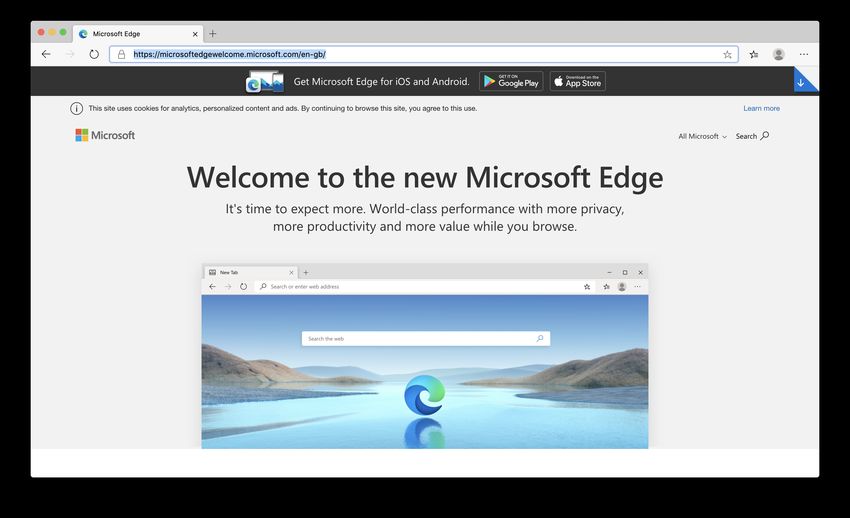
3

browser restart and so such an identifier only persists during       firewall [17]. Chrome also often tries to use the Google
the interval between restarts, (iii) browser instance identifiers    QUIC/UDP protocol [18] to talk with Google servers and we
are usually created when the browser is first installed and          use the firewall to block these, forcing fallback to TCP, since
then persist across restarts until the browser is uninstalled        there are currently no tools for decrypting QUIC connections.
and (iv) device identifiers are usually derived from the device
hardware details (e.g. the serial number or hardware UUID)           B. Viewing Content Of Encrypted Web Connections
and so persist across browser reinstalls. Transmission of device
                                                                     Most of the network connections we observe are encrypted.
identifiers to backend servers is obviously the most worrisome
                                                                     To inspect the content of a connection we use mitmdump [19]
since it is a strong, enduring identifer of a user device that can
                                                                     as a proxy and adjusted the firewall settings to redirect all web
be regenerated at will, including by other apps (so allowing
                                                                     traffic to mitmdump so that the proxying is transparent to the
linking of data across apps from the same manufacturer) and
                                                                     browsers. We add a mitmdump root certificate to the keychain
cannot be easily changed or reset by users. At the other
                                                                     and change the settings so that it was trusted. In brief, when
end of the spectrum, emphemeral identifiers are typically of
                                                                     a new web connection starts the mitmdump proxy pretends
little concern. Session and browser instance identifiers lie
                                                                     to be the destination server and presents a certificate for the
somewhere between these two extremes.
                                                                     target web site that has been signed by the trusted mitmdump
We use the time span of the identifiers employed as a simple         root certificate. This allows mitmdump to decrypt the traffic. It
yet meaningful way to classify browsers, namely we gather            then creates an onward connection to the actual target web site
browsers using only emphemeral identifiers into one group            and acts as an intermediary relaying requests and their replies
(Brave), those which use session and browser instance identi-        between the browser and the target web site while logging the
fiers into a second group (Chrome, Firefox, Safari) and those        traffic.
which use device identifiers into a third group (Edge, Yandex).
                                                                     Note that it is possible for browsers to detect this intermediary
It is worth noting that when location and browsing history can       in some circumstances. For example, when Safari connects
be inferred from collected data then even if this inference is       to an Apple domain for backend services then it knows the
not made by the organisation that collects the data it may be        certificate it sees should be signed by an Apple root cert and
made by third parties with whom data is shared. This includes        could, for example, abort the connection if it observes a non-
commercial partners (who may correlate this with other data          Apple signature (such as one by mitmdump). However, we
tin their possession), state agencies and disclosure via data        did not see evidence of such connection blocking by browsers,
breaches.                                                            perhaps because Enterprise security appliances also use trusted
                                                                     root certificates to inspect traffic and it is not desirable for
An important dimension to privacy that we do not consider            browsers to fail in Enterprise environments2 . That said, it is
here is the issue of giving and revoking consent for data            probably worth bearing in mind that browsers may react by
use. Our measurements do raise questions in the context of           changing the contents of their connections when interception
GDPR regarding whether users have really given informed              is detected, rather than blocking the connection altogether. In
consent prior to data collection, whether opting out is as easy      our tests we have few means to detect such changes. One is to
as opting in, and whether the purposes for which consent has         compare the sequence of servers which the browser connects
been obtained are sufficiently fine-grained (catch-all consent to    to (i) without any proxy and (ii) with the proxy in place, and
all uses being inadmissible under GDPR). However we leave            look for differences. We carry out such comparisons and where
this to future work.                                                 differences are observed we note them (minor changes were
                                                                     only observed for Firefox);
                 III. M EASUREMENT S ETUP
We study six browsers: Chrome (v80.0.3987.87), Fire-                 C. Connection Data: Additional Material
fox (v73.0), Brave (v1.3.115), Safari (v13.0.3), Edge                Since the content of connections is not especially human-
(v80.0.361.48) and Yandex (v20.2.0.1145). Measurements are           friendly they are summarised and annotated in the additional
taken using two Apple Macbooks, one running MacOS Mojave             material3 . The raw connection data is also available on request
10.14.6 and one running MacOS Catalina 10.15. Both were              by sending an email to the author (since it contains identifiers,
located in an EU country when our measurements were                  posting the raw data publicily is probably unwise).
collected. We do not expect browser behaviour to change
much across desktop operating systems (e.g. we confirmed
that we saw similar behaviour on Windows 10 except for               D. Ensuring Fresh Browser Installs
additional connections by Edge) but it is worth noting that          To start a browser in a clean state it is generally not
the mobile handset versions of browsers may well exhibit             enough to simply remove and reinstall the browser since
different behaviour from the laptop/desktop version studied             2 We were a little surprised at the absence of cert pinning and the like.
here e.g. Firefox’s privacy policy suggests that additional data     Indeed we had expected to need to use tools such as frida to bypass cert
is collected on mobile devices.                                      checks but in the end this proved unnecessary. We did need to mark the
                                                                     mitmproxy root cert as trusted in the keychain, as without this browser cert
                                                                     checking raised errors, and in part it is this which suggests Enterprise security
A. Logging Network Connections                                       (with associated installation of trusted root certs) may be a factor here. We
                                                                     also observed use of cert pinning in processes allied to Safari, as noted below.
To record the timing of network connections and also to log             3 Available anonymously at https://www.dropbox.com/s/6pao86s99lt4sow/
connections we use the open source appFirewall application           additional material.pdf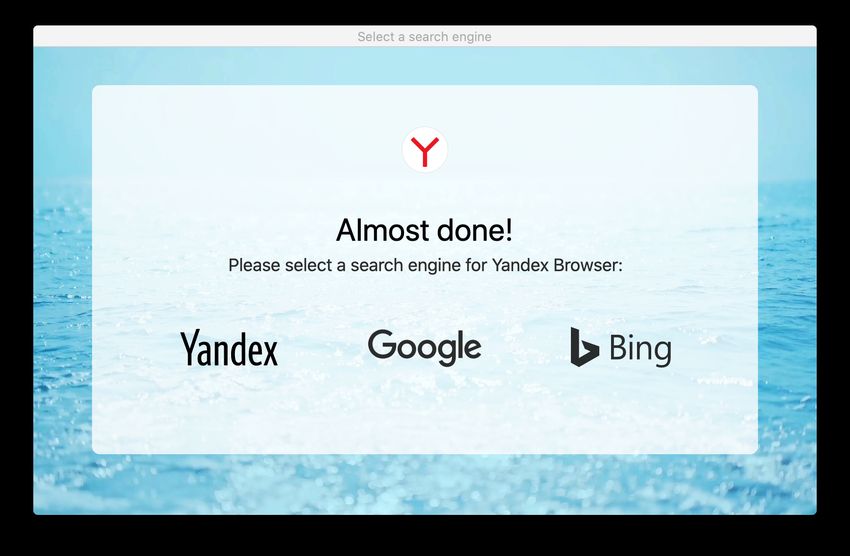
4

the old installation leaves files on the disk. We there-                into the top bar (the same URL previously pasted). Care
fore took care to delete these files upon each fresh in-                was taken to try to use a consistent typing speed across
stall. For most browsers it was sufficient to delete the                experiments. This allows us to see the data transmissions
relevant folders in ∼/Library/ApplicationSupport and ∼/                 generated by search autocomplete (enabled by default in
Library/Caches. However, additional steps were needed for               every browser apart from Brave).
Safari since it is more closely integrated with MacOS.
                                                                    Each test is repeated multiple times to allow evaluation of
Namely, we delete three folders: ∼/Library/Safari (to delete
                                                                    changes in request identifiers across fresh installs.
the user profile), ∼/Library/Containers/com.apple.Safari/Data/
Library/Caches (to clear the web cache), ∼/Library/Cookies/*        Note that since these tests are easily reproducible (and in-
(to delete any cookies) and ∼/Library/Containers/com.apple.         deed can potentially be automated) they can form the basis
Safari/Data/Library/SavedApplicationState (to reset the start       for browser privacy benchmarking and tracking changes in
page to the default rather than the last page visited). Also,       browser behaviour over time as new versions are released.
Firefox was launched with an initial skeleton profile in
folder ∼/Library/ApplicationSupport/Firefox rather than sim-        We focus on the default “out of the box” behaviour of
ply with no folder present. This skeleton profile was created       browsers. There are several reasons for this. Perhaps the
by running Firefox from the command line and quickly                most important is that this is the behaviour experienced
interrupting it. A user.js file was then added with the fol-        by the majority of everyday users and so the behaviour of
lowing entries: user pref(”security.enterprise roots.enabled”,      most interest. A second reason is that this is the preferred
true); user pref(”security.OCSP.enabled”, 0). These settings        configuration of the browser developer, presumably arrived
tell Firefox to trust root certificates from the keychain. While    at after careful consideration and weighing of alternatives. A
Firefox by default has automatic adaptation to allow root cer-      third reason is that we seek to apply the same tests uniformly
tificates this was observed to lead to changes in the sequence      across browsers to ensure a fair comparison and consistency
of connections made on startup unless this skeleton profile was     of results. Tweaking individual browser settings erodes this
used.                                                               level playing field. Such tweaking is also something of an
                                                                    open-ended business (where does one stop ?) and so practical
E. Test Design                                                      considerations also discourage this.
We seek to define simple experiments that can be applied
uniformly across the set of browsers studied (so allowing direct    F. Finding Identifiers In Network Connections
comparisons), that generate repoducible behaviour and that          Potential identifiers in network connections were extracted by
capture key aspects of general web browsing activity. To this       manual inspection4 . Basically any value present in requests
end, for each browser we carry out the following experiments        that changes between requests, across restarts and/or across
(minor variations necessitated by the UI of specific browsers       fresh installs is flagged as a potential identifier. Values set
are flagged when they occur):                                       by the browser and values set via server responses are dis-
1) Start the browser from a fresh install/new user profile. Typ-    tinguished. Since the latter are set by the server changes in
   ically this involves simply clicking the browser app icon to     the identifier value can still be linked together by the server,
   launch it and then recording what happens. Chrome, Edge          whereas this is not possible with browser randomised values.
   and Yandex display initial windows before the browser            For browser generated values where possible the code gen-
   fully launches and in these cases we differentiate between       erating these values are inspected to determine whether they
   the data collected before clicking past this window and data     are randomised or not. We also try to find more information
   collected after.                                                 on the nature of observed values from privacy policies and
                                                                    other public documents and, where possible, by contacting the
2) Paste a URL into the browser to bar, press enter and             relevant developers.
   record the network activity. The URL is pasted using a
   single key press to allow behaviour with minimal search           IV. E VALUATING T HE P RIVACY O F P OPULAR BACK - END
   autocomplete (a predictive feature that uploads text to a                    S ERVICES U SED B Y B ROWSERS
   search provider, typically Google, as it is typed so as to
   display autocomplete predictions to the user) activity to be     Before considering the browsers individually we first evaluate
   observed.                                                        the data transmissions generated by two of the backend
                                                                    services used by several of the browsers.
3) Close the browser and restart, recording the network activ-
   ity during both events.
                                                                    A. Safe Browsing API
4) Start the browser from a fresh install/new user profile, click   All of the browsers studied make use of a Safe Browsing
   past any initial window if necessary, and then leave the         service that allows browsers to maintain and update a list
   browser untouched for around 24 hours (with power save           of web pages associated with phishing and malware. Most
   disabled on the user device) and record network activity.        browsers make use of the service operated by Google [6] but
   This allows us to measure the connections made by the            Yandex also operates a Safe Browsing service [20] and both
   browser when sitting idle.
                                                                       4 We note that unfortunately analysis of content of network connections
5) Start the browser from a fresh install/new user profile, click   for identifiers probably cannot be easily automated since it is potentially an
   past any initial window if necessary, and then type a URL        adversarial situation where statistical learning methods can easily be defeated.
5

operators present essentially the same interface to browsers5 .                not mean that this is actually done of course, only that it is
In view of its importance and widespread use the privacy of                    possible.
the Safe Browsing service has attracted previous attention, see
for example [21], [22] and references therein. Much of this                    To assist in verifying the privacy of the safe browsing service
focussed on the original Lookup API which involved sending                     we note that it would be helpful for operators to make their
URLs in the clear and so created obvious privacy concerns.                     server software open source. However, this is not currently the
To address these concerns in the newer Update API clients                      case and so to investigate this further we modified a standard
maintain a local copy of the threat database that consists of                  Safe Browsing client [24] to (i) use the same key value and
URL hash prefixes. URLs are locally checked against this                       client API parameters as used by Chrome (extracted from
prefix database and if a match is found a request is made for                  observed Chrome connections to the Google Safe Browsing
the set of full length URL hashes that match the hash prefix.                  service) and (ii) by adding instrumentation to log the state
Full length hashes received are also cached to reduce repeat                   value sent by safebrowsing.googleapis.com in response to
network requests. In this way browser URLs are never sent                      update requests. In light of the above discussion our interest
in full to the safe browing service, and some browsers also                    is in whether safebrowsing.googleapis.com sends a different
add further obfuscation by injecting dummy queries. Broadly                    state value to each client, which would then act as a unique
speaking, the community seems content with the level of                        identifier and facilitate tracking, or whether multiple clients
privacy this provides with regard to leaking of user browsing                  receive the same state value.
history.                                                                       A typical state value returned by the safe browsing server is a
However, there is a second potential privacy issue associated                  27 byte binary value (occasionally longer values are observed).
with use of this service, namely whether requests can be                       When multiple clients are started in parallel the state values
linked together over time. Since requests carry the client IP                  they receive typically differ in the last 5 bytes i.e. they do
address then linking of requests together would allow the                      not receive the same state value. However, closer inspection
rough location of clients to be tracked, with associated risk                  reveals that each state value is generallly shared by mutliple
of deanonymisation. Our measurements indicate that browsers                    clients.
typically contact the Safe Browsing API roughly every 30
                                                                               For example, Figure 1 shows measurements obtain from 100
mins to request updates. A typical update request sent to
                                                                               clients started at the same time and making update requests
safebrowsing.googleapis.com looks as follows:
                                                                               roughly every 30 mins (each client adds a few seconds of jitter
GET https:                                                                     to requests to avoid creating synchronised load on the server).
//safebrowsing.googleapis.com/v4/threatListUpdates:fetch
Parameters:                                                                    Since the clients are started at the same time and request
   $req: ChwKDGdvb2dsZWNocm9tZRIMOD. . .                                       updates within a few seconds of each other then we expect that
   $ct: application/x-protobuf
   key: AIzaSyBOti4mM-6x9WDnZIjIeyEU2. . .                                     the actual state of the server-side safe browsing list is generally
                                                                               the same for each round of client update requests. However, the
Note that the dots at the end of the $req and key values are                   clients are not all sent the same value. Instead what happens is
used to indicate that they have been truncated here to save                    that at the first round of requests the 100 clients are assigned
space.                                                                         to one of about 10 state values. The assignment is not uniform,
                                                                               Figure 1(a) shows the number of clients assigned to each state
The key value is linked to the browser type e.g. Chrome or                     value, but at least 5 clients are assigned to each. The last 5
Firefox. Each use different key values, but all requests by,                   bytes of the state value assigned to each client changes at each
for example Chrome browsers, are observed to use the same                      new update, but clients that initially shared the same state value
value. In our measurements the $req value in observed to                       are assigned the same new value. This behaviour can be seen
change between requests. Public documentation for this API                     in Figure 1(b). In this plot we assign an integer index to each
makes no mention of a $req parameter, and so these requests                    unique state value observed, assigning 1 to the first value and
are using a private part of the API. However, the difference                   then counting upwards. We then plot the state value index of
from the public API seems minor. Inspection of the Chromium                    each client vs the update number. Even though there are 100
source [23]6 indicates that the $req value is just a base64                    clients it can be seen from Figure 1(b) that there are only
encoded string that contains the same data as described in the                 10 lines, and these lines remain distinct over time (they do
safebrowsing API documentation [6].                                            not cross). Effectively what seems to be happening is that at
                                                                               startup each client is assigned to one of 10 hopping sequences.
The data encoded within the $req string includes a “state”
                                                                               Clients assigned to the same sequence then hop between state
value. This value is sent to the browser by safebrowsing.
                                                                               values in a coordinated manner. Presumably this approach is
googleapis.com alongside updates, and is echoed back by the
                                                                               used to facilitate server load balancing.
browser when requesting updates. Since this value is dictated
by safebrowsing.googleapis.com it can be potentially used to                   The data shown is for 100 clients running behind the same
link requests by the same browser instance over time, and                      gateway, so sharing the same external IP address. However, the
so also to link the device IP addresses over time. That does                   same behaviour is observed between clients running behind
  5 Tencent also operate a safe browsing service, see https://www.urlsec.qq.
                                                                               different gateways. In particular, clients with different IP
com.
                                                                               addresses are assigned the same state values, and so we can
  6 See   function GetBase64SerializedUpdateRequestProto() in file             infer that the state value assigned does not depend on the client
components/safe browsing//core/db/v4 update protocol manager.cc                IP address.
6

                      15
  Number of Clients                                                               update checking typically generates multiple requests to the
                                                                                  update server7 . An example of one such request is:
                      10
                                                                                  POST https://update.googleapis.com/service/update2/json
                                                                                  Parameters:
                       5                                                              cup2key=9:2699949029
                                                                                      cup2hreq=36463a2dd9c$\ldots$39fea17
                                                                                  Headers:
                       0                                                              x-goog-update-appid: mimojjlkmoijpicakmndhoigimigcmbb,
                           2      4      6    8    10                             ...
                               State Value Index                                      { "request": {
                                                                                         "@os": "mac",
                                   (a)                         (b)                       "@updater": "chrome",
                                                                                        "acceptformat": "crx2,crx3",
Fig. 1. State values returned by safebrowsing.googleapis.com over time to               "app": [
100 clients behind the same gateway. Clients are initialled assigned one out of          {"appid": "mimojjlkmoijpicakmndhoigimigcmbb",
10 state values, distributed as shown in (a). Clients assigned the same initial                 "brand": "GGRO",
state value are assigned the same state value in subsequent update requests,                    "enabled": true,
as shown in (b).                                                                                "ping": { "r": -2},"updatecheck": {},"version":
                                                                                   "0.0.0.0" },

                                                                                         "requestid": "{61f7dcb8-474b-44ac-a0e5-b93a621a549b}",
                                                                                         "sessionid": "{debfbf76-8eaf-4176-82c6-773d46ca8c57}",
In summary, at a given point in time safe browsing clients                               "updaterversion": "80.0.3987.87"}}
are not all assigned the same state value. However, multiple
clients share the same state value, including clients with the                    The appid value identifies the browser extension and the
same IP address. When there are sufficiently many clients                         request also includes general system information (O/S etc).
sharing the same IP address (e.g. a campus gateway) then                          The header contains cup2key and cup2hreq values. Observe
using the state value and IP address to link requests from                        also the requestid and sessionid values in the request. If any of
the same client together therefore seems difficult to achieve                     these values are dictated by the server then they can potentially
reliably. When only one client, or a small number of clients,                     be used to link requests by the same browser instance together
share an IP address then linking requests is feasible. However,                   over time, and so also link the device IP addresses over time.
linking requests as the IP address (and so location) changes
seems difficult since the same state value is shared by multiple                  Public documentation for this API is lacking, but inspection of
clients with different IP addresses. Use of the Safe Browsing                     the Chromium source [23] provides some insight. Firstly8 , the
API therefore appears to raise few privacy concerns.                              cup2key value consists of a version number before the colon
                                                                                  and a random value after the colon, a new random value being
We note that the wording of the Chrome Privacy Whitepa-                           generated for each request. The cup2hreq is the SHA256 hash
per [8] for safebrowsing.googleapis.com indicates that linking                    of the request body. Secondly, inspection of the Chromium
of requests may take place:                                                       source9 indicates that in fact the value of sessionid is generated
                                                                                  randomly by the browser itself at the start of each round of
                       For all Safe Browsing requests and reports, Google         update checking. The requestid is also generated randomly by
                       logs the transferred data in its raw form and retains      the browser10 . Our measurements are consistent with this: the
                       this data for up to 30 days. Google collects stan-         requestid value is observed to change with each request, the
                       dard log information for Safe Browsing requests,           sessionid value remains constant across groups of requests but
                       including an IP address and one or more cookies.           changes over time. This means that it would be difficult for the
                       After at most 30 days, Safe Browsing deletes the raw       server to link requests from the same browser instance over
                       logs, storing only calculated data in an anonymized        time, and so also difficult to link the device IP addresses of
                       form that does not include your IP addresses or            requests over time.
                       cookies. Additionally, Safe Browsing requests won’t
                       be associated with your Google Account. They are,          Our measurements indicate that browsers typically check for
                       however, tied to the other Safe Browsing requests          updates to extensions no more than about every 5 hours.
                       made from the same device [our emphasis].
                                                                                       V. DATA T RANSMITTTED O N B ROWSER S TARTUP
However, based on our discussions the last sentence likely
                                                                                  A. Google Chrome
refers to the transmission of cookies with update requests.
Historically, cookies were sent with requests to safebrowsing.                    On first startup Chrome shows an initial popup window, see
googleapis.com [25] but this no longer seems to be the case:                      Figure 2(b). While sitting at this window, and with nothing
we saw no examples of cookies being set by safebrowsing.                          clicked, the browser makes a number of network connections,
googleapis.com (and the API documents make no mention on                          see Figure 2(a) for the connections reported by appFirewall.
them) and saw no examples of cookies being sent.                                     7 Chrome sends requests to update.googleapis.com while Brave sends re-
                                                                                  quests to go-updater.brave.com, Edge to edge.microsoft.com and Yandex to
                                                                                  api.browser.yandex.com.
                                                                                     8 See function Ecdsa::SignRequest in file components/client update
B. Chrome Extension (CRX) Update API                                              protocol/ecdsa.cc and its call from request sender.cc
                                                                                     9 See function UpdateContext::UpdateContext in file components/update
Chrome, and other browsers based on Chromium such as                              client/update engine.cc
Brave, Edge and Yandex, use the Autoupdate API [7] to check                          10 See function protocol request::RequestMakeProtocolRequest in file
for and install updates to browser extensions. Each round of                      components/update client/protocol serializer.cc
7
connection number 5 ssl.gstatic.com to www.google.com/complete/search with the URL details
4 ssl.gstatic.com
(i.e. http://leith.ie/nothingtosee.html) passed as a parameter
3 clients2.googleusercontent.com
and also two identifier-like quantities (psi and sugkey). The
sugkey value seems to be the same for all instances of
2 clients2.google.com
Chrome and also matches the key sent in calls to safebrows-
1 accounts.google.com
ing.googleapis.com, so this is likely an identifer tied to
0
0 5 10 15
Chrome itself rather than particular instances of it. The psi
time (s) value behaves differently however and changes between fresh
(a) (b) restarts, it therefore can act as an identifier of an instance of
Chrome. The actual request to http://leith.ie/nothingtosee.html
Fig. 2. Chrome connections during first startup, while displays initial popup
box as shown. Nothing was clicked.
(a plain test page with no embedded links or content) is then
made. This behaviour is reproducible across multiple fresh
15 r2---sn-q0c7rn76.gvt1.com
installs and indicates that user browsing history is by default
r1---sn-q0cedn7s.gvt1.com
communicated to Google.
connection number
r4---sn-q0c7rn76.gvt1.com
r1.sn-q0c7rn76.gvt1.com
r2---sn-q0cedn7s.gvt1.com
10 r3---sn-q0cedn7s.gvt1.com
r4---sn-q0cedn7s.gvt1.com
update.googleapis.com
The browser was then closed and reopened. It opens to the
docs.google.com
www.googleapis.com Google search page (i.e. it has changed from the Chrome start
5 r2---sn-q0cedn7s.gvt1.com
redirector.gvt1.com
www.gstatic.com
page shown when the browser was closed) and generates a
www.gstatic.com
clientservices.googleapis.com series of connections, essentially a subset of the connections
0
0 50 100 150 200 made on first startup. Amongst these connections are two
time (s)
requests that contain data that appear to be persistent iden-
(a) (b) tifiers. One is a request to accounts.google.com/ListAccounts
Fig. 3. Chrome connections after clicking “start google chrome” in iniital which transmits a cookie that was set during the call to
popup shown in Figure 2 (and also clicking to untick the displayed options accounts.google.com on initial startup, e.g.
to make chrome the default browser and allow telemetry). Nothing else was
POST https://accounts.google.com/ListAccounts
clicked. cookie: GAPS=1:-qChrMo1Rv\_1fBI0gYpVRkLD\_h89hQ:jJRNg2
Cs370FK-DG
It is unexpected, and initially concerning, to see connections This cookie acts as a persistent identifier of the browser
being made while the popup window asking for permissions is instance and since is set by the server changing values can
being displayed and has not yet been responded to. However, potentially be linked together by the server. The second is
inspection of the content of these connections indicates that a request to www.google.com/async/newtab ogb which sends
no identifiers or personal information is transmitted to Google, an x-client-data header, e.g.
and so while perhaps not best practice they seem to be innocent GET https://www.google.com/async/newtab_ogb
enough. x-client-data:
CIe2yQEIo7bJAQjEtskBCKmdygEIvbDKAQiWtcoBCO21ygEI
After unticking the option to make Chrome the default browser jrrKARirpMoBGJq6ygE=
and unticking the option to allow telemetry we then clicked
the“start google chrome” button. The start page for Chrome is According to Google’s privacy documentation[8] the x-client-
displayed and another batch of network connections are made, data header value is used for field trials:
see Figure 3. We want to build features that users want, so a
Inspection of the content of these connections indicates a subset of users may get a sneak peek at new
device id value is sent in a call to accounts.google.com, e.g. functionality being tested before it’s launched to
GET https://accounts.google.com/ServiceLogin
the world at large. A list of field trials that are
Parameters: currently active on your installation of Chrome will
service: wise
passive: 1209600
be included in all requests sent to Google. This
continue: https://docs.google.com/offline/extension/frame Chrome-Variations header (X-Client-Data) will not
?ouid
followup: https://docs.google.com/offline/extension/frame
contain any personally identifiable information, and
?ouid will only describe the state of the installation of
ltmpl: homepage
Headers:
Chrome itself, including active variations, as well as
x-chrome-id-consistency-request: version=1,client_id server-side experiments that may affect the instal-
=77185425430.apps.googleusercontent.com, device_id=90c0f8cc-
d49a-4d09-a81c-32b7c0f2aae6, signin_mode=all_accounts,
lation. The variations active for a given installation
signout_mode=show_confirmation are determined by a seed number which is randomly
selected on first run.
The device id value is set by the browser and its value is
The value of the x-client-data header is observed to change
observed to change across fresh installs, although it is not
across fresh installs, which is consistent with this documenta-
clear how the value is calculated (it seems to be calculated
tion. Provided the same x-client-data header value is shared by
inside the closed-source part of Chrome). The server response
a sufficiently large, diverse population of users then its impact
to this request sets a cookie.
on privacy is probably minor. However, we are not aware of
The URL http://leith.ie/nothingtosee.html is now pasted (not public information on the size of cohorts sharing the same
typed) into the browser top bar. This generates a request x-client-data header.
8

                                                         r3---sn-q0cedn7s.gvt1.com
                                                         redirector.gvt1.com
                                                         a21ed24...rackcdn.com
                                                                                              "reason":"shutdown",
                      20                                 aus5.mozilla.org
  connection number
                                     safebrowsing.googleapis.com                              "sessionId":"cebba8d1-5a4e-d94a-b137-97979fec8c28","
                                 accounts.firefox.com
                                 accounts.firefox.com
                                 incoming.telemetry.mozilla.org
                                                                                           subsessionId":"af1fc2f8-178d-c046-bef9-1d1dea283453",
                      15        snippets.cdn.mozilla.net
                                snippets.cdn.mozilla.net                                      "clientId":"0d0214ec-74d8-5640-ae0e-e3dc8952e6aa",
                                incoming.telemetry.mozilla.org
                                content-signature-2.cdn.mozilla.net
                                shavar.services.mozilla.com
                      10        push.services.mozilla.com
                                incoming.telemetry.mozilla.org
                                mozilla.org
                                www.mozilla.org
                                firefox.settings.services.mozilla.com
                      5         search.services.mozilla.com
                                firefox.settings.services.mozilla.com
                                detectportal.firefox.com
                               location.services.mozilla.com
                                                                                           As can be seen, this data is tagged with the client id identifier
                               detectportal.firefox.com
                      0
                           0               50             100            150
                                                                                           and also contains a sessionId value. The sessionId value is
                                                   time (s)                                the same across multiple requests. It changes between restarts
                                                 (a)                                 (b)   but is communicated in such a way that new sessionId values
                                                                                           can be easily linked back to the old values (the old and new
Fig. 4. Firefox connections during first startup, with nothing clicked.
                                                                                           sessionId values are sent together in a telemetry handover
                                                                                           message).
Based on discussions with Google on foot on this work they                                 Reopening generates a subset of the connections seen on first
consider the call to accounts.google.com/ServiceLogin that                                 start. When the web socket to push.services.mozilla.com is
sets the GAPS cookie to be a bug, likely in the Google Docs                                Firefox sends the uaid value assigned to it during first startup
extension which is embedded within Chrome, and are currently                               to push.services.mozilla.com. Messages are sent to incoming.
investigating. We have proposed to Google that an option be                                telemetry.mozilla.org tagged with the persistent impression id
added in the initial popup window to allow users to disable                                and client id values.
search autocomplete before the browser fully launches.

                                                                                           In summary, there appear to be a four identifiers used
B. Mozilla Firefox
                                                                                           in the communication with push.services.mozilla.com and
Figure 4(a) shows the connections reported by appFirewall                                  incoming.telemetry.mozilla.org. Namely, (i) client id and im-
when a fresh install of Firefox is first started and left sitting at                       pression id values used in communication with incoming.
the startup window shown in Figure 4(b). The data shown is                                 telemetry.mozilla.org which are set by the browser and per-
for startup with mitmproxy running, but an almost identical set                            sistent across browser restarts, (ii) a sessionId value used with
of connections is also seen when mitmproxy is disabled (the                                incoming.telemetry.mozilla.org which changes but values can
difference being additional connections to ocsp.digicert.com                               be linked together since the old and new sessionId values are
in the latter case).                                                                       sent together in a telemetry handover message, (iii) a uaid
During startup Firefox three identifiers are transmitted to                                value that is set by the server push.services.mozilla.com when
Mozilla: (i) impression id and client id values are sent to                                the web socket is first opened and echoed back in subsequent
incoming.telemetry.mozilla.org, (ii) a uaid value sent to Fire-                            web socket messages sent to push.services.mozilla.com, this
fox by push.services.mozilla.com via a web socket and echoed                               value also persists across browser restarts.
back in subsequent web socket messages sent to push.services.                              These observations regarding use of identifiers are consistent
mozilla.com, e.g.                                                                          with Firefox telemetry documentation [9] and it is clear that
192.168.0.17:62874
9
20 safebrowsing.brave.com
redirector.brave.com Safari displays a “favorites” page. Resources are fetched for
p3a.brave.com
connection number
15
static1.brave.com
static1.brave.com
crlsets.brave.com
each of the 12 services displayed. This results in numerous
brave-core-ext.s3.brave.com
brave-core-ext.s3.brave.com
tor.bravesoftware.com
connections being made, most of which respond with multiple
componentupdater.brave.com
10 go-updater.brave.com
go-updater.brave.com
go-updater.brave.com
set-cookie headers. These cookies are scrubbed and not resent
5
go-updater.brave.com
go-updater.brave.com
go-updater.brave.com
in later requests to the prefetched pages. However, we also
laptop-updates.brave.com
laptop-updates.brave.com
static1.brave.com
saw evidence of embedding of identifiers within the prefetched
static1.brave.com
0
0 50 100 150
html/javascript, which may then be passed as parameters
time (s) (rather than as cookies) in requests generated by clicking on
(a) (b) the displayed icon.
Fig. 5. Brave connections during first startup, with nothing clicked. Once startup was complete, the URL http://leith.ie/
nothingtosee.html was pasted into the browser top bar. In
addition to connections to leith.ie this action also consistently
generated a connection to configuration.apple.com by process
com.apple.geod e.g.
GET https://configuration.apple.com/configurations/pep/
config/geo/networkDefaults-osx-10.14.4.plist
User-Agent: com.apple.geod/1364.26.4.19.6 CFNetwork/978.1
Darwin/18.7.0 (x86_64)
Response is 2.6KB of text/xml
(a) (b) This extra connection sent no identifiers.
Fig. 6. Safari connections during first startup, with nothing clicked.
Safari was then closed and reopened. No data is transmitted on
close. On reopen Safari itself makes no network connections
the option to disable search autocomplete and telemetry on (the leith.ie page is displayed, but has been cached and so
first startup and (ii) the uaid value is not sent over the no network connection is generated) but a related process
push.services.mozilla.com websocket until users have regis- nsurlsessiond consistently connects to gateway.icloud.com on
tered for one or more push notifications (the web socket itself behalf of com.apple.SafariBookmarksSyncAgent e.g.
is apparently also used for distributing notifications related POST https://gateway.icloud.com/ckdatabase/api/client/
subscription/retrieve
to TLS certificates etc but this does not require a unique X-CloudKit-ContainerId: com.apple.SafariShared.
identifier). WBSCloudBookmarksStore
X-CloudKit-UserId: _9acd71fb10d466. . .
X-CloudKit-BundleId: com.apple.SafariBookmarksSyncAgent
C. Brave
Figure 5(a) shows the connections reported by appFirewall This request transmits an X-CloudKit-UserId header value
when a fresh install of Brave is first started and left sitting which appears to be a persistent identifier that remains constant
at the startup window shown in Figure 5(b). During startup across restarts of Safari. Note that iCloud is not enabled
no perisistent identifers are transmitted by Brave. Calls to on the device used for testing nor has bookmark syncing
go-updater.brave.com contain a sessionid value, similarly to been enabled, and never has been, so this connection is
calls to update.googleapis.com in Chrome, but with Brave this spurious. From discussions with Apple it appears this request
value changes between requests. Coarse telemetry is transmit- is unexpected and so may well be a bug.
ted by Brave, and is sent without any identifiers attached [28].
In summary, Safari defaults to a choice of start page that
Once startup was complete, the URL http://leith.ie/ leaks information to third parties and allows them to cache
nothingtosee.html was pasted into the browser top bar. prefetched content without any user consent. Start page aside,
This generates no extraneous connections. Safari otherwise appears to be quite a quiet browser, making
no extraneous network connections itself in these tests and
The browser was then closed and reopened. No data is transmitting no persistent identifiers. However, allied processes
transmitted on close. On reopen a subset of the initial startup make connections which appear unnecessary.
connections are made but once again no persistent identifiers
are transmitted. We have proposed to Apple that (i) they change Safari’s
default start page and (ii) unnecessary network connections
In summary, we do not find Brave making any use of identi-
by associated processes are avoided.
fiers allowing tracking by backend servers of IP address over
time, and no sharing of the details of web pages visited with
backend servers. E. Microsoft Edge
On start up of a fresh install of Edge the browser goes through
D. Apple Safari an opening animation before arriving at the startup window
Figure 6(a) shows the connections reported by appFirewall shown in Figure 7(b). Figure 7(a) shows the connections
when a fresh install of Safari is first started and left sitting reported by appFirewall during this startup process, with
at the startup window shown in Figure 6(b). By default nothing is clicked.10
pop_sample0\x08\xa8\x00\x00\x00\x00\x00\x00Y@\x00
session_id0\x00\x91\x02\x00 utc_flags0\x00\x91\x80\
x80\xc0\x80\x80\x80@\x00\x00\x00
This request transmits the hardware UUID reported by
Apple System Information to Microsoft (highlighted in
red). This identifier is unique to the device and never
changes, thus it provides a strong, enduring user identifier.
(a) With nothing clicked (b) Initial screen This behaviour is consistent with Microsoft documenta-
tion [29]. The second block in the request body also con-
www.microsoft.com
web.vortex.data.microsoft.com tains a number of other identifier-like entries (highlighted
connection number
45 uhf.microsoft.com
edgewelcomecdn.microsoft.com
cs22.wpc.v0cdn.net
in bold since they are embedded within binary content),
edgewelcomecdn.microsoft.com
40
edgewelcomecdn.microsoft.com
edgewelcomecdn.microsoft.com
namely the entries PayloadGUID value and client id. It
edgewelcomecdn.microsoft.com
edgewelcomecdn.microsoft.com
edgewelcomecdn.microsoft.com
is not clear how these values are calculated although they
microsoftedgewelcome.microsoft.com
35 go.microsoft.com
go.microsoft.com
are observed to change across fresh installs.
ris.api.iris.microsoft.com
140 160 180 200 220 3) Towards the end of the startup process Edge contacts
time (s)
arc.msn.com. The first request to arc.msn.com trans-
(c) After clicking “Get Started” but- (d) Edge welcome page
ton mits a “placement” parameter (which changes across
fresh installs) and the response contains a number of
Fig. 7. Edge connections during first startup. identifiers. These returned values are then echoed by
Edge in subsequent requests to arc.msn.com and also to
ris.api.iris.microsoft.com.
It can be seen that Edge makes connections to a number of
Microsoft administered domains. The following observations It is not possible to proceed without pressing the “Get Started”
are worth noting: button on the popup. Clicking on this button displays a new
popup. This new popup has an “x” in the top right corner, and
1) Fairly early in this process the response to a request to that was clicked to close it. Edge then proceeds to load its
ntp.msn.com includes an “x-msedge-ref” header value welcome page, shown in Figure 7(d). The network connections
which is echoed by Edge in subsequent requests. This prompted by these two clicks (the minimal interaction possible
value changes on a fresh install of the browser and also to allow progress) are shown in Figure 7(c.
across browser restarts, so it seems to be used to tie
together requests in a session. Since this vaue is dictated Loading of the Edge welcome page sets a number of cookies.
by the server (rather than being randomly generated by In particular, this includes a cookie for vortex.data.microsoft.
the browser) it is possible for the server to also tie com which allows data transmitted to this server to be linked
sessions together. to the same browser instance e.g.
GET https://web.vortex.data.microsoft.com/collect/v1/t.js
2) Much more troubling, later in the startup process Edge Parameters:
sends a POST request to self.events.data.microsoft.com -impressionGuid: ’59d59183-cd90-4787-ab0c-8328d0b20e75’
e.g.
The response sets cookies:
POST Set-Cookie: MC1=GUID=da7d27b6947c48b8abd43591e780322d&
https://self.events.data.microsoft.com/OneCollector/1.0/ HASH=da7d&LV=202002&V=4&LU=1581941544000;Domain=.microsoft.
Headers: com;Expires=Tue, 16 Feb 2021 12:12:24 GMT;Path=/;Secure;
APIKey: 7005b72804a64fa4b. . . SameSite=None
SDK-Version: EVT-MacOSX-C++-No-3.2.297.1 Set-Cookie: MS0=dc42e1616b0e434e9bef71d2da20f061;Domain=.
Request Body: microsoft.com;Expires=Mon, 17 Feb 2020 12:42:24 GMT;Path=/;
)\x033.0I&Microsoft.WebBrowser.SystemInfo.Configq\x80 Secure;SameSite=None
\xb4\xaa\xfc\xaa\xe7\xd9\xd7\x11\xa9"o:7005
b72804a64fa4b2138faab88f877b\xd1\x06\x82\x04\xcb\x15
\x01i\x05Apple\x89\x0eMacBookPro15,2\x00\xcb\x16 The response also includes javascript with the cookie value
\x01\x00\xcb\x17
\x01I&u:0B5E1E28-B2E0-5DE9-848D-0368FB. . .\x00\xcb\x18 embedded:
\x01\x89\x08Mac OS X\xa9\x0710.14.6\x00\xcb\x19 document.cookie="MSFPC=GUID=
\x01\xa99M:com.microsoft.edgemac_80.0.361.48_x86_64! da7d27b6947c48b8abd43591e780322d&HASH=da7d&LV=202002&V=4&LU
Microsoft Edge\xc9\x06\x0b80.0.361.48\x00\xcb\x1f =1581941544000;expires=Tue,
\x01I Unmeteredi\x05Wired\x00\xcb
\x01)\x1bEVT-MacOSX-C++-No-3.2.297.1I$$
eaf6f216-bca7-a0c9-8b40. . . which is used for cross-domain sharing of the cookie (this
\x01i\x0500:00\x00\xcb%
\x01\x00\xc911
15
storage.ape.yandex.net
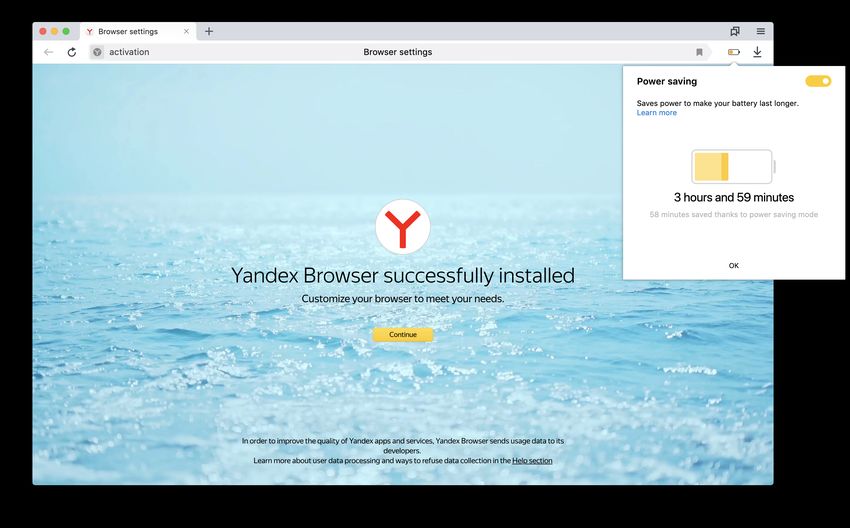
to proceed past this point without selecting one. Clicking on
sync.browser.yandex.net
the Yandex option generates the network connections shown
connection number
browser.yandex.com
yastat.net
10 mail.yandex.ru
yandex.ru
in Figure 8(c) and brings the browser to the Yandex start page
api.browser.yandex.ru
sba.cdn.yandex.net
sba.cdn.yandex.net
shown in Figure 8(d).
5 yastatic.net
bro-bg-store.s3.yandex.net
sba.yandex.net
browser.yandex.com
A number of points are worth noting:
api.browser.yandex.com
0
0 50 100 150 1) The browser sends the identifying cookies created on
time (s)
startup to browser.yandex.ru and related domains. As part
(a) (b)
of this initialisation process a call to browser.yandex.
ru/activation/metrika sets a yandexuid cookie for do-
main yandex.com and a later call to browser.yandex.ru/
welcome/ also sets this cookie for domain yandex.ru. This
value acts as a persistent identifier of the browser instance
(it changes upon a fresh browser install). The two cookies
generated at initial startup and this third yandexuid are
now sent together with subsequent requests.
(c) (d) 2) The browsers sends a client id and a machine id value to
Fig. 8. On first startup Yandex opens an initial popup. When left unclicked no
soft.export.yandex.ru. The client id value changes across
connections were observed. After clicking to deselect the “make default” and fresh installs. The machine id value is an SHA1 hash of
”send usage stats” options in the popup, and then clicking “launch” Yandex the MAC address of the device’s primary interface and
makes the connections shown in plot (a). Note that Yandex opens a window the device serial number i.e. a strong, enduring device
asking to choose which search engine to use, shown in plot (b). Plot (c)
shows the connections made after selecting Yandex as the search engine, plot identifier. These values are transmitted along with the
(d) shows the window displayed after making this click. yandexuid cookie and so they can be tied together.
At the Yandex welcome page the URL http://leith.ie/
user browsing history with the Bing service of Mi- nothingtosee.html is pasted into the browser top bar:
crosoft). Edge also contacts vortex.data.microsoft.com 1) Before navigating to http://leith.ie/nothingtosee.html Yan-
(which transmits the cookie noted above). dex first transmits the URL to yandex.ru (this is a call to
2) After navigating to http://leith.ie/nothingtosee.html Edge the Yandex autocomplete API, and so immediately leaks
then transmits the URL to nav.smartscreen.microsoft. user browsing history to Yandex).
com/, sharing user browsing history with a second Mi-
2) After navigating to http://leith.ie/nothingtosee.html Yan-
crosoft server.
dex then transmits the text content of http://leith.ie/
Edge was then closed and reopened. No data is transmitted nothingtosee.html to translate.yandex.net.
on close. On reopen a subset of the connections from the first
The Yandex browser was then closed and reopened. No data
open are made, including the transmission to self.events.data.
is transmitted on close. On reopen a subset of the connections
microsoft.com of the device hardware UUID for a second time.
from the first open are made, transmitting the various cookie
values.
F. Yandex Browser
On first startup Yandex opens an initial popup which asks VI. DATA T RANSMITTTED W HILE B ROWSER I S I DLE
whether the user would like to make Yandex the default We now look at the connections made while the browsers are
browser and whether usage statistics can be shared and which sitting idle for approximately 24 hours. In summary, with the
has “Launch” and “Cancel” buttons. While this popup is notable exception of Yandex no identifiers are observed to be
displayed no network connections were observed. transmitted in browser backend requests sent while idle.
Figure 8(a) shows the network connections made after clicking
to deselect the two options in the popup and then clicking the A. Google Chrome
“Launch” button. The browser makes connections to a number
Figure 9(a) shows a typical set of connections made by
of Yandex administered domains. Early in the startup process
Chrome reported by appFirewall as the browser sits idle. It can
the browser sends a cookie on first connecting to yandex.ru. At
be seen that connects to safebrowsing.googleapis.com (check-
this point no cookies have been set by server responses so this
ing for updates to the list of malware URLs) and clientservices.
is presumably a cookie generated by the browser itself. The
googleapis.com (checking for updates to Chrome field trials)
cookie value is persistent across browser restarts but changes
roughly every 30 minutes. About once an hour it connects
with a fresh browser install, so it acts as a persistent identifier
to clients4.google.com (its not clear what the purpose of this
of the browser instance. The response from yandex.ru sets
connection is, but it may be related to push notifications).
a second cookie and both are sent together in subsequent
More infrequently (no more than every 5 hours), it connects
requests.
to update.googleapis.com to check for update to chrome exten-
At this point the browser displays a screen asking the user sions (the connection to storage.googleapis.com shown in Fig-
to select a search engine, see Figure 8(b). It is not possible ure 9(a) is on foot of the response from update.googleapis.comYou can also read


