Xiaomi: From a mobile and technology company to a lifestyle and retail company- with special focus on its evolving business model and New ...
←
→
Page content transcription
If your browser does not render page correctly, please read the page content below
“New Retail” in Action – Issue 16

Xiaomi: From a mobile and technology
company to a lifestyle and retail company
– with special focus on its evolving business model
and New Retail strategies

Asia Distribution and Retail
Teresa Lam, Lucia Leung
June 2018
KEY HIGHLIGHTS

    •    With the best-in-class design, high performance and much lower pricing
         than other smartphones in the market, Xiaomi’s smartphones were
         considered groundbreaking smartphones in the budget segment since
         the launch of its first smartphone in 2011. Xiaomi has grown very fast in
         the first few years and became China’s top smartphone companies in
         2014 and 2015. Yet, there were headwinds for the company thereafter. Its
         sales for smartphones dropped massively in 2016. The major reason of
         the slump was attributable to the company’s over-reliance on online sales.
    •    In 2017, Xiaomi has incorporated New Retail strategies to its “Triathlon
         business model”, which Xiaomi started to place great emphasis on
         interconnecting its online and offline channels. Since then, the company
         has enjoyed an unprecedented turnaround. In May 2018, Xiaomi
         submitted an IPO application to the Hong Kong Stock Exchange, aiming
         to raise US$10 billion.
    •    The success factors of Xiaomi include its powerful ecosystem, “killer
         products” and strong “Mi Fans” culture.
    •    Part 1 of this paper discusses Xiaomi’s new business model and its New
         Retail strategies. Part 2 covers the observations of our site visit to Xiaomi’s
         New Retail flagship store in MixC World, Shenzhen.

    Photo source: Fung Business Intelligence

1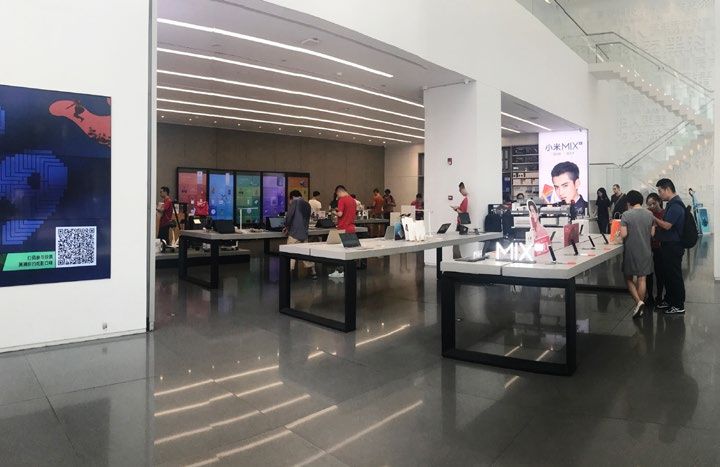
Part I. Xiaomi’s evolving business model and New
Retail strategies

BACKGROUND

Xiaomi Inc., headquartered in Beijing, China, is a privately owned innovative
technology and electronics company that designs, develops, and sells smart
phones, mobile apps, and other technology products. It was co-founded by
eight partners (Lei Jun (CEO), Lin Bin, Li Wanqiang, Zhou Guangping, Huang
Jiangji, Hong Feng, Wang Chuan, and Liu De) on June 6, 2010. Since Xiaomi
Co., Ltd. was established, it has maintained a surprising growth rate. Xiaomi
released its first smartphone in August 2011 and has rapidly gained market
share in China to become the country’s largest smartphone company in 2014.
Over 61 million of Xiaomi’s smartphones were sold that year. The company
was within the top three smartphone companies in China in 2014 and 2015.
Xiaomi announced its expansion outside China in the same year, with their
first international headquarters in Singapore. Thereafter, the company has
expanded into Asia, Africa and parts of Europe.

However, after Xiaomi has enjoyed a rapid rise, it has then gone through a
dramatic fall and suffered a massive decline in sales in the second half of
2015. Its sales dropped 30% further in 2016, and in 1Q16, it was kicked out of
International Data Corporation (IDC)’s list of the top-five smartphone vendors
in the world1. As claimed by the company, the sales plunge crisis was due
to the fierce market competition, supply-chain problems associated with the
company’s rapid growth, and its heavy reliance on e-commerce.

The slump on sales has forced Xiaomi to revamp its business model, revitalize     Xiaomi is a mobile phone company,
its supply-chain systems and restructure its organizational and management        mobile Internet company and a
structure, etc. In 2017, it has incorporated New Retail strategies to its         New Retail company. And in the
“Triathlon business model”, which Xiaomi started to place great emphasis          strict sense, Xiaomi is a retail
on interconnecting its online and offline channels. Since then, the company       company.
has enjoyed an unprecedented turnaround. Xiaomi replaced domestic rival
Vivo to occupy the spot of the world’s fifth-largest smartphone maker after its
smartphone shipment rocketed 74.5% to 92.4 million units2. As claimed by
Lei Jun, Xiaomi’s CEO, “Xiaomi is a new brand that was born in the process
of China’s economic transformation and upgrading. It is a mobile phone
company, mobile Internet company and a New Retail company. And in the
strict sense, Xiaomi is a retail company3.”

Currently, Xiaomi is the world’s fourth-largest smartphone company, achieving
over 100 billion yuan in annual revenue and has nearly 20,000 employees4.
On 3 May, 2018, Xiaomi Group officially submitted an IPO application to the
Hong Kong Stock Exchange, aiming to raise US$10 billion.

                                                                                                                     2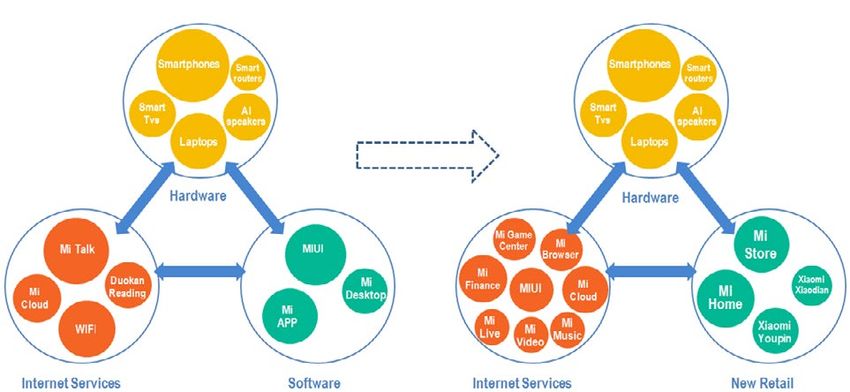
XIAOMI’S ECOSYSTEM STRATEGY

    Xiaomi started to create a “one-of-a-kind” ecosystem back in 2013 with a             Xiaomi started to create a
    five-year plan to invest in 100 hardware startups. They would feed Xiaomi            “one-of-a-kind” ecosystem
    with an ecosystem of products surrounding smartphones, such as power                 back in 2013. Over the years,
    banks and internet-connected devices like air purifiers; and would draw              the ecosystem has expanded
    customers to Xiaomi’s stores. Over the years, the ecosystem has expanded             rapidly and become increasing
    rapidly and become increasing complex that other market players find it hard         complex that other market
    to replicate. In March, 2016, the company strategically upgraded Xiaomi's            players find it hard to replicate.
    ecosystem and launched a new brand, MIJIA, with a Chinese name of "Mi."
    By March 2018, Xiaomi has 210 companies within its ecosystem, including
    ZMIFI, Huami Technology, Zhimi Technology, 1More, etc.

    As of March 31, 2018, Xiaomi has established an ecosystem of more than
    210 companies through investment and management, of which more than
    90 companies are focused on research and development of smart hardware
    and consumer lifestyle products5. These startups have received support
    from Xiaomi in areas of branding, capital, supply chain, product design
    and management, as well as access to Xiaomi’s online and offline retail
    network. A number of them have flourished – such as Huami, Smart Mi, ZMI
    and NINEBOT. These companies reached unicorn status with billion-dollar
    valuations by the end of 20156. According to iResearch, as of December
    2017, Xiaomi has built the largest consumer IoT platform globally in terms
    of the number of connected devices (excluding smartphone and laptops)7.

    Xiaomi’s ecosystem is centered on Xiaomi's core products – smartphones
    including peripheral products such as chargers, earphones and power banks;
    smart hardware including robots, rice cookers, televisions and air purifiers;
    and lifestyle products including backpacks, suitcases, toothbrushes, pillows
    and other daily necessities (Exhibit 1). Xiaomi’s gigantic ecosystem offers a
    wide range of new and interesting products that customers anticipate. This
    helps attract customers to visit Xiaomi’s physical store – Mi Home from time to
    time to see what they offer. This also makes Xiaomi nothing like a smartphone
    company, but a lifestyle and retail company that offers a large array of lifestyle
    products to customers.

3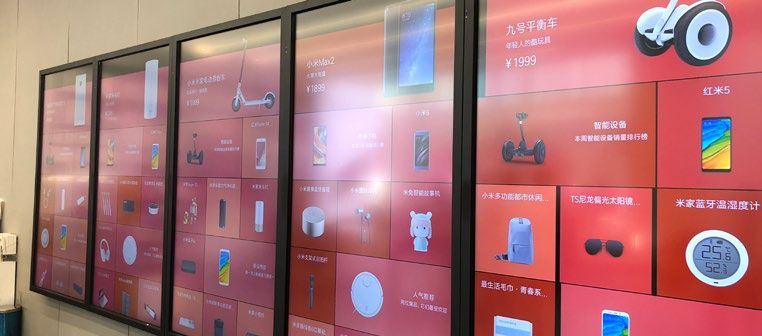
Exhibit 1: Xiaomi’s ecosystem with over 90 companies focused on the development of
smart hardware and lifestyle products

                                  Pillows                              Backpacks

                                     Rice                           Water
                                    Cookers                        Purifiers
         Towels                                                                              Suitcases
                                                 Selfie-sticks
                                                                                     Home
                    Air                Screen                                       Security
                  Purifiers                                      Power Banks
                                    Protectors                                      Cameras

                                                   Xiaomi                              Laser
               Scooters       Data Cables                             Headphones
                                                 Smartphones                          Projector

     Tooth-                                                                                         Athletic
    brushes                       Speakers                            Chargers                     Footware
                        Robot
                       Vacuum                                                    Wearables
                       Cleaners                    Others

                   Pens                            Others                            Mattresses

          Mobile Peripherals                       Smart Devices                               Lifestyle Products

Source: Xiaomi’s prospectus

Xiaomi’s ecosystem adopts an “investment + incubation” strategy. Xiaomi                                             Xiaomi’s ecosystem adopts
would provide resource support to companies it has invested in, especially                                          an “investment + incubation”
in their early stages of entering the market; these include branding, supply                                        strategy.
chain, channels & platforms, investment and financing, quality assurance,
product definition, and industrial design (Exhibit 2). Xiaomi will continue
to invest in and incubate companies with good potential for development,
primarily in the fields of IoT and mobile Internet services.

                                                                                                                                                   4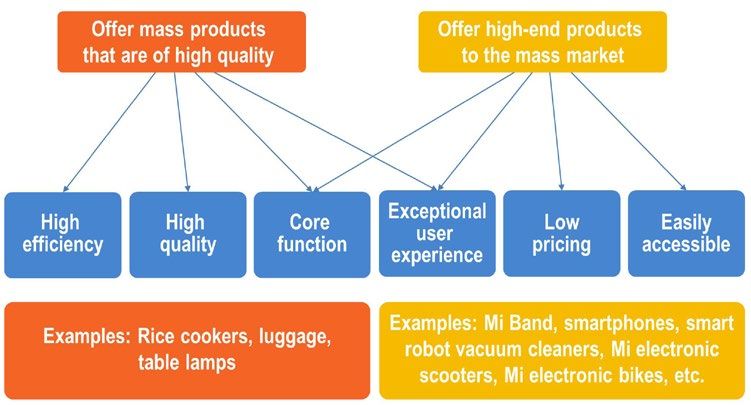
Exhibit 2. Xiaomi provides all-round support to companies within its ecosystem

                                            Branding

               Industrial                                               Supply
                 design                                                  chain

                                             Xiaomi
                                          provides all-
                                         round support
                                        to companies in
                                                                            Channels
         Product                         the ecosystem                         and
        definition
                                                                            platforms

                                                           Investment
                             Quality
                                                               and
                            assurance
                                                            financing

    Source: CMS Research8; compiled by Fung Business Intelligence

    XIAOMI TO GO OFFLINE; OMNI-CHANNEL IS THE KEY

    Having experienced the sales plunge since 2015, Xiaomi realized the                 Xiaomi realized the
    drawbacks of being a pure-play e-commerce player. Thereafter, Xiaomi has            drawbacks of being a pure-
    started to push forward its brick-and-mortar strategies. In September 2015,         play e-commerce player;
    Xiaomi opened its first physical store Mi Home in Beijing, which marked             it has started to push
    Xiaomi’s official debut in the offline retail market. As of May 2018, there are     forward its brick-and-mortar
    more than 400 Mi Home stores, covering more than 50 cities in China; the            strategies since 2015.
    number of Mi Home stores is expected to reach 1,000 by 2019 and achieve
    total revenue of 70 billion yuan in five years9.

    Currently, omni-channel is Xiomi’s critical driver of growth. Exhibit 3 shows
    the major online and offline sales channels of Xiaomi.

5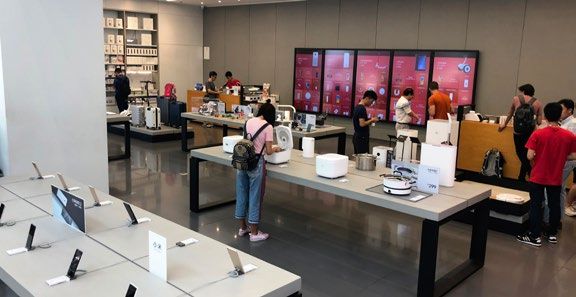
Exhibit 3. Major sales channels of Xiaomi

Online channels
Platform/format          Launch date          Purpose/nature                           Current situation
Mi Store (available      January 2011         Provide the official Xiaomi products to Mi Store was the third-largest 3C and
in mobile app and                             customers; offer customer service and home appliances direct sales online
Mi.com)                                       after-sales support                     retail platform in China by GMV in
                                                                                      2017. As of March 2018, 300 SKUs
                                                                                      of 194 categories of products are
                                                                                      launched on the platform

Xiaomi Tmall Store       July 2013            Third-party e-commerce platform          Selling full product lines of Xiaomi

Xiaomi Wechat store      November 2013        Third-party s-commerce platform          Selling full product lines of Xiaomi

“Mi Jia” app             January 2014         Self-operated m-commerce platform        Selling full product lines of Xiaomi

Xiaomi Taobao Store      December 2014        Third-party e-commerce platform          Selling full product lines of Xiaomi

Xiaomi JD.com store      May 2015             Third-party e-commerce platform          Selling full product lines of Xiaomi

Xiaomi Suning.com        April 2016           Third-party e-commerce platform          Selling full product lines of Xiaomi
store

Xiaomi Youpin            April 2017           An e-commerce marketplace that           Changed its name from Youpin to
                                              sells Mi-branded products as well        Xiaomi Youpin in May 2018
                                              as high-quality products that are not
                                              associated with Xiaomi but curated
                                              and sourced by the company.

Offline channels
Platform/format       Launch date Purpose/nature                                 Current situation
Mi Home               November          Xiaomi’s self-operated B2C stores,       As of May 2018, there are more than 400
                      2011              with store size around 200-400 sqm.      Mi Home stores across China, with sales
                                        Mi Home provide sales, technical         reaching over 10 billion yuan in February
                                        support and after-sales services to      2018
                                        customers

Xiaomi Suning         November          Chained electronics stores               Selling mainly Xiaomi’s smartphones and
stores                2015                                                       other hardware products

Xiaomi specialty      July 2016         JV stores                                Selling mainly Xiaomi’s smartphones and
stores                                                                           other hardware products

Xiaomi authorized     NA                Local authorized stores (“Mi Preferred   Selling mainly Xiaomi’s smartphones and
dealers/ cellular                       Partners”), consumer electronics         other hardware products
network carriers                        retail chains and telecommunications
                                        companies in China including China
                                        Mobile, China Unicom and China
                                        Telecom

Xiaomi Xiaodian       March 2017        Xiaomi’s local authorized stores;     The sales network has reached 22 cities with
                                        Xiaomi provides merchandise, support 8,726 touch points
                                        and trainings to authorized retailers

Xiaomi Youpin         May 2018          Xiaomi’s self-operated B2C stores,       The first store was opened on 25 May, 2018
physical stores                         with store size around 600 sqm. It       in Nanjing. Various “black technologies”
                                        provides more than 1,000 SKUs            such as unmanned vending machine and
                                                                                 facial recognition are introduced in the store
Source: Xiaomi’s Prospectus; Xiaomi’s website; various Internet sources; compiled by Fung Business Intelligence

                                                                                                                              6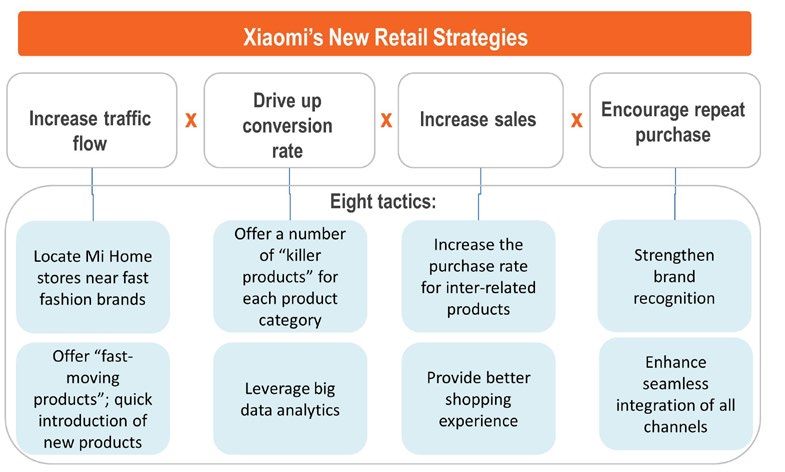
EVOLVING BUSINESS MODEL

    Xiaomi named its unique business model as "The triathlon model". Originally,             Xiaomi named its unique
    the triathlon model was comprised of three modules namely, “Hardware”,                   business model as "The
    “Software” and “Internet Services”. In 2017, Xiaomi upgraded its business                triathlon model". The
    model to incorporate the “Software” section to the “Internet Services” section,          triathlon model now entails
    and added the “New Retail” section. The triathlon model now entails three                three components – the
    components – the “Hardware”, “Internet Services” and “New Retail” (Exhibit 4).           “Hardware”, “Internet
    •   Hardware – innovative, high quality and well-designed hardware focused               Services” and “New Retail”.
        on exceptional user experience. These include mobile phones, TVs,
        routers, AI speakers, etc.;
    •   Internet Services – provide Internet services and give users a complete
        mobile Internet experience. These include MIUI, Mi Live, Mi Cloud, Mi
        Finance, Mi Music, Mi Video, Mi Game Center, etc.
    •   New Retail – the integration of online and offline channels. Major online
        channels include Xiaomi’s direct online retail store Mi Store (available in
        mobile app and Mi.com), Xiaomi’s self-operated boutique-style e-commerce
        marketplace “Xiaomi Youpin”, and its flagship store on Tmall. Key offline
        channels include Mi Home, and local authorized stores in China “Xiaomi
        Xiaodian”. New Retail is a core component of Xiaomi’s growth strategy,
        allowing the company to operate efficiently while simultaneously extending
        the customer reach and enhancing customer experience.

    Exhibit 4. Xiaomi’s Evolving Triathlon Business Model

    Note: The above graph shows selected key features, products or services of each component only.
    Source: Various Internet sources; compiled by Fung Business Intelligence

7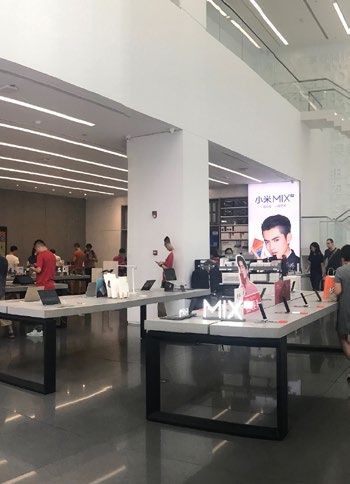
ESSENCE OF XIAOMI’S NEW RETAIL STRATEGIES

To put its New Retail strategies into action, in September 2017, Xiaomi           The essence of Xiaomi’s New
launched its first New Retail flagship store, Mi Home, in Shenzhen to             Retail strategies is to provide
demonstrate Xiaomi’s New Retail strategies. The essence of Xiaomi’s New           users with omni-channel
Retail strategies is to provide users with omni-channel shopping experience       shopping experience and
and through highly efficient store operations, with optimal rent-to-revenue       through highly efficient store
ratio. As shown in Exhibit 5, the strategies highlight eight tactics under four   operations, with optimal rent-
areas:                                                                            to-revenue ratio.
•   Increase traffic flow – Locate Mi Home stores near fast fashion brands;
    offer products with higher repurchase rates
•   Drive up conversion rates – offer a number of “killer products” for each
    product category; leverage big data analytics
•   Increase sales – increase the purchase rate for inter-related products;
    provide better shopping experience
•   Encourage repeat purchase – strengthen brand awareness; enhance
    seamless integration of all channels

Through its New Retail strategies, Xiaomi aims to achieve greater efficiency
and provide the same products at the same accessible price points to
consumers.

Exhibit 5. Xiaomi’s New Retail strategies and tactics

Source: ChinaLabs10; compiled by Fung Business Intelligence

                                                                                                                    8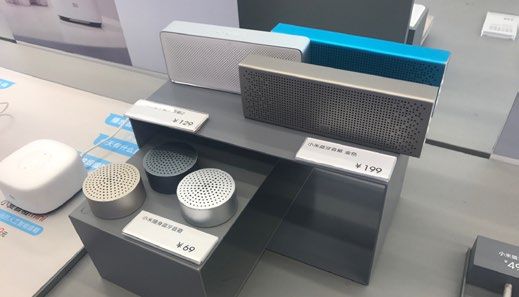
Xiaomi’s New Retail Tactics
    Increase traffic flow

    Locate Mi Home stores near fast            Most of Mi Home stores are opened in the shopping centers in prime
    fashion brands                             or community shopping districts of tier-1 and 2 cities. Many of them
                                               are located near fast fashion brands such as Uniqlo, ZARA, H&M,
                                               and casual lifestyle brands such as Starbucks and Muji to boost
                                               traffic flow.

    Offer “fast-moving products”; quick        All products of Mi Home are updated frequently. New products are
    introduction of new products               introduced from time to time to encourage customers to revisit the
                                               shop frequently.

    Drive up conversion rates

    Offer a number of “killer products” for    Focused on producing “killer products” with exquisite designs and
    each product category                      quality which can generate tremendous sales.

    Leverage big data analytics                Leverage online sales data to select which SKU to display in the
                                               stores. Select 200-300 SKUs out of 20,000 SKUs from Xiaomi Youpin.

    Increase sales

    Increase the purchase rate for inter-      The design of Xiaomi's products is consistent in terms of
    related products                           appearance and value, and the technical functions are related and
                                               interoperable within Xiaomi’s ecosystem (which can be uniformly
                                               controlled through Mi App or Mi AI network speaker).

    Provide better shopping experience         Offline channels provide touch points for customers to enjoy
                                               exceptional shopping experience. Sales associates will not promote
                                               the products too aggressively but will let customers explore the
                                               products themselves. They will answer customers’ enquires and
                                               provide technical support if needed.

    Encourage repeat purchase

    Strengthen brand recognition               One of Xiaomi’s important growth strategies is to attract new users
                                               through enhancing brand recognition, particularly for its self-
                                               branded products. Xiaomi’s tactics to enhance brand recognition
                                               is through offering “amazing products” at “honest prices”. At its
                                               physical stores, customers can understand more about Xiaomi’s
                                               products.

    Enhance seamless integration of all        Xiaomi ensures price consistency across its online and offline
    channels                                   channels, and devotes great efforts to achieving seamless
                                               integration of all channels. For instance, sales associates at the store
                                               will guide customers to place order online and download Xiaomi’s
                                               app; this helps drive customer traffic from offline to online.
    Source: ChinaLabs; compiled by Fung Business Intelligence

9
XIAOMI’S SUCCESS FACTORS
Killer products
Xiaomi has strived to offer “killer products” that are of high quality, high Xiaomi has strived to offer “killer
performance, well-designed and honestly priced. The company has products” that are of high quality,
advocated a unique principle of “satisfying 80% needs of 80% of the high performance, well-designed
market” – to offer products that target the mass market (cover 80% of users and honestly priced. The company
in the market) and provide products that can satisfy most (80%) of their has advocated a unique principle
daily needs. Xiaomi aims to: 1) offer mass products that are of high quality of “satisfying 80% needs of 80% of
– in order to meet the needs of the post-80s and post-90s generations who the market”.
want a higher quality of life; 2) offer high-end products to the mass market –
allow high-tech, trendy, and well-designed products at price points that are
accessible to the widest and largest user base (Exhibit 6).
Exhibit 6. Satisfying 80% needs of 80% of the market
Source: ChinaLabs; compiled by Fung Business Intelligence
Mi Fans
Xiaomi’s success is also largely built upon its strong fans culture. The Xiaomi’s success is also largely
company has cultivated close interactions and direct relationships with its built upon its strong fans culture.
fans. Xiaomi’s relatively inexpensive products with good design or intelligent
functions have continued to win and accumulate massive global community
of “Mi Fans”, passionate users who are intensely loyal to Xiaomi brand.
There are “Mi Fans Clubs” in different parts of the world and there are
active interactions within Xiaomi’s platform for fans to provide feedback and
ideas on product development, product testing, advertising and marketing.
Xiaomi has regularly launched a number of promotional campaigns such as
“Mi Fans Festival”, “Mi Pop” events, games, and contests to boost sales and
engage with their fans.
10Many Mi Fans are passionate and keen to exchange product ideas, co-
create new features of the smartphones and operating systems through
Xiaomi’s online forum, Xiaomi BBS and MIUI forum. In turn, Xiaomi’s
engineers have constantly improved the MIUI platform by incorporating
direct feedback from Mi Fans. As of March 2018, Xiaomi has a large and
highly engaged global user base with approximately 190 million monthly
active MIUI users; over 1.4 million users have more than five connected
Xiaomi products (excluding smartphones and laptops); and Xiaomi’s users
had collectively generated over 250 million posts on MIUI forum since it was
launched in August 201011.
COMMENTS FROM FUNG BUSINESS INTELLIGENCE
Against the backdrop of the consumption upgrading trend in China, Fung
Business Intelligence believes that Xiaomi’s successful formula of high
quality and low pricing strategy will render ample room for the company to
seize more market shares ahead. Xiaomi’s relatively inexpensive yet high
quality and well-designed products will continue to win and accumulate
massive number of loyal Mi Fans (de facto customers). The “fans community”
will co-design the products with the company or even sell and promote their
products to boost sales.
The company’s vast ecosystem, together with its new business model
and New Retail strategies are set to transform and reshape the traditional
consumer electronics and home products sectors. Xiaomi’s wide range of
high-functional products such as smartphones, smart watches, Internet TV
boxes, and smart TVs are well-liked by customers. Its “smart living” product
lines, particularly travel suitcases, travel pillows, table lamps, etc. are also
gaining increasing attention from consumers.
Going forward, we expect Xiaomi’s New Retail strategies will continue to
flourish, with stronger physical presence and higher penetration across
China and in the rest of the world. Xiaomi will truly transform from a Chinese
smartphone brand into an international lifestyle and retail brand. Xiaomi’s
upcoming IPO, which is expected to be the world’s largest IPO since 2014,
is expected to bolster its position as one of the leading retail brands in
China, and even in the world.
11Part II. Site Visit and Observations from Fung
Business Intelligence
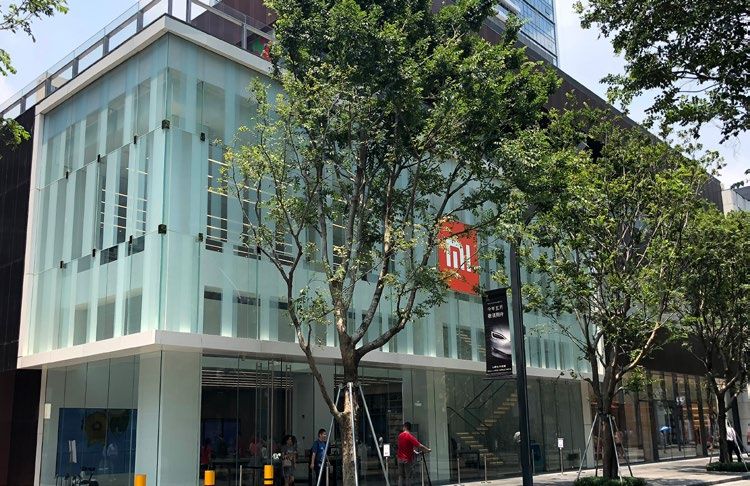
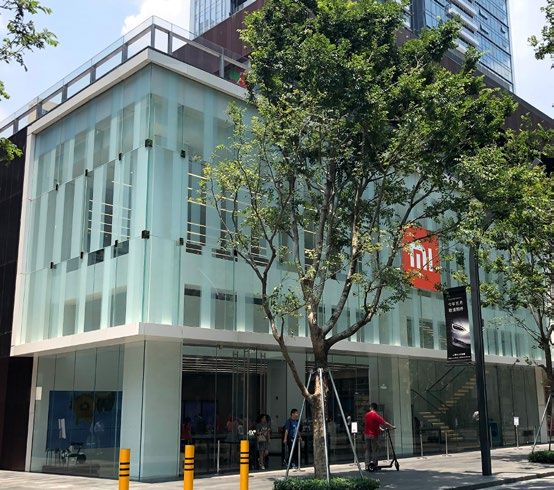
Fung Business Intelligence conducted a site
visit at Xiaomi’s New Retail flagship store in MixC
World, Shenzhen on 23 May, 2018. Designed by
New York-based famous designer Tim Kobe, the
same designer of Apple flagship at 5th Avenue of
New York City, this Xiaomi flagship is a standalone
duplex store located along the shopping avenue
“High Street” of MixC World. The store has a floor
area of around 650 sqm.
We visited the store on a weekday afternoon; foot
traffic was considered quite high at the time we
visited. As observed, there were local customers
and tourists, students, office workers and different
types of people choosing and trying the products. Xiaomi’s flagship store in MixC World, Shenzhen
Photo source: Fung Business Intelligence
The shop is bright with high ceilings and glass facades across two storeys.
The interior design is hip and simple with Xiaomi’s corporate colors – white and
orange as the store colors. Xiaomi's flagship store sells more than 400 SKUs and
allows customers to try and experience the products. All products sold in the
shop are available in Xiaomi’s e-commerce platform Xiaomi Youpin and each of
them is attached with a QR code. After scanning the code through Xiaomi’s app,
customers can place order online by Wechat Pay or Alipay and enjoy speedy
delivery to home. Customers can also buy the products and take away with them
when they leave the shop.
Xiaomi has incorporated various “black technologies” in its flagship store,
including a large interactive shopping wall which comprises five LED screens
sizing 80” each. The screens can track user’s hand motion and movement.
Customers can point to the products that are shown on the screen to browse the
product information and place order.
On the ground level, the major “killer products” of Xiaomi are displayed, including
smartphones, smart watches, smart music boxes, headphones, portable power
banks, etc. The second level mainly displays products of “smart living”, including
travel suitcases, travel pillows, bicycles, table lamps, coffee machine, etc.
12In terms of customer service, Xiaomi’s flagship store houses large amount of staff
to assist customers. They are mostly young people with a smart and energetic
appearance. They attentively answered enquiries from customers and offered
advice to them.
Overall, the shopping ambiance is robust and vibrant as the shop displays a large
array of Xiaomi’s products and allows customers to try and touch them freely. Some
customers were trying the electronic scooter on the pedestrian pavement outside
the store, which gave them an experience of using the products.
Ground level of the store Second level of the store
The shopping wall with interactive screens
Technology products
Photo source: Fung Business Intelligence
13References: 1 “The dramatic rise and fall of Xiaomi”, 11 June 2016. Forbes. https://www.forbes.com/sites/ckgsb/2016/07/11/the-dramatic-rise-and-fall-of-xiaomi/#e5f93ad33da4 2 “Behind the fall and rise of China’s Xiaomi”, 22 December 2017. Wired.com. https://www.wired.com/story/behind-the-fall-and-rise-of-china-xiaomi/ 3 “Lei Jun says Xiaomi is a retail business and the goal is to be another MUJI”, 12 September 2017, Medium.com. https://medium.com/@pandaily/lei-jun-says-xiaomi-is-a-retail-business-and-the-goal-is-to-be-another-muji-86636b388923 4 Xiaomi Corporation – Prospectus http://www.hkexnews.hk/APP/SEHK/2018/2018050202/Documents/SEHK201805030005.pdf 5 Xiaomi Corporation – Prospectus http://www.hkexnews.hk/APP/SEHK/2018/2018050202/Documents/SEHK201805030005.pdf 6 “Inside Xiaomi: The perks and perils of startups that join its ecosystem”, March 2018. Tech in Asia. https://www.techinasia.com/xiaomi-ecosystem 7 Xiaomi Corporation – Prospectus http://www.hkexnews.hk/APP/SEHK/2018/2018050202/Documents/SEHK201805030005.pdf 8 “Xiaomi’s Ecosystem”, 18 April 2018. CMS Research. http://img3.gelonghui.com/pdf201804/pdf20180419133513809.pdf 9 “Behind the fall and rise of China’s Xiaomi”, 22 December 2017. Wired.com. https://www.wired.com/story/behind-the-fall-and-rise-of-china-xiaomi/ 10 “Xiaomi’s Growth Path”, May 2018. ChinaLabs. http://t.cj.sina.com.cn/articles/view/6418632331/17e948e8b00100f6fn 11 Xiaomi Corporation – Prospectus http://www.hkexnews.hk/APP/SEHK/2018/2018050202/Documents/SEHK201805030005.pdf
Contacts

Asia Distribution and Retail

Teresa Lam
Vice President
E: teresalam@fung1937.com

Lucia Leung
Research Manager
E: lucialeung@fung1937.com

Fung Business Intelligence
10/F LiFung Tower
888 Cheung Sha Wan Road
Kowloon, Hong Kong
T: (852) 2300 2470
F: (852) 2635 1598
E: fbicgroup@fung1937.com

  Fung Biz Intel   Fung Biz Intel   Fung Biz Intel   Fung Biz Intel   Fung Biz Intel

© Copyright 2018 The Fung Business Intelligence. All rights reserved. The information contained herein is of a general nature
and is not intended to address the circumstances of any particular individual or entity. Though the Fung Business Intelligence
endeavours to ensure the information provided in this publication is accurate and updated, no legal liability can be attached as to
the contents hereof. Reproduction or redistribution of this material without prior written consent of the Fung Business Intelligence
is prohibited.
You can also read


