130 MODELS - Online theory & activities - maker Master - Engino
←
→
Page content transcription
If your browser does not render page correctly, please read the page content below
maker M
                         aster
                                   30 1                   MODELS

                                   2
                                  models
                                           printed
                                           instructions
                                           (included)

                                  28
                                  models
                                           online
                                           3D instructions

                                    SNAP-FIT SYSTEM

 Product code:
CE301MM-A        Online theory & activities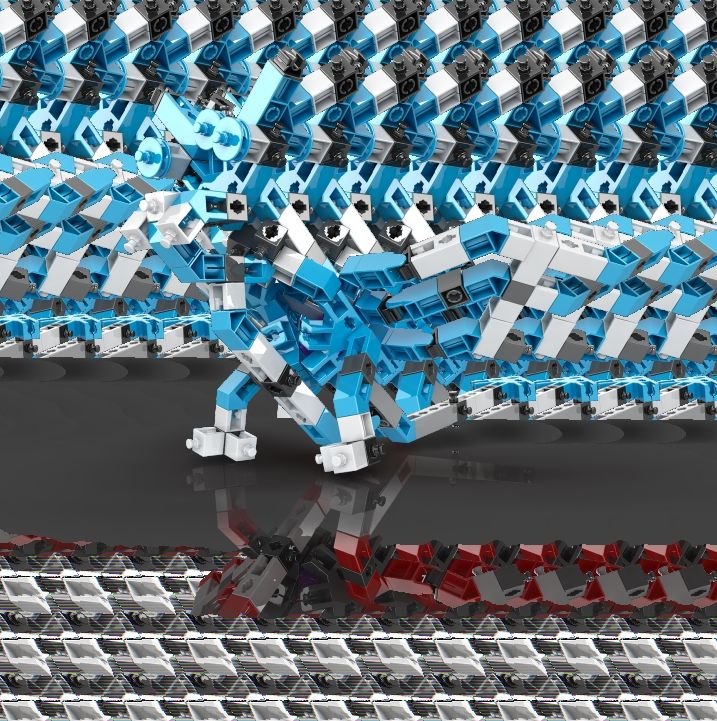
Theory
What we will learn
Dragons are mythical beings, usually
appearing in the mythology of several
cultures around the world. There is a big
diversity in their size and powers, though
they have common reptilian-like features.
One of their weapons is that they usually
blow out fire. In countries like China and
Japan big celebrations for dragons are still
organised. Do you want to know more about
the history of dragons? Have you wondered if
dragons ever lived on Earth? Which
similarities did they share among different
mythologies?
                                                    Dragons are famous for fire breathing abilities

This booklet of “DRAGONS EVOLUTION” contains a great deal of useful information and
amazing facts, so that you will learn all about dragons. Follow the building instructions,
contained in this booklet to build exciting models such as a pterosaur, a phoenix dragon, an
elder dragon, a rhaegal dragon and a twinheaded dragon. Join this journey into the
legendary stories of dragons!

                                                    The History of Dragons
                                                    It is not clearly known when dragons first
                                                    appeared in cultures but it is estimated to be
                                                    around 4000 B.C. Dragons were thought to be
                                                    animals living in dark and damp caves, on
                                                    mountain tops or in lakes. It is believed that
                                                    the invention of such monstrous creatures
                                                    with super powers is due to the early
                                                    discoveries of dinosaurs' fossils or even
                                                    bones from unknown animals of the past.

Stories with dragons appear in many
different civilizations, all having their own
significance. Dragons have appeared in a
variety of sagas with gods in ancient
mythologies. During the time of Christopher
Colombus, when the majority of people
thought the Earth was flat, dragons were
believed to hide on the Earth’s boundaries.
This myth was busted after navigators
crossed the oceans and circumnavigated the
Earth finding no evidence of such creatures.

                                               01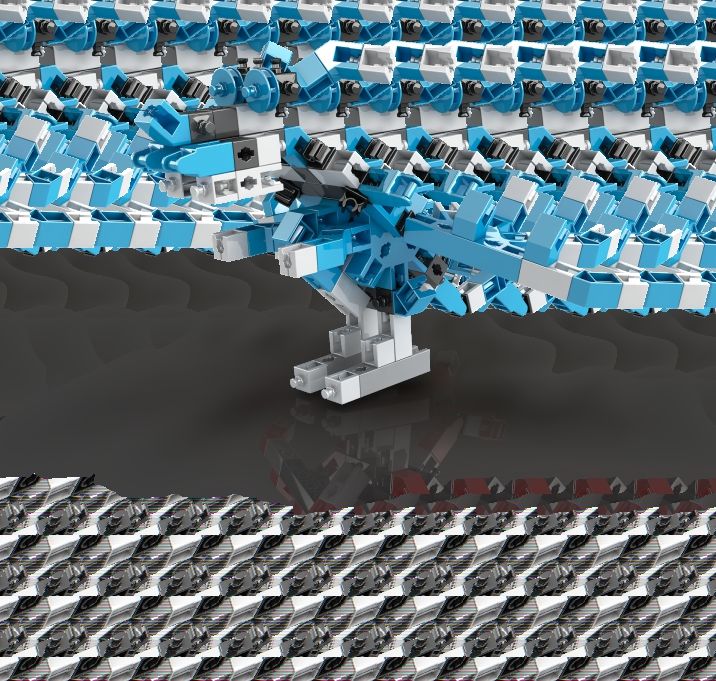
Meaning of word “Dragon”                                                 Description of Dragons

The word dragon comes directly from the                      A dragon is typically a monster of an
ancient Greek “Drakones” or “Draconta”,             enormous size with a reptilian nature. This is
meaning to watch carefully at something.           very common to almost all cultures. However,
This explains why dragons were typically                there are dragons whose size varies from
assigned as guards of precious treasures           small to pet-sized or even miles long. Despite
such as mountains of gold coins, jewels and              their varying appearance, most dragons
secrets.                                                    appeared in red or green color. Other
                                                      common characteristics were their red and
                                                          slanted eyes, long tails, claws and sharp
                                                           teeth. Dragons are also famous for the
                                                      special powers they possessed. Depending
                                                           on the culture, dragons might be super
                                                   powerful or very weak, friendly or aggressive,
        Did you know?                                             wise or dump with wings or not.
  Dragons were much loved as
  mythological animals. They were
  presented as gigantic and powerful
  snakes or reptiles. Also, they have
  appeared in mythology throughout
  the ages and are especially popular
  in the culture of China. “The
  phoenix” is a dragon with wings and
  five claws which was used as a
  symbol for the emperors in China.
  The body of phoenix had various
  colours, like sunset orange and
  yellow.
                                                                              Dragon Symbolism

                                                       Dragons are often used as symbols in the
                                                     cultures all over the world. Despite the fact
                                                       that dragons of the Eastern countries had
                                                   quite similar physical characteristics from the
                                                    Western, their symbolic representations are
                                                            different. This indicates the essential
                                                     differences among the two continents. The
                                                    most significant difference is that Europeans
                                                        had illustrated dragons as evil creatures,
                                                          whereas Asian cultures regard them as
  China has a strong culture in dragons                                           friendly beings.
                                              02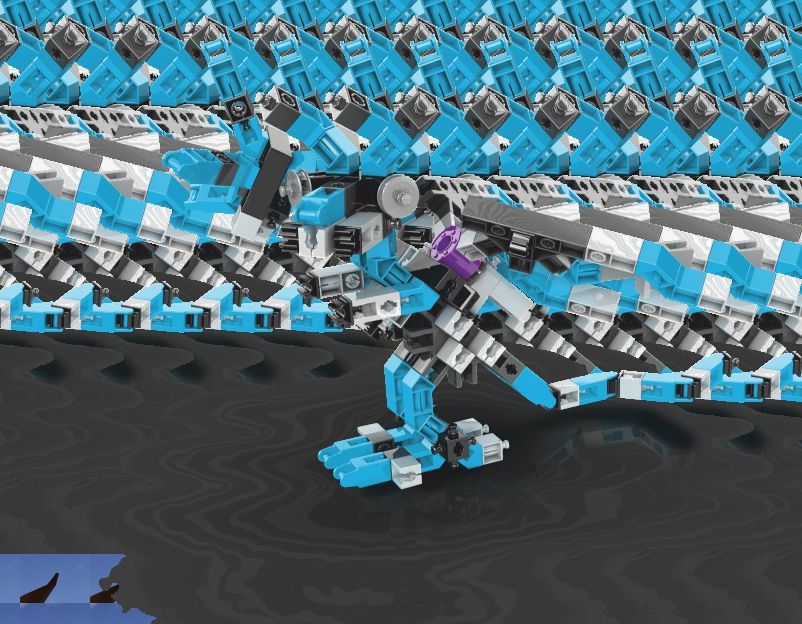
Western and Eastern Dragons
Western Dragons                                        Eastern Dragons

The Western dragons were typically huge and            Eastern dragons were typically small in size
heavy, with sharp claws and bat-like wings.            with long bodies and horns. They used to live
Most of the times they had reptile features,           silently near places with large amounts of
but in few cases they had fur or feathers.             water. Also, Eastern dragons are found all
Sometimes the dragons were dark colored but            over Asia, particularly in China, Korea and
always shiny. The ability to exhale fire was            Japan. The dragon's body was constituted
quite common to all western dragons. Most of           from a blend of many different animals. For
the stories say that dragons stayed into cold          example a dragon could have the body of a
and dark caves, filled with fire and water. They         snake, the belly of a frog and the head of a
were mostly used as frightening and                    camel. The term “Far East” dragons refers to
unfriendly monsters with lack of intelligence.         the dragons of China, Korea and Japan. They
In some sagas they had the ability to speak            were well respected and honored as
and communicate with humans.                           demigods.

Chinese Dragons                                        Dragons from Japanese Mythology

Chinese mythology dates back at least 6,000            Japanese mythology includes a creature
years and is very popular. The Chinese                 called the "ryu" associated with water and
legends describe dragons as a mixture of               the power of the emperor. Also, stories of
different creatures such as horse, snake and            snakes and centipedes are mentioned. An
deer. Sagas with dragons were strongly                 ancient sacred text of a Japanese religion
associated with rivers, water, clouds and rain.        describes an evil dragon with eight heads
They were thought to be kind creatures for             and eight tails, named “Yamata no Orochi”. It
being responsible or bringing the needed               was so huge that when crawling it could
rain for agriculture. In addition, they were a         extend to eight mountains! This dragon was
symbol of the empire.                                  slain by the god Susanoo-no-Mikoto in order
                                                       to keep people safe.

                                                  03
Races with Dragon Boats
Boat racing ceremonies related to dragon
worship dates back to more than 2000 years
ago. According to Chinese custom, it was
believed that such races would obtain
prosperity and cultivation to the racers. The
goal was to cross the river and meet the
dragon. The dragon's eyes should be opened
to release the good spirit and fight the evil.

                                                       Today dragon boat racing has evolved to an
                                                      international sport. Beginning in Hong Kong
                                                            in 1976, the race has become a tourist
                                                     attraction. The boats which participate at the
                                                             dragon race festival are colourful and
                                                         decorated with various dragon elements.
                                                     Boats feature carved dragon heads, long tails
                                                             and are long enough to carry up to 20
                                                                                          paddlers.

        Did you know?                                How dragons could breathe fire?
  Among the 12 different zodiac
                                                     According to the legends, dragons were
  constellations of the Chinese                      believed to eat other animals. The hard
  astrology, the dragon is one of                    bones of their victims could prove to be an
  them. Each Chinese year is                         issue for digestion. So dragons had to grind
  assigned to a single constellation                 up their prey with rocks. However, by
  and anyone who is born in that                     grinding up a large amount of rocks could
                                                     leave residue on a dragon’s teeth.
  year receives the name of the
  annual zodiac. Thus, every twelve                  Thus, as the dragon releases its hydrogen
  years newborns are called                          and methane, the gas would mix with the
  “Dragons” in China. The last year                  oxygen in the air. Finally, this combination of
  assigned to a “Dragon year” was                    rock grinding and gas storage could create
                                                     the conditions for fire breathing. In the end,
  back in 2012. People who tend to
                                                     fire was spewed out from the dragon's
  believe in superstitions, theorize                 mouth.
  that a person's characteristics are
  determined by their birth zodiac.

        The Dragon is one of the
        12 Chinese constellations
                                                04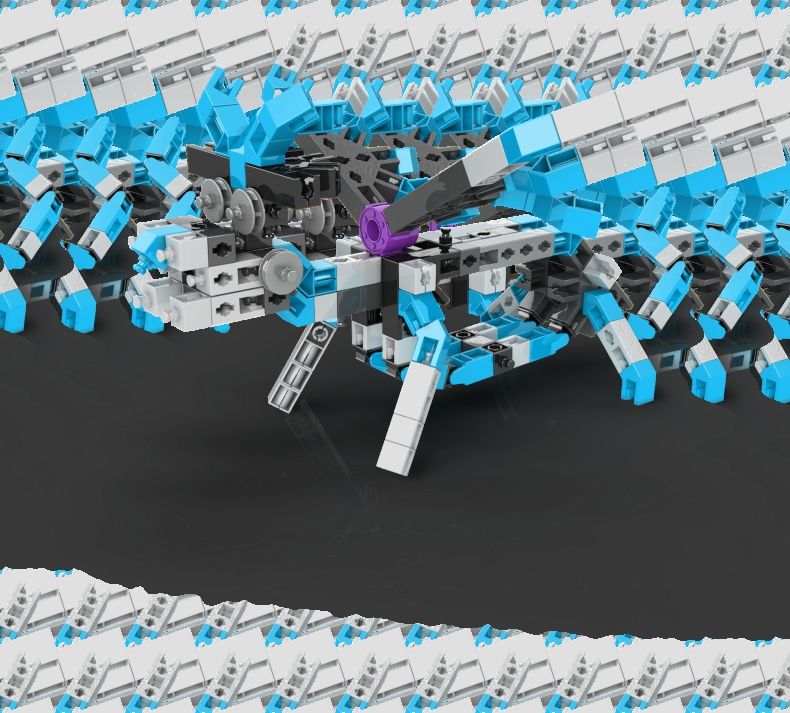
Are Dragons real?
There is no question that dragons are only
mythical creatures, which appear in
imaginary stories and ancient mythologies.
There is no evidence to prove their existence
neither in fossils nor from bones found by
paleontologists. Storytellers throughout the
centuries, from the ancient Greeks,
Sumerians and Chinese up until today, used
dragons and their supposed special powers
to develop appealing stories.

                                                       The belief in dragons was mainly due to their
                                                        use in mythological legends. In addition, no
                                                       one knew how to deal with the fact that giant
                                                          bones were discovered in deep layers from
                                                            the ground. Dragons were “real” until the
                                                       science of palaeontology appeared. Strange
                                                       and uncategorized bones could be attributed
                                                         to ancient mammals or dinosaurs, thus the
                                                         idea of dragons being real simply vanished.
                                                               However, stories with dragons are still
                                                             interesting as they offer an exciting and
                                                                                   adventurous plot!

Fossils

The only direct way to learn about prehistoric
                                                                    Did you know?
creatures is by studying fossils. Fossils are
the remains of ancient animals and plants.                    A well known myth from the
They have been found on every continent on                    Middle Ages is about a knight
Earth, maybe even near where you live!                        called St. George, who rescued a
                                                              young princess from being
Paleontologists estimate that only a small                    sacrificed to a dragon. When St.
percentage of the dinosaurs have turned into                  George passed by the city he
fossils. The majority of dinosaurs lived during               learned about the unfair trade that
the Jurassic period, a time which dates more                  the villagers had to concede in
than 100 million years ago! During that                       order to keep the dragon calm. He
period, the Earth was made only of two                        decided to take control by slaying
continents.                                                   the beast with his sword. That was
                                                              the reason that the whole village
                                                              turned into Christianity later.

                                                              Statue of St. George killing the dragon
                                                  05
Models
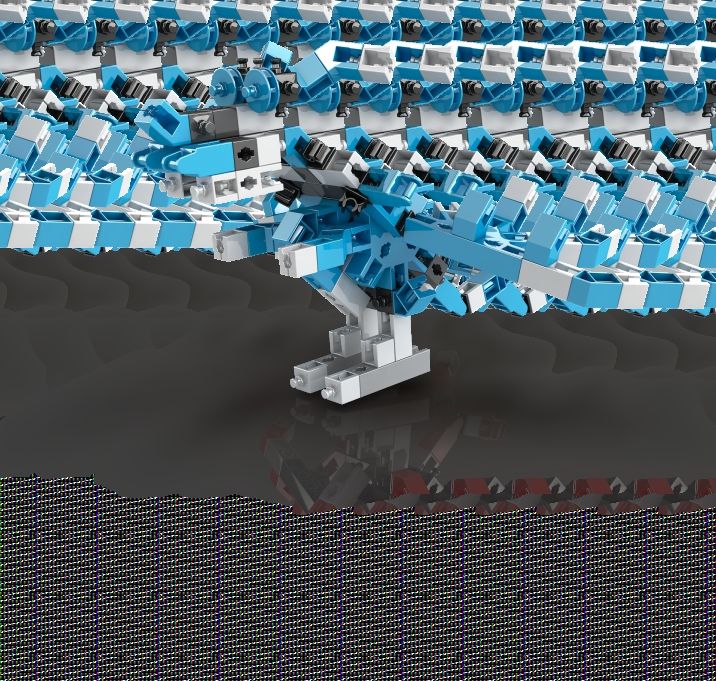
Pterosaur
Pterosaur’s name originates from a Greek
word that means “winged lizard”. More than
30 different fossils of a Pterosaur have been
found. It had wings formed by a skin and
muscle membrane, while its wingspan was
about 1 meter. This carnivore creature lived
                                                                                       4212
on small islands, in lagoons or on the coasts.

                                                      The characteristics of a Pterosaur are alike to
                                                        mythological winged dragons. It is believed
                                                          that the stories of monestrous creatures
                                                        were initiated by early discoveries of fossils
                                                      from Pterosaur and other bizarre prehistoric
                                                                                            animals.

Phoenix Dragon
The Phoenix is a winged style dragon, with a
body of fiery colors such as orange, red and
yellow. Its head is decorated with several
curved feathers resembling sun rays. The
dragon’s eyes are deep orange and its beak is
tipped in brown. Unlike most winded style
dragons, the Phoenix does not have arms. Its                                                  4196
wings consist of a curved orange wing bone
tipped with thorny spikes and golden wing
flaps.

                                                      Furthermore, the body consists of a blending
                                                          of orange and yellow coloring. It’s tail has
                                                          three yellow feathers outlined in orange.
                                                           However, the species is very curious and
                                                      intelligent, their development is faster paced
                                                             than other dragon species and they are
                                                                 capable of learning human speech.

                                                 06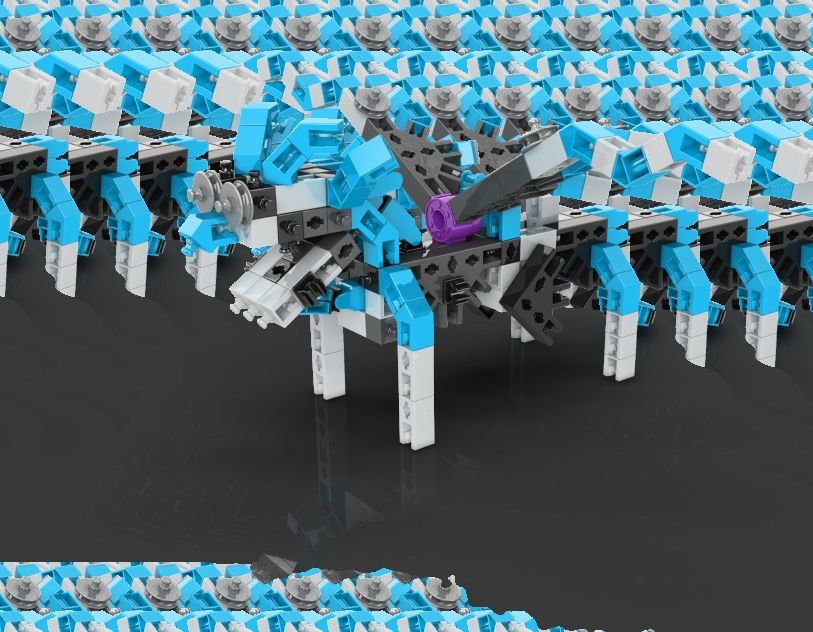
Elder Dragon
The Elder Dragons were believed to be
primarily creatures from ancient times. They
had so strong powers that they were able to
compete even with the gods. They have many
incredibly formidable foes, since these
dragons are nearly impossible to be defeated
in just one battle.

                                                                                   4191

                                                           Elder Dragons are recognizable by their
                                                     traditional draconic makeup: a pair of wings,
                                                      plus arms and legs. This class is made up of
                                                          rare, intangible monsters that have lived
                                                      eternally since ancient times, and were able
                                                        to bring destruction to whole ecosystems.

Rhaegal Dragon
A Rhaegal dragon is usually found in green
and bronze colour, with sharp teeth and
claws. He has very bright and shiny bronze
eyes and belongs to the kind of flame
breathing dragons. The fire he exhales is
orange and yellow, shot through with veins of
green.                                                                                     4198

                                                     Many tales present the Rhaegal dragon to be
                                                     the brother of Drogon and Viserion dragons.
                                                        He is the middle of the three dragons and
                                                      while not as wild as the larger Drogon, he is
                                                        still quite dangerous much more than his
                                                                         younger brother Viserion.

                                                07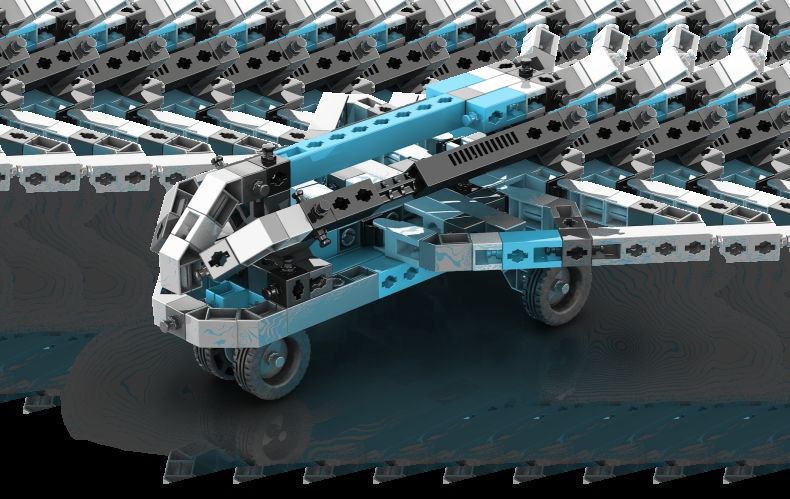
Twinheaded Dragon
The two-headed dragon refers to the Chinese
dragon of the rainbow Hong. These dragons
have a negative meaning. Perhaps their two
heads are responsible for controling two
extreme phenomena like rain and clear sky.

                                                                                         4210

                                                    Their two heads are sharing the same body.
                                                      Such dragons are mostly found with large
                                                       wings and a very long tail. It is a mystery
                                                   whether these dragons should be considered
                                                         as two beings that live inside the same
                                                                                    shared body.

        Did you know?

  Out of all the national flags, two
                                                           Quiz
  show a dragon figure. These two
  countries are Wales and the                      Can you distinguish facts from myths about
  Kingdom of Bhutan. The Welsh Red                 dragons? Choose between true or false to
  Dragon is an ancient symbol dating               the following questions.
  back to Roman times. Green and
  white colors are representing the                1. Dragons lived on Earth a long time ago,
  flag of Tudor dynasty. Tudor was                  even before dinosaurs.
  victorious in a crucial battle in 1485
  and placed the dragon on the flag.                            True             False
  On the Bhutan’s flag though, the
                                                   2. Dragons appeared in many cultures all
  white dragon symbolizes the purity
                                                   over the world and were used as symbols to
  of the kingdom. The two diagonal
                                                   represent qualities and ideas.
  colors of the flag, represent the
  pneumatic and timeless force of                              True             False
  the country.
                                                   3. The majority of legends in western cultures
                                                   present dragons as unfriendly creatures with
                                                   little intelligence.

                                                               True             False

      Flag of Wales Flag of Bhutan                 4. The next “year of Dragon” in China will be
                                                   the year 2021.
                                                               True             False
    National flags featuring dragons
                                              08
Experiment                           with the dragon’s bone

As you have already read some kinds of
Dragons had wings that were used to fly!
Despite their enormous size and huge mass
they obtained flights! To achieve this, they
used their giant wings which were much
bigger than their size.

In order to achieve a flight a dragon must
generate a force in an upward direction that                                             4212
surpasses its gravity (the force that the Earth
applies to pull any object towards its center).
For that reason, they used their strong wing
muscles to flap their wings. This way an
upward force was created and enabled them
to fly.

The shape of the dragons’ wings made the
flight possible. In addition, it determined how
well the air flows over the wings. Moreover, it
enabled them to fly through air with
minimum air resistance, thus less effort and
energy were required.

                                                       - How was it achievable for a dragon to fly
                                                       despite its huge mass and size?
                                                       - Is it possible for a human to fly if he/she
                                                       wears a pair of wings?
                                                       - Why can same animals fly while others,
                                                       even if they have wings, cannot?

Let’s perform the next page’s experiment to
get answers for all these questions!
Get ready to discover what density is and
how it determines if an animal can fly or not.
Find out which factors and how these factors
affect density.

                                                  09
Learning about: Density Discover:
Dragon’s bone How can you calculate the volume
Imagine that you have two bones of the same size, of of a cuboid?
which the one is hollow and the other one is solid. How can you identify a hollow
How can you recognise which one is the Dragon’s structure?
bone? Perform the following experiment to find out!
Level Of Difficulty
Materials Needed: 1. Write the size of the length, width and height of
- Engino® (ce301mm-a). the bone. Use the given formula to calculate the
volume of the shape.
- A4 paper, Scissors, Adhesive tape,
Calculator Length = .......cm
Height
Width = .......cm
Procedure:
h
1. Find the instructions and build the
dt
Height = .......cm Leng
th
Wi
Dragon’s bone model.
Volume = length x width x height
2. Obviously the two shapes have the
Volume = x x
same size. Calculate the dimensions
of one of them. Measure the Volume = cm3
dimension of the length, width and
height using Engino units (see 2. One of the two shapes has greater mass. Which
below). Write your findings in one is it? Explain your answer.
exercise 1. Then multiply the three
dimensions to determine the volume ....................................................................................................
of the shape.
....................................................................................................
....................................................................................................
4 units 2 units 1 unit 1 unit 3. Use your calculator to calculate the ratio of the
3. Follow the next page’s instructions mass of the object to its volume. It is given that
to print the side surfaces of the bone 1 has a mass of 31.5g while bone 2 has a mass
bones and wrap the ‘bones’ using of 63g.
these surfaces as it is explained.
mass ......
Bone 1: = = ......
volume ......
4. Hold the ‘bones’, one in each hand
and estimate which one has greater mass ......
Bone 2: = = ......
mass. Write your observations on volume ......
exercise 2. 4. Which one has less density? Which one is the
dragon’s bone? Which factors affect the density of an
5. Calculate the ratio of the bone’s object?
mass to its volume for each one in
....................................................................................................
exercise 3. The ratio of the object’s
mass to its volume is called density. ....................................................................................................
Then compare your findings in
....................................................................................................
exercise 4.
10a) Print the last page on an A4 paper twice.
b) Use the scissors to cut along the dotted line.
c) Bend the paper along the continuous lines.
d) Wrap the two bones using the two side surfaces.
e) Strap the edges of the paper using the Adhesive tape.
f) Note bone 1 and bone 2 on the paper as it is shown below.
Side surface for the Bones
4213 4214
bone bone
1 2
11Theory
Density
Density is a measurement that compares the
amount of matter an object has to its
volume. Every pure substance has a unique
density value, thus density identifies a
substance. To calculate the density (usually
represented by the Greek letter “ρ”) of an
object divide the mass (m) of the object by its
volume (V). An object with much matter in a
certain volume has high density, while an
object with little matter in the same amount
of volume has low density. Objects with
smaller densities float in liquids with greater
densities. For instance, a cork floats if placed
in a cup of water.
Advanced information:
From the formula it is obvious that density, mass ρ=m/V
and volume are interrelated! As a matter of fact,
ρ = density
density is directly proportional to mass and m = mass
inversely proportional to volume. In other words, V = volume
the bigger the mass of an object the bigger the
Formula for calculating Density
density. While, the greater the volume it has the
smaller the density.
Volume
Volume is the amount of space occupied by
an object. The SI (international system of
units) unit for volume is the cubic meter (m3).
3
More units, such as cm (cubic centimeters), L
(Liters), mL (milliliters), etc are also used to
quantify numerically the volume. Different
ways are used to find the volume of different
shapes, this is regarding the shape and the
state of the object.
- For a regular-shaped object the volume
H can be determined using specific formulas
that multiply the three dimensions of the
object. For example, the formula
W V= length x width x height is used to calculate
L the volume of a cube or a cuboid.
12- Moreover, the volume of a liquid in a
graduated cylinder can be qualified by the
reading of the cylinder.
- Archimedes principle is used if the object Vfinal
Vinitial
has an irregular shape. An amount of water
in a graduated cylinder determines the initial
volume. When the object is placed into the
cylinder the new reading defines the final
volume. The difference between the two
volumes equals to the volume of the irregular
shape.
Mass
Mass is the quantity of matter in an object. It
is measured in kilograms in the International
System of units (SI). In addition, different
units such as grams are used for small
objects (such as an apple) and tones for huge
ones (such as a big ship). The instrument
used to measure the mass of an object is a
balance. The mass of a body is considered to
be constant. For instance, if an object has a
mass of 2kg on Earth, it would have a mass of
2kg on the Moon.
How could dragons fly?
The answer is simple! Dragons, like all birds,
have hollow bones that enable them to fly.
Hollow bones look like other bones, with the
usual hard exterior. However, instead of
being filled, hollow bones have air cavities
inside. In other words, dragon bones have air
sacs in them. Flying animals need so much
oxygen to fly, for that reason their lungs are
extended into their bones. Many people think
that their bones are lighter from other
similar-sized mammals because they are
hollow. However, this is not actually true. In
fact, birds’, and specifically dragons’,
skeletons weigh about the same as other
animals of the same size. The fact that
dragons have hollow bones and weigh the
same as other similar-sized animals is
strange but true. That is because their
skeleton occupies a larger volume.
13Quiz
Exercise 1
Calculate the volume in each case.
a) b) ml c) ml ml
1cm 55
40 40
1cm
2cm
Volume of a cuboid Volume of water Volume of a pebble
Volume = length x width x height Volume= ml Volume = Vfianl - Vinitial
Volume = x x Volume = -
Volume = cm3 Volume = ml
Exercise 2
3
The object on the right has a volume of 0,5m .
a) Use the figure on the right to find the mass of
the object and
b) Use a calculator to calculate its density.
a) Mass = kg
b) Density = mass / volume
2,0 kg
Density = /
3
Density = kg/m
Knowledge check: check what you have learned.
What is density?
Which factors affect density?
How can we calculate the volume of a shape?
What is mass?
How could dragons fly?
14Theory
What we will learn
Space exploration is probably the greatest
achievement of the human history. From the
first launch of a satellite in 1957 until today,
many mysteries of our solar system have
been unravelled. Orbiting satellites, landing
probes and even manned missions are some
of the highlights in this short lived era of
space exploration. Have you ever questioned
how to launch a satellite? Ever wondered
about the threats and dangers astronauts
have to overcome when living in space?
An astronaut floating in space
This booklet of SPACE EXPLORATION contains a great deal of useful information and amazing
facts, so that you will learn all about space exploration and space science. Follow the building
instructions, contained in this booklet and also online, to build exciting models such as a space
shuttle, a moon rover, a landing pod, a space rocket and a future space transportation
bus. Get on board in this journey to space and deploy your newly acquired knowledge.
The History of Exploration
Since the dawn of history humans were
attracted by the stars of the night sky. Many
civilizations believed that the celestial sphere
was the perfect place for gods and
superheroes to live. Many story tellers and
mythological sagas were inspired by the deep
desire of exploring the heavens.
The story of Icarus is one of the most known sagas of people flying in space. The young man was
captured along with his father by the Minoan King inside the castle. They broke out by making
wings from wax and managed to escape. Despite his father’s advise, Icarus attempted to fly
close to the Sun but due to the heat, his wings began to melt, he fell into the sea and eventually
died. The Icarian Sea in Greece was named after this legend.
Space exploration became viable thanks to Sir Isaac Newton. He was the first man who
understood that the same force which is responsible for objects dropping on Earth is also
dictating the motion of planets in space. This force is caused by gravity. Newton could calculate
the minimum velocity needed to escape the Earth’s gravitational pull. This is called the “escape
velocity” of Earth and it is about 40000 km per hour! Escape velocity depends on the mass and
size of an object. Hence, for the Moon this is much less, whereas for planet Jupiter it is larger.
15Principles of rocket science Principles of rocket science
Space scientists had to invent special Rocket science was initially developed to
propulsion methods that would achieve create weapons that can cause damage from
these extremely high speeds. A Russian long distance. Rockets use liquid fuel which
schoolteacher, Konstantin Tsiolkovsky releases extremely high energetic gases that
(1857–1935), delivered a mathematical push the ground with a huge force.
equation that could take into account many
complicated factors during and after a rocket
launch. Tsiolkovsky's equation became a
fundamental concept of rocket science and it
is still taught today! He is considered to be
the father of astronautics.
According to Newton’s third law, the ground
pushes the rocket back with an equally huge
force resulting in moving the rocket upwards
in a very high velocity. This upward force is
Did you know? called thrust.
We know that the Earth is rotating
around its axis every 24 hours. Due
to Earth’s spherical shape, the
equator is spinning faster
compared to a place near the
poles. In fact, the rotation speed on
the equator is 1670 kilometres per
hour. Therefore, launching a rocket
from the equator demands less
energy and less cost as it takes
advantage of this initial speed!
To achieve escape velocity, thrust should be
That’s why the majority of space
sufficient to overcome the force of gravity
rockets are launched from
which pulls down the rocket. There are two
locations near the equator.
main forces acting on the rocket:
The amount of take off power
Thrust caused by the rocket’s engine
The weight of a rocket is pulled
Gravity
down to Earth due to gravity. Also,
&
air resistance slows down a rocket.
Drag
Earth spins faster in equator
16Milestones of space era 1957 Space exploration began
with the launch of “Sputnik
1961 1", the first satellite which
The first man who was sent was sent into orbit around
to space was the Russian the Earth. It had a diameter
cosmonaut Yuri Gagarin. His of 58 cm and carried 4 radio
journey lasted for 90 antennas for
minutes, in which he communication. Such an
completed one orbit of the achievement triggered the
Earth, travelling at 27,400 race of conquering space!
1962
kilometres per hour.
The first successful
approach on another planet
The greatest time in space was achieved by “Mariner-5".
exploration was probably The probe approached
the first manned mission to 1969
planet Venus and sent back
the Moon. Neil Armstrong valuable information. We
was the first man to walk on learned that Venus has a
a body outside of Earth! temperature near 500
After a three day journey, degrees Celsius.
the mission of “Apollo 11" 1970
reached the Moon. This
The first robotic probe that
historic moment was
collected sample from
televised to the entire world.
another body was “Luna 16".
It took about 100 grams of
The Voyager 1 and Voyager 2 1977 rock from the Moon, which
spacecrafts were launched. was sent back to Earth.
They were the first objects Robotics were proved to be
which obtained escape less expensive for space
velocity of the solar system. missions.
1996
Today, both spacecrafts are
about 17.3 billion kilometres The first mission that
away from Earth, located at successfully landed on Mars
the boundaries between our was the “Pathfinder”. The
solar system and interstellar rover was 65 cm long and
space. carried aboard 3 cameras
1999
which took the first pictures
from the planet’s surface.
The assembly of
International Space Station
(ISS) got started. The station 2004
The “Rosetta” mission was
is in orbit at 400 km over the
the first probe to orbit and
Earth surface and fully
land on a comet. It took 10
constructed after multiple
years to reach the selected
missions. Today, the facility
target. Finally, in November
can accommodate up to six
2014, a robotic machine
astronauts, and orbits the
landed on the comet’s
Earth in every 90 minutes!
surface.
17Hazards in Space
Solar Wind and Radiation
Life on Earth is powered by the Sun. It
provides heat to keep our planet warm, and
radiation for vital biological activities, such as
photosynthesis. However, the Sun is an
extremely active star. In fact, high energetic
particles leave the Sun with a speed of 400
km per second! This flow of material from the
Sun is called Solar Wind.
The Earth’s magnetosphere has a more
important application apart from pointing the
needle of a compass to the north pole. It is
providing a shield against solar wind to keep
us safe! When a spacecraft leaves the Earth
magnetosphere it is exposed to this
radiation. Electronic devices can sustain this
strong radiation. However, shielding
astronauts during a long interplanetary travel
remains a hard puzzle to be solved.
Cruel conditions
Did you know? Conditions on Earth are somehow unique
throughout the Solar System. No other planet
The word “Astronaut” comes from nor any celestial body is found to have
the combination of two Greek conditions so friendly for life. For example,
words. The word Άστρον (astron) the Moon does not possess an atmosphere
means a star, while the world and astronauts who walked there had to
Ναύτης (nautes) means sailor. So, wear special suits to keep them warm.
an astronaut is someone who sails Furthermore, they had to carry oxygen tanks
among the stars. Russians use the for breathing. Space is an extremely cold
word “Cosmonaut” instead, which place since the average temperature is near
has a very similar meaning. Κόσμος 150 degrees minus zero!
(cosmos) is also a Greek word
which means Universe. Thus, Lack of Gravity
spacemen can be called sailors Human bodies are used to operate under the
among stars or around the experience of the Earth's gravitational force.
Universe. The absence of gravity in space can affect the
health of astronauts. Research has shown
that living in zero gravity conditions can lead
to serious effects on bone and muscle
physiology. For instance, maintaining the
appropriate blood pressure and blood flow to
the brain is problematic. The International
Space Station is equipped with specialized
fitness machines, to keep astronauts strong
A spaceman “sailing” in space and healthy.
18Living In the International Space Station (ISS)
Eating in ISS Spacewalks
Since there are no shops in space, astronauts Astronauts have to leave the station to install
obtain their food by delivery service! Food new equipment, perform experiments and
supplies are sent from Earth in scheduled do repairs. Depended on the operation, a
missions, to assure a proper nutrition of the spacewalk can last from a few minutes to
crew. In the early days, their food was mainly many hours. For example, the construction of
in the form of cold paste in aluminium tubes the ISS, which began in 1998, demanded over
and cube-shaped bites. Fortunately today, 1,000 hours in spacewalks. Astronauts are
eating in space has improved a lot. The menu connected to the station with safety tether so
on the International Space Station includes they won't come adrift and get lost in space.
more than 100 items. This includes frozen
vegetables, fresh fruit, pre-packed meals,
desserts, refrigerated food and dairy Did you know?
products.
Reaserch in astronomy was
boosted by the advent of space
era, since telescopes in space can
perform better. Launched in 1990,
the Hubble Space Telescope is a
legendary observatory which
transformed the view we had
about the Universe. With a mirror
size of 2.4 metres and
sophisticated scientific instruments
astronomers unravelled deep
Sleeping in ISS mysteries about stars and galaxies.
The lack of gravity makes sleeping in space
quite different. Astronauts have to sleep inside
a sleeping bag which should be attached on a
wall. They also tie themselves to assure that
they will not float around. In addition, since
the ISS is orbiting the Earth in every 90
minutes, there are 16 sunsets and sunrises
every 24 hours! Thus, astronauts have a hard
time knowing the right time for a sleep.
The Hubble Space Telescope
19Models
Space Rocket
The Saturn V rocket is a legendary rocket of
space exploration. It was developed to
support the Apollo program, which was
dedicated to manned missions to the Moon.
Designed in 1962, this monstrous rocket was
110 metres tall, and 10 metres wide. Its total
4199
mass was about 3 thousand tons!
All of the 9 Apollo missions to the moon were
launched by this rocket. A total number of 24
astronauts travelled to the moon, but only 12
walked on its surface!
Landing Pod
A total of 6 missions of the Apollo program
4194 managed to transport astronauts on the
Moon. Landing was a challenging task since
there are no airports and the terrain on the
Moon is rough. To solve this problem, the
Apollo Lunar Module was designed. It was a
specialized pod which could detach from the
main spacecraft and slowly land on the
Moon.
It could lift off the ground and return with the
crew back thanks to a small rocket . Similar
landing pods are designed when missions are
planned to land on other planets or comets.
However, instead of astronauts they carry
robotic rovers to be deployed and explore the
territory.
20Space Shuttle
The American “Space Shuttle” program
4204
delivered an iconic symbol in space
exploration. The program was designed so
that the spacecraft can be attached to a
rocket and sent to space, while it could be
able to return back to Earth and land as an
aeroplane.
Its primary mission was to carry astronauts
and equipment for the construction of the
International Space Station. It also delivered
several space telescopes and interplanetary
missions. The Shuttle is the only winged
manned spacecraft that has achieved orbit
and landing. In addition, it is the only
reusable manned space vehicle that has ever
made multiple flights into orbit.
Lunar Rover
Astronauts of the 3 last Apollo missions had
4203 the opportunity to drive a rover on the
surface of the Moon. Their car was named
Lunar Rover Vehicle and allowed the
astronauts to visit sites almost 8 kilometres
away from their landing place. It was an
electric vehicle which had a top speed of 13
kilometers per hour.
The rover was hinged inside the landing pod
and occupied a volume not much bigger than
a washing machine! All 3 rovers were left on
the Moon, since folding them back to the pod
was impractical.
21Future Space Transportation
Travelling among distant stars and galaxies is
unfeasible with the existing technology.
Nonetheless, the research is very active on
improving the efficiency of space travelling
and bringing novel ideas into action.
An interesting prospect is space tourism,
which includes adventures and
entertainment in space for private personnel.
Also, by improving space technology it could
be possible to deliver packages worldwide in
4192 just 2 hours!
Quiz
Do you know the answer of these
Did you know?
questions? Write a✓into the correct box.
All objects (stars, planets, galaxies)
1. On which of the following objects the force
attract each other because of
of gravity is stronger on the surface?
gravity, which depends on the
mass of the objects. Small objects Earth Jupiter Moon
(people, furniture etc) also attract
each other, but the force is so weak
due to the small amount of mass, 2. In which year the first man walked on the
that has no effect. In space, moon?
astronauts feel weightless because 1969 1961 1970
of the lack of gravity, while in larger
planets they would weigh much
3. Throughout all the Apollo missions, how
more than in earth.
many people have walked on the moon?
1 24 12
4. How long does it take for the international
space station to make one orbit around the
Earth?
24 hours 90 minutes 7 days
An astronaut weightless in space
22Experiment with the rocket launcher
As you have already learnt rockets use liquid
fuels in order to escape from the Earth’s
gravity. Space exploration is made possible
thanks to Newton’s third law which states
that for every action there is a reaction.
Gravity pulls back anything that tries to
escape from Earth. This force is so strong 4192
that the velocity needed to escape the Earth’s
gravitational pull is about 40000 km/h!
Therefore, space scientists had to invent
powerful propulsion methods that would
achieve these speeds.
The rocket uses liquid fuel that releases
extremely high energetic gases that push the
ground with a huge force. According to the
third law, the ground pushes the rocket back
with equally huge but in opposite direction
force resulting in moving the rocket upwards
in a very high velocity. The velocity that a
rocket is required to gain in order to escape
from the Earth’s gravitational field is called
escape velocity.
- How is the rocket velocity related with the
offered energy?
- Which forms of energy does a rocket have
when escaping from Earth?
- Is it easier or more difficult to launch a
heavier rocket?
Are you ready to find out how spaceships can
escape from the Earth’s gravitational pull?
Let’s preform the next page’s experiment to
find out how a rocket achieves escape
velocity!
Get ready to learn about energy and how it
can be converted from one form to another.
23Learning about: Energy and Newton’s 2nd Discover:
Rocket Launcher Law The energy conservation.
The first object to attain escape velocity of the Earth Newton’s 2nd Law.
was the spacecraft “Luna 1" in 1959. Escape velocity is
the minimum speed that an object should obtain to
surpass the Earth’s gravitational influence.
Materials Needed:
- Engino® (ce301mm-a).
- Measure tape.
Procedure:
1. Find the instructions and build the
Rocket Launcher model.
2. For safety reasons, it is better to
conduct the experiment at a 4215
spacious place and make sure that
no one is standing to the direction
of the projectiles. 1. Complete the sentences using the words from the
box.
3. Place the rocket sample on the
model as it is shown on the right. body, force, escaping, launched, velocity
Hold the base of the model with one
hand to keep it stable and apply a As soon as you applied a ................. to the rod, the
force on the edge of the rod with the
rocket gained .................. . This is called conservation
other one. Observe what is
happening and do exercise 1. of energy. The energy from our .................., called
4. Place the rocket back to the model. chemical, was converted into another form of
Repeat a launch but in this case apply
a weak force. Observe the distance energy, called kinetic, and thus the rocket was
the rocket travelled. Then, execute a
...................... . A similar conversation of energy takes
second launch by applying a greater
force to the rod. Observe the place when a rocket is ................... to Space.
travelled distance and answer
exercise 2. 2. In which of the two cases (weak / greater force) did
the rocket travel further? What is the relationship
between the applied force and travelled distance?
....................................................................................................
....................................................................................................
4215
....................................................................................................
243. Put a tick ✔ to indicate which rocket launched
Procedure:
5. Build a second rocket sample as it is
further.
shown below.
Rocket 1st Trial 2nd Trial 3rd Trial
1
2
6. Load both rockets on your model.
For this case you will be launching the
two rockets simultaneously. Apply a
great force on the edge of the rod
and be careful not to break the
model. A second person can be
helpful to see the exact points where 4. Recall that the applied force is the same for the
the projectiles hit the ground. two cases. What is the difference between the two
Complete the table on exercise 3 for rockets? How does this factor affect the travelled
the 1st trial. Repeat the procedure distance you observed?
two more times to complete the
table. ....................................................................................................
....................................................................................................
....................................................................................................
....................................................................................................
....................................................................................................
5. Which of the following statements are true and
which are false? Put a √ to the correct box.
a) Launching a heavier rocket to space would
demand more energy and more cost.
True False
4215
b) Energy conservation is not valid for rockets and
spaceships.
7. Do exercise 4 and 5.
True False
25Theory
Velocity and acceleration
In order to figure out the concept of Newton’s
2nd law we need to understand the notion of
velocity and acceleration first.
Any moving object has velocity. Velocity is
the change in distance over time. In simple
terms, if you are able to cover more distance
in less time then you have a higher velocity.
Acceleration is the change in velocity of
an object, from slow to fast or from fast to
slow. Acceleration and travelled distance are
interrelated.
Forces and Newton’s 2nd law
We cannot see forces, but we can understand
their effects when they are applied. In order
to change the shape of an object, temporarily
or permanently, a force must be applied on
it. Forces also cause objects to change their
motion. For instance we apply a force to
make an object move, stop or change the
direction of movement.
Newton's Second Law states that the sum
of forces acting on an object is equal to
the mass of the object multiplied by the
acceleration of the object. Newton used the
word “mass” as a way to say “quantity of
matter” or "how much there is of something".
Advanced information:
From the formula it is obvious that force, mass F=mxa
and acceleration are interrelated! As a matter of
fact, force is directly proportional to mass and F = force
acceleration. Therefore, for the same mass, the m = mass
a = acceleration
bigger the force the bigger the acceleration.
Whereas to achieve the same acceleration, the
Formula for Newton’s second law
bigger the mass the more force is needed.
26Conservation of energy
Energy comes in many forms; we can see or
feel energy in nature such as in winds, waves
and sunlight or we can chemically produce it
using for example fuels and batteries. A
fundamental principal in physics is the law of
conservation of energy. It states that in an
isolated system the total amount of energy
remains constant over time. Energy can only
be converted from one form to another.
When a spaceship escapes from Earth it
converts the chemical energy (liquid fuels)
into mechanical. Mechanical energy consists
of two different forms, the kinetic and the
potential energy which are explained below.
During any kind of energy conversion, some
energy is lost to the surroundings. “Lost”
does not mean ‘disappeared’, just that some
of the energy has been wasted
unintentionally to something else. In addition
to the spaceship’s example above the
mechanical energy is less than expected due
to the fact that some energy is converted into
two other forms, sound and thermal energy.
Forms of Mechanical Energy
One of the most common forms of Energy is
the kinetic energy which is the energy of any
object in motion. The bigger the mass of a
moving object and the higher its velocity, the
more kinetic energy it will have.
An object that is not moving may still have
the potential to do something! This “stored”
energy is known as potential energy. There
are various forms of potential energy, the
most obvious one is the one caused by the
Earth’s gravitational pull. The bigger the mass
of an object and the higher it is positioned
the more potential energy it has!
For instance, if you hold up some books and
then let them go, the potential energy will be
converted into kinetic energy.
27Quiz
Exercise 1
In the pictures below you can observe various forms of energy. Choose the correct one from the
box, the main form of energy depicted in each picture and write it in the space provided.
kinetic, potential, thermal
energy energy energy
Exercise 2
A force of 20N is applied to the golf ball which has a mass of 0.05kg.
Using the formula: acceleration = force ÷ mass calculate its
acceleration.
acceleration = force ÷ mass
................................................................................................................................
acceleration = ÷
................................................................................................................................
2
acceleration = m/s
................................................................................................................................
Knowledge check: check what you have learned.
What is velocity and acceleration?
What does Newton’s 2nd law state?
Which factors affect the acceleration of an object?
What is conservation of energy?
Which are the two forms of mechanical energy?
28You can also read


