Day Spa Association Spa & Wellness Compensation Trends Survey 2014
←
→
Page content transcription
If your browser does not render page correctly, please read the page content below

2014
            Day Spa Association
            Spa & Wellness
          Compensation Trends
               Survey

                     Connecting the Community for 23 Years

www.dayspaassociation.com
2014 Day Spa Association
                  Spa & Wellness Compensation Trends Survey

        About
        Compensation is as critical component to success in our industry. It has
        been said "the business of business is making money." Granted, the
        economics of making money is important to the success of your business
        and labor costs are the single biggest category on most businesses
        Income statement.

        Having a good grasp of these numbers will make the difference between
        red or black on your bottom line. This report will give you a great
        overview of best (and worst) compensation practices.

        The Past Year
        2013 showed good growth in our industry, for some it was double-digits.
        This was predominant in the luxury market as well as with the solo
        practitioner and single-unit operator. The vendor side of our industry
        had mirrored these results with strong increases in basic product sales as
        well as new "tester items."

        There is no denying that technology has become omnipresent in our daily
        lives and is of growing importance to a successful business. Do you
        know anyone without a cell phone? How about an iPad or laptop open
        and in use? This has become the "new normal" and for those facilities
        that are embracing the technological changes associated with digital, it is
        a boom to your business.

        Most reminders today are done by email and texting. If your market is
        under 30 (40? 50?), you better be speaking their language. Be aware of
        the amazing software packages available to help run and manage your
        business. It’s critical to be computerized (and 30% of our industry is not)
        and allow good technology to help you manage your business to success
        and profitability.

www.dayspaassociation.com                    A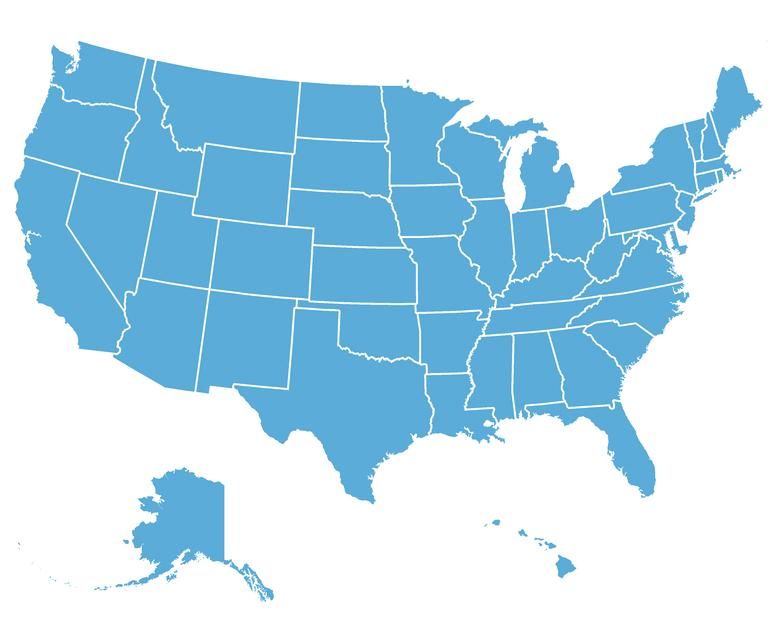
Executive Summary Overview:

      • 2013 was a year with challenging ups, downs and even shut downs
      • For many, especially the luxury market, growth continues a positive
        trend
      • This report presents the most comprehensive overview of the
        compensation puzzle in the spa and wellness industry to date
      • The respondents were a large mix of business types ranging from
        destination spas and resorts to the solo practitioner

      Five Key Take-Aways

      1.   Compensation remains the biggest opportunity and challenge in
           the industry as personnel costs are the largest slice of the expense
           pie. Compensation control makes the difference between operating
           in the red or in the black

      2.   Compensation confusion remains an issue due to the multiple
           payment and compensation plans. Commissions and definitions of
           employee versus independent contractor remain “fuzzy”

      3.   Issues that include Regulatory initiatives and State and Federal
           guidelines, can not be ignored

      4.   The size of spa and wellness facilities are shrinking in square
           footage. This trend was first reported in the 2013 DSA Retail Survey
           and is further supported in this survey

      5.   Commission splits are posing a potential “red flag” for profitability

      6.   We believe this to be the largest survey on compensation in our
           industry to date. It covers all regions of the country and most
           therapeutic disciplines.

www.dayspaassociation.com                  B
Survey Sponsors

          This survey would not be possible without the
          dedication of time and resources by our sponsors.

          Thank you all for making this incredibly important
          survey report available to the industry.

www.dayspaassociation.com           C
Table of Contents

                            Page     Description

                            A-B      Executive Summary
                            C        Survey Sponsors
                            1-4      Facility Information
                            5-7      Size and Revenue
                            8-11     Owners and Staff
                            12-15    Treatment Rooms, Payroll
                            16-22    Commissions, Gratuities
                            23-25    Retail Sales, Gift Cards
                            26-29    Labor Costs, Benefits
                            30       Solo/Single-Unit Overview
                            31       Multi-Unit Overview
                            32       Customize This Report

www.dayspaassociation.com
The Largest Compensation Snapshot
             on the Spa and Wellness Industry

          Total Number of Respondents – 1,103

          870 different Zip Codes

          Where there is a heavy density of Spa & Wellness
          practitioners, we received a comparable number of
          responses

www.dayspaassociation.com           1
Data:
      Most space is treatment and retail. Shrinking since
      2008.

              Take-away:
              Very little “white space” or non-revenue producing
              areas.

www.dayspaassociation.com           2
Data:
Data indicates trend toward individual
practice, single unit.
www.dayspaassociation.com 3Data:
Multi-unit facilities accounted for 14% of the survey.
Take-away:
Significant variety in single unit: mobile,
home based, 50,000 square foot unit.
www.dayspaassociation.com 4Data:
76% of reporting facilities are under 3,000 square feet.
Take-away:
Smaller locations are becoming more typical.
Comparison to 2013 Retail Report
– Smaller size is consistent
www.dayspaassociation.com 5Data:
64% have annual revenue of under $250,000
Take-away:
This is an industry of small businesses.
www.dayspaassociation.com 6Data:
Most facilities, regardless of size are adding very little
to the bottom line in gift certificates and gift cards.
Take-away:
Because gift certificates drive new clientele, they are a
great opportunity for increased revenue.
www.dayspaassociation.com 7Data:
The majority of owners also provide some services
within their business.
Take-away:
This is a potential red flag, as this can lead to burnout
and take away time from management duties.
www.dayspaassociation.com 8We defined full time as 30+ hours per
week
Data:
Majority of businesses have small staff numbers.
www.dayspaassociation.com 9Data:
Data supports and reinforces that the average facility
does not employ large numbers of personnel.
www.dayspaassociation.com 10Data:
More than half of survey respondents have up to 3
treatment rooms.
Take-away:
Small facilities are the trend.
www.dayspaassociation.com 11Take-away:
Spa and Wellness remains one of the few industries
utilizing multiple compensation methods.
www.dayspaassociation.com 12Data:
Weekly = 52 pay checks
Bi-weekly = 26 pay checks
Take-away:
Can you save money with bi-weekly payroll?
www.dayspaassociation.com 13Data:
The majority of payroll is prepared in-house.
Take-away:
This may be an opportunity for delegation, allowing
the owner more time to “work on the business, not
in the business.”
www.dayspaassociation.com 14Data:
Concierge staff are traditionally paid hourly.
Take-away:
New trends speak to tip pools and team based pay.
www.dayspaassociation.com 15Data:
The majority of facilities pay commission on
treatments only.
Take-away:
It is critical to know your product cost per treatment.
• Massage – negligible
• Facial – average 10%
• Botox – 50%+
www.dayspaassociation.com 16Data:
Commission rates above 40% make it difficult to be
profitable.
www.dayspaassociation.com 17Data:
Over 50% are not adjusting commission rates to reflect
discounted services.
Take-away:
Discounted services require an adjusted commission
rate.
www.dayspaassociation.com 18Data:
One third make up to $10 per hour.
One third make between $10-14 per hour.
One third make over $14 per hour.
Take-away:
At a base pay of $14 per hour, this equates to $28,000 per
year. This may be supplemented by Retail Commissions.
www.dayspaassociation.com 19Data:
The majority of facilities do not use a sliding scale
tied to the type of service.
Take-away:
This is an area for further exploration. This may
become an option as compensation strategies change.
www.dayspaassociation.com 20Data:
This is a tip driven industry.
Take-away:
Point of consideration: There is growth in the
no-tipping movement.
www.dayspaassociation.com 21Take-away:
If you do not report tip income it is a potential red flag
for taxing authorities.
www.dayspaassociation.com 22Take-away:
A significant part of our industry does not pay retail
commissions.
Comparison to 2013 Retail Report –
35% responded “No”
www.dayspaassociation.com 23Data:
A sales commission rate up to 10% is most common.
Take-away:
A sliding scale tied to performance is worthy of
consideration.
www.dayspaassociation.com 24Take-away:
A gift certificate or gift card is considered a
liability on your balance sheet until redeemed.
Why would you pay a commission on a
liability?
www.dayspaassociation.com 25If costs are above 46%, you are in
danger of not being profitable.
www.dayspaassociation.com 26Take-away:
Knowing and controlling labor costs = profitability.
www.dayspaassociation.com 27www.dayspaassociation.com 28
Take-away:
                            Anticipate change.

www.dayspaassociation.com          29
Based on the survey, we
conclude:
Tonya Typical:
• Owner/operator at one location
• 73% of respondents have total labor cost less than 45%
• Up to 3 treatment rooms, she provides some services
• Produces up to $250,00 in revenue
• Does her own payroll
• Accepts tips
• Staff are employees and independent contractors
www.dayspaassociation.com 30Based on 155 Multi-Unit
respondents, we conclude:
Marty Multiple:
• Roughly 53% have two locations – 11% have 11 or
more
• Over 35% have up to 9 treatment rooms – over 31%
have 10 or more
• 48% produced up to $500,000 in revenue
• 32% produced up to $2,000,000 in revenue
• 20% produced over $2,000,000 in revenue
• 42% of multi-unit owners still provide services
• Multi-unit operators are utilizing more independent
contractors to staff treatment rooms
www.dayspaassociation.com 31This survey is available to you, customized to fit your
business profile and will give you comparable data to
other businesses similar to yours
Click Here to Order Yours
It’s as easy as 1,2,3!
1. Download this form and print it out
2. Scan/email and return to
dsa@dayspaassociation.com or fax toll free to
855.344.8990
3. We will send you a customized report in PDF format
in just a few days
www.dayspaassociation.com 31Thank You!
Thank you and we hope the information in this
Trends Survey will help you build a profitable
business. Feel free to reach out the DSA and
IMSA any time for any reason. We're here to
help. Contact us at....
Allan Share
Day Spa Association and
Intl Medical Spa Association
952.283.1252
www.dayspaassociation.com 33You can also read


