2018 Global Report - Sustainable Development Solutions Network
←
→
Page content transcription
If your browser does not render page correctly, please read the page content below
2018 Global Report
This report was produced by the members of the SDG16 Data Initiative:

For more information on the SDG16 Data Initiative,
please visit www.SDG16.org
The SDG16 Data Initiative would like to thank
Marie-Hélène Rousseau for her excellent copy-editing and
Ursala Knudsen-Latta for the graphic design.
Published July 2018
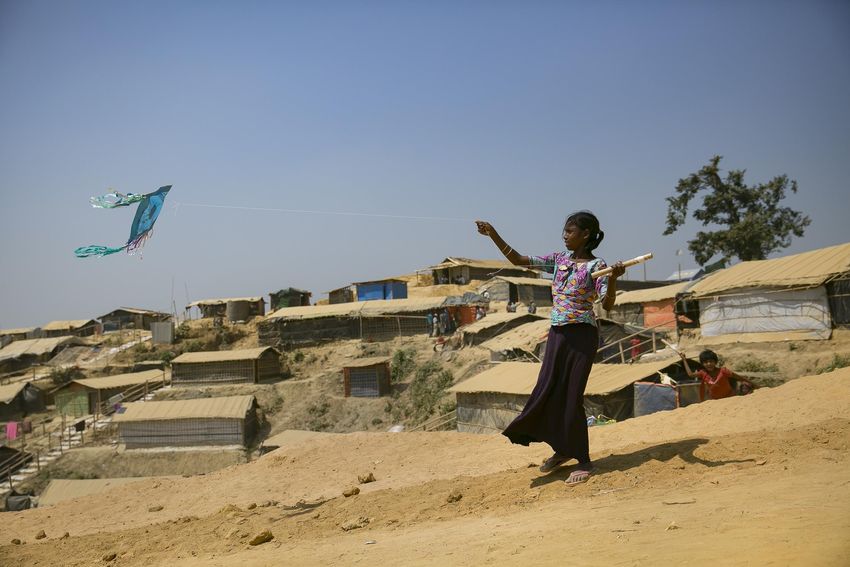
Cover photo: UN Women/Allison Joyce, Balukhali
Refugee Camp, Cox's Bazar, Bangladesh. March 8, 2018
Contents
Executive Summary ........................................................ 2
Peaceful Societies ............................................................ 4
  Violence Reduction Around the World ............................................................. 4
  Global Homicide Rate Trends, 2004-2016 ........................................................ 5
  Data Availability for 16.1 .................................................................................. 6
  Obstacles to Improved Data Coverage .............................................................. 6
  Promising Partnerships ...................................................................................... 8
Just Societies .................................................................... 9
  Rule of Law & Access to Justice Around the World ......................................... 9
  Rule of Law Performance & Changes ............................................................. 10
  Data Availability for Target 16.3 ..................................................................... 10
  Civil Justice Data Challenges .......................................................................... 11
  A Global Legal Needs Survey & Guidance ..................................................... 11
  World Justice Project General Population Poll Tunisia Country Profile ......... 13
  Adaptations & National Innovations ............................................................... 14
  Global use of legal needs surveys .................................................................... 15
  Remaining Obstacles & Pathway Forward ...................................................... 15
Inclusive Societies .......................................................... 17
  Political participation of refugees .................................................................... 17
  Data Availability and Limitations for 16.6 and 16.7 ....................................... 17
  Political participation of refugees .................................................................... 18
  Formal participation of refugees ...................................................................... 19
  Non-formal participation of refugees............................................................... 20
Notes .............................................................................. 22

Executive Summary
    Since its unanimous adoption three years ago by the United Nations’ (UN)
    Member States, the 2030 Agenda has made peaceful, just and inclusive societies
    a global development imperative, through Sustainable Development Goal 16
    (SDG16). Founded in the same year, the SDG16 Data Initiative (SDG16DI) is a
    consortium of 14 organizations dedicated to the implementation and open
    tracking of progress towards SDG16 targets.1
    The SDG16DI is pleased to present its second annual Global Report. The Global
    Report series aims to evaluate global progress towards realizing the 2030
    Agenda’s promise of peaceful, just and inclusive societies. The Global Report
    provides governments, UN officials, and civil society stakeholders with a
    resource to help understand progress on SDG16 targets and an evidence base for
    them to identify gaps and shortcomings in both implementing and monitoring
    SDG16.
    The 2017 Global Report covered all twelve targets, creating the critical baseline
    of available data necessary for future substantive analysis. The 2018 Global
    Report, prepared in anticipation the SDG16’s initial review at the 2019 High-
    Level Political Forum (HLPF), takes a deep-dive into the triune objectives of
    SDG16, peaceful societies, just societies and inclusive societies, through SDG16
    targets 16.1, 16.3, 16.6 and 16.7. Through this review, the 2018 Global Report
    aims to provide policymakers and civil society actors with pathways forward to
    improve both SDG16 implementation and data coverage.
    The 2018 Global Report illustrates some concerning trends in global progress
    toward peaceful societies. For example, the Report illustrates an uptick in the
    global homicide rate, one of the most essential indicators of peace, from 5.11 in
    2004 to 5.15 per 100,000 individuals in 2015-16. Additionally, 53 active armed
    conflicts were recorded globally in 2016, the highest number since 1946. Further,
    as the Report details, there remain major limitations to collecting globally
    comparable data on intentional homicide and conflict-related deaths, including
    fundamental issues of definitions and methodologies. However, the Report
    highlights innovative partnerships that are working to develop pragmatic
    solutions to these issues, such as the “Voluntary Supplemental Indicators for
    Goal 16 on inclusive, just and peaceful societies” organized by the Community
    of Democracies with the UN Development Programme and the Open
    Government Partnership.
    In terms of Just Societies, the 2018 Global Report found that one in three
    countries’ rule of law score declined in the last year on the Rule of Law Index,
    with the greatest number of countries seeing declines in the areas of fundamental
    rights and constraints on government powers.2 The area of civil justice remained
    stable, showing frustratingly little improvement. Global coverage for indicator
    16.3.1 – the proportion of victims of violence who reported their victimization –
    is available for only 37 countries. While data for indicator 16.3.2 – unsentenced
    detainees as a proportion of the overall prison population – is available for 204
    countries. As the Report details however, legal needs surveys can yield critically
    missing data, providing policymakers and civil society actors with a people-

2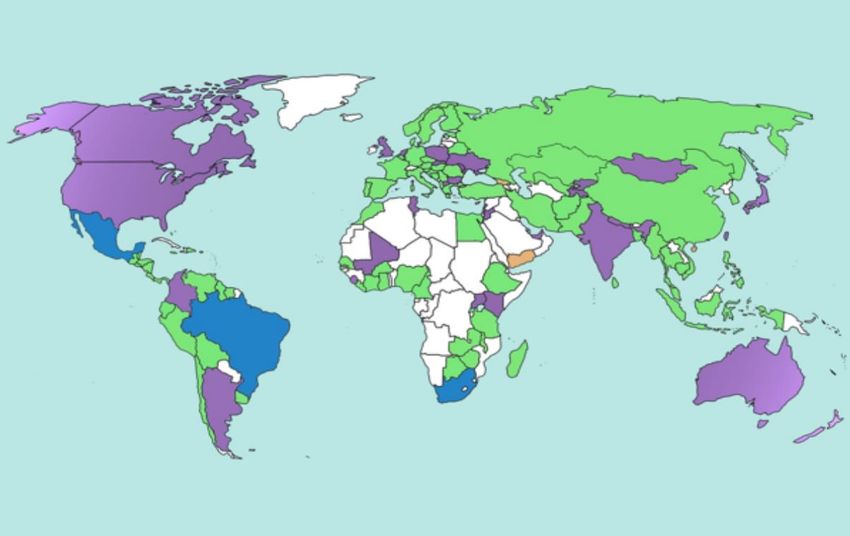
centred approach to understanding the frequency and range of legal problems, as
well as the diverse ways in which ordinary people navigate their countries’ legal
system. The Report highlights several such surveys including The World Justice
Project’s (WJP) General Population Poll (GPP) and the Hague Institute for
Innovation of Law’s (HiiL) Justice Needs and Satisfaction (JNS) surveys, as
reliable and pragmatic options to better understand the state of access to justice
globally.
The concluding section of the 2018 Global Report evaluates societal inclusivity
by delving into the political participation of refugees in view of targets 16.6 and
16.7, and current political debates on the rights of refugees and migrants. The
Report reflects on how migration and the political participation of refugees can
aid in developing effective, accountable, and transparent institutions, in addition
to responsive, inclusive, participatory and representative decision-making. The
Report offers an analysis of current formal and informal forms of political
participation open to refugees, offer recommendations to policymakers and civil
society on how to effectively support.
Overall, the 2018 Global Report illustrates that progress toward peaceful, just
and inclusive societies remains limited at best. The report highlights some of the
many gaps in available data for tracking SDG16 targets, but also offers innovate
approaches to filling them. Although it focuses on only a few targets, the Report
still underlines the critical nature of SDG16’s far-reaching and profound goal of
societal transformation. Achieving SDG16 will require unprecedented problem
solving and mobilization across all sectors, and the SDG16DI hopes that the
2018 Global Report provides inspiration to policymakers and civil society alike
as we gear up for the 2019 HLPF.

                                                                                      3
Peaceful Societies
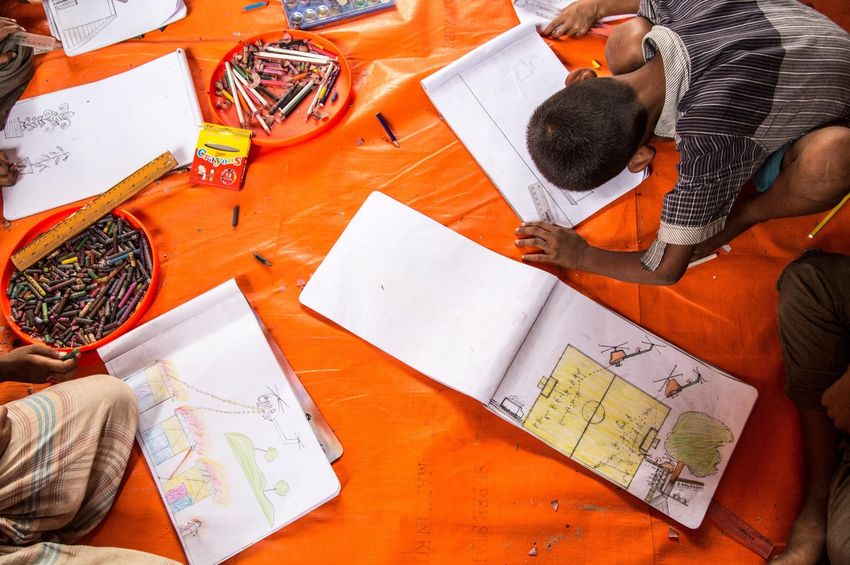
Rohingya children drawing pictures of what they witnessed in Burma. © Anna Dubuis /DFID.
Violence Reduction Around the World
For the first time since 2004, the global homicide rate increased, growing from
5.11 to 5.15 per 100,000 population in 2015-16, as shown in Figure 1 below.
This uptick in homicide rates signals growing insecurity, particularly in non-
conflict areas. Indeed, of the five countries with the highest violent death rates in
2016—Syria, El Salvador, Venezuela, Honduras, and Afghanistan—only two
experienced active armed conflicts during the reporting period. Globally, men
and boys accounted for 84 percent of the people who died violently in 2016;
87,300 women and girls made up the remaining 16 percent. These are the same
proportions as in 2015.
To some extent, this trend overlaps with the global pattern for armed conflict
violence, seen in Figure 2. Until the outbreak of the war in Syria, the world was
experiencing an unprecedented decline in the number of people killed in armed
conflict. Since 2011, however, this has changed, and we have seen an increase in
the number of people killed in armed conflict. In 2014, and for the first time
since 1989, over 100,000 battle-related deaths were recorded in a single year–and
this is a conservative estimate. In 2015, the figure declined slightly to
approximately 97,000 people, a positive trend that continued in 2016 and in
2017. This decline is driven primarily by a shift in the Syrian conflict.
4Global Homicide Rate Trends, 2004-2016
Homicide per 100,000 population
Homicides per 100,000
Figure 1 Global homicide rate per 100,000 habitants: trends 2004-2016. Source of data: Small Arms Survey (n.d.).
Database on Violent Deaths.
Global Battle Deaths Rate Trends, 1946-2016
Battle deaths per 100,000 inhabitants
25
20
Causalties per 100,000
15
10
5
0
Figure 2 Battle deaths per 100,000 inhabitants, yearly data from Lacina, Bethany, and Nils Petter Gleditsch.
"Monitoring trends in global combat: A new dataset of battle deaths." European Journal of Population/Revue
Européenne de Démographie 21.2-3 (2005): 145-166 and Pettersson, Therése and Kristine Eck (2018) Organized
violence, 1989-2017. Journal of Peace Research 55(4).
5While the number of battle deaths has recently declined, the world still counts a
larger number of active conflicts. In 2016, UCDP reports 53 active armed
conflicts worldwide - the highest number since 1946.3 These conflicts are
increasingly concentrated in the Middle East and Africa. This underscores the
fact that, while large swaths of the world have been freed from active armed
conflict, additional efforts are needed to spread these zones of peace. We also see
a trend towards more recurring armed conflicts – most of the armed conflicts
breaking out today are not new, but rather re-emerging ones. The UN’s renewed
commitment to preventing armed conflict is especially timely in this regard.4
Data Availability for 16.1
Official data on intentional homicide is produced by criminal justice and public
health systems and disseminated by a range of governmental agencies and
international organizations – such as the United Nations Office on Drugs and
Crime (UNODC) and the World Health Organization (WHO) – as well as civil
society organizations such as observatories on violence, conflict and crime. The
quality, coverage, and comprehensiveness of data on intentional homicide varies
widely across the world. Sophisticated and comprehensive data recording
systems are available in all high-income regions and several low- and middle-
income regions. Yet, in several parts of world, primary source data may not exist
at all. In 2016, no official statistics but only rough estimates of homicide rates
were available for 56 countries, more than half of which are in Sub-Saharan
Africa.
Data for Target 16.1 analysed here include a variety of sources. The Small Arms
Survey Database on Violent Deaths5 monitors various forms of lethal violence,
including intentional homicide, from a wide range of open sources that can be
used to monitor SDG 16.1.1.
The Uppsala Conflict Data Programme (UCDP) provides data on conflict-related
deaths with which to monitor SDG 16.1.2). UCDP collects data on direct battle
deaths for every country for every year. This data is updated regularly and
released each September. Data coverage is global, and includes every
independent state in the world. UCDP’s battle deaths data are based on a clear
and concise definition of armed conflict that distinguishes armed conflict from
other types of violence, and has been extensively vetted by the scientific
community.6
Data on the perception of safety (SDG 16.1.4) comes from Gallup World Poll
and covers 122 countries.7
Currently, there are no global comparable sources of data on the prevalence of
non-lethal violence (physical, psychological, and sexual violence). Data on these
issues are collected at the national level through crime victimization surveys and
household surveys that include questions on crime and security.
Obstacles to Improved Data Coverage
The international comparability of definitions and methodologies is one of the
most important limitations in collecting data on international homicide. Available
6data is generally produced for administrative purposes, in accordance with legal
definitions of intentional homicide and the implementation of rules for statistical
production that differ across countries. In 2015, UNODC released the
International Classification of Crime for Statistical Purposes, to promote
international comparability of statistical data. This document provides clear
guidelines on the types of intentional killing that should be included and
excluded in producing statistical data on intentional homicide.
At the national level, low data collection capacity, both in medium and low-
income countries, and in areas affected by armed conflict, represents another
limitation for tracking lethal violence. The challenge is demonstrated by the
baseline database8 compiled by the UN. As of July 2017, 96 states were unable to
provide one data point per year of country-produced, disaggregated data on
intentional homicides (Indicator 16.1.1) during the period 2010–15. More than
half of these states (52), including 19 in Africa, did not provide any data between
2013 and 2015, while others only produced scattered data points.9 Only about
half of the world’s countries can disaggregate homicide data by sex, and many
less by age and other characteristics. A major urban/rural capacity divide can also
be observed in providing such data. Finally, the paucity of homicide statistics
may reflect a lack of transparency on the part of the agencies designated to
collect this data, and suggests their reluctance to share high crime rates with the
public.
UCDP relies primarily on news reports to collect data on conflict-related deaths.
This method invariably produces conservative estimates, however, there is no
indication that the data is systematically biased. It is important to keep in mind
that the data are estimates, but since they are not collected through random
sampling, there is no way of calculating standard measures of sampling error.
The current methodology does not allow for data to be disaggregated by age, sex,
and cause. Additionally, the UCDP data do not include indirect deaths, and thus
only covers a subset of the ‘conflict-related’ deaths that the SDG 16.1.2 indicator
requests.
A full accounting of the conflict-related deaths should ideally include both
indicators. Indeed, research suggests that indirect deaths (for example those
occurring as a result of the effects of forced displacement, a breakdown of
infrastructure, disease, and malnutrition) far exceed direct deaths in most modern
armed conflicts.10 The Small Arms Survey is currently working on building a
knowledge base on indirect deaths and on how these can be counted.11
Indicator 16.1.4 – as many other in the entire SDG framework – is based on
surveys. Collecting survey data on reported experiences of violence and
perception of safety is essential monitoring the implementation of the SDGs.
However, significant limitations exist pertaining to the costs associated with the
periodical repetition of surveys, as well as the need for a rigorous methodology to
allow for international comparison. Moreover, further challenges arise in
countries affected by endemic violence or armed conflict, due to security and
logistical constraints.
7Promising Partnerships
Academia and civil society organizations can contribute to enhanced data
collection and analysis methods. They can highlight data gaps and provide
methodological support to aid the development of violence-related SDG global
indicators, and support requesting countries and regional organizations in
advancing on national and regional complementary indicators, as per para 35 for
Agenda 2030 (A/RES/70/1). Partnerships such as the SDG 16 Data Initiative can
support these efforts, which should also be enhanced through the use of
innovative technologies. Moreover, to ensure that SDG 16 indicators capture the
breadth and ambition of Goal 16, several organizations are also heeding the
explicit call in Agenda 2030 for developing supplemental and voluntary
indicators. One promising such initiative, spearheaded by the Community of
Democracies with active participation by the UN Development Programme and
the Open Government Partnership and drawing on the expertise of many SDG 16
DI partners, is the “Voluntary Supplemental Indicators for Goal 16 on inclusive,
just and peaceful societies.”12 This initiative aims to strengthen and uphold the
existing knowledge base about how to achieve peaceful, just, and inclusive
societies, and to ensure that this knowledge base informs the indicators used to
track SDG 16. To this end, the report suggests that a number of indicators that
are critical for understanding SDG 16, are currently not included in the official
SDG 16 indicator framework.
8Just Societies
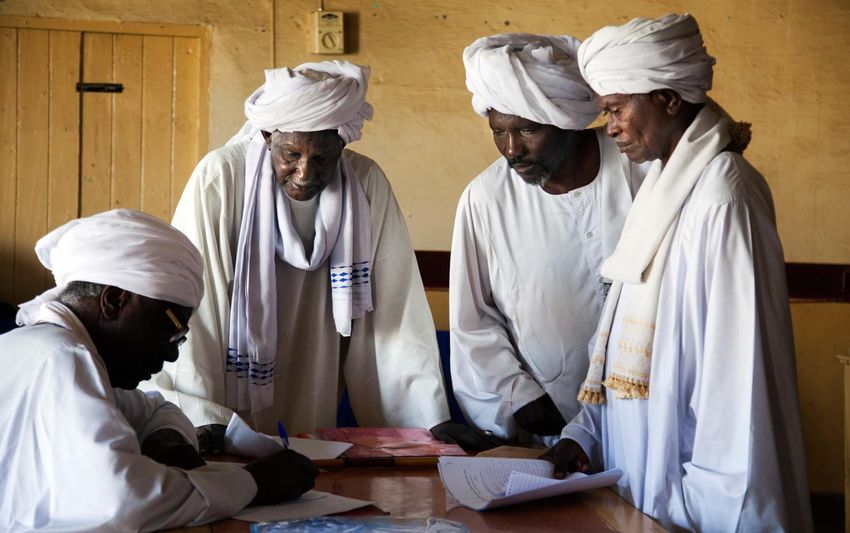
Human Rights workshop. © Albert González Farran/UNAMID.
Rule of Law & Access to Justice Around the World
According to available data for Target 16.3, rule of law and access to justice
continued to face significant challenges in the last year. The World Justice
Project’s (WJP) Rule of Law Index® 2017-2018 found that one in three
countries’ rule of law score declined in the last year, with the greatest number of
countries seeing declines in the areas of fundamental rights and constraints on
government powers.13 While performance in the area of civil justice remained
stable at the global level, the WJP’s Global Insights on Access to Justice study
shed light on the challenges faced by people navigating everyday legal problems
across 45 countries. The study found that, among those who experienced a legal
problem in the last two years, 1 in 6 (17%) have given up all action to resolve a
persisting legal problem; more than half (56%) said it was difficult or nearly
impossible to pay costs incurred to resolve the issue; and more than 1 in 5 (26%)
lost their job or relocated as a result of their legal problem.14
Data confirm that there is also need for greater legal protections, financing, and
global advocacy for those working to advance access to justice at the grassroots
level. Indeed, in the Global Legal Empowerment Network's 2017 Annual
Network Survey, 69% of respondents reported that legal empowerment work was
difficult or very difficult to conduct in their social and political context – up from
9Rule of Law Performance & Changes
This chart categorizes countries according to whether their overall 2017–2018 rule of law score is above or below the
median, and whether their score has improved, remained stable, or declined since 2016.
Figure 3: Chart adapted from WJP Rule of Law Index® 2017-2018 Report
60% in 2015 – and more than two thirds of those surveyed (68%) reported being
threatened for carrying out legal empowerment work.15 Financing remains one
of the biggest barriers towards progress on this agenda., Political commitments
and global attention towards access to justice and SDG 16, such as the 2017
World Bank Development Report, have not been met by necessary action
through scaled up funding.16 In the Global Legal Empowerment Network survey,
67% of the legal empowerment community noted that they have to make
financial cuts or they would not be able to operate in the coming year due to
funding sustainability concerns.17
Data Availability for Target 16.3
Country coverage for the official Inter-Agency Expert Group (IAEG) global
indicators for Goal 16.3 varies. Data for IAEG indicator 16.3.1 – the proportion
of victims of violence who reported their victimization – is available for only 37
countries and has not increased since 2017. Data for IAEG indicator 16.3.2 –
unsentenced detainees as a proportion of the overall prison population – is
available for 204 countries, with data for at least 76 countries derived from the
Institute for Criminal Policy Research’s World Prison Brief.18
10The SDG16 Data Initiative’s complementary indicators for Target 16.3 measure
the accessibility, affordability, impartiality, and effectiveness of civil justice
systems (16.3.3), as well as the extent to which countries’ criminal justice
systems are effective, impartial, and respect due process (16.3.4). The coverage
of these indicators has remained steady at 113 countries since 2016 These
indicators are from the WJP Rule of Law Index, which relies on surveys of more
than 110,000 households and 3,000 experts to measure access to justice as
experienced by ordinary citizens. The forthcoming edition of the Index, to be
published in 2019, will expand its country coverage for complementary
indicators 16.3.3 and 16.3.4 to 125 countries.
Civil Justice Data Challenges
While there is growing recognition that access to justice is foundational to
economic and social development – due in large part to the inclusion of Goal 16
in the SDGs – much of the conversation around policy planning, budgeting, and
performance indicators has focused on criminal justice, as demonstrated by the
current official indicators endorsed by the IAEG for Target 16.3. However, a
growing body of literature shows that a majority of people’s legal problems are
civil, rather than criminal problems.19,20 In 2016, UN Member States agreed that
an indicator focused on “access to civil justice” should be considered as a more
meaningful measure of Target 16.3.21
Many governments have attempted to understand and address civil legal issues
by relying on administrative data within the court system, such as the amount of
time required to resolve particular legal disputes.22 Such an approach adopts a
narrow definition of access to justice, and fails to capture the experience of
individuals who seek justice from state administrative processes, civil society
organizations, and informal mechanisms, or the experience of those who choose
not to take their legal problems to a third party for mediation or adjudication.
Legal needs surveys, on the other hand, provide policymakers and advocates with
a people-centered approach to understanding the frequency and range of legal
problems, as well as the diverse ways in which ordinary people navigate their
legal problems.
While legal needs surveys can provide a more holistic understanding of the role
of justice in social and economic development, carrying out these studies can
prove challenging in countries with limited financial resources and technical
capacity. Furthermore, the more than 50 legal needs studies conducted over the
last 25 years have focused primarily on developed countries and vary greatly in
terms of content and methodology.23 Therefore, such surveys have been limited
in their ability to provide benchmarks for understanding public access to civil
justice across a large number of countries, and to contribute to the development
of robust global indicators.
A Global Legal Needs Survey & Guidance
To address the conceptual and methodological challenges to meaningfully
measuring and tracking access to civil justice under Target 16.3, the Open
Society Justice Initiative (OSJI) and the Organization for Economic Co-operation
11and Development (OECD) have convened an advisory stream of expert
stakeholders24 to produce methodological guidance on legal needs surveys and to
refine effective survey-based measures for civil justice. This advisory stream
identified and documented the essential components of legal needs surveys, the
definition of justiciable problems, and good practices for designing surveys that
capture information about forms of legal and social support, resolution
mechanisms, and other key impacts and outcomes associated with experiencing a
legal problem. Slated for publication in 2018, this methodological guidance is
intended to assist policy makers, statisticians, and advocates seeking to use legal
needs surveys to better monitor target 16.3 and strengthen measures of access to
civil justice.
Informed by the work of the advisory stream and with the support of OSJI, in
2016 the WJP began a two-year process to develop, pilot, and refine a dispute
resolution module for inclusion in its global General Population Poll (GPP).
Drawing on the advisory stream’s extensive review of legal needs surveys
conducted over the last 25 years and building on what is known in the literature
as the “Paths to Justice” tradition, the dispute resolution module of the GPP was
designed to capture globally comparable data on how ordinary people deal with
their legal problems. This includes questions on the most common legal conflicts,
respondents’ assessment of both formal and informal resolution processes, and
the experiences of people who did not seek legal assistance or who were unable
to resolve their problem. In addition, the dispute resolution module also gathers
information on citizens’ legal confidence and capability, whether legal problems
were individual or affected a community of people, as well as the impact of legal
problems on their lives.
The WJP’s pilot dispute resolution survey module was administered to 1,000
households in 61 countries in 2016, and the resulting pilot data were vetted in a
series of in-country and virtual meetings with justice measurement specialists and
local experts from 17 countries. Following the pilot and vetting process in
continued consultation with the OSJI and OECD advisory stream, the WJP
refined the dispute resolution module of the GPP, which was administered in 45
countries between July and December 2017. In January 2018, these data were
published in the WJP’s Global Insights on Access to Justice report.
Global Insights on Access to Justice represents the first-ever effort to capture
comparable data on legal needs and public access to civil justice on a global
scale, representing the voices of more than 46,000 people across the 45 countries
surveyed in 2017. Survey data are presented in the report as country profiles,
illustrating the paths followed by ordinary people navigating legal problems in
each country. In addition to facilitating cross-country comparisons and providing
benchmarks for understanding legal needs and public access to civil justice
across a large number of countries, the GPP dispute resolution module itself can
serve as a model for governments, researchers, and civil society organizations
seeking to conduct more in-depth and tailored assessments.
12World Justice Project General Population Poll Tunisia Country Profile
Violence Action or Inaction
Incidence of Legal Problems
5% Reported that one party 14% Turned to an authority or
46% Experienced a legal problem in
resorted to physical violence third party to help resolve the
the last two years
problem
Incidence by type of problem: 86% Did NOT turn to an
4% Accidental illness & injury authority or third party to help
2% Citizenship & ID resolve the problem
12% Community & natural resources
29% Consumer
3% Debt
4% Employment
1% Education Done Ongoing
5% Family 51% Have fully resolved or are 49% Have not resolved the
14% Housing done with the problem problem
9% Land
Manner in which the problem was
1% Law enforcement
resolved:
4% Money
52% Problem sorted itself out
10% Public services
8% Decision by third party or
authority
21% Gave up or moved away
19% Other
Duration
11.35 Months, Average time to
solve the problem
Financial Difficulty
10% Reported that it was difficult Satisfaction
or impossible to pay costs 26% Are satisfied with the
incurred to resolve problem process so far
Satisfaction Legal Capability
50% Are satisfied with the 40% Knew where to get advice
outcome 34% Were confident they could
achieve a fair outcome
33% Got all the expert help they
Legal Capability wanted
▪ 51% Knew where to get
advice
▪ 47% Were confident they
could achieve a fair outcome
▪ 44% Got all the help they
Hardship
30% Experienced a hardship as a result of their legal problem
Type of hardship:
22% Stress related illness
9% Relationship breakdown
13%Relocated or lost employment
1% Problems with alcohol or drugs
Figure 4 Tunisia Country Profile adapted from “Global Insights on Access to Justice: Findings from the World Justice Project General
Population Poll in 45 Countries” 2018
13Adaptations & National Innovations
While efforts to study and measure access to civil justice at the global level are
important in the context of SDG indicator development, there are a number of
important adaptations and innovations at the national and sub-national level.
From 2014 to 2017, the Hague Institute for Innovation of Law (HiiL) has
conducted a series of Justice Needs and Satisfaction (JNS) surveys in Yemen,
Mali, Indonesia, Jordan, Kenya, Lebanon, the Netherlands, Ukraine, Uganda,
United Arab Emirates and Tunisia.25 The JNS surveys are administered to a large
number of households – ranging from 4,000 to 8,000 per country – and the types
of legal problems, sources of help, and resolution mechanisms are tailored to the
country-specific context. These surveys also explore additional aspects of
peoples’ justice surveys that a shorter survey module cannot, including
opportunity costs, stress and emotions, procedural justice, interpersonal justice,
informational justice, distributive justice, restorative justice, functionality and
transparency.
Particularly noteworthy in the context of national planning and commitments
under Target 16.3 are a number of government-led strategies to broaden their
justice survey work. Similar to the WJP’s strategy for incorporating a dispute
resolution module into its annual GPP survey, statistical agencies are piloting
legal needs modules general-interest surveys that are already ongoing, including
Statistics South Africa, the Kenya National Bureau of Statistics, Indonesia’s
Planning Agency, and Colombia’s National Planning Department.26
Governments are also investing in stand-alone legal needs surveys – such as the
Justice Gap Survey conducted by the U.S Legal Services Corporation in 2017 –
as are philanthropic organizations funding studies in Macedonia, Moldova,
Mongolia, Nepal, Sierra Leone, and Ukraine.
Perhaps most importantly, legal needs survey data are being used to inform
governments’ policy and planning. Legal needs survey data have been used for
better designing legal aid in Ukraine and South Africa.27 Argentina’s Ministry of
Justice and Human Rights is working to develop indicators on access to civil
justice to inform priorities and legal service delivery. Colombia’s Department of
National Planning is using data collected from the justice needs module of its
National Life Quality Survey to shape the justice chapter of its national
development plan and for approximately half of the indicators in its National
Index on Effective Access to Justice.28
14Global use of legal needs surveys
▪ Stand-alone national survey
▪ Module in national survey
▪ WJP General Population Poll
▪ Other notable survey
Figure 5 Global use of legal needs surveys adapted from Open Society Foundations “Strengthening Access to Civil
Justice with Legal Needs Surveys” April 2018
Remaining Obstacles & Pathway Forward
The tremendous amount of work on the development, implementation, and use of
legal needs surveys to-date offers a promising approach to understanding civil
justice issues from a people-centred perspective. Despite the achievements
discussed in this chapter, there is still much work to be done. First, more legal
needs surveys are needed to capture up-to-date data from as many countries as
possible. The WJP plans to administer its GPP dispute resolution module in more
than 60 countries this year, bringing the country coverage for its global study to
more than 100 countries by 2019. HiiL has additional JNS studies planned for
Bangladesh, Nigeria, and Rwanda. Governments are exploring full legal needs
surveys and civil justice-focused modules in the Municipality of Florence, the
United States, and South Korea.
Second, more data is needed on the legal needs and justice journeys of vulnerable
and marginalized populations, including women, minorities, migrants, and rural
populations, among others. Meta-analyses of legal needs studies have found that
vulnerable groups are more likely to experience legal problems, that legal
problems beget further legal problems, and that inequality in access to justice
disproportionately affects already vulnerable populations.29 Having the data
necessary to understand and address the ways in which justice issues impact the
economic, social, and physical wellbeing of populations is vital to achieving a
number of SDGs beyond Goal 16.
15Third, in the context of the SDG indicator framework, more work is needed to
develop simple, actionable, and statistically sound indicators based on legal
needs survey data. While legal needs surveys have traditionally served as a
policy diagnostic, several groups are testing global indicators based on legal
needs survey data. The OECD and OSJI’s forthcoming methodological guidance
explores principles to guide the development of potential civil justice indicators
for Target 16.3, and documents different approaches for measuring levels of
unmet legal need. The WJP is currently testing the viability of more than 100
question-level and composite indicators that can be drawn from its dispute
resolution survey module, as well as indicators to assess disparities in access to
justice among different populations. The Pathfinders for Peaceful, Just and
Inclusive Societies’ Task Force on Justice has formed a working group to provide
a new assessment on the size of the justice gap globally. This “Justice Gap
Working Group” is currently conducting an audit of available data sources –
including legal needs surveys, victimization surveys, administrative data, and
composite indicators, among others – that can provide a multifaceted update to
the UN Commission on Legal Empowerment of the Poor’s 2008 assessment that
4 billion people live outside the protection of the law.
With the 2019 High Level Political Forum providing a key opportunity for
governments to review their commitments to Target 16.3, we expand the use of
legal needs surveys and civil justice indicators not as an end in and of
themselves, but rather tools for informing better, more targeted action. The fourth
and final challenge, therefore, is advancing more effective funding,
measurement, and models to deliver access to justice. Independent civil society
actors have a valuable role to play. While a diverse coalition of actors can
advance financing and advocacy efforts – from the OECD making the case for
investment,30 to the Justice for All 2030 campaign seeking funding and
protections for grassroots justice defenders – UN member states must ultimately
develop, implement, and monitor national action plans to ensure equal access to
justice for all.
16Inclusive Societies
Timor-Leste Holds Second Round of Presidential Election. © UN Photo/Bernardino Soares.
Political participation of refugees
In view of targets 16.6 and 16.7, this chapter reflects on how migration and the
political participation of refugees can aid in achieving effective, accountable, and
transparent institutions, in addition to responsive, inclusive, participatory and
representative decision-making. Specifically, this short analysis aims to address
the question of how the political participation of refugees contributes to building
more effective, accountable and transparent institutions. as a whole?
For the sake of clarity, we refer to the UN 1951 Convention Relating to the
Status of Refugees that defines a “refugee” as someone who, “owing to well-
founded fear of being persecuted for reasons of race, religion, nationality,
membership of a particular social group or political opinion, is outside the
country of his nationality and is unable or, owing to such fear, is unwilling to
avail himself of the protection of that country; or who, not having a nationality
and being outside the country of his former habitual residence as a result of such
events, is unable or, owing to such fear, is unwilling to return to it.”31
Data Availability and Limitations for 16.6 and 16.7
The two official indicators for Target 16.6 only capture limited aspects of its
lofty goals. 16.6.1 tracks primary government expenditures as a proportion of
17original approved budget, by sector, budget code, or similar category. While
budget transparency and efficiency are important, especially when moving
beyond planning stages into expenditure, this metric fails to capture real
institutional transparency or accountability. To monitor the 2030 Agenda’s call
for people-centred accountability, additional indicators are required, such as the
World Bank’s Global Indicators of Regulatory Governance, which assess the
transparency of rulemaking processes and the ease with which various
stakeholders can influence the formulation of those regulations.
Target 16.7 calls for “responsive, inclusive, participatory and representative
decision-making at all levels.” However, its indicators are too narrow to
meaningfully reflect progress. For example, indicator 16.7.1 focuses on the
quantitative diversity of public institutions, however, equal representation may
not always translate into influence. Simply increasing proportions of
marginalised groups employed in public institutions such as parliaments, does
not necessarily lead to increased influence over public policy or other outcomes.
For example, an institution may hastily hire female clerks in an effort to foster
greater diversity, but so long as the decision makers remain men, the institution
has in fact made very minimal progress on inclusivity. Therefore, it is critical to
compliment this indicator with other indicators that can capture the degree of
influence marginalized groups can have within the respective institutions.
Indicator 16.7.2 refers to the percentage of the population that believes that
decision-making is inclusive and responsive. This is difficult to aggregate
because of varying individual interpretations of ‘inclusiveness’ and
‘responsiveness.’ International Institute for Democracy and Electoral Assistance
(International IDEA) and Varieties of Democracy (V-Dem) offer two
complementary indicators of Target 16.7- the percentage of seats held by women
in parliament, and power distributed by social group respectively.
Political participation of refugees
In April 2018, International IDEA published a report titled “Political
participation of refugees: bridging the gaps” complemented by eight different
case studies.32 This chapter is an adapted excerpt from the report. The report is a
comparative analysis of eight host countries (Germany, Kenya, Lebanon, South
Africa, Sweden, Turkey, Uganda and the United Kingdom), and five countries of
origin (Afghanistan, the Democratic Republic of the Congo (DRC), Somalia,
South Sudan and Syria). Methodologically, the report borrows from a wide array
of secondary legal, normative and scholarly sources, but is also buttressed by a
comparative set of data stemming from surveys and questionnaires with refugees
themselves in all the eight host countries cited above. The report’s main objective
is to explore challenges and opportunities related to formal and non-formal
political participation of refugees in their host and origin countries. Among
formal mechanisms of participation in host countries, the report examines issues
such as citizenship and naturalization, and access to electoral rights and political
parties. The report also examines out-of-country voting vis-à-vis the refugees’
countries of origin. Further, the report analyses non-formal aspects of political
engagement by exploring the refugees’ role in, and access to civil society,
18grassroots initiatives, consultative bodies, as well as their general transnational
political activism. The report concludes with a number of recommendations that
are sufficiently detailed so as to be actionable, but also holistic enough to speak
to all the relevant case studies. For example, governments in host countries are
encouraged to implement their respective commitments to article 34 of the 1951
Refugee Convention on naturalization as a lasting solution for refugees.
Moreover, a lasting solution for refugees is as one of the preconditions to ensure
greater political engagement. The report urges local authorities in such countries
to do more to implement joint programmes with civil society aimed at
empowering refugees. Governments in countries of origin are encouraged to
build a legal framework for out-of-country voting, to explore means to facilitate
such a process, as well as to conduct outreach with their diaspora communities to
collaborate on issues such as civic education and voter information.
Formal participation of refugees
The public debate on refugees normally focuses on immediate humanitarian and
security concerns, perhaps stretching to legal perimeters of their circumstances,
such as whether they should be legally allowed to reside in a host country. While
security and humanitarian concerns are indeed of acute relevance for refugees, it
is also important that we explore ways for them to be able to voice their political
concerns.
The voting process is one of the main mechanisms for the political participation
of refugees. The eight host countries examined in International IDEA report is
employ various legal frameworks and practices in regard to voting rights for
refugees. In some (such as the UK, Germany, Sweden), a person claiming asylum
can obtain refugee status by proving they have a well-founded fear of persecution
in their home countries. The same person will then be able to apply and obtain
the citizenship of the host country, providing they have resided in that country for
a number of years.
In other countries, including Uganda, South Africa, and Turkey, persons claiming
asylum will also be able to obtain refugee status providing there is a well-
founded fear of persecution back home. However, the recourse to citizenship and
naturalization in such countries is extremely challenging. Regardless of the
duration of their stay in the host country, refugees will not be able to obtain a
new citizenship there.
In reference to the SDG16 targets, it is clear that an institution’s ability to be
responsive, inclusive, and representative is closely tied with how effective,
accountable, and transparent they are in their decision-making. The countries that
offer a path to citizenship for asylum seekers and refugees tend to be more
inclusive politically, being that citizenship is the main precondition to gaining the
right to vote. Countries that do not offer a clear path to citizenship often end up
with communities of refugees who are stranded in legal limbo, unable to engage
politically with their host country, or their country of origin.
The question of citizenship and naturalization is directly linked to the ability of
refugees to cast their vote in local and provincial elections. Article 34 of the 1951
19Refugee Convention requires that the ‘Contracting States shall as far as possible
facilitate the assimilation and naturalization of refugees. They shall in particular
make every effort to expedite naturalization proceedings and to reduce as far as
possible the charges and costs of such proceedings.’ Similarly, the Zero Draft of
the Global Compact on Refugees, which was developed as a follow-up to the
2016 New York Declaration for Refugees and Migrants, refers to the granting of
permanent residence or naturalization for refugees as durable solutions in those
cases where repatriation or resettlement are not viable options.
Out of the eight countries analysed in the report, only Sweden allows non-citizen
refugees with three or more years of uninterrupted residence to vote in local and
provincial elections. However, in Sweden also a refugee must have obtained the
citizenship of the host country if they are to be able to vote in their national
elections.
Similarly, countries of origin employ different practices in allowing refugees to
cast out-of-country votes in their country of origin. Some countries have
undertaken considerable efforts to ensure that there is an out-of-country voting
(OCV) legal framework in place that enables the diaspora to cast their vote.
Afghanistan is a case in point. In its first democratic elections in 2004,
Afghanistan made extensive efforts to engage Afghan refugees living in
neighbouring Iran and Pakistan. Such efforts, however, were not continued in
following elections in 2009 and 2014. Other countries, such as Syria, also enable
their diaspora to vote in home elections, such as their 2014 elections. However,
the Syrian conflict was well underway in 2014, casting doubt on the fairness of
OCV voting. These doubts were confirmed when it was announced that the
Syrian diaspora could only cast their votes in Syrian embassies, such as the one
in Lebanon. However, refugees who have fled from Syria may fear of
ramifications if presenting themselves at Syrian embassies, the majority of out-
of-country votes were cast in favour of Bashar Al Assad.33 Other countries with
large refugee communities abroad often do not make efforts to accommodate
voting for them, or do not have a legal framework in place. The reasons are
manifold, from political and ideological, to financial and logistical. The first step
to tackling this issue is for countries of origin to establish a legal framework for
OCV. It is only upon setting up such a framework that the country of origin may
make meaningful efforts to reach out to diaspora communities.
Non-formal participation of refugees
When there are no avenues for formal political participation, refugees may rely
on less formal means of engagement to make their voices heard. In many host
countries, they may refer to networks of associations, religious and non-religious
charities, and civil society to seek daily assistance and advocacy for their rights.
In some host countries, refugees may participate in so-called consultative bodies,
which are aimed at fostering structured dialogue between immigrant groups and
governments, particularly at the local level. This issue figured prominently in the
debate preceding the adoption of the Council of Europe’s 1992 Convention on
the Participation of Foreigners in Public Life at Local Level. Article 5 of this
Convention provides that contracting states should: ‘encourage and facilitate the
20establishment of consultative bodies or the making of other appropriate
institutional arrangements for the representation of foreign residents by local
authorities in whose area there is a significant number of foreign residents’. In
Germany, for example, many states have created consultative bodies whose
membership is comprised of German citizens, as well as refugees and migrants of
various communities. Through these bodies, they are able to advocate for the
interests of migrant communities at the local level, and in doing so they offer
them a direct channel to decision-making structures.
Without avenues for formal political engagement, participation in civil society
organizations (CSOs) also offers a degree of empowerment for refugees, as well
as a platform from which to make their voices heard. Participation in CSOs can
also serve as an important means of integration into the host society by providing
opportunities to build bridges between the refugee population and local
communities. In Sweden, for example, refugees have established CSOs to
advocate for political inclusion and provide capacity-building for young refugee
leaders. An illustrative example is the Young Republic, 34 a youth organization
working to empower young Syrians, and foster democratic participation, civic
engagement, and social inclusion in their host communities.
In Turkey, on the other hand, there are a number of Syrian-led or Syrian-focused
CSOs and NGOs that are mainly focused on closing the gaps in government
provision of long-term needs such as civic and political participation. Syrian-
German NGO, Citizens for Syria, lists 67 NGOs that have headquarters or offices
in Turkey and work in the areas of health, development, politics, emergency
relief, and the media.
The internet and social media play a crucial role in facilitating the “transnational
activism” and social movements of diaspora communities. With these tools,
refugees can have a global reach regardless of their legal status in their host
country. Through their communities and networks, refugees are thus able to
make their voices heard, and advocate for certain issues either in their host
country, or their country of origin. For instance, Afghan refugees in the UK
usually address Afghan political issues at informal gatherings and other
initiatives that may take place through social media. The use of social media and
online platforms, especially by younger generations of Afghan refugees, has
played an important role in keeping abreast of the latest political developments in
Afghanistan, and engaging in political debates in both the UK and Afghanistan.
21Notes
1. The SDG16DI members are the Global Forum for 14. Chapman, Peter and Alejandro Ponce. “How Do
Media Development, Governance Data Alliance, we Measure Access to Justice? A Global Survey of
Institute for Economics and Peace, International Legal Needs Shows the Way.” Open Society
IDEA, Namati, Open Society Foundations, Peace Foundations. 2018.
Research Institute Oslo, Results for Development, https://www.opensocietyfoundations.org/voices/ho
Saferworld, Small Arms Survey, Sustainable w-do-we-measure-access-justice-global-survey-
Development Solutions Network, TAP Network, legal-needs-shows-way
Transparency International, and the World Justice 15. Namati. 2017 Annual Network Survey Results.
Project. 2018. https://namati.org/wp-content/uploads/
2. World Justice Project. “World Justice Project Rule 2018/06/2017-Annual-Network-Survey.pdf
of Law Index®2017-2018.” 2018. 16. Vivek, Maru. “Only the Law Can Restrain
https://worldjusticeproject.org/our-work/wjp-rule- Trump.” Foreign Policy. 2017.
law-index/wjp-rule-law-index-2017-2018. http://foreignpolicy.com/2017/03/09/only-the-law-
3. Uppsala Conflict Data Programme, Number of can-restrain-trump-legal-aid-barefoot-lawyers/
Conflicts, see http://ucdp.uu.se/ 17. Namati. 2017 Annual Network Survey Results.
4. See the UN and World Bank joint Pathways for 2018. https://namati.org/wp-content/uploads/
Peace report: https://openknowledge. 2018/06/2017-Annual-Network-Survey.pdf
worldbank.org/handle/10986/28337 18. United Nations Office on Drugs and Crime.
5. Available online at “Unsentenced Detainees.” 2016.
http://www.smallarmssurvey.org/tools/interactive- https://dataunodc.un.org/crime/unsentenced-
map-charts-on-armed-violence.html detainees.
6. See for instance the Human Security Report 19. Pascoe Pleasence, Balmer, Nigel J. and Sandefur,
Project reports: http://www.hsrgroup.org/ Rebecca L. “Paths to Justice: A past, resent, and
7. Available online at http://www.gallup.com/ future roadmap.” London: UCL Centre for
services/170945/world-poll.aspx Empirical Legal Studies, 2013.
8. Available online at http://www.nuffieldfoundation.org/sites/default/fil
https://unstats.un.org/sdgs/indicators/database/ es/files/PTJ%20Roadmap%20NUFFIELD%20Pub
9. UN Stats, “SDG Indicator Global Database.” New lished.pdf.
York: United Nations. Accessed May 2018. 20. Open Society Justice Initiative and World Bank
https://unstats.un.org/sdgs/indicators/database/ Group. "Public access to effective and just dispute
10. Gates, S., Hegre, H., Nygård, H. M., & Strand, H. resolution: An additional indicator to measure
“Development consequences of armed conflict.” Sustainable Development Goal 16.3." 2016.
World Development, 40(9), 1713-1722. 2012 http://deliver2030.org/wp-content/uploads/
11. Alda, E. & McEvoy, C. “Beyond the battlefield.” 2016/03/Technical-Brief-Public-access-to-
Geneva: Small Arms Survey. 2017 effective-and-just-dispute-resolution.pdf.
http://www.smallarmssurvey.org/armed- 21. United Nations Economic and Social Council.
violence/conflict-armed-violence/broader-impacts- "Report of the Inter-agency and Expert Group on
of-armed-conflict.html Sustainable Development Goal Indicators." 2016.
12. Available online at: http://www.community- https://unstats.un.org/unsd/statcom/48th-
democracies.org/democracy-development/ session/documents/2017-2-IAEG-SDGs-E.pdf.
13. World Justice Project. “World Justice Project Rule 22. Pleasence, Pascoe and Nigel Balmer. “Legal
of Law Index®2017-2018.” 2018. Needs Surveys and Access to Justice: A Guidance
https://worldjusticeproject.org/our-work/wjp-rule- Document.” Forthcoming 2018.
law-index/wjp-rule-law-index-2017-2018 23. Ibid.
24. Lead authors of the forthcoming “Legal Needs
Surveys and Access to Justice: A Guidance
Document” are Professor Pascoe Pleasence and
Nigel Balmer of the University College of London
(UCL) along with the Open Society Justice
Initiative (OSJI) and the Organization for
22Economic Co-operation and Development
(OECD). Expert input has been provided by
Departamento Nacional de Planeación, Colombia;
the Hague Institute for Innovation of Law (HiiL);
Instituto Nacional de Estadística y Geografía,
México; Instituto Nacional de Estatística, Cabo
Verde; Law and Justice Foundation of New South
Wales, Australia; Ministerio de Justicia y
Derechos Humanos, Argentina; Statistics South
Africa; United Nations Development Programme
(UNDP); United States Department of Justice;
World Bank; and the World Justice Project (WJP).
25. Hague Institute for Innovation of Law (HiiL).
“Improving lives by measuring justice.”
http://www.hiil.org/audiences/justice-needs-
satisfaction-tool
26. Open Society Foundations. “Strengthening Access
to Civil Justice with Legal Needs Surveys.” 2018.
https://www.opensocietyfoundations.org/sites/defa
ult/files/strengthening-access-to-civil-justice-legal-
needs-surveys-20180409.pdf
27. Ibid.
28. Departamento Nacional de Planeación de
Colombia. Índice de Acceso Efectivo a la Justicia.
http://dnpsig.maps.arcgis.com/apps/Cascade/index.
html?appid=b927b2fe6f4066aec88581d6873e
29. Pleasence, Pascoe. “‘Legal Need’ and Legal Needs
Surveys: A Background Paper.” East Sussex:
Pascoe Pleasence Ltd.,2016
30. OECD. “Access to Justice.”
http://www.oecd.org/gov/access-to-justice.htm
31. UNHCR “Convention and Protocol Relating to the
Status of Refugee” 1951, accessed on 24 June
2018.
32. Available online at: https://www.idea.int/
publications/catalogue/political-participation-
refugees-bridging-gaps
33. The Guardian “Syrians in Lebanon battle crowds
to vote for Bashar al-Assad”, 28 May 2014,
accessed on 24 June 2018; The Guardian “Bashar
al-Assad wins re-election in Syria as uprising
against him rages on”, 4 June 2014, accessed on
24 June 2018.
34. Available online at http://theyoungrepublic.org/
23You can also read


