A Mediterranean basin without a Mediterranean climate? - Climate risk and response: Physical hazards and socioeconomic impacts Case study May 2020
←
→
Page content transcription
If your browser does not render page correctly, please read the page content below
Climate risk and response: Physical hazards and socioeconomic impacts

A Mediterranean
basin without
a Mediterranean
climate?
Case study
May 2020

McKinsey Global Institute

Since its founding in 1990, the McKinsey     innovation, and urbanization. Recent        partners and industry and management
Global Institute (MGI) has sought to         reports have assessed the digital           experts. The MGI Council is made
develop a deeper understanding of the        economy, the impact of AI and automation    up of leaders from McKinsey offices
evolving global economy. As the business     on employment, income inequality,           around the world and the firm’s sector
and economics research arm of McKinsey       the productivity puzzle, the economic       practices and includes Michael Birshan,
& Company, MGI aims to provide leaders       benefits of tackling gender inequality,     Andrés Cadena, Sandrine Devillard,
in the commercial, public, and social        a new era of global competition,            André Dua, Kweilin Ellingrud,
sectors with the facts and insights          Chinese innovation, and digital and         Tarek Elmasry, Katy George, Rajat Gupta,
on which to base management and              financial globalization.                    Eric Hazan, Acha Leke, Gary Pinkus,
policy decisions.                                                                        Oliver Tonby, and Eckart Windhagen.
                                             MGI is led by three McKinsey & Company      The Council members help shape the
MGI research combines the disciplines of     senior partners: James Manyika,             research agenda, lead high-impact
economics and management, employing          Sven Smit, and Jonathan Woetzel.            research and share the findings with
the analytical tools of economics with       James and Sven also serve as co-chairs      decision makers around the world. In
the insights of business leaders. Our        of MGI. Michael Chui, Susan Lund,           addition, leading economists, including
“micro-to-macro” methodology examines        Anu Madgavkar, Jan Mischke,                 Nobel laureates, advise MGI research.
microeconomic industry trends to better      Sree Ramaswamy, Jaana Remes,
understand the broad macroeconomic           Jeongmin Seong, and Tilman Tacke are        The partners of McKinsey fund MGI’s
forces affecting business strategy and       MGI partners, and Mekala Krishnan is an     research; it is not commissioned by
public policy. MGI’s in-depth reports have   MGI senior fellow.                          any business, government, or other
covered more than 20 countries and                                                       institution. For further information about
30 industries. Current research focuses      Project teams are led by the MGI            MGI and to download reports for free,
on six themes: productivity and growth,      partners and a group of senior fellows      please visit
natural resources, labor markets, the        and include consultants from McKinsey       www.mckinsey.com/mgi.
evolution of global financial markets,       offices around the world. These teams
the economic impact of technology and        draw on McKinsey’s global network of

In collaboration with McKinsey & Company's Sustainability and Global Risk practicies
McKinsey & Company’s Sustainability          advances and enable lasting performance     landscape accelerated and amplified by
Practice helps businesses and                improvements for new players and            social media. We apply deep technical
governments reduce risk, manage              incumbents alike.                           expertise, extensive industry insights,
disruption, and capture opportunities        www.mckinsey.com/sustainability             and innovative analytical approaches to
in the transition to a low-carbon,                                                       help organizations build risk capabilities
sustainable-growth economy. Clients          McKinsey & Company’s Global Risk            and assets across a full range of risk
benefit from our integrated, system-         Practice partners with clients to go        areas. These include financial risk,
level perspective across industries from     beyond managing risk to enhancing           capital and balance sheet–related risk,
energy and transport to agriculture and      resilience and creating value.              nonfinancial risks (including cyber, data
consumer goods and across business           Organizations today face unprecedented      privacy, conduct risk, and financial crime),
functions from strategy and risk to          levels and types of risk produced by        compliance and controls, enterprise risk
operations and digital technology. Our       a diversity of new sources. These           management and risk culture, model risk
proprietary research and tech-enabled        include technological advances              management, and crisis response and
tools provide the rigorous fact base         bringing cybersecurity threats and          resiliency—with a center of excellence for
that business leaders and government         rapidly evolving model and data risk;       transforming risk management through
policy makers need to act boldly with        external shifts such as unpredictable       the use of advanced analytics.
confidence. The result: cutting-edge         geopolitical environments and climate       www.mckinsey.com/
solutions that drive business-model          change; and an evolving reputational risk   business-functions/risk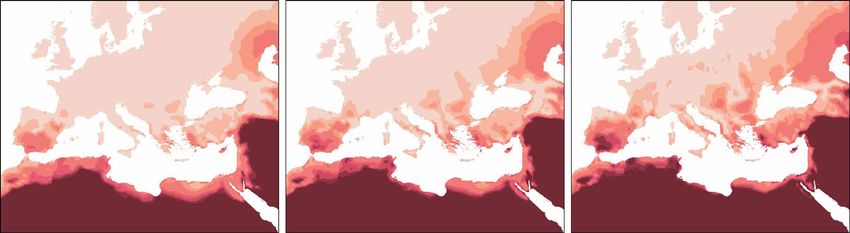
A Mediterranean
                                basin without
                                a Mediterranean
                                climate?
                                Case study
                                May 2020

Authors
Jonathan Woetzel, Shanghai

Dickon Pinner, San Francisco

Hamid Samandari, New York

Hauke Engel, Frankfurt

Mekala Krishnan, Boston

Marlies Vasmel, Amsterdam

Johanna von der Leyen, Berlin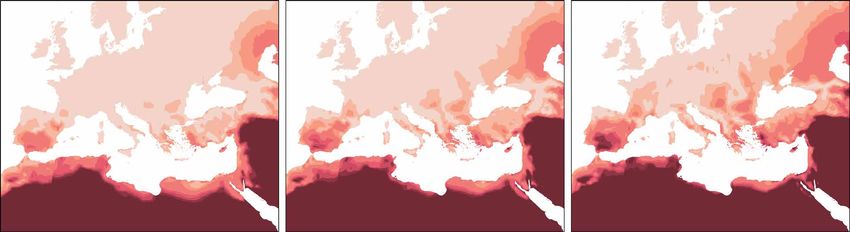
4

Introduction to case studies

In January 2020, the McKinsey Global Institute published Climate risk and response:
Physical hazards and socioeconomic impacts. In that report, we measured the impact of
climate change by the extent to which it could affect human beings, human-made physical
assets, and the natural world. We explored risks today and over the next three decades
and examined specific cases to understand the mechanisms through which climate
change leads to increased socioeconomic risk. This is one of our case studies, focused on
the Mediterranean.
We investigated cases that cover a range of sectors and geographies and provide the
basis of a “micro-to-macro” approach that is a characteristic of McKinsey Global Institute
research. To inform our selection of cases, we considered over 30 potential combinations
of climate hazards, sectors, and geographies based on a review of the literature and expert
interviews on the potential direct impacts of physical climate hazards. We found these
hazards affect five different key socioeconomic systems: livability and workability, food
systems, physical assets, infrastructure services, and natural capital.
We ultimately chose nine cases to reflect these systems and based on their exposure to the
extremes of climate change and their proximity today to key physiological, human-made, and
ecological thresholds (Exhibit 1). As such, these cases represent leading-edge examples of
climate change risk. Each case is specific to a geography and an exposed system, and thus
is not representative of an “average” environment or level of risk across the world. Our cases
show that the direct risk from climate hazards is determined by the severity of the hazard and
its likelihood, the exposure of various “stocks” of capital (people, physical capital, and natural
capital) to these hazards, and the resilience of these stocks to the hazards (for example, the
ability of physical assets to withstand flooding). We typically define the climate state today as
the average conditions between 1998 and 2017, in 2030 as the average between 2021 and
2040, and in 2050 between 2041 and 2060. Through our case studies, we also assess the
knock-on effects that could occur, for example to downstream sectors or consumers. We
primarily rely on past examples and empirical estimates for this assessment of knock-on
effects, which is likely not exhaustive given the complexities associated with socioeconomic
systems. Through this “micro” approach, we offer decision makers a methodology by which to
assess direct physical climate risk, its characteristics, and its potential knock-on impacts.
Climate science makes extensive use of scenarios ranging from lower (Representative
Concentration Pathway 2.6) to higher (RCP 8.5) CO2 concentrations. We have chosen to
focus on RCP 8.5, because the higher-emission scenario it portrays enables us to assess
physical risk in the absence of further decarbonization. Such an “inherent risk” assessment
allows us to understand the magnitude of the challenge and highlight the case for action.
(We also choose a sea level rise scenario for one of our cases that is consistent with the RCP
8.5 trajectory). Our case studies cover each of the five systems we assess to be directly
affected by physical climate risk, across geographies and sectors. While climate change
will have an economic impact across many sectors, our cases highlight the impact on

Climate risk and response | Case study: Mediterranean                                            5
construction, agriculture, finance, fishing, tourism, manufacturing, real estate, and a range of
    infrastructure-based sectors. The cases include the following:

    — For livability and workability, we look at the risk of exposure to extreme heat and humidity
      in India and what that could mean for that country’s urban population and outdoor-based
      sectors, as well as at the changing Mediterranean climate and how that could affect
      sectors such as wine and tourism.

    — For food systems, we focus on the likelihood of a multiple-breadbasket failure affecting
      wheat, corn, rice, and soy, as well as, specifically in Africa, the impact on wheat and coffee
      production in Ethiopia and cotton and corn production in Mozambique.

    — For physical assets, we look at the potential impact of storm surge and tidal flooding
      on Florida real estate and the extent to which global supply chains, including for
      semiconductors and rare earths, could be vulnerable to the changing climate.

    — For infrastructure services, we examine 17 types of infrastructure assets, including
      the potential impact on coastal cities such as Bristol in England and Ho Chi Minh City
      in Vietnam.

    — Finally, for natural capital, we examine the potential impacts of glacial melt and runoff
      in the Hindu Kush region of the Himalayas; what ocean warming and acidification could
      mean for global fishing and the people whose livelihoods depend on it; as well as potential
      disturbance to forests, which cover nearly one-third of the world’s land and are key to the
      way of life for 2.4 billion people.

6   McKinsey Global Institute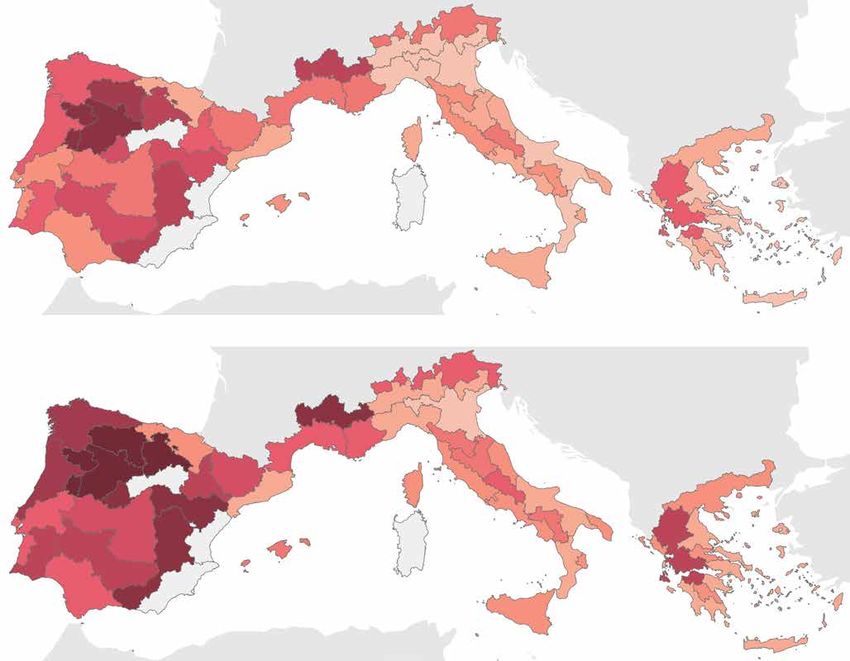
Ex
Exhhib
    ibit
       it 1
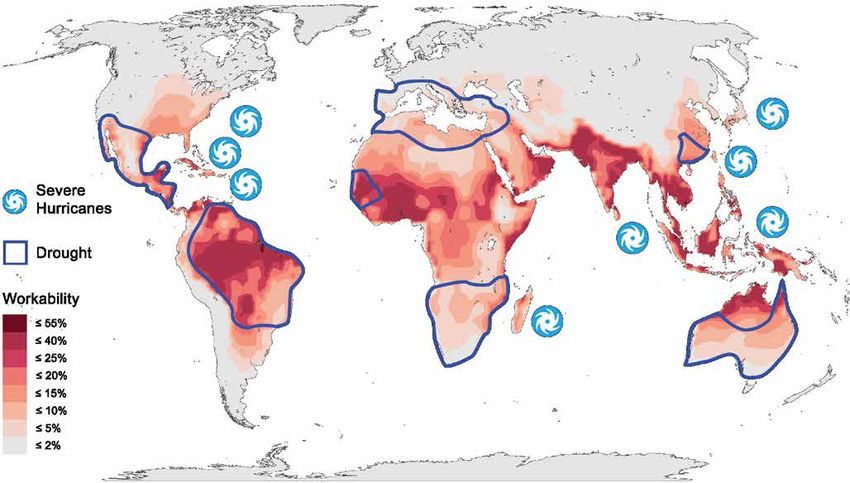
We have selected nine case studies of leading-edge climate change impacts across all
major geographies, sectors, and affected systems.

                                                                   7

                                                                                  2
                               5
                                                                                                           1          6
                                                                          4                                       7

                                                   Global case studies        3        8      9

Heat stress1 Low                       High           Highest drought risk in 20502                   Increase in hurricane/cyclone severity

                                               1       Will India get too hot to work?
      Livability and workability
                                               2       A Mediterranean basin without a Mediterranean climate?

                                               3       Will the world’s breadbaskets become less reliable?
      Food systems
                                               4       How will African farmers adjust to changing patterns of precipitation?

                                               5       Will mortgages and markets stay afloat in Florida?
      Physical assets
                                               6       Could climate become the weak link in your supply chain?

                                               7       Can coastal cities turn the tide on rising flood risk?
      Infrastructure services
                                               8       Will infrastructure bend or break under climate stress?

      Natural capital                          9       Reduced dividends on natural capital?

1. Heat stress measured in wet-bulb temperatures.
2. Drought risk defined based on time in drought according to Palmer Drought Severity index (PDSI).
Source: Woods Hole Research Center; McKinsey Global Institute analysis

                                     Climate risk and response | Case study: Mediterranean                                                 7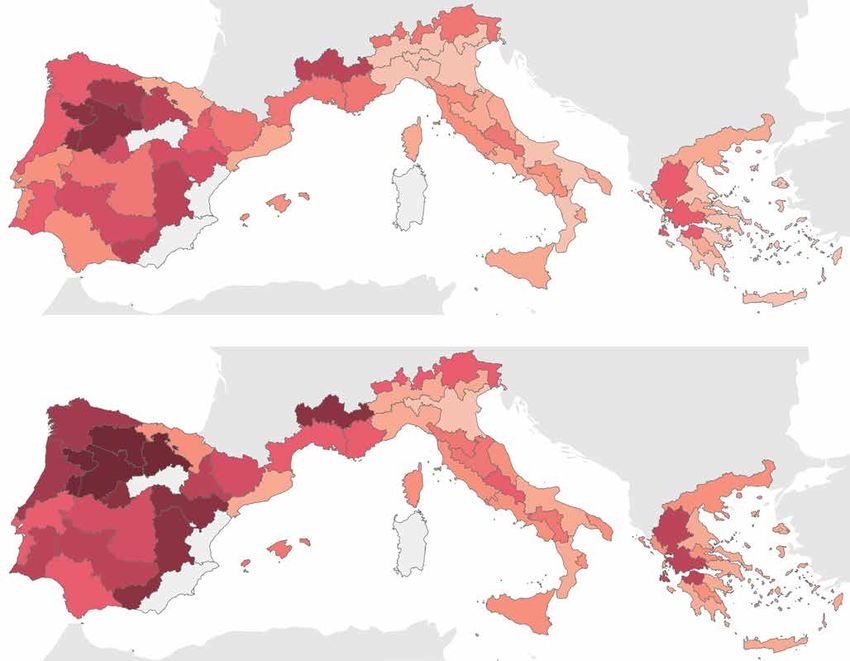
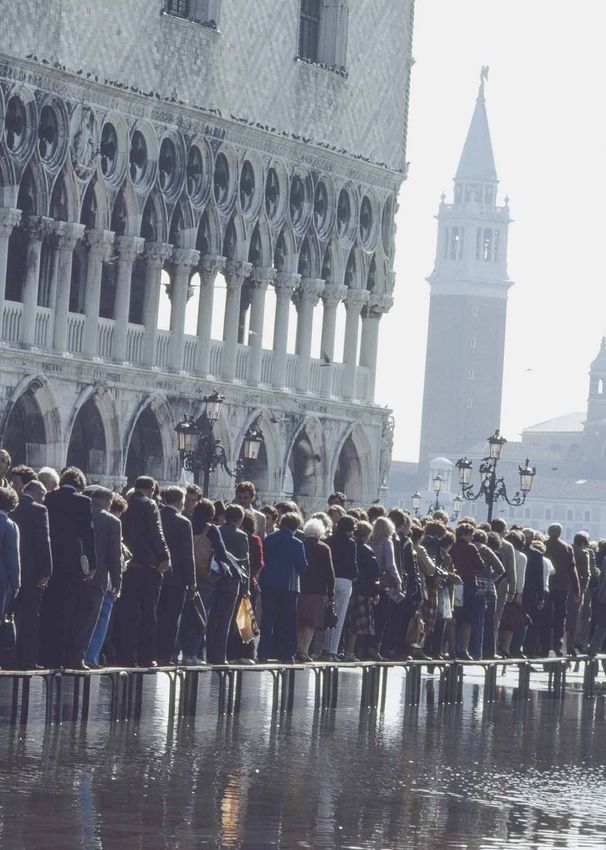
Rising flood waters in Venice.
© National Geographic
Mediterranean
A Mediterranean basin without a Mediterranean climate?
The Mediterranean basin is often perceived as the ultimate in climate, comfort, and culture.
Year-round, millions of visitors from all over the world flock to enjoy the mild climate, wine and
food, and stunning scenery. However, climate change may harshen the Mediterranean climate
and disrupt vital industries such as tourism and agriculture. The mean temperature in the
Mediterranean basin has increased 1.4 degrees Celsius since the late 19th century, compared
with the global average of 1.1 degrees—and absent targeted decarbonization, temperatures
are projected to increase by an additional 1.5 degrees by 2050.1 Rising temperatures are
expected to raise hydrological variability, increasing the risk of drought, water stress,
wildfires, and floods.

In this case study, we examine the consequences of a changing climate for Mediterranean
communities and economies. We focus on heat- and precipitation-related aspects of climate
change, though coastal flooding will also have an impact (see Box 1, “Coastal flooding”).
Climate projections indicate that the annual number of days with a maximum temperature
above 37 degrees will increase everywhere in the Mediterranean region, with a doubling in
North Africa, southern Spain, and Turkey from 30 to 60 by 2050. Many areas could see a
decline in water supplies of between 10 and 25 percent between 2030 and 2050.2 Heat and
drought conditions further increase the risk of wildfires and disease. In the Iberian Peninsula,
for example, the expected annual area burned by wildfire is projected to double by 2050.3

We then explore the economic impacts of climate change in tourism and farming. We find
physical climate change is likely to increase spatial inequality across countries and regions
within Europe. We expect that an increase in the number of “too hot” days in a given region
could discourage tourism in peak season, which today accounts for approximately 15 percent
of the GDP of Mediterranean countries while other northern countries may benefit from
a warmer climate. We find that agriculture will likely be impacted. Farmers in many places
have already seen their crop yields diminish and become less predictable, a trend that is
likely to continue. 4 Areas known for the quality of their wine grapes, for example, risk losing
prominence on the viticulture map while nontraditional growing regions could gain advantage.

Economic impacts are by no means the only effects of a hotter, drier climate. Past European
heat waves have resulted in deaths. In France, an August 2003 heat wave caused 15,000 more
deaths than expected for the three-week period.5 In the EU in total, up to 35,000 deaths were
attributed to the heat wave.6 Absent a mitigation response, EU researchers estimate that heat-
related mortality could double by 2080.7

1
    Wolfgang Cramer et al., “Climate change and interconnected risks to sustainable development in the Mediterranean,”
    Nature Climate Change, November 2018, Volume 8, Number 11; CORDEX via KNMI Climate Explorer.
2
    If not indicated differently, we follow standard practice and define current and future (2030, 2050) states as average
    climatic behavior over multidecade periods. Climate state today is defined as average conditions between 1998 and 2017,
    in 2030 as average between 2021 and 2040, and in 2050 as average between 2041 and 2060. Also, if not indicated
    differently, the climatological analyses in this case use RCP 8.5 to represent the changes in atmospheric greenhouse gas
    concentrations that could occur absent a mitigation response. Please see technical appendix of the full report for details.
3
    Marco Turco et al., “Exacerbated fires in Mediterranean Europe due to anthropogenic warming projected with non-
    stationary climate-fire models,” Nature Communications, 2018, Volume 9.
4
    Insert footnote: Deepak K. Ray et al., “Climate change has likely already affected global food production,” PLoS ONE,
    May 2019, Volume 14, Issue 5.
5
    Stéphanie Vandentorren et al., “August 2003 Heat wave in France: Risk factors for death of elderly people living at home,”
    European Journal of Public Health, December 2006, Volume 16, Number 6.
6
    Shaoni Bhattacharya, “The 2003 Europe heat wave caused 35,000 deaths,” New Scientist, October 10, 2003.
7
    Juan Carlos Ciscar et al., Climate impacts in Europe: Final report of the JRC PESETA III project, European Commission,
    2018; “Peseta II,” European Commission.

Climate risk and response | Case study: Mediterranean                                                                        9
Policy makers and companies in the Mediterranean can take action to lessen the impact
     of climate change. Farmers, for example, might gain access to public funds, training, and
     supplies to cultivate crops that do not belong to traditional rotations. Tourist destinations may
     adjust their high seasons and provide incentives to attract travelers, and governments may
     invest in reducing wildfire risk through enhanced forest management. But choices will need
     to be made. For example, coastal areas at risk from flooding will face a decision between
     protecting existing properties and infrastructure, and reducing exposure to this risk through
     managed retreat.

     Mediterranean countries are already increasing their efforts to counter the effects of climate
     change. In France, climate-change-related financing for farmers has averaged more than
     $200 million per year since 2015, up from an average of $70 million per year from 2007 to
     2014. About half of the support took the form of disaster compensation, while the remainder
     consists of subsidies for insurance programs. 8 Issuing payments to compensate farmers and
     others for financial damages resulting from climate change is only one form of adaptation. In
     many cases it will be more economical for Mediterranean governments to protect and build
     resilience against the effects of climate change than to adhere to habits that climate change
     will render more impractical and costly.

         Box 1.
         Coastal flooding

         Between 1993 and 2015, the Mediterranean Sea rose by two to three millimeters per
         year.1 The rising of the sea is projected to accelerate, resulting in a further increase
         of about 25 centimeters from its current level by 2050.2 The higher mean sea level,
         combined with tidal forces and storms, will result in more frequent and/or severe
         coastal flooding. 3

         This could lead to significant costs. Researchers have estimated that the continued
         development of the northern Mediterranean’s already-populous shorelines, along with
         the flooding that is expected to stem from climate change, will likely expose 300,000 to
         400,000 people to coastal flooding each year and result in annual damage of $7 billion
         to $22 billion per year by 2050. 4 France is projected to bear more than half of those
         impacts, while Italy shoulders roughly one-fifth.

         To adapt, EU researchers have estimated that the total average required expenditure
         for the continent on dikes and beach nourishment could be roughly $2.2 billion annually
         starting in 2020. 5 However, spending in individual countries suggests that the costs
         could be much greater. The Netherlands, for example, spends some $1.4 billion each
         year on the protection of its coastline.6 Furthermore, sea levels will continue to rise after
         2050—even if net-zero emissions have been reached—further increasing the related
         protection costs.

         1
             Marta Marcos, Gabriel Jorda, and Gonéri Le Cozannet, “Sea level rise and its impacts on the Mediterranean,”
             in The Mediterranean Region under Climate Change: A Scientific Update, Jean-Paul Moatti and Stéphane
             Thiébault, eds., Marseille, France: IRD Éditions, 2016.
         2
             Michalis I. Vousdoukas et al., “Extreme sea levels on the rise along Europe’s coasts,” Earth’s Future, March 2017,
             Volume 5, Number 3.
         3
             Michalis I. Vousdoukas et al., “Climatic and socioeconomic controls of future coastal flood risk in Europe,” Nature
             Climate Change, 2018, Volume 8, Number 9.
         4
             Michalis I. Vousdoukas et al., “Climatic and socioeconomic controls of future coastal flood risk in Europe,” Nature
             Climate Change, 2018, Volume 8, Number 9. Combined annual damage for all European countries bordering the
             Mediterranean Sea.
         5
             Juan Carlos Ciscar et al., Climate impacts in Europe: Final report of the JRC PESETA III project, European
             Commission, 2018; “Peseta II,” European Commission.
         6
             Government of the Netherlands, Delta Programme, government.nl/topics/delta-programme/organisation-of-
             the-delta-programme.

     8
         French Ministry for Agriculture and Food, “Agreste—Statistique agricole annuelle (SAA),” data.gouv.fr/en/datasets/
         agreste-statistique-agricole-annuelle-saa
10   McKinsey Global Institute
As the Mediterranean becomes hotter and drier, the risk of water stress,
wildfires, and coastal flooding increases
The Mediterranean climate could change in multiple ways as temperatures rise, water stress
increases, and precipitation becomes more volatile, in turn creating multiple knock-on effects
from wildfires to the spread of disease.
— Heat. With warm, dry summers and mild winters, the Mediterranean climate has long been
suited to tourism and the cultivation of valuable crops, notably wine grapes. However,
rising temperatures may disrupt established industries and norms. The temperature in the
Mediterranean basin has climbed 1.4 degrees, and the increase is projected to continue to
exceed global rates, rising approximately 0.5 degree by 2030 and 1.5 degrees by 2050.9
Climate projections indicate that the number of days with a maximum temperature above
37 degrees will increase everywhere in the Mediterranean region, with especially large
rises in northern Africa, the Middle East, southern Spain, and Turkey (Mediterranean‑1).10
— Drought. In Italy, Portugal, Spain, and parts of Greece and Turkey, rainfall during the
warm, dry season of April through September is projected to decrease by as much as
10 percent by 2030 and as much as 20 percent by 2050.11 By 2050, drought conditions
could prevail for at least six months out of every year in these areas (Mediterranean‑2).12
These changing temperature and precipitation patterns will noticeably transform the
Mediterranean climate. Scientists have projected that even under the RCP 4.5 scenario,
in Spain, Madrid’s climate in 2050 will be more like Marrakech’s in Morocco today, while in
France Marseille’s climate will resemble that of Algier in Algeria.13
— Water stress. Changing rates of annual precipitation and increasing evaporation are
projected to impact the Mediterranean region’s supply of fresh water. Many basins
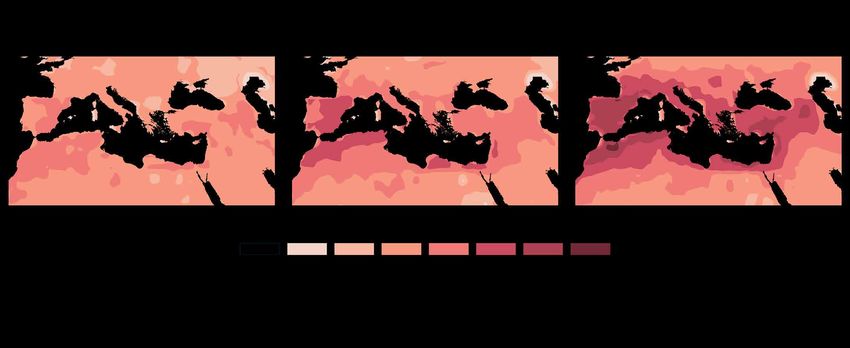
could see a decline of approximately 10 percent in water supplies by 2030 and of up to
25 percent by 2050 (Mediterranean‑3). Water stress is already high in most countries in
the Mediterranean and extremely high in Morocco and Libya.14 The decline in supply is
projected to heighten water stress in all Mediterranean countries between now and 2050,
with the greatest increases in Greece, Morocco, and Spain.15
Dwindling supplies may increase competition for water between different sectors. The
agriculture sector will be a key contestant in this competition. It accounts for about
80 percent of water withdrawals in North Africa and about 60 percent in southern
Europe.16 Its demand may grow even further. Areas that are now irrigated could require
more irrigation, and those that are now rainfed might need to be irrigated.17
9
Wolfgang Cramer et al., “Climate change and interconnected risks to sustainable development in the Mediterranean,”
Nature Climate Change, November 2018, Volume 8, Number 11; CORDEX via KNMI Climate Explorer.
10
EURO-CORDEX regional climate model (RCM) ensemble.
11
CORDEX via KNMI Climate Explorer.
12
Based on Palmer Drought Severity Index of –2 (moderate drought) or lower. NOAA characterizes moderate drought by:
some damage to crops and pastures; high fire risk; low streams, reservoirs, or wells; some water shortages developing or
imminent; and voluntary water use restrictions requested. In general, drought means dry relative to what is normal for a
given location and time of year.
13
Jean-Francois et al., “Understanding climate change from a global analysis of city analogues,” PLOS ONE, July 2019,
Volume 14, Number 7.
14
High water stress is defined by a water demand over supply ratio of 0.4–0.8, extremely high water stress by a ratio higher
than 0.8.
15
Population growth, urbanization, and other developments will likely increase demand for water and worsen water stress.
16
FAO Aquastat, fao.org/nr/water/aquastat/tables/WorldData-Withdrawal_eng.pdf; for comparison, the rest of Europe
uses approximately 10 percent of water withdrawals for agriculture.
17
Samuel Levis et al., “CLMcrop yields and water requirements: Avoided impacts by choosing RCP 4.5 over 8.5,” Climatic
Change, February 2018, Volume 146, Number 3–4.
Climate risk and response | Case study: Mediterranean 11Case study Mediterranean-1
The number of days above 37°C in southern Spain, Turkey, and Egypt Based on RCP 8.5
is expected to double by 2050, from about 30 to 60.
Number of days Today
with maximum
temperature
above 37°C
≤1
2–5
6–10 Antalya
11–20 Andalucía
21–30
31–40 Sharm
El Sheikh
41–50
Hurghada
51–60
>60
2030
2050
Note: See the Technical Appendix of the full report for why we chose RCP 8.5. All projections based on RCP 8.5, CMIP 5 multimodel ensemble. Heat
data bias corrected. Following standard practice, we define current and future (2030, 2050) states as average climatic behavior over multidecade
periods. Climate state today is defined as average conditions between 1998 and 2017, in 2030 as average between 2021 and 2040, and in 2050
as average between 2041 and 2060.
Source: EURO-CORDEX RCM ensemble; Woods Hole Research Center
12 McKinsey Global InstituteCase study Mediterranean-2
Drought is expected to become prevalent in the Mediterranean region Based on RCP 8.5
by 2030 and further increase by 2050.
Share of decade Today
spent in drought
%
0–10
11–20
21–40
41–60
61–80
81–90
>90
Measured using a
3-month rolling average.
Drought is defined as a 2030
rolling 3-month period
with Average Palmer
Drought Severity Index
(PDSI)Case study Mediterranean-3
More parts of the Mediterranean are projected to experience shifts Based on RCP 8.5
in water supply and increasing water stress.
20301 20501
Water supply change relative to today,2
%
Significant Significant
decrease increase
< -15 -6 to -15 -1 to -5 0 1–5 6–15 >15
Water stress change relative to today,3
%
Significant Significant
decrease increase
< -0.8 -0.1 to -0.8 0–0.2 0.3–0.8 >0.8
1. Following standard practice, we define current and future (2030, 2050) states as average climatic behavior over multidecade periods. Climate
state today is defined as average conditions between 1998 and 2017, in 2030 as average between 2021 and 2040, and in 2050 as average
between 2041 and 2060.
2. Average annual renewable water supply from precipitation.
3. Water stress is defined as the ratio of water demand to water supply. Water demand is assumed to remain constant at today’s levels.
Note: See the Technical Appendix of the full report for why we chose RCP 8.5. All projections based on RCP 8.5, CMIP 5 multimodel ensemble. Heat
data bias corrected.
Source: World Resources Institute; McKinsey Global Institute analysis
14 McKinsey Global Institute— Wildfires. Given that temperature and drought conditions are the most important factors
determining the variability of wildfire activity in southern Europe, increased levels of heat
and dryness are also projected to cause larger areas—up to double the current areas on
the Iberian Peninsula—to burn from wildfires.18
The Mediterranean basin has been beset by major wildfires in recent years. In 2017,
fire destroyed more than 500,000 hectares of forest in Portugal, over 5 percent of
the country’s area. The largest fire, in and around the town of Pedrógão Grande, killed
66 people.19 Each year between 1998 and 2017, wildfires destroyed an average of
150,000 hectares in Portugal and 120,000 hectares in Spain.20 By 2030, wildfires are
expected to burn 50 percent more of those countries’ forestland each year, and by
2050 the burned area is projected to double (Mediterranean‑4).21 With the burned area
doubling, the additional economic damage could reach more than $1.5 billion per year in
Portugal and Spain alone.22
— Disease. High summer temperatures have also been linked with the increasing incidence
of West Nile fever in Europe.23 Researchers have already projected that the West Nile virus
is likely to spread by 2025 and to spread further by 2050.24 For example, the Balkans and
parts of Turkey are projected to be affected (Mediterranean‑5). The summer of 2019 saw
the first reported case of West Nile virus infection as far north as Germany.25
These climate hazards and risks are likely to impose socioeconomic costs on the
Mediterranean. The region’s agriculture and tourism industries, which depend on a favorable
climate, could suffer, with the largest impacts (on local employment, for example) in areas with
undiversified economies. We explore these effects in the sections that follow.
18
Marco Turco et al., “Exacerbated fires in Mediterranean Europe due to anthropogenic warming projected with non-
stationary climate-fire models,” Nature Communications, October 2018, Volume 9.
19
M. Turco et al., “Climate drivers of the 2017 devastating fires in Portugal,” Scientific Reports 2019, Volume 9.
20
EFFIS annual fire reports, https://effis.jrc.ec.europa.eu/reports-and-publications/annual-fire-reports/
21
Marco Turco et al., “Exacerbated fires in Mediterranean Europe due to anthropogenic warming projected with non-
stationary climate-fire models,” Nature Communications, October 2018, Volume 9. The 100 percent increase in Spain
and Portugal occurs at global temperature increase of two degrees above preindustrial level, which will be reached by
approximately 2050 in a representative concentration pathway (RCP) 8.5 scenario.
22
European Commission, Forest fires: Sparking firesmart policies in the EU, November 2018. Total economic losses in the
EU were estimated more than $3 billion per year from 2000 to 2017; Portugal and Spain accounted for almost half of the
burned area.
23
Annelise Tran et al., “Environmental predictors of West Nile fever risk in Europe,” International Journal of Health
Geographics, July 2014, Volume 13. While approximately 20 percent of people infected with West Nile virus will
experience flulike symptoms, less than 1 percent develop severe neurological illness. In such cases, the probability of not
surviving is 4 to 14 percent; Dutch National Institute for Public Health and the Environment (RIVM).
24
Jan C. Semenza et al., “Climate change projections of West Nile virus infections in Europe: Implications for blood safety
practices,” Environmental Health, 2016, Volume 15.
25
Robert-Koch-Institut, “First West Nile virus disease transmitted by mosquitoes in humans in Germany,” https://www.rki.
de/DE/Content/Service/Presse/Pressemitteilungen/2019/09_2019.html.
Climate risk and response | Case study: Mediterranean 15Case study Mediterranean-4 By 2050, the area in Spain and Portugal burned by wildfires is projected Based on RCP 8.5 to double. Increase in burned area, by eco-region (compared with 1871–2000)1 % No model ≤10 11–20 21–30 31–40 41–50 51–60 61–70 71–80 81–90 91–100 >100 20302 20503 1. Ecoregion is a statistical stratification based on environmental variables such as temperature, precipitation, altitude, etc. Regions have relatively similar climatic properties. 2. Based on regional climate projections at 1.5°C of mean global warming, which is projected to be reached in approximately 2030 under RCP 8.5. 3. Based on regional climate projections at 2.0°C of mean global warming, which is projected to be reached in approximately 2050 under RCP 8.5. Note: See the Technical Appendix of the full report for why we chose RCP 8.5. All projections based on RCP 8.5, CMIP 5 multimodel ensemble. Heat data bias corrected. Source: Adapted from Turco et al., 2018 16 McKinsey Global Institute
Case study     Mediterranean-5

As temperatures rise, the potential transmission area of West Nile virus is projected to
expand in the Mediterranean region.

Districts with probable and confirmed cases of West Nile virus infections1

    Areas reporting
    cases in 2014
    No reported
    cases

Modeled probability of having one or more West Nile virus infections per year, by district2
%

    >50                               2014
    ≤50

2025                                                                          2050

1. As of November 20, 2014. An affected area is defined as an area with one or more autochthonous human West Nile virus cases (neuroinvasive and
   non-neuroinvasive), meeting laboratory criteria per EU case definition (Directive 2008/426/EC). A probable case is any person meeting the clinical
   criteria and with an epidemiological link or a laboratory test for a probable case.
2. Based on temperature projections under A1B scenario. In that scenario, by 2050 A1B is between RCP 4.5 and 8.5.
Source: Adapted from Semenza et al., 2016

                                      Climate risk and response | Case study: Mediterranean                                                        17
Climate change hazards may increase economic inequality within and
across Europe
The spatial nature of physical climate change means that Mediterranean countries will
face varying risks and associated costs relative to the European continent. The greatest
costs are likely to fall on regions that largely rely on economic output from agriculture or
tourism. Those areas could see significant decreases in income and employment and could
experience knock-on effects when, for example, holiday real estate markets weaken. Local
unemployment may also result in people moving to larger cities in search of jobs. However,
whereas southern Europe is likely to see negative effects on agriculture and tourism, in
northern Europe these sectors could benefit. This divergence could increase inequality
across the continent. Impacts will be uneven not only between countries but also within
countries. One example is France, where considerable climatic difference exists between
the north and the south. An economic slowdown, to which climate change impacts could
contribute, in southern Europe would increase the north-south gap on various indicators,
such as unemployment. That could lead to increased tensions within the European Union and
to more people moving in search of jobs, both within countries and potentially across borders.
Agricultural production
Nearly half of the Mediterranean region’s agricultural production value comes from four crops:
grapes (14 percent), wheat, tomatoes, and olives (9 percent each) (Mediterranean‑6). Of the
last three, Mediterranean countries produce about 90 percent of the total global supply.26
(See Box 2, “How climate change could affect the production of wheat and tomatoes.”) We
focus on how climate change is likely to alter the production of grapes and wine in the period
to 2050, and how those effects could cascade through the Mediterranean economy.
The wine industry in France, Italy, and Spain is important to regional economies. These
three countries produce about half of the world’s wine and 80 percent of the wine made in
the European Union.27 In France, nearly $2 billion of value-added tax revenues derive from
wine production. In addition, the wine industry directly employs some two million people,
mostly in rural areas, and supports several other sectors, such as tourism (ten million people
visit French vineyards, tasting rooms, and wine museums each year, spending more than
$5 billion), manufacturing (equipment and materials), construction, distribution, and retail.28
Production from traditional winemaking regions could diminish as the Mediterranean
climate changes, since grapevines are highly sensitive to fluctuations in temperature and
precipitation. In the past decade, annual wine production volumes in France have ranged
between 36 million hectoliters in 2017 and 51 million hectoliters in 2011.29 The quality of grapes
and wine, too, depends on the weather. Researchers estimate that 10 to 60 percent of vintage
ratings can be explained by temperature variations during the growing season. 30 Higher
temperatures usually reduce grape quality by increasing sugar levels and decreasing acidity.
Increasing temperatures are not the only potential threat to grapes. Increasing water stress
causes problems for growers, too. While mild water stress enhances grape quality for red
wines, severe water stress will reduce yields. 31 Production can also be lost due to severe
hailstorms, and climate change may contribute to their increasing incidence. 32 Researchers
project that hailstorms in France will bring larger hailstones, resulting in a hail kinetic energy
increase of 40 percent between 2000 and 2040. 33
26
Food and Agriculture Organization of the United Nations, FAOSTAT; based on 2017 production value.
27
Comité Européen des Entreprises Vins, “European Wine: A solid pillar of the European Union economy,” 2016, ceev.eu/
images/documents/press_releases/2016/Brochure_CEEV_-_High_resolution.pdf
28
Ibid.; Atout France, L’Œnotourisme en France en 2016, http://www.atout-france.fr/download/4097; Vin et Société, Les
chiffres clés de la filière vin, vinetsociete.fr/chiffres-cles-de-la-filiere-vin
29
French Ministry for Agriculture and Food, “Agreste—Statistique agricole annuelle (SAA),” data.gouv.fr/en/datasets/
agreste-statistique-agricole-annuelle-saa.
30
Gregory V. Jones et al., “Climate change and global wine quality,” Climate Change, December 2005, Volume 73, Number 3.
31
Cornelis van Leeuwen et al., “Vine water status is a key factor in grape ripening and vintage quality for red Bordeaux wine.
How can it be assessed for vineyard management purposes?,” OENO One, 2009, Volume 43, Number 3.
32
Eberhard Faust and Anja Rädler, “Hail—An underestimated and growing risk,” Munich Re, 2018.
33
Jean Dessens, Claude Berthet, and J. L. Sanchez, “Change in hailstone size distributions with an increase in the melting
level height,” Atmospheric Research, May 2015, Volume 158–159.
18 McKinsey Global InstituteCase study Mediterranean-6
About 40 percent of the Mediterranean region’s agricultural production value comes from
just four crops: wheat, tomatoes, olives, and grapes.
Crop production value in the Mediterranean region, 2016
% of total gross production value
41
51 51
All other 57
59
crops 63
70
73
3
4
5
12
4 41
Wheat 9 1 5
18
45 13
Tomatoes 9
11 18
Olives 9 16 36 14 4 15
7 13 16
Grapes 14 11 5
4 6 4
2
Total1 Egypt France Greece Italy Morocco Spain Turkey
1. Albania, Algeria, Bosnia and Herzegovina, Croatia, Cyprus, Egypt, France, Greece, Israel, Italy, Lebanon, Malta, Morocco, Portugal, Slovenia, Spain,
Tunisia, Turkey.
Note: Figures may not sum to 100% because of rounding.
Source: FAO; McKinsey Global Institute analysis
Researchers have forecast a wide range of possible effects of climate change on grape
yields. Some studies project that the Mediterranean area suitable for viticulture could fall
by up to 70 percent at the high end of their range, though considerable debate surrounds
these predictions, as others do not see negative impacts at all. 34 As the Mediterranean region
becomes warmer, it is also likely that specific grape varieties will no longer grow where they
do now (for example, Merlot in Bordeaux), while at the same time the opportunity to plant new
varieties may rise. 35 Certain growing areas in Italy, Portugal, and Spain could experience large
declines in production or even collapse. 36
34
Lee Hannah et al., “Climate change, wine, and conservation,” Proceedings of the National Academy of Sciences, April
2013, Volume 110, Number 17; Cornelis van Leeuwen et al., “Why climate change will not dramatically decrease viticultural
suitability in main wine-producing areas by 2050,” Proceedings of the National Academy of Sciences, August 2013,
Volume 110, Number 33.
35
Elizabeth M. Wolkovich et al., “From Pinot to Xinomavro in the world’s future wine-growing regions,” Nature Climate
Change, 2018, Volume 8, Number 1.
36
Helder Fraga et al., “Modelling climate change impacts on viticultural yield, phenology and stress conditions in Europe,”
Global Change Biology, November 2016, Volume 22, Number 11.
Climate risk and response | Case study: Mediterranean 19Some researchers anticipate that the warming projected to occur throughout Europe could
make it possible to grow wine grapes in regions farther to the north. In effect, Europe’s grape-
growing belt would shift. But the characteristics of Mediterranean vineyards and wineries
cannot be replicated instantaneously. Indeed, they might never be matched, because gaining
similar levels of experience in new winemaking regions may take generations. 37
Box 2.
How climate change could affect the production of wheat
and tomatoes
Researchers estimate that between 1989 and 2009, average wheat yields in Europe
were 3 percent lower than they would have been without climate change. Some
individual countries have endured steeper declines: 8 percent in Greece, 15 percent
in Italy.1 Climate change can also trigger more dramatic and acute variations in yield,
for example due to the increased frequency of droughts; a drought in 2016 lowered
France’s wheat yield by 30 percent.2 In recent years, wheat production has also been
threatened by the deadly stem rust disease, the occurrence of which could increase due
to climate change. 3
In Egypt, wheat production relies exclusively on irrigation, and the country’s future water
supply available for irrigation is uncertain. Nearly all fresh water is drawn from the Nile
River. 4 If the upstream countries extract more water from the river or constrain the Nile’s
flow in other ways, the country’s ability to grow wheat (which supplies 30 percent of the
calories in the average Egyptian diet) will be affected.5
Tomatoes can survive in a relatively wide temperature range, 10 to 35 degrees. As
cold stress in northern Europe decreases, the region becomes more suitable to grow
tomatoes, and Mediterranean growers may see increased competition.6
1
Frances C. Moore and David B. Lobell, “The fingerprint of climate trends on European crop yields,” Proceedings
of the National Academy of Sciences, March 2015, Volume 112, Number 95. Note that this is the isolated impact
of climate change and not the absolute change historically observed. Observed yields of wheat have plateaued
during this period but could have increased without climate change (thanks to technological improvements, for
example).
2
Tamara Ben-Ari et al., “Causes and implications of the unforeseen 2016 extreme yield loss in the breadbasket of
France,” Nature Communications, April 2018, Volume 9, Article 1627.
3
Shaoni Bhattacharya, “Deadly new wheat disease threatens Europe’s crops,” Nature, February 2017, Volume 542,
Number 7640; Peter Juroszek and Andreas Tiedemann, “Climate change and potential future risks through wheat
diseases: A review,” European Journal of Plant Pathology, May 2013, Volume 136, Number 1.
4
Senthold Asseng et al., “Can Egypt become self-sufficient in wheat?,” Environmental Research Letters,
September 2018, Volume 13, Number 9; FAO Aquastat, fao.org/nr/water/aquastat/countries_regions/EGY/
index.stm
5
FAO, Egypt: Wheat sector review, 2015.
6
R. S. Silva et al., “Assessing the impact of global warming on worldwide open field tomato cultivation through
CSIRO-Mk3·0 global climate model,” The Journal of Agricultural Science, April 2017, Volume 155, Number 3.
37
K. A. Nicholas and W. H. Durham, “Farm-scale adaptation and vulnerability to environmental stresses: Insights from
wine-growing in northern California,” Global Environmental Change Human Policy Dimensions, 2012, Volume 22.
20 McKinsey Global InstituteTravel and tourism
Travel and tourism, including indirect and induced impacts, generate about 15 percent of the
GDP of Mediterranean countries on average. 38 In certain areas, the local economy depends
much more on tourism. (We look at examples below.) While climate change has not yet caused
structural shifts in Mediterranean tourism flows, anecdotal examples show tourists reacting
to the changing climate. For example, northern European destinations such as Denmark have
become more popular with Belgian and Dutch tourists, who may avoid the hot summers in
southern Europe and take advantage of warmer summers in northern Europe. 39 In southern
Europe, heat waves can keep tourists from the beach. This happened in Portugal during
the summer of 2018, when temperatures in Lisbon exceeded 40 degrees and news articles
reported beach temperatures of 30 degrees at 8 a.m. 40
One way to estimate the effects of climate change on tourism is to look at the number of days
during the summer months—high vacation season—when the temperature might become
too hot for tourist comfort. Heat tolerance varies from person to person, but surveys suggest
that most northern Europeans consider 37 degrees unacceptably hot, even for a warm-
weather vacation. 41 This is also supported by tourism behavior in warmer areas of the world.
For example, the summer months in Dubai, when average daily high temperatures exceed
37 degrees, are off-season for tourists. If many tourists consider 37 degrees too hot for
summer vacations, tourist spending could decrease in correspondence with the rising number
of days above 37 degrees.
Three cities whose economies depend on tourism illustrate what might be at risk from an
increase in extremely hot days. Antalya, a beach and resort city of two million people on
Turkey’s southern coast, attracts more than ten million visitors each year, some 30 percent
of all tourists who visit the country. The city is projected to experience a significant increase
in the number of summer (June to August) days above 37 degrees: about 15 days each
summer by 2030, and approximately 30 days (10 days per month) in 2050. These months are
crucial to the tourism industry. They generate 40 percent of each year’s visits and account
for tourist spending of some $4.5 billion, as well as about 20 percent of Antalya’s GDP and
about 2 percent of Turkey’s. Similarly, Sharm El Sheikh and Hurghada, important beach
resorts in Egypt, are projected to have 30 days per year above 37 degrees by 2030 and
50 days by 2050, up from about 15 today. About half of the visitors to the country fly to one of
these cities. 42
Mediterranean destinations could adapt to climate change in a number of ways. Tourist
destinations could extend their shoulder seasons as the Mediterranean climate changes.
However, this may not be as simple as offering discounts. Large discounts already give
tourists an incentive to travel outside the summer months, yet the summer tourist visit peaks
have remained stable over the past ten years. One reason for this is that many tourists are
restricted to traveling during school or work holiday periods. Tourist destinations may also
offer year-round activities to increase the flow of tourists during the months now considered
shoulder or off-season or target different markets such as those convening for meetings
and conferences.
38
World Travel & Tourism Council, October 2019.
39
Ulrik Kongsgaard et al., “More tourists go to Denmark: ‘The South is too hot’,” https://www.dr.dk/nyheder/indland/flere-
turister-tager-til-danmark-syden-er-alt-varm.
40
Linda Givetash, “Record temperatures in Portugal mean even beaches are unusually empty,” NBC News, August 4, 2018.
41
Michelle Rutty and Daniel Scott, “Will the Mediterranean become ‘too hot’ for tourism? A reassessment,” Tourism and
Hospitality Planning & Development, 2010, Volume 7, Number 3.
42
“Egypt’s traffic up 35 percent in three years,” February 23, 2010, https://www.anna.aero/2010/02/23/egypts-traffic-
up‑35pc-in-three-years/
Climate risk and response | Case study: Mediterranean 21Climate change is expected to raise adaptation costs
Physical climate change will also require increased levels of investment to adapt to increased
level of wildfires, coastal flooding, and potentially health risk. These costs will likely need to be
borne across the continent but will be particularly intense in the Mediterranean basin.
Increase transparency of climate risks
Greater awareness of the risks of a changing climate can reduce exposure and impacts. The
majority of wildfires are caused by human ignition, often through negligence or accidents.
One possible countermeasure could therefore be to prohibit forest entrance in the case of
high-risk levels. Early-stage detection and suppression can avoid widespread fires that are
much more difficult to control. It is therefore critical to monitor wildfire risk (and the spreading
of eventual wildfires) in real time, as the EU is doing in its EFFIS program. Likewise, adaptation
regarding tropical diseases can focus on monitoring and prevention through more effective
public health programs.
Invest in adaptation
Most regions in the Mediterranean will need to invest in adaptation. Forests can be made
more resilient to wildfire risk, for example by planting fire-resistant trees, reducing the
amount of easily burning fuel available (such as leaf litter and brush), and even prescribed
and controlled burning. Annual spending on wildfire prevention in Portugal, for example, was
about $25 million between 2011 and 2016, compared with approximately $80 million per year
on suppression.
Wine growers already take measures to manage variations in production quantity and
quality; these actions include cultivating grape varieties that ripen more slowly or require less
water. Various hardening measures can help them cope with increased heat and drought.
These include:
— Harvesting earlier. In Burgundy, wine growers have harvested 13 days earlier in the past
30 years, on average, compared with the preceding six centuries. 43
— Reducing sunlight on grapes (for instance, by setting up canopies).
— Irrigating vineyards. Controlled, efficient irrigation (drip irrigation, for example) can lessen
pressure on water reserves.
Hardening measures might not be enough to help growers in all parts of Europe, or even
to protect all types of wine grapes. Wine growers can increase their resilience by planting
different crops or moving to new locations, including higher altitudes and slopes other than
the conventional south-facing ones. 44 This requires longer-term planning, because new plants
will need at least a few years before their grapes are of sufficient quality for wine production
(and even longer for high-quality wines). Wine growers can collaborate to better understand
the properties and resilience of alternative grapes, for example via industry-organized
experimentation with different grape types. Locating new vineyards in nontraditional grape-
growing areas will also require time and experimentation, because the suitability of a vineyard
is determined not only by the regional climate but also by other factors, such as the altitude
and microclimate.
43
Thomas Labbé et al., “The longest homogeneous series of grape harvest dates, Beaune 1354–2018, and its significance
for the understanding of past and present climate,” Climate of the Past, 2019, Volume 15, Number 4.
44
Eric Asimov, “How climate change impacts wine,” New York Times, October 14, 2019.
22 McKinsey Global InstituteTo help growers and winemakers adapt, European lawmakers might also consider changes to
the Protected Designation of Origin labeling system, which is meant to safeguard the integrity
of wines and other regional agricultural products. French law, for example, requires that
grapes be grown, made into wine, and bottled in a given geographical region, or “appellation,”
in order for a wine to be labeled as a product of that region. If agricultural activity shifts to new
areas but PDO requirements remain the same, regional growers and producers could lose
the advantage of PDO labeling (PDO-labeled wines sell for higher prices, on average, than
other wines). 45
Mobilize finance to support vulnerable communities
Not every region will be able to afford the investments needed to adapt to physical climate
change. For these areas financial mobilization will be key, for example, through crop insurance
or disaster compensation. In France, climate-change-related financing for farmers has
averaged more than $200 million per year since 2015, up from an average of $70 million per
year from 2007 to 2014. About half of the support took the form of disaster compensation,
while the remainder consists of subsidies for insurance programs.
45
Tanguy Chever et al., “Value of production of agricultural products and foodstuffs, wines, aromatised wines and spirits
protected by a geographical indication (GI): Executive summary,” European Commission, October 2012.
Climate risk and response | Case study: Mediterranean 23McKinsey Global Institute May 2020 Copyright © McKinsey & Company Designed by the McKinsey Global Institute www.mckinsey.com/mgi @McKinsey @McKinsey
You can also read


