Analysis on the "Douyin (Tiktok) Mania" Phenomenon Based on Recommendation Algorithms
←
→
Page content transcription
If your browser does not render page correctly, please read the page content below
E3S Web of Conferences 235, 03029 (2021)                                                              https://doi.org/10.1051/e3sconf/202123503029
NETID 2020

         Analysis on the “Douyin (Tiktok) Mania” Phenomenon Based on
         Recommendation Algorithms
         Zhengwei Zhao1*
         1School   of Data and Computer Science, Sun Yat-sen University, Guangzhou, Guangdong, China

                       Abstract. As one of the most popular short video platform, Douyin has accumulated more than half of the
                       Chinese netizens as its daily active users. Many users spend plenty of time viewing Douyin short videos,
                       which make Douyin addiction become a widespread phenomenon. In this paper, the author analyzes algorithm
                       principles used in Douyin. Combining both perspectives of mass media communication and algorithm
                       technology to explain how it effects Douyin addiction. For one thing, the recommendation algorithm caters
                       users by fully meeting their needs. Using the hierarchical interest label tree, the user persona and the
                       partitioned data buckets strategy to recommend more accurate and personalized contents. For another, the
                       algorithm uses the collaborative filtering algorithm and low-cost interaction design mechanism to make traps
                       for users. The author also finds that there is a closed-loop relationship between Douyin addiction and
                       algorithm optimization. The algorithm principles positively effects users’ continuance intention. Meanwhile,
                       the more frequent the user uses Douyin, the more accurate the algorithm will be. If not intervened, the addiction
                       may be severely exacerbated. So, the author comes up with a few suggestions for Douyin developers and
                       users, trying to break the closed-loop.

                                                                               With thoroughly understanding of the algorithm principles
      1 Introduction                                                           and analyzing them in conjunction with the theory of
                                                                               communication, it can be explained that why Douyin can
      Douyin, the Chinese origin version of TikTok, is an online               achieve such great popularity in a short time.
      short video mobile application that has been launched by                     With the recommendation of the algorithm, each user
      ByteDance in September 2016. According to their official                 will receive a completely personalized videos feed based
      introduction, “Douyin is a short video platform that helps               on the matching between their own personalities, content
      users express themselves and record a good life” [1]. Most               labels, and the characteristics of their environment. The
      of the videos on Douyin last from 15s to 60s, both                       user passively accepts the system's personalized
      hilarious and condensed, covers a wide range of topics.                  recommendation content without any initiative selection
          According to Mary Meeker’s 2019 Internet Trends                      or search. This is a huge revolution to the way people are
      Report [2], which was one of the most highly anticipated                 used to obtaining information on the Internet. This greatly
      annual reports for all the Internet related industries. It               alleviates the effort that people have to pay to get the
      showed that Chinese Internet robust usage growth is                      information they want, and frees people from massive
      primarily driven by Short-Form Video. Among all the                      amounts of information. The effective information
      short video application these days, Douyin has become the                distribution strategy of contents is an essential ingredient
      leading short video application by number of downloads                   of not only Douyin’s success but also the innovative
      and great influences all over the world. It becomes a                    channel of information dissemination. However, while the
      phenomenal success that, according to ByteDance’s                        products represented by Douyin introduced algorithm
      annual data report, Douyin has already amassed 400                       technology into the field of communication, highly
      million DAU up to January 2020 only in China, nearly half                personalized distribution also brought unprecedented
      of the Chinese netizens [3].                                             problems and challenges. Because the content that users
          The most conspicuous feature that distinguishes                      sees basically meets their needs and interests, and does not
      Douyin from other similar products is that it is an                      need to spend the cost to find them. As a result, this may
      algorithm-driven, content-oriented product, which means                  lead users to watch short videos for hours and even
      that its popularity is largely dependent on the powerful AI              become an addiction. This article also refers to plenty of
      algorithms and content distribution strategies. In this                  researches in the field of computer science, new media
      research, the author investigates all the invention patents              communication, psychology and marketing strategies to
      related to the recommendation algorithm applied by                       analyze the principle of Douyin’s recommendation
      ByteDance. These patents show the unique method of                       algorithm and its effects.
      ByteDance that uses the algorithm to distribute contents.                    Generally speaking, this paper discusses how Douyin’s

         *Corresponding   author’s e-mail:zhaozhw3@mail2.sysu.edu.cn
© The Authors, published by EDP Sciences. This is an open access article distributed under the terms of the Creative Commons Attribution License 4.0
(http://creativecommons.org/licenses/by/4.0/).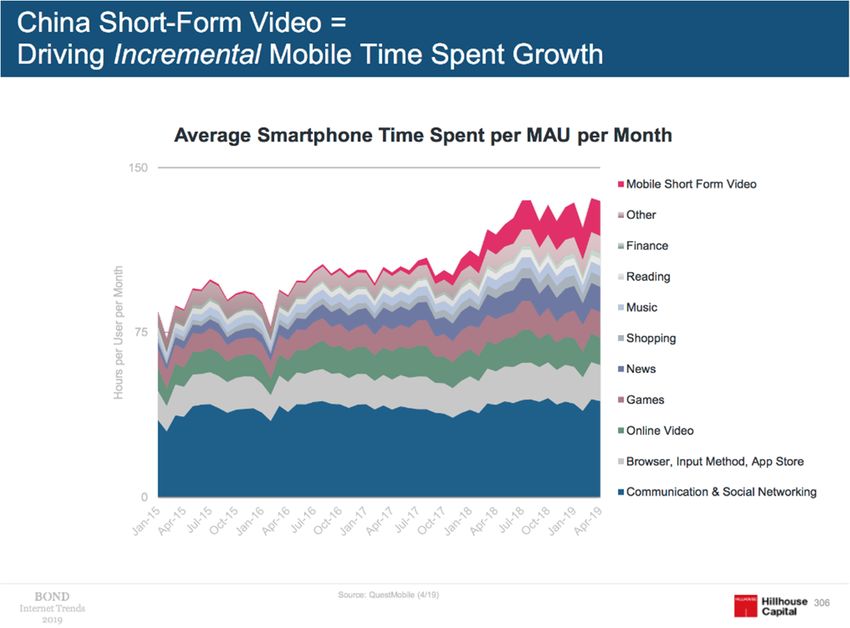
E3S Web of Conferences 235, 03029 (2021)                                                        https://doi.org/10.1051/e3sconf/202123503029
NETID 2020

      algorithms help it attract users and maintain user                  fragmentary time, it usually turns out that they will
      stickiness. In addition, this paper analyzes the abuse of the       consume far more than 15 seconds without even noticed.
      recommendation algorithm, as well as the association                    Because the only operation that the user need to do,
      between these disadvantages and the phenomenon of                   after a video is finished, is to swipe up the screen and start
      “Douyin Mania” and other impacts. This research can be              the next one. It is very low-cost and simple for users of all
      useful for media scholars to have a deeper understanding            ages.
      of the recommendation algorithm principles, and make                    According to Mary Meeker’s 2019 Internet Trends
      technology and media better integrate and benefit people's          Report, Mobile Short Form Video has brought the main
      lives.                                                              cause for users to spend more time on their smartphones.
                                                                          From April 2017 to April 2019, the average daily use time
                                                                          of Chinese Short Video Apps has grown from less than 100
      2 The Phenomenon of “Douyin Mania”                                  million hours to 600 million hours. Among all the short
      Although a short video may be only cost 15 seconds, when            video apps, Douyin headed the top of the number of Daily
      users use short video app like Douyin to kill some                  Active Users (DAU), leading the growth both in the
                                                                          number and duration of users[2].

                      Fig1. Average Smartphone Time Spent per MAU per Month from 2019 Internet Trends Report [2].

                 Fig2. China Short-Form Video Daily Time Spent & Leading Platforms from 2019 Internet Trends Report [2].
         Statistics from BigData-Research also showed that                day and 56.9% of users using more than 60 minutes per
      short videos have been considered high-frequency                    day [4]. Douyin, as one of the most popular short video
      applications, with 41.3% of users using multiple times a            platform in China today, is even higher than this overall

                                                                      2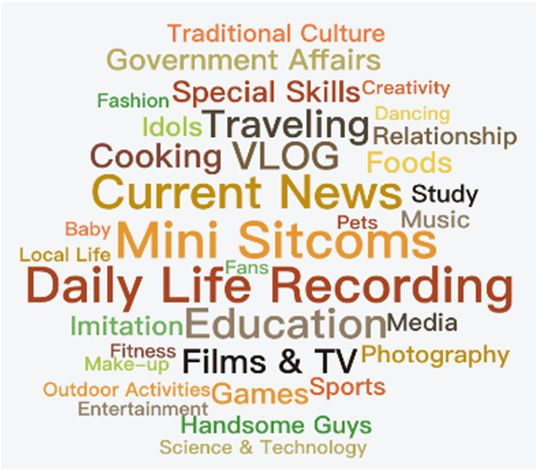
E3S Web of Conferences 235, 03029 (2021)                                                       https://doi.org/10.1051/e3sconf/202123503029
NETID 2020

      average. According to data from China Securities, the               21 times a day and almost 60 minutes [5].
      average daily usage of Douyin users can reach more than

                                               Fig3. The Usage of Douyin and Kuaishou [5].

         Therefore, there are some critics think Douyin is a              mostly controlled by the audience, as it is the user who has
      “Time Black Hole” that caused people’s addiction to                 the choice to stay or leave an application. Study lead by
      browsing short videos. It kills people's time, distracts            Cao Huanhuan, a senior algorithm architect of ByteDance,
      people's attention, and makes it difficult for them to              shows that there is a clear correlation between user
      concentrate on serious things. Users seem to be caught into         satisfaction and user continuance intention. Their result
      a vortex of entertainment.                                          also finds out that satisfaction is the most significant
         Douyin has been so compelling that in April 2018,                among all the variables affecting intention of usage
      developers were forced to add an “anti-addiction”                   continuance [6]. Therefore, the success of the Douyin
      notification. After 120 minutes of continuous use by the            recommendation algorithm hinges on it complete
      user, the system will automatically lock, and the user              satisfaction with of users’ needs.
      needs to re-enter the password to continue using. This
      Douyin addiction, which also sort of “Douyin Mania”, has
                                                                          3.1.1 “Full Coverage of Users interest”: A Global
      become the status quo for many Chinese people.
                                                                          Interest Exploration Recommendation Method

      3 The Recommendation Algorithm                                          “In the era of short videos, the creative forms and
                                                                          genres of short videos are extensive, and any details of life
      principles which lead to Douyin Mania                               can be used as materials for creative expression”,
          Comparing the differences between ByteDance’s                   according to the 2019 Creator Ecology Report officially
      products and traditional Internet giants’ products, it is not       released by Douyin [7]. There are miscellaneous content
      difficult to find that the kernel of its success is at the          materials on Douyin that could have covered all area of
      technical level. Although is a commercial corporation,              interests, including but not limited to mini self-made
      Bytedance (Douyin's parent company) is very enthusiastic            sitcoms, current news, vlog (video log), education, special
      about artificial intelligence. They even established an AI          skills and so on. For such a huge content materials on
      Lab in 2016, whose main research focus has been the                 Douyin platform to accurately match the corresponding
      development of innovative technologies that serve the               audience, a sophisticated and logical labels classification
      purposes of ByteDance’s content platforms.                          method is the foundation.
          In that context, Douyin, as a product of Bytedance,
      could gain such a great popularity in a short period must
      has a close relationship with their powerful intelligent
      algorithm behind it.
          The main purpose of the recommendation algorithm is
      to enable users to obtain personalized content that they are
      interested in, without initiative searching. It is aimed to
      improve users’ satisfaction and dependence on Douyin,
      which can be divided into the following two aspects: how
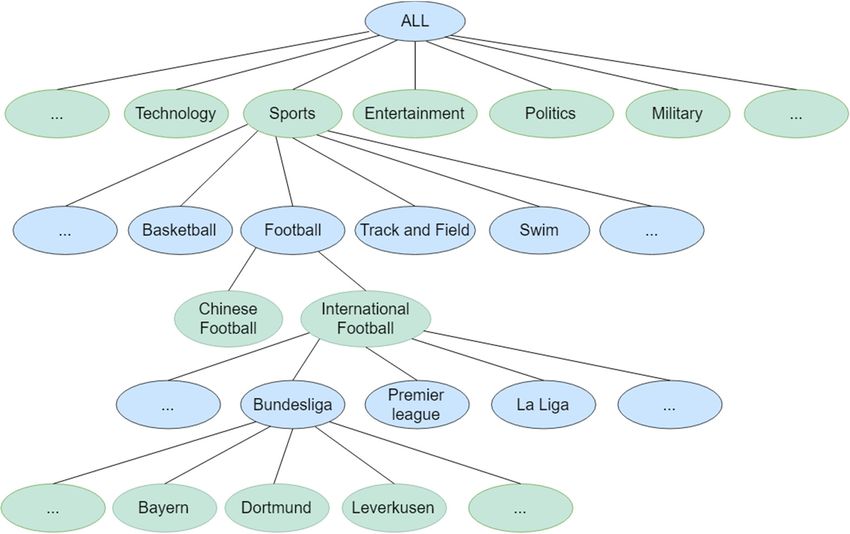
      the algorithm caters to the audience and how the algorithm                         Fig4. Popular Topics in Douyin.
      traps the audience.                                                     ByteDance applied for an invention patent entitled “A
                                                                          Global Interest Discovery Recommendation Method and
      3.1 The Algorithm Caters to Expectations of                         Device” [8]. This patent clarified how they systematically
      Users by Fully Meeting Needs                                        categorize a large number of contents to better fit the
                                                                          interests of users. According to the patent, they build a
         In any mass communication process, the initiative is             global algorithm to “construct a hierarchical interest label

                                                                      3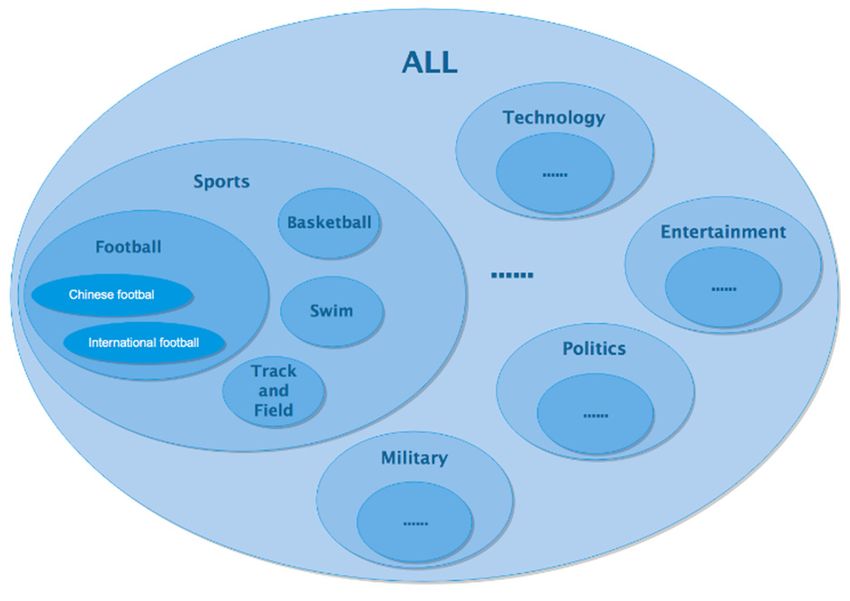
E3S Web of Conferences 235, 03029 (2021)                                                           https://doi.org/10.1051/e3sconf/202123503029
NETID 2020

      set based on the theme of contents, and calculated the
      relevant degree of each interest label in the set” [8].

                                                   Fig5. The Hierarchical Interest Label Tree.

          The implementation of this method is to build the                  can be predicted by models. For example, the resident
      interest label set as an interest label system tree diagram.           location comes from the user's authorized access to the
      The tree diagram can clearly show the inclusion and                    location information. Based on the location information,
      hierarchical relationship between the data. In this                    the resident point is obtained through traditional clustering
      hierarchical label classification tree, the root node is all the       methods [10]. That means counts the user's location
      content of Douyin. The meta-classifiers in the first layer             information data collection in a form similar to a scatter
      below are some general category like Sports, Technology,               plot, and takes the center of the cluster is used as the
      Entertainment, etc. Suppose there is a parent node                     resident location. Combining the resident point with other
      (meaning a node who has branch) represent sports, then its             information can infer the user's work place, business trip
      child nodes mean more detailed classifications in the field            place, and travel place [10]. The aggregation of these user
      of sports, such as basketball, football, swim. Each branch             tags into environmental features will be very helpful for
      can be further refined into narrower and specific domain.              recommendations.
      Douyin also encourages creators to specialize in only one                  The user’s interest characteristics refer to the
      domain, instead of pursuing broad coverage of the content.             categories, creators, specific labels that they are interested
      As to the recommendation algorithm, such content can be                in. Users with similar interests will form User Clustering
      more accurately recommended to the users who need it,                  and share each other’s interest characteristics. In addition,
      and increase the valid audience.                                       the model also needs to learn the behavior characteristics
                                                                             of the user, such as when the user tends to use Douyin,
                                                                             how long and how often. This information will also help
      3.1.2 The Algorithm Knows You Better: Draw User
                                                                             the algorithm fit better. For instance, if the user’s habit of
      Persona
                                                                             using Douyin is high frequency but each time is very short,
      In order to better match the content with the user, the                then the algorithm may consider to recommend videos
      algorithm also needs to understand the user well, that is,             with shorter duration.
      to draw user’s persona. It means sorting the user's                        Time-effectiveness       is     essential      for     the
      information and labeling the user to achieve accurate                  recommendation algorithm because people’s needs are
      content recommendations [9]. According to the algorithm                changing at all the time. Douyin uses a stream computing
      principle promulgated by ByteDance, they basically use                 method to dynamically process most of user profiles. As
      user’s interest characteristics, identity characteristics, and         long as there are user actions, the algorithm will update
      behavior characteristics to describe a user [10].                      the labels. For user profiles that are not sensitive to
          When users first log in to Douyin, they can choose to              timeliness, traditional batch computing with non-real-time
      log in through a third-party social account. This allows the           and high-latency features is used. This mixed use of
      algorithm model to mine existing user information and                  stream computing and batch computing requires only
      historical social behavior on external data to analyze user            dozens of machines to support the interest model update
      habits more quickly. However, not all users will choose                of tens of millions of users every day. The features update
      this login method, so the understanding of users must be               can basically be done in real time. After the user make a
      mainly based on user usage on Douyin. Basic identity                   judgment on whether like or dislike the current video and
      information, such as gender, age, location and occupation,             swipe to the next one, the algorithm already has a new

                                                                         4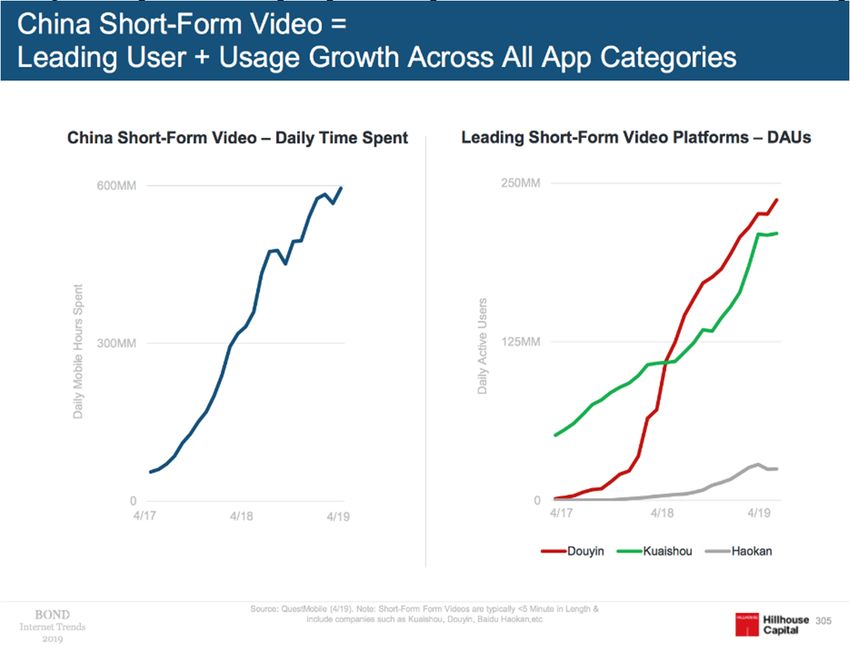
E3S Web of Conferences 235, 03029 (2021)                                                         https://doi.org/10.1051/e3sconf/202123503029
NETID 2020

      portrait of the user. This means that the longer the user
      uses Douyin, the more the algorithm will understand the
      user.

      3.1.3 Efficient Information Distribution: Matching
      Strategy
      “Under the de-medialization trend in the digital media era,
      users are no longer just passive receivers and consumers
      of information, but also active senders and producers. The
      situation where one person decorates two corners greatly
      increases the amount of information. [11]” The content
      distribution efficiency of manual editors can no longer
      meet the rapidly changing content output. Efficient and
      high-quality extraction of the information has become a                   Fig6. Typical Architecture for Recommendation [13].
      necessary requirement, which happens to be the core goal                  The typical architecture for recommendation
      of Douyin algorithms. They do not rely on social                     algorithm start with receiving a set of inputs
      relationships or require the user to have any initiative             characteristics X, Y from the content and the user. As the
      searching operations, which greatly reduces the cost for             input data are huge, these inputs need to be compressed.
      users to obtain information. The above two steps make the            In the embedding level where inputs are generated to
      algorithm understand the user and the content more and               lower dimensions feature vectors that make it easier to
      more. The next step is to solve the most important                   calculate. After that, the classifiers obtain characteristics
      matching problem.                                                    about the content and the user, train it separately. The final
          Most recommendation systems divide the matching                  fusion result comes from the aggregation of several
      problem into two parts: recommendation recalling and                 training models, which may have different weights for
      recommendation ranking. The recommendation recalling                 each feature that make the matching result more reliable.
      is to retrieve candidate sets that meet users interests in all            The continuously updated data set of the platform can
      content sets, and then screens out a suitable number of              be divided into two parts, the training set and the test set.
      candidate lists. There is a huge amount of content on the            The training set includes not only the input features, but
      Douyin, that the recommendation system cannot calculate              also the real accuracy of the matching result, which
      all the correlation between the contents and users.                  calculated by subsequent user’s feedback. To train the
      Therefore, it is necessary to design some recalling                  model, the predicted result output is compared to the real
      strategies, and filter out a thousand-level content library          result and the cost is the difference of the two. The smaller
      from the massive content each time it is recommended.                the cost is, the more accurate the model is. Improving the
      Inversion is one of the main ideas, which is to positioning          accuracy is the significance of training. The point of
      content based on certain attributes of the content, such as          training is to make the cost as small as possible through
      genres, topics, and popularity, rather than based on the             millions of training examples. To do this, the model
      order of content records. This method can quickly truncate           updates the features’ weights step by step, until the
      massive content sets based on user interest tags, and                prediction closely matches the correct output. Once
      efficiently filter a small portion of content from a large           trained well, a training model has the potential to make
      content library.                                                     accurate predictions each time. The model will then be
          The recommendation ranking is based on the                       used in the test set to recommend the content to users. The
      combination of metrics from different dimensions. All the            recommendation algorithm model is always learning, even
      metrics will be combined to score the content on the                 if the model is already put in use. Online training is based
      recommendation candidate list, and then determine the                on the latest samples to update model parameters in real
      order of recommendations.                                            time.
          In Douyin recommendation algorithm model, multiple                    As the result, it ensures the algorithm to follow up with
      machine learning algorithms are used in combination to               changes in users’ needs at any time and make adjustments
      seek higher performance. The key to all machine learning             in a timely manner.
      algorithms is that it can learn sophisticated feature                     Based on the elaborate division of content and user
      interactions behind user behaviors. “Most feature                    groups, combined with the precise and intelligent
      interactions are hidden in data and difficult to identify a          matching, users will always be in a mood of entertainment
      rule. (for instance, the classic association rule “diaper and        that satisfied by the recommendation content. This allows
      beer” is mined from data, instead of discovering by                  users to immerse themselves in short videos of Douyin one
      experts), which can only be captured automatically by                after another. And because most of the recommended
      machine learning. Even for easy-to-understand                        content can hit the user’s needs, the curiosity and
      interactions, it seems unlikely for experts to model them            expectation for the next video will be magnified. The next
      exhaustively, especially when the number of features is              one, just like Pandora's box, keeps attracting users, so that
      large.” [12]                                                         they cannot leave this application.

                                                                       5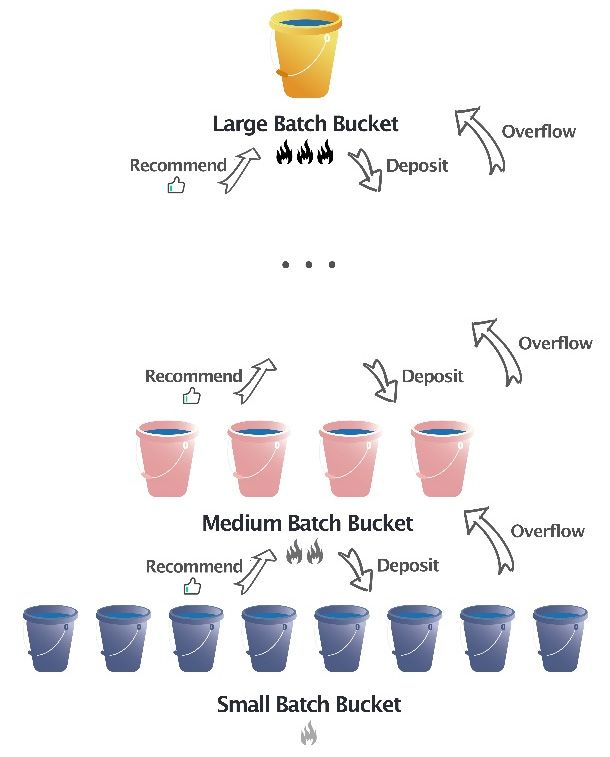
E3S Web of Conferences 235, 03029 (2021)                                                        https://doi.org/10.1051/e3sconf/202123503029
NETID 2020

      3.1.4 Finding the Emotional Resonance: Partitioned
      Data Buckets
      The author of the “data pool marketing” theory, Yang Fei,
      defined the concept of the data pool in his book: “The key
      to the data pool is to get more data through the continuous
      operation of the original data.”[14] This theory is reflected
      in the algorithmic logic of Douyin. In order to seek a wider
      audience resonance, Douyin uses the method of
      partitioned data buckets to launch new content.

                                                                                     Fig8. Principle of A/B Test System [10].
                                                                              This is actually similar to the test and recommendation
                                                                          of content. First, all users are divided in to several small
                                                                          batch buckets, and then one of the small batch bucket is
                                                                          extracted and 50% of it is labeled as the experimental
                                                                          group. A / B Test uses quantitative methods to verify the
                                                                          feasibility and effectiveness of the strategy. For example,
                                                                          start an experiment with 10% data, of which 5% is the
                                                                          experimental group with a new strategy and another 5% is
                                                                          the baseline with the old strategy. In the same time interval,
                                                                          under the same test environment, and with the same user
                                                                          group (no obvious attribute difference), compare the
                                                                          relevant data of the two groups. In that way, they can test
                                                                          the performance of the new strategy. It can be very
                                                                          important for a product to optimization.

                                                                          3.1.5 “Everyone           Can      Be     Famous”:        The
                                                                          Decentralization
                                                                          Douyin dilutes the significance of social connection
          Fig7. The Partitioned Data Bucket System of Douyin.             between acquaintances, friends, and families in the real
          The platform divides users into several small batch             world through decentralization. On the contrary, it makes
      buckets according to a certain randomness (such as a                all users of the entire platform can be easily linked to each
      group with the same user’s ID tail number). When the                other that forms a whole connection system all together.
      platform launches new content, it will first uses one of the        The algorithm is the engine of what users of Douyin see,
      small batch buckets to test the content recommendation              not their circle of friends. Users are not bound by the
      effect. The four-basic metrics are the number of views,             narrow circle of their actual life. Instead, users can focus
      likes, replays, shares and completion rates, each of them           on anything they might be interested in.
      have different weights. When the comprehensive score of                 At the same time, the high degree of decentralization
      these evaluation indicators reaches a specified value, it           of Douyin satisfies the desire that “everyone wants to be
      means that this short video has the potential to be a popular       famous”. Decentralization fulfills Marshall McLuhan’s
      video. Then this video overflows into a medium batch                prediction that “Centers Everywhere, margins Nowhere”
      bucket to do the test again. The content of different size of       [15]. The development of the Internet itself is an
      the buckets will get different level of views. The                  irreversible “decentralization”. In the process, people are
      recommended content is filtered by layers to ensure the             transferring the power of “Selecting Content” from
      quality. The top-performing video will be continuously              traditional manual “Gate Keeper” to AI and algorithms,
      overflowed all the way up to the large batch bucket or even         but it can also be argued that, to each user themselves. The
      the whole platform.                                                 public is paying more and more attention to their right of
          The basis of these explosive content is the emotional           expression, and ordinary people are beginning to speak out,
      resonance that is sought in the expanding scope of testing.         showing their own life.
      This can be an effective way to evaluate content. Due to                Douyin’s algorithm recommendation mechanism is
      the huge amount of content on the Douyin platform, multi-           based on the principle of decentralization. For ordinary
      layer screening is a very reasonable method to guarantee            users, it is a good opportunity to stand out. Unlike some
      the quality of the content. After all, only if the content is       “centralized” social media, they encourage fresh users to
      good, can Douyin retain users.                                      produce content instead of focusing the main traffic on
          Moreover, according to Cao Huanhuan’s report [10],              celebrities and hotspots [16]. The content is the most
      Douyin also uses a combination of partitioned data                  important factor for the algorithm to decide whether to
      buckets and A / B Test to test whether the newly launched           distribute it, rather than creator’s identity, use-age or social
      recommendation strategy is effective.                               status. Therefore, everyone has the possibility to become
                                                                          popular overnight.

                                                                      6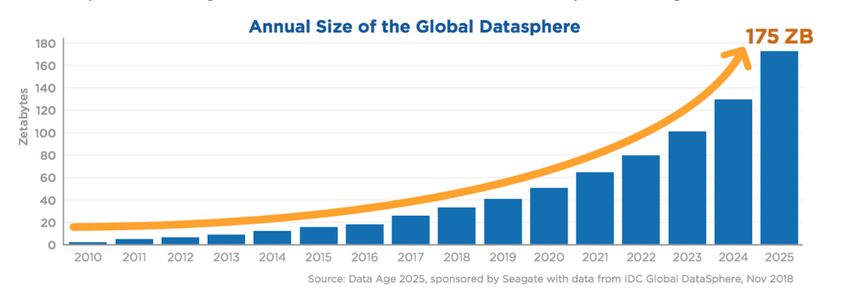
E3S Web of Conferences 235, 03029 (2021)                                                        https://doi.org/10.1051/e3sconf/202123503029
NETID 2020

      3.2 The Algorithm is Making Traps for Users: The                        “In this formula, N (t1, t2) means the number of times
      Recommendation Algorithm Pushes Users                               that both the interest label t1 and t2 appear in a user’s
      Addicted to Douyin                                                  interest union set. And N (t1) is the users amount that only
                                                                          label t1 is in the interest union set. Similarly, N (t2) means
                                                                          the users amount that only label t2 is in the interest union
      3.2.1 Algorithm Finds Your               Unknown       Part:
                                                                          set.” [8] The equation shows that the more users like t1
      Collaborative Filtering Algorithm
                                                                          and t2 at the same time, and the fewer users only like t1 or
      Joseph Luft and Harrington Ingram, two famous American              t2, the higher the correlation between t1 and t2. If the
      social psychologists, came up with “the Johari Window”              correlation is less than the threshold value, it means that
      theory [17]. Their theory believes that people's cognition          contents of these two labels are considered completely
      consists of four areas. Among them, the unknown area                irrelevant and would not be recommended.
      refers to the part that not known to self or others, which is           After having the correlation between different labels,
      difficult to be observed. However, Douyin’s collaborative           the model also defines a priority score for user u to explore
      filtering algorithm may inadvertently help users discover           the interest tags t:
      their latent interests, which can also be a trap for them to
      spend more time on Douyin.                                          (2)
                                                                               “In this formula, not only the correlation between tags
                                                                          (w2 * rel (t, Tu)) is considered, the equation also adds a
                                                                          certain percentage of the popularity of the tag (w1 * hot
                                                                          (t)), and subtract the degree of label t has been explored
                                                                          (w3 * freq (t)).”[8] It is aimed to provide fresher field of
                                                                          content to the user and explore their interests on a larger
                                                                          scale. So, the recommendation algorithm will not only
                                                                          recommend to user the content and topic that they are
                                                                          exactly interested in or concerned about, but also
                                                                          something fresh and unexpected. In that case, Douyin will
                                                                          not easily lose the user who is querulous about the
                                                                          singularity of contents.
                                                                               The principle of user-based collaborative filtering is
                     Fig9. The Johari Window [17].                        similar. It's just that it will be more complicated in
          Collaborative filtering algorithm mainly includes user-         calculation, because the model has more dimensions of
      based filtering and item-based filtering. Their common              data to describe a user than content. To make it easier to
      principle is to identify similarities from data mining (user        understand, according to Paul Resnick and his group, the
      portraits and content labels), and expand more                      user-based filtering means “helping people make choices
      possibilities based on the similarity of some features.             based on the opinions of other people [18] ”. People with
          As for the item-based filtering, it based on similarities       certain similar characteristics may somehow share similar
      and correlation between contents. ByteDance invented                taste, so that the algorithm can find users with some
      their own patent to protect their rights on how to compute          similar characteristics, and cross-recommends their
      the correlation between labels and how to exploit users             respective areas of interest to expand the user's area of
      potentially interests [8]. First, the model will set a              interest as much as possible.
      threshold value of correlation between two different labels              Since recommendation algorithms, especially
      according to the shortest distance between them. Then               collaborative filtering algorithms, have been involved in
      they collect each user’s all known interest labels. It can be       the media. The academic community has been concerned
      a set like the following hierarchical union set of the global       that “they increase ideological segregation” [19].
      hierarchical label tree.                                                 However, according to the above algorithm logic of
                                                                          Douyin, it can be concluded that the collaborative filtering
                                                                          algorithm is not filtering out information for the user, but
                                                                          actually expanding the range of content that the user can
                                                                          access. Admittedly, there’s no denying that the problem of
                                                                          “Filter Bubbles” and “Information Cocoons” exist, but the
                                                                          author considers that these phenomena are not actually
                                                                          caused by recommended algorithms.
                                                                               In 2016, Oxford researcher Seth Flaxman and his team
                                                                          addressed the issue by “examining web browsing histories
                                                                          for 50,000 US-located users who regularly read online
                                                                          news. They found that, somewhat counterintuitively,
                                                                          social networks and search engines are associated with an
                                                                          increase in an individual’s exposure to material from his
                                                                          or her less preferred side of the political spectrum. [19]”
                 Fig10.     The Hierarchical Union Set.                   This study shows that people's actual media consumption
                                                               (1)        is more diverse than they afraid. In fact, the dimensions of

                                                                      7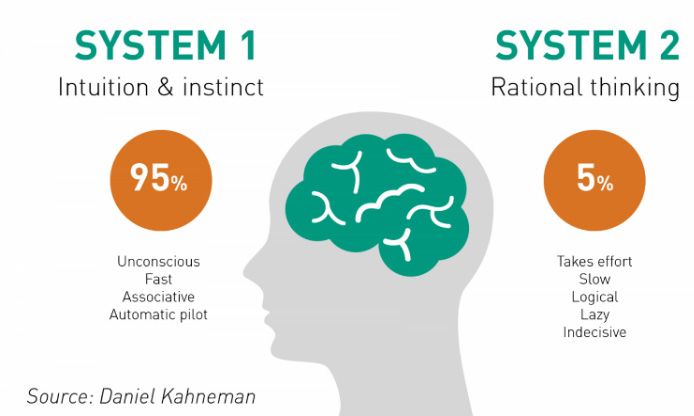
E3S Web of Conferences 235, 03029 (2021)                                                      https://doi.org/10.1051/e3sconf/202123503029
NETID 2020

      the input features that algorithm training relies on are           filtering is not as simple as finding common points among
      much larger than people think. And the flexibility of the          people, but is constantly superimposing more potential
      model is also far beyond our imagination. Collaborative            interest areas by calculating from local similarity.

                                           Fig11.     Annual Size of the Global Dataphere [20].

          Besides, according to IDC’s report, the expansion in
      the size of the Global Datasphere is explosive and will be             Communication scholar Wilbur Schramm came up
      a never-ending [20]. The fact is that people cannot face           with a mathematical formula trying to explain how this
      such a large amount of information and rely entirely on            inertia affects people's choice of media [23]:
      humans to process them. The use of algorithms may be the               possible rewards ÷ effort required = probability of
      only way to keep the information distribution speed up to          choice (3)
      the information production speed.                                      It means that the greater the probability of meeting the
          What needs to be more careful is that among the                need, the lower the degree of effort, and the higher the
      overloaded information may lead to FOMO—fear of                    probability of choosing a certain channel to receive
      missing out. “FOMO is considered a form of social                  information. Every time a user makes a choice, they have
      anxiety—a compulsive concern that one might miss an                to think about it. The process is painful[24] for them. The
      opportunity for social interaction, a novel experience, or         recommendation algorithms of other software often give
      some other satisfying event, often aroused by posts seen           users more choices. They recommend you things you
      on social media sites.[21]” Users are satisfied and adapted        might like, but these contents will play the role of an
      with the recommended content of Douyin, and may                    additional option. However, what Douyin seeks is to put
      always be curious about whether the next video is more             the user in the state of extreme passive acceptance, making
      attractive. They are afraid to miss the unknown part that it       the recommendation as the only option.
      turns out to be endless browsing of the recommendations                The “immersive experience” interactive design of
      feed and eventually become addictive to it.                        Douyin, where users just need to continuously sliding up,
                                                                         and the setting of full-screen auto play are all trying to
                                                                         avoid giving users more options to bother them. They are
      3.2.2 Low-cost Interaction Design and Decision-                    not making choices, but just judgments. After coming to
      making Mechanism                                                   the recommendation page, Douyin automatically play the
      The Nobel laureate Daniel Kahnema, wrote a book titled             recommended video. If the user doesn’t like the current
      “Thinking, Fast and Slow”.[22] In his book, he believes            one, he/she can just swipe up and switch to another one,
      that there are two systems in the brain. “System 1” is             which saves the cost of exit. When the user browses
      unconscious fast thinking, and “System 2” is consciously           Douyin recommendation feed, the user only needs to keep
      slow thinking, which will be activated only when “System           the brain in System 1, that consumes less energy and
      1” cannot solve the problem. “System 2” requires                   works unintentionally. The using cost of Douyin is very
      concentration for a period of time and consumes more               low and the interaction is simple. For the above reasons,
      energy of the human body. It explains the inertia of the           the probability of constantly using Douyin highly increase.
      human brain.
                                                                         4 Further Discussion: The Outlet of
                                                                         Closed-Loop Relationship Between
                                                                         Douyin Addiction and Algorithm
                                                                         Optimization
                                                                         Through the analysis of the previous section, it is indicated
                                                                         that the recommendation algorithm principles, more or
                                                                         less, positively effects the user's addiction to Douyin.
                                                                         However, it's not just the algorithm that is impacting the
                                                                         user. The user is also impacting algorithm because people
                                                                         are always the biggest variable in the recommendation
           Fig12.     System 1 and System2 in our Brain [22].            model.

                                                                     8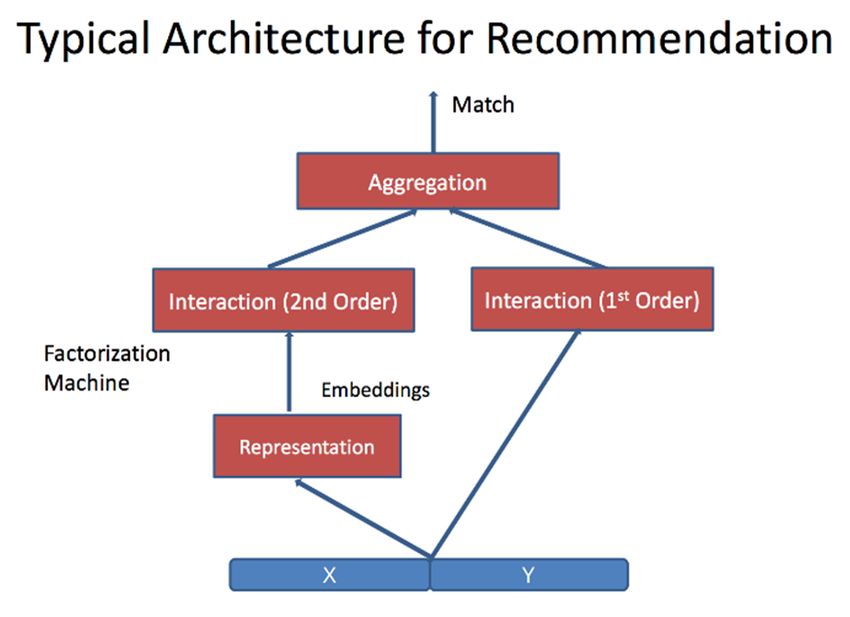
E3S Web of Conferences 235, 03029 (2021)                                                      https://doi.org/10.1051/e3sconf/202123503029
NETID 2020

          As the 2019 internet trend report goes, “The data-             “understands” people’s mind. They use powerful
      driven world will be always on, always tracking, always            computing capability to find the law in multiple trainings
      monitoring, always listening and always watching,                  and output content based on it. Users need to continuously
      because it will be always learning”[2]. At the same time,          improve their new media literacy and critical thinking
      it also shows that the intelligence, accuracy, and other           ability so that they will not completely control by
      performances of the recommendation algorithm still have            algorithms.
      huge potential. In other words, the more frequent and                  In fact, Douyin has revealed the algorithm logic of its
      longer the user uses Douyin, the more accurate the                 recommendation system to the public, and even released
      algorithm will be.                                                 official reports to guide creators on how to run a Douyin
          The influence between the algorithm and the user is            account. They want the creators know how good content
      bilateral. On the one hand, the algorithm decides what the         works to stimulate them to create better works. And help
      user can see. On the other hand, the algorithm also largely        users to train their own recommendation persona. For
      depends on the users’ behavior to train and optimize the           example, when using Douyin, users can consciously
      model. The recommendation algorithm makes users more               evaluate the quality of content by feedback on the four
      and more addicted to Douyin. Then the more users                   basic metrics of short video. This timely and authentic
      addicted to it, the better algorithm knows what and how to         feedback may not alleviate the addiction itself, but it helps
      recommend. If things continue in this way, the addiction           users to receive higher quality content during the time of
      may be aggravated and it can be more difficult for the             using Douyin.
      users to control themselves. It suggests that there is a               For Douyin’s developers, perhaps in the future
      closed-loop relationship between Douyin addiction and              algorithm optimization, their focus should shift from how
      algorithm optimization. This direct interaction is reaping         to increase user stickiness to how to expand more users.
      the market and users’ time in a spiral upward trendency,           Meanwhile, they should pay more attention to how to
      which deserves serious attention. Today, under the                 incorporate more environmental variables into the
      background of the recommendation algorithm still feeds a           algorithm. For instance, during big chunks of rest time at
      certain proportion of mismatching-contents. The                    noon and night, maybe they can gradually decrease the
      phenomenon of Douyin Mania is already generally                    accuracy of their recommendations to give users an
      existing. What if the model of the recommendation                  “excuse” to leave. Besides, on Douyin’s anti-addiction
      algorithm is far more accurate than today, that almost             system, more stringent reminders can be taken for users
      every short video users view can be attractive, how much           who frequently exceed the recommended duration.
      time are people going to spend on it?                                  In Douyin’s product design team, they should
                                                                         introduce more interdisciplinary talents, who are familiar
                                                                         with both technology and media communication. If there
                                                                         is no longer the directly “gatekeeper” of the mass content,
                                                                         then maybe Douyin can increase the “gatekeeper” of their
                                                                         recommendation system. This can also enhance the
                                                                         efficiency of guaranteeing the appropriateness of the
                                                                         content.

                   Fig13.    Closed-loop relationship                    5 Conclusion
          The original intention of the recommendation
      algorithm is to improve the efficiency of information              In this paper, the author analyzes principles used in
      distribution, that is, to save users time from selecting           Douyin recommendation algorithm. Trying to Combine
      information. However, with the continuous improvement              the two perspectives of algorithm technology and
      of it, people save time through accurate recommendation            communication to explain how the recommendation
      methods, but actually spending more time watching                  algorithm effects the widely existing phenomenon of
      passively received contents. It seems that the                     Douyin Mania. It is undeniable that ByteDance has top
      recommendation algorithm conversely causes people to be            quality algorithms. They even have their own powerful AI
      more lazy and unwilling to actively explore the world. It          Lab, which dedicated to promoting the development of
      is unreliable to completely rely on users self-control to          algorithms in the field of information dissemination.
      solve this problem. In order to break the deadlock and find        However, if Douyin wants to achieve sustainable
      an outlet, Douyin’s developers and users could work on             development, then it cannot be an application that
      the following areas.                                               generally causes people to indulge in it.
          For users, they need to face up to the power of the               On the balance between technological optimization
      algorithm and fully understand its operation mechanism.            and value orientation, Douyin still has a long way to go.
      Users should not oversimplify the algorithm. The
      algorithm does not just monotonously recommend what                References
      they like to users, as many people think. The input of the
      model has a very high dimension and can expand its area            1.   Douyin Official Website. https://www.douyin.com.
      of interest based on different combinations. Besides, users        2.   M. Meeker. 2019 Internet Trends Report. 2019-6-11.
      should also be rational and alert to algorithms. The results            2020-03-13. https://www.bondcap.com/report/itr19.
      of machine learning do not mean that it really

                                                                     9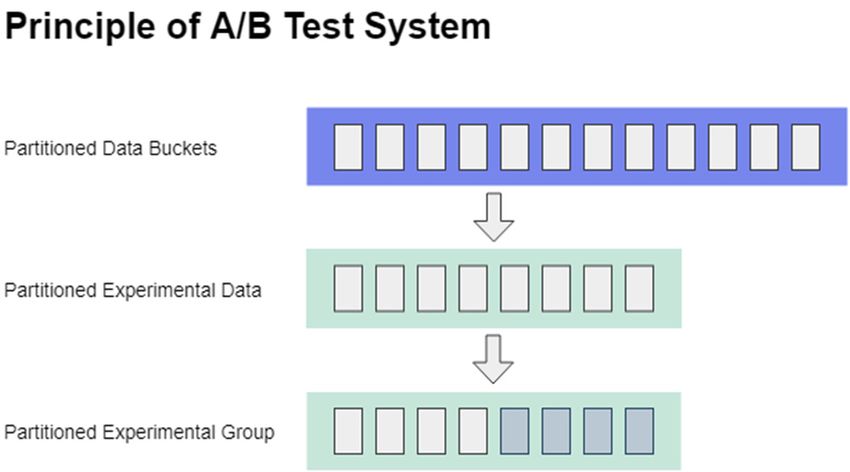
E3S Web of Conferences 235, 03029 (2021)                                                 https://doi.org/10.1051/e3sconf/202123503029
NETID 2020

      3.    Douyin official. 2019 Douyin Data Report. 2020-01-       18. P. Resnick, N. Iacovou, M. Suchak, P. Bergstrom, J.
            06.                                       2020-03-13.        Riedl. GroupLens: an open architecture for
            https://index.toutiao.com/pdfjs/view.html?file=//inde        collaborative filtering of netnews. Publication:
            x.toutiao.com/report/download/0b215aec3a1fd170e3             CSCW '94: Proceedings of the 1994 ACM conference
            67c6ea3ce2954e.pdf.                                          on Computer supported cooperative work, October
      4.    Big Data-Research. China Short Video Market                  1994,                    pp.                175–186.
            Research Report for the 3rd Quarter of 2019. 2019-           https://doi.org/10.1145/192844.192905
            11-06.         2020-03-13.        http://www.bigdata-    19. S. Flaxman, S. Goel, J. M. Rao. Filter Bubbles,
            research.cn/content/201911/1010.html.                        Echo Chambers, and Online News Consumption.
      5.    M. Chen. Lonely Tencent, dancing bytes (ByteDance            Public Opinion Quarterly, 2016, vol. 80, no. S1, pp.
            chapter).           2019-06-28.           2020-03-13.        298–320.
            http://www.cngold.com.cn/dealer/jyshp/20190707f1         20. D. Reinsel, J. Gantz, J. Rydning. The Digitization of
            2105n4274169501.html                                         the World From Edge to Core. 2018-11. 2020-03-13.
      6.    H. Cao, J. Jiang, L. Oh ,H. Li, X. Liao, Z. Chen.            https://www.seagate.com/files/www-content/our-
            (2013). A Maslow’s hierarchy of needs analysis of            story/trends/files/idc-seagate-dataage-whitepaper.pdf.
            social networking services continuance. Journal of       21. L. Dossey, L. FOMO, Digital Dementia, and Our
            Service Management, 2013, vol. 24, no. 2, pp. 170–           Dangerous Experiment. EXPLORE: The Journal of
            190.                                                         Science and Healing, 2014, vol. 10, no. 2, pp. 69–73.
      7.    Douyin Official. 2019 Creator Ecology Report. 2019-      22. D. Kahneman. Thinking, Fast and Slow. 2011-10-25.
            08-30.                                    2020-03-13.        2020-03-13.
            https://index.toutiao.com/pdfjs/view.html?file=//inde    23. R. L. West, L. H. Turner. “Uses and Gratifications
            x.toutiao.com/report/download/592335cfe74c5c1611
                                                                         Theory. ” Introducing Communication Theory:
            f323b9b4a0653c.pdf.
                                                                         Analysis and Application. Boston: McGraw-Hill,
      8.    J. Chen, J. Xu, H. Cao. A Global Interest Discovery          2010, pp. 392-409.
            Recommendation Method and Device. 2019-03-05.
            2020-3-13.                                               24. Y. Zhang. Machines replace editors?. Media Review.
                                                                         2014, vol. 03, pp. 36-40.
      9.    D. Liang. See how today's headlines play with
            precision marketing. Modern Business Industry. 2017,
            vol. 19, pp. 59-60.
      10.   H. Cao. Today's headline algorithm principle. 2018-
            01-16.                                    2020-03-13
            https://baijiahao.baidu.com/s?id=158971482281854
            0008&wfr=spider&for=pc
      11.   B. Han. In the Swarm: Digital Prospects. Cambridge,
            Massachusetts: MIT Press, 2017
      12.   H. Guo, R. Tang, Y. Ye, Z. Li , X. He. DeepFM: A
            Factorization-Machine based Neural Network for
            CTR Prediction. Proceedings of the Twenty-Sixth
            International Joint Conference on Artificial
            Intelligence. 2017, pp. 1725-1731.
      13.   H. Li. Framework and Principles of Matching
            Technologies, Keynote Speech at the WSDM 2019
            Workshop on Deep Matching in Practical
            Applications,      Melbourne,      February     2019.
            http://hangli-
            hl.com/uploads/3/4/4/6/34465961/wsdm_2019_work
            shop.pdf.
      14.   F. Yang. Data Pool. 2018-4. 2020-03-13.
      15.   P. Levinson. Digital McLuhan: A Guide to the
            Information Millennium. 1999. 2020-03-13.
      16.   M. Li. Limitations and Countermeasures Analysis of
            the Douyin Algorithm Recommendation Mechanism.
            New Media Research, 2019, vol. 5, no. 02, pp. 28-29.
      17.   J. Luft, H. Ingham,.“The Johari window, a graphic
            model of interpersonal awareness ”. Proceedings of
            the Western Training Laboratory in Group
            Development. Los Angeles: University of California,
            Los Angeles. 1995.

                                                                10
You can also read


