British Psychosocial Oncology Society 2020 Annual Conference
←
→
Page content transcription
If your browser does not render page correctly, please read the page content below
British Psychosocial Oncology
            Society
   2020 Annual Conference:
‘Personalisation, Policy and Practice’
                th             th
    Thursday 27 and Friday 28 February 2020
      MacDonald Holyrood Hotel, Edinburgh

         For further information please go to:
https://www.bpos.org/events/2020-spring-conference/

@BPOSUK
Conference Sponsors
The British Psychosocial Oncology Society gratefully acknowledges
     the support of the following institutions, companies and
   organisations. Please see pages 29-31 for more information.

                               2
Welcome
It’s very exciting to be able to welcome you to this year’s BPOS
conference in Edinburgh. Our chosen theme: Personalisation,
Policy and Practice reflects current priorities in the psychosocial
care of people affected by cancer and the associated challenges for
researchers and clinical colleagues working in this setting. We are
very pleased to have 3 excellent keynote speakers representing
each of these key areas: Dr Catherine Calderwood, Chief Medical
Officer for Scotland will discuss the Scottish Government’s 2019
report on Personalising Realistic Medicine; from the University of
Stirling Professor Gerry Humphris will focus on his research on
patient-professional communication in clinical practice and Liz
O’Riordan, Consultant Breast Surgeon and co-author of 'The
Complete Guide to Breast Cancer: How to Feel Empowered and
Take Control' will present her personal perspective on cancer.
We extend a massive thank you to all who submitted abstracts and
who are presenting an oral or poster presentations this year. Your
contribution and continued investment in the conference is integral
to the ongoing success of the event. We would like to thank the
Scientific Committee (Jo Armes, Lynn Calman, Claire Foster, Steph
Archer, Jonathan Koffman, Richard Kyle, Jenny Young, Debbie
Cavers, Sara MacLennan and Kate Absolom) who scored abstract
submissions and provided helpful advice and knowledge for guiding
the content of the programme. The conference would not have
been possible with the immense organisational skills, time and
dedication provided by Emma Nicklin (BPOS conference organiser)
and Sarah Gelcich (BPOS Treasurer). Thank you also to the wider
executive committee whose excellent ideas have contributed to
planning over the last few months.

                                 3
The BPOS Annual General Meeting is planned for Friday at 13.00
please come along and help contribute ideas for the future
development of the Society. We have a number of opportunities
coming up this year to join the executive committee so if you are
interested then feel free to myself or other committee members to
learn more.
On Friday afternoon we are delighted to be hosting a session jointly
organised by Hannah Thomas (Macmillan Academic Research
Lead) and Mariano Kälfors (National Cancer Research Institute
Programme Manager) to launch a new initiative to attract large
scale funding for research in living with and beyond cancer. We
thank Macmillan for their sponsorship for this element of the
programme. In addition this year’s conference has been supported
by Wiley and Maggie’s along with the School of Health & Social
Care at Edinburgh Napier University and the Usher Institute at the
University of Edinburgh.
Many congratulations to our BPOS bursary winners. First, the
consumer bursary was awarded to Virginia Sherborne. Second,
Emily McBride won the student bursary for the highest scoring
abstract.
Finally don’t forget the conference schedule includes some
excellent opportunities for networking and socialising at the pre-
conference welcome event, self-guided walking tour and
conference dinner. We hope you have a fantastic time in Edinburgh
this year learning, sharing knowledge and importantly having fun in
the process!
Kate Absolom (BPOS Chair)
Debbie Cavers, Richard Kyle and Jenny Young (Local organising
committee)

                                 4
Keynote Speakers

                      Dr Catherine Calderwood
                      Chief Medical Officer for Scotland
                             @cathcalderwood1
                      Catherine has been the Chief Medical Officer
                      for Scotland since 2015.
Catherine qualified from Cambridge and Glasgow Universities and
continues to work as an obstetrician at a regular antenatal clinic at
the Royal Infirmary of Edinburgh.
She is responsible for the Health Promoting Health Service initiative
which aims to tackle health inequalities and improve health across
the population of Scotland and is leading work to improve the health
of those working in the public sector specifically NHS and civil service
staff. She is Chair of the Taskforce for the Improvement of Services
for Victims of Rape and Sexual Assault, the Committee on
Antimicrobial Resistance in Scotland and the Scottish Global Health
Collaborative.
Catherine has published four annual reports on Realistic Medicine.
Realistic Medicine puts the person receiving health and care at the
centre of decision-making and creates a personalised approach to
their care. Her fourth report Personalising Realistic Medicine was
published in April 2019. This report explores personalising realistic
medicine for patients and staff and recognizes the importance of
valuing and supporting staff as vital to improving outcomes for the
people in their care. These reports have been universally well
received and read by millions of people across the world.

                                   5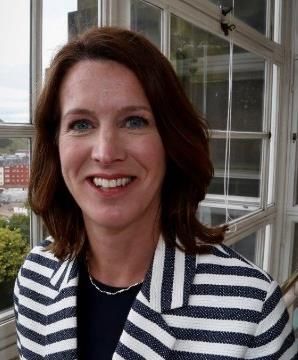
Professor Gerry Humphris
                        University of Stirling
                              @GHumphris
                          Gerry studied Psychology at Reading
                          University (1973-76) before going to Guy’s
                          Hospital to complete a PhD (1983). He
qualified in clinical psychology at Liverpool (1986) before taking up
the post of Chair in Health Psychology at the Medical School,
University of St Andrews (appointed: Nov 2003). His main interest is
understanding the communication processes between clinician and
patient in long-term conditions. He holds an Honorary Consultant
Clinical Psychology contract with NHS Lothian in the Edinburgh
Cancer Centre, Western General Hospital, Scotland where he runs a
Psycho-Oncology clinic. He is a Fellow of the Royal College of
Physicians and was the Chair of the Standing Research Committee
for the International Association of Communication in Healthcare
https://www.each.eu/
His current focus is on fear of cancer recurrence and the intensive
longitudinal assessment of patients during and soon after treatment.
This focus has given rise to applying data analytical and
psychological approaches using mixed methods to assist with
intervention development. The interactions between patients and
staff are recognised as crucial elements of care provision however
these processes present challenges to investigate. He is working
with others on the Mini-AFTERc and KEW interventions that
highlight aspects of these interactions. Support has been generously
provided by Breast Cancer Now and the Chief Scientist Office
(Scotland).

                                 6
Liz O’Riordan
                        Breast surgeon and patient
                        @Liz_ORiordan
                         Liz is an international speaker, broadcaster
                         and award-winning co-author of ‘The
                         Complete Guide to Breast Cancer: How to
Feel Empowered and Take Control’ (Penguin) with Professor Trisha
Greenhalgh. In 2015 (aged 40) she was diagnosed with Stage 3
breast cancer whilst working as a consultant breast surgeon. In 2018
she had a locoregional recurrence on her chest wall. The side effects
of treatment for this meant she had to retire as a surgeon in 2019.
During chemotherapy she started an award-winning blog about her
experiences (www.liz.oriordan.co.uk) and talks all over the world
about how to improve patient care. She was nominated for a
‘Woman of the Year’ award in 2016 and was one of Medscape’s Top
20 Doctors of 2018. Liz has a keen interest in digital health and
spoke at the launch of NHSx. She is also a keen sportswoman and is
passionate about promoting the benefits of exercise for cancer
patients.

                                 7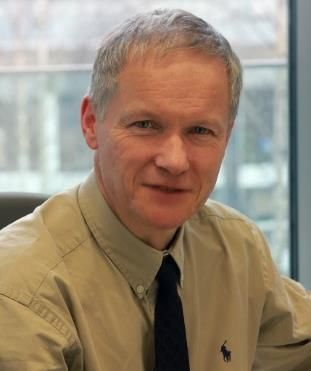
Welcome to Edinburgh!

Edinburgh is the second most visited city in the UK after London.
Every year over two million tourists visit Scotland’s capital city. With
an abundance of history, top quality attractions and beautiful
architecture, Edinburgh is a city that you won’t forget in a hurry!
To find out more visit - www.visitscotland.com/destinations-
maps/edinburgh

                                     In your delegate packs we will be
                                     including the Edinburgh Rewards
                                     Passport, which contains special
                                     offers for a variety of bars,
                                     restaurants, retail outlets and
                                     tour operators around the city.
                                     To access your rewards just show
the Passport to participating businesses. The Passport can be used
multiple times throughout your stay and can be used by
accompanying friends and family members. If you would like to
view what is on offer please visit: www.edinburghrewards.com

                                   8
General Information
Conference Registration: The registration desk will be in the foyer
of the conference suite on level 1 of the hotel. There are lifts
available just past reception.
Main Conference Programme: The main sessions will take place in
the Salisbury suite
Poster Presentations: Posters will be presented in the Holyrood
suite. Posters should be displayed from 09:00 onwards on Thursday
2th February and removed on Friday 28th February at the end of the
conference. All posters have been allocated a number (see page 24-
28) and should be displayed on the board with the corresponding
number. Posters will be available for informal viewing throughout
the conference, during coffee and lunch breaks and also during the
evening drinks reception on Thursday.
Workshops: These sessions will be running in parallel in slots of 90
minutes on Thursday afternoon. Please sign up for your preferred
session at the registration desk on arrival (see pages 21-22 for more
details). The workshops will be as follows:

1.     Workshop 1: Accessing patients' perspectives of acute
       lymphoblastic leukaemia (ALL) through the arts – held in the
       Salisbury suite.
2.     Workshop 2: The Great Outdoors – a therapeutic
       intervention for people affected by cancer? – held in the
       Holyrood suite.

BPOS Annual General Meeting: This will take place in the
Salisbury suite.

                                  9
Drinks Reception: The drinks reception will be served in the foyer
of the conference suite (level 1) on Thursday night at 18:45- 19:30.
Conference Dinner: Dinner will be served in the Salisbury suite
from 19:30.
Overnight accommodation: For those who have booked the
package with overnight accommodation at the Macdonald
Holyrood hotel, rooms will be available from 15:00 onwards on
Thursday 27th February. Check out is 12:00 on Friday 28th February.
Please note there will be somewhere to store your bags before
check in and after check out. Breakfast is included in the room rate,
and is served 06:30-10:00 in the restaurant on the ground floor.
Macdonald Holyrood Hotel in Edinburgh is situated in the city's
historic and beautiful old town, just a couple of minutes' walk from
the world famous Royal Mile and the Scottish Parliament building.
All rooms have en-suite bathrooms, large comfortable beds, an
ironing board and tea and coffee making facilities.
The hotel has a Spa and Health club that offers a well-equipped
gym, a heated pool and many spa treatments. The spa is open
10:00- 18:00. For more information please see the hotel website.
Parking: With limited onsite valet parking available at the hotel,
guests are highly recommended to pre-book their parking in
advance of their stay. A parking space can be reserved at a charge
of £25 per night by telephoning the hotel directly on 0344 879 9028.
Non pre-booked parking is allocated on a first come first serve basis
where a charge of £20 per night is applicable. *Height restrictions
apply*
Internet Access: Complimentary Wi-Fi is available throughout the
hotel helping you to stay connected at all times.

                                  10
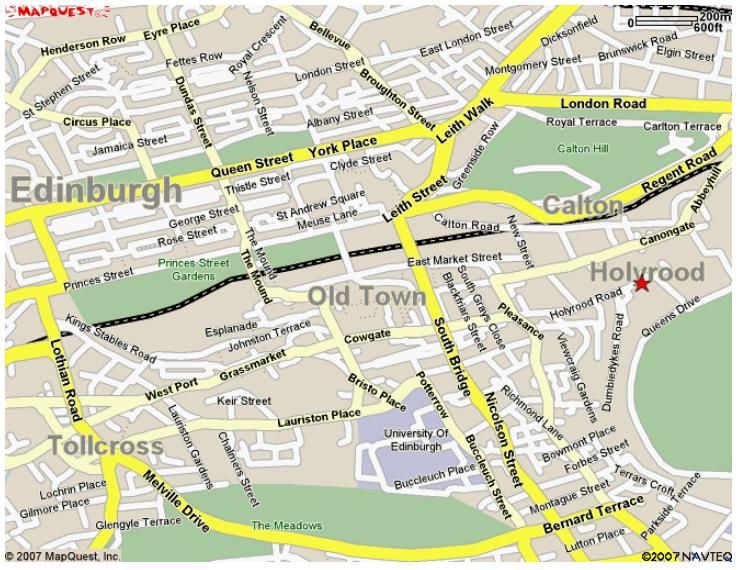
Maps and Directions
81 Holyrood Road, Edinburgh, EH8 8AU
Tel: 0344 879 9028
By car: Situated on Holyrood Road
By Rail: 0.5 miles from Edinburgh Waverley Station (15 min walk)
By Air: 8 miles from Edinburgh Airport
For more specific directions please follow the link:
https://www.macdonaldhotels.co.uk/our-
hotels/scotland/edinburgh/macdonald-holyrood-hotel-and-spa
11Programme
Wednesday 26th February 2020
18:30 – 19:30 Welcome reception
A complimentary welcome reception with light
refreshments will take place the night before the
conference, at the City Chambers. The venue is
approximately a 10 minute walk from the Holyrood
Hotel and very close to Waverly train station (the
main station in Edinburgh).
We will be joined by Lord Provost of the City of
Edinburgh, who will welcome us to the city. We hope
this will be a great opportunity for delegates to
network with old and new colleagues alike.
19:45 – 20:45 PhD/Early Careers researcher’s event: Ghost walk
We invite all PhD students and early careers
researchers who are registered to attend the
conference, to join us on a ghost walk tour called
Hidden & Haunted.
The tour is a chilling way to explore Edinburgh after
dark – and underground. Strictly adult-only, this
ghost tour is a short, sharp shock – your unsettling
introduction to our capital’s unsavoury past!
The event is free but PLACES ARE LIMITED. To
reserve your place please select the option on the
12conference registration form or email
conference@bpos.org.
If you are attending the Ghost Walk please meet
outside the City chambers at 19:30. It is a short walk
from there to the start of the tour.
13Thursday 27th February 2020
08:30 – 9:30 Walk & Talk
Start the day with a mapped out walk of the local
area, whilst meeting and chatting to colleagues.
Please meet in the hotel reception at 8:30.
09:30 – 10:00 Registration and refreshments
10:00 – 10:15 Welcome: Chair and local hosts
10:15 – 11:05 Keynote: Dr Catherine Calderwood
Personalising Realistic Medicine
[Chair: Richard Kyle]
11:05 – 11:20 Morning break and Poster viewing
11:20 – 12:35 Oral Session 1:
Addressing personalisation and diversity in
psychosocial oncology
10-minute presentations and 5 minutes for questions
[Chair: Lynn Calman]
11:20 – 11:35 Lucy Johnston - Does my cancer look big in this?
Challenges of personalisation across the care
pathway from a five year national evaluation
1411:35 – 11:50 Jane Frankland- Factors and processes in mobilising
network support for younger women (13:45 – 13:50 Lynsey Brown: Co-designing with older adults living
with cancer: Exploring the strengths and limitations
13:50 – 15:00 Workshops - Parallel session
Workshop 1: Accessing patients' perspectives of
acute lymphoblastic leukaemia (ALL) through the
arts
Workshop 2: The Great Outdoors – a therapeutic
intervention for people affected by cancer?
(See pages 21-22 for more details)
15:00 -15:30 Afternoon break and Poster viewing
15:30-16:45 Oral Session 2:
Exploring the influence of demographic and
clinical factors in cancer outcomes and experience
10-minute presentations and 5 minutes for questions
[Chair: Jo Armes]
15:30 – 15:45 Debbie Cavers: Living with and beyond cancer with
co-morbid illness: qualitative interviews with patients
and carers
15:45 – 16:00 Teresa Corbett: The experience of older people living
with cancer and multi-morbidity: a thematic
synthesis and qualitative study
16:00 – 16.15 Laura Ashley: Improving cancer treatment and care
for people with comorbid dementia
1616:15 – 16:30 Rebecca Foster: Quality of Life and health status in
older people with colorectal cancer: Findings from the
ColoREctal Wellbeing (CREW) cohort study
16:30- 16:45 Sarah Allen: What are the underlying reasons behind
socioeconomic differences in doctor- patient
communication in head and neck oncology review
clinics?
16:45: 16:50 5 minute comfort break
16:50 – 17:40 Keynote: Professor Gerry Humphris
[Chair: Kate Absolom]
Can we prevent fear of recurrence in patients treated
for cancer? An applied and psychological perspective
17:40 – 17:50 Day 1 closing remarks
18:45 – 19:30 Drinks reception and Poster viewing
19:30 – Late Conference Dinner and Entertainment by High
Drive Ceilidh Band & DJ Services.
17Friday 28th February 2020
08:45 – 09:15 Registration and refreshments
09:15 – 09:30 Rapid results
3-minute presentations and 2 minutes for questions
[hair: Debbie Cavers]
09:15 – 09:20 Laura Baker: Exploring parental experiences of their
adolescent’s cancer-related distress
09:20 – 09:25 Sally Taylor: Exploring the safety of prostate cancer
follow-up in primary care
09:25 – 09:30 Zoe Davey: Personalising follow up pathways in the
NHS for mesothelioma patients: the patient
perspective
09:30 – 10:30 Service Innovation session
10-minute presentation and 5 minutes for questions
[Chair: Trish Holch]
09:30 – 09:45 Melissa Hillier: WHYoutdoors: Nature Based Cancer
Care Course
09:45 - 10:00 Frances Goodhart: Individual Clinical Supervision (CS)
provided to a Hospital Specialist Palliative Care Team
by an external clinical psychologist.
1810:00 – 10:15 David Wright- RESTORE: A digital self-management
innovation for cancer related fatigue.
10:15 – 10:30 Anna Bootle: Action for Recovery and Change (ARC)
Clinic: Applying psychological insights to
personalising early rehabilitation and support plans in
‘treatable-not-curable’ cancer
10:30 – 10:50 Morning break and Poster viewing
10:50 – 12:05 Oral Session 3: Developing and evaluating
interventions in psycho-oncology and cancer care.
10-minute presentation and 5 minutes for questions
[Chair: Ruth Tarrant]
10:50 – 11:05 Philippa Tollow: They were aware of who I was as a
person”: Patients’ and health professionals’
experiences of using the PEGASUS intervention to
facilitate decision-making around breast
reconstruction.
11:05 – 11:20 Trish Holch: A pilot randomised trial of online self-
monitoring of adverse events during pelvic
radiotherapy using eRAPID (electronic patient self-
Reporting of Adverse-events: Patient Information and
aDvice)
11:20 – 11:35 Lesley Fallowfield: Helping nurses discuss risk and
uncertainty about chemotherapy with early breast
cancer (EBC) patients: results from novel educational
workshops
1911:35 – 11:50 Lizzy Banwel: Acceptance and Commitment Therapy
Based Psychological Skills Training for Oncology and
Palliative Care Staff
11:50-12:05 Susie Pearce: Getting underneath the surface in a
longitudinal narrative study with young adults with
cancer; the value of the psychosocial
12:05 – 13:00 Lunch and Poster viewing
13:00 – 13:30 BPOS Annual General Meeting
13:30 – 14:30 Macmillan session
Shaping the research landscape: Attracting large
scale funding for research into living with and
beyond cancer
[Chair: Jonathan Koffman]
14:30 – 14.45 Afternoon break and Poster viewing
14:45 – 15:40 Keynote: Liz O’Riordan
[Chair: Kate Absolom]
“It’s the little things that matter"
15:40 – 16:00 Closing remarks / awards
20More about the programme
Service Innovation Presentations
The British Psychosocial Oncology Society (BPOS) is a
multidisciplinary organisation for the advancement of education,
research, and practice-based care in psychosocial oncology, and as
such at the conference, we wanted to showcase excellent clinical,
educational, integrational, and good practice initiatives. It is
important that research is translated into practice to improve
everyday care for many patients. Four projects will be presented
and discussed which demonstrate how to drive research and
innovation into application within the NHS and primary care for the
benefit of many.
Rapid Results
An exciting new addition to this year’s programme! Short and
snappy 3-minute presentations that allows the presenters to focus
on the key results of their study.
Workshops
Workshop 1: Accessing patients' perspectives of acute
lymphoblastic leukaemia (ALL) through the arts
Hosted by Dr Alex and Dr Milton Mermikides
Milton is Reader in Music at University of Surrey.Alex is Doctoral
Programme Leader at the Guildhall School of Music & Drama
Bloodlines is dance-lecture performance depicting a patient's
experiences of ALL and its treatment through stem cell transplant.
Here, it's makers, Milton (a composer and ALL survivor) and Alex
21(theatre-maker and his sibling bone marrow donor) share extracts
of the work and reveal some of techniques they used to turn their
personal experience, and their medical data, into an artwork.
Bloodlines was first performed at the Science Museum, London and
has since been seen by medical students and professionals, patient
groups and general audiences. It has featured in the Times Higher
Education and on Midweek (BBC Radio 4). Its development was
funded by the Arts and Humanities Research Council.
Workshop 2: The Great Outdoors – a therapeutic intervention for
people affected by cancer?
Hosted by Chrissie Lane
Chrissie is a Consultant Nurse in Cancer Care and PhD Student at
NHS Highland, based in Inverness.
This workshop will provide a creative opportunity for participants to
learn and discuss the opportunities for nature based interventions
for people affected by cancer, drawing upon examples of evidence
from a wide array of multi-disciplinary research. Nature appears to
provide people affected with cancer, familiar and contemplative
spaces, whereby they can develop new emerging perspectives,
caring connections (with themselves and others) and enabling
spaces to find their way through clinical and personal significances
of their cancer. Therefore, how are we currently weaving nature
through peoples’ cancer experiences to improve their recovery?
Chrissie will also present her work on using electrically assisted
mountain bikes to facilitate recreational journeys into and through
natural landscapes – ‘Wheels To Nature’.
22Macmillan session
Analyses of research funding in the UK have repeatedly
demonstrated an imbalance in the distribution of research spend
across different areas of cancer research, with the vast majority
going to research into cancer ‘cause’ and ‘cure’, and only a small
proportion focused on ‘care’ for people living with and beyond
cancer.
This session will bring together the perspectives of patient
representatives, academics and cancer charities to discuss why it
matters that we work together to influence and shape the current
research landscape; present recent research findings relevant to
people living with and beyond cancer; launch a new initiative to
attract large scale funding to research in this area; and share advice
and experience from previous successful grant applications.
23Posters
Communication and consent
1. Terri Consent and Confidentiality: a conundrum when
Gilleece researching the impact on cancer carers
2. Rachel The development of an educational programme,
Starkings TRUSTING, for HCPs working in a breast cancer
setting
Minority and under-researched groups
3. Obrey Alexis Black African and Black Caribbean men’s
experiences of prostate cancer In the NHS in
England
4. Zoe Moon Exploring the needs of women prescribed
endocrine therapy from minority ethnic
backgrounds
5. Klaudia Incidence, risks and information and support
Steciuk needs of patients and their carers experiencing
cancer and stroke: A scoping review
6. Olivia Understanding the care and support needs of
Robinson nursing home residents living with dementia and
comorbid cancer
Models of cancer care and support
7. Laura "Every patient is different and every patient’s
Timmis needs are different”: patients and their informal
caregivers preferences for gynaecology cancer
follow-up
8. Trish ‘A very honest place’: how do internet forums
Holch support women living with breast cancer?
249. Elaine Adjustment after ‘TAILORing’: Changing the
Wilson narrative of breast cancer treatment and
survivorship
10. Lesley Factors that motivate men to engage with value
Howells co-creation in psychosocial cancer support centres
and how it impacts on their well-being
11. Karen Haemato-oncology patient experience of care in
Campbell the last year of life: A constructivist grounded
theory study
12. Lydia Holistic Needs Assessment: Perceptions,
Briggs Implementation and Impact
13. Lucy Patients’ experiences of a suppoRted self-
Matthews manAGeMent pAThway In breast Cancer
(PRAGMATIC)
14. Lucy Transforming Care After Treatment for Cancer with
Johnston R.O.P.E – Recovery Orientated Practice and
Emphasis
15. Eloise Understanding and characterising the value and
Radcliffe role of self-management support for people living
with cancer that is treatable but not curable: The
ENABLE study
16. Nicole Understanding, characterising and explaining how
Collaco people connect with and mobilise supportive
services and resources to help them self-manage
post cancer treatment: study protocol.
Quality of life and Patient Reported Outcome Measures
(PROMs)
17. Lucy Beneath the ‘PROM’? The Importance of
Johnston Underlying Outcomes: thematic synthesis of
findings from two national cancer programmes
18. Helena Development and initial evaluation of a new
Harder measure to assess chemotherapy-induced
25diarrhoea: the Diarrhoea Management Diary
(DMD)
19. Lynn Fatigue and physical activity in lung cancer
Calman patients treated with immunotherapy: a mixed
methods study
20. Valerie Identifying trigger items from the Patient Roles
Shilling and Responsibilities Scale
21. Sophie Measuring quality of life in people living with and
Moriarty beyond cancer in the UK
22. Kate Preliminary data from a randomised trial of online
Absolom self-monitoring of adverse events during systemic
therapy using eRAPID (electronic patient self-
Reporting of Adverse-events: Patient Information
and aDvice)
23. Susan Catt Quality of Life After Bladder Cancer (Q-ABC)
study: an overview
24. Christopher Quality of life in Metastatic Breast Cancer: A
Bedding systematic review of psychosocial issues and
adverse events.
Service Innovation
25. Anna Action for Recovery and Change (ARC) Clinic:
Bootle Applying psychological insights to personalising
early rehabilitation and support plans
26. Kate Hurst Psychological prehabilitation for men attending for
radical prostatectomy
Teenage and Young adult cancer
27. Wendy A Life Interrupted: An Interpretative
McInally Phenomenological Analysis of Young People and their
Family / Significant other living with MM
2628. Emma How accurate do TYA childhood brain survivors and
Nicklin their caregivers recall medical history: implications for
self-report studies
29. Laura Just Be An Uber Parent: An Exploration Of Parental
Baker Coping In Adolescent Cancer-Related Fatigue
30. Jessica Mental health status of survivors of adolescent and
Pope young adult cancers
31. Emma Unmet support needs in childhood brain tumour
Nicklin survivors and their caregivers: “It’s all the aftermath,
you’re forgotten about, basically in the long-term
you’re left with it”
Understanding and addressing the psychological impact of
cancer
32. Kym “It’s Cancer Jim, but not as we know it”; findings from
Winter a new remote counselling service for patients and
advocates living with rare neuroendocrine cancer
33. Emily Emotional response to testing positive for human
McBride papillomavirus at cervical cancer screening: a mixed
method systematic review
34. Caterina Exercise, body image issues and masculinity in
Gentili prostate cancer (PCa): comparing PCa patients
undergoing androgen deprivation therapy (ADT), to
ADT-naïve PCa patients and age-matching controls
35. Joshua Identifying pre-surgery factors associated with fear of
Turner cancer recurrence in people with colorectal cancer up
to five years after surgery: analysis from the
ColoREctal Wellbeing (CREW) study
36. Kate Illness Perceptions in a cohort of newly diagnosed
Absolom colorectal cancer patients: A preliminary exploration
37. Jenny Looking back, staying still, moving on: exploring the
Young relationship between time orientations and
27emotional reactions in spousal carers of people with
cancer
38. Mary Mindfulness-Based Cognitive Therapy for Cancer
Turner (MBCT-ca), Anxious Worry and Psychological
Flexibility
39. Derek Perceived Stigmatisation and Body Image in Prostate
Larkin Cancer Patients: Preliminary Findings.
40. Kathy The role of theatre in end of life care education; a
Rogers qualitative exploration
41. Kathy What are the holistic experiences of adults living
Rogers long-term with the consequences of cancer and its
treatment? A qualitative evidence synthesis.
42. Esmée Why don’t cancer patients seek help for their
Bickel depressive symptoms? The role of illness
representations, coping, and social support in
predicting patients’ need for care
28Conference sponsors
Psycho-Oncology is the official journal of the American
Psychosocial Oncology Society (APOS) and the British Psycho-
Oncology Society (BPOS).
Psycho-Oncology is concerned with the psychological, social,
behavioural, and ethical aspects of cancer. This subspecialty
addresses the two major psychological dimensions of cancer: the
psychological responses of patients to cancer at all stages of the
disease, and that of their families and caretakers; and the
psychological, behavioural and social factors that may influence the
disease process. Psycho-oncology is an area of multi-disciplinary
interest and has boundaries with the major specialities in oncology:
the clinical disciplines (surgery, medicine, paediatrics,
radiotherapy), epidemiology, immunology, endocrinology, biology,
pathology, bioethics, palliative care, rehabilitation medicine, clinical
trials research and decision making, as well as psychiatry and
psychology.
Today, there are almost
3 million people living
with cancer, and this
number is expected to
rise to 4 million in 2030. At Macmillan we’re here to help everyone
with cancer live life as fully as they can, providing physical, financial
and emotional support. We'll be there for everyone, either through
one of our services, or by pointing them in the right direction. So
whatever cancer throws their way, we'll be right there with them.
29We’re a team of supporters, volunteers, employees, campaigners,
health and social care professionals and fundraisers. We are cancer
experts, an independent voice for change and the name everyone
thinks of first when cancer support issues are raised. But the most
important things that bind us are our care and support for people
living with cancer.
Better health,
better futures:
the Usher
Institute works with people, populations and their data to
understand and advance the health of individuals and populations
through innovative collaborations in a global community. The
Usher Institute is a key applied and translational arm of the
Edinburgh Medical School, within the College of Medicine and
Veterinary Medicine at the University of Edinburgh; offering
significant expertise in health services research, health informatics,
data science and social science. We strive for and work towards the
data-enabled transformation of health.
Maggie’s offers free practical and emotional
support for all people living with cancer and
their family and friends. Built on the grounds
of specialist NHS hospitals, our 23 centres are
warm and welcoming places and our expert
staff help people live well with cancer. They
are places to find practical advice about
benefits and eating well, places where qualified experts provide
emotional support, places to meet other people, places where you
can simply sit quietly with a cup of tea.
30We understand the importance of architecture and design on your
physical and emotional health, which is why our centres are
peaceful, calming places to be.
Everyone is welcome, you don’t need an appointment, just come in
at any time and our support is free.
For more information please visit: maggiescentres.org
Edinburgh Napier University
delivers the skills and
experience that matter. It
combines professional know-
how with an academic approach and work-related learning to help
its students succeed beyond university. Meanwhile, its research
shapes the world around us, improving lives in Scotland and across
the globe.
Named after mathematician John Napier, the inventor of
logarithms in the 1500s, it has proudly gone from Napier Technical
College to Edinburgh Napier University. Offering more than 250
undergraduate and postgraduate courses, it now has nearly 20,000
students from more than 140 countries studying on campus in
Edinburgh, online and at partner universities worldwide.
The University’s School of Health & Social Care aims to make an
enduring impact on health, care and society in Scotland and
beyond. It provides a vibrant teaching and research environment for
over 3,400 students and 130 staff. It delivers a world-class learning
experience and undertakes pioneering research with a focus on
practical and applied results.
More information at: www.napier.ac.uk
3132
You can also read


