Climate-Related Risks and Opportunities: Positioning for a Low-Carbon Economy - Occidental ...
←
→
Page content transcription
If your browser does not render page correctly, please read the page content below
Climate-Related Risks
and Opportunities:
Positioning for a
Low-Carbon Economy

                        2019
About Occidental
    Occidental is an international oil and gas exploration and production
    company with operations in the United States, Middle East and Latin
    America. Headquartered in Houston, Occidental is one of the largest
    U.S. oil and gas companies based on equity market capitalization.
    Occidental’s midstream and marketing segment purchases, markets,
    gathers, processes, transports and stores hydrocarbons and other
    commodities. Occidental’s wholly owned subsidiary, OxyChem, is a
    major North American chemical manufacturer.
    Founded in 1920, Occidental’s success is built on technical
    expertise, business acumen, strong partnerships and our proven
    ability to deliver results.
    At Occidental, social responsibility is fundamental to our
    success and reputation as a respected Partner of Choice®.
    We are committed to conducting our business in a manner that
    safeguards our employees, protects the environment, benefits
    neighboring communities and strengthens local economies.

    About this Report
    This report highlights our recent efforts to address climate-related
    risks and opportunities in our business. The report begins with an
    introductory letter from our President and CEO, highlighting some of
    our climate-related leadership and action in 2018 and 2019, including
    how we are exploring our carbon-neutral aspiration. We then provide
    an overview of progress on our 2018 commitments, climate-related
    governance and risk management processes and systems, planning
    and execution of climate strategies, and metrics and targets for
    reducing greenhouse gas (GHG) emissions. This report is organized
    in the four-element framework recommended by the Task Force on
    Climate-related Financial Disclosures (TCFD)1, a framework we support.
    This report was prepared in 2019, and the results of the scenario
    analysis detailed in this report are based on specific assumptions and
    estimates. Given the inherent uncertainty in predicting and modeling
    future conditions, caution should be exercised when interpreting the
    information provided. The results are not indicative of, and this report
    does not represent, a preferred or expected outcome of the future.

    1 The TCFD — established by the Financial Stability Board in response to a request from the G20 Finance
    Ministers and Central Bank Governors — developed a voluntary disclosure framework for climate-related
    financial disclosures. The framework is organized around four themes: Governance, Strategy, Risk
    Management and Metrics and Targets. See https://www.fsb-tcfd.org/

3                     4
Cautionary Statement Regarding
Forward-Looking Statements
This report contains forward-looking statements within
the meaning of the Securities Act of 1933 and of the
Securities Exchange Act of 1934. These forward-
looking statements are based on management’s current
expectations relating to Occidental’s operations and
business prospects . Words such as “estimate,” “project,”
“predict,” “will,” “would,” “should,” “could,” “may,”
“might,” “anticipate,” “plan,” “seek” “intend,” “believe,”                        1.   CEO Letter                                                  7
“expect,” “aim,” “goal,” “target,” “objective,” “likely” or
similar expressions that convey the prospective nature
of events or outcomes generally indicate forward-looking
                                                                                  2.   Exploring Carbon Neutral Pathways                          11
statements. You should not place undue reliance on
these forward-looking statements, which speak only                                3.   Progress on 2018 Commitments                               15
as of the date of this report. Actual results may differ
from anticipated results, sometimes materially, and                               4.   Governance                                                 19
reported results should not be considered an indication
of future performance. Factors that could cause results                                i.   Board Oversight of Climate Risk                       21
to differ include, but are not limited to: global commodity

                                                              Table of Contents
pricing fluctuations; changes in supply and demand
for Occidental’s products; higher-than-expected costs;                                 ii. Engagement                                             23
the regulatory approval environment; not successfully
completing, or any material delay of, field developments,                         5.   Risk Management: Integrating Climate                       27
expansion projects, capital expenditures, efficiency
projects, acquisitions or dispositions; technological                                  i.   Risk Identification and Management Processes          29
developments; uncertainties about the estimated
quantities of oil and natural gas reserves; lower-than-
expected production from operations, development                                       ii. Carbon Price Assumptions                               29
projects or acquisitions; exploration risks; general
economic slowdowns domestically or internationally;                                    iii. Portfolio Review Process and Results                  29
political conditions and events; liability under
environmental regulations including remedial actions;                                  iv. Physical Risk Resilience                               32
litigation; disruption or interruption of production or
manufacturing or facility damage due to accidents,
chemical releases, labor unrest, weather, natural                                 6.   Our Strategy for Resilience and Opportunity                33
disasters, cyber attacks or insurgent activity; failures
in risk management; and the factors set forth in Part I,                               i.   Carbon Capture and Enhanced Oil Recovery Leadership   35
Item 1A “Risk Factors” of the Form 10-K for the fiscal
year ended December 31, 2018 (2018 Form 10-K) and                                      ii. Oxy Low Carbon Ventures                                37
in Occidental’s other filings with the U.S. Securities and
Exchange Commission (“SEC”). Unless legally required,
Occidental does not undertake any obligation to update                                 iii. Low-Carbon Natural Gas Opportunities                  45
any forward-looking statements, as a result of new
information, future events or otherwise. The Sustainable                               iv. Industry Leadership: Oil and Gas Climate Initiative    48
Development Scenario modeled in this report is derived
from assumptions contained in the International Energy                                 v. Efforts to Reduce Direct Emissions                      48
Agency’s 2018 World Energy Outlook. The scenario is
not a forecast or prediction of the future. There can be
no assurance that the scenario modeling or assessment                               vi. Reduction of Indirect Emissions:
presented in this report are reliable indicators of the                           		 Efficient Energy Generation and Use                          52
actual impact of climate change on Occidental’s asset
portfolio or business. Statistics and metrics included
in this report are estimates and may be based on
                                                                                  7.   Metrics, Targets and Next Steps                            57
assumptions or developing standards.
                                                                                  8.   Glossary                                                   65
Cautionary Note to U.S. Investors
The SEC permits oil and gas companies, in their filings
with the SEC, to disclose only proved, probable and
possible reserves. Any reserve estimates provided in this
presentation that are not specifically designated as being
estimates of proved reserves may include “potential”
reserves or other estimated reserves not necessarily
calculated in accordance with, or contemplated by, the
SEC’s latest reserve reporting guidelines.
CEO Letter
2018 was a significant year for Occidental. In addition to strong
financial performance, we took an industry leadership role and
initiated several new actions to leverage our expertise in carbon
                                                                            “We are
capture, utilization and sequestration (CCUS) technologies with the
goal of benefiting our business and the Earth’s climate.
                                                                      well positioned for
We were one of the first U.S. companies to join the Oil and
Gas Climate Initiative (OGCI), a CEO-led effort by the world’s        success in a
                                                                      low-carbon
most influential energy companies. OGCI aims to reduce
the industry’s carbon footprint and invest in economically
viable low-carbon technologies that will lead the way for

                                                                       economy.”
tomorrow’s new energy landscape. Working with the
Carbon Capture Coalition and others, we helped pass the
FUTURE Act, which incentivizes CCUS. We continue to
partner with these groups to advance legislative support
for CCUS research, development and deployment.
We launched Oxy Low Carbon Ventures (OLCV), a
wholly owned subsidiary dedicated to advancing
leading-edge, low-carbon technology solutions that will
grow our business while reducing emissions. OLCV is
focused on securing new sources of man-made carbon
dioxide (CO2) for use in global oil and gas projects
and is investing in technologies that have the potential
to make a significant contribution to decreasing
greenhouse gas emissions.
Simultaneously, we made progress on our ongoing
efforts to reduce emissions in our global operations.
In the Permian Basin, two recent projects illustrate this
commitment: Aventine, a first-of-its-kind logistics hub,
has reduced truck mileage by 1.5 million miles; and a
new 120-acre solar field that, once complete, will provide
16 megawatts of power to one of our operations units. In the
Middle East, we are conducting an engineering study to build
a two-gigawatt solar steam generating facility that could save
more than 725,000 tons of CO2 emissions per year.
We believe we are well positioned for success in a low-carbon
economy with our comprehensive strategy that includes flexible,
low-cost assets, an advantageous mix of long- and short-cycle
projects, and our unique expertise in combining carbon capture and
enhanced oil recovery.

                                                           7          8
Summary of Climate Change Report Themes

I want to highlight these key takeaways from this year’s report:

         We have analyzed our portfolio using the International Energy Agency’s
         2018 Sustainable Development Scenario, and this analysis demonstrated no
         significant risk of stranded assets.
                                                                                                                  Strategy for Sustainability                                         Managing Climate Risk
                                                                                                                  Our differentiators include diverse assets that                     Occidental’s planning and business strategies
                                                                                                                  are economic in a low-carbon economy, a                             address the short- and long-term financial risks of
                                                                                                                  unique position and capability in CO2 EOR and an                    a low-carbon economy.
         We have achieved or made significant progress toward the commitments we
         made in our 2018 climate report.                                                                         international gas portfolio.                                        •   No significant impact to Occidental’s proved
                                                                                                                  •   Safe and low-cost production provides sustainability                reserves under the most recent International Energy
                                                                                                                      in a low commodity-price low-carbon economy                         Agency’s (IEA) Sustainable Development Scenario,
                                                                                                                                                                                          with regular re-evaluation of new scenarios
                                                                                                                  •   Our expertise in CO2 EOR and CCUS technologies
                                                                                                                      is a climate mitigation opportunity and competitive             •   Capital approval process assumes a $50 per metric
                                                                                                                      differentiator                                                      ton price for carbon for sensitivity modeling
         We have developed indicators for CO 2e emissions intensity and methane
         emissions intensity, and have committed to set and disclose targets by                                   •   In the Middle East, our strong reputation and                   •   Advanced field-based technologies and processes
                                                                                                                      relationships and increased demand for                              contribute to the decline of methane emissions
         the end of 2019.
                                                                                                                      cleaner-burning natural gas provide additional                      intensity
                                                                                                                      opportunities

         We have expanded the sustainability component of the annual cash incentive
         award in our executive compensation program and established quantitative
         targets tied to the advancement of CCUS.

Our Board possesses a valuable collective competency on climate and sustainability, reflecting diverse
experience and perspectives. Working together, management and the Board understand that climate issues,
like other business concerns, continuously evolve. We remain committed to transparency and continuing a           Metrics and Targets: Improving                                      Governance: Oversight on
dialogue with our stakeholders.                                                                                   Reporting Transparency                                              Climate Risks and Opportunities
Over the past year, I have spoken to global audiences about Occidental’s commitment to leverage our Industry-     We are committed to responsible environmental                       Occidental’s Board and Management are routinely
leading skills and assets to expand the use of CCUS globally, with a long-term aspiration of carbon neutrality.   performance and emissions reductions.                               and actively engaged.
We have charged the OLCV team with seeking opportunities to innovatively reduce the carbon footprint of our       •   In 2019, will set and disclose 2030 direct CO2e                 •   Annual strategy reviews include a focus on climate
and others’ operations in ways that sustain and expand our business. These capabilities uniquely position us to       emissions intensity and methane emissions intensity                 risks and opportunities
succeed in our changing world.                                                                                        targets for our oil and gas operations                          •   Environmental, Social, and Governance (ESG)
                                                                                                                  •   Committed to the elimination of routine flaring in all fields       and sustainability matters are overseen by two
                                                                                                                      we operate by 2030                                                  Board committees that together include all of the
                                                                                                                  •   Developing a metric that reflects Occidental’s overall              independent directors
                                                                                                                      impact on atmospheric CO2 concentrations                        •   Occidental’s Board has several directors who
Vicki Hollub                                                                                                                                                                              bring unique expertise to the analysis of ESG and
President and Chief Executive Officer                                                                                                                                                     sustainability issues affecting the company

May 2019

                                                         9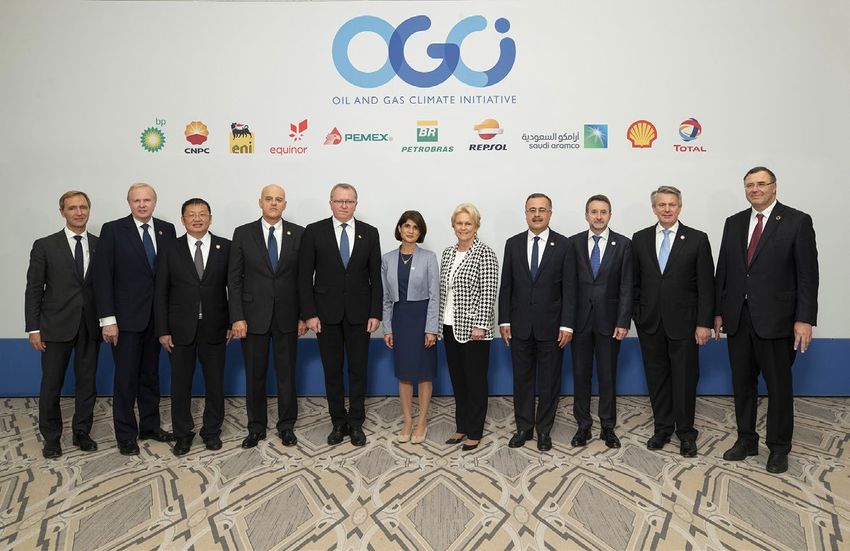
Exploring Carbon
Neutral Pathways

Today Mid-term Aspiration
Occidental is committed to significantly reducing by capturing emissions from third-party sources. In
Carbon Capture
and offsetting its total carbon impact, including the near-term, the focus will be safe sequestration of
Offsets
carbon from products we sell. We are exploring CO2 while growing our EOR business. In the longer-
multiple options that can contribute meaningfully term, we expect to expand the commercial use cases Net Emissions Occidental will
Exploring Carbon Neutral Pathways
to our aspiration of carbon neutrality across our oil for CO2 within our portfolio. generate direct offsets
and gas value chain. The figure below identifies towards Scope 1, 2
In support of our business goals and our
potential key drivers of a pathway to reducing and 3 emissions by
Total Carbon Impact
carbon neutrality aspiration, we are developing
Occidental’s total carbon impact. capturing emissions
a methodology to ensure transparency and
from Occidental’s
Investments in key drivers will be made across the robust measurement of our total carbon impact.
operations and third
spectrum. These include addressing conventional Reductions that Occidental implements within
parties
emissions such as direct, indirect and product- its operational control, as well as those where
related emissions totals (Scopes 1, 2 and 3), as we partner to achieve reductions, will be netted CCUS
Reductions and Offsets
well as investments related to CCUS, carbon- against our Scope 1-3 emissions. We believe this
reduction technology deployment and reductions by expansion of carbon measurement methodologies Technology Technologies and
third-party partners where Occidental’s technical beyond the boundaries of traditional greenhouse Partnerships
services and know-how leads to a reduced gas accounting conventions is necessary to Partnerships
greenhouse gas footprint. capture the variety of opportunities — such as Occidental will
avoided emissions, low-emission products and Scope 3 Reductions generate indirect
The Total Carbon Impact figure depicts a pathway offsets by investing
the withdrawal of CO2 from the atmosphere —
and potential relative magnitude of CO2 reductions Scope 1 Reductions in technology and
where multiple parties have significant roles
by key driver. The portfolio represents the opportunity partnering with others
to play. Ultimately, if society is to achieve a well-
set we intend to examine — and where we intend to Scope 2 Reductions to deploy low-carbon
below 2°C outcome, the contributions of those
invest — in pursuit of Occidental’s carbon neutrality solutions
that facilitate emissions reductions or withdrawals
aspiration. The most significant near-term option,
of CO2 from the atmosphere should be recognized
which is unique to Occidental’s core business, is
in a transparent way that further encourages
CCUS. Within this pathway, Occidental is pursuing
similar actions.
projects to obtain CO2 through direct air capture and
When utilizing the CO 2 EOR production
process, the quantity of anthropogenic CO 2
The Benefits of CCUS Via CO2 EOR
permanently sequestered in the reservoir
Key Drivers of Carbon Reductions CO 2
has the potential to exceed the amount
emitted
associated with the production process
plus the amount emitted when each barrel
Reducing Occidental Emissions Reducing Emissions of Others of oil is used as transportation fuel 1
Scope 1 Scope 2 Scope 3 CCUS Technology Partnerships
Direct Indirect Carbon
Third-party Carbon Carbon
Emissions Emissions Intensity of
Industrial and Reduction Reduction
Products
Operational Emissions Atmospheric Related to through
Emissions Related to
Purchased
Emissions from
the Use of Sold
Carbon Capture
Utilization and
Technology
Deployment
Technical Service
Partnerships
CO 2
sequestered +
Energy Products Sequestration
1
Based on Occidental’s Permian EOR operating experience
14
Progress on 2018
Commitments

Progress on 2018 Commitments
                                              In our report last year, we made several commitments to create or enhance climate-related processes or metrics.
                                                               The following chart summarizes our progress toward fulfilling each commitment.

            Commitment                                             Actions                                                  Commitment                                           Actions

                                                  Business strategy updates occur during                                                                         In addition to absolute equity-adjusted
Regularly evaluate our strategy with
                                                  each Board meeting with an annual deep                                                                         emissions (Scope 1 and Scope 2) for
Board oversight under various low-
                                                  dive that includes opportunities and risks                    Develop a new metric for CO 2e                   Occidental-operated assets, oil and gas
carbon scenarios.
                                                  of a low-carbon economy.                                      emissions.                                       direct emissions are tracked on an intensity
                                                                                                                                                                 basis, (tonnes CO2e per barrel of oil
                                                                                                                                                                 equivalent (BOE) produced).
The Board is committed to active and              Board members participate in off-season
participatory shareholder engagement,             ESG engagement. Board knowledge about
as well as increasing our company’s               climate-related risks and opportunities is
                                                                                                                                                                 Oil and gas methane emissions are
acumen on climate-related risks and               enhanced through strategy sessions and
                                                                                                                                                                 tracked on an intensity basis, (tonnes
opportunities.                                    Climate Report review process.                                Develop a new metric for methane
                                                                                                                                                                 CH 4 per BOE produced). Also, we
                                                                                                                emissions.
                                                                                                                                                                 are supporting the OGCI methane
                                                                                                                                                                 intensity goal.
                                                  This report contains the results of an updated
                                                  risk assessment with new IEA assumptions for
Provide update on our our climate risk
                                                  the Sustainable Development Scenario. Also,
management and planning.                                                                                                                                         Country-level intensities have been
                                                  this topic was discussed with investors and
                                                  ESG groups during off-season engagement.                      Develop field-by-field CO 2e                     developed and are used in the reserves
                                                                                                                emission-intensity.                              portfolio analysis. We intend to continue
                                                                                                                                                                 to refine the field-by-field estimates.

                                                  A sensitivity analysis using a carbon
Model carbon prices and related
                                                  price of $50 per metric ton is done for all
financial impacts in capital spending
                                                  projects above $5 million (increased from                                                                      We are developing an approach with
plans for major projects.
                                                  $40 per metric ton in 2018).                                                                                   interim milestones. Currently, we report
                                                                                                                End routine gas flaring by 2030.                 CO 2e from flared volumes in the Social
                                                                                                                                                                 Responsibility section of Occidental’s
                                                                                                                                                                 company website (www.oxy.com).
Develop models of the potential upside            These models were developed and are
for Occidental’s CO 2 EOR business.               being used in our strategic planning.

                                                                                                                Report annually on our progress                  We met our 2018 voluntary commitment
Add an executive compensation metric              A component has been included in                              on commitments made to API                       for leak detection and repair surveys in
related to the advancement of CCUS.               executive compensation plan.                                  Environmental Partnership.                       Occidental’s U.S. oil and gas operations.

                                         17                                                                                                                     18
Governance
Governance                                                                                                         as well as gender and ethnicity, meaningfully                  directors who bring unique expertise and perspective
                                                                                                                   contribute to the Board’s oversight of ESG and                 to ESG and sustainability issues.
The Board of Directors, its committees and members    environmental, social and governance (ESG) and
                                                                                                                   sustainability issues, including climate-related
of senior management work together to implement       sustainability matters — including climate — is                                                                             Finally, the Board is led by an independent chairman
                                                                                                                   risks and opportunities. Our directors have a wide
and promote effective corporate governance. One       explained below.                                                                                                            who, among other responsibilities, coordinates and
                                                                                                                   range of backgrounds and experiences, including in
of the Board’s principal governance functions is to                                                                                                                               approves all meeting agendas and serves as liaison
                                                      The Board is committed to achieving a diverse and            government service, non-governmental organizations
oversee Occidental’s policies and procedures with                                                                                                                                 between the Board and Occidental’s stockholders.
                                                      broadly inclusive membership. The Board believes             and a variety of industries in the private sector. Four
respect to managing risks to our business. The
                                                      that diversity of thought, background and experience,        of our 11 directors are diverse based on gender and
Board’s risk oversight structure with respect to
                                                                                                                   ethnicity. In addition, our Board includes several

Board Oversight of Climate Risk
As with many enterprise-level risks and strategic issues, certain aspects of the oversight of
climate risks and opportunities have relevance to each of the committees of the Board.

                                                                                                                                                       JOHN FEICK, executive chairman of an
                                                                                                                                                       environmental services provider with broad
                                                                                                                                                       experience in the environmental, health
Environmental, Health                                      Corporate Governance,                                                                       and safety areas, chairs the Environmental
and Safety Committee                                       Nominating and Social                                                                       Committee and is a member of our
(Environmental Committee)                                  Responsibility Committee                                                                    Compensation Committee;
Pursuant to its charter, this committee reviews            Pursuant to its charter, this committee oversees                                            ELISSE WALTER, a former Chairman of the
climate-related risks and opportunities as part of         stockholder engagement and disclosures                                                      U.S. Securities and Exchange Commission
our risk management processes.                             regarding ESG and sustainability matters.                                                   (SEC), current director of the SASB Foundation
                                                                                                                                                       and noted speaker on sustainability
                                                                                                                                                       and disclosure issues, serves on our
                                                                                                                                                       Environmental and Audit Committees;

Audit Committee                                            Executive Compensation                                                                      MARGARET M. FORAN, a recognized expert
                                                           Committee                                                                                   in corporate governance, who has had a
Oversees our Enterprise Risk Management
                                                                                                                                                       leading role in strengthening corporate ESG
(ERM) process, which involves a cross-                     Influences management priorities by establishing                                            principles and practices at several U.S.-based
functional ERM team that reports to our ERM                the parameters and goals that determine executive                                           global companies, chairs our Compensation
Council, a group of senior executives collectively         compensation. For many years, Occidental’s executive                                        Committee and is a member of our
responsible for policies and procedures involved           compensation program has included elements                                                  Governance Committee; and
in measuring, monitoring, managing and                     related to sustainability. For 2019, the Compensation
reporting enterprise risks, including climate risk.        Committee enhanced the sustainability component                                             SPENCER ABRAHAM, a former U.S. Secretary
                                                           of the annual cash incentive award by including                                             of Energy who spearheaded the department’s
                                                           quantitative targets for the advancement of CCUS                                            research and development efforts in the
                                                           projects and technology and expanded the component                                          areas of hydrogen fuel cells and clean coal
                                                           to comprise 10 percent of the target company                                                technology, serves on our Governance and
                                                           performance portion of the annual cash incentive                                            Compensation Committees.
                                                           award for executive officers.

                                                                                                                                                                             22
Stakeholder Engagement
We focus on building trust through regular and transparent communication and engagement. By actively
engaging with our stakeholders, we strive to understand and proactively address issues and concerns to
develop beneficial outcomes.
“Our Board
possesses a valuable Following the publication of our first climate report, we continued discussions with investors
collective competency and other ESG-focused stakeholders. In these discussions, many investors provided positive
feedback on the report and expressed the view that it struck an appropriate balance in
ESG
on climate and analyzing both the risks and opportunities presented by climate change, and that it was
responsive to the 2017 majority-supported stockholder proposal requesting the report.
sustainability,
Many investors also appreciated understanding how Occidental’s low-carbon strategy is
unique because it builds on our existing industry-leading expertise in CCUS.
reflecting diverse
experience and
perspectives.” Some stakeholders inquired whether our portfolio review process and modeling included a
scenario aligned with limiting the increase in global temperature to 1.5ºC. In response, we
1.5ºC
have included additional detail on the Sustainable Development Scenario, describing the
scenario’s alignment with the goals of the Paris agreement and the scenario’s presence
within the envelope of scenarios projecting a temperature rise below 1.5ºC.
Stakeholders have also inquired about interim milestones for targets such as our goal
to eliminate routine flaring by 2030, and requested timelines for establishing other GHG
GHG
emissions reduction targets. In response, we are currently developing an approach with
interim milestones for our commitment to eliminate routine flaring by 2030, and in this report
we have committed to establishing in 2019 a direct CO2e emissions intensity reduction goal
To support the Board’s strategy and landscape; and low-carbon investment for 2030, with interim milestones, and a methane emissions intensity reduction target.
risk management oversight, senior opportunities. The discussion included insights
management regularly reports to the from both internal and external experts.
Board on environmental and sustainability
Board Engagement
These agenda items reflect the Board’s We look forward to continuing this dialogue on emissions and climate-related risks and opportunities with our
matters, including climate-related risks
engagement and efforts to heighten its
shareholders and other key stakeholders through engagement and established reporting requirements, as well as
and opportunities. This interaction takes evolving reporting/disclosure frameworks.
place during scheduled meetings, annual understanding of how a low-carbon economy
strategy sessions and informally during might affect the company, while supporting
regular business. and strengthening Occidental’s shareholder
value proposition. Future Board strategy
During the Board’s 2018 session, the OLCV sessions will continue to refine and enhance
team updated the Board on Occidental’s low- our consideration of climate-related risks and
carbon strategic process, including a review opportunities.
of objectives; CO2 economy and competitive
23 24Executive Engagement
Occidental President and CEO Vicki Hollub and other senior executives have been visible leaders in promoting the
role of oil, gas and energy companies in reducing global greenhouse (GHG) emissions. Our leaders have appeared
at numerous industry and climate-related forums in the U.S. and abroad discussing the role that Occidental, in
partnership with other leaders in policy and industry, can play in reducing emissions and ultimately atmospheric
concentrations of GHGs. These engagements include:
Occidental joined the Oil and Gas Climate Initiative (OGCI), a voluntary CEO-led initiative by 13
international oil, gas and energy companies taking practical actions on climate change. OGCI members
leverage their collective strength to lower carbon footprints of energy, industry, and transportation value
chains via engagements, policies, investments and deployment. Occidental executives hold several
leadership positions within OGCI, including Ms. Hollub on the CEO Steering Committee, and Richard
Jackson, Senior Vice President — Operations Support and President — Oxy Low Carbon Ventures, on the
Executive Committee and the Board of OGCI’s Climate Investments fund.
“We as
In February 2019, Ms. Hollub was appointed as Chair of the Secretary of Energy Advisory Board (SEAB). corporations
The SEAB provides advice and recommendations to U.S. Secretary of Energy Rick Perry on the priorities for
the Department of Energy (DOE), including promoting America’s energy security and spurring innovation.
have to do our part.
The DOE has supported various initiatives aimed at advancing and deploying CCUS technologies. There are enough
companies committed
Occidental President and CEO Vicki Hollub and Occidental Chief Financial Officer Cedric Burgher have had
key roles in climate-related discussions at the World Economic Forum in Davos, Switzerland, alongside
to making it happen.
other leaders in climate and industry.
It needs to be
Ms. Hollub and Mr. Jackson were featured speakers at the Cambridge Energy Research Associates a worldwide
approach ”
(CERA) Week, one of the premier industry gatherings on issues and opportunities facing the global energy 2
industry, speaking on carbon management strategies.
Ms. Hollub, along with key industry leaders, met with Pope Francis at the Vatican to discuss the imperative
for global climate action.
Mr. Jackson authored a feature article on “Advancing CO2 EOR as a Form of Carbon Capture in the Permian” in
Hart Energy Magazine. Mr. Jackson noted, “The lower carbon future that global industries must work to achieve
will depend on continued technical advancements in capture technology and the application of CO2 EOR….”
Ms. Hollub was a featured speaker at the 6th Annual Columbia Global Energy Summit hosted by
Columbia University’s Center on Global Energy Policy.
2
Vicki Hollub at Tudor Pickering, Hold & Co. Energy Disruption Conference in Houston, Texas
25 26Risk Management: Integrating Climate
Risk Management: modeling based on the International Energy Agency’s supply and demand data), and to run the large-scale in several countries, for Occidental, this pricing
Integrating Climate 2018 Sustainable Development Scenario. simulation models that generate equilibrium prices still only applies to our U.S. oil and gas assets.
for energy and CO2 emissions. Occidental does not have operations in the other
Occidental has long recognized that robust risk
assessment and proactive risk management are
Carbon Price Assumptions In November 2018, IEA published its latest WEO.
countries where carbon prices were identified in the
Sustainable Development Scenario.
essential to safe and reliable operations and Currently, no carbon tax applies to any of The WEO includes three main scenarios: Current
consistent returns for investors. We integrate Occidental’s oil and gas operations or products. Policies, New Policies and Sustainable Development. For our assessment of potential impacts of the
climate-related risks into our strategic planning and However, as part of our commitment to informed The IEA updates its projected oil and gas prices Sustainable Development Scenario on our proved
investment decision-making process and perform capital planning and risk management, we include annually and, for the 2018 scenarios, these price reserves, Occidental used a reference case model
routine risk assessments to support readiness for an assumed price on carbon in our capital approval assumptions reflect: (1) higher estimates for to represent our asset base at year-end 2018. The
emerging challenges and opportunities. process for the purpose of sensitivity modeling. recoverable tight oil and natural gas liquids in the assessment was based on a representative portfolio of
United States, (2) a reduction in the cost outlook for assets that contained a majority of proved reserves from
This modeling allows our capital planners and
Risk Identification and a variety of upstream projects and (3) a greater share our U.S. and non-U.S. oil and gas locations reported
senior management to analyze the long-term risks
of shorter-cycle investments on the supply side. in our 2018 Form 10-K. Planned capital spending
Management Processes of exposure to carbon prices when extending the
and expected operating costs from the approved
Across our business segments, Occidental bases operating life or reserves of existing fields or entering
The 2018 Sustainable development plans that support the reserves were
its strategic and capital planning processes on new projects, while simultaneously instilling a culture
Development Scenario embedded in the model. The reference case model used
a returns-focused approach with the intent of of carbon-price sensitivity in our capital planning.
the oil, natural gas liquids (NGL) and natural gas prices
maximizing the value of our portfolio and executing For 2019, we have increased our assumed price For this report, we modeled the most rigorous of the
calculated in accordance with SEC rules for determining
on our priorities. As part of our investment decision on CO2 emissions from $40 per metric ton to $50 main IEA scenarios, the Sustainable Development
year-end 2018 proved reserves and computing the
process, we evaluate a wide range of opportunities per metric ton for new projects with a capital Scenario. Under this scenario, carbon prices are
Standardized Measure of Discounted Future Net
and consider the associated risks such as technical commitment of greater than $5 million. Based on similar to those modeled in the 2017 Sustainable
Cash Flows by application of a 10 percent discount
subsurface challenges and technology advances, the emissions intensity for Occidental’s worldwide oil Development Scenario, reaching $140/metric ton
factor (NPV10 valuation) as reported in Occidental’s
regulatory and environmental developments, and gas operations, this translates to a cost of about in 2040. Although the Sustainable Development
2018 Form 10-K. For estimating reserves, SEC rules
geopolitics, macro commodity-price outlooks and $1.80 per BOE. Scenario anticipates carbon emission pricing
require the use of the unweighted arithmetic average
localized risks. In addition, new larger projects Our sensitivity modeling approach is informed
require a carbon price sensitivity analysis before by policy-based carbon-price risk assumptions
approval, as further described in “Carbon Price derived primarily from scenarios considered in
Assumptions” on this page. the International Energy Association’s (IEA) World The IEA’s Sustainable Development Scenario provides an integrated strategy to achieve the three main
In addition to the capital planning process, Occidental Energy Outlook (WEO), described more fully below. energy-related components of the U.N. Sustainable Development Goals (UN SDGs):
IEA’s Sustainable Development Scenario
utilizes its enterprise risk management (ERM) program Additionally, as the largest commercial purchaser and
injector of CO2 for enhanced oil recovery (EOR) in the UN SDG 7: UN SDG 3: UN SDG 13:
to identify, evaluate, mitigate and monitor significant Achieve Universal Access to Reduce the Severe Health Combat
risks. These ongoing risk evaluations inform climate- Permian Basin and a global leader in this technology, Modern Energy by 2030 Impacts of Air Pollution Climate Change
related strategic planning, as well as consideration and Occidental has insight into market-driven CO2 supply
mitigation of climate-related physical risks. Occidental pricing and routinely utilizes this information in our
also uses the results from its IEA scenario analysis to business and strategic planning.
assess the potential impacts of various climate-related
energy price-and-demand scenarios on our existing Portfolio Review Process
portfolio, as further described in “Portfolio Review and Results
Process and Results” on this page. To supplement strategic planning discussions at the
senior management and Board levels, Occidental
Assessing and Managing Strategic Risks considers various scenarios to assess potential
Associated with Climate future climate-related impacts on the company’s • All sectors and low-carbon technologies — including carbon capture, utilization and storage —
In this section, we discuss our carbon pricing assets. For scenarios, Occidental relies on the IEA, contributing to a broad transformation of global energy
assumptions and portfolio review process, including an independent third party, to develop the narratives
• Fully aligned with the Paris agreement’s goal of holding increases in the global average temperature to
how our assets and reserves performed under and associated assumptions (including demographic,
well below 2ºC above pre-industrial levels and pursuing efforts to limit the temperature increase to 1.5ºC
government policy, technological change and energy
• Within the envelope of scenarios projecting a temperature rise below 1.5ºC, as assessed by the recent
29 Intergovernmental Panel on Climate Change (IPCC) Special
3 0 Report on 1.5ºCProduct Prices for Portfolio Analysis
of the first-day-of-the-month price for each month We recognize that additional climate scenarios are Management System integrates such issues —
within the year, unless prices were defined by being developed using a spectrum of price and supply ranging from those that are event-driven to those
80 8
contractual arrangements. Oil, NGL and natural and demand assumptions. We believe our strategy for that are the result of a systemic change — into our
gas prices used for this purpose were based 70 7 resilience — utilizing and sequestering CO2 at a price risk and operations management structure. Facilities
on posted benchmark prices and adjusted for 60 6 and volume that adjusts relative to potential economic exposed to tropical storm risks are hardened against
price differentials including gravity, quality or regulatory carbon constraints or incentives — is severe weather events and routinely inspected, and
Gas Price ($/MCF)
Oil Price ($/barrel)
and transportation costs. For 2018, the 50 5 flexible enough to be attractive to investors in various have historically weathered such events without
calculated average West Texas Intermediate 40 4 carbon-constrained scenarios, while still aligning with casualties or major damage. These facilities have
(WTI) oil price was $65.56 and the calculated the Paris climate accord goals. Nonetheless, we will emergency preparedness and response plans that
30 3
average Henry Hub gas price was $3.10. continue to evaluate new scenarios and reassess our are initiated in advance of identified storms.
We also used a $0 price on CO2 emissions 20 2 asset portfolio based on material changes in leading
Following severe weather events, our facilities
for the reference case model, since none of market forecasts, carbon pricing regimes or significant
10 1 undergo detailed inspection and recovery protocols
Occidental’s oil and gas operations or products changes to our asset mix.
0 0
to support a safe and timely return to full production.
are currently subject to a carbon pricing 2017 2025 2030 2035 2040 Various channels of communication are maintained
structure. 2018 SD Scenario - crude oil 2018 Calculated Average WTI Price Physical Risk Resilience during and after events, and extensive resources
2018 SD Scenario - U.S. 2018 Calculated Average Henry
Portfolio impacts were assessed by applying the natural gas Hub gas price Occidental’s business and risk assessments include to speed both facility and employee recovery are
outcomes for the Sustainable Development Scenario analyses of potential physical impacts such as inventoried, pre-positioned and quickly distributed to
for oil and natural gas prices and CO2 prices in the flooding or natural resource stresses. impacted facilities and workers.
regions where we operate. At CO2 prices of $63 and
The company has several facilities located near the
$140 per metric ton for the U.S., as used in years 2025 Other Climate-related Risks
U.S. Gulf Coast or other regions prone to weather
and 2040 of the Sustainable Development Scenario,
events capable of producing life-threatening Other potential physical or resource risks that could
we estimate Occidental’s cost burden is approximately
Scenario are generally higher than our reference conditions, facility damage or operational arise from long-term shifts in climate, including water or
$1.70 and $3.80 per BOE on U.S. reserves. Oil and
case model prices calculated in accordance with SEC interruptions. Effective planning and mitigation raw material scarcity, changes or disruptions in energy
gas product prices under the Sustainable Development
rules for reserves calculations. Considering product improve access to and the safe and efficient markets, geopolitical risks, or other supply and logistics
and CO2 prices under the Sustainable Development operation of these and other dependent facilities, challenges, are considered in our routine business
Scenario, proved reserves for U.S. assets modeled 1 as well as our workers’ communities. planning and ERM processes. We believe our strategy
percent lower, although NPV10 valuation showed no for resilience and sustainability, including resource
In addition to holding third-party insurance
negative impact. For Occidental’s non-U.S. oil and gas conservation and smart logistics, is robust and flexible.
U.S. CO2e Price Used in with respect to certain weather-related losses,
assets, there is no negative impact to proved reserves
Portfolio Analysis Occidental’s Health, Environment and Safety
or to NPV10 valuation. In aggregate, considering
Occidental’s worldwide portfolio of oil and gas
$4.0
assets, there is no negative impact to proved
$3.5 reserves or NPV10 valuation.
Scenario Analysis and $40/$50
$3.0 The Sustainable Development Scenario Given the volatile nature of oil and gas Occidental met its operating cash flow and
did not demonstrate a significant risk of prices, our Board and management began production improvements to achieve our
$2.5
stranded assets. Occidental has a robust
$/BOE
implementing a two-part business plan in 2017 plan before the end of 2018. We believe
$2.0 resource base with a focus on short-cycle to support an investment premise based on a that this achievement demonstrates our
Business Plan
$1.5 projects and disciplined cost management. sustainable dividend payout at a $40 oil price resilience to lower-price scenarios and our
Our CO2 EOR business, which has a
$1.0 and production growth with dividend payout at ability to succeed in a highly competitive
low decline rate and fully-developed
infrastructure, acts as a hedge against a $50 oil price. At $40 WTI, the plan generates environment. The strategic process used
$0.5
longer-cycle risks. In conducting the portfolio sufficient operating cash flow to support to develop these plans will continue to
$0.0
analysis, we did not include any estimate the dividend and capital required to sustain be refined with climate-related inputs to
2015 2025 2040
of the potential benefits that may result from production. At $50 WTI, the plan provides support our readiness for associated
expanded CCUS activities. additional capital to grow production 5 – 8 risks and opportunities.
plus percent annually while continuing to fulfill
31 Occidental’s dividend growth goal. 3322Our Strategy for Resilience and Opportunity
Low Base Decline: Our combined oil and
Our Strategy for Resilience                                    Occidental Oil and Gas: Flexible,                                                                     gas assets provide a competitive low base

                                                                                                                                                                                                                                                                                    Oil and Gas Competitive Differentiators
and Opportunity                                                Low-cost Assets with Unique                                                                           production decline, which lowers long-term                            Commodity Risk
                                                               Technical Capabilities
Occidental’s strategy for business sustainability                                                                                                                    risk against price volatility and timing of                Payback for 2018 Development Capital at $50 WTI
in a low-carbon economy builds upon our core                   Today, we are focused on core domestic and                                                            investments.
strengths as an oil and gas company: a deep                    international assets that are competitively
understanding of the subsurface and the ability to             advantaged through geography and scale, and                                                           Short Payback Period: The average payback                                                          20%
operate older fields at a low cost while maximizing            provide long-term business opportunities under                                                        timeframe for all projects that develop our
hydrocarbon recovery. Occidental’s high-return                 a wide range of low-carbon scenarios. Located
                                                                                                                                                                     proved reserves is approximately three years.                                   25%
portfolio combined with long history and expertise             in the U.S. Permian Basin, Colombia, Oman and
in enhanced oil recovery has proven resilient in low           UAE, our core operating and development areas                                                         Low-Cost Inventory: At $50 WTI, Occidental
oil price environments and can create new business             are in mature hydrocarbon basins with pre-                                                                                                                         55%
                                                                                                                                                                     can continue to grow its production at
opportunities for Occidental as the value of CCUS              existing production and infrastructure. In each core
                                                               operating area, we benefit from scale, technical                                                      5 – 8 plus percent annually and sustain its
increases under low-carbon scenarios.
                                                               expertise, environmental and safety leadership, and                                                   dividend within cash flow. Within our primary
Following a comprehensive portfolio review in 2013,            commercial and governmental collaboration. We                                                         growth area, Permian Resources, we have
Occidental took action to become a more focused                can bring additional production quickly to market by                                                  approximately 17 years of undeveloped
and better-integrated company, positioned to be                new development and by extending the life of older                                                    inventory at current activity levels that is               3 Years
an industry leader in financial, operational and               fields. These assets provide high-margin production
environmental performance. The attributes of this                                                                                                                    profitable at oil prices less than $50 per barrel.
                                                               and a portfolio with decades of future projects that
strategy include our short-cycle investment portfolio,         are flexible, have short-cycle investment paybacks
low base-production declines, strong financial                 and low base-production declines.
position and a focus on shareholder return through
value-based development. This portfolio optimization           Our portfolio carries low future capital commitments
commenced as oil commodity prices began a                      and allows us to adjust to emerging alternative
significant drop, but the strength of our streamlined          investments. We can manage future carbon price
portfolio and conservative balance sheet provided              impacts by shifting capital to lower CO2-intensity

                                                                                                                      Public Policy Engagement on CO2 EOR and CCUS
Occidental with the time and capital to rebuild profits        areas and projects, while also maintaining a
through higher-margin and better-returning projects.           competitive advantage against higher-cost operators
By exiting several higher-risk, lower-returning assets,        that require more capital to sustain or grow.                                                                      Occidental’s ongoing engagement with key government stakeholders and policy groups, along
we are better positioned to execute our long-term                                                                                                                                 with our track record as an operator of world-scale CO2 EOR floods, positions us as a leader on
strategy, operate more efficiently and enhance value           Carbon Capture and Enhanced                                                                                        the economic and environmental benefits of CO2 EOR and CCUS.
for shareholders.                                              Oil Recovery Leadership
Occidental’s assets and business segments are                  A key differentiator in our resilience strategy is                                                                 •   Occidental worked with a bipartisan coalition that successfully sought enactment of the
regularly reviewed by our Board and management                 our ability to leverage our unique expertise in CO2                                                                    FUTURE Act, which extends a federal tax credit for CO2 capture and sequestration and
to enhance strategic alignment and positioning                 EOR and CCUS. CCUS is a process that captures                                                                          incentivizes the use of man-made CO2 in EOR operations.
for future opportunities and risks. Occidental’s               anthropogenic (man-made) CO2 emissions from
industry-leading position and expertise in CO2 EOR             sources such as coal-fired power plants, ethanol                                                                   •   Occidental engages the U.S. EPA, Department of Energy and other agencies, to advocate for
differentiates us from our peers, and represents a             plants and cement production. The CO2 is then                                                                          the development of programs and infrastructure to increase the utilization of CCUS.
compelling business opportunity with the potential             used in a manner that prevents it from entering the
to reduce global GHG emissions. We will continue               atmosphere, usually by sequestering (permanently                                                                   •   Occidental worked with the EPA and other stakeholders to develop procedures to
to refine our strategic improvement process —                  entrapping) the CO2 deep underground. Captured
                                                                                                                                                                                      transparently measure, report and verify CO2 sequestration through CCUS, which were
enhancing asset quality, organizational capability and         CO2 can also be used in industrial processes, as
                                                                                                                                                                                      subsequently codified into regulations.
innovative technical applications — while remaining            Occidental does at some of its chemical plants,
focused on sustainability and climate-related risks            or as feedstock for manufacturing products like
                                                                                                                                                                                  •   We work with the Carbon Capture Coalition (formerly the National Enhanced Oil Recovery
and opportunities, environmental stewardship and               bioplastics, concrete and coatings.
other social responsibility commitments.                                                                                                                                              Initiative) to support CCUS incentive legislation and fiscal policies to spur commercial
                                                                                                                                                                                      deployment of technologies to enable the capture and sequestration of anthropogenic CO2.

                                                          35                                                                                                                                                                    36
CCUS plays an important role in achieving
The important role of CCUS technology to help reduce simultaneous CO2 EOR and sequestration, provide a
GHG emissions on a global scale is recognized by credible and transparent framework for assessing
a low-carbon future in all recent IEA scenarios
respected energy and climate organizations and the suitability of the reservoir for sequestration
authorities such as the IEA and IPCC. and for reporting the amount of CO2 sequestered The IEA WEO 450 Scenario and the IEA Impact of CCUS on IEA Scenarios
throughout the process. These plans are published on Energy Technology Perspectives 2°C
In CO2 EOR, we inject CO2 into reservoirs at sufficient
the EPA website. In the first two years of the Denver Scenario (2DS) lay out pathways and 4
pressures to cause the CO2 and oil to become
Unit plan, more than 1.5 million metric tons of CO2 emissions trajectories consistent with
a homogeneous mixture, similar to carbonated
have been sequestered. limiting the average global temperature
beverages. The resulting CO2 and oil mixture
Gigatonnes CO2 Captured
increase to a temperature rise of around 3
and Stored Per Year
has lower viscosity, enhanced mobility and lower In our 2018 Climate Report, we provide a more ~2.4 - 4 Gigatonnes
complete description of the terms and concepts of 2°C. In these trajectories, CCUS is a per year CO2
interfacial tension than reservoir oil without dissolved
CCUS, detail our business approach and the significance meaningful portion of the cumulative
CO2. This facilitates the recovery of more oil from the
of our effort, and provide additional context for the emissions reductions needed by 2040. 2
reservoir. A significant portion of the CO2 injected in
the reservoir becomes permanently trapped within potential of CCUS to reduce global GHG emissions while The 2018 IEA Sustainable Development
geologic pore spaces and fluids. The remaining expanding Occidental’s business opportunities. Scenario reflects a world energy
injected CO2 is pumped to the surface along with system that includes increased energy 1
hydrocarbon-bearing fluids, then separated and Oxy Low Carbon Ventures efficiency, more use of electricity,
reinjected as part of a “closed-loop” continuous increased use of renewable energy and
During 2018, Occidental brought together innovative
injection/production process. more CCUS, which accounts for 7% of 0
and diverse leaders from across the organization 2020 2030 2040
to form Oxy Low Carbon Ventures (OLCV), a wholly the cumulative emissions reductions
Through our world-class position in CO2 EOR, SD & 450 Scenario 2018 Sustainable Development Scenario
owned subsidiary, dedicated to pursuing low-carbon needed by 2040.
Occidental is a leader in CCUS technology and its
application in the oil and gas industry. Occidental has business opportunities. The OLCV team has a dual
received EPA approval of two Monitoring, Reporting objective — to enhance profitability and sustainability
and Verification (MRV) plans for our Denver Unit of our businesses while meeting the challenge of
and Hobbs fields in the Permian Basin. The MRV reducing atmospheric GHG concentrations.
plans, which were the first-ever approved by EPA for
Leader in CO2 Enhanced Oil Recovery
Carbon Capture, Utilization and Sequestration Value Chain
3500
3000 Occidental’s EOR operations OXY
store 18 million tonnes of CO2 per year
Number of CO2 Injectors
2500
2000
Other Domestic CO2
1500 EOR Operators
1000
CO2 Sources CO2 Capture CO2 Compression CO2 Use/Storage
and Transport 500
Power generators, ethanol Pre-combustion, Primary economic use
plants, cement plants, post-combustion, direct Amount of compression, of CO 2 is enhanced 0
other industrial sources air capture and other which is required to oil recovery, with 0 5 10 15 20 25 30 35 40
35
processes transport CO 2 via pipeline, simultaneous storage Number of Projects
Characteristics of CO 2 varies by source
emissions vary by source Ability to capture Technology to drive
Size of bubble indicates relative production volumes (adapted from Oil and Gas Journal, 2016)
depends on source and Primary method of development of other
characteristics of CO 2 transport is pipeline economic utilization of CO 2
37 3840% of CO2 : 60% of CO2 :
Strategy Overview
Direct Emissions Direct
Reduction Plan Non-
Emissions
First Ethanol
renewables CO2 Capture Project
Substitute Capture under FUTURE Act
Non-fossil
fuel
carbon- and use Emissions-Free Power:
intensive emissions
feedstock fuels with from carbon- NET Power
lower-carbon intensive
fuels industry
Carbon
Tidal Reduce CO2 Capture
Emissions Reduce
carbon Sequestration
Solar Renewables Per Unit Work release
De-Carbonizing Clean Growth, Clean
Carbon
Occidental Operations: transportation Power: OGCI Clean
Wind Hydro
Goldsmith and Oman Solar Gas Project
Positioned Carbon
Use
for a
Lower
Carbon Expansion of CO2
Economy
EOR Assets
CO2 from Air, Carbon- Reduce CO2 Reduce
Neutral Fuels: Carbon Direct air Stock Energy
Engineering
capture Demand
Reduce
Negative
transportation
emissions
demand
Geo Mitigate
engineering energy High
and fuel energy Reduce Transportation
demand efficiency
Reduce equipment Emissions: Avertine
Reduce
residential /
industrial
commercial
demand
demand High
efficiency
construction
materials
2018 2019
45Q (Future White Energy Established Low Joined Oil and Goldsmith solar Investments Direct emissions Technical service Large-scale use Utilization of CO2
Act) approved capture project Carbon Ventures Gas Climate and GlassPoint in NET Power reduction plan partnerships to of anthropogenic to create products
by Congress feasibility study subsidiary Initiative (OGCI) Oman solar and Carbon and targets deploy CCUS CO2 for existing and materials
incentivizing announced Engineering communicated globally EOR operations
carbon capture 41 42White Energy
In June 2018, OLCV partnered with White Energy, one of the nation’s largest ethanol producers, to
evaluate the economic feasibility of constructing carbon capture facilities at White Energy’s ethanol
plants in Hereford and Plainview, Texas for delivery to Occidental’s CO2 EOR fields in the Permian
Oxy Low
Basin. This project is expected to capture ~700,000 tonnes of CO2 per year and is designed to be
eligible for federal 45Q tax credits.
Carbon Carbon Engineering
In January 2019, OLCV made an equity investment in Carbon Engineering,
Ventures a Canadian developer of technology that captures CO2 directly from the
atmosphere. The captured CO2 can supply CO2 EOR or be converted
to fuels for sale. A commercial-scale plant could capture 1 million
Partnerships metric tons of CO2 per year and synthesize 2,000 to 5,000 barrels
of fuels per day.
and In 2015, Carbon Engineering commissioned a pilot and began
converting the captured CO2 into fuels in December 2017.
Technology
OLCV’s Recent Activities
This technology has the potential to increase Occidental’s
anthropogenic CO2 supply and aid in offsetting Occidental’s
overall GHG emissions.
NET Power
Partnering with existing CO2-emitting
industrial sources for CO2 capture for In December 2018, OLCV announced an investment agreement with
NET Power to advance the development of NET Power’s low-cost,
EOR-use or economic sequestration natural gas electric power system which generates no atmospheric
emissions and inherently captures all CO2. This technology has the
Leading and supporting the potential to produce electricity at a lower cost than existing power plants.
Additionally, pipeline-quality CO2 for EOR development is produced as a by-
development of innovative new
product of the process. NET Power was awarded the 2018 ADIPEC Breakthrough
carbon capture technologies to Technological Project of the Year at the annual Abu Dhabi International Petroleum
drive cost efficiency Exhibition and Conference (ADIPEC), the biggest oil and gas show in the Middle East.
Occidental Participation with OGCI in the UK’s First Full-Chain CCUS Project
Developing and commercializing
In November 2018, OGCI Climate Investments announced that it is entering into a strategic partnership
synergistic new products and/or
with Occidental, BP, ENI, Equinor, Shell and Total to progress the Clean Gas Project, the UK’s first
technologies using captured CO 2 commercial full-chain CCUS project in Teesside. It will combine CO2 captured from new, efficient low-
carbon power generation, as well as local industrial emitters.
Utilizing renewable power sources “CCUS is critical to meeting the climate goals of the Paris Agreement and Climate Investments is proud
to economically lower Occidental’s to move this project forward within the context of the Tees Valley Cluster. The Clean Gas Project is
an example of how industry can work together to bring forward proposals that support governments
carbon footprint from its operations
ambitions for CCUS; we recognize the work and commitment by the UK government, the Tees Valley
Mayor, the TVCA and the South Tees Development Corporation to deliver the practical action needed to
move CCUS forward.” — Pratima Rangarajan, CEO of OGCI Climate Investments.
43 44You can also read


