Climate
Transition
Action Plan
←
→
Page content transcription
If your browser does not render page correctly, please read the page content below
Climate Transition Action Plan
Contents   Foreword                                              3

           Our plan                                              5

           Our operations                                        16

           Our value chain                                       19

           Our brands and products                               30

           Our wider influence on society                        36

           Governance, data and disclosure                       41

           Achieving net zero by 2039                            47

           Unilever Climate Transition Action Plan at a glance   51
Foreword         3

Foreword                                                                                           22 March 2021

           Dear Shareholder,

           The origins of Unilever go back over a hundred years. As we look forward to the century ahead, it is
           clear that climate change will have a profound effect on the lives of all our stakeholders.

           The climate crisis has for too long been misunderstood as a future environmental crisis. It is without
           question a socio-economic crisis impacting the lives and livelihoods of millions of people today.
           Climate change impacts harvests, the availability of clean water, and life-threatening extreme
           weather events are increasingly common. In fact, without decisive action on a global scale, climate
           change is perhaps the biggest risk to our purpose to make sustainable living commonplace.

           In December 2020, the Unilever Board announced its intention to put a Climate Transition Action
           Plan before shareholders and seek a non-binding advisory vote on the company’s ambitious
           emissions reduction targets and the plan to achieve them. We propose to report annually on
           progress in implementing the plan, and to submit an updated plan for an advisory vote at the AGM
           every three years, noting any material changes we have made or propose to make.

           Our Climate Transition Action Plan sets out the steps the company will take to reduce emissions to
           zero within our own operations by 2030 and to net zero across our value chain by 2039. Given that
           we expect emissions to be priced by governments, we believe that early action to drive aggressive
           reductions in emissions will lead to a more competitive business overall.

           continued...
Foreword         4

The plan also details the action we will take to strengthen the climate performance of our brands,
whether through innovation to reduce their impact or improving the health of the planet through our
Climate & Nature Fund.

Systemic change remains critical to achieving our targets and to the achievement of the Paris
Agreement goals, and we have set out the action we are taking to achieve this through public policy
advocacy and industry partnerships.

We know the economy-wide shift to net zero emissions will require a greater and deeper level of
engagement between companies and their investors. In setting out our plan, we hope this increased
level of transparency and accountability will strengthen this dialogue and encourage other companies
to follow suit.

As we pursue our bold vision to be the global leader in sustainable business, demonstrating how
our multi-stakeholder model drives superior performance, the plan reinforces our confidence that
ambitious climate action will create value for our stakeholders.

                         Nils Andersen                                            Alan Jope
                         Chairman                                                 CEO
                         Unilever                                                 Unilever
Our plan   5

Our plan
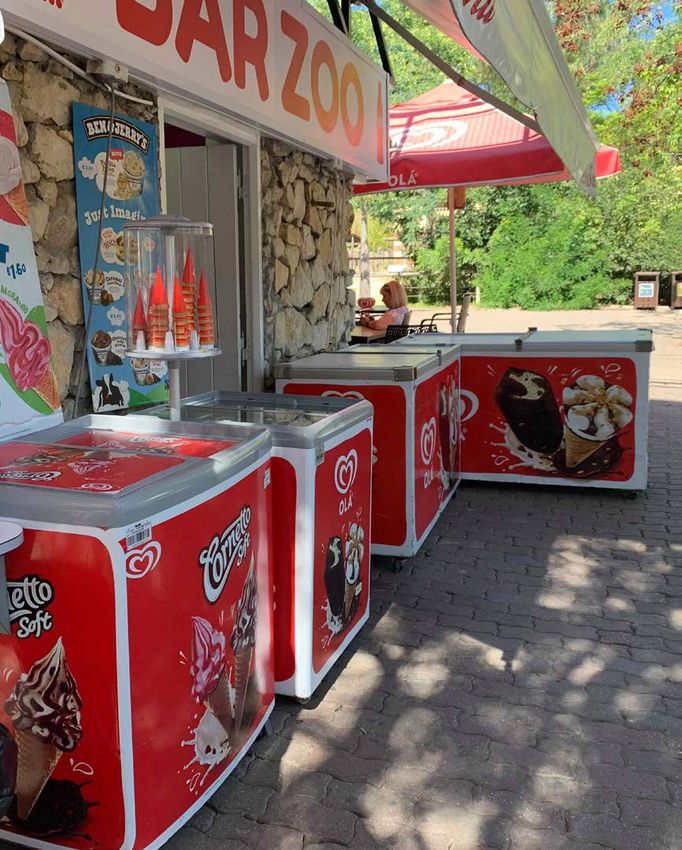
Our Climate Transition Action Plan sets out a range of
targets and actions designed to deliver an emissions
reduction pathway consistent with the 1.5° ambition of
the Paris Agreement. Our primary focus in the 2020s and
2030s will be on emissions reduction, not offsetting.
Our plan                 6

Our plan
Net zero GHG emissions by 2039
What do we mean by ‘net zero’?
The world is embarking on a ‘Race to Zero’. Meeting the Paris Agreement goal of
holding the increase in the global average temperature to well below 2 degrees
above preindustrial levels, and pursuing efforts to limit that increase to 1.5 degrees,
will require an unprecedented global effort to halve greenhouse gas (GHG) emissions
this decade, achieve a ‘net zero’ position by 2050 at the latest and shift to an overall
removal of GHGs on an annual basis post-2050.

The United Nations Intergovernmental Panel on Climate Change defines net zero
emissions as the point when “anthropogenic emissions of greenhouse gases to the
atmosphere are balanced by anthropogenic removals over a specified period.”

For Unilever, this means ensuring that the emissions associated with our business
and products are reduced towards zero as far as possible, with residual emissions
balanced by carbon removals, through either natural or technological carbon
sequestration (for example, reforestation or carbon capture and storage), thereby
achieving a ‘net zero’ position.1

It is important to note that both the goal and the path to get there are critical. That is
why we believe it is necessary to have:
• short-term and medium-term science-based GHG emissions reduction targets; and
• a long-term net zero GHG emissions target.

1.	For a full definition of net zero, please see the Transform to Net Zero Position Paper
    https://transformtonetzero.org/resources/transform-to-net-zero-position-paper-and-action-plan
Our plan                             7

Our Climate Targets                                                                                               In addition, we have a Medium-term Value Chain Emissions Reduction
Unilever has three principal targets that guide our actions:*                                                     Target: to halve the full value chain emissions of our products on a per
• a Short-term Emissions Reduction Target: to reduce in absolute terms                                            consumer use basis by 2030 against a 2010 baseline.
     our operational (Scope 1 & 2) emissions by 70% by 2025 against a
     2015 baseline;                                                                                               This Medium-term Value Chain Emissions Reduction Target has its origins in
• a Medium-term Emissions Reduction Target: to reduce in absolute terms                                           the Unilever Sustainable Living Plan – our strategy from 2010–2020. Unlike
     our operational emissions (Scope 1 & 2) by 100% by 2030 against a 2015                                       our other three targets, it is an intensity target, not an absolute target, and
     baseline; and                                                                                                helps us to guide innovation and monitor our annual performance.
• a Long-term Net Zero Value Chain Target: to achieve net zero emissions
                                                              +
     covering Scope 1, 2 and 3 emissions by 2039.                                                                 WRI/WBCSD Greenhouse Gas Protocol Scope 3 Standard (2011)

*     GHG emissions reduction targets typically refer to the WRI/WBCSD GHG
      Protocol Scope 3 Standard (2011), which classifies emissions according to
      three scopes: Scope 1 includes direct on-site emissions. Scope 2 includes
      indirect on-site emissions (e.g. purchased electricity). Scope 3 includes
      upstream or downstream emissions in the value chain outside a company’s
      own operations.

+ We have defined our Net Zero target with reference to the GHG Protocol
      Corporate Value Chain (Scope 3) Accounting and Reporting Standard.
      Our target covers upstream Scope 3 emissions, Scope 1 & 2 emissions and
      mandatory downstream Scope 3 emissions.2 Mandatory downstream
      emissions include direct emissions from aerosol propellants and the
      biodegradation of chemicals in the disposal phase but exclude indirect
      use-phase emissions, such as emissions associated with the hot water used
      with our products.

                                                                                                                                                                               Source: World Resources Institute

2.    https://ghgprotocol.org/sites/default/files/standards/Corporate-Value-Chain-Accounting-Reporing-Standard_041613_2.pdf
Our plan   8

This target includes indirect use-phase
emissions associated with our products (for
example, the energy consumed by a washing
machine using one of our detergents).
Including these emissions can help identify
specific climate-friendly innovations (for
example, detergents that perform well in cold
water). These indirect use-phase emissions
can be substantial, typically two-thirds of a

                                                    65%
product’s value chain footprint when they are
included in scope.

However, we have learned that beyond our
                                                    of our products’
laundry products, the instances in which            greenhouse gas
Unilever can drive emissions reduction in this      footprint are indirect
                                                    use-phase emissions.
area are limited. For example, we control neither
the consumer’s choice of energy supplier nor
the eco-efficiency of appliances in the home.
Decarbonising the energy grid is likely to get
results faster than attempts to change consumer
preferences. This has been a significant lesson
learned from our ten-year journey with the
Unilever Sustainable Living Plan.
Our plan              9

Under the GHG Protocol, indirect use-phase emissions are an optional                                          Δ The SBTi is a partnership between CDP, the United Nations Global Compact
part of a company’s Scope 3 emissions. While the Science Based Targets                                           (UNGC), the World Resources Institute (WRI) and the World Wide Fund
initiativeΔ encourages companies to consider them, they are also clear that                                      for Nature (WWF). It is the lead partner of the Business Ambition for
they do not form part of a company’s mandatory Scope 3 emissions and                                             1.5°C campaign – an urgent call to action from a global coalition of UN
that their inclusion is above and beyond a company’s Scope 3 targets.3                                           agencies, business and industry leaders, mobilising companies to set net
Therefore, while we continue to include indirect use-phase emissions in our                                      zero science-based targets in line with a 1.5°C future. The SBTi defines and
Medium-term Value Chain Target, we have excluded them from the scope of                                          promotes best practice in emissions reductions and net zero targets in line
our Net Zero Target.§ This will help ensure that we have an understanding of                                     with climate science.
these emissions, while focusing the business on reducing emissions in areas
within our sphere of influence.
                                                                                                              §	In this document, references to Unilever’s value chain GHG footprint will
This approach also appears to align with emerging investor sentiment.                                            refer to this definition of Scope 1, 2 and 3 emissions, excluding indirect use-
The published benchmark from the Climate Action 100+ investor coalition,                                         phase emissions, unless otherwise stated.
representing $52 trillion of assets under management, only considers
Scope 3 emissions from purchased goods and services to be in scope for
companies in the consumer goods sector.4

Unilever will continue to advocate for an accelerated energy transition
which will help reduce indirect emissions in consumers’ homes, as well as
accelerating progress in other areas of our value chain.

We will also continue to drive consumer behaviour change in areas of our
business where it makes sense to do so, such as helping consumers lower
their GHG footprint by reducing food waste, choosing plant-based foods, or
providing transparent information about the GHG footprint of the products
that they purchase.

3.   https://sciencebasedtargets.org/resources/files/SBTi-criteria.pdf pp.10-11
4.   https://www.climateaction100.org/wp-content/uploads/2020/12/Net-Zero-Benchmark-Indicators-12.15.20.pdf
Our plan   10

External validation of our targets
Our Medium-term Emissions Reduction Target and our Medium-term Value
Chain Emissions Reduction Target have been formally approved by the
Science Based Targets initiative (SBTi), a multi-stakeholder climate initiative.
This means that they have assessed the targets against the emissions
reduction pathways necessary for the world to limit global average
temperature rise 2 degrees above preindustrial levels and found them to be
consistent with that outcome.

In addition, the Medium-term Emissions Reduction Target has been
approved by the SBTi as consistent with the 1.5-degree ambition of the
Paris Agreement.

The Science Based Targets initiative recently issued a public consultation on
a framework for assessing net zero targets. Unilever is actively engaged in
that consultation.
Our plan             11

How our targets guide our action                                                    The Unilever Climate & Nature Fund
Our suite of targets is designed to guide our approach, which we propose            The world cannot wait until 2039 to begin the work of investing in nature
will be as follows:                                                                 and protecting tropical forests that, once gone, will be lost forever. In fact,
• In the 2020s and 2030s, our primary focus will be emissions reduction             research has shown that natural climate solutions could provide up to 37%
     across our value chain, consistent with the 1.5-degree ambition of the Paris   of the emissions reductions the world needs by 2030 to stay on track for
                                                                                                                5
     Agreement.                                                                     the Paris Agreement goals. Our brands will play their part through our €1
• We will not seek to meet our emissions reduction targets through the              billion Climate & Nature Fund by investing in projects that positively address
     practice of purchasing and retiring carbon credits, known as offsetting.       climate change and protect nature, for example, through forest protection
• By 2039, and from then onwards, we will ensure that any residual                  and regeneration.
     emissions are balanced with carbon removals to achieve and maintain
     our net zero emissions target.                                                 We expect that the business cases for such investments will be grounded in
                                                                                    how these projects are brought to life with consumers, driving preference for
We provide more detail on the role of carbon credits, offsetting and carbon         our brands. However, some of these projects may generate carbon credits,
removals on pages 12 and 13.                                                        and brands may seek to use those credits to support consumer-facing
                                                                                    claims of ‘carbon neutrality’. Where this happens, this would be in addition
                                                                                    to making progress towards our emissions reduction targets, not a means of
                                                                                    achieving them. On the following page, we explain why.

5.    https://www.pnas.org/content/114/44/11645
Our plan 12
Our view of carbon credits and offsetting on the journey to net zero However, some civil society stakeholders are concerned that offsetting
In order to help investors and other stakeholders understand our position on “unavoidable” emissions with compensation credits simply legitimises
carbon credits and offsetting, we have set out a summary here: business-as-usual growth in emissions. This risks delaying the urgent
action required to address more systemic transformations in companies’
Internationally recognised and verified carbon credits can be generated business models and value chains.
from actions that avoid, reduce or sequester greenhouse gas emissions.
There is growing societal interest in the role they might play in achieving the This practice is attractive to some companies because it can be cheaper
Paris Agreement goals. to purchase compensation credits from outside a value chain than to
tackle the more fundamental transformations within it. But by delaying
According to the Science Based Targets initiative, there are two broad these transformations, the world may miss the window to limit global
categories of carbon credits: temperature rise to 1.5 degrees above preindustrial levels.
• Compensation: credits generated by action to avoid or reduce emissions
outside of a company’s value chain. This can include protecting forests Unilever believes it is not an either/or question. Credible net zero
that would have been cut down or introducing energy-efficient cookstoves strategies must lead with science-based emissions reductions pathways,
that reduce emissions. complemented with carbon removals when all feasible reductions have
• Neutralisation, often known as carbon removals: credits generated been implemented.
through direct removal of GHGs from the atmosphere. This can include
planting new trees that sequester carbon, or technological solutions such At the same time, the world must find business cases to support
as direct air capture with the carbon sequestered underground. increased investment in the earth’s natural carbon sinks, such as the
world’s tropical forests.
Compensation credits can be a source of much-needed funding for activities
that avoid or reduce GHG emissions compared to a business-as-usual
scenario. The sale of avoided emissions credits, in particular, can provide
an income stream to farmers to incentivise the urgent protection of natural
capital such as tropical forests in the absence of regulatory frameworks that
require it.Our plan 13
The journey to net zero The graph to the left illustrates what a combination of emissions reductions,
optional compensation and eventual neutralisation with carbon removals
could look like.
The graph shows both the gross and net emissions reductions consistent
Emissions (tCO2e)
with the Paris-aligned pathway. It illustrates net zero as the state at which
a company’s emissions to the atmosphere are balanced with carbon
removals from the atmosphere.
Unilever has committed to reaching Net Zero by 2039.
Time
We have committed to reducing gross emissions in our value chain in
line with the Paris-aligned trajectory to 2030, and we have committed to
balancing residual emissions by 2039 and from then onwards with carbon
removal credits.
We are at the start of the net zero journey and have not yet established the
extent to which we can reduce our gross emissions by 2039, and therefore
Base year Target year the level of balancing carbon removals required. This is work in progress.
Neither have we committed to a defined compensation pathway. However,
our brands may invest in compensation and neutralisation well ahead of
Paris-aligned emissions reduction pathway
2039 through the €1bn Climate & Nature Fund, where those actions can be
Net emissions used to drive consumer preference. For example, our Beauty & Personal
Care division has committed to help protect and regenerate 1.5 million
Net zero Neutralisation hectares of land, forests and oceans by 2030.
Gross emissions CompensationOur plan 14
Unilever’s greenhouse gas footprint today
We estimate that our annual value chain greenhouse gas emissions
(Scope 1, 2, & 3, excluding indirect use-phase emissions, shown in
grey in the diagram on the right) are approximately 32 million tonnes Raw materials including
± 49%
of CO2e. This figure is broken down in the diagram on the right. third-party manufactured products
Of these categories, Unilever’s own manufacturing facilities, offices
and labs form our Scope 1 & 2 footprint. The remaining emissions
form our Scope 3 footprint.
± How we calculate our GHG footprint
12% Packaging materials
Since 2010, Unilever has provided detailed public reporting on a
representative subset of our total portfolio measured in 14 countries Unilever’s own
known as the ‘Unilever Sustainable Living Plan Footprint’. This subset manufacturing
2%
of our portfolio gives us a high degree of confidence of the end-to-end facilities,
offices and labs
emissions profile of around 60–70% of our total global portfolio and
has enabled us to track our product GHG footprint at both absolute 15% Logistics and distribution
and intensity (emissions per single use of a product) over time. We
have conducted a simple extrapolation from this footprint to derive
an initial estimate of our current greenhouse gas footprint (excluding
Retail emissions – specifically
indirect use-phase emissions) in order to establish our net zero goal. 10%
ice cream freezers
HFC propellants used in
3% aerosols in North America
Disposal of waste products and
9% packaging, including biodegradation
Indirect use-phase emissions out of
scope for Net Zero. See page 7.Our plan 15
How we are going to get there: Unilever’s Climate Transition Action Plan Our first ambition is to eliminate emissions from our own operations. This is
Unilever’s approach to sustainability covers activities within our operations, a small share of our value chain emissions but represents those over which
our value chain, our brands as well as our work to influence wider society. we have direct control.
Achieving our net zero by 2039 (and interim) targets will require a range of
actions that can be categorised using this model. Along our value chain, we have opportunities to reduce emissions from
our current product portfolio through targeted interventions both up and
Unilever’s approach to sustainability downstream – for example, by encouraging suppliers to set their own
science-based targets and working with logistics partners to shift to lower
emission transport options.
Influencing Perhaps even greater opportunities come from strategic integration into
wider society
our brands. Innovation programmes can drive the redesign of our products
in ways that reduce emissions. This can be through concentrating or
compacting our products, or developing new lower emission ingredient
Brands
substitutes, which can have a significant impact on our ability to reduce
value chain emissions.
Value chain
But with the lion’s share of our value chain emissions falling outside of our
direct control, societal change remains critical to achieving our targets and
to the achievement of the Paris Agreement goals. Influencing wider society
Operations is, therefore, an integral part of our plan.
Our whole plan is held together by a commitment to transparent
governance and reporting at a Group level, and increasingly by engaging
Governance and reporting with consumers, for example, through our ambition to communicate the
carbon footprint of every product we sell.
In the following sections, we provide details of the action we aim to take in
each of these areas.Our operations 16 Our operations Our first ambition is to eliminate emissions from our own operations. This is a small share of our value chain emissions but represents those over which we have direct control. As we achieved our 100% renewable grid electricity target in 2020, our focus is now on the transition to renewable heat sources, increasing energy efficiency, and reducing refrigeration emissions.
Emissions from our factories, offices and labs: 2% of our footprint                                                                                                Our operations        17

Our operations                                                                                   Absolute Scope 1 & 2 emissions reduction

Emissions from our factories, offices and labs
The emissions from our factories, offices and labs make up approximately 2% of

                                                                                                            2 2e)
                                                                                                                    2,000,000

                                                                                                             e)
our footprint.

                                                                                                        (tCO
                                                                                             Emissions (tCO
                                                                                                                    1,500,000

                                                                                         GHG Emissions
We aim to take the following actions to support our goal to achieve zero emissions in
                                                                                                                    1,000,000
our own operations:
• Continuously optimise our energy demand through energy efficiency programmes.
                                                                                                                     500,000
• Transition energy sources to renewables. Our worldwide grid electricity is now
  100% sourced from renewable sources. Next, we aim to transition heating sources
                                                                                                                                2015 2016 2017 2018 2019 2020      2025           2030
  (typically fossil fuel burning boilers) for manufacturing sites, offices and labs to
  renewable energy sources.                                                                                                                            Years
                                                                                                                                                       Years

• Eliminate any remaining residual high global warming potential (GWP) HFC
  refrigerants from our cooling systems, retrofitting or replacing them with low GWP
  refrigerants such as hydrocarbons, ammonia and CO2.
                                                                                                 How we will reduce our emissions
• Halve food waste in our operations by 2025.

In setting a target to reach zero emissions by 2030, we have assumed that the
conversion of gas-fired boilers to biomass will reduce Scope 1 emissions to zero,
                                                                                                                                               Eco-efficiency measures
                                                                                                                                               Eco-efficient measures
based on IPCC guidance for the treatment of biomass emissions. We recognise
that there is a societal debate on biomass as a zero-emission fuel source. Were                                                                Transition
                                                                                                                                               Transition to
                                                                                                                                                           to renewable
                                                                                                                                                               renewable energy
                                                                                                                                                                         energy
the guidance to change to prevent biomass being counted as zero-emission, this
could impact our ability to achieve a 100% reduction by 2030. However, thanks to the
decarbonisation achieved through renewable electricity and other renewable thermal
technologies (for example, solar thermal), we believe our emissions reduction by 2030
would still be consistent with the 1.5-degree ambition of the Paris Agreement.
Emissions from our factories, offices and labs: 2% of our footprint Our operations 18
Longer-term, we believe that hydrogen will have an important role to play.
We are actively engaged in a pilot at our Port Sunlight site in the UK, in
partnership with Progressive Energy, to demonstrate that hydrogen can be
6
used as a fuel for industry. According to the Energy Transitions Commission,
for green hydrogen (generated through electrolysis powered by renewable
electricity) to reach its potential, the global renewable electricity capacity
needs to increase 4-6 times vs today’s level. This is another reason we
support an accelerated roll-out of renewable electricity infrastructure and
policy measures that support this (See “Our wider influence on society”
section below).
The capital investment required to meet these targets is not expected to be
incremental to Unilever’s regular capital investment programme. Rather,
our investment strategy will require an accelerated shift to new technologies
that reduce or eliminate GHG emissions.
Over the past five years, we piloted different carbon pricing schemes
including a programme that ‘taxed’ divisional capital expenditure budgets
in order to create a centrally managed Low Carbon Fund. The fund was used
to accelerate clean technology investment at our sites. We have decided
to replace this programme with an explicit commitment to ensure that
future capital expenditure is aligned with the Paris Agreement’s objective of
limiting global average temperature rise to 1.5 degrees.
6. https://www.energy-transitions.org/wp-content/uploads/2020/08/ETC_MissionPossible_ReportSummary_English.pdfOur value chain 19 Our value chain Along our value chain, we have opportunities to reduce emissions from our current product portfolio through targeted interventions, both upstream and downstream of our operations. Our primary focus areas are our raw and packaging materials, our logistics and distribution networks, and reducing emissions from business travel, ice cream cabinets, aerosol propellants and plastic packaging.
Raw materials: 49% of our footprint Our value chain 20
Raw materials Relative scale of
Relative greenhouse gasGHG impact
footprint across procured portfolios
of our ingredients
Unilever’s raw materials, including third-party manufactured product, and packaging materials
account for 49% of our value chain emissions. These will therefore become
the primary focus of our emissions reduction efforts over the next decade.
High
These emissions are related to the growing, extraction and processing of High
Inorga
Relative scale of GHG impact across procured portfolios
the materials and ingredients we buy. The bulk of these emissions arise in
GHG footprint
a small subset of materials and ingredients we use to make our products. Organ
These include:
1) suppliers
footprint
Packa
suppliers
Inorganic chemicals, such as soda ash
Comm
(aInorganic
laundry product ingredient)
chemicals
High
of of
Inorganic chemicals
proportion
(tier
Inorganic chemicals Inorganic Chemicals
Proportion
direct
Organic chemicals including surfactants (which improve
Inorganic chemicals
direct
Organic chemicals Bubble size =
detergent performance), such as Linear Alkyl Benzene
Organic chemicals Organic Chemicals
in our in
(LAB) and Linear Alkyl Benzene Sulfonate (LAS)
Organic chemicals
Estimated
High
Proportion of footprint
Organic chemicals
Agricultural commodities Packaging
in direct suppliers
Agricultural commodities
Agricultural commodities,
Agricultural commodities
Low
such as palm oil and dairy Commodity Ingredients
Relative
Agricultural commodities
Relative
Packaging materials scale
scale of
of GHG
GHG impact
impact across
across procured
procured portfolios
portfolios
Packaging materials Low
Packaging materials Low
Packaging materials Tonnes purchased
purchased
Packaging materials Tonnes
(plastics, paper & board, metals, glass)
High
High Bubble size = Total GHG footprint
Inorganic
Inorganic chemicals
Inorganic Chemicals
Chemicals Bubble size = Total GHG footprint
Organic
Organic chemicals
Organic Chemicals
Chemicals
Higher
footprint
footprint
Packaging
offootprint
Packaging
Packaging
suppliers
suppliers
directsuppliers
Commodity
Commodity Ingredients
Commodity ingredients
Ingredients Lower
Proportion
Proportion of
roportion of
direct
indirect
Low Bubble
Bubble size
size =
= Total
Total GHG
GHG footprint
footprint
Tonnes purchased
in
in
HigherRaw materials: 49% of our footprint Our value chain 21
Our approach to GHG emissions reduction in our upstream supply chain The 1.5°C Supply Chain Leaders was initiated
integrates strategic sourcing, supplier eco-efficiency, product design and by the Exponential Roadmap Initiative
transformational aspects on a portfolio level. This approach builds on together with founding partners Ericsson,
evidence provided by lifecycle analysis and databases, and verified data IKEA, Telia, BT Group and Unilever and will
obtained from suppliers (where this is available). support SMEs globally through the SME
Climate Hub. Its members also include
We plan to put in place integrated GHG reduction roadmaps for all key Nestlé and Telefonica.
materials and ingredients of significant impact to Unilever’s upstream
Scope 3 GHG footprint, which we will embed in our ongoing relationship Through our own manufacturing sustainability
and performance management with suppliers. The learning and work, we found that concerted efforts to
capacity building required to reduce emissions is significant and we reduce emissions from our operations have
anticipate that this journey will take time. become cost-neutral over time. Where on-
costs do occur, they are often balanced by
We have piloted this approach with our inorganic chemicals portfolio eco-efficiency savings identified. Therefore, we
and identified a near halving of our GHG footprint against a 2010 believe that through engaging our suppliers,
baseline realisable over ten years. In that portfolio, we believe this can be we will be able to find carbon savings over time that are cost-neutral.
achieved through a combination of R&D activities, supplier selection and
supplier GHG reduction efforts, which will include switching to renewable However, many emissions sit further up in the supply chain beyond our
energy as well as process improvements. This pilot suggests that the direct suppliers, associated with industrial or agricultural processes where
greatest emissions reduction gains in the short term can come from the emissions are harder to remove or avoid. As part of our plan, we intend
changes in formulations and material selection, followed by supplier to work through and with others to support the acceleration of more
selection and supplier decarbonisation efforts. systemic changes to the industrial and agricultural systems on which our
operations depend.
In 2020, we joined forces with other companies such as BT Group and
IKEA to launch the 1.5°C Supply Chain Leaders with the Exponential This will build on our long-standing work on tropical forest commodities
Roadmap initiative. Through this coalition, we sent a clear signal of our such as palm oil, where the implementation of our sustainable palm oil
intent to prioritise partnerships with suppliers who had set their own sourcing commitments has contributed to an estimated 35% reduction since
science-based targets. 2010 in the GHG footprint of the palm oil that we buy.Raw materials: 49% of our footprint Our value chain 22
Our commitment to end deforestation in key commodity crops
In 2020, we announced a new zero deforestation target covering our
key commodity crops – palm oil, paper & board, soy, cocoa and tea –
committing to end any deforestation linked to these crops in our supply
chain by 2023. We have made our requirements clear in being the first
to launch a cross-commodity “People and Nature Policy” in December
2020. Our commitment now extends beyond forests to protecting natural
ecosystems like the Brazilian Cerrado and covers suppliers and their group
operations. This goes further than our desire to simply reduce our own value
chain footprint and supports a shift in the industry as a whole towards a
pathway consistent with the Paris Agreement targets.
Our action to end deforestation drives a transformation
in how and with whom we partner in our extended
supply chains. We intend to deliver a transparent and
traceable supply chain, ensure we understand the
specific origin of the materials that we purchase while
leveraging our technology partnerships to assure that
the origin is free of deforestation. This transparency
of the “first mile” of a commodity’s journey through a
supply chain is critical to ensure we can independently
verify its deforestation-free status.
By directing our sourcing footprint to areas and
jurisdictions which are assured to be free of
deforestation, we will further lower our GHG footprint
and drive additional GHG reduction programmes.Packaging materials: 12% of our footprint Our value chain 23
Packaging materials These goals drive investment and innovation in reuse
Packaging materials (for example, plastics, paper & board, metals, glass and refill business models, ‘naked’ products, alternative
comprise 12% of our GHG value chain emissions footprint. Paper & board, materials, concentration, light-weighting and recycled
metals and glass are widely recycled around the world, and we seek to (non-virgin) plastic. Unilever remains the only major
reduce emissions through packaging design and supplier engagement. Our global consumer goods company to publicly commit to
emissions reduction targets have driven a shift to plastic materials which an absolute plastics reduction across its portfolio.
typically have a lower GHG footprint. However, issues of recyclability and
plastic pollution in nature are a growing societal concern, and we have set Achieving these targets will require improvement in waste management in many
ambitious targets in the areas of plastic reduction, reuse and recycling. of the countries in which we operate. Therefore, in addition to our commitment to
increasing our purchasing of PCR content, we will:
Specifically, we have committed by 2025 to: • Invest and partner to improve waste management infrastructure
7
• Reduce our use of virgin plastic packaging by 50% (against a 2018 baseline), (collection, sorting and processing).
of which more than 100,000 tonnes will come from an absolute reduction. • Participate in extended producer responsibility schemes where Unilever directly
• Help collect and process more plastic packaging than we sell. pays for the collection of its packaging.
• Make 100% of our plastic packaging reusable, recyclable or compostable.
• Use at least 25% post-consumer recycled (PCR) content in our Our most significant impact opportunity is in our sourcing of PCR plastic. We
plastic packaging. estimate that mechanically recycled plastic has a 50% lower GHG footprint than
virgin plastic. We expect to surpass our goal of 25% PCR in advance of 2025.
Percentage of PCR use
Further emissions reductions can be achieved through a shift to reusable and
refillable packaging. Our ambition is to change the way we do business, shifting
25 from single-use to multiple-use packs by investing in new business models.
use
PCRuse
20
To make this shift, we also need other stakeholders to invest in these solutions,
ofPCR
15
engage citizens around the experience and educate them on the benefits of
%of
10 changing the way they buy. Governments have a critical role to play when it comes
%
5 to setting standards for these systems and incentivising investment. These factors
will have a significant impact on the acceptance and acceleration of reusable and
2017
refillable packaging.
2018 2019 2020 2021 2022 2023 2024 2025
Years
Years 7. The baseline period is the 12 months to 30 June 2018Logistics: 15% of our footprint Our value chain 24 Logistics and distribution Our logistics and distribution footprint accounts for approximately 15% of Unilever’s GHG footprint. It covers transport from suppliers to manufacturing units, manufacturing units to distribution centres (DCs) and from DCs to customers. The vast majority of our logistics emissions (>90%) are attributable to our logistics suppliers and therefore form part of our Scope 3 footprint. We achieved our 2020 target of 40% improvement in CO2 efficiency of our global logistics network (against a 2010 baseline) one year ahead of schedule. This achievement was primarily driven by reducing distance travelled and improving truck utilisation, reducing the total number of trucks used. While there is some more opportunity in this space, we now need to accelerate the transition to zero emissions transport solutions.
Logistics: 15% of our footprint                                                                                                              Our value chain   25

Our logistics and distribution plan has six areas of focus:                     The relative share of our 40-50% absolute reduction that we
   Decreasing distance travelled through network redesign, including           believe we can deliver through each of our six focus areas
   collaboration with our customers and suppliers.
   Additional use of intermodal solutions – for example, the use of railways
   to reduce demand for long-distance trucking.
   Hydrogen Fuel Cell and Battery Electric Vehicles (BEVs) for long haul
   heavy-duty transport and BEVs for short-haul transport.
   Alternate fuels – developing partnerships to explore lower carbon
                                                                                                             6x FOCUS
   transition fuels, such as bio-liquified natural gas and renewable natural                                          AR
   gas (biogas).
   Cold chain – using cleaner and newer technologies for our refrigerated

                                                                                                                                           EA
   and frozen deliveries.

                                                                                                                                             S
   Last-mile delivery solutions – to measure and reduce the emissions from
   customers’ own distribution centres to store shelves and to consumers’
   homes in the case of direct to consumer eCommerce.

We believe that a combination of these approaches could deliver an
additional 40–50% reduction in GHG emissions from our logistics and
distribution network over the next decade. Our customers may be able to
achieve similar reductions within their own store delivery networks.

      Alternate fuels                        Decreasing distance travelled

                                             Additional use of
      Cold chain
                                             intermodal solutions

      Last-mile delivery solutions           Hydrogen Fuel Cell and Battery
                                             Electric Vehicles (BEVs)

                                                                                        Alternate fuels               Decreasing distance travelled
Our value chain 26
Travel and fleet emissions by market Business travel, commuting and homeworking
Emissions from business travel have historically been outside of
the scope of our emissions reduction targets, as they have not
been considered part of our product-centric value chain footprint.
However, much
Total Travel andprogress has
Fleet CO2 been made in understanding and
Emissions
reducing ourof
Percentage footprint, and
Fleet CO2 business travel emissions will be part
Emissions
of our net zero target scope going forwards.
Our current programme focuses on business travel and the
transition to electric and hybrid vehicles in our worldwide fleet.
Activities include:
• Reducing the need for travel, particularly air travel, through
efficient use of technology.
• An electric vehicle (EV) roadmap to deliver 100% EVs or hybrids in
the Unilever car fleet by 2030.
We do not currently measure the impact of our employees
commuting and working from home. However, we are exploring
this by extending our emissions reduction strategy for offices to
Total travel and fleet CO2 emissions *car fleet emissions for South Asia and include baselining and support for working from home, leveraging
Vietnam are estimates only.
Percentage of fleet CO2 emissions the learnings and best practices during the pandemic.Retail emissions: 10% of our footprint Our value chain 27
Retail emissions – specifically ice cream freezers
Retail emissions account for 10% of Unilever’s value chain GHG footprint.
Unilever owns a fleet of over 3 million point-of-sale freezer cabinets. These
freezers are typically set to a temperature below -18 degrees. The energy
consumed is responsible for a significant proportion of the ice cream GHG
footprint and, as such, a key focus of our efforts.
We aim to take the following actions to reduce these emissions:
• Continue to reduce cabinet energy consumption through innovation of
the main technical components – compressors, natural refrigerants, fan
motors, insulation, temperature controllers and glass panels.
• Prioritise the deployment of the most energy-efficient units into markets
with the highest carbon intensity factors.
• Work towards ‘warming up’ the cold chain while protecting the consumer
experience as a next step in reducing energy consumption.
• Explore programmes that will enable the freezers to be powered by
renewable electricity, even where Unilever is not directly operating them.Aerosol propellants: 3% of our footprint Our value chain 28 Innovation in aerosol propellants Aerosol propellants in North America account for approximately 3% of Unilever’s GHG footprint. Around the world, Unilever uses natural hydrocarbon propellant gases as its preferred propellants in hairsprays, body sprays and deodorant. However, in the US, regulations often restrict or prohibit their use. Instead, it is industry practice to use low global warming potential (GWP) hydrofluorocarbon (HFC) propellants. Reducing the need for such propellants is an important step in reaching our climate goals. A regulatory change in the US to permit the use of hydrocarbon propellants would be our first-choice solution, and we are engaging with regulators to explore how lower impact formulations might be permitted in future. Even in the absence of regulatory change, we are exploring several actions including: • The use of compressed aerosol technology to reduce the amount of HFC propellant necessary. • The innovation of new aerosol technology that works with compressed air or other gases. It can take time for new technologies to be widely accepted by consumers used to particular formulations, but we are optimistic that solutions can be found.
Disposal of waste products and packaging: 9% of our footprint                   Our value chain   29

Emissions from disposal of waste products and packaging, including
biodegradation of product formulations
Emissions from the disposal of waste products and packaging, including
the biodegradation of product formulations after their use, account for 9%
of our value chain footprint. This is primarily driven by emissions from the
incineration of plastic packaging at end of life (where not recycled) and the
biodegradation of fossil-fuel-based ingredients in our products.

Our actions to address this footprint are our plastic packaging commitments
and actions described above, and our innovation programme that seeks
to replace fossil-fuel based carbon with recycled or renewable carbon. This
is described in more detail below, in the section ‘Recycled and renewable
carbon in formulations’.
Our brands and products   30

Our brands and products
Our brands and products are the very core of our
business. Delivering our climate targets requires us to
integrate emissions reduction goals into our innovation
plans. We also believe that brands that can demonstrate
to consumers the steps they are taking to minimise their
footprint and improve the health of the planet will be
well-positioned to succeed.

The actions described here are led by our brands and
product divisions. They support Unilever’s Climate
Transition Action Plan by reducing our value chain
footprint, strengthening our brands’ position in the
marketplace or helping consumers reduce their own
footprint – or a combination of all three.
Our brands and products   31

Concentration and compaction
Our industry-leading efforts to remove or reduce the use of certain materials
such as inorganics and surfactants, and compact our products, have been a
significant source of emissions reduction over the last decade and continue
to offer significant emissions reduction opportunities. These efforts require
fundamental changes to the chemistry – and often the packaging – of our
products in order to deliver a compelling consumer experience. Not only
does using more compact products mean their footprint is often significantly
lower, but compacting our products by design is also an essential step in
making our products fit for eCommerce and delivering financial savings.

We believe that we can reduce the emissions of some of our products by
up to 60% through concentration and compaction and have plans in place
across our Home Care categories to do so. The plans aim to support our
efforts to:
• Develop weight-efficient chemical formulations for all laundry liquids,
  laundry powders.
• Innovate ultra-concentrated laundry liquid and fabric conditioners.
• Create a range of dilutable products – such as Cif eco refill and Omo
  Dilutable – across brands and geographies.
• Create new, disruptive formats that go beyond what is currently possible in
  terms of concentration and reduction in the use of plastic.
Our brands and products   32

 Recycled and renewable carbon in formulations                                                                      Through Clean Future, we are reinventing the chemistry of our Home Care
 In addition to concentration and compaction, we can further reduce                                                 products and have plans to:
 emissions from product formulations by transitioning away from fossil                                              • Use bio-science and industrial biotechnology to produce highly efficient
 fuels as feedstocks for our chemicals. In September 2020, Unilever                                                      cleaning ingredients from sustainably sourced biomass, such as the
 announced the ambition to replace all of the carbon derived from fossil                                                 rhamnolipids (a surfactant) we are using in our hand dishwash detergent in
 fuels in our Home Care formulations with renewable or recycled carbon                                                   Chile and Vietnam or new high-performing bio-enzymes.
 by 2030.8 There are currently more than enough carbon molecules above                                              • Turn non-recyclable plastic waste destined for landfill or incineration into
 the ground – in the atmosphere, plants, algae and waste – to make the                                                   biodegradable cleaning and fragrance chemicals.
 chemicals we need if we learn to use this carbon again and again. This                                             • Turn CO2 from industrial emissions into useful chemicals and minerals
 approach avoids pumping more carbon from under the ground (in the                                                       through carbon capture and utilisation, as we already do for some of the
 form of fossil fuels), which would add to the earth’s atmospheric carbon                                                soda ash we use in our laundry detergents in India.
 burden when the chemicals biodegrade.
                                                                                                                    Adopting this approach in the recent past has helped us deliver up to 28% GHG
                                                                                                                    savings in the product formulations whilst delivering new consumer benefits
                                                                        o                                           such as skin mildness. We are now exploring the extent to which this level of
                                                           rp  le carb n from CO
                                                       Pu                             2
                                                                                                                    GHG reduction could be deliverable across the Home Care portfolio.
                                                             b o n from marine s
                                                        car                         ou
                                                                                        rce
                                                    lue                on from p           s
                                                   B             carb             lan                               We are mindful that any shift from petrochemical to other feedstocks must be
                                                          e en                       ts
                                                        Gr           fro m  plas                                    conducted with full regard for the sustainability impacts and pressures that this
                                                                b on            tic
                                                             ar
                                                                                                                    has on our natural systems to deliver CO2 emissions reduction. The selection
                                                                                  w
                                                          yc

                                                                   Carbon
                                                                                   as
                                                       Gre

                                                                                                                    of feedstock is informed by life cycle analysis and as well as our modelling
                                                                                     te

                                                                 Renewability

                                                                                                                    approaches to assess emissions from land use and land-use change.9
                              Carbon
                            processed
                            into useful         Carbon                                  Chemical      Formulation
                           ingredients       captured from                             recycling of   biodegrades
                                               industrial      Cycle powered by       plastic waste
                                               emissions       renewable energy

                                          Production                                           Dispose
  Unilever to eliminate
fossil fuels as a source
 of carbon in cleaning
      products by 2030                                             Consumer
                                                                  uses product
                                                                                                                    8.    https://www.unilever.com/brands/home-care/clean-future.html
                                                                                                                    9.    https://www.nature.com/articles/ncomms15065
Our brands and products 33 Plant-based foods Consumer demand for more plant-based diets is growing. Many people are seeking to reduce their meat consumption. Alternative proteins, plant-based eating and meat and dairy alternatives are strategic pillars for Unilever’s Foods & Refreshment division. Its Force for Good strategy prioritises moving to more plant-based diets and products, guiding consumers towards healthy and sustainable dietary behaviours. Innovations such as plant-based ice cream – using non-dairy fats and proteins – directly contribute to lowering the carbon intensity of Unilever’s product value chains. We have a comprehensive product innovation programme in ice cream with a target of around 20% of ice cream products being non-dairy by 2030. But as we consider our Foods & Refreshment division’s role in the climate transition, we believe it is critical to look beyond our current footprint to more systemic societal shifts in reducing emissions from our diets.
Our brands and products   34

In November 2020, the Foods & Refreshment division announced the bold          In addition to meat and dairy replacement, a significant part of the Foods
‘Future Foods’ ambition with several mid-term commitments, including the       & Refreshment business is generated by products that do not contain
goal to increase annual sales of plant-based meat and dairy alternatives       animal-derived ingredients by design. These include vegetable soups and
to €1 billion by 2025–2027. Achieving that goal requires almost a fivefold     water-based ice cream, and the whole tea business. While it is not in scope
growth versus the 2020 baseline. The scope includes three groups of            of the €1 billion goal, growth in this part of the business is consistent with
products that are specifically designed to look, taste or cook like products   the pro-environmental choices that consumers are increasingly making.
containing animal-derived proteins:
                                                                               Lastly, we are encouraging people to eat more –
• Meat replacement: Vegan or vegetarian products that contain non-             and more diverse – vegetables. This effort is being
 animal-derived alternative proteins instead of meat proteins.                 led by Knorr, underpinned by its global Future 50
• Vegan mayonnaise: Vegan mayonnaise products in which all animal-             Foods report, published together with WWF-UK
 derived ingredients are replaced by non-animal-derived alternatives.          in February 2019 to promote more diverse plant-
• Vegan ice cream: Vegan ice cream products in which all animal-derived        based eating and biodiversity. The report is based
 ingredients are replaced by non-animal-derived alternatives.                  on the insight that humanity mostly only eats
                                                                               12 crops and five animals, and suggests specific
                                                                               healthy ingredients that could contribute to a more
                                                                               sustainable food system. The list combines familiar
                                                                               foods such as lentils, wild rice and kale, with lesser-
                                                                               known foods like fonio, pumpkin flowers and cactus.
                                                                               This is reflected in Knorr’s innovation pipeline and
                                                                               new recipe inspirations. For example, preparing a
                                                                               spaghetti Bolognese with lentils instead of meat,
                                                                               a behaviour change that can reduce the GHG
                                                                               footprint of the protein in that particular dish by 83%.
Our brands and products 35
Beauty & Personal Care – Positive Beauty for people and planet Helping consumers make lower carbon choices
In March 2021, our Beauty and Personal Care division launched a new We believe that transparency about carbon footprint will be an accelerator
Positive Beauty vision and strategy. in the global race to zero emissions, and it is our ambition to communicate
the carbon footprint of every product we sell. In some cases, this may
Positive Beauty, which sets out several progressive commitments and be via a direct carbon footprint label. In other cases, we may use digital
actions for our beauty and personal care brands, including Dove, Rexona, technologies to connect consumers with the product footprint and other
Lifebuoy, Axe and Sunsilk, helps to drive a transformation in how our data that helps them understand the positive impact they can have through
products are designed and formulated so that they do more good for the choices they make, both in terms of the products they choose and how
both people and the planet, deliver a superior product experience, and they use them.
tap into consumer trends.
We are creating partnerships with
Most of the ingredients in our beauty and personal care products come other businesses and organisations to
from the natural world. As part of our aim not only to do less harm standardise data collection, sharing and
but also to do more good, our beauty and personal care division has communication, such as the WBCSD Value
committed to helping protect and regenerate 1.5 million hectares of Chain Carbon Transparency Pathfinder,
land, forests and oceans by 2030. This is more land than we use to grow which launched earlier this month.10
the renewable ingredients included across our beauty and personal care
product portfolio.
Value Chain Carbon
Transparency Pathfinder
Enabling decarbonization
through Scope 3 emissions
transparency
10. https://www.wbcsd.org/Programs/Climate-and-Energy/Climate/SOS-1.5/News/WBCSD-launches-new-Pathfinder-to-enable-Scope-3-emissions-transparency-and-accelerate-decarbonizationOur wider influence on society 36 Our wider influence on society With the lion’s share of our value chain emissions falling outside of our direct control, societal change remains critical to achieving our targets and achieving the Paris Agreement goals. Influencing wider society is, therefore, an integral part of our plan.
Our wider influence on society   37

Our wider influence on society
Advocacy and partnerships
We have a long tradition of working with civil society            To support our Climate Transition Action Plan, our approach to
organisations, multilateral institutions and other                advocacy and partnerships will be divided into four types of activity:
companies to advance the sustainable development
agenda and influence the public policy frameworks that            1. High-level advocacy in support of the goals of the Paris Agreement
will accelerate progress.                                         2. National and regional climate policy
                                                                  3. Issue-specific policy engagement and partnerships
                                                                  4. Industry partnerships

1.	High-level advocacy in support of                             2. National and regional climate policy engagement
   the goals of the Paris Agreement
                                                                  Unilever is active in several key markets (including the
With the UN Climate Conference – COP26 – on the horizon,          EU, US and UK) in advocating our support of ambitious
countries must step forward with strengthened emissions           national or regional level climate policy. We typically
reduction plans. These should include targets to achieve net      engage through dedicated climate advocacy organisations
zero by mid-century, interim targets consistent with a Paris-     such as the EU Corporate Leaders Group,
aligned pathway, and enabling policy measures to support          the Climate Leadership Council and HRH The Prince of
delivery. Unilever engages through many global associations       Wales’ Corporate Leaders Group on Climate Change.
to express our support for these goals at international events.   For example, we lobbied actively to support the EU’s 55%
These include the UN Secretary General’s Climate Action           emissions reduction target, which has now been adopted.
Summit and the UN Climate Change Conference. Our five
global strategic partners in this effort are the UN Global
Compact, the World Economic Forum, the World Business
Council for Sustainable Development, the We Mean Business
Coalition and the Consumer Goods Forum.
Our wider influence on society 38
3. Issue-specific policy engagement and partnerships Renewable energy – Two-thirds of the end-to-end footprint of our products occurs in
the home, primarily associated with the energy used to heat water required for their
The transition to a net zero world is complex. Success will require companies use. In product categories such as skin cleansing it can be over 80%, - as products such
to engage proactively with public policymakers on specific issues that are as shower gels and soaps are often used with large volumes of hot water. Yet Unilever
material to that transition. has no direct control over the carbon intensity of those emissions. Having spent five
years in the early days of the Unilever Sustainable Living Plan exploring the potential
Unilever invests management time in several industry working groups, of environmental behaviour-change campaigns, we have concluded that in the
advocacy groups and task forces, to positively influence the enabling categories in which we operate, these campaigns are unlikely to drive down emissions
conditions for the net zero transition. Our engagement strategy is reviewed at a pace consistent with the 1.5-degree ambition of the Paris Agreement. A better
annually. Priority areas for engagement for the next three years include: strategy is to support the accelerated deployment of renewable energy worldwide to
reduce and remove these emissions altogether.
Carbon pricing – Unilever supports calls for the introduction of carbon
pricing at levels consistent with the delivery of the Paris Agreement and We focus on policy influencing work through advocacy groups such as RE100, which
as recommended by the Carbon Pricing Leadership Coalition’s High-Level advocate for an accelerated deployment of renewable energy in markets. We intend
Commission on Carbon Prices ($40–80/tonne by 2020 rising to $50–100/ to step up this engagement in more countries through a combination of direct
tonne by 2030, provided a supportive policy environment is in place). engagement and through our trade associations.
Natural climate solutions – Unilever is a member of the Natural Climate
Solutions (NCS) Alliance which aims to scale up affordable natural climate
mitigation solutions for achieving the goals of the Paris Agreement. These
include reforestation, forest protection and conservation, and coastal
wetland and peatland restoration.You can also read


