Cycling Strategy and Action Plan - For a more sustainable Sydney 2018-2030
←
→
Page content transcription
If your browser does not render page correctly, please read the page content below
Sydney2030/Green/Global/Connected

Cycling Strategy
and Action Plan
For a more sustainable Sydney

2018-2030
Contents

           01 		   Acknowledgement                             4
           02 		 Lord Mayor’s message                          5
           03 		   Executive summary                           7
           04      Four priorities, to increase cycling       12
                   Priority 1 Connecting the network          16
                   Priority 2 Supporting people to ride       20
                   Priority 3 Supporting businesses           24
                   Priority 4 Leadership and advocacy         28
           05 		 Measuring the outcomes                       32
           06      More cycling delivers broader goals        35
           07      Cycling in the city: progress since 2007   39
Cycling Strategy and Action Plan

        Acknowledgement

The City of Sydney                 The City of Sydney acknowledges the Gadigal of the
                                   Eora Nation as the traditional custodians of this place
acknowledges Aboriginal and        we now call Sydney.

Torres Strait Islander peoples     In 1788, the British established a convict outpost on the
                                   shores of Sydney Harbour. This had far reaching and
as the traditional custodians      devastating impacts on the Eora Nation, including the
                                   occupation and appropriation of their traditional lands.
of our land – Australia.
                                   Despite the destructive impact of this invasion, Aboriginal
                                   culture endured and is now globally recognised as one
                                   of the world’s oldest living cultures.
                                   Aboriginal peoples have shown, and continue to show,
                                   enormous resilience coupled with generosity of spirit
                                   towards other peoples with whom they now share
                                   their land.
                                   We recognise that, by acknowledging our shared
                                   past, we are laying the groundwork for a future which
                                   embraces all Australians, a future based on mutual
                                   respect and shared responsibility for our land.

                                                              Sydney2030/Green/Global/Connected
Lord Mayor’s message

   Lord Mayor’s
 message

  The evidence of the past                                    Business leaders inspired our first strategy in 2007 and
                                                              they continue to lobby for cycling in our city because
  decade is that if you build                                 they know that traffic congestion costs billions each
                                                              year in lost revenue and productivity. The private sector
  safe cycling facilities,                                    is investing millions of dollars in end-of-trip facilities to
  Sydneysiders will get                                       support their staff who ride, because they know healthy
                                                              workers take fewer sick days, are more productive – and
  on their bikes and ride.                                    that’s better for their bottom line.
                                                              Now it’s time to reset our vision for cycling in the city
  The numbers speak for                                       to ensure our bike network is joined up. We need to
                                                              address the challenging traffic conditions that come with
  themselves. Thousands                                       the population growth and development faced by our
                                                              local communities. We are committed to making sure
  of people now travel by                                     parents, carers and their children feel safe getting
  bike in the city and                                        on a bike to go to the shops or school.

  surrounding areas.                                          There is sound economic justification for finishing the
                                                              bike network. Building cycleways has a benefit cost ratio
                                                              far higher than the transport projects recently proposed
  Since first setting the vision for a city that’s safe and   by the State Government, with a return of at least
  simple for people to ride around, we have come so far.      $2.68 worth of benefits for every $1 invested.
  It’s now possible to ride across the Sydney Harbour
                                                              As in London, Paris, New York, Melbourne and countless
  Bridge, through the city to Central station and all the
                                                              other cities, the only way to address congestion is to give
  way to Green Square on traffic-free paths. As every piece
                                                              people more and better transport options - connecting
  of bike infrastructure goes in we boost the number of
                                                              the bike network is one of our best opportunities.
  people riding and get closer to our shared target with
  the state government - to double bike trips.
  Of course not everyone can ride, or wants to. But there
  isn’t enough space in our city for everyone to drive
  and our public transport is increasingly full. More
  people riding bikes is critical to reducing traffic and
  transport congestion.
                                                              Clover Moore
                                                              Lord Mayor of Sydney

Sydney2030/Green/Global/Connected
Cycling Strategy and Action Plan

                                   Sydney2030/Green/Global/Connected
Executive Summary

              Executive summary

  In the last decade, cycling                                   • Infrastructure Australia has listed the Inner Sydney
                                                                  Regional Bike Network on the National Infrastructure
  trips have doubled and                                          Priority List.

  attitudes to cycling have                                     • All our neighbouring councils have started building a
                                                                  connected network of separated cycleways.
  shifted significantly.                                        • Riding a bike is an increasingly popular way for
                                                                  children to get to school.
  Well-functioning transport plays a vital role in the future
  of Sydney. The efficient and safe movement of people          • Positive images of people cycling are widely used to
  and goods is essential for economic growth, and is              market real estate and products.
  a hallmark of a globally competitive city. Cycling and
                                                                • Workplace end-of-trip facilities are a high priority for
  walking are integral to our transport future because they
                                                                  city employers (they’ve invested over $30 million in the
  are the most accessible, equitable, sustainable and
                                                                  city centre in the last three years alone).
  reliable forms of transport.
                                                                • Innovation in mobile technology has prompted the
  We are committed to making bicycle transport easier
                                                                  private sector to provide share bikes and deliver food
  and safer, so it is an attractive and feasible option for
                                                                  by bicycle.
  more people.
  Our Sustainable Sydney 2030 target for 10 per cent of         What we will do next
  all trips in the city to be made by bike is ambitious. This
  strategy builds on the progress made over the last 10         Connect the network – build a bike network to make it
  years and keeps us moving toward this target.                 safer for people to ride in Sydney
                                                                Support people to ride – understand and address
  Progress so far                                               barriers and help people to start, and continue riding
  The City has worked intensively on actions from our           Support business – partner with employers to
  previous 2007–2017 cycle strategy, investing an average       encourage staff to ride
  of $11 million per annum to build a safe and connected        Lead by example – share our expertise and be a positive
  bike network and cycling trips have doubled in the city.      influence for improvements for cycling within and beyond
  Changing attitudes to cycling since 2007:                     our boundaries.
  • NSW Government and NRMA now support separated
    cycleway infrastructure.
  • Transport for NSW has part-funded the City’s cycling
    projects since 2015.

Sydney2030/Green/Global/Connected
Cycling Strategy and Action Plan

Our actions

Priority 1 | Connecting the network

1.1   Complete the 11 regional bike routes, and 		           1.10 Advocate to the NSW Government to complete
      substantially complete the local bike network               the Sydney City Centre Access Strategy
                                                                  bike network
1.2		 Build the regional routes as separated cycleways
      where feasible and necessary                           1.11 Advocate for Transport for NSW to fully fund their
                                                                  portion of the network and pursue multi-year
1.3		 Add local wayfinding signs
                                                                  funding agreements
1.4		 Improve safety and access throughout our area,
                                                             1.12 Investigate improved intersection designs and
      for example by providing new contra-flow
                                                                  reduce delays for people riding
      provisions, kerb ramps, reducing through traffic
      and speed on local streets                             1.13 Investigate opportunities for more children’s riding
                                                                  areas and learn to ride tracks
1.5		 Continue to provide bike parking in the public
      domain where needed and on request, including          1.14 Consider all bike network users, including those
      on-street bike parking corrals in suitable high             on cargo bikes, ebikes, trishaws and mobility
      demand locations, and for public schools                    scooters, in the design of infrastructure
      in our area
1.6		 Work with the NSW Government and developers
      for safe, connected and comprehensive bicycle
      infrastructure for large developments and
      precincts, including Waterloo, Central to Eveleigh,
      the Bays Precinct and Barangaroo
1.7		 Provide shared paths on, and alternative routes for,
      state roads where the City is not currently
      permitted to reallocate road space
1.8		 Investigate and respond to the community’s
      suggestions and comments about the bike
      network, to improve safety, access and comfort
1.9		 Advocate to the NSW Government for lower
      speed limits, including 30km/h

                                                                                       Sydney2030/Green/Global/Connected
Executive Summary

  Priority 2 | Supporting people to ride

  2.1   Target activities in areas where existing and new   2.11 Work with state government to improve
        infrastructure is connected                              compliance with road rules, targeting high
                                                                 risk behaviours
  2.2		 Provide opportunities for people to build skills
        and capabilities                                    2.12 Support and work with others who are contributing
                                                                 to getting more people riding
  2.3		 Distribute information about our bike network,
        including maps and digital navigation
  2.4		 Ensure our programs are informed by a strong
        evidence base that address local community
        needs and barriers
  2.5		 Ensure our programs and communications are
        inclusive and respond to the needs of our diverse
        community
  2.6		 Support children, school communities and families
        to ride safely and increase cycling participation
        by women
  2.7		 Stimulate people to have positive conversations
        with their peers about riding and encourage their
        friends to ride, through events and programs
  2.8		 Create and support events that incorporate
        bike riding
  2.9		 Work to improve relations between road users and
        encourage people to look out for each other
  2.10 Monitor and evaluate our effectiveness and
       incorporate learnings in future programs

Sydney2030/Green/Global/Connected
Cycling Strategy and Action Plan

Priority 3 | Supporting businesses

3.1   Work with employers to encourage cycling,
      particularly in locations with job growth and
      change and where new cycling infrastructure
      is built
3.2		 Work with venues and tourism, entertainment and
      accommodation sector to encourage cycling
      by visitors
3.3		 Deliver public end-of-trip facilities in the city
      centre, connected to the bike network
3.4		 Share information on best practice and case studies
3.5		 Provide information and support for workplaces
      wanting to set up a bike fleet or encouragement
      programs
3.6		 Support a bicycle friendly workplace accreditation
      scheme
3.7		 Support and encourage bike based or related
      enterprises or activities and work with operators
      to maximise beneficial outcomes for Sydney,
      including bike share and food delivery
3.8		 Work with the bike industry to increase the range
      of bikes available, to meet varying needs

                                                             Sydney2030/Green/Global/Connected
Executive Summary
Priority 4 | Leadership and advocacy
4.1 Lead by example in encouraging our staff to ride 4.10 Advocate for more action from state and national
to work and for work trips governments
4.2 Continue to integrate cycling throughout our 4.11 Encourage the NSW Government to facilitate
organisation’s policies, operations and successful operation of bike share
community planning
4.12 Advocate for changes to practices, legislation,
4.3 Share knowledge and expertise with other training and technical guidance which will improve
councils, cities, agencies and the community and increase cycling
4.4 Support research and innovation, including for 4.13 Advocate for more NSW government action on
service and delivery in the city centre driver education and road safety
4.5 Build the community’s capacity to contribute to,
and advocate for, improved cycling conditions
and culture
4.6 Identify and advocate for higher capacity
separated cycleways along the most direct and flat
routes with priority at intersections
4.7 Pursue funding and implementation of the Inner
Sydney Regional Bike Network
4.8 Push for integration between cycling and public
transport operations, incorporation of cycling
into transport projects and for building paths
alongside rail lines
4.9 Advocate for fairer prioritisation of street space and
allocation of time at signals
Sydney2030/Green/Global/ConnectedCycling Strategy and Action Plan
Four priorities
to increase cycling
Sydney2030/Green/Global/ConnectedExecutive Summary Sydney2030/Green/Global/Connected
Cycling Strategy and Action Plan

Sydney needs infrastructure                                  The City’s Sustainable Sydney 2030 vision for a green,
                                                             global, connected city calls for a safe and attractive
and programs that support a                                  walking and cycling network. This helps reduce traffic
                                                             congestion, improve health and wellbeing, and reduce
growing population and keep                                  air pollution and greenhouse gas emissions.
our city moving.                                             Our Sustainable Sydney target of 10 per cent of all trips
                                                             in the city to be made by bike by 2030 is ambitious and
Sydney is Australia’s largest global city. Light rail, the   challenging. We have four priorities to achieve this.
Sydney Metro and increased bus, ferry and train services
will help meet increasing travel demand, but they are
not sufficient to serve our rapidly growing population.
Walking and cycling remain the most efficient and
sustainable ways to make short trips to work, schools,
shops and parks in our area. This is especially true
in a constrained and crowded inner city environment.
More people riding bikes for transport frees up space
on the road for deliveries and services, and space on
busy public transport, particularly in the city centre.

                                                                                       Sydney2030/Green/Global/Connected
Cycling Strategy and Action Plan
Connecting the network
We are building a safe bike Our approach
network connecting people There is strong evidence showing safe connected cycling
infrastructure is essential to making bike riding a viable
and destinations, suitable for transport option for the majority of the population.
all ages and abilities, within Providing a connected bike network is the most
important thing we can do to encourage more people
250 metres of all residents. of all ages and abilities to ride safely, both in the city
centre and surrounding areas.
It will serve workers, students, Our bike network features separated cycleways, shared
residents and visitors paths, bike lanes, and light and slow traffic streets.
travelling in, to or through These all contribute to create safe, comfortable and
convenient journeys. Shared paths are sometimes a
the city. necessary compromise to avoid leaving a network gap
or forcing people to ride in busy traffic.
Our benchmark is a bike network that is safe enough for
a 12 year old to ride alone.
We actively engage our community to help address
challenges and improve the quality of our projects.
City of Sydney’s planned bike network
Our cycling infrastructure safely links the inner city,
homes, schools, businesses and other destinations.
The planned network of local and regional routes
underpins the City’s transport and environmental goals.
The regional routes are the main corridors, which bring
larger flows of people into the city from across the inner
Sydney area. The local routes are the connections,
bringing people closer to the doors of homes and
businesses.
Sydney2030/Green/Global/ConnectedPriority 1 | Connecting the network
Berrys Lavender
Bay Bay
To North Sydney
B R.
UR
SYDNEY HARBOUR
BO
AR
H
EY
Walsh
DN
Bay
SY
TUNNEL
Barangaroo
Reserve
WATSON
RD
Circular
Quay
CAHILL EXPY
HICKSON
T
DIS
ERN
Tumbalong
RD
ST
Bay
WE
White The
Bay Royal
BE Botanic
NT Gardens
PITT ST
ST
GEORGE ST
E ST
Woolloomooloo
Bay
WYLD
SUSSEX ST
KENT ST
AM ST
MACQUARIE
AY
GRANTH
ADW
To Bays Elizabeth
RO
KING ST Bay
GLE
BE IS
F
. BR CO A
To Rozelle
R
BA
. W PER W H
ST
UNION
N
ANZ ST
K
AC B ST
ST
R The
LER
H ST
. PYRM ST
MIL ONT BR Domain
A ST
M
KE ST
.
A
CASTLEREAG
R GREENK
ST
VICTORI
YS NOWE
Rozelle HUGHES AVE
COLLEGE ST
MURRAY
R ST
BOUR
Bay Darling Hyde D
Harbour
NS
Park
DE
To Lilyfield DRUITT ST PARK
AR
ST
BU
Blackwattle
NG
WILLIA
PY
ST Bay
LW
M ST
CHAPMAN RD
LL
SLY
RM
RI
AR
KENT ST
Jubilee ND
GL
O
RO
PE RD
AR
Park
NT
EB
RD GE
D
DA
E
AL
ST
IA ID
RILEY ST
PO
OR BRWentworth ST
LE
WA
R
FIG
RD
CT
To Edgecliff
LIN
IN
N
VI T
ST
Park S
TTL
TR
ST
RY
ST
LIVERPO
GD
AR O
VICTORIA
OL ST XF
D
E
UR
QU E
O AV
ST
M
R
H ST
R AH
GH
E
AN
D ER
AV
ST M
RLIN
HA
SF
WO
CASTLEREAG
BURTON AVE
TH
IE
OM
RR
ST
LD
RC
DA
R
O
IS
TW
ST
BA
HAY ST
ST
RD RD
EN
ST
M
GE
W
A
LL
JO
MIN I GR ST ID
BAY ST
HE
OGU BR
NE
W
E RD ST CAMPBELL ST
ITC
CR
FO NN
SS
TH ST
RE A
M
HE RD
GL RY Belmore
T
. EB MA
TH
BR E Park
FLINDE
ELIZABE
T ST KELLY ST
EG
ON
RM
MOUN
RD
OO
JO
PY S DE
HN
NE
D
RS ST
RW
JO
SL
NAPIER
SS
R ST EN
AD
KE ST
ST
TAIN ST
ST
DR
INE
T
XAN
T
ST
RILEY
ALE
ST
RO
GREENS RD
JU
BOUR
BROADWAY
LEE
SS
NC
CO FIT
ST
TIO
OP ZR
ER
To Leichhardt RD OY
ST
N
RD SCIENCE S T O
XF
ST
ATTA O
RAM RD
PAR
Victoria ST
Park
MYRTLE ST MO
ST
AR OR
R
TH
D
EP
M
REGENT
UR
IS
S
The University Prince AR
RD ST
IN
SE
KR
ST
of Sydney TY Alfred
PK
N
D
CI BELVOIR ST
ST
D
Park
O
RD
EN
H
GH
N
To Bondi
PHE
R
H
ST
CLEVEL
D
OU
JO
RPA AND ST
N
Hospital
SHE
OR
TO
ANZA
Moore
LB
IL
Park
ST W
CO
MA
Sydney
KE ST
LAWSON
C PDE
Cricket
D
ST
RIN
WELLS ST Ground
ST
CARILLON AVE
WALKER
CL
BOUR
GTO
DRIVER AVE
EV
YOUNG
EL
AN
NS
G ST TURNER D
KIN ST ST
T
BUCK
REDFER
S ST
CHARLE
ST
N ST TELOPE S ST
A ST
GEORGE
BON
ST Redfern The
NELL
N
WILSO Park Entertainment
ZAMIA ST
GIB
Quarter
ST
LAN
ST
GR
D
To Centennial Park
YOUNG
BUR
ANZAC
ST
Moore
L ST
REN
Moore Park
To Stanmore Park
G
DANKS Golf Course
CRYSTA
PHIL
DOWLIN
ST
ST
HENDERSON RD
PDE
LIPS
P DE N ST
NGTO
GEOR
AY WELLI
ST
SOUTH
ILW ST
RA ND
KLA
GE ST
BUC Alexandria
Park LACHLA
N ST DACEY AVE
To UNSW
ST
GE ST
E
RK
ST
FO
VOY
U
MCE
BRID
UN
BO
Erskineville SHORT ST
ASHMOR
E ST Park
TA
ALLEN ST
IN
ST O’DEA AV
L AVE
E
BO
ST
Y
VO
To UNSW
TAN
HA CE
T
TS
RL M ST
GADIGA
FLORA ST
BO
ON
Y
MACDON EY LE
W
RD
ALD ST DIB
LM
ST
D
N
MA
EN
BE
BRAY
ST
ST
ST
To Marrickville RD
RD
CO
E
N
ON
IUS GE
CO
AV
M
ST
SYDNEY
JUGLEOR
ST
PARK RD AD
EU
DO
RD
ZE
AN
To St Peters HU X
ST
TLA
ND
KE
NT
RTM
LE HANSA AV
E
UR
Y RD ST
ST
PO
BO
RE
SE
RV
E ST
Sydney
Park EPSOM RD
COL To Randwick Sydney Bike Network
ST
L INS
ST
RIA
Y
VICTO
W
CA
Regional Bike Network
AVE
H
M
PB
S
CE
EL
NING
LR
IN
D
Completed
PR
RD
AVE
DUN
NY
H ST
Planned
Y
BOTA
DO
BER
OD
RALP
YS
RD
ROSE
T
Local Bike Network
KE
UR
BO
Completed
CA
Planned
N
GI
AL
LL
ES
RD
PI
E
E
AV
Recreational Routes
SE AV
E HARCO
URT PD
E
To Int’l Airport & Cooks River Completed
PRIMRO
To Domestic Airport & Mascot Planned
0 250 500 750 1000m
To Eastlakes
Scale: 1:22,000 at A3
Sydney2030/Green/Global/ConnectedCycling Strategy and Action Plan
Actions
1.6 Work with the NSW Government and developers
We will: on the planning and delivery of safe, connected
1.1 Complete the 11 regional bike routes, and and comprehensive bicycle infrastructure for large
substantially complete the local bike network developments, foreshore and state government
planning precincts, including Waterloo, Central
1.2 Build the regional routes as separated cycleways
to Eveleigh, the Bays Precinct and Barangaroo
where feasible and necessary
1.7 Provide shared paths on, and alternative routes
1.3 Add local wayfinding signs
for, state roads where the City is not currently
1.4 Improve safety and access throughout our area, permitted to reallocate road space
including:
1.8 Investigate and respond to suggestions and
• replace bicycle shoulder lanes comments from our community about the bike
network to improve safety, access and comfort
• add new contra-flow provisions
1.9 Advocate to the NSW Government for lower
• lower speeds and reduce traffic on local streets
speed limits, including 30km/h
• install kerb ramps at road closures
1.10 Advocate to the NSW Government to complete
• upgrade stormwater grates to be bike-safe the Sydney City Centre Access Strategy bike
network
• maintain road surfaces and coordinate with
utility authorities 1.11 Advocate for TfNSW to fully fund their portion
of the network and pursue multi-year funding
• ensure regular asset inspections, and street
agreements with Transport for NSW
cleaning and maintenance of our bike network
and signs 1.12 Investigate improved intersection designs and
reduce delays for people riding
1.5 Continue to provide bike parking in the public
domain where needed and on request, including 1.13 Investigate opportunities for more riding areas
on-street bike parking corrals in suitable high and learn to ride tracks for children
demand locations, and continue to provide bike
1.14 Consider all bike network users, including those
racks for public schools in our area
on cargo bikes, ebikes, trishaws and mobility
scooters, in the design of infrastructure
Sydney2030/Green/Global/ConnectedPriority 1 | Connecting the network
Case study Case study
Bourke Street Working with our communities
In 2011 the City completed a 3.2 kilometre separated We consult our community for big and small projects,
cycleway along Bourke Street, part of a seven-kilometre from new shared paths to separated cycleways.
route between Mascot and Sydney Harbour. The project Community engagement can include letters,
included upgraded footpaths and services, and added doorknocking, information sessions and newsletters.
new street lighting, street furniture, raingardens and
We share plans with local residents and businesses so
additional trees. The upgrade saw Bourke Street
they can have their say on the design of new projects.
transform into one of Surry Hills’ most attractive streets
This ensures our work reflects the needs of our
with the cycleway regularly featuring in real estate
community.
advertisements.
In 2012, the City consulted 6,700 residents and
There are now five times as many bike trips on Bourke
organisations about the 2.4 kilometre city to Green
Street than before the cycleway was built, with around
Square cycleway along George Street in Redfern.
1,700 bike trips each weekday. Some of those trips are
by children, riding to Bourke Street and Crown Street Redfern Fire Station employees had some concerns
public schools. about the original George Street separated cycleway
design. The station did not have adequate space to
Bourke Street School principal, Peter Johnston, said
clean fire trucks and staff parked the trucks on the
“About 80 per cent of the school’s pupils walk, ride or
footpath to wash them. This meant people walked out
scooter to and from school every day. The kids enjoy it
onto the road. The City worked closely with the fire
because they can ride along the bike lane to the school
station and changed the plans to extend the footpath
gate. Riding is seen as a fun, social activity rather than
and provide new space to clean the fire trucks into our
any sort of chore. And with parents joining in too, getting
new design.
to school becomes a real family event”.
The project delivered a high-quality project, improving
The cycleway won a Sydney Design Award and an
safety for people walking and helping local firefighters.
Australian Institute of Landscape Architects Award. It is
featured in the NACTO Global Street Design Guide as a
best practice case study.
Sydney2030/Green/Global/ConnectedCycling Strategy and Action Plan
Supporting people to ride
We support people to ride We target high return opportunities, like places with
connected bike routes and where changes are disrupting
by understanding their travel patterns and where potential demand is growing.
challenges and providing Normalising riding
them with the right tools and While many people ride in Sydney, there is still some
way to go before bike riding becomes a popular way
solutions. to travel. Some people may hesitate to start riding, and
others who already ride may be reluctant to talk about
While the City works on building a connected bike the benefits.
network, a parallel behaviour change program
encourages more people to try riding. Communicating the diversity of riding helps dispel
the myth that ‘bike riding is not for me’ by showing
the range of people who ride and the benefits they
Our approach
enjoy. The City’s programs and communications
The City designs programs based on social research, represent different people who ride in the city, from
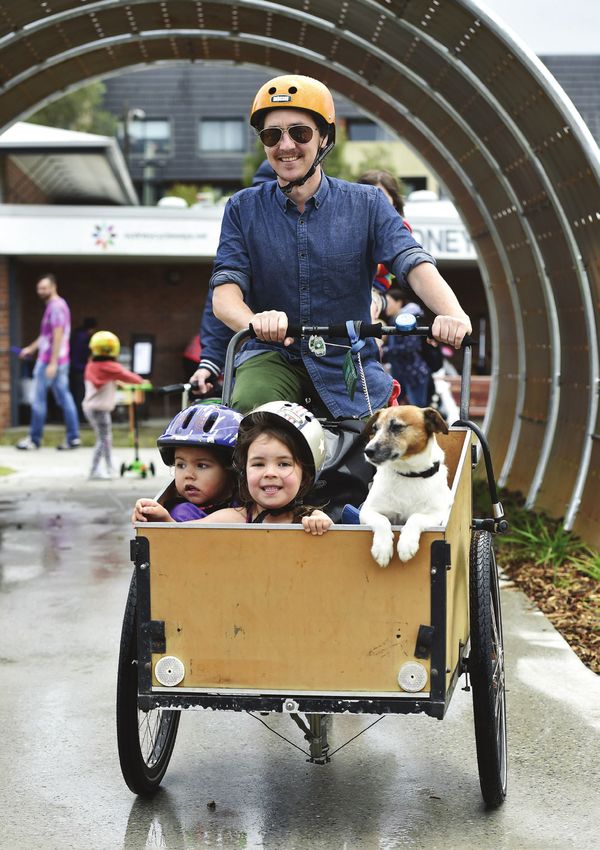
surveys, observation, pilot projects, and international children learning to ride and families with cargo bikes,
best practice. We apply this evidence to a people-centred to employees riding to work and retirees and tourists
design process so that our programs are robust and have exploring the city. There is a significant gender gap
a high chance of success. in cycling in Sydney, indicative of a broader lack of
Environmental, personal and social factors influence diversity in participation.
how people choose to travel, their habits and their Social relationships are important to spread positive
attitudes. These include: messages about riding, since people are more likely to
• connections between areas where people live and work keep riding if they have friends who ride.
• infrastructure like separated cycleways and signs, Encouraging safe and respectful behaviour
and improvements such as shade trees
The City’s 2017 social research found many people
• popularity and perceived safety of different travel types have a fear of riding in traffic. Around 59 per cent of
• the accessibility of transport options women think that generally, it is ‘dangerous to ride on
the road’. In inner Sydney, ‘too much traffic, making it
• cost and convenience dangerous’ discourages 48 per cent of men and 63 per
• physical fitness, skills, knowledge and lifestyle cent of women.
• previous experiences, familiarity and feelings The City promotes ‘gracious’ behaviour by all road
• beliefs about group and individual identity users. This encourages people driving, riding and
walking to be considerate of one another, and have
• integration with other modes of transport positive interactions. If all people using the road look
out for one another, people are more likely to feel riding
is a safe, acceptable, easy and quick way to get around.
Sydney2030/Green/Global/ConnectedPriority 2 | Supporting people to ride
Increasing safety Increasing bike riding skills and confidence
The City is working to increase the actual and perceived Helping people to become confident to ride in Sydney
safety of riding by improving the network, addressing is critical to increasing the number of people riding
road and path user behaviour, and by safety in numbers. bikes. There are many ways to build confidence,
It remains crucially important to reduce crashes and including through riding skills courses, personalised
injuries as more people ride. In our council area the advice and knowledgeable friends.
number of bike riders involved in a reported crash
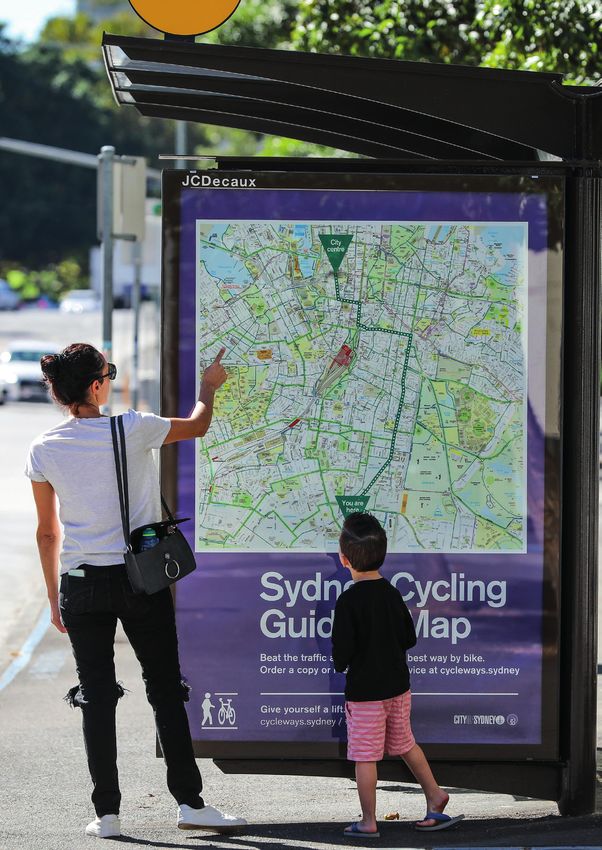
We provide maps, route advice, digital navigation tools
has fallen by a third since 2010 while bike trips have
and wayfinding signs to highlight the best way to travel
doubled. We support and will work towards the NSW
by bike, so people know how to safely get around.
Government’s goal of zero road fatalities.
Actions
We will:
2.1 Target activities in areas where existing and new 2.7 Stimulate people to have positive conversations
infrastructure is connected with their peers about riding and encourage their
friends to ride, through events and programs
2.2 Provide opportunities for people to build skills and
capabilities 2.8 Create and support events that incorporate bike
riding
2.3 Distribute information about our bike network,
including maps and digital navigation 2.9 Work to improve relations between road users and
encourage people to look out for each other
2.4 Ensure our programs are informed by a strong
evidence base that address local community needs 2.10 Monitor and evaluate our effectiveness and
and barriers incorporate learnings in future programs
2.5 Ensure our programs and communications are 2.11 Work with state government to improve compliance
inclusive and respond to the needs of our diverse with road rules, targeting high risk behaviours
community 2.12 Support and work with others who are contributing
2.6 Support children, school communities and families to getting more people riding.
to ride safely and increase cycling participation by
women
Sydney2030/Green/Global/ConnectedCycling Strategy and Action Plan
Case study
Share the Path
As more people ride in Sydney, mutual respect between
people walking and riding on shared paths is more
A survey in 2018 of more than
important than ever. Share the Path is a face-to-face 500 people at nine shared path
education program held four times a week where City
staff talk to people walking and riding about courteous locations found 84 per cent of
behaviour.
people walking feel extremely,
We remind people to always give way to people walking,
slow down, pass at a safe distance, and ‘ring their bell very or moderately safe
early’ as a courtesy when passing. We also remind
people walking to be alert to people on bikes, listen out
compared with 80 per cent
for bells and keep left. A smile or wave is a bonus! in 2012.
Twice a week bike mechanics offer free tune-ups to
engage bike riders in longer conversations. We also
distribute bells, maps and information about events,
projects and cycling courses. We share photos of people
holding chalkboard messages on social media, to create
a sense of community.
In 2017, we ran 133 Share the Path sessions, distributing
4,145 maps and 1,050 bells.
A survey in 2018 of more than 500 people at nine shared
path locations found 84 per cent of people walking feel
extremely, very or moderately safe compared with
80 per cent in 2012.
Our Share the Path program has been emulated
in other areas including Parramatta, Inner West, North
Sydney, City of Melbourne, City of Adelaide and County
of Marin in California.
Sydney2030/Green/Global/ConnectedPriority 2 | Supporting people to ride Case study Think of the Impact car dooring campaign Car dooring happens when a driver or passenger Pre and post campaign research revealed two thirds opens a car door into the path of someone riding a bike. of drivers would be likely to check for bike riders after It’s a major cause of injuries to people riding in the city. seeing the campaign, up from just over half before the The Think of the Impact campaign was developed to campaign began. Among bike riders, there was a big raise awareness and help reduce the frequency of jump from 39 per cent to 52 per cent who said they incidents. would be more likely to ride wide of the door zone after The campaign targeted people who drive and people seeing the campaign. who ride, encouraging drivers to look for bike riders Reducing the incidence of car dooring is a long-term before opening a door and bike riders to ride wide of behaviour change objective for the City of Sydney. the door zone. The NRMA was a campaign partner and helped the City reach out to its large network of drivers. Messaging took place through SydneyCycleways social media and e-newsletter channels, and advertising on bus back posters, taxi back posters and roadside billboards near locations with a higher incidence of doorings. Stickers were designed to be placed inside car doors and on bikes to remind people to look out for each other. There were 1,310 online requests for stickers and more than 23,000 were distributed. Survey data showed that most people ordered stickers for both themselves and a friend. The survey found that 69 per cent of recipients were more likely to look before opening their car door, and 68 per cent of recipients were more likely to ride wide of the door zone after receiving the stickers. Sydney2030/Green/Global/Connected
Cycling Strategy and Action Plan

Supporting businesses

We support employers to
encourage staff to ride for
health and productivity, and
we support bike related
enterprises.

Businesses are key partners in achieving our goals and
were the catalyst for the City’s first cycling strategy in 2007.
Employers recognise that Sydney needs to keep up with              Actions
other global cities to provide the lifestyle their employees
                                                                   We will:
demand, including easy mobility and opportunities to be
active. They also understand that time lost in traffic means       3.1	Work with employers to encourage cycling,
lost productivity and that a healthy workforce is better for            particularly in locations with job growth and
the bottom line.                                                        change and where new cycling infrastructure
                                                                        is built
Record investment in end-of-trip facilities have made
secure bike parking, lockers and showers increasingly              3.2	Work with venues and the tourism, entertainment
common in Sydney workplaces. This makes riding a bike                   and accommodation sector to encourage cycling
more convenient for many employees, and can                             by visitors
help overcome barriers such as concerns about personal             3.3	Deliver public end-of-trip facilities in the city
appearance at work.                                                     centre, connected to the bike network

Our approach                                                       3.4	Share information on best practice and
                                                                        case studies
The City has developed a range of support mechanisms
and resources, as each workplace has different needs.              3.5	Provide information and support for workplaces
Employees can also participate in bike-focused forums,                  wanting to set up a bike fleet or encouragement
rides and other workplace programs.                                     programs

Several changes in the market today did not exist when             3.6	Support a bicycle friendly workplace
our first cycling strategy was written, including dockless              accreditation scheme
bike share and app-based food delivery by bicycle. The             3.7	Support and encourage bike based or related
City has worked with new businesses where possible to                   enterprises or activities and work with operators
provide guidelines and advice, particularly around safety               to maximise beneficial outcomes for Sydney,
and community concerns. There will be further changes                   including bike share and food delivery
to this landscape, particularly around in-app mapping,
consolidated last-kilometre delivery by bicycle, and the           3.8	Work with the bike industry to increase the range
increasing use of electric assist and cargo bikes. Each                 of bikes available, to meet varying needs.
new change will present challenges and opportunities.
We welcome new businesses and will work with them to
ensure they are aware of their local impact, safety and the
legislative landscape.

                                                                                               Sydney2030/Green/Global/Connected
Priority 3 | Supporting businesses
Case study
Working with other organisations
The City is not alone in championing healthy streets. “Physically active people live longer; have better
The Heart Foundation wants Australians to have the managed weight, lower blood pressure and healthier
best cardiovascular health in the world, and actively cholesterol levels. They are also likely to feel more
campaigns for urban environments that encourage confident, happy, relaxed and sleep better,” said
people to be active. Mitchell.
“People tell us they’d cycle more if they felt safer on the The Heart Foundation partners with the City to promote
road,” explains NSW Director of Cardiovascular Health healthy heart information at events, including the Suit
at the Heart Foundation, Julie Anne Mitchell. “That’s why Ride and Sydney Rides Challenge.
we support bicycle infrastructure that helps people feel
safe and confident to ride a bicycle and make an active
transport choice.” “There is great potential for
The Heart Foundation commissions surveys into cycling getting more people riding for
participation and incentives, advocates for better
infrastructure, promotes active travel to school, and
health and helping to tackle
makes the business case for more people cycling. Australia’s obesity crisis.
The Heart Foundation’s 2014 ‘Blueprint for an active
Australia’ found the built environment can effect how
Organisations such as ours,
much physical activity people undertake each day, and businesses and government
how likely they are to choose active travel options like
walking and cycling. The report suggests streets that agencies all have a role to
invite people to walk and cycle more can decrease the
incidence of coronary heart disease, obesity and type
play to get more Australians
2 diabetes. moving”.
Sydney2030/Green/Global/ConnectedCycling Strategy and Action Plan
“Modern global businesses
know the cities that
provide world class cycling
infrastructure and encourage
active transport are the ones
that attract highly sought-after
talent. There’s good reason
that businesses in London,
Paris and New York have
embraced cycling, and it’s
Copyright Daniel Munoz - Fairfax Syndication
great Sydney businesses are
doing the same.”
Dr Tim Williams, Committee for Sydney CEO, 2017
Case study
End-of-trip facilities
Private sector investment in end-of-trip facilities has “Employers have to cater to the demands of the modern
skyrocketed as a result of tenant and employee demand, worker and now more than ever, that includes an active
and a growing connected bike network. lifestyle to support their time spent in the office. State-
of-the-art facilities are being rolled out by landlords
A 2015 survey of 280 tenants by commercial property
nationwide, encouraging a healthier and more
managers Colliers International found tenants value
focused workplace.”
bicycle parking and end-of-trip facilities over car parking
in their office buildings. Barangaroo South is home to the largest bike end-of-trip
facility in the southern hemisphere. Westpac’s section
In 2017, Great Places to Work surveyed employees
alone includes 1,120 bike parking spaces, 1,240 lockers
about end-of-trip facilities at their workplace. Seventy five
and 110 showers for staff. Westpac surveyed staff before
per cent of respondents had bike racks at work and a
moving to the new office space and overwhelmingly staff
quarter said the racks were typically 75 to 100 per cent
wanted a greater focus on wellbeing, including end-of-
full. Three in four workplaces also provided showers and
trip facilities to support riding.
more than 85 per cent of people surveyed used them at
least weekly. Westpac employee Sally McGeoch is among those
making the most of the world class facility. Sally rides
At least 52 major end-of-trip facilities spanning two
her e-bike to the city each day, dropping her kids to
million square metres have been installed in Sydney in
school along the way.
the past four years alone. The $57 million investment is
making it easier for more than 170,000 local workers to “I ride from Randwick every day and use the cycleways
ride to work. along Bourke, Liverpool and Kent streets. It’s by far the
quickest, most enjoyable and most reliable way to get in
End-of-trip facility design specialists Five At Heart CEO
and out of town quickly as a working mum”, Sally said.
Mark Rossiter said businesses support bike riding
because they know active, healthy staff are more
productive and that directly contributes to their bottom
line.
Sydney2030/Green/Global/ConnectedCycling Strategy and Action Plan
Leadership and advocacy
Our organisation, staff and We continue to integrate cycling into the City’s policies
and practices. For example:
facilities set a leading example • our hoardings and scaffoldings guidelines protect
for bike riding in Sydney. We cycleways as well as footpaths
share our expertise and we • our website has a guide on how construction traffic
management plans can provide safely for people riding
are a positive influence for • our fleet drivers get extra training on driving safely
improvements within and around people riding, and we run ‘exchanging places’,
events to enable our truck drivers and the public to
beyond our boundaries. exchange views and experiences
• our cycleways are prioritised in the regular street
The City’s leadership role in bike infrastructure design
cleansing schedule
and ongoing partnerships with other councils and
agencies supports people to ride in our area and • our sustainability programs incorporate and encourage
beyond. riding, for example Smart Green Apartments provides a
guide for retrofitting bicycle parking facilities.
Our approach City staff have access to good end-of-trip facilities to
We actively collaborate with others, to develop working encourage them to ride to work. Our well-used bike fleet
relationships and positive outcomes. We have regular is available for staff to save time getting to meetings, site
seminars to build capacity among professional and visits and errands, and a monthly lunchtime ride provides
community networks. encouragement and practice for staff new to finding their
way around by bike.
Through creative thinking, innovation and being
responsive to others, we are able to progress problem
solving on the many levels required to effect meaningful
change, not just within our own local area and
jurisdiction.
Sydney2030/Green/Global/ConnectedPriority 4 | Leadership and advocacy
Actions
We will:
4.1 Lead by example in encouraging our staff to ride 4.7 Pursue funding and implementation of the Inner
to work and for work trips Sydney Regional Bike Network
4.2 Continue to integrate cycling throughout 4.8 Push for integration between cycling and public
our organisation’s policies, operations and transport operations, incorporation of cycling
community planning into transport projects and for building paths
alongside rail lines
4.3 Share knowledge and expertise with other
councils, cities and agencies, and the community 4.9 Advocate for fairer prioritisation of street space
and allocation of time at signals
4.4 Support research and innovation, including for
service and delivery in the city centre 4.10 Advocate for more action from state and national
governments
4.5 Build the community’s capacity to contribute to,
and advocate for, improved cycling conditions 4.11 Encourage the NSW Government to facilitate
and culture successful operation of bike share
4.6 Identify and advocate for higher capacity 4.12 Advocate for changes to practices, legislation,
separated cycleways along the most direct and training and technical guidance which will
flat routes with priority at intersections improve and increase cycling
4.13 Advocate for more NSW government action on
driver education and road safety
Sydney2030/Green/Global/ConnectedCycling Strategy and Action Plan
Working with others in the future
As the bike network expands and demand for active Potential new connections:
transport increases, the City, state government agencies
• Active transport path along the southern boundary
and neighbouring councils will need to work together
of Moore Park Golf Course between O’Dea Avenue
even more. Supporting future demand for more walking
cycleway and Anzac Parade as part of an improved
and cycling in Sydney will include closing gaps in the
connection between Green Square and University of
network, providing new connections and increasing
NSW
capacity.
• The Domain to Kings Cross – a direct connection
Filling gaps in the network:
aligned with the rail viaduct, over the steep
• Active transport connection between Surry Hills and Woolloomooloo valley.
Chippendale across the Central station rail lines north
of Cleveland Street
• Active transport connection(s) at Eveleigh across the
rail lines between Macdonaldtown and Redfern as part
of a Redfern station upgrade.
Provide greater active transport capacity:
• Central to Eveleigh active transport link – alongside the
rail corridor, as part of the Central to Eveleigh project,
to reduce pressure on public transport and traffic
networks.
• Improved active transport links where lack of capacity
is impacting safety, such as the connection between
Pyrmont Bridge and King Street and the Sydney
Harbour Bridge cycleway.
• Grade separated active transport crossings at key
major intersections to reduce delay for all road users.
• Improved active transport access to the re-established
Glebe Island Bridge connection, to cater for increased
demand (such as from the future City West Cycle Link)
Sydney2030/Green/Global/ConnectedPriority 4 | Leadership and advocacy
Case study
An Inner Sydney Regional Bike Network
Since 2009, the City of Sydney has led and advocated Sydney’s population and jobs growth will lead to a
for the Inner Sydney Regional Bike Network, 40 per cent increase in trips within 20 years if unabated.
collaborating with councils and the NSW Government. This trip growth could be higher still around the city
centre. Cycling is a highly efficient and cost-effective
Covering 10 council areas and a 10-kilometre catchment
solution for shorter trips. It helps to free up much needed
around the city centre, the proposed network will
capacity on public transport to accommodate growth
complete the remaining 136km of the 191km planned to
and pressure on our roads for services and delivery.
make cycling a safe, viable and time-competitive option
for trips in inner Sydney. This will help relieve worsening A business case of the Inner Sydney Regional Bike
congestion on the transport system in Australia’s most Network for Infrastructure Australia conservatively
productive urban area. calculated a benefit to cost ratio of 2.65. The economic
benefit of $901 million, includes health savings of $1.2
The Inner Sydney Regional Bike Network is the first bike
billion and congestion savings of $85 million. Commuters
project to receive national backing as one of Australia’s
switching to cycling from car and public transport will
most important projects on the national infrastructure
save on vehicle costs ($87 million), tolls ($3 million),
priority list. The project is now included in the NSW
parking costs ($3.5 million) and fares ($226 million).
Government’s Future Transport Strategy and the Greater
Sydney Commission’s district plan. Transport for NSW
are now developing a similar regional bike network plan
for Parramatta.
The project has the potential to significantly reduce car
trips. More than two million car trips in Sydney each day
are less than two kilometres and nearly five million are
under five kilometres. Research shows more than
70 per cent of residents would ride if the infrastructure
were there to support them.
Sydney2030/Green/Global/ConnectedCycling Strategy and Action Plan
Measuring
the outcomes
We will measure progress on and outcomes from the
cycling strategy at three levels:
• the Sustainable Sydney 2030 target of 10 per cent of all
trips in the city to be made by bike
• indicators of safety and growth in cycling
• indicators against actions in our four priority areas.
We will regularly report on our progress
implementing the strategy.
Monitoring progress against our target
We have developed the cycling strategy to work toward achieving the Sustainable Sydney 2030 target of 10
per cent of all trips in the city to be made by bike. Achieving this target depends on funding from the NSW and
Commonwealth governments.
Proportion of trips made by bike
Indicator Baseline Interim 2030 Data source Data
targets frequency
proportion of journeys to work by 1.9% (2006) 5% (2021) 10% Census Every 5 years
bike by City residents 3.4% (2016)
proportion of journeys to work by 1.01% (2006) 3% (2021) 10% Census Every 5 years
bike by people working in the City 1.8% (2016)
Note: Census data is used as a proxy for cycling for all trip purposes, since NSW has no reliable data on non-work cycling trips.
Sydney2030/Green/Global/ConnectedMeasuring the outcomes
Monitoring progress indicators
These indicators provide a measure of progress towards our target.
People feel safe to ride
Indicator Baseline Interim 2030 Data source Data
targets frequency
Proportion of people who ride who 53% 60% (2023) 80% Active transport survey Every 3 years
feel somewhat and very safe riding (2017)
in inner Sydney (within 10km of city
centre)
Crashes involving people riding in 108 85 (2021) 50 RMS crash database Annually
our council area (2015)
More people riding
Indicator Baseline Interim 2030 Data source Data
targets frequency
Number of bikes counted at tbc (2018) +50% +100% Intersection counts (75 sites) Twice yearly
intersections in our council area (2024) from October
2018
Number of bikes at key counter August +50% +100% Permanent bike counters Monthly
sites in our council area 2018 daily (2024)
averages
Proportion of City residents who rode 20% (2017) 25% (2021) 30% National cycling participation Every 2 years
a bike in the past week/past year 32% (2017) 40% (2021) >50% survey
Monitoring progress against our four priorities
The cumulative and combined effect of actions in all four priority areas will help towards achieving the target.
They will be monitored using these measures.
Priority 1 – Building a connected network
Measure Baseline Interim 2030 Data source Data
targets frequency
Percentage of regional routes 50% 80% 100% Measured Annually
completed* (2024)
Percentage of local network 16% 35% 60%
completed* (2024)
Proportion of residents living within 62% 72% 94% Generated from GIS map and Every 5 years
250m of completed bike network (2024) Census data
* Based on the NSW Government providing full level of funding for projects which are eligible, and the City achieving cost efficiencies of 10-30%
(route dependent)
Sydney2030/Green/Global/ConnectedCycling Strategy and Action Plan
Monitoring progress against our four priorities (continued)
The cumulative and combined effect of actions in all four priority areas will help towards achieving the target.
They will be monitored using these measures.
Priority 2 – Supporting people to ride
Measure Baseline Interim 2030 Data source Data
targets frequency
Number of people attending events 20,875 Increase +100% Measured Annually
and rides (2017) (2024)
Proportion riding regularly 3 69% 75% 75% Survey Quarterly
months after cycling course (2024)
Proportion of riders who feel 75% 77% 80% Active transport survey Every 3 years
confident when riding in Sydney (2017) (2024)
Proportion of female City residents 13% 17% 25% National cycling participation Every 2 years
who rode a bike in the last week (2017) (2021) survey
Priority 3 – Supporting businesses to encourage cycling
Measure Baseline Interim 2030 Data source Data
targets frequency
Proportion who say their workplace tba +10% tba Survey Annually
encourages people to ride (2022)
Number of workplaces with 194 +10% +50% Floorspace and employment Every 5 years
end-of-trip facilities (2012) (2022) survey
Number of employees in those 104,500
buildings (2012)
Priority 4 – Leadership and advocacy for cycling
Measure Baseline Interim 2030 Data source Data
targets frequency
Attendance at capacity building 240 (2017) 300 (2022) 400 Counts Annually
seminars & forums
Staff bike fleet use 950km/m 1000km 1200km Internal records Monthly
(km travelled p.a.) (2022)
Sydney2030/Green/Global/ConnectedMore cycling delivers broader goals
More cycling delivers
broader goals
Cycling supports the City’s strategies Sustainable Sydney 2030
Cycling contributes to making Sydney green, global and
connected and to all of the City’s strategic directions.
10 strategic directions
It also aligns with our key strategies and policies.
A globally competitive and
A City for All: Social Sustainability Policy 1 innovative city
Cycling contributes to social wellbeing and resilience
in many ways. It supports social connectedness by
providing opportunities for casual and organised
interactions among diverse individuals and communities.
2 A leading environmental performer
Along with walking, cycling is a key contributor to
healthy, active lifestyles in an urban environment, Integrated transport for a
bringing both physical and mental health benefits. 3 connected city
Cycling can foster people’s sense of place and
belonging through providing a richer, more fine-grain
experience of our city and its neighbourhoods than car- 4 A city for walking and cycling
based travel.
Resilient Sydney Cycling infrastructure can contribute
to a city’s resilience as it diversifies transport options,
5 A lively, engaging city centre
especially when there are failures or strains in transport
systems. Cycleways are used by emergency vehicles Vibrant local communities and
when motorised traffic is blocked. Bikes are useful in 6 economies
disaster emergency response.
A City for All: Inclusion (Disability) Action Plan 7 A cultural and creative city
2017–2021 Our cycling services and events offer
opportunities for people with disability to be more active.
For example, specialised personal training in tandem
riding for people with low vision, and a balance bike
8 Housing for a diverse population
clinic for children on the autism spectrum. Separated
cycleways provide a smoother alternative than footpaths Sustainable development, renewal
for people with wheelchairs or mobility scooters. 9 and design
Implementation through effective
10 governance and partnerships
Sydney2030/Green/Global/ConnectedCycling Strategy and Action Plan
Walking Strategy and Action Plan Many actions and
programs in the walking and cycling strategies overlap or
complement each other. Examples include: safer routes Environmental Strategy and Action Plan 2016–2021
to schools and the Share the Path program.
An increase in people riding for transport reduces
Economic Development Strategy Cycling has a strong emissions and improves air quality. The strategy will
role in building a liveable and accessible city and helps help the City meet our environmental targets.
businesses seeking the best talent, particularly for the The City’s target is to reduce 2006 emissions by 70
knowledge and finance sectors. It is increasingly per cent by 2030 and for net zero emissions across
important for tourism. Cycling projects create more jobs our area by 2050. Today most emissions are from the
per dollar than other transport projects. Cycling also energy used by buildings, but these emissions are
offers a way of exploring our villages and neighbourhoods, falling as buildings become more efficient and there
and supporting their art galleries, specialty retailers, is more renewable energy in the grid. Emissions from
cafes and restaurants. transport are now 13 per cent of the total council area’s
Making Sydney a Sustainable Destination Encouraging emissions and growing. Reducing emissions from the
visitors to walk or ride helps address the transport aspect transport sector will be essential to meet the City’s
of improving sustainability in the tourism, entertainment targets. Active transport and in particular cycling has
and accommodation sector. many benefits including reducing local air pollution
and greenhouse gas emissions. There are 62,000 car
trips less than five kilometres long taken each working
day in the city centre, creating more than 12,000
tonnes C02 each year. If even half of these trips were
done by cycling or walking instead it would make a
significant contribution to reducing emissions.
This strategy supersedes the City’s Cycle Strategy and
Action Plan 2007–2017. Any reference to the previous
strategy in the City’s planning controls now refers to this
Cycling Strategy and Action Plan 2018–2030.
Sydney2030/Green/Global/ConnectedMore cycling delivers broader goals
Cycling supports broader strategies
Increasing cycling is key to the success of the following Australian Government:
strategies and policies of external stakeholders:
• National Cycling Strategy
NSW Government:
• Walking, riding and access to public transport:
• Future Transport 2056 supporting active travel in Australian communities,
Ministerial statement
• Sydney’s Cycling Future
• Australia’s Physical Activity and Sedentary Behaviour
• Sydney City Centre Access Strategy
Guidelines
• Cycling Safety Action Plan, NSW Road Safety Plan 2021
• Smart Cities Plan
and Towards Zero
• National Cities Performance Framework
• NSW Planning – A Plan for Growing Sydney
And:
• NSW Office of Preventative Health – NSW Active Travel
Charter for Children • NRMA Cycling Strategy (2015)
• Greater Sydney Commission – The Greater Sydney • Committee for Sydney – 2017–2018 Priorities; Making
Region Plan Great Places; A Fork in the Road (on congestion
management); City of Choice: Sydney as a Global
• NSW Government Architect – Better Placed
Talent Hub
• Infrastructure NSW - Building Momentum, NSW State
Infrastructure Strategy
Sydney2030/Green/Global/ConnectedYou can also read


