Effectiveness of Borrowing Ebooks via Interlibrary Loan - Brynne Norton, Head Resource Sharing & Reserves Ashley Chen, Resource Sharing ...
←
→
Page content transcription
If your browser does not render page correctly, please read the page content below
Effectiveness of Borrowing
   Ebooks via Interlibrary Loan
Brynne Norton, Head Resource Sharing & Reserves
Ashley Chen, Resource Sharing Specialist, Borrowing
Why is it challenging to borrow an ebook?
● Licensing
   ○   Limits are placed on what can be loaned via Interlibrary Loan
   ○   Licensing trumps copyright law
   ○   Negotiating these licenses can be challenging
        ■ New license for each provider
        ■ May not be willing to allow for interlibrary loan
        ■ Non-disclosure agreements can make information sharing challenging
           across libraries
        ■ UMD has no ability to lend whole ebooks, but we can lend chapters
● User Expectations
   ○   Ebooks to work like they do at the public library - they do not
   ○   The Libraries can get an ebook if it’s on Amazon - we may be able to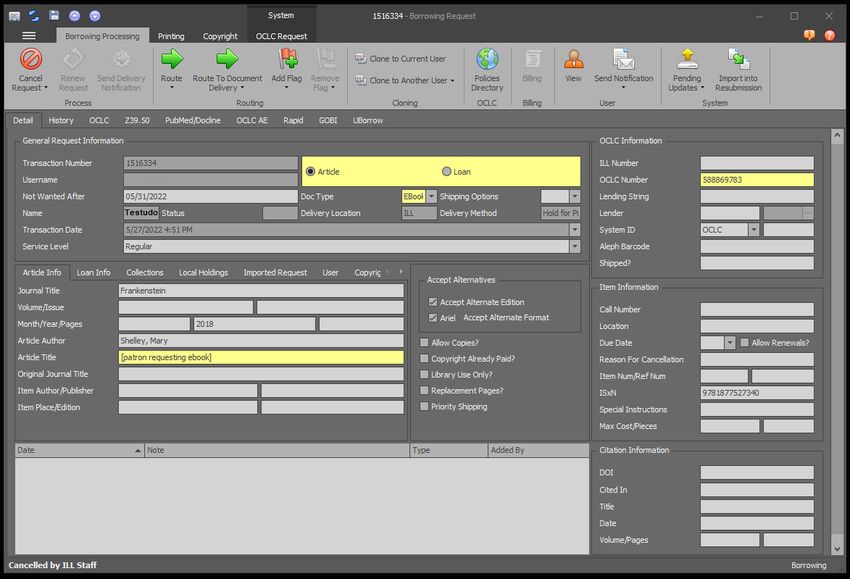
Isn’t it just a PDF?

● Technology
    ○   Ebooks are frequently broken into chapters. Staff have to combine all
        chapters to lend the whole ebook representing significant staff time.
● WorldCat records can be difficult to parse
    ○   Ebooks may appear in WorldCat, but are not loanable.
    ○   Not only does the patron not know if it’s available, libraries may
        not know.
So, how do I request an Ebook?
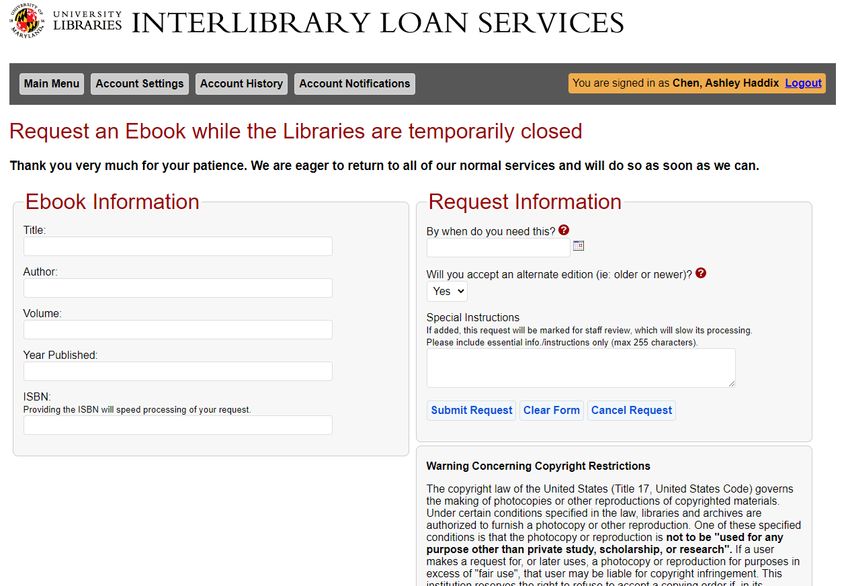
● During pandemic closures
○ Could not request print
materials, temporary Ebook
request form
○ Built to look like the loan
form to the user
○ Functioned like an article
request (non-returnable) for
staffSo, how do I request an Ebook?
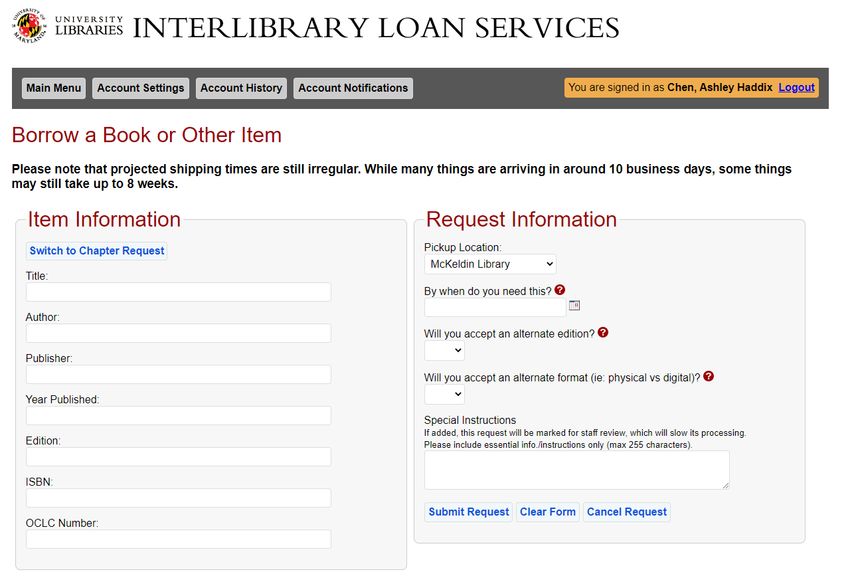
● Post closure (present)
○ Loan request form with Ebook
ISBN & OCLC Number
○ Alternate format questionILL Staff Workflow
● Check the OCLC Number
● Flip loan to article
● Article Title: [Patron
requesting Ebook]
● Custom Holdings Group: Ebooks
○ If none, go back to WorldCat
and look for another record
○ Repeat until ebook lender
found
● Custom Borrowing Note “Send
ebook NOT Print”
● If no lenders: Cancellation
“Format Issue” canned messageWhy do they get cancelled?
● During pandemic closures
○ Since electronic format was the only format we could provide, we
would email the patron and instead offer to request a scan of the TOC
or book chapters
○ The amount of chapters was dependent on the book/publisher and their
copyright allowances
○ A lot of back and forth communication, calculating copyright
allowances and explaining those limitations, creating and processing
multiple new requests
● Post closure (present)
○ Format question is key!
○ Yes, switch to print; No, cancelHow successful are we at borrowing ebooks?
30% 55%
Fill Fill
Rate Rate
*FY21 had a very high number of requests as it was when physical collections were largely unavailable.A look at book chapter fill rate for context
92%
Fill
Rate
95%
Fill
Rate
*FY21 had a very high number of requests as it was when physical collections were largely unavailable.ILL User Survey Feedback about eBooks
878 Respondents
Other text entry:
● 37 respondents wanted more
items available as ebooks
● 7 wanted better discovery
of ebook contentWhat’s next? ● Fixed an automation issue for ebooks going out to BTAA libraries as print requests ● Establishing best practices across libraries ○ Conversations have begun in the SHARES consortium ● Future operationalizing of the BTAA’s Ebook report (https://ter.ps/yzu) ○ Support for license negotiation ○ Potential toolkit development ● Controlled Digital Lending (CDL)
Questions?
You can also read


