Energy - Infrastructure Report Card
←
→
Page content transcription
If your browser does not render page correctly, please read the page content below
Energy

                 44
                ________

2021 INFRASTRUCTURE REPORT CARD
     www.infrastructurereportcard.org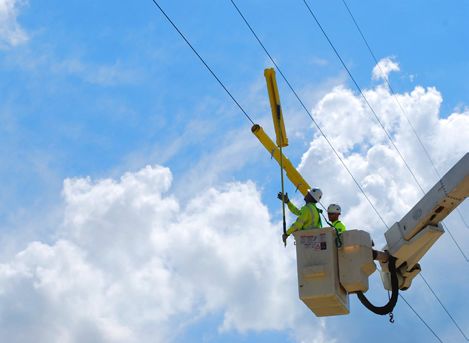
EXECUTIVE SUMMARY
                  In a digital, connected world, Americans increasingly rely on readily available
                  and uninterrupted electricity. Over the last four years, transmission and
                  distribution and reliability-focused pipeline investments have increased, and
                  outages have declined slightly. Annual spending on high voltage transmission
                  lines grew from $15.6 billion in 2012 to $21.9 billion in 2017, while annual
                  spending on distribution systems — the “last mile” of the electricity network
                  — grew 54% over the past two decades.1 Utilities are taking proactive steps
                  to strengthen the electric grid through resilience measures. However,
                  weather remains an increasing threat. Among 638 transmission outage
                  events reported from 2014 to 2018, severe weather was cited as the
                  predominant cause.2 Additionally, distribution infrastructure struggles with
                  reliability, with 92% of all outages occurring along these segments.3 In the
                  coming years, additional transmission and distribution infrastructure, smart
                  planning, and improved reliability are needed to accommodate the changing
                  energy landscape, as delivery becomes distributed and renewables grow.

CONDITION, CAPACITY, OPERATIONS & MAINTENANCE
Electricity
Energy infrastructure in the U.S. is used to generate,                       or governmental agency. While investor-owned utilities
transmit, and distribute electricity. The electric industry                  (IOUs) make up only 6% of the number of electricity
has invested significantly to meet customers’ demands,                       providers, they serve 72% of U.S. electricity customers.5
but transmission and distribution (T&D) systems still
                                                                             The majority of the nation’s grid is aging, with some
struggle with reliability. This problem is likely to accelerate
                                                                             components over a century old — far past their 50-year
as the impacts of climate change persist and the public’s
                                                                             life expectancy — and others, including 70% of T&D
expectation of more reliable, “always-on” electricity
                                                                             lines, are well into the second half of their lifespans. The
increases.
                                                                             transmission system, which can be thought of as the
Electricity delivery in the U.S. depends on an aging                         “interstate highway” of electricity delivery, is regulated
and complex patchwork of power generation facilities,                        by the Federal Energy Regulatory Commission (FERC),
600,000 miles of backbone transmission lines (240,000                        and mostly consists of high voltage transmission lines
miles of which are considered high-voltage lines or ≥ 230                    that carry electricity across the country. The distribution
Kilovolts), and around 5.5 million miles of local distribution               system, the “last mile” of the electric delivery system, is
lines that operate within federal, state, tribal, and local                  regulated by the states and consists of lower voltage lines
regulatory jurisdictions.4 This system is responsible for                    that act as the local roadways, carrying electric power
providing safe, reliable, and cost-effective electricity to                  to neighborhoods and communities. The distribution
customers. Each type of infrastructure may be owned by                       system also includes substations, individual customer
an investor or public utility, independent power producer,                   services and meters, as well as other components.6

                                                                   45
                                                                  ________

                                               2021 INFRASTRUCTURE REPORT CARD
                                                    www.infrastructurereportcard.org
These costly transmission and distribution problems,
     such as those from weather-related events and other
     causes, result in power outages that are estimated to
         cost U.S. households $28 to $169 annually.

       U.S. Electricity Generation                                          Distribution is a key failure point in the electric grid
            by Energy Source                                                in terms of system reliability. The distribution system
                                                                            accounts for 92% of all electric service interruptions, a
                                                                            result of aging infrastructure, severe weather events, and
                                                                            vandalism.7
                                              Petroleum
                                                                            These costly transmission and distribution problems, such
                                                0.5%
                                                                            as those from weather-related events and other causes,
                       Nuclear                                              result in power outages that are estimated to cost U.S.
                        19.7%                                               households $28 to $169 annually. For an increasingly
                                          Renewable                         critical sector, U.S. data centers, on which many industries
                                           Sources                          rely, the cost of outages grew from $505,000 in 2010 to
                                            17.5%                           $740,000 in 2016, which equates to $8,851 per minute
      Coal                                                                  that the electricity grid is malfunctioning.8
      23.5%
                                                                            For the first time, renewables (solar, wind, biomass,
                                                                            geothermal, and hydropower) accounted for the
                            Natural Gas                                     largest portion of new generating capacity in 2020.9
                              38.4%                                         Renewables’ share of the generating capacity is on track
                                                                            to increase significantly between now and 2023.10

                                                                            Electricity generation from renewable energy sources
                                                                            rose from 18% in 2019 to 20% in 2020 and is expected
U.S. Energy Information Administration 2019                                 to rise to 22% in 2021, continuing to expand their lead

                                                                  46
                                                                 ________

                                                 2021 INFRASTRUCTURE REPORT CARD
                                                      www.infrastructurereportcard.org
over coal (20.1%).11 Additionally, U.S. energy production the market. EV charging stations within the United States
exceeded annual U.S. energy consumption in 2019 for the has grown from 6,900 chargers in 2012 to approximately
first time since 1957.12 Near-term, U.S. energy systems 61,000 by the end of 2017 for all vehicles. While demand-
are projected to deliver sufficient energy to meet national related impacts due to electrification is uncertain, it is
demands, although increasing electrification — particularly expected that utilities will implement rates that will drive
of the transportation sector — could have a significant charging to non-peak hours, affecting most passenger
impact. Electric vehicles (EV) are continuing to penetrate vehicles and light duty trucks.13
Number of Outages Over Time
TOTAL NUMBER OF OUTAGES PEOPLE AFFECTED (IN MILLIONS)
3,879
3,634 3,571 3,526
41.8 3,236
3,149 3,071
2,840 36.7
2,808
2,169
25.8 25.0
17.5 17.9
13.5 14.0 14.2 13.2
2008 2009 2010 2011 2012 2013 2014 2015 2016 2017
2017 Eaton Blackout Tracker
Oil and Gas
Although traditional fossil-fuel-using sectors such as transmission and distribution network was installed before
transportation and space heating are transitioning to 1960, with urban systems being among the oldest.18 System
electrification, there is still dependence on existing oil and improvements are principally funded by regulated owner
gas supply and recovery, processing, and pipeline delivery. rates and limited recovery; as such, modernization and
Much like the electric grid, the nation’s pipelines are also upgrade investments are typically driven by urgency and
aging, as witnessed by increasing failures and leakage necessity rather than through asset management and life-
events, thus driving a need to employ improved inspection cycle cost-based planning. The risks of aging infrastructure
techniques, preservation technologies, and sound decision- have been witnessed even as recently as 2020 through
making for upgrades and replacements.14 America’s more damaging pipeline events in Baltimore, New York City, and
than 190,000 miles of oil pipelines and 2.4 million miles or Philadelphia, and failed transmission and distribution lines
gas pipelines connect sources such wells and port terminals from Hurricanes Laura and Sally.19
to refineries/processing facilities and consumers.15 Together,
New technology improvements have contributed to
oil and natural gas supply 65% of the energy we use.16
design, construction, and maintenance methods of oil
Similar to electricity, much of the oil and gas infrastructure
and natural gas pipelines and improved asset integrity,
is privately owned, operated at near full-time capacity,
cost-efficiency, and extended service life expectations.
and publicly regulated.17 Over half of the natural gas
47
________
2021 INFRASTRUCTURE REPORT CARD
www.infrastructurereportcard.orgThese new technologies have also greatly eliminated a record 19 million barrels per day and only one new re-
incidents in newer systems.20 finery coming online. While production has kept up with
demand, outage-driven commodity price spikes are of-
Critical infrastructure bottlenecks also exist, including
ten experienced due to the capacity limitations and lack
the gas delivery constraints to New England and New
of geographic diversity of the oil and gas sector, as many
York and challenges with urban infrastructure upgrades.
systems are along the Gulf of Mexico, frequently ex-
According to the U.S. Energy Information Administra-
posed to extreme storms.
tion, the nation’s 135 oil refineries are operating at or
near capacity with 2019’s production rate approaching
FUNDING & FUTURE NEED
All three major components of
the electric grid (generation,
transmission, and distribution)
have an investment gap. To
meet the latest state-driven
Renewable Portfolio Standards
in generation infrastructure,
the gap is projected to grow to
a cumulative $197 billion by
2029.21
Despite the large gap, transmission infrastructure has ben-
efited from increased investment. Transmission spending
in the U.S. increased from $15.6 billion in 2012 to $21.9
billion in 2017, driven by a desire to provide access to clean
energy and to increase the grid’s reliability, security, and
resilience.22 Spending also reduced congestion, lowered re- Transmission spending
source pricing, and renewed the focus on meeting custom- in the U.S. increased
er needs.23 Across all regions of the country, factors such from $15.6 billion in
as upgrades and replacements of aging transmission infra- 2012 to $21.9 billion
structure, system hardening, and resilience measures that
minimize impacts from catastrophic events, improvements
in 2017, driven by
to comply with evolving transmission reliability and secu- a desire to provide
rity compliance standards, and expansion of the transmis- access to clean energy
sion system to integrate renewables and natural gas have and to increase the
contributed to the increase in transmission spending.24 As
grid’s reliability,
wind and solar generation grow, new T&D lines are required
to link these renewable resources to customers. Doing so
security, and
allows owners to make investments that “harden” the grid resilience.21
and reduce outage frequency and duration.
Spending on electricity distribution systems by major
U.S. electric utilities — representing about 70% of the
48
________
2021 INFRASTRUCTURE REPORT CARD
www.infrastructurereportcard.orgtotal U.S. electric load — has risen 54% over the past Order in 2020.29 Changes are expected to expedite the
two decades, from $31 billion to $51 billion annually.25 permitting process to no more than two years for most
This increase has been anchored by capital investment transmission and distribution projects. Reducing delays
from utilities that are working to upgrade aging in the permitting process would facilitate the expansion
equipment. Poles, wires, and substation transformers of the nation’s energy infrastructure to increase its
are being upgraded with advanced materials and new capacity. However, these efforts must be made with
technology to better withstand extreme weather events, safeguards in place to protect the natural environment.
to allow easier frequency and voltage control during
Investment in oil and gas infrastructure is driven by
system emergencies, and to accommodate greater use
changing sources, increasing demand, and pricing
of variable renewable generation.26
fluctuations, in addition to physical condition, failure events,
In the past decade, investment in overhead poles, and regulation. Where demand approaches or exceeds
wires, devices, and fixtures such as sensors, relays, and existing supply in geographic regions, commodity pricing is
circuits has risen by 69%, while spending on substation elevated, and funding is justified. When commodity pricing
transformers and other station equipment increased by is low, infrastructure investment declines. Through 2035,
35%.27 Investment in customer meters has more than investment in oil and gas infrastructure is expected to
doubled over the past decade as utilities have upgraded contribute $1.50 to $1.89 trillion to U.S. GDP, or between
traditional meters to smart meters that can be accessed $79 billion and $100 billion annually.30 This investment
remotely, communicate directly to utilities, and support produces positive impacts on the economy, from employing
smart consumption and pricing applications using real- individuals to fostering delivery of lower cost energy to
time or near real-time electricity data. However, there will households and businesses.
be additional required investment to maintain these wires
The recent Keystone XL Pipeline permit rescindment
and poles, transformers, meters, and similar equipment,
will have a future impact on America’s pipeline
which are usually the responsibility of the local utility.28
infrastructure. In addition to the significant number of
The National Environmental Protection Act (NEPA), jobs lost, the precedent of rescinding already granted
which directs agencies to consider environmental permits is concerning and could harm future investment
impacts in decision-making, was updated by Executive in all energy infrastructure.
ASCE 48: Design of Steel Transmission Pole Provides a uniform basis for the design, detailing, assembly,
Structures fabrication, testing, and erection of steel tubular structures for
electrical transmission poles31
ASCE 10: Design of Latticed Steel Provides requirements for the design of guyed and self-supporting
Transmission Structures latticed steel electrical transmission structures32
ASCE Manual of Practice 74: Guidelines for Provides most relevant and updated information related to
Electrical Transmission Line Structural Loading transmission line structural loads and has been updated to address
impacts of climate change33
ASCE Manual of Practice 104: Recommended Details best practices for the use of fiber-reinforced polymer
Practice for Fiber-Reinforced Polymer (FRP) composite poles and crossarms in resilient conductor support
Products for Overhead Utility Line Structures applications34
ASCE Manual of Practice 123: Prestressed A complete engineering reference on static-cast and spun-cast
Concrete Transmission Pole Structures prestressed concrete poles for electric distribution and transmission
power lines35
ASCE Manual of Practice 141: Wood Pole Provides comprehensive knowledge of the principles and methods for
Structures for Electrical Transmission Lines: the design and use of wood poles for overhead utility line structures36
Recommended Practice for Design and Use
49
________
2021 INFRASTRUCTURE REPORT CARD
www.infrastructurereportcard.orgPreserving the nation’s energy infrastructure requires reducing the carbon footprint. This is readily addressed
balancing the affordability and access to delivered through life-cycle cost analysis, wherein technology
energy products (e.g., electricity and natural gas) with improvements and best and sustainable practices to
maintaining reliable and resilient service as well as replace aging infrastructure can be confirmed.
RESILIENCE & INNOVATION
While weather has always been the number one threat sited near shorelines to have access to water. As a result,
to the energy sector’s reliability, climate change has only when hurricanes strike, power plants face significant
exacerbated the frequency and intensity of these events flooding damage. During Hurricane Harvey in Houston,
and associated costs.37 The Department of Energy (DOE) Texas, in 2017, wind and catastrophic flooding knocked
found that power outages are costing the U.S. economy down or damaged more than 6,200 distribution poles,
$28 billion to $169 billion annually.38 and 21.4 gigawatts of generation were affected by wind
damage, flooding damage, fuel supply issues, or evacuations
Rather than focusing on repairing the grid after a major
and shutdowns.41 As sea levels rise, storm surges would
disaster, more utilities are taking proactive steps to adapt
hit further inland, causing more coastal flooding to
to climate change, by strengthening the grid through
transmission, distribution, and generation infrastructure.42
resilience measures and incorporating consensus-based
standards during long- and short-term planning. Electric companies have invested more than $285 billion
in T&D since Superstorm Sandy, partially to harden
Incorporating these consensus-based standards in
the energy grid and make it more resilient to future
the design and construction of T&D infrastructure,
storms, including investing in new and upgraded T&D
which should be used for all overhead infrastructure
infrastructure, improving efficiency and reliability, and
(transmission, distribution, and communication) will
enhancing protection to enable a more secure, flexible,
improve the physical strength of the systems and allow
and resilient electric system.43
them to better withstand natural disasters. The cost to
properly design a typical distribution line by following Other ways utilities have incorporated resilience are
the applicable standards increases by only $681 per through increased utilization of microgrids and battery
mile.39 This is not only considered cost-effective, but storage.44 Innovations support decarbonization, electrified
also could prevent the loss of life.40 transportation, remote pipeline inspections, and also
include smart technologies such as T&D line sensors.
Many of the nation’s 8,625 power plants were deliberately
PUBLIC SAFETY
Pipeline incidents impacting people or the environment Beyond just the
have declined by 20% in the past five years, while
national pipeline capacity has grown by 12%. Pipeline and
inconvenience of having
Hazardous Materials Safety Administration (PHMSA) no lights or internet,
statistics indicate that the frequency of significant pipeline prolonged power
incidents has fluctuated between 291 to 308 incidents in
outages have significant
2017 to 2019.45 Each incident typically results in some
injury or death as well as property damage in excess of consequences for everyone.
$50,000 per event. Since 2017, significant pipeline Nearly every other part of
incidents have caused over $3 billion in property damage. our infrastructure relies on
Clearly, continued upgrades and improvements are
needed but must be balanced against the advancement
electricity.
of electrification and demand shift, among other factors.
50
________
2021 INFRASTRUCTURE REPORT CARD
www.infrastructurereportcard.orgCommunications are the first to be impacted; public and and operators reported 17 events to DOE that were
private transportation is immediately affected; water and initially believed to be caused by cyber-related activity.
wastewater cease to operate; gas stations and grocery Further analysis of the 17 events shows only four were
stores cannot sell the goods that they have due to our determined to be related to cybersecurity, and none
digital economy; and commercial activity immediately disrupted the reliability or availability of the grid or
terminates as even cash transactions require electric resulted in a power outage.47 But cyberattacks will only
registers. The public’s health is in danger as medical increase and the possibility of a major breach on part of
devices could be shut off, water contaminated, and food the U.S. grid is always a risk.
spoilage will begin.46
Select energy systems, such as the transmission grid, are
With new technologies deployed by the transmission also exposed to low-probability severe threats, such as
system, power outages also bring increasing risks in geomagnetic pulse, which could have a significant impact
cyber and physical security. Consumers depend on on public safety and the economy. The DOE released a
electricity constantly, and the grid’s reliability can be Cybersecurity Strategy to strengthen the resilience and
impaired by cyberattacks on information technology cybersecurity of the nation’s energy infrastructure.48
systems that support its operations, with the potential to Additional actions by both FERC and the North American
cause power outages. The electric grid is becoming more Electric Reliability Corporation (NERC) have focused on
vulnerable to cyberattacks via industrial control systems, increasing physical resilience, enhancing cybersecurity,
consumer Internet of Things devices connected to the and bolstering the interdependence of the nation’s energy
grid’s distribution network, and the global positioning and telecommunications infrastructure. 49
system (GPS). From 2014 through 2018, grid owners
Photo courtesy of FirstEnergy Corp
CONSTRUCTION UNDERWAY ON FIRSTENERGY TRANSMISSION LINE UPGRADE IN NORTHEAST OHIO
51
________
2021 INFRASTRUCTURE REPORT CARD
www.infrastructurereportcard.orgRECOMMENDATIONS
TO RAISE THE GRADE
· Adopt a federal energy policy that provides clear direction for meeting current and
future demands factoring in technology change, carbon reduction, renewables and
Energy distributed generation, state and market-based factors, and rate affordability.
· Require the adoption of consensus-based standards for all overhead T&D lines,
structures, and substations to ensure safety and increase reliability.
· Improve grid and pipeline reliability by increasing frequency and effectiveness of
critical asset inspections and focusing on robust risk mitigation; consider life cycle
costs and technology impacts during system upgrades and replacements.
· Develop a national hardening plan that considers investment in production/
generation and delivery (T&D, pipelines) to enable rapid restoration of energy
systems after natural and/or manmade disasters.
· Consolidate federal, state, and local environmental reviews and permitting processes
so new T&D and pipelines can be funded, create jobs earlier, and modernize energy
infrastructure faster — while ensuring environmental and community impacts are
fully vetted and considered.
· Design energy infrastructure including life-cycle cost analysis and construction
of additional transmission grid infrastructure to efficiently deliver power from
generation sources to regions with greatest demand requirements.
SOURCES
1. U.S. Energy Information Administration (EIA), Independent Statistics and
Analysis, Today in Energy, “Major Utilities Continue to Increase Spending on U.S.
Electric Distribution Systems,” July 20, 2018.
2. American Society of Civil Engineers (ASCE), “Failure to Act: Electric
Infrastructure Investment Gaps in a Rapidly Changing Environment,” 2020.
3. U.S. Department of Energy (DOE), “Economic Benefits of Increasing Electric
Grid Resilience to Weather Outages,” 2013.
4. U.S. Department of Energy, “Dynamic Line Rating: Report to Congress,” June 2019.
5. U.S. Energy Information Administration (EIA), Independent Statistics and
Analysis, Today in Energy, “Investor-Owned Utilities Served 72% of U.S.
Electricity Customers in 2017,” August 15, 2019.
6. American Society of Civil Engineers (ASCE), “Failure to Act: Electric
Infrastructure Investment Gaps in a Rapidly Changing Environment,” 2020.
7. Institution of Engineering and Technology, Generation, Transmission &
Distribution, 2019, Vol. 13 Iss. 5, pp. 717-723. “Distribution system versus bulk
power system: identifying the source of electric service interruptions in the US.”
8. American Society of Civil Engineers (ASCE), “Failure to Act: Electric
Infrastructure Investment Gaps in a Rapidly Changing Environment,” 2020.
9. Federal Energy Regulatory Commission (FERC), “Office of Energy Projects,
Energy Infrastructure Update,” April 2020.
52
________
2021 INFRASTRUCTURE REPORT CARD
www.infrastructurereportcard.orgSOURCES (Cont.)
10. Federal Energy Regulatory Commission (FERC), “Office of Energy Projects,
Energy Infrastructure Update,” July 2020 and August 2020.
Energy 11. Federal Energy Regulatory Commission (FERC), “Office of Energy Projects,
Energy Infrastructure Update,” July 2020 and August 2020.
12. U.S. Energy Information Administration (EIA), Independent Statistics and
Analysis, “U.S. Energy Facts Explained.”
13. American Society of Civil Engineers (ASCE), “Failure to Act: Electric
Infrastructure Investment Gaps in a Rapidly Changing Environment,” 2020.
14. U.S. Department of Transportation, Pipeline and Hazardous Materials Safety
Administration (PHMSA), “Gas Transmission Integrity Management Reporting:
GT IM Performance Measure,” 2021. (https://www.phmsa.dot.gov/pipeline/gas-
transmission-integrity-management/gt-im-performance-measures)
15. U.S. Department of Transportation, Pipeline and Hazardous Materials Safety
Administration (PHMSA), “PHMSA Regulations,” 2020.
16. U.S. Department of Transportation, Pipeline and Hazardous Materials Safety
Administration (PHMSA), “General Pipeline FAQs,” 2018.
17. U.S. Energy Information Administration (EIA), Independent Statistics and
Analysis, “Natural Gas Explained.”
18. U.S. Energy Information Administration (EIA), Independent Statistics and
Analysis, “Natural Gas Explained.”
19. U.S. Department of Transportation, Pipeline and Hazardous Materials Safety
Administration (PHMSA), “Cast and Wrought Iron Inventory.”
20. National Petroleum Council, “Dynamic Delivery: America’s Evolving Oil and
Natural Gas Transportation Infrastructure,” 2019.
21. American Society of Civil Engineers (ASCE), “Failure to Act: Electric
Infrastructure Investment Gaps in a Rapidly Changing Environment,” 2020.
22. Edison Electric Institute, “2018 Financial Review: Annual Report of the U.S.
Investor-Owned Electric Utility Industry,” pp 52-53, 2018.
23. Edison Electric Institute, “2018 Financial Review: Annual Report of the U.S.
Investor-Owned Electric Utility Industry,” pp 52-53, 2018.
24. U.S. Energy Information Administration (EIA), Independent Statistics and
Analysis, Today in Energy, “Major Utilities Continue to Increase Spending on U.S.
Electric Distribution Systems,” July 20, 2018.
25. U.S. Energy Information Administration (EIA), Independent Statistics and
Analysis, Today in Energy, “Major Utilities Continue to Increase Spending on U.S.
Electric Distribution Systems,” July 20, 2018.
26. U.S. Energy Information Administration (EIA), Independent Statistics and
Analysis, Today in Energy, “Major Utilities Continue to Increase Spending on U.S.
Electric Distribution Systems,” July 20, 2018.
53
________
2021 INFRASTRUCTURE REPORT CARD
www.infrastructurereportcard.orgSOURCES (Cont.)
27. U.S. Energy Information Administration (EIA), Independent Statistics and
Analysis, Today in Energy, “Major Utilities Continue to Increase Spending on U.S.
Electric Distribution Systems,” July 20, 2018.
Energy
28. Edison Electric Institute, “Smarter Energy Infrastructure: The Critical Role and
Value of Electric Transmission,” 2019.
29. National Environmental Policy Act, “Executive Orders.”
30. American Petroleum Institute, “U.S. Oil and Gas Infrastructure Investment
Through 2035: An Engine for Economic Growth,” 2017.
31. ASCE 48: Design of Steel Transmission Pole Structures.
32. ASCE 10: Design of Latticed Steel Transmission Structures.
33. Manual of Practice 74: Guidelines for Electrical Transmission Line Structural Loading.
34. ASCE Manual of Practice 104: Recommended Practice for Fiber-Reinforced
Polymer Products for Overhead Utility Line Structures.
35. Manual of Practice 141: Wood Pole Structures for Electrical Transmission Lines:
Recommended Practice for Design and Use.
36. Manual of Practice 113: Substation Structure Design Guide.
37. American Society of Civil Engineers (ASCE), “Failure to Act: Electric
Infrastructure Investment Gaps in a Rapidly Changing Environment,” 2020.
38. American Society of Civil Engineers (ASCE), “Failure to Act: Electric
Infrastructure Investment Gaps in a Rapidly Changing Environment,” 2020.
39. Lynch, O, P.E., “But it’s Just a Distribution Line!” Electrical Transmission and
Substation Structures, 2012 Conference.
40. McKinsey and Company, “Why, and How, Utilities Should Start to Manage
Climate-Change Risk,” April 24, 2019.
41. McKinsey and Company, “Why, and How, Utilities Should Start to Manage
Climate-Change Risk,” April 24, 2019.
42. American Society of Civil Engineers (ASCE), “Failure to Act: Electric
Infrastructure Investment Gaps in a Rapidly Changing Environment,” 2020.
43. Edison Electric Institute, “Smarter Energy Infrastructure: The Critical Role and
Value of Electric Transmission,” 2019.
44. U.S. Department of Energy, “How Distributed Energy Resources Can Improve
Resilience in Public Buildings: Three Case Studies and a Step-by-Step Guide,” 2019.
45. U.S. Department of Transportation, Pipeline and Hazardous Materials Safety
Administration, “Pipeline Incident 20 Year Trends.”
46. Federal Emergency Management Association, “Power Outages.”
47. U.S. Government Accountability Office, “Critical Infrastructure Protection:
Actions Needed to Address Significant Cybersecurity Risks Facing the Electric
Grid,” August 26, 2019.
48. U.S. Department of Energy, “Cybersecurity Strategy 2018-2020.”
49. Federal Energy Regulatory Commission, “Cyber and Grid Security,” 2020.
54
________
2021 INFRASTRUCTURE REPORT CARD
www.infrastructurereportcard.orgYou can also read


