Energy Transition Trends 2018 - China, Europe, USA - dena-Shop
←
→
Page content transcription
If your browser does not render page correctly, please read the page content below
Energy
Transition
Trends 2018
China, Europe, USA
Energy Transition Trends 2018

Implementing Unit               Financial Support

Technical Support
Energy Transition Trends 2018

Foreword                                                                                                          02

International Trends in Energy Transition                                                                         03

1. China                                                                                                          05

Economic Development Link with Ecological Civilization                                                             05

Development of Solar PV is Surging                                                                                 05

Policy Framework for Emission Reduction and Power System Reform Established                                       08

Transforming from Subsidy Based to Marketised Alternatives                                                        08

Obstacles to Low-carbon Development                                                                               09

Centralized Power of Policy Makers in the Future                                                                  09

2. European Union                                                                                                 11

The EU’s Long-term Energy Targets for 2030/2050                                                                    11

Current Developments in European Energy Policy: The Winter Package                                                 11

Achievements and Challenges: Measuring the Progress in the EU and A Look Ahead                                     13

3. Denmark                                                                                                        14

Decoupling Economic Growth, Energy Consumption and GHG Emissions                                                   14

RE Integration the Danish Way – Flexibility and Open Energy Markets                                                15

New Energy Agreement in the Making                                                                                 15

4. Germany                                                                                                        17

The “Energiewende” – Energy Transition Made in Germany                                                             17

Some Progress Made and Still Some Way to Go                                                                        17

Outlook: Increasing Flexibility and Digitization of the Energy System                                              18

Market-based RE Integration as Cost-efficient Way to Deal with the Complexities of the Energy Transition           19

5. United States of America                                                                                       20

Dynamics of Energy Sector Evolution                                                                                20

Outlook: Energy Systems Integration and Market Modes                                                               21
Energy Transition Trends 2018

      Foreword

China National Renewable Energy Centre, The Danish Energy Agency and Energinet in Denmark, GIZ, the

German Energy Agency (dena) and Agora Energiewende in Germany, and the US National Renewable

Energy Laboratory (NREL) cooperate in a large program “Boosting RE in China”. The aim is to provide

China with the most recent international experiences on energy transition and to develop long-term

energy system scenarios for the transition to a low-carbon, clean and efficient energy system in China.

This report is developed by the program partners to give a snapshot of the energy transition trends for

three of the largest energy consumers in the world: China, Europe and United States of America, to give

the reader insight in the visions, possibilities and challenges in the on-going energy transition for the three

regions.

The challenges associated with a transition to a low-carbon energy sector are becoming better defined,

with solutions for many already identified. While economic, political and social differences exist among

all nations, core technical, physical and business-based solutions appear to be consistent and broadly

applicable. Institutional coordination among countries to share these innovations and lessons learned can

bolster global progress in the energy transition.

More information about the Boosting RE in China program and the energy transition in China is available at

the web site: www.boostre.cnrec.org.

2
Energy Transition Trends 2018
International Trends in
Energy Transition
Global warming affects all countries and can only be tackled in a conjoint international
effort. The Paris agreement is considered to be a crucial milestone in the fight against
climate change. For the first time, virtually all countries acknowledged that the threat
of global warming is real and commonly agreed on “holding the increase in the global
average temperature to well below 2°C above pre-industrial levels and pursuing efforts
to limit the temperature increase to 1.5°C above pre-industrial levels.” More and more
countries have published their national GHG reduction targets in order to reach this
goal.
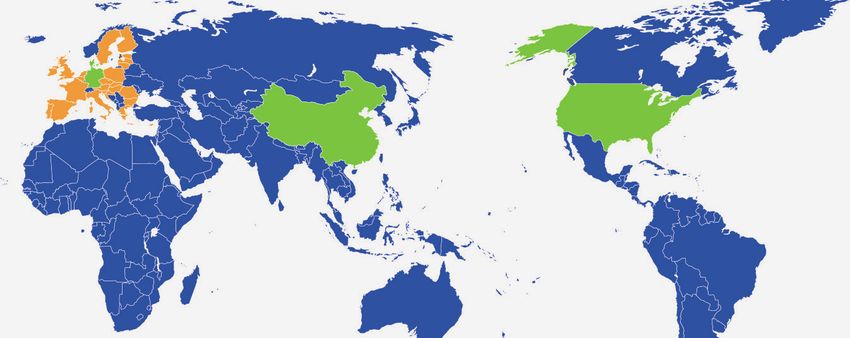
Figure 1: Overview of key countries’ GHG reduction targets
Figure 1
The data shown in the graphic
are based on either Nationally
Determined Contributions (NDCs)
submitted to the United Nations
Denmark (UN) or, in the case of Denmark
• minus 48% by 2030 China
• minus 80-95% by 2050 • peaking of CO 2 emissions and Germany, additional national
around 2030
Germany
• lower CO 2 emissions per targets. Unless stated otherwise,
unit of GDP by 60% to 65%
• minus 55% by 2030
• minus 80-95% by 2050
from the 2005 level the base year for all targets
USA
is 1990. In order to allow for
EU28
• minus 40% by 2030 • minus 4.6% by 2030
• minus 14.9-17.3% by 2050
comparability, for the U.S., official
• minus 80-95% by 2050
NDC targets with base year 2005
have been converted to a base
year 1990 using data from the
Environmental Protection Agency
(EPA). The Danish GHG reduction
Key Elements for A Successful Energy Transition Worldwide: target for 2030 is based upon
• International exchange of experiences and mutual learning the preliminary Danish non-ETS
• Clear long-term vision, elaborated and regularly revised mid-term targets and reduction target of 39% compared
flexible mind-sets for short-term adjustments to the 2005 level and is not an
official Danish target.
3Energy Transition Trends 2018 In addition, in the past years many countries have initiated a transition of their energy systems towards a more sustainable energy supply based on renewable energies (RE). The transition of the Chinese energy system should therefore be seen in the context of similar developments around the world. The paths all these countries have undertaken so far vary and depend on a number of variables, e.g. on their time and point of start, their geographical location or their political and societal setting. The following case studies shall illustrate this variety. The European Union as the world’s biggest market is a leading global player and a strong advocate for the fight against climate change. Denmark is widely considered a pioneer when it comes to RE, particularly wind energy, and the transition of its electricity and heating system. Germany, as Europe’s biggest economy and most populous country, is a particularly good example of a highly industrialised nation that aims at decarbonising its economy. Last but not least, the United States of America (USA), being a vast territorial state with a complex political system, sets another example for the wide variety of the aforementioned variables. What they all have in common is the experience to be acting in a highly dynamic and internationally intertwined context while transforming their energy systems from a rather centralised approach with continuous energy generation based on fossil fuels to a more decentralised system with fluctuating energy generation from thousands of energy production facilities (wind, solar, biomass etc.). This requires that politics and regulation are governed by a clear long-term vision, with elaborated and regularly revised mid-term targets and continuous concrete adjustment steps on a short-term basis. 4
Energy Transition Trends 2018

         1. China

Economic Development Link with Ecological Civilization
China continues to increase policy attention to environmental improvement and clean
                                                                                           “Four-Pronged Comprehensive
energy. During the 19th Party's Congress in October 2017, China announced a Two-
                                                                                           Strategy” refers to making
Centenary-Goals, to finish building a moderately prosperous society in all aspects         comprehensive moves to finish
by 2035, and establish a Socialism Modernization Country which is prosperous,              building a moderately prosperous
                                                                                           society in all aspects, deepen
democratic, civilized and harmonious by 2050. The 13th Five-Year Plan for Economic and
                                                                                           reform, advance the law-based
Social Development also emphasized a continued commitment to “the Four-Pronged-            governance of China, and
Comprehensive Strategy” and to promote balanced economic, political, cultural, social      strengthen Party self-governance.
and ecological progress.

In China, economic growth and energy development have been closely linked. Going
forward, the country is shifting towards sustainable economic development patterns
that include the concepts of energy system transformation and building an ecological
civilization.

China’s overall energy strategy includes several elements. For industrial policy, the
Made in China 2025 plan emphasizes green technology such as renewable energy,
electric vehicles, and advanced power system equipment. In the near-term, China
National Energy Administration (NEA) recently issued Work Guidance of Energy Sector
2018, also emphasizing shifting towards low-carbon, clean energy and clean heating
supply while restricting coal consumption. In addition, the National People’s Congress
just approved the Governmental Institutional Reform Plan this March, according to
which 2 newly established Ministries-Ministry of Natural Resources (MNR) and Ministry
of Ecological Environment (MEE)-would also strengthen central government policies in
these areas.

Development of Solar PV is Surging
In recent years China has begun to diversify its energy mix and turn to renewable
energy. From 2005 to 2016, the share of renewable energy generation increased from
16% to 26%. The transition to a cleaner energy system is driven by the need to improve
air quality, combat climate change, and eventually reduce the dependency on fossil
fuels.

In recent years, the yearly added wind power installed capacity has declined while solar
PV are surging. In 2017, on-grid wind additions amounted to 15.03 GW, down from a

                                                                                                                               5
Energy Transition Trends 2018
high of over 30 GW two years ago, whereas solar PV surged by over 53 GW which make
acumulated capacity exceeds 24% of its 2020 minimum target of 105 GW.
Based on the results of the Below 2°C scenario in the China Renewable Energy Outlook
2017 (CREO2017), the annual flagship publication of China National Renewable Energy
Centre, the share of wind in total primary energy supply is expected to rise from 0.7% in
2016 to 4% by 2020, 12.5% by 2035 and 21.8% in 2050. Solar PV is expected to rise from
0.3% in 2016 to 1% in 2020, 6.5% in 2035 and 13.4% in 2050.
Figure 2: Key Performance Indicators for the Energy System Transition in China
Figure 2 Data Source
GDP, Energy, Electricity: National
1000 60%
Bureau of Statistics (NBS);
900 GHG Emission: Climate Watch
data;
800
PM2.5: young-0;
700
Energy Import: China Statistical
Yearbook: 2004-2017, China
600 Energy Statistical Yearbook 2017;
RE.Share in %
Electricity: 13th- Five-Year
2000=100
500 30%
Development Plan for Electricity;
400 RE Share in the Power Sector:
China Electricity Council
300
(CEC), NBS, National Energy
200 Administration (NEA) and China
National Renewable Energy
100 Centre (CNREC).
0
2020 Target for GDP: based on
0%
2000 2002 2004 2006 2008 2010 2012 2014 2016 2020 2030 2050 annual growth rate 6.5%;
RE Share in the Power Sector (>) GDP GHG Emissions without LULUCF 2020& 2030 target for energy:
Total Energy Consumption PM2.5 Gross Electricity Consumption national strategy;
Energy Import Dependency Targets
2020 target for electricity: 13th-
Five-Year Development Plan for
Electricity;
2030 Target: Outlook for the
Development of Power Industry
2015-2030 by Jingru Wu.
Figure 3: 2050 China Total Primary Energy Supply Projection
under Below 2°C Scenario of China Renewable Energy Outlook 2017 Figure 3 Data Source
“China Renewable Energy Outlook
6,000 2017,” China National Renewable
5,000 Energy Centre.
4,000
Mtce/year
3,000
2,000
1,000
0
16
18
0
2
4
6
8
0
2
4
6
8
0
2
4
6
8
50
202
202
203
4
203
4
202
202
203
4
203
4
202
203
4
20
20
20
20
20
20
20
20
Coal Crude oil Natural Gas Nuclear Hydro Wind
Solar Bio (Solid, Liquid, Gaseous) Geothermal Other
6Energy Transition Trends 2018
Table 1: Wind and Solar Power in Total Primary Energy Supply in 2025, 2030 ad 2050
Table 1
“China Renewable Energy Outlook
2020 2035 2050
2017,” China National Renewable
Energy Centre.
TWh Mtce % TWh Mtce % TWh Mtce %
Wind 1451 178 4.0% 4679 575 12.5% 6963 855 21.8%
Solar 347 43 1.0% 2428 298 6.5% 4270 524 13.4%
Figure 4: 2017 Newly Added Power Capacity (GW)
Figure 4
Figures of total, thermal, nuclear
150
and hydro power are based on
China Electricity Council’s statistic
120 data. Figures of wind, solar and
biomass are based on China
90 National Renewable Energy
Centre’s statistic data.
134
60
30 53
43 13
2.2 15 2.7
0
Total Fossil Nuclear Solar Wind Hydro Biomass
Figure 5: 2017 Newly Added Solar and Wind Capacity and Increase in Electricity Production
Figure 5
China National Renewable Energy
80 Centre
40 64
53 51
15
0
Incremental Capacity (GW) Incremental Power Generation (TWh)
Solar Power Wind Power
7Energy Transition Trends 2018
Policy Framework for Emission Reduction and Power System
Reform Established
Emission reduction and institutional reform are two of the focal points in energy sector
development in the last two decades. Since the 10th Five-Year Plan for Environmental
Protection in 2001, China established strict targets on environmental protection and set
out practical measures to combat pollution.
During the 12th Five-Year-Plan period (2011-2015), China established a 2020 greenhouse
gas (GHG) emission intensity target, and proposed to reduce emissions intensity by
a combination of market and administrative tools. China National Development and
Reform Commission (NDRC) announced to launch carbon market pilots in 2011.
In institutional reform, in 2015 China began a major effort to reform the power sector,
which will eventually include bilateral power trading, spot power markets, and ancillary
services markets. Since the overall reform began, six supporting polices have been
issued covering transmission and distribution (T&D) price reform, establishing spot
market pilots, building electricity trading exchanges, forming bilateral markets for
generation and efficiency, opening electricity retail markets, and regulating so-called
captive coal power plants used by industry. Linked to the power sector reform, NEA
has launched pilots for making coal fired power plants more flexible in response to the
need for integration of the variable production from wind and solar power plants.
Figure 6: Timeline of Policies
2002.02.10
Power System
2011.10.29 2016.02.09 2017.12.18
Reform (First Round) Pilot Carbon Market RE Taget Guaidace National Carbon Market
2001.03.15 2005.02.28 2015.03.15
10th FYP for China Renewable Power System Reform
2017.07.01
Environmental Protection Energy Law (Second Round) Green Certificate
Transforming from Subsidy Based to Marketised Alternatives
Figure 6
China is committed to deploying market mechanisms to accomplish its green and Timeline of policies for key energy
low-carbon energy transition. Whereas China from 2009 has relied on a feed-in tariff transition policies in China
to boost wind and solar power, the country may shift towards a renewable energy 2000-2017
quota mechanism as well as voluntary green certificates launched in 2017. By 2020, the
national non-hydro renewable energy power consumption should reach 9% in total
and all electricity generation companies are to produce 9% of energy from non-hydro
renewables. In March 2018, the government started to collect opinions on a mandatory
renewable power quota mechanism. The main responsible bodies proposed to include
power grid enterprises, power distribution and electricity marketing enterprises, and
8Energy Transition Trends 2018
owners of captive power plants.
Carbon markets are another trend. From 2011 to 2016, China has launched seven
carbon market pilots in Beijing, Tianjin, Shenzhen, Shanghai, Hubei, and Guangdong.
So far, allowances in these markets have been allocated mainly through grandfathering
and benchmarking, with only small-scale auctions. A national carbon market was
officially announced in December 2017, covering the power and heating sectors, which
are responsible for a large fraction of coal use. The market will only start official trading
in next several years, and the carbon allowance mechanism design will be promoted
continuously. Policy-makers hope that carbon prices play a increasingly important
role in promoting the low carbon transition.
Obstacles to Low-carbon Development
While China is undoubtedly committed to a low-carbon energy transition over the long
term, there are numerous near-term obstacles. Energy demand continues to grow
rapidly, and fossil fuels remain essential for meeting near-term needs.
Moreover, conflict between provincial and national objectives is urgent to address.
Most provinces have overcapacity of coal power, and provincial officials remain wary
of reforms that could threaten the financial viability of state-owned power groups. This
means that bilateral contracts, inter-provincial power trades, and spot market pilots
are not necessarily designed to promote economic dispatch. There is a consensus that
reforms to date have yet to breach what Chinese analysts call “provincial fortresses”
that prevent competition and economic dispatch.
China has also struggled to implement policies prioritizing dispatch of renewable
energy. For example, although the central government has established numerous
policies to mandate minimum dispatch hours for wind and solar and for elimination of
wind and solar curtailment and in 2017 both curtailment rate and curtailment power
quantity of wind and solar power decreased, the integration of these resources remains
a severe problem in several provinces. Provinces like Gansu have developed large
amounts of wind and solar that cannot be absorbed by demand inside the province, yet
transmission capacity and broader dispatch areas for clean energy have lagged.
Centralized Power of Policy Makers in the Future
In 2018, NEA work priorities include green, low-carbon, and innovation-driven
development, improving energy supply quality and system efficiency, curing poverty
alleviation and providing good quality energy services, strengthening energy sector
governance, and widening international cooperation. As wind and solar PV fall in price,
price parity for wind may arrive in 2020 and solar PV before 2025. Power market reforms
should play a major role in improving the economics of clean energy. In particular,
spot markets, ancillary services markets, increased inter-provincial and inter-regional
transmission, and distributed energy should help eliminate the barriers to low carbon
energy.
9Energy Transition Trends 2018 Significant change is also continuing at the administrative levels. Two new ministries, Ministry of Ecological Environment (MEE) and Ministry of Natural Resources (MNR), were established in March 2018. The Ministries responsible for environmental tax and carbon emissions trading mechanisms are to be incorporated into MEE, helping integrate these policies with other environmental policies. Similarly, departments responsible for water, grassland, forestry and wetland resources will now be integrated into MNR, helping calibrate natural resource policies in these areas. Centralization of similar departments could simplify policy-making, oversight, and implementation. 10
Energy Transition Trends 2018

      2. European Union

The EU’s Long-term Energy Targets for 2030/2050
The European Union (EU) has ambitions to be the leading force in the fight against
climate change. It has agreed to spend at least 20% of its budget for 2014-2020 – as
much as €180 billion − on climate change-related actions. An EU-wide energy system
transition, i.e. implementing common targeted policies and advancing the structural
integration of the EU are seen as key drivers for the decarbonisation of the economy.

The long-term goal of reducing GHG emissions by 80-95% by 2050 compared to 1990
levels was set in October 2009 by the European Council. In October 2014, the European
Council agreed to more concrete, EU-wide targets and policy objectives for 2030 (see
table below). These targets aim to achieve a more competitive, secure and sustainable
energy system and to meet its long-term 2050 greenhouse gas reductions target. They
do not prevent Member States from pursuing their own, more ambitious targets.

                       Table 2: EU Energy Targets for 2030 and 2050

                                                             2030            2050
    GHG Emissions                                            >40%           80-95%
    Compared to 1990 Levels
    Energy Efficiency                                        >27%              --
    Compared to “Business-as-usual”-Projections
    Share of Renewable Energy                                >27%              --
    of Total Energy Consumed

Current Developments in European Energy Policy:
The Winter Package
The EU is striving for a European Internal Energy Market that sets the general
framework for energy to flow freely across the EU – without technical or regulatory
barriers. This intends to allow for more competition, to pool the different capacities of
all Member States and to improve energy security and system stability.

The EU’s approach to follow the principle of subsidiarity in its effort for an energy
transition can be used as example and comparison for the challenges in China. The
EU as central entity focuses on setting and monitoring clear common targets and on
making sure that the general framework (market structures, regulations, infrastructure
etc.) allows for a dynamic development towards a new energy system. The Member
States on the other hand have both the right and the duty to implement such policies
that contribute to the common targets while at the same time taking into account their
respective regional conditions.
                                                                                                                      11
Energy Transition Trends 2018
Figure 7: Time Schedule for the Winter Package Following the Ordinary Legislative Procedure
2016 2017 2018 2019
11 12 1 2 3 4 5 6 7 8 9 10 11 12 1 2 3 4 5 6 7 8 9 10 11 12 1 2 3 4 5
Presidency Slovakia Malta Estonia Bulgaria Austria Rumania
The EC
Governance Regulation on the
of the Energy Governance of the Energy EP
Union Post Union
2020 C
EC
Recast of the ACER
Regulation (713/2009)
EP
C
EC
Recast of the Internal
Electricity Market EP
Directive (2009/72/EC)
Design of the C
Electricity
Market EC
Recast of the Internal
Electricity Market EP
Regulation (714/2009)
C
Regulation on Risk- EC
Preparedness in the
Electricity Sector and EP
Repealing the Security of
Supply Directive (2005/89/
EC) C
EC
Recast of the Renewable
Energy Directive (2009/28/ EP
EC)
C
EC
Renewable
Revision of the Energy
Energies
and Energy
Efficiency Directive EP
(2012/27/EU)
Efficiency
C
EC
Revision of the Energy
Performance of Buildings EP
Directive (2010/31/EU)
C
EC European Commission as of 14 March 2018
EP European Parliament
C Council of the European Union
Trilogue negotiations
In November 2016, the European Commission published a number of legislative
Figure 7
proposals summed up as “The Clean Energy for All Europeans” package. This so-called
Own graphic based primarily
“Winter Package” aims at specifying the strategic implementation of the EU energy on official information by the
targets 2030 and at advancing the Energy Union. On more than a thousand pages it European Parliament (http://www.
europarl.europa.eu/legislative-
primarily covers the following topics:
train/theme-resilient-energy-
• Governance of the Energy Union, union-with-a-climate-change-
• Design of the electricity market, policy).
• Renewable energies and energy efficiency.
The package is currently being consulted by the European Parliament and the Council
of the European Union, i.e. by the respective national ministers, following the so-called
ordinary legislative procedure of the EU (see also the overview of the legislative process
below). The common goal is to pass the package before the election of a new European
Parliament in May 2019.
12Energy Transition Trends 2018
Figure 8: Key Performance Indicators for the Energy System Transition in the EU
Figure 8
Targets for the RE Share in
200 90%
the Power Sector are based on
PRIMES projections.
150
60%
RE.Share in %
2000=100
100
30%
50
0 0%
2000 2002 2004 2006 2008 2010 2012 2014 2016 2020 2030 2050
RE Share in the Power Sector (>) GDP GHG Emissions without LULUCF
Total Energy Consumption PM2.5 Gross Electricity Consumption
Energy Import Dependency Targets
Achievements and Challenges:
Measuring the Progress in the EU and A Look Ahead
The chart on the key performance indicators for the three interlinked goals of the EU’s
energy policy (reducing greenhouse gas emissions, reducing the EU’s dependency
on energy imports, ensuring growth and employment) shows that progress has been
made since 2000 concerning each of these goals. The chart also highlights the effective
decoupling of greenhouse gases on the one hand and economic growth on the other.
However, considering the ambitious targets set for 2030 and 2050, efforts have to be
increased both on EU and Member State level. This does not only imply additional
support for technological development for more energy efficiency, but also a thorough
check of all emission relevant policy fields, i.e. transport and mobility.
Excursus: ENTSO-E and the European Grid Planning Process:
With the establishment of the European Network of Transmission System Operators for Electricity (ENTSO-E) in 2009 the European
TSOs have been given important tasks and thereby substantial influence on the development of the European power market and
transmission system. The main product of the TSO’s planning is the (non-binding) Ten Year Network Development Plan (TYNDP) which
is carried out under EU regulation 714/2009 on a biennial basis.
The ENTSO-E planning process consists of three steps: First, different scenarios for the future are developed in order to frame
uncertainties and to identify what Europe needs in terms of electricity transmission infrastructure. Based on these scenarios experts of
41 TSOs in 34 European countries carry out common planning studies. The results of the planning studies are a series of infrastructure
projects. As a last step, these projects are assessed following a European approved methodology to assess the costs and benefits
of projects. This assessment is not just a purely economic assessment. Instead, it also takes into account how projects support the
environment, the European welfare, the security of supply etc.
Each year the EC updates a list of projects of high European importance, the so-called list of “projects of common interest” or “PCI-list”.
This list takes its point of departure in the last TYNDP. PCIs must comply with certain rules regarding transparency and involvement of
stakeholders and can in turn achieve both faster permission and financial support from the EU.
13Energy Transition Trends 2018
3. Denmark
Decoupling Economic Growth,
Energy Consumption and GHG Emissions
The overall trends of the Danish economy and the energy sector show that Denmark
has been able to grow its economy and at the same time reduce the absolute energy
consumption and GHG emissions (see graphic below). Analysis shows that the impact
of manufacturing industries moving out of Denmark have only had a marginal impact
on both energy consumption and GHG emissions. Energy efficiency including combined
heat and power generation (CHP) and expansion of district heating and a sharp increase
in the use of RE are the most important factors in decoupling economic growth from
energy consumption and GHG emissions.
Figure 9: Key Performance Indicators for the Energy System Transition in Denmark
Figure 9
GHG emission targets based upon
200 90%
the preliminary Danish non-ETS
reduction target compared to
2005 level. Data do not illustrate
official Danish targets.
150
60%
RE.Share in %
2000=100
100
30%
50
0 0%
2000 2002 2004 2006 2008 2010 2012 2014 2016 2020 2030 2050
RE Share in the Power Sector (>) GDP GHG Emissions without LULUCF
Total Energy Consumption PM2.5 Gross Electricity Consumption
Energy Import Dependency Targets
The most dramatic changes in the Danish energy sector have been going on in RE
generation which provided for 31% of the gross energy consumption in 2016. In the
early 1990s, RE sources accounted for less than 5% of the Danish power generation. In
2016 that number was 60% due to a significant exploration of Denmark’s wind power
potential both onshore and offshore (42%) and a fuel transformation from coal and
natural gas toward biomass (14%).
14Energy Transition Trends 2018
RE Integration The Danish Way –
Flexibility and Open Energy Markets
In order to cope with almost 50% of all Danish power generation being fluctuating (wind
and solar), a number of initiatives and system solutions have been implemented by
the Danish transmission system operator (TSO) Energinet.dk. The main elements have
been:
• Planning and Forecasting:
The Danish TSO has developed an advanced system for forecasting expected
production from power sources like wind and solar in order to improve planning
of generation up until the hour of production and thereby reducing the need for
standby capacity.
• Power Plant Flexibility and Back-up Capacity:
Back-up capacity combined with a technical ability of most conventional power
plants to adjust generation to significantly less than 50% of their rated capacity
means that RE becomes a base load power source in the Danish system.
• Effective and Transparent Power Markets (NordPool):
The integration of wind and solar has been supported by the Nordic day-ahead
power market. Very low marginal cost for wind and solar power means that they
are “dispatched” by the market ahead of conventional power sources in the “merit
order”.
• Strong Domestic Transmission Grid and Cross-border Interconnectors:
For balancing and market purposes, strong power interconnectors to Denmark’s
neighbouring countries both in the North (Norway and Sweden) and in the South
(Germany and soon Netherlands) enable Denmark to balance under- or surplus
production with its neighbours. Especially the hydro based power generation in
Norway and Sweden is ideal to balance fluctuations in wind and solar. This happens
through coupled electricity markets, nowadays stretching from Finland to Southern
Europe.
• TSO Buying Flexibility in the RE Sector:
Large wind power projects have shown to be very effective as balancing capacity in
windy conditions. A wind park has a very short response time and very low start-up
costs. With the help of proper incentives and “virtual power plant control systems”,
large wind projects can participate in the specific balancing power market getting
attractive power prices when the general power market prices are low.
Going forward, with the goal of even more fluctuating power in the Danish energy
system, further planning of infrastructure (grid) and market is vital to preserve the
high level of system stability and competitive power prices. Further integration and
interconnection with neighbouring countries and the EU power system is part of the
answer. In addition, the ability to store and use electricity in other sectors like heat
15Energy Transition Trends 2018 through heat converters is being explored. Furthermore, the future electrification of transportation is part of this plan. The Danish energy planning is closely aligned with the EU plans for a more deeply integrated Energy Union. New Energy Agreement in the Making Based upon the EU energy targets for 2030, the political negotiations on a new energy agreement that will set the course and targets for the period beyond 2020 for the Danish energy sector have begun. High on the agenda will be a further transformation away from fossil fuel based energy sources, a further improvement of energy efficiency and creating a market based energy sector securing a cost effective transformation and thus competitive energy prices for consumers and enterprises. The government is working for an RE target of 50% of the gross energy consumption in Denmark by 2030. For the support of RE sources both EU regulation and recommendations by Danish experts point at more competition based support schemes like the tender system used for the deployment of offshore wind. 16
Energy Transition Trends 2018

      4. Germany

The “Energiewende” – Energy Transition Made in Germany
The German energy transition (so called Energiewende) is a long-term energy and
climate strategy towards a low-carbon energy system based on developing RE and
improving energy efficiency. It is considered an ambitious industrial project and
requires technical and societal transformation within Germany and within the whole
of Europe. The energy transition is based on four main objectives: combatting climate
change, avoiding nuclear risks, improving energy security, and guaranteeing economic
competitiveness and growth. The Energiewende is an integrated policy framework,
covering all sectors of energy and economy. It includes targets and policy measures for
CO2 emission reduction, RE development, phasing out nuclear energy by 2022, and
improvement of energy efficiency (see table below).

                                  Table 3: Key German Energiewende Targets                               Table 3
                                                                                                         Data with an * are preliminary
                                      Status Quo    2020          2025   2030   2035   2040    2050
                                                                                                         data.
                 Reduction of GHG
  Greenhouse     emissions in all      -27.6%       -40%                 -55%          -70%   -80-95%
 Gas Emissions   sectors compared      (2017)*
                 to 1990 levels
                                                        dd

                                                   Gradual shut
                 Gradual shut down     12 units      down of
    Nuclear      of all nuclear power shut down    remaining 8
   Phase-out     plants by 2022         (2017)       reactors

                 Share in               13.1%
                 final energy                       18%                  30%           45%    min. 60%
                                       (2017)*
                 consumption
  Renewable
   Energies
                 Share in gross         36.1%
                 electricity                                             65%                  min. 80%
                                       (2017)*
                 consumption

                 Reduction of
                 primary energy         -5.9%
                 consumption                        -20%                                       -50%
                                       (2017)*
                 compared to 2008
    Energy       levels
   Efficiency    Reduction of
                 gross electricity      -2.9%
                 consumption                        -10%                                       -25%
                                       (2017)*
                 compared to 2008
                 levels

Some Progress Made and Still Some Way to Go
In recent decades, Germany has significantly diversified its electricity mix toward RE
(which grew from 4 percent in 1990 to above 35 percent in 2017), including a sharp
increase in citizen-owned projects between 2000 and 2010. However, the share of RE in
other sectors (transport and heating/cooling) has not increased proportionally.

Since the necessary expansion of the transmission grids is a lengthy process with a
lot of legal, political and regulatory challenges, there are relevant delays which are
becoming more and more obvious in the overall system management: grid congestions

                                                                                                                                          17
Energy Transition Trends 2018
increased and the further development of RE plants is more and more exposed to the
risk of insufficient grid structures. In addition to the expansion of the transmission grid,
increased system flexibility is pursued by encouraging new technologies and processes
(e.g. demand side management, storage technologies, Power-to-X technologies,
digitization of system management processes).
While the FIT degression scheme has already led to a reduction in prices from above 50
ct/kWh for PV in 2004 to roughly 10 ct/kWh nowadays, auctions for RE have delivered
promising price projections for the future: recent auctions resulted in an average price
of 4.91 ct/kWh. The recent auction for onshore wind has resulted in an average price
of 3.82 ct/kWh and the recent auction for offshore wind (to be built by the mid 2020s)
resulted in prices from 0 to 6 ct/kWh (average weighted price 0.44 ct/kWh, additionally
1.5 ct/kWh for grid connection are paid). Overall, prices for RE have decreased
tremendously and are expected to decrease further.
Figure 10: Key Performance Indicators for the Energy System Transition in Germany
200 90%
150
60%
RE.Share in %
2000=100
100
30%
50
0 0%
2000 2002 2004 2006 2008 2010 2012 2014 2016 2020 2030 2050
RE Share in the Power Sector (>) GDP GHG Emissions without LULUCF
Total Energy Consumption PM2.5 Gross Electricity Consumption
Energy Import Dependency Targets
Outlook: Increasing Flexibility and Digitization of the Energy
System
The current political debates in the energy sector involve several topics. Among them
are discussions about RE capacity additions, especially with respect to the acceptance
among citizens. However, capacity additions, mainly for wind onshore, remain high. In
the focus is also the self-consumption of solar power, which is attractive for households
and business consumers. In this context, the development and installation of energy
storage systems has seen increasing importance as they allow a maximisation of
self-consumption and increase system flexibility. An important part of the current
debate is also the issue of digitization which is a key element of a successful energy
18Energy Transition Trends 2018
transition. Fluctuating RE (PV, wind) require a communication network which combines
generation, consumers and grids. The energy system needs to always provide flexibility
to balance variable RE generation. This is only possible when generation and (flexible)
demand can use safe and digital communication channels. In 2016, the German
Government hence approved a law on the “Digitization of the Energy Transition”. Last
but not least the integrated energy transition that makes use of synergy effects which
come from the connection of all sectors (energy, transport, building, industry) is high
on the agenda. With the 2018 coalition treaty, Energiewende issues remain a priority of
the government’s political agenda. The emission reduction targets for 2020 are unlikely
to be met. However, the coalition of Christian democrats (CDU/CSU) and the social
democratic party (SPD) aims to meet them and is committed to the 2030 targets. To do
so, it has increased the RE target in the power sector for 2030 to 65 percent.
Market-based RE Integration as Cost-efficient Way to Deal
with the Complexities of the Energy Transition
Germany’s Energiewende is one example of how a highly industrialised economy can
transition its power system towards a climate-friendly, economically competitive
system while ensuring energy security. Experiences with market and system integration
measures for variable RE show that a market-based integration with the regulator as
a coordinative actor taking into account all relevant stakeholders significantly reduces
the costs. Furthermore, long- and medium-term targets have proven helpful to align
policies that have short-term effects with long-term goals. Taking into account the
lessons learned in Germany, China has the chance to tackle air pollution and create a
climate-friendly energy system which equally allows for economic growth.
19Energy Transition Trends 2018
5. United States of America
Dynamics of Energy Sector Evolution
In the United States (U.S.), energy sector evolution has been driven primarily by
technological innovation, market competition, and standards and policies—particularly
at the state and local levels.
Technical standards and policies have supported the competitive space for RE
technologies, seeing them through early periods of market adoption as prices
decreased markedly. For example, one source assesses that state and local renewable
portfolio standard (RPS) policies stimulated 60% of RE deployment between 2000 and
2015 and drove costs down through cumulative installed capacity. Corporate Average
Fuel Economy (CAFE) standards for vehicle fuel efficiency drove innovations such as
start-stop internal combustion engines. Incentives ease the cost and uncertainty burden
for early adopters in these transitions. And targeted investments in R&D can address
specific concerns of investors and technology limitations.
Market forces have had a leading impact in the U.S. energy transition and associated
reduction in carbon intensity. Governments considering adoption of RE face a much
less costly decision than those deploying RE technologies a decade ago, although there
remain important impacts on utility and regulator planning for new infrastructure, such
as transmission, and on operations. The advances in wind, solar and storage are shared
globally, resulting in significant leap-frogging potential. The relatively turbulent market
adoption pathway experienced by early adopters may not be faced by those deploying
these technologies today. The pace of this energy transition, with the unexpected role
of natural gas, was difficult to foresee. Nevertheless, the government has had a role in
ensuring fair, enabling, functional market platforms capable of reliably integrating all
forms of energy, thus increasing security, reducing costs and helping to achieve stated
social and environmental goals.
20Energy Transition Trends 2018
Figure 11: Key Performance Indicators for the Energy System Transition in the U.S.
Figure 11
The 2020 target value for GHG
200 90%
Emissions without LULUCF is
based on the U.S. Nationally
Determined Contribution (NDC),
which the Trump administration
150
confirmed will not be
60%
implemented. The NDC included
a 2020 target of 17% below the
RE.Share in %
2000=100
2005 value. There was also a 2025
100
target of 26-28% below the 2005
level, and no targets beyond that
30% date.
50
0 0%
2000 2002 2004 2006 2008 2010 2012 2014 2016 2020 2030 2050
RE Share in the Power Sector (>) GDP GHG Emissions without LULUCF
Total Energy Consumption PM2.5 Gross Electricity Consumption
Energy Import Dependency Targets
Outlook: Energy Systems Integration and Market Modes
As RE technologies improve and become less costly, the new focus for energy transition
in the U.S. will emphasize reliability, resilience, and power system flexibility. This
includes the capability of integrating all forms of generation; transmitting power
through reliable, physical infrastructure; and managing load, all in a secure and
affordable way. The mass deployment of sensors and advanced metering provides
significant new opportunities with big data not previously available. This digitization of
the energy sector could create pathways for enhancements from artificial intelligence
and machine learning that improve central power system management reducing losses
for utilities and costs for consumers.
Conversely, these advances may also have a significant impact on distributed energy
systems for those customers who choose to take more control over their own energy
production and consumption. Regulators and utilities have an important role to play in
maintaining the technical and economic viability of the grid while enabling consumer
choice and engagement as adoption of distributed generation and storage continues to
grow.
21Energy Transition Trends 2018 China, Europe, USA
You can also read


