Essential addition with every Hunting Licence - www.fishandgame.org.nz - Fish & Game
←
→
Page content transcription
If your browser does not render page correctly, please read the page content below
Essential addition with every Hunting Licence
         www.fishandgame.org.nz
Fish & Game
NEW ZEALAND DUCK SPECIES
PARADISE
SHELDUCK
SHOVELER
BROWN
TEAL
GAME SPECIES
(NAMED IN BLACK)
These species may be hunted, but
only in such regions and during
such open seasons as notified in the
New Zealand Gazette each year by
the Minister of Conservation.
PROTECTED SPECIES NOTE: Important recognition
(NAMED IN RED)
features are the large areas of white
The species are absolutely under the wings of the game ducks
protected at all times. and the smaller overall size of the
protected ducks.
3
Fish & Game

                                  MALLARD

          GREY DUCK

                              GREY TEAL

                      SCAUP

4
Regulations

The regulations printed in this guide booklet are subject to the Minister
of Conservation’s approval. A copy of the published game notice in the
New Zealand Gazette is available on www.fishandgame.org.nz along
with further information on game bird hunting.

                                                      1
                                          2
                                               3
                                      4

                                  5
                        6

                                   CONTENTS
        New Zealand duck species ID................................................3
        Game bird hunting Code of Practice.....................................6
        Hunting licence valid nationwide..........................................7
        Stop the spread of aquatic pests..............................................7
        Shotguns and use of non-toxic shot.......................................8
        Wildlife Act 1953...................................................................8
        FIRST SCHEDULE........................................................... 11
        SECOND SCHEDULE FOR EACH REGION
        PLUS LOCAL HUNTING INFORMATION
        1 Nelson/Marlborough..................................................... 16
            Hunting Opportunities in Nelson/Marlborough.......... 19
        2 West Coast..................................................................... 22
            Hunting in West Coast.................................................. 24
        3 North Canterbury.......................................................... 28
            Hunting in North Canterbury....................................... 31
        4 Central South Island...................................................... 35
            Hunting in Central South Island................................... 37
        5 Otago............................................................................. 41
            Hunting in Otago.......................................................... 44
        6 Southland....................................................................... 45
            Hunting in Southland.................................................... 47
        Game Bird Habitat Stamp.................................................. 51

Cover photo: Jack Gauld
                                                                                                  5
Regulations

CODE OF CONDUCT
    Please consider the rights of others and
     observe the hunters’ code of conduct

ACCESS
•    Always ask permission to cross private land, unless a Fish and
     Game access sign is visible.
•    Make sure it’s OK to take your dog across private (or public)
     land and keep the dog under firm control.
•    Don’t interfere with livestock, crops, machinery or other
     property.
•    Always use gates, stiles or other recognised access points.
•    Leave everything as you found it. If a gate is open or closed
     leave it that way.
•    Don’t park vehicles so they can obstruct gateways or cause a
     hazard on the road or access way.
•    When driving on riverbeds keep to marked tracks or park on
     the bank and walk to your hunting spot.

HUNTING
•    Always ask permission to hunt on private land
•    Check whether a hunting permit is needed on public land
•    Carry a current game bird hunting licence and comply with
     the relevant bag limits and conditions of hunting.
•    Be a competent shooter, estimate ranges, and be aware of you
     and your shotgun’s limitations.
•    Select appropriate shot size for the target.
•    Be able to distinguish what species may be lawfully hunted
     from protected ones.
•    If a game bird is wounded, take all reasonable steps to locate it
     and kill it quickly and humanely.
•    If possible use a trained gundog, and help another hunter to
     retrieve their game.
•    Promote ethical hunting of gamebirds. If you don’t want to eat
     them, don’t shoot them.
•    Certainly, don’t dump or abandon shot carcasses.
•    Remove empty cartridge cases and all litter from the hunting
     area.

6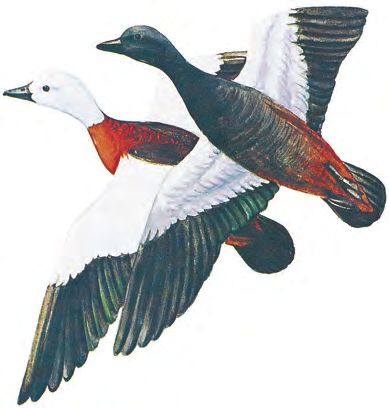
Regulations

•    Wear a high-vis hat and outer garment whenever possible when
     hunting upland game.
•    Remember that all hunters will be judged by your actions, so:
     - always hunt in a sporting manner and ensure your conduct
       is above reproach.
     - Encourage the same attitude in your hunting companions.
     - Above all, be safe and be sensible.

FIREARM SAFETY
Practise the seven Police-approved principles of firearm safety (see
NZ Police Arms Code):
1.    Treat every firearm as loaded
2.    Always point firearms in a safe direction
3.    Load a firearm only when ready to fire
4.    Identify your target beyond all doubt
5.    Check your firing zone
6.    Store firearms and ammunition safely
7.    Avoid alcohol or drugs when handling firearms

STOP THE SPREAD OF AQUATIC PESTS
Protect our waters: CHECK, CLEAN, DRY. Check dogs, boots,
decoys and boats before you leave the area.

HUNTING LICENCE VALID NATIONWIDE
All game bird hunting licences can be used in all Fish & Game
regions. Day licences are valid only on or after the second Monday
of the new season.
It’s important to note that if you’re hunting in other regions you
need to read up on the local regulations in this booklet.
Fish & Game sports fish and game licences are issued online,
are processed electronically and comply with the Electronic
Transactions Act 2002.
Licences are issued centrally by a person authorised to issue licences
on behalf of each Fish and Game council.

GAME BIRD HABITAT STAMP
A game bird habitat stamp must be displayed on1 every licence
to hunt or kill game.
The purpose of the Habitat Stamp Programme is to raise funds
for habitat enhancement.
1 Section 19A(1) of the Wildlife Act 1953

                                                                    7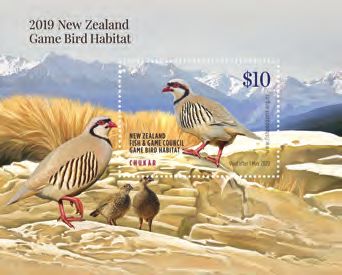
Regulations
Three dollars ($3)2 of the game licence fee is assigned to the stamp
as income for the programme. See towards the back of this booklet
for other stamp programme products.
If you own or help manage suitable game bird habitat, you
are welcome to apply for funds raised from the habitat stamp
programme.
To apply see the Game Bird Habitat Trust website http://www.
fishandgame.org.nz/new-zealand-game-bird-habitat-trust for
details. Applications close June 30.

SHOTGUNS AND USE OF NON-TOXIC SHOT
Game bird hunting can only be undertaken with a shotgun of a
10 gauge or smaller (including 12, 16, 20, 28, 410).
Mandatory use of non-toxic shot applies to all waterfowl hunting
(see 1st Schedule, condition 5 below).
2019 is the second year of a 4-year phase-out period for the use of
lead shot in smaller gauge shotguns. For this season, a voluntary
use of non-toxic shot in sub-gauges (excluding exemptions) applies
for shooting over and within 200 metres of all waterways and
wetlands.
Non-toxic shot is not mandatory for upland game (e.g. pheasant
and quail) hunting or for all game bird hunting using sub-gauges
(smaller than 12 gauge) or black powder muzzle-loading shotguns.
For more information refer to www.fishandgame.org.nz

WILDLIFE ACT 1953
The hunting of game is governed by the provisions of the Wildlife
Act 1953. The Minister of Conservation declares an open season
for game annually in the New Zealand Gazette (see below). Some
important provisions of the Wildlife Act are covered here. The
Act and its companion Wildlife Regulations 1955 can be viewed
in full online: http://www.legislation.govt.nz/

WILDLIFE DECLARED TO BE GAME3
Hunters are reminded that only the following lists of species are
game birds that they are permitted to hunt and kill.

WATERFOWL
•    Black swan (Cygnus atratus) (except on Chatham Islands).
•    Duck:
     - Grey duck (Anas superciliosa) and any cross of that species

2 Section 72(3A)(e) of the Wildlife Act 1953
3 Schedule 1 Wildlife Act 1953

8
Regulations
        with any other species, variety, or kind of duck (except on
        Chatham Islands).
    - Mallard duck (Anas platyrhynchos) and any cross of that
      species with any other species, variety, or kind of duck
      (except on Chatham Islands).
    - Paradise duck (Tadorna variegata).
    - Spoonbill duck (New Zealand shoveler) (Anas rhynchotis).
•   Pukeko (Porphyrio melanotus) (except on Chatham Islands).

UPLAND GAME
•   Chukar (Alectoris graeca chukar).
•   Red-legged partridge (Alectoris rufa rufa).
•   Pheasant (any bird not being a domestic bird, of the genus
    Phasianus and any cross of any such bird with any other species,
    variety, or kind of pheasant).
•   Quail:
    - Australian or brown quail (Synoicus).
    - Californian quail (Lophortyx californica).
    - Virginian or bobwhite quail (Colinus virginianus).

RESTRICTIONS ON THE TAKING OF GAME
(S18, Wildlife Act 1953)
No person shall use more than one shotgun or any live decoy.

USE OF LEAD SHOT AMMUNITION OVER WATER
(S5, Open Season For Game Notice)
It is an offence to possess, or hunt waterfowl with 200 metres of
open water using lead shot ammunition otherwise than within the
exceptions allowed (see use of non-toxic shot above).

LICENCE TO HUNT OR KILL GAME
(S19, Wildlife Act 1953)
It is an offence to hunt or kill game unless the person holds a
current game licence, except in some circumstances where that
person is a resident occupier as defined in the Wildlife Act.

OCCUPIER OF ANY LAND
(S19(3), Wildlife Act 1953)
“…the occupier of any land, and the spouse or partner and any one
son or daughter of the occupier, may, during an open season, hunt or
kill on that land without a licence (but subject to all other restrictions
imposed by game regulations.”

                                                                        9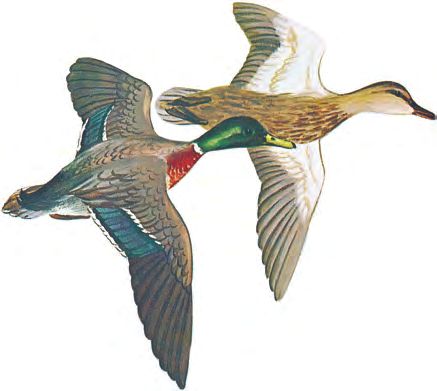
Regulations
The occupier of the land is normally the owner if she/he personally
resides on the land, but this privilege can be transferred to farm
manager or sharemilkers by a written statement indicating such
to Fish and Game if the owner does not personally reside on the
land. Note that the Act allows for hunting by three people; the
occupier, his/her wife/husband/civil union partner or de facto
partner and one son or daughter on that land - but no other land.

SHOOTING OF GAME NOT IN FLIGHT
PROHIBITED
(S22, Wildlife Act 1953)
It is an offence for a person to shoot or attempt to shoot at any game
bird not in flight except where a game bird is already wounded
by shooting).

OBSTRUCTING RANGERS
(S40, Wildlife Act 1953)
It is an offence to obstruct a ranger. The maximum penalty is
2-years imprisonment and/or $100,000 fine.

TAKING PROTECTED WILDLIFE
(S63, Wildlife Act 1953)
It is an offence to hunt or kill protected wildlife. The maximum
penalties for hunting or killing absolutely protected wildlife is up
to two years imprisonment or $100,000.

GAME HUNTING EXCLUSION AREAS
Closed game areas
Closed game areas means a part of a region that is for the time
being excluded from the open season in the region, but does not
include a wildlife sanctuary or a wildlife refuge or any area in
which the shooting or hunting or killing of animals is prohibited
under or pursuant to paragraph (j) of subsection (2) of this
[Wildlife] Act or any other Act.
There is no open season for game birds on property in a closed
game area. It remains legal to have a dog or a gun on such land,
but not to use them to hunt game birds (which also applies to
the landowner). (s2. Wildlife Act 1953). Each closed game area is
administered by a Fish and Game Council.
Wildlife Refuges
It is illegal to take a dog or a gun onto Wildlife Refuge land, unless
specifically permitted in writing to do so, or to harm or disturb
any wildlife including game birds on that land (s14(3) Wildlife
Act 1953).

10
Regulations
Wildlife Refuges are administered by the Department of
Conservation.
The remainder of this hunting guide is made up of
regional details and hunting conditions contained in the
Gazetted Game Notice.
These conditions are set out in the:

FIRST SCHEDULE:
Hunting conditions generally common to all Fish and Game
regions.

SECOND SCHEDULE:
Regionally specific hunting conditions, including bag limits,
closed and open game areas, shooting hours and the like.

FIRST SCHEDULE
Hunting conditions generally common to all Fish and Game
regions.
1    Bag limits
     1.1    No person shall possess on any one day, more than the
            number of game birds specified as the daily bag limit for the
            Fish and Game Region in which the game is taken, except
            on Sunday 5 May 2019, when that person may have in his
            or her possession twice the number of game birds specified
            as the daily bag limit for Saturday 4 May 2019.
     1.2 A person may possess more game than specified in sub-
         clause (1) of this Schedule, if all such game is labelled
         with the following details:
            (a)     The name and address of the person by whom the
                    game was taken;
            (b)     The number of the licence to hunt or kill game held
                    by the person by whom the game was taken;
            (c)     The name of the Fish and Game Region by which
                    that licence was issued;
            (d)     The name of the Fish and Game Region in which
                    the game was taken; and
            (e)     The date on which the game was taken.
2    Waiver of Restrictions on Baiting for Waterfowl
     A person4 may hunt or kill game of the family Anatidae
     (waterfowl) during the open season for game in all Fish and
4 Section 17 of the Wildlife Act 1953

                                                                       11
Regulations
Game Regions, except Auckland/Waikato Fish and Game
Region, where food has been cast, thrown, placed or planted
any time during the year. In the Second Schedule, Auckland/
Waikato Fish and Game Region, Special Condition 4(9), applies
to restrictions on baiting.
3 Magazine Shotguns
A person may hunt or kill game birds, as specified, in any Fish and
Game Regions with any magazine shotgun of a calibre 10 gauge
or less, which includes magazine extensions5, other than in the:
(a) Auckland/Waikato Fish and Game Region;
(b) Eastern Fish and Game Region;
(c) Hawke’s Bay Fish and Game Region;
(d) Wellington Fish and Game Region;
(e) Nelson/Marlborough Fish and Game Region;
(f ) West Coast Fish and Game Region.
For these six Regions special conditions in the Second Schedule
apply.
4 Shot Size
No person shall use, in any shotgun used for the purposes of
hunting and killing game, any cartridge containing any shot
size having a larger retained, per-pellet energy at 90 metres than
lead BB.
5 Use of Lead Shot Prohibited
5.1 No person may possess lead shot, or use lead shot, while
hunting or killing waterfowl within 200 metres of open
water, with any gun using a 10 or 12 gauge cartridge.
Non-toxic alternative shot may be used, including steel.
5.2 For the purposes of this requirement, “waterfowl” means
any of the following game species:
• Black swan (Cygnus atratus);
• Grey duck (Anas superciliosa) and any cross of that
species with any other species, variety, or kind of duck;
• Mallard duck (Anas platyrhynchos) and any cross of
that species with any other species, variety, or kind
of duck;
• Paradise shelduck (Tadorna variegata) also known as
Paradise duck;
• Australasian shoveler duck (New Zealand shoveler)
(Anas rhynchotis);
5 Amended notification to section 18(1)(c) (iii) and (v) of the Wildlife Act 1953 as
authorised by the Minister of Conservation under section 18(1) of that Act
12Regulations
• Pukeko (Porphyrio porphyrio melanotus).
(3) For the purposes of this requirement, “open water”
means either:
(a) any area of land or seabed covered permanently or
seasonally by water wider than 3 metres; or
(b) any area which is temporarily covered by water
wider than 3 metres at the time of such possession
or use, and that is contiguous to an area referred to
in paragraph (3)(a).
6 Shotguns of a Bore Smaller Than 12 Gauge and Muzzle
Loaders Exempt in Relation to Use of Lead Shot
Hunters are encouraged not to use lead shot in shotguns of a
bore smaller than 12 gauge (including 16, 20, 28 gauge) or
muzzle loaders within 200 metres of all waterways and wetlands
for the 2019 season.
This remains voluntary in 2019 but will become mandatory (lead
shot prohibited) for the 2020 season across all Department of
Conservation and Fish and Game administered lands. In 2021
lead shot will be prohibited for all licence holders (irrespective
of gauge used) across all lands (public and private) hunting
gamebirds within 200 metres of all waterways and wetlands.
7 Camouflaged Rowboats
A person6 may hunt or kill game within the following Fish and
Game Regions, from unmoored camouflaged rowboats, subject
to the excluded periods for the regions specified below:
• Northland – no excluded period
• Auckland/Waikato – excluding 4 and 5 May 2019
• Eastern – excluding 4 and 5 May 2019
• Hawke’s Bay – excluding 4 and 5 May 2019
• Taranaki – no excluded period
• Wellington – excluding 4 and 5 May 2019
• Nelson/Marlborough – no excluded period
• West Coast – no excluded period
• North Canterbury – excluding 4 and 5 May 2019
• Central South Island – excluding 4 and 5 May 2019
• Otago – excluding Clutha River 4 to 12 May 2019
inclusive
• Southland – excluding the Matarua, Aparima, Oreti,
Waiau and Waimatuku rivers and their tributaries 4 to
31 May 2019 inclusive.
6 Section 18(1)(f )(vi) of the Wildlife Act 1953
13Regulations
8 Restriction on Taking of Game
No person shall use any vehicle propelled by mechanical power
(including motorised watercraft)7 to chase or kill game, except
in such circumstances and at such times as authorised by the
Conservation Act 1987 and Wildlife Act 1953.
9 Pegging Day
9.1 Stand claimants who claimed and occupied a stand
during the 2018 Game Season may claim that stand at
any time prior to pegging day (up to 10.00 a.m. on 7
April 2019) following the purchase of the 2019 game
licence. If you are in the Auckland/Waikato Region,
then the above mentioned applies only to Adult Whole
Season Licence Holders and does not apply to Junior
Licence Holders as it does in all other Fish and Game
Regions.
9.2 Otherwise, unclaimed stands can only be claimed any
time after 10.00am on 7 April 2019 in all Fish and Game
Regions.
9.3 A stand may be claimed by planting on it a stake having
either a board or identifying label attached, plainly
identifying the name of the claimant and the number
of his/her licence. The hunting stand claim tag provided
with the licence must be completed with the name of the
claimant and affixed to the board or identifying label.
9.4 The licence holder claiming a stand must be present in
person at the stand when marking it up.
9.5 No one can claim more than one stand.
9.6 A stand cannot be claimed closer than 90 metres to a
stand already claimed by another person without that
person’s consent.
9.7 Any stand not occupied by the claimant within one hour
after the opening hour of hunting, on any day, can be
occupied by another licence holder for the remainder of
the day.
10 Conditions
These conditions will expire at the end of the open season for
game specified under the Second Schedule for each Fish and
Game Region.
7 Section 18(1)(f )(v) of the Wildlife Act 1953
14Regulations
SECOND SCHEDULE
Regionally specific hunting conditions, bag limits,
closed and open game areas, and the like.
Photo: Ian Hadland
15Fish & Game Regions Fish & Game Regions
NELSON/MARLBOROUGH - Fish & Game Region8
Office: 66-74 Champion Road
Postal Address: PO Box 2173, Stoke, Nelson 7041
Phone: (03) 544-6382
Email: nelsonmarlborough@fishandgame.org.nz
Manager: Rhys Barrier (027 356 6736)
Office Admin: Karen Crook
Field Officers: Lawson Davey (021 920 238),
Jacob Lucas (Nelson),
Vaughan Lynn (Blenheim ph: (03) 578-8421)
8 Reference to Description: Gazette, No. 83, of 24 May 1990, at page 1861
16 Nelson/MarlboroughFish & Game Regions
1 Game That May be Hunted or Killed—Duration of
2019/2020 Season
Species Season Duration Daily Bag Hunting Area
(dates inclusive) Limit
Grey/mallard 4 May to 8 All areas
duck and any 28 Jul 2019
hybrid of those
species
NZ shoveler duck 4 May to 2 All areas
28 Jul 2019
Paradise shelduck 4 May to 10 All areas, except
28 Jul 2019 Tasman/Golden
Bay area
4 May to 15 Tasman/Golden
28 Jul 2019 Bay area
Pukeko 4 May to 10 Except East
28 Jul 2019 Coast/Kaikoura
area
4 May to 2 East Coast/
28 Jul 2019 Kaikoura area
only
29 Jul to 10 Tasman/Golden
27 Oct 2019 Bay area only
1 Jan 2020 to 10 Tasman/Golden
23 Feb 2020 Bay area only
Black swan 4 May to 10 All areas
28 Jul 2019
California quail 4 May to 10 Except Motueka
25 Aug 2019 and Waimea River
Bermland
1 Jun to 10 Motueka and
25 Aug 2019 Waimea River
Bermland only
Cock pheasant 1 Jun to 1 All publicly
(subject to clause 3 Jun 2019 administered land
5.4 for this 22 and 1 (excludes Crown
region) 23 Jun 2019 Forest land)
20 and 1
21 Jul 2019
Cock pheasant 4 May to 1 All privately
(subject to clause 28 Jul 2019 owned land as well
5.4 for this as Crown Forest
region) Land, and Rabbit
Island (Fish &
Game organised
hunt only)
Chukar 1 Jul to 31 Jul 2 All areas
(subject to clause
5.7 for this
region)
Nelson/Marlborough 17Fish & Game Regions
2 Definition of Areas
2.1 Wairau Lagoons: That area defined as all open waters,
islands and the peninsula between Chandlers Lagoon
and Big Lagoon, south of the Wairau River mouth,
including Te Aropipi Channel and south to the White
Bluffs.
2.2 Tasman/Golden Bay area: The area west of the Bryant/
Gordon Range, north of State Highway 63 from St
Arnaud to Kawatiri Junction encompassing Tasman &
Golden Bays.
2.3 Motueka River Bermland: The area adjacent to the
Motueka River downstream of the Alexander Bluff
Bridge within the boundaries of State Highway 61 and
Old Wharf Road to the east and the Motueka River
West Bank Road, Umukuri Road and Lodder Lane in
the west.
2.4 Waimea River Bermland: That area known as the
Waimea Bermland contained within the stopbanks (or
a 200 metre strip from both riverbanks where stopbanks
are not present) of the Waimea and Wairoa Rivers up
to the junction of the Lee River and the Wai-iti River
up to State Highway 6 (Wai-iti Bridge). Hunters are
advised not to hunt the area between Pugh Road and
Brightwater due to safety issues with the proximity of
the cycleway and roads.
2.5 East Coast/Kaikoura Area: The area to the south of
the Awatere Valley/Molesworth Road and the Redwood
Pass Road.
3 Shooting Hours
6.30am to 6.30pm during May, then 6.45am to 6.15pm until
25 August 2019. For the remaining pukeko season, sunrise to
sunset.
4 Decoy Limit
No limit.
5 Special Conditions
5.1 All permanent hunting stands/maimais used for the
purposes of hunting of game on the Wairau Lagoons
must be situated above the mean high-water level.
5.2 Moored camouflaged boats are permitted for hunting
or killing game in the Wairau Lagoons, but shall not be
within 200 metres of any other hunting stand.
18 Nelson/MarlboroughFish & Game Regions
5.3 Farmers who hunt their own property under section 19
of the Wildlife Act 1953 are allowed to do so without
having to purchase a licence, although they are subject
to this notice and the Regulations. Those farmers who
wish to do so can receive a current copy of the regional
newsletter and national magazine. Contact the Nelson
Fish and Game Council office to place your address on
the mailing list.
5.4 The pheasant season for all Crown Forestry land has
been increased subject to usual forestry access hunting
permit requirements. Although a permit/diary is
required when hunting Crown forestry land, pheasant
hunting on private land is no longer subject to diary/
permit requirements. Permits are available on request
from the Fish and Game Council office in Richmond
at no cost.
5.5 Waimea Estuary. Due to the proximity of the cycleway,
those hunting Pearl Creek and Neiman Creek are
advised to use caution.
5.6 No person may hunt or kill game birds, as specified,
within the Nelson/Marlborough Fish and Game region
with any magazine extensions on a shotgun of a bore
smaller than 10 gauge (including 12, 16, 20, 28, 410).
5.7 Chukar hunting by permit only and subject to strict
access conditions. Permits are available on request from
the Fish and Game Council office in Richmond at no
cost.
HUNTING OPPORTUNITIES IN NELSON/
MARLBOROUGH
TASMAN/GOLDEN BAY/MURCHISON
Populations of mallard duck occur throughout this area, including
coastal estuaries and lower country farm ponds. While most of
the ducks are a mallard/grey (greylard) cross, there are reasonable
populations of grey type ducks in Golden Bay and the Murchison/
Maruia area. Paradise shelduck can be found throughout this
area in good numbers, especially on dairy farms in Golden Bay,
Tasman and the Murchison area. Hunters are encouraged to
approach owners of farms who are often willing to allow access in
order to reduce the shelduck population. Black swan are in large
numbers around Western Golden Bay, including Westhaven Inlet.
There are high populations of pukeko in the Tasman/Golden
Nelson/Marlborough 19Fish & Game Regions Bay areas and as a result of increases in the population and crop damage complaints in the past few years, the pukeko season length and area have been extended to try alleviate the problems in Nelson/Tasman/Golden Bay only. There are balloted hunting opportunities for Challies Island, Kainui Dam and Gibbs Road – please apply to the Richmond office. With a cycleway nearby, those hunting the Pearl Creek and Neiman Creek on the Waimea Estuary, and the mouth of the Riuwaka River are advised to use caution. Upland game Limited numbers of pheasant can be found scattered throughout orchards, foothills, forestry edges and river bermlands, particularly in the Waimea, lower Motueka plains and the Moutere. Populations of quail exist on bush/forestry margins, recently felled forest areas and rough land in the warm drier country throughout the district. This hunting is often challenging due to thick scrub that makes any follow-up (after the initial flush) very difficult. If hunting within forestry plantations access permission and permits are required from forestry companies. Hunters please note that quail hunting is not permitted within the Motueka or Waimea Bermlands until the public land pheasant season opens. Hunters who wish to access the Waimea Bermlands can obtain a map showing all the lessee boundaries and contact details from our office in Nelson. For more information contact the Richmond Office. MARLBOROUGH The many rivers and streams, flats, estuaries, wetlands, and Marlborough Sounds offer excellent hunting opportunities. Mallards occur throughout the region, and paradise shelduck can be found in good numbers on farms with improved pasture or crops, including estuary margins and rivers adjacent to these farms. Black swans occur in moderate numbers in estuarine reaches. There are two excellent public land waterfowl hunting areas close to Blenheim being the Wairau Lagoons and Para Wetland (see below). Top Valley wetland is available for balloted hunting opportunities also. Hunting the Wairau Lagoons The Wairau Lagoons cover about 2000 hectares of saline marsh and mud-flats between the Wairau River mouth and the Vernon Estate to the south. Besides the obvious main channels in the northern part of the lagoons, and Te Aropipi Channel, which runs along inside the seaward Boulder Bank, few parts of the 20 Nelson/Marlborough
Fish & Game Regions

lagoons are more than a metre deep. The mud in some areas can
be very deep and care should be taken in unfamiliar areas. There
is a large population of protected grey teal, and hunters must take
care to positively identify their target. Access can be gained via
the end of Hardings Road, off Redwood Pass Road, or from the
Wairau Bar using a boat. A permit from the DOC Renwick office
is required to hunt this area. An access and information pamphlet
is available from either Fish & Game office.
Para Wetland
Para Wetland is a Fish & Game owned wetland with a number
of balloted hunting sites within the wetland. Hunters who wish
to hunt the wetland on Opening Weekend are invited to make an
application on a ballot form available from the Blenheim office.
Para Wetland is being developed to improve game bird hunting
opportunities and new sites are becoming available with time.
Upland game
The Marlborough high country offer some of the country’s prime
quail hunting, although much of this is on private land and
requires permission from the land owner. Populations of quail can
also be found scattered throughout most river beds, notably the
Awatere, Wairau and Waihopai catchments, where broken cover
and scrub-lands exist. Marlborough District Council generally
allow quail hunting in the Wairau above the Waihopai but please
check out maps on the Walking Access Commission website for
private land boundaries prior to hunting.

Photo: Ian Hadland

                               Nelson/Marlborough                21
Fish & Game Regions Fish & Game Regions
WEST COAST - Fish & Game Region 9
Office: Airport Drive Hokitika
Postal Address: PO Box 179, Hokitika 7842
Phone: (03) 755-8546
Email: westcoast@fishandgame.org.nz
Manager: Dean Kelly, dkelly@fishandgame.org.nz
(027 244 2807)
Office Admin: Kim McPherson
Field Officer: Glen Newton, gnewton@fishandgame.org.nz
(027 244 2806)
Baylee Kersten, bkersten@fishandgame.org.nz
(027 264 2805)
9 Reference to Description: Gazette, No. 83, of 24 May 1990, at page 1861
22 West CoastFish & Game Regions
1 Game That May be Hunted or Killed—Duration of
2019/2020 Season
Species Season Duration Daily Bag Hunting Area
(dates inclusive) Limit
Grey/mallard 4 May to Aggregate All areas
duck and any 28 Jul 2019 bag 15
hybrid of those
species
NZ shoveler duck 4 May to 2 All areas
28 Jul 2019
Paradise shelduck 4 May to 15 All areas
28 Jul 2019
2 Mar to 5
10 Mar 2020
(Junior licence
holders only)
Pukeko 4 May to 10 North of the
28 Jul 2019 Taramakau River
2 Mar to 5
10 Mar 2020
(Junior licence
holders only)
4 May to 20 South of the
28 Jul 2019 Taramakau River
Black swan 4 May to 4 All areas
28 Jul 2019
Cock pheasant 4 May to 2 All areas
28 Jul 2019
2 Shooting Hours
6.30am to 6.30pm (May to July inclusive).
6.30am to 8.00pm (March)
3 Decoy Limit
No limit.
4 Special conditions
No person may hunt or kill game birds, as specified, within
the West Coast region with any magazine shotgun of a bore
smaller than 10 gauge unless the shotgun:
(a) has a magazine of any type adjusted with a one piece filler
which is incapable of removal without disassembling the
gun; or
(b) the magazine is pinned in accordance with Regulations
made under this Act;
so that the magazine shotgun is incapable of holding more
West Coast 23Fish & Game Regions
than 4 shells in the magazine, with no more than 5 shells in
the magazine and chamber combined, at any one time.
Please note that information on upland game properties
with special conditions will be available on the Fish
and Game website under hunting regulations https://
fishandgame.org.nz/game-bird-hunting-in-new-zealand/
hunting-regulations/ and on the Government Legislation
website http://www.legislation.govt.nz/
HUNTING ON THE WEST COAST
The primary attractions for game bird hunters on the Coast are
the diversity of habitat, providing for a range of species, but mainly
grey and mallard duck or hybrids. Shoveler, paradise shelduck and
pukeko are also widespread throughout the region.
In general, developed valleys with improved pasture and open
drains offer the best waterfowl hunting – particularly for mallards,
pukeko and shelduck – however riverbeds, bush ponds and coastal
wetlands – most of which are on Department of Conservation
(DOC) administered land – also provide excellent opportunities.
Some relatively unexploited hunting opportunities remain in
South Westland river valleys south of Harihari.
Anyone planning a trip to hunt the West Coast can contact the
Fish and Game Council for advice on key landowners to contact.
Currently there are few problems with access to hunting on land
administered by DOC, however if in doubt about land tenure
contact the nearest DOC office (refer below) for a permit.
Department of Conservation contacts
Greymouth 03 768 0427
Hokitika 03 756 9100
Buller 03 788 8008
South Westland 03 751 0807
Game bird hunting is permitted in six scenic reserves; Hunters
wishing to shoot at Lakes Rotokino, Ianthe, Arthur, Swan and
Lady, or Saltwater lagoon are required to request a permit from
DOC before the end of March. In the event of any problems
contact The Fish and Game Council.
If hunting in riverbeds or along bermlands we recommend
contacting adjacent landowners. Their advice could well add
value to your hunting.
24 West CoastFish & Game Regions
Please note that it is unlawful to use or possess lead shot when
hunting waterfowl within 200 metres of any open water wider
than 3 metres.
PARADISE DUCK HUNTING
A phone call to one of the contacts listed below will be of great
assistance for visitors seeking shelduck hunting opportunities.
Some recommended spots are the Ahaura/Lake Haupiri and
Lake Poerua/Taramakau catchments, and the Wanganui,
Waiho, Waitaha and Whataroa valleys in South Westland. It
is so important to do it right the first time, and to this end the
following advice is important;
Phone a local contact below to locate birds. If possible, observe
their movements for a day or two before hunting.
Construct a hide with minimum disturbance and using natural
vegetation where available. Paradise ducks will usually avoid a
paddock that looks different from the previous visit.
Use plenty of decoys – facing into the wind.
Use camouflaged clothing and keep movement to a minimum.
Often, it’s best to let an incoming mob land, then flush and shoot.
Although they look like they’re moving slowly paradise shelducks
can fly at up to 80km/hr. If you are not hitting them increase your
lead by swinging through the target more quickly.
Most private landowners will react favourably to reasonable
requests for access to hunt. The contacts listed below are
recommended for hunters seeking new areas, particularly to hunt
parries. It is essential to phone the landowner before visiting, and
respect any reasons they may have for limiting access.
Area Property contact Phone number
Ahaura M Bray 732 3576
Ahaura R Becker 732 3879
Ahaura G Paterson 732 3140
Atarau A Becker 732 3576
Atarau C Brake 732 3080
Atarau A Berry 732 3856
Atarau C Van der Geest 732 3718
Atarau G O’Connor 732 3859
Atarau J Liddell 732 3747
Atarau M Mills 732 3001
Atarau P Berry 732 3856
Atarau R Little 732 3034
West Coast 25Fish & Game Regions Atarau D Kennedy 027 632 7795 Atarau G Graham 732 3063 Atarau P Jefferies 768 0193 Barrytown George Coates 731 1805 Haupiri C Egan 738 0389 Haupiri H Temple (G.C.C) 738 0224 Ikamatua G Prendergast 732 3518 Ikamatua R Lemon 732 3525 Ikamatua M Fitzgerald 732 3577 Ikamatua P McLennan 732 3755 Kokiri D Bradley 762 5798 Kokiri (C.M.P) 762 5055 Kowhitirangi T Sheridan 755 7227 Mawheraiti K Harvey 027 222 8360 TIPS FOR HUNTING ON THE WEST COAST The key to success in all hunting is to be observant, and recognise that game bird movements and feeding patterns change in response to the time of year and the food available. In the case of shelduck, feeding patterns are largely dictated by the location of preferred pasture. Prevailing weather patterns also have a large influence on where birds congregate at certain times. For example, during wet periods in June/July intensively grazed paddocks are favoured by mallards seeking high protein in the form of worms and grubs. Seed from fed out hay and baleage is also a favoured food source. During frosty periods drains and wet areas with willow (pig) weed infestations may be popular. Observant hunters will notice that birds alter their daily habits and flight patterns in response to the length of daylight hours, prevailing weather and the level of disturbance. In general, waterfowl tend to avoid large open water bodies during rough windy weather, preferring sheltered swampy margins and farm drains. Similarly, during extended frosty periods there is often good hunting in small running creeks and small ponds with a bush canopy. Many hunters become frustrated by large congregations of ducks – predominantly mallards – loafing in open paddocks after the first week or two of the season when ducks become more wary. These birds are often difficult to hunt but, for those prepared to chance the odd unsuccessful outing success is more likely to improve later in the season, especially on rough days and at first and last light. Late in the season birds are preparing for breeding and require extra protein in the form of aquatic invertebrates and terrestrial 26 West Coast
Fish & Game Regions

insects. At this time small creeks, farm drains and wet paddocks
often provide favoured feeding habitat. During this period, it
is often possible to call in ducks that earlier in the season were
simply not interested. In intensively farmed areas the daily routine
heavily influences hunting opportunities. Look for concentrations
of birds near stock feed out pads, and, particularly in the case of
shelducks, on saved pasture and green crop.

ORGANISED HUNTS
Complaints about concentrations of game birds such as pukeko
and paradise shelduck indicate problem areas that hunters can be
directed to. Pukeko and shelduck hunting success often depends
on a team of hunters working together.
Organised hunts have become increasingly popular on the West
Coast as access to good hunting becomes more difficult in other
regions. Contact our West Coast Office to register your interest
in organised hunting.
Enjoy your hunting on the ‘Coast’, comply with the few rules
we have, and please show respect for landowners and your fellow
hunters.

Photo: Erin Garrick

                                            West Coast           27
Fish & Game Regions
NORTH CANTERBURY - Fish & Game Region10
Office: 595 Johns Road, Harewood, Christchurch 8051
Postal Address: PO Box 50, Woodend 7641
Phone: 0800 347 426
Email: northcanterbury@fishandgame.org.nz
General Manager: Rod Cullinane (027 280 8192)
Office Admin: Debbie Ambler
F&G Officers: Tony Hawker (021 221 8325)
Steve Terry (021 221 8327)
Emily Moore (021 221 8332)
Environment Advisor: Scott Pearson (027 525 2650)
Hatchery/Compliance Manager: Dirk Barr (021 221 8378)
Hatchery Assistant: Ryton Barr (022 637 5697)
10 Reference to Description: Gazette, No. 83, of 22 May 1990, at page 1861
28 North CanterburyFish & Game Regions
1 Game That May be Hunted or Killed—Duration of
2019/2020 Season
Species Season Duration Daily Bag Hunting Area
(dates inclusive) Limit
Grey, mallard and 4 and 25 All areas
shoveler duck 5 May 2019
aggregate bag
limit
Grey, mallard 6 May to 15 All areas
duck and any 28 Jul 2019
hybrid of those
species
NZ shoveler duck 4 May to 2 All areas
28 Jul 2019
Paradise shelduck 4 May to 20 Area A
28 Jul 2019
4 May to 20 Area B
22 Sep 2019
1 Feb 2020 to 20 Area B
15 Mar 2020
1 Feb 2020 to 5 Area A
15 Mar 2020
Pukeko 4 May to 2 All areas
28 Jul 2019
Black swan 4 May to 5 Area A
28 Jul 2019
29 Jul to 20 Area A
29 Sep 2019
4 May to 2 Area B
28 Jul 2019
California quail 4 May to 10 All areas
18 Aug 2019
Cock pheasant 8 and 9 Jun 2019 1 All areas
(two days only)
Chukar Closed season 0 All areas
2 Definition of Areas
2.1 Area A (Paradise shelduck and Black swan): That
area east of State Highway 1 from the Rakaia River in
the south to Woodend Beach Road in the north.
2.2 Area B (Paradise shelduck and Black swan): The
remainder of the region excluding “Area A”.
3 Shooting Hours
3.1 Paradise shelduck
4 May to 22 September 2019
6.45am to 6.30pm during the specified season
North Canterbury 29Fish & Game Regions
1 February 2020 to 15 March 2020
5.00am to 10.00pm during the specified season
3.2 All other game birds
6.45am to 6.30pm during the specified season
4 Decoy Limit
No limit.
5 Special Conditions
5.1 No person shall wilfully leave on the hunting ground
the body or a part of the body of any game bird shot in
this region.
6 Closed Game Areas
There are three Closed Game Areas in the North Canterbury
Region: St Anne’s Lagoon, the northern end of the Rakaia
Lagoon and the Ahuriri Lagoon.
6.1 St Anne’s Lagoon: Those parts of St Anne’s Lagoon
(commonly known as Cheviot Lagoon) situated on
part Section 27 Block IV, and part Sections 1 and 4
Block VII Cheviot Survey District together with a strip
of land 45.72 metres in width along the margins. On
the remainder of this lagoon and land adjoining (being
Reserve 3146), shooting is prohibited as it is a reserve
pursuant to the Reserves Act 1977.
6.2 Rakaia Lagoon: All that area known as the Rakaia River
Lagoon, being an area from a line commencing at the
confluence of Boat Creek which flows into the lagoon
from the northern shore, then north-easterly to the head
of the lagoon and including the foreshore in front of
the Rakaia Huts Village, then around the lagoon and
south-west along the shingle spit opposite Boat Creek,
the area being specifically marked by “Closed Game
Area” signage.
6.3 Ahuriri Lagoon: All that area of land in the Canterbury
Land District, situated in Block X Halswell Survey
District, in the Counties of Ellesmere and Halswell,
containing approximately 249 hectares, being Rural
Sections 1167 and 31239, part Rural Section 3319, part
Reserve 3598, including Lots 1 and 2, and Lots 4 to 11,
Crown and road reserves; commencing at the north-
western corner of Rural Section 11167 on the eastern
boundary of Burke’s Drain and road reserve proceeding
in an easterly direction along the northern boundary
of Rural Section 11167 and Reserve 3598 to the south-
30 North CanterburyFish & Game Regions
eastern corner of Rural Section 11165; then easterly in a
straight line crossing Reserve 3598 to the south-eastern
corner of Rural Section 11166; then easterly along the
northern boundaries of Reserve 3598 and Rural Section
31239 to the north-eastern corner of Rural Section
31239 at the western side of the Christchurch-Akaroa
Highway; then southerly, south-easterly and easterly
along the said highway and crossing road reserve, the
old course of the Halswell River, and road reserve to
the south-east of the road reserve along the south bank
of the old course of the Halswell River; then south-
westerly along the south side of the said road reserve to
the eastern side of the road reserve on the eastern bank
of the Halswell Canal; then south-easterly in a straight
line across the said road reserve and the Halswell Canal
to the southern boundary of Reserve 3598 on the western
bank of the said Halswell Canal; then generally westerly
along the southern boundary of Reserve 3598 and across
Matthews Road and continuing along the southern
boundary of Reserve 3598 to the south-eastern side of
Davidson’s Road; then north-easterly along the south-
eastern side of Davidson’s Road to the southern bank
of the Halswell River.
HUNTING IN NORTH CANTERBURY
The North Canterbury Fish and Game Region stretches from the
south bank of the Rakaia to the headwaters of the Waiau, from
the Southern Alps to the sea. Habitats range from coastal dunes,
through to shallow wetlands and wide river beds, high country
lakes and mountain valleys. Mallard ducks are the most abundant
and popular game bird in the region. They have adapted well
to the developed agricultural land which dominates the North
Canterbury landscape. Paradise shelduck is the next most popular
species among local hunters and like the mallard, also does well in
developed land. The region also sustains a reasonable black swan
population, most of which are found on coastal wetlands. Grey
and shoveler ducks are found in the region but do not favour open,
developed land and tend to be concentrated onto wet, swampy
areas and irrigation storage ponds.
Upland game birds are less prolific than in some other Fish and
Game regions, but reasonable California quail numbers are present
in the lower and middle reaches of the braided riverbeds. Small
pheasant populations are also present, but are not sufficiently
abundant to withstand heavy hunting pressure. There is a two-day
North Canterbury 31Fish & Game Regions open season for cock pheasant hunting on the second weekend in June in the North Canterbury region. A number of pheasant hunters in particular, confuse the exact location of the boundary between the North Canterbury and Central South Island Fish and Game Regions. This can cause problems for hunters as there is a longer open season and a higher daily limit bag for pheasant in the Central South Island Region. A number of hunters have been caught in breach of the North Canterbury rules, thinking they were hunting in the Central South Island region. To set the record straight, the North Canterbury boundary with the Central South Island Region is the Acton Road, which runs from Rakaia Township east to the sea and the Rakaia Barr Hill Road which runs from the Township west towards the Rakaia Gorge. Essentially, the entire Rakaia riverbed and its Southern margins that extend to the main parallel roads, are in the North Canterbury region and North Canterbury Fish and Game Council regulations apply. The North Canterbury region is a mix of public and private land. Most of the public land is administered by Environment Canterbury and the Department of Conservation (DOC). Either of these organisations, or North Canterbury Fish and Game Council, will be able to assist you with any access inquiries relating to public land. A ‘Lake Ellesmere Access’ publication is available to assist hunters with access issues and can be obtained from the Fish and Game Council office or the main hunting retail stores. THE MAJOR HUNTING AREAS Here is a brief summary of the major hunting areas in the North Canterbury region: Lake Ellesmere: Lake Ellesmere (Te Waihora), a 20,000ha wetland of national and international significance, is the major game bird hunting area in the region. Mallard ducks are the most popular quarry during the traditional hunting months of May, June and July, black swan and shoveler duck are also present. It is important to note that Lake Ellesmere is home to a large grey teal population which are protected wildlife. It is important that hunters take time to properly identify their target, especially during periods of low light. The best time to hunt Ellesmere is during a strong southerly wind. Birds which usually roost in the middle of the lake are pushed off by the rough conditions and tend to fly to the downwind shore. The lake can also shoot well during strong northwest or northeast winds; once again the 32 North Canterbury
Fish & Game Regions

downwind shoreline is the best place to hunt. Lake Ellesmere has
a good number of maimais located around the shoreline and most
Ellesmere regulars have one of their own.
However, any hunter is free to use any maimai sited on public land
which has not been occupied by 7:45 am in the morning. This is
a great option for new or inexperienced hunters who want a taste
of open water game bird hunting without having to commit to
the time and expense involved in constructing their own maimai.
Please note that a hunting permit is required to hunt on DOC
managed land on the shores of Lake Ellesmere. These are available
at the DOC Christchurch Visitor Centre now located in the
Mahanui area office at 31 Nga Mahi Road Sockburn (03) 341
9113, or email christchurchvc@doc.govt.nz

MAIMAIS ON LAKE ELLESMERE
The construction of permanent maimais on public land and
Ngai Tahu lakebed at Lake Ellesmere is subject to a number
of conditions. Approved maimai construction techniques are
available on the North Canterbury page of the Fish and Game
website. Hunters need to obtain permission from Fish and Game
and DOC Robin Smith (03) 341 9100 before beginning work
on a new maimai. We encourage hunters to refurbish an unused
existing maimai first. Hunters with existing maimais which have
yet to be registered should contact staff at the Fish and Game
office to obtain a maimai registration tag. There is no charge for
these services.

THE BRAIDED RIVERBEDS
The Rakaia, Waimakariri, Hurunui and Waiau rivers are also
popular hunting locations. Many of these rivers have large tidal
lagoons which provide good hunting opportunities. Further
upriver, ducks can be targeted using traditional decoy setups in
open water areas. Good duck shooting is also available in places
by flush hunting small springs and ponds, which are often found
on the margins of major riverbeds. Licensed game bird hunters
are able to hunt in most of the North Canterbury braided river
beds except parts where they lie close to population centres. The
Waimakariri River Regional Park, administered by Environment
Canterbury, recognises game bird hunting as a legitimate activity,
with areas designated for such use. An access map is available.
Please do not shoot outside these areas which may put the future
of game bird hunting at risk. Hunters need to be aware of rabbit
poisoning operations in Canterbury river beds. While poison
operations are of little threat to humans or to the safe consumption

                                    North Canterbury             33
Fish & Game Regions of any game birds killed, it is of real concern to hunters’ dogs which are susceptible to 1080 poison found in carcass remains, for some months after a poisoning operation. HIGH COUNTRY LAKES Some of the region’s high-country lakes offer good game bird hunting opportunities. In some cases hunting can be pursued without the owner’s permission but it is highly recommended that you put in the effort and talk to the farmer or manager concerned in advance. Please note that lakes Grasmere and Pearson are wildlife refuges and all hunting is prohibited. PRIVATE LAND Private land also offers good game hunting opportunities, but the owner’s permission needs to be sought in advance. BOGGY CREEK GAME BIRD HUNTING AREA The Boggy Creek Game Bird Hunting Area is located at the end of Collets Road on the western shore of Lake Ellesmere. The property is now owned by DOC, however annual ballots are held by North Canterbury Fish and Game Council for shooting stands in this area and are open to all licensed hunters. Contact the NC F&G Council office for details. Photo: Robert Sowman 34 North Canterbury
Fish & Game Regions
 CENTRAL SOUTH ISLAND - Fish & Game Region                                               11

                  Office:      32 Richard Pearse Drive, Temuka
      Postal Address:          PO Box 150, Temuka 7948
                  Phone:       (03) 615-8400
                  E mail:      csi@fishandgame.org.nz
       Chief Executive:        Jay Graybill
         Office Admin:         Bernadette Dolan
 Field Officers:               Rhys Adams. Jayde Couper,
		                             Hamish Stevens, Mark Webb
    Resource Officer:          Angela Christensen

 Refer to section 2 for precise definition of areas
 11 Reference to Description: Gazette, No. 83, of 22 May 1990, as amended by Gazette,
   No. 129, of 29 August 1991, at page 2789

                                          Central
                                           North South Island
                                                  Canterbury                        35
Fish & Game Regions
1 Game That May be Hunted or Killed—Duration of
2018/2019 Season
Species Season Duration Daily Bag Hunting Area
(dates inclusive) Limit
Grey, mallard and shoveler duck: A maximum total aggregate bag not
exceeding 50 birds for all those species including hybrids combined, except
that within the aggregate bag a limit of 5 grey duck and
2 shoveler duck must apply.
Grey/mallard 4 May to 50 All areas
duck and any 28 Jul 2019
hybrid of those 1, 2 and 8, 10 Area C
species 9 Feb 2020
NZ shoveler duck 4 May to 2 All areas
28 Jul 2019
Paradise shelduck 4 May to 25 East of State
28 Jul 2019 Highway 1
4 May to 25 West of State
29 Sep 2019 Highway 1
1, 2 and 8, 15 Area B
9 Feb 2020
Pukeko 4 May to 10 All areas
28 Jul 2019
Black swan 4 May to 5 Area B
28 Jul 2019
4 May to 2 Area A
28 Jul 2019
Bobwhite 4 May to No limit All areas
(Virginian) quail 25 Aug 2019
California quail 4 May to 10 All areas
25 Aug 2019
Chukar (subject 4 May to 10 All areas
to clause 2.4 for 25 Aug 2019
this region)
Cock pheasant 4 May to 4 All areas
25 Aug 2019
Red-legged Cloosed 0 All Areas
partridge
2 Definition of Areas
2.1 Area A: All that part of the region encompassing Lake
Wainono and Wainono Reserve and bounded to the
north by Hook Beach Road, the west by State Highway
1, the south by Poingdestres Road and the east by the
Pacific Ocean.
2.2 Area B: That part of the region not included in Area A.
2.3 Area C: That part of the region north of the Opihi
River only over agricultural grain crops and green feed
36 Central South IslandFish & Game Regions
paddocks and more than 200 metres from any water
body.
2.4 Chukar Hunting: Chukar hunting is by permit only.
Permits are available on request from the Fish and Game
office in Temuka.
3 Shooting Hours
6.45am to 6.30pm (May to September 2019 inclusive).
5.30am to 10.00pm for the mid-summer mallard and paradise
shelduck season 1/2 and 8/9 February 2020.
4 Decoy Limit
4.1 Lake Wainono and the Wainono Reserve: From
opening day to the second Sunday after opening day,
no person or persons sharing a stand shall use more than
25 decoys. No decoys to be placed within 50 metres of
those placed by the occupant(s) of another stand.
4.2 Rest of season: No limit.
Please note that information on upland game properties
with special conditions will be available on the Fish
and Game website under hunting regulations https://
fishandgame.org.nz/game-bird-hunting-in-new-zealand/
hunting-regulations/ and on the Government Legislation
website http://www.legislation.govt.nz/
HUNTING IN CENTRAL SOUTH ISLAND (CSI)
PUBLIC LANDS
Many of Central South Island’s larger river beds and lakes are
public lands. It is still important to advise the adjoining landowner
when you wish to hunt these areas. This common courtesy often
results in the farmer providing useful information and better
access.
Game bird hunting on Department of Conservation managed
land is available in certain areas and to hunt there you require
a DOC game bird hunting permit. Unlike big game hunting
permits, DOC game bird hunting permits are not available from
the website, instead you must obtain them directly by contacting
or visiting the relevant DOC office.The permits detail unique
restrictions and conditions to the DOC district issuing the permit.
Be sure to abide by these conditions as this will ensure hunting
continues to be available on DOC land in future.
Central South Island 37Fish & Game Regions
DOC District Office Contacts:
• Raukapuka / Geraldine District
Office: ph. 03 6931010, email geraldine@doc.govt.nz
• Te Manahuna / Twizel District
Office: ph. 03 4350802, email twizel@doc.govt.nz
BALLOTED STANDS
Depending on water levels, the council has between 11 and 15
stands available for hunting the opening weekend on wetlands it
owns or manages. These are balloted annually and invitations to
apply are advertised in local papers in February.
Any game bird licence holder wishing to hunt these wetlands after
Opening Weekend are asked to contact the Fish & Game Office in
Temuka to register their interest to hunt for the season and receive
any up to date information on access requirements and rules.
NORTHERN REGIONAL BOUNDARY
The Rakaia River bed is not within the CSI Fish and Game
Region. The northern boundary of the region adjacent to the
Rakaia River extends along Acton Road, Rakaia Barrhill Methven
Road and Rakaia River Road.
RANGITATA DIVERSION RACE
Hunting along the Rangitata Diversion Race is possible but strictly
with permission from RDR Management Ltd (ph. 03 3080828)
and the adjoining landowners.
WAINONO LAGOON AND WAINONO WETLAND
RESERVE
Wainono Lagoon is near the township of Waimate and some 35 km
south of Timaru. Adjacent to the coastal shingle beach barrier, the
lagoon (lake) at its normal water level (1m above sea level) covers
about 350 hectares. The beach barrier, lagoon, and surrounding
wetlands provide habitat for some 57 different bird species, many
resident and others migratory. Wainono Lagoon is a ‘Conservation
Area’ managed by the Department of Conservation (DOC).
Hunting is permitted and DOC game bird hunting permit is
required. This can be obtained free of charge from the DOC
Raukapuka Field Centre in Geraldine. Wainono Wetland Reserve
adjoins Wainono Lagoon at its southern end and is separated by
a stop bank. CSI Fish & Game Council owns the reserve and
administer a ballot for eight hunting stands each year. There is
no ballot system for the lagoon and many of the existing stands
38 Central South IslandFish & Game Regions
are reserved for traditional hunters. Other than possibly during
opening weekend, there is still plenty of opportunity for visiting
hunters. Access to the lagoon and wetland reserve:
• North side – via Hook Beach Road and then a 4WD track
along the beach
• Middle – via Wainono Lake Road; a track opposite Waimate
turnoff on SH1
• South side – via Foleys Road and then Poindestres Road
over the Dead Arm Bridge to the beach and then a walking
track along the beach past Maori Lake and the Wainono
Wetland Reserve.
ALL DAY BAY LAGOON
This small coastal lagoon, 11 ha in area, is located 15 km south
of Oamaru on the Kakanui-Waianakarua coastal road. The
area was purchased by CSI Fish and Game in 1989. A natural
sandbar acts as a weir and provides a small lagoon habitat for both
waterfowl and wading birds. The sandbar forms and washes away
with changing environmental conditions. At times the lagoon is
drained and will only refill once the natural sand bar reforms.
The lagoon and its birdlife are readily observed from the road.
Visits from the occasional white heron or royal spoonbill are not
uncommon, and add to the scenic attraction of the area. All Day
Bay Lagoon is also protected by a QE II National Trust Open
Space Covenant. Three hunting stands are balloted annually by
CSI Fish and Game Council.
DEVIL’S BRIDGE WETLAND
Owned by the Meikle Family Trust, this 15-ha lake and associated
wetland is situated on Devil’s Bridge Road some 6 km north west
of Oamaru. By agreement between the owner and CSI Fish and
Game, the area is managed by the Devil’s Bridge Management
Committee. Three stands are balloted each year by CSI Fish and
Game. Should you wish to hunt at the wetland please contact the
Trust representative Aaron Meikle Ph 0274 989 703 or aaron.
meikle@gmail.com
MID SUMMER DUCK SEASON
In February 2005, a two-weekend summer duck hunting season
was trialled, on condition that it was monitored to ensure there was
no adverse impact on the traditional May duck season opening.
The season is now well established and provides opportunities to
hunt mallards and paradise shelduck that congregate around grain
and green feed crops in February.
Central South Island 39You can also read


