Event-Driven iPaaS A Joint Solution Brief - How Dell Boomi and Solace enable modern data integration and data movement across the distributed ...
←
→
Page content transcription
If your browser does not render page correctly, please read the page content below
Event-Driven
iPaaS
How Dell Boomi and Solace enable modern data integration
and data movement across the distributed enterprise

A Joint Solution Brief
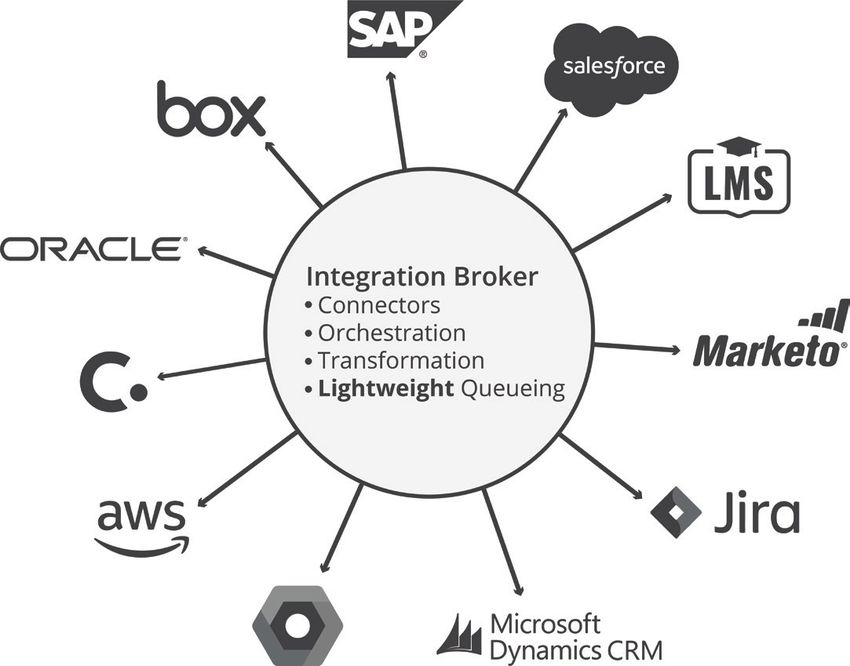
TABLE OF CONTENTS
Introduction.......................................................................................................................... 3

Six Core Integration Challenges Enterprises Need to Overcome to Achieve Digital
Transformation.................................................................................................................... 3
         1.        Enabling continuous integration of cloud-based services....................... 3
         2.        Integrating across globally-distributed data centers and LOBs............. 4
         3.        Achieving uniform connectivity and response times................................ 4
         4.        Enabling robust and secure data movement............................................. 5
         5.        Enabling event-driven applications and architectures............................. 5
         6.        Enabling citizen integrators........................................................................... 5

Enter the iPaaS....................................................................................................................... 5

Dell Boomi Overview............................................................................................................ 6

Enter the Advanced Event Broker...................................................................................... 6

Solace PubSub+ Overview................................................................................................... 7

Joint Solution: Dell Boomi + Solace PubSub+................................................................... 8

How it works.......................................................................................................................... 9

Case Study: Consumer Products Company...................................................................... 9

Conclusion............................................................................................................................. 11
Introduction Six Core Integration Challenges
Enterprises Need to Overcome to Achieve
Companies of all kinds are pursuing their unique Digital Transformation
form of digital transformation—whether through
incorporating AI, mobile computing, IoT or a hybrid For companies with fairly simple, low-volume, non-
cloud strategy. To digitally transform is to improve real-time integration requirements, a simple hub and
situational awareness and operational agility, often spoke, request/reply-based integration model like
for the sake of building deeper, more personalized this might work just fine:
relationships with customers.
These benefits don’t come easy though, and the vast
majority of business leaders who try to pursue them
report that they failed to achieve their goals. Digital
transformation drives an astronomical increase in the
number of systems and devices you need to integrate,
and the amount of information flowing between them.
Simply put, enterprises pursue such transformations
because their current architecture and infrastructure
either can’t keep up or won’t be able to at scale.
One key to success is evolving your architecture
and business processes from request/reply, point-
to-point interactions, toward enabling the free
and efficient flow of events across your distributed
enterprise. Another key success factor: consuming
integration as a service (aka Integration Platform as a
Service, or iPaaS) for enhanced flexibility, ease of use
But companies with complex IT systems that are
and cost savings.
distributed across data centers and geographies,
link a large number of applications and connected
Dell Boomi provides an industry-leading, cloud-
devices, and serve multiple lines of business, demand
native and low-code iPaaS that enables fast and easy
more sophisticated systems.
application and data integration, orchestration, and
transformation. Solace PubSub+ is an enterprise-
Here are six core challenges you’re likely to face as you
grade advanced event broker that provides a fast,
work to integrate large-scale enterprise deployments:
robust and secure data transport layer, enabling
events to move freely and easily across the distributed
enterprise, as they occur. 1. Enabling continuous integration of cloud-
based services
Together, Dell Boomi and Solace PubSub+ provide
a cloud-native, event-driven and IoT-enabled data Application sprawl and business silos are common
integration platform for large-scale enterprise roadblocks. Avoiding them means enabling the
deployments. It’s a mouthful, but every capability continuous integration of the many cloud-based
mentioned is integral to the long-term success of services and systems your business depends on to
enterprise digital transformation. connect applications, data, processes and people.
This includes marketing automation systems such
This paper will explain why and how. as Marketo and Pardot, customer relationship
management (CRM) software such as Salesforce
and HubSpot, and help desk apps such as Jira and
Zendesk.
Manually coded interfaces are not sustainable
when you’re integrating such systems, so you need
3 Event-Driven iPaaSa strategy to decouple and continuously manage First, IoT devices tend to come in bigger numbers
connections between these applications. than applications, tens of millions in many cases.
As you have more and more devices connecting to
2. Integrating across globally-distributed data your system, and as you have increasing amounts
centers and LOBs of data flowing through your system, you need a
way to give access of that data to already integrated
Every enterprise is creating new cloud services, and systems and applications, without slowing down the
many are migrating some of their legacy estate to system. Challenges like this necessitate sophisticated
the cloud. But traditional enterprise stacks are still in means of shock absorption, aggregation, routing,
place, which means many large enterprises are still filtration, fan-out.Second, IoT devices exhibit
working with a legacy enterprise service bus (ESB) and very different characteristics and behaviors than
have multiple data centers distributed around the applications, including not being on or connected all
world. How do you connect and move data across all the time, and requiring very low power/bandwidth
of that? How do you optimize for speed and reliability communications. Many dictate the use of specialized
across long-haul links? And how do you orchestrate APIs and communications protocols such as MQTT
and transform data such that multiple different and Paho, which you will need to bridge with legacy
systems receive the same master data change? APIs and protocols.
3. Achieving uniform connectivity and Advanced cloud-native services that allow modern
enterprises to tap into the power of AI and machine
response times learning will also be important integrations moving
forward, but to realize the full potential of these
As your digital transformation unfolds, the number services you’ll need to make them as accessible to
and variety of apps, systems, devices and “things” that your business as they would be if they were running
you’ll want to integrate will multiply. in your data center. How do you manage that?
Incorporating IoT into business processes and And many enterprises are deploying modern
decision/support systems is important today, and microservices for increased agility, service simplicity,
it will be essential in the very near future. But IoT service decoupling, and for the ability to react (to
integration is tricky for two reasons.
4 Event-Driven iPaaSevents) in real-time. Because they’re small and them.
single purpose, microservices are often connected
via asynchronous messaging patterns such as pub/ Sounds straightforward, right? But how do you
sub for efficient service orchestration. But many web achieve this when you’ve got applications and
apps rely on RESTful communication over HTTP. This microservices and legacy apps running in different
can make it challenging to integrate cloud-native public and private clouds and geographic regions
microservices with RESTful applications. and availability zones? What you’re trying to achieve
is to enable events to flow freely and easily between
4. Enabling robust and secure data movement producer and consumer applications located in
different environments without any producer
You may be deploying messaging technology alongside application having to know anything about any
your ESB on premises, and grown to appreciate and subscribing application.
depend on the robustness and rich data movement
capabilities of messaging middleware, capabilities like That’s a tall order.
burst-handling, fine-grained scaling, high availability,
disaster recovery, WAN optimization, guaranteed 6. Enabling citizen integrators
delivery and governance.
As the number of cloud services your company relies
As your enterprise becomes more distributed, and on to facilitate business activities climbs, you’ll need
you start thinking about moving more of your apps to enable more and more people to execute and
an infrastructure to the cloud, how do you maintain manage integrations. “Citizen integrators” is a term
and extend these capabilities beyond your on-prem you’ve probably come across in analyst briefings
environments? and presentation decks. How do you make your
integration environment accessible and user-friendly
5. Enabling event-driven applications and while everything under the hood seems to be getting
architectures more complex?
You’ve likely been hearing a lot about ‘events’ and That was not an exhaustive list of integration
event-driven architectures, and you’re probably challenges you may face in you work to transform
turning towards these concepts if not fully embracing your digital enterprise, but those are probably the
them as part of your digital transformation. If you’re most exhausting challenges to think about—the big
not, you should be; modern IT is quickly shifting rocks that are likely to keep you up at night. Thankfully,
from data-centric to event-centric architectures and this is a solution brief.
thinking.
Below we’ll outline the components of a solution to
In a piece from Gartner titled, Top 10 Strategic these challenges. It’s a solution based on the use of an
Technology Trends for 2018: Event-Driven Model, the iPaaS, an event-driven architecture, and an advanced
authors state that by 2022, event-sourced, real-time event broker.
situational awareness will be a required characteristic
for 70% of new digital business solutions, and 80%
of new business ecosystems will require support for Enter the iPaaS
event processing.
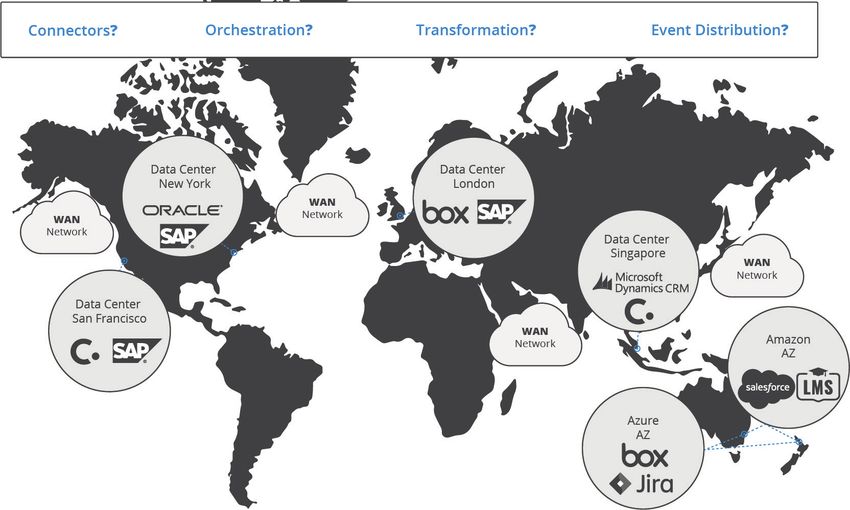
Companies of all sizes are using iPaaS solutions to
At a high level, event-driven architectures enable integrate a wide variety of on-premises and cloud-
applications and microservices in a given system to native applications, which generally encompasses the
produce, consume and react to events, ideally as they following functions:
occur. It’s an architecture enabled by the publish/
• adapters that enable connectivity via a variety
subscribe messaging pattern, and event brokers.
of open and proprietary APIs and protocols;
Producer and subscriber applications connect to the
event broker, and as producer applications generate
• transformation of payloads so systems
events they are sent to the event broker where they
can send and consume information in
are routed to applications that have subscribed to
familiar formats;
5 Event-Driven iPaaS• orchestration of processes and transactions Open
that span multiple applications; and,
An integration cloud is the core technology for
• the real-time distribution of events and connecting any and all applications and data. Implicit
information via messaging and/or streaming. in this role is that an integration cloud is open and
vendor-neutral.
Relative to on-premises-based integration solutions
such as ESBs, cloud-based integration platforms as Low-Code
a service promise improvements in speed, flexibility,
ease of use and cost savings. In many regards, low-code is perhaps the essential
capability of a modern integration cloud. There are
Concerning the challenges laid out above, a modern certainly other options out there—tons of old legacy
iPaaS will be equipped to help you solve (1) continuous ESBs and new ESBs such MuleSoft. The difference
integration of cloud-based services, some of (3) between them and Boomi, from what our shared
achieving uniform connectivity and (6) enabling citizen customers tell us, is speed.
integrators.
This is the core requirement of today’s digital
But finding the right integration partner can prove businesses. If you can’t move fast, you will fail.
challenging. Many legacy vendors offer cloud-washed
options—claiming full cloud capabilities while still Unified
using on-premises software that cannot deliver the
full benefits of a true cloud platform. Core integration (connecting applications to other
applications) is where it all starts for the Boomi
To unlock the full potential of cloud-based integration, Integration Cloud. But merely connecting siloed cloud
an iPaaS solution must be cloud-native, open, low- or on-prem data isn’t enough; you need to manage
code and provide a unified platform of capabilities your data quality and synchronization among
that address the full scope of integration challenges applications.
facing today’s digital businesses. Dell Boomi provides
such a platform. So Boomi developed their Master Data Hub to
ensure the “golden record” of information across
the enterprise. And they added API design and
Dell Boomi Overview management along with B2B management capabilities
to help their customers provide rapid access to
Dell Boomi (Boomi), an independent business unit of data for employees and partners. More recently,
Dell, is the leading provider of a unified platform to they’ve created Boomi Flow to bring people into the
build The Connected Business, from cloud integration integration equation and complete the full end-to-
to workflow automation. In 2008, Boomi pioneered end workflow.
the integration cloud market, and for more than a
decade the Boomi Integration Cloud has played a Boomi helps organizations accelerate business
critical role in helping businesses make the most of agility by connecting data, applications
their cloud transformation journey. and people to run faster and smarter.
Visit boomi.com for more information.
Boomi Integration, the industry-leading platform
as a service (iPaaS) provides a cloud-native, high
productivity integration solution that cost-effectively Enter the Advanced Event Broker
supports all your application data integration needs,
across your hybrid IT landscape. Event brokers are the modern version of messaging
middleware. To some extent, your enterprise likely
Cloud-Native still utilizes a legacy ESB on-prem to manage data
integration, orchestration and transformation. That
Boomi’s true cloud-native platform is built on a multi- ESB (IBM WebSphere, TIBCO, etc.) is probably paired
tenant, distributed architecture. This is how you with a robust messaging layer (IBM MQ, TIBCO EMS,
deliver the full benefits of the cloud. etc.) that supports a variety of messaging patterns
such as queuing and publish/subscribe.
6 Event-Driven iPaaSBut legacy messaging technology is not geared to Open
support the variety of events produced by modern
cloud applications, cloud services, and the internet of PubSub+ supports multiple open protocols and APIs,
things, nor is the technology cloud-native. It can also including AMQP, MQTT, JMS and WebSocket in addition
be exorbitantly expensive and utilize proprietary APIs, to REST/HTTP, providing enterprises with unparalleled
both of which contribute to vendor lock-in. integration flexibility as their digital transformation
unfolds, and helping them avoid vendor and
Event brokers are purposely designed to deal with technology lock-in. With its single technology core and
event-driven applications and architectures. At the multi-protocol edge, PubSub+ supports uniform and
most basic level, event brokers support publish/ easy connectivity for applications written in different
subscribe messaging. Advanced event brokers are languages and using different protocols.
designed to support event-driven applications and
architectures in complex and distributed systems, Deploy anywhere, manage in the cloud
with the same or better performance enterprises are
used to experiencing from their on-premises-based PubSub+ can be run natively in public clouds (AWS,
messaging technology. GCP, Azure), private clouds (Pivotal Cloud Foundry,
Red Hat OpenShift) and in your data center, as
Regarding the integration challenges outlined above, software, as a service or as an appliance. PubSub+
a sophisticated event broker can help you solve for (2) can be life-cycle managed, provisioned, monitored
integrating across globally-distributed data centers and upgraded from a single pane of glass in the cloud.
and LOBs, (3) achieving uniform connectivity and
response times, (4) enabling robust and secure data Enterprise-grade
movement and (5) enabling event-driven applications
and architectures. PubSub+ provides enterprise-grade speed,
robustness, reliability and security. Core features
But, as suggested by the basic/advanced event and capabilities include low latency, high availability,
broker distinction above, not all event brokers are fault tolerance, governance, security, scalability, WAN
created equal. optimization, burst-handling, filtering and replay.
To help you overcome the integration challenges Solace helps power the event-driven enterprise by
listed above, you’ll want an advanced event broker enabling the free and easy flow of events across
that supports a variety of open protocols and APIs, every environment and component of the digital
can be deployed in all your environments (on-prem enterprise. Learn more at solace.com.
and in the clouds), and that provides enterprise-grade
speed, reliability and security. Solace PubSub+ is such
an event broker. Joint Solution: Dell Boomi + Solace
PubSub+
Solace PubSub+ Overview Together, Dell Boomi and Solace PubSub+ provide
the enterprise-grade, event-driven and IoT-enabled
Solace PubSub+ is an advanced event broker, with iPaaS your enterprise needs to realize its best
industry leading technology that has been tried and digital transformation.
tested by global enterprises facing some of the most
challenging and mission-critical data movement use To summarize the synergies between the two
cases in the world. Solace technology is in nine of technologies, Dell Boomi is a cloud-native iPaaS that
the top 12 global investment banks. It’s trusted by simplifies front-end data integration, orchestration
top American and Indian Telco’s. It’s used by global and transformation, and Solace PubSub+ is an
automakers for connected car initiatives, and it advanced event broker that enables the intelligent
supports smart cities and air traffic management distribution of event notifications (and other
around the world. information) between applications and devices across
diverse environments.
PubSub+ is an advanced event broker that
meets the diverse needs of enterprise, IoT
and mobile applications across hybrid and
multi-cloud environments.
7 Event-Driven iPaaS“ESBs, iPaaS’s, IoT and event-driven IT are all converging, - WAN optimization
and enterprises are transforming to enable and
respond to this convergence, with hybrid and multi- - Burst-handling
cloud architectures. Boomi and Solace are the perfect
journey partners for these transformations, combining - Fan-in and fan-out
to provide the world’s first cloud native, event-driven and
enterprise-grade integration platform.” - Asynchronous and synchronous data flow
-Denis King, Chief Operating Officer, Solace
- Store and forward
Together, Boomi and PubSub+ provide for: • A consistent application experience across
the enterprise
• Cloud-native modernization of legacy ESB with
a cloud-native approach In a multi-ESB/API Gateway deployment, PubSub+
serves as the standards-based messaging layer
With Boomi and PubSub+, enterprises have all the that connects ESBs, API Gateways and App Servers
technological features and capabilities they need without any bridges.
to cap their legacy estate, and grow their cloud
native estate. Boomi provides the cloud-native • Future-proofing for IoT, mobile, ML streaming
platform for integration, orchestration and data and hybrid connectivity
transformation, and PubSub+ provides a cloud-
Together, Boomi and PubSub+ provide a scalable
native and enterprise-grade platform for event
solution for all your IoT integration needs. Boomi
distribution across the distributed enterprise.
provides all the APIs and integrations you need to
Both technologies run in any cloud and on premise, connect assets to your infrastructure. PubSub+
and because they support any protocol/application supports popular protocols such as MQTT, AMQP,
connector, you can run your applications wherever JMS, REST and WebSocket, along with diverse
you need to, and not worry about how they will message exchange patterns such as pub/sub,
communicate with applications throughout your queuing, request/reply and streaming, so you
distributed enterprise. can connect and move data between anything,
however you’d like.
“With Dell Boomi’s market leading iPaaS and Solace’s
PubSub+ Event Mesh enterprises can create the escape Both Boomi and Solace are constantly investing in
velocity needed to leave behind legacy ESBs and deliver new integration and data movement capabilities,
on innovation.“ including support for new standard protocols
and APIs, so you don’t have to. As new patterns,
-John DiStasio, Sr Director, Global Technologies, Dell Boomi
protocols and applications emerge, they can
be quickly and easily connected to the agile
• Enterprise-grade data integration and event infrastructure you’ve created with Boomi and
distribution PubSub+.
With PubSub+ as the data movement backbone for • Performance, scale and simplicity that is
Boomi Integration, enterprises receive enterprise- second to none
grade performance, robustness and security, with
No alternative solution can match the performance
support for:
(data movement speed, reliability and security),
- Low latency scalability and simplicity of the joint PubSub+
and Boomi offering. In addition to providing
- High availability the enterprise grade data movement features
outlined above, PubSub+ event brokers can be
- Disaster recovery easily and automatically scaled (horizontally and
vertically) in any environment to meet any data
- Elastic scalability movement demand.
- Guaranteed delivery
8 Event-Driven iPaaSHow it works Option B (Any business)
Option A (Enterprises) In both cases, Boomi Atoms serve as intelligent
endpoints, providing data integration services like
You can deploy Solace PubSub+ event brokers into content transformation, content-based routing and
each of your environments, on-prem and in the application connectivity (on-prem, custom cloud apps,
cloud, and then connect them to create an event and SaaS). And Boomi, of course, communicates with
mesh that will intelligently, automatically and securely Solace using any number of protocols, including JMS,
transmit events between producer and subscriber Java, REST and MQTT.
applications, wherever they exist on the mesh.
Applications, services and systems connect to their
nearest Solace PubSub+ event broker, where they Case Study: Consumer Products Company
publish and subscribe to events. The event mesh will
One of the world’s leading consumer products
then broadcast events as they are produced (by any
companies wanted to reduce costs and improve
application in the system) to any and all applications
corporate agility by consolidating over 60 data
that subscribe to them via a topic subscription.
centers around the world into just 15 by migrating
applications and workloads to the cloud.
With this architecture, WAN network hops are
spanned from PubSub+ instance to PubSub+ They have relied on TIBCO BusinessWorks as an
instance using Solace’s proprietary SMF wireline on-premises enterprise service bus to integrate
protocol and WAN-optimized TCP stack, ensuring applications, and TIBCO Enterprise Message Service
optimal network utilization. Publisher and subscriber for routing, transportation and persistence of
clients can connect to the mesh using the protocol information between a powerful SAP ERP system and
and API of their choice, including open standards a plethora of supporting 3rd party applications.
such as JMS, MQTT, AMQP, or REST.
9 Event-Driven iPaaSTo meet their goal of migrating workloads from long and less consistent round-trip times,
data centers to the cloud, the company selected less predictable availability, and the need to
Dell Boomi to provide integration capabilities such minimize and optimize bandwidth.
as routing, transformation, orchestration and error
handling, all of which Boomi provides for both on- Using the combination of Dell Boomi and Solace
premises and cloud-native systems. From there the PubSub+, the company was able to synchronize a
company needed a way to connect the different Master Data Management (MDM) system across two
service endpoints that would exist in their new public clouds (AWS and Azure) and an on-premises
architecture. Generally speaking, they needed to system of record as diagrammed below.
overcome many of the challenges described above:
Given this architecture and associated operational
• They needed to establish extremely reliable requirements, they needed the SAP MDM system
real-time event-driven communications to be able to distribute data to downstream SaaS
between systems running in a variety of applications. And as more and more applications were
cloud and on-premises environments, being spun up in the cloud, they needed the ability to
commonly called hybrid cloud and multi-cloud easily fan-out data to many new destinations.
architecture. Complicating this hybrid cloud
connectivity was the reality that the number of They utilized an event-driven architecture and the
producers of data is unknown and constantly publish/subscribe exchange pattern to decouple
changing, as is the number of consumers of senders and receivers, allowing for the rapid
data, which can include cloud and on-prem subscription-based addition of new destinations.
destinations like AWS S3, Hadoop, Postgres
and SAP. The consumer products company needed to give
applications and devices the ability to send and
• They needed to integrate legacy applications receive messages using JMS and REST, both of which
with IoT devices and microservices, and do so are supported by Solace PubSub+. And because the
in a way that enabled gradual migration both company plans to use this same infrastructure as the
from their data center to the cloud, and from foundation of an IoT platform, they needed support
batch-based to event-driven. for MQTT too, which PubSub+ also supports.
• They needed to ensure rapid, reliable,
guaranteed delivery over very long distances
(the Internet and private WANs), factoring for
10 Event-Driven iPaaSFor the company, data is acquired from sensors Conclusion
on factory floors collecting information such as
temperature and running time. From there it’s sent As made clear by the example above, pursuing a digital
to AWS for analytics/analysis and then sent back transformation can both solve immediate challenges
for action to be taken. Thanks to the event-driven and allow enterprise leaders to cast their gaze toward
architecture Solace PubSub+ enables, devices only the future.
need to publish data to a local Solace node. From
there, AWS analytics can consume it locally in the This shift in mindset is what Gartner Research Fellow
cloud either via subscriptions or a RESTful push. Yefim Natis refers to as “event thinking,” and it’s
critical for enabling modern data integration and data
The company is now looking to build a global event movement across distributed enterprises.
mesh on this same infrastructure so they can publish
in one region and fan-out to all the others. Dell Boomi pioneered the integration cloud market and
remains at the forefront of the iPaaS industry. Solace
This could very well be a many-to-many data exchange, pioneered mission critical messaging for the most
made easy with Boomi providing integration and demanding use cases in the world, and it now leads
application services and Solace ensuring the the market for cloud native messaging technology.
real-time guaranteed delivery. Both companies have been “event thinking” decades
before the term came into existence, and they are
While a current Managed File Transfer solution can committed to providing a joint solution that fuses the
provide the data movement, it does not offer the best of their capabilities.
granularity, self-routing, protocol independence of
Solace/Boomi implementation. Bidirectional data The days of lock-in are over. The event-driven future
delivery, which Solace PubSub+ natively supports, demands openness and collaboration among iPaaS
would need to be coded into MFT-style solutions. and advanced event broker vendors. Dell Boomi and
Solace PubSub+ are leading the way. You can too.
11 Event-Driven iPaaSYou can also read


