FACILITY MANAGEMENT PLAN - Whakapapa Ski Area 2018
←
→
Page content transcription
If your browser does not render page correctly, please read the page content below
Whakapapa Ski Area

FACILITY MANAGEMENT PLAN
          2018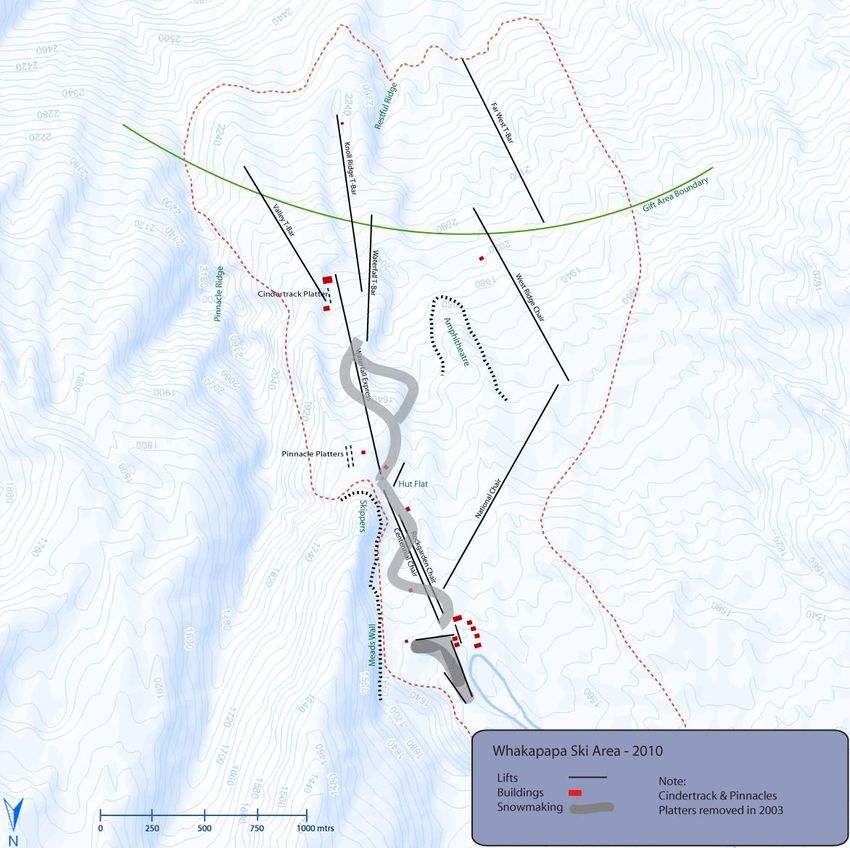
Whakapapa Ski Area
                                                     FACILITY MANAGEMENT PLAN
                                                                  March 2018

                                                                                                        Page No
1.         Introduction                                                                                      2
2.         Summary                                                                                           6
3.         Proposed Facility Upgrades            -        Lifts                                             10
4.                                               -        Snow Management and Terrain Modifications         11
5.                                               -        Chalets                                           13
6.                                               -        Car Parks                                         15
7.                                               -        Base Area Plaza                                   16
8.                                               -        Other On-Mountain Services                        17
9.                                               -        Maintenance and Operational Requirements          17
10.        Design Carrying Capacity                                                                         18
11.        Priority of Developments                                                                         19
12.        Assessment of Effects                                                                            19

Appendices
1.         Oblique Photograph                                         Current Facilities at June 2017       22
2.         Map to scale                                               Current Facilities at June 2017       23
3.         Lift Specifications & Design Carrying Capacity             Current Facilities at June 2017       24

 Whakapapa Facility Management Plan March 2018                           1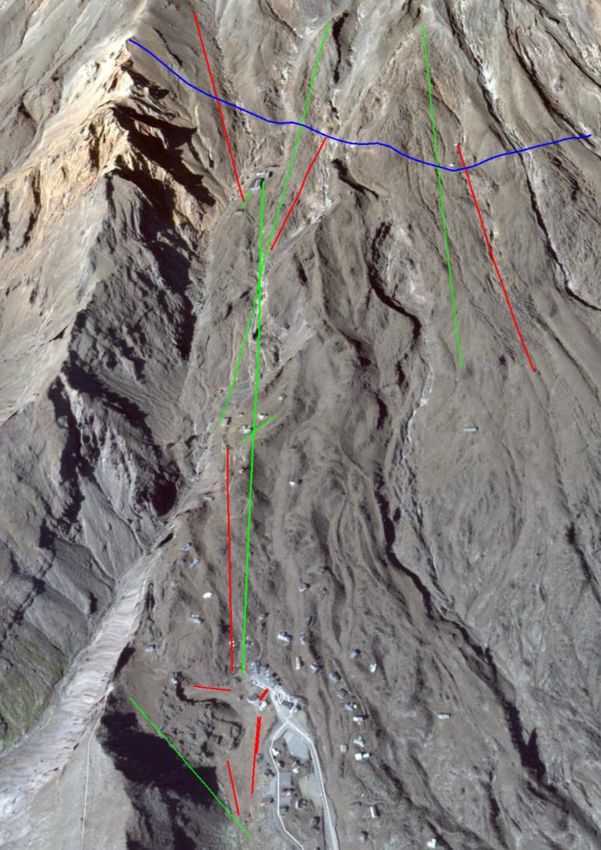
1.           INTRODUCTION

1.1        Ruapehu Alpine Lifts Ltd
           Ruapehu Alpine Lifts Ltd (RAL) was incorporated in 1953 with its primary purpose being the promotion of skiing and other
           sport on Mt Ruapehu and the provision of amenities for the sport and recreational users of the mountain. The company is
           structured such that all income is used for this purpose and no return of profits is available for shareholders.

           The company has operated Whakapapa Ski Area since 1953, and operated Turoa Ski Area since 2000.

           Key Strategies
           (i) Operate over 12 months of each year
               Ski areas are commercial operations that require investment in large capital assets which predominantly only operate for
               4 -5 months of each year and then sit idle for the balance of a year. Over recent years the cost of developing and
               operating these assets has increased significantly. This requirement for relatively higher investment in asset replacement
               has been combined with increasing customer expectations on quality of service and a changing regulatory environment
               which have both increased annual operating costs.

               To remain commercially viable RAL will pursue strategies that will offer recreational experiences throughout longer
               periods of each year and therefore increase the utilisation of those assets.

               An example of implementing this strategy is the proposed Gondola which is a a key upgrade investment that will offer, to
               domestic and international visitors, the opportunity to enjoy the alpine terrain of Mt Ruapehu through 12 months of each
               year and provide consequential viable full year utilisation of many other on mountain assets eg access road, car parks,
               Top O Bruce base area building and Knoll Ridge Chalet. This will also provide economic benefit to surrounding
               communities where there are many other businesses and assets which are currently only utilised for the winter months of
               each year.

           (ii) Improve quality of the experience
               Both ski areas on Mt Ruapehu have traditionally catered primarily for a domestic market, with busy days only occurring
               during weekends and the July School holidays. To achieve growth in the use of the ski area RAL has a strategy of
               improving the experience and service offered such that Mt Ruapehu will be a more attractive destination for international
               visitors, especially from Australia, and a more attractive destination to the domestic market for those New Zealanders
               taking a winter holiday break outside of weekends and the July school holiday period.

               This strategy is targeted at increasing the visitor numbers during current quieter days, not at providing for any increase in
               current busy day numbers.

1.2        Tongariro National Park
           Whakapapa Ski Area is located on the northern slopes of Mt Ruapehu and within Tongariro National Park. The Park is
           administered by Department of Conservation under the National Parks Act 1980.

1.3        Tangata Whenua
           Tongariro National Park, and in particular the three mountains of Ruapehu, Ngauruhoe and Tongariro, include land of special
           significance to local Iwi. Land north of the summit of Mt Ruapehu includes traditional lands of the Ngati Tuwharetoa Iwi and
           the hapu of Ngati Hikairo. The nucleus of Tongariro National Park is the three mountain peaks. In 1887 the land title of the
           three peaks was transferred to the people of New Zealand by Horonuku Te Heu Heu Tukino; the then Paramount Chief of the
           Ngati Tuwharetoa people, in the form of a tuku. This Tuku (Gift) this Tuku was intended to bring the Queen into a partnership
           in order to protect the sacred peaks. It was treated as if it were an unconditional gift and then used as the basis for gazetting

     Whakapapa Facility Management Plan March 2018                       2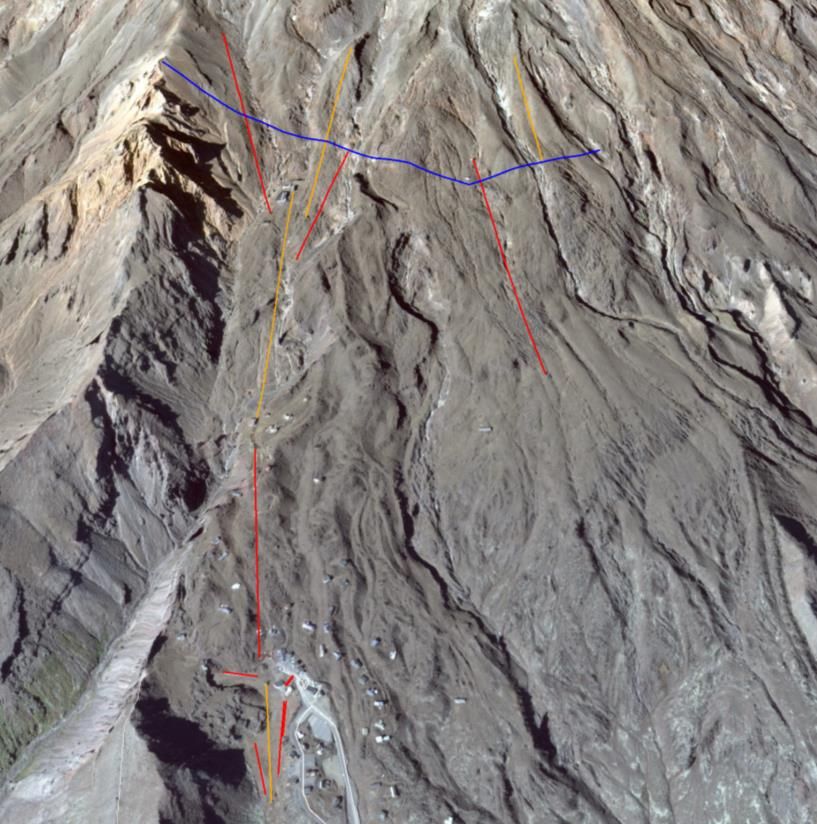
the area as a National Park. Since the time of this sacred Tuku people have come to the National Park, and the ski area in
particular, to "use" the area for recreation.
The upper slopes of Whakapapa Ski Area, including much of the available intermediate and advanced skiing terrain, is
located within the area of the Tuku.
There are a number of other Iwi who have a traditional and close association with Mount Ruapehu.
The Crown is now negotiating a Treaty of Waitangi Claim over the lands of Tongariro National Park with a Kahui Maunga
grouping of Iwi comprising:
Ngati Tuwharetoa and in particular the hapu of Ngati Hikairo,
Ngati Rangi,
Ngati Uenuku, and
Ngati Haua.
It is expected this claim will be settled in the next two to five years. In the interim RAL will continue to consult with all Iwi and
endeavour to develop and maintain meaningful, open and effective relationships.
In recent years there have been many changes implemented to ski area operations and facility upgrades, both proposed and
implemented, which are intended to mitigate any adverse cultural effects.
1.4 World Heritage Status
Tongariro National Park was inscribed on the World Heritage list in 1990 for its outstanding natural values and then again in
1993 for its outstanding cultural values. The national park therefore has dual World Heritage status. RAL fully supported the
applications for World Heritage listing under both criteria. RAL consider that Mount Ruapehu is a unique and diverse
volcanic landscape and has particular cultural and religious significance for Maori people. The mountains of Tongariro
National Park are symbolic of the spiritual links between the community and its environment.
The national park was granted World Heritage status under both World Heritage criteria at a time when the Whakapapa and
Turoa ski areas were well established on the slopes of Mt Ruapehu.
The 1990 International Union for Conservation of Nature (IUCN) report, which recommended listing the national park for its
outstanding natural values, outlined concerns resulting from a 1987 field visit regarding:
“The extent of the ski development on Mt Ruapehu, the current plans for expansion and the impact of these
developments on cultural values and ‘image’ of the park. This is compounded by new proposals for slope grooming and
snowmaking which would have substantial impacts on scenic values and stream hydrology. It has been suggested that
the ski fields of Tongariro would be very susceptible to effects of global warming which would require an upward
movement of skiing activity.
This IUCN report concluded that:
“In the preparation of the new management plan for the park, both these issues have been resolved in the manner that
protects the natural values of the park and enhances the cultural and spiritual values associated with the Maori
people. Ski field development is constrained within specific zones which have detailed plans and measures to place limits
on their expansion and operation.”
The 1993 report which recommended the national park also be inscribed for its outstanding cultural values does not include
any reference to ski area issues.
A later IUCN report in 2002 indicates that the original attributes which led to inscription of the national park for both natural
and cultural values are now stronger and the earlier issues of concern, particularly those that related to recreational use,
Whakapapa Facility Management Plan March 2018 3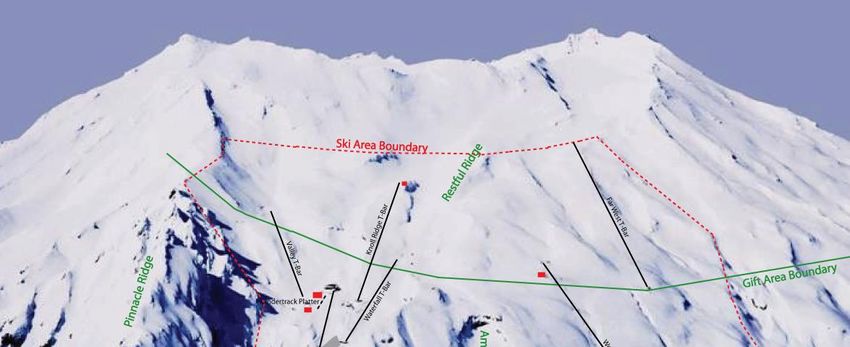
have significantly diminished. This 2002 report makes specific reference to the Whakapapa sewage scheme of which RAL
       was a significant promoter and funder. RAL agreed and committed some years ago to the principal that the natural and
       cultural values of Ruapehu can only be sustained if the treatment and disposal of all human waste is undertaken away from
       the slopes of the mountain. This principal is now 100% met at both Whakapapa and Turoa Ski Areas.

       Since 1990 RAL has not promoted any increase in the current designated ski area boundaries, including the upper
       boundary. RAL’s strategic planning and investment since then has been based around use of snow making and other snow
       management practises that will ensure a full winter snow season will continue to be available and will provide for skiing and
       snowboarding within the existing ski area boundaries, even under the current worst case climate change predictions, for the
       next 60 to 100 years.

1.5    License
       RAL has the right to operate Whakapapa Ski Area under a license issued by Department of Conservation; refer Concession
       Number 40011-SKI. The current license was issued in December 2015 with an initial term of 30 years plus the right to earn
       six 5 year extensions.

       The Concession Activity provided for in this Licence is defined in Schedule 3 Clause 1:
           Concession Activity
           ‘1.1        The Concession Activity is defined as alpine tourism and recreation activities and any other business or trade
                       or service and infrastructure on or utilising the Land that may from time to time be undertaken in similar
                       operations (both in New Zealand and abroad) to that undertaken by the Concessionaire on the Land.

                       In order to enable the Concessionaire to undertake the Concession activity the Concessionaire is
                       permitted:
                       (a)          To erect, maintain, replace and operate the lifts, tows and facilities for a maximum carrying capacity
                                    of 5500 skiers per day on the Land for the use of the public. To sell or hire all goods and services
                                    and any other activities (including commercial activities) normally available at a skifield (including for
                                    example the sale of food and beverages, the sale or provision of medical services or supplies).
                       (b)          To carry out such trade, businesses, occupations or activities which are in accordance with the
                                    operative Management Plan and to which the Grantor has given its consent, or to provide such
                                    services as the concessionaire requires in order to carry out or benefit from such trade, businesses,
                                    occupations or activities.
                       (c)          To provide ski instruction for members of the public on the Land
                       (d)          To provide, maintain, develop and operate carparking facilities for members of the public, whether
                                    customers of the Concessionaire or not, and to regulate traffic movement in the areas designated for
                                    carparking, including as reasonably required by the Grantor.

       Relationship Agreement
       RAL and Ngati Tuwharetoa have entered into a Relationship Agreement in which both agree:
           (a)         To base their future relationship on shared principles;
           (b)         To establish Te Pae Maunga to provide a joint approach respecting the intention of the tuku; and
           (c)         The purpose and functiuons of Te Pae Maunga

       RAL’s adherence to the functions of Te Pae Maunga will be a principal factor on whether each of the 5 year extensions,
       provided for in the licence, are granted.

 Whakapapa Facility Management Plan March 2018                           4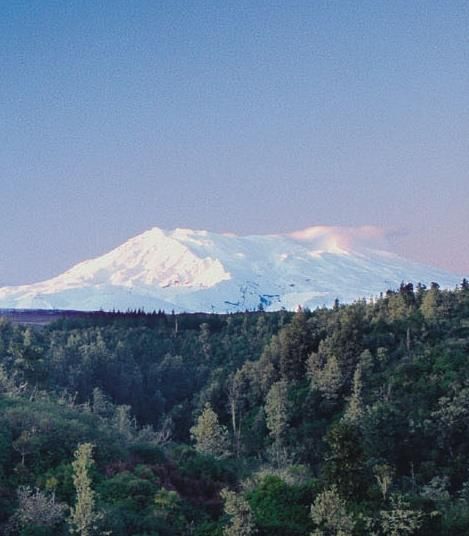
1.6 Tongariro National Park Management Plan
The Tongariro National Park Management Plan requires a ski area concessionaire to prepare and maintain indicative
development plans which provide for the operation of ski areas for approximately ten years.
5.2.2 Indicative Development Plans for Ski Areas
Nga Mahere Whakawhanake kua Waitohutia
Objectives
a. To require preparation and maintenance of indicative development plans which provide for the operation of ski
areas for approximately ten years and enable efficient consideration of applications made to the department for
development works.
b. To meet the needs of skiers through the appropriate provision of ski area infrastructure and services.
Policies
1 The indicative development plan will be consistent with the provisions of this plan.
2 An indicative development plan should contain:
infrastructure development proposed for the following 10-year period;
prioritisation of developments proposed on a one, two and three priority basis;
indication of local use and the scale of services to be included;
a broad assessment of the effects of the activities proposed;
an assessment of the effects of the proposals on skiers;
an assessment of the effects of the proposals beyond the ski area boundaries; and
an assessment of the broader context and constraints to ski area development - for example, car parking.
3 An indicative development plan will be current at all times and will be reviewed at least three-yearly in
consultation with the department.
4 Any major works will conform to a current indicative development plan.
5 Major works should not approved unless they are identified as priority one in the current indicative development
plan.
6 Where they are not related to installation or maintenance and could practically be carried out elsewhere,
construction and engineering activities for ski area infrastructure should be undertaken outside the park.
7 Ski area concessionaires will demonstrate that they have actively provided for snow playing activities within ski
area boundaries, to minimise conflict with traditional skiing activities. The ski area concessionaire may impose
reasonable charges for the provision of infrastructure and services which support snow playing activities.
8 The department may require experts from a variety of disciplines to assess the merits of a proposal contained in
the indicative development plan prior to sign-off. This expertise will be sought at the conservator's discretion
and at the cost of the concessionaire.
9 At the completion of a review of the indicative development plan the conservator will identify any elements
which are inconsistent with this plan. A report to this effect will be submitted to the concessionaire. This report
will be made available to the Tongariro/Taupo Conservation Board and the general public for their information.
This Facility Management Plan has been prepared to outline those facility upgrade changes RAL would currently like to
implement at Whakapapa Ski Area during the period through to 2027; and meets the requirement of the Management Plan to
provide indicative development planning. This version of the document includes minor updates to the previous document
prepared in November 2017 to incorporate strategy changes since then and the feedback of DOC staff Bhrent Guy and Herwi
Scheltus following our presentation of the Draft Facility Management Plan (aka Indiciative Development Plan) at a meeting at
the DOC Taupo office on 21 February 2018. The November 2017 version was a major revision from the prior version dated
September 2011.
RAL emphasises this is an indicative plan. Prior to each stage of facility upgrade being implemented it must be accepted that
the effects of previous upgrades, along with other planning concepts incorporated within this document, will be further
Whakapapa Facility Management Plan March 2018 5considered. The plan must be flexible and continuously under review. Proposed facilities have been outlined as to use and
location. No architectural or engineering details are included.
No upgrade proposed is in conflict with the objectives and policies outlined in the Tongariro National Park Management Plan
2006 – 2016, in particular Part V Ski Areas.
1.7 Ruapehu Disctrict Scheme & Resource Management Act.
The activities and developments proposed within this Indicative Development Plan are subject to Ruapehu District Scheme
and the consent processes required under the Resource Management Act.
2. SUMMARY
2.1 Facilities in the Tuku area
There is currently one Chairlift, three T Bar lifts and two small buildings which are partially or totally located within the Tuku
area, including West Ridge Quad, Valley T Bar, Knoll Ridge T Bar, Far West T Bar, Halliday Hut and West Ridge Kiosk.
The Waterfall T Bar, which did extend into the Tuku, was removed in early 2017 and the new Delta Chairlift, which replaced
the Waterfall T Bar, does not extend into the Tuku area.
Figure 1: Existing infrastructure within the Tuku Area (note as of June 2017, Waterfall T-Bar is no longer inside the Tuku Area)
RAL proposes that the two buildings will be removed and the number of lifts which extend into the Tuku area will reduce to
three, including Knoll Ridge Express, Cornice Bowl Express and West Ridge Quad. The Valley T-Bar is under engineering
review to determine whether it would be practical to reduce the length of the lift to take it outside of the Tuku area. It remains
an important lift for ski racing in particular.
This proposed lift configuration will also have the effect of concentrating lift facilities which extend into the Tuku area to a
corridor extending through the central portion of terrain within the wider ski area boundary.
This reduction in the number of lifts which extend on to these upper slopes of the ski area is an acknowledgment of the
sacred nature of the Tuku, and is intended to mitigate as far as is practicable the adverse cultural effects of ski area operation
and development.
2.2 Facility Upgrades
Whakapapa Facility Management Plan March 2018 6The major changes in facilities proposed through this planning period include:
Lifts
o Priority 1:
o 10 Passenger Gondola – connecting Top O Bruce with Knoll Ridge Chalet, and while
significantly enhancing the quality and reliability of the ski experience, it is also ideally suited
to grow the visitor and snowplay market over 12 months of each year. The Gondola will
necessitate removal of the Waterfall Express.
o Knoll Ridge Express – will replace the Waterfall Express & Knoll Ridge T Bars.
o Priority 2:
o Meads Wall Quad Chairlift – will link Happy Valley with Meads Wall providing for an
improved and safer experience for beginner skiers.
o Priority 3:
o Cornice Bowl Express – will replace the Far West T Bar and will be on a new line to the east.
This upgrade has significant safety advantages as the new line will be away from one on the
main lahar paths.
Chalet Buildings
Total seating at Chalet facilities will increase from 1,030 seats to 1,380 seats. New chalet facilities will be
developed at:
o Top O’ Bruce Plaza
o Western Chalet – which will allow for removal of the West Ridge Kiosk
Snowmaking
Snowmaking reticulation will be extended to cover trails on Knoll Ridge below 2,000m, Yankee slopes and
West Ridge trails.
Top O' Bruce Plaza
There will be redevelopment of the Top O’ Bruce Plaza to provide enhanced facilities and services and to allow
for more effective and safer pedestrian movement through this entry portal. 5-6 existing buildings will be
demolished and replaced with one larger facility and parking building.
2.3 Design Carrying Capacity - Number of Persons on a Day
RAL’s strategies with regard to facility upgrades at the ski area are targeted at increasing the quality of experience and to
better meeting customer’s ever increasing expectations, rather than targeted at providing for any material increase in the
daily number of skiers which the ski area will provide for.
The upgraded facilities proposed do not provide for any increase in skiers, but do provide for an increase in visitors &
snowplayers from 450 to 1,350. Visitors and snowplayers have a far smaller footprint on the mountain than skiers do and
their use of the place is concentrated on relatively small areas of terrain around the road end or in the immediate vicinity of
Knoll Ridge Chalet. Carparking capacity is sufficient to meet this changing use pattern.
Whakapapa Facility Management Plan March 2018 7Proposed Facility Upgrades
3. LIFTS
Figure 2: Existing lift infrastructure. Red = to remain, Orange = to be removed, Blue = Approx Tuku Area
Lift Altitude Vertical Length vtm/hr
Stage 2 - 2027 Upgraded Facilities Capacity Base Top
(pph) (masl) (masl) (m) (m) (000's)
Happy Valley
Elevators x2 1,500 1,605 1,625 20 30
Happy Valley #1 Carpet Lift 1,200 7 130 8
Happy Valley #2 Carpet Lift 1,200 25 130 30
Happy Valley #3 Carpet Lift 1,200 25 125 30
Happy Valley #4 Carpet Lift (sled) 1,000 10 50 10
Meads Wall Quad Chairlift 1,800 1,600 1,660 60 350 108
HAPPY VALLEY 7,900 216
Lower Mountain
Rangatira Express Quad 2,800 1,625 1,762 137 740 384
Hut Flat Carpet Lift (sled) 1,200 1,762 1,800 38 150 46
Upper Mountain
Gondola Gondola 2,400 1,625 2,015 390 1,840 936
Knoll Sledding Carpet Lift 1,200 1,970 2,000 30 140 36
Delta Quad Chairlift 1,600 1,940 2,040 100 500 160
Knoll Ridge Express 6 seat 3,500 1,762 2,247 485 1,860 1,698
West Ridge Quad Chairlift 1,740 1,820 2,075 255 993 444
Cornice Bowl Express 6 seat 3,000 1,900 2,300 400 1,500 1,200
UPPER MOUNTAIN 17,440 4,902
ALL MOUNTAIN 25,340 5,119
Note: vtm/hr vertical transport metres per hour
Whakapapa Facility Management Plan March 2018 83.1 Major Lift Upgrades
Major lift developments will include:
Priority 1: Whakapapa Gondola – replacing the National chairlift which was removed in 2015-17.
This is a new style of lift for Ruapehu which as well as providing an enhanced experience for skiers, will attract the
domestic and international visitors who wish to sightsee and snowplay in the alpine region throughout 12 months of
each year. The bottom terminal wll be attached to the new Top O Bruce Base building with the top terminal being an
extension on the west elevation of Knoll Ridge Chalet. The lift has 10 passenger cabins with a modest upper
terminal building and a larger lower terminal building which houses the cabins at night.
Prioirty 1: Knoll Ridge Express – a 6 seat express lift to replace the Waterfall Express & Knoll Ridge T Bars.
Follows the same line as previous lifts up Knoll Ridge but with a bottom terminal replacing the existing bottom
terminal of the Waterfall Express.
Priority 3: Cornice Bowl Express – a 6 seat express chairlift to replace the Far West T Bar. This will be on a line to
the east of the T Bar which will remove the lift, and associated queueing area, away from the current close proximity
to a principal lahar path.
3.2 Minor Lift Upgrades
Happy Valley
Happy Valley currently is serviced by the Double Happy chairlift and three carpet lifts for skiers plus one carpet lift
servicing the tobogganing zone. Access into Happy Valley, from Top O Bruce Plaza, is provided by two vertical shaft
elevators.
The Double Happy chairlift will be replaced by a quad chairlft extending from below the existing Double Happy load area
up onto Meads Wall. This will link Meads Wall with Happy Valley and increase the skiable terrain on this overall
beginners area by 30% reducing congestion and improving the learning environment for beginner skiers.
An additional one or two carpet lifts will be located at Hut Flat on the alignment of the previously removed rope tow to
facilitate sledding, snow play and/or beginner skiing.
Knoll Ridge Snow Play
A snow play zone will be established in the vicinity of Knoll Ridge Chalet which will offer tobogganing, snow fun and, for
some periods on the year, beginner ski and snow board experiences. A carpet lift will be installed to service the
tobogganing lanes.
Whakapapa Facility Management Plan March 2018 9Figure 3: Future Lift Infrastructure: Green = New Lifts, Red = Existing to be retained, Blue = Approx Tuku Area
Proposed Facility Upgrades
4. SNOW MANAGEMENT & TERRAIN MODIFICATIONS
There are many trails where the safety and ease of movement by skiers and boarders can be significantly enhanced through
any or all of:
the provision of additional snowmaking capacity,
management techniques to more effectively catch and use natural snow falls, and/or;
selective modification to the natural terrain.
All snow management options will be explored prior to any terrain modifications being considered. If necessary terrain
modifications will be evaluated in light of skier and boarder traffic flows, safety and the company’s growing knowledge and
expertise in snow management and developing new techniques of terrain modification and restoration which are
“conservation friendly”.
SNOW MANAGEMENT
This section is expected to cover all activities of snow management including snowmaking, snow grooming, and snow
fencing.
Whakapapa Facility Management Plan March 2018 104.1 Snow Making
Current
The existing snow making system provides a water resource and reticulation system which enables coverage on Happy
Valley, Meads Wall, Rockgarden, Tennants Valley, Hut Flat, Staircase, Waterfall and Delta Quad trails to an altitude of
2,050m at the top of the Delta Quad. The water resource is from a 25,000cum reservoir located at the bottom of Happy
Valley with replenishment of water to this reservoir being from a spring located a further 2km downstream in the Waipuna
Valley. Pumping stations are located at the reservoir and at Hut Flat.
Proposed
Extensions to the reticulation system are proposed which will provide snowmaking capacity on the following terrain:
o Knoll Ridge Express trails to 2,100m
o Yankee Face
o West Ridge Quad trails
o Increased use of passive snow harvesting techniques through Snow Fencing
A further pump station, at an altitude of 1,900m, will be incorporated.
The final stage of development down the West Ridge trails will require a review of the current water take. If additional water
is required the current preferred option is to seek consent to move the Waipuna pump further down the Waipuna Stream
where the spring fed flow increases to 11,000 litrs/min, compared to 2,500 litres /min at the current pump location, and
increase the take of water. This would allow the existing reservoir to supply the expanded system. On information currently
available this could be a less intrusive solution that the alternate option of constructing a second reservoir.
Further efficiencies in the overall snowmaking capability will emanate from use of newer technology snowmaking guns and
from automation of the full system.
For 2017 winter a SF210 Snowfactory unit was installed adjoining the bottom terminal of the Rangatira Express which will
add snowmaking capacity for Happy Valley, Meads Wall and lower Rockgarden trails. A second similar unit is proposed for
the snow play zone adjoining Knoll Ridge Chalet.
4.2 Grooming Machines
Total Skiable Area 500 hectares
Area Groomed Consistently 150 hectares
Groomer Vehicles Required 7
It is expected that with the full development as proposed the grooming fleet will consist of vehicles with a variety of
horsepower and implements. This could include winch, snowblower, tiller and packer bar attachments. The majority of
machines will be of the 350 - 550 hp class and similar to the current Kassbohrer PB 400 & PB 600 models.
These grooming machines will be supplemented by up to three excavators and two groomers set up with large snow buckets
and/or blades specifically used for snow shifting activities from around buildings, lift terminals and some key trails. It is also
envisaged that two to four oversnow tracked vehicles will be set up for other general uses eg carrying snow making guns,
staff transport, maintenance servicing, food transport etc.
The current workshop facilities used for serving this equipment is adequate for any increase in the number of machines. No
additional facilities will be required.
4.3 Snow Fences
Over recent years the company has installed a number of snow fences which are used to catch and/or trap wind driven snow
using zero energy. The climatic conditions experienced at Mt Ruapehu, especially the high winds which frequently
accompany snow falls, ensure that snow fencing has an important role to play in maximising the utilisation of natural snow for
Whakapapa Facility Management Plan March 2018 11creation and maintenance of ski trails without requiring any energy to do so. In simple terms "we must endeavour to keep the
snow where we ski regularly and not where we do not ski". The snow fences require zero energy and water making them the
most sustainable, environmentally friendly option for harvesting the natural snow that we have available and they should be
given preference over traditional snowmaking where possible, or as a supplementary technology to limit the requirement to
upgrade pumps, pipes and power cables needed for snowmaking.
It is envisaged that snow fences will continue to be a mix of portable units (ie freestanding on the early snow pack) and more
structural units which will require installation of small concrete foundations or rock anchoring. Hut Flat is proposed to have
snow fences installed along with the Rockgarden and Tenants Valley trails.
TERRAIN MODIFICATIONS
The following trail improvements are required to improve skier safety by reducing the incidence of collisions on what are very
narrow high use trails. Terrain modification also contributes massively to energy and water efficiency by offsetting the need
to use snowmaking for extended periods of time every season to fill the same voids which create safety risks on key trails.
4.4 Dog Leg
Some terrain modification will be necessary to increase the safety for skiers moving through this narrow trail. The detail of
these modifications will be included and considered within the overall Works Approval variation to the Knoll Ridge Express
Works Approval.
4.5 Nose Dive & Waterfalls
There are currently two trails through this terrain, Nose Dive & Second Waterfall. The Nose Dive is a well graded but narrow
trail, the Second Waterfall is a steep trail and they both merge causing significant congestion at this merge point. The two
trails combined are inadequate to provide for the number, mix of skiers & boarders and ability level (advanced beginner,
intermediate and expert) who have to traverse this main route down Whakapapa.
RAL intends to widen and lower the Nose Dive trail and create a third trail immediately below this Nose Dive trail. The work
will be all within terrain which has previously been modified. There is a possibility of using engineered structures to reduce
the required terrain modification which will be explored in detail during the design phase.
4.6 Lower Mountain
Hut Flat and the Rockgarden Trails are two areas where terrain modification has been identified as an important strategy in
addition to managing safety for lower skilled skiers and riders. The entrance to Tenants Valley from Hut Flat and the last
third of Tenants Valley also require modest terrain modification to greatly improve skier safety and flow. Other proposed
terrain modification includes removal of the previous soil mound which “Bridge Hut” was built on and the removal and
reshaping of the former Rockgarden lift drive and associated flat platform to improve safety of skiers approaching the
Rangatira Express load area.
Proposed Facility Upgrades
5. CHALETS
5.1 The collective capacity of all chalet buildings that provide shelter, food & beverage offerings and toilet facilities should be
such that total café seats available is at 20% of skiers plus 25% of visitors & snowplayers that are provided for in the Design
Carrying Capacity analysis.
Whakapapa Facility Management Plan March 2018 122017 Current Facilities Stage 2 - 2027 Upgraded Facilities
skiers 5,260
Design Carrying Capacity
visitors & snowplyers 1,340
Café Seats Required - at DCC 1,380
Chalet Facilities - seats provided Chalets - seats to be provided
Inside Outside Total Inside Outside Total
full service restaurant & cafe,
Top O Bruce Bistro 100 60 160 Top O Bruce Bistro 250 20 270
toilets
Happy Valley Bistro 120 30 150 Happy Valley Bistro full service cafe, toilets 170 40 210
Schuss Haus 80 20 100 Schuss Haus limited service café, toilets 80 20 100
Knoll Ridge Chalet 400 160 560 Knoll Ridge Chalet full service cafe, toilets 400 140 540
West Ridge Kiosk 40 20 60 Western Chalet full service cafe, toilets 200 60 260
740 290 1030 1,100 280 1,380
Additional new chalet facilities are proposed to replace the current Top O Bruce building, on the same site, and to replace the
West Ridge Kiosk, on a site below and outside the tuku area. There may also be a requirement for extensions, to increase
seating capacity, to the Happy Valley Bistro and to the Knoll Ridge Chalet.
Comment
Current user trends with our customers confirms the food and beverage experience is an increasingly significant element of
their day at Whakapapa and clearly the average time spent in a cafe on any one day is increasing each year. For Stage 2
Developed Facilities RAL is assuming that average use of a food facility by skiers will continue to be once per day but that
each seat can only be turned over four times per day. Visitors & snowplayers will be on mountain for a shorter period of each
day and seats allocated to this will only be turned over three times in a day. The total number of seats required for a DCC of
5,260 skiers and 1,380 visitors & snowplayers will increase to 1,380.
5.2 Services
Sewerage
All effluent emanating from company facilities is now reticulated, treated and discharged through the Whakapapa Wastewater
Treatment Plant. This will continue to be the only methodology for treatment and displosal of effluent.
Sewage from the West Ridge Kiosk toilets is currently transferred to Knoll Ridge during winter months using tanks on
oversnow vehicles. When the Western Chalet is installed, to replace the West Ridge Kiosk, an extension to the sewage line,
from Knoll Ridge Chalet to the new Western Chalet, will be required.
Water Supply
Water supply will be principally from existing spring fed supplies supplemented by some stored rain water. All water available
for public consumption will be treated and comply with appropriate water quality legislation.
The new Western Chalet will be serviced from the water supply available at Knoll Ridge Chalet; with a new water reticulation
pipe required between these two buildings.
Fire Fighting
RAL installs sprinkler fire suppressant systems in all large buildings. Each system, which may service sprinklers in a number
of buildings within one general location (eg one system would service all buildings in the Top O Bruce Plaza and in Happy
Valley), will require dedicated water storage tank(s) with minimum total capacity of 80cum plus pumping and control systems.
Whakapapa Facility Management Plan March 2018 13Proposed Facility Upgrades
6. CARPARKS
2017 Current Facilities Stage 2 - 2027 Upgraded Facilities
Design Carrying Capacity (DCC) skiers 5,268
visitors & snowplayers 1,337
visitors not using RAL services 660
7,265
Transport Methods vehicles persons
- using Public Transport to/from ski area 1,000
- arriving in large buses 8 buses @ 40 320
- arriving by car or van 1,980 cars/vans @ 3.0 5,940
- company & staff vehicles 40 cars/vans 7,260
Spaces required for cars/vans 2,020
Carpark Spaces available Buses Cars Carpark Spaces to be provided Buses Cars
5 min & Authorised 40 5 min & Authorised 40
BusPark 8 BusPark 8
Carpark building 140
Carpark 1 110 Carpark 1 110
" 2 120 " 2 120
" 3 120 " 3 120
" 4 60 " 4 60
" 5 80 " 5 80
" 6 240 " 6 250
" 7 170 " 7 180
" 8 230 " 8 230
" 9 180 " 9 200
" 10 260 " 10 260
Loop Road 230 Loop Road 230
8 1,860 8 2,020
6.1 The analysis above assumes carparks required:
are sufficient to cater for Design Carrying Capacity plus an estimated 660 persons who may visit on a “full” day
but will not use RAL facilities, other than carparks and toilets.
reflect average occupancy of 3 persons/car or van. Current surveys indicate average persons/car is closer to
2.8 and persons/bus is 40. RAL believes there is a social and cultural trend in NZ which will assist in achieving
the desired long term utilisation of car and bus use as is required. It may though be necessary to implement
incentives on busy days, eg a charge for some carparks in increase the number of persons/car.
are minimised by 320 persons arriving in charter buses, which then park for the day, plus a further 1,000
persons who will use bus services from nearby communites.
RAL is committed to no further terrain modification to provide for peak day carparks. It is intended that any car park
redevelopment will only occur within the general boundaries of the current modified terrain and changes will involve what is
more “tidying up” of the road and carpark margins. The paved surfaces of many carparks have deteriorated or completely
failed over the years and RAL will look to resurface these carparks over time to reduce the risk of erosion from high intensity
rainfall events.
For winter 2017 RAL launched shuttle bus services from Whakapapa Village and National Park, plus has implemented a
regular bus service from Taupo and Turangi. These services are targeted at improving the overall customer experience for
Whakapapa skiers and visitors as well as reducing the number of cars that traverse the Bruce Rd and then require a carpark
space. 85,000 passengers used the bus service during the 2017 winter reducing carbon emissions and congestion
associated with private vehicles. 4 electric vehicle charging stations were also fitted to the exterior of the Iwikau building to
encourage the uptake of zero emissions vehicles. It is intended that all car parks be hard surfaced.
Whakapapa Facility Management Plan March 2018 146.2 Carpark Building
RAL proposes that the Iwikau building and Rubbish Tansfer Building will be replaced with a single structure that provides the
services currently provided in these two buildings plus 150 carpark spaces over two or three levels. This will be located in
the general area of the two buildings being replaced. The medical centre may also be incorporated into this facility.
6.3 Overnight Car Parks
Iwikau Village can be developed to maximum beds of 1,600. Overnight car parks required at an average 3.0 persons/car is
therefore 540 at peak if all occupants arrived by car. 80% of this number of car park spaces will be provided for in locations
within reasonable proximity to lodges.
6.4 Carpark Shuttle Bus Service
RAL will continue to provide a shuttle service between lower car parks and the road end.
Proposed Facility Upgrades
7. BASE AREA PLAZA
7.1 The Top O Bruce Base Area Plaza provides the main base area facilities for the Ski Area. This Plaza is the principle
interface between the Bruce Road and the Ski Area.
The Base Area Planning Strategy has principal elements of:
Provide the interface between road end and lift start that has minimum vertical and horizontal distance for
pedestrian traffic.
Offers a high quality and safe experience, including meeting NZ codes regards access for those with disabilities,
for this pedestrian journey.
Provides a ski trail that goes past the Base Area and back to carparks.
The upgrade will ideally be achieved within the foot print of modified terrain associated with the current
structures and services.
To reduce size and number of buildings on the higher, and more sensitive, slopes the additional capacity
required for more services may be included in the base area building.
7.2 RAL requirements for structures within this general Plaza area are to provide for the following functions and services:
Customer Service Office and all Ticket Sale activities
Food & Beverage service including cafeteria facilities which also provide the predominant public shelter service
Store and Distribution Centre – for both the company and the Clubs. This will also include a Production Kitchen
for RAL cafes.
Ski Shop and Retail service
Rental and workshop for servicing ski and snowboards
Medical Centre and Ski Patrol base
Staff Facilities including locker rooms, changing rooms, ski racks, lunch room
Public lockers for short and long term storage of skis, boots and poles etc
Public Shelter with toilets and changing spaces
Company Management and Administration.
7.3 Planning for replacement of the existing old buildings (Top O Bruce, Customer Service & Administartion, A Frame, Snow
School Office) with one large integrated structure, which will include a covered pedestrian zone from road end to start of the
Gondola, is currently being undertaken.
Whakapapa Facility Management Plan March 2018 15Proposed Facility Upgrades
8. OTHER ON-MOUNTAIN SERVICES
8.1 Rental
Current Facilities are:
Happy Valley Rentals 600 sets skis and 150 snowboards
Top O Bruce Rentals 900 sets skis and 300 sets snowboards
The Top O’ Bruce Rental operation is expected to be expanded as part of the Top O’ Bruce Redevelopment. This expanded
facility is intended to provide space for an improvement in service standards, plus an increase in rental stock to cater for the
increasing percentage of skiers who rent, rather than own, their equipment.
8.3 Retail
The main retail outlet for Whakapapa Ski Area will continue to be located in the Top O’ Bruce Plaza area. Options of
providing additional smaller Retail outlets within upper mountain chalet facilities, eg Knoll Ridge Chalet, will be considered in
an ongoing basis.
9. MAINTENANCE & OPERATIONAL REQUIREMENTS
This section serves to outline any projected changes to the maintenance and operational facilities required to ensure the
effective operation of Whakapapa Ski Area. Specifically excluded will be those facilities required in the Top of the Bruce
Plaza. (Refer Section 7)
9.1 Mains Power Supply
Mains Power is reticulated throughout the ski area.
The Lines Company
The Mains Power network throughout the ski area, including all cables, transformers and switch gear, is owned and operated
by The Lines Company (TLC). RAL is in discussion with TLC regards the RAL desire to take over operation of the on-
mountain 11kV distribution and to own and operate an embedded network at Iwikau Village to better serve the needs of
users. This may be achieved through RAL purchase of the TLC equipment, but this outcome will require agreement on value
and understanding of expected life for much of what is some very old infrastructure. It may also involve RAL installing a new
11kV distribution network which would facilitate TLC removing their redundant assets from the National Park. An RAL
network would also supply mains power to club lodges and other third party owned facilities including DOC and Telco’s.
The current NZ Electical Regulations require all high voltage cables to be buried in trenchs, rather than placed on ground as
has been traditionally done at Whakapapa. As the current old cables are replaced they will therefore need to be buried
unless special permission can be granted to install them to the existing standard with appropriate armouring and protection in
place.
Mains Power Failure
In the event of mains power failure alternate power is available from a number of diesel driven generators and stand by
motors, including:
Generators Iwikau Workshop
This is a 1.0 megawatt generator which feeds direct into the 11,000 volt reticulation cables and
services all buildings, lifts and services located in the lower mountain terrain.
Whakapapa Facility Management Plan March 2018 16Stand By Motors Waterfall Express Knoll Ridge T-Bar Valley T Bar
West Ridge Quad Gondola
Within five years RAL propose to install a further 1.5 - 2 megawatts of generation which, with two of these generators, will
negate the requirement for any additional generators or standby diesel motors. All existing stand by motors not required by
the Ropeways Code of Practice or other statutory requirement will then be removed.
RAL is also considering options to centralise the production of hot water for heating of all buildings in Iwikau Village including
the Club Lodges, DOC and RAL buildings. Presently RAL facilities are heated with electricity and the TLC grid supply cannot
cope with any expansion of existing electrical demand due to several network constraints on the supply feeder between the
Tawhai Substation and Iwikau Village. As such TLC would need to conduct major works within the National Park to upgrade
cabling and associated switching equipment which would have an associated environmental impact. The lowest impact
solution is to offset existing electrical heating load with more efficient thermal energy using the latest technology which is
dramatically superior to legacy boilers and co-generators (heat and power).
The proposed heating loop would facilitiate the removal of existing solid fuel and diesel fuel boilers in clubs and buildings
which reduce air quality, increase risk of hazardous materials spills and are very inefficient relative to a central boiler. The
boiler or cogeneration (heat and power) unit will be fuelled by either natural gas, propane (LPG) or diesel fuel and will be
located at either the existing Whakapapa workshop facility or within the new Top of the Bruce building. Modern micro-turbine
and co-generation options are being explored which are even more efficient than grid-provided electricity and provide close to
zero emissions complying with the stringent Tier 4 standard while producing no audible noise beyond a 70m radius.
Expansion of fuel storage may be required as part of the project and best-practice bunding and spill containment will be
included in the design. A shallow trench through existing modified terrain will be required to bury the services. It is proposed
that RAL would take this opportunity to co-locate and bury potable water, communications and dangerously exposed power
cables within the same trench improving reliability and safety for all users in the Iwikau Village area.
9.2 Removal of Old Structures
The company is committed to removing or remediating all structures that are not required. This includes old foundations,
buildings, cables etc to ground level. Once structures have been removed every effort will be made to restore ground to
natural contours and, where appropriate, a program of replanting with native vegetation will be implemented. In-situ
remediation of concrete structures may be the lesser environmental impact solution and this will be explored on a case by
case basis with the view to ensuring no further degredation is caused.
10. DESIGN CARRYING CAPACITY
The current Design Carrying Capacity (DCC) is 4,270 skiers plus 490 visitors & snowplayers on any one day.
The TNP Management Plan makes reference to a comfortable carrying capacity at 6,500 skiers per day. The licence permits
facilities for a maximum carrying capacity of 5,500 skiers per day.
This Facility Management Plan provides for changes to the ski area which are targeted at:
improving the quality of experience for all skiers, visitors and snowplayers during winter and summer months,
providing facilities and services for up to 5,500 skiers and up to 1,500 visitors & snowplayers per day.
Whakapapa Facility Management Plan March 2018 1711. PRIORITY OF DEVELOPMENT
The priority order for implementation of the main developments which are included within this Asset Management Plan is :
Stage 1 - 2022 Stage 2 - 2027
Upgraded Facilities Upgraded Facilities
Lifts o Whakapapa Gondola o Meads Wall Quad
o Knoll Ridge Express o Cornice Bowl Express
o Knoll and Hut Flat Carpets
Chalets o Top O Bruce Chalet o Western Chalet
Snowmaking o Knoll Ridge to 2,100m o Yankee trails
o West Ridge trails
Terrain Modifications o Dog Leg
o Lower Mountain o Nose Dive
Infrastructure o Central heating loop Iwikau village
o Electrical 11kV reticulation Whakapapa
12. ASSESSMENT OF EFFECTS
12.1 All projects will require preparation of a Works Approval Application for presentation to DOC and many projects will also
require lodging of Resource Consent applications to District and/or Regional Councils. These applications will include
detailed consideration of the effects of each project.
As stated in section “1. Introduction” this plan is prepared to provide an “outline” of changes proposed and no engineering or
architectural details are included. Therefore this plan cannot include a detailed Assessment of Effects for each proposal.
The following provides a very broad assessment of some principal effects.
12.2 Infrastructure
The infrastructure required for current and future ski area operations has predominately been achieved in recent years. This
Facility Management Plan:
Does not require further development of the access road.
Will result in minor changes to existing carparks, with this is all within terrain which has already been modified for
roads or carparks;
May result in an upgrade of mains power reticulation within the ski area, and/or ownership of this network may
change from TLC to RAL;
Will result in the installation of a central boiler system, fuel storage and services trench in a loop configuration
around Iwikau village;
Will require extension of sewage reticulation to the Western Chalet but no changes to the downstream sewage
reticulation or treatment systems;
Includes extension to snowmaking reticulation but no additional reservoir or storage facility provide appropriate
consents can be obtained for winter flow rates required.
12.3 Cultural Effects
Whakapapa Facility Management Plan March 2018 18RAL has engaged with Ngati Tuwharetoa, Ngati Hikairo, Ngati Rangi and Ngati Uenuku over many years and placed
significant resource and effort to better understanding the cultural effects of ski area operation and upgrade.
Advocacy from Iwi has been a powerful influence on RAL operational management and the planning for recent and future
changes to the asset configuration at Whakapapa. Examples of material changes undertaken to mitigate adverse cultural
effects, which are now consistently applied in ski area operations and planning, include (but are not limited to);
Tuku Area
RAL understands the upper slopes of the mountain, and in particular the Tuku Area, is terrain which has the greatest
significance to Ngati Tuwharetoa. RAL proposes within this plan to:
further reduce the number of lifts which extend into the tuku area, from four to three,
remove two small structures that are located within the tuku area, Halliday Hut and West Ridge Café, and
will not pursue any further developments of structures within the terrain of the tuku.
Effluent Disposal
All human effluent which emanates from the ski area is reticulated through the Whakapapa Wastewater Treatment
Plan for treatment and disposal away from the mountain. This has eliminated the very negative cultural effect from
discharge of treated human waste into the mountain.
Terrain Modifications
Iwi have expressed and implied their concerns at ongoing terrain modifications especially within the higher altitude
and more culturally sensitive slopes. Over recent years ski area management has developed a more effective
understanding of these concerns and will now always first endeavour to achieve the required outcome through
greater use of snow management techniques including snowmaking, snow fencing and snow grooming. Terrain
modification proposals referred to in this IDP are very few and relatively minor in scale compared to what was more
normal ten and more years ago.
Structures
During the past thirty years RAL has removed, and not replaced, a total of 12 lifts including;
National Downhill ropetows x2 Meads Wall ropetows x3 Hut Flat ropetows x2
Staircase T Bar Pinnacle Platters x2 Cinder Track Platter
Rockgarden Chairlift
plus a total of 8 buildings, including;
Downhill Café & Workshops x3 Staircase toilet Hut Flat toilet
Knoll Ridge Snow School kiosk Meads Wall café Bridge Hut
At the end of the planning period provided for by this document a further lift, and one building, Halliday Depot, will be
removed and not replaced.
Employment & Experience Opportunities
For many years RAL has worked with a variety of local agencies and organisations to assist with pre employment
programs which provide the opportunity for individuals to develop the skills and knowledge such that they are
stronger applicants for employment at the ski areas. There have been many staff engaged, and stiil working for the
company, who have participated in these programs. RAL seeks to maintain current programs of this nature and will
develop further opportunities targeted at an ever increasing percentage of staff being local residents.
The great majority of local schools, including those for general population plus Kura and Kohanga Reo schools,
have active school based skiing participation programs. These are subsidised by the company with the support
offered to Kura and Kohanga Reo being at a higher level than that offered to the main stream schools.
RAL will continue to support ongoing participation programs targeted at offering local youth the opportunity to further
experience skiing and snowboarding outside of the specific school programs.
Whakapapa Facility Management Plan March 2018 19RAL will continue to work with all Iwi who have tangata whenua status to ensure every effort possible is made to
eliminate or mitigate adverse cultural effects.
12.4 Safety Effects
These proposed changes to the ski area and facilities included is about providing safer and more enjoyable experiences –
they are not about providing for any significant increase in peak day number of skiers.
Avalanche Risks
All developments are located away from known avalanche paths. RAL operates an effective Snow Safety program to
continuously assess the snow pack and manage any avalanche risks.
Volcanic Risks
Key facilities are located out of lahar paths. The Far West T Bar is in a location which adjoins a prominent lahar path, with
this lahar path being particularly close to the load position and queueing area of the lift. The replacement of this lift, with an
express chairlift on the Cornice Bowl terrain, will significantly reduce this hazard and provide very positive safety mitigation of
the overall lahar risk to public. In the interim its possible that a flow diversion structure could be placed adjacent to the Far
West T Bar to assist in this regard and over the next 5 years this solution will be investigated.
RAL and DOC have committed significant resource to providing an effective Eruption Detection System (EDS) which
mitigates the risk from lahars at Whakapapa. With the changing use patterns on the mountain and increasing commercial
pressure from DOC, RAL is seeking to review the previous approach to developing and funding the ongoing support and
renewal of the EDS.
Whakapapa has approximately 3 injuries per 1000 skier days a year to skiers and boarders. Many of these are avoidable
through modest terrain modification to reduce choke points and terrain hazards which cause skier injuries. There are
environmental and cultural effects associated with this terrain modification which need to be balanced against the benefits to
safety of the skiing and riding public.
12.5 Visual & Ecological Effects
Of all likely upper mountain developments it is the lifts which have the greater visual effects especially when viewed from
locations outside the ski area boundaries.
When implemented this plan will result in:
the number of lifts located above the road end reducing from nine to seven, plus;
large areas of terrain within the upper and more visually sensitive slopes, which have lifts currently, will become
“facility free”. This includes all of the Te Heuheu Valley to the east and terrain to the west of the West Ridge
Chairlift which currently includes the Far West T Bar.
All major developments will undergo Visual and Ecological Impact Assessments as part of the design and consenting
processes.
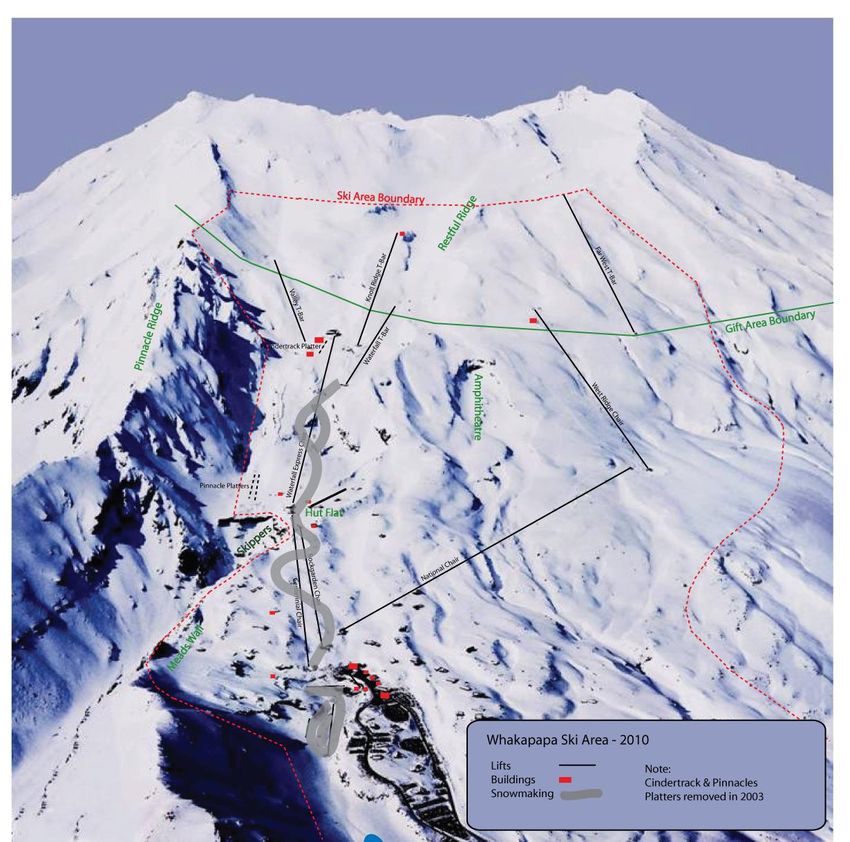
Whakapapa Facility Management Plan March 2018 20Appendix 1 Oblique Photograph Facilities @ 2010 Whakapapa Facility Management Plan March 2018 21
Appendix 2             Map to scale              Facilities at 2010

 Whakapapa Facility Management Plan March 2018                        22
Appendix 3 Lift Specifications & Design Carrying Capacity Current Facilities at June 2017
Lift Specifications Lift Altitude Vertical Length vtm/hr
Capacity Base Top
(pph) (masl) (masl) (m) (m) (000's)
Happy Valley
Elevators x2 1,500 1,605 1,625 20 30
Happy Valley #1 Carpet Lift 1,200 0 0 7 130 8
Happy Valley #2 Carpet Lift 1,200 0 0 25 130 30
Happy Valley #3 Carpet Lift 1,200 0 0 25 125 30
Happy Valley #4 Carpet Lift (sled) 1,000 0 0 10 50 10
Double Happy Dble Chairlift 1,100 1,376 1,413 37 303 41
HAPPY VALLEY 7,200 149
Rockgarden
Rangatira Express Quad 2,800 1,625 1,762 137 740 384
Upper Mountain
Waterfall Express Quad 2,800 1,760 2,018 258 1,005 722
Delta Quad Chairlift 1,600 1,940 2,040 100 500 160
Valley T Bar 1,420 1,975 2,178 203 787 288
Knoll Ridge T Bar 1,420 2,000 2,247 247 932 351
West Ridge Quad Chairlift 1,740 1,820 2,075 255 993 444
Far West T Bar 1,025 2,010 2,300 290 982 297
UPPER MOUNTAIN 12,805 2,646
ALL MOUNTAIN 20,005 2,795
Note: vtm/hr vertical transport metres per hour
pph people per hour
masl metres above sea level
% used Persons Design
Design Carrying Capacity
for skiing on Lift Queue in Queue on Slope in Cafes Carrying
(not access) Time Capacity
Happy Valley a (min) b c d a+b+c+d
skiers 80% 32 2.0 40 18 90
Elevators x2
v & sp 20% 8 0.0 10 6 24
Happy Valley #1 Carpet Lift skiers 100% 33 2.0 40 70 36 178
Happy Valley #2 Carpet Lift skiers 100% 33 2.0 40 70 36 178
Happy Valley #3 Carpet Lift skiers 100% 31 2.0 40 70 35 177
Happy Valley #4 Carpet Lift (sled) v & sp 100% 13 2.0 33 40 28 114
Double Happy Dble Chairlift skiers 100% 61 4.0 73 150 71 355
Sliding Zone in Happy Valley v & sp 100% 100 33 133
skiers 189 233 360 196 978
HAPPY VALLEY
v & sp 21 43 140 67 271
Rockgarden
skiers 90% 112 5.0 210 163 121 606
Rangatira Express Quad
v & sp 10% 12 23 9 45
Upper Mountain
Sliding Zone @ Knoll Ridge v & sp 50 17 67
skiers 90% 155 5.0 210 146 128 638
Waterfall Express Quad
v & sp 10% 17 23 10 51
Delta Quad Chairlift skiers 100% 122 5.0 133 79 84 418
Valley T Bar skiers 100% 90 5.0 118 78 72 358
Knoll Ridge T Bar skiers 100% 97 5.0 118 83 75 373
West Ridge Quad Chairlift skiers 100% 218 5.0 145 116 120 599
Far West T Bar skiers 100% 72 5.0 85 49 52 258
skiers 865 1,020 714 650 3,249
UPPER MOUNTAIN
v & sp 30 47 50 36 162
skiers 1,055 1,254 1,074 845 4,227
ALL MOUNTAIN v & sp 50 90 190 103 433
total 1,105 1,344 1,264 948 4,660
Note:"v & sp" - visitors & snowplayers
Whakapapa Facility Management Plan March 2018 23You can also read


