FISHING TARGET ONE MILLION - VFA
←
→
Page content transcription
If your browser does not render page correctly, please read the page content below
FR
                                                   EE

                                      TARGET
                                    ONE MILLION
                                         ONE MILLION
                                          VICTORIANS
                                            FISHING
                                         #target1million

VICTORIAN RECREATIONAL
                                            GUIDE
                                                     2020

FISHING
A GUIDE TO FISHING RULES AND PRACTICES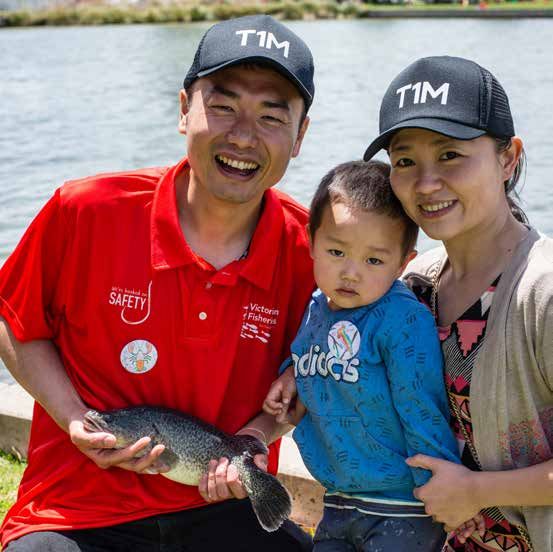
2   Introduction                              55 Waters with varying bag and size limits
 2                                                              (trout and salmon)
               4   Message from the Minister
                                                             56 Trout and salmon regulations
               5   About this guide
INTRODUCTION

                                                             60 Year-round trout and salmon fisheries
               6   Target One Million
                                                             61 Trout and salmon family fishing lakes
               9   Marine and estuarine fishing
                                                             63 Spiny crays
               10 Marine and estuarine scale fish
                                                             66 Yabbies
               20 Sharks, skates and rays
                                                             68 Freshwater shrimp and mussels
               23 Crabs
                                                             69 Freshwater fishing restrictions
               24 Shrimps and prawns
                                                             70 Freshwater fishing equipment
               26 Rock lobster
                                                             70 Using equipment in inland waters
               30 Shellfish
                                                             74 Illegal fishing equipment
               33 Squid, octopus and cuttlefish
                                                             74 Bait and berley
               34 Molluscs
                                                             76 Recreational fishing licence
               34 Other invertebrates
                                                             76 Licence information
               35 Marine fishing equipment
                                                             78 Your fishing licence fees at work
               36 Using equipment in marine waters
                                                             82 Recreational harvest food safety
               40 Illegal fishing equipment
                                                             82 Food safety
               40 Bait and berley
                                                             84 Responsible fishing behaviours
               41 Waters closed to recreational fishing
                                                             85 Fishing definitions
               41 Marine waters closed to
                  recreational fishing                       86 Recreational fishing water definitions
               41 Aquaculture fisheries reserves             86 Water definitions
               42 Victoria’s marine national parks           88 Regulation enforcement
                  and sanctuaries
                                                             88 Fisheries officers
               42 Boundary markers
                                                             89 Reporting illegal fishing
               43 Restricted areas
                                                             89 Rule reminders
               44 Intertidal zone fishing restrictions
                                                             90 Fishing safety
               44 Intertidal zone restrictions
                                                             90 Fishing is a fun and healthy
               45 Intertidal restrictions for different 		      activity for everyone
                  Victorian waters
                                                             90 Rock fishing
               45 Intertidal zone equipment restrictions
                                                             91 Safe boating
               46 Freshwater fishing
                                                             92 Wind warnings and forecasts
               47 Freshwater scale fish (native)
                                                             92 Port Phillip Heads –
               53 Freshwater scale fish (introduced)            know your boundaries
               54 Freshwater scale fish (trout and salmon)   93 Aquatic pests
               54 Waters with seasonal closures              95 Contacts
                  (trout and salmon)
Croatian
How to contact the Victorian Fisheries Authority
Greek
General enquiries: ✆ 136 186. To report a fishing offence: 13 3474 (13 FISH) 3
Information for hearing impaired callers
INTRODUCTION
Italian
Callers who are deaf, hard of hearing or have a speech/communication impairment may
call through the National Relay Service using a modem or text phone/teletypewriter (TTY)
by dialling 1800 555 677.
English Maltese
Cambodian Mandarin
Cantonese Vietnamese
Croatian
Karen
'fod;u'd;M>w>rRpXRvXuoh.ngb.w>CkzD.tD.
Greek n.w>*>hw>usRdvXusdmt*Rwusdmuot h
*D>0Ho;plRud; 136186 'D;oHuG>b.
usdmw>rRpXRvXevd.M.wuh>I
Italian Arabic
136 186
.
Farsi
136 186
Maltese .
The 2020 Victorian Recreational Fishing Guide has been funded by the Victorian Government
using Recreational Fishing Licence fees.
Mandarin
Giờ đây đã có Tài liệu
Vietnamese 我们全新的《中文版休
Hướng dẫn Câu bắt cá
Giải trí tiếng Việt hoàn
闲垂钓指南》现已出版!
toàn mới của chúng tôi!
Karen
'fod;u'd;M>w>rRpXRvXuoh.ngb.w>CkzD.tD. 请进入网站:
n.w>*>hw>usRdvXusdmt*Rwusdmuot h www.vfa.vic.gov.au/
*D>0HoTải xuống
; 136186tại
chineseguide
;plRud 'D;oHuG>b.
下载
www.vfa.vic.gov.au/
usdmw>rRpXRvXevd .M.wuh>I
vietnameseguide
Hãy gọi s 请立即致电
M
IỄ 免
136 186索取
N 费
PH
Í
136 186
ặt xin tài liệu MỤC TIÊU MỘT
này ngay
TRIỆU (TARGE 目标
T
ONE MILLIO 一百万
MỘT
N) 2020年前100万维
TRIỆU NGƯỜI
DÂN VICTORIA 州人钓鱼
CÂU
CÁ NĂM 2020 #target1million
#target1million
bây giờ!
GIẢI TRÍ VICTO
CÂU CÁ
RIA 维多利亚州
HƯỚNG DẪN
休闲垂钓指
2020
2020
指南
HƯỚNG DẪN
CÁC ĐIỀU LUẬT
VÀ CÁCH THỰC
南
钓鱼规 则和指
南
HIỆN CÂU CÁ
MESSAGE FROM                                      Commercial net fishing in the Gippsland
 4             THE MINISTER                                      Lakes will be phased out by 1 April 2021 and
                                                                 in Port Phillip Bay commercial netting will be
                                                                 gone entirely by 2022. It has already ceased
INTRODUCTION

                                                                 in Corio Bay. These initiatives will leave more
                                                                 fish, like snapper, whiting, flathead and bream
                                                                 for recreational fishers, which will boost
                                                                 tourism and jobs.
                                                                 Access to inland waters has improved with car
                                                                 toppers and canoes now permitted on several
                                                                 Kyneton lakes and electric powered boats on
               Recreational fishing in Victoria is in great      Tullaroop Reservoir. The new native hatchery
               shape and we are the envy of many keen            at Shepparton is on track. We are very close
               fishers interstate and overseas.                  to securing a location and can’t wait to get
                                                                 started building the ponds that will grow
               Our snapper and King George whiting stocks
                                                                 millions of extra fish for our stocking program.
               are booming, calamari are everywhere,
               and the tuna just keep on coming! In the          There’s plenty more to be done and we’re up
               freshwater, record stockings of Murray cod are    for the challenge. We want to stay at the front
               taking lakes like Eildon to the national stage    of the pack and together, with you, we’ll do
               and for the first time ever, we have stocked      just that this year and beyond!
               Cheetah trout into Lake Purrumbete.
               Phase two of our Target One Million plan
               is in full swing and the Victorian Fisheries
               Authority and Better Boating Victoria are busy    The Hon Jaala Pulford MLC
               delivering on $35 million worth of projects       Minister for Fishing and Boating
               that will make your time on the water even
               better! Free boat launching and parking is
               now a reality and we’re turning our attention
               to improving ramps and facilities far and wide,
               putting every cent of your boating registration
               fees to work!

                                        Stay connected
                         and get the most up-to-date VFA news
                              and stories on social media!

                  Victorian Fisheries   @fisheriesvic    @VicFisheries   Victorian Fisheries    The Poddy
                      Authority                                              Authority         Mullet podcast
ABOUT THIS GUIDE                                   Changes since the last edition
                                                   The new Victorian Fisheries Regulations                                5
This fishing guide is produced by the Victorian
Fisheries Authority (VFA). Please contact the      came into operation 1 February 2020.
VFA If you wish to make comments about the         There are multiple new and revised

                                                                                                                        INTRODUCTION
guide or to obtain further copies.                 regulations that affect species bag and size
                                                   limits, equipment, fishing areas and more.
For more information about the VFA, visit          Please read through the changes carefully
the website at www.vfa.vic.gov.au or call          at www.vfa.vic.gov.au/2020recguidechanges
the Customer Service Centre on 136 186.            and make sure to double check the rules
ISSN 1442-7494                                     before you go out.
Copyright © Victorian Fisheries Authority,         This publication is a guide only. Fishing rules
2020. This publication is copyright. No part       can sometimes change between editions.
may be reproduced by any process except            It is the responsibility of fishers to be aware
in accordance with the provisions of the           of any changes that are made to fishing
Copyright Act 1968.                                rules and regulations.
All requests and enquiries should be directed      You can do this by:
to the Victorian Fisheries Authority Customer
Service Centre (call 136 186) or email             • routinely checking the Fisheries Notices on
customer.service@vfa.vic.gov.au.                     the Victorian Fisheries Authority’s website

Authorised by Jaala Pulford, 1 Spring Street,      • contacting the Customer Service Centre
Melbourne                                            ✆ 136 186

Design, production, print management:              • subscribing to the Nibbles newsletter
Celsius Design                                     • following us on social media (see page 4).
Project Manager: Sophie Deans
                                                   General disclaimer
Photographs: Lauren Hall, Ned Cox,
                                                   This publication may be of assistance to you, but the State
Kev Etcell, Josh Hutchins, Dallas D’Silva,
                                                   of Victoria and its employees do not guarantee that the
Mike Gilby, Tillie French, David Hannah,           publication is without flaw of any kind or is wholly appropriate
Museums Victoria.                                  for your particular purposes and therefore disclaims all liability
                                                   for any error, loss or other consequences which may arise
Illustrations: Alexis Beckett, Krystii Melaine,    from you relying on any information in this publication.
Paul Lennon, NSW Department of Primary
                                                   This publication is a guide only, it does not replace the
Industries, Illustration © R.Swainston/ anima.     Fisheries Act 1995, Change to Fisheries Regulations 2019
net.au, AFN/Trevor Hawkins                         or other Acts and subordinate legislation applying to,
                                                   or affecting recreational fishing. Copies of the Act and
Front cover: Peng Lui, Qiangying Yan and           Regulations are available from Information Victoria located at
Zimu Liu at Vic Fish Kids Shepparton Dec,          356 Collins Street, Melbourne 3000 (telephone 1300 366 356
2019 photographed by Jim Gow.                      or at www.information.vic.gov.au). This guide summarises
                                                   the law at the time of publication and cannot be used as a
                                                   defence in court. Fishing laws change from time to time. It is
                                                   your responsibility to ensure that you are acting within the law.

                                   Subscribe to the Fisheries’
                                   e-newsletter for recreational anglers

                                   Nibbles
                                   www.vfa.vic.gov.au/nibbles
                                   A roundup of recreational fishery
                                   management highlights
6

                            Target One Million
TARGET ONE MILLION

                            Phase 1: 2014–2018
                                     SUCCESS LIST
                         The state government has committed to delivering its
                     Target One Million plan for recreational fishing, which will get
                                  more Victorians fishing more often.

                            Remove commercial netting in Port Phillip Bay

                            Save Lake Toolondo

                            Establish a marine stocking program

                            Open trout cod fisheries at Beechworth

                            Create an exciting barramundi fishery at
                            Hazelwood Pondage

                            Remove boating restrictions at Blue Rock Lake

                            Deliver over 180 grants of $2,000 to Victorian
                            fishing clubs

                            Ban netting at Gippsland Lakes’ river mouths

                            Make Fisheries Victoria a statutory authority

                            Increase stocking from 3 to 5 million fish a year
Target One Million                                                                           7

               Phase 2: 2018–2022

                                                                                                        TARGET ONE MILLION
     The state government has extended its commitment to recreational
      fishers in Victoria, building on its Target One Million plan to grow
                  participation to one million anglers by 2020.
                    To get more people fishing, more often,
                the renewed plan will invest over $35 million to:

               Open inland reservoirs to kayaks, canoes and small
               craft with electric motors

               Scrap parking and launching fees at all Victorian
               public boat ramps

               Deliver the Fishing for All initiative including $200,000
               to continue the successful Vic Fish Kids Program

               Stock Melbourne metro lakes with native Murray
               cod, golden perch and silver perch

               Build a new $7 million native fish hatchery in
               northern Victoria

               Increase stocking to 10 million fish by 2022

               Phase out commercial netting in the Gippsland Lakes
               through a compulsory buy out

               Invest $600,000 in new fishing platforms & cleaning
               tables in Port Phillip Bay
               Mandate access to Crown land river frontage covered
               by grazing licences for recreational fishing and
               camping
               Invest $2.5 million in reef development in Port Phillip
               Bay to improve fish habitat

               Develop a $200,000 fishing tourism ‘destination’ plan
               to boost regional visitation & business opportunities

               Stock eastern king prawns into Lake Tyers

     Recreational fishing is important to our social and economic wellbeing. It is one of our most
 treasured pastimes, contributing significantly to families and communities. By working with fishers,
Target One Million will deliver on its commitments to help get more families outdoors and increase
                              participation to one million anglers by 2020.
TOP TIPS FOR ON-WATER
   FISHING SAFETY
  BOATING
  1. Wear a lifejacket - the right one for your activity,
     boat and location
  2. Check the marine weather report - before you go
     out and while you are out
  3. Be able to raise the alarm in an emergency –
     carry a GPS-enabled distress beacon
  4. Put your mobile phone in a waterproof pouch
  5. Check your batteries and fuel before you go out

  PADDLING
  1. Wear a lifejacket
  2. Check the weather
  3. Carry waterproof communication
  4. Practise getting back on before going into deep water
  5. Don’t overload your fishing kayak

transportsafety.vic.gov.au/msv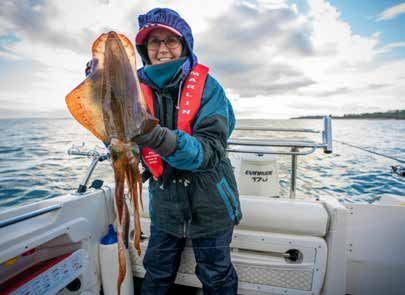
9

Marine and

                                                                      MARINE AND ESTUARINE FISHING
estuarine fishing
Whether it’s fishing for snapper in Port Phillip Bay, chasing tuna
in Portland or catching dusky flathead in Gippsland, we want
you to enjoy the awesome marine and estuarine fishing Victoria
has to offer.

 Marine and estuarine fishing                                 10-34

 Marine fishing equipment                                     35-40

 Waters closed to recreational fishing                        41-43

 Intertidal zone fishing restrictions                         44-45

It’s important you know and follow the rules so we can keep
Victoria’s recreational fisheries in great shape for the future.
Happy fishing!

        SPECIES NOT LISTED HAVE A BAG LIMIT OF 5
MARINE AND ESTUARINE SCALE FISH
10
                                For all species of fish that are not listed in pages 10–34, a bag limit of 5 applies.

                                Measuring your catch
MARINE AND ESTUARINE FISHING

                                Scale fish: the legal size of fish must be
                                checked at the first available opportunity.
                                Measure fish from the tip of the snout with
                                the mouth closed to the end of the tail.
                                Fish that you wish to keep should be
                                dispatched immediately and placed
                                on ice.

                                Unwanted and unrequired fish
                                Unwanted fish (e.g. puffers, toadies) or
                                fish that are not required (you don’t want
                                to keep) must be returned to the water
                                immediately and without harm or injury.

                                Albacore and skipjack tuna
                                Scientific name: Thunnus alalunga and
                                Katsuwonus pelamis.
                                Minimum legal size: no minimum.
                                Bag limit: a combined total limit of 5
                                albacore and/or skipjack tuna.
                                Albacore and skipjack tuna: these fish
                                can’t be filleted in or on Victorian waters.
                                They must be kept whole or in carcass form
                                until you’re away from the water. It’s okay to
                                fillet your fish on cleaning tables at the boat
                                ramp (see definition of carcass on page 85).
                                See page 18 for other tuna.                                                         Albacore

                                Anchovy, pilchard and
                                other clupeiods
                                Scientific name: Clupeidae and Engraulidae.
                                Minimum legal size: no minimum.
                                Bag limit: a combined total of 40 for
                                one or more species of clupeiod species.
                                Note: does not apply to purchased bait.                          Australian sardine (pilchard)

                                Australian herring (Tommy rough)
                                Scientific name: Arripis georgianus.
                                Minimum legal size: no minimum.
                                Bag limit: a combined total limit
                                of 20 Australian herring and/or
                                Australian salmon.
                                Note: Australian herring can be mistaken
                                for juvenile Australian salmon: see page
                                11 for diagrams that show the differences
                                between the species.                                                       Australian herring

                                                   SPECIES NOT LISTED HAVE A BAG LIMIT OF 5
MARINE AND ESTUARINE SCALE FISH
11
Australian salmon
Scientific name: Arripis trutta
MARINE AND ESTUARINE FISHING
and Arripis truttaceus.
Minimum legal size: 21 cm.
Bag limit: a combined total limit
of 20 Australian salmon and/or
Australian herring. Australian salmon
Small eyes Smooth scales Large eyes Dark vertical bars
Distinguishing features
of Australian salmon and
Australian herring:
Black tips
on tail
Yellow pectoral fin Clear pectoral fin Rough scales
Australian salmon juvenile Australian herring
Barracouta
Scientific name: Thyrsites atun.
Minimum legal size: no minimum.
Bag limit: 20.
Barracouta
Billfish including swordfish, marlin
and broadbill
Scientific name: Istiophoridae;
Xiphias gladius.
Minimum legal size: no minimum.
Bag limit: a combined total of 1 billfish
from all species including swordfish,
marlin and broadbill.
Swordfish
Broadbill Striped marlin
SPECIES NOT LISTED HAVE A BAG LIMIT OF 5MARINE AND ESTUARINE SCALE FISH
12
Black cod
Scientific name: Epinephelus daemelii.
MARINE AND ESTUARINE FISHING
Protected species: taking or
possessing is prohibited.
Black cod
Blue groper
Scientific name: Achoerodus viridis
and Achoerodus gouldii.
Protected species: taking
or possessing is prohibited.
Female blue groper
Male blue groper
Juvenile blue groper
Boarfish (all species)
Scientific name: Pentacerotidae.
Minimum legal size: no minimum.
Bag limit: for any species of boarfish, a combined
total of 1. Boarfish
Bream (all species including tarwhine)
Scientific name: Acanthopagrus spp. and Rhabdosargus saba.
Minimum legal size: 28 cm.
Bag limit: a combined total of 10 for one or more species of
bream and tarwhine.
Note: Black bream can’t be filleted in or on Victorian waters.
It must be kept whole or in carcass form until you’re away
from the water. It’s okay to fillet your fish on cleaning tables at
the boat ramp (see definition of carcass on page 85). Bream
Estuary perch (including Australian bass
and hybrids)
Scientific name: Macquaria colonorum.
Minimum legal size: 27 cm.
Bag limit: Lake Bullen Merri: a combined total of 5 for one or
more species of estuary perch, Australian bass and hybrid species.
All other Victorian Waters: a combined total of 5 fish (of which Estuary perch
no more than 2 can be Australian bass).
Note: Estuary perch can be mistaken for Australian bass; see page
47 for diagrams that show the differences between the species.
SPECIES NOT LISTED HAVE A BAG LIMIT OF 5MARINE AND ESTUARINE SCALE FISH
13
Flathead (all species except
dusky flathead)
MARINE AND ESTUARINE FISHING
Scientific name: Platycephalidae.
Minimum legal size: 27 cm.
Bag limit: a combined total limit of 20 for one or
more species of flathead (excluding dusky flathead). Flathead
Dusky flathead
Scientific name: Platycephalus fuscus.
Minimum legal size: 30 cm.
Maximum legal size: 55 cm.
Bag limit: 5.
This fish can’t be filleted in or on Victorian waters. Dusky flathead
It must be kept whole or in carcass form until you’re
away from the water. It’s okay to fillet your fish on
cleaning tables at the boat ramp (see definition of Single, large dark blotch
(may be absent or faint in
carcass on page 85). some fish)
Distinguishing features of
dusky flathead & southern
bluespotted (yank) flathead: May have Lack of dark
3–5 dark blotches on
blotches lower half
of tail
Southern blue spotted
(yank) flathead Dusky flathead
Flounder (all species)
Scientific name: Rhombosoleidae.
Minimum legal size: 23 cm.
Bag limit: a combined total limit of 20
for one or more species of flounder. Flounder
Garfish (all species)
Scientific name: Hemiramphidae.
Minimum legal size: no minimum.
Bag limit: a combined total limit of 40
for one or more species of garfish. Garfish
Gemfish
Scientific name: Rexea solandri.
Minimum legal size: no minimum.
Bag limit: 5.
Gemfish
Goatfish (all species)
Scientific Name: Mullidae.
Minimum legal size: no minimum.
Bag limit: a combined total of 20 for
one or more species of goatfish. Goatfish
SPECIES NOT LISTED HAVE A BAG LIMIT OF 5MARINE AND ESTUARINE SCALE FISH
14
Gurnard (all species)
Scientific name: Triglidae.
MARINE AND ESTUARINE FISHING
Minimum legal size: no minimum.
Bag limit: a combined total limit of 10
for one or more species of gurnard.
Gurnard
King George whiting
Scientific name: Sillaginodes punctata.
Minimum legal size: 27 cm.
Bag limit: 20.
This fish can’t be filleted in or on Victorian
waters. It must be kept whole or in carcass form
until you’re away from the water. It’s okay to
fillet your fish on cleaning tables at the boat
ramp (see definition of carcass on page 85). King George whiting
Leatherjacket (all species)
Scientific name: Monacanthidae.
Minimum legal size: no minimum.
Bag limit: a combined total limit
of 20 for one or more species of
leatherjacket.
Six spine leatherjacket Toothbrush leatherjacket
Ling (all species)
Scientific name: Genypterus spp.
Minimum legal size: 30 cm.
Bag limit: a combined total limit of 5
for one or more species of ling. Ling
Longfin pike and snook
Scientific name: Dinolestes lewini and
Sphyraena novaehollandiae.
Minimum legal size: 30 cm.
Bag limit: a combined total limit of Longfin pike
10 longfin pike or snook.
Snook
Luderick
Scientific name: Girella tricuspidata.
Minimum legal size: 23 cm.
Bag limit: 10.
Luderick
SPECIES NOT LISTED HAVE A BAG LIMIT OF 5MARINE AND ESTUARINE SCALE FISH
15
Mackerel (all species of Trachurus
and Scomber except yellowtail scad)
MARINE AND ESTUARINE FISHING
Scientific name: Trachurus and Scomber.
Minimum legal size: no minimum.
Bag limit: a combined total of 40 for one
or more species of mackeral (except yellow
tail scad). Slimy mackerel
Morwong (all species)
Scientific name: Cheilodactylidae.
Minimum legal size: 23 cm.
Bag limit: a combined total
limit of 5 for one or more Banded
species of morwong. morwong
Adult dusky morwong Juvenile dusky morwong
Download the
Vic Fishing
Recreational
Fishing Guide
app!
FREE
on the App Store/iTunes
and Google Play
SPECIES NOT LISTED HAVE A BAG LIMIT OF 5MARINE AND ESTUARINE SCALE FISH
16
Mullet (all species)
Scientific name: Mugilidae.
MARINE AND ESTUARINE FISHING
Minimum legal size: no minimum.
Bag limit: a combined total limit of 40
for one or more species of mullet.
Mullet
Mulloway
Scientific name: Argyrosomus japonicus.
Minimum legal size: 60 cm.
Bag limit: 5.
Mulloway
Seahorses, seadragons
and pipefish
Scientific name: Syngnathidae.
Protected species: taking or
possessing is prohibited.
Seahorses
Silver trevally
Scientific names: Pseudocaranx spp.
Minimum legal size: 20 cm.
Bag limit: a combined total limit of 20
for one or more species of trevally.
Silver trevally
Snapper
Scientific name: Pagrus auratus.
Minimum legal size: 28 cm.
Bag limit: 10 (of which no more
than 3 fish may be equal to or
exceed 40 cm in length).
This fish can’t be filleted in or on
Victorian waters. It must be kept
whole or in carcass form until you’re
away from the water. It’s okay to
fillet your fish on cleaning tables
at the boat ramp (see definition
of carcass on page 85).
Juvenile snapper (pinky) Snapper
SPECIES NOT LISTED HAVE A BAG LIMIT OF 5Southern rock cod and beardie 17
(red cod, bearded rock cod, large
tooth beardie, slender beardie)
MARINE AND ESTUARINE FISHING
Scientific name: fish of the genera
Lotella and Pseudophycis.
Minimum legal size: 23 cm.
Bag limit: a combined total of 20 for one
or more species of rock cod and beardie. Southern rock cod
Sweep (all species)
Scientific name: Scorpidadae.
Minimum legal size: 23 cm.
Bag limit: a combined total limit of 10
for one or more species of sweep.
Sweep
Tailor (skipjack)
Scientific name: Pomatomus saltatrix.
Minimum legal size: 23 cm.
Bag limit: 20.
Tailor
Toadies and puffers
Scientific name: Family Tetraodontidae.
Unwanted species: Must not be eaten.
Must be returned to the water
immediately and without harm or injury.
Fines apply if you don’t. Toadfish
Puffer
SPECIES NOT LISTED HAVE A BAG LIMIT OF 5MARINE AND ESTUARINE SCALE FISH
18
Tuna (southern bluefin,
yellowfin and big eye)
MARINE AND ESTUARINE FISHING
Scientific name: Thunnus maccoyii and
Thunnus spp.
Minimum legal size: no minimum.
Bag limit: a combined total limit of 2 Southern bluefin
southern bluefin, yellowfin and/or big eye.
Possession limit for southern bluefin tuna:
2 and < 160 kg in any other form. This is the
maximum number of a particular type of fish
that a person can possess at any one time
anywhere in Victoria (including your home).
See page 10 for albacore and skipjack tuna. Yellowfin
These fish can’t be filleted in or on Victorian
waters. They must be kept whole or in
carcass form until you’re away from the
water. It’s okay to fillet your fish on cleaning
tables at the boat ramp (see definition of Big eye
carcass on page 85).
Warehou (haddock) (all species)
Scientific name: Seriolella spp.
Minimum legal size: no minimum.
Bag limit: a combined total limit of 20
for one or more species of warehou.
Warehou
Whiting (other than King George)
Scientific name: Sillaginidae/Odacidae.
Minimum legal size: no minimum.
Bag limit: a combined total limit of 20 for
one or more species of whiting (other than
King George whiting). Grass whiting
Wrasse (parrot fish) (all species
excluding blue groper)
Scientific name: Labridae.
Minimum legal size: 27 cm.
Bag limit: a combined total limit
of 5 for one or more species of
wrasse (excluding blue groper).
Wrasse (parrot fish)
Juvenile bluethroat wrasse Female bluethroat wrasse Male bluethroat wrasse
SPECIES NOT LISTED HAVE A BAG LIMIT OF 5MARINE AND ESTUARINE SCALE FISH
19
Yellowtail kingfish
Scientific name: Seriola lalandi.
MARINE AND ESTUARINE FISHING
Minimum legal size: 60 cm.
Bag limit: 5.
Yellowtail kingfish
Yellowtail scad
Scientific name: Trachurus novaezelandiae.
Minimum legal size: no minimum.
Bag limit: 40.
Yellowtail scad
Going Rock Fishing?
去磯釣?
A message from Life Saving Victoria supported by the Victorian Government
– Wear a lifejacket –
– Fish with a friend – 與朋友一起磯釣
– Check the weather conditions before
–
you leave home
– Enjoy your time but fish safely – 享受美好時光,但要安全釣魚
– For more information go to: –
lsv.com.au/research/rockfishing
A message from Life Saving Victoria supported by the Victorian Government
SPECIES NOT LISTED HAVE A BAG LIMIT OF 5SHARKS, SKATES AND RAYS
20
Measuring your catch
Shark: Measure shark from the rear most gill slit to the base of the tail fin on any side
MARINE AND ESTUARINE FISHING
of the body.
Rays: Measure rays from wing tip to wing tip (i.e. the maximum distance across the body).
Elephantfish
Scientific name: Callorhinchus milii.
Minimum legal size: no minimum.
Bag limit: 1.
This fish can’t be filleted in or on Victorian
waters. It must be kept whole or in carcass
form until you’re away from the water. It’s
okay to fillet your fish on cleaning tables at
the boat ramp (see definition of carcass on
page 85). Elephantfish
Gummy shark
Scientific name: Mustelus antarcticus.
Minimum legal size: 45 cm (partial length).
Bag limit: a combined total limit of 2
gummy shark and/or school shark.
This fish can’t be filleted in or on Victorian
waters. It must be kept whole or in carcass
form until you’re away from the water. It’s
okay to fillet your fish on cleaning tables at
the boat ramp (see definition of carcass on Gummy shark
page 85). Minimum legal size: 45 cm (partial length)
School (snapper) shark
Scientific name: Galeorhinus galeus.
Minimum legal size: 45 cm (partial length).
Bag limit: a combined total limit of 2 school
shark and/or gummy shark.
This fish can’t be filleted in or on Victorian
waters. It must be kept whole or in carcass
form until you’re away from the water. It’s
okay to fillet your fish on cleaning tables at
the boat ramp (see definition of carcass on School shark
page 85). Minimum legal size: 45 cm (partial length)
SPECIES NOT LISTED HAVE A BAG LIMIT OF 5SHARKS, SKATES AND RAYS
21
Shark (all species other than
school and gummy shark,
MARINE AND ESTUARINE FISHING
great white shark, greynurse
shark and elephantfish)
Minimum legal size: no minimum.
Bag limit: 1 per species.
These fish can’t be filleted in or on Victorian
waters. They must be kept whole or in Bronze whaler shark
carcass form until you’re away from the
water. It’s okay to fillet your fish on cleaning
tables at the boat ramp (see definition of
carcass on page 85).
Port Jackson shark
Broadnose sevengill shark
Skates, rays and guitarfish
(all species)
Minimum legal size: no minimum.
Maximum legal width: 1.5 m.
Bag limit: a combined total limit of 1 skate,
ray or guitarfish.
Must not be taken within 400 m of any pier,
jetty, wharf, rock wall or breakwater.
These fish can’t be filleted in or on Victorian
waters. They must be kept whole or in
carcass form until you’re away from the
water. It’s okay to fillet your fish on cleaning
tables at the boat ramp (see definition of
carcass on page 85). Southern fiddler ray (banjo shark)
Measure rays from wing tip to wing tip.
Smooth ray Southern eagle ray
SPECIES NOT LISTED HAVE A BAG LIMIT OF 5SHARKS, SKATES AND RAYS
22
Great white shark
and greynurse shark
MARINE AND ESTUARINE FISHING
Scientific name: Carcharodon
carcharias and Carcharias taurus.
Protected species: taking or Great white shark
possessing is prohibited.
Greynurse shark
Great white shark interaction: handling procedures
• Anglers must not target great white • For your safety, do not attempt to
shark. If taken incidentally, anglers remove the hook. Take great personal
must release them unharmed as care when severing the fishing line or
quickly as possible. trace. Use a line cutter and cut as close
• For your safety, do not attempt to as practicable to the shark.
remove the shark from the water. • You can assist in research by
Keep the shark in the water alongside emailing details of the interaction
the boat to minimise stress and injury to Russ Bradford (CSIRO) at
to the shark. Russ.Bradford@csiro.au
Be SharkSmart
• Never swim, dive or surf alone
• Keep informed of the latest
sightings at emv.vic.gov.au
• Always swim between the flags
on patrolled beaches
• Avoid swimming in areas that
sharks may be attracted to
• Watch for signs of a shark such as
unusual behaviour of wildlife or fish
Help others be informed –
vfa.vic.gov.au/shark-smart
SPECIES NOT LISTED HAVE A BAG LIMIT OF 5CRABS
23
Crabs (all species except giant crabs*
and European green shore crabs)
MARINE AND ESTUARINE FISHING
* There is no recreational fishery for giant crab in Victorian waters.
Minimum legal size: no minimum.
Bag limit (outside of restricted
areas): 1 litre or a combined total of
30 whole or parts of crab from one or Pale lines on
legs and dense
more species. 5th leg with coat of short
Purple swimming Distinctive hairs on
Restricted areas: spots paddle red/brown shell walking legs
• You can’t collect crabs in waters less
than 2 m deep (the intertidal zone)
in Port Phillip Bay (see pages 44–45
for more info).
• You can’t collect crabs in Marine
National Parks and Sanctuaries
Shell up to 7 cm wide
(see page 42). Pale grey shell
Note: Bag limit does not apply to (≤ 10 cm wide)
purchased bait. Sand crab Red shore crab
European green shore crab Smooth green-brown
shell(≤ 7 cm wide), pale
Each side 5 spines orange underside
Scientific name: Carcinus maenas.
Minimum legal size: no minimum.
Bag limit (outside of restricted areas):
no limit.
Restricted areas:
• You can’t collect crabs in waters less
than 2 m deep (the intertidal zone) in
Port Phillip Bay (see pages 44–45 for
more info).
• You can’t collect crabs in Marine National 5th leg sharp, slightly
flattened, no swimming
Parks and Sanctuaries (see page 42). paddle
Note: Live European green shore crab European green shore crab
MUST NOT be used as bait in or on
Dead green shore crabs can be used as
any Victorian waters. Unless released
bait. To ensure the crab is dead please cut
immediately upon capture, live European
it in half (vertically between the eye stalks)
green shore crab must not be released
after freezing it. Freezing alone does not
into or next to any Victorian waters.
kill the crab.
Collection methods for crabs
Outside of restricted areas, only the time, hoop nets can only be used in
following methods can be used to Port Phillip Bay, Western Port Bay, the
collect crabs in marine waters: Gippsland Lakes and any other inlet).
• by hand The number, size and shape of the
equipment used is important. Page 35
• by spear (see page 38)
summarises the fishing gear that can
• by using up to 2 bait traps (see page 37) be legally used in Victoria. Remember
• by using up to 2 hoop nets (Note: Closed collecting for other people contributes
season for hoop nets from 15 September to your bag limit.
to 15 November each year. During this
SPECIES NOT LISTED HAVE A BAG LIMIT OF 5SHRIMPS AND PRAWNS
24
Burrowing shrimp (all species
including bass yabbies)
MARINE AND ESTUARINE FISHING
Minimum legal size: no minimum.
Bag limit (outside of restricted areas):
a total combined limit of 0.5 litres of
burrowing shrimp from one or more
species.
Restricted areas: You can’t collect
burrowing shrimp in Marine National
Parks and Sanctuaries (see page 42
for more info).
Note: Does not apply to purchased bait. Bass yabby
Swimming shrimp
Minimum legal size: no minimum.
Bag limit (outside of restricted areas):
a total combined limit of 0.5 litres of
swimming shrimp from one or more species.
Restricted areas:
• You can’t collect swimming shrimp
in waters less than 2 m deep (the
intertidal zone – see pages 44–45) in
Port Phillip Bay.
• You can’t collect swimming shrimp in
Marine Parks and Sanctuaries (see page
42 for more info).
Note: Does not apply to purchased bait. Swimming shrimp
Prawns (all species)
Scientific name: Penaeidae.
Minimum legal size: no minimum.
Bag limit (outside of restricted areas):
a combined total limit of 30 litres of whole
prawns from one or more species or 5 litres
of meats from one or more species.
Restricted areas:
• You can’t collect prawns in waters less
than 2 m deep (the intertidal zone – see
pages 44–45) in Port Phillip Bay.
• You can’t collect prawns in Marine
Parks and Sanctuaries (see page 42
for more info).
Note: Does not apply to purchased bait. King prawn
SPECIES NOT LISTED HAVE A BAG LIMIT OF 5Collection methods for shrimps and prawns
Outside of restricted areas, only the following methods can be used to collect shrimps 25
and prawns:
• by hand
MARINE AND ESTUARINE FISHING
• by using 1 dip net
• by using up to 2 bait traps
• by using 1 bait pump only
• by using 1 bait net only.
Bait nets can only be used in waters at least 30 m from any jetty or pier and at least 400 m
from the mouth of any creek or river in the Gippsland Lakes (excluding the North Arm and
Cunninghame Arm), Lake Tyers (excluding those water shown on the map on page 38), the
Lower Lake of Mallacoota Inlet, Corner Inlet, Shallow Inlet, Anderson Inlet and in marine
waters on the seaward side of the mouths of any inlet or river.
(Note: Bait nets cannot be used in any other marine waters. The use of bait nets is also
restricted in some inland waters (rivers). See page 72 for further details of where bait nets can
be used in inland waters. The number, size and shape of the equipment used is important.
Page 35 summarises the fishing gear that can be legally used in marine waters in Victoria.
• Remember that collecting for other people contributes to your bag limit.
SPECIES NOT LISTED HAVE A BAG LIMIT OF 5ROCK LOBSTER
26
Rock lobster (all species)
Scientific name: Palinuridae including
MARINE AND ESTUARINE FISHING
eastern rock lobster (green crays),
Sagmariasus verreauxi, Jasus edwardsii
(southern rock lobster).
Minimum legal size:
• Male 11 cm carapace length.
• Female 10.5 cm carapace length.
Bag limit (outside of restricted areas):
2 tagged and tail-clipped lobster.
Possession limit: 4 tagged and
tail-clipped lobster.
Restricted areas: You can’t collect rock
lobster in waters less than 2 m deep
(the intertidal zone) in Port Phillip Bay Rock lobster
(see pages 44–45).
Note:
You can’t collect rock lobster in
• Rock lobster must be retained whole or
Marine National Parks and Sanctuaries
with the tail and carapace still attached
(see page 42).
to each other.
Closed season:
• You must not take or possess female
• Male 15 September to 15 November
rock lobster with eggs (in berry) or
inclusive.
remove eggs.
During the male closed season
• You must not take soft-shelled
hoop nets must not be used, set
rock lobster.
or immersed in any marine water
• You must return females in berry or
other than
with young and soft-shelled lobsters
– Port Phillip and Western Port Bay
to the water immediately and without
– the Gippsland Lakes
further harm.
– any inlet.
• Female 1 June to 15 November inclusive.
Collecting rock lobster
You must register and be allocated rock lobster tags before you go fishing.
See page 29 for details on how to register.
Male Female Fifth leg has
a forked claw
Each side
pair of flappers Genital pore
Genital pore at base of
at base of third pair
Each side fifth pair
single of legs
of legs
flapper Forked
clasping
structures
usually with
hairs for eggsROCK LOBSTER
A quick guide on what equipment you can and can’t use for collecting
27
rock lobster
Outside of restricted areas, ONLY the following methods can be use to collect rock lobster:
MARINE AND ESTUARINE FISHING
• by hand ONLY using snorkel or captive air (scuba or hookah)
• by using up to 2 hoop nets from a boat
• by hand or using up to 2 hoop nets from shore. Hoop nets must be no wider than 77 cm
in diameter with a drop of 50 cm (see page 36 for details).
No other equipment can be used to capture or assist in the capture of rock lobster. Some
equipment can be possessed but it cannot be used to capture rock lobster (see table below).
Equipment Status Explanation
Hoop nets from ü Legal to possess Legal when used from the
shore or boat shore and boat only.
ü Legal to use
Hoop nets ✗ Illegal to possess Hoop nets are NOT legal
while snorkelling equipment when used
✗ Illegal to use
or diving when underwater diving or
snorkelling for rock lobster.
Bait only ü Legal to possess Bait must not be attached
(held in hand) to anything. It must only be
ü Legal to use held in your hand.
Spear gun/ ü Legal to possess Spear guns can be carried
hand-held spear but cannot be used in any
✗ Illegal to use way to capture or assist in
the capture of rock lobster.
Catch/mesh bag ü Legal to possess A catch/mesh bag can
(whether empty or be used to hold your
containing fish ✗ Illegal to use catch (fish or rock lobster)
of any kind) (usually while diving or
snorkelling, or collecting
from the shore). A catch/
mesh bag cannot be used
to net, entangle or lure rock
lobster.
Torch ü Legal to possess A torch can be carried and
used as a light source whilst
✗ Illegal to use underwater but cannot be
used in any way to leverage
or assist in the capture of
rock lobster.
Dive equipment ü Legal to possess Dive equipment is for
(e.g. removed fin) assisting with snorkelling
✗ Illegal to use and diving only. Dive
equipment cannot be used
to capture or assist in the
capture of rock lobster.ROCK LOBSTER
28
Equipment Status Explanation
Camera equipment ü Legal to possess Camera equipment can
MARINE AND ESTUARINE FISHING
(e.g. GoPros attached be carried to record your
to a pole) ✗ Illegal to use diving experience but it
must not be used to capture
or assist in the capture of
rock lobster.
Chemicals of any sort ✗ Illegal to use Chemicals cannot be
(e.g. dishwashing liquid) squirted into crevices. The
use of chemicals in marine
waters is also illegal under
environmental legislation.
Snare/gaff ✗ Illegal to possess These devices are
and use prohibited by regulation.
Hook ✗ Illegal to possess
and use
Lever/stick/bar/probe/prong ✗ Illegal to possess
baited or unbaited and use
Measuring your rock lobster Marking and tagging of
Rock lobster is measured from the front rock lobster
edge of the groove between the large All rock lobster taken by recreational fishers
antennae to the nearest part of the rear are to be tagged and tailed-clipped or
edge of the carapace (main body shell). tail-punched with a hole not less than
Divers are required to measure lobster at 10 mm in diameter. This must be done
the first available opportunity before the within 5 minutes of bringing the rock lobster
lobster is landed. onto a boat, or if taken from the shore,
within 5 minutes of landing and within
50 m of the place of landing.
Measuring devices are
available free of charge
from the Customer
Rock lobster
Service Centre
tail clipping
on 136 186ROCK LOBSTER How to register for rock
lobster tags 29
Rock lobster tags
1. Tagging your catch is mandatory. • You must register and get tags before
you go fishing.
MARINE AND ESTUARINE FISHING
2. You can have up to 20 tags at any
one time. • Tags are free.
– You must report used tags to be able • Available at Victorian Government Offices:
to order more. – Warrnambool, Queenscliff, Geelong,
Lakes Entrance, Traralgon.
3. You must only use tags assigned to you.
• Available online at
– Exception: children under 18 and
www.vic.gov.au/lobstertag or via the
under adult supervision can use
VicRLTag app in the App Store and
the adult’s tags.
Google Play.
4. Tags are transferable.
– Unused tags can be transferred to
another registered fisher via the app
or website.
5. You must report on how your tags
are used. VicRLTag
– Report used tags: date and location
used, and carapace length. Process:
– All tags must be reported (used, not
used, lost) by the end of the season. 1. Go online
6. Tags are individually numbered and 2. Create an account
expire seasonally.
3. Order tags
– The tagging season begins on
16 November each year and finishes 4. Use tags
on 15 November the following year.
5. Report use of tags
6. Order more tags
The aim of the tagging program is to
enable a harvest estimate to be made
to improve the sustainable management
of the fishery.SHELLFISH
30
Abalone (all species)
MARINE AND ESTUARINE FISHING
Blacklip abalone Greenlip abalone
Minimum legal sizes: see map below.
Central Victorian Waters
Open season: nominated days each year
Open season: all year
Melbourne Lakes Entrance
Mouth of the
Hopkins River
Lorne
Aire River
Arch Rock
11 cm
(Mallacoota airport area)
Minimum 10 cm
legal sizes (Port Phillip Bay)
11 cm (excluding Port Phillip Bay)
13 cm 12 cm all abalone species other than greenlip 12 cm
13 cm
Greenlip abalone (permanent closure in Port Phillip Bay)
Bag limit (outside of restricted areas):
• Port Phillip Bay: 5 (0 greenlip abalone).
• All other Victorian waters: 5 (of which no more than 2 can be greenlip abalone).
Possession limit: 10 (of which no more than 4 can be greenlip).
The possession limit is the maximum number of a particular type of fish that a person can
possess at any one time anywhere in Victoria (including your home).
Restricted areas:
• You can’t collect abalone in waters less than 2 m deep (the intertidal zone) in all Victorian
waters including Port Phillip Bay (see pages 44–45 for more info).
• You can’t collect abalone in Marine National Parks and Sanctuaries (see page 42).
• You can’t collect abalone from the Central Victorian waters except on the nominated
open days (see page 31).
Free abalone tools are available by calling 136 186.
Central Victorian waters
Central Victorian waters are defined as marine waters east of the mouth of Aire River to Arch
Rock (near Cape Liptrap) including Port Phillip Bay. The southern boundary is a line running
three nautical miles from the coast, which is the seaward limit of state waters.
SPECIES NOT LISTED HAVE A BAG LIMIT OF 5SHELLFISH
31
Recreational Abalone Open Days for Central Victorian waters
There is a permanent closed season on the take of abalone from Central Victorian waters,
MARINE AND ESTUARINE FISHING
except for these nominated open days each year:
• Every Saturday and Sunday between 16 November and 30 April the following year inclusive.
• Every declared public holiday in Victoria between 16 November and 30 April the
following year.
• 25 December through to the second Sunday in January the following year inclusive.
Collection methods for abalone
• You must carry a measuring device.
• You must use a blunt instrument when taking abalone.
• You must not use knives, screwdrivers or sharp items that could cut the abalone.
• You must not shuck abalone, or be in possession of shucked abalone, or land shucked
abalone, in, under or on Victorian waters (you may only shuck abalone upon the place
of consumption).
• You can take abalone only between sunrise and sunset.
Free abalone tools are available by calling 136 186.
Measuring your catch
Abalone: Abalone must be measured at the widest part
of the shell whether it is whole or damaged, immediately
upon removal and returned to the location of take if found
to be undersized.
Free measuring devices are available by calling 136 186.
Mussels (all species except Glenelg freshwater mussel)
Scientific name: Mytilidae.
Minimum legal size: no minimum.
Bag limit (outside of restricted areas): a combined
total limit of:
• 10 litres of whole mussels from one or more species, or
• 1 litre of split or shucked mussels from one or more species.
Restricted areas:
• You can’t collect mussels in waters less than 2 m deep (the
intertidal zone) in Port Phillip Bay (see pages 44–45 for more info).
• You can’t collect mussels in Marine National Parks and Sanctuaries
(see page 42). Mussel
SPECIES NOT LISTED HAVE A BAG LIMIT OF 5SHELLFISH
32
Oysters (all species)
Scientific name: Ostreidae.
MARINE AND ESTUARINE FISHING
Minimum legal size: no minimum.
Bag limit (outside of restricted areas): a combined total limit 50
oysters from one or more species.
Restricted areas:
• You can’t collect oysters in waters less than 2 m deep (the
intertidal zone) in Port Phillip Bay (see pages 44–45 for more info).
• You can’t collect oysters in Marine National Parks and Sanctuaries
(see page 42).
Oysters
Pipis
Scientific name: Donax deltoides.
Minimum legal size: no minimum.
Bag limit (outside of restricted areas):
• Cape Liptrap Coastal Park between Point Smythe and
Arch Rock including Venus Bay: 2 litres of whole pipis or
0.5 litre of shucked pipis.
• In all other Victorian waters: 5 litres of whole pipis or
1 litre of shucked pipis.
Collection methods: by hand only.
Note: Digging implements cannot be used to collect pipis in the
intertidal zone. Remember, collecting for other people contributes
to your bag limit.
Restricted areas:
• You can’t collect pipis in waters less than 2 m deep (the intertidal
zone) in Port Phillip Bay (see pages 44–45 for more info).
• You can’t collect pipis in Marine National Parks and Sanctuaries
(see page 42). Pipis
Scallop
Scientific name: Pecten fumatus.
Minimum legal size: no minimum.
Bag limit (outside of restricted areas): 100.
Restricted areas:
• You can’t collect scallops in waters less than 2 m deep (the
intertidal zone) in Port Phillip Bay (see pages 44–45 for more info).
• You can’t collect scallops in Marine National Parks and
Sanctuaries (see page 42). Scallop
SPECIES NOT LISTED HAVE A BAG LIMIT OF 5SQUID, OCTOPUS AND CUTTLEFISH
33
Squid (including calamari), octopus and cuttlefish (all species)
Minimum legal size: no minimum.
MARINE AND ESTUARINE FISHING
Bag limit (outside of restricted areas): a combined total limit of 10 from one or more
species of squid, calamari, octopus and cuttlefish.
Restricted areas:
• You can’t collect squid, octopus or cuttlefish in Marine National Parks and Sanctuaries
(see page 42).
Southern squid Sand octopus Cuttlefish
VICTORIA'S RECREATIONAL
FISHING PEAK BODY
HABITAT WATER ACCESS BEST PRACTICE PROMOTE
Visit the VRFish website www.vrfish.com.au
to join and contact us on issues affecting
recreational fishing. info@vrfish.com.au #makefishingbetter
SPECIES NOT LISTED HAVE A BAG LIMIT OF 5MOLLUSCS*
34
All species other than abalone, mussels, oysters, pipis, scallops, squid,
octopus and cuttlefish
MARINE AND ESTUARINE FISHING
* All other molluscs include snails, slugs, periwinkles, dogwhelks, chitons and limpets.
Minimum legal size: no minimum.
Bag limit (outside of restricted areas): a combined total limit of:
• 5 litres of whole mollusc from one or more species
• 1 litre of split or shucked mollusc from one or more species.
Restricted Areas:
• You can’t collect any mollusc in waters less than 2 m deep (the intertidal zone) in Port
Phillip Bay (see pages 44–45 for more info).
• You can’t collect single shelled molluscs in waters less than 2 m deep (the intertidal zone)
in all Victorian waters including Port Phillip Bay (see pages 44–45 for more info).
• You can’t collect any mollusc in Marine National Parks and Sanctuaries (see page 42).
OTHER INVERTEBRATES
Invertebrates are animals without a backbone.
Sandworm and other Polychaeta (bristle) worms (all species)
Scientific name: Polychaeta.
Minimum legal size: no minimum.
Bag limit (outside of restricted areas): a combined total limit of 0.5 litres of worm from
one or more species.
Note: Does not apply to purchased bait.
Restricted areas:
• You can’t collect sandworms and other marine worms in Marine National Parks
and Sanctuaries (see page 42).
Sea urchins
Scientific name: Echinoidea.
Minimum legal size: no minimum.
Bag limit (outside of restricted areas): a total combined
limit of 40 urchins from one or more species.
Note: Roe and other soft tissues must not be removed from
sea urchins in, on or next to Victorian waters.
Restricted areas:
• You can’t collect sea urchins in waters less than 2 m deep
(the intertidal zone) in Port Phillip Bay (see ages 44-45 for
more info).
• You can’t collect sea urchins in Marine National Parks and Sea urchin
Sanctuaries (see page 42).
SPECIES NOT LISTED HAVE A BAG LIMIT OF 5MARINE FISHING EQUIPMENT
35
The number, shape and size of equipment used to catch fish in Victoria is important in
determining whether it is legal or illegal to use. In addition, some types of legal equipment
cannot be used in certain locations (e.g. closed waters), at certain times (closed seasons) or
MARINE FISHING EQUIPMENT
to catch some species (e.g. spear guns to take rock lobster).
Not all the fishing gear for sale in tackle shops or online is legal to use in Victorian waters.
Marine waters
Marine waters are: the Gippsland Lakes, the Lower Lake of Mallacoota Inlet, Lake Tyers and
Wingan Inlet and Victorian waters that are not inland waters such as (but not limited to)
Port Phillip Bay and Western Port. See pages 86–87 for further details.
Summary of legal equipment for marine waters
The following equipment can only be used to catch or attempt to catch fish (including
invertebrates species) in Victoria’s marine waters. Before you use this equipment you must
be aware of the rules that govern its use (see pages 35–40).
Equipment type Maximum number permitted in marine waters
Lines with hooks 4; see page 36
Hooks per line 2, or 1 bait jig; see page 36
Baited lines with no hook 10; see page 36
Bait pump (hand-operated suction) Can be used; see page 36
Bait traps – labelled 2; see page 37
Dip/landing net Can be used; see page 38
Hand-cranked electric reels Can be used; see page 37
Bait net (hauling net) Can be used in certain waters only; see page 37
Hoop nets – labelled Can be used in certain waters only; see page 36
Handheld spear (barbed & multiprong) Can be used in certain waters only; see page 38
Spear gun Can be used in certain waters only; see page 39
Note:
• Gaffs can only be used to assist in landing your catch (see page 37).
• Open top lift lifts cannot be used in marine waters.
Labelling your gear correctly
Hoop nets and bait traps must be attached
to a tag that remains above the water’s
surface with the recreational fisher’s full
name and place of residence clearly and
Max.
legibly written. drop
50
cm
Max. diameter
77 cm
Example of a correctly
labelled hoop net Hoop netUSING EQUIPMENT IN MARINE WATERS
36 Equipment rules need to be read in conjunction with the intertidal zone restrictions listed
on pages 44–45.
Lines, hooks and jigs Bait pumps
MARINE FISHING EQUIPMENT
Lines: You must not leave a line or rod Hand-operated suction bait pumps with
unattended. Your line must be in sight and a barrel diameter not exceeding 8.5 cm
within 50 m of your position. may be used to extract burrowing shrimp
Hooks and jigs: (including bass yabbies), marine worms and
other invertebrate species. A sieve can be
One hook is defined as:
used in conjunction with the pump.
• a single hook
Bait pump
• a group of 4 hooks linked together
by the eye
• a lure
Max. diameter 8.5 cm
• a squid jig
• a bait jig.
Note: You must not use a bait pump as
Keeper hook: a tool to dig with.
A keeper hook:
• is defined as an assembly of 2 hooks Hoop nets
arranged to keep bait in one position A hoop net is a
at the line cylindrical net open
• has one hook attached to the end of the at the top, consisting
line and 1 hook that can slide down the of 1 or 2 hoops not
line and touch the attached hook. exceeding 77 cm in
diameter. The net must
Bait jig: not have a drop of more
Max.
drop
A bait jig is: than 50 cm. Nets must 50
cm
• defined as a continuous series of no more be labelled if set from a
than 6 unbaited lures with hooks less than boat or left unattended.
2 cm in length, attached to a line with a The label must float at Max. diameter
77 cm
total rig length of up to 3 m. the water’s surface. The
label must display clearly Hoop net
the recreational fisher’s
In marine waters, each licensed or exempt
full name and residential address.
fisher may use a maximum of 4 lines per
person (with or without attached rods), A maximum of 2 labelled hoop nets (per
with no more than 2 hooks or 1 bait jig licensed or exempt fisher) may be used
attached to each line. or possessed in or on any marine water
during the open season.
Baited lines
Baited lines are lines without hooks. Baited Closed season for hoop nets
lines must not have any hooks tied to them. Each year from 15 September to
A maximum of 10 baited lines (per 15 November (inclusive) you must not
licensed or exempt fisher) may be used use a hoop net in any marine water other
and possessed in any marine water. than Port Phillip Bay, Western Port, the
Gippsland Lakes or any inlet of the sea.Gaffs Bait nets (hauling nets)
Gaffs (including barbed flying gaffs) can only A bait net must not exceed 6 m in 37
be used to assist anglers to land fish (other length. Hauling ropes attached to each
than invertebrates). end also must not exceed 6 m. Bait nets
MARINE FISHING EQUIPMENT
Barbless gaffs are a barbless hook or series of do not include cast nets, which are
barbless hooks (with or without a handle). illegal equipment.
A barbed flying gaff consists of a single hook A licensed or exempt fisher can use a
(with or without a barb) with a rope or cord maximum of 1 bait net to collect bait from
attached to both the hook and a rigid pole, permitted marine waters. Bait nets must
such that the hook detaches from the pole not be used in restricted waters.
when it penetrates the body of a fish.
Harpoons are not permitted. Restricted waters: A bait net must not be
used in:
Hand-cranked electric reels
These are permitted for use by recreational • Port Phillip Bay and Western Port
fishers if they have a hand cranking
mechanism, are fitted to a conventional • t he North Arm and Cunninghame Arm
recreational fishing rod and can be hand of Gippsland Lakes
held when retrieving fish.
• the waters of the Toorloo Arm and
Other types of powered devices are Nowa Nowa Arm of Lake Tyers that
considered commercial fishing equipment flow upstream of the lines shown on
and cannot be used by recreational fishers. the map on page 38.
If a person with a disability has a legitimate
need to use a powered device other than a • Tamboon Inlet
hand-cranked electric reel, they may apply
for a permit from the VFA. • Sydenham Inlet.
Bait traps Note: You must not tow, drag or haul any
Funnel entrance diameter must not exceed net behind a motor under propulsion in any
5 cm. The height of the trap must be no Victorian waters.
more than 25 cm. The size of the trap must Permitted waters: A bait net is permitted
be less than 25 cm wide and 50 cm long. to be used in waters at least 30 m from any
jetty or pier and at least 400 m from the
A maximum of 2 labelled bait traps (per mouth of any creek or river in the following
licensed or exempt fisher) may be used in permitted waters:
or on any marine water.
• Gippsland Lakes (excluding the North Arm
and the Cunninghame Arm)
Bait trap
Max. funnel
• Lake Tyers (excluding those sections of the
diameter 5 cm Toorloo Arm and Nowa Nowa Arm listed
above and shown on the map on page 38)
• the Lower Lake of Mallacoota Inlet
Max.
height • Corner Inlet
25 cm
• Shallow Inlet
Max. length
50 cm • Anderson Inlet
Max. width 25 cm • any other marine waters that occur on the
seaward side of the entrance of the mouth
of any inlet or river.Spear fishing
38
• Spear fishing is permitted in some
marine waters only. The use or
possession of a spear gun or a
MARINE FISHING EQUIPMENT
hand-held spear in, on or next to
any inland water is prohibited.
• The use of any spear or spear gun
to take rock lobster is prohibited.
Hand-held spear
A hand-held spear means a spear with one
or more prongs (with or without barbs). The
spear is held in the hand and is designed so
that the prongs do not detach from the spear
when they penetrate the body of a fish.
It may be used to take fish (other than rock
lobster and abalone) in marine waters.
Dip net Hand-held spear
A dip net consists of an open-faced net with The use or possession of a hand-held
a width and depth not exceeding 90 cm, spear is prohibited:
attached to a handle.
• within 30 m of any jetty or pier
A licensed or exempt fisher can use dip
nets to take a variety of fish or invertebrate • within 30 m of the mouth of any creek
species, with or without a light. or river (see definition on pages 86–87)
Dip net • in or on inland waters including
Curdies Inlet, Tamboon Inlet,
Max.
Upper Lake of Mallacoota Inlet,
depth Swan Bay and Sydenham Inlet
90 cm
• in or on the waters of Lower Lake
Max. width 90 cm
of Mallacoota Inlet, the North Arm
of Gippsland Lakes, Lake Tyers and
Intertidal restrictions Wingan Inlet
Dip nets cannot be used to take any
• in, on or next to the waters of Corner
invertebrates from the intertidal zone in
Inlet west of a line from the mean
Port Phillip Bay or single-shelled molluscs
high water mark on the most northerly
from the intertidal zone of all other
point of Entrance Point (on Wilsons
Victorian waters.
Promontory) to the most westerly part
of Little Snake Island at the mean high
water mark then following the coastline
of Little Snake Island generally north
and then east to a point directly south
of the long jetty at Port Welshpool
and then on a north-south line to the
end of that jetty and along the jetty
to the shore.You can also read


