JCDecaux Schemes: Vélib Paris, Sevici Seville, (FR / ES)
←
→
Page content transcription
If your browser does not render page correctly, please read the page content below

Design Resources > Design Responses >
                                            About Schemes > Public Hire Schemes

                                            JCDecaux Schemes: Vélib Paris,
                                            Sevici Seville, (FR / ES)

                                            “City freedom for everybody via thousands of self
                                            service bikes”.
                                            www.Vélib’.paris.fr

Vélib’, Sevici, JCDecaux
Bikeoff Project – Design Against Crime, July 2008                                               1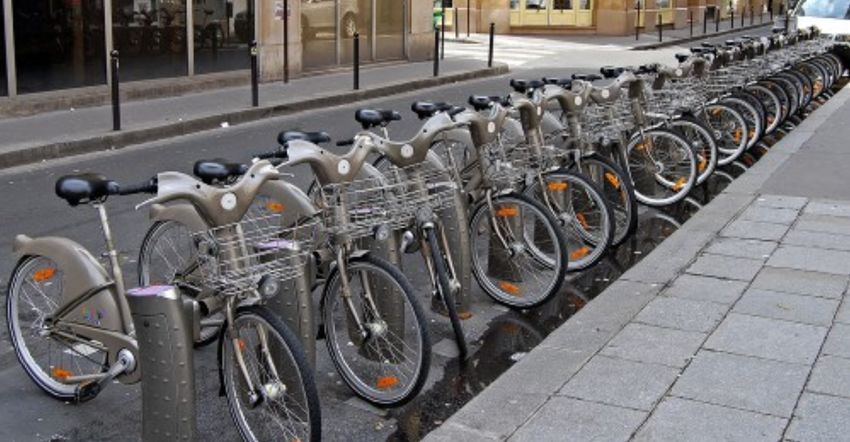
Facility:
                                            JCDecaux (‘Cyclocity’) based self-service bicycle hire systems,
                                            designed for short city journeys: the Vélib’ scheme in Paris, France
                                            and Sevici scheme in Seville, Spain.

                                            Provider:
                                                                                          1
                                            JCDecaux Development Services, Cyclocity’ bikes division.
Vélo’v, Lyon                                Vélib’ www.velib.paris.fr was commissioned by ‘Mairie de Paris’ City
                                            Council of Paris
                                            Sevici http://en.sevici.es was commissioned by the Seville City
                                            Council ‘Ayuntamiento de Sevilla’.

                                            Supplier / Manufacturer of System Equipment:
                                            System and hardware supplied by JC Decaux to both cities.
                                            Cycles manufactured by Bikes Lapierre, France and Órbita, Portugal
                                            for JCDecaux.

                                            Designer / Architect:
                                            JCDecaux design department.

                                            General Description:
Vélib’, Paris - source © Marie              Paris’ Vélib (Vélib is short for “Velo Liberte” or “Bike Freedom”)
Paris                                       Service is a city-wide bike rental service. It was launched in July 2007
                                            and the service has expanded to offer a rental point at five-minutes’
                                            walk from every point throughout the centre of Paris. With a total of
                                            nearly 20,600 bicycles available at 1451 stations it is currently the
                                            largest bicycle rental project in the world and has consequently
                                            received the attention of a vast amount of media, public and official
                                            interest, at an international level. It has been hailed by many as a
                                            great success, financially, politically and as a new ‘green’ mode of
                                            moving around for the masses, within the French capital.
                                            However, the genesis of the Paris system is not new. It is created
                                            around JCDecaux’s Cyclocity system, which has already been
                                            introduced on varying smaller scales in around 13 other cities, since
                                            2002, starting in Vienna (see References section for list of current
                                            cities), and is the main competitor to Clear Channel’s SmartBike
                                                                            2
                                            based systems. Lyon’s Vélo’v scheme is among the better known of
                                            the JCDecaux predecessors to Vélib’, and its own success is believed
                                            to have influenced Paris’ decision to commission a similar service.
                                            This case study will focus mostly on the Paris scheme and also by
                                            way of recent comparison, the Seville version Sevici, which is another
                                            2007 addition to the list of Cyclocity derrived systems, installed on a
                                            smaller scale (10% the size of Paris). Both systems are accessible for
Sevici, Seville                             visitors and residents to hire bikes on short- or longer- term
                                            subscriptions and both are designed to encourage short city trips, with
                                            the first half hour free and escalating charging structures thereafter.

Vélib’, Sevici, JCDecaux
Bikeoff Project – Design Against Crime, July 2008                                                                  2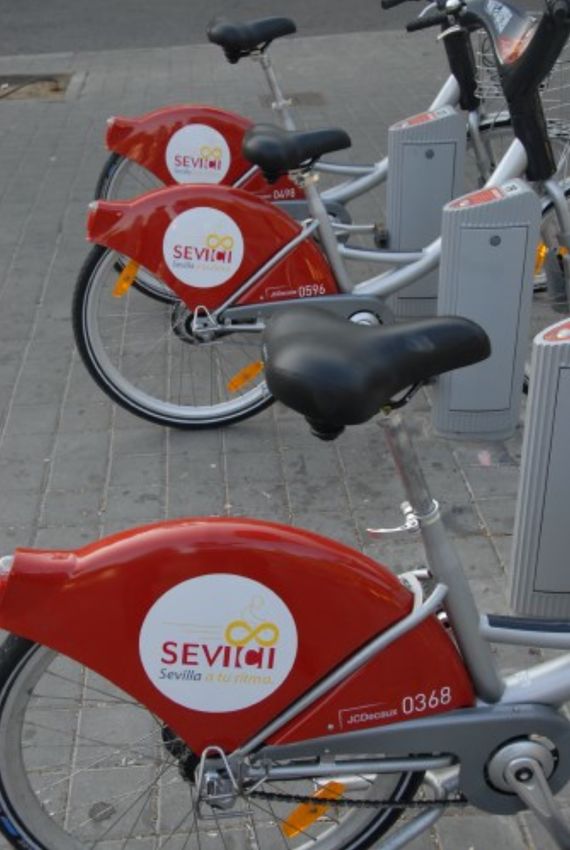
Location of Facility:
                                            Vélib’ rental stations are distributed nearly every 300 metres
                                            throughout the centre of Paris and currently reach the inner five of the
                                            city’s 20 arrondissements (districts).
                                            The locations of the 1451 stations can be searched by area, or parking
                                            station number, using the link on the Vélib’ website:
                                            www.vélib.paris.fr/index.php/trouver_une_station

Sevici, Sevilla

                                             Section of map downloadable from Vélib’ website, showing stations in
                                                                    the centre of Paris

                                            The 250 Sevici stations in Seville are also spaced nearly every 300m
                                            and are similarly well distributed throughout the city centre. Locations
                                            and availability can be accessed via the Sevici website at
                                            http://en.sevici.es/estaciones/mapa. The map here indicated the first
                                            160 stations.

Vélib’, Sevici, JCDecaux
Bikeoff Project – Design Against Crime, July 2008                                                                  3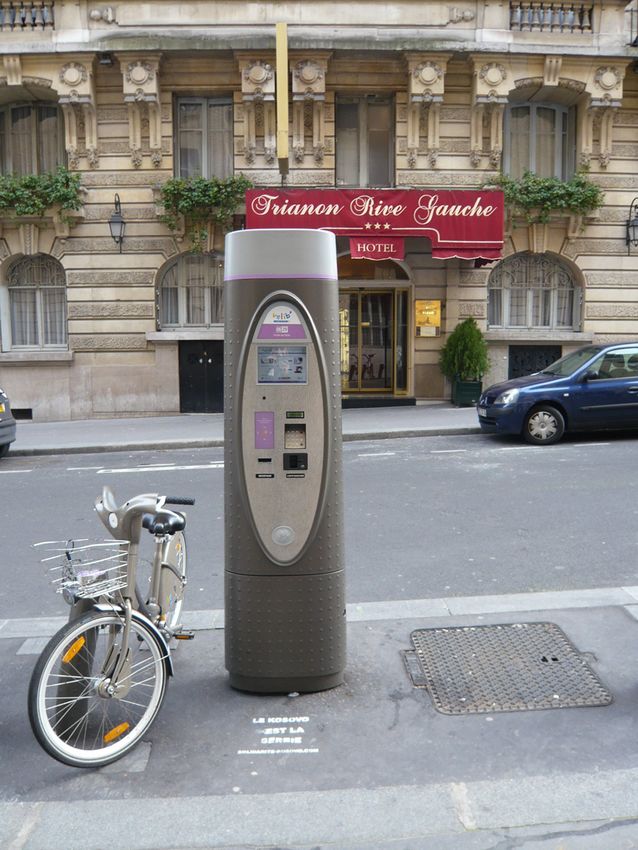
Scale (capacity):
                                            The Vélib’ scheme introduced 10,000 bicycles to the city with 750
                                            automated rental stations in 2007, but now has reached double that
                                            with 20,000 bicycles in circulation between 1451 stations. Each station
                                            has 15 or more bikes/ spaces.

Source © Marie Paris

                                                    Some Vélib’ parking stations host racks for up to 40 cycles

Vélib’, Sevici, JCDecaux
Bikeoff Project – Design Against Crime, July 2008                                                                 4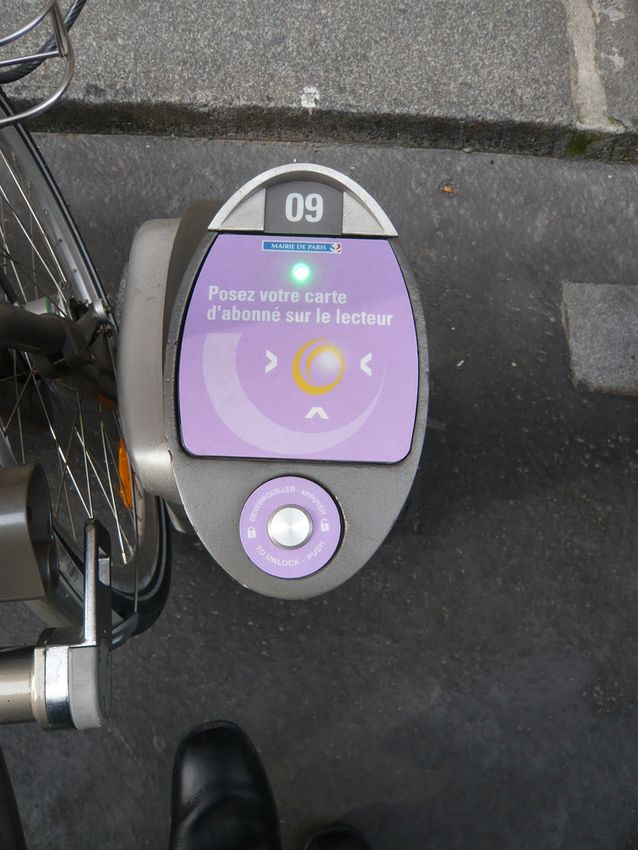
The Sevici service introduced 1500 bicycles during 2007 with just over
                                            150 stations but its target for 2008 is to reach 2000 bicycles and 250
                                            stations. Similar to the Paris set up, most Sevici stations offer 15 or
                                            more parking spaces.

                                            Cost of Provision:
                                            Costs to the Paris for supply implementation and ongoing
                                            management of the Vélib’ system are understood to be around €90
                                            million, linked to a ten year outdoor advertising contract, allowing
                                            control advertising rights on 1628 bus shelters, newsstands, public
                                            toilets, and other street furniture. In return, the major urban
                                            installations and urban publicity firm JCDecaux, cover all of the costs
                                            for the Vélib’ system.
                                            In addition, JCDecaux will pay Paris all the revenue from cycle rentals
                                            and annual subscriptions, plus an estimated €3.5 million per year from
                                            its advertising takings (or possibly more if ad sales surpass certain
                                                    3
                                            targets) .
                                            The bicycles used with the Vélib’ system are reported to cost just
                                            under €1000 each and the cost of the whole system, spread across its
                                            20,000 bikes equates to €4500 per bike.
                                            The exact costs of Sevici installation and system are not known, we
                                            understand they are based on an advertising-linked contract, as per
                                            the Paris scheme, whereby the cycle system is installed and operated
                                            by JCDecaux at no cost to the city, in exchange for exclusive street-
                                            advertising rights.

                                            Charges (cost to user):
                                            For both schemes, all who want to hire a bike, must first subscribe by
                                            providing credit card details and a €150 authorisation, which will be
                                            deducted if the user has the bike too long, or if the bike proves to be
                                            damaged or stolen while in their care. Users have the choice to

Vélib’, Sevici, JCDecaux
Bikeoff Project – Design Against Crime, July 2008                                                                     5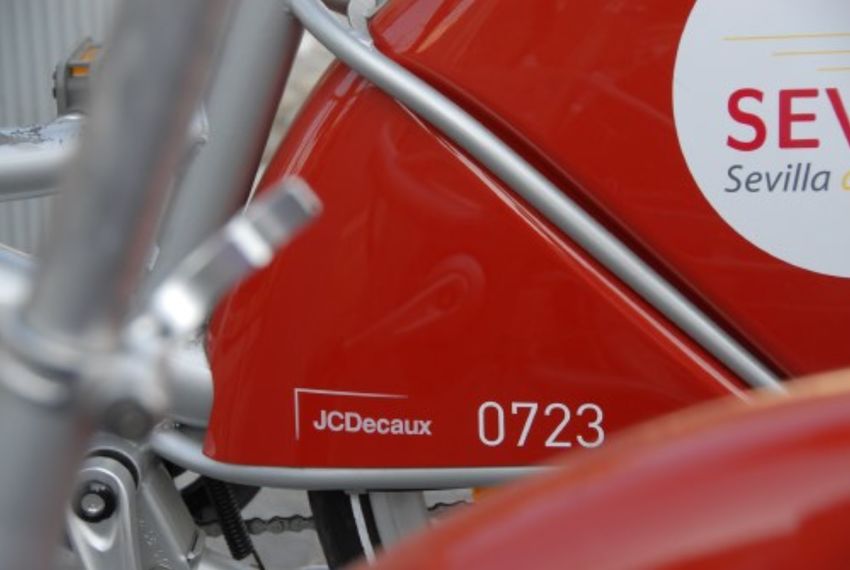
subscribe on short-or long-term bases: Paris offers a 1day option and
                                            both cities offer 7day and 1year subscriptions. A 1day or 7 day ticket
                                            allows unlimited journeys for the duration of the subscription period,
                                            paid for if a rental trip exceeds half an hour.
                                            Short-term subscription tickets are mostly bought from the service
                                            points at the bike rental stations (or the system website, for Paris) and
                                            long-term cards are bought via the respective website.

Vélib’ ‘long term’ annual                   Vélib’ subscription costs are as follows:
subscriber’s card.
                                            1-day ticket €1
                                            7-day ticket €5
                                            One year card €29
                                            The cost of renting a Vélib bike will be debited from the user’s card
                                            details, according to the following:
                                            Vélib’ rental prices (First half hour, free).

                                            1st additional half   2nd additional half       From the 3rd additional
                                            hour                  hour                      half hour

                                            €1                    €2                        €4 per additional half hour

Short-term Vélib’ tickets.                  The total €150 deposit amount will be forfeited if the bike is not
                                            returned with in 24 hours.

                                            Sevici subscription costs are:
                                            7day ticket €5
                                            One year card €13 (€10 + €3 for final 30 minute cycle usage)
                                            Sevici rental prices (First half hour free).
Sevici ‘long-term’ annual
subscriber’s card.                          1st additional        2nd additional half hour
                                            hour
                                                                  and every hour thereafter

                                            €0.50                 €1 (long-term users)
                                                                  €2 (short-term users)

                                            Clearly, the Sevici service offers considerably cheaper subscription
                                            and cycle rental than Vélib’. The difference in annual subscription
                                            rates in part reflects a difference between typical average incomes and
                                            living costs in these two cities. Paris City Council chose to price their 1
                                            year card at €29 to match that of a monthly metro card and they state
                                            the escalating hire prices have been pitched as high as they are to
                                            avoid competing with more traditional cycle hire outlets in the city, who
                                            rent bikes for half- or one-day periods. The result is that a four hour
                                            continuous rental for a short term Vélib’ user (e.g. visiting Paris sights)
                                            would cost €19.

Vélib’, Sevici, JCDecaux
Bikeoff Project – Design Against Crime, July 2008                                                                         6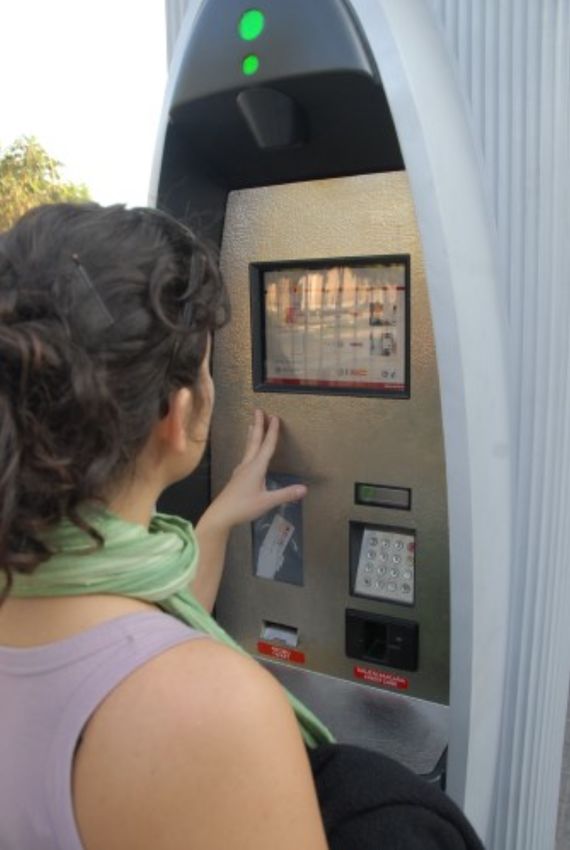
Length of use:
                                            The Cyclocity concept is designed for short urban journeys. The
                                            pricing structures in Paris and Seville reflect this. In both cities users
                                            are encouraged to complete their journeys within half an hour. Paris
                                            offers less flexibility than Seville to those riders who wish to use the
                                            bikes for more than half an hour as rental prices rise more steeply
                                            when the half hour is up. This seems incongruous given the fact that
                                            Paris is larger than most other cities where the system has been
Vélib’ station in Paris                     implemented previously. Understandably, it is necessary to keep the
                                            ‘free’ period short in order to keep bikes in circulation and 30 minutes
                                            is an easy-to-remember number. However, some journeys between A
                                            and B that may take 15 or 20 minutes’ cycle time in Seville, might take
                                            40 minutes or more, for an equivalent journey in Paris. The result is
                                            that while Paris promote ‘cycle freedom’ with Vélib’, the Seville
                                            scheme actually offers more liberty in this respect.
                                            It may be helpful to users to integrate some kind of very simple time-
                                            indicator to help them keep track of how long they have had the bike.
                                            For example, LEDs which light up or change colour at periodic
                                            intervals, or other solution.

                                            Access:
                                            Vélib’ and Sevici bikes are available 24 hours per day and 7 days per
                                            week. All the stations are on street, located in public areas. Access in
                                            most cases is very straightforward. In some cases, users of the Paris
                                            system point out that they and many other Parisians work, but do not
                                            live, within the central five arrondissements and would like the service
                                            to be extended further to be able to access bikes near their homes.
Both Vélib’ and Sevici are
accessible for renting and
returning round the clock.                  Signage:
                                            Neither scheme is signed in any way apart from the graphics and
                                            colours on the bikes and parking station hardware. Both programs
                                            have been given their own strong visual identities, which helps make
                                            the cycles and rental points more recognisable. The huge-scale
                                            promotion that Vélib’ has received has also helped people get to know
                                            what the bikes are like and where to look out for them.

Sevici on-terminal sign.

Vélib’, Sevici, JCDecaux
Bikeoff Project – Design Against Crime, July 2008                                                                    7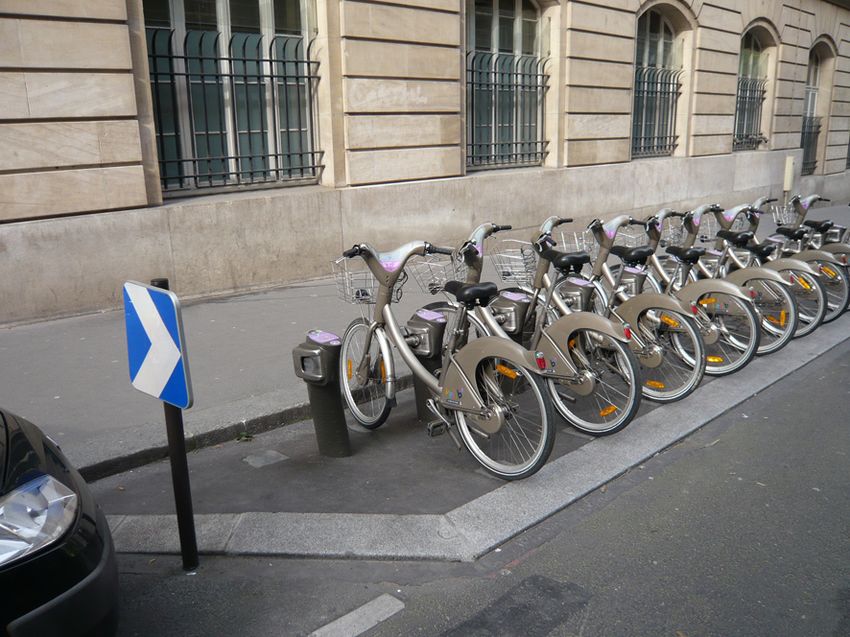
Both Vélib’ and Sevici include
informational signage on the large
handlebar area

                                                            Vélib’ on-bike signage via logo on rear mudguards.
                                            From a distance the Sevici scheme is more easily identifiable, owing to
                                            its bright red and silver colour scheme. While the Vélib’ bikes and
                                            stations have been entirely painted in a grey that matches the Eiffel
                                            Tower, the sheer quantity of the bikes and their distinctive form makes
                                            them sufficiently noticeable to pedestrians, but less so for cyclists
                                            looking for stations. French researcher / transport consultant Eric
                                            Britton writes:
                                                    The stations are not sufficiently visible to cyclists on the move…
Sevici’s on-bike colours and                        In other cities the stations are more visibly marked, but the Paris
bright visual identity draw
                                                    authorities decided to protect their built environment and not have
attention to the system, where
cycles are parked together                          aggressive signing or lighting of the stations. There is doubtless
                                                    room for doing better, but the protection of the beauty of the city
                                                                               4
                                                    has to be a high priority.
                                            Neither Vélib’ nor Sevici provide local on-street way finding to help
                                            locate stations but the interface points at stations of both systems
                                            allows users to find out where other nearby stations are situated.

                                            System Interface:
                                            The Cyclocity system used in Paris and Seville is centrally controlled
                                            in each city and is linked to ‘service terminals’ at each rental station,
                                            which allow users to hire bikes and purchase short-term subscriber
                                            tickets.

Vélib’, Sevici, JCDecaux
Bikeoff Project – Design Against Crime, July 2008                                                                       8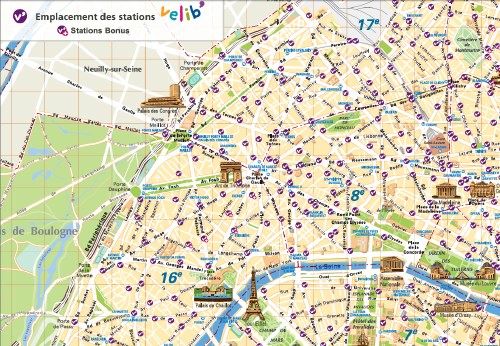
Service Terminal, Sevici
                                            Service Terminal, Vélib’                      Vélib’ Terminal display;
                                                                                          source: Sarah Sosiak (Flickr)
                                            A key advancement of Vélib’ over Sevici and other ‘third generation’5
                                            cycle hire schemes, is that the yearly subscriber’s card is RFID
                                            enabled (like London’s Oyster cards) and allows them to swipe the
                                            card at any bicycle docking point without having to use the central
                                            service terminal of the rental station. Beyond this facility, the rental and
                                            return process is similar for both schemes. The Sevici website
                                            describes the following:
                                                    1. Identify yourself by holding your Long-Term Subscription card
                                                       in front of the card reader or entering your Short-Term
                                                       Subscription code into the keypad.
                                                    2. Enter your PIN code.
                                                    3. Access the ‘Take a bike’ menu.
                                                    4. Select your bike.
                                                    5. Go up to your bike and unlock it. You have 1 minute to carry
                                                       out this operation.
                                                    6. Enjoy your ride!
                                            To return a bike:
                                                    7. Fix the bicycle to a Bike Post.
                                                    8. Verify that the indicator light situated below the Bike Post
                                                       flashes and that you can hear a beep sound.
                                                    9. That will mean that you have correctly fixed the bike.
                                                       Otherwise, try and repeat the same operation.
                                                    10. Please note; If the bike is not correctly fixed in its place, the
                                                        system will not register that you have returned it. If you
                                                        experience trouble fixing your bike you may contact us via the
Vélib’ docking points allow annual                      telephone number given.
subscribers to swipe their cards            Vélib’ terminals provide information in 8 languages - French, English,
directly on the posts to rent bikes
                                            Spanish, German, Italian, Arabic, Chinese and Japanese. Sevici offers

Vélib’, Sevici, JCDecaux
Bikeoff Project – Design Against Crime, July 2008                                                                         9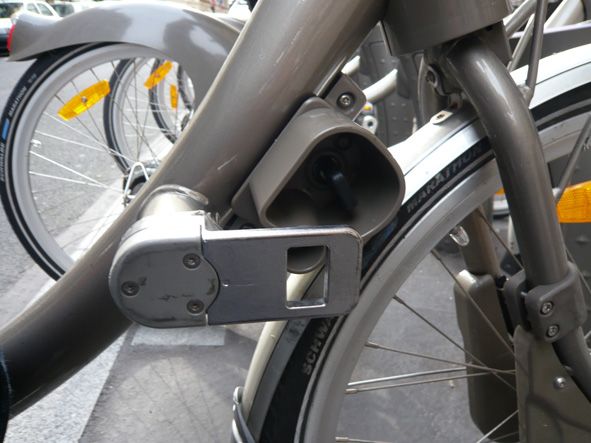
Spanish and English.
                                            The terminals and rental process of both Vélib’ and Sevici have proved
                                            relatively easy to use among most users; only some indicate that the
                                            short-term rental process could be simplified further (for examples, see
                                            User Responses section of this case study). However, some reports
                                            and users who have tried recent installations of both JCDecaux and
                                            Clear Channel systems consider the Clear Channel terminal interfaces
                                            to be simpler and less cluttered with options, buttons and on-screen
                                            text, than the JCDecaux versions.

                                            Furniture/ Parking equipment:
                                            Many of the Vélib’ and Sevici stations are installed and replace car-
                                            parking or other road space uses, while others are located on
                                            pedestrianised areas or wide pavements.
                                            The ‘street furniture’ for Vélib’ has been custom-created for Paris, as
                                            designed by Patrick Jouin (JCDecaux), compared to Sevici
                                            installations which are almost identical to those shared by Lyon and
                                            other cities, with variations only in the colours and graphics.

                                                                      source: Muddy (Flickr)

Source © Marie de Paris

Vélib’, Sevici, JCDecaux
Bikeoff Project – Design Against Crime, July 2008                                                                     10
Each bicycle is secured via individual locking posts, which on the
Vélib’ system also permit annual users to swipe their cards to release
a bike. Other user operations are performed at the service point, a
pillar that accompanies every Vélib’ and Sevici bicycle parking station.
The service terminal at each station includes a display screen, a credit
card slot, a ticket printing point and a metallic keypad, with slightly
hard-to-see and hard-to-press buttons. While this interface
combination shows some design awareness and is accepted by most
users, it could be simplified further in the number of elements and
options it presents, particularly on-screen.
Bicycles used with this system:
Sevici bikes.
The bicycles used with the Cyclocity-based schemes are designed by
JCDecaux and manufactured by Cycles Lapierre in France and
Hungary and by Órbita in Portugal.
Vélib’ bike, source The bicycles have been built to be resilient to intensive use and
© Marie de Paris possible attack. The bikes in Paris and in Seville are based around the
same model, although the design for Vélib’ has been custom
produced, and painted to match the grey of the rest of the scheme’s
hardware. The Sevici bicycle is essentially the same as used in other
Cyclocity based programmes such as Lyon, with different stickers/
logos and the mudguards are a different tone of red!
A parking connector, built into the downtube of the bicycle frame,
allows the user to ‘click’ the bike into one of the station posts to
complete the lock.
The bikes have three speeds, with internal hubs and brakes. They are
equipped with automatic always-on lights, wire baskets, a stand and a
wire basket at the front. There is also a small cable lock fitted to the
basket, which apparently can be used to secure the bike for short
Source © Marie de Paris
stops but it is very small and offers almost no security, so it is more
Vélib’, Sevici, JCDecaux
Bikeoff Project – Design Against Crime, July 2008 11realistic just for securing belongings in the basket while riding.
In use the bikes are comfortable but one repeated criticism of the
Vélib’ service is that the bicycles are excessively heavy and, perhaps
as a consequence, some say the three speeds are not enough to get
up some of Paris’s hills. JCDecaux quote 22kg for the Vélib’,
compared to 16kg for the Clear Channel bikes and between 12 and 18
kg for a typical urban bike that can be bought by consumers.
Internal brakes, hub-powered
lighting and ‘security’ wheel nuts
and fixing screws.
Colour coordinated with the tower Image source: Feuillu (Flickr)
Security, Guardianship and Lighting:
Software:
As a system, the recent Cyclocity based schemes use robust
technology that is among the most reliable currently available, to
protect virtual data as well as the physical infrastructure (controlling
locks etc.). There appear to be fewer reported system failures or
‘freezes’ than can be found in respect of the competing Clear Channel
system.
Hardware:
The cycles and on-street hardware for both Vélib’ and Sevici are
designed with similar levels of built-in security. Many components are
either welded on or fastened with less removable ‘security screws’.
They have many non-standard parts that cannot be interchanged with
regular bikes’ components.
Being ‘self service’ systems, they have no appointed guardians and
the only lighting is from the informational LED-lights, back-lit service
point logos and on-screen displays. The ambient lighting is entirely
dependent on the street location where the each station is situated.
Very little information is available about thefts or vandalism related to
the Seville bike program, but no hardware or components were seen
Vélib’, Sevici, JCDecaux
Bikeoff Project – Design Against Crime, July 2008 12damaged or vandalized when Bikeoff tested the system, nine months
after its inauguration.
In respect of Paris, there are varying reports in circulation about the
numbers of bikes that have so far suffered abuse or theft. They
indicate that during the first year, there have been considerably more
crime problems than were hoped or anticipated.
Non-standard handlebars and
other components are shrouded
in plastic to hide parts which may
catch clothing etc.
Source Perspikace (Flickr) Source: Caramel (Flickr)
Image: Vélib’s out of action, stolen?
In 2007 Eric Britton wrote of Vélib’ security:
“Theft and vandalism are threatening the project. The reported
figure is on the order of three thousand bikes stolen or completely
trashed in the first year. That’s a lot, but think of it as on the order
of 300 per month or ten per day. And that out of 15,000-plus bikes
on the road every day. Difficult but surely workable. (This should
not be taken as encouraging laxity on your part if you are thinking
about a PBS in your city). The vandalism and theft challenge is a
real one and an indicator among other things of the level of social
6
peace and inclusiveness in your city”
Since then, some reports suggest that beyond those 3000 bikes stolen
or damaged to destruction, another 3000 experienced crime – either
slightly vandalised or stripped of some parts to a lesser extent. This
totals six thousand bikes, nearly a third of total circulation being taken
out of action in the first year of Vélib’s service – somewhat higher than
the 10% estimated for most schemes.
On-bike lock offers limited
security
Vélib’, Sevici, JCDecaux
Bikeoff Project – Design Against Crime, July 2008 13Broken chain Broken bike
Source: Nitot (Flickr) Source: Gamebouille (Flickr)
Broken bikes Broken bike
Sevici service and distribution Source: Luc Legay (Flickr) Source: Gamebouille (Flickr)
vehicle.
In-spite of custom specification, ‘high-resistance’ bikes and a ‘smart’ IT
system that knows who is taking which bike out and when, it appears
in common with other third generation bike projects, that Vélib’ has
loopholes in its security against theft and vandalism that still leave
room for astute secure design and system development.
Road Safety.
The Paris scheme has been tarnished by media reports highlighting
the tragic deaths of four Vélib’ users on the city’s roads during the first
7
year of the project. However other studies show that these cyclist
fatalities are not above average for a city of this size. In 2008 Paris
Vélib’ distribution has more bike lanes (371 km) than London or New York for instance.
Further indications are that more bikes on Paris’ streets are beginning
8
to slow down other traffic, implying more safety for all cyclists.
Whatever the reality of the situation, such fatalities highlight the need
for a well-designed road infrastructure that acknowledges both
motorists but also cyclists as modes of transport. Additionally, training
and awareness campaigns linked to city cycling are known to
contribute positively to these issues.
Vélib’ on-site servicing. Maintenance and Servicing:
© Marie de Paris.
All maintenance and ongoing repairs for the schemes, in Seville and in
Paris, are managed by the local teams, employed by JCDecaux.
Vélib’, Sevici, JCDecaux
Bikeoff Project – Design Against Crime, July 2008 14The Paris scheme involves about 400 staff, working in these key
areas:
• Logistics fieldwork: service and regulation staff (jobs open to
technicians and students – 20 hours minimum per week),
sector managers, stock managers, supervisors
• Workshop: mechanics and warehouse staff
• Call centre: subscription managers and customer service team
The maintenance operations of the Vélib’ project show an encouraging
amount of initiative as regards sustainability.
Vélib’ aim to manage 80-90% of the physical maintenance of the bikes
and hardware on-site, to keep motorised transport down and to allow
bike pick-up vans to focus on keeping bike distribution balanced.
Vélib’ maintenance vehicles ©
Marie de Paris.
Source © Marie de Paris
Vehicles in the maintenance fleet Control of the bikes will be carried
out include 20 clean natural gas vans. The maintenance staff will
travel around using 130 electrically assisted bikes. A barge with 12
stopping points all along the Seine will pick up the bikes in need of
major repairs. On board, there will be a bargeman and eleven
mechanics to sort out the damaged bikes.
Major maintenance requiring the use of water will be carried out by
staff travelling in 10 electric vehicles transporting rainwater recovered
from the roofs of the JCDecaux sites. This process will do away with
the need to use detergent during maintenance. Indeed, “pure” water
possesses natural cleaning properties. The anti-graffiti product used
on the hard used on the hard area surfaces is also claimed to be
ecological.
The bikes are 99% recyclable. JCDecaux has also set up a recycling
network for worn bike tyres, which is a first in France.
Service Period (how long facility meant to
last):
JCDecaux are contracted to operate the system for at least ten years.
Vélib’, Sevici, JCDecaux
Bikeoff Project – Design Against Crime, July 2008 15Sevici, Seville
Sevici supported by good road and cycle infrastructure
Strengths:
Benefits of the Cyclocity schemes in Paris and Seville include:
• Short-term and long-term rental options available with
accessibly priced subscription rates
• Big-wheeled bikes better for Paris and Seville which still have
numerous cobbled streets
• Sufficient numbers of bikes installed in each case to serve a
substantial portion of the travelling masses in those city
centres
• Advanced and reliable system software and service back-up
• Sevici bike rental pricing offers more flexible use being among
rd
the least expensive for 3 -generation schemes
• Vélib’ annual user rental process made very easy by the on-
post swipe card facility
Vélib’, Paris
• Sevici supported by bike-friendly street and city infrastructure
• Vélib’ is backed up by strong publicity, a users’ blog and
various forums as well as the official website
Weaknesses:
• Very heavy bikes and not attractive to all. Vélib’-grey is said by
some to make the parking stations less noticeable
• The Paris road infrastructure is still not up to supporting so
many new cyclists
• Logistical problems with not enough bikes being available in
the popular places at the popular times
• Bikes tend to be very quickly rented from the tops of hills and
they tend to accumulate at the base of the hills
• Continued issues with thefts and vandalism mean less bikes
are available than have theoretically been put into circulation
and may increase the provider’s costing structure for future
cities
Vélib’, Sevici, JCDecaux
Bikeoff Project – Design Against Crime, July 2008 16User Responses:
We asked six users of the Vélib scheme, (aged between 23 and 62) to
give us their thoughts on the following questions …
1) What do you think of the cost/ pricing structure of the service?
[David Alves] The cost is not expensive.
[Virginie Chassard] If you haven’t subscribed on the annual
basis you only need to pay 1 euro … for 24 hours. But that’s a
trick. Its actually 1 euro, which covers the first ½ hour then you
need to add 4 euros for an additional ½ hour and can cost you
a lot if you have planned to cycle all day in Paris. Still it’s nice
to cycle in the open air. If you are [subscribing] on [an] annual
basis they charge you only if you go beyond ½ hour and it’s
the same price as above. I would say it is more than
reasonable and affordable…
[Victor Dixmier] cheap
Vélib’, Sevici, JCDecaux
Bikeoff Project – Design Against Crime, July 2008 17[Henri Gillet] According to my budget and low cost
[Alex Hinzpeter] It s actually quite cheap
[Leo Pierre] Quite good the annual price is very good (around
25 euros a year if I remember well). The one day or one week
costs relatively more.
2) What do you think of the locations of the cycles? Are they too
far for you? Would you change anything, and if so, how?
[David Alves] There are a lot of location points. It would be
nice to have location points nearer Stations.
[Virginie Chassard] Locations are everywhere; I have, almost
15 spots around my flat, that’s 2 minutes’ to 5 minutes’ walk.
That’s not a problem at all, to find a spot is really easy, now
I’m talking about the very heart of Paris, maybe it’s different in
other districts.
[Victor Dixmier] we need more cycles close to the train
stations.
[Henri Gillet] It's a joke, first to find your Vélib’’ and then find
somewhere to leave it.
[Alex Hinzpeter] Many spots, roughly every 200 meters, but
sometimes they are too small. They need to increase the
capacity of strategic sites (schools, universities...).
[Leo Pierre] Very good in the centre of Paris, where you can
find a station almost every few hundred metres. Then
depending where you are in Paris it can become more difficult.
Though I believe they have increased the number of locations
since last year. I had one just in front of my house so I could
hardly complain. The difficulty is when you have to put back a
cycle at night in a crowded area, you could spend 30 minutes
looking for a place where to leave your bike, at 2am it can be
a nightmare.
3) What do you think of the system interface/ ease of use of
renting and returning the bicycles?
[David Alves] It’s very easy if you get a subscription. If not,
there are lot of stages before taking the bike. For returning
bike, very easy, except when there is not place free.
[Virginie Chassard] Ok to subribe you need to be patient, and
you need to have €250 on your bank account… so some
sudents can’t rent it. To subscribe it can take 3 to 5 minutes
you need to enter many codes, chose a secret code then
chose the bicycle you want … the first time we decided to use
them it took us 10 minutes. After that it takes 2 minutes. It’s
not complicated really, it’s just very very slow… so the system
is ok… unless you are in a hurry.
[Victor Dixmier] ok but could be faster for the one day/week
rental service
[Henri Gillet] I understand so it's a good interface.
[Alex Hinzpeter] No idea, I have a yearly card.
Vélib’, Sevici, JCDecaux
Bikeoff Project – Design Against Crime, July 2008 18[Leo Pierre] I understood it so I guess it is easy, I've never had
any problem.
4) What do you think of the bicycles themselves? Design,
comfort, security etc?
[David Alves] The bikes are very heavy. The gear change is
easy, but there are not enough levels.
[Virginie Chassard] Design comfort and security are ok, that is
if you haven’t picked up the wrong number, unfortunately
many of them are damaged and you realise that 10 metres
after… mostly the pedals or the wheel ( ‘cause you are
supposed to notice right away if the saddle is there or not….)
still I have to say that even if the weight of the bicycle is a
security thing, it’s way too heavy!!
[Victor Dixmier] nice design, a little bit heavy.
[Henri Gillet] It looks like my first bike: Mobylette without
motors.
[Alex Hinzpeter] The bikes are quite heavy and can’t go very
fast.
[Leo Pierre] The only negative point according to me, the
bikes are ugly (they have a sad grey color) and they are very
heavy, therefore not that easy to use. This last point can
become dangerous as you often see people not used to bike
in cities using them badly…
5) How could the service be changed or improved, overall?
[David Alves] I think that a baby-seat could be added to the
bike.
[Virginie Chassard] It should be possible to use your credit
card just the first time then have the annual subscription
registered with your navigo pass ( it’s a Métro pass, electronic)
and only badge then type a secret code and get your bike,
today we need to send a cheque to Vélib’ and wait 1 month to
have the subscription. By the way annual subscription is €29,
quite nice if you never pass the ½ hour free.
I know bicycles are supposed to travel like cars but in Paris
they have improved that by adding bicycle tracks… problem is
you never really know where they are and you would like it
because driving in the middle of cars is not very safe ( I
haven’t mentioned healthy ‘cause that would be a fraud, if you
drive right in the middle or just on the right it doesn’t make any
changes, some think it does, I don’t)… so they should create a
web site like mappy but for bicycles…
[Victor Dixmier] (no comment)
[Henri Gillet] Don't know
[Alex Hinzpeter] Increase the bike turnover: many spots are
full while some are empty! It would be better if there were 3
times as many spots as bikes.
[Leo Pierre] Having bikes lighter, improving the ‘put back’
system and logistics (having more free places in the popular
Vélib’, Sevici, JCDecaux
Bikeoff Project – Design Against Crime, July 2008 19areas).
6) Have you experienced any problems with the service?
[David Alves] A lot of bikes are broken.
[Virginie Chassard] If you are doing a great trip in Paris and try
to explore some great places… think about it twice if it’s
in Montmartre or if you need to carry your bicycle… that thing
is really heavy!!!
[Victor Dixmier]
- Difficult sometimes to find a empty station to return your bike,
but the system is improving.
- the users don't respect the bikes enough (broken cycles...).
[Henri Gillet] Last night: half an hour to leave my Vélib and a
quarter hour walking to the Rhumerie Bvd. St Germain and so
I had to drink two mojitos quickly.
[Alex Hinzpeter] some bikes are broken, but it’s rare.
[Leo Pierre] not really, excepting having to find a free place at
night. Also finding myself with a broken bike.
7) Has it changed your lifestyle/ Does it make you cycle more (if
you live/ work in Paris)? If not, why not?
[David Alves] I’ve never cycled in Paris before Veli’b.
[Virginie Chassard] During summer for sure, not really sure I
would bicycle in winter…
[Victor Dixmier] I'm biking in Paris! and mostly by night, a new
experience for me; I'm waiting for the bikes in the suburbs
(they are coming in a few months...)
[Henri Gillet] Yes.
[Alex Hinzpeter] I use it after parties or at weekends. I do work
in the suburbs where this system does not exist yet... waiting
for it to grow!
[Leo Pierre] Yes, I guess it would make me cycle more. For
small journeys you often go faster than buses or cars. And it is
also a way to keep in shape. And one important point, you
don't worry about someone stealing your bike, which has
always been a problem in Paris.
8) Any Other Comments?
[Virginie Chassard] This is a great bicycle idea that might
change real soon into a tricky idea…not because of the bike
itself, just because bikers have to respect the highway code
like cars and we are not equal there, I know the code but I
have many friends who haven’t had time and money to pass
the exam…( hence they use a bicycle). Now they are starting
to fine bikers if they do not respect the highway code… they
even got someone arrested because the guy was over 50km/h
(can’t figure out how he did that) and another guy because he
had drunk too much… he got €200 fines and I think if you are
being in breach of the law (running over an old lady for
example) they can withdraw some points on your driving
Vélib’, Sevici, JCDecaux
Bikeoff Project – Design Against Crime, July 2008 20licence…. Not really fair!
So yes I bicycle more in Paris but am aware that we should do
something for the bikers, teach them what the Highway Code
is…
Ok the very last opinion: the problem is not the bicycle itself
but the bikers… they are reckless… we need to educate them
on safety.
Useful References:
Vélib’, Paris
http://www.en.velib.paris.fr/
http://blog.velibparis.fr/blog
Sevici, Seville
http://www.sevici.es
http://en.sevici.es
JCDecaux Cyclocity
www.jcdecaux.co.uk/development/cycles
http://fr.wikipedia.org/wiki/Cyclocity
http://www.jcdecaux.com/content/jcdecaux_en/innovationdesign/40ans
/40gamme15.html
JCDecaux ‘Cyclocity’ based schemes:
Austria:
Vienna - Citybike Wein, 50 stations www.citybikewien.at
Belgium:
Brussels - Cyclocity, 23 Stations and 250 cycles www.cyclocity.be
France:
Aix-en-Provence – V’hello, 16 stations and 200 bikes www.vhello.fr
Amiens – Vélam, 26 stations and 313 bicycles www.velam.amiens.fr
Besançon – Vélocité, 30 stations and 200 bikes
www.velocite.besancon.fr
Lyon – Vélo’v, 340 stations and 4,000 bikes www.velov.grandlyon.com
Marseille – Le Vélo, 150 stations and 1,000 bicycles www.levelo-pm.fr
Mulhouse - Vélocité, 35 stations and 200 bikes
www.velocite.mulhouse.fr
Nantes – Bicloo, 79 stations and 700 cycles
www.bicloo.nantesmetropole.fr
Paris - Vélib’, 1,451 stations and 20,000 bikes www.Velibparis.fr
Rouen – Cy’clic, 20 stations and 250 bicycles www.cyclic.rouen.fr
Touslouse – VeloToulouse, 253 stations and 2,400 bicycles
www.velo.toulouse.fr
Spain:
Córdoba – EcoBici/ Cyclocity, 4 stations and 35 cycles
http://www.ayuncordoba.es/portal/web1/listaPDF.jsp?id3=14826&id2=
21566&id=21565
Gijón – Gijón-Bici, 8 stations and 64 bikes
http://www.gijon.es/Contenido.aspx?id=13208&leng=es
Seville – Sevbici, 250 stations and 2,000 cycles www.sevici.es
Other references used for this case study:
• http://www.ciclofilia.org/Article301.html
Vélib’, Sevici, JCDecaux
Bikeoff Project – Design Against Crime, July 2008 21• http://www.treehugger.com/files/2007/08/sevilles_sevici.phphtt
p://www.guardian.co.uk/world/2005/aug/12/france.jonhenley
• http://Vélib’obsession.blogspot.com
• http://www.pfonline.com/articles/040801.html
• http://www.ecoplan.org/wtpp/citybike_index.htm
• http://www.ecoplan.org/wtpp/citybike_index.htm
• http://66.102.9.104/translate_c?hl=en&sl=fr&tl=en&u=http://w
ww.agglo-
larochelle.fr/services/depl_velo.php&usg=ALkJrhgq0rYsbStQ
MADHbZMSxgM3VpEzNQ
• https://www.agglo-veloplus.fr/
• http://ecoplan.org/library/
• http://66.102.9.104/translate_c?hl=en&sl=fr&tl=en&u=http://fr.
wikipedia.org/wiki/V%25C3%25A9lopartage&usg=ALkJrhhr6t
K0Cu-fk9RpqbzH0tLe2yKeOA
• http://www.liberation.fr/actualite/societe/285982.FR.php
• http://www.ask-rfid.com/uk/news/news_article.php4?id=6
• http://www.paris.fr/portail/english/Portal.lut?page_id=8118&do
cument_type_id=2&document_id=35246&portlet_id=19237
• http://reviews.roadbikereview.com/blog/review-of-eu-free-city-
bike-services/
• http://greenjoe.wordpress.com/2007/10/14/velib%E2%80%99-
%E2%80%93-freedom-bikes-%E2%80%93-not-free-but-
worth-it/
• http://www.nowpublic.com/environment/happy-bicycling-
birthday-Vélib’
• http://66.102.9.104/translate_c?hl=en&sl=fr&tl=en&u=http://blo
g.Velibparis.fr/blog/%3Fp%3D81&usg=ALkJrhhwP0Tj8Qcq0O
I-ydDmzGbaJ7NGSg
• http://66.102.9.104/translate_c?hl=en&sl=fr&tl=en&u=http://blo
g.Velibparis.fr/blog/%3Fp%3D84&usg=ALkJrhiVXFgmJUcZH
K1ZfnjRsPgRHiaCgA
• http://translate.google.com/translate?u=http%3A%2F%2Fblog.
Velibp
aris.fr%2Fblog%2F&hl=en&ie=UTF8&sl=fr&sl=es&tl=en&tl=en
• http://www.telegraph.co.uk/news/worldnews/europe/france/21
88558/Deaths-threaten-free-Paris-bike-scheme.html
• http://en.wikipedia.org/wiki/Vélib’#cite_note-nyt2-3
• http://www.carton-jaune.fr
• http://www.ecospace.cc/travel/sightsee-paris-via-bike.htm
http://londonist.com/2007/08/pay_as_you_go_p_1.php
• www.deplacements.paris.fr
• www.velo.paris.fr
1
Cyclocity www.jcdecaux.co.uk/development/cycles
2
Vélo’v http://www.velov.grandlyon.com/Index.1.0.html?&no_cache=1&L=1
3
http://greenjoe.wordpress.com/2007/10/14/Vélib’%E2%80%99-%E2%80%93-freedom-
bikes-%E2%80%93-not-free-but-worth-it/
4
Britton, E, 2008, Happy Birthday Vélib’ (draft paper) http://ecoplan.org/library/Vélib’.pdf
5
Implies on-street, automated self service bike hire systems which hold user
Vélib’, Sevici, JCDecaux
Bikeoff Project – Design Against Crime, July 2008 22information, hire information and credit card details on a central server.
6
Britton, E, 2008, Happy Birthday Vélib’ (draft paper) http://ecoplan.org/library/Vélib’.pdf
7
http://www.telegraph.co.uk/news/worldnews/europe/france/2188558/Deaths-threaten-
free-Paris-bike-scheme.html and
http://www.nytimes.com/2008/07/13/world/europe/13paris.html?_r=3&ei=5087&em=&en
=607f90e234d58472&ex=1216094400&pagewanted=all&oref=slogin&oref=slogin&oref=
slogin
8
Source: Victor Dixmier , Marie de Paris. A map of Paris bike lanes can be found here
map of bike lanes:
http://www.paris.fr/portail/deplacements/Portal.lut?page_id=7054&document_type_id=5
&document_id=5061&portlet_id=16223
Vélib’, Sevici, JCDecaux
Bikeoff Project – Design Against Crime, July 2008 23Vélib’, Sevici, JCDecaux Bikeoff Project – Design Against Crime, July 2008 24
Vélib’, Sevici, JCDecaux
Bikeoff Project – Design Against Crime, July 2008   25
You can also read


