Mind the Gap - Uncovering the Android patch gap through binary-only patch analysis HITB conference, April 13, 2018
←
→
Page content transcription
If your browser does not render page correctly, please read the page content below
Mind the Gap –
                      Uncovering the Android patch gap through binary-only patch analysis
                                                          HITB conference, April 13, 2018

                                                                 Jakob Lell
                                                               Karsten Nohl

SRLabs Template v12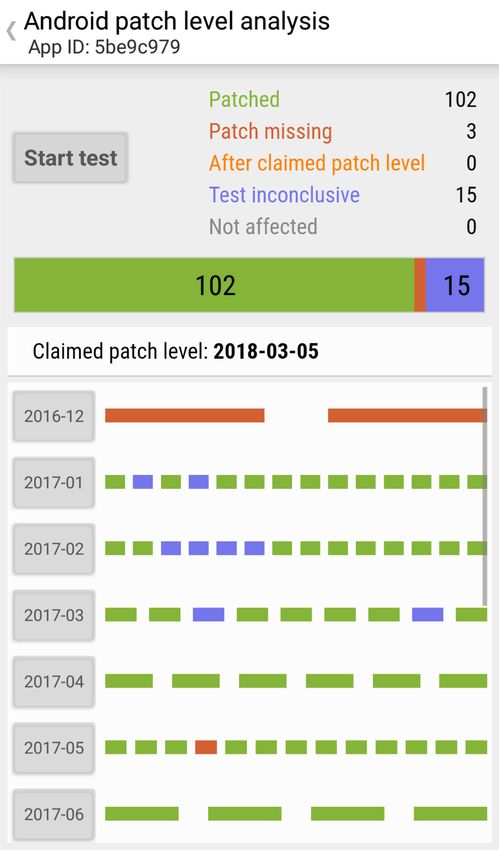
Allow us to take you on two intertwined journeys

                                   This talk in a nutshell

                                   § Wanted to understand how fully-maintained Android phones
                                     can be exploited
                     Research
                                   § Found surprisingly large patch gaps for many Android vendors
                     journey
                                   § Also found Android exploitation to be unexpectedly difficult

                                   § Wanted to check thousands of firmwares for the presence of
as Logo Horizontal                   hundreds of patches
Pos / Neg
                     Engineering
                                   § Developed and scaled a rather unique analysis method
                     journey
                                   § Created an app for your own analysis

                                                                                                    2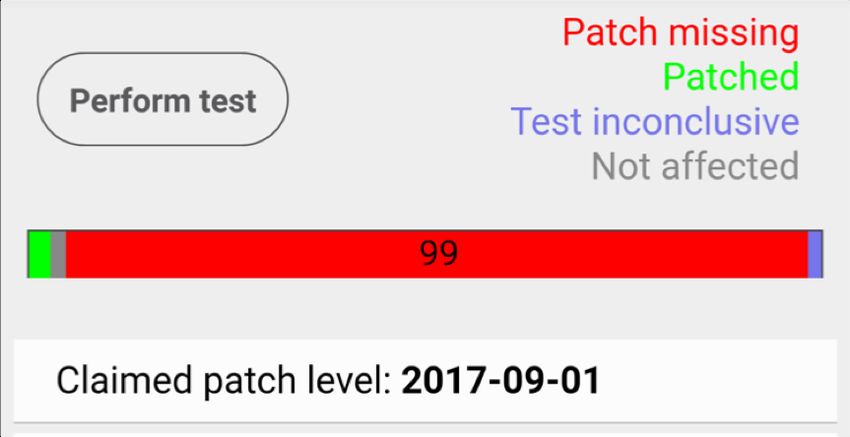
Android patching is a known-hard problem

                           Patching challenges                                  Patch ecosystems

                           § Computer OS vendors regularly issue patches         OS vendor
                           § Users “only” have to confirm the installation of    § Microsoft                      OS patches
        Patching is hard     these patches
                                                                                 § Apple                                                   Endpoints & severs
        to start with      § Still, enterprises consider regular patching
                                                                                 § Linux distro
                             among the most effortful security tasks

                           § “The mobile ecosystem’s diversity […]               OS                Chipset        Phone                             Android
                             contributes to security update complexity and       vendor            vendor         vendor                            phones
                             inconsistency.” – FTC report, March 2018 [1]                                                          Telco
          The nature of
          Android makes    § Patches are handed down a long chain of
as Logo Horizontal
Pos / Neg patching so        typically four parties before reaching the user
          much more        § Only some devices get patched (2016: 17% [2]).
          difficult          We focus our research on these “fully patched”
                             phones

                                                                                 Our research question – How many patching mistakes are made in this complex
                                                                                 Android ecosystem? That is: how many patches go missing?

                                                                                                                                                                3
Vendor patch claims can be unreliable; independent verification is needed
How do we determine whether an Android binary has a patch installed, without access to the
corresponding source code?
Try exploiting the Apply binary-only patch
Trust vendor claims?
corresponding vulnerability? heuristics
§ No exploits publicly § Find evidence in the binary
available for most Android itself on whether a patch is
bugs installed
§ A missing patch also does § Scale to cover hundreds of
not automatically imply an patches and thousands of
open vulnerability phones
as Logo Horizontal
(It’s complicated.
Pos / Neg
Let’s talk about it later) § The topic of this
presentation
Important distinction: A missing patch is not automatically an open security vulnerability.
We’ll discuss this a bit later.
4Patching is necessary in the Android OS and the underlying Linux kernel
Android OS patching (“userland”) Linux kernel patching
Responsibility § Android Open Source Project (AOSP) is maintained by § Same kernel that is used for much of the Internet
Google § Maintained by a large ecosystem
§ In addition, chipset and phone vendors extend the OS § Chipset and phone vendors contribute hardware
to their needs drivers, which are sometimes kept closed-source
Security § Most exposed attack surface: The OS is the primary § Attackable mostly from within device
relevance layer of defense for remote exploitation § Relevant primarily for privilege escalation (“rooting”)
Pos / Neg Patch
as Logo Horizontal
§ Monthly security bulletins published by Google § Large number of vulnerability reports, only some of
situation § Clear versioning around Android, including a patch which are relevant for Android
level date, which Google certifies § Tendency to use old kernels even with latest Android
for some phones version; e.g., Kernel 3.18 from 2014, end-of-life: 2017
We focus our attention on userland patches
5Agenda
§ Research motivation
§ Spot the Android patch gap
§ Try to exploit Android phones
as Logo Horizontal
Pos / Neg
6We want to check hundreds of patches on thousands of Android devices
Android Android’s 2017 Source code is Of these So far, we The heuristics would
userland security available for userland bugs, implemented optimally work on
patch bulletins list heuristics for hundreds of thousands
analysis of Android firmwares:
~280 ~240 ~180 164 – 60,000 Android
variants [3]
bugs (~CVEs) of these bugs originate from of the
with Critical or C/C++ code corresponding – Regular updates for
High severity (plus a few Java) patches many of these variants
Out-of-
as Logo Horizontal ~700 kernel and The remaining We do not yet
Pos / Neg
scope medium/low bugs are in support most
(for now) severity closed-source Java patches
userland vendor-specific
patches components
7The patch gap: Android patching completeness varies widely for different phones
Not affected
Patch found applied as claimed
Patched found above claimed level Not tested
Patch not found within claimed level Claimed patch level
Patch not found outside claimed level Android version release date
2016 2017 Patches ”missing”
9 10 11 12 1 2 3 4 5 6 7 8 9 10 11 12 Critical High
Google Pixel 2
Android version 8.1 0 0
Patch level: Feb 2018
Samsung J5 (2016)
Android version 7.1.1 0 0
Patch level: Aug 2017
as Logo Horizontal
Samsung J3 (2016)
Pos / Neg
Android version 5.1.1 2 10
Patch level: Jan 2018
Wiko Freddy
Android version 6.0.1 18 62
Patch level: Sep 2017
8Binary-only analysis: Conceptually simple
1 Prepare patch test set 2 Test for patch presence
Apply
Vulnerable source code patch Patched source code
Compile with different compliers, compiler configurations,
Binary file
CPU options
Mask volatile
Mask volatile information (e.g. call destinations)
information
as Logo Horizontal
Pos / Neg
Compare to collections:
Collection of unpatched
binaries
Collection of patched
binaries ? Find match with patched
or unpatched sample
9A bit more background: Android firmwares go from source code to binaries in two steps
Source
Compilercode Compiler Linker
contains placeholders that are filled preprocesses and compiles source combines the object files into an
in during preprocessing code into object files that are then executable firmware binary.
fed into the linker
#include stp x28, x27, [sp,#-32]! stp x28, x27, [sp,#-32]!
#include […] […]
void foo(char* fn){ orr w2, wzr, #0x1000 orr w2, wzr, #0x1000
char buf[PATH_MAX]; mov x1, x8 mov x1, x8
strncpy(buf, fn, PATH_MAX); bl 0 bl 11b3e8
}
as Logo Horizontal
Pos / Neg
[…] […]
ret ret
10The basic idea: Signatures can be generated from reference source code
1
Compile reference source code (before and after patch)
Parse Disassembly of object file, after compiler but before linker
disassembly 0000000000000000 :
0: a9bd7bfd stp x29, x30, [sp, #-48]!
listing for 4: 910003fd mov x29, sp
relocation […]
20: f9413e60 ldr x0, [x19, #632]
entries 24: 52800042 mov w2, #0x2 // #2
28: b9402021 ldr w1, [x1, #32]
Prepare 2c: 94000000 bl 0 2c: R_AARCH64_CALL26 impeg2_buf_mgr_release
patch […]
test set
Sanitize instructions Instruction format of the bl instruction
as Logo Horizontal Toss out irrelevant destination 100x 01 ii iiii iiii iiii iiii iiii iiii
addresses of the instruction
Pos / Neg
Create hash of remaining binary code
Generate signature containing function length, position/type of relocation entries, and hash of the code
11At scale, three compounding challenges need to be solved
Too much source code
§ There is too much source code to collect
§ Once collected, there is too much source code to compile
Too many compilation possibilities
§ Hard to guess which compiler options to use
§ Need to compile same source many times
as Logo Horizontal
Pos / Neg
Hard to find code “needles” in binary “haystacks”
§ Without symbol table, whole binary needs to be scanned
§ Thousands of signatures of arbitrary length
12Amount of source code
Signature generation would require huge amounts of source code Compilation possibilities
Needles in haystacks
One Android source code tree is roughly 50 GiB in size
Source code trees are managed in a manifest, which lists git repositories with revision and path in a
source code tree
…
…
+~500 MORE REPOSITORIES
Signature generation requires many source code trees
§ Hundreds of different Android revisions
as Logo Horizontal
Pos / Neg
Currently ~1100 source code trees are used in total
(e.g. android-7.1.2_r33) (many more exist!)
§ Device-specific source code trees
(From Qualcomm Codeaurora CAF) 1100 x 50 GiB = 55 TiB
Would require huge amount of storage, CPU time, and
network traffic to check out everything
13Amount of source code
We leverage a FUSE (filesystem in userspace) to retrieve files only on demand Compilation possibilities
Needles in haystacks
Insight: The same git repositories are used for many manifests.
Manifest 1 platform/frameworks/av
platform/frameworks/av rev 330d132d rev 330d132d
platform/frameworks/base rev 85838fea rev d43a8fe2
rev deadbeef
Manifest 2 platform/frameworks/base
platform/frameworks/av rev d43a8fe2 rev 85838fea
platform/frameworks/base rev 18fac24b rev 18fac24b
rev cafebabe
Manifest 3
platform/frameworks/av rev deadbeef
platform/frameworks/base rev cafebabe
as Logo Horizontal
Pos / Neg How this can be leveraged
Filesystem in userspace (FUSE) Reduces storage requirement by >99%:
§ Store each git repository only once 55 TiB => 300 GiB
(with git clone --no-checkout) Saves network bandwidth and time required for
§ Extract files from git repository on demand checkout
when the file is read Prevents IP blocking by repository servers
§ Use database for caching directory contents
14Amount of source code
Using our custom FUSE, we can finally generate a large collection of signatures Compilation possibilities
Needles in haystacks
1
Mount source code tree Run source-code analysis Generate build log
§ Read manifest § Source-code patch analysis § Run build system in dry-run
§ Use FUSE filesystem to read is much easier than binary mode, don’t compile
files on demand analysis everything
§ Determines whether a § Save log of all commands to
signature match means that be executed
the patch is applied or not § Various hacks/fixes to build Next
system required question:
Prepare How many
patch different
test set Preprocess source files Recompile with variants Generate signatures compiler
§ Use command line from § >50 different compiler § Evaluate relocation entries variants do
as Logo Horizontal
Pos / Neg
saved build log binaries and create signatures for we need?
§ Save preprocessor output § All supported CPU types each compiler variant
in database § Optimization levels
(e.g. -O2, -O3)
§ 3897 combinations in total,
74 in our current optimized
set
15Amount of source code
Brute-forcing 1000s of compiler variants finds 74 that produce valid signatures Compilation possibilities
for all firmwares tested to date Needles in haystacks
Tests are regularly optimized
Successful sub-tests
§ Our collection includes
3897 compiler 10000
configuration variants,
only 74 of which are 9000
required for firmwares
8000 § For 224 tested 64-bit firmwares,
tested to date.
signatures from the first 74
§ To ensure a high rate of 7000
conclusive tests, test compiler config variants provide
full test coverage
results are regularly 6000
§ 74 variants à
checked for success.
§ The test suite is amended 5000 6,944 signatures à 3MB
Just two variants account for 60% of successful sub-tests: § We tried 3,897 variants à
with additional variants
4000 - gcc version 4.9.x-google 20140827 (prerelease) 775,795 signatures à 34MB
from the collection as
- Android clang version 3.8.256229
needed.
as Logo Horizontal
Pos / Neg 3000 Both were run with each git’s default configuration
§ The collection itself is
amended with additional 2000
compiler configuration
variants as they become 1000
relevant.
0
0 10 20 30 40 50 60 70 80 90 100 110 120 130
# compiler config variants = compilers x [compiler options]
16Amount of source code
Finding needles in a haystack: What do we do if there is no symbol table? Compilation possibilities
Needles in haystacks
2
Function Simply compare function with pre-computed samples
found in
symbol
table
Function Challenge Insight Solution
not in
Checking signature at each position Similar problem already Take advantage of rsync rolling
Test for symbol
is computationally expensive solved by rsync checksum algorithm
patch table
presence
as Logo Horizontal
Relocation entries are not known Relocation entries are only Guess potential relocation entries
Pos / Neg while calculating checksum used for certain instructions based on instruction type and
sanitize args before checksumming
32bit code uses Thumb encoding, Same binary code is often Only test 64bit code
for which instruction start is not also available in 64bit version
always clear based on same source code
17Amount of source code
Using improved rolling signatures, we can efficiently search the binary ‘haystack’ Compilation possibilities
for our code ‘needles’ Needles in haystacks
Process step Hex dump of instruction Assembly code / instructions
...
Sanitize arguments before Potential relocation entries are
detected based on instruction. 97fee7a2 bl c7c40
checksumming
Zero-out volatile bits 94000000 bl 0
f10002ff cmp x23, #0x0
1a9f17e8 cset w8, eq
Match signatures of Size-8 window matches on b40000b6 cbz x22, 10ddbc
arbitrary lengths using start of signature 3707fdc8 tbnz w8, #0, 10dd6
sliding windows f10006d6 subs x22, x22, #0x1
§ Two overlapping
sliding windows 54ffff42 b.cs 10dd9c
§ Only needs powers of 35fffd48 cbnz w8, 10dd64
2 as window sizes to
as Logo Horizontal
36000255 tbz w21, #0, 10de08
Pos / Neg
match arbitrary
Overlapping window matches
394082e8 ldrb w8, [x23,#32]
function lengths
§ Allows efficient on end of signature 35000208 cbnz w8, 10de08
scanning of a binary 52adad21 mov w1, #0x6d690000
for a large number of 320003e8 orr w8, wzr, #0x1
signatures
728daca1 movk w1, #0x6d65
To avoid false positives (due to guessed relocation entries), signature is matched from the first window to the end of the overlapping window
18Putting it all together: With all three scaling challenges overcome, we can start testing
1 2
Prepare patch test set Test for patch presence
Mount source code tree Run source-code analysis Generate build log § Find and extract
§ Read manifest § Source-code patch analysis § Run build system in dry-run function (using
§ Fuse filesystem to read files is much easier than binary mode, don’t compile symbol table or
on demand analysis everything rolling signature)
§ Determines whether a § Save log of all commands to § Mask relocation
signature match means that be executed entries from
the patch is applied or not § Various hacks/fixes to build signature
system required § Calculate and
compare hash of
remaining code
Preprocess source files Recompile with variants Generate signatures
§ Use command
as Logo Horizontal
Pos / Neg
line from § >50 different compiler § Evaluate relocation entries
saved build log binaries and create signatures for
§ Save preprocessor output § All supported CPU types each compiler variant
in database § Optimization levels
(e.g. -O2, -O3)
§ 3897 combinations in total,
74 in our current optimized
set
19Patch gap: Android vendors differ widely in their patch completeness
Missed patches Vendor Samples* Notes
Google Lots – The tables shows the average number of missing
Sony Few Critical and High severity patches before the
0 to 1 claimed patch date
Samsung Lots
Wiko Few * Samples – Few: 5-9; Many: 10-49; Lots: 50+
Vendors differ Xiaomi Many – Some phones are included multiple times with
in how many 1 to 3 OnePlus Many different firmwares releases
patches are – Not all patch tests are always conclusive, so the
Nokia Few
missing from real number of missing patches could be higher
their phones HTC Few
– Not all patches are included in our tests, so the
Huawei Many
3 to 4 real number could be higher still
LG Many – Only phones are considered that were patched
Motorola Many October-2017 or later
TCL Many – A missing patch does not automatically indicate
as Logo Horizontal More than 4
Pos / Neg ZTE Few that a related vulnerability can be exploited
Some of the Missed patches Chipset Samples* Notes
patch gap is < 0.5 Samsung Lots – Again, we show the average of missing High and
likely due to 1.1 Qualcomm Lots Critical patches for phones that use these
chipset vendors chipsets
forgetting to 1.9 HiSilicon Many – Samsung phones can run on a Samsung or
include them 9.7 Mediatek Many Qualcomm chipset
20Agenda
§ Research motivation
§ Spot the Android patch gap
§ Try to exploit Android phones
as Logo Horizontal
Pos / Neg
21Can we now hack Android phones due to missing patches?
Mobile operating systems are inherently
At first glance, Android phones look hackable VS.
difficult to exploit
§ We find that most phones miss patches § Modern exploit mitigation techniques
within their patch level increase hacking effort
§ While the number of open CVEs can be § Mobile OSs explicitly distrust applications
smaller than the number of missing patches, through sandboxing, creating a second layer
we expect some vulnerabilities to be open of defense
§ Many CVEs talk of “code execution”,
as Logo Horizontal
Pos / Neg
§ Bug bounties and Pwn2Own offer relatively
suggesting a hacking risk based on what we high bounties for full Android exploitation
experience on Windows computers
22Do criminals hack Android? Very rarely.
Criminals generally use three different methods to compromise Android devices
Social engineering Local privilege escalation Remote compromise
Trick user into insecure actions: § Trick user into installing malicious app § Exploit vulnerability in an outside-
§ Install malicious app § Then exploit kernel-level vulnerability to facing app (messenger, browser)
Approach § Then grant permissions gain control over device, often using § Then use local privilege escalation
standard “rooting” tools
§ Possibly request ‘device administrator’
role to hinder uninstallation
§ Ransomware [File access permission] § Targeted device compromise, e.g. § (Google bug bounty, Pwn2Own)
Used for § 2FA hacks [SMS read] FinFisher and Crysaor (Same company
as infamous Pegasus malware)
§ Premium SMS fraud [SMS send]
as Logo Horizontal § Advanced malware
Pos / Neg
Frequency in § Almost all Android “Infections” § Regular observed in advanced § Very few examples of recent
criminal malware and spying criminal use
activity
Made harder
through
patching
û ü (userland or kernel) ü (userland and kernel)
23An exploitable vulnerability implies a missing patch, but not the other way around
Missing patches in source code
Code parts that are ignored during compilation Missing patches
(source code analysis)
= Missed patches in binary
Missing patches
(binary analysis)
Vendor created alternative patch
Vulnerability requires a specific configuration
Open
as Logo Horizontal
Bug is simply not exploitable vulnerabilities
Pos / Neg
Errors in our heuristic (it happens!)
= Open vulnerabilities
24A single Android bug is almost certainly not enough for exploitation
Android remote code execution is a multi-step process Simplified exploit chain examples with 4 bugs
1 Information leakage is used to derive ASLR
memory offset (alternatively for 32-bit binaries,
this offset can possibly be brute-forces) 1 Info leakage (IL)
2 Corrupt memory in an application. Examples:
ASLR
- Malicious video file corrupts memory using
Stagefright bug Memory 3a 4a
2
- Malicious web site leverages Webkit vulnerability corruption (MC)
IL MC
Ø This gives an attacker control of the application
including the apps access permission Application context
ASLR
3 4 Do the same again with two more bugs to gain
IL
as Logo Horizontal
Pos / Neg access to system context or kernel 3b
System context
Ø This gives an attacker all possible permissions KASLR
(system context), or full control over the device 4b MC
(kernel) Kernel
Aside from exploiting MC and IL programming bugs, Android
has experienced logic bugs that can enable alternative, often
shorter, exploit chains
25Remotely hacking a modern Android device usually requires chains of bugs
Application context System context High privileged domain
Remote protection mechanism protection mechanisms (e.g. system-server,
attacker (e.g. ASLR, sandbox) (e.g. ASLR, sandbox) Bluetooth)
1 2 3 4
Famed Stagefright [2015]
real-world Android < 5.1.1 X DH
exploit Weakness severities
examples Critical
Return to libstagefright [2016]
Android < 7.0 DH DH DH
High
BlueBorne [2017] Not needed: BNEP stack
Android < 8.0 SF DH
is addressed directly
Moderate
Pixel - Nexus 6P [2017]
Chrome Android prior DH DH SF X Weakness classes
54.0.2840.90
Pixel [2018] DH Data handling errors (CWE-19)
as Logo Horizontal
Chrome Android prior TS DH e.g. buffer errors, input
Pos / Neg
61.0.3163.79 validation mistakes
SF Security features gaps (CWE-254)
Step 1: Remote Code Execution Step 2: Escalation of Privilege e.g. permission errors, privileges
and Information disclosure At least one other weakness (or mishandling, access control errors
In many cases, one critical or high- the users themselves) helps the
TS Time and state errors (CWE-361)
severity weakness is exploited to attacker overcome protection e.g. race conditions, incorrect
allow for Remote Code Execution mechanisms and gain access to type conversions or casting
(RCE). (In the special case of higher privileges
BlueBorne, no sandbox exists.)
26In case you want to dive deeper: More details on well-documented Android exploit chains
1 2 3 4
DH
Famed Return to Heap pointer leak to ROP execution in Module pointer leak to Call mprotect to get
real-world libstagefright bypass ASLR protection mediaserver process get address of executable RCE into privileged
exploit 2016 code system-server domain
examples
Not
SF DH
BlueBorne is a vulnerability in the needed Information leak Trigger memory
Android Bluedroid/Fluorid userland stack, vulnerability leaks corruption in BNEP
which is already a high-privileged domain arbitrary data from service that enables an
BlueBorne
the stack, which attacker to execute
2017 allows an attacker to arbitrary code in the
derive ASLR base high privileged
address for a bypass Bluetooth domain
DH DH SF X
Content view client in Attacker perform arbitrary Open intent Exploit chain does not
as Logo Horizontal Chrome allowed read/write operations controlled URL include break-out of
Pos / Neg Pixel / Nexus 6P arbitrary intent leading to code execution in Google Drive untrusted app context
2017 scheme opening, based on incorrect to get shell in
which allows escaping optimization assumption untrusted app
the Chrome sandbox in Chrome v8 context
TS DH
Chrome V8 bug to get RCE Use map and unmap mismatch in libgralloc to escape Chrome sandbox and
Pixel in sandbox using a OOB inject arbitrary code into system-server domain by accessing a malicious URL
2018 bug in GetFirstArgument- in Chrome
AsBytes function
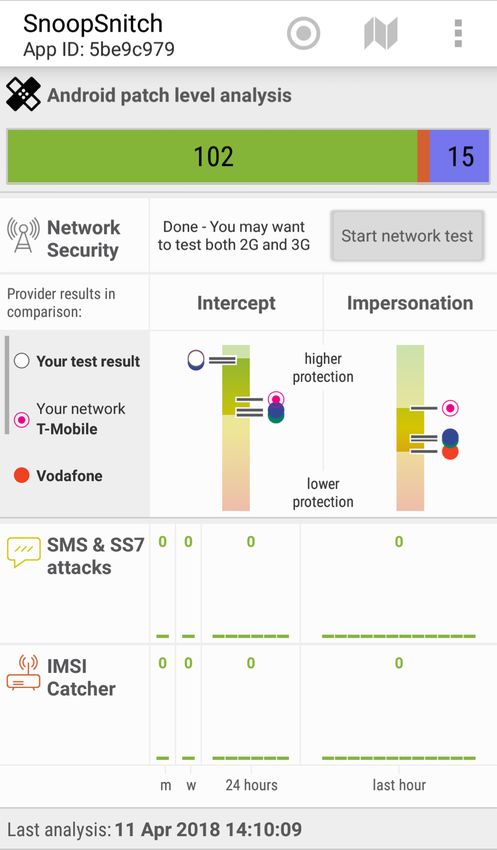
27SnoopSnitch version 2.0 introduces patch analysis for all Android users
Tool name
SnoopSnitch
Purpose
§ [new in 2.0] Detect potentially
missing Android security patches
§ Collect network traces on Android
phone and analyze for abuse
§ Optionally, upload network traces to
GSMmap for further analysis
Requirements
§ Android version 5.0
as Logo Horizontal
Pos / Neg § Patch level analysis:
All phones incl. non-rooted
§ Network attack monitoring:
Rooted Qualcomm-based phone
Source
Search: SnoopSnitch
28Take aways
§ Android patching is more complicated and less reliable than a single patch
date may suggest
§ Remote Android exploitation is also more much complicated than
commonly thought
§ You can finally check your own patch level thanks to binary-only analysis,
and the app SnoopSnitch
Many thanks to Ben Schlabs, Stephan Zeisberg, Jonas Schmid, Mark Carney,
as Logo Horizontal Lukas Euler, and Patrick Lucey!
Pos / Neg
Questions?
Jakob Lell
Karsten Nohl
29References
1. Federal Trade Commision, Mobile Security Updates: Understanding the Issues, February 2018
https://www.ftc.gov/system/files/documents/reports/mobile-security-updates-understanding-
issues/mobile_security_updates_understanding_the_issues_publication_final.pdf
2. Duo Labs Security Blog, 30% of Android Devices Susceptible to 24 Critical Vulnerabilities, June 2016
https://duo.com/decipher/thirty-percent-of-android-devices-susceptible-to-24-critical-vulnerabilities
3. Google, Android Security 2017 Year In Review, March 2018
as Logo Horizontal https://source.android.com/security/reports/Google_Android_Security_2017_Report_Final.pdf
Pos / Neg
30You can also read


