Producing the School Census Spring 2020 Return - English Primary and Middle deemed Primary Schools applicable to 7.190 onwards
←
→
Page content transcription
If your browser does not render page correctly, please read the page content below

Producing the
    School Census
      Spring 2020
           Return
   English Primary and
Middle deemed Primary
               Schools
applicable to 7.190 onwards

                Handbook
Revision History
        Version                    Change Description                                     Date

        7.190 - 1.0                Initial release.                                       18/10/2019

        7.190 – 2.0                The exclusions collection period has been              20/12/2019
                                   extended to include the Summer term and
                                   exclusions review details have been
                                   removed. For more information, please see
                                   Exclusions and Exclusion Reviews – Late
                                   Changes on page 2.

                                       © Capita Business Services Ltd 2019. All rights reserved.
                         No part of this publication may be reproduced, photocopied, stored on a retrieval
                      system, translated or transmitted without the express written consent of the publisher.
                       Microsoft® and Windows® are either registered trademarks or trademarks of Microsoft
                                      Corporation in the United States and/or other countries.

                                   Capita Doc Ref: SC7188_PR/HBK/201219/AW

                                     Providing Feedback on Documentation
                        We always welcome comments and feedback on the quality of our documentation
                        including online help files and handbooks. If you have any comments, feedback or
                      suggestions regarding the module help file, this handbook (PDF file) or any other aspect
                                                of our documentation, please email:
                                                    publications@capita.co.uk
                      Please ensure that you include the module name, version and aspect of documentation
                                                  on which you are commenting.

                           Capita SIMS, Franklin Court, Priory Business Park, Cardington, Bedfordshire MK44 3JZ
                           Tel: 01234 838080 Fax: 01234 832036 Email: info@capita-sims.co.uk Web: www.capita-sims.co.uk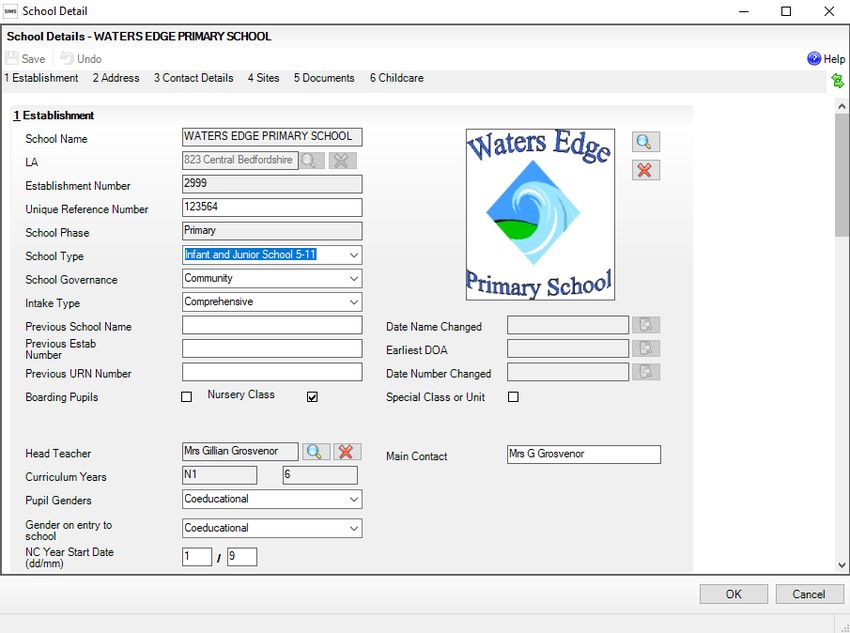
C|Contents
  01| Introduction .................................................................. 1
      Overview ........................................................................................ 1
      How has the School Census Spring Return Changed? ..................... 2
      Where to Find More Information ..................................................... 3
      Steps to Producing the School Census Return ................................. 5

  02| Preparing for the School Census Spring Return ............. 7
      Setting SIMS Permissions ............................................................... 7
             Where to find More Information about Permissions ................ 7
      What Version of SIMS is Required? ................................................. 8
      Preparing Data for the School Census Return ................................. 8
             School Level Data.................................................................... 8
             Pupil/Student Level Data ........................................................ 9

  03| Producing the School Census Spring Return ................ 11
      Creating a New School Census Return .......................................... 11
      Configuring the Census Folder ...................................................... 12
      Specifying the Security Message for Reports ................................ 13
      Editing Census Details .................................................................. 14
             Calculating All Details ........................................................... 14
      Editing School Information ........................................................... 15
             Information for Academies ................................................... 16
      Editing School Childcare Details .................................................... 17
      Managing Early Years Data ........................................................... 20
             Editing Early Years ................................................................ 20
             Editing Early Years Pupil Premium Receipt ........................... 25
             Editing Two Year Old Basis for Funding ................................ 27
      Editing Class Types ....................................................................... 27
             Resetting All Class Types ...................................................... 29
             Identifying which Pupils have no Class Type Specified ......... 29
      Editing Pupils with Top-Up Funding .............................................. 30
      Editing Pupil Post Looked After Arrangements ............................. 32
      Managing School Dinners Taken on Census Day ........................... 35
             Using Dinner Money to Calculate School Dinners Taken on
             Census Day ........................................................................... 37
             Using Attendance to Calculate School Dinners Taken on Census
             Day ....................................................................................... 38
             Using Manual Entry to Record School Dinners Taken on Census
             Day ....................................................................................... 38
Editing Classes Information .......................................................... 39
          Editing Registration Classes .................................................. 39
          Recalculating the Classes Information .................................. 42
          Adding Classes ...................................................................... 42
          Deleting Classes .................................................................... 42
    Editing Pupil Reconciliation .......................................................... 42
    Entering Attendance Information ................................................. 43
          SIMS Attendance Users ......................................................... 44
          SIMS Attendance Not in Use ................................................. 45
    Entering General Information ....................................................... 46
    Entering Infant Admissions Appeals Totals ................................... 46
    Entering Primary Admissions Appeals Totals ................................ 47

04| Completing the School Census Spring Return .............. 49
    Creating and Validating a School Census Return ........................... 49
          Resolving Validation Errors and Checking Queries ................ 51
    Producing Detail Reports .............................................................. 53
          Generating Detail Reports ..................................................... 58
    Printing a Report from your Web Browser .................................... 59
    Transferring Report Data to a Spreadsheet ................................... 60
    Deleting Temporary Web Browser Files ........................................ 60
    Producing the Summary Report .................................................... 60
          Generating the Summary Report ........................................... 60
    Editing an Unauthorised Return .................................................... 61
    Authorising the Return ................................................................. 62
    Submitting the Return .................................................................. 64
    Retrieving Authorised Census Return Files ................................... 64
    Copying a Return .......................................................................... 65
    Deleting an Unauthorised Return .................................................. 66

Index ............................................................................... 69
01| Introduction
01|Introduction
Overview ......................................................................................... 1
How has the School Census Spring Return Changed? ...................... 1
Where to Find More Information ...................................................... 3
Steps to Producing the School Census Return .................................. 5
Overview
This handbook provides the information needed by Primary/Middle deemed
Primary schools in England to complete the School Census Spring 2020
Return, which takes place on Thursday 16 January.
The School Census Spring Return is required to be completed by maintained
Nursery schools, Primary schools, Middle schools, Secondary schools,
All-Through schools, Special schools, Pupil Referral Units (PRUs), City
Technology Colleges (CTCs) and Academies (including free schools) in
England. Non-maintained Special schools are also required to submit the
return.
Currently, there are three School Census returns each year (i.e. Spring,
Summer and Autumn), which collect detailed information about school
characteristics and pupil details, e.g. pupil address, free school meals,
exclusions, etc. Different data is collected depending on which return is
being prepared and your school phase.
A list of items collected from Primary/Middle deemed Primary schools in
England for the School Census Spring 2019 Return is available in a later
section of this handbook (please see Preparing Data for the School Census
Return on page 8).
NOTE: The contents of the graphics (dates, names, panel numbers, etc.)
are examples only of what you might expect to see when using SIMS to
produce the School Census Return.
More Information:
Preparing Data for the School Census Return on page 8
Producing the School Census Spring 2020 Return 101| Introduction
How has the School Census Spring Return Changed?
Changes to the School Census Spring Return include the following:
Exclusions and Exclusion Reviews – Late Changes
The revised DfE specification for the School Census Spring Return includes
the following changes:
The collection period for exclusions has been extended to include the
Summer 2019 term. Consequently, the exclusions collection start date
has changed from 01/09/2019 to 22/04/2019.
More Information:
Editing Census Details on page 14
Exclusions review details are no longer collected in the Spring return.
The Leavers report, Exclusions report and Summary report have all
been updated to reflect the changes to exclusions and exclusion
reviews.
More Information:
Producing Detail Reports on page 53
The DfE validation rules have been adjusted to take account of the
changes to exclusions and exclusion reviews.
Additional Resources:
SIMS Newsfeed on the My Account website
https://myaccount.capita-cs.co.uk/Notifications/sims-newsfeed-school-census-
spring-2020-england/
Date Changes
Census day 16/01/2020
Attendance collected from the start of the Autumn term to 31/12/2019
Exclusions collected from 22/04/2019 to 31/12/2019
Free School Meal Eligibility collected from 04/10/2019 to 16/01/2020.
New Data Items
The following data items are being collected for the first time:
Teachers on planning and preparation time (PPA)
Reason for class size exception
Number of pupils to which the class size exception reason applies.
Class Size Exceptions
The Classes panel now enables the recording of the reason(s) for
exceptional class sizes. An indication as to the Number of classes with
unexplained excess is displayed at the top of the panel.
The new Class Size Exceptions button is activated only when an
exceptional class size is highlighted. Clicking the Class Size Exceptions
button displays the new Class Size Exceptions dialog, where the exception
details can be recorded.
2 Producing the School Census Spring 2020 Return01| Introduction
Class size exceptions definition: the total number of children per teacher in
a Reception or Key Stage 1 class must be less than 31.
Children = on-roll plus guest pupils
Teachers = teachers plus PPA teachers.
Information regarding class size exception reasons is also available in the
Class report.
More Information:
Recording Reasons for Class Size Exceptions on page 41
Planning, Preparation and Assessment Teachers
The new PPA Teachers column in the Classes panel enables the recording
of the number of teachers on planning, preparation and assessment time at
the 'selected time' on census day. This information is required for infant
class (Reception or Key Stage 1) only.
Information regarding PPA teachers is also available in the Class report.
More Information:
Editing Registration Classes on page 39
Changes to Detail Reports
The Class report now displays the PPA Teachers and Class Size
Exception Reasons columns. A key to class size exception reasons is also
included in the report.
More Information:
Producing Detail Reports on page 53
Where to Find More Information
Online help can be accessed by pressing F1 or clicking the applicable Help
button in SIMS.
A wide range of documentation is available from the SIMS Documentation
Centre, including handbooks, quick reference sheets and tutorials. Click the
Documentation button located on the top right-hand side of the SIMS
Home Page, select the required category and then select the document you
require. Alternatively, use the Search facility to locate the required
document.
Documentation is also available from the My Account website
(https://myaccount.capita-cs.co.uk).
1. Enter the required text in the Search field to display a list of documents that
match the search criteria.
2. To refine the search further, click Documents and then select the required
Document type, File type and/or Date range (click Show more to view
additional options, if required).
Alternatively, click SIMS Publications located in the Popular Searches list
to display a list of all SIMS publications.
The search results are displayed automatically.
Producing the School Census Spring 2020 Return 301| Introduction
Tips for using the My Account Search Facility
Here are some key tips for using the search facility in My Account. For
additional explanations, please refer to the My Account website.
NOTE: You no longer need to use + / - / "" when searching.
Cut down on the amount of words that you type in the search field and
only use key words, e.g. instead of typing pupil showing as a
contact search for the word contact.
Use the Product Type filter to refine results further.
Use the advanced filters located on the left-hand side of the Search
results page.
Additional Information
In addition to this handbook, a preparation guide that outlines how to
prepare your data for the School Census, is also available.
To access the School Census documents, please search for CENSUS20 in the
SIMS Documentation Centre or My Account.
4 Producing the School Census Spring 2020 Return01| Introduction
Steps to Producing the School Census Return
The process of producing the School Census can be separated into a number
of steps, some of which might need to be repeated to eliminate validation
errors and queries.
Producing the School Census Spring 2020 Return 501| Introduction
6 Producing the School Census Spring 2020 Return02| Preparing for the School Census Spring Return
02|Preparing for the School Census
Spring Return
Setting SIMS Permissions ................................................................ 7
What Version of SIMS is Required? .................................................. 8
Preparing Data for the School Census Return .................................. 8
Setting SIMS Permissions
The following permissions are applicable to users who deal with returns.
Running the Return
To run the return, you must be a member of one of the following user
groups in System Manager:
Returns Manager
Returns Operator.
Editing and Preparing Data
Users who edit and prepare data must have permissions to access additional
areas of SIMS, e.g. pupil details, school details, etc. These users must be a
member of the user groups applicable to the areas they are editing (please
see Where to find More Information about Permissions on page 7).
Permissions Required to Import a Revised Fileset
The Import Fileset functionality enables updates to the Validation Errors
Summary and the Summary report (derived from files supplied by the
Statutory Body), and detail reports (provided by SIMS) to be imported into
SIMS between SIMS releases.
To use the Import Fileset functionality (via Tools | Setups | Import
Fileset), you must be a member of one of the following user groups in
System Manager:
Returns Manager
System Manager.
For more information about the Import Fileset functionality, please refer to
the applicable preparation guide, which is available via the SIMS
Documentation Centre. Click the Documentation button located on the
top right-hand side of the SIMS Home Page. Preparation guides are also
available on the My Account website (https://myaccount.capita-cs.co.uk).
Where to find More Information about Permissions
Please contact your System Administrator/Manager if you are not sure
whether you have the required permissions. For more information, please
refer to the Managing SIMS Users, Groups and Databases handbook.
Producing the School Census Spring 2020 Return 702| Preparing for the School Census Spring Return
An Excel spreadsheet describing the numerous permissions available in SIMS
is available on the My Account website (https://myaccount.capita-cs.co.uk).
To find the spreadsheet, search for sims permissions,
e.g. 7.190 sims permissions.
What Version of SIMS is Required?
To run the return, you must have the SIMS 2019 Autumn Release (7.190)
or later installed.
To check which version of SIMS is installed, open SIMS and then select Help
| About SIMS. A dialog similar to the one shown in the following graphic is
displayed. The version should read 7.190 or later.
Preparing Data for the School Census Return
Before beginning the process of producing the return, it is advisable to
spend time ensuring that all school level and pupil level information is
present and accurate in SIMS. For example, ensure that school details are
correct, all new pupils have been added to SIMS, all leavers have been
recorded and where applicable all exclusions have been recorded, etc.
The following information is collected from Primary/Middle deemed Primary
schools for the School Census Spring 2020 Return.
School Level Data
School Characteristics: LA number, DfE establishment number, school name,
school phase, school type, highest and lowest national curriculum year,
intake type, governance, school email address and school telephone
number.
Admissions Appeals (if applicable Academies, Voluntary Aided schools, etc.):
Infant (not applicable to Middle deemed Primary): lodged, withdrawn,
heard by independent admissions committee, upheld (decided in parents
favour) and rejected.
Primary: lodged, withdrawn, heard by independent admissions
committee, upheld (decided in parents favour) and rejected.
8 Producing the School Census Spring 2020 Return02| Preparing for the School Census Spring Return
Pupil Reconciliation: part-time pupils not at school, private study pupils and
pupils at another school.
Class Information: class name, number of teachers in class, number of
teachers on planning and preparation time (PPA), number of adult
non-teachers in class, class year group, number of pupils in the class from
the host school, number of pupils in the class from other schools (guest
pupils), reason for class size exception and number of pupils to which the
class size exception reason applies.
Class type, key stage, class activity (not applicable to Middle deemed
Primary schools).
Miscellaneous:
free school meals taken
childcare provision on site, signposted off site childcare provision, type
of childcare (e.g. before school, after school, etc.), opening time and
closing time, number of childcare places, childcare provider, other
schools and number of weeks that the childcare provision is open.
Pupil/Student Level Data
Pupil Identifiers: unique pupil number (UPN) and former UPN, surname,
forename, middle names, preferred surname, former surname, gender and
date of birth.
Pupil Characteristics:
ethnicity, first language
free school meal eligibility start date and end date, UK country in which
the eligibility applies, school dinner taken
post looked after arrangements
service children in education indicator
top-up funding indicator, funded hours, extended childcare hours, 30
hour code, disability access fund indicator and hours at setting
Early years pupil premium receipt (EYPPR) and early years pupil
premium basis of funding (EYPPBF)
two year old basis for funding
Youth Support Services Agreement (YSSA) indicator (applicable to
Middle deemed Primary schools only).
Pupil Status: enrolment status, date of entry, date of leaving, part-time
indicator, boarder indicator and actual National Curriculum year group.
Class type (applicable to Primary schools only).
Special Educational Needs: SEN provision, SEN type ranking, SEN type for
each SEN need, member of SEN unit (sometimes called special class)
indicator and member of resourced provision indicator.
Termly Exclusion Information (22/04/2019 to 31/12/2019): exclusion
category, reason for exclusion, exclusion start date, actual number of
sessions from which the pupil was excluded, SEN provision (formerly stage).
Pupil Home Address Information: pupil's home address details, including
post code and unique property reference number (UPRN).
Producing the School Census Spring 2020 Return 902| Preparing for the School Census Spring Return
Termly Attendance Information (from the start of the 2019 Autumn term to
31/12/2019): possible sessions, sessions missed due to authorised absence,
sessions missed due to unauthorised absence, attendance codes (reason for
absence) and number of sessions missed.
For more information and instructions on all of the preparations that need to
be carried out before the census return is produced, please refer to the
applicable Preparing for the School Census Spring 2020 guide.
The preparation guide, together with other useful School Census
documentation, is available from the SIMS Documentation Centre
(accessed via the Documentation button, which is located on the top
right-hand side of the SIMS Home Page) and on the My Account website
(https://myaccount.capita-cs.co.uk).
To access the School Census documents, please search for CENSUS20 in the
SIMS Documentation Centre or My Account.
10 Producing the School Census Spring 2020 Return03| Producing the School Census Spring Return
03|Producing the School Census Spring
Return
Creating a New School Census Return ........................................... 11
Configuring the Census Folder ....................................................... 12
Specifying the Security Message for Reports ................................. 13
Editing Census Details ................................................................... 14
Editing School Information ............................................................ 15
Editing School Childcare Details ..................................................... 17
Managing Early Years Data ............................................................ 20
Editing Class Types ........................................................................ 27
Editing Pupils with Top-Up Funding ............................................... 30
Editing Pupil Post Looked After Arrangements .............................. 32
Managing School Dinners Taken on Census Day ............................ 35
Editing Classes Information ........................................................... 39
Editing Pupil Reconciliation ........................................................... 42
Entering Attendance Information .................................................. 43
Entering General Information ........................................................ 46
Entering Infant Admissions Appeals Totals .................................... 46
Entering Primary Admissions Appeals Totals ................................. 47
Creating a New School Census Return
Before creating a new School Census return, ensure that all pupil and school
information is present and accurate in SIMS.
The School Census Spring 2020 Return collects data for:
all pupils on the register on 16/01/2020 (census day).
any additional pupils not on-roll on census day who:
were on-roll for at least one session during the collection period
from the start of the 2019 Autumn term to 31/12/2019.
had an exclusion that started between 22/04/2019 and 31/12/2019.
The Census Folder and Security message for Reports must be specified
before clicking the New button to create a new return. A message is
displayed if a census folder has not been defined.
It is possible to create more than one return. This enables you to carry out
dry runs so that you can check what data needs to be added or updated. Any
unwanted returns can be deleted (providing they have not been authorised).
1. Select Routines | Statutory Returns | School Census to load the School
Census validation and reporting files.
NOTE: The first time that the Routines | Statutory Returns | School
Census menu route is selected during each SIMS session, there is a delay
while the School Census files are loaded.
Producing the School Census Spring 2020 Return 1103| Producing the School Census Spring Return
When the files are loaded, the Census Return for Spring 2020 Term
browser is displayed. The Fileset ID is displayed in the browser header for
information only.
By default, the Term field displays the appropriate term for the selected
return, in this instance Spring 2020.
2. Ensure that the Census Folder is configured correctly and that the required
Security message for Reports is specified, as described in the following
sections.
Configuring the Census Folder
Before creating a return, the folder in which the return file will be saved
must be specified.
IMPORTANT NOTES: Due to the sensitive nature of some of the data
stored in SIMS, careful consideration must be given when specifying the
location of any folder into which you save sensitive data, e.g. census
returns, imported and exported CTFs, etc.
You should be mindful of your school’s responsibilities with respect to
information security. Consider which users have access to the chosen
folder, especially if the folder is shared on a server. Please refer to the
government website for more information about securing your information
(https://www.gov.uk/service-manual/technology/securing-your-information).
If you are in any doubt, you should consult with your IT Security Officer
before proceeding.
The General Data Protection Regulation (GDPR), which replaces the Data
Protection Act 1998, is a directive for certain safeguards regarding the use
of personal data. It is important that schools process all data (not just the
data collected for the school census) in accordance with the full
requirements of the GDPR.
Further information on the GDPR can be found on the Guide to the General
Data protection Regulations (GDPR) page of the Information
Commissioners Office (ICO) website
(https://ico.org.uk/for-organisations/guide-to-the-general-data-protection-
regulation-gdpr).
12 Producing the School Census Spring 2020 Return03| Producing the School Census Spring Return
1. In the Census Folder field, enter the location of the folder where the return
files are to be stored.
Alternatively, click the Browse button to display the Browse For Folder
dialog.
Browse button
2. Navigate to the location of the required folder and highlight it. If a suitable
folder does not exist, click the Make New Folder button, then enter a
suitable name for the new folder.
IMPORTANT NOTE: If you are changing the location of the folder, ensure
that authorised personnel only have access to the new folder, as the folder
will contain sensitive data. For more information, please see the important
note at the beginning of this section.
3. Click the OK button.
A message dialog requests confirmation that you want to continue.
4. Click the OK button to select or create the folder and return to the browser,
where the new folder name is displayed.
5. Ensure that the Security Message for Reports is appropriate for your
school.
Specifying the Security Message for Reports
At the bottom of the browser is the Security message for Reports field.
This text displayed in this field is included in the header of each report.
1. The default text (This report contains sensitive information) can be
edited, if required.
2. If any edits are made, you can click the Default Message button to revert
to the original default text.
3. Click the New button to display the Census Return Details page.
Producing the School Census Spring 2020 Return 1303| Producing the School Census Spring Return
Editing Census Details
The Census Details panel displays the following dates (most of which are
read-only):
The census date is displayed as 16/01/2020.
Attendance data collected from the start of the 2019 Autumn term to
31/12/2019.
Exclusions data collected from 22/04/2019 to 31/12/2019.
FSM (Free School Meal) data collected from 04/10/2019 to 16/01/2020.
By default, the return Description is displayed as School Census Spring
2020.
1. Check the return Description and then edit, if required, e.g. to identify a
dry run.
WARNING: Each description used must be unique. An error message is
displayed if SIMS identifies a duplicate description.
A unique description also helps to identify the required return when viewed
in the Census Return for Spring Term browser and can be particularly
useful when creating dry runs or copies of existing returns.
2. Check the Attendance collected from date. The date displayed defaults to
the possible start of the Autumn term. This date can be edited if the start of
your school’s Autumn term is different.
3. Click the Calculate All Details button.
Calculating All Details
Clicking the Calculate All Details button extracts the required information
from SIMS and displays the results in the applicable panels of the Census
Return Details page.
IMPORTANT NOTE: You must calculate all details at least once to
populate the various panels for each return.
Do not use the Calculate All Details button more than once if you wish to
keep any changes you have made. Clicking the Calculate All Details
button overwrites any previously collected or edited data (in every panel
where details are calculated automatically) with the data currently stored
in SIMS.
14 Producing the School Census Spring 2020 Return03| Producing the School Census Spring Return
Any details that are calculated automatically should be checked and edited,
if required.
1. Click the Calculate All Details button.
A message advises that any existing data currently shown on the Census
Return Details page will be overwritten.
2. Click the Yes button to calculate all details.
At this point, depending on the number of pupils in the school, there might
be a short delay while details are calculated.
The applicable panels on the Census Return Details page are then
populated with data.
3. The return can be saved at any point by clicking the Save button.
Editing School Information
The School Information panel displays details that have previously been
recorded on the School Details page in SIMS (Focus | School | School
Details). The information displayed might vary depending on your school
and the details entered, e.g. Academy specific information.
The details displayed are read-only but can be amended, if necessary, via
the School Detail button.
Producing the School Census Spring 2020 Return 1503| Producing the School Census Spring Return
1. If any details are missing or incorrect, click the School Detail button to
display the School Detail dialog, where information applicable to your
school is displayed.
2. Add or amend the school details, selecting from the drop-down lists where
applicable.
NOTE: The School Name, LA number, Establishment Number, School
Phase and Curriculum Years were set up when SIMS was installed. If
any of these details are incorrect, please contact your Local Support Unit
for assistance.
3. Ensure that the establishment's six digit Unique Reference Number (URN)
is entered. The number is available via the Get information about schools
website (https://get-information-schools.service.gov.uk/), which is a
register of schools and colleges in England.
4. Click the Save button, then click the OK button to return to the Census
Return Details page, where the updated details are displayed.
Information for Academies
16 Producing the School Census Spring 2020 Return03| Producing the School Census Spring Return
Academies should also ensure that the following information is recorded, if
applicable:
The School Type and School Governance.
Select Academies from the applicable drop-down lists.
The Previous Name and Date Name Changed.
The Previous Estab Number and Earliest DOA (date of admission).
This information is used by School Census. If the establishment number
(DfE number) has changed for sponsor-led Academies, historical
information is not collected and the earliest date of admission is
reported in the School Census.
The Previous URN Number (used by other census returns) and Date
Number Changed.
This information is used by the School Workforce Census. For all types
of Academies opened in the collection period, the date that the
establishment’s URN changed is used to determine when the academy
was formed. Historical information is not collected from before the date
the URN changed.
Editing School Childcare Details
School childcare details are collected annually in the School Census Spring
return.
Details can be entered via Focus | School | School Details, enabling the
information to be maintained at any time throughout the year.
The Childcare panel (on the Census Return Details page) displays
read-only childcare provision information that has been entered previously
via School Details. Additional information can be added or existing data
edited by clicking the Edit button. This provides a direct link to the School
Details page.
If no childcare information is recorded, a validation error is triggered when
the return is run.
Producing the School Census Spring 2020 Return 1703| Producing the School Census Spring Return
1. Click the Edit button in the Childcare panel to display the School Details
page.
2. Click the Childcare hyperlink to display the Childcare panel, where the
current childcare details are displayed.
3. Double-click one of the four existing records to display the Update
Childcare Details dialog. Alternatively, highlight a record then click the
Open button.
18 Producing the School Census Spring 2020 Return03| Producing the School Census Spring Return
4. Enter the required details.
Type - based on the record you have opened, the type of childcare
being provided is displayed automatically. The four types of childcare
collected for the return are:
Before School Childcare
After School Childcare
Holiday Childcare
Under Fives Childcare.
On Site - select the applicable option from the drop-down list:
Yes - select this option if childcare is being provided on the school
premises.
No - select this option if childcare is undertaken off the school
premises, i.e. your school promotes or points parents towards a
regular off-site childcare service, e.g. a private or voluntary
organisation.
Signposted - one of the following options must always be selected from
the drop-down list:
Yes, formal arrangements including transport - select this
option if your school has formal arrangements with another provider
that provides childcare for your pupils, including transport to their
site.
Yes, list of providers that pick up from school - select this
option if a list of local providers that will pick up pupils from the
school to help parents is provided.
No
Not Known.
Opening Time - enter the time that the service becomes available (not
applicable to after school care).
NOTE: Ensure that the time is entered in 24 hour format. A colon
should be entered between the hours and the minutes, e.g. 07:00.
Closing Time - enter the time that the service closed (not applicable to
before school care).
NOTE: Ensure that the time is entered in 24 hour format. A colon
should be entered between the hours and the minutes, e.g. 17:30.
Number of Childcare Places - enter the maximum number of
childcare places that the service can provide.
Provider - select the description from the drop-down list that most
accurately describes the provider of the service:
School
School in Partnership (with another provider)
Other (non-school) Provider.
Producing the School Census Spring 2020 Return 1903| Producing the School Census Spring Return
Other Schools - is the service made available to children from other
schools? Select as applicable from the drop-down list:
Yes
No
Unknown.
Weeks Open - enter the number of weeks for which childcare is
provided (applicable to holiday and under-fives childcare only).
Notes - notes can be added and then edited later, if required.
5. Click the OK button to return to the School Details page.
6. Click the Save button and then the OK button to return to the Census
Return Details page.
Managing Early Years Data
Applicable to schools with Early Years children only
The early years data collected in the School Census is used to determine the
amount of the dedicated schools grant (DSG) allocation provided to local
authorities to fund their early years providers.
More information about the early years national funding formula
(allocations and guidance) is available on the GOV.UK website
(http://www.gov.uk/government/publications/early-years-national-funding
-formula-allocations-and-guidance).
The Early Years panel consists of three grids:
Early Years
Early Years Pupil Premium Receipt
2 Year Old Basis for Funding.
Editing Early Years
Early Years data is collected from all schools that have early years pupils
on-roll on census day. The following items are collected:
Hours at Setting
Funded Hours
Disability Access Fund
30 Hour Code
Extended Funded Hours.
NOTE: Disability Access Fund, 30 Hour Code and Extended Funded Hours
are not collected in the census for pupils aged two at 31/12/2019.
Funded Hours and Hours at Setting
Funded universal free entitlement hours are the total number of free child
care hours that a child receives. All three and four year old pupils are
eligible for 15 hours funded child care a week. Advice about the eligibility of
two year old children for funded child care can be found on the DfE website
(https://www.gov.uk/help-with-childcare-costs/free-childcare-2-year-olds).
20 Producing the School Census Spring 2020 Return03| Producing the School Census Spring Return
Hours at Setting include funded free entitlement hours (as described
previously) plus any additional hours funded by other means.
The hours collected in this return are for the week in which the census day
falls.
Funded Universal Free
Date of Birth School Type and National
Entitlement Hours
Ranges Curriculum Year Group
Maximum Entitlement
01/09/2015 to All relevant schools and year 15 hours
31/12/2017 inclusive groups.
01/09/2014 to For pupils in National Curriculum 15 hours for pupils
31/08/2015 inclusive Year groups E1, E2, N1 and N2 where 30 Hour code is
only. present
Disability Access Fund
The Disability Access Fund (DAF) is payable as a lump sum once a year and
awarded to three and four year old pupils who meet the following criteria:
They are in receipt of child Disability Living Allowance (DLA)
and
They access their entitlement to free early learning and childcare,
e.g. funded hours.
Disability Access Fund data is collected in this return for pupils who are in
receipt of the fund on census day.
Date of Birth School Type and National Curriculum Year Group
Ranges
01/09/2015 to All relevant schools and year groups.
31/12/2016 inclusive
01/09/2014 to For pupils in National Curriculum Year groups E1, E2, N1 and
31/08/2015 inclusive N2 only.
Extended Funded Hours and 30 Hour Code
Extended Funded Hours are the number of hours that a child can receive
in addition to the initial 15 funded hours. Extended Funded Hours are
applicable to three and four year old pupils only.
Extended Funded Hours can double the original 15 hours of free child care
to 30 hours a week, i.e. 15 funded free entitlement hours + 15 extended
entitlement hours = 30 hours, provided that the following criteria are met:
Both parents must be working (or the sole parent is working in a lone
parent family) and live in England.
Each parent earns, on average, a weekly minimum equivalent to 16
hours at National Minimum Wage or National Living Wage.
Each parent must have an annual income of less than the specified
amount.
Producing the School Census Spring 2020 Return 2103| Producing the School Census Spring Return
Parents who meet the extended funded hours criteria must obtain a unique
code from the Tax Office (HM Revenue & Customs), then provide it to the
school, together with other details, to confirm their eligibility for extended
child care hours.
The 11 digit 30 Hour Code and the number of extended funded hours are
collected in this return for the week in which the census day falls.
Maximum Funded
Date of Birth School Type and National Universal Free
Ranges Curriculum Year Group Entitlement and Extended
Free Entitlement Hours
01/09/2015 to Applicable to all relevant 30 hours
31/12/2016 inclusive schools and year groups
(i.e. 15 funded universal free
A valid 30 Hour Code must entitlement hours plus
be provided. 15 extended free entitlement
hours)
01/09/2014 to For pupils in National 30 hours
31/08/2015 inclusive Curriculum Year groups E1,
(i.e. 15 funded universal free
E2, N1 and N2 only.
entitlement hours plus
A valid 30 Hour Code must 15 extended free entitlement
be provided. hours)
Extended Funded Hours information provided by the DfE can be found on
their website
(https://www.gov.uk/government/publications/30-hours-free-childcare-la-a
nd-early-years-provider-guide).
Recording Early Years
The required data can be recorded:
via the Edit button in the Early Years panel
via Tools | Statutory Returns Tools | Update Early Years - Update
Early Years page. The data in the Early Years panel must be
refreshed by clicking the Recalculate button after using the Update
Early Years routine.
If data has been recorded previously, the values are displayed in the
read-only Early Years panel. Only cohorts applicable to your school are
displayed.
22 Producing the School Census Spring 2020 Return03| Producing the School Census Spring Return
1. In the Early Years panel, click the Edit button to display a message
informing you that data has been brought forward from the previous census.
2. Click the OK button to display the Update Early Years page. By default,
the current term is displayed in the Census panel.
TIP: To view the data recorded for a previous term (in the current
academic year), select the required Term from the drop-down list.
Primary phase schools that have defined Early Years Attendance Patterns
(via Focus | Pupil | Pupil Details) for pupils who are receiving free
nursery care can update Hours at Setting automatically.
a. Click the Update Hours button (applicable to Primary phase schools
only).
The number of Hours at Setting that the listed pupils are expected to
attend during the census week (based on the early years provision
times recorded as part of their attendance pattern) are displayed in the
Pupils panel.
b. Edit the values, if required.
NOTE: If your school does not use the Define Early Years Attendance
Patterns functionality, the data can be entered in the grid manually.
3. To add or edit the number of Hours at Setting, Funded Hours and
Extended Funded Hours for an individual pupil, select the required criteria
in the Pupils View panel.
In the Pupils panel, highlight the required pupil, click the applicable cell and
then enter the required number of hours.
Producing the School Census Spring 2020 Return 2303| Producing the School Census Spring Return
IMPORTANT NOTES: Values for Funded Hours, Hours at Setting and
Extended Funded Hours should be entered using two decimal places. For
example, 1 hour 15 minutes must be entered as 1.25. Zero (0) is an
accepted value.
If the value entered is within the range accepted by SIMS but is higher
than what the DfE expects, a validation error is displayed when the return
is created and validated. An explanation as to why the value is higher
should be recorded on the COLLECT Portal.
4. If most of the pupils are receiving the same number of hours, the following
method can be used to populate the column quickly:
a. In the Pupils View panel, select the required year group from the Year
Taught In (YTI) drop-down list. The selected pupils only are displayed
in the Pupils panel.
b. Right-click in the Pupils panel, then select Select All from the
drop-down list.
c. Click in one of the highlighted cells of the column you wish to populate,
i.e. Hours at Setting, Funded Hours or Extended Funded Hours,
then enter the number of hours that is applicable to the majority of
pupils.
This number is then entered automatically for all the selected pupils.
d. Click to the right of the grid to deselect all.
e. Edit the entry for each pupil who is receiving a different number of
hours. This is achieved by highlighting the required pupil, clicking the
associated Hours at Setting, Funded Hours or Extended Funded
Hours cell (as applicable) then entering the required number.
5. Indicate whether the pupils are in receipt of the Disability Access Fund.
Click the applicable cell then select Yes or No from the drop-down list.
6. Enter the 11 digit 30 Hour Code in the applicable cell, if in receipt of
extended funded hours.
IMPORTANT NOTE: Each pupil must have a different 30 hour code.
Ensure that all 11 digits are entered.
7. Click the Save button.
If there are any pupils for whom zero hours have been recorded, a message
is displayed. Click the Yes button to save the data or the No button to
return to the Update Hours page, where the number of hours can be
entered.
24 Producing the School Census Spring 2020 Return03| Producing the School Census Spring Return
8. Click the OK button to return to the Census Return Details page, where
the updated hours are displayed.
IMPORTANT NOTES:
If, while completing the return, any of the following processes are
performed, click the Recalculate button (located at the top right-hand
side of the Early Years panel) to ensure that the up-to-date data is
displayed:
▪ any information is update via Tools | Statutory Return Tools |
Update Early Years
▪ a new pupil is added in SIMS
▪ a pupil's date of birth is amended.
Please note that when information is updated via the Edit button, the
Early Years panel is refreshed automatically.
Using the Status to determine if Hours at Setting or Funded Hours are
recorded
1. On the Census Return Details page, click the Edit button (located in the
Early Years panel) to display the Update Early Years page.
2. In the Pupils View panel, ensure that the required Age at date, YTI and
Reg group are selected and then select No Hours at Setting (or No
Funded Hours) from the Status drop-down list.
Only pupils who do not have an entry for Hours at Setting (or Funded
Hours) are displayed.
3. Enter the required values for these pupils as described previously.
4. Click the Save button.
Editing Early Years Pupil Premium Receipt
The data collected in the Spring School Census provides the DfE with
information about Early Years Pupil Premium funding allocated to schools.
Information is required regarding three and four year olds who attend
school and receive Early Years Pupil Premium (EYPP). Data is required for
the following pupils:
All three year old pupils who were born between 01/09/2015 and
31/12/2016 inclusive.
Four year old pupils (in any Nursery school year group).
Four year old pupils (in years E1, E2, N1 and N2 excluding Nursery
schools) and born between 01/09/2014 and 31/08/2015 inclusive.
Children are eligible for Early Years Pupil Premium (EYPP) if they are
receiving any hours of funded early education and any of the following:
they meet the benefits-related criteria for Free School Meals
NOTE: Meals delivered as part of the universal entitlement are not
Free School Meals.
they are in care
they have been adopted from care.
Producing the School Census Spring 2020 Return 2503| Producing the School Census Spring Return
The second grid in the Early Years panel deals with a pupil's Early Years
Pupil Premium Receipt only. The pupils displayed in this grid make up a
sub-set of the first grid (i.e. relevant three and four year olds).
Specify the reason why the pupil is receiving EYPP (if applicable) by clicking
the cell adjacent to their name, then selecting the required option from the
Basis for EYPP Eligibility drop-down list:
Not Eligible
Receipt - Economic
In receipt through eligibility for economic reasons, i.e. where they are in
receipt via eligibility for the benefits-related criteria for FSM.
Receipt - Other
In receipt through eligibility for other reasons, i.e. where they are in
receipt due to eligibility for being in care or due to leaving care through
adoption, a special guardianship order or a child arrangement order.
Receipt - Economic and Other
In receipt through eligibility for both reasons, i.e. where they are in
receipt through eligibility for both economic and other reasons.
Receipt - Unknown
In receipt through eligibility for unknown basis, i.e. where the school
knows the child is in receipt of EYPP (due to receiving funding from the
local authority) but does not necessarily know the reason why.
WARNING: If you Recalculate or Calculated All Details before saving,
your Basis for EYPP Eligibility edits are lost.
More Information:
EYPPR Report on page 56
26 Producing the School Census Spring 2020 Return03| Producing the School Census Spring Return
Editing Two Year Old Basis for Funding
The 2 Year Old Basis for Funding grid (located in the Early Years panel)
enables schools to enter the basis of funding for each pupil with a date of
birth between 01/01/2017 and 31/12/2017 inclusive.
1. Click a cell in the Economic Criteria column, then select Yes or No from
the drop-down list to indicate if this basis for funding applies to the adjacent
two year old pupil.
2. Repeat this process in the High level SEN or Disability and Looked After
or Adopted From Care columns.
NOTE: A pupil might meet one or more of the criterion. Select Yes to each
applicable basis for funding.
3. Repeat this process for all two year old pupils.
More Information:
2 Year Old Basis for Funding Report on page 56
Editing Class Types
The type of class (either Nursery or Other) that each pupil belongs to on
census day must be specified. Pupils in your Nursery class should be
specified as Nursery, with all other pupils specified as Other.
If the class types have been recorded previously via Tools | Statutory
Return Tools | Update Class Type, the data is displayed in the Class
Type panel.
The Class Type panel is read-only. However, you can review, edit and save
class types by clicking the Edit button.
Producing the School Census Spring 2020 Return 2703| Producing the School Census Spring Return
1. Click the Edit button. A message informs you that the class type data has
been brought forward from the previous census.
2. Click the OK button to display the Update Class Type dialog.
NOTE: If new pupils exist the default class type is displayed as blank.
3. To specify the class type for an individual pupil, click the appropriate cell of
the Nursery or Other column to display a tick. Clicking again removes the
tick.
4. If all or the majority of pupils need to be assigned the same class type, the
following method can be used to quickly populate the Nursery and Other
columns:
a. Right-click the Other column header, then select Check All from the
pop-up menu.
b. In the Pupils View panel, select a Nursery year from the year taught in
(YTI) drop-down list.
The selected pupils only are displayed in the Pupils panel.
28 Producing the School Census Spring 2020 Return03| Producing the School Census Spring Return
c. Right-click the Nursery column header then select Check All from the
pop-up menu.
d. Repeat steps b and c for any additional Nursery year.
e. To ensure that your selection is correct, select All from the Year Taught
In (YTI) drop-down list, then check the data displayed.
5. Click the Save button.
6. If a message is displayed advising you that some pupils have not been
assigned a class type, click the No button then ensure that a class type is
allocated to every pupil before saving again.
IMPORTANT NOTE: To prevent validation failures when the School
Census file is created, every pupil must be assigned a class type.
7. Click the OK button to return to the Census Return Details page, where
the updated class types are displayed in the Class Type panel.
Additional Resources:
Preparing for the School Census Spring 2020 Return handbook
Resetting All Class Types
To reset all class types (via the Update Class Type page), right-click the
Nursery (or Other) column header, then select Remove All from the
pop-up list. The Nursery (or Other) column is cleared of all ticks.
Re-enter the correct class types for all pupils as previously described.
Identifying which Pupils have no Class Type Specified
To ensure that all pupils are assigned to a class type (via the Update Class
Type page), select No Class Type from the Status drop-down list in the
Pupils View panel. Any pupils without a Class Type are displayed in the
Pupils panel.
Specify a class types for these pupils, as previously described.
Producing the School Census Spring 2020 Return 2903| Producing the School Census Spring Return
Editing Pupils with Top-Up Funding
Top-up funding is supplied to schools, in most cases by the Local Authority,
to meet the additional costs of support for high needs pupils.
The Top-up Funding panel enables you to record the on-roll pupils for
whom your school is receiving top-up funding on census day.
If the pupils with top-up funding have been recorded previously via Tools |
Statutory Return Tools | Update Top-Up Funding, the data is displayed
in the Top-up Funding panel.
The information displayed in the Top-up Funding panel is read-only.
Updating top-up funding information, e.g. adding or removing a pupil, must
be done via the Edit button.
1. Click the Edit button to display the Update Pupils with Top-up Funding
dialog. The pupils currently recorded as having top-up funding are displayed
in the Top-up Funding list (located in the bottom half of the page).
30 Producing the School Census Spring 2020 Return03| Producing the School Census Spring Return
2. Use the Students On-Roll on Census Day search criteria to locate the
additional pupils you wish to record as having top-up funding.
TIP: Click the Search button to display a list of all pupils who have not
been defined as having top-up funding. Alternatively, enter all or part of
the required search criteria then click the Search button.
3. Highlight the pupil(s) who you want to record as having top-up funding then
click the Add button to move the selected pupil(s) to the Top-up Funding list.
One or more pupils can be selected using the Ctrl+click or Shift+click
functionality.
Producing the School Census Spring 2020 Return 3103| Producing the School Census Spring Return
4. To remove a pupil from the Top-up Funding list, highlight the required
pupil then click the Remove button. The pupil's record is moved to the
Students On-Roll on Census Day list, from where it can be reselected, if
required.
5. Click the Update button to save the data and arrange the list of pupils in
Surname order.
6. Click the OK button located at the bottom right-hand side of the screen to
return to the Census Return Details page, where the updated information
is displayed in the Top-up Funding panel.
Additional Resources:
Preparing for the School Census Spring 2020 Return handbook
Editing Pupil Post Looked After Arrangements
The Post Looked After Arrangements routine provides schools with the
ability to record whether pupils who are on-roll on census day were looked
after immediately before adoption or prior to being the subject of a
residence or special guardianship order.
If the pupils with post looked after arrangements (PLAA) have been
recorded previously via Tools | Statutory Return Tools | Update
Student Post Looked After Arrangements, the data is displayed in the
Post Looked After Arrangements panel.
1. Click the Recalculate button (in the Post Looked After Arrangements
panel) to ensure that all pupils who already have a PLAA status are
displayed.
The information displayed in the Post Looked After Arrangements panel
is read-only. Updating the information, e.g. editing the PLAA status or
adding a pupil, must be done via the Edit button.
32 Producing the School Census Spring 2020 Return03| Producing the School Census Spring Return
2. Click the Edit button to display the Update Pupils Post Looked After
Arrangements page. Any pupils currently recorded as having PLAA are
displayed in the Post Looked After Arrangements list located in the
bottom half of the page.
3. Use the Students On-Roll on Census Day search criteria to locate the
additional pupils you wish to record as having PLAA.
TIP: Click the Search button to display a list of pupils who have not been
defined as having PLAA. Alternatively, enter all or part of the required
search criteria then click the Search button.
Producing the School Census Spring 2020 Return 33You can also read


