PUNISHED FOR SPEAKING UP - The ongoing use of restrictive laws to stifle dissent in India - Civicus
←
→
Page content transcription
If your browser does not render page correctly, please read the page content below
PUNISHED FOR
SPEAKING UP
The ongoing use of restrictive
laws to stifle dissent in India
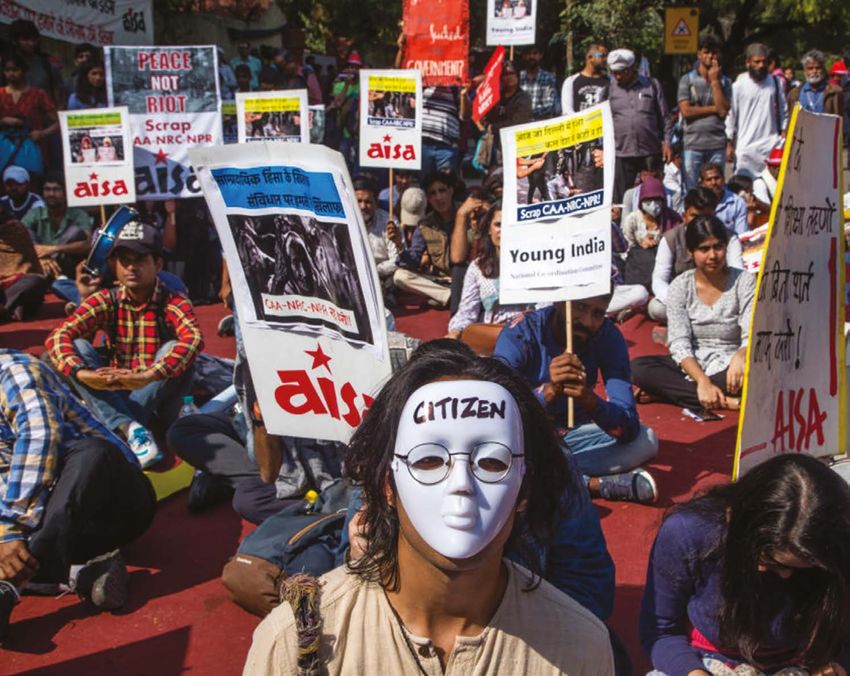
An Indian Student protester wearing a mask takes part in a protest demonstration during an anti-government protest against new citizenship
    law and recent riots on March 03, 2020 in New Delhi, India. © Yawar Nazir/ Getty Images

                      CIVICUS is a global alliance of civil society organisations and activists dedicated to
                    strengthening citizen action and civil society around the world. We strive to promote
                 marginalised voices, especially from the Global South, and have members in more than 170
                 countries throughout the world. We believe that a healthy society is one where people have
                   multiple opportunities to participate, come together, deliberate and act for the common
                    good. We work for civil society, protecting and growing `civic space’ - the freedoms of
                  expression, association and assembly - that allow citizens and organisations to speak out,
                                                    organise and take action.

2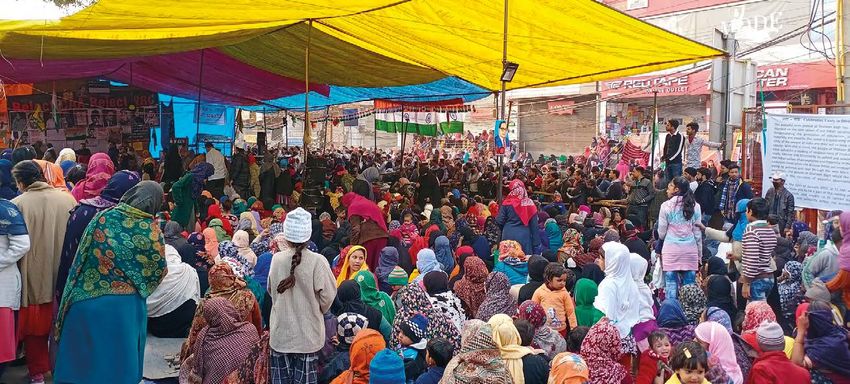
PUNISHED FOR SPEAKING UP

Contents
EXECUTIVE SUMMARY......................................................................................................... 4
THE ASSAULT ON DISSENT IN INDIA............................................................................... 5
Judicial harassment and attacks on human rights defenders....................................................... 5
The targeting of journalists........................................................................................................... 5
Crackdown on protests................................................................................................................. 6
Violations in Indian-administered Jammu and Kashmir................................................................ 7
Freedom of association at risk...................................................................................................... 8
Harassment of critics during the pandemic.................................................................................. 9
Weakness of the human rights commission................................................................................. 9

A REPRESSIVE LEGAL FRAMEWORK............................................................................... 10
India’s international human rights obligations.............................................................................. 10
The Unlawful Activities (Prevention) Act 1967............................................................................. 11
Sedition (section 124A of the Indian Penal Code)......................................................................... 11
‘Promoting enmity between different groups’ (section 153A of the Indian Penal Code)............. 12
The National Security Act 1980.................................................................................................... 12
Public Safety Act........................................................................................................................... 12
Section 144 of the Code of Criminal Procedure............................................................................ 13
Foreign Contribution Regulation Act............................................................................................ 13

Safoora Zargar................................................................................................................ 14
Sharjeel Imam..................................................................................................................... 15
Akhil Gogoi.......................................................................................................................... 16
Devangana Kalita and Natasha Narwal........................................................... 17
Shaheen Bagh protesters........................................................................................... 18
Bhima KoregAon Case.................................................................................................... 19
Mian Qayoom........................................................................................................................ 20
Masrat Zahra...................................................................................................................... 21
Kishorechandra Wangkhem..................................................................................... 22
Lawyers Collective....................................................................................................... 23
Conclusion and recommendations..................................................................... 24

                                                                                                                                                  3
PUNISHED FOR SPEAKING UP

    EXECUTIVE SUMMARY
    In May 2019, Prime Minister Narendra Modi’s Hindu nationalist Bharatiya Janata Party
    (BJP) returned to power, registering a landslide victory in the Indian elections.1 Since the
    BJP’s initial elevation to power in May 2014, CIVICUS has documented how civil society
    organisations (CSOs), activists and journalists who have been critical of the authorities
    or exposed government abuses have been targeted. Many people have faced judicial
    harassment and attacks. Some have been killed.
    Restrictive legislation has been used to suspend or withdraw CSO permits to operate, preventing them from
    accessing funding from external sources and freezing their bank accounts. Activists have been subjected to
    smear campaigns and accused of promoting anti-nationalist agendas or of being the agents of western powers.2
    These actions are in contravention of India’s international human rights obligations under the International
    Covenant on Civil and Political Rights (ICCPR), which it ratified in 1979. The human rights violations not only
    affect the individuals concerned, but also have wider impacts, leading to a culture of fear and self-censorship.

    These trends have continued in the BJP government’s second             What all cases have in
    term in power. Even during the COVID-19 pandemic, the                  common is that they are
    Modi government has continued to use precious resources
                                                                           facilitated by a repressive
    to sustain its persecution of human rights defenders and
    critics. In December 2019, the CIVICUS Monitor, an online              legal framework, which
    platform that provides information and ratings on each                 comprises a range of laws
    country’s civic space, downgraded India’s ratings from                 that are being misused to
    ‘obstructed’ to ‘repressed’.3 This change reflected the fact           restrict the rights to the
    that democratic freedoms – including the freedoms of                   freedoms of association,
    association, peaceful assembly and expression, and the                 peaceful assembly and
    operating environment for human rights defenders – have
    become significantly constrained.
                                                                           expression.

    These actions to attack civil society, which has a rich and vibrant history of action and engagement in India,
    serve to weaken democracy and undermine India’s potential global role.

    This briefing provides a summary of research findings from the CIVICUS Monitor on violations of civic freedoms.
    It highlights cases of politically motivated arrests, prosecution and imprisonment in India. Each case represents
    people who, as individuals or in a group, have been targeted by the authorities simply for the peaceful exercise
    of their fundamental human rights. Those targeted include human rights defenders, journalists and students.
    Often, people have been charged when they tried to speak out against injustice or in support of others in
    advocating for their rights. What all cases have in common is that they are facilitated by a repressive legal
    framework, which comprises a range of laws that are being misused to restrict the rights to the freedoms of
    association, peaceful assembly and expression.

    The cases highlighted in this briefing represent a small fraction of the arbitrary arrests, prosecutions and
    imprisonment taking place in India, providing a snapshot of the challenges facing the country’s human rights
    defenders and activists.

4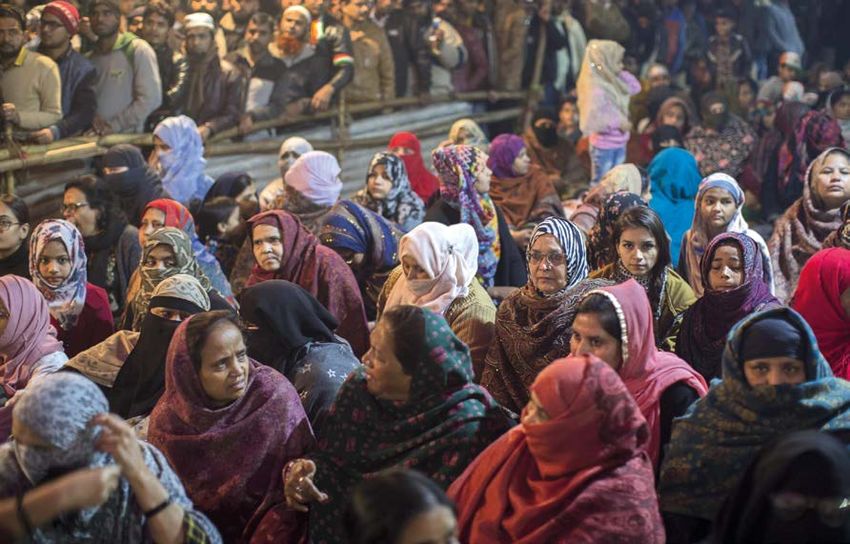
The ongoing use of restrictive laws to stifle dissent in India

THE ASSAULT ON
DISSENT IN INDIA
Judicial harassment and attacks
on human rights defenders
Human rights defenders have continued to face arbitrary arrests and
judicial harassment for their activism. In many cases, the authorities have
used national security and anti-terrorism laws to criminalise and detain
human rights defenders and activists on baseless charges. Primary among
these misused pieces of legislation are the Unlawful Activities (Prevention) Act
(UAPA), which is India’s primary counter-terrorism law; section 124A on ‘sedition’
of the Indian Penal Code, a colonial-era relic that is excessively vague and broad; and
administrative detention laws such the National Security Act (NSA) and the Public Safety Act (PSA),
which applies only in Indian-administered Jammu and Kashmir.4

As a result of these laws, some human rights defenders remain in jail at this time, exposing them to heightened
risk of contracting COVID-19. Other activists may not be detained, but remain at risk in other ways.

                                                                Women human rights defenders are often
                                                                targeted with gender-specific threats, such
                                                                as rape and sexual violence, both online and
                                                                offline.5 Human rights defenders from excluded
                                                                communities such as Adivasi and Dalit peoples
                                                                encounter death threats, destruction of their
                                                                property, fabricated charges and physical
                                                                attacks.6 Right to Information (RTI) activists often
                                                                face similar violence from non-state sources as
                                                                well as judicial harassment.7

                                                                India does not have a special law to protect
                                                                human rights defenders and it did not accept
                                                                recommendations during India’s third Universal
                                                                Periodic Review (UPR) at the United Nations
                                                                (UN) Human Rights Council, held in May 2017,
Human rights defender Sudha Bharadwaj sent to police custody     concerning the protection of human rights
© PTI                                                            defenders.8

The targeting of journalists
Journalists in India continue to be targeted by the Modi government as well as by non-state groups and
individuals for their reporting. At least 198 serious attacks were recorded against journalists between 2014 to
2019, with 40 journalists killed.9 Journalists have been harassed and detained for their reporting or for making
critical comments on social media, and face increasing pressure to self-censor.10 India’s ranking in the Reporters
Without Borders (RSF) Press Freedom Index dropped from 140 to 142 out of 180 countries in 2020. According
to RSF, there have been consistent media freedom violations, including police violence against journalists and
reprisals instigated by criminal groups or corrupt local officials. Since the 2019 elections, pressure on the media
to align with the government’s line has increased.11

                                                                                                                       5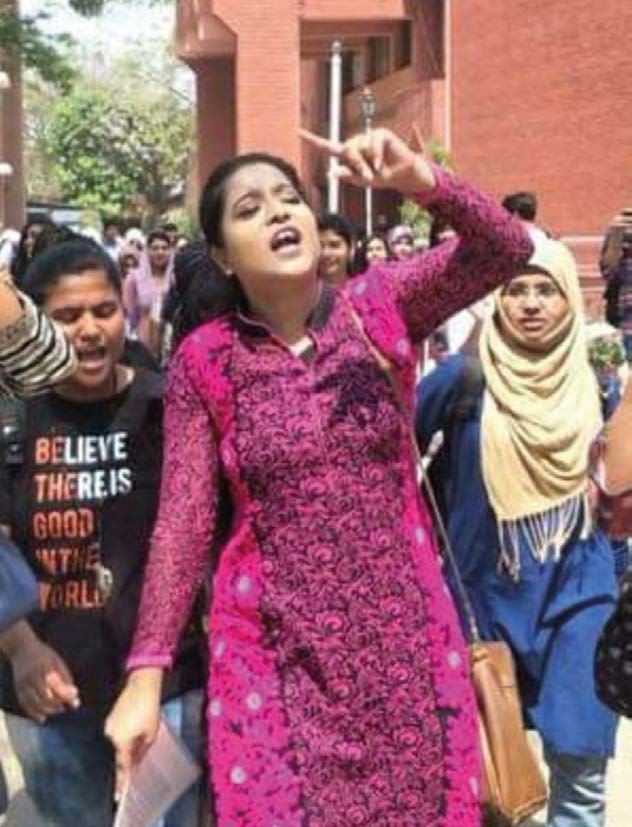
PUNISHED FOR SPEAKING UP

    University students at a protest rally against CAA law in Kolkata © Sumit Sanyal/Anadolu Agency via Getty Images

    Crackdown on protests
    An unprecedented crackdown on protests across India took place after India’s Parliament passed a
    discriminatory citizenship law on 12 December 2019. The amended Citizenship (Amendment) Act (CAA) 2019,
    which came into force on 10 January 2020, provides a route to citizenship for irregular migrants, including
    members of Buddhist, Christian, Hindu, Jain, Parsi and Sikh communities facing persecution from Afghanistan,
    Bangladesh and Pakistan who entered the country on or before 31 December 2014, but does not include
    people from Muslim communities. The Office of the UN High Commissioner for Human Rights has described
    the controversial new law as “fundamentally discriminatory in nature” while human rights groups have called
    the law “unconstitutional and divisive.”12

    Protests against the CAA, which had taken place since 2018 when the amendment was first discussed in
    Parliament, escalated significantly after it was passed. In December 2019, protests stretched from Lucknow
    and Delhi in India’s north to Bengaluru and Hyderabad in the south and attracted crowds as large as 200,000.
    At the forefront of these protests were women and youth, including students from across India’s universities.
    In Shaheen Bagh, a neighbourhood of Delhi, a women-led sit-in protest became the epicentre of the movement
    for more than three months until the COVID-19 pandemic hit the country.13

    The protests were largely peaceful, apart from minor
                                                                          The lack of accountability has
    incidents of destruction of property and stone pelting. But
                                                                          strengthened an ongoing climate
    protesters were met with brutal and excessive force by the
    police. Dozens were reported killed, many allegedly due to            of impunity for law enforcement.
    bullet injuries from police use of firearms, while hundreds
    were injured. Hundreds of protesters were arrested and detained, including human rights defenders, and there
    have been allegations of torture and ill-treatment. In one incident, on 18 December 2019, several students of
    Aligarh Muslim University detained by police after protests say that they were beaten up in custody.14 The lack
    of accountability has strengthened an ongoing climate of impunity for law enforcement.

    In February 2019, a mob violently removed a group of protesters, mostly women, who were blocking a road in
    Chand Bagh and Jafrabad, Delhi, in protest against the CAA. According to reports it was instigated by a leader
    from the BJP.15 This prompted an escalation of violence which left dozens killed and hundreds injured. Witnesses
    saw mobs wielding sticks and stones walking down streets in parts of Delhi, and looting Muslim people’s homes

6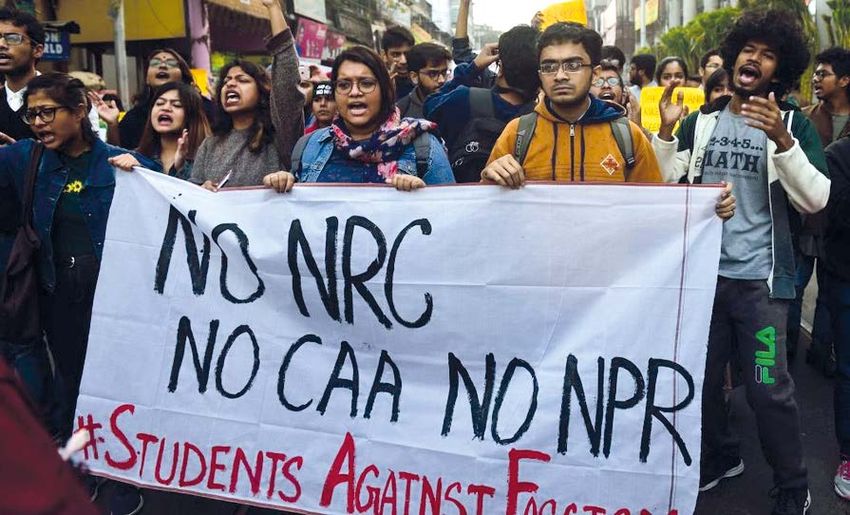
The ongoing use of restrictive laws to stifle dissent in India

which had been abandoned out of fear.
The Supreme Court later criticised the
Delhi police for not doing enough to
check the violence.16

Indian authorities shut down the
internet in several districts during
the anti-CAA protests including in the
states of Arunachal Pradesh, Assam,
Meghalaya, Tripura, Uttar Pradesh
and West Bengal, contending it was
necessary to maintain law and order.
The police also used Section 144 of the
Criminal Procedure Code – a colonial-
era law – against the protesters. The
law prohibits, among other things, a
gathering of more than four people if
the authorities fear a possible violation
of law and order. The authorities also        Indian Protesters shout slogans at the protest site at Shaheen Bagh
put limits on public transportation to        area on February 3, 2020 in New Delhi, India. © Sumit Sanyal/
prevent the movement of protesters.17         Anadolu Agency via Getty Images

Violations in Indian-administered Jammu and Kashmir
Human rights violations in Indian-administered Jammu and Kashmir have been rampant over the past several
decades, with reports of extrajudicial killings, enforced disappearances and torture and frequent arbitrary
arrests and detentions under repressive laws such as the Public Safety Act (PSA). Human rights groups say the
authorities are using PSA detentions as a ‘revolving door’ of preventative detention to keep in detention people
they can’t or won’t convict through the legal system.18 The rights to the freedoms of opinion and expression
are regularly curtailed by the government, including through censorship, surveillance, bans on social media
and telecommunications shutdowns.

In early August 2019, the Indian Parliament            Human rights violations in Indian-
revoked the special constitutional status
of Indian-administered Jammu and                       administered Jammu and Kashmir
Kashmir that had guaranteed specific                   have been rampant over the past several
rights to the state, including the right to
its own constitution and autonomy to
                                                       decades, with reports of extrajudicial
make laws on all matters, except defence,              killings, enforced disappearances and
communications and foreign affairs.19 The              torture and frequent arbitrary arrests
special status was considered an essential
provision to maintain the democratic                   and detentions under repressive laws
relationship between India and Jammu                   such as the Public Safety Act (PSA).
and Kashmir.

In the days leading up to the parliamentary announcement of the revocation, India’s federal government
moved tens of thousands of troops into Jammu and Kashmir. On 4 August 2019, the internet, mobile phone
networks and landlines in the region were cut off, a curfew was imposed and a ban on public meetings was
introduced. Thousands of Kashmiris were detained without charge under the PSA, including former chief
ministers, political leaders, opposition activists, lawyers and journalists.20 Restrictions on movement were
imposed in several parts of the region and prominent political leaders were placed under house arrest.

                                                                                                                    7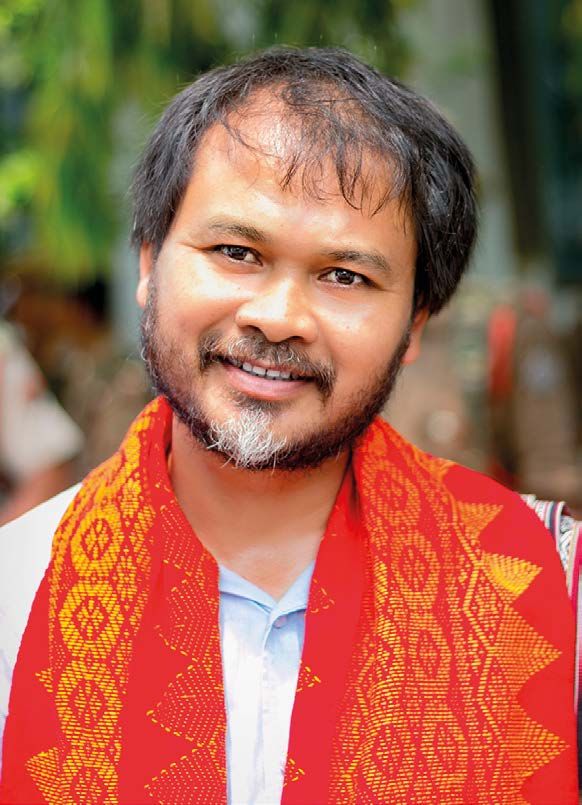
PUNISHED FOR SPEAKING UP

    Soldiers stands guard during a curfew in Kashmir © Yawar Nazir/Getty Images

    Even though some restrictions have been lifted, at the time of writing hundreds remain in detention and mobile
    phone services and internet access are still limited. The government has blocked opposition politicians, foreign
    diplomats and international journalists from independent visits to Jammu and Kashmir.21 In a statement on
    4 August 2020, UN experts said that “the human rights situation in Jammu and Kashmir has been in free fall”
    since India revoked the region’s special status.22

    Freedom of association at risk
    The BJP government has used the draconian Foreign Contributions Regulation Act (FCRA) to stop foreign funding
    and investigate organisations that are critical of the government, as part of its ongoing hostility towards human
    rights CSOs. The FCRA regulates the acceptance and use of foreign assistance and prohibits it in relation to
    activities deemed ‘detrimental’ to the Indian national interest. Its broad and vague definitions lend themselves
    to applications that are disproportionate to its purported goal.

                                                                       In March 2020, the Supreme Court ruled
                                                                       that the government cannot use the
                                                                       FCRA to restrict foreign funding for CSOs
                                                                       that are engaged in legitimate dissent

                                                                 Since Prime Minister Modi came to power in 2014,
                                                                 several CSOs have been targeted under this law.23
                                                                 In June 2019, authorities filed a criminal case against
                                                                 Lawyers Collective – a group that provides legal aid
                                                                 and advocates for the rights of excluded groups – for
                                                                 violating the FCRA, in a move that seemed intended
                                                                 to intimidate and silence them.24 In March 2020, the
                                                                 Supreme Court ruled that the government cannot use
                                                                 the FCRA to restrict foreign funding for CSOs that are
                                                                 engaged in legitimate dissent. The ruling came in a case
    Indian Supreme Court                                         involving Indian Social Action Forum, a CSO.25

8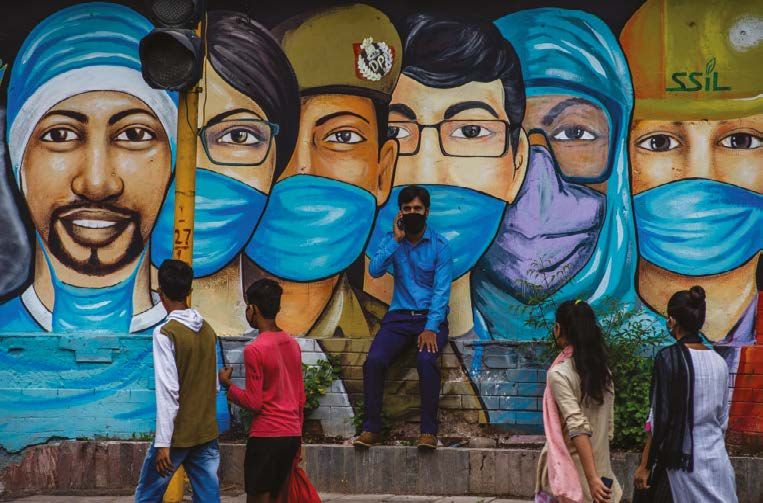
The ongoing use of restrictive laws to stifle dissent in India

Harassment of critics
during the pandemic
Since the coronavirus (COVID-19) pandemic
took hold, CIVICUS has documented the judicial
harassment of activists for their criticism of the
authorities’ handling of the crisis. In one case,
T Shadishkanta and his colleague Phajaton from
the Youth’s Forum for Protection of Human Rights,
a human rights organisation based in the city of
Imphal, were arrested for making a statement urging
the state to move a COVID-19 quarantine centre. In
another case, Pranab Doley and Soneshwar Narah
from the Jeepal Krishak Sramik Sangha, a farmers’
rights organisation, were arrested after they called
for a probe into allegations regarding the siphoning
of rice from a public distribution system during the     India Impose Restrictions As Coronavirus Cases Continue To Spike
COVID-19 lockdown.26                                     © Yawar Nazir/Getty Images

Journalists have also been targeted for their critical reporting. In April 2020, the authorities in Uttar Pradesh
state filed a criminal complaint against Siddharth Varadarajan, an editor and founder of news website The
Wire, for its reporting on a government minister who violated the lockdown.27 According to a report, as many
as 55 journalists have been targeted for covering the pandemic in India between 25 March 2020, when the
lockdown was first imposed, and 31 May 2020.28

The authorities have also sustained its persecution of human rights defenders and activists during the
pandemic, many of whom are at risk of contracting COVID-19 as they are being held in overcrowded prisons
without adequate sanitation, hygiene and access to medical care.29

    Weakness of the human rights commission
    The National Human Rights Commission
    of India (NHRCI) is tasked with
    investigating human rights violations
    and state failures to prevent these.
    Research undertaken by the Asian
    NGO Network on National Human
    Rights Institutions (ANNI) found that
    despite increasing reports of violations
    against human rights defenders and
    the overall worsening restriction of
    democratic spaces, the NHRCI has
    either “maintained a spectacular silence
    or initiated a token approach.”30 The
    NHRCI has been neither independent
    nor effective in investigating human
    rights, prompting human rights groups
                                                   © The News Minute
    to call for its reform.

                                                                                                                            9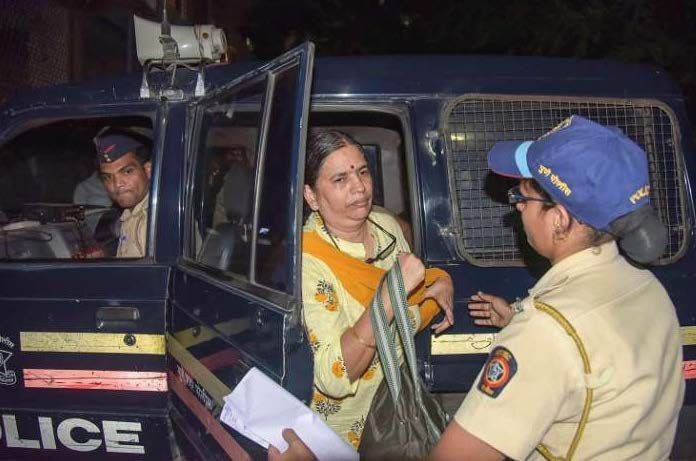
PUNISHED FOR SPEAKING UP

     A REPRESSIVE LEGAL
     FRAMEWORK
     India’s web of repressive laws are being used to silence protesters,
     journalists, human rights defenders and others who speak up against
     government policies. Often, laws – such as those that prohibit sedition, or purport to address terrorism – are
     vaguely worded, which means that they can be applied arbitrarily to those who speak up.

     In some cases, entire provisions within laws are incompatible with India’s international human rights
     obligations with regard to the protection of the freedoms of association, peaceful assembly and expression,
     as well as India’s Constitution. They allow for administrative detention – that is, detention without trial – with
     few limitations.

     In a number of cases, multiple charges under various laws have been brought against detained human rights
     defenders in succession to keep them in detention, with a new charge brought after a judge has ruled that
     there is not enough evidence supporting the initial charge to keep the individual detained. Not only are the
     laws themselves inherently flawed, but their implementation makes it clear that they are tools for judicial
     harassment, rather than for preventing or addressing criminality.

     India’s international human rights obligations
     Under the ICCPR, which India ratified in 1979, India has an obligation to protect the freedoms of association
     (article 22), peaceful assembly (article 21) and expression (article 19). Article 19 of India’s Constitution also
     guarantees these three rights.

     Further, article 9(1) of the ICCPR states: “Everyone has the right to liberty and security of person. No one shall
     be subjected to arbitrary arrest or detention. No one shall be deprived of his liberty except on such grounds
     and in accordance with such procedure as are established by law.”

     Under international law, people who arrested and detained should be brought before a judge within a
     reasonable timeframe and provided with the reasons for their arrest and detention and any charges against
     them, and they should be granted access to a lawyer. The ICCPR allows for pre-trial detention to be used
     only as a last resort and when it is necessary, reasonable and proportionate to the objective sought by the
     prosecution.

     Under the ICCPR, which India ratified in 1979, India has
     an obligation to protect the freedoms of association
     (article 22), peaceful assembly (article 21) and expression
     (article 19). Article 19 of India’s Constitution also
     guarantees these three rights.

10
The ongoing use of restrictive laws to stifle dissent in India
In a number of cases, multiple charges under various
laws have been brought against detained human rights
defenders in succession to keep them in detention,
with a new charge brought after a judge has ruled that
there is not enough evidence supporting the initial
charge to keep the individual detained.
The Unlawful Activities (Prevention) Act 1967
As India’s primary counter-terrorism law, the UAPA has been increasingly misused by the Modi government
and has become the weapon of choice to detain human rights defenders, journalists and protesters under
catch-all charges.31
Individuals detained under the UAPA can be held without charge for up to 180 days as opposed to the usual
60 to 90 days under Indian criminal law. This significantly exceeds international law and standards.32 The slow
investigative processes and extremely stringent bail provisions under the UAPA ensure that those detained
under the law are held in pre-trial detention for long periods.33
The law contains a vague definition of a ‘terrorist act’,34 which differs from the definition promoted by the
UN Special Rapporteur on the Protection of Human Rights and Fundamental Freedoms while Countering
Terrorism.35 It is extremely open to interpretation by the authorities and allows for the use of the law to restrict
the freedoms of peaceful assembly and expression. Previously, only membership of unlawful associations and
terrorist organisations was a crime under the UAPA. In 2019, the law was expanded, allowing the government
to designate an individual as a ‘terrorist’.36
In May 2020, a number of UN Special Procedures mandate holders released a public communication outlining
their concerns with the law and encouraging the government of India to amend the UAPA to ensure its
compliance with India’s international human rights obligations. Their concerns included the UAPA’s transfer
of broad powers to the executive, and the use of the legislation to conflate human rights and civil society
activities and non-violent criticism of state policies or institutions with terrorist activities. 37
Sedition (section 124A of the Indian Penal Code)
Section 124A of the Penal Code criminalises sedition.38 The provision, which is a colonial legacy, prohibits any
words, spoken or written, or any signs or visible representation that can cause “hatred or contempt, or excites
or attempts to excite disaffection” toward the government.
This provision is excessively vague and broad, giving the authorities scope to characterise speech that is critical
of government actions, including comments shared via social media, as sedition. It has been systematically
used to crack down on peaceful critics. Sedition is a non-bailable offence. It carries penalties from three years
in prison to life imprisonment, along with a fine.
Although the Supreme Court of India has ruled that incitement to violence is necessary for section
124A to be applied, this judgement is routinely disregarded by law enforcement. This means that only about
a third of arrests for sedition have resulted in charges, and there have been only seven convictions since
2014.39
11PUNISHED FOR SPEAKING UP
‘Promoting enmity between different groups’
(section 153A of the Indian Penal Code)
Section 153A of the Penal Code criminalises anyone who by words, either spoken or written, or by signs or by
visible representations or otherwise, promotes or attempts to promote, on grounds of religion, race, place
of birth, residence, language, caste, community, or any other ground whatsoever, disharmony or feelings
of enmity, hatred or ill-will between different religious, racial, language or regional groups or castes or
communities. The punishment, of up to three years of imprisonment, can extend to five years if the offence is
committed in a place of worship.
Section 153A criminalises speech simply on the grounds that it promotes hatred or ill-will between communities,
without any requirement that it incite the listeners to act upon that hatred. As a result, the law restricts speech
far more broadly than can be justified under international law.40
As with sedition, this is a non-bailable offence with a maximum prison sentence of three years and a fine.
In some instances, charges under this section have been brought against detained human rights defenders
seemingly to ensure that bail cannot be granted. In recent months, it has proven a particularly popular charge
to bring against those protesting about the discriminatory CAA law.
The National Security Act 1980
Under the NSA, individuals can be held without charge or trial in administrative detention for up to 12 months
on grounds of national security and maintenance of public order.41
The NSA stipulates that if any detention is made then it has to be referred to an advisory board within three
weeks of the date of detention, and the board has to submit its report within seven weeks of the date of
detention. However, the person detained does not have the right to be legally represented. Further, the board
proceedings are private and reports are confidential.42
This preventive detention violates various due process rights, including the presumption of innocence. Its vague
definition means that it can be applied arbitrarily to target protesters and human rights defenders. A number
of UN Special Rapporteurs, including the Special Rapporteur on the situation of Human Rights Defenders, have
called for its repeal.43
Public Safety Act
The PSA of Jammu and Kashmir permits administrative detention without judicial intervention.44 This law,
which was introduced in 1978, allows detention for up to two years “in the case of persons acting in any
manner prejudicial to the security of the State,” or for up to one year where “any person is acting in any
manner prejudicial to the maintenance of public order.”
Detainees also cannot challenge the decision to detain them in any meaningful way: there is no provision for
judicial review of detention in the PSA, and detainees are not permitted legal representation before the advisory
board, the executive detaining authority that confirms detention orders. Further, regressive amendments to
the Act in 2018 have led to detainees being held in prisons far from their homes, in violation of international
human rights standards.45
Human rights groups have documented how the PSA has a long history of being misused in Jammu and Kashmir.
It has allowed the Indian government to circumvent the criminal justice system and undermine accountability,
transparency and respect for human rights.46
12The ongoing use of restrictive laws to stifle dissent in India
Section 144 of the Code of Criminal Procedure
A colonial-era law – Section 144 of the Code of Criminal Procedure – authorises officials to prohibit, among
other things, a gathering of more than four people if they fear a possible violation of law and order. The law
gives powers to state governments and the local police. The law is primarily meant to be applied in emergencies
to maintain ‘public tranquillity’, but the authorities have used it widely and frequently to prevent protests,
violating the right to peaceful assembly.
After the anti-CAA protests began, authorities in several states imposed the law to prevent protests in an broad
and discriminatory manner. The Supreme Court has said that the law “cannot be used to suppress legitimate
expression of opinion or grievance or exercise of any democratic rights.”47
Foreign Contribution Regulation Act
The FCRA was enacted in 2010, ostensibly to regulate foreign funding and “prohibit acceptance and utilization
of foreign contribution… for any activities detrimental to the national interest.” In practice, it has been used to
restrict foreign funding for CSOs that are critical of government policies or that protest against the government’s
large development projects.
In an analysis of the FCRA in 2016, former UN special rapporteur
on the rights to freedom of peaceful assembly and of association,
Maina Kiai, concluded that certain provisions of the FCRA were not
in conformity with international human rights law and noted that
“access to resources, including foreign funding, is a fundamental
part of the right to freedom of association under international law,
standards, and principles.”48
In June 2016, Kiai, along with the UN Special Rapporteurs on Freedom
of Expression and on the Situation of Human Rights Defenders, called
on the government of India to repeal the FCRA, which they argued
was being used to “silence organisations involved in advocating
civil, political, economic, social, environmental or cultural priorities,
which may differ from those backed by the Government.”49
13PUNISHED FOR SPEAKING UP
Safoora Zargar
Safoora Zargar, 27, is a research student from
Jamia Millia University who joined peaceful
anti-CAA protests in Delhi.50 Safoora was
initially arrested on 10 April 2020 for allegedly
obstructing a road near the Jaffrabad metro
station, and subsequently accused of being
a ‘key conspirator’ to the February 2020
violence in Delhi that left dozens of people
dead and hundreds injured (see above).
Three months pregnant when detained, Safoora was initially
granted bail, partly owing to her pregnancy, and partly due
to the directives issued by the Indian Supreme Court on
decongestion of prisons during COVID-19.51 But she was
immediately rearrested under the draconian UAPA.52
These were baseless and politically
motivated charges, which seem
designed to punish Safoora and other
activists for defending human rights
and engaging in peaceful protest
against a discriminatory law.
The charge sheet rapidly grew with accusations of sedition © Wikipedia
(section 124A), promoting enmity between different groups
(section 153A), rioting (section 148), murder (section 302) and attempt to murder (section 307) under the Penal
Code.53 These were baseless and politically motivated charges, which seem designed to punish Safoora and other
activists for defending human rights and engaging in peaceful protest against a discriminatory law.54
Safoora was detained in the overcrowded Tihar jail in Delhi, raising serious concerns about the risks to her
health while pregnant and during the pandemic. During her detention, she was allowed to make just two five-
minute calls each to her husband and her lawyer. She was denied visits and letters on account of COVID-19
restrictions. On 23 June 2020, after she had been held for more than 70 days in detention, the Delhi High
Court finally granted Safoora bail on humanitarian grounds.55 This came after at least three of her previous
applications had been rejected by the courts.
Meeran Haider, a member of the Jamia Coordination Committee and Shifa-Ur-Rehman, president of the Jamia
Millia Islamia Alumni Association, were accused alongside Safoora. Meeran remains detained in Tihar jail, and
Shifa-Ur-Rehman in Guhawati Central Jail in Assam.56
14The ongoing use of restrictive laws to stifle dissent in India
Sharjeel Imam
Activist Sharjeel Imam, aged 32, is a student of Jawaharlal Nehru University pursuing
a PhD in Historical Studies and has been a vocal voice against Islamophobia.57 He
was arrested on 28 January 2020 in Bihar’s Jehanabad district for protesting and
making speeches against the CAA.
Sharjeel had helped to organise the peaceful Shaheen Bagh sit-in protest in New Delhi. In a video clip on social
media, Sharjeel was purportedly heard telling protesters to block roads across India in protest against the CAA.
On this evidence alone, he was accused of making inflammatory speeches against the CAA in Aligarh Muslim
University and Jamia Millia Islamia University in December 2019 and subsequently charged with sedition
(section 124A) and promoting enmity between different groups (section 153A) under the Penal Code.58 Police
in six states – Arunachal Pradesh, Assam, Bihar, Delhi, Manipur and Uttar Pradesh – filed charges against him.59
On 20 February 2020, he was transferred from
remand in Bihar to Guwahati Central Jail. On 25
April 2020, the Delhi police also charged Sharjeel
under section 13 (unlawful activities) of the UAPA.
His lawyer said that the police “added UAPA
provisions on the 88th day [of arrest] with the
intention of keeping him jail for a longer time,” in
what has become a common tactic for prolonging
the detention of activists.60
His lawyer said that the
police “added UAPA
provisions on the 88th day
[of arrest] with the intention
of keeping him jail for a
longer time,” in what has
become a common tactic
for prolonging the detention
Source Facebook of activists.
A Delhi court subsequently extended the maximum period of his detention from the statutory 90 to 180 days
under the UAPA to give additional time to the authorities to complete the investigation into his case.61 His bail
application has been rejected by the courts.62
On 21 July 2020, Sharjeel tested positive for COVID-19.63 By then, at least 435 inmates of Guwahati Central
Jail had tested positive for the virus. On 28 August the judicial persecution of Sharjeel continued when was
charged again by the Special Crimes Cell of the Delhi police for his alleged involvement in the Delhi riots in
February 2020.64
15PUNISHED FOR SPEAKING UP
Akhil Gogoi
Assam-based activist Akhil Gogoi was arrested in December 2019 for his involvement
in protests against the CAA. He has since been accused of having Maoist links,
delivering speeches against communal harmony and orchestrating the violence
that broke out in Assam after the CAA was passed by Parliament. In total, Assam
police have filed 12 cases against him.65
Akhil is a human rights defender and president of Krishak Mukti Sangram Samity, an organisation working with
Indigenous communities in Assam to protect and promote their land rights. An outspoken RTI activist, he has
been very vocal against corruption in the public sphere, campaigning against the construction of mega-dams
in the state of Assam and against so-called ‘land mafias’ – the nexus of political, business and bureaucratic
interests who acquire, develop and sell land illegally for profit .66 In 2017, the government of Assam arrested
and charged Akhil under the NSA, but he was released four months later.67
Since his latest arrest, Akhil has been charged under the Penal Code with sedition (section 124A), waging
war against the nation (section 121), criminal conspiracy (section 120B), promoting enmity between different
groups (section 153A) and rioting (section 153B). The National Intelligence Agency (NIA) added further charges
of conspiracy (section 18) under the amended UAPA. Akhil dismissed the allegations, calling them “a ploy to
suppress the people’s uprising.”68
Akhil dismissed the allegations,
calling them “a ploy to suppress
the people’s uprising.” He
has been kept continuously
in detention since December
2019 through a combination of
various judicial procedures and
the actions of different agencies.
He has been kept continuously in detention since
December 2019 through a combination of various
judicial procedures and the actions of different
agencies. The NIA failed to produce a charge sheet
after the stipulated 90 days of investigation, so the
special NIA court granted him bail. But on 7 April
2020, the Guwahati High Court suspended the bail,
keeping him in detention.69 A NIA special court then
rejected a further bail plea on 7 August 2020.
On 12 July 2020, Akhil, who is being detained
in Guwahati Central Jail, tested positive for
COVID-19.70
© Wikipedia
16The ongoing use of restrictive laws to stifle dissent in India
Devangana Kalita
and Natasha Narwal
Devangana Kalita and Natasha Narwal are both
founding members of the Pinjra Tod, a collective of
women students and university alumni from across
Delhi who seek to lessen restrictions, such as curfews,
placed on female students.71
Since the CAA was passed in December 2019, women human rights
defenders have played a critical role in peacefully protesting and
mobilising against the Act on the basis that it violates the fundamental
principles and protections of the Constitution of India.
On 23 May 2020, the Special Crimes Cell of the Delhi police arrested
Devangana Kalita and Natasha Narwal in connection with the anti-CAA
protests and violence that took place in February 2020 in Delhi. Charges Devangana Kalita © Zee News
brought against them include those of obstructing a public servant in
discharge of public functions, wrongful restraint and assault or criminal
force to deter a public servant from discharge of his duty.
Since the CAA was passed in
December 2019, women human
rights defenders have played a
critical role in peacefully protesting
and mobilising against the Act
on the basis that it violates the
fundamental principles and
protections of the Constitution
of India.
On 24 May 2020, both were granted bail by a Delhi court,
only to be immediately rearrested by a Special Investigation
Team of the Crime Branch of the police and remanded in
Natasha Narwal © Zee News Tihar jail.
The new charges include serious offences of murder (section 302), attempted murder (section 307), criminal
conspiracy (section 120B) and promoting enmity between different groups’ (section 153A) under the Penal
Code; offences under the Arms Act (sections 25 and 27); and offences under the Prevention of Destruction of
Public Property Act (sections 3 and 4).72 They were also subsequently charged under the UAPA.73
As in the cases of other activists, the additional charges seem to have been brought with the sole intention of
holding the two human rights defenders in prison. On 13 August 2020, their detention was extended by the
courts until 17 September 2020.74
17PUNISHED FOR SPEAKING UP
© Wikipedia
Shaheen Bagh protesters
The sit-in protest in Shaheen Bagh, a neighbourhood in south Delhi, was seen as
the epicentre of the nationwide anti-CAA protests, inspiring many similar protests
across India. Without any formal organisation, women in the area began the protest
on 15 December 2019 when they occupied a stretch of road and subsequently
erected a tent at the site.75
The protests hosted poetry, music and speeches, and were supported by more than a hundred volunteers,
including students from Delhi.76 Numbers ranged from around a thousand protesters during the daytime to
15,000 to 20,000 in the late evenings.77
The Shaheen Bagh protesters were vilified and
The Shaheen Bagh protesters
demonised by government officials, who called
them “anti-national” and “paid protesters.”78 Some were vilified and demonised
political leaders made statements inciting hatred by government officials, who
and violence against them. A union minister was called them “anti-national” and
reported to have encourage crowds to “shoot the
traitors.”79 A BJP member of Parliament claimed “paid protesters.” Some political
that the protesters from Shaheen Bagh would enter leaders made statements
citizens’ homes and “rape your sisters and daughters inciting hatred and violence
and kill them.”80 Prime Minister Modi weighed
in, calling the protests a “political conspiracy” against them.
threatening the unity of the country.81
Other efforts were made to shut down protests. On 17 January 2020, the Delhi Lieutenant Governor Anil
Baijal directed the Commissioner of Police, Delhi, to exercise the powers of a ‘detaining authority’ under the
draconian NSA for three months.82
Despite harassment and threats, the protest continued for over a hundred days, until 24 March, when the
authorities broke up the protest site, citing COVID-19 concerns. Hundreds of police in riot gear surrounded
the protesters and told them to leave. Some resisted the police, and at least nine people were detained, six
of them women. The police bulldozed the physical remnants of the protest: posters were torn, sculptures and
tents removed and graffiti and slogans painted over.83
18The ongoing use of restrictive laws to stifle dissent in India
Bhima KoregAon case
The Bhima Koregaon case is about are a group of human rights defenders best
known for their work defending the rights of some of India’s poorest and most
excluded communities, including the Adivasi and Dalit peoples. All are currently
detained under the UAPA.
(L-R) Shoma Sen, Vernon Gonsalves, Suresh Gadling, Gautam Navlakha, Rona Wilson, Sudha Bharadwaj, Sudhir Dawale,
Anand Teltumbde, Arun Ferreira, Varavara Rao and Hany Babu
Sudha Bharadwaj, Sudhir Dhawale, Arun Ferreira, Surendra Gadling, Vernon Gonsalves, Gautam Navlakha,
Varavara Rao, Mahesh Raut, Shoma Sen, Anand Teltumbde and Rona Wilson were charged in June and August
2018.84 Their bail applications have been systematically rejected since then.
Initially, they were arrested for inciting caste violence in Bhima Koregaon village in the Pune district of
Maharashtra state in January 2018.85 Police subsequently claimed that the human rights defenders had links
with ‘unlawful organisations’, although no evidence has been produced for these charges, which appear to
have been fabricated as part of government efforts to clamp down on human rights defenders.86 Their cases
were subsequently handed over to the NIA. All 11 have been subjected to a smear campaign by the state and
the media accusing them of being ‘anti-nationals’ working against the country.
In October 2018, UN human rights experts expressed concerns about the terrorism charges laid against the 11.
They have also raised concerns about the UAPA’s vague definitions of ‘unlawful activities’ and ‘membership of
terrorist organisations’, which have been routinely used by the government to stifle dissent.87
Of the 11, five are older persons, which puts them at heightened risk of contracting COVID-19 and experiencing
dangerous symptoms. Their repeated requests for bail on medical grounds have been rejected by the courts.
On 28 July 2020, a twelfth human rights defender, Hany Babu was arrested by the National Investigation Agency
(NIA) in Mumbai in relation to this case.
Varavara Rao, 79, has been shifted back and forth between detention in Taloja jail in Mumbai and various
hospitals in Mumbai as his health has deteriorated.88 On 16 July 2020, during his last hospital stay, he tested
positive for COVID-19, which he had contracted in jail. A day earlier, his family had been permitted to visit him
in hospital to find him incoherent and lying in inhumane conditions in a pool of urine in the transit ward of the
hospital, with no treatment offered to him.89 Varavara has since been moved back to Taloja jail.
19PUNISHED FOR SPEAKING UP
Mian Qayoom
Mian Abdul Qayoom, a senior human rights
lawyer and president of the Jammu and
Kashmir High Court Bar Association, was
detained on 4 August 2019, the day before the
government of India revoked the special status
of Indian-administered Jammu and Kashmir.90
On 7 August 2019, Mian was booked under the PSA and
detained under its preventive detention provisions. The next
day, and without any prior notice, he was taken to Central
Jail, Agra, Uttar Pradesh, and put into solitary confinement.91
His health deteriorated: aged 70, Mian has diabetes, double
vessel heart disease and kidney problems. He was transferred
to Tihar jail in New Delhi in January 2020.92
Human rights groups have documented the PSA’s long history
of being misused in Jammu and Kashmir. It has allowed the
Indian government to circumvent the criminal justice system,
undermine accountability, transparency and respect for human Source: Facebook
rights. The Jammu and Kashmir High Court Bar Association
plays an important role in challenging a large number of PSA detention orders in the courts, undertaking jail
visits and more generally taking up cases of human rights violations.93
The authorities justified his detention on the
Human rights groups have documented basis that Mian “propagated secessionist
the PSA’s long history of being misused ideologies in the past” and that there were
in Jammu and Kashmir. It has allowed criminal cases registered against him and
his associates for violating various laws.94
the Indian government to circumvent
However, his lawyers had argued that the
the criminal justice system, undermine grounds of his detention were “wholly
accountability, transparency and respect vague” and that the allegations levelled,
for human rights. which dated back to 2008 and 2010, were
outdated. 95
On 29 July 2020, the central government informed the Supreme Court that Mian’s detention would not be
extended, provided that he stayed in Delhi until 7 August 2020 at the earliest. He was also banned from issuing
any statements as a condition of his release.96 On 1 August 2020 he was released after spending 360 days
detention.
20The ongoing use of restrictive laws to stifle dissent in India
Masrat Zahra
Masrat Zahra, a 26-year-old
photojournalist, has used her
photos over the last four years
to tell stories of women and
children in conflict areas, and
her work has appeared in several
publications including Al Jazeera,
The New Humanitarian and The
Washington Post. Masrat says
that her work is driven by a
desire to document the conflict
in Kashmir through a woman’s
perspective – both her own and
© Wikipedia
those of the women around her.97
On 18 April 2020, police in Indian-administered Jammu and Kashmir charged Masrat, who is from the region’s
main city of Srinagar, under section 13 of the UAPA for ‘unlawful activities’.98 The police accused her of
“uploading anti-national posts [on Facebook] with criminal intentions to induce the youth.”
The Kashmir Press Club noted that “while the government has every
right to rebut a story of a journalist and allow a journalist to respond,
cases against journalists for their stories and work are unwarranted
and outrightly illegal and draconian”.
Police also said that she had uploaded photos “which can provoke the public to disturb law and order” and that
are “tantamount to glorify the anti-national activities and dent the image of law enforcing agencies”.99 They did
not specify which post of hers merited these charges.
Masrat has previously faced online harassment and threats after a photograph of her, captioned ‘mukhbir’,
meaning ‘spy’ or ‘army informer’, was circulated on social media in 2018.100
Journalists in Jammu and Kashmir have come out in support of Zahra and demanded the First Information
Report (FIR) filed against against her be revoked. The Kashmir Press Club noted that “while the government has
every right to rebut a story of a journalist and allow a journalist to respond, cases against journalists for their
stories and work are unwarranted and outrightly illegal and draconian”.101
On 11 June 2020, Masrat was honoured with the Anja Niedringhaus Courage in Photojournalism Award by the
International Women’s Media Foundation.102
21PUNISHED FOR SPEAKING UP
Kishorechandra Wangkhem
Kishorechandra Wangkhem, a journalist and an outspoken government critic,
worked with the Information Service Television Network in the state of Manipur.
On 21 November 2018,
Kishorechandra was arrested by
the Manipur police on charges of
sedition. He had recently uploaded
a video on Facebook criticising the
state government, led by the BJP,
for celebrating a Hindu festival
during National Integration
Week, which is observed across
India in November, with the aim
of fostering and reinforcing the
strength of public harmony and
national integration.103 He was
initially released on 27 November
2018 after the chief judicial
magistrate found that the video
he uploaded “did not seem to be
Source: Outlook India © facebook
an attempt to disturb peace.”104
The next day, police told him to come to the police station.
Kishorechandra As he was preparing to leave for the station, a group of
Wangkhem’s wife reported police officials in civilian clothing arrived at his residence.
a smear campaign At the station he was arrested under section (3)(2) of the
NSA, enabling his preventive detention.105 On 13 December
against him while he was 2018, the advisory board set up under the NSA to look
detained. The family faced into the charges approved his detention for 12 months.
harassment and threats Kishorechandra was detained at the Sajiwa Central Jail on
the outskirts of Imphal. In January 2019, the UN Working
from the state government. Group on Arbitrary Detention and UN Special Rapporteur on
He also lost his job Freedom of Expression expressed serious concerns around
his criminalisation under the NSA.106
Kishorechandra Wangkhem’s wife reported a smear campaign against him while he was detained. The family
faced harassment and threats from the state government.107 He also lost his job. After four months in detention,
on 8 April 2019, the Manipur High Court ordered the release of Kishorechandra following a legal challenge.108
He had spent 132 days in detention.
22The ongoing use of restrictive laws to stifle dissent in India
Lawyers Collective
Lawyers Collective is a human rights organisation founded by Indian human rights
defenders and lawyers Indira Jaising and Anand Grover. Jaising was an Additional
Solicitor General of India between 2009 and 2014 and was also a member of the
UN Committee on Elimination of Discrimination against Women between 2009
and 2012. Grover held the mandate of UN Special Rapporteur on the Right to
Health between 2008 and 2014. Through Lawyers Collective, they have advocated
for advancing the rights of the most vulnerable and excluded sections of Indian
society.109
Lawyers Collective’s registration was
suspended and its bank accounts
frozen in May 2016 under the FCRA.
The FCRA license was subsequently
not renewed in October 2016,
and then was cancelled entirely in
November 2016. Lawyers Collective
petitioned the Mumbai High Court
to challenge the FCRA cancellation
and non-renewal in January 2017
and March 2017, respectively. In
January 2017, its domestic accounts
were unfrozen. Lawyers Collective’s
challenge to the FCRA cancellation
Source: Kaumudi online
and non-renewal are currently
pending before the High Court.110
On 15 May 2019, the Ministry of
The FCRA has been time and again criticised
Home Affairs (MHA) wrote to the by human rights defenders and CSOs within
Central Bureau of Investigation (CBI) and outside India for its regressive and
asking for ‘further investigation
as per law’. On 13 June 2019, the
unfair interference in the functioning of
CBI, solely relying on the MHA organisations. It has been used to quash
report, registered a criminal case dissent and smear individuals and groups.
against Lawyers Collective relating
to charges of criminal conspiracy,
criminal breach of trust, cheating, false statement made in declaration and various sections under the FCRA
and Prevention of Corruption Act 1988. Human rights groups believe the filing of criminal charges was a blatant
act of reprisal against Lawyers Collective and its representatives.
In July 2019, the Mumbai High Court ruled against the CBI taking any coercive action against Lawyers Collective
and its founders.111 A challenge against the ruling by the CBI was subsequently rejected.112
The FCRA has been time and again criticised by human rights defenders and CSOs within and outside India for
its regressive and unfair interference in the functioning of organisations. It has been used to quash dissent and
smear individuals and groups. In his analysis of the FCRA in 2016, Maina Kiai, former UN Special Rapporteur on
the rights to freedom of peaceful assembly and of association, concluded that certain provisions of the FCRA
were not in conformity with international human rights law.113
23PUNISHED FOR SPEAKING UP
Conclusion and
recommendations
More than a year into Prime Minister Modi’s second term, human rights defenders
and activists continue to be harassed, intimidated, arrested, prosecuted and
imprisoned for peacefully exercising their human rights. Those profiled in
this briefing represent a small fraction of those targeted under the current
administration.
Vaguely worded and overly broad laws, set in a wider repressive legal framework, have enabled the police and
other authorities to target critics solely for the peaceful exercise of their rights. This web of laws, which violate
India’s international human rights obligations, are used in combination to escalate charges in succession,
preventing bail and keeping human rights activists and human rights defenders in ongoing detention.
India’s slide towards authoritarianism has led to the conflation of dissent with anti-nationalism, often with
disastrous results for human rights defenders and activists who have been subjected to damaging smear
campaigns. Instead of prioritising response to a pandemic that has taken tens of thousands of lives in India,
state resources are being wasted in keeping human rights defenders behind bars.
In India, civil society has played a crucial role in India’s socio-political evolution before independence and in the
post-independence era. On the international stage, India’s vibrant civil society has often been characterised as
a barometer of the country’s democratic health and an important source of its soft power. As India’s political
and economic influence increases globally, developments in the country are being closely followed by the
international community. India’s quest to play a critical role on the international stage would be better served
by committing to upholding democratic values and recognising the validity of people’s struggles.
The benefits of a vibrant civil society, and of human rights defenders who are free to do their work, are tangible.
The rights to the freedoms of association, peaceful assembly and expression are the freedoms to organise
and mobilise for a fairer, more just world. Nowhere has this been more evident than in civil society’s crucial
response to the COVID-19 pandemic in 2020, in providing vital help to communities in need, defending rights
and holding governments accountable.
Therefore, we call on the government of India to use this opportunity to stop politically motivated arrests
and imprisonment and ensure that civic freedoms are fully and effectively respected, protected, promoted,
and fulfilled.
24You can also read


