REQUEST TO RENEW EXEMPTION 18B - ROHS EXEMPTIONS
←
→
Page content transcription
If your browser does not render page correctly, please read the page content below

Request to renew Exemption 18b
                 under the RoHS Directive 2011/65/EU
                 Lead as activator in the fluorescent powder (1 %
                 lead by weight or less) of discharge lamps when
                 used as sun tanning lamps containing phosphors
                 such as BSP (BaSi2O5 :Pb)
                 Date: January 15, 2015

LIGHTINGEUROPE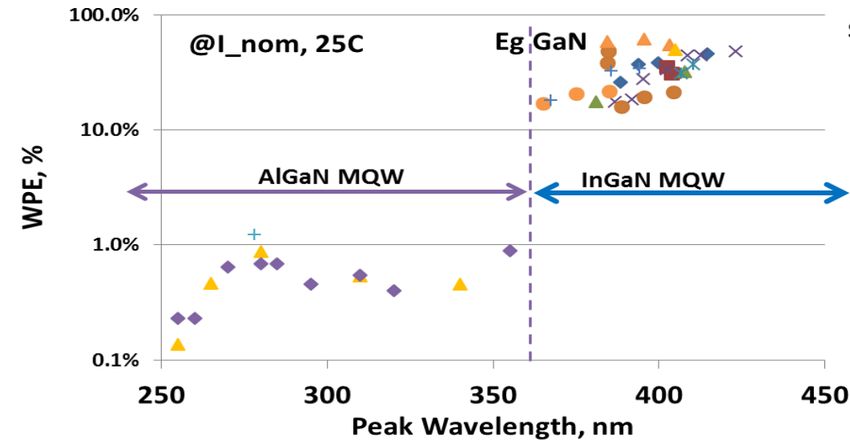
Contents
     Contents ................................................................................................................... 2
     1      Name and contact details .................................................................................. 3
     2      Reason for application ....................................................................................... 3
     3      Summary of the exemption request ................................................................... 3
     4      Technical description of the exemption request ................................................. 5
     4.1    Description of the lamps and their applications .................................................. 5
       4.1.1 Lamps covered by this exemption .................................................................. 5
       4.1.2 Applications covered by this exemption .......................................................... 7
       4.1.3 Annex I category covered by this exemption .................................................. 8
     4.2    Description of the substance .............................................................................. 9
       4.2.1 Substance covered by this exemption ............................................................ 9
       4.2.2 Function of lead.............................................................................................. 9
       4.2.3 Location of lead in lamps.............................................................................. 10
       4.2.4 Amount of lead ............................................................................................. 10
       4.2.5 Environmental assessments, LCAs .............................................................. 10
     5      Waste management .........................................................................................11
     5.1       Waste streams ................................................................................................. 11
     5.2       Amount of lead in WEEE.................................................................................. 12
     6      Substitution......................................................................................................13
     6.1    Substituting lead in the fluorescent powder of discharge lamps when used as
     sun tanning lamps ....................................................................................................... 14
     6.1.2 UV output variations of Cerium phosphors in UV lamps ................................... 16
     6.2    Substituting fluorescent technology by lead free technology ............................ 17
       6.2.1 Feasibility of the alternatives ........................................................................ 18
       6.2.2 Availability of substitutes .............................................................................. 20
       6.2.3 Impacts of substitution.................................................................................. 20
       6.2.4 Future trends of substitution ......................................................................... 22
     6.3    Links to REACH, according to RoHS Directive Article 5(1)(a) .......................... 23
     7      Removal of lead from lamps .............................................................................23
     8      Reduction of lead content of lamps...................................................................23
     9      Other relevant information ...............................................................................24
     10 Information that should be regarded as proprietary ..........................................24

LIGHTINGEUROPE                                                                                                                PAGE 2 OF 24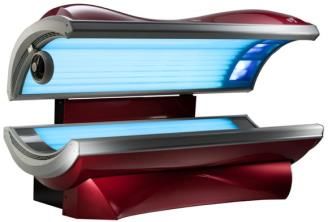
1 Name and contact details
     Industry association      LightingEurope      Tel.:             +32 2 706 86 07
     Name:                     Attila Morotz       E-Mail:
                                                   attila.morotz@lightingeurope.org
     Function:         Policy Director             Address:
                                                   Diamant Building
                                                   Boulevard Auguste Reyers 80
                                                   1030 Brussels, Belgium

     2 Reason for application
     Lighting Europe submits this application      request for extension of existing
     to:                                           exemption no. 18(b) in Annex III

     Lighting Europe proposes to continue          Lead as activator in the fluorescent
     using the existing wording which is:          powder (1 % lead by weight or
                                                   less) of discharge lamps when
                                                   used     as    sun    tanning       lamps
                                                   containing phosphors such as BSP
                                                   (BaSi2O5 :Pb)

     Lighting Europe requests a duration of        Maximum validity period required.

     3 Summary of the exemption request
     The validity period of DIRECTIVE 2011/65/EU Article 5(2) will end automatically per
     21/10/2016, unless an application for renewal has been made in accordance with
     Annex V.

     With reference to the above, this request concerns the extension of the current Annex
     III exemption:

     18(b) regarding Lead as activator in the fluorescent powder (1 % lead by weight or less)
     of discharge lamps when used as sun tanning lamps containing phosphors such as
     BSP (BaSi2O5 :Pb).

     This exemption covers indoor sun tanning discharge lamps containing lead as an
     activator in the fluorescent powder. These lamps are produced in T12, T8 and T5

LIGHTINGEUROPE                                                                                 PAGE 3 OF 24
diameters and CFL (compact fluorescent lamp) configurations.                The phosphors
     contained in these lamps are manufactured from the same components but can vary in
     spectral discharge across the UVA and UVB spectrum by the specified proportional
     phosphor mix. The lamps, and equipment they are installed in, are governed by EU
     regulations concerning the allowable output of ultraviolet radiation permitted within a
     determined exposure time. The EU regulates and enforces tanning equipment and the
     installed lamps which are marked on the lamps by a specific “X, Y” code system for the
     erythemally-weighed UV radiation in accordance with EN standard 61228 Ed.2 (2008-
     01). The lamps are installed in various commercial- and residential indoor tanning
     equipment. This can be in the form of a sun tanning bed or booth or a table top
     appliance for facial tanning. The abovementioned EN standard forms the basis of lamp
     marking, and is required. It clearly limits room for substitution by lead-free phosphors.
     The regulatory demands come from the LVD ADCO group, see below reference.

     Ref. website: http://ec.europa.eu/enterprise/electr_equipment/lv/guides/index.htm
     Declaration of the LVD ADCO Group
     At the 18th meeting of the LVD Administrative Co-operation working group (ADCO) in
     Brussels on the 14th November 2006 the following was unanimously agreed by the
     Member States present:

     - The Scientific Committee on Consumer Products (SCCP) Opinion on: Biological
     effects of ultraviolet radiation relevant to health with particular reference to sun beds for
     cosmetic purposes represents the basis for good engineering practice in Europe in
     relation to the safety matters for such products.

     - The recommendations shall be applied with effect six months from the publication of
     this Declaration.

     - The maximum erythemal-weighted irradiance should not exceed 11 SED/h (0.3 W/m2).
     Published on 22 January 2007

     Other UV lamp types are produced for dermatological and phototherapeutic use under
     medical supervision as in Annex IV of RoHS Directive. These lamps are not used for
     the production of visible light so general lighting efficacy standards are not relevant and
     therefore do not apply.

LIGHTINGEUROPE                                                                                PAGE 4 OF 24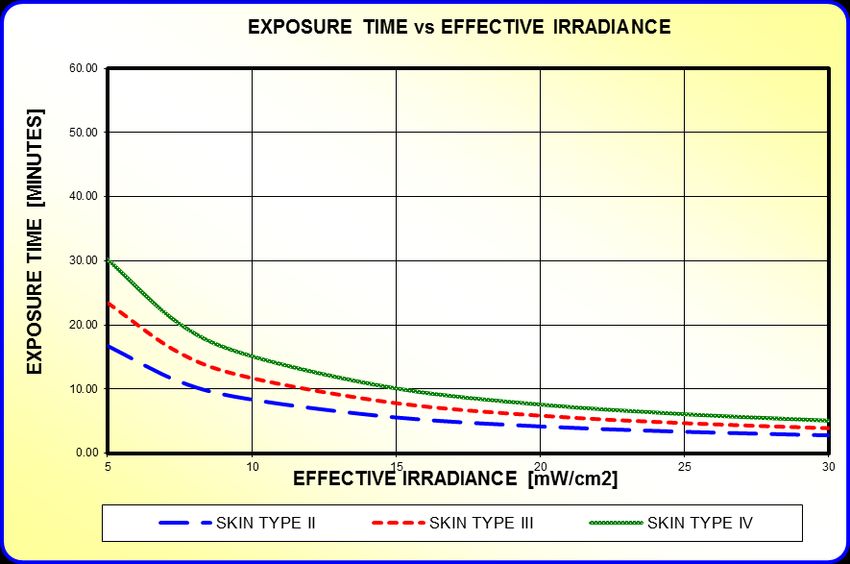
4 Technical description of the exemption request
4.1 Description of the lamps and their applications
4.1.1 Lamps covered by this exemption
This exemption covers indoor sun tanning discharge lamps containing lead as activator
in the fluorescent powder. The lamps produce UVA and UVB in predetermined
dosages and ratios for the purpose of producing artificial sunlight. The lamps are
installed in tanning equipment which are calibrated for the use of specific lamp types
which are marked in accordance with EU regulations for tanning lamps and equipment.
Brochures and data about these lamps can be seen in several websites, e.g.:
Lighttech http://www.light-sources.com/tanning/tanning-lamp-products
Cosmedico http://www.cosmedico.de/en/tubes.html
Havells-Sylvania: http://www.havells-
sylvania.com/media/Downloads/Sylvania%20Lamps%20Brochures/SPG/Suntan
ning/SY_Bodycare_Broschuere_2011_2012_ENGL_RZ_FINAL_ANSICHT.pdf
These lamps are produced in T12, T8 and T5 diameters and single capped
configurations.
The phosphors contained in these lamps are manufactured from the same
components but can vary in spectral discharge across the UVA and UVB
spectrum which provide a variety of erythemal outputs and exposure limits..
LIGHTINGEUROPE PAGE 5 OF 24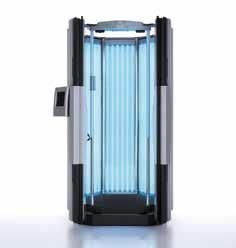
Example of a typical UVA/UVB spectrum
                       of an indoor tanning lamp

LIGHTINGEUROPE                                           PAGE 6 OF 24
The lamps and equipment are governed by EU regulations concerning the allowable
output of ultraviolet radiation permitted within a determined exposure time. The EU
regulates and enforces tanning equipment and the installed lamps which are marked on
the lamps by a specific “X, Y” code system. For example see, IEC 606335-2-27 and EN
standard 61228 Ed.2 (2008-01). The lamps are installed in various commercial and
residential indoor tanning equipment which can be in the form of a tanning bed or booth
or a table top appliance for facial tanning.
The typical lifetime of these lamps ranges from 600 to 1000 hours with a session or
usage time that ranges approximately from 5-30 minutes.
These lamps are not used for the production of visible light so general lighting efficacy
standards do not apply. UV output efficacy (UVA radiation out vs electrical power in) is
typically between 15% and 25%, but the real measure is with what power the desired
effect is reached. This is governed by the equipment, lamp type, lamp power, UV output
measured by standardized means, user skin type and other such factors.
The market demand for tanning lamps remains stable for the coming years.
4.1.2 Applications covered by this exemption
Indoor tanning lamps are light sources that produce ultraviolet light in the regions of the
UVA and UVB spectrums. Their intent is to produce artificial sunlight to replicate
sunlight exposure for the human body (similar to that as produced by the sun) yet
applied in calculated doses per European regulations. It is estimated that over 90% of
indoor tanning lamps produced and used throughout Europe are manufactured with
BSP (BaSi2O5 :Pb) phosphors containing 1% or less lead as an activator). There is no
feasible alternative for this phosphor that will yield the same or similar results and has
undergone the extensive European and US regulatory testing associated with the
application of the tanning lamps using these phosphors.
Almost 100% of the tanning lamps using these phosphors are produced in the EU.
Below are three examples of typical indoor suntanning equipment.
LIGHTINGEUROPE PAGE 7 OF 24Left and center photos are tanning beds and right photo is a tanning booth.
Examples of Indoor tanning equipment
4.1.3 Annex I category covered by this exemption
List of relevant Annex I categories for this exemption
1 2 3 4 5
6 7 8 9 10 11
Application in other categories, which the exemption request does not refer to: N/A
Equipment of category 8 and 9: N/A
The requested exemption will be applied in
monitoring and control instruments in industry
in-vitro diagnostics
other medical devices or other monitoring and control instruments
than those in industry
LightingEurope is of the opinion that lamps in general are category 5 products, but having a
character of a component, a consumable as well as a spare-part.
There are numerous applications where lamps can also be regarded as component of a product
belonging to any of the other categories 1 - 11 e.g. lamps/lighting in ovens, refrigerators [1],
LIGHTINGEUROPE PAGE 8 OF 24clocks [2], copy machines, projectors [3] TV sets [4], background lighting of tools [6], video
games [7], UV lamps in medical equipment [8], control panels for industrial installations [9], UV in
automatic dispensers [10] or lamps fixed installed in furniture [11].
LightingEurope believes that lamps covered by exemption 4f might not belong to category 5
equipment only if it is specifically designed as part or component of only one specific other
category and there is no intended possibility to use it in others. Examples for the latter case are
specific lamps for medical equipment, which have a certain special function in such equipment
only, e.g. lamps for vitreoretinal surgical systems Please note that exempted applications for
categories 8 and 9 will be reviewed in 2021 at earliest, and are not covered in the current review
for other categories, although these applications will continue to need these lamps after July
2016.
LightingEurope is aware of the difficulty to unambiguously classify certain lamps in the category
set out by RoHS legislation. For lamp producers it is essential to have legal certainty regarding
the possibility to put the products on the market irrespective of the planned application as we are
not able to control the use of the lamps in products. While for general lighting it is easier
comprehensible that they cannot be considered as “spare parts of a luminaire” application
specific special purpose lamps indeed can be considered also as a spare part (or consumable)
in certain applications such as sun-tanning cabins.
4.2 Description of the substance
4.2.1 Substance covered by this exemption
Lighting Europe is asking for exempting
Pb Cd Hg Cr-VI PBB PBDE
4.2.2 Function of lead
Lead is used in the phosphor for UV radiation in tanning lamps. The lead activator is
required to allow the barium silicate phosphor to fluoresce. It transforms the 254 nm
radiation to the designed UV (290nm-400nm) radiation. A fluorescent lamp uses
phosphors which, when activated, will produce light in different wavelengths. The
primary wavelengths of “light” produced by indoor tanning lamps are in the UVA and
UVB regions or 290-400nm. Lead is the primary activator for the barium silicate
phosphors to fluoresce and is used in over 95% of the indoor low pressure mercury
vapour fluorescent lamps used for tanning and certain medical applications which are
not covered by this exemption.
LIGHTINGEUROPE PAGE 9 OF 244.2.3 Location of lead in lamps
The lead is evenly distributed throughout the phosphor coating of the lamps to radiate in
the range of 290-400nm when excited by radiation at 254nm. The lead content of the
phosphors is less than 1% of the total weight of the phosphor.
4.2.4 Amount of lead
The phosphor coating represents the homogenous material used in the fluorescent
lamps with respect to this exemption. The lead content of the phosphor is less than 1%
of the total phosphor weight.
There is no published data available for the quantity of tanning lamps entering the EU.
However, based on market estimations of LightingEurope the lead content of tanning
lamps is limited to 250 kg of lead total per year entering into the EU.
Lead is also used in similar lamp types for medical and phototherapy applications such
as PUVA light therapy for skin conditions such as psoriasis. This mentioned figures do
not include estimated usage as these lamps will be subject to Annex IV exemption.
4.2.5 Environmental assessments, LCAs
Additional information is not available as no alternate phosphor types are available that
will yield the same result nor has undergone the regulatory testing of the EU or US.
There are no statistical data available specific to the Life Cycle Analysis of the tanning
and medical lamps represented in this exemption request, however due to the relatively
low market quantities for special lighting, the total environmental impact is expected to
be limited. Research conducted about fluorescent lamps for general lighting
applications does not specifically equate to these specialty lamps as they are not
designed to produce visible light. Efficacies, expressing the amount of visible light in
Lumen per Watt, are normally related to e.g. fluorescent lamps for general lighting do
not apply to tanning lamps. Cradle to grave estimates for the production of the
components and the finished lamps in this exemption request are similar to those of
general lighting fluorescent lamps.
We refer to the fact however that the use of lead as an activator of the phosphor in
these lamps allows the transmission of the specific wavelengths of light to be emitted in
such a fashion to be the most effective form for its purpose, which is not achievable with
other phosphor types or other technologies. Therefore efficacies of any alternate
LIGHTINGEUROPE PAGE 10 OF 24product types would not be an adequate comparison. The potential substitution or
replacement to other wavelengths or ultraviolet dosages would require revalidation of all
existing equipment in the EU market or could cause the elimination of such equipment
causing great hardship to the small business owners of tanning salons throughout the
EU. These current lamp types have been tested, studied and regulated in the EU and
changes to these products would require a duplication of the clinical testing which has
been compiled over years of study and regulation. It is further noted that the overall lead
content of such lamps, as in general lighting, has been reduced in the past five years
with the less than 0.1% lead content to allow for recycled glass in the glass envelop of
the lamp.
5 Waste management
5.1 Waste streams
Article is collected and sent without dismantling for recycling
Article is collected and completely refurbished for reuse
Article is collected and dismantled:
The following parts are refurbished for use as spare parts:
The following parts are subsequently recycled:
Article cannot be recycled and is therefore:
Sent for energy return
Landfilled
Sun tanning lamps are in the scope of EU Directives 2002/96/EC - WEEE and
2012/19/EU– WEEE Recast. Take back systems are installed in all EU Member States:
end users and most commercial customers can bring back the lamps free of charge.
Sun tanning lamps are collected separately from general household waste and
separately from other WEEE waste. Also a dedicated recycling process exists for lamps.
European legislation on Waste Electrical and Electronic Equipment makes producers
responsible for end of life products within this category as from August 13th, 2005.
Target setting as consequence of the present legislation is 4kg per inhabitant per year
for all categories.
European Lamp Companies have founded Collection & Recycling Organizations in the
EU Member-States, with the objective to organize the collection and recycling of gas
LIGHTINGEUROPE PAGE 11 OF 24discharge lamps. Goal is to comply with present and probable future EU legislation and
meet or exceed national targets.
In general the following channels have been established in the respective member-
states providing countrywide coverage:
Direct collection from large end users and professional installers:
Containers have been made available, ad hoc or permanently, and will be collected
upon notification by the end user that the container is full.
Collection through distribution:
Wholesalers and Retailers place collection means at their premises respectively in their
shops. Collection is done upon notification.
Collection through municipalities:
Where infrastructure allows collection means are placed at municipality depots.
5.2 Amount of lead in WEEE
Phosphor coating represents the homogenous material used in the fluorescent lamps
with respect to this exemption. The lead content is less than 1% of the total phosphor
weight.
There is no published data available for the quantity of tanning lamps entering the EU.
However, based on market estimations of LightingEurope the lead content of tanning
lamps is limited to 250 kg of lead total per year entering into the EU.
LIGHTINGEUROPE PAGE 12 OF 24In articles which are refurbished
In articles which are recycled
In articles which are sent for energy return
In articles which are landfilled
6 Substitution
Can the substance of this exemption be substituted?
Yes, by No
Design changes: Justification: see in below chapters
Other materials:
Other substance:
LIGHTINGEUROPE PAGE 13 OF 246.1 Substituting lead in the fluorescent powder of discharge lamps when used
as sun tanning lamps
6.1.1 Spectrum incompatibility
The application for tanning equipment is strictly regulated in the EU. Any possible
alternative to lead in BSP type of phosphor would need to fulfil following criteria:
o Lamp specification must be same w.r.t.
UVA and UVB output, and with that Erythema
Spectral power distribution
Compatibility (electrical/mechanical spec) must be OK
Reliability must be OK
Safety must be OK
Lamp operation must be the same in the different equipment in
the market
Lamp start-up and time to peak intensity must be the same.
Lamp intensity must be the same.
Lamp maintenance/depreciation must be the same,
o Tanning result on patients
o Compliance with CE regulations (X/Y coding system for tanning lamps
according to EN 60335-2-27)
o No (negative) side effects
o Economically feasible. Equipment in use today is calibrated and
requires lamps to meet output limits using X/Y coding system. Different
lamps would need revalidation.
LIGHTINGEUROPE PAGE 14 OF 24Only one alternative material comes close: Ce doped YPO phosphor. Please see below
spectrum of Ce doped YPO phosphor in comparison to BSP.
Phosphor coating represents the homogenous material used in the fluorescent lamps
with respect to this exemption. The lead content is less than 1% of the total phosphor
weight.
Graph: Emission spectrum of a Cerium-doped phosphor – UV lamp
Based on above measurement results, it can be concluded that:
1. The spectral power distribution shows differences in the UVA and
UVB range.
2. The ratio for UVA and UVB output is different which is an important
factor for tanning applications and is governed by EU regulations.
3. Therefore the Cerium based material has a lower expected treatment
effectiveness, w.r.t. Erythema and NMSC (non-melanoma skin
cancer).
LIGHTINGEUROPE PAGE 15 OF 24Tanning lamp output is measured on a weighted distribution of UVA and UVB output
measured by the output by nanometer. The lamps are coded using the X/Y system by
lamp type which is then applied for use in each specific piece of equipment. Tests have
been done using these phosphors for tanning lamps showing that the spread in UVA
and UVB output is too high to be viable as a practically feasible alternative. It would not
be able to comply with CE regulations for tanning lamps (due to spectral
incompatibility).
Therefore, this Ce-based material is not allowed for this application.
6.1.2 UV output variations of Cerium phosphors in UV lamps
A second problem for the Ce doped phosphors is the variations of the UV output over
the lamp length due to coating thickness. When fluorescent lamps are coated with a
phosphor the thickness of the coating varies over the length of the lamp. For current
UV-fluorescent coatings used, like BSP, the thickness variations do not lead to a severe
inhomogeneous output. However, for Cerium doped phosphor this thickness difference
leads to unacceptable UV output variations which will affect the skin treatment
effectiveness (see table below).
thin coated side thick coated side
UVB UVB
1P 594 325
2P 567 313
3P 614 322
4P 614 322
5P 604 350
6P 600 325
7P 595 301
8P 615 265
9P 599 283
10 P 622 409
AVG 602,4 321,5
STDV 14,87 2% 36,96 11%
MAX 622,00 409,00
MIN 567,00 265,00
Range 55,00 9% 144,00 45%
Table: Thickness variations of Ce-doped coatings and the impact on UV output
LIGHTINGEUROPE PAGE 16 OF 246.2 Substituting fluorescent technology by lead free technology
In principle other technologies can be evaluated for replacing fluorescent technology for
tanning applications. One could think of e.g. LED, OLED, HID, and incandescent or
halogen technology.
However, for any new technology one needs to address the replacement market
(replacing lamps in existing fixtures) and the market for new equipment using the new
technology.
The criteria to determine whether a new technology can replace existing fluorescent
technology using BSP (and Hg) in existing equipment are:
o Lamp specification must be same w.r.t.
UVA and UVB output
Spectral power distribution
o Safety must be OK
o Compatibility must be OK (Electrical and mechanical specification )
o Reliability must be OK
o Tanning result
o Compliance with CE regulations (X/Y coding system for tanning lamps
according to EN 60335-2-27)
o No (negative) side effects
o Economically feasible (cost of replacement technology)
For new equipment the similar criteria hold:
o UVA and UVB output must be similar
o Spectral power distribution must be similar
o Safety must be certain
o Compatibility must be OK (Electrical and mechanical specification )
o Reliability must be equivalent
o Tanning result on patients
o Compliance with CE regulations
o No (negative) side effects
o Economically feasible (cost of replacement technology)
LIGHTINGEUROPE PAGE 17 OF 246.2.1 Feasibility of the alternatives
In this paragraph we only discuss LED as an alternative radiation technology as
Incandescent, halogen and OLED simply do not emit radiation in the UVA/UVB range.
LEDs in principle could be chosen as radiation technology for special purposes,
provided following criteria are fulfilled.
o Wall Plug Efficiency is comparable to fluorescent lamps
o Effectiveness is comparable to fluorescent lamps (i.e. same tanning effect)
o Regulation/approbation is passed
In the following paragraphs each of these 3 criteria is discussed.
6.2.1.1 Wall Plug Efficiency
a. In contrast to general lighting lamps, (compact) fluorescent lamps for
special purposes emit radiation in UV or blue wavelength bands. LEDs
for general lighting purposes are made of InGaN, a material that emits
blue light which with the help of phosphors is converted into the desired
visible wavelengths. Theory says you can only convert from shorter
wavelengths to longer. It is therefore impossible to create UV light with
LED material as used for visible light LEDs.
b. There are other materials available from which LEDs can be made that
generate UV light (like AlGaN), however the efficiency (radiated power
out / electrical power in) of LEDs with those materials is still very low. In
the UVC (100-280nm) and UVB (280-315nm), the WPE (wall plug
efficiency of LEDs are below 1%), where the wall plug efficiency of
fluorescent lamps are close to 20% or even higher. See below pictures
in which public data from several manufacturers are put together in one
graph.
LIGHTINGEUROPE PAGE 18 OF 24Graph: LEDs (UVC-Blue): WPE vs. wavelength (data of several
manufacturers)
Graph: UVA-LEDs: WPE vs wavelength (data of several
manufacturers)
Conclusion:
There is no comparable WPE for LEDs below 380 nm. Therefore, LED
lamps are not suitable soon as a practical alternative for tanning
applications.
LIGHTINGEUROPE PAGE 19 OF 246.2.1.2 Effectiveness data
For tanning no tests results are available yet w.r.t. effectiveness to reach the desired
effect in a comparison study between equipment using fluorescent lamps and
equipment using LEDs. For most of these applications that is not done yet as no LEDs
were available. So effectiveness data are not available.
6.2.1.3 Regulation/approbation
CE conformity and other European directives for special purpose applications (like for
instance approbation of medical devices for phototherapy and CE regulations on
tanning lamps (CE 60335-2-27)) is based on fluorescent discharge lamps (with respect
to safety and system responsibility). No CE conformity is available for other lamp
technologies.
6.2.2 Availability of substitutes
UVA LEDs are available from several suppliers. However, as is clear from above
efficiency is very low. No public roadmaps exist that predict when UVA LEDs with
acceptable output and efficiency are available. Only after that design and development
of LED based equipment can start and after that customer/patient tests could start.
6.2.3 Impacts of substitution
Apart from feasibility and availability also the potential impacts of substitution must be
considered.
Amongst the impacts are:
o Environmental impact
o Health & Safety impact
o Socio-economic impacts
o Impact on innovation
LIGHTINGEUROPE PAGE 20 OF 246.2.3.1 Environmental impact of substitutes
Though LED technology is developing at a rapid pace for general lighting, however
there is today no viable LED alternative available for phototherapy applications.
Therefore, this paragraph is not applicable.
6.2.3.2 Health and safety impact of substitutes
The fluorescent tanning lamps in use today have undergone extensive testing and
calibration in the equipment. Effect of Ce doped phosphor may have considerable
impact on health and safety of customers as the manufacturing tolerance in output and
spectrum cannot be controlled to the extent required by EU regulations. For LED as
alternative technology effects on health and safety will have to be investigated.
6.2.3.3 Socio-economic impact of substitution
Economic effects related to substitution:
Increase in direct production costs
Increase in fixed costs
Increase in overhead
Possible social impacts within the EU
Possible social impacts external to the EU
Other:
It is expected that even if UVA LEDs become available with feasible specifications
tanning equipment may become much more expensive. It will become therefore an
economically unattractive solution and that can have significant impact on the
application.
The possibility for lead free technology for these lamps is not feasible for replacements
lamps in existing equipment due to the scientific and clinical evaluations that would
need to be done on every type of fixture or appliance that is in the field. This economic
burden this would impose on the small business owners such as tanning salons and
dermatologists would cause the closing of many businesses. It can be imagined that
new equipment could be changed to non-lead phosphors. However over 90%, and it is
estimated that it may be as much as 99%, of the tanning phosphors are lead activated.
There are no alternative non-lead activated phosphors available today that provide the
same or equivalent spectral radiation.
Social impacts
LIGHTINGEUROPE PAGE 21 OF 24As there are no reliable substitutes if the renewal of the exemption is not allowed it
would shut down the indoor tanning industry in Europe. It is estimated that almost
100% of these lamps used in Europe are manufactured in Europe by fluorescent lamp
companies. It is estimated that almost 100% of the indoor tanning equipment sold in
Europe is manufactured in Europe. It is estimated that almost 100% of the tanning
lamps sold as aftermarket lamps are sold by manufacturers or distributors located in
Europe. It is estimated that over 90% of the tanning lamps used in the US are
manufactured in Europe. It is estimated that over 75% of the tanning equipment sold in
the United States is made in Europe.
Other impact
Economic impact due to the loss of the entire tanning application in Europe.
6.2.3.4 Impact of substitution on innovation
If UVA LEDs will become available new equipment will have to be developed.
6.2.4 Future trends of substitution
Given the market size in combination with strict regulations efforts to substitute BSP
containing lamps are extremely limited (to non-existent).
No plans are made to replace Pb with Ce as earlier tests were unsuccessful and no
new insights have been created.
W.r.t. LEDs: other UVA applications are available in LEDs but tanning development has
been limited. At this moment it is impossible to predict if and when UVA LED based
equipment will become feasible.
LIGHTINGEUROPE PAGE 22 OF 246.3 Links to REACH, according to RoHS Directive Article 5(1)(a)
Do any of the following provisions apply to the application described?
no
Authorisation Restriction Registration
SVHC Annex XIV
Candidate list Annex XVII
Proposal inclusion Annex XIV Registry of intentions
Provide REACH-relevant information received through the supply chain.
Not Applicable
7 Removal of lead from lamps
Can lead be eliminated?
Yes.
No.
It is not practical to remove the lead from these lamp types as the lead is required as an
activator for the phosphors that produce the specific wavelengths of light necessary to
provide the necessary spectrum and meet the clinical and regulated requirements
imposed by the EU regulatory agencies.
8 Reduction of lead content of lamps
The less than 1% lead content of these lamps as a percentage of the weight of the
homogenous phosphor material is needed to activate the phosphor. A reduction in the
lead content would cause either a loss of output or not be sufficient to activate the
phosphor.
LIGHTINGEUROPE PAGE 23 OF 249 Other relevant information
The tanning industry is closely monitored and regulated by European authorities under
regulations such as EN 60335-2-27 and EN 61228.
EN 60335-2-27
This International Standard deals with the safety of electrical equipment on exposing
the skin to ultraviolet or infrared radiation, for household and similar use in tanning
salons, beauty parlours and similar buildings.
Tanning and medical equipment in Europe is subject to unscheduled auditing and
measurement of the lamps and equipment which has been certified for use with lamps
that are equivalent or the same as the lamps originally installed by the OEM. This
equipment has undergone extensive testing to assure compliance with ultraviolet
exposure schedules and the use of any other lamps than those substantially
equivalents are restricted. It would be a significant financial burden if not impossible to
the independent salon owners to try to retrofit their equipment and have each unit
certified by the regulating bodies.
10 Information that should be regarded as proprietary
LIGHTINGEUROPE PAGE 24 OF 24You can also read


