Guideline Residue Monitoring Fruit, Vegetables, Potatoes
←
→
Page content transcription
If your browser does not render page correctly, please read the page content below
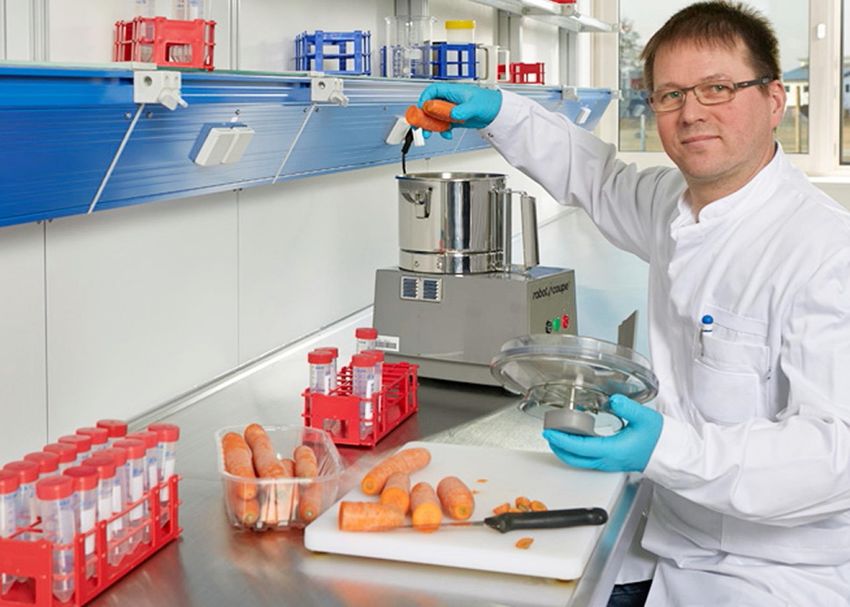
Guideline
Residue Monitoring
Fruit, Vegetables, Potatoes

                              Version: 01.01.2019rev01
                               (rev01 as of 01.05.2019)
                                       Status: • Release
List of contents

1 Fundamentals............................................................................................ 4

1.1     Scope ................................................................................................................ 4
1.2     Responsibilities ................................................................................................ 4

2 Database ................................................................................................... 5

3 Control Plan .............................................................................................. 5

4 Total Number of Annual Samples .............................................................. 6

4.1     Production stage .............................................................................................. 6
4.2     Wholesale, preparation/processing, food retail storage stage ......................... 6

5 Sampling ................................................................................................... 6

5.1     Stage production .............................................................................................. 6
5.2     Stage wholesale, preparation/processing, food retail central storage .............. 7
5.3     Requirements for the sampler .......................................................................... 7
5.4     Sampling protocol ............................................................................................. 7
5.5     Packaging and consignment of samples ........................................................... 7

6 Laboratories .............................................................................................. 8

6.1     Prerequisites for QS approval ........................................................................... 8
6.1.1       Documentary evidence .................................................................................................. 8
6.1.2       QS laboratory performance assessments ......................................................................... 9
6.2     Maintenance of QS approval ........................................................................... 10
6.2.1       QS laboratory performance assessment ......................................................................... 10
6.2.2       Laboratory suitability tests ........................................................................................... 10
6.3     Loss of QS approval ........................................................................................ 10
6.4     Processing/preparation/analysis of samples ................................................. 10
6.5     Calculation of the degree of exploitation of the ARfD value ............................ 11
6.6     Evaluation of analysis results ......................................................................... 11
6.7     Obligation to enter results into the database .................................................. 11
6.8     Reporting in the original report ...................................................................... 12
6.9     Access authorisation and perusal of documents ............................................. 12

7 Exceedances/Not authorized active substances ...................................... 12

7.1     Stage production ............................................................................................ 13
7.2     Stage wholesale, preparation/processing ...................................................... 13
7.3     Stage food retail ............................................................................................. 13
7.4     Unblocking/regaining eligibility to deliver into the QS scheme ...................... 13

8 Approval of Monitoring Programmes Other than QS ................................ 14

9 Definitions............................................................................................... 14

9.1     Explanation of symbols ................................................................................... 14
9.2     Terms and definitions ..................................................................................... 14

10 Annexes .................................................................................................. 15

                                                                                                          Version: 01.01.2019rev01
                                            Guideline Residue Monitoring –                                 (rev01 as of 01.05.2019)
                                             Fruit, Vegetables, Potatoes                                           Status: • Release
                                                                                                                        Page 2 of 36
10.1   Control plan .................................................................................................... 15
10.2   Sampling Report ............................................................................................. 25
10.3   Registration form for laboratories .................................................................. 26
10.4   Evaluation Criteria for Laboratory Performance Assessment .......................... 31
10.5   Nitrate Quantification: Provisions for the sampling method and processing of
       samples .......................................................................................................... 32

                                                                                                 Version: 01.01.2019rev01
                                        Guideline Residue Monitoring –                            (rev01 as of 01.05.2019)
                                         Fruit, Vegetables, Potatoes                                      Status: • Release
                                                                                                               Page 3 of 36
1 Fundamentals
All scheme participants who use plant protection products or post-harvest treatments are obliged to
comply with the legal requirements regarding maximum levels and approved active substances/pesticides
of each respective production country and country of intended use (Regulation (EC) No. 396/2005
and/or equivalent provisions). On request, the agricultural/horticultural business must be able to provide
proof of the approval of the active substances used for each culture in the country of use.

Residue Monitoring in the QS scheme serves the purpose of controlling compliance with the maximum
legal levels/limit values for

    Active substances of plant protection products/post-harvest treatments and their relevant metabo-
    lites
    Pollutants
    Heavy metals
    Nitrate

In addition to this, evidence of active substances not authorised for a specific crop is checked. A further
objective is to identify the causes of possible exceedances of maximum residue levels and detections of
unauthorised active substances and avoid them in future by taking suitable measures within the QS
scheme.

This guideline outlines the controls and provides specifications for the implementation of Residue Monitor-
ing to ensure constant surveillance on all stages of the QS scheme and to aid laboratories and samplers.
The residue situation is monitored through regular product checks and directly by QS within the scope of
the constant internal control system.

1.1 Scope
The Guideline Residue Monitoring applies to scheme participants who acquire certification in line with the
following standards:

    Production Fruit, Vegetables, Potatoes, QS-GAP
    Wholesale Fruit, Vegetables, Potatoes
    Preparation/ Processing Fruit, Vegetables, Potatoes
    Food Retail/ FR Storage Fruit, Vegetables, Potatoes

The Guideline Residue Monitoring also applies to the following companies/organisations:

    Producer businesses which participate in the QS scheme on the basis of approved standards
    Laboratories
    Sampling institutes
    Coordinators who organise sampling on the Production stage

1.2 Responsibilities
When implementing residue monitoring, the scheme participants/coordinators are responsible for ensur-
ing that the sample related data and/or analysis results are entered into the database (www.qs-
plattform.de). Analysis results obtained or transferred in other ways are not accepted. A sample can
only be used once to make up the targeted number of samples; they may not be used twice.

The scheme participant must comply at all times with the requirements of the QS scheme and always be
in a position to demonstrate compliance with said QS requirements. It must ensure that, in addition to
the requirements of this guideline and other applicable QS requirements (for example: guideline coordi-
nators agriculture/production, guideline production/QS-GAP, guideline wholesale, guideline prepara-
tion/processing, guideline food retail fruit, vegetables, potatoes), the legal provisions that apply in the

                                                                                        Version: 01.01.2019rev01
                                     Guideline Residue Monitoring –                      (rev01 as of 01.05.2019)
                                      Fruit, Vegetables, Potatoes                                Status: • Release
                                                                                                      Page 4 of 36
country in which the products were produced as well as the country in which they are marketed by the
scheme participant are fulfilled.

Producers/coordinators

Implementation of Residue Monitoring for producer businesses is the responsibility of the coordinator who
is also responsible for checking whether the analysis results of the samples were entered into the QS
database by the laboratory.

The possibility exists of commissioning third parties (producers’ organisations, labs etc.) with the imple-
mentation of Residue Monitoring.

Wholesale, preparation/processing, food retail storage

The implementation of residue monitoring for wholesalers/ preparation and processing companies/ food
retail storage facilities is the responsibility of each respective scheme participant. The scheme partici-
pants are also responsible for checking whether the analysis results of the samples were entered into the
QS database by the laboratory.

The possibility exists of commissioning third parties (producers’ organisations, labs etc.) with the imple-
mentation of Residue Monitoring.

Samplers

The samplers are responsible for all stages in the sampling process, including the packaging and forward-
ing of the sample(s) to the lab.

Laboratories

The laboratories are responsible for the analysis of the samples and are obliged to enter all results cor-
rectly into the QS database.

If individual analytical methods are subcontracted to another QS-approved lab, responsibility for the cor-
rectness of these results and the entry thereof into the database lies with the commissioning lab.

2 Database
The analysis results entered in the QS database serve among other things as the basis for the review of
the control plan.

The scheme participants/coordinators/laboratories can evaluate their analysis results in the QS database
via the evaluation tools it contains. In addition to this, anonymised evaluations can be made by QS with
the inclusion of all entered test results.

Only the scheme participants/coordinators themselves and QS have access to the stored data of a partic-
ular scheme participant/coordinator.

User manuals, supporting documents and format templates for implementing Residue Monitoring in the
database can be found in the website under the “Support” tab.

3 Control Plan
The control plan contains the risk groups and countries of risk origin of the products from which the
number of mandatory samples to be drawn on the stages wholesale and preparation/processing and the
minimum test methods to be applied are calculated. The risk classification and/or number of samples for
a certain product can be changed at short notice if necessary. In order to adjust the data to the current
residue situation in the QS scheme, the risk groups and countries of origin are revised at least once a

                                                                                       Version: 01.01.2019rev01
                                      Guideline Residue Monitoring –                    (rev01 as of 01.05.2019)
                                       Fruit, Vegetables, Potatoes                              Status: • Release
                                                                                                     Page 5 of 36
year by a panel of experts (scientific advisory body). The analysis results of the previous year, the na-
tional report “Pesticide Residues” and the results of other national and international monitoring systems
are used for this purpose.
Each valid control plan has to be implemented.
Appendix 11.1 Control Plan
4 Total Number of Annual Samples
4.1 Production stage
Product samples have to be drawn and analysed every year in 35% of fruit and vegetable-producing
businesses and 5% of potato-growing businesses. The businesses are selected at random by the QS da-
tabase. The selected businesses are displayed to the coordinator in the QS database as so-called sam-
pling orders. Sampling and analysis for the selected businesses have to be conducted within one year in
line with the provisions of this guideline. The culture to be sampled should be selected here from the
cultures certified in the producer business with referral to the risk classification of the control plan.
If there is an increase in the number of positive findings (MRL exceeded or detection of unauthorised
active substances) among the producers of a single coordinator, QS can increase the number of samples
to be drawn by the coordinator.
4.2 Wholesale, preparation/processing, food retail storage stage
The required number of samples is calculated per product and year on the basis of the weight of the pro-
duce procured as QS produce. This applies irrespective of whether the goods are marked with the QS
certification mark or not. Evidence must be produced that the required number of samples were drawn
for a period of 12 months. The samples should be distributed on the basis of risk and seasonal occur-
rence. An individual sampling plan should be drawn up here for each business.
The provisions listed in the control plan should be regarded as minimum requirements. More frequent
analysis for particular parameters can be necessary in certain circumstances within the scope of corpo-
rate due diligence and legal requirements. Each business must ascertain and determine this in its in-
house risk analysis. Additional samples can be entered into the QS database as so-called “voluntary sam-
ples”.
9.2 Terms and Definitions: voluntary sample
5 Sampling
Sampling is to be conducted and documented in accordance with Directive 2002/63/EC establishing
Community methods of sampling for the official control of pesticide residues in and on prod-
ucts of plant and animal origin. To satisfy the requirements of mandatory sampling, only fruit, vege-
tables and food potatoes ready for harvesting or marketing may be sampled. In addition to this, “volun-
tary samples”, “release samples” and “pre-harvest samples” may be drawn and entered into the QS da-
tabase.
9.2 Terms and Definitions: voluntary sample, release sample, pre-harvest sample
When sampling to determine the nitrate level in vegetable products, the product-specific requirements
outlined in Appendix 11.5 must be complied with.
5.1 Stage production
Sampling is organised by the coordinator. Sampling by the producer, a staff member or a third par-
ty/organisation commissioned by the producer is not permitted. Samples are taken in agricultur-
Version: 01.01.2019rev01
Guideline Residue Monitoring – (rev01 as of 01.05.2019)
Fruit, Vegetables, Potatoes Status: • Release
Page 6 of 36al/horticultural businesses (field/storage facility) in the presence and/or with the consent of the director
of the business. Alternatively, the sample can be taken after delivery to a buyer’s premises (e.g. whole-
sale, producer’s organisation).
Different varieties of a crop/culture (e.g. coloured lettuce) can be sampled as a compound sample. Pre-
requisite for this is, that all products originate from the same field, had the same treatment regarding
plant protection products and that the same maximum residue levels apply. These aspects must be en-
sured and documented at sampling.
5.2 Stage wholesale, preparation/processing, food retail central storage
Sampling is organised by the scheme participant.
5.3 Requirements for the sampler
Samplers must be proficient and able to ensure that sampling is conducted in accordance with Directive
2002/63/EC as well as the provisions of the “Food Monitoring Manual” published by the Federal
Office of Consumer Protection and Food Safety (BVL) or equivalent national documents. In-house1
samplers or coordinators and/or experts commissioned by the company could be regarded as proficient.
It is the responsibility of the participant/coordinator to ensure that proof of proficiency is presented.
Minutes must be kept of every sampling.
Appendix 11.2 Sampling Report
Training
As sampling has a great influence on the analysis result, the sampling requirements must be implement-
ed in a comparable manner by all samplers. To support the implementation of these requirements, train-
ing events are offered regularly by QS. Participation in these events is voluntary.
Entries into the database
The sample related data must be entered before the end of the laboratory analysis. The entry deadline of
maximum 10 days after the sample was drawn must be complied with here.
5.4 Sampling protocol
The sampler must keep records (in line with Appendix 11.2) of the type and origin of the batch, the
FVP/WS number and/or QS ID, the owner, supplier or conveyor, as well as the date, time and place of
sampling and all other relevant information. The responsible person in each business or the producer and
the sampler sign the sampling protocol to confirm that the samples were taken properly by the sampler.
Every deviation from the prescribed sampling method has to be recorded. A signed copy of this protocol
must accompany every laboratory sample while one additional copy goes to the owner of the batch or
his/her representative. The original remains with the sampler.
5.5 Packaging and consignment of samples
The sample must be packed in such a way that damage, negative external influences and contamination
are ruled out. The container must be properly marked/labelled (sample number, type of product) and the
sample delivered to the laboratory without delay. It must not be allowed to rot during transport, i.e. fresh
samples should be kept refrigerated, frozen samples frozen.
1
On the producer level, sampling by the producer, a staff member or a third party/organisation commissioned by the
producer is not permitted. The coordinator must ensure that sampling is performed by a third party here.
Version: 01.01.2019rev01
Guideline Residue Monitoring – (rev01 as of 01.05.2019)
Fruit, Vegetables, Potatoes Status: • Release
Page 7 of 366 Laboratories
To guarantee that the quality of analysis results between laboratories is kept at a uniformly high level,
only QS-approved laboratories may be commissioned to conduct analyses. Applications for QS approval
for residue monitoring should be made directly to QS (Appendix 11.3 Data sheet for laboratories when
applying for QS approval).
6.1 Prerequisites for QS approval
The prerequisite for QS approval is presentation of the below-listed documents along with successful
completion of a QS laboratory performance assessment. The documentation is verified by QS.
6.1.1 Documentary evidence
Accreditation
The laboratories must have accreditation in line with EN ISO/IEC 17025, as amended, for the examina-
tion area of Chemicals (Plant Protection Products) in Foods. QS prescribes a methodical accreditation for
all test methods that are obligatory in line with the control plan.
The following test methods must be used in the laboratory to gain QS approval:
Multi-methods with
Detection module GC (incl. selective detectors and/or GC-MS coupling)
Detection module LC-MS/MS
(e.g. DFG S 19, contained in EN 12393-1, 2 and 3 and /or QuECHERS; contained in prEN 15662:2007)
This also includes active substances quantified after appropriate modification of the multi-method
in line with the analytical observations report e.g. for dithianon, dodine, fenbutatin oxide (EU Ref-
erence Laboratory for Single Residue Methods), or as a single method.
Dithiocarbamates
Other single, group and special methods mentioned in the control plan can be subcontracted.
Appendix 11.1 Control Plan
Laboratories need to be proficient in all the methods listed in the data sheet for the approval of laborato-
ries or need to allocate the methods to a QS approved laboratory via a subcontract. The QS requirements
regarding the subcontracting need to be incorporated. This applies also to the maintenance of the recog-
nition.
If individual test methods have been implemented but not yet listed in the laboratory’s accreditation cer-
tificate, preliminary approval can be declared. The prerequisite for this is the accreditation of the test
method within the next 12 months.
QS validation documentation has to be submitted for the methods applied for. The documentation must
at least cover the documents listed in the data sheet. Additional paperwork and documents must be
submitted to QS if necessary.
Appendix 11.3 Data sheet for the approval of laboratories
Minimum requirements for the test spectrum of a multi-method
The laboratory must provide a list of all active substances with quantification limits for the area of Fruit,
Vegetables, Potatoes which can be verified by the laboratory. The list should be subdivided in line with
the detection modules used (e.g. GC-ECD, GC-FPD, GC-MS, LC-MS/MS). This also includes active sub-
stances quantified after an appropriate modification of the multi-method (in line with EURL publications).
Version: 01.01.2019rev01
Guideline Residue Monitoring – (rev01 as of 01.05.2019)
Fruit, Vegetables, Potatoes Status: • Release
Page 8 of 36If the multi-method covers active substances (parent substances) with a complex residue definition and
findings are made, an appropriate special method for the precise determination of the metabolites must
be used in order to satisfy Regulation (EC) No. 396/2005. The finding of the special method should be
listed in the report.
Subcontracting
The option exists of subcontracting the analysis of the test methods listed in the control plan to another
QS-approved laboratory. Subcontracts can only be awarded to laboratories which have QS approval for
the analysis of the test method in question. Subcontracts are subject to approval, for which the following
documents must be submitted:
Name of the commissioned laboratory
Agreement between the laboratories on the subcontract, including details of the parameters to be
analysed
Each test method can only be subcontracted to one laboratory. If there is a change to the awarding of a
subcontract for a test method, QS must be notified to this effect without any request to do so. The sub-
contract must be fulfilled by this laboratory and may not be passed on to a third laboratory.
It is the responsibility of the commissioned laboratory to enter the analysis results into the QS database.
In the scope of the laboratory performance assessment the subcontracted test methods have to be deliv-
ered to the subcontracted laboratory previously approved by QS. The sample has to be marked as test
material in the scope of the laboratory performance assessment and tested for the subcontracted test
methods only. The analysis has to be carried out within the period prescribed in the test. Results of the
subcontracted analysis have to be transmitted to QS by the laboratory participating in the laboratory
performance assessment.
Laboratory suitability tests
Participation in external laboratory suitability tests within the last year prior to application is the prereq-
uisite for QS approval for every analysis method. Evidence must be provided by means of the corre-
sponding documents. If a laboratory has not yet participated, a declaration of intent regarding the
planned laboratory suitability test (including the organiser) must be presented.
Appendix 11.3 Explanation of documents to be submitted
If there are no results of a laboratory suitability test for a particular analysis method as no tests of this
kind are offered for them in the required matrix, the decision on the approval of a comparable laboratory
suitability test lies with QS.
6.1.2 QS laboratory performance assessments
To acquire QS approval, laboratories in the approval process whose document check was positive must
provide proof of their competence in a performance assessment organised by QS before approval is
granted. Successful participation in a laboratory performance assessment is mandatory a maximum of
one year after completion of a document check, otherwise proof of successful participation in a more
recent performance assessment must be produced before QS approval can be granted.
Laboratories in the approval process which participated unsuccessfully in a QS laboratory performance
assessment twice in succession must pass two consecutive laboratory performance assessments to obtain
QS approval. If a laboratory has failed the performance assessment three times in succession, QS re-
serves the right to suspend the approval process for 12 months.
Version: 01.01.2019rev01
Guideline Residue Monitoring – (rev01 as of 01.05.2019)
Fruit, Vegetables, Potatoes Status: • Release
Page 9 of 36Voluntary participation in a QS laboratory performance assessment is possible on request for laboratories
which are not in the process of obtaining QS approval and which are not approved by QS. There is no
legal right of participation in a laboratory performance assessment.
6.2 Maintenance of QS approval
Annual participation in laboratory performance assessments and suitability tests organised by QS is re-
quired among other things for the retention of QS approval.
6.2.1 QS laboratory performance assessment
All laboratories with QS approval are obliged to participate in laboratory performance assessments organ-
ised by QS at least once a year. The participating laboratories are evaluated with a points system.
Participation in an additional QS laboratory performance assessment is obligatory if
the previous QS laboratory performance assessment was failed
the laboratory did not score the minimum number of required points
In the scope of the laboratory performance assessment the subcontracted test methods have to be deliv-
ered to the subcontracted laboratory previously approved by QS. The sample has to be marked as test
material in the scope of the laboratory performance assessment and tested for the subcontracted test
methods only. The analysis has to be carried out within the period prescribed in the test. Results of the
subcontracted analysis have to be transmitted to QS by the laboratory participating in the laboratory
performance assessment.
Appendix 11.4 Evaluation Criteria for Laboratory Performance Assessment
6.2.2 Laboratory suitability tests
Proof of regular participation in other laboratory suitability tests in the field of plant protection products
and for approved individual methods in the fruit, vegetables, potatoes matrix must be provided to QS as
follows:
Annual list of laboratory suitability tests scheduled for the current calendar year (by 15 March of the
current year)
Annual list (no later than 15 March of the following year) of the suitability tests taken the previous
year with results and, where appropriate, measures taken
The obligatory QS laboratory performance assessment is not counted in here. Voluntary participation
outside the obligatory QS laboratory performance assessment can be taken into account.
6.3 Loss of QS approval
If a laboratory loses its approval, existing orders can be worked off and the results entered into the QS
database for a maximum of two weeks from the date approval was lost. A new application for approval is
only possible after six months at the earliest provided that
the laboratory successfully participated in a QS laboratory performance assessment
a new check of documents has been completed
a laboratory audit was conducted by QS at the expense of the laboratory
Appendix 11.4 Evaluation Criteria for Laboratory Performance Assessment
6.4 Processing/preparation/analysis of samples
Only samples marked as QS samples on the accompanying sample protocol or which are listed as such in
the QS database are to be tested by the laboratories as QS samples.
Version: 01.01.2019rev01
Guideline Residue Monitoring – (rev01 as of 01.05.2019)
Fruit, Vegetables, Potatoes Status: • Release
Page 10 of 36The processing and preparation of samples for analysis for plant protection product residues must be in
accordance with Annex 1 of Regulation (EC) No. 396/2005, as amended.
A portion (min. 200 g) of every analysis sample (homogenate) must be retained by the laboratory in
frozen state for at least three months after analysis has ended.
Defined specifications for the preparation of samples, use of individual samples, compilation of collective
samples/ homogenate and storage must be complied with when determining the nitrate level in vegeta-
ble products.
Appendix 11.5 Nitrate Quantification: Provisions for the sampling method and processing of samples
The analysis results must be available within 10 working days of the receipt of the samples.
6.5 Calculation of the degree of exploitation of the ARfD value
The laboratory is obliged to list in all analysis reports the degree of exploitation of the acute reference
dose (ARfD) for every active substance for which an ARfD exists. The ARfD values and their degree of
exploitation are used and calculated as specified by the EFSA (European Food Safety Authority) or BfR
(Federal German Institute for Risk Assessment). On request, QS must be notified of the model used to
calculate the ARfD value. The degree of exploitation of the ARfD value must be entered into the database
(as a numerical value with a decimal point).
6.6 Evaluation of analysis results
The decisive factor when evaluating the measured values in the QS scheme is the actual value, i.e. the
measured value without consideration of an analytical measuring uncertainty (e.g. of ± 50 percent with
active substances of the multi-method). If the actual value is above the legally established maximum
residue level, this is assessed as an exceedance of the maximum residue level.
6.7 Obligation to enter results into the database
All sample related data records on hand at the laboratory must be processed by the laboratory and en-
tered correctly into the QS database for completion within the specified deadlines. The following dead-
lines apply to the entering of results:
The maximum deadline for entry after sampling is 10 working days
The analysis results have to be entered into the QS database alongside the corresponding sample
number within three working days of the end of the analysis
Complaints as defined by the QS definition (exceedance of the maximum residue level and/or detec-
tion of unauthorised active substances) which are established by the laboratory must be entered im-
mediately into the QS database by the next working day after the end of the analysis
If a data record has to be reset in the QS database due to erroneous entries, the laboratory must
complete it again within three working days of the reset
9.2 Terms and Definitions: Complaints
Remarks field, laboratory related data
The remarks field for the laboratory related data should be used for:
evaluation/assessment of the sample with regard to its marketability in line with applicable legal reg-
ulations
evaluation/assessment of the sample with regard to unauthorised active substances (if conducted by
the laboratory).
entering the name of the sampler if the laboratory offers entry of sample related data as a service
but did not draw the sample
the description of abnormalities and peculiarities
Version: 01.01.2019rev01
Guideline Residue Monitoring – (rev01 as of 01.05.2019)
Fruit, Vegetables, Potatoes Status: • Release
Page 11 of 36Entry of results into the database
When entering results, there are three other options in addition to the numerical value of the finding
(number with a comma):
“Evidence from samples, which were taken out of QS residue monitoring, can lead to complaints or be
regarded as release samples, in case they are handled and analysed in line with QS requirements. Sam-
ples from the official surveillance will be accepted similarly.
7.1 Stage production
After a complaint has been ascertained, the producer is suspended from the further marketing of the
culture in question in the QS scheme. The coordinator must ensure that the producer is informed without
delay.
Once the producer/coordinator has been notified of a complaint by QS, a case-specific consultancy has to
be undertaken within four weeks by the official plant protection or advisory service or by a per-
son/organisation authorised in Germany in line with Art. 10 of the Plant Protection Law and evidence
to this effect provided to QS. Producers who are certified according to the guidelines "QS Production
Fruit, Vegetables, Potatoes" or "QS-GAP Production Fruit, Vegetables, Potatoes" don’t have to send a
proof about the consultancy to QS, because this will be checked in the next regular audit. Parallel to this,
use should be made of consultancy services outside Germany. If consultancy cannot be arranged within
this deadline, evidence must be produced that a consultancy appointment has been arranged within two
weeks of notification of the complaint. Once consultancy has taken place, evidence thereof must be sub-
mitted to QS within one week at the latest.
The producer has the option of submitting a written statement about the complaint to QS through his/her
coordinator. On the basis of the documents submitted, QS decides whether sanction proceedings are to
be initiated or not. Additional documents can be requested in the course of the sanction proceedings
(Sanction Procedure, Appendix 5.4 of the Guideline General Regulations.
7.2 Stage wholesale, preparation/processing
Compliance with maximum residue levels with regard to operating equipment (e.g. post-harvest treat-
ment, cleaning agents) is the responsibility of the scheme participant.
Once a complaint has been established, any existing goods from the same batch that may still be in stock
on the company’s premises are suspended from further marketing in the QS scheme. The scheme partic-
ipant has the option of submitting a written statement about the complaint to QS. It is then up to QS to
decide whether sanction proceedings are to be initiated or not.
If the cause of an exceedance of a maximum level or limit value and/or the use of an unauthorised or
unapproved active substance is found to lie with the agricultural/horticultural business, the measures
outlined in 7.1, above apply.
7.3 Stage food retail
A corrective actions report, in which the measures to be taken and procedures to be followed in the event
of an exceedance are defined, must be on hand and available for presentation at all times.
7.4 Unblocking/regaining eligibility to deliver into the QS scheme
For a business to regain eligibility of delivery after a complaint, a sample from the same culture without
any complaint (a so-called “release sample”) must be presented to QS along with the analysis report. The
sample must be drawn after the defective sample. The sampled product must come from the same
field/greenhouse like the complained product. If no more goods from the affected field/greenhouse is
available, the field/greenhouse that is harvested next, must be sampled. If the release sample is drawn
at a producer business, neutral sampling must be organised by the coordinator.
Version: 01.01.2019rev01
Guideline Residue Monitoring – (rev01 as of 01.05.2019)
Fruit, Vegetables, Potatoes Status: • Release
Page 13 of 36If a culture is no longer available in the business in the current cultivation period during the suspension
of a production business so that the rejected culture cannot be brought into circulation, the business can
be reauthorized to deliver into the QS scheme. In this case, the producer must confirm the nonavailability
of the culture.
8 Approval of Monitoring Programmes Other than QS
For the approval of other monitoring programmes by QS, evidence of the comparability of the control
system with the requirements of the QS Guideline for Residue Monitoring must be produced. QS reaches
a decision on approval in its committees in each individual instance.
9 Definitions
9.1 Explanation of symbols
References to related documents are highlighted in bold type.
Notes are marked with Note: italic text.
References to other chapters in the guideline are marked with .
9.2 Terms and definitions
Working days
The days Monday to Friday are regarded as working days in the QS scheme.
ARfD value (acute reference dose)
With active substances for which no ARfD value exists or is required, “n.e.” = not required/non-
existent should be entered in the entry field.
If an active substance has been assigned an ARfD value, the degree to which this value has been
exploited should be given (numerical value with decimal point) and not the legally assigned
value.
Complaint
Evidence of active substances not authorised for the culture in the country of cultivation
Evidence of the maximal legal levels being exceeded
The actual value is taken into account in the QS scheme, i.e. the measured value without consid-
eration of the measuring uncertainty of ± 50 percent
Findings ≤0.01 mg/kg are not taken into account if the corresponding maximum residue level is
more than 0.01 mg/kg
Compound sample
A compound sample as defined by QS is the representative overall sample. To this end, samples from
different places in a lot/batch are combined into an overall sample. In this regard, a “compound sam-
ple” should not be seen as the mixing of different products, products from different lots/batches or
from different producers into an overall sample. The results of samples of this kind are not approved
in the QS scheme as they have no relevant meaning for the individual product.
Incremental sample
A quantity of material taken from a single place in the lot or sublot. It may be a single lettuce or
spinach head, or handful of baby leaf, or one bag of cut leaves
Sample type
The following sample types can be selected in the QS database:
As far as the extent of the examination is concerned, the “Mandatory sample/regular sample”
complies with the provisions of the control plan. It is possible to commission additional examina-
tion methods, but the scope of the examination cannot be reduced. These samples are always
products which are ready for harvest and/or sale. The sample can be drawn before, during or af-
ter harvesting.
Version: 01.01.2019rev01
Guideline Residue Monitoring – (rev01 as of 01.05.2019)
Fruit, Vegetables, Potatoes Status: • Release
Page 14 of 36If laboratory results are not assigned to all methods applied for, the sample cannot be completed
and does not therefore count as part of the target number of samples that the scheme participant
has to fulfil.
A “release sample” is taken after a complaint. It can be used by the scheme participant to regain
his/her eligibility to deliver the noncompliant product into the QS scheme.
The “voluntary sample” does not count as one of the mandatory samples that a company has to
draw in line with the control plan. The extent of the commissioned method can be selected as de-
sired.
The “pre-harvest sample does not count as one of the mandatory samples that a company has to
draw in line with the control plan. This type of sample is always evaluated by QS as a sample
from products which are not ready for harvest and/or sale. It can be used to estimate the residue
situation in a product.
10 Annexes
10.1 Control plan
Annex 10.1 of the control plan is published separately as an extract.
Version: 01.01.2019rev01
Guideline Residue Monitoring – (rev01 as of 01.05.2019)
Fruit, Vegetables, Potatoes Status: • Release
Page 15 of 36one sample per …t QS purchased produce;
Wholesale/Preparation and Processing:
Phenoxyalkane carboxylic acids
Chlormequat / Mepiquat
Inorganic total bromide
but at least one sample
Dithiocarbamates
Multi-methods
1
Risk group
Dithianon
Ethephon
Nitrate
Product Additional analysis
1. FRUITS FRESH OR FROZEN; NUTS
i) Citrus fruit
Recommendation: Organotin compound, QAV and Morpholine for every 10th
Grapefruit (Shaddocks, pomelos, sweeties, tangelo, ugli and other O(2,4-
sample
3 833 x
hybrids) D)
Obligation: Sampling of each 4th sample after all process steps2
Recommendation: Organotin compound, QAV and Morpholine for every 10th
Grapefruit (Shaddocks, pomelos, sweeties, tangelo, ugli and other O(2,4-
sample
7 180 x
hybrids) (China, South Africa, Turkey) D)
Obligation: Sampling of each 4th sample after all process steps2
* Obligatiatory for origin: third countries
O(2,4- Recommendation: Organotin compound, QAV and Morpholine for every 10th
Oranges 1 2500 x x*
D) sample
Obligation: Sampling of each 4th sample after all process steps2
Recommendation: Organotin compound, QAV and Morpholine for every 10th
O(2,4-
Lemons 1 2500 x sample. Overseas goods: ethephon at the beginning of the season.
D) 2
Obligation: Sampling of each 4th sample after all process steps
Recommendation: Organotin compound, QAV and Morpholine for every 10th
O(2,4-
Lemons (South Africa, Turkey) 3 833 x sample. Overseas goods: ethephon at the beginning of the season.
D) 2
Obligation: Sampling of each 4th sample after all process steps
Recommendation: Organotin compound, QAV and Morpholine for every 10th
O(2,4-
Limes 7 180 x sample
D)
Obligation: Sampling of each 4th sample after all process steps2
Recommendation: Organotin compound, Dichlorprop. QAV and Morpholine for
O(2,4-
Mandarins (Clementine, tangerine and other hybrids) 2 1250 x every 10th sample
D)
Obligation: Sampling of each 4th sample after all process steps2
Recommendation: Organotin compound, Dichlorprop. QAV and Morpholine for
O(2,4- every 10th sample
Mandarins (Clementine, tangerine and other hybrids) (Turkey) 5 500 x
D)
Obligation: Sampling of each 4th sample after all process steps2
Recommendation: Organotin compound, QAV and Morpholine for every 10th
O(2,4- sample
Other citrus fruits 7 180 x
D)
Obligation: Sampling of each 4th sample after all process steps2
Version: 01.01.2019rev01
Guideline Residue Monitoring - (rev01 as of 01.05.2019)
Fruit, Vegetables, Potatoes Status: • Release
Page 16 of 36one sample per …t QS purchased produce;
Wholesale/Preparation and Processing:
Phenoxyalkane carboxylic acids
Chlormequat / Mepiquat
Inorganic total bromide
but at least one sample
Dithiocarbamates
Multi-methods
1
Risk group
Dithianon
Ethephon
Nitrate
Product Additional analysis
ii) Tree nuts (shelled or unshelled)
Almonds 1 2500 x
Brazil nut 1 2500 x
Cashew nut 1 2500 x
Chestnut 3 833 x x* Obligation: Chloride/bromide-ratio. Sampling after all process steps
Chestnut (China, Turkey) 6 417 x x* Obligation: Chloride/bromide-ratio. Sampling after all process steps
Coconut 1 2500 x
Hazelnut 2 1250 x
Macadamia nut 1 2500 x
Pecans 1 2500 x
Pine nuts 1 2500 x
Pistachio 1 2500 x
Walnut 2 1250 x
Peanut 1 2500 x
Other nuts (shelled or unshelled) 6 417 x
iii) Pome fruit
Apple 1 2500 x x
Apple (Poland) 3 833 x x
*Obligation for each 10th sample, Sampling of each 4th sample after all
Pear 1 2500 x x* x
process steps2
*Obligation for each 10th sample, Sampling of each 4th sample after all
Pear (Turkey) 3 833 x x* x
process steps2
Quince 6 417 x x
Loquat 1 2500 x x
Medlar 1 2500 x x
Nashi pear 6 417 x x* x *Obligation for each 10th sample
Other pome fruits 6 417 x x
iv) Stone fruits
Apricot 3 833 x x x Obligation: Phophonic acid
Apricot (Turkey) 9 65 x x x Obligation: Phophonic acid
Obligation: Sampling of each 4th sample after all process steps2
Sweet cherry 6 417 x x x
Obligation: Phophonic acid
Obligation: Sampling of each 4th sample after all process steps2
Sweet cherry (Turkey) 8 100 x x x
Obligation: Phophonic acid
*Ethephon, just obligatory for industrial cultivation
Sour cherry 6 417 x x x x*
Obligation Phophonic acid
Nectarine 2 1250 x x x
*Ethephon, just obligatory for industrial cultivation
Plum (Damson, greengage, mirabelle) 5 500 x x x x*
Obligation Phophonic acid
Peach 2 1250 x x x
Other stone fruits 9 65 x x x Obligation: Phophonic acid
Version: 01.01.2019rev01
Guideline Residue Monitoring - (rev01 as of 01.05.2019)
Fruit, Vegetables, Potatoes Status: • Release
Page 17 of 36one sample per …t QS purchased produce;
Wholesale/Preparation and Processing:
Phenoxyalkane carboxylic acids
Chlormequat / Mepiquat
Inorganic total bromide
but at least one sample
Dithiocarbamates
Multi-methods
1
Risk group
Dithianon
Ethephon
Nitrate
Product Additional analysis
v) Berries and small fruit
a) Grapes
Table grapes green (EU, South Africa) 1 2500 x
Table grapes green (third country) 4 625 x x* *Obligation: for origin India
Table grapes blue 2 1250 x x* x *Obligation: for origin India
Table grapes blue (Turkey, Egypt) 5 500 x x
Kiwiberry (mini kiwi) 6 417 x
b) Strawberries
Strawberry (Outdoor) 1 2500 x
Strawberry (Outdoor) (North Africa) 5 500 x
Strawberry (Greenhouse) 1 2500 x
c) Cane fruit
Blackberry 5 500 x
Raspberry 5 500 x
Dewberry (Loganberry) 5 500 x
Other cane fruits 5 500 x
d) Other small fruit and berries
Cultivated Blueberry 2 1250 x Obligation: Phophonic acid
Cowberry 5 500 x Obligation: Phophonic acid
Cranberry 2 1250 x Obligation: Phophonic acid
Currant (red, black and white) 6 417 x Obligation: Phophonic acid
Gooseberry 6 417 x Obligation: Phophonic acid
Jostaberry 3 833 x Obligation: Phophonic acid
Rose hip 3 833 x Obligation: Phophonic acid
Mulberry 3 833 x Obligation: Phophonic acid
Elderberries (wild rowan berry) 3 833 x Obligation: Phophonic acid
Other small fruits and berries 6 417 x Obligation: Phophonic acid
vi) Miscellaneous fruit
a) Edible peel
Date 1 2500 x
Fig 1 2500 x x
Fig (Brazil, Turkey) 5 500 x x* *Ethephon, obligatory for origin Brazil. Obligation for origin Turkey
Table olive 5 500 x
Kumquat 6 417 x x* *Ethephon, obligatory at the beginning of the season
Carambola 6 417 x
Kaki; Japanese persimmons 3 833 x x* *Ethephon, obligatory at the beginning of the season for origin Spain
Other miscellaneous fruits with edible peel 6 417 x
Version: 01.01.2019rev01
Guideline Residue Monitoring - (rev01 as of 01.05.2019)
Fruit, Vegetables, Potatoes Status: • Release
Page 18 of 36one sample per …t QS purchased produce;
Wholesale/Preparation and Processing:
Phenoxyalkane carboxylic acids
Chlormequat / Mepiquat
Inorganic total bromide
but at least one sample
Dithiocarbamates
Multi-methods
1
Risk group
Dithianon
Ethephon
Nitrate
Product Additional analysis
b) Inedible peel, small
Kiwi 1 2500 x
Kiwi (Chile) 4 625 x
Lychee 3 833 x Obligation: Sulphur dioxide (SO2), Phophonic acid
Maracuja; Passionfruit (Granadilla) 9 65 x Obligation: Phophonic acid
Prickly pear; cactus fruit; pitaya 8 100 x Obligation: Phophonic acid
Other small miscellaneous fruits with inedible peel 9 65 x Obligation: Phophonic acid
c) Inedible peel, large
Avocado 4 625 x
Banana 1 2500 x Obligation: Phophonic acid
Mango 5 500 x Obligation: Phophonic acid
Papaya; Tamarillo 7 180 x Obligation: Phophonic acid
Pomegranate (EU) 5 500 x Obligation: Phophonic acid
Pomegranate (Third Countries) 9 65 x Obligation: Phophonic acid
Pineapple 2 1250 x x
Bread fruit; Jackfruit 6 417 x Obligation: Phophonic acid
Cherimoya; Rambutan 6 417 x Obligation: Phophonic acid
Durian 6 417 x Obligation: Phophonic acid
Guava 8 100 x Obligation: Phophonic acid
Other large miscellaneous fruits with inedible peel 9 65 x Obligation: Phophonic acid
2. VEGETABLES FRESH OR FROZEN
i) Root and tuber vegetables
a) Potatoes
Potato 1 2500 x O Obligation: Sampling of each 4th sample after all process steps2
b) Tropical root and tuber vegetables
Ginger 9 65 x
Cassava (Dasheen, eddoe (Japanese taro), tannia, manioc) 4 625 x
Sweet potato 1 2500 x
Yams (Potato bean (yam bean), Mexican yam bean) 4 625 x
Other tropical root and tuber vegetables 9 65 x
Version: 01.01.2019rev01
Guideline Residue Monitoring - (rev01 as of 01.05.2019)
Fruit, Vegetables, Potatoes Status: • Release
Page 19 of 36one sample per …t QS purchased produce;
Wholesale/Preparation and Processing:
Phenoxyalkane carboxylic acids
Chlormequat / Mepiquat
Inorganic total bromide
but at least one sample
Dithiocarbamates
Multi-methods
1
Risk group
Dithianon
Ethephon
Nitrate
Product Additional analysis
(c) Other root and tuber vegetables except sugar beet
Beetroot 3 833 x O
Carrot (bunch) 1 2500 x x
Carrot (bulk goods) 2 1250 x
Carrot (bulk goods) (Isreal) 4 625 x
Celeriac 6 417 x Obligation: Cadmium (Cd), Lead (Pb)
Horseradish 1 2500 x Recommendation: Cadmium (Cd), Lead (Pb)
Jerusalem artichoke 1 2500 x
Parsnip 3 833 x Recommendation: Cadmium (Cd), Lead (Pb)
Parsley root 3 833 x
Radish (Outdoor) 2 1250 x
Radish (Greenhouse) 1 2500 x
Small radish (Outdoor) 3 833 x
Small Radish (Greenhouse) 1 2500 x
Scorzonera 1 2500 x Obligation: Cadmium (Cd), Lead (Pb)
White Turnip; Turnip; Swedes 3 833 x
Other root and tuber vegetables except sugar beet 6 417 x
ii) Bulb vegetables
Obligation for stock goods (Feb. - May):
Garlic 1 2500 x
Maleic hydrazide
Obligation for stock goods (Feb. - May):
Onions (Silver skin onions) 1 2500 x
Maleic hydrazide
Obligation for stock goods (Feb. - May):
Shallots 1 2500 x
Maleic hydrazide
Spring onions 3 833 x
Other bulb vegetables 3 833 x
iii) Fruiting vegetables
a)Solanaceae
Tomato (EU, Marocco) 1 2500 x x* *Ethephon: obligatory in the end of the season; winter season
Tomato (Third Countries) 4 625 x x* *Ethephon: obligatory in the end of the season; winter season
*Ethephon: obligatory for the winter season
Peppers 1 2500 x x*
Origin: Greece
Peppers (Third Countries) 4 625 x x* *Ethephon: obligatory for the winter season
Chilli peppers 1 2500 x
Chilli peppers (Third Countries) 7 180 x
Aubergines 1 2500 x O
Aubergines (Third Countries) 6 417 x O
Okra; Lady's fingers 9 65 x
Other Solanaceae 9 65 x
Version: 01.01.2019rev01
Guideline Residue Monitoring - (rev01 as of 01.05.2019)
Fruit, Vegetables, Potatoes Status: • Release
Page 20 of 36one sample per …t QS purchased produce;
Wholesale/Preparation and Processing:
Phenoxyalkane carboxylic acids
Chlormequat / Mepiquat
Inorganic total bromide
but at least one sample
Dithiocarbamates
Multi-methods
1
Risk group
Dithianon
Ethephon
Nitrate
Product Additional analysis
b) Cucurbits- edible peel
Cucumber 2 1250 x
Cucumber (Spain) 1 2500 x
Gherkin 1 2500 x
Courgette 6 417 x
Other cucurbits with edible peel 6 417 x
c) Cucurbits - inedible peel
Melon (Muskmelon, Kiwano) 2 1250 x
Pumpkin 2 1250 x
Water melon 1 2500 x
Other cucurbits with inedible peel 2 1250 x
d) Sweet corn
Sweet corn 1 2500 x
iv) Brassica vegetables
a) Flowering brassica
Broccoli 2 1250 x
Broccoli (Italy) 4 625 x
Cauliflower 2 1250 x
Other flowering brassica 4 625 x
b) Head brassica
Brussels sprout 2 1250 x
Red cabbage 1 2500 x
White cabbage 1 2500 x
Pointed cabbage 2 1250 x
Savoy cabbage 4 625 x
Other head brassica 4 625 x
c) Leafy brassica
Chinese cabbage (Indian (Chinese) mustard, pak choi) 4 625 x
Kale 7 180 x
Other leafy brassica 7 180 x
d) Kohlrabi
Kohlrabi (Outdoor) 3 833 x Obligation: Analysis of tuber and leaf
Kohlrabi (Greenhouse) 2 1250 x Obligation: Analysis of tuber and leaf
Version: 01.01.2019rev01
Guideline Residue Monitoring - (rev01 as of 01.05.2019)
Fruit, Vegetables, Potatoes Status: • Release
Page 21 of 36one sample per …t QS purchased produce;
Wholesale/Preparation and Processing:
Phenoxyalkane carboxylic acids
Chlormequat / Mepiquat
Inorganic total bromide
but at least one sample
Dithiocarbamates
Multi-methods
1
Risk group
Dithianon
Ethephon
Nitrate
Product Additional analysis
v) Leaf vegetables and fresh herbs
a) Lettuce and other salad plants including Brassicaceae
Lamb's lettuce (Outdoor) 4 625 x O x* O * Obligation for origin Italy: Chloride/Bromide ratio
Lamb's lettuce (Greenhouse) 4 625 x O x* O * Obligation for origin Italy: Chloride/Bromide ratio
Head lettuce (Outdoor) 4 625 x x x* x * Obligation for origin Italy: Chloride/Bromide ratio
Head lettuce (Greenhouse) 4 625 x x x x
Iceberg lettuce (Outdoor) 1 2500 x O x* x * Obligation for origin Italy: Chloride/Bromide ratio
Coloured lettuce (Lollo, Leaf-oak, Batavia) (Outdoor) 4 625 x x x* x * Obligation for origin Italy: Chloride/Bromide ratio
Coloured lettuce (Lollo, Leaf-oak, Batavia) (Greenhouse) 4 625 x x x* x * Obligation for origin Italy: Chloride/Bromide ratio
Romaine lettuce (Outdoor) 1 2500 x x x* x * Obligation for origin Italy: Chloride/Bromide ratio
Romaine lettuce (Greenhouse) 1 2500 x x x* x * Obligation for origin Italy: Chloride/Bromide ratio
Escarole/broad-leaf endive (wild chicory, red-leaved chicory, radicchio,
3 833 x x x* * Obligation for origin Italy: Chloride/Bromide ratio
curly leave endive, sugar loaf)
Land cress 1 2500 x
Rocket, Rucola 6 417 x x* x * Obligation for origin Italy: Chloride/Bromide ratio
Mizuna (Leaves and sprouts of Brassica spp) 5 500 x
Other lettuce and other salad plants including Brassicaceae 6 417 x x
b) Spinach and similar leaves
Spinach 2 1250 x x x Recommendation: Cadmium (Cd), Lead (Pb)
Purslane (Winter purslane (miner’s lettuce), glasswort) 7 180 x
Chard 6 417 x
Turnip greens 3 833 x
Other spinach and similar leaves 7 180 x
c) Vine leaves (grape leaves)
Vine leaves 9 65 x x
d) Water cress
Water cress (Water convolvulus, Water clovers,
4 625 x
Water mimosas)
e) Witloof
Witloof 3 833 x
Version: 01.01.2019rev01
Guideline Residue Monitoring - (rev01 as of 01.05.2019)
Fruit, Vegetables, Potatoes Status: • Release
Page 22 of 36one sample per …t QS purchased produce;
Wholesale/Preparation and Processing:
Phenoxyalkane carboxylic acids
Chlormequat / Mepiquat
Inorganic total bromide
but at least one sample
Dithiocarbamates
Multi-methods
1
Risk group
Dithianon
Ethephon
Nitrate
Product Additional analysis
f) Fresh herbs and edible flowers(2)
Pot herbs
(2)
for entire f) fresh herbs
9 65 x
(Italy, Third Countries)
Chervil 8 100 x
Chives 8 100 x
Dill leaves 8 100 x
Celery leaves; Sorrel 8 100 x
Coriander leaves 8 100 x
Lovage 8 100 x
Parsley 8 100 x
Sage 8 100 x
Rosemary 8 100 x
Thyme 8 100 x
Basil 8 100 x
Mint 8 100 x
Tarragon (Hyssop) 8 100 x
Wild garlic 8 100 x
Caraway 8 100 x
Bay leaves 8 100 x
Marjoram 8 100 x
Oregano 8 100 x
Savory 8 100 x
Common balm; Lemon balm 8 100 x
Edible flowers 8 100 x
Other fresh herbs and edible flowers 9 65 x
Cut herbs
(2)
for entire f) fresh herbs * Obligation: from November to March
9 65 x x*
(Italy, Third Countries)
Chervil 8 100 x x* * Obligation: for origin Southern Europe from November to March
Chives 8 100 x x* * Obligation: for origin Southern Europe from November to March
Dill leaves 8 100 x x* * Obligation: for origin Southern Europe from November to March
Celery leaves; Sorrel 8 100 x x* * Obligation: for origin Southern Europe from November to March
Coriander leaves 8 100 x x* * Obligation: for origin Southern Europe from November to March
Lovage 8 100 x x* * Obligation: for origin Southern Europe from November to March
Parsley 8 100 x x* * Obligation: for origin Southern Europe from November to March
Sage 8 100 x x* * Obligation: for origin Southern Europe from November to March
Rosemary 8 100 x x* * Obligation: for origin Southern Europe from November to March
Thyme 8 100 x x* * Obligation: for origin Southern Europe from November to March
Basil 8 100 x x* * Obligation: for origin Southern Europe from November to March
Mint 8 100 x x* * Obligation: for origin Southern Europe from November to March
Tarragon (Hyssop) 8 100 x x* * Obligation: for origin Southern Europe from November to March
Wild garlic 8 100 x x* * Obligation: for origin Southern Europe from November to March
Caraway 8 100 x x* * Obligation: for origin Southern Europe from November to March
Bay leaves 8 100 x x* * Obligation: for origin Southern Europe from November to March
Marjoram 8 100 x x* * Obligation: for origin Southern Europe from November to March
Oregano 8 100 x x* * Obligation: for origin Southern Europe from November to March
Savory 8 100 x x* * Obligation: for origin Southern Europe from November to March
Common balm; Lemon balm 8 100 x x* * Obligation: for origin Southern Europe from November to March
Edible flowers 8 100 x x* * Obligation: for origin Southern Europe from November to March
Other fresh herbs and edible flowers 9 65 x x* * Obligation: for origin Southern Europe from November to March
Version: 01.01.2019rev01
Guideline Residue Monitoring - (rev01 as of 01.05.2019)
Fruit, Vegetables, Potatoes Status: • Release
Page 23 of 36one sample per …t QS purchased produce;
Wholesale/Preparation and Processing:
Phenoxyalkane carboxylic acids
Chlormequat / Mepiquat
Inorganic total bromide
but at least one sample
Dithiocarbamates
Multi-methods
1
Risk group
Dithianon
Ethephon
Nitrate
Product Additional analysis
vi) Legume vegetables (fresh)
Beans (with pods) 2 1250 x
Beans (with pods) (Third Countries) 6 417 x
Beans (without pods) 2 1250 x
Beans (without pods) (Third Countries) 4 625 x
Peas (with pods) (Mangetout (sugar peas)) 3 833 x
Peas (with pods) (Third Countries) 9 65 x
Peas (without pods) 2 1250 x
Peas (without pods) (Third Countries) 4 625 x
Other legume vegetables (fresh) 9 65 x
vii) Stem vegetables (fresh)
Asparagus white 1 2500 x
Asparagus green 1 2500 x
Celery 5 500 x O
Celery (Beglium) 7 180 x O
Fennel 7 180 x
Fennel (Germany) 1 2500 x
Globe artichoke 1 2500 x
Leek 4 625 x
Leek (Germany, Netherlands) 1 2500 x
Rhubarb 1 2500 x
Bamboo shoots 1 2500 x O
Other stem vegetables (fresh) 7 180 x
viii) Fungi
Cultivated fungi (Common mushroom, Oyster mushroom, Shi-take) 4 625 x O Recommendation: single method glyphosate
Recommendation: Analysis on radiation exposure
Wildpilze (Morchel, Pfifferlinge) 6 417 x
Recommendation: Mercury (Hg), Cadmium (Cd)
Other cultivated fungi 6 417 x O
3. PULSES, DRY
Beans 1 2500 x Obligation: single method glyphosate
Lentils 2 1250 x Obligation: single method glyphosate
Peas (Chickpeas, chickling vetch) 1 2500 x Obligation: single method glyphosate
Other pulses, dry 2 1250 x
4. OTHER SPROUTS AND SHOOTS
Other sprouts and shoots 1 2500 x
Legend:
x obligatory analysis
O additional recommendation
Multi methods:
GC Group of selected pesticides identified by gas chromatography
LC-MS/MS Group of selected pesticides identified by LC-MS/MS
2,4-D Herbicide from the group of Phenoxyalkyl carbonic acid
1
The risk grouping of the products is made by QS and is based on a scale from 1 (lowest risk) to 9 (highest risk).
2
At least the first sample and afterwards every 4th sample needs to be taken after all process steps
Version: 01.01.2019rev01
Guideline Residue Monitoring - (rev01 as of 01.05.2019)
Fruit, Vegetables, Potatoes Status: • Release
Page 24 of 36You can also read


