The Mayan Tropical Rainforest: An Uncharted Reservoir of Tritrophic Host-Fruit Fly-Parasitoid Interactions - MDPI
←
→
Page content transcription
If your browser does not render page correctly, please read the page content below
insects
Article
The Mayan Tropical Rainforest: An Uncharted
Reservoir of Tritrophic Host-Fruit
Fly-Parasitoid Interactions
Maurilio López-Ortega 1, * , Francisco Díaz-Fleischer 1 , Jaime C. Piñero 2 ,
José René Valdez-Lazalde 3 , Manuel Hernández-Ortiz 1 and Vicente Hernández-Ortiz 4
 1    Instituto de Biotecnología y Ecología Aplicada (INBIOTECA), Universidad Veracruzana, Xalapa,
      91090 Veracruz, Mexico; fradiaz@uv.mx (F.D.-F.); manuelhdezo94@gmail.com (M.H.-O.)
 2    Stockbridge School of Agriculture, University of Massachusetts, Amherst, MA 01003, USA;
      jpinero@umass.edu
 3    Colegio de Postgraduados, Postgrado en Ciencias Forestales, Montecillo, 56230 Texcoco, Mexico;
      valdez@colpos.mx
 4    Red de Interacciones Multitróficas, Instituto de Ecología A.C. Xalapa, 91073 Veracruz, Mexico;
      vicente.hernandez@inecol.mx
 *    Correspondence: maulopez@uv.mx

 Received: 26 June 2020; Accepted: 30 July 2020; Published: 3 August 2020

 Simple Summary: Tropical rainforest can provide various ecological services to adjacent agricultural
 environments, including maintaining and amplifying the numbers of beneficial insects. However,
 forest fragmentation and the selective cutting of indigenous trees used by native species of fruit flies
 and their parasitoids, degrades the potential of forests to provide ecological services to agriculture.
 Over a two–year period, we surveyed natural areas of the Mayan rainforest in Quintana Roo, Mexico.
 We found 11 species of native fruit flies belonging to the genus Anastrepha associated with 25 species
 of fruits belonging to ten plant families. We report the first records of 10 host plant species of the
 genus Anastrepha. We also report a new undescribed species of Anastrepha. The interaction between
 fruit flies and their parasitoids with host plants depends on fruit availability, which is crucial for
 the survival of each of these species. Our findings indicate that the areas of the Mayan rainforest
 surveyed represent a highly important reservoir for the diversity of native parasitoids spatially and
 temporally that are practically absent in fruits of cultivated plants. Conserving the landscape of the
 Mayan rainforest is important not only for species conservation, but also for the maintenance of fruit
 fly host plants of biological control agents in orchard agroecosystems in southeastern Mexico.

 Abstract: Over a two–year period, we surveyed natural areas of the Mayan rainforest in Quintana
 Roo, Mexico. We found 11 species of Anastrepha Schiner (Diptera: Tephritidae) infesting 25 species
 of fruits belonging to ten plant families. We report the first records of 10 host plant species of
 the genus Anastrepha, which include the first report of a plant family (Putranjivaceae) serving
 as host of Anastrepha fraterculus (Wiedemann) infesting Drypetes lateriflora (Sw.) Krug and Urb.
 (Putranjivaceae). Pouteria reticulata (Engl.) Eyma (Sapotaceae) was found, for the first time, to be
 infested by Anastrepha serpentina (Wiedemann) and by a new undescribed species of Anastrepha.
 We also report Casimiroa microcarpa Lundell (Rutaceae) as a possible ancestral host for the Mexican fruit
 fly, Anastrepha ludens (Loew), in Central America. The family Sapotaceae was the best-represented host
 group with three fruit fly species recovered: A. serpentina, an economically-important species, found
 in eight host plants, and A. hamata and A. sp. (new species). We recorded six species of koinobiont
 parasitoids: Doryctobracon areolatus Szepligeti, Utetes (Bracanastrepha) anastrephae Viereck, Opius hirtus
 Fisher, and Doryctobracon zeteki Musebeck, (all Braconidae), and Aganaspis pelleranoi (Brethés) and
 Odontosema anastrephae Borgmeier, (both Figitidae). All these parasitoid species represent at least
 a new report for their host plants. Of the whole parasitoid community, D. areolatus was the most

Insects 2020, 11, 495; doi:10.3390/insects11080495                                www.mdpi.com/journal/insects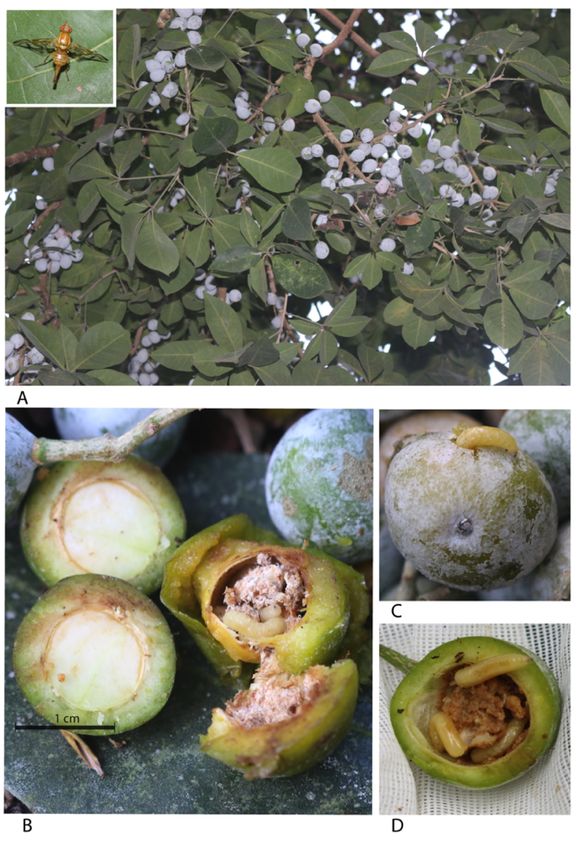
Insects 2020, 11, 495                                                                                  2 of 15

 important parasitoid species with 52.7% of presence in 12 host plant species, parasitizing six fruit fly
 species. The interaction between fruit flies and their parasitoids with host plants depends on fruit
 availability, which is crucial for the survival of each of these species. Conserving the landscape of the
 Mayan rainforest is important not only for species conservation, but also for the maintenance of fruit
 fly host plants in orchard agroecosystems in southeastern Mexico.

 Keywords: host-plants; Anastrepha; tropics; conservation; frugivory; biodiversity

1. Introduction
     Herbivorous insects have a powerful influence on plant abundance and distribution, as well as
on the composition of plant communities [1,2]. The study of interactions between insects and fruits is
one of the main challenges for understanding the reproductive success of many angiosperms because
the damage caused by insects can cause the abortion of a wide variety of fruits [3,4]. Fruit-eating
insects can influence the production of seeds, due to direct damage, and by indirect damage through
biochemical changes that cause premature ripening of the fruit or increased protein levels. For example,
wild tobacco, Solanum mauritianum Scop (Solanaceae), fruits infested by Dacus cacuminatus (Hering)
(Diptera: Tephritidae) are reported to contain twice the levels of proteins and essential amino acids when
compared to uninfested fruits [5]. Despite the ongoing loss of the original habitat in tropical ecosystems
and the resulting detrimental effects on biodiversity [6,7], these ecosystems still harbor substantial numbers
of potential host plants in practically every biological form, including herbs, vines, shrubs, and trees.
      The great diversity of plants that occurs in tropical rainforests suggests the existence of a high
diversity of tephritid fruit flies. The Neotropical genus Anastrepha exhibits great richness, estimated
in 283 known species, some of which are pests of economic significance [8]. In Mexico and various
countries of Central and South America, numerous samples of wild and cultivated tropical fruits have
been examined in order to determine their seasonal phenology and infestation levels, produced mainly
by Anastrepha species. In numerous occasions, such insect-plant biological interactions were recorded
for the first time [9–17]. There are few systematic studies on trophic interactions between frugivorous
tephritids and their host plants in natural environments in the Americas [18–21], unlike those carried out
in agroecosystems where only a few fruit fly species are found associated with cultivated fruits [22,23].
There is an implicit depletion of these natural systems, in terms of both taxonomic richness and
host-fruit fly interactions, due to the introduction of non-native fruit trees to the Americas, where they
have recently experienced a trophic adaptation and new herbivore/parasitoid interactions.
      In Mexico, the most recent reports include 39 described species of Anastrepha, which inhabit different
regions of the country [24]. Some fly species, such as Anastrepha tehuacana Norrbom reproduce on
plants that are endemic to xeric environments of central Mexico. Currently, A. tehuacana is considered
a threatened species [16]. The identification of native parasitoids requires an intensive analysis of
native and exotic fruits in order to verify the association between fly and parasitoid species and their
host plants. A large guild of native parasitoids associated with Anastrepha spp. has been discovered in
recent years [13,19,20,25,26]. Most parasitoid species identified, thus far belong to the family Braconidae,
which are important in the suppression of natural populations of fruit flies and are of great interest in
biological control techniques for fruit flies that cause severe economic losses in commercial orchards,
due to the specificity to their hosts [27–29]. The parasitoid guild known in Mexico comprises 15 genera
from six families represented by native species, as well as three exotic species, for which there are reports
of proportions of parasitism and the range of hosts used for those fruit fly communities [19,30–35].
      Recent studies have emphasized the importance of tropical rainforests in relation to trophic
interactions among wild fruits, fruit flies, and their native parasitoids in those communities [18,19,36,37].
Studies aimed at increasing our knowledge of the diversity of Anastrepha fruit flies in natural habitats are
fundamental for a better understanding of ancestral and more recent (i.e., in agroecosystems) trophic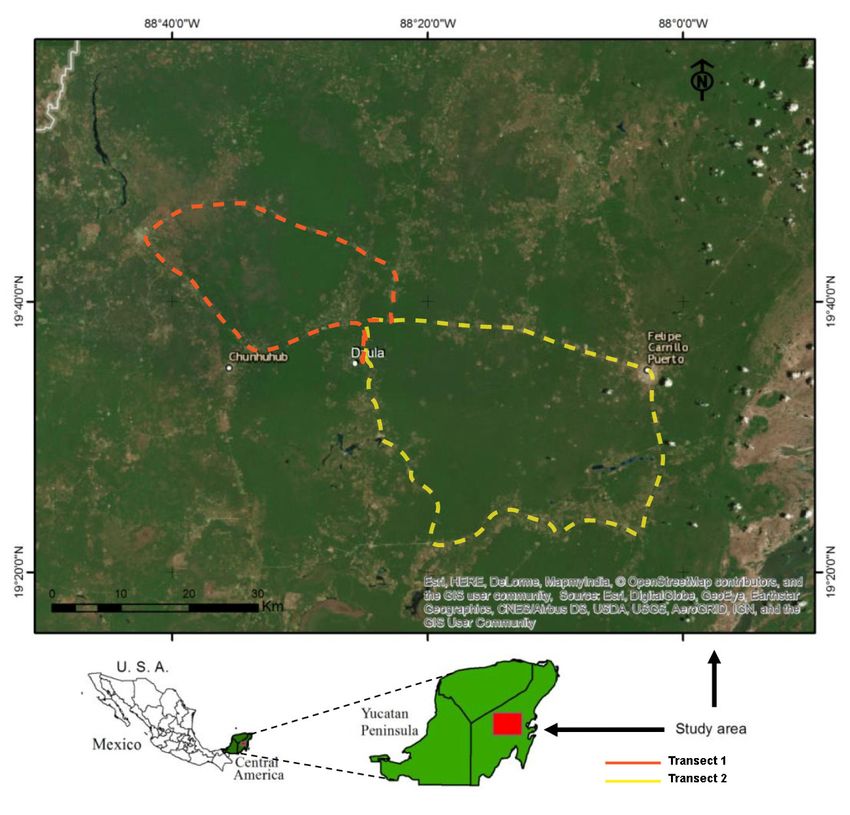
Insects 2020, 11, 495                                                                                                           3 of 15

interactions. The main objective of this study was to identify the interactions between fruit fly species and
their parasitoids in a fragment of the Mayan rainforest in the state of Quintana Roo, in the southeast region
of México. We conducted intensive surveys of available fruits present throughout two annual cycles
along two transects of the rainforest in order to identify the natural tri-trophic interactions represented by
fruit fly species-plant-parasitoids, as well as to estimate their infestation rates and degree of parasitism.

2. Materials and Methods

2.1. Study Site
      The study was conducted in natural areas of the Mayan rainforest in the municipalities of Felipe
Carrillo Puerto and José María Morelos, in the state of Quintana Roo (Mexico). The predominant
vegetation in these areas is characteristic of medium semi-evergreen forests sensu [38], where two
tree layers can be distinguished: An upper layer, with characteristic elements, such as Pseudobombax
ellipticum (Kunth) Dugand), Simarouba glauca DC, Cedrela odorata L., Swietenia macrophylla King,
among others; and a middle layer, where we usually find Metopium brownei (Jacq.) Urb.), Manilkara
zapota (L.) P. Royen, Sickingia salvadorensis (Standl.), Brosimun alicastrum Sw, Malmea depressa (Baill) R.E.
Fries, and Gymmanthes lucida Swart [39].
      The sampling area was established by using two transects of rural pathways and roads. The first
transect (length: 154 km) comprised the ejidos of Dzula (19◦ 350 N, 88◦ 240 W, 28 masl) and X
Pichil (19◦ 460 N, 88◦ 310 W, 47 masl), in the municipality of Carrillo Puerto, and the ejidos of San
Antonio Tuk (19◦ 450 N, 88◦ 410 W, 11 masl) and Xumuluc (19◦ 340 N, 88◦ 310 W, 6 masl), in the
municipality of José María Morelos (19◦ 440 N, 88◦ 420 W, 54 masl) (Figure 1 Transect 1). The second
transect (length: 230.5 km) comprised the ejidos of Dzula, Laguna Kana (19◦ 210 N, 88◦ 240 W, 40 masl),
Santa María (19◦ 210 N, 88◦ 240 W, 26 masl), and X-hazil (19◦ 200 N, 88◦ 070 W, 27 masl), in the municipality
               Insects 2020,
of Carrillo Puerto           11, x
                         (Figure   1 Transect 2).                                           4 of 19

       Figure 1. Map showing
                  Figure         the location
                         1. Map showing         of the
                                        the location     study
                                                     of the studyarea  andanan
                                                                 area and      image
                                                                             image     showing
                                                                                   showing          the collection
                                                                                           the collection transects transects
                        (Transect 1: red dashed line and Transect 2: yellow dashed line) in natural areas of the Mayan
                        rainforest in Quintana Roo, Mexico.

                 2.2. Collection and Processing of Fruit Samples
                      During a biennial period, from March 2015 to December 2017, we carried out monthly samplings
                 of available (ripe or unripe) fruits sampled from native and introduced plants along both transects.
                 For each transect, there were about 10−12 stops, and for each stop, we spent about 90 min searching
                 for available fruit. The fruits were either, cut directly from the plants (whenever possible using a tree
Insects 2020, 11, 495 4 of 15
(Transect 1: red dashed line and Transect 2: yellow dashed line) in natural areas of the Mayan rainforest
in Quintana Roo, Mexico.
2.2. Collection and Processing of Fruit Samples
During a biennial period, from March 2015 to December 2017, we carried out monthly samplings
of available (ripe or unripe) fruits sampled from native and introduced plants along both transects.
For each transect, there were about 10−12 stops, and for each stop, we spent about 90 min searching
for available fruit. The fruits were either, cut directly from the plants (whenever possible using a
tree pruner with a saw blade attached to a 4-m long wooden pole (Coronatoolsusa.com) or picked
up when fallen, due to ripeness or damage by an insect. Fruits sampled were not decomposed or
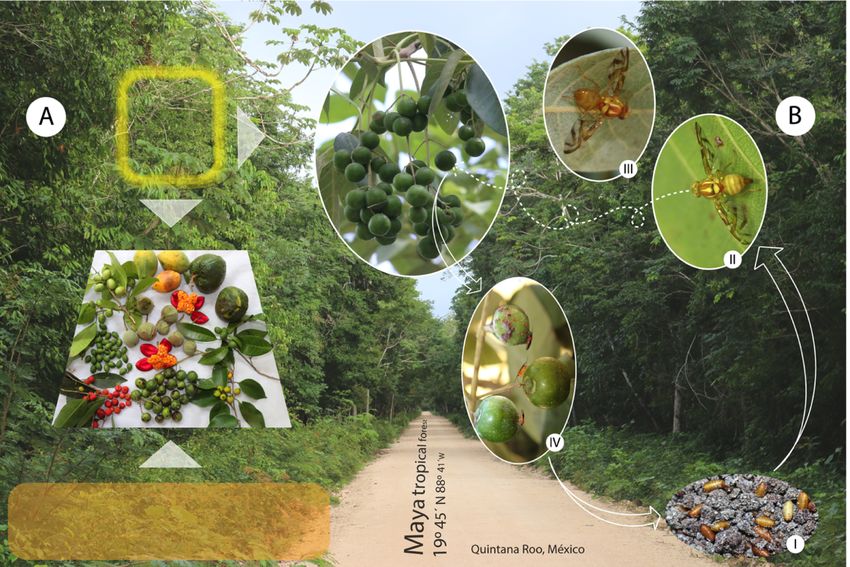
partially eaten by animals (Figure 2A). Each fruit sample was placed inside 50 × 80 cm organdy cloth
bag. We also obtained botanical samples for subsequent identification, as well as in situ photographs
with a professional camera (Canon EOS 70D, Canon Inc., Tokyo, Japan).
Insects 2020, 11, x 5 of 19
Figure 2. (A) Fruit collection methods: Arrows show where fruit was collected above and below the
Figure 2. (A) Fruit collection methods: Arrows show where fruit was collected above and below the trees.
trees. (B) Insect life cycle in Vitex gaumeri fruits; fruits were found to be infested by Anastrepha ampliata.
(B) Insect (BI)
life Dipteran Vitexemerge
cycle inlarvae gaumeri fruits; fruits were found to be infested by Anastrepha ampliata.
from the fruits and fall to the ground in order to bury into the soil to
(BI) Dipteran
pupate. (BII) A. ampliata female and fruits
larvae emerge from the and(BIV)
(BIII) male, fall to the ground
Parasitoid species.in order to bury into the soil to
pupate. (BII) A. ampliata female and (BIII) male, (BIV) Parasitoid species.
Each fruit sample was weighed in the nearest location, and placed in plastic containers with a
Each metal
fruitgrid, whichwas
sample rested on large plastic
weighed in thecontainers
nearestprovided withand
location, sterilized
placed riverinsand at the containers
plastic bottom with
as pupation substrate. These containers were placed on shelves inside an open-sided roofed shack,
a metal grid, which rested on large plastic containers provided with sterilized river sand at the
provided by local cooperators. This structure protected the fruit from rain and direct sunlight. The
bottom as sand
pupation substrate.
was regularly These
inspected, andcontainers were placed
all pupae recovered on shelves
were placed in 500-mL inside anplastic
labeled open-sided
cups roofed
shack, provided by local cooperators. This structure protected the fruit from rain and direct sunlight.
covered with cloth. After one week, the fruit samples and the recovered pupae were transported to
the Bioprospecting
The sand was Laboratoryand
regularly inspected, of the
allInstituto de Biotecnología
pupae recovered werey placed
Ecología in Aplicada
500-mL (INBIOTECA)
labeled plastic cups
(Xalapa, Veracruz, Mexico) for further processing. From each sample, we separated and weighed 40
covered with cloth. After one week, the fruit samples and the recovered pupae were
fruits individually in order to obtain an accurate estimation of the infestation index. Depending on
transported to the
Bioprospecting Laboratory
their size, fruits wereofplaced
the Instituto
in 100 mL,de Biotecnología
250 y Ecología
mL or 500 mL plastic Aplicada
containers (INBIOTECA)
containing moist sand (Xalapa,
Veracruz, as
Mexico)
pupationfor further
substrate. processing.
The containers were From eachwith
covered sample,
a cloth we
untilseparated
adult fruit flyand weighed 40 fruits
or parasitoid
emergence.
individually in order to obtain an accurate estimation of the infestation index. Depending on their size,
Botanical samples were identified by direct comparison with specimens from the herbarium of
fruits werethe
placed in 100 mL, 250 mL or 500 mL plastic containers containing moist sand as pupation
Instituto de Ecología AC (INECOL)—XAL (Xalapa, Veracruz) and the Centro de Investigaciones
substrate. de
TheYucatán (CICY) were
containers covered
(Mérida, Yucatán). with a cloth
Adult untilwere
fruit flies adult fruit fly
identified by or
VHOparasitoid
(INECOL),emergence.
while
Botanical samples were identified by direct comparison with specimensAndrey
parasitoids were identified with the use of taxonomic keys [40] and with the help of from the herbarium of
Khalaim
(Zoological
the Instituto de Ecología Institute of the Russian Academy
AC (INECOL)—XAL (Xalapa,of Sciences,
Veracruz) St.and
Petersburg,
the Centro Russia). Updated
de Investigaciones de
information on scientific names of host plants was obtained by consulting the Tropicos database [41].
Yucatán (CICY) (Mérida, Yucatán). Adult fruit flies were identified by VHO (INECOL),
Reference specimens of identified plants were deposited in the XAL herbarium (INECOL). Reference
while parasitoids
samples of fruit flies were preserved in 70% alcohol and deposited in INECOL and INBIOTECA,
while parasitoid samples were deposited in INBIOTECA.
2.3. Data Analyses
Each sampled group of fruits of each species was weighted. For each sample, fruit infestation
levels were calculated by dividing the total number of pupae obtained from the fruit sample by itsInsects 2020, 11, 495 5 of 15
were identified with the use of taxonomic keys [40] and with the help of Andrey Khalaim
(Zoological Institute of the Russian Academy of Sciences, St. Petersburg, Russia). Updated information
on scientific names of host plants was obtained by consulting the Tropicos database [41]. Reference
specimens of identified plants were deposited in the XAL herbarium (INECOL). Reference samples of
fruit flies were preserved in 70% alcohol and deposited in INECOL and INBIOTECA, while parasitoid
samples were deposited in INBIOTECA.
2.3. Data Analyses
Each sampled group of fruits of each species was weighted. For each sample, fruit infestation
levels were calculated by dividing the total number of pupae obtained from the fruit sample by its
total weight. The indexes of infestation by flies and of parasitism were obtained by dividing the total
number of adult flies and/or parasitoids that emerged from the pupae by the total number of pupae
obtained from the sample and multiplied by 100. All data from the localities were georeferenced,
and coordinates were converted from degrees, minutes, and seconds (DMS) to decimal degrees (DD)
using the website gps—coordinates.net. We used the DD to construct a transect map with GIS software
(ArcMaps, Versión 10.6.1).
3. Results
3.1. Fruit Fly-Host Plant Interactions
We examined fruit samples from 76 plant species of 31 botanical families, which summed a total of
143.26 Kg. We documented the presence of 11 species of Anastrepha infesting 25 fruit species belonging
to 10 families (Table 1).
Table 1. Host plant family, scientific and local names, and weight of sampled fruit found to be either,
infested or uninfested by Anastrepha fruit flies during two annual cycles in natural areas of the Mayan
rainforest of Quintana Roo, Mexico (March 2015—December 2017).
Sample Infested
Mayan Local
Plant Family Scientific Name Weight Fruit
Name
(Kg) Yes/No
Metopium brownei (Jacq.) Chechen 0.265 N
Spondias purpurea L. Ciruela 1.100 Y
Anacardiaceae
Spondias mombin L. Jobo 1.62 Y
Mangifera indica L. Mango 4.58 Y
Annona globiflora Schlecht. Anona 0.270 N
Annonaceae Annona scleroderma Saff. Chujun op 0.680 N
Mosannona depressa (Baill.) Chatrou Elemuy 0.950 N
Araliaceae Dendropanax arboreous (L.) Decne & Planch. Sakchaca 0.1620 N
Bixaceae Cochlospermum vitifolium (Willd.) Spreng. Chuun 0.870 N
Ehretia tinifolia L. Beek 0.282 N
Boraginaceae
Cordia dodecandra DC. Ciricote 5.310 N
Burseraceae Bursera simaruba (L.) Sarg. Chaca Rojo 0.176 N
Cannabaceae Celtis iguanaea (Jacq.) Sarg. Muk 0.475 N
Capparaceae Crataeva tapia L. Kookche 3.320 N
Caricaceae Carica papaya L. Chichput 1.500 Y
Ebeneaceae Diospyros anisandra S.F. Blake Kabche 0.300 N
Croton arboreus Millsp. Perescuch 0.310 N
Euphorbiaceae
Gymnanthes lucida Sw. Yaiti 1.200 N
Caesalpinia platyloba S. Watson Chacteviga 0.235 N
Platymiscium yucatanum Standl. Granadillo 0.340 N
Piscidia piscipula (L.) Sarg. Jabin 0.410 N
Fabaceae Swartzia cubensis (Britton & Wills) Standl. Katalox 0.790 N
Caesalpinia gaumeri (Britton & Rose) Greenm. Kitamche 0.550 N
Lysiloma latisiliquum (L.) Benth. Tzalam 0.300 N
Lonchocarpus yucatanensis Pittier Xuul 0.260 N
Lauraceae Nectandra salicifolia (H.B.K.) Nees. Sakelemuy 1.650 N
Malpighiaceae Bunchosia swartziana Griseb. Sipche 0.615 NInsects 2020, 11, 495 6 of 15
Table 1. Cont.
Sample Infested
Mayan Local
Plant Family Scientific Name Weight Fruit
Name
(Kg) Yes/No
Hampea trilobata Standl. Jool 0.520 N
Luehea candida (DC.) Mart. Kaskaat 0.960 N
Malvaceae
Pseudobombax ellipticum (Kunth) Dugand Amapola 0.700 N
Ceiba petandra (L.) Gaerth. Yaaxche 1.300 N
Menispermaceae Hyperbaena winzerlingii Standl. Kekenche 0.173 N
Mimosaceae Acacia milleriana Standl. Chimay 0.150 N
Ficus pertusa L.f. Juunkiix 1.100 N
Moraceae
Brosimum alicastrum Sw. Ramon 4.820 N
Psidium sartorianum (O. Berg) Nied. Guayabillo 0.885 Y
Myrcianthes fragrans (Sw.) Mc Vaugh Kojkann 0.312 N
Myrtaceae
Eugenia biflora (L.) DC. Pichiche 0.500 N
Psidium guajava L. Guayaba 1.225 Y
Opiliaceae Agonandra macrocarpa L. O. Williams Napche 1.765 N
Passiflora foetida L. Poochil 0.150 Y
Passifloraceae Maracuya del
Passiflora serratifolia L. 0.560 Y
monte
Passiflora yucatanensis Killip Yaax pooch 2.400 Y
Polygonaceae Coccoloba acapulcensis Standl. Boob/Toyub 0.220 N
Putranjivaceae Drypetes lateriflora (Sw.) Krug & Urb. Ejuleb 1.910 Y
Rhamnaceae Krugiodendrom ferraum (Vahl) Urb. Chintoc 0.100 N
Cosmocalyx spectabilis Standl. Chactecook 0.164 N
Randia truncata Greenm. & C.H.Thomps. Kaakalche 0.400 N
Rubiaceae Exostema mexicanum A Gray Sabasche 0.395 N
Guettarda combsii Urb. Tastab 0.270 N
Morinda citrifolia L. Noni 3.500 N
Citrus aurantium L. Naranja agria 6.270 Y
Esenbeckia pentaphylla (Macfad.) Griseb. Narnaha che 2.630 N
Rutaceae
Citrus sinensis (L.) Osbek Naranja dulce 3.310 Y
Casimiroa microcarpa Lundell Yuuy 7.300 Y
Laetia thamnia L. Chauche 3.141 Y
Salicaceae Casearia corymbosa Kunth Ixiimche 0.424 N
Zuelania guidonia (Sw.) Britton & Millsp. Tamay 5.672 Y
Blomia prisca (Standl.) Lundell Tzol 4.900 Y
Cupania belizensis Standl. Sal poom 1.200 N
Thouinia paucidentata Radlk. Kanchunup 0.136 N
Sapindaceae Melicoccus bijugatus Jacq. Guaya 1.200 N
Matayba oppositifolia (A. Rich.) Britton Ikche 0.370 N
Allophylus camptostachys Radlk. Kanchunup 0.783 N
Talisia oliviformis (Kunth) Radlk. Wayum 1.380 N
Manilkara zapota (L.) Van Royen Chicozapote 4.200 Y
Chrysophyllum cainito L. Cayumito 2.800 Y
Chrysophyllum mexicanum Brandegee ex
Chique 0.690 Y
Standl.
Sapotaceae Pouteria campechiana (Kunth) Baehni Kaniste 9.393 Y
Pouteria sapota (Jacq.) H. E. Moore and Stearn Hazz 3.500 Y
Sideroxylon capiri subsp. tempisque (Pittier)
Subul 6.554 Y
T.D. Penn.
Sideroxylon foetidissimum subsp. gaumeri
Tsiimimche 0.800 N
(Pittier) T.D. Penn.
Zapote del
Pouteria glomerata (Miq.) Radlk. 9.935 Y
pueblo
Pouteria reticulata (Engl.) Eyma Zapotillo 5.220 Y
Simaroubaceae Simarouba glauca DC. Paasac 0.360 N
Verbenaceae Vitex gaumeri Greenm. Yaxnic 9.096 Y
Our sampling efforts resulted in the first records of 10 plant species and a plant family
(Putranjivaceae) serving as new hosts of fruit flies of the genus Anastrepha. These plant species
are: Drypetes lateriflora (Sw.) Krug and Urb. (Putranjivaceae) and Blomia prisca (Standl.)
Lundell (Sapindaceae), hosts for Anastrepha fraterculus (Wiedemann); Passiflora yucatanensis Killip
Passiflora serratifolia L., and Passiflora foetida L. (Passifloraceae) infested by Anastrepha chiclayae Greene;
Laetia thamnia L. (Salicaceae), infested by Anastrepha zuelaniae Stone; Pouteria reticulata (Engl.) EymaInsects 2020, 11, 495 7 of 15
(Sapotaceae), infested by Anastrepha serpentina (Wiedemann) and Anastrepha. sp. (new species);
Vitex gaumeri Greenm. (Verbenaceae), infested by Anastrepha ampliata Hernández-Ortiz (Figure 2B),
and recently cited for Campeche [42]; and Casimiroa microcarpa Lundell (Rutaceae) infested by
Anastrepha ludens (Loew) (Table 2, Figure 3A–D).
Of all the fruit fly species, A. serpentina exhibited the highest number of hosts in the region,
exploiting up to eight host species, all in the family Sapotaceae. The Mexican fruit fly, A. ludens,
was found in three species of plants of the family Rutaceae and the West Indian fruit fly, Anastrepha obliqua
(Macquart), was found in three species of the family Anacardiaceae. The guava fruit fly, Anastrepha striata
Schiner and Anastrepha curvicauda (Gerstaecker) were found in single host plant species: Psidium guajava
L. (Myrtaceae) and Carica papaya L. (Caricaceae), respectively (Table 2).
With respect to host plant phenology, the highest availability of fruits was generally observed
in the period of April-July, with the highest number and abundance of fruits recorded during May
(18 species). In particular, we observed that the fruits of M. zapota were present during the whole
annual cycle, whereas the two species of the family Salicaceae, which were hosts for A. zuelaniae,
showed the shortest fructification periods (Table 2).
(A) Host
Figure 3. (A) Host plant Casimiroa microcarpa
plant Casimiroa microcarpa (first
(first report)
report) with
with fruits, (B) fruits with seeds with and
without infestation,
infestation, (C)
(C)Larvae
LarvaeofofA.
A.ludens
ludensemerging
emergingfromfromthe fruits,
the (D)
fruits, Larvae
(D) A. A.
of of
Larvae ludens feeding
ludens on
feeding
the seed of C. microcarpa.
on the seed of C. microcarpa.
3.2. Fruit Infestation and Parasitism Rates
Fruit infestation rates were highly variable between the different hosts, ranging between 0.21
and 19.17 pupae/kg of sampled fruit. The highest infestation levels occurred in Spondias mombin L. B.
prisca, P. reticulata, and Sideroxylon capiri subsp tempisque (Pittier) T.D. Penn. (range: 14.6–19.1
pupae/kg fruit). Of these, P. reticulata and S. capiri showed the highest infestation index values in
relation to the size of the sample, compared to other Sapotaceae species of the genus Pouteria who
had only 1.2–2.0 pupae/kg fruit. The highest fly emergence value was observed in P. campechana
Baehni, with 97.44% of the flies emerging from pupae, and the lowest rates were observed in S.
mombin (47.86%) and P. reticulata (47.83%) (see Table 3).Insects 2020, 11, 495 8 of 15
Table 2. Distribution of the fructification period of plant species sampled from natural areas of the Mayan rainforest of Quintana Roo, Mexico (March 2015—December
2017). Darker shading indicates greater availability of fruits; lighter shading denotes a decreased fruit availability, generally occurring before and after the rainy season.
Asterisks indicate new host plant records for Anastrepha spp.
Host Family Host Scientific Name Fruit Fly Species Jan Feb Mar Apr May Jun Jul Aug Sep Oct Nov Dec
Anacardiaceae Mangifera indica L. A. obliqua · ·
Spondias purpurea L. A. obliqua · ·
Spondias mombin L. A. obliqua · · ·
Caricaceae Carica papaya L. A. curvicauda · · · · ·
Myrtaceae Psidium guajava L. A. striata · · · · ·
Psidium guajava A. fraterculus · · · · ·
Psidium sartorianum (O. Berg) Nied. A. fraterculus · · · · ·
Putranjivaceae *Drypetes lateriflora (Sw.) Krug & Urb. A. fraterculus · · · · · ·
Sapindaceae *Blomia prisca (Standl.) Lundell A. fraterculus · ·
Passifloraceae *Passiflora yucatanensis Killip A. chiclayae · · · · ·
*Passiflora serratifolia L. A. chiclayae · · · ·
*Passiflora foetida L. A. chiclayae · · ·
Rutaceae Citrus aurantium L. A. ludens · · · · · ·
Citrus sinensis (L.) Osbek A. ludens · · · ·
*Casimiroa microcarpa Lundell A. ludens · · ·
Salicaceae *Laetia thamnia L. A. zuelaniae · · ·
Zuelania guidonia (Sw.) Britton & Millsp. A. zuelaniae · · ·
Sapotaceae Chrysophyllum mexicanum Brandegee ex Standl. A. serpentina · · ·
Chrysophyllum cainito L. A. serpentina · · ·
Manilkara zapota (L.) Van Royen A. serpentina · · · · · · · · · · · ·
Pouteria campechiana Baehni A. serpentina · · · · · · · · ·
Pouteria glomerata (Miq.) Radlk. A. serpentina · · · · · · ·
*Pouteria reticulata (Engl.) Eyma A. serpentina · · · · · ·
Pouteria sapota (Jacq.) H.E. Moore and Stearn. A. serpentina · ·
Sideroxylon capiri subsp. tempisque (Pittier) T.D. Penn. A. serpentina · · · ·
Pouteria campechiana Baehni A. hamata · · · · · · · · ·
*Pouteria reticulata Anastrepha sp. 1 · · · · · ·
Verbenaceae *Vitex gaumeri Greenm. A. ampliata · · · · · ·Insects 2020, 11, 495 9 of 15
3.2. Fruit Infestation and Parasitism Rates
Fruit infestation rates were highly variable between the different hosts, ranging between 0.21 and
19.17 pupae/kg of sampled fruit. The highest infestation levels occurred in Spondias mombin L. B. prisca,
P. reticulata, and Sideroxylon capiri subsp tempisque (Pittier) T.D. Penn. (range: 14.6–19.1 pupae/kg fruit).
Of these, P. reticulata and S. capiri showed the highest infestation index values in relation to the size of
the sample, compared to other Sapotaceae species of the genus Pouteria who had only 1.2–2.0 pupae/kg
fruit. The highest fly emergence value was observed in P. campechana Baehni, with 97.44% of the flies
emerging from pupae, and the lowest rates were observed in S. mombin (47.86%) and P. reticulata
(47.83%) (see Table 3).
Table 3. Fruit fly species of the genus Anastrepha, and their infestation levels and biological data, found
in plant species associated as their native and introduced hosts in the sampled region.
Number
Recovered Sex Ratio
Host Family Host Scientific Name Fruit Fly Species of Pupae/Kg Emergence %
Pupae (F/M)
of Fruit
A. obliqua
Anacardiaceae Mangifera indica 55 1.20 28/19 85.45
(Macquart)
Spondias mombin A. obliqua 280 17.28 73/61 47.86
Spondias purpurea A. obliqua 106 9.64 37/49 81.13
A. curvicauda
Caricaceae Carica papaya 83 5.53 31/29 72.29
(Gerstaecker)
Myrtaceae Psidium guajava A. striata Schiner 92 7.51 4/5 9.78
A. fraterculus
– 19/16 38.04
(Wiedemann)
Psidium sartorianum A. fraterculus 21 2.37 14/3 80.95
Putranjivaceae Drypetes lateriflora A. fraterculus 142 7.43 43/47 63.38
Sapindaceae Blomia prisca A. fraterculus 720 14.69 358/302 91.67
Passifloraceae Passiflora foetida A. chiclayae Greene 9 6.00 4/3 77.78
Passiflora serratifolia A. chiclayae 37 6.61 21/15 97.3
Passiflora yucatanensis A. chiclayae 5 0.21 3/1 80.0
Rutaceae Citrus aurantium A. ludens (Loew) 278 4.43 128/123 90.29
Citrus sinensis A. ludens 68 2.05 31/25 82.35
Casimiroa microcarpa A. ludens 383 5.24 191/162 92.17
Salicaceae Laetia thamnia A. zuelaniae Stone 199 6.34 89/76 82.91
Zuelania guidonia A. zuelaniae 180 3.17 61/52 62.78
A. serpentina
Sapotaceae Chrysophyllum cainito 64 2.28 36/19 85.94
(Wiedemann)
Chrysophyllum
A. serpentina 12 1.74 5/6 91.67
mexicanum
Manilkara zapota A. serpentina 342 8.14 110/129 71.13
Pouteria campechiana A. serpentina 117 1.25 64/50 97.44
Pouteria glomerata A. serpentina 126 1.27 60/57 92.86
Pouteria sapota A. serpentina 70 2.00 24/35 84.29
Pouteria reticulata A. serpentina 738 19.17 185/168 47.83
Sideroxylon capiri subsp.
A. serpentina 1195 18.23 605/433 86.86
tempisque
Pouteria campechiana A. hamata (Loew) 172 1.83 95/68 94.77
Pouteria reticulata Anastrepha sp. 1 265 6.88 102/116 82.26
A. ampliata
Verbenaceae Vitex gaumeri 633 6.96 197/216 65.24
Hernández-Ortiz
We recorded an overall parasitism rate of 19.51%, which means that, at the community level,
the fly/parasitoid ratio was 5:1. We recorded six species of koinobiont parasitoids: Doryctobracon areolatus
(Szépligeti), Doryctobracon zeteki Musebeck, Utetes anastrephae (Viereck), Opius hirtus (Fisher)
(all Braconidae), Aganaspis pelleranoi (Brethés), and Odontosema anastrephae Borgmeier (both Figitidae).
All these species parasitized larvae that feed on the pulp of the fruit, with the exception of D. areolatus
and D. zeteki, which also parasitized larvae that infest seeds. Doryctobracon areolatus was the most
important parasitoid species in the whole community, representing 52.7% of all the recorded parasitoids
in terms of abundance. It was present in 12 different species of host plants, parasitizing six species of
fruit flies.
The percentage of parasitism fluctuated between 3.49% (for A. hamata (Loew) feeding on
P. campechiana) and 35.54%, (for A. serpentina feeding on P. reticulata). In the case of the speciesInsects 2020, 11, 495 10 of 15
A. ludens and A. chiclayae, we did not observe any parasitism. Other species, such as U. anastrephae,
A. pelleranoi, and O. hirtus, showed moderate activity, with parasitism rates ranging between 13.8
and 17.8%. The least frequently recovered parasitoid species were O. anastrephae and D. zeteki, with 0.6
and 0.7% of parasitism, respectively (Table 4). The fly species with the highest richness of parasitoids
were A. fraterculus and A. serpentina, with five species each; in contrast, A. hamata and A. sp. had only
one species each, independently of the number of hosts occupied.
Table 4. Parasitoid species and levels of parasitism of fruit fly species of the genus Anastrepha in their
native and introduced hosts in the sampled region.
Recovered Parasitoid
Host Plant Anastrepha Parasitoid Total No. %
Family Fruit Fly Sex Ratio
Scientific Name Species Species Parasitoids Parasitism
Pupae (F/M)
Doryctobracon
Anacardiaceae Mangifera indica A. obliqua 55 areolatus 1/2 3 5.45
(Szépligeti)
Spondias mombin 280 D. areolatus 38/25
Utetes
anastrephae 15/21 99 35.36
(Viereck)
Spondias purpurea 106 D. areolatus 10/8 18 16.98
Myrtaceae Psidium guajava A. fraterculus 92 D. areolatus 8/5
Aganaspis
pelleranoi 7/2
(Brethes)
Odontosema
anastrephae 2/1 25 27.17
Borgmeier
Putranjivaceae Drypetes lateriflora 142 D. areolatus 5/3
U. anastrephae 3/4
Opius hirtus
2/1
(Fisher)
A. pelleranoi 8/12 38 26.76
Sapindaceae Blomia prisca 720 D. areolatus 27/30
U. anastrephae 12/11
O. hirtus 7/4 91 12.64
Salicaceae Laetia thamnia A. zuelaniae 199 D. areolatus 13/17
O. hirtus 2/0 32 16.08
Zuelania guidonia 180 D. areolatus 12/7
A. pelleranoi 4/3 26 14.44
Sapotaceae Manilkara zapota A. serpentina 342 D. areolatus 16/17
O. hirtus 4/2
A. pelleranoi 22/15
O. anastrephae 3/1 80 23.81
Pouteria reticulata 738 D. areolatus 29/31
U. anastrephae 48/38
O. hirtus 28/21
A. pelleranoi 37/21 263 35.54
Sideroxylon capiri subsp. tempisque 1195 D. areolatus 35/39
O. hirtus 11/4
A. pelleranoi 1/2 112 9.37
Doryctobracon
Pouteria
Sapotaceae A. hamata 172 zeteki 5/1 6 3.49
campechiana
Musebeck
Pouteria reticulata Anastrepha sp. 265 D. areolatus 7/12 7.17
Verbenaceae Vitex gaumeri A. ampliata 633 D. areolatus 58/51
U. anastrephae 15/11
O. hirtus 27/25 187 29.54
4. Discussion
Previous studies reported 39 known described species of Anastrepha in Mexico [24,43], including
recent records of Anastrepha tehuacana Norrbom [16] and Anastrepha furcata Lima [44]. For the state
of Quintana Roo, there are currently 12 known species of Anastrepha [24,36,43,45,46]. The present
study contributes with the first records of four additional species: Anastrepha chiclayae Greene,
Anastrepha zuelaniae Stone, Anastrepha curvicauda, and a newly discovered species, Anastrepha sp.,
increasing the number of known Anastrepha species for the state of Quintana Roo to 16.Insects 2020, 11, 495 11 of 15
In addition, here we document the first records of eight new hosts plants for fruit flies, including
the family Putranjivaceae for the first time. Furthermore, 15 hosts are reported for the first time in
Quintana Roo. These results highlight the importance of increasing our knowledge about fruit fly/host
plant interactions in natural environments. The Mayan rainforest in the southeast of Mexico constitutes
a reservoir for tropical biodiversity, including interactions between fruit flies and their natural enemies.
Even though the traditional use of protein-baited traps is important to provide data on the presence and
abundance of Anastrepha species in a particular region, species richness is higher for native fruits [47].
A noteworthy result is the exploitation of alternative hosts by species of economic significance
such as A. ludens. In Mexico, this fly species has been reported feeding on approximately 23 host
plants, most of them being exotic cultivated species, such as Citrus spp. [24]. Two important native
host plant species are Casimiroa greggii (S. Watson) F. Chiang and Casimiroa edulis Llave et Lex [48,49]
(both Rutaceae). In the present study, A. ludens was recovered from fruits of two Citrus species and
from Casimiroa microcarpa Lundell. The latter plant species is a new record for A. ludens in Quintana
Roo, which was thought to be restricted to Chiapas and Guatemala [50]. In C. microcarpa, the larvae
were found to feed exclusively on the seeds (Figure 3), as previously observed in C. greggii [48,51].
These habits suggest that the use of these native wild hosts could have broadened the distribution area
of these flies through the colonization of citrus species cultivated in other regions of Mexico, while at
the same time retaining their native hosts of the genus Casimiroa because of their distribution in the
region. For example, C. greggii is found in the northeast of Mexico, C. edulis is distributed from Mexico
to Costa Rica, and C. microcarpa is distributed mainly in Guatemala [41].
The center of origin of the family Sapotaceae is tropical America, and plant species belonging to this
family are of great importance in the structure of ecosystems and biological diversity with approximately
200 genera and close to 450 species of trees and shrubs [52,53]. In addition, the consumption of their
fruits represents a highly profitable market. For example, Manilkara zapota L. is native to Yucatán
(Mexico) and Guatemala [54], and its fruits, which have high commercial value, occur practically all
year round are commonly heavily infested by A. serpentina. So these are also significant reservoirs of
native parasitoids.
Fruit flies can persist in different types of environments. Generalist species can thrive in a matrix
of human use with commercial and backyard fruit orchards, while a part of the population remains and
survives within the natural forest. That would be the case of A. ludens in C. microcarpa, a plant species
that maintains viable populations of this fruit fly within their natural habitat. Because 70 percent of
herbivore species exhibit a high level of specialization, [55], then knowledge of wild plant species that
serve as hosts for specialist fruit flies is relevant. For example, A. zuelaniae, A. ampliata, A. chiclayae,
A. hamata, and A. sp., have a restricted range of plants (families Salicaceae, Verbenaceae, Passifloraceae,
and Sapotaceae, respectively) on which they feed. An interesting observation was that the fruits of
Pouteria glomerata (Miq.) Radlk (Sapotaceae) were only infested by A. serpentina in the study area,
even though fruits of this plant species have been found to be infested by Anastrepha aphelocentema
Stone [37]. The absence of the latter species may implicate biogeographic and ecological factors that
could be responsible for the presence/absence of certain species in a particular site [56,57].
The high percentages of parasitism observed in this study in hosts, such as Pouteria reticulata (Engl.)
Eyma, Spondias mombin L., and Vitex gaumeri Greenm (29.5–35.6%), differ from previous reports for
Yucatán that show that parasitism levels are low. For example, Hernández-Ortiz et al. [26] documented
an overall parasitism rate of 3.69% from cultivated plants. Such contrasting results suggest that the
Mayan rainforest actually constitutes a highly important reservoir for the diversity of native parasitoid
species. This study confirms that Doryctobracon areolatus (Szépligeti) is the native parasitoid with the
highest abundance. This parasitoid species is widely found in Mexico and other countries [31,33,34].
Moreover, we report Opius hirtus (Fisher) in five new fruit fly-parasitoid associations, all occurring
in native tree species infested by different fly species. This finding highlights the preference of this
parasitoid for monophagous fly species attacking comparatively small-sized fruits [19,31].Insects 2020, 11, 495 12 of 15
The presence of the parasitoid Doryctobracon zeteki Muesebeck in larvae of A. hamata infesting
P. campechiana shows the occurrence of a parasitoid attacking larvae of a fly species that feeds on seeds.
This is the first report of parasitism in A. hamata. In the case of D. zeteki, this parasitoid species was
first recorded in Mexico in association with larvae of Anastrepha cordata Aldrich feeding on seeds [19].
However, in countries like Colombia, Costa Rica, Panama, and Venezuela, D. zeteki has been reported
in P. guajava [34], in Sapotaceae species, and in other species where it has been recorded as the most
abundant species [25,58]. Interestingly, some fruit fly species, such as A. serpentina, infesting Pouteria
sapota (Jacq.) H.E. Moore and Stearn and P. glomerata, and A. chiclayae, infesting passion flowers, did not
exhibit parasitism in their natural hosts, which could be a result of the large size of the fruits they infest.
This could be a defense mechanism, since it would be more difficult for parasitoids to find a host inside
large fruits, which has been hypothesized for other frugivorous species of Anastrepha [31,59,60].
The exotic parasitoid Diachasmimorpha longicaudata (Ashmead) has been successfully established
in certain tropical agroecosystems with significant percentages of parasitism [34,61–63]. However,
the results of the present study showed that this species is not established in this natural region
of the Mayan rainforest, and therefore, this introduced species appears to have limitations for its
establishment in natural environments [19,26,31]. For example, we did not find it in fruits of Citrus spp.
infested by A. ludens, where it is common in other regions, along with the native species Doryctobracon
crawfordi (Viereck) [33].
5. Conclusions
Our findings shed new light into new host plant association for species of the genus Anastrepha
and their parasitoids in natural environments, and highlight the importance of tropical rainforests for
the conservation of biodiversity. The areas of the Mayan rainforest that still preserve a great part of its
original composition and structure exhibit a higher richness of wild fruits, such as those examined
in this study. Consequently, this represent a highly important reservoir for the diversity of native
parasitoids spatially and temporally that are practically absent in fruits of cultivated plants.
Author Contributions: Conceptualization, M.L.-O., V.H.-O.; Formal analysis, M.L.-O.; Funding acquisition,
M.L.-O.; Investigation, M.L.-O., J.R.V.-L., M.H.-O.; Methods, M.L.-O., J.R.V.-L., M.H.-O.; Supervision, V.H.-O.,
F.D.-F., J.C.P.; Writing-original draft, M.L.-O., V.H.-O.; Writing-review and editing, V.H.-O., F.D.-F., J.C.P. All authors
have read and agreed to the published version of the manuscript.
Funding: This study was partially supported by Programa de Mejoramiento del Profesorado (PROMEP)
(grant number P/PROMEP/103.5/13/6998), awarded to M.L.-O., and by the Consejo Nacional de Ciencia y
Tecnología-Sistema Nacional de Investigadores de México (CONACyT-SNI 59909 MLO). The funders had no role
in the collection, analyses, or interpretation of the data, in the writing of the manuscript, or in the decision to
publish the results.
Acknowledgments: We are grateful to Carlos Duran (INECOL), Rodrigo Duno de Stefano (CICY), and Andrey
Khalain (Zoological Institute, St. Petersburg, Russia) for the identification of field-collected material. We also
thank the inhabitants of Dzula, municipality of Carrillo Puerto, for access to their natural areas, especially to
Artemio Xiu Tamayo for his help in the collection of fruits in the field in order to obtain Anastrepha spp adults, and
the Xiu family for their hospitality. We also thank Rubén Ruiz (La selva) and Roy Jabin Carreón (UNORCA) for
vehicle access, and Daniel Gazga (SEMAR) for his logistical support. Thanks to Fernando Díaz, Ernesto Cervantes,
Roberto Bautista (INBIOTECA) and Hugo Ortiz for technical assistance. Three anonymous reviewers greatly
improved an early version of the manuscript.
Conflicts of Interest: The authors declare no conflict of interest.
References
1. Becerra, J.X. On the factors that promote the diversity of herbivorous insects and plants in tropical forests.
Proc. Natl. Acad. Sci. USA 2015, 112, 6098–6103. [CrossRef] [PubMed]
2. Price, P.W.; Denno, R.F.; Eubanks, M.D.; Finke, D.L.; Kaplan, I. Insect Ecology: Behavior, Populations and
Communities; Cambridge University Press: Cambridge, UK, 2011.
3. Keck, C.B. Relation of oviposition punctures of the Mediterranean fruit fly to the premature dropping of
citrus fruits. J. Econ. Entomol. 1934, 28, 908–914. [CrossRef]Insects 2020, 11, 495 13 of 15
4. Stephenson, A.G. Flower and fruit abortion: Proximate causes and ultimate functions. Annu. Rev. Ecol. Syst.
1981, 12, 253–279. [CrossRef]
5. Drew, R.A.I. Amino acid increases in fruit infested by fruit flies of the family Tephritidae. Zool. J. Linn. Soc.
1988, 93, 107–112. [CrossRef]
6. Pimm, S.; Russell, G.; Gittleman, J.; Brooks, T. The future of Biodiversity. Science 1995, 269, 347–350. [CrossRef]
7. Fahrig, L. Effects of habitat fragmentation on biodiversity. Annu. Rev. Ecol. Syst. 2003, 34, 487–515. [CrossRef]
8. Norrbom, A.L.; Korytkowski, C.A.; Zucchi, R.A.; Uramoto, K.; Venable, G.L.; McCormick, J.; Dallwitz, M.J.
Anastrepha and Toxotrypana: Descriptions, Illustrations, and Interactive Keys; Version: 16th October 2018; 2012;
Dallwitz, Paine, and Zurcher 1995, 2000, USDA. Available online: http://delta-intkey.com (accessed on
6 December 2018).
9. Eskafi, F.M.; Cunningham, R.T. Host plants of fruit flies (Diptera: Tephritidae) of economic importance
in Guatemala. Fla. Entomol. 1987, 70, 116–123. [CrossRef]
10. Jiron, L.F.; Hedström, I. Occurrence of fruit flies of the genera Anastrepha and Ceratitis (Diptera: Tephritidae),
and their host plant availability in Costa Rica. Fla. Entomol. 1988, 71, 62–73. [CrossRef]
11. Borge, M.N.R.; Basedow, T. A survey on the occurrence and flight periods of fruit fly species
(Diptera: Tephritidae) in a fruit growing area in southwest Nicaragua, 1994/95. Bull. Entomol. Res.
1997, 87, 405–412. [CrossRef]
12. Uramoto, K.; Martins, D.S.; Zucchi, R.A. Fruit flies (Diptera, Tephritidae) and their associations with
native host plants in a remnant area of the highly endangered Atlantic Rain Forest in the State of Espírito
Santo, Brazil. Bull. Entomol. Res. 2008, 98, 457–466. [CrossRef]
13. Silva, J.G.; Dutra, V.S.; Santos, M.S.; Silva, N.M.; Vidal, D.B.; Nink, R.A.; Guimaraes, J.A.; Araujo, E.L.
Diversity of Anastrepha spp. (Diptera: Tephritidae) and associated braconid parasitoids from native and
exotic hosts in Southeastern Bahia, Brazil. Environ. Entomol. 2010, 39, 1457–1465. [CrossRef] [PubMed]
14. Garcia, F.R.; Norrbom, A.L. Tephritoid flies (Diptera, Tephritoidea) and their plant hosts from the state of
Santa Catarina in southern Brazil. Fla. Entomol. 2011, 94, 151–157. [CrossRef]
15. Jesus-Barros, C.R.; Adaime, R.; Oliveira, M.N.; Silva, W.R.; Costa-Neto, S.V.; Souza-Filho, M.F. Anastrepha
(Diptera: Tephritidae) species, their hosts and parasitoids (Hymenoptera: Braconidae) in five municipalities
of the state of Amapá, Brazil. Fla. Entomol. 2012, 95, 694–705. [CrossRef]
16. Norrbom, A.L.; Castillo-Meza, A.L.; García-Chávez, J.H.; Aluja, M.; Rull, J. A new species of Anastrepha
(Diptera: Tephritidae) from Euphorbia tehuacana (Euphorbiaceae) in Mexico. Zootaxa 2014, 3780, 567–576.
[CrossRef]
17. Clavijo, P.A.R.; Norrbom, A.L.; Peñaranda, E.A.; Diaz, P.A.; Benitez, M.C.; Gallego, J.; Cruz, M.I.; Montes, J.M.;
Rodriguez, E.J.; Steck, G.J.; et al. New records of Anastrepha (Diptera: Tephritidae) primarily from Colombia.
Zootaxa 2018, 4390, 1–63. [CrossRef] [PubMed]
18. Hernandez-Ortiz, V.; Pérez-Alonso, R. The natural host plants of Anastrepha (Diptera: Tephritidae) in a
tropical rain forest of Mexico. Fla. Entomol. 1993, 70, 447–460. [CrossRef]
19. Aluja, M.; Rull, J.; Sivinski, J.; Norrbom, A.L.; Wharton, R.A.; Macías-Ordóñez, R.; Díaz-Fleischer, F.; López, M.
Fruit flies of the genus Anastrepha (Diptera: Tephritidae) and associated native parasitoids (Hymenoptera)
in the tropical rainforest biosphere reserve of Montes Azules, Chiapas, Mexico. Environ. Entomol.
2003, 32, 1377–1385. [CrossRef]
20. Deus, E.G.; Pinheiro, L.S.; Lima, C.R.; Sousa, M.D.S.M.; Guimarāes, J.A.; Strikis, P.C.; Adaime, R. Wild hosts
of frugivorous dipterans (Tephritidae and Lonchaeidae) and associated parasitoids in the Brazilian Amazon.
Fla. Entomol. 2013, 96, 1621–1625. [CrossRef]
21. Almeida, R.R.; Cruz, K.R.; Sousa, M.S.M.; Costa-Neto, S.V.; Jesus Barros, C.R.; Lima, A.L.; Adaime, R.
Frugivorous flies (Diptera: Tephritidae, Lonchaeidae) associated with fruit production on Ilha de Santana,
Brazilian Amazon. Fla. Entomol. 2016, 99, 426–436. [CrossRef]
22. Hernández-Ortiz, V.; Aluja, M. Listado de especies del género neotropical Anastrepha (Diptera: Tephritidae),
con notas sobre su distribución y plantas hospederas. Folia Entomol. Mex. 1993, 88, 89–105.
23. Hernández-Ortiz, V.; Canal, N.A.; Salas, J.O.T.; Ruíz-Hurtado, F.M.; Dzul-Cauich, J.F. Taxonomy and
phenotypic relationships of the Anastrepha fraterculus complex in the Mesoamerican and Pacific Neotropical
dominions (Diptera, Tephritidae). ZooKeys 2015, 540, 95–124. [CrossRef] [PubMed]Insects 2020, 11, 495 14 of 15
24. Hernández-Ortiz, V. Diversidad y biogeografía del género Anastrepha en México. In Moscas de la Fruta en
Latinoamérica (Diptera: Tephritidae): Diversidad, Biología y Manejo; S y G, Ed.; Distrito Federal, Mexico, 2007;
pp. 53–76.
25. Carrejo, N.S.; Gonzalez, R. Parasitoids reared from species of Anastrepha (Diptera: Tephritidae) in Valle del
Cauca, Colombia. Fla. Entomol. 1999, 82, 113–118. [CrossRef]
26. Hernández-Ortiz, V.; Delfín-González, H.; Escalante-Tio, A.; Manrique-Saide, P. Hymenopteran parasitoids
of Anastrepha fruit flies (Diptera: Tephritidae) reared from different hosts in Yucatan, Mexico. Fla. Entomol.
2006, 89, 508–515. [CrossRef]
27. Clausen, C.P.; Clancy, D.W.; Chock, Q.C. Biological Control of the Oriental Fruit Fly (Dacus dorsalis Hendel) and
Other Fruit Flies in Hawaii; USDA Tech. Bull.: Washington, DC, USA, 1965; Volume 1322, p. 102.
28. Wharton, R.A. Classical Biological Control of Fruit-Infesting Tephritidae. In World Crop Pests, Fruit Flies:
Their Biology, Natural Enemies and Control; Robinson, A.S., Hooper, G., Eds.; Elsevier: Amsterdam, The
Netherlands, 1989; Volume 3B, pp. 303–313.
29. Leonel, F.L., Jr.; Zucchi, R.A.; Wharton, R.A. Distribution and tephritid hosts (Diptera) of braconid parasitoids
(Hymenoptera) in Brazil. Int. J. Pest Manag. 1995, 41, 208–213. [CrossRef]
30. Wharton, R.A.; Gilstrap, F.E.; Rhode, R.H.; Fischel-m, M.; Hart, W.G. Hymenopterous egg-pupal and
larval-pupal parasitoids of Ceratitis capitata and Anastrepha spp. (Dip.: Tephritidae) in Costa Rica. Entomophaga
1981, 26, 285–290. [CrossRef]
31. Hernández-Ortiz, V.; Pérez-Alonso, R.; Wharton, R.A. Native parasitoids associated with the genus Anastrepha
(Diptera: Tephritidae) in Los Tuxtlas, Veracruz, Mexico. Entomophaga 1994, 39, 171–178. [CrossRef]
32. Sivinski, J.; Aluja, M.; López, M. Spatial and temporal distributions of parasitoids of Mexican Anastrepha
species (Diptera: Tephritidae) within the canopies of fruit trees. Ann. Entomol. Soc. Am. 1997, 90, 604–618.
[CrossRef]
33. López, M.; Aluja, M.; Sivinski, J. Hymenopterous larval–pupal and pupal parasitoids of Anastrepha flies
(Diptera: Tephritidae) in Mexico. Biol. Cont. 1999, 15, 119–129. [CrossRef]
34. Ovruski, S.; Aluja, M.; Sivinski, J.; Wharton, R. Hymenopteran parasitoids on fruit-infesting Tephritidae
(Diptera) in Latin America and the southern United States: Diversity, distribution, taxonomic status and
their use in fruit fly biological control. Integr. Pest Mgmt. Rev. 2000, 5, 81–107. [CrossRef]
35. Montoya, P.; Ayala, A.; López, P.; Cancino, J.; Cabrera, H.; Cruz, J.; Martinez, A.M.; Figueroa, I.; Liedo, P.
Natural parasitism in fruit fly (Diptera: Tephritidae) populations in disturbed areas adjacent to commercial
mango orchards in Chiapas and Veracruz, Mexico. Environ. Entomol. 2016, 45, 328–337. [CrossRef]
36. Hernández-Ortiz, V.; Manrique-Saide, P.; Delfín- González, H.; Novelo-Rincón, I. First report of
Anastrepha compressa in Mexico and new records for other Anastrepha species in the Yucatan Peninsula
(Diptera: Tephritidae). Fla. Entomol. 2002, 85, 389–391. [CrossRef]
37. Aluja, M.; Piñero, J.; López, M.; Ruíz, C.; Zúñiga, A.; Piedra, E.; Díaz-Fleisher, F.; Sivinski, J. New host plant
and distribution records in Mexico for Anastrepha spp., Toxotrypana curvicauda Gerstacker, Rhagoletis zoqui
Bush, Rhagoletis sp., and Hexachaeta sp. (Diptera: Tephritidae). Proc. Entomol. Soc. Wash. 2000, 102, 802–815.
38. Rzedowski, J. Vegetacion de Mexico; Limusa: Distrito Federal, Mexico, 1978; p. 432.
39. Miranda, F.D.P.; Hernández, X.E. Los tipos de vegetación de México y su clasificación. Bol. Soc. Bot. México
1963, 28, 29–179. [CrossRef]
40. Wharton, R.A.; Marsh, P.M.; Sharkey, M.J. Manual of the New World genera of the family Braconidae
(Hymenoptera). Spec. Publ. Int. Soc. Hymenopterists 1997, 1, 459.
41. Tropicos.org. Missouri Botanical Garden. Available online: http://www.tropicos.org (accessed on
6 December 2018).
42. Garcí Ramírez, M.D.J.; Antonio Hernández, E.; Vargas Magaña, J.J.; Valencia Gutiérrez, M.D.C.; Chi
Ruiz, J.C.; Placensia Valerio, Y. First host plant record for Anastrepha ampliata Hernández-Ortiz, 1990 (Diptera:
Tephritidae). Biocyt Biol. Cienc. Tecnol. 2018, 11, 789–791.
43. Hernaández-Ortiz, V. El Género Anastrepha Schiner en México (Diptera: Tephritidae). Taxonomía, Distribución y
sus Plantas Huéspedes; Publicacón No. 33; Instituto de Ecología: Xalapa, Mexico, 1992; p. 162.
44. Antonio Hernández, E.; Ramírez, M.D.J.G.; Lara, D.F. New records of the genus Anastrepha Schiner,
1868 (Diptera: Tephritidae) in the Isthmus of Tehuantepec, Oaxaca, Mexico. Biocyt Biol. Cienc. Tecnol.
2018, 11, 824–833.Insects 2020, 11, 495 15 of 15
45. Sosa-Armenta, J.M.; López-Martínez, V.; Villegas-Torres, Ó.G.; Juárez-López, P.; Burgos-Solorio, A. Dinámica
poblacional de moscas de la fruta en Quintana Roo, México. Southwest Entomol. 2017, 42, 275–282. [CrossRef]
46. Sosa-Armenta, J.M.; López-Martínez, V.; Alia-Tejacal, I.; García-Jiménez, D.; Guillen-Sánchez, D.;
Delfín-González, H. Hosts of five Anastrepha species (Diptera: Tephritidae) in the state of Quintana
Roo, Mexico. Fla. Entomol. 2015, 98, 1000–1002. [CrossRef]
47. Araujo, M.R.; Uramoto, K.; Ferreira, E.N.L.; Mesquita Filho, W.; Walder, J.M.M.; Savaris, M.; Zucchi, R.A.
Fruit Fly (Diptera: Tephritidae) diversity and host relationships in diverse environments estimated with two
sampling methods. Environ. Entomol. 2018, 48, 227–233. [CrossRef] [PubMed]
48. Plummer, C.C.; McPhail, M. The yellow chapote, a native host of the Mexican fruit fly. USDA Tech. Bull.
1941, 775, 1–12.
49. Bush, G.L. The cytotaxonomy of the larvae of some Mexican fruit flies in the genus Anastrepha
(Tephritidae, Diptera). Psyche 1962, 69, 87–101. [CrossRef]
50. Villaseñor, J.L. Checklist of the native vascular plants of Mexico. Rev. Mex. Biodivers 2016, 87, 559–902.
[CrossRef]
51. Thomas, D.B. Mexican fruit fly (Diptera: Tephritidae) and the phenology of its native host plant yellow
chapote (Rutaceae) in Mexico. J. Entomol. Sci. 1999, 47, 1–16. [CrossRef]
52. Salter, E.A. Flora Nicaragüense. In Arboles y Arbustos Más Notables y el Uso de Sus Maderas y Otros Productos;
Imprenta La Salle: Bluefield, Nicaragua, 1947; p. 280.
53. Pennington, T.D. Flora neotropica. Monograph 52. Sapotaceae; New York Botanical Garden for the Organization
for Flora Neotropica: New York, NY, USA, 1990; p. 770.
54. Barbeau, G. Frutas Tropicales en Nicaragua. Edit. Ciencias Sociales. Managua, Nicaragua. 1990,
p. 397. Available online: https://agris.fao.org/agris-search/search.do?recordID=NI2006000072 (accessed on
1 May 2020).
55. Bernays, E.A.; Chapman, R.F. Behavior: The Process of Host-Plant Selection. In Host-Plant Selection by
Phytophagous Insects; Bernays, E.A., Chapman, R.F., Eds.; Chapman & Hall: New York, NY, USA, 1994;
pp. 95–165.
56. Brown, J.H.; Stevens, G.C.; Kaufman, D.M. The geographic range: Size, shape, boundaries, and
internal structure. Annu. Rev. Ecol. Evol. Syst. 1996, 27, 597–623. [CrossRef]
57. Frankham, R.; Ballou, J.D.; Dudash, M.R.; Eldridge, M.D.B.; Fenster, C.B.; Lacy, R.C.; Mendelson, J.R.;
Porton, I.J.; Ralls, K.; Ryder, O.A. Implications of different species concepts for conserving biodiversity.
Biol. Conserv. 2012, 153, 25–31. [CrossRef]
58. Medianero, E.; Korytkowski, C.A.; Campo, C.; De León, C. Hymenoptera parasitoids associated with
Anastrepha (Diptera: Tephritidae) at Cerro Jefe and Altos de Pacora, Panama. Rev. Colomb. Entomol.
2006, 32, 136–139.
59. Leyva, J.L.; Browning, H.W.; Gilstrap, F.E. Effect of host fruit species, size, and color on parasitization
of Anastrepha ludens (Diptera: Tephritidae) by Diachasmimorpha longicaudata (Hymenoptera: Braconidae).
Environ. Entomol. 1991, 20, 1469–1474. [CrossRef]
60. Sivinski, J.; Aluja, M. The roles of parasitoid foraging for hosts, food and mates in the augmentative control
of Tephritidae. Insects 2012, 3, 668–691. [CrossRef]
61. Sivinski, J.M.; Calkins, C.O.; Baranowski, R.; Harris, D.; Brambila, J.; Diaz, J.; Burns, R.E.; Holler, T.; Dodson, G.
Suppression of a Caribbean fruit fly (Anastrepha suspensa (Loew) Diptera: Tephritidae) population through
augmented releases of the parasitoid Diachasmimorpha longicaudata (Ashmead) (Hymenoptera: Braconidae).
Biol. Cont. 1996, 6, 177–185. [CrossRef]
62. Montoya, P.; López, P.; Cruz, J.; Lopez, F.; Cadena, C.; Cancino, J.; Liedo, P. Effect of Diachasmimorpha
longicaudata releases on the native parasitoid guild attacking Anastrepha spp. larvae in disturbed zones of
Chiapas, Mexico. BioControl 2017, 62, 581–593. [CrossRef]
63. Harbi, A.; Beitia, F.; Ferrara, F.; Chermiti, B.; Sabater-Muñoz, B. Functional response of Diachasmimorpha
longicaudata (Ashmead) over Ceratitis capitata (Wiedemann): Influence of temperature, fruit location and
host density. Crop. Prot. 2018, 109, 115–122. [CrossRef]
© 2020 by the authors. Licensee MDPI, Basel, Switzerland. This article is an open access
article distributed under the terms and conditions of the Creative Commons Attribution
(CC BY) license (http://creativecommons.org/licenses/by/4.0/).You can also read


