The Paraventricular Thalamus: A Potential Sensor and Integrator of Emotionally Salient Early-Life Experiences
←
→
Page content transcription
If your browser does not render page correctly, please read the page content below
MINI REVIEW
                                                                                                                                                published: 17 May 2021
                                                                                                                                       doi: 10.3389/fnbeh.2021.673162

                                            The Paraventricular Thalamus:
                                            A Potential Sensor and Integrator of
                                            Emotionally Salient Early-Life
                                            Experiences
                                            Cassandra L. Kooiker 1* , Matthew T. Birnie 2 and Tallie Z. Baram 1,2
                                            1
                                             Department of Anatomy & Neurobiology, University of California, Irvine, Irvine, CA, United States, 2 Department
                                            of Pediatrics, University of California, Irvine, Irvine, CA, United States

                                            Early-life experiences influence a broad spectrum of behaviors throughout the lifespan
                                            that contribute to resilience or vulnerability to mental health disorders. Yet, how
                                            emotionally salient experiences early in life are encoded, stored, and processed and
                                            the mechanisms by which they influence future behaviors remain poorly understood.
                           Edited by:
                 Gilbert Jean Kirouac,      The paraventricular nucleus of the thalamus (PVT) is a key structure in modulating
      University of Manitoba, Canada        positive and negative experiences and behaviors in adults. However, little is known of
                       Reviewed by:         the PVT’s role in encoding and integrating emotionally salient experiences that occur
            Claire-Dominique Walker,
   Douglas Hospital Research Centre,
                                            during neonatal, infancy, and childhood periods. In this review, we (1) describe the
            McGill University, Canada       functions and connections of the PVT and its regulation of behavior, (2) introduce novel
                            Victor Viau,    technical approaches to elucidating the role of the PVT in mediating enduring changes in
       University of British Columbia,
                                Canada      adult behaviors resulting from early-life experiences, and (3) conclude that PVT neurons
                  *Correspondence:          of neonatal rodents are engaged by both positive and negative emotionally salient
                 Cassandra L. Kooiker       experiences, and their activation may enduringly govern future behavior-modulating PVT
                    ckooiker@uci.edu
                                            activity during emotionally salient contexts.
                   Specialty section:       Keywords: paraventricular thalamus, early life adversity, stress, reward, circuit, depression, anxiety
         This article was submitted to
 Emotion Regulation and Processing,
                a section of the journal
 Frontiers in Behavioral Neuroscience
                                            INTRODUCTION
        Received: 26 February 2021          Positive and negative experiences during sensitive developmental periods influence brain
           Accepted: 20 April 2021          maturation to induce lasting alterations to cognitive and emotional behaviors (Fagiolini
           Published: 17 May 2021
                                            and Hensch, 2000; Barkat et al., 2011; Callaghan and Richardson, 2011; Danese and
                             Citation:      Lewis, 2017; Short and Baram, 2019; Levis et al., 2021). Indeed, it is well established
           Kooiker CL, Birnie MT and        that genetics and early-life experiences interact to influence the development of key brain
 Baram TZ (2021) The Paraventricular
                                            circuits (Klengel et al., 2013; Kundakovic et al., 2013; Di Segni et al., 2016; McIlwrick
         Thalamus: A Potential Sensor
  and Integrator of Emotionally Salient
                                            et al., 2016). However, the mechanisms by which early-life experiences influence future
               Early-Life Experiences.      behavior remain unclear. In this review, we discuss the role of the paraventricular nucleus
  Front. Behav. Neurosci. 15:673162.        of the thalamus (PVT), a dorsal midline thalamic nucleus, as a sensor and integrator of
    doi: 10.3389/fnbeh.2021.673162          salient adult experiences, mediating the influence of early-life experiences on future behavior.

Frontiers in Behavioral Neuroscience | www.frontiersin.org                         1                                             May 2021 | Volume 15 | Article 673162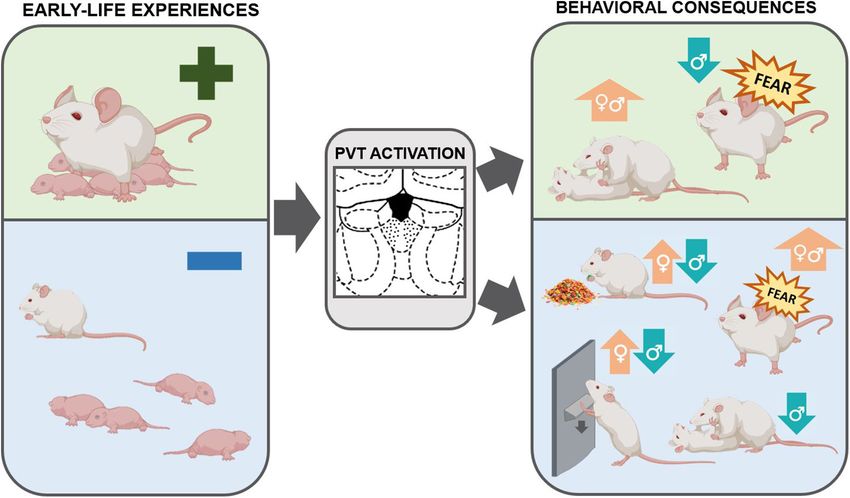
Kooiker et al.                                                                                                                 PVT in Enduring Early-Life Stress Effects

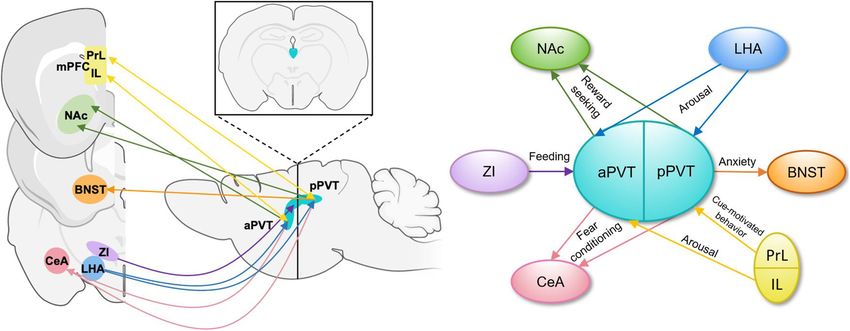
  FIGURE 1 | Schematic representations of PVT projections and their functions. (A) Input and output patterns of the anterior and posterior PVT, shown in the sagittal
  plane with an inset image demonstrating the position of the PVT in the coronal plane (Li and Kirouac, 2008; Dong et al., 2017). (B) A simplified schematic of
  functions carried out by specific efferent and afferent aPVT and pPVT projections. aPVT, anterior paraventricular nucleus of the thalamus; BNST, bed nucleus of the
  stria terminalis; CeA, central nucleus of the amygdala; IL, infralimbic cortex; LHA, lateral hypothalamus; mPFC, medial prefrontal cortex; NAc, nucleus accumbens;
  pPVT, posterior paraventricular nucleus of the thalamus; PrL, prelimbic cortex; ZI, zona incerta.

BRIEF OVERVIEW OF PVT ANATOMY                                                          is also through this projection that the PVT dampens the activity
AND FUNCTIONS                                                                          of the CeA during acute stress (Spencer et al., 2004). In accord
                                                                                       with the heterogeneity of the PVT, aPVT projections to the
The PVT has emerged as an important node in the limbic/reward                          dorsomedial NAc shell and amygdala regulate sucrose-seeking
system and within circuits that control appetitive/approach                            (Labouèbe et al., 2016; Do-Monte et al., 2017; Dong et al., 2017),
and aversive/avoidance behaviors (Do-Monte et al., 2015; Zhu                           whereas pPVT projections to the ventromedial NAc shell, bed
et al., 2018; Choi et al., 2019) and is increasingly recognized                        nucleus of the stria terminalis (BNST), and amygdala modulate
as a crucial component of the emotional processing network                             cue and context-dependent reward-seeking as well as anxiety-like
(Barson et al., 2020). The PVT is commonly subdivided                                  and fear conditioning behaviors (Do-Monte et al., 2015; Dong
by its actions into anterior and posterior parts, with the                             et al., 2017; Keyes et al., 2020).
anterior (a)PVT important in expression of approach                                        The PVT receives input from a wide variety of cortical
behaviors (Browning et al., 2014; Labouèbe et al., 2016; Do-                           and subcortical areas involved in reward and stress-related
Monte et al., 2017), and the posterior (p)PVT important                                behaviors (Figure 1). Glutamatergic prelimbic cortex projections
for avoidance behaviors and responses to chronic stress                                to the PVT modulate motivated behaviors through formation
(Bhatnagar and Dallman, 1998; Heydendael et al., 2011;                                 and maintenance of associations between cues and aversive
Pliota et al., 2018).                                                                  or appetitive stimuli (Do-Monte et al., 2015; Campus et al.,
   The PVT is heterogenous in its afferent and efferent                                2019; Otis et al., 2019). GABAergic zona incerta (ZI) projection
projections and functional output of these projections (Figure 1).                     neurons to the PVT increase food intake (Zhang and van den
PVT projection neurons terminating in the medial shell of the                          Pol, 2017), whereas orexin/hypocretin expressing projections
nucleus accumbens (NAc) mediate the retrieval and maintenance                          from the lateral hypothalamus (LHA) increase arousal to
of opiate associated memories (Zhu et al., 2016), and inhibition                       influence reward-seeking behaviors (Ren et al., 2018). In
of this projection during retrieval protects against opiate relapse                    addition to these areas related to reward-seeking and fear
(Keyes et al., 2020). Inhibition of the same projection also                           expression, the PVT has been reported to receive moderate CRH
decreases stress-induced social avoidance, identifying a complex                       input from the paraventricular nucleus of the hypothalamus
role for this projection in regulating responses to stress (Dong                       (PVN; Hsu and Price, 2009), consistent with the PVT’s
et al., 2020). The PVT projects strongly to the central amygdala                       established role in responses to stress, though this report
(CeA), and inhibition of this projection decreases sucrose-                            does not include information about the function of this
seeking when an expected sucrose reward is omitted (Do-Monte                           projection. It is through the integration of these distinct
et al., 2017). Inhibition of this projection also impairs fear-                        signals by the diverse populations of PVT neurons and
retrieval upon cue presentation in the context of foot shock-                          through its discrete projections to specific brain regions that
induced freezing behavior (Do-Monte et al., 2015) and decreases                        the PVT influences motivated behaviors (Millan et al., 2017;
drug-paired conditioned place preference (Keyes et al., 2020). It                      Campus et al., 2019).

Frontiers in Behavioral Neuroscience | www.frontiersin.org                         2                                             May 2021 | Volume 15 | Article 673162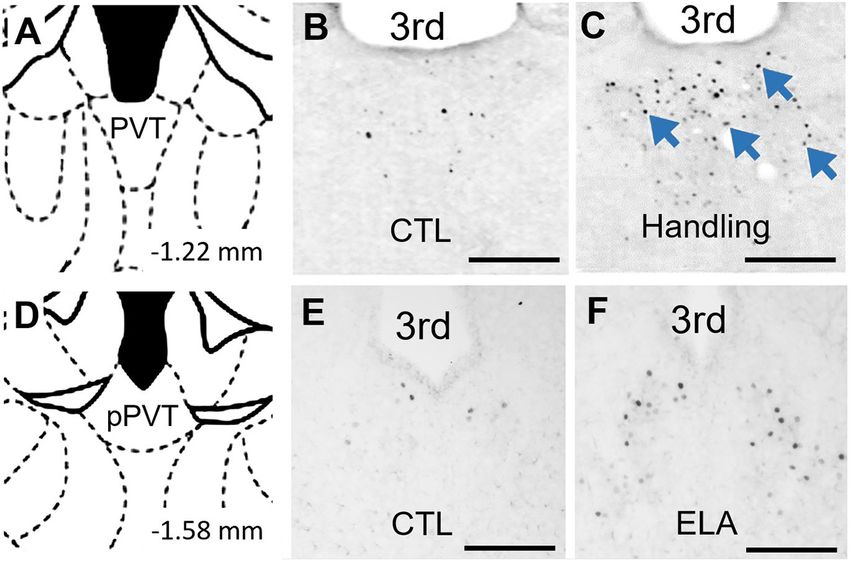
Kooiker et al.                                                                                             PVT in Enduring Early-Life Stress Effects

THE PVT CONTRIBUTES TO                                                   expressed in a gradient across the structure’s anteroposterior
RESPONSES TO REMOTE                                                      axis. Thus, in mice, the dopamine D1 receptor is more densely
                                                                         expressed in the aPVT while the dopamine D2 receptor (D2R)
EMOTIONALLY SALIENT EXPERIENCES                                          is more densely expressed in the pPVT (Gao et al., 2020).
                                                                         Approximately two thirds of PVT neurons express D2R, with
The PVT contributes to regulating responses to stress. Acute
                                                                         evidence suggesting that increased D2R signaling in the PVT
stressors, such as foot shock (Bubser and Deutch, 1999; Gao
                                                                         decreases cocaine sensitization (Clark et al., 2017). Other crucial
et al., 2020), immobilization (Otake et al., 2002), forced swim
                                                                         receptors in the PVT are acted upon by neuropeptide ligands,
(Zhu et al., 2011), tail suspension (Gao et al., 2020), and air
                                                                         and these receptors and their ligands are often also expressed
puff (Spencer et al., 2004), as well as chronic stressors, such as
                                                                         in gradients across the PVT. Neurotensin receptor type 1 and
the intermittent cold stress paradigm (Bhatnagar and Dallman,
                                                                         2 are found in the PVT, as well their ligand, a neuropeptide
1999), increase neuronal activity in the pPVT (measured by
                                                                         that is expressed throughout the PVT but most densely at its
c-Fos expression or calcium imaging). The activation of PVT
                                                                         anterior and posterior ends (Boudin et al., 1996; Sarret et al.,
neurons denotes encoding of such aversive events, because it
                                                                         2003; Curtis et al., 2021). Neurotensin acts in the pPVT to
influences responses to a subsequent stressor. For instance,
                                                                         decrease ethanol consumption and in the aPVT to increase
nacute stressor activates the pPVT in rats that have experienced
                                                                         exploratory behavior following chronic alcohol intake (Pandey
a prior chronic stressor, whereas the chronic stressor alone
                                                                         et al., 2019; Pandey and Barson, 2020). Though its cognate
does not. Strong support for the specific role of the PVT
                                                                         receptor is yet undescribed, the neuropeptide cocaine and
in encoding stress is provided by experiments demonstrating
                                                                         amphetamine related transcript (CART), is highly expressed
that lesioning of the pPVT prevents habituation to recurrent
                                                                         in the mouse aPVT (Curtis et al., 2021). CART attenuates
stress (Bhatnagar et al., 2002). The PVT may also contribute
                                                                         drug-primed reinstatement of drug-seeking when injected into
to sensitization of responses to novel, acute stressors in rats
                                                                         the PVT (James et al., 2010), suggesting a role in inhibition
that have been chronically stressed (Bhatnagar and Dallman,
                                                                         of reward-seeking. Receptors to orexin, a neuropeptide with
1998; Heydendael et al., 2011). Thus, the PVT influences
                                                                         important roles in reinforcing properties of drugs of abuse
responses to stress in the context of the occurrence of a
                                                                         (Martin-Fardon and Boutrel, 2012), are found throughout the
prior stress The role of the PVT in encoding memories of
                                                                         PVT, and blockade of these receptors in rats decreases anxiety-
remote stress has been further addressed by Do-Monte et al.
                                                                         like behavior in the elevated plus-maze (Heydendael et al., 2011)
(2015), who found that PVT inhibition 7 or 28 days (but
                                                                         but does not affect expression of conditioned fear (Dong et al.,
not 24 h) after conditioning to an auditory tone associated
                                                                         2015). In addition, microinjection of orexin into the pPVT
with a foot shock impaired freezing behavior. These findings
                                                                         increases avoidance and anxiety-like behaviors (Li et al., 2010a,b)
suggest that the PVT influences responses to stress in a time-
                                                                         whereas microinjection into the aPVT increases consumption
dependent manner, modulating responses only to old or remote
                                                                         of ethanol, but not sucrose (Barson et al., 2015), indicating
aversive experiences.
                                                                         that the role of orexin in the PVT may vary based on
   Importantly, the PVT also mediates responses to remote
                                                                         anatomical location.
appetitive experiences. It is activated by initial exposure to a
                                                                             Corticotropin-releasing hormone receptor type 1 (CRHR1)
variety of drugs of abuse (Millan et al., 2017) and again during
                                                                         and type 2 (CRHR2), which regulate behavioral, autonomic,
renewal of extinguished drug-seeking and presentation of cues
                                                                         endocrine, and immune responses to stress, are also expressed
associated with drug administration (Franklin and Druhan,
                                                                         in the PVT (Eghbal-Ahmadi et al., 1998; Chen et al., 2000).
2000; Hamlin et al., 2009). Lesioning of the PVT prevents
                                                                         Their ligand, the neuropeptide CRH, is present throughout the
normal context-induced reinstatement of drug-seeking after
                                                                         PVT, with slightly higher density in the pPVT (Itoga et al.,
7 days of extinction, but not acquisition or extinction of drug-
                                                                         2019). In addition to its established role as a hypothalamic
seeking (Hamlin et al., 2009). In a related experiment, Keyes
                                                                         neurohormone, CRH is a key stress-reactive neuropeptide that
et al. (2020) reported that inhibition of the PVT-NAc pathway
                                                                         is expressed in nodes involved in reward and stress, such as the
prevented drug-primed relapse at 4 or 14 days of extinction
                                                                         BNST, hippocampus, amygdala, VTA, and NAc (Joëls and Baram,
in a conditioned place preference assay but did not prevent
                                                                         2009; Grieder et al., 2014; Deussing and Chen, 2018). Notably, all
the acquisition of drug-associated memories. In each of these
                                                                         of these structures receive projections from the PVT (Dong et al.,
experiments, the PVT was required for a behavioral response
                                                                         2017). Recently, photoactivation of CRH + aPVT projection
to an appetitive experience (drug exposure) that had occurred
                                                                         neurons targeting the NAc was shown to increase avoidance in
remotely before a period of abstinence. These findings suggest
                                                                         the predator-odor task and to reduce reward-seeking, suggesting
that the PVT may encode and contribute to responses to remote,
                                                                         that CRH + PVT neurons regulate approach and avoidance
emotionally salient experiences regardless of their valence (i.e.,
                                                                         behaviors (Do-Monte et al., 2020).
positive or negative).
                                                                             Each of these neuromodulators or receptors contribute to
                                                                         particular functional or behavioral niches occupied by the PVT,
NEUROMODULATORS AND THE PVT                                              including those related to drug-seeking, approach and avoidance
                                                                         behaviors, and responses to stress. Consequently, they likely
A variety of neurotransmitters, neuromodulators, and their               contribute to the PVT’s roles in responses to remote emotionally
receptors are expressed in the PVT, and they are commonly                salient experiences as well.

Frontiers in Behavioral Neuroscience | www.frontiersin.org           3                                      May 2021 | Volume 15 | Article 673162
Kooiker et al. PVT in Enduring Early-Life Stress Effects
DIVERSE CONSEQUENCES OF and decreased consumption of natural and drug rewards
EARLY-LIFE EXPERIENCES ON THE (Molet et al., 2016; Bolton et al., 2018a,b). Manipulation of
the PVT recapitulates these deficits of reward-seeking. For
BRAIN AND BEHAVIOR example, photoactivation of aPVT projections to the NAc
decreases sucrose-seeking (Do-Monte et al., 2017), and tetanus
Both positive and negative early life experiences exert enduring
toxin-mediated blockade of PVT-NAc synaptic transmission
consequences on motivated behaviors as well as on responses
decreases cocaine self-administration (Neumann et al., 2016).
to stress later in life (Hyman, 2009; Chen and Baram, 2016;
ELA induces addiction-like behaviors in females, including
Novick et al., 2018; Raymond et al., 2018). More specifically,
increased opioid relapse-like behavior and increased demand
early life adversity (ELA) due to trauma, poverty, or tumultuous
for opioids in the Behavioral Economics task, i.e., persistent
environment is associated with poor cognitive and emotional
lever pressing for opioid administration despite increasing
health and increased risk for affective disorders, such as
“cost” (the number of presses for a given dose, Levis
depression, schizophrenia, and addiction (Heim et al., 2008;
et al., 2019). ELA also augments cue-induced relapse-like
Enoch, 2011; Grassi-Oliveira et al., 2016; Birnie et al., 2020).
behaviors to cocaine (Lynch et al., 2005). Manipulations of
Notably, ELA exerts sexually dimorphic long-term effects.
PVT function recapitulate such addiction-like behaviors. pPVT
Preclinical studies indicate increased drug-seeking behavior and
inhibition prevents cocaine cue-induced relapse-like behaviors
palatable food consumption in females (Machado et al., 2013;
(Matzeu et al., 2015), and inhibition of anterior and mid-
Levis et al., 2019) and a reduction in these behaviors in
PVT projections to the NAc prevents opioid-primed relapse
males (Bolton et al., 2018b; Ordoñes Sanchez et al., 2021). In
and blocks preference for a morphine-paired chamber in a
both sexes, little is known of the contribution of the PVT in
morphine-conditioned place preference assay (Keyes et al.,
influencing reward and stress-related behaviors following early-
2020). Similar to the influence of ELA on alcohol dependence,
life emotionally salient experiences, because studies of the PVT’s
which includes increased intermittent access consumption
role in these changes were performed in adults.
(Daoura et al., 2011), accelerated intake escalation, and
Many of the adult behaviors associated with early life
exacerbated affective dysfunction during withdrawal (Okhuarobo
experiences involve the functions of the PVT, indicating a
et al., 2020), stimulation of the aPVT with orexin or
possible role for this region in contributing to the observed
substance P increases intermittent-access consumption of alcohol
deficits. For example, anhedonia, the reduced ability to
(Barson et al., 2015).
experience pleasure derived from otherwise enjoyable activities,
In addition to disruptions in reward circuit function, ELA also
is a predictive sign of depression, schizophrenia, and substance
induces perturbations in fear memory and expression, including
use disorders (Gorwood, 2008). Anhedonia is observed in
enhanced freezing behavior in both auditory and contextual fear
rodent models of ELA, manifesting as decreased social play
conditioning paradigms (Champagne, 2008; Sampath et al., 2014;
Arp et al., 2016). Circuits mediating conditioned fear learning
are traditionally not thought to include the PVT. Yet, the PVT
may contribute to such behaviors. For example, inhibition of
pPVT projections to the CeA during fear conditioning or fear
memory retrieval impairs freezing behavior, suggesting that this
projection regulates the establishment and expression of fear
memory (Penzo et al., 2015). In summary, there is a significant
congruence of behavioral outcomes of ELA and the effects of
manipulation of PVT activity, and this observation is likely
not coincidental.
Indeed, as the PVT plays a crucial role in influencing behavior
in response to remote emotionally salient events, might it
contribute to the effects of experiences as remote as those early
in life? Our group finds that a week of recurrent bouts of
augmented maternal care during early postnatal development
increased c-Fos expression in the PVT relative to that of
FIGURE 2 | PVT neurons are activated by early life experiences. (A) Level of pups reared in control conditions (Fenoglio et al., 2006). This
mid PVT indicated by brain atlas (Paxinos and Watson, 2005). (B) In P9 rats activation of the PVT by salient early-life experiences is not
that were reared in control conditions through P2-9, little activation of PVT limited to positive experiences: Recent observations from our
was found on P9. (C) In contrast, abundant neuronal activation in PVT (blue
group indicate that c-Fos expression in the PVT is increased by
arrows) was observed 30 min after receiving augmented maternal care in P9
in rats handled from P2-9 (Handling). Adapted from Fenoglio et al. (2006) with ELA (Figure 2). Thus, PVT engagement by both positive and
permission. (D) Level of posterior PVT indicated by brain atlas. (E) Little negative emotionally salient experiences occurs even during early
activation of PVT was observed in P9 mice reared in control conditions postnatal life. This observation supports the plausibility of a role
through P9. (F) In contrast, abundant neuronal activation in PVT was for the PVT in encoding emotionally salient experiences early
observed on the morning of P9 in mice reared in ELA conditions beginning on
P2. 3rd, third ventricle. Scale bars, 500 um.
in life and in mediating consequences of these experiences later
in life (Figure 3).
Frontiers in Behavioral Neuroscience | www.frontiersin.org 4 May 2021 | Volume 15 | Article 673162Kooiker et al. PVT in Enduring Early-Life Stress Effects
FIGURE 3 | Schematic of the relationship between early life experiences, the PVT, and consequences on adult behaviors. The PVT is engaged by emotionally-salient
early-life experiences, both positive and negative. This activation may have enduring consequences in shaping behaviors later in life. Optimal early life experiences
result in increased social play in both males and females and decreased fear expression in males. By contrast, ELA, as compared to control rearing conditions or
optimal early life experiences, increases palatable food consumption and drug-seeking behaviors in females. ELA decreases social play, palatable food consumption,
and drug-seeking in males and enhances fear expression in both sexes. These behavioral consequences may be mediated by activity in the PVT (Caldji et al., 1998;
Arp et al., 2016; Molet et al., 2016; Bolton et al., 2018a,b, 2019; Levis et al., 2019; Ordoñes Sanchez et al., 2021).
EXPERIMENTAL PARADIGMS AND (Rice et al., 2008; Chen and Baram, 2016; Krugers et al., 2017;
NOVEL TECHNOLOGIES TO IDENTIFY Walker et al., 2017; Goodwill et al., 2019).
Experimental approaches have also been applied for
THE IMPACT OF EARLY LIFE
generating positive early-life experiences. Again, because
EXPERIENCES the key source of environmental signals to neonatal rodents
(and humans) is the parent, these paradigms have aimed to
The development of preclinical models of positive and negative
manipulate maternal caring behaviors. The neonatal handling
early life experience provides researchers the opportunity to
procedure involves removing the dam for 15 minutes daily,
understand complex neural mechanisms using approaches that
are not possible in humans. Numerous paradigms have been used leading to barrages of maternal care upon her return to the cage
to generate stress or adversity during sensitive developmental (Levine et al., 1967; Fenoglio et al., 2004, 2006; Korosi and Baram,
periods. These models generally result in perturbation of the 2009; Korosi et al., 2010; Singh-Taylor et al., 2018). Adult mice
functions of the reward circuit, leading to deficits in reward- and rats exposed to daily handling/augmented maternal care
seeking behaviors (Ventura et al., 2012; Molet et al., 2014; Bolton demonstrate attenuated stress responses and increased resilience
et al., 2018a,b; Levis et al., 2019) and, in some cases, anxiety-like to depressive-like behavior (Liu et al., 1997; Fenoglio et al., 2006;
or depressive-like behaviors (Daniels et al., 2004; Wang et al., Korosi et al., 2010).
2012; Goodwill et al., 2019). Importantly, the paradigms described above allow for creating
One such experimental model of ELA is the long-established a suite of early-life experiences, setting the stage for dissection of
recurrent maternal separation model, in which pups are the specific neural circuitries and cell populations involved in the
separated from the dam daily for prolonged periods (Hofer, resulting behavioral changes - including the role of the PVT.
1973; Rosenfeld et al., 1992; Huot et al., 2004; Leussis et al., Current approaches for uncovering the role of the PVT in
2012; van Bodegom et al., 2017). More recently, the limited encoding early-life experiences and mediating their behavioral
bedding and nesting model (LBN), in which pups are raised for consequences involve the use of the targeted recombination
a week in impoverished cages, has gained wide acceptance as a of active populations (TRAP) technique. This method allows
paradigm of simulated poverty (Molet et al., 2014). The LBN cage for permanent access to neuronal ensembles activated during
environment stresses the rodent dams and provokes fragmented, a specific experience, enabling assessment of the role of these
unpredictable maternal care behaviors, with a myriad of enduring neurons in reward and stress-related behaviors later in life
consequences on pups’ cognitive and emotional-like behaviors (Guenthner et al., 2013; DeNardo et al., 2019). Further, the
Frontiers in Behavioral Neuroscience | www.frontiersin.org 5 May 2021 | Volume 15 | Article 673162Kooiker et al. PVT in Enduring Early-Life Stress Effects
use of genetic manipulation tools such as designer receptors both positive and negative early-life experiences, it is possible
exclusively activated by designer drugs (DREADDs) and opsins that the valence of these experiences results in engagement
allows researchers to dissect brain region and cell-type specific of different populations of PVT neurons, each with unique
functional control of behavior. Even newer methods, such as projection targets and gene expression characteristics. If these
ChRmine, a deep brain optogenetic virus, may enable specific patterns of activation predict changes in adult behaviors, the
activation of defined neural circuits without intracranial surgery, behavioral changes mediated by the PVT under each condition
a major advantage for work involving the fragile skull and brain may be divergent. Gaining a deeper understanding of the roles
of neonatal mice (Marshel et al., 2019; Chen et al., 2021). These of the PVT in encoding and integrating early-life experiences
tools and resources can be harnessed to selectively label and may have substantial implications for identifying targets for
manipulate neuronal populations salient to early life, providing prevention of mental illness.
exciting avenues for elucidating the mechanisms by which the
PVT contributes to the long-term behavioral outcomes of early-
life experiences. AUTHOR CONTRIBUTIONS
CK wrote an initial draft. All authors conceived the manuscript,
refined the manuscript, and approved the submitted version.
CONCLUSION
There is a strong association between early-life experiences and FUNDING
subsequent resilience or vulnerability to emotional disorders.
Many of these disorders are characterized by disruptions in This work was supported by National Institutes of Health
behaviors related to reward-seeking, fear expression, and stress Grant Nos. MH73136 and MH096889 (to TZB), T32
responses (Insel et al., 2010; Millan et al., 2012; Whitton et al., GM008620 (to CK), and the Hewitt Foundation for Biomedical
2015). The PVT clearly contributes to the effects of remote Research (to MB).
emotionally salient experiences on such behaviors, yet the
consequences of activation of the PVT by different forms of early-
life experiences on adult behaviors remain unclear. Emerging ACKNOWLEDGMENTS
evidence suggests that the PVT is engaged by emotionally salient
early-life experiences and therefore is a prime candidate to We thank Sophie Levis, M.D./Ph.D. candidate, for their
mediate the altered reward and stress-related behaviors resulting excellent discussions. Elements from Figures 1,3 created using
from these diverse experiences. Whereas the PVT responds to BioRender.com
REFERENCES Birnie, M. T., Kooiker, C. L., Short, A. K., Bolton, J. L., Chen, Y., and Baram, T. Z.
(2020). Plasticity of the reward circuitry after early life adversity: mechanisms
Arp, J. M., Ter Horst, J. P., Loi, M., den Blaauwen, J., Bangert, E., Fernández, and significance. Biol. Psychiatry 87, 1–10. doi: 10.1016/j.biopsych.2019.12.018
G., et al. (2016). Blocking glucocorticoid receptors at adolescent age prevents Bolton, J. L., Molet, J., Regev, L., Chen, Y., Rismanchi, N., Haddad, E., et al.
enhanced freezing between repeated cue-exposures after conditioned fear in (2018a). Anhedonia following early-life adversity involves aberrant interaction
adult mice raised under chronic early life stress. Neurobiol. Learn. Mem. 133, of reward and anxiety circuits and is reversed by partial silencing of amygdala
30–38. doi: 10.1016/j.nlm.2016.05.009 corticotropin-releasing hormone gene. Biol. Psychiatry 83, 137–147. doi: 10.
Barkat, T. R., Polley, D. B., and Hensch, T. K. (2011). A critical period for auditory 1016/j.biopsych.2017.08.023
thalamocortical connectivity. Nat. Neurosci. 14, 1189–1194. doi: 10.1038/nn. Bolton, J. L., Ruiz, C. M., Rismanchi, N., Sanchez, G. A., Castillo, E., Huang,
2882 J., et al. (2018b). Early-life adversity facilitates acquisition of cocaine self-
Barson, J. R., Ho, H. T., and Leibowitz, S. F. (2015). Anterior thalamic administration and induces persistent anhedonia. Neurobiol. Stress 8, 57–67.
paraventricular nucleus is involved in intermittent access ethanol drinking: doi: 10.1016/j.ynstr.2018.01.002
Role of orexin receptor 2. Addict. Biol. 20, 469–481. doi: 10.1111/adb. Bolton, J. L., Short, A. K., Simeone, K. A., Daglian, J., and Baram, T. Z. (2019).
12139 Programming of stress-sensitive neurons and circuits by early-life experiences.
Barson, J. R., Mack, N. R., and Gao, W. J. (2020). The paraventricular nucleus of Front. Behav. Neurosci. 13:30. doi: 10.3389/fnbeh.2019.00030
the thalamus is an important node in the emotional processing network. Front. Boudin, H., Pelaprat, D., Rostene, W., and Beaudet, A. (1996). Cellular distribution
Behav. Neurosci. 14:598469. doi: 10.3389/fnbeh.2020.598469 of neurotensin receptors in rat brain: immunohistochemical study using an
Bhatnagar, S., and Dallman, M. (1998). Neuroanatomical basis for facilitation antipeptide antibody against the cloned high affinity receptor. J. Comp. Neurol.
of hypothalamic-pituitary- adrenal responses to a novel stressor after 373, 76–89. doi: 10.1002/(SICI)1096-9861(19960909)373:1Kooiker et al. PVT in Enduring Early-Life Stress Effects systems mediating the expression of fearfulness in the rat. Proc. Natl. Acad. Sci. of the stria terminalis, and central nucleus of the amygdala. Brain Struct. Funct. U.S.A. 95, 5335–5340. doi: 10.1073/pnas.95.9.5335 229, 3927–3943. doi: 10.1007/s00429-017-1445-8 Callaghan, B. L., and Richardson, R. (2011). Maternal separation results in early Dong, X., Li, S., and Kirouac, G. J. (2020). A projection from the paraventricular emergence of adult-like fear and extinction learning in infant rats. Behav. nucleus of the thalamus to the shell of the nucleus accumbens contributes Neurosci. 125, 20–28. doi: 10.1037/a0022008 to footshock stress-induced social avoidance. Neurobiol. Stress 13:100266. doi: Campus, P., Covelo, I. R., Kim, Y., Parsegian, A., Kuhn, B. N., Lopez, S. A., 10.1016/j.ynstr.2020.100266 et al. (2019). The paraventricular thalamus is a critical mediator of top-down Dong, X., Li, Y., and Kirouac, G. J. (2015). Blocking of orexin receptors in the control of cue-motivated behavior in rats. eLife 8:e49041. doi: 10.7554/elife. paraventricular nucleus of the thalamus has no effect on the expression of 49041 conditioned fear in rats. Front. Behav. Neurosci. 9:161. doi: 10.3389/fnbeh.2015. Champagne, F. A. (2008). Epigenetic mechanisms and the transgenerational effects 00161 of maternal care. Front. Neuroendocrinol. 29:386–397. doi: 10.1016/j.yfrne.2008. Eghbal-Ahmadi, M., Hatalski, C. G., Lovenberg, T. W., Avishai-Eliner, S., 03.003 Chalmers, D. T., and Baram, T. Z. (1998). The developmental profile of the Chen, R., Gore, F., Nguyen, Q. A., Ramakrishnan, C., Patel, S., Kim, S. H., et al. corticotropin releasing factor receptor (CRF2) in rat brain predicts distinct (2021). Deep brain optogenetics without intracranial surgery. Nat. Biotechnol. age-specific functions. Dev. Brain Res. 107, 81–90. doi: 10.1016/S0165-3806(98) 39, 161–164. doi: 10.1038/s41587-020-0679-9 00002-9 Chen, Y., and Baram, T. Z. (2016). Toward understanding how early- Enoch, M.-A. (2011). The role of early life stress as a predictor for alcohol and life stress reprograms cognitive and emotional brain networks. drug dependence. Psychopharmacology 214, 17–31. doi: 10.1007/s00213-010- Neuropsychopharmacology 41, 197–206. doi: 10.1038/npp.2015.181 1916-6 Chen, Y., Brunson, K. L., Müller, M. B., Cariaga, W., and Baram, T. Z. Fagiolini, M., and Hensch, T. K. (2000). Inhibitory threshold for critical-period (2000). Immunocytochemical distribution of corticotropin-releasing hormone activation in primary visual cortex. Nature 404, 183–186. doi: 10.1038/ receptor type-1 (CRF1)-like immunoreactivity in the mouse brain: light 35004582 microscopy analysis using an antibody directed against the C-terminus. Fenoglio, K. A., Brunson, K. L., Avishai-Eliner, S., Chen, Y., and Baram, T. Z. J. Comp. Neurol 420, 305–323. doi: 10.1002/(SICI)1096-9861(20000508)420: (2004). Region-specific onset of handling-induced changes in corticotropin- 3
Kooiker et al.                                                                                                                             PVT in Enduring Early-Life Stress Effects

Hofer, M. A. (1973). The effects of brief maternal separations on behavior and heart                nucleus of the thalamus. Pharmacol. Biochem. Behav. 95, 121–128. doi: 10.1016/
    rate of two week old rat pups. Physiol. Behav. 10, 423–427. doi: 10.1016/0031-                  j.pbb.2009.12.016
    9384(73)90200-X                                                                             Li, Y., Li, S., Wei, C., Wang, H., Sui, N., and Kirouac, G. J. (2010b). Orexins in the
Hsu, D. T., and Price, J. L. (2009). The paraventricular thalamic nucleus: subcortical              paraventricular nucleus of the thalamus mediate anxiety-like responses in rats.
    connections and innervation by serotonin, orexin, and corticotropin- releasing                  Psychopharmacology 212, 251–265. doi: 10.1007/s00213-010-1948-y
    hormone in macaque monkeys. J. Comp. Neurol. 512, 825–848. doi: 10.1002/                    Liu, D., Diorio, J., Tannenbaum, B., Caldji, C., Francis, D., Freedman, A.,
    cne.21934                                                                                       et al. (1997). Maternal care, hippocampal glucocorticoid receptors, and
Huot, R. L., Gonzalez, M. E., Ladd, C. O., Thrivikraman, K. V., and Plotsky, P. M.                  hypothalamic-pituitary-adrenal responses to stress. Science 277, 1659–1662.
    (2004). Foster litters prevent hypothalamic-pituitary-adrenal axis sensitization                doi: 10.1126/science.277.5332.1659
    mediated by neonatal maternal separation. Psychoneuroendocrinology 29, 279–                 Lynch, W. J., Mangini, L. D., and Taylor, J. R. (2005). Neonatal isolation
    289. doi: 10.1016/S0306-4530(03)00028-3                                                         stress potentiates cocaine seeking behavior in adult male and female
Hyman, S. E. (2009). How adversity gets under the skin. Nat. Neurosci. 12, 241–243.                 rats. Neuropsychopharmacology 30, 322–329. doi: 10.1038/sj.npp.130
    doi: 10.1038/nn0309-241                                                                         0594
Insel, T., Cuthbert, B., Garvey, M., Heinssen, R., Pine, D. S., Quinn, K., et al. (2010).       Machado, T. D., Dalle Molle, R., Laureano, D. P., Portella, A. K., Werlang, I. C. R.,
    Research domain criteria (RDoC): toward a new classification framework for                      Benetti, C. D. S., et al. (2013). Early life stress is associated with anxiety,
    research on mental disorders. Am. J. Psychiatry 167, 748–751. doi: 10.1176/appi.                increased stress responsivity and preference for “comfort foods” in adult female
    ajp.2010.09091379                                                                               rats. Stress 16, 549–556. doi: 10.3109/10253890.2013.816841
Itoga, C. A., Chen, Y., Fateri, C., Echeverry, P. A., Lai, J. M., Delgado, J., et al.           Marshel, J. H., Kim, Y. S., Machado, T. A., Quirin, S., Benson, B., Kadmon, J., et al.
    (2019). New viral-genetic mapping uncovers an enrichment of corticotropin-                      (2019). Cortical layer-specific critical dynamics triggering perception. Science
    releasing hormone-expressing neuronal inputs to the nucleus accumbens from                      365, 1–30. doi: 10.1126/science.aaw5202
    stress-related brain regions. J. Comp. Neurol. 527, 2474–2487. doi: 10.1002/cne.            Martin-Fardon, R., and Boutrel, B. (2012). Orexin/hypocretin (Orx/Hcrt)
    24676                                                                                           transmission and drug-seeking behavior: Is the paraventricular nucleus of the
James, M. H., Charnley, J. L., Jones, E., Levi, E. M., Yeoh, J. W., Flynn, J. R., et al.            thalamus (PVT) part of the drug seeking circuitry? Front. Behav. Neurosci. 6:75.
    (2010). Cocaine- and Amphetamine-Regulated Transcript (CART) signaling                          doi: 10.3389/fnbeh.2012.00075
    within the paraventricular thalamus modulates cocaine-seeking behaviour.                    Matzeu, A., Weiss, F., and Martin-Fardon, R. (2015). Transient inactivation
    PLoS One 5:e12980. doi: 10.1371/journal.pone.0012980                                            of the posterior paraventricular nucleus of the thalamus blocks cocaine-
Joëls, M., and Baram, T. Z. (2009). The neuro-symphony of stress. Nat. Rev.                         seeking behavior. Neurosci. Lett. I, 34–39. doi: 10.1016/j.neulet.2015.
    Neurosci. 10, 459–466. doi: 10.1038/nrn2632                                                     10.016
Keyes, P. C., Adams, E. L., Chen, Z., Bi, L., Nachtrab, G., Wang, V. J., et al. (2020).         McIlwrick, S., Rechenberg, A., Matthes, M., Burgstaller, J., Schwarzbauer, T., Chen,
    Orchestrating opiate-associated memories in thalamic circuits. Neuron 107,                      A., et al. (2016). Genetic predisposition for high stress reactivity amplifies
    1113–1123. doi: 10.1016/j.neuron.2020.06.028                                                    effects of early-life adversity. Psychoneuroendocrinology 70, 85–97. doi: 10.1016/
Klengel, T., Mehta, D., Anacker, C., Rex-Haffner, M., Pruessner, J. C., Pariante,                   j.psyneuen.2016.04.023
    C. M., et al. (2013). Allele-specific FKBP5 DNA demethylation mediates gene-                Millan, E. Z., Ong, Z. Y., and McNally, G. P. (2017). Paraventricular thalamus:
    childhood trauma interactions. Nat. Neurosci. 16, 33–41. doi: 10.1038/nn.3275                   Gateway to feeding, appetitive motivation, and drug addiction. Prog. Brain Res.
Korosi, A., and Baram, T. Z. (2009). The pathways from mother’s love to baby’s                      235, 113–137. doi: 10.1016/bs.pbr.2017.07.006
    future. Behav, Neurosci. 3, 1–8. doi: 10.3389/neuro.08.027                                  Millan, M. J., Agid, Y., Brune, M., Bullmore, E. T., Carter, C. S., Clayton, N. S.,
Korosi, A., Shanabrough, M., McClelland, S., Liu, Z.-W., Borok, E., Gao, X.-                        et al. (2012). Cognitive dysfunction in psychiatric disorders: Characteristics,
    B., et al. (2010). Early-life experience reduces excitation to stress-responsive                causes and the quest for improved therapy. Nat. Rev. Drug Discov. 11, 141–168.
    hypothalamic neurons and reprograms the expression of corticotropin-                            doi: 10.1038/nrd3628
    releasing hormone. J. Neurosci. 30, 703–713. doi: 10.1523/jneurosci.4214-09.                Molet, J., Heins, K., Zhuo, X., Mei, Y. T., Regev, L., Baram, T. Z., et al. (2016).
    2010                                                                                            Fragmentation and high entropy of neonatal experience predict adolescent
Krugers, H. J., Arp, J. M., Xiong, H., Kanatsou, S., Lesuis, S. L., Korosi, A.,                     emotional outcome. Transl. Psychiatry 6:e702. doi: 10.1038/tp.2015.200
    et al. (2017). Early life adversity: lasting consequences for emotional learning.           Molet, J., Maras, P. M., Avishai-Eliner, S., and Baram, T. Z. (2014). Naturalistic
    Neurobiol. Stress 6, 14–21. doi: 10.1016/j.ynstr.2016.11.005                                    rodent models of chronic early-life stress. Dev. Psychobiol. 56, 1675–1688. doi:
Kundakovic, M., Lim, S., Gudsnuk, K., and Champagne, F. A. (2013). Sex-specific                     10.1002/dev.21230
    and strain-dependent effects of early life adversity on behavioral and epigenetic           Neumann, P. A., Wang, Y., Yan, Y., Wang, Y., Ishikawa, M., Cui, R., et al.
    outcomes. Front. Psychiatry 4:78. doi: 10.3389/fpsyt.2013.00078                                 (2016). Cocaine-induced synaptic alterations in thalamus to nucleus accumbens
Labouèbe, G., Boutrel, B., Tarussio, D., and Thorens, B. (2016). Glucose-responsive                 projection. Neuropsychopharmacology 41, 2399–2410. doi: 10.1038/npp.
    neurons of the paraventricular thalamus control sucrose-seeking behavior. Nat.                  2016.52
    Neurosci. 19, 999–1002. doi: 10.1038/nn.4331                                                Novick, A. M., Levandowski, M. L., Laumann, L. E., Philip, N. S., Price, L. H.,
Leussis, M. P., Freund, N., Brenhouse, H. C., Thompson, B. S., and Andersen,                        and Tyrka, A. R. (2018). The effects of early life stress on reward processing.
    S. L. (2012). Depressive-like behavior in adolescents after maternal separation:                J. Psychiatr. Res. 101, 80–103. doi: 10.1016/j.jpsychires.2018.02.002
    sex differences, controllability, and GABA. Dev. Neurosci. 34, 210–217. doi:                Okhuarobo, A., Bolton, J. L., Igbe, I., Zorrilla, E. P., Baram, T. Z., and Contet, C.
    10.1159/000339162                                                                               (2020). A novel mouse model for vulnerability to alcohol dependence induced
Levine, S., Haltmeyer, G. C., Karas, G. G., and Denenberg, V. H. (1967).                            by early-life adversity. Neurobiol. Stress 13:100269. doi: 10.1016/j.ynstr.2020.
    Physiological and behavioral effects of infantile stimulation. Physiol. Behav. 2,               100269
    55–59. doi: 10.1016/0031-9384(67)90011-X                                                    Ordoñes Sanchez, E., Bavley, C. C., Deutschmann, A. U., Carpenter, R.,
Levis, S. C., Bentzley, B. S., Molet, J., Bolton, J. L., Perrone, C. R., Baram, T. Z.,              Peterson, D. R., Karbalaei, R., et al. (2021). Early life adversity promotes
    et al. (2019). On the early life origins of vulnerability to opioid addiction. Mol.             resilience to opioid addiction-related phenotypes in male rats and sex-specific
    Psychiatry. doi: 10.1038/s41380-019-0628-5 [Epub ahead of print].                               transcriptional changes. Proc. Natl. Acad. Sci. U.S.A. 118:e2020173118. doi:
Levis, S. C., Mahler, S. V., and Baram, T. Z. (2021). The developmental origins                     10.1073/pnas.2020173118
    of opioid use disorder and its comorbidities. Front. Hum. Neurosci. 15, 1–12.               Otake, K., Kin, K., and Nakamura, Y. (2002). Fos expression in afferents to the rat
    doi: 10.3389/fnhum.2021.601905                                                                  midline thalamus following immobilization stress. Neurosci. Res. 43, 269–282.
Li, S., and Kirouac, G. J. (2008). Projections from the paraventricular nucleus of                  doi: 10.1016/s0168-0102(02)00042-1
    the thalamus to the forebrain, with special emphasis on the extended amygdala.              Otis, J. M., Zhu, M., Namboodiri, V. M. K., Cook, C. A., Kosyk, O., Matan, A. M.,
    J. Comp. Neurol. 259, 263–287. doi: 10.1002/cne                                                 et al. (2019). Paraventricular thalamus projection neurons integrate cortical
Li, Y., Li, S., Wei, C., Wang, H., Sui, N., and Kirouac, G. J. (2010a). Changes in                  and hypothalamic signals for cue-reward processing. Neuron 103, 423–431.e4.
    emotional behavior produced by orexin microinjections in the paraventricular                    doi: 10.1016/j.neuron.2019.05.018

Frontiers in Behavioral Neuroscience | www.frontiersin.org                                  8                                                May 2021 | Volume 15 | Article 673162
Kooiker et al. PVT in Enduring Early-Life Stress Effects Pandey, S., Badve, P. S., Curtis, G. R., Leibowitz, S. F., and Barson, J. R. (2019). psychological stress. Brain Res. 997, 234–237. doi: 10.1016/j.brainres.2003. Neurotensin in the posterior thalamic paraventricular nucleus: inhibitor of 10.054 pharmacologically relevant ethanol drinking. Addict. Biol. 24, 3–16. doi: 10. van Bodegom, M., Homberg, J. R., and Henckens, M. J. A. G. (2017). Modulation 1111/adb.12546 of the hypothalamic-pituitary-adrenal axis by early life stress exposure. Front. Pandey, S., and Barson, J. R. (2020). Heightened exploratory behavior following Cell. Neurosci. 11:87. doi: 10.3389/fncel.2017.00087 chronic excessive ethanol drinking: mediation by neurotensin receptor Type 2 Ventura, R., Coccurello, R., Andolina, D., Latagliata, E. C., Zanettini, C., Lampis, in the Anterior Paraventricular Thalamus. Alcohol: Clin. Exp. Res. 44, 1747– V., et al. (2012). Postnatal aversive experience impairs sensitivity to natural 1759. doi: 10.1111/acer.14406 rewards and increases susceptibility to negative events in adult life. Cereb. Paxinos, G., and Watson, C. (2005). The Rat Brain in Stereotaxic Coordinates, 6th Cortex 23, 1606–1617. doi: 10.1093/cercor/bhs145 Edn. Cambridge, CA: Elsevier Academic Press. Walker, C. D., Bath, K. G., Joels, M., Korosi, A., Larauche, M., Lucassen, P. J., Penzo, M. A., Robert, V., Tucciarone, J., De Bundel, D., Wang, M., Van Aelst, et al. (2017). Chronic early life stress induced by limited bedding and nesting L., et al. (2015). The paraventricular thalamus controls a central amygdala fear (LBN) material in rodents: critical considerations of methodology, outcomes circuit. Nature 519, 455–459. doi: 10.1038/nature13978 and translational potential. Stress 20, 421–448. doi: 10.1080/10253890.2017. Pliota, P., Böhm, V., Grössl, F., Griessner, J., Valenti, O., Kraitsy, K., et al. 1343296 (2018). Stress peptides sensitize fear circuitry to promote passive coping. Mol. Wang, X. D., Labermaier, C., Holsboer, F., Wurst, W., Deussing, J. M., Psychiatry 3, 1–14. doi: 10.1038/s41380-018-0089-2 Müller, M. B., et al. (2012). Early-life stress-induced anxiety-related behavior Raymond, C., Marin, M.-F., Majeur, D., and Lupien, S. (2018). Early child adversity in adult mice partially requires forebrain corticotropin-releasing hormone and psychopathology in adulthood: HPA axis and cognitive dysregulations receptor 1. Eur. J. Neurosci. 36, 2360–2367. doi: 10.1111/j.1460-9568.2012. as potential mechanisms. Prog. Neuropsychopharmacol. Biol. Psychiatry 85, 08148.x 152–160. doi: 10.1016/j.pnpbp.2017.07.015 Whitton, A. E., Treadway, M. T., and Pizzagalli, D. A. (2015). Reward processing Ren, S., Wang, Y., Yue, F., Cheng, X., Dang, R., Qiao, Q., et al. (2018). The dysfunction in major depression, bipolar disorder and schizophrenia. Curr. paraventricular thalamus is a critical thalamic area for wakefulness. Science 362, Opin. Psychiatry 28, 7–12. doi: 10.1097/YCO.0000000000000122 429–434. doi: 10.1126/science.aat2512 Zhang, X., and van den Pol, A. N. (2017). Rapid binge-like eating and body weight Rice, C. J., Sandman, C. A., Lenjavi, M. R., and Baram, T. Z. (2008). A novel mouse gain driven by zona incerta GABA neuron activation. Science 356, 853–859. model for acute and long-lasting consequences of early life stress. Endocrinology doi: 10.1126/science.aam7100 149, 4892–4900. doi: 10.1210/en.2008-0633 Zhu, L., Wu, L., Yu, B., and Liu, X. (2011). The participation of a neurocircuit Rosenfeld, P., Wetmore, J. B., and Levine, S. (1992). Effects of repeated maternal from the paraventricular thalamus to amygdala in the depressive like behavior. separations on the adrenocortical response to stress of preweanling rats. Physiol. Neurosci. Lett. 488, 81–86. doi: 10.1016/j.neulet.2010.11.007 Behav. 52, 787–791. doi: 10.1016/0031-9384(92)90415-X Zhu, Y., Nachtrab, G., Keyes, P. C., Allen, W. E., Luo, L., and Chen, X. (2018). Sampath, D., Sabitha, K. R., Hegde, P., Jayakrishnan, H. R., Kutty, B. M., Chattarji, Dynamic salience processing in paraventricular thalamus gates associative S., et al. (2014). A study on fear memory retrieval and REM sleep in maternal learning. Science 362, 423–429. doi: 10.1126/science.aat0481 separation and isolation stressed rats. Behav. Brain Res. 273, 144–154. doi: Zhu, Y., Wienecke, C. F. R., Nachtrab, G., and Chen, X. (2016). A thalamic input 10.1016/j.bbr.2014.07.034 to the nucleus accumbens mediates opiate dependence. Nature 530, 219–222. Sarret, P., Perron, A., Stroh, T., and Beaudet, A. (2003). Immunohistochemical doi: 10.1038/nature16954 distribution of NTS2 neurotensin receptors in the rat central nervous system. J. Comp. Neurol. 461, 520–538. doi: 10.1002/cne.10718 Conflict of Interest: The authors declare that the research was conducted in the Short, A., and Baram, T. Z. (2019). Adverse early-life experiences and neurological absence of any commercial or financial relationships that could be construed as a disease: age-old questions and novel answers. Nat. Rev. Neurol. 15, 657–669. potential conflict of interest. doi: 10.1038/s41582-019-0246-5 Singh-Taylor, A., Molet, J., Jiang, S., Korosi, A., Bolton, J. L., Noam, Y., et al. (2018). Copyright © 2021 Kooiker, Birnie and Baram. This is an open-access article NRSF-dependent epigenetic mechanisms contribute to programming of stress- distributed under the terms of the Creative Commons Attribution License (CC BY). sensitive neurons by neonatal experience, promoting resilience. Mol. Psychiatry The use, distribution or reproduction in other forums is permitted, provided the 23, 648–657. doi: 10.1038/mp.2016.240 original author(s) and the copyright owner(s) are credited and that the original Spencer, S. J., Fox, J. C., and Day, T. A. (2004). Thalamic paraventricular publication in this journal is cited, in accordance with accepted academic practice. No nucleus lesions facilitate central amygdala neuronal responses to acute use, distribution or reproduction is permitted which does not comply with these terms. Frontiers in Behavioral Neuroscience | www.frontiersin.org 9 May 2021 | Volume 15 | Article 673162
You can also read


