THINKING LIKE A WHOLE BUILDING: A WHOLE FOODS MARKET NEW CONSTRUCTION CASE STUDY
←
→
Page content transcription
If your browser does not render page correctly, please read the page content below
THINKING LIKE A
WHOLE BUILDING:
A WHOLE FOODS MARKET NEW
CONSTRUCTION CASE STUDY

Michael Deru, Eric Bonnema, Ian Doebber, Adam Hirsch,
Maureen McIntyre, Jennifer Scheib

NREL is a national laboratory of the U.S. Department of Energy, Office of Energy
Efficiency and Renewable Energy, operated by the Alliance for Sustainable Energy, LLC.
Acknowledgments
The authors would like to thank the U.S. Department of Energy Building Technologies Program.
This document was prepared by the Commercial Buildings Group of the National Renewable
Energy Laboratory (NREL) Electricity, Resources, and Buildings System Integration Center as
Deliverable FY11-CBP-01 under Task BEC7.1101 in the Commercial Buildings Statement of Work.

We extend our thanks to their NREL colleagues Larry Brackney and Daniel Studer for conducting
formal internal reviews of this document, to Stefanie Woodward for editing assistance, and to
Marjorie Schott and Stacy Buchanan for graphic design.

All photographs contained herein were taken with the permission of Whole Foods Market.
“Whole Foods Market” is a registered trademark of Whole Foods Market IP, L.P.

Cover photos: Credit: Jennifer Scheib, NREL/PIX 18606, NREL/PIX 18607, & NREL/PIX 18608

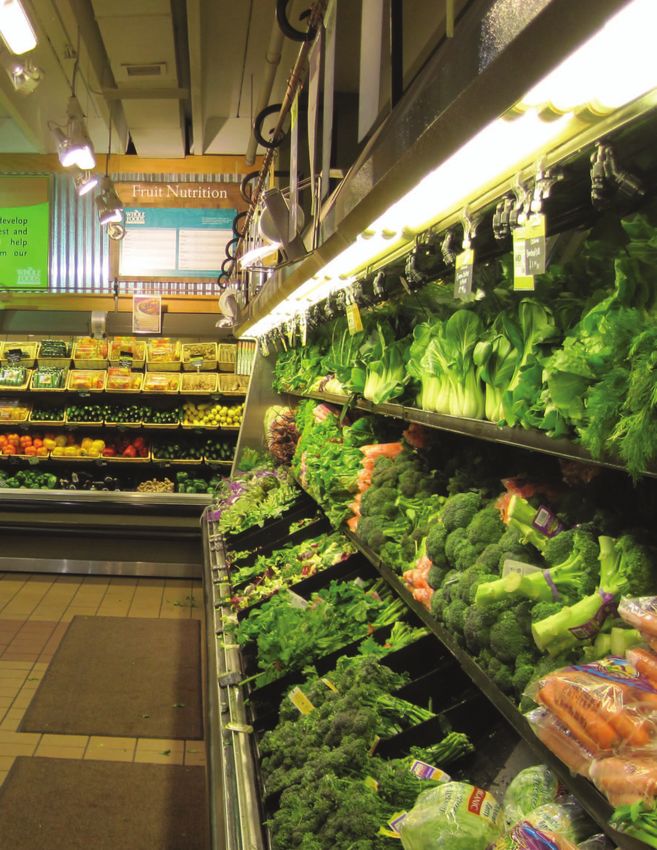
Installing doors on medium-temperature cases saves energy in grocery stores.

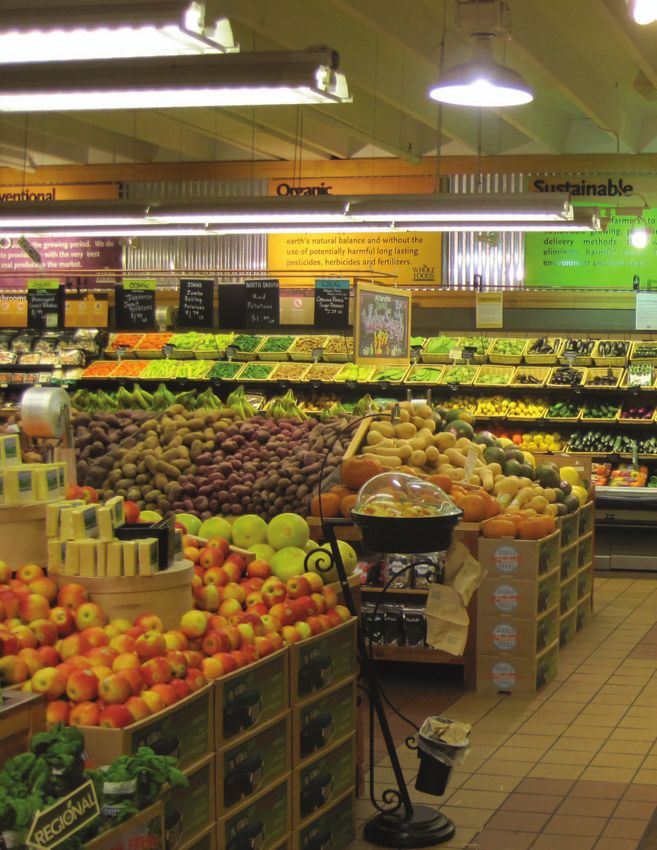
Whole Foods Market works to reduce lighting power density while maintaining
adequate lighting on product displays.

Whole Foods Market uses a combination of ambient and accent lighting
as well as daylighting to reduce energy use in its stores.
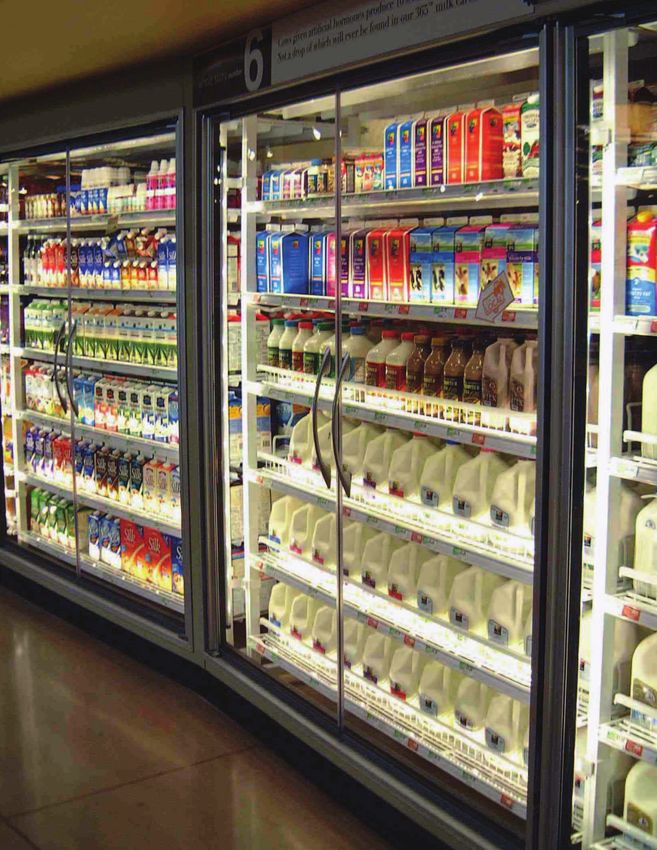
TABLE OF CONTENTS
                    Whole Foods Market New Construction Summary  .  .  .  .  .  .  .  .  .  .  .                               3

                    Whole Foods Market New Construction Case Study  .  .  .  .  .  .  .  .  . 6

                    Commercial Building Partnerships .  .  .  .  .  .  .  .  .  .  .  .  .  .  .  .  .  .  .  .                8

                    Project Description .  .  .  .  .  .  .  .  .  .  .  .  .  .  .  .  .  .  .  .  .  .  .  .  .  .  . 9

                    Making the Business Case .  .  .  .  .  .  .  .  .  .  .  .  .  .  .  .  .  .  .  .  .  .  . 9

                    Energy Performance at the New Raleigh Store  .  .  .  .  .  .  .  .  . 10

                    Project at a Glance .  .  .  .  .  .  .  .  .  .  .  .  .  .  .  .  .  .  .  .  .  .  .  .  .  .  .  .   11

                    Energy Modeling  .  .  .  .  .  .  .  .  .  .  .  .  .  .  .  .  .  .  .  .  .  .  .  .  .  .  . 12

                    Begin With the Basics .  .  .  .  .  .  .  .  .  .  .  .  .  .  .  .  .  .  .  .  .  .  .  .  . 13

                    Energy Efficiency Measures (NREL-Recommended)  .  .  .  .  .  .  .  .  .                                 16

                    Glazing Specifications .  .  .  .  .  .  .  .  .  .  .  .  .  .  .  .  .  .  .  .  .  .  .  .  .  .      20

                    Challenges  .  .  .  .  .  .  .  .  .  .  .  .  .  .  .  .  .  .  .  .  .  .  .  .  .  .  .  .  .  .  . 21

                    A Whole Building for Whole Foods  .  .  .  .  .  .  .  .  .  .  .  .  .  .  .  . 22

                    Putting It All Together .  .  .  .  .  .  .  .  .  .  .  .  .  .  .  .  .  .  .  .  .  .  .  .  .  .     24

                    Energy Use Intensities by End Use  .  .  .  .  .  .  .  .  .  .  .  .  .  .  .  .  .  .  .               26

                    Lessons Learned .  .  .  .  .  .  .  .  .  .  .  .  .  .  .  .  .  .  .  .  .  .  .  .  .  .  .  .  .    28

                    References  .  .  .  .  .  .  .  .  .  .  .  .  .  .  .  .  .  .  .  .  .  .  .  .  .  .  .  .  .  .  . 30

                    Acronyms .  .  .  .  .  .  .  .  .  .  .  .  .  .  .  .  .  .  .  .  .  .  .  .  .  .  .  .  .  .  .  . 31

                    Glossary .  .  .  .  .  .  .  .  .  .  .  .  .  .  .  .  .  .  .  .  .  .  .  .  .  .  .  .  .  .  .  .  . 31

Commercial Building Partnerships | Whole Foods Market New Construction Case Study                                                   1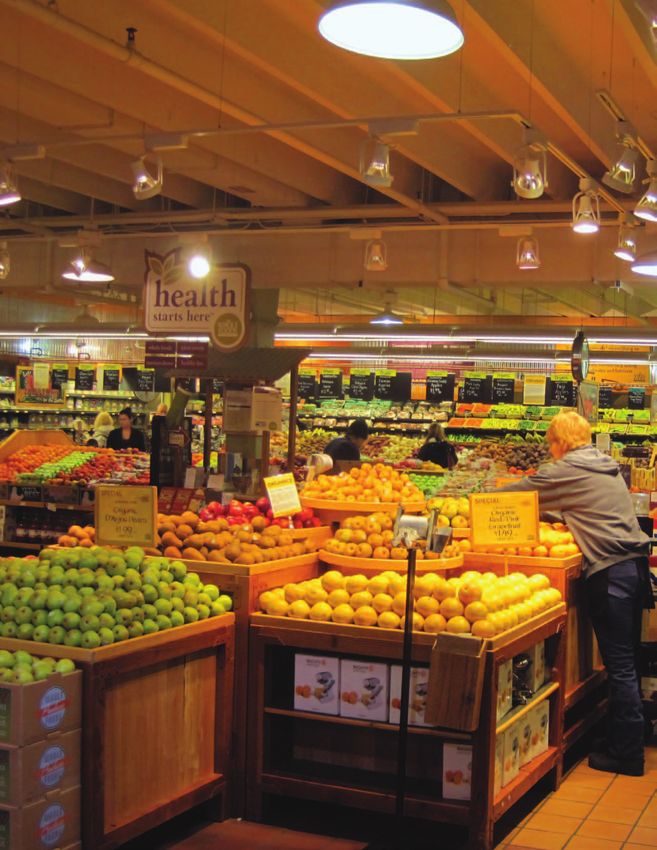
“ Whole Buildings are a focus at Whole
     Foods Market, and the company has
     had internal green building standards
     and practices in place for years” says
     Kathy Loftus, global leader, sustainable
     engineering, maintenance, and energy
     management for Whole Foods Market.
     “But our participation in the U.S.
     Department of Energy’s Commercial
     Building Partnerships provides an
     opportunity for us to dig into the details
     of how our stores use energy in ways that
     we haven’t explored before.”

2                     Commercial Building Partnerships | Whole Foods Market New Construction Case Study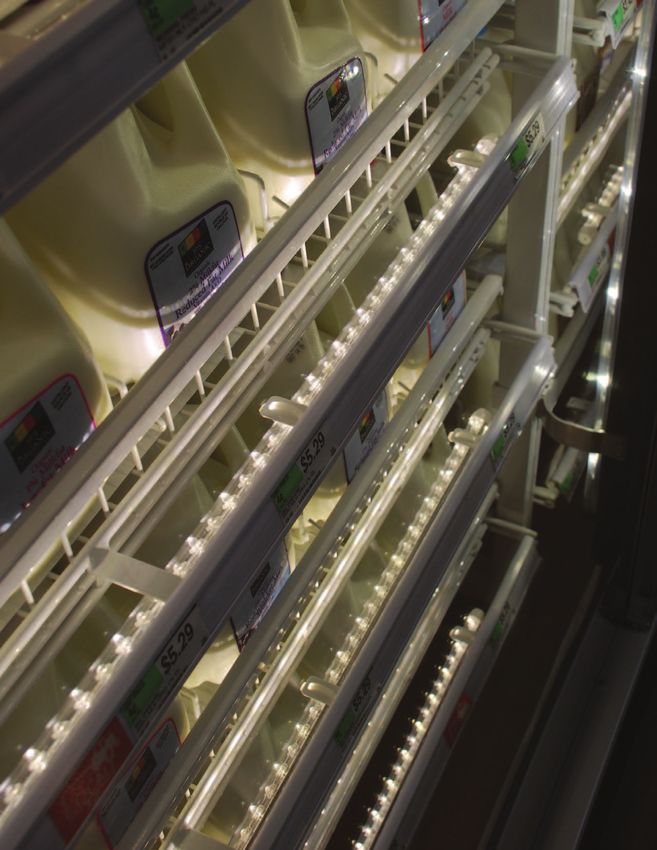
U.S. Department of Energy’s Commercial Building Partnerships                                      The U.S. Department of Energy’s (DOE) Commercial
                                                                                                     Building Partnerships (CBP) identify, deploy, and

   THINKING LIKE A                                                                                   verify the performance of cost-effective energy
                                                                                                     efficiency measures (EEMs) with the goal of
                                                                                                     dramatically cutting energy use in commercial
   WHOLE BUILDING:                                                                                   buildings. Whole Foods Market is working with the
                                                                                                     National Renewable Energy Laboratory (NREL) on
   Whole Foods Market                                                                                a retrofit and a new construction CBP project. The
                                                                                                     new construction project, a standalone store in
   New Construction Project Summary                                                                  Raleigh, North Carolina, will open in spring 2011.

                                                                                                     Whole Foods Market and NREL examined the
                                                                                                     building systems that influence energy use and
                                                                                                     the interactions among those systems in the
                                                                                                     design for the new Raleigh store. Based on this
                                                                                                     collaboration and energy modeling, they identified
                                                                                                     cost-effective EEMs that can be readily deployed in
                                                                                                     existing Whole Foods Market stores and other U.S.
                                                                                                     supermarkets.

                                                                                                     If the actual savings in the Raleigh store match the
                                                                                                     modeling results, each year this store will save
                                                                                                     nearly $100,000 in operating costs and avoid
                                                                                                     about 2.6 million pounds of carbon dioxide
                Cooling                                                                              emissions, based on $0.06/kWh for electricity and
Equipment                                                                                            $0.83/therm for natural gas. Raleigh has low utility
                                                                                                     rates, and the same energy savings would mean
                                                                                                     greater cost savings in a location with high rates
   NREL engineers Michael Deru (left) and Ian Doebber examine night curtains, a proven energy
Fans                                                                                                 (Boston, for example) or even national average
                                           Refrigeration
   efficiency strategy, at a Whole Foods Market store.
                                                                                                     rates:
   Photo courtesy of Patrick Corkery, NREL/PIX 17307.

                                                                                                                          ELECTRICITY     NATURAL GAS     TOTAL
 ANNUAL SAVINGS BY END-USE                                                                             Raleigh
  Lighting
   TOTAL DOLLAR SAVINGS                                           $97,245                              Energy Savings     1,406,156 kWh   15,513 therms

                                                                                                       Rates              $0.06/kWh       $0.83/therm
    Electricity Savings
                 Refrigeration                                                       $37,680           Annual $ Savings   $84,369         $12,876         $97,245
                      Lighting                                     $22,935
                          Fans                   $11,468                                               Boston
                   Equipment                   $9,010
                                                                                                       Rates              $0.15/kWh       $1.00/therm
                       Cooling            $3,276
    Gas Savings
                  Heating                          $9,296
                                                                                                       Annual $ Savings   $210,923        $15,513         $226,437
         Service Hot Water              $2,584
               Equipment               $996                                                            National Average
                                                                                                       Rates              $0.098/kWh      $0.98/therm
                                   0           10,000       20,000     30,000       40,000
                                                        Dollar Savings                                 Annual $ Savings   $137,803        $15,203         $153,006

                                                                                                     To calculate the dollar savings in your area:
   ANNUAL AVOIDED CARBON                                          ~2.6 million                       www.eia.gov/cneaf/electricity/esr/esr_sum.html
   DIOXIDE EMISSIONS*                                             pounds per year                    www.eia.gov/dnav/ng/ng_pri_sum_a_EPG0_PCS_DMcf_a.htm

  * Based on 1.67 lb CO2e/kWh of electricity and 14.5 lb CO2e/therm of natural gas. Assumes 1
    kBtu=0.974 ft3 and combustion in a furnace and hot water heater. Other combustion devices
    would have different conversion factors. CO2e is carbon dioxide equivalent, which combines all
    of the global warming emissions into one number using the global warming potential (GWP)
    for each emission relative to CO2.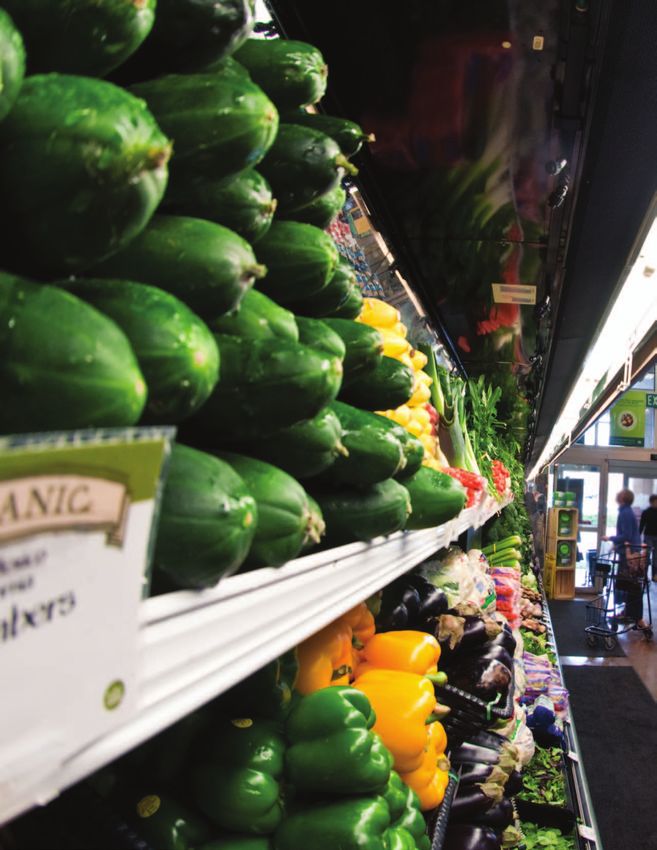
FOOD RETAILER CHECKLIST
Based on the preliminary results from Whole Foods Market’s                HVAC
new construction CBP project, food retailers can benefit the
most from their investments in energy efficiency by implement-            4✚Decrease total airflow rate to about 0.6 cfm/ft2 in the
ing the following measures. The EEMs with plus signs are likely              dry goods and grocery sections.
to be the most cost-effective strategies in existing buildings.
                                                                          4✚Optimize the main air-handling unit by indepen-
REFRIGERATION                                                                dently controlling humidity and temperature.

4✚Add doors to medium-temperature cases where
    appropriate, and night curtains to remaining open                     KITCHEN EXHAUST
    medium-temperature cases.
                                                                          4✚Install side panels on exhaust hoods to achieve a
4✚Replace light fixtures in refrigerated cases and walk-in                   lower exhaust flow rate and capture all exhaust fumes.
    coolers with light-emitting diodes (LEDs).
                                                                          4 Install demand ventilation sensors and controls to
4✚Replace permanent-split capacitor and shaded pole                          reduce exhaust flow (and the required make-up air)
    motors with high-efficiency, electrically commutated                     when there is no cooking.
    motors for evaporator fans.
4✚Reduce electricity use for anti-sweat door heaters by                   ENVELOPE
    aggressively controlling them in response to the store
    humidity levels.                                                      4 Add a vestibule to store entrances and exits and offset
                                                                             the doors to reduce the airflow into the building when
4✚Use variable-speed fans for the condensers.                                both sets of doors are open.
4 Install electronic expansion valves for the low-                        4 Reduce total glazing area and use more efficient
    temperature system and reduce the minimum                                glazing.
    saturated condensing temperature from 75oF to 55oF
    for both the medium- and low-temperature systems.                       MORE GOOD IDEAS
4 Capture waste heat for air and service water heating.                     Reduce refrigerant charge AND save energy.
                                                                            Design refrigeration systems to minimize green-
LIGHTING                                                                    house gas emissions, considering both refrigerant
                                                                            leaks and the emissions from the electricity
4✚Reduce total installed lighting load (not including                       generated to run the system.
    refrigerated case lighting) to 1.0 W/ft2.
                                                                            Expect more of manufacturers. Set perfor-
4✚Reduce lighting levels during after-hours stocking                        mance goals and place the responsibility for
    and cleaning.                                                           meeting those goals on HVAC manufacturers and
4 Consider using LEDs for display applications through-                     other vendors.
    out the store.
                                                                            Use equipment only as needed. Save energy
4 Install skylights and control lights in response to                       and money by using equipment to provide the
    available daylight.                                                     function required as needed rather than running it
                                                                            constantly at full power.

National Renewable Energy Laboratory                                        Use efficient kitchen equipment. Select
1617 Cole Boulevard, Golden, Colorado 80401                                 ENERGY STAR® qualified equipment when possible,
303-275-3000 • www.nrel.gov                                                 maintain it properly, and turn it off when not in use.
NREL is a national laboratory of the U.S. Department of Energy              Reduce plug loads. Use power savings settings on
Office of Energy Efficiency and Renewable Energy
                                                                            computers and point of sale equipment, consolidate
Operated by the Alliance for Sustainable Energy, LLC
                                                                            personal office equipment with a multifunction
NREL/FS-5500-50790 • April 2011
                                                                            device, and use load management devices on
This summary is based on “Thinking Like a Whole Building: A Whole Foods
                                                                            refrigerated vending machines.
Market New Construction Case Study,” which is available at
www.nrel.gov/docs/fy11osti/50056.pdf.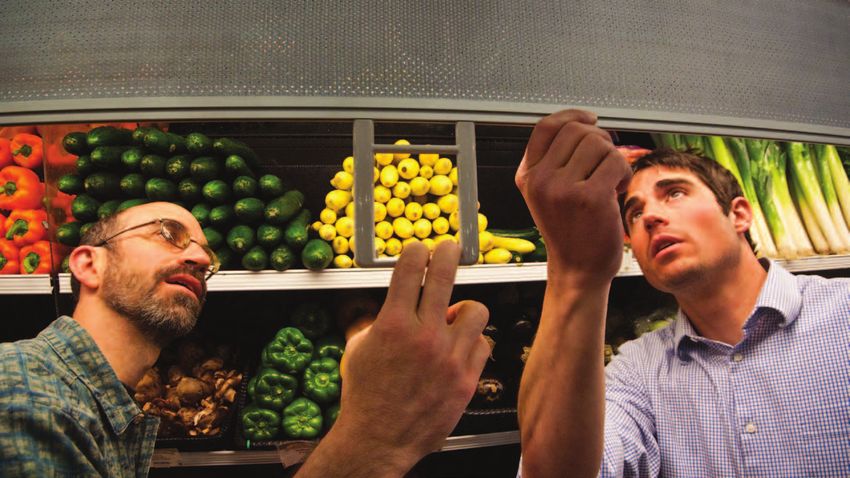
“The NREL engineers brought an amazing
                                                    level of expertise and detail orientation
                                                    to the project,” says Mike Farish, store
                                                    development leader for the Whole Foods
                                                    Market south region and project manager for
                                                    the new Raleigh store. “It would have taken
                                                    more time and cost more for our engineers
                                                    to drill down that far, but our design and
                                                    construction team benefited from learning
                                                    about the intricacies of energy use.”

      Credit: Pat Corkery, NREL/PIX 18596

Commercial Building Partnerships | Whole Foods Market New Construction Case Study                 5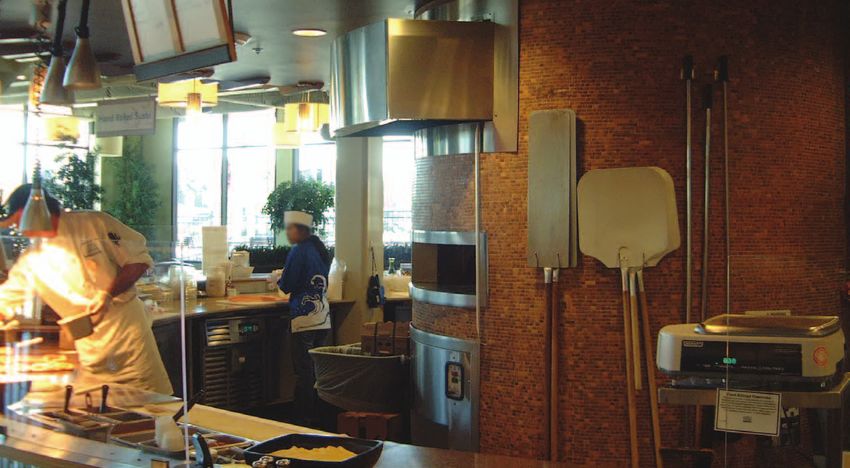
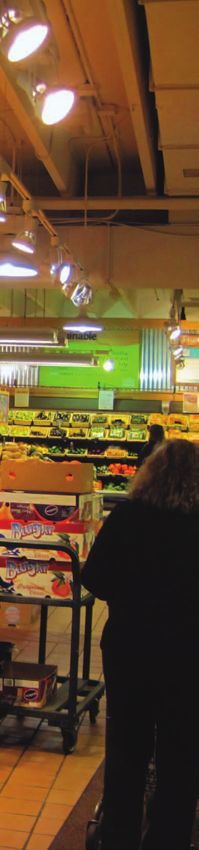
Whole Foods Market uses a combination of
ambient and accent lighting to highlight
the products in its stores.

Credit: Ian Doebber, NREL/PIX 18609
U.S. Department of Energy’s
                                      Commercial Building Partnerships

                                      THINKING LIKE A
                                      WHOLE BUILDING:
                                      A WHOLE FOODS MARKET NEW
                                      CONSTRUCTION CASE STUDY

                                      Whole Foods Market is the world’s leading natural and
                                      organic foods retailer, with more than 300 stores in
                                      North America and the United Kingdom. Whole Foods
                                      Market’s participation in the U.S. Department of
                                      Energy’s (DOE) Commercial Building Partnerships (CBP)
                                      is a natural extension of its values and vision.

                                      “Whole Buildings are a focus at Whole Foods Market,
                                      and the company has had internal green building
                                      standards and practices in place for years,” says Kathy
                                      Loftus, global leader, sustainable engineering, main-
                                      tenance, and energy management for Whole Foods
                                      Market. “But our participation in CBP provides an op-
                                      portunity for us to dig into the details of how our stores
                                      use energy in ways that we haven’t explored before.”

Credit: Ian Doebber, NREL/PIX 18609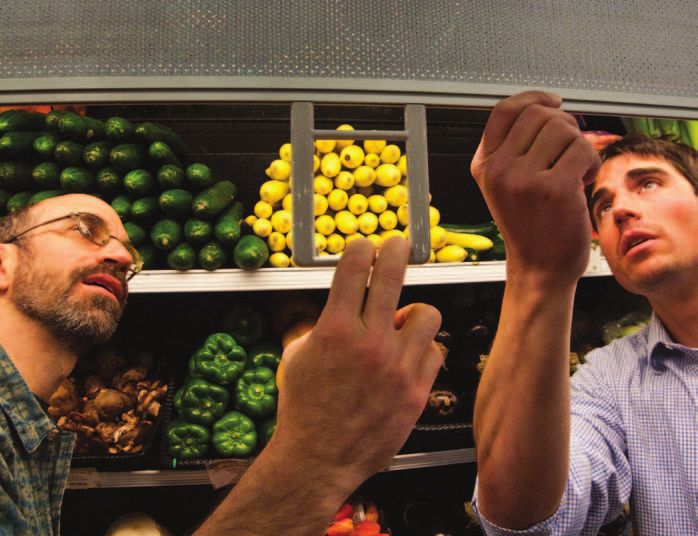
COMMERCIAL BUILDING PARTNERSHIPS
        The U.S. Department of Energy’s (DOE) Com-       The CBP projects serve as test beds and train-
        mercial Building Partnerships (CBP) (DOE         ing centers for innovative building-related
        2010b) is a public/private cost-shared effort    research, and demonstrate how energy
        that provides an opportunity for commercial      use can be reduced dramatically and cost
        building owners and operators (Partners)         effectively in commercial buildings. The new
        to cost-effectively improve the energy           construction projects also provide an oppor-
        efficiency of their facilities. Each Partner     tunity to corroborate the recommendations
        agrees to pursue ambitious energy-saving         contained in the technical support docu-
        goals—a 50% reduction in energy use over         ments (TSDs) for 50% energy savings. The
        Standard 90.1-2004 in a new construction         TSDs provide the basis for the forthcoming
        project and a 30% reduction over Standard        50% Advanced Energy Design Guides devel-
        90.1-2004 or current energy use in a retrofit.   oped by DOE and the national laboratories
        Partners also agree to provide the resources     in collaboration with the American Society of
        necessary to meet those goals. All Partners      Heating, Refrigerating and Air-Conditioning
        are members of the DOE Commercial Build-         Engineers (ASHRAE) and other partners. DOE,
        ing Energy Alliances (DOE 2010a), and the        the Pacific Northwest National Laboratory,
        lessons learned during the CBP projects will     and the National Renewable Energy Labora-
        be shared among Alliance members as well         tory (NREL) develop the technical support
        as with other interested commercial building     documents, including a Grocery Store 50%
        professionals.                                   Energy Savings Technical Support Document
                                                         (Leach et al. 2009).
        DOE representatives, national laboratory
        staff, and private sector technical experts      The lessons learned from these projects
        help Partners meet their energy goals with       will soon be published in case studies.
        acceptable returns on investment based           Simple decision tools to assess the business
        on their business models. Partners can thus      cases for various energy efficiency measures
        incorporate ideas and strategies into their      are also under development. These tools
        projects that might seem too expensive or        will help facilitate energy savings across the
        technologically challenging to tackle without    commercial building sector. This case study
        the resources and technical expertise avail-     is a snapshot of the progress to date on the
        able through CBP.                                Whole Foods Market CBP new construction
                                                         project in Raleigh, North Carolina.

Adding doors to medium-temperature
refrigerated cases in a supermarket can
reduce the cooling load in those cases by
about 65%.

Credit: Jennifer Scheib, NREL /PIX 18606
Whole Foods Market is working with the “Whole Foods Market store
National Renewable Energy Laboratory
development leaders work side-
(NREL) on a retrofit and a new construction
CBP project. This case study is a snapshot of by-side with local operations
the progress to date of the Whole Foods Market leaders,” according to Loftus,
CBP new construction project in Raleigh, North
Carolina. It describes the successes and chal- “We make it clear that the effort
lenges of working collaboratively and using to improve energy efficiency
strategies and technologies that meet Whole
Foods Market’s business criteria to dramati- makes sound business sense in
cally reduce energy consumption. The new addition to being the right thing
Raleigh store is currently under construction,
to do.”
and is expected to be completed in the spring
of 2011.
MAKING THE BUSINESS CASE
This case study demonstrates the value of the Whole Foods Market is organized around
project to Whole Foods Market, the degree to regional offices, and the leaders and team
which the involvement of members of NREL’s members of individual stores have some auton-
Commercial Buildings Research Group helped omy. Their decisions are informed by Whole
stretch the team’s thinking about how to Foods Market’s core values and guided by its
reduce energy consumption, and the lessons stated commitment to care for the environment
learned that are useful to the broader food sales and the communities in which it operates.
industry. These lessons will be shared among
members of the Commercial Building Energy That commitment includes creating a comfort-
Alliances (DOE 2010a) as well as with other able and enjoyable shopping experience, main-
interested commercial building professionals. taining a healthy bottom line, and minimizing
its environmental impacts. Reducing energy
use is one way to meet this commitment, but
PROJECT DESCRIPTION energy reduction strategies must in every case
make business sense.
The new Whole Foods Market store in Raleigh,
North Carolina, is a single-story 40,000 ft2 Whole Foods Market’s decentralized business
standalone store. Although each Whole Foods model initially presented challenges to improv-
Market is unique, this store is representative ing energy efficiency. This business structure
of other Whole Foods Market stores, and the has many advantages, such as each region’s
energy efficiency measures (EEMs) used here and store’s relationships with local organiza-
can be deployed to these stores and to other tions, suppliers, and growers. But the culture
buildings in the U.S. food sales subsector. does not include a mechanism for dictating
energy efficiency standards, so energy savings
The store is located in DOE climate zone 4A,
strategies were initially deployed on a case-by-
mixed-humid, which receives more than
case basis.
20 inches of annual precipitation, has 5,400
or fewer heating-degree days, experiences “Internal communication was key,” says Loftus.
monthly average outdoor temperatures below “Once we developed ways of communicating
45°F during the winter months, and may have the benefits of improved energy efficiency for
significant cooling loads and high humidity the environment, shareholders, and everyone
during the summer. else—and we circulated the success stories—it
was easy for leaders to adopt best practices.”
Commercial Building Partnerships | Whole Foods Market New Construction Case Study 9To keep everyone in the loop, executive level Whole Foods Market is committed to an
Whole Foods Market teams participate in energy reduction goal of 25% compared with
monthly conference calls and meet face-to- 2008 baseline use at all stores by 2015. As a
face at least twice every year. The Energy and CBP Partner, Whole Foods Market has also
Maintenance and Store Development teams agreed to target energy savings compared with
maintain a collaborative website for the entire the American National Standards Institute/
company that chronicles successes and lessons American Society of Heating, Refrigerating
learned. and Air-Conditioning Engineers/Illuminating
Engineering Society of North America (ANSI/
“Whole Foods Market store development ASHRAE/IESNA) Standard 90.1-2004 of 50%
leaders work side-by-side with local operations in the Raleigh project.
leaders,” according to Loftus. “We make it clear
that the effort to improve energy efficiency Determining paybacks for innovations with
makes sound business sense in addition to many variables and no track record can be
being the right thing to do.” difficult. Whole Foods Market nominally uses a
three-year simple payback as a project-screen-
Another consideration for Whole Foods Market ing guideline for retrofits, but may consider
is that it leases its buildings. In new construc- longer paybacks for new stores. Whole Foods
tion projects, the developer is responsible for Market does not have strict rules about
building the core and shell (broadly defined paybacks or other methods of determining
as the structure, envelope, and building-level cost-effectiveness, and other business values
systems such as heating, ventilation, and also play a role in the decision-making process.
air-conditioning [HVAC]), and the regional
construction team manages the process of
finishing the interior. ENERGY PERFORMANCE AT
“We’re getting much better at writing specifica- THE NEW RALEIGH STORE
tions into the leases,” says Loftus. “And the Energy use intensity (EUI) describes a build-
process of working with NREL through CBP ing’s energy use in a way that can be compared
will help us be even more precise about store across buildings with very different floor areas.
performance requirements.” To calculate EUI, the total energy consumed in
one year, generally expressed in units of kBtu
“Supermarkets are energy (thousands of British thermal units) or kWh
intensive,” according to Mike (kilowatt-hours), is divided by the total floor
space. Compared with other retail building
Farish, store development leader types, supermarkets tend to have higher EUIs
for the Whole Foods Market south because of refrigeration and cooking equipment.
The dominant energy loads for most other retail
region and project manager building types are lighting and HVAC.
for the new Raleigh store.“ And
“Supermarkets are energy intensive,” accord-
Whole Foods Market stores are ing to Mike Farish, store development leader
more energy intensive than most for the Whole Foods Market south region and
project manager for the new Raleigh store.
supermarkets because of our
“And Whole Foods Market stores are more
in-house bakeries and extensive energy intensive than most supermarkets
food preparation areas.” because of our in-house bakeries and extensive
food preparation areas.”
10 Commercial Building Partnerships | Whole Foods Market New Construction Case StudyPROJECT AT A GLANCE
Project Type Whole Foods Market South
Retail grocery store Region Team
Mike Farish
Project Description Scott Hewett
Construction of a typical single-story BJ Leonard
standalone store
Kathy Loftus
Tom Patrick
Project Size
40,000 ft2
Whole Foods Market
Project Location Design Team
Raleigh, North Carolina e2s
Michael Guldenstern
Climate Zone
ochsnerEFS, p.c.
4A, mixed-humid
Dean Ochsner
Square Footage Controlled GreenbergFarrow
by Partner Mitch Deutsch
11 million in the United States
Justin Hardy
Expected Energy Savings (%) and Western Extralite
Basis for Comparison Mark Kaner
41% over Standard 90.1-2004
NREL Principal Investigator
Expected EUI of Final Project Paul Torcellini
208 kBtu/ft2yr
NREL Project Lead
Potential for Replication Michael Deru
Very good—although Whole Foods
Market does not use a prototype per NREL Project Engineers
se, this store is representative of its Eric Bonnema
near-term new construction projects Ian Doebber
and is similar to other buildings in the Jennifer Scheib
food sales subsector.
Using LEDs in place
NREL Technical Monitors of T-8 fluorescents in
Carbon Dioxide Emissions Adam Hirsch medium-temperature
Avoided Greg Stark cases reduces lighting
~2.6 million lb/yr
power use in these
NREL Subcontractors cases by 50%, because
Energy Savings CDH Energy Corporation LED lights illuminate
~1.4 million kWh/yr electricity product as well as or
Hugh Henderson
~15,500 therms/yr natural gas better than fluores-
CTA Architects & Engineers cents using less power.
Rob Arthur
Credit: Jennifer Scheib,
Jim Armer
NREL /PIX 18610In fact, the loads for baking and food prepa- identifies EEMs that work well together, the
ration give the new Raleigh store an energy details of the energy model can be fine-tuned
profile similar to that of a restaurant. The inter- based on the final design specifications.
actions among the various energy-consuming
systems—refrigeration, kitchen equipment, As powerful as it is, energy modeling is a
lighting, HVAC, etc.—are complex. Whole supplement to—not a substitute for—solid engi-
Foods Market and NREL used this opportunity neering expertise. It provides building owners,
to better understand how these systems affect designers, and builders the tools and the oppor-
each other as well as the overall energy use in tunity to thoroughly think through a design
the store. Fortunately, design integration across before construction begins (Doebber 2010).
multiple disciplines is a core competency of
NREL researchers (Doebber 2010). The energy modeling results in this case study
are from a model in EnergyPlus (DOE 2010c)
(a whole-building energy simulation program
ENERGY MODELING developed by DOE and used to model energy
use in buildings). The model was developed
Computer energy modeling is a key tool for during the design process to explore the feasi-
understanding the interactions of energy- bility of building a Whole Foods Market store
consuming systems. By running multiple that uses 50% less energy than one built to the
iterations of an energy model, each time using requirements of Standard 90.1-2004.
a different combination of EEMs, computer
modelers can refine a building design to maxi- To analyze the main energy-consuming
mize energy savings. The model can also be systems and facilitate communication with
used to understand the tradeoffs and syner- Whole Foods Market and private sector consul-
gies among multiple EEMs (see Putting It All tants, NREL staff calibrated the EnergyPlus
Together on page 24). Once the modeler model using utility bills, submetered data, and
NREL engineers Michael Deru (left) and Ian Doebber examine night curtains,
a proven energy efficiency strategy, at a Whole Foods Market store.
Credit: Patrick Corkery, NREL/PIX 17307other energy use information from similar new BEGIN WITH THE BASICS
Whole Foods Market stores. Instead of focusing
on individual EEMs, they optimized the design Descriptions of the three systems NREL
by analyzing the whole building as a system. examined most closely—refrigeration, kitchen
exhaust, and lighting—follow. (See Energy
Modeling software is still evolving, and this Efficiency Measures, page 16, for information
Whole Foods Market project helped NREL about the envelope and HVAC systems.)
researchers identify some limitations in
EnergyPlus. In particular, they faced challenges
modeling the details of advanced HVAC, REFRIGERATION
refrigeration, and kitchen exhaust systems. Refrigeration uses significant energy in a super-
market, and accounts for about 39% of the total
Work is now under way to resolve these limita- energy use in new Whole Foods Market stores
tions. In collaboration with Partners, refrigera- (see Energy Use Intensities by End Use, page
tion consultants, and software developers at 26). Supermarkets require low-temperature
other national laboratories, NREL has made refrigerated cases for frozen foods (these
good progress by comparing modeling results are usually maintained at about -10°F) and
with tried-and-true engineering experience and medium-temperature cases for dairy, packaged
detailed submetered electrical data (Doebber seafood, packaged produce, cheese, beverages,
2010). For example, Therese Stovall at Oak meat, and deli goods (these are typically main-
Ridge National Laboratory has incorporated tained at 28°F to 36°F).
some of NREL’s recommendations into the
new EnergyPlus release. NREL researchers and Adding doors to medium-temperature cases
others can now model basic to advanced refrig- can reduce their cooling load by about 65%
eration systems with a high level of confidence. (Fricke and Becker 2010). Modeling results
from the feasibility study indicate that adding
This software refinement is an example of doors to 132 linear feet of medium-temperature
simulation engine improvement that resulted cases could reduce the required refrigeration
directly from the collaboration among national capacity by about 10 tons (34 kW), roughly 25%
laboratory personnel, private sector technical of the entire medium-temperature cooling load.
experts, and CBP Partners. Without DOE’s Whole Foods Market intends to use the Raleigh
investment in technical assistance, it is unlikely store to verify the savings from adding doors
that the time or money would have been avail- before changing its refrigeration design in other
able to explore the complexities of modeling stores.
refrigeration in supermarkets. Now the results
of this research will be available to all future On the doors of the low-temperature cases in
grocery store designers. the new store, Whole Foods Market specified
electric resistance anti-sweat door heaters to
This software refinement is an minimize condensation. Whole Foods Market
example of simulation engine reduced the amount of energy these heaters
use by implementing an aggressive anti-sweat
improvement that resulted heat-to-dew point control that quickly reduces
directly from the collaboration the energy delivered to the anti-sweat devices
as the dew point decreases.
among national laboratory
personnel, private sector technical The new store will maintain a dew point of
about 50°F compared with a typical dew
experts, and CBP Partners.
Commercial Building Partnerships | Whole Foods Market New Construction Case Study 13point setting of about 55°F. The air-handling Replacing T-8 fluorescents with light-emitting
unit (AHU) serving the sales floor is equipped diodes (LEDs) (DOE 2010d) in the refrigerated
with a solid desiccant wheel, a dehumidifica- cases reduces lighting power use from 18 kW to
tion device capable of efficiently achieving the 9 kW, a 50% decrease. This change also reduces
lower dew point. the additional cooling load from lamp and
ballast heat. The savings is due to the greater
The dew point setting represents a balance directional control of LEDs lights, which illu-
between saving refrigeration energy through minate product as well as or better than fluo-
reduced latent cooling load, anti-sweat heating, rescents using less power. Also, unlike LEDs,
and defrost load, and increasing HVAC energy the light output of fluorescent lights decreases
to dehumidify to a lower dew point. The latent as they get colder— a particular concern in this
cooling load refers to the energy required to application.
remove the heat released when moisture in the
air condenses onto the case coil. Another energy-saving strategy is to replace
most standard-efficiency (permanent-split
capacitor) motors with high-efficiency (electri-
Replacing T-8 fluorescents with cally commutated) ones for the evaporator
fans. Not all the fans were replaced because
light-emitting diodes (LEDs) in the
some specialized manufacturers did not sell
refrigerated cases reduces lighting fans with electrically commutated motors.
power use from 18 kW to 9 kW, a Despite this, the total case fan power draw
decreased 36%, from 15.0 kW to 9.6 kW.
50% decrease.
Using variable-speed fans on the low- and
The dew point “sweet spot” can be contentious, medium-temperature case air-cooled condens-
and depends on the refrigeration system, the ers saves fan energy by matching fan power
HVAC system, and the climate. Eventually, to the condenser cooling load. This strategy
the increased energy required for the HVAC provides better control of the refrigerant
system to further dry the air consumes more temperature leaving the condenser. Therefore,
energy than can be saved through reduced it saves energy and provides better control over
energy consumption for refrigeration. Although the refrigeration system.
some claim that the dew point set point should
be 45°F, Whole Foods Market chose the more Yet another refrigeration EEM is to allow the
conservative 50°F. The dew point will be modi- minimum condensing temperature on both
fied throughout the year during normal opera- systems to drop below their typical minimum
tion to determine which set point yields the settings. In the Raleigh store, that meant setting
lowest net energy use. the minimum saturated condensing tempera-
tures of the low- and medium-temperature
Night curtains—highly reflective shades that cases to 55°F rather than a minimum of 75°F.
are manually drawn over the fronts of open Whole Foods Market will also use electronic
medium-temperature cases every evening expansion valves to maintain temperature
when the store closes—also save energy. Night control in low-temperature cases.
curtains lower the cooling load on the refrig-
eration case by about 40% during unoccupied Whole Foods Market also had to deal with
periods (Hussman 2010). the competing priorities of reducing refrig-
erant charge and saving energy. The U.S.
Environmental Protection Agency (EPA) has
14 Commercial Building Partnerships | Whole Foods Market New Construction Case StudyCooking equipment in Whole Foods
Market stores increases energy use inten-
sity compared with other supermarkets.
Credit: Jennifer Scheib, NREL/PIX 18611
issued regulations under the Clean Air Act Whole Foods Market uses a make-up air unit
designed to maximize the recovery and recy- (MAU) to provide 80% of the make-up air
cling of refrigerants during the service, repair, required by the three largest exhaust hoods.
or disposal of refrigeration equipment. EPA The remaining 20% comes from the rooftop
also administers the voluntary GreenChill unit (RTU) serving the kitchen area and the
Advanced Refrigeration Partnership, which main AHU serving the sales floor to maintain
encourages food retailers to use environmen- the kitchen at a negative pressure. The negative
tally friendlier refrigerants, reduce refriger- pressure helps keep odors and moisture away
ant charge sizes, and eliminate leaks. These from the sales area.
efforts decrease the impact of refrigerants on
the ozone layer and climate change, but are Because the air from the MAU is delivered
typically energy neutral at best, and can even directly in front of the exhaust hood, it does
increase energy use. not affect comfort in the kitchen and is imme-
diately sucked into the hood. Therefore, the air
needs to be heated to only 65°F in the winter
KITCHEN EXHAUST and cooled to 85°F in the summer, saving a
great deal of energy.
Whole Foods Market employees prepare a large
amount of food, so the interactions between the
Whole Foods Market has been using exhaust
kitchen and the rest of the store are significant.
hoods that operate in response to hot tempera-
To maintain good indoor air quality in the
tures or smoke from the cooking surface below
kitchen and keep cooking odors and moisture
for a couple of years. NREL encouraged the use
out of the sales area, a significant amount of
of these hoods in the new Raleigh store, and
air must be exhausted to the outside. NREL
Whole Foods Market chose hoods that operate
suggested some strategies to reduce kitchen
at a 80% flow rate when there is no smoke, and
energy use.
a 100% flow rate when temperatures are high
or smoke is present.
Commercial Building Partnerships | Whole Foods Market New Construction Case Study 15NREL-RECOMMENDED ENERGY
EFFICIENCY MEASURES
The Commercial Building Partnerships (CBP) process is collaborative, and it is not always
clear which participant recommended which energy efficiency measure (EEM). This list indi-
cates the EEMs that Whole Foods Market adopted based on NREL’s direct recommendation
or based on a consensus recommendation from the group of NREL researchers, private-
sector subcontractors, and Whole Foods Market personnel.
Kitchen Exhaust HVAC
• Install side panels on all the • Decrease the total airflow rate
exhaust hoods to achieve a lower throughout the sales floor from
exhaust flow rate and capture all the standard 1 cfm/ft2 to 0.6
the exhaust fumes. cfm/ft2 to reduce fan power
consumption.
• Install demand ventilation sen-
sors and controls to reduce the • Optimize the main air-handling
exhaust flow (and the required unit (AHU) for a grocery store
make-up air) when there is no application in which the refriger-
cooking. ated case credits (the cool air
contributed by refrigerated cases
in the store) lower the cooling
demand throughout the year. The
AHU includes a desiccant wheel
Envelope to dehumidify outside air used for
ventilation. The desiccant wheel
• Add a vestibule to the store exit as
is reactivated (returned to a state
well as the store entrance (which
that can absorb water vapor) by
is common practice for Whole
using waste heat from the direct
Foods Market) and offset the
expansion condenser coil rather
doors to reduce the airflow into
than natural gas. During the
the building when both sets of
summer, unless there is a call for
doors are open.
cooling, the supplied outside air
• Reduce the total glazing area and will be approximately the same
use more efficient glazing. temperature as the inside of the
store, but extremely dry, which
reduces the refrigeration load.
Whole Foods Market is well known for attractive product displays,
and one of the challenges of improving energy efficiency in gro-
cery stores is reducing lighting energy use without compromising
customers’ shopping experience.
Credit: Ian Doebber, NREL/PIX 18612Refrigeration Lighting
• Add doors to medium-tempera- • Reduce the total installed lighting
ture cases for packaged produce, load from the 2.4 W/ft2 code-com-
packaged seafood, cheese, and pliant maximum (ambient and
dairy. accent lighting) to approximately
1 W/ft2 by using a combination of
• Add night curtains to open
linear fluorescent, metal halide,
medium-temperature cases that
and light-emitting diodes (LEDs)
display non-packaged produce,
fixtures to provide an ambient
meat, and prepared foods.
layer throughout the store and an
• Replace T-8 fluorescents in the additional accent layer through-
refrigerated cases and walk-in out the sales area.
coolers with LEDs.
• Weigh the efficacy, color render-
• Replace most permanent-split ing, and cost of LED fixtures to
capacitor motors with high-effi- determine the best sales areas
ciency, electrically commutated and back-of-house applications.
motors for the evaporator fans.
• Use more aggressive glare control
• Reduce electricity use for than is typical in Whole Foods
anti-sweat door heaters by Market stores.
aggressively controlling them in
• Optimize the distribution of
response to the store dew point,
skylights and associated area
which will be maintained at 50°F
lamp selection for daylight
using desiccant technology in the
controllability.
main air-handling unit.
• Control the ambient and
• Use variable-speed fans to cool
fluorescent lighting in the dry
the low-temperature condensers.
goods section by using bi-level
• Install electronic expansion valves configuration for daylighting and
and set the minimum saturated stocking time-of-use reduction.
condensing temperature of the
low- and medium-temperature
cases to 55°F rather than a
minimum of 75°F.
• Capture waste heat for both air
and service water heating.NREL recommended installing side panels The design team settled on a 4% SFA in dry
on all the exhaust hoods to allow for a lower goods and back-of-house corridors, bi-level
exhaust flow rate and still capture all the linear fluorescents with LED accents in dry
exhaust fumes. This reduction in outdoor air goods, and metal halide ambient and accent
intake reduces heating and cooling demand on lighting in produce, meat, and bakery sales.
the MAU, the main AHU, and the kitchen RTU. The lamps in the bi-level fixtures are wired
separately so one lamp in each can be turned
off independently to reduce lighting power in
LIGHTING response to daylight and after-hours stocking
NREL researchers performed a general light- schedules. These fixtures are not dimmable, but
ing study that looked at several options for can be off, 50% on, or 100% on.
improving lighting efficiency. They used a suite
of computer programs called Radiance (LBL
“The NREL engineers brought an
2010) to show how the store interior would
appear with skylights and different electric amazing level of expertise and
lighting configurations in the dry goods area. detail orientation to the project,”
The purpose was to facilitate communica- says Farish. “It would have taken
tion with the design team about the aesthetic more time and cost more for our
effects of various lighting and daylighting
configurations. NREL performed a qualitative engineers to drill down that far,
analysis to help all involved visualize how four but our design and construction
scenarios—an open ceiling with no skylights,
an open ceiling with an exposed roof structure
team benefited from learning
and skylights, a lay-in tile ceiling at 14 feet about the intricacies of energy
above the finished floor, and an open ceiling
use.”
with gondola-mounted fixtures—would look
and feel.
Lamps were selected based on a balance of effi-
Second, NREL researchers used a SPOT (Sensor cacy, controllability, color rendering, and cost.
Placement + Optimization Tool) simulation of Compared with the Whole Foods Market new
an open ceiling with skylights to determine construction standard, the SPOT/EnergyPlus
the energy savings resulting from dimming or results showed whole-building energy savings
bi-level switching of the electric lights of about 4% from adding daylighting and
(AEC 2010). SPOT helps designers quantify the reducing LPD in the dry goods and checkout
electric lighting and daylighting characteristics areas, and less than 2% whole-building savings
of a space over time and establish the optimal from LPD reduction in the produce area.
photosensor placement for maximum energy
savings. They used a variety of skylight-to-floor NREL’s recommendations for the skylight
area ratios and fixture/lamp combinations to glazing (see Glazing Specifications on page
create lighting power density (LPD) reduction 20) included a heat transmission value
schedules that could be used in EnergyPlus. (U-value) that represents a 60% improvement
LPD is a measure of electrical power used to over Standard 90.1-2004, a solar heat gain coef-
provide lighting to a space, expressed in watts ficient (SHGC) slightly better than 90.1, and
per square foot (W/ft2). a diffuse visible light transmittance (VLT)
higher than 50%.
18 Commercial Building Partnerships | Whole Foods Market New Construction Case StudyWhole Foods Market accepted NREL’s skylight of LED fixtures for different applications
glazing recommendations as part of a living compared with Whole Foods Market’s typical
specification document (a set of flexible lighting fixture specification. NREL used this
requirements designed to accommodate new information to determine the best applications
products and processes), but installed units for LED technology, which included track,
with slightly lower performance properties strip, and refrigerated case and walk-in cooler
because of product availability and preference. lighting.
The SHGC of the selected skylight is higher
than NREL’s recommendation, but Whole The result is an LPD reduction in ambient and
Foods Market’s previous success with quality accent lighting from the 2.4 W/ft2 Standard
installation (no leaking, acceptable appear- 90.1-2004-compliant baseline for a typical new
ance) made it the more appropriate choice. Whole Foods Market store to approximately
An EnergyPlus simulation that compared the 1 W/ft2 for the entire new Whole Foods Market
selected skylight with products that met the Raleigh store. The daylighting contributions
NREL criteria did not show enough additional from skylights and glazing in the front of the
energy savings to justify rejecting a trusted store, occupancy sensors in irregularly used
product. rooms, and bi-level control of many fluorescent
fixtures will result in additional annual energy
The skylight light wells provide diffuse light savings. The specification refinements that
because of the 40-inch depth and white coat- resulted from NREL’s simulation-based recom-
ing. NREL also developed spreadsheets to mendations and Whole Foods Market’s prod-
compare available skylight and glazing proper- uct experience will be included in a revised
ties and used that information to edit the list of specification for other stores in the region.
building shell requirements and specifications
that Whole Foods Market prepares for the
developer. COMMISSIONING EXPERTISE
DURING DESIGN
NREL researchers used path diagrams of the
sun’s position and height at different times Whole Foods Market brought the commis-
of the year and day to refine the front of store sioning agent into the process as a consultant
shading to facilitate daylighting and mitigate toward the end of the design process. This is
glare. They also suggested a lower window- typical for some Whole Foods Market regions,
to-wall ratio (WWR) in the front of the store. but was new for the south region. Although
Whole Foods Market decided to lower the it would have been ideal to have the commis-
WWR from the baseline, and added an interior sioning agent involved from the beginning of
trellis to supplement the glare control provided design, the agent’s input was very valuable.
by the exterior canopy. Whole Foods Market’s
In addition, the agent’s involvement during
final shading configuration was a compromise
design created a relationship that increased
between the NREL recommendations and
both the agent’s understanding of the intent
Whole Foods Market’s previous front-of-store
of the design team and the probability of
design. (For the vertical glazing specifications,
constructive interactions during the commis-
see Glazing Specifications on page 20.)
sioning phase. Comprehensive building
Finally, NREL and the Whole Foods Market commissioning improves the chances that the
lighting representative used spreadsheets and building will operate as designed.
the Lighting Analysts AGI32 simulation tool to
weigh the cost, quantity of light, and wattage
Commercial Building Partnerships | Whole Foods Market New Construction Case Study 19GLAZING SPECIFICATIONS
NREL Recommendations for Skylights
U-value less than 0.55
SHGC* less than 0.40
VLT** more than 50% diffuse
Final Whole Foods Market Specifications for
Skylights
U-value 0.50
SHGC* 0.60
VLT** 50% (diffuse because of 40-inch
wells and white coating)
NREL Recommendations for Vertical Glazing
U-value less than 0.40
SHGC* less than 0.40
VLT** more than 30%
Final Whole Foods Market Specifications for
Vertical Glazing
U-value 0.28
SHGC* 0.27
VLT ** 64%
*SHGC solar heat gain coefficient
**VLT visible light transmittance
NREL and Whole Foods Market worked
closely to reduce lighting power density
while maintaining Whole Foods Market’s
characteristically well-lit and artful product
displays.
Credit: Courtesy of Whole Foods Market, NREL/PIX 18613DETAILS MATTER CHALLENGES
As the EEMs incorporated into the new Raleigh NREL and Whole Foods Market participants
Whole Foods Market illustrate (see Energy agree that their collaboration has been useful
Efficiency Measures, page 16), it often takes and productive. They also agree that the
changes across all disciplines to significantly process had its challenges.
reduce energy use. One of the main strengths
of CBP is that detailed analyses of individual The time NREL required to gather the necessary
systems (refrigeration, HVAC, lighting, etc.)— information, do the simulations, vet the model,
as well as a study of how these systems interact and make recommendations was not always
with each other—can uncover energy-saving in synch with Whole Foods Market’s need to
opportunities that might otherwise be missed. keep the project moving along quickly. The
NREL researchers’ job was to conduct detailed
“Although their direct experience with super- analyses so they could recommend appropri-
markets was somewhat limited, the NREL engi- ate EEMs, and Whole Foods Market’s job was
neers brought an amazing level of expertise and to design and build a store on schedule and
detail orientation to the project,” says Farish. within budget (Bonnema 2010).
“It would have taken more time and cost more
for our engineers to drill down that far, but our Gathering information was a challenge, in
design and construction team benefited from part because the information was not always
learning about the intricacies of energy use.” readily available. Whole Foods Market and
NREL developed an innovative solution to
Whole Foods Market plans to use the strate- this dilemma (see Lessons Learned, page 28,
gies developed through this process in other for more information): They put the onus on
stores. As part of CBP, NREL and its refrigera- the manufacturers. The approach ranged from
tion subcontractors will carefully monitor the putting specific requirements in the request for
completed store to verify that the EEMs are proposal to including manufacturers’ represen-
operating as anticipated. It is important to learn tatives in design calls to ensure that they were
clear about the specifications. As a result, the
design team learned crucial details not typically
“Detailed analyses of individual
included in product information descriptions or
systems—as well as a study of specifications that helped them make informed
how these systems interact with purchasing decisions.
each other—can uncover energy- Another challenge was modeling the interac-
saving opportunities that might tions between the HVAC and refrigeration
systems. Food preparation is also an issue,
otherwise be missed. ” because the new Raleigh store—like many
Whole Foods Market stores—essentially
about how the building operates when it is houses a restaurant as well as a grocery store.
commissioned and about what is required to Conditioning and ventilating the food prepara-
ensure it maintains its energy savings over time tion areas made the modeling more complex
(Scheib 2010). The information gathered during than for a typical grocery store.
monitoring and verification will be included in
an NREL technical report published after the Whole Foods Market is understandably
monitoring is completed and the results are cautious about adopting untried equipment
analyzed. and technologies, and challenged NREL
researchers when they made suggestions that
Commercial Building Partnerships | Whole Foods Market New Construction Case Study 21looked promising in the computer models but
had not been extensively tested in the field.
NREL is evaluating building-related technolo-
gies in the laboratory and in the field to address
this issue. For NREL, verifying system perfor-
mance with unbiased measurements of the
latest technologies is a key strategy for increas-
ing energy efficiency in commercial buildings.
Like every food retailer, Whole Foods Market
has to comply with EPA regulations that govern
the recovery and recycling of refrigerants. These
regulations can have the unintended conse-
quence of focusing store operators’ attention on
reducing the refrigerant charge without regard
to the effect on energy consumption. Achieving
a balance between reducing the charge and
saving energy deserves study by both research-
ers and the refrigeration industry.
A WHOLE BUILDING FOR
WHOLE FOODS
Whole Foods Market had investigated and
incorporated some of the EEMs described here
before working with NREL, but detailed energy
modeling provided a better understanding of
system interactions. For example, it helped
establish which HVAC application maximized
energy savings for the climate and the refrigera-
tion and hood exhaust impacts.
“We knew there were opportunities to help
bring new information about buildings and
energy systems to our partners,” says Loftus,
“And it was a big help to have independent
engineers and consultants at the table, raising
questions and introducing new ideas.”
All involved agreed that working through the
issues was instructive.
“We had already improved the energy effi-
ciency of our stores, and now we can do an
even better job,” says Farish. “Would I do it
again? You bet!”
22 Credit: Ian Doebber, NREL/PIX 18614Whole Foods Market stores have energy profiles similar to restaurants because of the energy used for prepared foods. Credit: Ian Doebber, NREL/PIX 18614
PUTTING IT ALL TOGETHER
     Optimizing the energy design of a supermarket                  On the other hand, the same cool air that contrib-
     is a complex task by any measure, and is further               utes to stratification helps cool the space during
     complicated by the interactions among the vari-                hot weather. Installing doors isolates the cool air
     ous systems. Some energy efficiency measures                   in the cases from the air in the sales area, decreas-
     (EEMs) work against each other; others work                    ing the cooling load on the refrigeration system
     together synergistically. An energy model (see                 but increasing the space-cooling load. Doors
     Energy Modeling, page 12) is a key tool for                    on medium-temperature cases yield net annual
     understanding and leveraging these interactions                savings because the reduced refrigeration load
     to maximize energy savings.                                    and heating demand in the winter outweigh the
                                                                    increased cooling demand in the summer.
     A few examples of the system interactions that
     will likely affect the new store’s energy use follow,          Using the HVAC system to maintain low humidity
     based on NREL’s initial energy modeling.                       in the store will pay off by reducing the latent
                                                                    cooling load on the refrigerated cases and the
     HVAC and Refrigeration Interactions                            energy required to prevent condensation on the
     Most grocery stores have open medium-temper-                   case doors and defrost the evaporator coils. This
     ature refrigerated cases that release cold air into            strategy reaches a point of diminishing returns,
     the aisles. This results in stratification, with warm          however, when the increased energy required for
     air rising to the ceiling and uncomfortably cold air           the HVAC system to further dry the air consumes
     settling near the floor. To mix the warm and cold              more energy than can be saved through reduced
     air, operations personnel often use high HVAC                  energy consumption for refrigeration. The latent
     flow rates, a strategy that uses a great deal of fan           cooling load results from the heat released when
     energy. Installing doors on these cases reduces                moisture in the air changes from a vapor to a
     stratification, allowing lower HVAC flow rates and             liquid (condenses) on a cold surface.
     saving fan energy.

     The Whole Foods Market Commercial Building Partnerships new                      Whole Foods Market stores offer freshly pre-
     construction project will feature doors on some medium-                          pared food to customers, which gives these
     temperature refrigerated cases to reduce energy use.                             stores energy profiles similar to restaurants.
     Credit: Jennifer Scheib, NREL/PIX 18606                                          Credit: Jennifer Scheib, NREL/PIX 18615

24                                       Commercial Building Partnerships | Whole Foods Market New Construction Case Study
Refrigeration and Kitchen Interactions skylights also introduces heat. Some of the radi-
The commercial kitchen equipment at Whole ant solar energy is absorbed by the floor and
Foods Market requires large quantities of hot dissipated to the ground and some of the energy
water year-round, and the refrigeration system warms the space. Skylights also lose heat by
continuously removes heat from the refrigerated conduction, which can be a significant heat load
cases. This waste heat from the refrigeration in cold weather. The energy balance of skylights
system can be used all year to preheat incoming can be helpful or detrimental depending on
water and offset natural gas use for service hot whether heating or cooling is required. NREL
water. found that the increased cooling load from the
skylight solar gain will be more than offset annu-
HVAC and Kitchen Interactions ally by the decreased cooling load resulting from
Removing heat, moisture, and cooking fumes reduced electric lighting.
requires large airflows through exhaust hoods. If
this air is supplied by the HVAC system, it must be NREL considered all the interactions across all
fully conditioned to maintain temperature and 8,760 hours of the year, and found that daylighting
humidity set points. A carefully designed make-up from the skylights and the glazing in the front of
air unit can bring in semi-conditioned (or even the store should save significant energy compared
unconditioned) air and deliver a large fraction of with a baseline all-electric lighting scenario. Trans-
the required flow at the exhaust hoods. lating this into reality requires that the roof cover-
age by skylights be chosen carefully to achieve an
Building Envelope, HVAC System, and optimal balance between daylighting benefits and
Electric Lighting Interactions thermal penalties, and that the electrical lighting
Skylights introduce light during the day, allowing system and controls be properly installed, commis-
employees to turn electric lighting down or off sioned, and maintained over time (Scheib 2010).
to save energy. The sunlight entering through
The air-handling unit that will serve the sales floor in the Raleigh Whole Foods Market
store is equipped with a solid desiccant wheel, a dehumidification device capable of
achieving a low dew point in the store.
Courtesy of Mike Farish, Whole Foods Market, NREL/PIX 18615, NREL/PIX 18616
Commercial Building Partnerships | Whole Foods Market New Construction Case Study 25Model 1
ENERGY USE
INTENSITIES BY The first represents the prescriptive specifications
of Standard 90.1-2004 and ASHRAE 62.1-2004.
END USE The Raleigh, North Carolina,
store built to Standard
Whole
Service Hot WaterFoods Market
(gas) 5% has an annual
Fans 90.1-2004
(electric) (EUI)
energy use intensity 8% of about 350 kBtu/ft2.
As part of the initial feasibility study to
Equipment
determine whether the new Raleigh (gas) 4%
Whole Foods Market store could achieve Service Hot Water Refrigeration
the Commercial Building Partnerships FansEquipment(gas) 5% (electric)
(electric) 8% 36%
(CBP) new construction target of 50% (electric) 15%
Equipment
energy savings over Standard 90.1-2004, (gas) 4% Lighting
NREL researchers developed three (electric) Refrigeration
Heating
EnergyPlus models. The following 14% (gas) 15%
(electric) Cooling
Equipment 36% (electric) 3%
tables and pie charts capture the results (electric) 15%
(Bonnema 2010). Please note that this is a
Lighting
work in progress, and
Service Hot the actual savings in
Water (electric) Heating
the completed
Fans store
(gas) 5% may be different from 14% (gas) 15% Cooling
(electric) 8% (electric) 3%
those presented here.
Equipment Savings
(gas) 4% Service Hot 16% Refrigeration
Water (gas) 4% (electric)
Refrigeration 26%
Fans
ModelEquipment
2 (electric) Model 3 (electric) 7% Cooling
36%
(electric) 15% (electric) 2%
Equipment Savings the EEMs recom- Heating
The second is built to Whole Foods Market’s new The third version
Service(gas)
Hot 4%
incorporates
Equipment
16% Refrigeration
(gas) 14%
Lighting
store standards, and has an annual EUI of approxi- mended by NREL
Water (gas) 4% and summarized(electric) in(electric)
Energy
Lighting
(electric)2 Heating 15% (electric)
14% . Whole
mately 294 kBtu/ft Foods Market’s speci- Efficiency MeasuresFans on page 16. This version
26%
(gas) 15% Cooling 12%
fications include lower lighting power density,
(electric) 3% has an annual EUI (electric)
of about7% 208 kBtu/ft2 and an Cooling
improved envelope, and more efficient HVAC annualEquipment
energy savings of about 41% over (electric) 2%
Equipment Heating
equipment than Standard 90.1-2004 requires. The Standard(gas)90.1-2004.
4% (gas) 14%
(electric) Lighting
result is an annual energy saving of about 16%. 15% (electric)
12%
Savings Refrigeration
Service Hot 16% Refrigeration (electric)
Water (gas) 4% (electric) 23% Cooling
Fans 26% Savings (electric)1%
(electric) 7% 41%
Cooling
Heating (gas)
Equipment (electric) 2% 7%
Equipment Heating Refrigeration
(gas) 4% (gas) 14% (electric)
(electric) Lighting Lighting
15% (electric) 23% Cooling
(electric) 6%
Savings (electric)1%
12% 41%
Service Hot Water Equipment
(gas) 3% Heating
(electric) 12% (gas)
Fans Equipment 7%
(electric) 4% (gas) 3% Lighting
(electric) 6%
26 Commercial Building Partnerships | Whole Foods Market New Construction Case Study
Service Hot Water Equipment
(gas) 3% (electric) 12%You can also read


