Retail360 / Connected Stores - Transforming store fl eet through technology January 2018
←
→
Page content transcription
If your browser does not render page correctly, please read the page content below
Transforming store fleet through technology

Retail360 / Connected Stores

Transforming store fleet through technology

Januar y 2018
                                                                                   1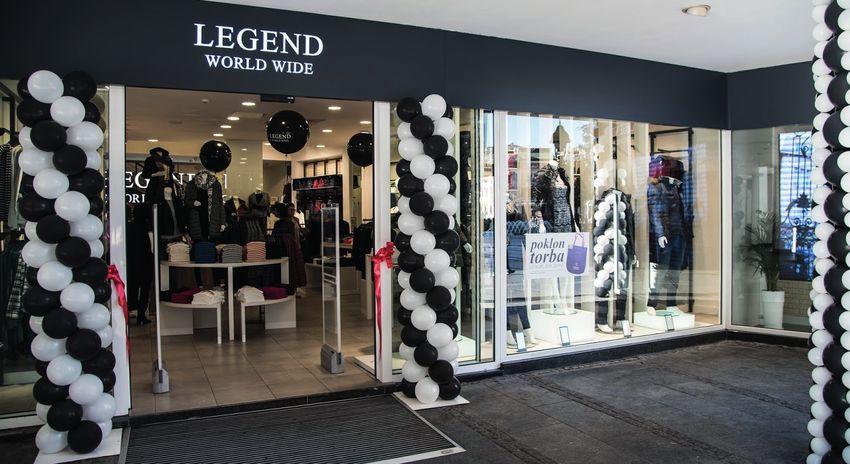
Connected Stores

Preface
You’re about to read the paper ‘Connected Stores: transforming store fleet through technology’. Inside are the results
of a thrilling experiment - a tale we’ll try to do justice to throughout this paper, which is aimed at providing guidance to
retailers around the world.

We wrote this paper for executives that are interested in retail innovation & technology, specifically those who work
with brick & mortar stores. It’s been five years since we predicted that digital channels would reshape store footprints.
This year, we saw retailers investing to make that happen. This was also the year we reinvented stores as we knew
them, opened shops based on data, and used smart technology to generate insights. We did away with ‘black boxes’
where customers went into shops and revenue flowed out, and said yes to new and exciting store concepts that deliver
outstanding experiences.

To reflect on this retail renaissance, we joined forces with PTC (IoT platforms), Monolith (Computer Vision), Impinj (RFID)
and NCR Corporation (POS) to create an alliance with enough capabilities to connect stores and learn from the process.
We were honoured when Legend World Wide, a Serbian fashion retailer let us use their flagship store in the high streets
of Belgrade, Serbia, as an innovation lab. The experience with Legend World Wide proved invaluable, and everyone
benefited. The store is now up and running, and we are continuing to learn from it.

We turned our findings from that experience into a report that executives can consult when it comes to questions like:

“What is the purpose of stores in the future?”
“What is the role of technology in my stores?”
“How do I transform my current store fleet?”

To answer these questions, we took our learnings and shared them with companies inside and outside of the retail
industry. Through our interviews, we were able to get context and capture the challenges executives face today. We
would like to thank the following companies for their input and perspective:

• adidas AG.                              • IKEA                                    • International Trading Company
• Ahold Delhaize                          • Black Red White                         • Global Fashion Retailer
• Estee Lauder Companies Inc.             • Vodafone Group Plc.                     • Premium Fashion Retailer

We hope you will enjoy reading our paper as much as we enjoyed writing it.

Victor Hoong & Morris Boermann (Deloitte Digital)

On behalf of our retail partner team:
Transforming store fleet through technology

Table of Contents

1.   The eCommerce dragons that have reshaped retail                                    4

2.   The purpose of a retail store                                                  11

3.   Technology - the right tools and setup                                         16

4.   Associates - will robots run all of our stores?                                21

5.   Product - getting it right every time                                          23

6.   Turning data into action                                                       26

7.   Transforming your store fleet                                                  31

8.   The Belgrade Connected Store experiment                                        34

9.   Closing thoughts                                                               36

                                                                                    3
Connected Stores

The eCommerce dragons that have
reshaped retail
Imagining the future
                                                                                                   Successes
The year is 1994, and somewhere on Wall
Street, an ambitious 30-year old named
Jeff is looking at a statistical paper that will                                                       Amazon founded
change his life and the world as we know
it. Jeff can’t believe his eyes when he sees
that internet usage has grown by 2300%
annually. Jeff decides to quit his job and,
as all good entrepreneurs do, work from                                                                     Acquires IMBD
his garage to set up a company that will
sell products via the internet. Jeff founded
Relentless.com and, if you visit it today,
you will be directed to the website that has
dominated the eCommerce market for the
last ten years and continues to set the bar
for retailers around the world: Amazon.
com ($590 Bn. market cap.)1.

Meanwhile, on the other side of
the world

After Richard Nixon’s landmark visit to                                                                            Amazon Prime
Hangzhou in 1972, an 8-year old boy eager
to learn English offered to guide tourists                                             Amazon Fresh
around the Chinese city in exchange for
English lessons. One of these tourists gave                                                            Amazon Kindle
the boy an English nickname he still uses
today: Jack. Years later, this same boy, Jack
Ma, built his own internet company after                                                                    Acquires Zappos
noticing he couldn’t find a single website
that sold beer on the internet. While Jeff                         Amazon Instant Video
was creating Amazon.com thousands of
miles away in America, Jack asked 17 of his
best friends to invest in a start-up company
that we know today as Alibaba Group
($490 Bn. market cap.)2.
                                                                                                             Amazon Kindle Fire

We’re telling you Jeff and Jack’s stories                                  First physical store
because their companies Amazon.com and
                                                                                                      Amazon Prime Air
Alibaba completely changed the way that
customers access products. Jack and Jeff                       Acquires Whole Foods
succeeded because they dared to imagine
a new future, one where business decisions
are based on science and data. Even today,
these companies continue to disrupt retail
thanks to their visionary leaders. We’re
bringing up these dragons of eCommerce
because they represent a new kind of
organisation: one in which data-driven deci-       Figure 1: Amazon.com’s willingness to fail3,4
sion making is the norm, not the ambition.
  4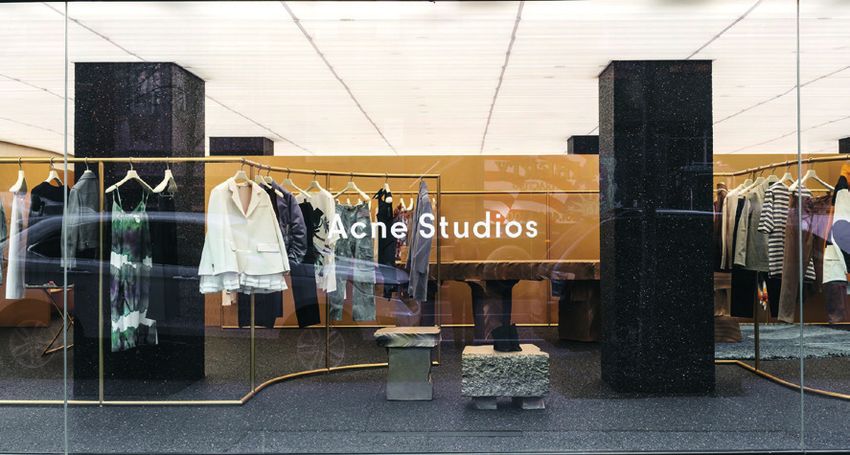
Transforming store fleet through technology

                            Failures                               Throughout this paper, we’ll show the suc-
                                                                   cess of data-driven decision making, as well
                                                                   as touch upon some of its challenges.

1994                                                               A dragon’s game

                                                                   Amazon.com and Alibaba’s origin stories
1996                                                               read like a novel, with its main characters
                                                                   Jeff and Jack, two visionaries, who once con-
                                                                   quered separate online marketplaces. Am-
                                                                   azon.com and Alibaba started as pure-play-
1998
                                                                   ers (i.e. companies that only operate on the
                            Kozmo.com
                                                                   internet) but continue to invest in new ideas
                                                                   and concepts. The way they operate has,
2000
                                                                   and will continue to inspire companies and
                                                                   business leaders around the world. As their
                                                                   revenue grew, these companies turned
2002                                                               into retail dragons without having lost their
                                                                   start-up mentality or hunger for adventure.

2004                                                               The success of Amazon.com, and also
                                                                   Alibaba, does not just come from their
                                                                   vast amount of success stories. It is just as
2006                   AskVille                                    much about their failures (figure 1). Suc-
                                                                   cess is a result of an innovative mind-set,
                                                                   which only really works when you are able
                                            Amazon WebPay
                                                                   and willing to fail. That is why Jeff Bezos,
2008
                 Fulfilment by Amazon                              at a Business Insider conference in 2014,
                                                                   when asked about his failures, said that
       LivingSocial                                                he has made ‘billions of dollars of failures’
2010                                                               at Amazon.com5.
                            TestDrive
                                               Amazon Local        Willingness to fail is one of the traits
2012      Music Importer                                           of successful organisations. With that
                                                                   comes an entrepreneurial mind-set that
                                        Amazon Wallet
                                                                   has driven companies like Alibaba (and
2014                                                               its peers Baidu/Tencent) to kick-off an
               Fire Phone
                                                                   aggressive investment game to take their
                                           Amazon Local Register   successful business model, and diversify
                                  Amazon Destinations              that into industries that were tradition-
2016
                                                                   ally out of scope. Looking at their recent
                                                                   investments (figure 2) really shows the
                                                                   magnitude of their ambitious growth
2018                   iOS Kindle app                              plans and their desire to move away from
                                                                   pure-play and into a multichannel retailing
                                                                   game. Their power, platform, and logistics
                                                                   have allowed them to step into an indus-
                                                                   try like grocery (e.g. Amazon.com’s $13,7
                                                                   Bn. acquisition of Whole Foods) through
                                                                   strategic acquisitions and immediately
                                                                   become a leading competitor, shaking up
                                                                   the market as a consequence.            5
Connected Stores

Game of dragons
Selected investments over $1bn, since Jan 2016 by groups led by major Chinese
internet firms

   Target Company              Sector                                     Amount, $bn
   Intime                      Retail                                                2.6
   Didi Chuxing                Transport                                             4.5
   Ele.com                     Food delivery                                         1.2
   Lazada                      E-commerce                                            1.0
   Lyft                        Transport                                             1.0
   iQiyi                       Online video                                          1.5
   Uber China                  Transport                                             2.0
   Flipkart                    E-commerce                                            1.4
   Tesla                       Automobiles                                           1.8
   China Music Corp            Online music                                          2.7 *
   Didi Chuxing                Transport                                             4.5
   Supercell                   Online gaming                                         8.6 *
   Meituan-Dianping            Ticket booking/restaurant reviews                     3.3
   Lufax                       Financial                                             1.2

   Alibaba            Baidu                Tencent         *Estimate

Sources: ITJUZI; Crunchbase

Figure 2: Chinese dragon’s aggressive investment game into multichannel retailing6

What we take from Amazon.com and Alibaba, is how they have fundamentally changed
the way consumers get access to products, with which they became the driving forces
behind the major trends and developments we have seen in retail.

  6

Transforming store fleet through technology

The journey of retail

                                                      2012
In order to understand the
effect that Amazon.com and
Alibaba have had on retail, we                        Channel Shift - Death to the Store
                                                      “Time to let the British high street die.” – Financial times7
will discuss four trends that                         Retailers have faced tremendous changes in their industry over the
we have seen in retail since                          past several years. With the rise of the internet, many saw an opportu-
                                                      nity to drive sales through one extra channel: eCommerce. Most organ-
their arrival. Appreciating the                       isations viewed the internet as an experiment and made sure that their
                                                      eCommerce channels were built separately from their traditional
journey that retail has taken,                        business. Because of this, most retailers still have completely separate
will provide you with the right                       on- and offline entities.

context on why it is important
to think about stores, again.                         2014
                                                      Omnichannel Retailing - Digital Influence
                                                      “eCommerce is not eating retail.” – Harvard Business Review8
                                                      When customers started to use digital touchpoints (see our report on
                                                      Navigating the Digital Divide)9 during their shopping journey, issues
                                                      began to arise. For example, customers would interact with the same
                                                      retailer on different channels (e.g. online and offline) and encounter
                                                      discrepancies, like price difference. As a response, retailers started to
                                                      focus on seamlessly integrating experiences across channels, which
                                                      we now call the Omnichannel experience. However, for organisations
                                                      to deliver an Omnichannel experience, which has now become
                                                      standard hygiene in the minds of customers, one of the biggest
                                                      challenges has been to organise against that Omnichannel promise
                                                      and break down the walls between online and offline functions within
                                                      the same organisation.

             2015
             Cu omer exp
             Custo
             Customer xpe
                       perie
                       p  ienc
                          ie
                           enc
                           ence
                            nc
                             ce: eve
                             ce: e errything is bra
                                                 randing
                                                    ding
             “Foster Innovation in Customer Experience.” – National Retail Federation10
             The last years have shown an increased focus on customer experience. Retailers noticed that connected
             consumers became more demanding and expected instant gratification and convenience. Consumers
             were looking for personalised experiences, which created loyalty. As a response, retailers heavily invested in
             personalisation and concentrated on delivering the right experience based on their value proposition.

             2017
             Reb
               birrth of th
               birth     the
                          he store:
                             sttore:
                             sstore
                                  e: IoT
                                      oT
                                       T iin
                                           n retail
                                             r
             “Is brick and mortar retail making a comeback...” – Business Today11
             Stores have become the focal point for traditional retailers once again. Former online pure-players like
             Amazon.com and Alibaba have started opening brick and mortar stores to provide the full experience offline that
             customers expect online. Pure-players have traditionally run their business online, where everything is measur-
             able and where data drives their decisions. When opening brick and mortar stores, pure-players have kept this
             data-driven mentality and designed their brick and mortar stores accordingly. Most of these stores are equipped
             with technology that enables them to collect data from their customers and use this data to make educated
             decisions.

                                                                                                                                 7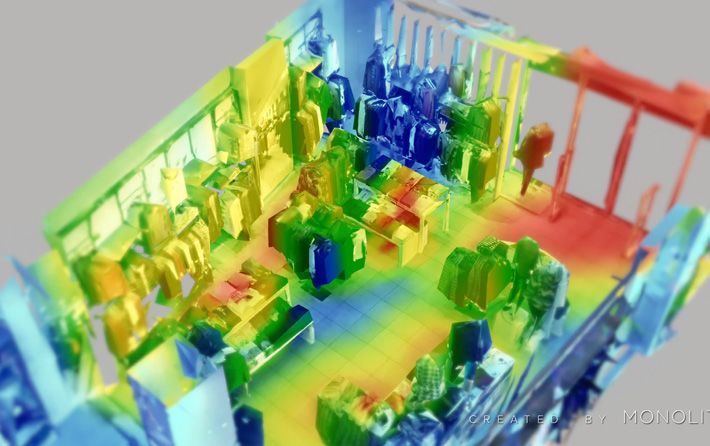
Connected Stores

Retail reshaped - the ecosystem of touchpoints                                             “We first determine really how
                                                                                           we want to meet our customers in
Reflecting back upon these trends shows how, with the rebirth of stores, we are
coming full circle on the developments in retail. It has become evident that retailers
                                                                                           whatever meeting or touchpoint we
should think about stores again. Even more so as the number of touchpoints average         have. Then, in the next step we can
retailers have with their customers, is dramatically increasing. Therefore, we believe     detail the interaction between the
it is important to think about stores and the unique role they play in the ecosystem of
touchpoints (see figure 3).
                                                                                           physical environment and digital
                                                                                           possibilities, in a pop-up store for
Retailers should think about the unique characteristics of online and offline channels     instance.”
instead and try to optimise them accordingly. Appreciating the entire ecosystem of
touchpoints will help retailers improve each channel and deliver a more powerful and       Global Manager Digital Touchpoints
holistic customer experience.                                                              (Furniture Retailer)

                             Products

           eCommerce                      Customer service

    Messaging                                         Associates
                             Customer

         Apps                                       Website

                   Social media         Stores

Figure 3: Ecosystem of touchpoints

Imagine a future where you operate your household through AI-powered home
assistants like Amazon.com’s Alexa, or Google’s Home. They enable you to
order products or services through voice-command, manage your schedule and
autonomously interact with other touchpoints. Home assistants are just one of many
touchpoints in the lives of consumers. If they are able to help consumers gather
information and order products, then retailers should really think about what stores
can offer that is uniquely different in order to remain relevant for consumers to go to.

Customers should always be in control of the way retailers and technology approach
them. Not everyone would like the example above. Which is one more reason why
it is so important for retailers to get to know their customers and their preferences.
However, research has proven that customers are willing to provide personal
information if they receive relevant communication and offers in return12. That is why
one of the key terms in this paper is relevancy.

  8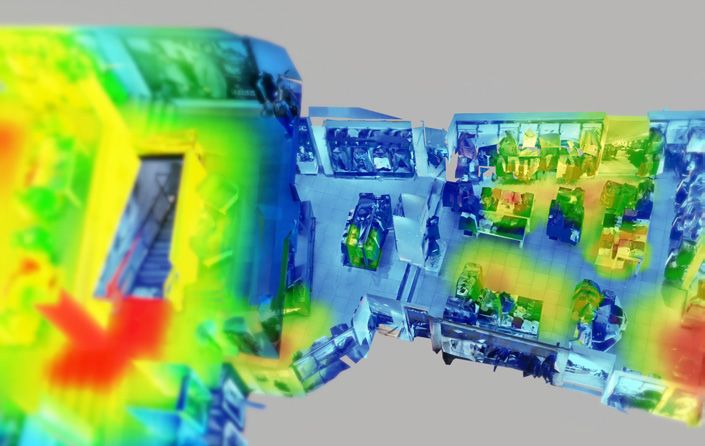
Transforming store fleet through technology

“You’re not fighting for the wallet,      Optimising the store vs.                       this important research is largely focused
you’re fighting for the time. As          Reinventing the store fleet                    on product innovation there are also
                                                                                         findings applicable more generally to the
we’re a company targeted towards          During our experience and research             introduction of new business propositions
families, we need to make sure            for this study we have observed a large        such as a new retail store proposition.
that they want to spend time with         number of retail innovations being
                                          executed in the market. Several of the         In particular, Christensen puts forwards
us. Therefore, we are not just            retailers we interviewed also cited that       that incumbent players have the
competing with the usual suspects,        they have been able to develop and             advantage of large existing customer sets
we’re competing with any place            successfully deploy innovations. However,      but with it high expectations of yearly
                                          these have been optimisations of existing      sales. New market propositions find
where families spend time together,       processes rather than a fresh look at          targeted customers niches away from the
like cinemas or even the zoo.             the ideal store set-up today. Often, we        incumbent’s focus to build up the new
We need to make sure that if              see point solutions layered on top of          proposition. The new entry companies
                                          existing processes often driven by the         do not require the yearly sales of the
families spend time with us, the          vision of technology vendors of just           incumbent and thus have more time
customer experience is as much            one piece of the store operation. This         to focus and innovate on this smaller
about entertaining kids, as well as       results in incremental benefit but not a       venture.
                                          re-invention of business process/model
serving the parents.”                     that will bring a step-change in business      Reflecting on the project portfolios of
                                          performance. We have found that the real       well-established retail organisations, we
Michal Jaskulski, Marketing Director at   challenge for most retailers is not creating   believe these factors are also at play.
Black Red White                           isolated and incremental optimisations         Retail businesses are managed to hit
                                          but in developing holistic innovation that     short-term targets resulting in more
                                          can transform major processes across           tactical projects to better serve existing
                                          the store operation and reshape the            customer and business needs rather
                                          fleet operation to better suit needs of        than exploring the potential opportunity
                                          customers today. Take for example the          outside of the immediate needs of the
                                          vision Amazon.com demonstrates with its        present customer base. Inherent system
                                          pilot Amazon GO concept13 that removes         bias then naturally focuses limited
                                          the checkout process (and many human           resources on the more obvious business
                                          intensive tasks) altogether. Once the          cases.
                                          technology is feasible, then this offers the
                                          potential to radically improve the retail      One of the approaches to tackle this
                                          operation.                                     challenge is to enforce a balanced project
                                                                                         portfolio over different innovation
                                          The challenge of holistic                      categories (figure 4). We categorise
                                          innovation                                     projects over core, adjacent and
                                                                                         transformational. Ensuring adequate
                                          So why do we not find more retail              investment across these (70%, 20%, 10%
                                          organisations tackling such holistic           is our rule-of-thumb) doesn’t “bet the
                                          innovation efforts? There are a number         farm” on innovation but invests in building
                                          of reasons behind this but we find             the business for tomorrow as well as
                                          some relevant factors in the book              trading for today. The final category -
                                          “The Innovators Dilemma” by Clayton            transformational, is where we would find
                                          Christensen14. This book outlines how          the kind of holistic innovation we believe
                                          disruptive innovation tends to be brought      can transform the store fleet.
                                          in from the outside of a market by new
                                          entrants rather than being developed
                                          by the incumbent market players. While

                                                                                                                                    9
Connected Stores

 Create new                                               Transformational
 markets                                                  Developing breakthroughs
 and audiences                                            and inventing things for
                                                          markets that don’t yet
                                                          exist

                                         Adjacent
 Enter new                               Expanding from existing
 markets and                             business into “new to the
 audiences                               company” business

 Served markets      Core
 and audiences       Optimising existing
                     products for existing
                     customers

                     Optimise existing       Create extensions,          Build new
                     offerings and           enhancements,               businesses and
                     operations              improvements                structures

Figure 4: Balanced project portfolio methodology (HBR, Managing your innovation portfolio
by Nagji & Tuff)

We propose that retailers push the boundaries towards holistic store innovation to
deliver substantial customer value that is differentiated from their competitors. In order
to do so, retailers must start with re-aligning the purpose of the retail store fleet for
their customers that are now operating in the new context of the digital world.

Over the following chapters we will discuss how to transform your store fleet by tackling
a number of questions we often hear from retail executives:
• “How do I determine my store concept?”
	See chapter ‘The purpose of a retail store’
• “How do I select the right technology for our stores?”
	See chapter ‘Technology - the right tools & setup’
•	“ What is the role of our associates in the future?”
	See chapter ‘Associates - will robots run all of our stores’
• “What products do I put on shelf?’
	See chapter ‘Product - getting it right every time’
• “How do we turn data into action?”
   See chapter ‘Turning data into action’
• “How do we scale our store concept?”
	See chapter ‘Transforming your store fleet’

 10
Transforming store fleet through technology
The purpose of a retail store
What do stores look like in In this digital era, driven by a wide transaction at low-cost (e.g. pound-
the digital era? array of smart consumer technologies, stretchers), but for those retailers looking
we have seen a complete change in to increase brand loyalty, we suggest
We live in a digital era, which consumer behaviour. Shoppers are more to learn from the way brands like Acne
challenges the traditional informed than ever, having access to Studios or Red Bull convey their brand
multiple sources of information, which story across every touchpoint they have
rules of retail from the way makes them more demanding and less with their customers.
companies organise to the forgiving to mistakes. Furthermore,
they expect that retailers intimately
way that they design stores.
know them and will not shy away from Acne Studios
Hence, we’ve received many switching to a different brand. We have
questions from executives seen retailer fight the decrease of brand New York City Flagship Store
loyalty through promotions or heavy (926 Madison Ave)
that wonder what stores discounts. However, we believe that will
should look like today. We only decrease brand loyalty even more as
relationships with brands are not build on
dedicate this chapter to those
price or product, they are built on a much
who are ready to embrace deeper level: the brand.
the necessary mind-set to
We believe that store design has much to
design stores of this age, learn from these developments and the
which starts with appreciating unique opportunities it provides. Retailers
who understand and appreciate that, will
the way consumers have quickly find competitive advantage over
changed. others.
Brands like Red Bull and Acne Studios,
a Swedish high-end fashion retailer,
understand that customers are looking for
that brand experience. The Acne Studios
New York flagship store is a perfect
example. Highly aesthetically pleasing,
the store immerses the customer in an
experience that helps them understand
what the Acne Studios brand stands for.
They’ve executed this with considerable
attention to detail, almost at the cost of
actually selling products. We believe that
Acne Studios use stores as an opportunity
to build a relationship with customers
first, which will yield product sales later,
or in a different channel (i.e. online). First
and foremost, they make sure customers
connect to their brand and make it part of
their life story.
Of course, not all retailers should build
stores like Acne Studios, which almost
entirely focus on brand experience. There
will still be stores that tailor to instant
11Connected Stores
Why do people visit stores? The iconic sports brand adidas is
investing in building their brand values
Consumers are increasingly attracted and work from a clear vision about the
to brands that tell a story, as they seek role they want to play in the lives of their
brands that fit into their personal life customers. They differentiate between
stories (often displayed on social media, experience and transaction across their
see shareable experiences15). Stories help touchpoints, recognising that customers
people relate to a brand and create a seek different things at each touchpoint.
connection that transcends the product. Therefore, the purpose of their store is
The branded experience reflects the to provide a unique opportunity to convey
relationship retailers want customers to the adidas brand story to their customers
have with their brand. Retailers should (see an example of conveying the adidas
consider what values will make the brand story ‘we are here for the creators’
relationship meaningful in the eyes of to a store purpose in Knit for You16).
the customer. Actively deciding what
the brand values are determine the
principles that retailers can use to design
stores and the selection criteria with
which they select and prioritise in-store
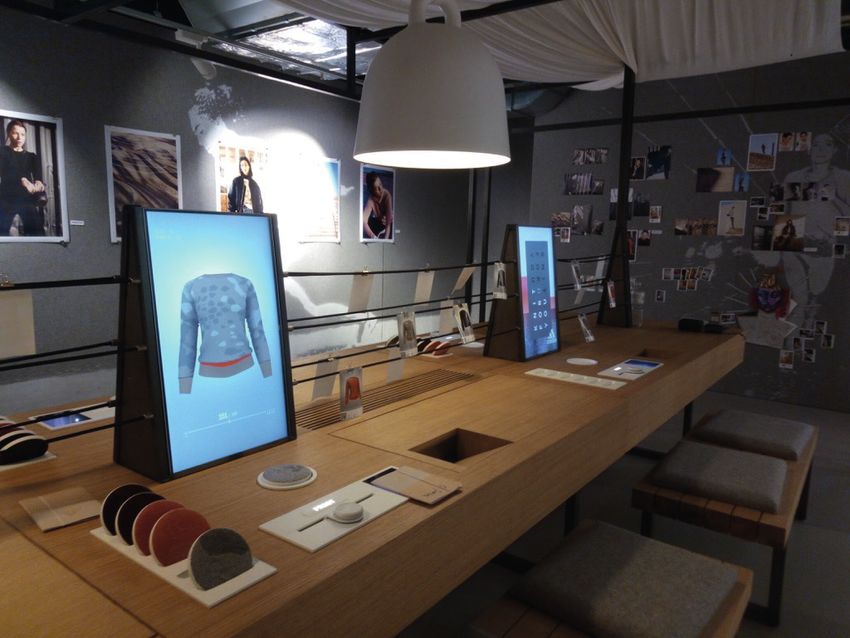
technology. Knit for You
Launched in the middle of Berlin,
“To clarify the role digital would adidas has launched a store that
play in our retail stores, we had Shareable experiences allows the most creative amongst us
With the rise of social media, to imagine and design products and
to reflect back to who we are as a customers started seeking authentic walk away almost instantly
brand and what it means to play and shareable experiences and
across both the sport and retail products that reflect the personal Standing in a room full of sensors,
brand they promote on social media. customers interact with different
segments. We kept coming back patterns & colours. Body scans will
to this element of physicality and Barneys co-operated with a creative make sure that the body is measured
humanness, and we put that at the agency to develop aesthetically in great detail, ensuring a snug fit! A
pleasing objects that were on display true example of living the brand story
core of our retail experience - with in their windows, creating a social and being there for the creators!
digital serving a role to enable and media frenzy.
heighten that.”
Worth Darling, Director Consumer
Experience (adidas AG)
12Transforming store fleet through technology
So, determining the purpose of your store Hence, we see retailers like Acne Studios
is the first step we urge executives to take, and adidas, who really allocate their
which, in the end, boils down to a simple stores to the first phases of the journey,
question: why do people visit my store? which are Awareness and Consideration.
In the next paragraph we aim to help That does not mean they neglect the other
retailers answer that question. phases, but they emphasise on brand
experience and making sure customers
Determining the purpose of retail understand their brand story. They
“Obviously we want high stores recognise that their other touchpoints
transactions in store, but for us it’s (e.g. social, eCommerce) do not have the
A visit to the store is just one of many unique and physical characteristics that
really about taking time, exploring moments in the journey customers take stores have, which makes them so useful
the store and being surprised by while shopping for products. Designing in conveying brand stories.
our brand and products. As we sell stores starts with understanding the
full customer journey (i.e. the journey Therefore, the purpose of stores highly
premium products we want our customers take from the moment they depends on which phase of the customer
customers to really feel like they hear about a brand or product, to the journey retailers want their stores to
received a premium experience actual purchase and service afterwards) play an increased role. Hence, the store
and specifically what she or he needs types we have come across range from
in-store or anywhere else. That at each phase. Each phase meets a very transaction focus to emphasis on brand
is why we design aesthetically specific customer need and therefore experience.
pleasing stores that tell our brand determine the guiding principles with
which retailers should design their stores.
story when you enter”
We have seen successful retailers that
Retail Executive at Fashion Brand take into account all of the touchpoints
they have with customers (figure 4) and
ask themselves how to allocate those
to the different phases of the customer
journey (figure 5) to build a meaningful
customer-brand relationship.
Awareness Consideration Purchasing Fulfilment Advocacy
Making customers aware of Enabling customers to find Aiding customers to make Ensuring product fulfilment Boosting loyalty by
Phase your brand and where it relevant and personalised their choice and ensuring (both delivery and after establishing an ongoing
stands for, by inspiring information in an easy to the purchase of products sales) in the most optimal relationship through dialogue
them with stories delivered digest way and services is seamless and personal way and added offerings
to the right audience at the across all touchpoints
right time and channel
I want to understand what I want to learn about the I want to easily compare, feel I want the product/services I want to voice my opinion
Needs the brand stands for and be various products/services reassured I make the right delivered (or returned) where about the brand/product/
inspired benefits the brand offers and choice and purchase the and how I want to and being service and stay updated
understand how they match product/service in a way able to easily contact on the latest news via the
with my particular needs that is convenient for me customer service if necessary channels I prefer
Figure 5: Example of a Customer Journey
13Connected Stores
Five archetype stores “Often customers are going to
stores in order to be consulted by
We’ve mapped out the different store
archetypes (figure 6) we foresee in the
our beauty advisors. They are
future. As you’ll see, the store archetype looking for advice, but also to relax,
on the far left (Sensory Playground) is have fun and reward themselves.
most concerned with brand experience.
The one on the far right is most concerned
In the future, we need to continue
with transactions (Vampire Vending). focusing on providing a reason for
consumers to come to our stores.
Each store type has different
characteristics that are tailored to
Through unique experiences
specific customer needs. Using in- like, for example, we do with
store technology to gather data about pop-up events targeted towards
customers provides insight into what
visitors experience in the store. With this
Millennials.”
information, retailers can iterate and
evolve their store’s concept until it meets Joanna Zboch, General Manager Central
the specific customer needs. Europe at Estee Lauder
In summary, we advise retailers to think
about which phase in the customer journey
they want their stores to play an important
role. Based on that, they determine how to
align their store concept to the customer
needs of that specific phase. In the next
chapters we will explain how to translate
the purpose of your store into a store
concept, by discussing the implications on
technology, associate and product.
14Transforming store fleet through technology
Sensory Playgrounds Expertise Labs All-in-One Shops Category Stands Vampire Vending
Purposes Purposes Purposes Purposes Purposes
Provide branded Give information, content Provide customers with an Focus attention and Instigate opportunism and
experiences to drive and confidence for all-round experience and sales on a specific boost deal conversion
loyalty and advocacy purchase decision availability to products product category
Characteristics Characteristics Characteristics Characteristics Characteristics
Amplify the brand with Enable superior in-store Provide all-round experience, Provide detailed product Enable shopping without
digital experiences in store service & information from inspiration to information regarding associates, with frictionless
playing into all of human’s provision with digital tools fulfilment. Wide store specific category, with payments and self-service.
senses for customer or associate assortment and extended aligned marketing and Cater to fast shoppers
(digital) aisle merchandising efforts
Establish a store as Recognise customers to Ensure convenience for Optimise availability of Maximise traffic and
a destination of choice offer personalisation in customer in every locally sought-for goods conversion and enable
service and suggestions shopping trip (e.g. assortment frictionless payment
optimisation order-to-
store / order-to-home) to
ensure relevance of store
‘I want to browse,
I purchase it’
Experience Transaction
‘I want to have fun ‘I want to browse & ‘I want to purchase a ‘I am looking to buy a ‘I want to go into the
and be inspired by the understand the offer large number of specific type of product store, get some great
brand’ and experience a product products as and need to know if value deals and get out
before I purchase it’ conveniently as possible’ they sell it and if the fast’
price is decent’
Figure 6: Store Concept Archetypes
15Connected Stores
Technology - the right tools and
setup
Trends in technology Biometric technology information or recommendations with
As retailers, it’s important to which associates are able to better serve
We’ve seen an increase in biometric customers.
keep up with the latest trends technologies, mostly focused on using
in technology. Retailers fingerprint or facial recognition to identify
and authorise in-store activities like North Face AI support
should ask: do you know payments and checkout. In retail, multiple Customers at North Face receive
what’s out there and what’s payment vendors are experimenting with interactive support through natural
biometrics. ‘Pay with a Selfie17’ by Alibaba conversations with AI-powered tools
coming? In order to help
is a great example.
you, we have selected four
trends in technology we think Biometric technology enables retailers
to dramatically change their checkout
are most relevant to brick & process, which increases customer
mortar stores and our story satisfaction and decreases staff time
(due to automated POS systems and
today.
unmanned touchpoints).
Key Trends
Pay with a Selfie (Alibaba)
1. Biometric technology Using facial recognition, Alibaba Computer vision
customers can now purchase
2. AI & self learning machines products by taking a selfie. With computer vision, retailers get
real-time feedback through images and
3. Computer vision videos. This is an easy way to automate
visual tasks humans would usually do,
4. Internet of Things
like checking inventory on the floor and
observing customer preferences and
profiles as they move through a store.
In retail, companies like Monolith20 have
developed camera vision algorithms,
as part of their offering, which track
customer profiles and in-store behaviour
AI & self-learning machines to provide recommendations for
optimising category performance, shop
Retailers have started to use Artificial layout, and allocate associates efficiently.
Intelligence (AI) and machine learning to Computer vision enables retailers to
both increase operational efficiency but understand their customers and provide
also improve the customer experience. actionable insights based on that.
Macy’s uses AI to power their in-store Linking computer vision with other in-
app18, which helps customers navigate store technologies like radio-frequency
their stores and North Face19 has identification (RIFD), which enables
introduced AI to assist shoppers on analysis of product interactions, provides
their website. In the future, we think it’s value through the aggregation of data
likely that AI-powered solutions will also and cross-touchpoint analysis. In the
support store associates. For instance, chapter ‘The Belgrade Connected Store
AI-powered software might be able to Experiment’, we will elaborate on the
provide live detailed product use of computer vision in an actual
store.
16Transforming store fleet through technology
“By using Monolith’s intelligent Computer Vision IoT platform analysis
camera solutions at a pop-up store, See the chapter ‘The Belgrade See the chapter ‘The Belgrade
Connected Store Experiment’ for more Connected Store Experiment’ for
we were able to test the technology detailed information about how we more detailed information of how we
but moreover get new insights in applied computer vision to an actual used IoT platforms in Retail
the shopping behaviour of our store!
customers. Hence, we were able to In-store customer tracking Social Media Analysis
try out different store environments
RFID inventory mgmt. Store Associates
every month. We then scaled
Smart Dressing Rooms Facial Recognition &
CRM
Beacons Customer Loyalty
up the technology to four of our Point-of-Sale Interactive Displays
showrooms which really allowed
us to do all sorts of A/B-testing
We believe these trends are important
in the automotive environment. to retail at the moment. However, retail
Thus, optimising the shopping is constantly changing and new trends
environment for all of our stores.” Internet of Things will develop. Therefore, we believe that
successful retailers must be continually
It has been nearly two decades since tracking these developments. The
Digital Director (International Trading the Internet began to fundamentally only way to do that is when you have
Company) reshape the retail landscape. Yet even as actually welcomed technology in your
the Internet’s place in retail strategy has organisation, including the mind-set it
come to define the new normal, another requires.
suite of technologies — the Internet of
Things (IoT) — threatens to reshape the Traditionally, retail has not been a high-
competitive landscape, again. Through the tech business. However, with the rise of
deployment of sensors and the collection technology, start-ups and new innovations
and analysis of the data they generate, have increased dramatically over the
IoT opens new avenues to influence last decade and will continue to do that
and augment actions, from urging you in the future. Therefore, we feel it is
to get up from your desk and move, to necessary for retailers to understand the
replenishing inventory when a store shelf role technology plays in the stores, but
empties. moreover in their entire organisation.
We have seen IoT platforms move their
way into retail, to help aggregate data
from different solutions and assist
retailers in making sense of all the data
that is being generated in the store. One
of those platforms, PTC ThingWorx21, is
currently being used in our connected
store experiment in Belgrade. It’s been
successful in enabling data management,
generating insights and providing
analytics.
17Connected Stores
How to become a tech- The program is a three-month intensive Let’s look at three other approaches we
charged business start-up accelerator focused on bringing see from retailers trying to become more
new technology, experiences, products, tech-charged.
Fostering innovation and solutions to retail. 10 start-ups are
has become one of the selected each wave and will be allowed to
Business changes
work with a 150 mentors from within and
main priorities for Target outside the Target network. 50 of those 1. Centres of Excellence (CoE)
Corporation ($34 bn. are target executives at VP level or above,
including their CEO Brain Cornell. 2. Product focused agile teams
market cap.). Therefore,
they launched a start-up Last year, Target + Techstars companies 3. Innovation labs
accelerator program called collectively raised $32 million post
program, and eight of the 10 companies
Techstars Retail22. went on to work with Target on pilots or in Centres of Excellence (CoE)
some other way. Ryan Broshar said in an
interview with Retail Dive23: Technology expertise can be organised
in a centre of excellence: a ring-fenced
“The main takeaway with our program entity with co-located professionals
is the sense of scale. The difference in that work for the entire company. By
scale between a start-up and a fortune 50 bringing technology talent with similar
retailer like Target is there’s a huge gap expertise together, a company can create
there. It’s hard for start-ups to fathom a stimulating environment to attract,
the scale of Target, and it’s hard for develop and retain digital talent. CoE’s can
Target to learn how to work with a team have their own culture and thrive through
of four from a start-up. We aim to bridge cross-pollination and idea sharing. When
that gap and set up some meaningful a traditional company acquires a digital
relationships. One of the biggest benefits team, using a CoE as initial landing place
for Target is getting an inside look at the is often a good choice to prevent them
“secret sauce” that produces value and from being assimilated by the traditional
drives change.” (Retail Dive, July 18, 2017) culture. As the CoE and the expertise
in it matures, the best practices and
Target is just one of the retailers out there learnings of the CoE can be adopted by
that have invested in start-up accelerators, the business units after which the CoE can
which really glues them into the start-up be integrated in the wider organisation
scene and enables them to act quickly on or dissolved as organisational entity.
technology trends, but moreover, stay on Note that a CoE differs from just a central
top of them by continuously inviting them IT unit as it has real value for external
into your house. parties. A measure of a good CoE is that
it’s not locked into your organisation,
therefore competitors should find it
attractive to acquire.
18Transforming store fleet through technology
“How we deal with and prioritise Setup product focused After having determined ways for retailers
technologies? We decided to divide agile teams to become more technology charged, we
will now focus on the role of technology
the world into three - Commodity, With different departments being in stores, and how you can select and
Creator and Crazy. responsible for only a part of the product prioritise which ones you install.
or experience delivered to the customer,
precious time and resources are lost Selecting and prioritising
Commodity is something you need in handovers and alignment, locked by technology
to do (basic consumer expectations) operational KPIs and budget allocation
where the pure players are setting not incentivising cross-functional and Considering the amount of technology
more innovative development. Therefore, around, investing in the right technology
the benchmark and we seek to we see retailers shifting to agile teams is key but find the right technology isn’t
fast-follow. We call ourselves the centred around value streams and always easy. A common mistake we
Creator brand. It is our strategic products. This provides an end-to-end observe, often driven by technology
responsibility to the teams with autonomy vendors knocking on the door, is when
positioning. This is where we to make own decisions (within the retailers go for the ‘whizzbang’ objects
carefully select the areas we want to boundaries of standards and principles and observe that very few customers are
lead, ensuring we pay into our core set by the organisation). This enables actually using it. By thinking beyond the
a more collaborative and engineering ‘shiny objects’, successful implementation
competencies & strategies. culture, fostering the usage of new of in-store technology is highly dependent
Crazy is the space to play; technologies and methods to solve old on the needs of customers and the store
recognising there is so much stuff industry problems and test new ideas purpose.
and features. It also provides a means
going on that you need to simply to expand from a technology centre of We advise clients to look at technologies
try things out without being overly excellence to the broader organisation. through the lens of the Gartner Hype
thoughtful about it.” Cycle (figure 7)24, which helps retailers
Innovation labs think about the promise of specific
technologies in the context of their
Worth Darling, Director Consumer An innovation lab is an entity that is fully industry as well as their appetite to risk.
Experience (adidas AG) focused on delivering new concepts.
Where in the rest of the organisation The hype cycle basically depicts the
innovation activities are mostly related to technology’s lifecycle in five stages, all the
improving the core business products and way from the moment the technology is
processes, the innovation lab is separated created to mainstream adoption. During
from business as usual and covers the any stage of the model, technologies can
full innovation life cycle with ideation, either perish or survive and proceed to
prototyping, development, testing and the next stage.
scaling up. It has teams working on
different projects, where failure is part
of the normal process. For a successful
innovation lab having an ecosystem with
partners is essential to bring new ideas
and capabilities. In the war to be first
some retailers started acting as early
stage investor providing seed money
to start-ups buying concepts and ideas
before they come public. Also starting
partnerships with players such as Alibaba
and Amazon.com becomes more common
practice.
19Connected Stores
2. Monitor & tailor to your needs
Visibility (everything before plateau of productivity)
Technologies that have shown
Peak of Inflated Expectations
promising results and practical
applications, but still require
investments in order to be tailored to
a retailer’s specific need. For example,
Plateau of Productivity
we have seen large retailers publically
implementing AI and Augmented
Reality. Hence, we urge retailers to
think about the practical application of
Slope of Enlightenment these technologies by co-developing
with partners and exploring the right
moment to invest and roll-out.
Trough of Disillusionment 3. Investment now and roll-out
Time (after plateau of productivity)
Technology Trigger Technologies that are mature and
well-developed, something you should
invest in as it becomes a ‘basic’ need.
Figure 7: Gartner Hype Cycle This helps retailers select and prioritise Often core technologies are driven by
technologies, it enables them to major (technology) players and retailers
categorise new technologies in the merely wait for the optimal moment to
following buckets: invest in terms of money & maturity.
For example, CRM or DMP have proven
1. Make an early move their worth many times and are seen as
(everything before trough of a must for many retailers.
disillusionment)
Technologies that are very new and Brands often use different terminology
include a high risk factor. Often the as adidas does (see quote by Worth
practical application has not been Darling, Director Consumer Engagement
crystallised yet. They require pilots in at adidas).
order to understand the technology in
more detail. For example, Smart Dust25, If technology is selected based on the
which are tiny computers the size of purpose, archetype and the above
a grain of sand, that work together as categorisation, it’s time to acquire the
a wireless sensor network. We often technology. Technology can be acquired
advise retailers to monitor technologies by building, buying or partnering up
in this category closely and pilot them to with an existing player. These decisions
prepare for the future when they have depend on the amount of influence
proven their worth. you want to have, as well as in which
bucket you have categorised the specific
technology.
20Transforming store fleet through technology
Associates - will robots run all of our
stores?
Who will work in the stores So, it’s only natural to ask the question: So, we don’t anticipate the end of the
of the future? will stores even need human employees store associate, but the dawn of a new era
in the future? And if so, what will they do? where store associates have the potential
Picture, for a moment, to become central players in developing
the tasks of today’s store Our short answer? Yes! We’ll still see the brand experience. By providing a
real-life humans in our future stores. Of wonderful in-store experience, associates
employees: they checkout course, retailers will use technology to can help transform happy visitors into
customers, act as security, automate store processes and create loyal advocates and brand ambassadors.
operational efficiency. And some of these
open and close the shop,
efficiencies will translate into cost savings, Tomorrow’s brand rock stars
fold clothes, stock products, which will give associates the opportunity
answer questions and are to dedicate more time to providing a As stores evolve, retailers must ensure
delightful store experience. that their associates add value for the
sources of knowledge for customer on top of what is provided in
customers. It’s not hard to No matter the type of store, customers the technology-enabled store experience.
will always have a desire to interact with Employees should be given the means
imagine that these tasks,
human beings. Human interactivity and to assist customers and deliver the right
tasks that have gone mostly engagement is one of the key drivers of service. We’ve seen many cases where the
unchanged for the past overall store experience and satisfaction customer and associate have access to
and will continue to be in spite of the same level of information, making the
several decades, could be technological advances. employee’s knowledge rather useless.
taken over by automated
It’s critical to empower the employees
processes and machines. In “Our associates are pivotal in our and elevate their position within the store
fact, many of these tasks are stores, through NPS we were able experience as they embody the brand
values and vocalise the story you want to
already becoming automated. to figure out that positive NPS convey to your customers. Enable them to
Just think of the automatic scores were often attributed to store become efficient, automate any in-store
checkout line in the grocery staff, whereas negative NPS was processes that you can and educate your
associates so that they fulfil one of the
store. often due to product in-availability. three roles we foresee in the future
Therefore, we do not just need our (see figure 8).
associates to make sure technology
works, but moreover to enhance the
customer experience.”
Neelendra Singh - Senior Vice President
Global DTC & Franchise (adidas AG)
21Connected Stores
Let’s take Estee Lauder as an example. insights ‘heart’ of their employees, they
The Storyteller They have positioned their beauty can truly unleash the power of the
Lives the brand story, consultants in roles that are integral to ‘science’ in connected stores.
able to explain brand the store’s concept as they recognise that
values and deliver customers are coming to their stores
explain brand values for professional advice26. Starbucks has “It is not hard making our
and deliver the done the same thing with their baristas. employees understand why it is
desired experience Have you ever wondered why some
baristas wear black aprons instead of
important to change our stores,
green? It means they are coffee masters we know our stores will focus on
The Best Friend
and experts in coffee27. Hence, they’ll be hyperconvenience, personalisation
able to translate their brand value (‘to
Knows you intimately,
inspire and nurture the human spirit - one
and understanding me as an
able to provide
person, one cup and one neighbourhood individual. It’s the store, the
personalised advice
based on deep
at a time’) into a store purpose and associate and even the aisle that
consequently into the role that associates
understanding of you
play in-store.
should understand who I am and
as a customer what I want. The biggest challenge
In these companies, the associate’s however is in the execution.
purpose is deeply rooted in the brand
Especially at the pace at which we
The Scientist values. The roles come with explicit
He or she who knows guidelines about behaviour, which need to do it at.”
it all and provides runs from recruitment to training to
detailed product performance management. Andrew Brothers - CIO (Albert Heijn -
information and Ahold Delhaize)
demonstrates The Associate of the Future
intricacies of use
Apart from the nuances related to
the definitions of the roles, and their
Figure 8: Associates of the future subsequent implications on a company
level, there are some other general
guidelines to take into account. In general,
associates’ digital fluency will increasingly
be called upon, in order to utilise the
tools they have been provided with
and teach customers how to use theirs.
Secondly, as the associate’s primary
value lies in adding ‘the human touch’
to a digital store experience, another
factor of growing importance will be the
associate’s emotional intelligence. Thirdly,
as the store becomes a place to learn and
improve, employees will have to cope with
a rising degree of change and dynamism,
essentially adopting the start-up mentality
on the store floor. Lastly, and very
much related to the start-up mentality,
employees will be called upon to share
their first-hand experience and feedback.
If retailers manage to tap into the valuable
22Transforming store fleet through technology
Product - getting it right every time
The king of the store The arrival of new digital channels offers we were able to segment the stores
In the previous two a new option through which customers in seven different types (e.g. premium
can get access to the product range, destinations, local markets, etc.).
chapters, we’ve covered the which changes the context in which stores
technological and associates operate to fulfil customer needs. So re- Based on the store types, and the
visiting range planning to ensure that the customer data, the client was able
perspectives of the store right product categories are being made to analyse which store assortment
concept, which is what many available in store vs digital channels is would suit the customers in the area
crucial. (e.g. women tend to buy more at
are drawn to when thinking
premium destinations than men). As
stores of the future. A third During our research we found three a consequence, the client decided to
design element we cannot considerations that we believe are adjust their assortment in terms of
important when thinking about products depth and breadth (e.g. determined
forget to mention is the as part of the store concept. top 10 must-have SKUs per product
king of the store itself - the category). Hence, better serving
1. Determine store assortment through customers, reducing aged inventory
product. To avoid this paper
demographic & customer data and increasing store performance along
getting too broad, we will (case study) the way. We subsequently went on
limit our discussion of this In terms of selecting, or optimising store to replicate this approach and scale it
assortment across channels, we’d like globally.
design aspect to a few key to illustrate this consideration with a
considerations given the case study on how a leading retailer In summary, as data is becoming more
is using customer & demographic of a commodity, retailers have the
digital age. We did not want data to determine the optimal store opportunity to conduct simple analyses
to leave it out given that the assortment. that will generate insights with which
theoretically they can decide upon a
central purpose of stores has
The client, a Global Sports & Apparel store-specific assortment. However,
historically always been to Retailer, was looking for help to as that would be a very costly exercise
make products available for optimise assortment across their and difficult to execute, we often advise
Chinese store fleet. In order to clients to determine store assortment
purchase by customers. understand what assortment would fit per cluster of stores.
their stores, we looked at three different
lenses across sub-regions of China. The
first lens, aimed to identify what the
customer profiles were, by analysing
socio-demographic and customer data.
Secondly, we unlocked a variety of
purchasing data sources to determine
what the customer was buying. We
analysed direct online delivery, ship
from store transactions as well as
3rd party digital sales data. Our third
data lens intended to understand the
location specific context of stores. We
examined areas in which stores were
located, to determine the competitive
dynamics and other types of stores
around our clients’ store locations. By
combining customer & demographic
data, purchasing and store area data,
23Connected Stores
Siam Discovery the Exploration 2. Align store assortment to the store categories may be more important than
purpose others - for example in grocery, retailers
Redefining the retail experience in As discussed in previous chapters, are focussing on fresh food being made
Bangkok we encourage retailers to think about available in-store which customers want
the purpose of their stores, which we to see, touch and smell before adding
illustrated through five store archetypes to the basket. Packaged food and
(figure 6). Retailers that decide to household items can be ordered online
operate stores with an increase and delivered directly to home.
experience-focus, will need to align
their store assortment to enable that Finally, we have seen examples of
specific experience. Hence, we believe retail stores where the brand may be
it is important to think about which communicated with experiences or
products you put in store based on the services are not directly aimed at driving
purpose you have defined. immediate in-store conversion. Take the
example of the Rapha store in London29.
We have seen many excellent examples This is a store that sells very aspirational
of flagship stores (or brand stores), cycle wear, but also offers the chance for
which focus on inspiration and customers to just visit in order to meet
exploration. One of those examples is friends, listen to speakers whilst enjoying
the Siam Discovery the Exploration28 a doppio and take time out from central
(see Callout), a hybrid between a London.
department store and shopping mall.
Visitors are drawn into stories with an
emotional experience relevant to their “We have started to define stores
styles, interests and beliefs rather than from scratch again, based on the
simply being presented with a selection
of products. Hence, they selected
history of our company and what
their store assortment to tailor to the we stand for as a brand. That is
experiential purpose of the store. The what we try to translate into a store
store is designed around a laboratory
theme with seven labs (i.e. Her Lab,
design, which forces you to think
His Lab, Street, Digital, Creative, Play about how to select the products in
and Retail Innovative Lab). Customers store, what the consumer journey
are encouraged to conduct their own
experiments by testing, creating and
looks like and what added value we
cultivating items for themselves. The bring along that specific journey.”
Siam Centre store is a wonderful assault
on all of your senses and a perfect Michal Jaskulski, Marketing Director at
example of experiential shopping Black Red White
where products are aligned to the store
concept.
Hence, retail stores offer a unique
opportunity for physical exploration of
the product. This may be a showroom
experience, where the product might
be a high-value considered purchase,
which often requires some sort of
assurance before making the purchase
decision. In this case, selected product
24You can also read


