University of Texas at Dallas Healthcare Leadership and Management Graduate Program
←
→
Page content transcription
If your browser does not render page correctly, please read the page content below

University of Texas at Dallas
Healthcare Leadership and Management
          Graduate Program
                      First Edition

         800 W Campbell Rd, Richardson, TX 75080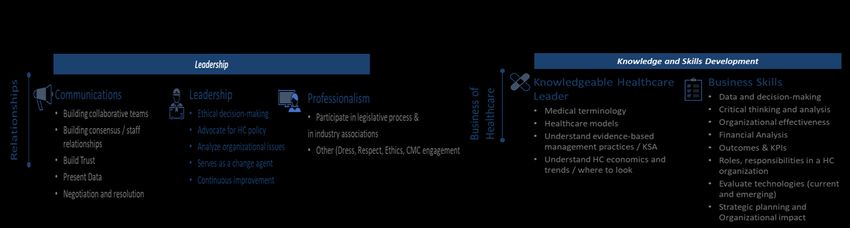
Table of Contents

Preface                                                         2
Program Goals                                                   3
Competency Overview                                             4
Communication and Relationship Management                       6
       Written and Oral Presentation                            7
       Relationship Management                                  8
       Negotiation                                              9
Leadership                                                      10
       Human Resource Management                                11
       Change Management                                        12
       Systems Thinking                                         13
       Quality Improvement                                      14
Professionalism                                                 15
       Healthcare Advocacy                                      16
       Professional Ethics                                      17
       Accountability                                           18
Knowledge of the Healthcare Environment                         19
       Healthcare Law                                           20
       Medical Terminology                                      21
       Healthcare Theory                                        22
       Economics                                                23
       Public Health                                            24
       Healthcare History                                       25
Business Knowledge and Skills                                   26
       Analytics                                                27
       Implementation                                           28
       Vendor Management                                        29
       Operations Management                                    30
       Healthcare Information Technology                        31
       Project Management                                       32
Curriculum Example                                              33
Faculty                                                    35
Glossary                                                        37

                                                                     1
Preface and Context
The University of Texas at Dallas, founded in 1961, is the largest public university in the
city of Dallas. The university offers more than 140 academic programs across 8 schools. The
largest of these 8 schools is the Naveen Jindal School of Management. The School of
Management boasts extensive research opportunities, excellent professors, and a range of
knowledge and career-minded opportunities for students to thrive.
The Naveen Jindal School of management's mission is to meet the challenge of a rapidly
changing, technology-driven, global society by partnering with the business community to:
conduct research enhancing management knowledge, deliver high-quality management
dedication to a diverse group of undergraduate and graduate students and practicing executives,
and develop, innovate and continuously improve programs advancing management education
and practice.
In addition to the school’s mission statement, the Masters in Healthcare Leadership and
Management’s mission statement further expands to include goals in a healthcare environment.
The program guides students with the help of values that are ingrained into the academics and
structure of the school. The values are reflected in the students who lead the program, outreach
by building relationships with community leaders. Integrity, diversity and inclusion are the
cornerstones of the healthcare management program. As the healthcare environment rapidly
evolves, we hope to cultivate and encourage ethical and effective leaders who will lead with
compassion in their communities.
In response to the changes in the industry, we are developing several new programs to
ensure our students have the competencies they need to excel in this dynamic industry. For
example, the program has developed an Elite Scholar and Leader Program (ESLP) designed to
give a select group of graduate students additional academic and technical competencies as well
as the leadership skills they need to make an immediate impact in the healthcare industry. The
university has also developed a new Professional MBA program that allows graduate students to
earn a concentration in healthcare. At the undergraduate level, we have developed a Professional
Program for Healthcare Management (PPHM). This program is designed for undergraduates that
excel in academics and leadership, and is a complementary program to the graduate curriculum
2Program Goals
Our competency model is based on the business and healthcare domains and
competencies, and our program is designed to provide our students with the competencies across
both of these domains. The curriculum systematically builds the competences and is infused with
structured team projects, written assignments, oral presentations and leadership assessments
(coaching, teaching and mentoring). Our faculty bring rigorous academic standards, blends
operations and emerging technology and practical experience to the classroom.
PROGRAM GOALS
The MS in Healthcare Leadership and Management program will prepare graduates who:
1. Have a broad understanding of healthcare organization and delivery in the U.S. (PSLO 1)
2. Can analyze how laws, regulations, and policies control healthcare delivery. (PSLO 2)
3. Define and evaluate the role of information technology in healthcare organizations. (PSLO 3)
4. Are prepared to be skilled decision-makers through comprehensive analysis of internal and
external factors in healthcare environments. (PSLO 4)
PROGRAM LEVEL STUDENT LEARNING OUTCOMES (PSLOs)
Students will be able to:
1. Assess the role of organized efforts to influence health policy formulation, and the
contributions of technology, research, and societal values on our evolving health care delivery
system
2. Describe how laws, regulations and policies control healthcare delivery and assess the
relationship between cost, access, and quality in healthcare
3. Identify and evaluate the types of information systems prevalent in healthcare organizations
4. Analyze how healthcare organizations create sustainable strategies to stay competitive
3Competencies Overview
The UTD MS degree is focused on 5 domains and 23 supporting competencies. The domains are:
Communication and Relationship Management, Leadership, Professionalism, Knowledge of the
Healthcare Environment and Business Knowledge and Skills. The model is pictured here:
The competencies associated with each domain were derived from feedback from various
stakeholders: alumni, industry partners, faculty, advisory committee and students. Based on
continuing feedback and assessment we will adjust the model as appropriate. Each domain is
supported by a series of specific competencies that you will need to be successful as you
transition from academia to practice. You will also note that we have grouped some of the
competencies together to avoid overlap and redundancy. For example, under the domain
“Communications” there are five competencies, three of which are complimentary and mutually
reinforcing. As such, we have included some examples of how one would exhibit the “skilled”
use of collaboration, building relationships and trust under one heading. We have also included
examples of “unskilled” or derailers associated with that set of competencies. In some instances
we have added some additional competencies that compliment a domain but are not competencies
in the model. The intent here is to provide you with some additional insights and learnings that
might further shape your development. You will also note that some of the competencies are
overlapping and apply to multiple domains. This makes sense because developing one skill set
often impacts the development or understanding of another.
Finally, these competencies are tied to specific core curriculum, program objectives, and our
mission which is to prepare students to lead and thrive in a rapidly changing, technology driven
healthcare environment. We do this by:
· Providing a student-centric, market-relevant, experiential learning that is service-
oriented andtechnology enabled
· Attracting a diverse pool of motivated students, staff, and industry-experienced and non-
tenuretrack faculty along with a strong alumni program to improve the quality of the program
4· Leveraging key healthcare industry partners from the communities we serve to
improve ourcurriculum and outcomes
· Working collaborative with our community and industry partners to improve
awareness and support of the program
· Developing programs of distinction such as the Professional Program in Healthcare
Management for undergraduates and the Elite Scholar and Leader Program for graduate
students
· Providing opportunities for research leadership that adds to the body of knowledge
in the healthcare industry
· Developing personalized leadership development opportunities that ensure our graduates
havethe knowledge, skills and attributes needed to improve healthcare costs, quality and
access
· Designing a program creates options (i.e. MBA with a healthcare concentration, an
undergraduate healthcare minor, dual degree and fast-track programs) that is flexible
andrelevant so that we accommodate traditional full-time students, as well as, working
adults
· Implementing and monitoring program improvements by developing a
longitudinalperformance index
· Achieve program goals and student level learning objectives
· Supporting the Naveen Jindal School of Management Strategic Plan
An example of how the competencies support our mission and how they are linked to the specific
class and student learning objectives is noted here:
5MS, Healthcare Leadership and Management (MS, HCLM), Domain, Competency and Measures
Domain Competency Keyword Definition / Measure of Effectiveness Key Core Curriculum Supporting / Elective Curriculum
Understand the importance of collaboration to drive sustainable results, and builds B
Domain 1: Communication HMGT 6321 Strategic Leadership In Healthcare HGMT 6324 Negotiation and Dispute
Build collaborative relationships Collaboration relationships by effectively communicating intent and delivering on commitments. Able to
and Relationship Management
give and receive feedback
Organizations Resolution
Develop and maintain medical staff Understand the roles of clinical professionals and how diverse health care professionals I HMGT 6321 Strategic Leadership In
relationships
Physicians Relationships HMGT 6325 Healthcare Operations Mgmt
collaborate to deliver patient care and meet organizational goals. Healthcare Organizations
Build trusting, collaborative A
relationships with: Staff, peers, Communicate clearly and persuasively one’s own position to various audiences, in part
other disciplines, physicians, by understanding their needs and interests and identifying points of consensus and HMGT 6321 Strategic Leadership In Healthcare
vendors, community leaders,
Building Trust HMGT 6311 Healthcare Financial Mgmt
conflict. Able to maintain effective working relationships and fosters a diverse and Organizations
legislators, nursing and other inclusive environment.
educational programs
Present data analysis results to I
decision makers
Communication Able to simplify analysis and recommendations for decision-makers HMGT 6323 Healthcare Informatics HMGT 6311 Healthcare Financial Mgmt
Mediation, negotiation, and dispute Works with suppliers, vendors, trading partners and internal stakeholders to reach the I
resolution techniques
Negotiation HGMT 6324 Negotiation and Dispute Resolution HMGT 6331 Healthcare Economics
best solution for the enterprise
Builds relevant relationships of trust by considering other points of view; Understand the A HMGT 6321 Strategic Leadership In Healthcare
Foster an environment of mutual
Domain 2: Leadership Culture purpose of culture is drive performance; working within an ethical decision-making
trust and ethical decision-making Organizations
framework OB6307 Strategic Human Relationships
Communicate intended outcomes and work with internal and external policy makers to I
Advocate and participate in HMGT 6330 Healthcare Policy Law and OB 6331 Power and Politics in Healthcare
healthcare policy initiatives
External Relations ensure best healthcare policies are developed to address current and emerging
Regulations Organizations
healthcare needs.
Critically analyze organizational A
Use systems-thinking and analytic methods to assess operations performance and
issues after a review of the Systems Thinking HMGT 6323 Healthcare Informatics HMGT 6331 Healthcare Economics
improve organization processes
evidence
Creates compelling vision; Serve A
as a change agent, assisting
Understand how leaders communicate a transformational vision and effectively lead and HMGT 6321 Strategic Leadership In Healthcare OB 6331 Power and Politics in Healthcare
others in understanding needed Change Management
changes, reasons for change and
sustain change. Organizations Organizations
the change process
Promote continuous organizational I
Quality Improvement Leverages continuous improvement methods and ideas to build a culture of excellence HMGT 6332 Quality Improvement in Healthcare HMGT 6311 Healthcare Financial Mgmt
learning/improvement
Participate in the legislative I
process concerning health care
through membership in Understand the importance of advocacy by participating in professional organizations that HMGT 6330 Healthcare Policy Law and OB 6331 Power and Politics in Healthcare
Domain 3: Professionalism Advocate
professional organization and move the healthcare agenda forward Regulations Organizations
personal contact with public
officials
Domain 4: Knowledge of the Healthcare and medical Understand healthcare medical terminology in order to build understanding and trust in a B
Communication HMGT 6320 American Healthcare System HMGT 6325 Healthcare Operations Mgmt
Healthcare Environment terminology clinical setting
Managed care models, structures, I
Understand the various healthcare models to include patient-center home health and
and environment (e.g., group, staff, Models HMGT 6325 Healthcare Operations Mgmt HMGT 6311 Healthcare Financial Mgmt
managed care organizations
IPA, PPO)
Evidence-based management Understand the roles of clinical professionals and how diverse health care professionals A OB 6331 Power and Politics in Healthcare
practice
Evidence-based practice HMGT 6323 Healthcare Informatics
collaborate to deliver patient care and meet organizational goals. Organizations
Healthcare economics and Understand emerging trends in managed care, e-health, m-health and the impact of A
Trends HMGT 6331 Healthcare Economics
emerging trends costs and revenue HMGT 6327 Electronic Health Records
Ability to analyze and evaluate A
Domain 5: Business Understand and use statistical and financial methods and metrics to set goals and
information to support a decision or Decision-Making HMGT 6323 Healthcare Informatics HMGT 6311 Healthcare Financial Mgmt
Knowledge and Skills measure organizational performance
recommendation
Demonstrate critical thinking and I HMGT 6321 Strategic Leadership In
analysis
Analysis Understand the importance of crtiical thinking decision-making HMGT 6325 Healthcare Operations Mgmt
Healthcare Organizations
Assess organizational perception I
Develop tools for assessing organizational effectiveness and plans to improve
of system effectiveness and Analysis HMGT 6332 Quality Improvement in Healthcare HMGT 6336 Management
departmental effectiveness
performance
Financial management and I
financial analysis principles (e.g., Understand and explain financial and accounting information, prepare and manage
Analysis HMGT 6311 Healthcare Financial Mgmt HMGT 6331 Healthcare Economics
balance sheets, income & cash budgets, and evaluate investment decisions.
flow statements, ratio analysis)
Outcomes measures and Develop a schedule, budget, and goals for a project and manage project resources to A
management
Analysis HMGT 6311 Healthcare Financial Mgmt HMGT 6325 Healthcare Operations Mgmt
meet goals.
Understand the role and function of governing boards and the methods for establishing B
Define roles, responsibilities, and effective board relationships with executive management. Understand the roles of clinical OB 6331 Power and Politics in Healthcare
job descriptions
Roles & Responsibilities HMGT 6325 Healthcare Operations Mgmt
professionals and how diverse health care professionals collaborate to deliver patient Organizations
care and meet organizational goals.
Evaluate existing and emerging I
technologies in planning the Able to evaluate current and emerging technologies that support cost reduction,
technological direction to support Technology improved access and quality. Able to define supporting organizational strategy and HMGT 6323 Healthcare Informatics HMGT 6331 Healthcare Economics
organizational strategy and construct.
systems architecture
Formulate strategic goals and objectives with appropriate consideration of the business, I
Strategic planning processes HMGT 6321 Strategic Leadership In Healthcare
development, and implementation
Implementation demographic, ethno-cultural, political, and regulatory environment and develop programs HMGT 6325 Healthcare Operations Mgmt
and business plans in response to these goals
Organizations
6University of Texas at Dallas M.S in Healthcare Leadership and
Management Degree Competencies Matrix
(5 Domains and 23 Supporting Competencies)
Communicati Leadership Professionalism Knowledge of Business
on and Competencie Competencies: the Healthcare Knowledge
Relationship s: Environment and Skills
Management Competencies: Competencies:
Competencies
:
Building Ethical decision- Participate in Medical terminology Data and decision-
collaborative making legislative making
teams process & in s
industry
associations
Building Advocate for HC Healthcare models Critical thinking and
consensus / policy analysis
staff
relationships
Build Trust Analyze Understand evidence- Organizational
organizational based management effectiveness
issues practices / KSA
Present Data Serves as a Understand HC Financial Analysis
change agent economics and trends
/ where to look
Negotiation Continuous Outcomes &
and resolution improvement KPI
Roles, responsibilities
in a HC organization
Evaluate technologies
(current and
emerging)
Strategic planning
and Organizational
impact
7Domain #1
Communication and Relationship Management Competencies
Present Data / Written and Oral Presentation
A written presentation refers to the process of writing research, briefing, or exploratory papers.
This is an important communication skill to present large swaths of information succinctly and
without bias. An oral presentation refers to the act of public speaking. This is an important
communication skill for a professional to possess because the future is about teamwork and
collaboration.
In order to demonstrate proficiency, students must:
● Present a thesis paper
● Participate in a team collaboration project
● Present briefing papers on topics relevant to healthcare
● Be able to present data analysis results to decision makers
● Actively participate in classroom discussions
UNSKILLED SKILLED
Not clear in writing approach Describes the bottom line up front
Hard to tell what the point is Easy to understand with logical format
Too wordy / grammar & usage problems Gets message across to a variety of audiences
No logical format Connects insights to action
Unable to adapt to different audiences Commands attention and can manage group
process during presentation
Core curriculum in the MHLM program which demonstrate these skills:
● HMGT 6323 Healthcare Informatics
● HMGT 6320 The American Healthcare System
● HMGT 6321 Strategic Leadership of Healthcare Organizations
● HMGT 6324 Healthcare Negotiation and Dispute Resolution
● HMGT 6330 Healthcare Law, Policy and Regulation
Supporting curriculum in the MHLM program which demonstrate these skills:
● HMGT 6311 Healthcare Economics
● OB 6321 Principles of Leadership
8Building Collaborative Relationships / Relationship Management Building Trust
Relationship management is a characteristic associated with interpersonal skills. It is a
cornerstone of being a leader who has the ability to resolve conflict and help others grow their
knowledge and skills. A leader’s ability to communicate, inspire and influence will be important
in all aspects of delivering care to patients, project management and team work within a holistic
healthcare team. This competency is important as it relates to peer, subordinate and superior
relationships, as well as, staff, physicians, vendors, legislators and other business and
community leaders.
In order to demonstrate proficiency, students must:
● Build collaborative relationships*
● Engage in interpersonal relations*
● Develop ability to establish and maintain medical staff relationships*
● Develop ability to establish and maintain relationship with buyers and suppliers*
● Build trusting, collaborative relationships with: staff, peers, other disciplines, physicians,
vendors, community leaders, legislators, nursing and other educational programs leaders*
UNSKILLED SKILLED
Doesn’t relate to a variety of people Relates well to others
Doesn’t take time to build rapport Builds appropriate rapport with others
Panics in face of conflict Can diffuse high-tension situations
Lacks confidence around others Uses diplomacy and tact
Lacks approachability
Core curriculum in the MHLM program which demonstrate these skills:
● HMGT 6324 Healthcare Negotiation and Dispute Resolution
● HMGT 6321 Strategic Leadership of Healthcare Organizations
● HMGT 6323 Healthcare Informatics
● HMGT 6325 Healthcare Operations Management
Supporting curriculum in the MHLM program which demonstrate these skills:
● HMGT 6333 Ethics in Healthcare Management
● HMGT 6340 Principles of Hospital Administration
● OB 6301 Organizational Behavior
● OB 6307 Strategic Human Resource Management
● OB 6321 Principles of Leadership
● OB 6331 Power and Politics in Organizations
9Negotiation
Negotiation is a dialogue between two or more parties aimed to reach a compromise. Negotiation
is an extremely important business communication skill to avoid potential conflicts and create
innovative solutions. It is an important tool for a leader to possess, especially in a field involving
conflicting theories of care delivery, enormous supply chains, and a great diversity of individuals
in different job roles.
In order to demonstrate proficiency, students must:
● Practice and develop skills in mediation, negotiation and dispute resolution techniques*
● Actively participate in classroom discussions about relevant topics in healthcare
● Be able to understand the terms of a contract and be able to assess possible long-term
consequences
● Be able to demonstrate an understanding of the different levels of organizational
operations and the general responsibilities of the roles at each level
UNSKILLED SKILLED
Afraid to take tough stands Can negotiate skillfully for internal and external
customers
Poor listener Seeks a third alternative
Does not seek common ground Gains trust of others
Uses ineffective tactics Can settle differences
Lacks approachability
Core curriculum in the MHLM program which demonstrate these skills:
● HMGT 6324 Healthcare Negotiation and Dispute Resolution
● HMGT 6321 Strategic Leadership of Healthcare Organizations
Supporting curriculum in the MHLM program which demonstrate these skills:
● HMGT 6331 Healthcare Economics
● OB 6301 Organizational Behavior
● OB 6307 Strategic Human Resource Management
● OB 6331 Power and Politics in Organizations
10Vendor Management
Vendor management is defined as the processes organizations use to manage their suppliers.
Healthcare resources are vital to managing care delivery and patient outcomes. It includes
resources from gauze and medical devices to Electronic Health Records systems. Vendor
management includes negotiating contracts, controlling costs, reducing vendor-related risks and
ensuring continuing delivery of resources. (etc.)
In order to demonstrate proficiency, students must:
● Demonstrate an understanding of the supply chain
● Demonstrate an ability to efficiently and effectively communicate through oral or written
communications
● Practice and learn skills regarding negotiation and dispute resolutions
● Understand the basic principles of contracts and what may be considered a breach
● Demonstrate an understanding of resource management
UNSKILLED SKILLED
Doesn’t understand how the supply chain Understands how the supply chain works and can
works and the role of strategic partners integrate key operational concepts to improve the
system.
Cannot integrate insights of strategic trading Can see how strategic partners view the enterprise
partners and create collaboratives solutions
Cannot develop “win-win-win” solutions that Can drive innovation and alternatives that enable
improve the overall healthcare system growth but also ensure key components of the triple
aim are achieved.
Cannot develop a P4P contract Creates meaningful contracts that drive
performance
Based on evidence, can outline operational and
organizational changes to improve the system
Core curriculum in the MHLM program which demonstrate these skills:
● HMGT 6311 Healthcare Financial Accounting
● HMGT 6320 The American Healthcare System
● HMGT 6321 Strategic Leadership of Healthcare Organizations
● HMGT 6324 Healthcare Negotiation and Dispute Resolution
● HMGT 6325 Healthcare Operations Management
● HMGT 6332 Quality Improvement in Healthcare: Six Sigma and Beyond
Supporting curriculum in the MHLM program which demonstrate these skills:
● HMGT 6322 Healthcare Cost Management and Control
● HMGT 6335 Spreadsheet Modeling and Analytics
● HMGT 6336 Information Technology Audit and Risk Management
11● OPRE 6301 Statistics and Data Analysis
● OPRE 6362 Project Management in Engineering and Operations
● OPRE 6371 Purchasing, Sourcing and Contract Management
12Domain #2
Leadership Competencies
Organizational Effectiveness / Human Resource Management
Human resources is defined as maximizing employee performance in service of the
organization’s strategic objectives. Human resource management is especially important in a
service industry such as healthcare. It can be critical to providing high quality care through the
hiring, recruiting and managing process.
In order to demonstrate proficiency, students must:
● Be able to demonstrate an understanding of the different levels of organizational
operations and the general responsibilities of the roles at each level
● Be able to build collaborative relationships with their classmates by participating in group
projects
● Advocate for healthcare policy initiatives and change that help deliver on the triple aim
(see also Domain #3, Healthcare Advocacy and Domain #4, Healthcare Law).
UNSKILLED SKILLED
Does not delegate Can clearly define the end state and purpose of the
team or organization
Doesn’t have a leadership philosophy Builds appropriate rapport across functions
Doesn’t understand the difference between Brings out the best in people
management and leadership
Doesn’t value diversity and inclusion Holds others accountable
Tells others how to do things vs. what has to Can clearly articulate a position with sound logic
be done and reasoning
Core curriculum in the MHLM program which demonstrate these skills:
● HMGT 6324 Healthcare Negotiation and Dispute Resolution
● HMGT 6321 Strategic Leadership of Healthcare Organizations
● HMGT 6330 Healthcare Policy Law and Regulations
Supporting curriculum in the MHLM program which demonstrate these
skills:
13● HMGT 6340 Principles of Hospital Administration
● OB 6301 Organizational Behavior
● OB 6307 Strategic Human Resource Management
● OB 6321 Principles of Leadership
● OB 6331 Power and Politics in Organizations
14Change Management
Change management is defined as the approaches to provide support individuals and teams in an
organization adapt to change. Through a sponsor and proper communication, the organization
must come to understand the reasons for change and regular check-ins with employees will be
important to the process. Change management is especially important concerning changes in
EHR systems and other technologies.
In order to demonstrate proficiency, students must:
● Foster an environment of mutual trust and ethical decision making
● Serve as a change agent, assisting others in understanding needed changes, reasons for
change and the change process*
● Utilize the resources available to graduates
● Advocate and participate in healthcare policy initiatives*
UNSKILLED SKILLED
Doesn’t build relationships of trust Builds a guiding team
Willing to accept the status quo Communicates why the change is necessary
Doesn’t build rapport Can diffuse high-tension situations
Lacks confidence around others Develops process and systems that can sustain the
change
Abe to create a compelling vision and mission and
engage others in developing those statements
Core curriculum in the MHLM program which demonstrate these skills:
● HMGT 6321 Strategic Leadership of Healthcare Organizations
● HMGT 6323 Healthcare Informatics
● HMGT 6325 Healthcare Operations Management
● HMGT 6332 Quality Improvement in Healthcare: Six Sigma and Beyond
Supporting curriculum in the MHLM program which demonstrate these skills:
● HMGT 6327 Electronic Health Records Applications
● HMGT 6334 Healthcare Analytics
● HMGT 6336 Information Technology Audit and Risk Management
● OB 6307 Strategic Human Resource Management
15Understand Key Organizational Issues / Systems Thinking
Systems thinking is a major tool of system analysis. Systems thinking will assist an individual in
viewing overall structures, patterns and trends. Systems thinking is a problem solving method
that applies scientific data to understand the elements that influence health outcomes, model the
relationships between variables and will help to create positive outcomes in healthcare based on
improvements between the variables.
In order to demonstrate proficiency, students must:
● Critically analyze organizational issues after a review of the evidence*
● Act on feedback about own strengths and weaknesses*
● Be able to conduct an organizational analysis (SOWT as an example)
● Be able to display critical thinking and writing skills
UNSKILLED SKILLED
Doesn’t see the larger picture Builds bridges of understanding between and
among functions
Doesn’t see or can’t explain the strengths or Leverages an organizational analysis to build out
weaknesses of the enterprise successful strategies
Sees only discrete functions Uses insights from data to create meaningful
strategies and action plans
Doesn’t understand the five basic tenets of a Explain the basic tenets of a learning organization
learning organization
Lacks approachability
Core curriculum in the MHLM program which demonstrate these skills:
● HMGT 6323 Healthcare Informatics
● HMGT 6325 Healthcare Operations Management
● HMGT 6332 Quality Improvement in Healthcare: Six Sigma and Beyond
Supporting curriculum in the MHLM program which demonstrate these skills:
● HMGT 6334 Healthcare Analytics
● HMGT 6335 Spreadsheet Modeling and Analytics
● HMGT 6336 Information Technology Audit and Risk Management
● OPRE 6301 Statistics and Data Analysis
16Quality Improvement
Quality improvement is the framework used to improve the ways care is delivered to patients.
The delivery and production processes can be measured, analyzed, controlled, and improved to
change the standards and provide a more quality service. Quality improvement promotes
continuous organizational learning.
In order to demonstrate proficiency, students must:
● Demonstrate a knowledge and understanding of Lean and Six Sigma
● Critically analyze organizational issues after a review of the evidence to make any
necessary changes
● Demonstrate an understanding of healthcare history and its role in the organizational and
systemic progress in the delivery of care
● Participate in current event discussions pertaining to the healthcare industry with their
peers
● Demonstrate an understanding of organizational workflows
● Promote continuous learning and improvement*
UNSKILLED SKILLED
Doesn’t understand the importance of Knows and can use some of the continuous
continuous improvement improvement tools
Doesn’t understand or know of the various Understands the connection between costs, quality
tools that drive results and continuous and access
improvement
Doesn’t see how the parts are connected Can lead discussions regarding quality that result in
action
Is a proponent of continuous improvement and
quality initiatives
Core curriculum in the MHLM program which demonstrate these skills:
● HMGT 6332 Quality Improvement in Healthcare: Six Sigma and Beyond
Supporting curriculum in the MHLM program which demonstrate these skills:
● HMGT 6322 Healthcare Cost Management and Control
● HMGT 6334 Healthcare Analytics
● HMGT 6335 Spreadsheet Modeling and Analytics
● HMGT 6336 Information Technology Audit and Risk Management
● HMGT 6V99 Special Topics in Healthcare Management
● ENTP 6370 Innovation and Entrepreneurship
● OPRE 6301 Statistics and Data Analysis
17Domain #3
Professionalism Competencies
Healthcare Advocacy
Advocacy is defined as the act or process of supporting a cause or proposal. Healthcare
advocates participate in the legislative process concerning healthcare through membership in
professional organizations and personal contact with public officials. Advocates also act as
support for patients and their families in making healthcare decisions.
In order to demonstrate proficiency, students must:
● Show an understanding of the importance of advocacy by participating in a professional
organization
● Show an understanding of the legislative process in (state and federal?) government
● Show an understanding of healthcare statutes and regulations
● Show an understanding of the history of healthcare
● Show an understanding of current events in healthcare through briefing papers
● Participate in the legislative process through membership in a professional organization
and contact with public officials
UNSKILLED SKILLED
Doesn’t know what is mission-critical Understands key policy issues and can prioritize
advocacy efforts
Doesn’t identify the critical issues in Understands how the legislative process works and
healthcare can identify the key issues
Can’t explain key laws, regulations and Can eliminate roadblocks
policies that impact healthcare
Doesn’t understand the legislative process Knows the key stakeholders and can see things
from their point of view
Can’t identify key stakeholders Active member in healthcare organizations (i.e
HAM or ACHENTX as examples)
Core curriculum in the MHLM program which demonstrate these skills:
● HMGT 6320 The American Healthcare System
● HMGT 6321 Strategic Leadership of Healthcare Organizations
● HMGT 6324 Healthcare Negotiation and Dispute Resolution
● HMGT 6330 Healthcare Law, Policy, and Regulation
Supporting curriculum in the MHLM program which demonstrate these skills:
18● HMGT 6333 Ethics in Healthcare Management
● OB 6321 Principles of Leadership
● OB 6331 Power and Politics in Organizations
19Professional Ethics
Ethics concerns philosophical definitions of right and wrong. Professional ethics includes both
personal and organizational standards of behavior that are expected by professionals in any
career field. Healthcare ethics deals with a lot of complex issues from the practice and provision
of care to the appropriateness of certain research and medical advancements.
In order to demonstrate proficiency, students must:
● Participate in discussions of ethics
● Show an understanding of workplace ethics and philosophy
● Be able to write debate-style papers defending their stances on certain topics relevant to
industry operations
● Demonstrate honesty, leadership, and ethics in the classroom and with their peers
● Demonstrate the ability to make value-driven decision making and critical thinking skills
UNSKILLED SKILLED
Doesn’t think about own values and how they Acts consistent with personal and organizational
come across to others values
Doesn’t walk the talk Recognizes and rewards the right values…models
the right behaviors
Low concern for others and their points of Has developed an ethical decision-making
view framework
Lacks confidence around others Uses appropriate style for oral and written
communications
Lacks approachability Takes immediate action to stop “bad actors”
● Core curriculum in the MHLM program which demonstrate these skills:
● HMGT 6320 The American Healthcare System
● HMGT 6321 Strategic Leadership of Healthcare Organizations
● HMGT 6324 Healthcare Negotiation and Dispute Resolution
● HMGT 6330 Healthcare Law, Policy and Regulation
● HMGT 6332 Quality Improvement in Healthcare: Six Sigma and Beyond
Supporting curriculum in the MHLM program which demonstrate these skills:
● HMGT 6333 Ethics in Healthcare Management
● OB 6301 Organizational Behavior
● OB 6321 Principles of Leadership
● OB 6331 Power and Politics in Organizations
20Accountability
Accountability is an important concept in professionalism and ethics. Accountability involves
taking responsibility for important personal and professional decisions. Accountability can be
central to how an organization is run and the values held.
In order to demonstrate proficiency, students must:
● Demonstrate honesty, leadership, and ethics in the classroom and with their peers
● Demonstrate the ability to make value-driven decision making and critical thinking skills
● Actively participate in group projects and discussions
● Demonstrate the values of the school in their everyday actions
● Be a good classroom citizen?
UNSKILLED SKILLED
May not take immediate action / Is personally accountable and responsible
procrastinates
Doesn’t set SMART / FAST or challenging Sees opportunities in adversity
goals
Lacks confidence to take action Has a bias for action and takes action based on
priorities and enterprise strategies
Blames others when things don’t go right Takes the initiative to drive results and
accountability ; holds team accountable
Sees an opportunity but does not take action
Core curriculum in the MHLM program which demonstrate these skills:
● HMGT 6320 The American Healthcare System
● HMGT 6321 Strategic Leadership of Healthcare Organizations
● HMGT 6324 Healthcare Negotiation and Dispute Resolution
● HMGT 6330 Healthcare Law, Policy and Regulation
● HMGT 6332 Quality Improvement in Healthcare: Six Sigma and Beyond
Supporting curriculum in the MHLM program which demonstrate these skills:
● HMGT 6333 Ethics in Healthcare Management
● OB 6301 Organizational Behavior
● OB 6321 Principles of Leadership
● OB 6331 Power and Politics in Organizations
21Domain #4
Knowledge of the Healthcare Environment Competencies
Healthcare Law
Healthcare law is a field encompassing local, state, and federal regulations regarding healthcare.
The emphasis is placed on understanding and the application of the basics of legal principles
involved in producing care in the current system.
In order to demonstrate proficiency, students must:
● Demonstrate an understanding of Federal and state healthcare regulations
● Demonstrate an understanding of legal principles in civil and private suits
● Demonstrate an understanding of compliance law in the new quality care system
● Demonstrate an understanding of the rights of patients
● Demonstrate an understanding and participating in the advocacy of healthcare services
● Demonstrate an understanding of contracts and legal consequences of breaching a
contract
UNSKILLED SKILLED
Doesn’t understand the basic laws regulations Can articulate the basic laws, regulations and
and policies in the healthcare space policies that impact healthcare
Doesn’t’ understand the triple aim and how Understands how to work with policy makers to
best to achieve the right balance in the ensure attainment of the triple aim
healthcare industry
Understands the key stakeholders and can develop
relationships
Core curriculum in the MHLM program which demonstrate these skills:
● HMGT 6320 The American Healthcare System
● HMGT 6321 Strategic Leadership of Healthcare Organizations
● HMGT 6324 Healthcare Negotiation and Dispute Resolution
● HMGT 6330 Healthcare Law, Policy and Regulation
● HMGT 6331 Healthcare Economics
Supporting curriculum in the MHLM program which demonstrate these skills:
● HMGT 6333 Ethics in Healthcare Management
● HMGT 6V98 Healthcare Internship
● HMGT 6V99 Special Topics in Healthcare Management
● OB 6301 Organizational Behavior
22● OB 6321 Principles of Leadership
● OB 6331 Power and Politics in Organizations
23Medical Terminology
Healthcare terminology is a system of words used to describe clinical and administrative
processes in a healthcare system. Medical terminology is a system of standard roots, prefixes and
suffixes that is used to describe certain medical conditions. A stable understanding of field
terminology will allow healthcare administrators to understand the problems and needs, work in
collaboration with provider and administrative teams and create inclusive solutions.
In order to demonstrate proficiency, students must:
● Demonstrate an understanding of medical terminology in order to build trust and
understanding in a clinical setting*
● Demonstrate an understanding of the revenue cycle
● Demonstrate an understanding of the medical coding system like ICD codes
● Demonstrate an understanding of clinical workflows - charts and such
● Demonstrate an understanding of administrative positions and their duties
● Demonstrate a basic understanding of workflows in quality control
UNSKILLED SKILLED
Doesn’t know basic terminology Understands and uses healthcare terminology with
healthcare professionals; uses data to provide
insights
Cannot make the connection between the Can simplify terminology so external stakeholders
medical coding system and cannot describe understand key issues
various payment models.
Tries to drive change without understanding Can explain the quad framework as it relates to
the data and basic processes payment and payment reform
Can implement quality and operational
improvements
Can explain the importance of governance and
various roles
Core curriculum in the MHLM program which demonstrate these skills:
● HMGT 6311 Healthcare Financial Accounting
● HMGT 6320 The American Healthcare System
● HMGT 6323 Healthcare Informatics
● HMGT 6330 Healthcare Law, Policy and Regulation
● HMGT 6331 Healthcare Economics
Supporting curriculum in the MHLM program which demonstrate these skills:
24● HMGT 6325 Healthcare Operations Management
● HMGT 6322 Healthcare Cost Management and Control
● HMGT 6327 Electronic Health Records Applications
● HMGT 6340 Principles of Hospital Administration
● OB 6307 Strategic Human Resource Management
● OB 6321 Principles of Leadership
● OPRE 6301 Statistics and Data Analysis
25Managed Care Models / Healthcare Management Theory
Management theories are ideas of how directors and officers in an organization can implement
successful strategies to achieve an organization’s mission, vision and values. Management theory
may further explore employee motivations and organizational structure. In healthcare, an
effective use of resources, communication and leadership will have a positive effect in improving
quality of care while achieving management goals.
In order to demonstrate proficiency, students must:
● Demonstrate an understanding of healthcare history
● Demonstrate an understanding of different organizational structures*
● Demonstrate an understanding of the management roles at all levels of an organization
● Demonstrate the ability to effectively communicate problems
● Practice and learn skills in negotiation and dispute resolution
● Demonstrate an understanding of organizational workflows
● Demonstrate an understanding of the supply chain internal and external to the
organization
● Demonstrate an understanding of the roles of clinical professionals and how diverse
healthcare professionals collaborate to deliver patient care and meet organizational goals*
UNSKILLED SKILLED
Doesn’t understand the evolution of the Understands how the healthcare system evolved
healthcare system and how to change it
Doesn’t understand various operating models Understands managed care models (ACO, PPO,
and how they impact the triple aim etc.,..)
Doesn’t understand the culture of the Can diffuse high-tension situations
organization and how various stakeholders Builds appropriate rapport with others to drive
work together to improve outcomes and costs change
Does not negotiate well within the Understands how “things get done” inside the
organization organization
Lacks a deep understanding of operational Based on evidence, can outline operational and
issues organizational changes to improve the system
Core curriculum in the MHLM program which demonstrate these skills:
● HMGT 6320 The American Healthcare System
● HMGT 6321 Strategic Leadership of Healthcare Organizations
● HMGT 6325 Healthcare Operations Management
● HMGT 6332 Quality Improvement in Healthcare: Six Sigma and Beyond
Supporting curriculum in the MHLM program which demonstrate these skills:
● HMGT 6311 Healthcare Financial Management
26● HMGT 6322 Healthcare Cost Management and Control
● HMGT 6340 Principles of Hospital Administration
● ENTP 6370 Innovation and Entrepreneurship
● OB 6301 Organizational Behavior
● OB 6307 Strategic Human Resource Management
● OB 6321 Principles of Leadership
● OB 6331 Power and Politics in Organizations
● OPRE 6301 Statistics and Data Analysis
27Healthcare Economics
Health economics is concerned with efficiency, effectiveness and value in the consumption of
healthcare. Within healthcare economics there is a focus on market trends and the impacts of
costs and revenue in the overall effectiveness and delivery of care.
In order to demonstrate proficiency, students must:
● Demonstrate an understanding emerging trends in managed care and telehealth*
● Demonstrate an understanding of the principles of healthcare accounting and finance*
● Demonstrate an understanding of regular cycles within the economy
● Demonstrate an understanding of market trends and the impacts of changes of healthcare
policy
● Demonstrate an understanding of the value of both products and providers services
● Demonstrate an ability to understand and explain financial and accounting information,
prepare and manage budgets, and evaluate investment decisions*
UNSKILLED SKILLED
Doesn’t understand how the larger macro Is aware of macro trends that impact the healthcare
economic trends impact the healthcare system and can discuss them
system.
Cannot explain emerging trends in the Understands emerging technology trends and how
healthcare system they impact the healthcare system
Cannot read a basic operating statement Can read an operating statement and make
informed recommendations for improvement
Does not have a framework for making Has developed a decision making framework
financial decisions
Lacks a deep understanding of financial and Based on evidence, can outline operational and
operational issues organizational changes to improve the system
Core curriculum in the MHLM program which demonstrate these skills:
● HMGT 6311 Healthcare Financial Accounting
● HMGT 6320 The American Healthcare System
● HMGT 6330 Healthcare Law, Policy and Regulation
● HMGT 6331 Healthcare Economics
Supporting curriculum in the MHLM program which demonstrate these skills:
● HMGT 6322 Healthcare Cost Management and Control
● HMGT 6335 Spreadsheet Modeling and Analytics
● HMGT 6336 Information Technology Audit and Risk Management
● ACCT 6331 Cost Accounting
28● FIN 6301 Financial Management
● OPRE 6301 Statistics and Data Analysis
29Public Health
Public health has been defined as the science of art and preventing disease. Public health
involves improving quality of life with far-reaching (all encompassing?) public health standards
and organized efforts. Public health starts at the community level with education and care
coordination. (Something about UTD being involved in the community?) Assessment, policy
development and assurance are three core focuses of public health which expand on the
foundations of leadership, community and health education.
In order to demonstrate proficiency, students must:
● Demonstrate an understanding of how local and state public health programs are run
● Participate in discussions of public health policy
● Be able to discuss current events and relate it to public health policy by discussing the
pros, the cons, and the possible alternative solutions
● Create a project of a public health crisis and how they would tackle it at the local, state,
or federal level
● Take an in-depth look at the circumstances that resulted in the COVID-19 crisis and the
resulting actions by officials from across the state, nation, and world and discuss what
could have been done differently or the same
UNSKILLED SKILLED
Doesn’t understand the top public health Can create a public health crisis action plan and
issues share broadly across multiple domains and
organizations
Doesn’t understand past public health issues Can develop alternative courses of action to
nor describe how we can learn from them address public health care policies
Can’t explain the basic concepts of SDoH Understands the SDoH and how they impact public
and population healthcare issues
Core curriculum in the MHLM program which demonstrate these skills:
● HMGT 6320 The American Healthcare System
● HMGT 6321 Strategic Leadership of Healthcare Organizations
● HMGT 6330 Healthcare Law, Policy and Regulation
● HMGT 6331 Healthcare Economics
● HMGT 6332 Quality Improvement in Healthcare: Six Sigma and Beyond
Supporting curriculum in the MHLM program which demonstrate these skills:
● HMGT 6322 Healthcare Cost Management and Control
● HMGT 6333 Ethics in Healthcare Management
● HMGT 6V98 Healthcare Internship
30● HMGT 6V99 Special Topics in Healthcare Management
● ENTP 6370 Innovation and Entrepreneurship
● OB 6321 Principles of Leadership
31Healthcare History
An understanding of the history of healthcare is important in developing a foundation of
knowledge of the healthcare system as a whole. Learning how care has evolved will be important
to better understand modern healthcare, healthcare trends and the possibilities of reform in the
future.
In order to demonstrate proficiency, students must:
● Show an understanding of major historical events in healthcare and medicine
● Show an understanding of major changes in law and policy
● Show an understanding how the healthcare industry has changed both with providers and
management
● Show an understanding of how current decisions may affect the future of the healthcare
industry through multiple timelines and flows
UNSKILLED SKILLED
Doesn’t understand how the healthcare Has a deep understanding of the evolution of the
system evolved healthcare system and knows what levers to pull
given the history
Does not understands how current laws and Understands how current laws and polices impact
polices impact the healthcare industry the healthcare industry and takes action where
appropriate
Does not understand the second and third Has developed a good understanding of how
order effects of decisions and polices decision and policies impact the short-term and
long-term industry
Core curriculum in the MHLM program which demonstrate these skills:
● HMGT 6320 The American Healthcare System
● HMGT 6321 Strategic Leadership of Healthcare Organizations
● HMGT 6323 Healthcare Informatics
● HMGT 6330 Healthcare Law, Policy and Regulation
● HMGT 6332 Quality Improvement in Healthcare: Six Sigma and Beyond
Supporting curriculum in the MHLM program which demonstrate these skills:
● HMGT 6340 Principles of Hospital Administration
● OB 6301 Organizational Behavior
● OB 6331 Power and Politics in Organizations
32Domain #5
Business Knowledge and Skills Competencies
Analytics
Data analytics is defined as the science of analyzing raw data to draw conclusions and make it
valuable for human consumption. Data analytics in healthcare uses historical data and current
trends to improve outreach of care, improve clinical health management and improve business
management workflows. As technology usage becomes more prevalent in healthcare, it is vital to
manage the data and systems to improve quality of care and the health of the population at large.
In order to demonstrate proficiency, students must:
● Demonstrate an understanding of big data
● Demonstrate an understanding of using analytics software to draw conclusions
● Demonstrate an understanding of statistics in analyzing data
● Demonstrate an understanding of how analytics can be used to implement positive
changes in the industry
● Show the ability to critically think and analyze data*
UNSKILLED SKILLED
Doesn’t understand the importance of data Can use data to draw out conclusions and make
and how to use it recommendations
Understands data but can’t translate it into Can use data and other insights to create
actionable insights actionable strategies
Doesn’t have a good understanding of Understands how to use a variety of tools, tips and
software and other technologies that can drive techniques to drive outcomes
outcomes
Can present complex ideas in a simple way
Core curriculum in the MHLM program which demonstrate these skills:
● HMGT 6311 Healthcare Financial Accounting
● HMGT 6320 The American Healthcare System
● HMGT 6323 Healthcare Informatics
Supporting curriculum in the MHLM program which demonstrate these skills:
● HMGT 6327 Electronic Health Records Applications
● HMGT 6334 Healthcare Analytics
● HMGT 6335 Spreadsheet Modeling and Analytics
● HMGT 6336 Information Technology Audit and Risk Management
33● OPRE 6301 Statistics and Data Analysis
34Strategic Planning, Outcomes and Implementation
Results matter. Designing the right strategies and supporting tactics that can be implemented is
critical. Implementation is defined as the process that turns strategies and plans into actions in
order to achieve certain organizational goals. Implementation is especially prevalent in
healthcare as technology becomes increasingly important to the delivery of care. Proper
implementation of technology within the system can affect the quality of care delivered.
Individuals, processes andculture within the organization are as integral to the implementation
process as the technology components. All of this is underpinned by a performance mgmt.
system that measures the right outcomes.
In order to demonstrate proficiency, students must:
● Demonstrate an understanding of strategic planning in implementation
● Demonstrate the ability to formulate strategic goals and objectives with consideration for
business, demographic, etho-cultural, political and regulatory environment and develop
programs and business plans in response*
● Demonstrate an understanding of principles such as project scope, discovery, and
end-user adoption
● Demonstrate an understanding of technical infrastructure
● Demonstrate an understanding of management after the original implementation to
sustain it
● Demonstrate an ability to assess organizational perception of system effectiveness and
departmental effectiveness by developing tools and plans to improve performance*
UNSKILLED SKILLED
Understands the vision , but cannot develop Turns vision and insights into action
supporting strategies to implement them
Does not understand how to develop a Can develop a strategy with supporting tactics and
strategy with supporting tactics and key KPIs
measures
Does not have a basic understanding of Can leverage PMI tools and skill sets. Understands
project management skills the importance of milestone mgmt.
Does not have a framework that supports Has a mindset of continuous improvement and
continuous improvement activities measures the right outcomes
Lacks a deep understanding of financial and Based on evidence, can outline operational and
operational issues organizational changes to improve the system
Core curriculum in the MHLM program which demonstrate these skills:
● HMGT 6321 Strategic Leadership in Healthcare organizations
● HMGT 6311 Healthcare Financial Accounting
● HMGT 6320 The American Healthcare System
● HMGT 6323 Healthcare Informatics
35● HMGT 6325 Healthcare Operations Management
Supporting curriculum in the MHLM program which demonstrate these skills:
● HMGT 6322 Healthcare Cost Management and Control
● HMGT 6327 Electronic Health Records Applications
● HMGT 6334 Healthcare Analytics
● HMGT 6335 Spreadsheet Modeling and Analytics
● HMGT 6336 Information Technology Audit and Risk Management
● OB 6307 Strategic Human Resource Management
● OB 6321 Principles of Leadership
● OPRE 6301 Statistics and Data Analysis
36You can also read


