WHITEHORSE Transportation Demand Management Plan - City of Whitehorse, YT
←
→
Page content transcription
If your browser does not render page correctly, please read the page content below
WHITEHORSE
                                                         Transportation Demand Management Plan
                                                                                            City of Whitehorse, YT

                                                                        Submitted by Boulevard Transportation Group
                                                                                                       March 2014

#201-791 Goldstream Ave | Victoria BC CANADA | V9B 2X5
                     250-388-9877 | www.blvdgroup.ca
Contents
1. Overview / 01                     4. TDM Strategies / 14
   What is TDM?                         Coordinate + Promote
   Why TDM?                             Active Transportation
   Why Must Travel Habits Change?       Public Transit
   TDM Success Stories                  Employee / Commute
   Plan Development + Consultation      Single-Occupant Vehicles
   Plan Organization                    Land Use

2. Transportation Baseline / 06      5. Implementation / 42
   Demographics                         City as a TDM Leader
   Land Use + Employment                A Collaborative Approach to TDM
   Topography                           Five “Big Steps”
                                        Action Plan

                                                                                          WHITEHORSE TRANSPORTATION DEMAND MANAGEMENT PLAN
   Climate
   Active Transportation                Monitoring Strategy
   Public Transit
   Policy Context
                                     Appendices
                                        A. Transportation Baseline Summary Report
3. TDM Framework / 10                   B. Active Transportation Network Improvements
   Vision                               C. Site Planning for Sustainable Transportation
   Mode Share Targets                   D. Summary of Fireweed Market

                                                                                                                           City of Whitehorse, YT
   Objectives

                                                                                                            ii
1. Overview
With 15,000 new residents expected in the next 25 years, Whitehorse will face significant
challenges if single-occupant vehicles (“SOV”) continue to be the primary travel mode.
Maintaining an automobile-oriented community will result in ...

    ... significant public investment in
        roads and parking facilities;

    ... continued private expenditure on
        vehicles, fuel, and maintenance;

    ... increasing greenhouse gas (“GHG”) emissions;

    ... lost opportunities to improve health
        through active travel;

    ... dependency on others for transportation among young and old.

To combat this issue and encourage more sustainable travel habits, the City has developed the
Transportation Demand Management (TDM) Plan. The TDM Plan is a continuation of a considerable
body of work that has been developed over previous years that includes the Whitehorse Moves
Initiative (2007), Integrated Community Sustainability Plan (2007), Strategic Sustainability Strategy
(2008), Official Community Plan (2010), and Downtown Parking Management Plan (2011). Using
                                                                                                        Environment Canada
the context established in previous plans, the TDM Plan identifies policies, programs and services

                                                                                                                                                    WHITEHORSE TRANSPORTATION DEMAND MANAGEMENT PLAN
                                                                                                        describes TDM as...
to reduce SOV reliance and the negative impacts associated with automobile use, and facilitate
increased walking, cycling and transit.                                                                        ... the integrated approach
                                                                                                                to transportation planning
                                                                                                                that focuses on improving
1.1 What is TDM?                                                                                             the efficiency of the existing
                                                                                                            transportation infrastructure
Transportation Demand Management (TDM) provides a set of initiatives which are geared at                 and increasing the sustainability
improving the efficiency of the transportation network, encouraging alternatives to single-occupant            of the network through the
vehicle travel and facilitating behavioural change. Policies, programs, services and products are          management of transportation
used to influence why, when, how, and where people travel.                                                demand and modal integration.

                                                                                                            Source: Environment Canada, Report

                                                                                                                                                                                     City of Whitehorse, YT
                                                                                                           on Canadian Alternative Transportation
                                                                                                                       Programs, February 2005

                                                                                                                                                                    1
1.2 Why TDM?
The benefits associated with TDM vary
depending on the strategies employed and the
context in which they are employed. Generally
speaking, TDM facilitates increased travel via
alternative travel modes, resulting in economic,
social and environmental benefits. Successful
TDM programs require foresight, commitment,
and resource investment which are required
before reaping the benefits of implementation.
Benefits may be delayed in being realized due
to several factors, but most importantly due to
behaviour changes in society.

TDM benefits often include the following
specific outcomes:

Social                                             Environmental                                   Economic
• Increase the range of travel options             • Reduced air, water, and noise pollution       • Minimize the personal costs of vehicle
  available for all community demographics.          related to automobiles.                         transportation through less expensive
                                                                                                     alternatives.
• Improve community health and physical            • Improved air quality.
  activity levels by increasing walking and                                                        • Decrease public investment in infrastructure

                                                                                                                                                    WHITEHORSE TRANSPORTATION DEMAND MANAGEMENT PLAN
                                                   • Reduced greenhouse gas emissions.
  cycling.                                                                                           by building demand for travel that relies on
                                                   • Improved water quality, reduced polluting       cheaper infrastructure or utilizes existing
• Reduce traffic congestion by decreasing
                                                     emissions and fluid leaks, reduced need for     system capacities.
  amount of vehicles from the road.
                                                     paved surfaces.
                                                                                                   • Support for economic objectives, such as
• Reduce collision risks associated with
                                                   • Supports strategic land use planning            increased productivity, employment, wealth,
  automobile use and reduce societal costs of
                                                     objectives, such as urban redevelopment,        property values and tax revenues.
  services such as policing and insurance.
                                                     and reduced sprawl and habitat
                                                                                                   • Reduced road maintenance costs as
• Support City planning and land use policies        fragmentation.
                                                                                                     active transportation infrastructure is
  related to densification and mixed use.
                                                                                                     more economical compared to vehicle
                                                                                                     infrastructure.

                                                                                                   • Maintain a vibrant downtown full of streets,

                                                                                                                                                                                     City of Whitehorse, YT
                                                                                                     sidewalks, and people with aesthetically
                                                                                                     pleasing streetscapes that promote
                                                                                                     alternative travel modes.

                                                                                                                                                                    2
1.3 Why Must Travel Habits Change?
With 15,000 new residents in the next 25 years1, the City will face significant challenges
if single-occupancy travel continues to be the primary travel mode.
Public Health Greenhouse Gas Emissions Downtown Parking
Automobile dependency encourages sedentary An estimated 225,000 tonnes of carbon Downtown Whitehorse consists of an estimated
lifestyles and obesity. Lack of physical activity is dioxide emissions resulted from on-road 4,400 parking spaces, including both on-
considered a “conveyor belt” to cardiovascular transportation in Whitehorse in 20115. An street parking and off-street spaces on private
disease, strokes, diabetes and various cancers. increase in vehicle travel consistent with property7. An estimated 2,900 additional
Replacing vehicle trips with “active” travel population increase will result in approximately parking spaces will be required downtown to
modes leads to healthier lives and reduces 7.5 million tonnes of carbon dioxide emitted meet parking demand at a total cost of $40
high costs on the public health care system. over the next 25 years. million and requiring 140 acres of land.
91 69
Each new downtown parking space
7.5 million tonnes CO2 costs approximately...
$14,000
% % over 25 years
Children/Youth Adults
...do not meet recommended levels
of daily physical activity2
Walking/Cycling Infrastructure
Aging Population Investments in walking and cycling
More residents are aging and are choosing to
infrastructure provide a greater return on
Vehicle Costs retire in Whitehorse. Walking, transit and year-
investment than investments in vehicle
WHITEHORSE TRANSPORTATION DEMAND MANAGEMENT PLAN
Whitehorse is home to approximately 54,000 round accessibility are critical to ensure healthy
infrastructure (roads, parking). In addition to
vehicles3. An increase in vehicle ownership lifestyles for seniors as their ability to drive
being cheaper than road building, sidewalks,
consistent with population increase will decreases.
cycling facilities and trails boost local tourism,
result in an additional 36,000 vehicles and
increase adjacent property values and expand
approximately $3.85 billion spent on vehicle
Traffic Congestion the municipal tax base.
6¢
purchases, maintenance, insurance, and fuel
over the next 25 years. Evidence shows that building roads is
not a long-term solution to solving traffic
congestion. An increasing population without
a corresponding shift to walking, cycling, and ...estimated savings per km of driving
public transit will increase the amount of time shifted to walking or cycling8
$8,500 $750 $300 $100 Whitehorse residents spend sitting in traffic. 1
2% annual growth rate based on “medium” projection in the OCP
City of Whitehorse, YT
Estimated Annual Cost of Colley RC, Garriguet D, Janssen I, Craig CL, Clarke J, Tremblay MS.
2
Average commute duration in Physical activity of Canadian adults: accelerometer results from 2007
Personal Travel, by mode4
13
to 2009 Canadian Health Measures Survey. Component of Statistics
Whitehorse is... Canada Catalogue no. 82-003-X Health Reports. Ottawa: 2011.
3
2010 Stats Canada
4
The Globe + Mail, The Real Cost of Car Ownership, September 02 2010
5
Estimates from Yukon-wide calculations in Yukon Government Climate
minutes 6 Change Secretariat, Yukon Greenhouse Gas Emissions, Mar 2013
6
National Household Survey, 2011
7
Based on estimates in the Downtown Parking Management Plan
8
T. Litman, Quantifying the Benefits of Nonmotorized Transportation for
Achieving Mobility Management Objectives, VTPI, 2004. 3
1.4 TDM Success Stories
TDM has been implemented in many different regions across Canada. Some of the initiatives are listed below with their relative results from
each program. Benefits from these programs are seen in reduction of greenhouse gas emissions, financial savings and an increase in use of
alternative travel modes.

TDM is often contemplated as a reaction to growth and prosperity. As cities grow and prosper, planners are faced with providing space
to accommodate personal vehicles access to get to and through the downtown core; or providing public space for residents, stores and
businesses. Those that are successful in balancing the transportation mix have a vibrant, alive downtown full of roads, traffic and parking lots
and are engaged in downtown revitalization. TDM done correctly skips the downtown demise and revitalization cycle. It is also apparent that
modal shift is achieved by conscious planning-not by chance.

              Program
 Location                   Website                   Initiatives                  Results                                                        Link to TDM Plan
              Name
 Calgary,     WORKshift     http://www.               Telecommuting                • 879 employees participated, resulting in a total of 63,100   Strategy 4
 AB                         workshiftcanada.com/                                     trips avoided
                            calgary                                                • Employees saved approximately $230,000 and 31,000
                                                                                     hours of personal time

                                                                                   • 31,000 hours of personal time through avoiding the
                                                                                     commute to work

 Edmonton,    LocalMotion   www.edmonton.ca/          Challenge                    • Increased walking (28%), cycling (26%) and transit (25%)     Strategy 1
 AB                         localmotion               Community Events                among challenge participants

                                                                                   • Participants drove an estimated 400 km less per

                                                                                                                                                                          WHITEHORSE TRANSPORTATION DEMAND MANAGEMENT PLAN
                                                                                     household during challenge

                                                                                   • Traffic volumes at 6 intersections decreased 20-35%
                                                                                     during challenge

 Toronto,     Smart         http://www.               Ridematching                 • Reductions of 75-million vehicle kilometres and 17,400       Strategy 1, 4
 ON           Commute       smartcommutetoronto.      Shuttle Programs               tonnes of GHG emissions from 2004 to 2007
                                                      Emergency Ride Home
                            ca/en/home                                             • More than 7,000 registered participants in the “Carpool
                                                      Alternative Work Schedules
                                                      Incentives and Promotions      Zone”
                                                      Events

 Carrefour,   CarboPOINT                              Discounted transit pass      • Employees avoided 79 tonnes of GHG emissions                 Strategy 1, 3
 Montreal     Program                                 Competition program          • Use of public transit increased from 18% to 37%

                                                                                                                                                                                                           City of Whitehorse, YT
 Metro        TravelSmart   http://www.travelsmart.   Employer Pass Program        • Employees who joined the Employer pass program               Strategy 1, 2, 3, 4,5
 Vancouver                  ca/                       Ride-sharing                    reduced their number of drive-alone trips by an average
                                                      Active transportation           of 14%
                                                      Parking management           • Individualized marketing pilot program walking increased
                                                      Guaranteed ride home            by 9%, public transportation increased by 12%, cycling
                                                      Teleworking                     increased by 33%. Driving alone trips dropped by 8%
                                                      Park & Ride
                                                      Individualized marketing
                                                                                                                                                                                          4
1.5 Plan Development + Consultation                                                                         1.6 Plan Organization
The TDM Plan was an initiative by the City of Whitehorse and prepared by Boulevard Transportation           Section 2, Transportation Baseline presents
Group. The process was led by the City’s Environmental Sustainability department with                       an understanding of demographics, land
contributions from Engineering Services, Transit Services, Parks and Trails, and Operations staff.          use, climate, and existing infrastructure and
                                                                                                            policies;
A Task Force was created consisting of representatives from many of the City’s largest employers to
advise the project team, liaise within their organizations, and participate in implementation tasks.        Section 3, TDM Framework describes the
The Task Force included representatives from the following organizations:                                   vision, mode split target, and objectives that
   • City of Whitehorse                                                                                     provide the framework for the recommended
   • Whitehorse General Hospital                                                                            strategies and actions of this plan;
   • Yukon Electric
   • Chamber of Commerce                                                                                    Section 4, TDM Strategies identifies six
   • Yukon Government’s Public Service Commission, Highways + Public Works.                                 strategic areas and proposed actions;

Engagement with these groups occurred by phone, email and in person and it provided the                     Section 5, Implementation outlines how to
opportunity for community stakeholders to help shape the TDM Plan.                                          pursue the actions of this plan, as well as
                                                                                                            opportunities for the City to show leadership
A project overview was available on the City’s website for the duration of the project. Resident input      and collaboration; and
was sought on two occasions at the Fireweed Market.
                                                                                                            Appendices, provides a Transportation
                                                                                                            Baseline report, Active Transportation Network
                                                                                                            Improvement, a Site Planning for Sustainability
                                                                                                            Checklist, and a summary of the Fireweed

                                                                                                                                                                   WHITEHORSE TRANSPORTATION DEMAND MANAGEMENT PLAN
                                                                                                            Market.

                                                                                                                                                                                                    City of Whitehorse, YT
                                                                                               Images of the TDM Plan displays at the Fireweed Market, July 2013

                                                                                                                                                                                   5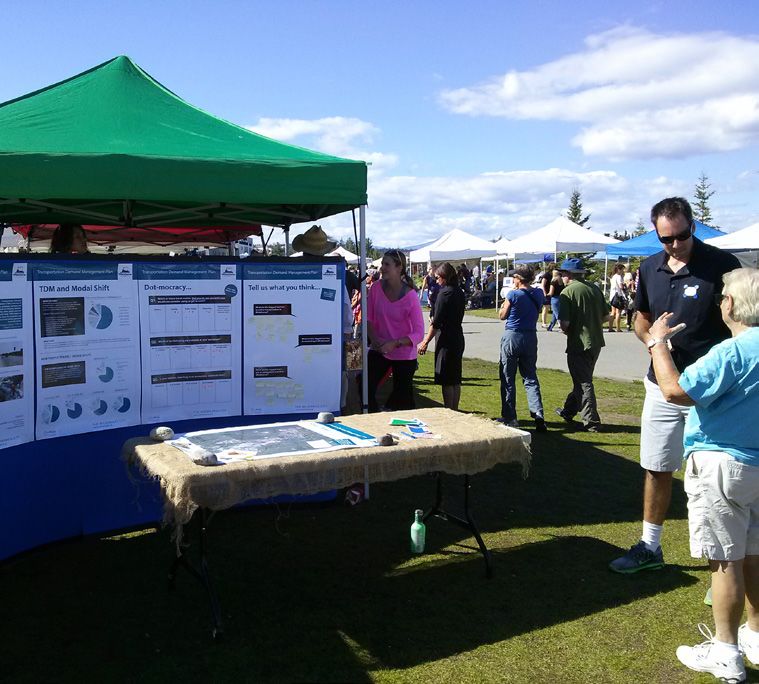
2. Transportation Baseline
To develop strategies and actions to implement a TDM plan, an understanding of the City in terms of population, employment, land use, geography
and transportation is important in developing strategies and actions that are catered directly towards Whitehorse. A brief description of each topic is
discussed below, with a more detailed description in Appendix A.

2.1 Demographics                                                   2.2 Land Use +                                     government. Other major employers include
                                                                                                                      Northwestel, Yukon Electric, Yukon Hospital
In 2011, the City of Whitehorse had a
                                                                   Employment                                         Corporation and Yukon Energy.
population of 23,2769. Population has grown
                                                                   The downtown, which is situated almost in the
54% in the past 25 years, from 15,100 in
                                                                   geographic centre of the municipality, acts as a   2.2.1 Future Growth Areas
1986. In another 25 years (2036), it is
                                                                   nucleus due to its concentration of employment     The 2010 OCP indicates that 61% of future
expected that Whitehorse’s population will
                                                                   opportunities, retail and commerce. Downtown       residential development will be located
increase 64%, to reach 38,186. This projection
                                                                   has approximately 15% of the City’s resident       within the Urban Containment Boundary
is slightly higher than Whitehorse’s population
                                                                   population and over 50% of the employment          (UCB), a significant portion of which will be
growth over the past 25 years.
                                                                   population. While the majority of the population   accommodated in Whistle Bend located
                                                                   in the downtown core is predominantly located      northeast of downtown.
The median age in the City of Whitehorse
                                                                   in Old Town neighbourhood, there is also a
in 2011 is 37, which is 3 years less than
                                                                   residential population located immediately         Whistle Bend is easily accessed by road from
Canada’s median age. Whitehorse has a high
                                                                   north and south of the Downtown Commercial         downtown and has an active transportation
proportion of residents aged 25 to 54 relative
                                                                   Core area.                                         network connection. It has great potential
to other northern communities which suggests
                                                                                                                      in developing it to be a new and upcoming

                                                                                                                                                                         WHITEHORSE TRANSPORTATION DEMAND MANAGEMENT PLAN
that a large proportion of the population are
                                                                   Whitehorse consists of a number of outlying        neighborhood complete with transit service,
of working age, and commuter population
                                                                   residential neighbourhoods - Arkell, Copper        a town square featuring public parkland and
that may be targeted with TDM programs. As
                                                                   Ridge, Crestview, Granger, Hillcrest, Lobird,      numerous shops, schools, greenspace and
seen in the graph below, the majority of the
                                                                   Logan, MacIntyre, Porter Creek, Riverdale,         paved and unpaved trails.
population is in the 45-64 range; suggesting
                                                                   Takhini, Valleyview and a number of country
that there will be an increase in population in
                                                                   residential areas. Most are low density
seniors in the next 10 years.
                                                                   neighbourhoods with primarily residential land     2.3 Topography
                                                                   uses that rely on the downtown for the majority
             Whitehorse Population by Age Group, 2011                                                                 Whitehorse is located on the Yukon River
             8000
                                                                   of their employment and services.
                                                                                                                      corridor in the South Central Yukon. Within
             7000
             6000                                                  Government is the main employment sector           the City, Two Mile Hill, Mountainview Road,
             5000
                                                                   in the City. Approximately one quarter of the      and Robert Service Way are three key
Population

                                                                                                                      corridors between downtown and residential

                                                                                                                                                                                                          City of Whitehorse, YT
             4000
             3000
                                                                   labour force is employed by the territorial
                                                                   government, first nations government,              neighbourhoods such as Copper Ridge and
             2000
             1000                                                  Government of Canada, and the municipal            Porter Creek with significant grades that
                0                                                                                                     present a challenge to walking and cycling.
                    0-14   15-24   25-44     45-64   65-79   80+
                                      Age Group                                                                                                 9
                                                                                                                                                    2011 Census Canada

                                                                                                                                                                                         6
W

2.4 Climate                                          take longer including Copper Ridge, Porter
                                                     Creek, and Crestview that can take over 1 hour,
                                                                                                          Whitehorse Moves, 2004-2007
Whitehorse has a northern climate with cold,         leaving these locations that people are unlikely     One of eight Transport Canada Showcase
                                                     to walk from. These areas would be a more            Projects; identifies measures that reduce
dry winters and mild, temperate summers.                                                                  greenhouse gases in the transportation sector,
Annual temperature averages are 14°C (max            acceptable route to cycle on which would take        particularly changes in infrastructure; changing
                                                     on average 30 minutes.                               the way Whitehorse moves.
25°C) in July and -20°C (min. -40°C) in January.
Whitehorse has on average, 122 days with
precipitation; equating to 145 cm of snow and        2.6 Public Transit                                   Integrated Community Sustainability Plan,
163 cm of rain accumulation.                                                                              2007
                                                                                                          Examines and recommends a new sustainable
                                                     Public transit is planned and operated by            way to invest, build and manage infrastructure
Due to the location of Whitehorse at a high          the City. There are a total of 5 transit routes;     which meet the objectives of clean air, clean
northern latitude it experiences fluctuating                                                              water and reduced greenhouse gas emissions.
                                                     buses run on a regular once-an-hour schedule         Transportation, particularly transit were key
daylight hours over the year. The shortest day       Monday to Friday with a late night service until     elements in this Plan.
occurs in December and has approximately 5           10:20 p.m.
hours and 30 minutes of daylight. The longest
day occurs in July and has approximately 19          In 2012, there was a total ridership of 383,644      Strategic Sustainability Plan, 2008
hours and 10 minutes of daylight.                    passengers. Whitehorse has seen an increase          A strategy that creates a vision that will guide
                                                                                                          the City over the next 50 years in terms of
                                                     in ridership since 2009. The lowest months for       the economy, the City’s identity, and the
2.5 Active Transportation                            ridership are in July and December.                  environment.

Existing active transportation routes in the City    2.7 Policy Context
of Whitehorse consist of 150 km of motorized                                                              Official Community Plan, 2010
trails and 700 km of multi-use trails. This          Whitehorse has already been actively involved        Guide decisions in relation to development
                                                                                                          and conservation, through related policies

                                                                                                                                                             WHITEHORSE TRANSPORTATION DEMAND MANAGEMENT PLAN
network is larger than in similar sized northern     in improving their transportation network,           and also outlines where future development
communities. The trail network in and to the         and will continue to do so, particularly in          should occur. The development of this Plan was
                                                                                                          structured on the Strategic Sustainability Plan.
downtown in Whitehorse is highly walkable,           implementing the TDM Plan. The diagram to
with links from the riverfront, through the          the right outlines Whitehorse’s commitment so
main shopping streets to the base of the             far in implementing plans and policies which
escarpment. There are several trails which link                                                           Downtown Parking Management Plan, 2011
                                                     guide decision making towards supporting             The plan contains recommendations that can
from the downtown core to neighbourhoods             transportation demand management                     be implemented by the City to ensure parking
including the River Trail, Trans Canada Trail, the                                                        is managed effectively for residents, business
                                                     strategies.                                          owners, visitors and employees while also
Escarpment Steps to Black Street Steps and                                                                encouraging a more sustainable community.
Two Mile Hill.                                                                                            This Plan recommended to develop the TDM
                                                                                                          Plan.

Walking in Whitehorse varies by location. In

                                                                                                                                                                                              City of Whitehorse, YT
areas that are close to downtown, walking
takes approximately 30 minutes from places                                                                TDM Plan, 2014
                                                                                                          Provides mode share targets and actions to
such as Riverdale, Takhini, Hillcrest and                                                                 implement in order to achieve these targets.
Valleyview. Other outlying neighbourhoods                                                                 Actions are based on reducing the number of
                                                                                                          single occupant vehicles.

                                                                                                        Summary of Relevant City Plans
                                                                                                        Completed To-Date
                                                                                                                                                                             7
Summary of Challenges + Opportunities
This table outlines challenges that the City of Whitehorse faces which can affect the successful implementation of TDM programs. Each challenge
creates an opportunity to alternative transportation modes.

                        Challenge                                                                 Opportunity

 Climate                Cold winter weather limits residents willingness to walk or cycle         Snow and climate is extremely dry and therefore is easy on
                        and increases poor air quality due to idling.                             bicycles.
                                                                                                  Cold winters make transit a good, cheap option.

 Topography             Steep topography between downtown and the majority of residential         Allows for multi-modal transportation.
                        neighborhoods make walking and cycling challenging.

 Preference             Majority of residents are accustomed to driving.                          Get residents used to other options, there are many to choose
                                                                                                  from.
                                                                                                  People prefer an active recreational lifestyle.

 Downtown               Car use competes with the vitality of downtown. Downtown has a            Outlying neighbourhoods can be the target market for TDM as they
 Concentration          high concentration of employment and services where the majority of       are very dense; more people can be targeted.
                        residents require access to on a daily basis.

 Outlying Residential   Low density residential areas are difficult to serve with transit and     These neighborhoods are fairly connected internally.
 Areas                  beyond reasonable walking and cycling distance for many.                  Target trips during the day, such as walking to lunch.

 Time/Convenience       Vehicles are seen as the most convenient travel options because           Majority of the population works in the downtown core-once
                        they provide flexibility in routing and are not as impacted by external   residents get into a routine it will seem convenient.
                        factors such as weather and schedules.

 Perception             There is a certain level of prestige associated with owning a vehicle,    Fat bikes are now seen as a prestige item.

                                                                                                                                                                            WHITEHORSE TRANSPORTATION DEMAND MANAGEMENT PLAN
                        while alternative modes such as transit and walking are often seen        Can also be seen as prestige in taking on a “green” lifestyle.
                        as “second class” travel modes.

 Work/Errand            Certain occupations rely on access to a vehicle (most notably trades      Work with employers to develop programs and incentives for
 Requirements           people) or to drop-off/pick-up children.                                  their employees-they can be influenced to use alternative modes if
                                                                                                  they had access to a quality transit or fleet vehicles to conduct work-
                                                                                                  related travel.

                                                                                                                                                                                                             City of Whitehorse, YT
                                                                                                                                                                                            8
Whistle Bend Travel Time
12 minutes Key Neighbourhoods
30 minutes
to Downtown
90 minutes (non-peak time)
TBD
Porter Creek
11 minutes
Takhini
30 minutes
5 minutes
90 minutes
12 minutes
22 minutes
35 minutes
15% of
population 13 minutes
8% of
population
WHITEHORSE TRANSPORTATION DEMAND MANAGEMENT PLAN
DOWNTOWN
WHITEHORSE
Copper Ridge Riverdale
9 minutes 4 minutes
City of Whitehorse, YT
25 minutes 6 minutes
70 minutes 22 minutes
18 minutes 8 minutes
13% of 20% of
population population
93. TDM Framework
The TDM framework provides an understanding of what the City is seeking to achieve through
implementation of this Plan and includes a vision, modal share targets, and objectives.
3.1 Vision
The vision describes the type of community that Whitehorse is aiming to become. It is a
depiction of Whitehorse in 2040 after the successful implementation of the TDM Plan.
Whitehorse is a highly mobile community
where people are accommodated on
a well-connected and maintained street network;
increasingly residents choose to
walk, bicycle, use transit, and carpool
WHITEHORSE TRANSPORTATION DEMAND MANAGEMENT PLAN
because of the range of safe, comfortable, and convenient
alternatives to vehicle travel.
City of Whitehorse, YT
103.2 Mode Share Targets
The City’s goal is to reduce the “get to work as driver“ from the current 75% of trips to 50% of trips
by 2036. This means, that as the population in Whitehorse grows, more people will get to work by
carpooling, walking, cycling, and transit. As the population increases in the next 25 years, it will
?2%
take an increasingly amount of residents to switch to alternative modes in order to achieve the
mode share targets.
7%
3%
5%
25-year Mode Share Targets
2011 2016 2021 2026 2031 2036
8% as
Existing passenger
Walk 7% 8% 10% 12% 14% 15% 2011
Bicycle 3% 4% 4% 5% 5% 6%
Public Transit 5% 7% 9% 11% 13% 15%
75%
as driver
Vehicle (passenger) 8% 9% 10% 10% 11% 12%
Vehicle (driver) 75% 70% 65% 60% 55% 50%
?2%
WHITEHORSE TRANSPORTATION DEMAND MANAGEMENT PLAN
15%
Mode Share refers to the percentage of
person-trips made by one travel mode
relative to the total number of person-trips
made by all modes 6%
Future
2036
15%
50%
as driver
City of Whitehorse, YT
12% as
passenger
113.3 Objectives
The objectives described below will act as a guide to achieve the vision of this Plan and realize
the City’s 2036 mode share targets. The objectives lead to the six strategy areas of this Plan, as
described in Section 4.
Objective no.1 Objective no.2 Objective no.3
Reduce GHG Emissions Improve Resident Health Enhance Access,
from the Transportation Sector + Well-Being Reduce Congestion
In 2001, transportation accounted for 50% of 2.5 hours of physical activity is recommended Congestion is a frustrating, time consuming
greenhouse gas emissions in Whitehorse, the per week for adults to reap the benefits of a aspect of travel that can be decreased by
largest emitting sector. Each private vehicle healthy/active lifestyle. Benefits of an active switching travel modes. Each trip completed by
equates to 2,149 kg annual greenhouse gas lifestyle include reduced stress, strengthening walking, cycling or transit not only eliminates
emissions. Reducing the proportion of trips the heart and lungs, increased energy levels, congestion experienced by the individual,
made by private automobile will decrease GHG maintaining and achieving a healthy body it reduces overall network congestion and
emissions in the future. weight, and improving ones outlook on life. lessens delay for other drivers.
Due to lack of physical activity, obesity has
Other been climbing steadily over the past 30 years.
Off-Road Usage
1,500 sqft
69%
15%
75 sqft
WHITEHORSE TRANSPORTATION DEMAND MANAGEMENT PLAN
of Canadian adults
On-Road
Transportation 49%
Space do not get the recommended level 50 sqft
23% Heating of daily physical activity
20 sqft
Other (3%)
7%
Aviation
Electrical
Generation (3%)
91%
of Canadian children
Per Person Space Requirement
When Travelling, by mode
do not get the recommended level
of daily physical activity
Greenhouse Gas Emissions by Sector,
Yukon Territory, 2010
City of Whitehorse, YT
Source: City of Whitehorse Local Action Plan to Source: Colley RC, et al, Physical activity of Canadian
Reduce Greenhouse Gas Emissions for City adults: accelerometer results from 2007 to 2009
Operations and the Community, 2004 Canadian Health Measures Survey. 2011 Source: VTPI, Road Space Allocation
12Objective no.4 Objective no.5
Reduce Public Infrastructure Provide Affordable, Convenient
Spending Travel Options
Bicycle and pedestrian infrastructure is far less Owning and operating a vehicle is an expensive
expensive to build and maintain than vehicle travel option that can be avoided if other
infrastructure. Sidewalks, cycling facilities alternatives are provided. The annual cost
and trails boost local tourism by providing new of owning and operating a vehicle is in the
recreational opportunities, increase property range of $8,500 per year*, which accounts for
values adjacent to trails and pedestrian- purchase, depreciation, maintenance, and fuel.
oriented streets, and expand the municipal In contrast, annual transit use is less than one-
tax base that can be used to build new tenth the cost of vehicle use and both cycling
infrastructure. Additionally, active travel modes and walking are considerably less expensive.
have less maintenance costs and require less Providing Whitehorse residents with access to
physical space per person. high-quality walking, cycling, and transit options
presents the opportunity to significantly reduce
the financial costs of personal transportation.
4-lane road...
$5 million
Bike lane (with road widening)...
$150,000 $8,500
WHITEHORSE TRANSPORTATION DEMAND MANAGEMENT PLAN
$750
Bike lane (no road widening)...
$20,000 $300
Sidewalk or walking trail...
$100,000 $100
Estimated Annual Cost of
City of Whitehorse, YT
Typical Infrastructure Cost, per km Personal Travel, by mode
Source: City of Vaughan Capital Cost Estimates 2011-2021 Source: The Globe + Mail, The Real Cost of Car Ownership,
September 02 2010
134. TDM Strategies
Six strategy areas are identified to guide TDM implementation. Each strategy is defined in more
detail on the following pages and includes a series of recommended actions to achieve the
objectives of this plan and the mode share targets.
Transportation demand management is best pursued comprehensively by combining several
initiatives together. Many programs require both up-front and on-going effort to provide continual
support and encouragement, and respond to future opportunities and changes in individual travel
needs and preferences.
SIX TDM STRATEGY AREAS TIMELINE
Actions have been identified as short- (2yrs),
1 Coordinate TDM Implementation medium- (2-5yrs) and long-term (5+yrs). The
+ Promote Options implementation approach is discussed further
in Section 5.4.
2 Improve Short-term, 2 years
Active Transportation Options Medium-term, 2-5 years
Long-term, 5+ years
WHITEHORSE TRANSPORTATION DEMAND MANAGEMENT PLAN
3 Improve
Public Transit
4 Support Employees
to Use Alternative Travel Modes
5 Maximize Existing Vehicle Infrastructure
+ Discourage Single-Occupant Vehicles
City of Whitehorse, YT
6 Encourage Supportive
Land Use
14Strategy no.1
Coordinate TDM Implementation
1
+ Promote Options
Action 1.1
Transportation demand management Hire a TDM Coordinator
is the careful application of policies, The cost of the TDM Coordinator position will
A TDM Coordinator position should be
programs, and knowledge to encourage be approximately $100,000 annually, including
established in the Environmental Sustainability
a shift in travel behaviour. These salary and benefits. One half of this position
department. The TDM Coordinator’s
approaches cannot be passive; (part time equivalent) should be established
responsibilities should be as follows:
they involve deliberate attention to in the short-term through reallocation of
coordination, cooperation, and awareness • Oversee implementation of the TDM Plan; existing resources within the Environmental
to ensure they are applied to a broad Sustainability Department. In the medium
• Lead the City’s internal TDM efforts for
audience. term, the position should be expanded to be
employees, Chair the TDM Partnership (see
The following actions are recommended Action 1.2), and deliver TDM promotional full-time, with the additional resources funded
to coordinate TDM delivery and expand events (see Action 1.4); through re-allocation of existing resources and
awareness of travel options: new revenues. Potential sources include:
• Assist the Transit Manager with transit-
1. Hire a TDM Coordinator related TDM programs (see Action 3.8); 1. Downtown Parking. The City generates
significant revenues from downtown on-
2. Create a TDM Partnership • Collaborate with employers and other street and monthly off-street parking
organizations to implement TDM initiatives
3. Create a “Travel Options” Website ($1.1 million in 2010). A portion of parking
(see Strategy 4); and
WHITEHORSE TRANSPORTATION DEMAND MANAGEMENT PLAN
revenues may fund the TDM position.
4. Encourage Others to get involved
• Coordinate TDM data collection and
2. Transit Fares. The City has established
5. Create Special Events Travel Plans monitoring, as described in Section 5.
cost recovery targets for the transit system.
Revenues above the cost-recovery target
should be re-invested into improving transit,
including funding the TDM Coordinator
Assist Transit
Implement TDM Manager with and recognizing it’s role in supporting the
programs transit programs
Transit Manager.
Data
City of Whitehorse, YT
collection,
monitoring
Other
TDM Coordinator’s
Time Allocation
15Action 1.2 Action 1.3
Create a TDM Partnership Create a
“Travel Options” Website
TDM is most effective if applied broadly. While
the City is taking a leadership role in delivering A “travel options” website is a one-stop-shop The travel options website should contain the
TDM programs, a successful collaboration for residents and visitors to access various following items:
with employers, institutions, and community transportation tools. It will contain maps,
organizations is important to maximize the coordination tools, and calculators which 1. An updated version of the existing
effectiveness of TDM. allows participants to be actively involved in Commuter Map to include sidewalks, trails,
their transportation choices. cycling routes, transit routes and bus stop
A TDM Partnership should be created with the locations. Changes to routes in different
City’s TDM Coordinator acting as Chair and The City should allocate $25,000 to develop seasons and weather information should be
with representatives from the City’s largest the website. The design and interface should indicated.
employers - Government of Canada, Yukon be created by a web developer with support
2. A “travel cost calculator” that describes the
Government (various departments), Whitehorse from the City’s TDM Coordinator. Updates and
cost of annual vehicle usage as compared
General Hospital, Yukon College, Yukon on-going maintenance will be arranged by
to walking, cycling, and transit.
Energy, Whitehorse Chamber of Commerce the TDM Coordinator. General improvements
(representing large employers), and RPAY. The to corporate communications, social media 3. A trip finder that provides all the travel
partnership may expand as other employers exposure and increased web communications options from location to location.
express interest in being involved. capacity are required for the travel options
4. A greenhouse gas emissions calculator that
website to be successful.
A preliminary charter and terms of reference identifies the environmental impact of a
should be developed that clarifies the purpose resident’s annual or lifetime vehicle usage.
of the partnership, roles of partnership 5. A rideshare database that allows residents
representatives, and desired outcomes. The to enter planned trips into downtown and
WHITEHORSE TRANSPORTATION DEMAND MANAGEMENT PLAN
partnership will have official meetings quarterly trips to/from neighbouring communities.
What could a “travel options” website
to discuss progress of the implementation look like?
of the TDM Plan. After each meeting, 6. A work place travel plan template that
The following are examples of websites from provides instructions for employers looking
representatives will be assigned follow-up other communities:
tasks. to assist their employees in planning travel.
Metrolinx (Greater Toronto/Hamilton)
www.smartcommute.ca/en/home 7. A section specific to tourists/visitors.
Arlington, VA
8. Links to further information on travel
www.commuterpage.com
options in Whitehorse, including public
Central Okanagan, BC
www.smarttrips.ca transit, charter bus, taxi operators, airport
schedules, and so on.
Peterborough, ON
www.peterboroughmoves.com
9. A database for employees to register for a
City of Whitehorse, YT
Guaranteed Ride Home. (Action 4.2)
10. A section on reporting construction
updates.
16Action 1.4
Encourage Others to Get Involved
Promotion is a useful means to increase the exposure of sustainable travel options to Whitehorse residents. The City will work with stakeholders to host
exciting events to educate about alternative transportation options and get more people walking, cycling and taking transit The City should allocate
$100,000 a year towards promotional programs.
The following are some of the promotional events that could be delivered...
Develop Promotions that Specifically Target Host “Try It” Events that Expose Residents to Host Annual Events that Build Continuity
Walking, Cycling, Transit, or Carpooling Unfamiliar Travel Options
Winter Walk Day. Annual event where students
City meetings on Transit. A City meeting or Transit Week. Employers and businesses and employees walk to school or work on
CASM could be held on a bus to generate register in advance to receive discount bus February 6. Information is made available on
exposure to transit. passes and raffle tickets. May occur in the Fall. safe walking in winter weather conditions.
Cycling Skills Course. Offer a course combining Fare Discount Days. May be combined with Spring into Spring. Use non-motorized travel
classroom and on-road training to build cycling other events when a single ticket is at a such as walk, jog, skip or bike for a week to
proficiency for both recreational and commuter discounted rate, and pass holders may get into promote daily physical activity, a healthier
cyclists. This should be targeted to major the event for free. Events may include special environment and safer streets. This should
employers and local interest groups. events, or ones that occur on a consistent be promoted to schools, businesses and
basis. community groups.
Transit Information Sessions. Can take place at
the Canada Games Centre or neighbourhood Bike to Work Day/Week. A day or week
meetings; held periodically throughout the year where employees are encouraged to bicycle Build Habits in Youth
to keep residents up-to-date on transit changes to work. The City provides information on
WHITEHORSE TRANSPORTATION DEMAND MANAGEMENT PLAN
Walking/Cycling School Groups. These
and provide information to new residents. cycling safety, etiquette and maintenance, and
“groups” establish friendships with other
may provide prize incentives.
Social Media. Use Twitter and Facebook to families in the neighbourhood and can help
promote walking, cycling, transit and carpooling “Fat Tire” Bikes. Host an event to encourage to reduce vehicle trips in peak school travel
and alert commuters to route/service changes. “fat tire” bikes suitable for winter bike riding. times. Coordination of these groups will be
the responsibility of the schools in the City,
Individualized Marketing. Hold separate events
although the TDM Coordinator may assist with
for each neighbourhood to offer information
initial set up and planning.
to each interested individual on their travel
options, and give suggestions to alternatives Cycling Education for Schools. Develop an
of using a vehicle. Tables can be set up information kit that teachers use to educate
around rooms which are attended by educated students on safe cycling routes and cycling
personnel and residents can approach a etiquette. This can occur by cultivating the
City of Whitehorse, YT
person and be given personalized information partnership between Education, Bylaw
for their area. Services, and RPAY.
Example of a “fat tire” bike
17Action 1.5
Create Special Events Travel Plans
Concerts, sporting and community events occur throughout the year. Large events have potential to generate significant traffic and parking demand,
which should be managed using travel plans. A special events travel plan program should be made available to assist event hosts to provide various
travel options to event-goers. Plans should outline specific strategies to improve transportation options, manage transportation resources, communicate
with the travelling public and address heavy traffic and parking demand. Transit programs should be promoted at all special events and city travel
advisories. These programs and services take into account travel before, during and after the event.
Programs and/or services that can be implemented during a special event include:
Bicycle Valet. Provide a fenced area where Taxi Zones. Designate an area where taxis can Special Event Travel Plan
Rock the Shores, Colwood BC
bicycles are stored and supervised. Cyclists come and pick-up event-goers. Staff should be
check their bikes with an attendant and receive at taxi zones to help coordinate taxi sharing for Rock the Shores is a music festival in Greater
Victoria, BC that attracts 10,000 people
a ticket to retrieve their bike, similar to a coat people who are going to proximate locations. over two days. Anticipating transportation
check. The valet should be located close to the challenges, event organizers and the local
Social Media. Use social media to promote municipality developed a plan to manage
venue entrance. travel demand to/from the event, as follows:
travel options such as transit discounts,
• Bike valet service was provided and
Increase Transit Service. Expand transit service parking cost/availability, and reiterate existing cyclists were offered priority entry through
to/from special events in anticipation of options (transit, cycling, taxi, etc). VIP gates
increases in demand. Funds needed for this to • Additional transit service was provided
occur depends on the size of the event, but can between the event venue and downtown
vary from $5,000-$20,000. • A shuttle bus was offered to/from remote
parking areas
Free/Discounted Transit. A one-time transit • Drop-off and pick-up zones were identified
WHITEHORSE TRANSPORTATION DEMAND MANAGEMENT PLAN
voucher may be included in the ticket price.
• Two priority parking areas were reserved
for carpool vehicles
Carpool Parking. Provide preferential carpool
• Free parking areas were limited in the
parking spaces near the venue entrance. vicinity of the venue
Arrangements can be made with private off-
street parking to permit on-site carpool parking • Event-goers were alerted to traffic
congestion through the event website
during an event. and social media, and information was
provided on other travel options
Drop-off, Pick-up Zones. Provide designated
drop-off and pick-up zones at the event or at
a nearby location for people who are simply
catching a ride.
City of Whitehorse, YT
18Strategy no.2
Improve Active Transportation
2
Options
Action 2.1
Active transportation refers to travel by
Develop a Trails +
self-propelled means, typically walking,
Active Transportation Plan
cycling, or winter activities including An Active Transportation Plan (“AT Plan”) In the short term, an appendix may be added
skiing. Facilitating active transportation should be incorporated into the upcoming Trail to the Trail Plan to begin implementation of
not only achieve modal share targets, Plan Review and Revision; this consolidated policies. The complete AT and Trail Plan will be
it provides for improved recreation Plan will outline the 25-year vision for active developed in 2020.
opportunities and health and well-being. transportation in Whitehorse. The plan should
Why Develop an AT Plan?
focus on the active transportation network
The following actions are recommended
– sidewalks, trails, cycling routes, routes to/ 1. Inform all future City planning and design
to improve active transportation safety,
from bus stops, accessibility features – and decisions.
reliability, convenience, and accessibility:
may also re-iterate many of the programs
and policies recommended in the TDM Plan. 2. Prioritize City investments in public active
1. Develop a Trails + transportation infrastructure.
Priority routes should be identified that build
Active Transportation Plan
on the City’s existing facilities. Much of this 3. Coordinate active transportation
2. Improve Priority Routes between work has been done by the City’s Engineering, investments with actions in other plans
Neighbourhoods + Downtown Planning, and Parks and Trails departments (parking, trails, TDM, transit).
WHITEHORSE TRANSPORTATION DEMAND MANAGEMENT PLAN
(see Appendix B for network improvements),
3. Review Maintenance Practices but needs to be consolidated. 4. Seek developer contributions and pursue
external funding opportunities as they arise.
4. Expand Bike Trip-End Facilities Budget for an AT Plan process is typically
approximately $120,000, but may be less What Will the AT Plan Include?
5. Invest in Active Transportation
when coordinated with the Trail Plan review. • Future network maps that identify the 25-
Facilities
year sidewalk, cycling, and trail networks;
6. Engage Community Groups The Value of an Active Transportation Plan
• Infrastructure design criteria for sidewalks,
Burns Lake, BC
7. Establish a Citizen Trail Maintenance cycling routes, trails, signage, and lighting;
Program The Village of Burns Lake prepared an Active
• Cost estimates for network improvements
Transportation Plan in 2009 that included a
Village-wide sidewalk and trail network and and funding options through land
emphasized the need to revitalize downtown development and external grants;
City of Whitehorse, YT
along Highway 16. In 2012 the Village was able
to coordinate the improvements with a highway • An implementation plan and timeline for
resurfacing project planned by the Provincial network investments; and
Government, ultimately leading to external
funding for the project that would have not • Opportunities for coordination with
otherwise been available without plans in-place. community groups and stakeholders.
19Action 2.2
Improve Priority Routes between
Neighbourhoods + Downtown
Priority proposed active transportation routes are identified between each
Whitehorse neighbourhood and downtown. Routes may include sidewalks,
trails, and cycling routes, and present links with public transit.
Routes below are proposed summer active transportation routes. Winter
routes are similar except 4th Avenue will be replaced with 6th Avenue due
to factors which affect snow plowing.
A draft inventory of active transportation network improvements are
identified in Appendix B.
The following actions should be taken to improve and maintain the priority
active transportation routes:
• Infrastructure investments are prioritized on these routes;
• Snow is plowed within 48 hours;
• Streets and sidewalks are swept once per month in the spring and fall;
and
• Priority routes are promoted as key active transportation networks
(signs, maps, etc).
WHITEHORSE TRANSPORTATION DEMAND MANAGEMENT PLAN
Proposed Summer Active Transportation Routes
Neighbourhood Routes to downtown Distance to
downtown (approx.)
Riverdale Alsek Road, Lewes Boulevard, 3 km
4th Avenue
Takhini Cassino Street, Range Road, 4 km
Two Mile Hill, Chilkoot Way, 4th Avenue
Valleyview Range Road, Two Mile Hill, 4th Avenue 4 km
Hillcrest Park Lane Trail, Hamilton Boulevard, 6 km
Two Mile Hill Road, 4th Avenue
Copper Ridge Falcon Drive, Hamilton Boulevard, 8 km
Two Mile Hill, 4th Avenue
City of Whitehorse, YT
Whistle Bend Heiland Road, Mountain View Drive, 9 km
Range Road, Two Mile Hill, 4th Avenue
Trails on Two Mile Hill (top) and Hamilton Blvd
Porter Creek 12 Avenue E, Mountain View Drive, Range Road, 9 km (bottom) are identified as important “priority active
Two Mile Hill, 4th Avenue transportation routes”
Crestview Alaska Highway, Wann Road, Mountain View Drive, 12 km
Range Road, Two Mile Hill, 4th Avenue
20Action 2.3
Review Maintenance Practices
Several City departments and NGO’s work corroboratively to maintain the City’s extensive network of trails, paths, roads and sidewalks. The City realized
that the value attached to an improved active transportation network has increased and has since formed a dedicated Trails Team in 2013 made up of
staff with specialized knowledge and experience. Maintenance is generally undertaken be operations, with assistance from the Klondike Snowmobile
Association. Maintenance practices are outlined in the Snow and Ice Removal Policy and are reviewed annually by operations and passed by Council.
This annual review mechanism provides the necessary tools to evaluate and alter the trails maintenance procedures and equipment needs to adapt to
growth, changes in technology, winter conditions and best practices.
Paint Markings
Maintenance of Traffic Control systems properties/buildings. Sweeping is important at bus stops within 48 hours of snow falling.
is carried out in order to ensure control as it provides safe, comfortable surfaces for Snow clearing/removal practices should not
systems are in place to operate vehicular and walking and cycling. negatively impact walking and cycling routes.
pedestrian traffic safety and mobility. Traffic
Control systems consist of traffic lights, traffic The City should ensure proper enforcement of The City should implement a winter active
signs, street markings, parking meters and residential and commercial sweeping is taking transportation maintenance program to
roundabouts. Paint markings is completed place. Currently, a bob cat sweeper is used to provide residents with a safe, connected active
by Operations in conjunction with the Yukon sweep the paved trails; however sweeping of transportation network in the winter months.
Government. trails should be included as a higher priority in Snow clearing practices will be included in
the Transportation Maintenance Policy. the AT Plan. Residential and commercial
The City of Whitehorse should include bike snow clearing of their designated sidewalks
lanes and trail markings as a higher priority Pothole Patching should be properly enforced. Additional funds
in their Transportation Maintenance Policy. Pothole patching is carried out on paved and should be allocated for enforcement and
Particularly those cycling and pedestrian ways BST roads either by hand placement of hot/ increased snow removal. Maintenance program
WHITEHORSE TRANSPORTATION DEMAND MANAGEMENT PLAN
that have the right-of-way when crossing with cold asphalt mix to fill potholes or using a spray recommendations are as follows:
other transportation networks. Lines and patch machine which fills the pothole with a • Ensure that the snow removal policy
markings should be in place by April each year mixture of liquid asphalt and granular material. is aligned so snow is not plowed onto
once snow has melted, and streets have been Potholes are logged as they are reported by walkways and bike routes;
swept. either City crews or public complaint and are
then scheduled for repair. Potholes which are • Routes identified in Action 2.2 should be
Thermoplastic lines were used to designate priority and plowed within 48 hours of snow
school crossing walk ways and are being found on Active Transportation routes should
fall;
continually monitored to assess their be given priority for filling to make cycling/
effectiveness. Currently, the majority of road walking a safe means of travel. Operations • Purchase equipment appropriately sized
markings in Whitehorse are paint which can be can maximize efficiency by filling trail and road and purposed to the task; and
worn away in 1 year from snow plowing. potholes at the same time. • Keep transit stops accessible and free of
ice and snow.
City of Whitehorse, YT
Street Sweeping Snow Clearing
Street and sidewalk sweeping is conducted in The City provides snow clearing on sidewalks
the Spring, Summer and Fall, as outlined in the adjacent City property within 48 hours of snow
Transportation Maintenance Policy. Sidewalks fall, as per the Snow and Ice Control Policy.
included in the Policy are those adjacent City The City also provides snow plowing/blowing
21Action 2.4
Expand Bike Trip-End Facilities
The City currently provides long-term and short-term bicycle parking. Long-term bike lockers are Bike Parking Requirements,
City of Whitehorse Zoning Bylaw
available at the Canada Games Centre and locations in downtown - Second/Steele, Third/Steele,
Third/Elliott, and Fourth/Main. Lockers are for day-use only on a first-come, first-served basis and Required
Land Use Supply (Class
cyclists are required to bring their own locks. Bike racks are located throughout Whitehorse. The II)
Zoning Bylaw requires that most new developments considered commercial, multi family housing or Residential Single detached, duplexes, N/A
institutional provide Class I and Class II. townhouses
Multiple Housing 1
The City should allocate $25,000 per year towards improving trip-end facilities. Living and Garden Suites N/A
Temporary Housing, B&B, N/A
Supportive Housing
Increase Trip-End Facilities Work with Employers to Provide
Housing for Senior Citizens 1
at City Buildings Trip-End Facilities
The quantity of bike parking should be The City should encourage employers to Residential Care Homes 1
increased at City buildings and parking provide trip-end facilities as an added Commercial Hotels 1
lots. This will provide more facilities for incentive to active transportation. Employers Motels 1
City employees to participate in active can partner with other nearby employers Offices, Health Services 1
transportation commuting. All new buildings to share these types of facilities. The TDM Business Support Services 1
should be equipped with shower and change Coordinator can match employers who are in Retail (GFA < 1,000m2) 1
facilities, as well as long term bicycle parking. close proximity with each other and initiate Retail (GFA > 1,000m2) 2
All City buildings should be equipped with these collaboration of the two (or more) to develop Manufacturing 1
facilities by 2020, and the City of Whitehorse a management plan to share facilities,
Gas Bars N/A
will act as a leader to other employers in including costs, location, hours of accessibility
WHITEHORSE TRANSPORTATION DEMAND MANAGEMENT PLAN
Eating, Drinking 1
providing more options for their employees. and maintenance. The City may design and
Industrial Vehicle, Heavy Equipment N/A
It is recommended that the City draft a policy implement a TDM recognition program to
Institutional Senior Citizen Housing 1
for the implementation of trip-end facilities acknowledge employers who implement TDM
at all City buildings. Current bike lockers are programs and measures. Funeral Services N/A
available for day use only; the City should allow Schools, Colleges 6
overnight bicycle parking for all residents by Bike Parking in the Zoning Bylaw Community, Child Care Centres 1
Recreational,
2016. Facilities should be designed with best The table to the right shows current short-term Cultural Community Rec Centres, 1
Convention and Sports
practices, so that bikes are protected from (Class II) and long-term (Class I) bicycle parking Facilities
inclement weather but not subject to thaw- requirements in the City’s Zoning Bylaw.
Private Clubs N/A
freeze in the winter. Class I should be included in the table in the
Indoor Recreation 1
Zoning Bylaw and should explicitly outline a
Bicycle parking should also be located at major requirement for each specific land use, similar
Outdoor Recreation 1
transit stops including the downtown transit
City of Whitehorse, YT
Libraries/Museums 1
to Class II. Requirements may be increased in
exchange and stops in Riverdale, Hillcrest, future to better provide for cyclist demand and Religious Assemblies 1
Copper Ridge, Takhini, Porter Creek and in pursuit of the City’s 6% 2036 cycling mode Class I
Whistle Bend. share target. Multi-family Residential 1/dwelling
unit
Office 1 / 300m ²
GFA
Commercial 1/500m ²
GFA 22You can also read


