2012 UPDATE Paris ClimaTe and energy aCTion Plan
←
→
Page content transcription
If your browser does not render page correctly, please read the page content below
LE PLAN
                                                          CLIMAT
                                                          ÉNERGIE
                                                          DE PARIS

                                                 2012
                                                 UPDATE
                  Paris
                  ClimaTe
                  and energy
                  aCTion Plan
                  adoPTed by The CounCil
                  of Paris on 11 deCember 2012

main guidelines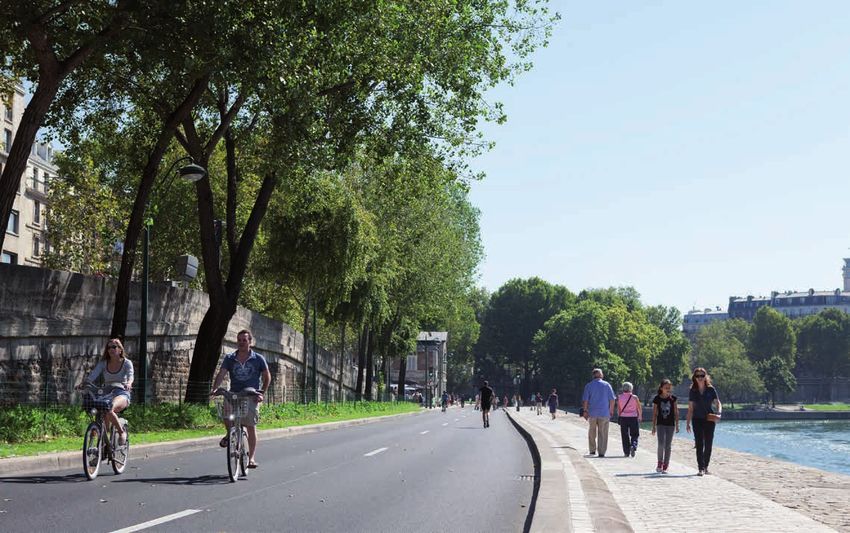
Editorial

                                  In Paris today, it is impossible to imagine building our city without also protecting its environment at the
                                  same time. Far from being a hindrance, ecological issues have become, in the space of just a few years,
                                  a powerful driver of urban redevelopment for a more meaningful, fairer future. It was to ensure that this
                                  fundamental and fertile approach is applied to all its practices that the City of Paris voted an ambitious
                                  Climate Action Plan back in 2007.

                                  Since then, the Climate Action Plan has been extended by the addition of Biodiversity measures and
                                  confirmed in the key commitments for the current term of office. It now applies to all the sectors of
                                  municipal life. From thermal rehabilitation of housing to creating ecological corridors, from waste
                                  recycling to combating urban heat islands, not forgetting the introduction of a circular economy with its
                                  reduced impact on the climate, the Plan is already mobilising the efforts of all city personnel, placed at
                                  the service of a more sustainable, environmentally-friendly city.

    ‘‘   We are also laying new
         foundations for forms
                                  Forging and restoring links between the capital city and nature is not only a question of providing Parisians
                                  with a better living environment in which they can thrive. We are also laying new foundations for forms of

                            ‘‘
           of urban progress      urban progress that can then be applied throughout the metropolitan area in the near future.

                                                                                                                       Anne Hidalgo
                                                                                                                           Mayor of Paris

                                                 Paris Climate and Energy Action Plan
LE PLAN
                                                                                                                                                CLIMAT
                                                                                                                                                ÉNERGIE
                                                                                                                                                DE PARIS

                     The impact of climate change on the planet and on human societies is increasing, and each new scientific study
                     confirms that human activities are the main cause. It is therefore our duty to act each day to change the model of
                     our society and limit the effects of this change.

                     Back in 2007, Paris demonstrated an exemplary sense of responsibility and determination when it adopted its
                     Climate and Energy Action Plan. By setting itself ambitious targets through to 2020 in order to reduce its ecological
                     footprint, the capital set about playing an active role in the fight against climate change.

                     Carrying out thermal rehabilitation of schools and homes, developing public transport and more active forms of
mobility, producing renewable energy, fostering technological, social and environmental innovations and greening the city… These are
just some of the measures that have been implemented and are beginning to produce results, contributing to transforming our city into
a more sustainable, liveable metropolis capable of adapting to climate change.

There is still a long way to go, however. To tackle climate change, all those stakeholders who play an active role in making Paris the
dynamic, vibrant city it is, must mobilise their efforts with calm, courage and determination to build the Paris of the future, step by step.

                                                                                                                         Célia Blauel
                                                     Deputy Mayor of Paris, in charge of all issues relating to the environment,
                                       sustainable development, water, canals policy and the “climate and energy action plan”

                                                Paris Climate and Energy Action Plan
ConTEnTs

                                                PREAMBLE
                                                                                                                                 3
                                               \\The first Climate Action Plan and its preparation
                                               \\The current challenging environment: energy and financial pressures
                                               \\The legal framework for updating the Climate Action Plan
                                                 and its preparation process

                                                THE MAin gUiDELinEs of
                                                                                                                                 6
                                                THE 2012 CLiMATE ACTion PLAn
                                                URBAn PLAnning
                                                                                                                                 8
                                                foR EnERgy EffiCiEnCy
                                               \\Urban planning policies in Paris
                                               \\The production and distribution of energy

                                                LoW EnERgy AnD AffoRDABLE HoUsing
                                                                                                                                15
                                               \\Preamble
                                               \\Objectives and commitments
                                               \\Encourage private co-owned properties to commit to moderating energy consumption
                                               \\Provide a framework for the construction and renovation of social housing in Paris
                                               \\Combat energy poverty

                                                THE sERViCE inDUsTRy in PARis,
                                                                                                                                23
                                                A nEW CHALLEngE
                                               \\Preamble
                                               \\Objectives and commitments
                                               \\Promote the development of eco-industries and innovation
                                               \\Mobilise the big corporations
                                               \\Support for small businesses
                                               \\An improved sustainable tourism offer
                                               \\The Paris Administration

               Roller & Skate Park, 18th

1                                          Paris Climate and energy action Plan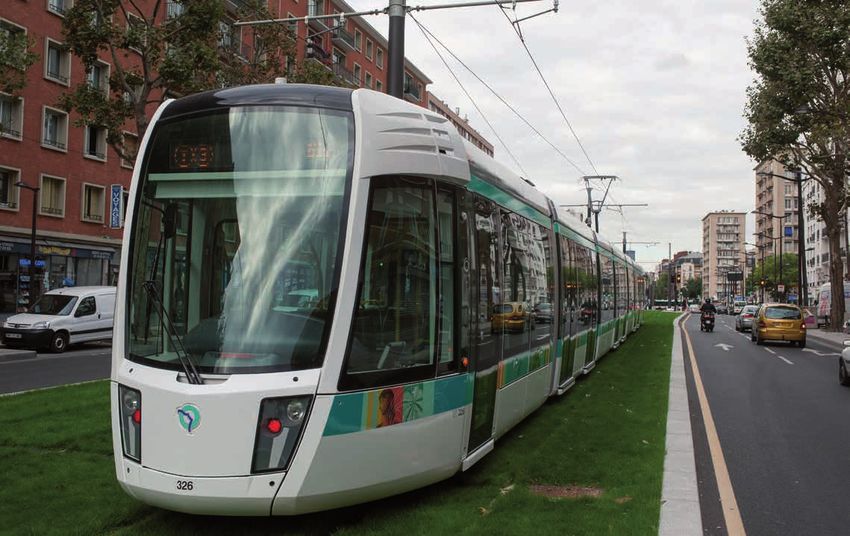
LE PLAN
                                                                                                                      CLIMAT
                                                                                                                      ÉNERGIE
                                                                                                                      DE PARIS

ToWARDs TRAnsPoRT WHiCH iMPRoVEs                                                32
THE CLiMATE AnD AiR QUALiTy
\\Preamble
\\Objectives and commitments
\\Towards new reductions in road traffic
\\Continue to improve public transport
\\Promote cycling
\\Encourage electric mobility in Paris
\\Urban logistics: a major challenge
\\Reclaiming the Seine and the canals
\\The Paris Administration Transport Plan

ToWARDs sUsTAinABLE ConsUMPTion                                                 43
WHiCH gEnERATEs LEss WAsTE
\\Preamble
\\Create exemplary purchasing policies
\\Sustainable food in Paris
\\Waste
\\Water management in Paris

An ADAPTATion sTRATEgy
                                                                                52
\\Preamble
\\Heatwaves, urban heat islands effects
\\Floods, droughts, drinkability, cooling: water and adaptation
\\Towards an adaptation strategy

                                                                                      Serge Gainsbourg Garden, 19th

                                               Paris Climate and energy action Plan                                              2
PREAMBULE

    The reality of climate change is no longer a matter for debate. During the 20th century, the average temperature increased by 0.7°C
    globally and by 0.9°C in mainland France. The latest reports from the Intergovernmental Panel on Climate Change (IPCC) estimate
    that the temperature of the earth could increase by 3 to 6° by the end of the 21st century if current demographic trends, consumption
    habits and land use trends continue. Climate change is linked to other events–scarcity of resources, large-scale migration, etc–
    to which societies must adapt by developing different working methods in order to limit their vulnerability.

    The first Climate Action Plan and its preparation
    In June 2005, the City of Paris decided to draft its first community    Aware of the fact that significant progress could not be made
    Climate Action Plan, convinced that the effects of climate              without mobilising all the stakeholders in its territory, the City
    change on a global scale required innovative policies able to           of Paris involved its authorities, economic and community
    meet the challenges of civilisation. This approach extended             stakeholders and citizens living or working in Paris, in an innovative
    and reinforced the transport, urban planning, housing and               collaborative approach, as described in the White Paper, Voices
    environmental policies which the City introduced in 2001.               of Parisians for the Climate (February 2007) (Livre Blanc, paroles
    Equally convinced that the challenges of climate change                 des Parisiennes et des Parisiens sur le Climat).
    were not confined to its administrative borders, it considered
    the metropolitan dimension from the outset.

      In October 2007, the Council of Paris unanimously approved the Paris Climate Action Plan, committing the City to a factor 4
      scheme in order to decrease its overall emissions by 75% in 2050 compared with 2004.

       The Paris Climate Action Plan sets an initial deadline
      \\                                                                     Duty bound to set an example, the City of Paris has set
                                                                            \\
       which exceeds European objectives. By 2020, it aims                   the following objectives to be achieved by 2020 by its
       to achieve:                                                           real estate and municipal fleet and within its own jurisdiction
         • 25% reduction in greenhouse gas emissions in the territory        (Administration):
           compared with 2004;                                                 • 30% reduction in its greenhouse gas (GHG) emissions
         • 25% reduction in energy consumption in the territory                  compared with 2004;
           compared with 2004;                                                 • 30% reduction in the energy consumption of its real
         • 25% renewable or recovered energy in its energy                       estate, municipal fleet and public lighting compared
           consumption.                                                          with 2004;
                                                                               • 30% renewable or recovered energy in its energy
                                                                                 consumption.
                                                                                                                                                     Cardinet Bridge, 17th

3                                                                          Paris Climate and Energy Action Plan
LE PLAN
                                                                                                                                                                   CLIMAT
                                                                                                                                                                   ÉNERGIE
                                                                                                                                                                   DE PARIS

The CurrenT Challenging environmenT:
energy and finanCial Pressures
The situation at the end of 2012 is very different to              As an example, between 2007 and 2012 the government
that of 2007: the price of a barrel of oil has been                divided the feed-in tariff for photovoltaic electricity
rising again since 2009 and in 2012 it passed the $100             by five, and as a result the territories to the North of
a barrel threshold. The prices of fossil fuels (fuel oil,          the Loire are no longer attractive to private investors.
fuel and gas) have risen by more than 40% over the                 It will be necessary to mobilise and involve all public
last few years and although electricity prices have                authorities in order to achieve the so-called "factor 4"
risen more slowly over the same period, they are                   objectives. Paris City Hall has therefore continued to
expected to increase by over 30% by 20161 and by                   invest in energy savings and new industries during
approximately 50% by 2020.                                         this period:
The worsening economic situation both in Europe and
internationally has curbed investment and innovation
in environmental areas.
1
    source : energy Regulation commission, 2012

                                                                                  • support for the thermal renovation of                    Bois-le-Prêtre Tower, 17th

                                                                                    over 4,500 social housing units a year;
                                                                                  • Creation of more than 25,000 m² of solar
                                           Geothermal well, 19th                    panels in Paris;
                                                                                  • Creation of a geothermal well in north-East Paris;
                                                                                  • setting up of ambitious incentive schemes to promote
                                                                                    energy renovation in private residential buildings;
                                                                                  • Support for eco-industries and completion of the first
                                                                                    Low-Energy Building business centre;
                                                                                  • Launch of the largest energy performance partnership
                                                                                    contract in france for the thermal renovation of 100
                                                                                    schools over two years;
                                                                                  • Launch of calls for projects for innovation and energy
                                                                                    efficiency in the building industry.

                                                                            Paris Climate and energy action Plan                                                              4
PREAMBULE

    The legal framework for uPdaTing The ClimaTe
    aCTion Plan and iTs PreParaTion ProCess
    The economic and social context changes        the other areas of municipal action
    over five years, as do regulations and         promoting sustainable development,
    technology. Aware of these future              particularly the Biodiversity Plan. This Plan,                     DONNEZ VOTRE AVIS SUR
    changes, back in 2007 the Council of           approved by the Council of Paris in 2011,                           LE PLAN CLIMAT ÉNERGIE DE PARIS !
    Paris decided that the Climate Action          has set ambitious targets for the creation of                                  DU 1ER AU 30 OCTOBRE 2012,
    Plan should be updated every five years.       green spaces which should make it easier                                       RENDEZ-VOUS SUR PARIS.FR
    As a result, it set up a Climate Action        for Paris to adapt to the consequences of
    Plan monitoring committee, which will          climate change.
    remain in place. The creation of the Paris
    Climate Agency, on the initiative of the       This Climate Action Plan describes
    City of Paris, completes the community-        the main guidelines and political
    wide support structure.                        commitments for the period to
                                                   2020. over the coming months, it
    Updating the Plan is an opportunity to         will be broken down into strategic,
    assess the actions undertaken, identify        functional and operational roadmaps
    the work still to be done and plan the         for the different types of stakeholder.
    changes required to achieve the objectives.    An operational roadmap for the Local
    It is also an opportunity to comply with the   Authority has already been drafted.

                                                                                                                                                                                                 Conception et réalisation : La Deuxième Maison
    new legal context. Article 75 of the Law                                                                                                                                       LE PLAN
                                                                                                                     La Lutte contre Le changement cLimatique continue !           CLIMAT
    of 12 July 2009 on France’s Commitment         The Climate Action Plan will be amended                           En 2012, la Mairie de Paris révise son Plan Climat et lance   ÉNERGIE
                                                                                                                                                                                   DE PARIS
                                                                                                                     une grande consultation publique
    to the Environment states that by              again in 2017 in order to achieve the 2020
                                                                                                                                                                2012 Climate Plan Consultation
    31 December 2012 all authorities of            objectives and draft the roadmap for
    more than 50,000 inhabitants must adopt        the period 2020 to 2050.
    a Local Climate and Energy Plan (PCET)
    compatible with the Regional Climate-
    Air-Energy Strategy (SRCAE) adopted
    at regional level. The Climate Action
    Plan has become a legal requirement
    in France for the first time. This revision
    should finally make it possible to align
    and link the Climate Action Plan to
                                                   Forecourt of Notre-Dame, 4th

5                                                                             Paris Climate and energy action Plan
LE PLAN
CLIMAT
ÉNERGIE
DE PARIS   THE MAin gUiDELinEs of
           THE 2012 CLiMATE ACTion PLAn

                                                        Banks of the Seine, 4th

                 Paris Climate and energy action Plan                         6
The main guidelines of the 2012 Climate Action Plan
    A challenge,                                      A long way to go by 2020
    an opportunity                                    The 2007 Climate Action Plan pointed the way to achieving factor 4; it is essential to reduce greenhouse gas (GHG) emissions in the territory
    Adapting our societies and cities to climate      by at least 25% by 2020. Although certain sectors are showing encouraging results (housing, passenger transport), others are making slower
    change and reducing their energy and fuel         progress or need more time (service sector, individual behaviours). Finally, progress in certain areas requires a change in the regulatory
    consumption are real challenges to be             framework and the respecting of national commitments at European level (transport of goods, energy).
    achieved in less than half a century. It is a
    major responsibility but also an opportunity
    to create the city of the future.                                                                                            Territory
    The City of Paris will take its own
    responsibility for this process, as it has
                                                                                     2004 Reference                           2009 Situation                          2020 Objective
    done for the last 10 years. To illustrate this          GHG                     25.0 million tCO2eq                     24.6 million tCO2eq                     18.8 million tCO2eq
    point, since 2001 a new transport policy has           Energy                      32,165 GWh                              30,677 GWh                              24,124 GWh
    led to softer, less carbon-reliant forms of
    transport, including the construction of bus
                                                         Renewables                         10%                                     12%                                     25%
    lanes, electric "traverses" (local bus routes),
    the T3 tram and the creation of Vélib’ and
    more recently Autolib’ in 2011.                   Retained objectives
                                                      The City of Paris is reaffirming the objectives adopted in the first Climate Action Plan in
    A partnership                                     2007:
    agreement for
                                                       75% reduction in its greenhouse gas (GHG) emissions in 2050 compared with 2004;
                                                      \\
    building the world of
                                                       25% reduction in GHG emissions in the territory in 2020 compared with 2004;
                                                      \\
    the future together                                                                                                                               Jean Bouin Stadium, solar panels, 16th

                                                       25% reduction in energy consumption in the territory in 2020 compared with 2004;
                                                      \\
    All stakeholders in Paris and its metropolis
    must take action, from the largest companies       25% renewable or recovered energy in its energy consumption in 2020.
                                                      \\
    down to citizens, including the public
    authorities. The City of Paris will support       The City of Paris is continuing to set an example and has set the following targets for
    and promote all the actions carried out           its own authorities, to be achieved by 2020:
    by local stakeholders which help to fight          30% reduction in GHG emissions in 2020 compared with 2004;
                                                      \\
    climate change and which are therefore
                                                       30% reduction in energy consumption in 2020 compared with 2004;
                                                      \\
    part of the momentum of the Paris
    Climate Action Plan.                               30% renewable or recovered energy in its energy consumption in 2020.
                                                      \\
    To this effect, the City will sign a
    partnership agreement with community
    stakeholders who become involved in the
    momentum of its Climate Action Plan.

7                                                                           Paris Climate and Energy Action Plan
URBAn PLAnning
foR EnERgy EffiCiEnCy
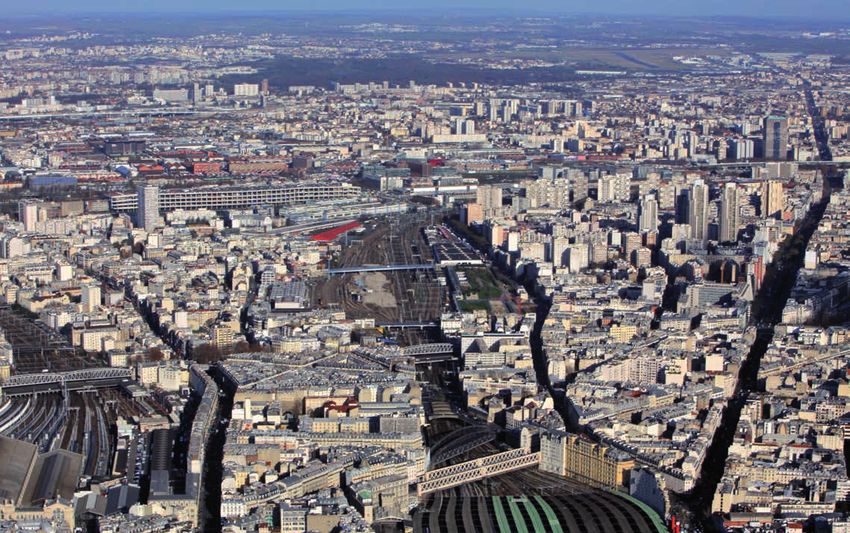
Aerial view of the Gare de l’Est railway sidings, 10th
Paris Climate and energy action Plan 8URBAn PLAnning foR EnERgy EffiCiEnCy
Urban planning policies in Paris
Aerial view of the Seine, 4th
urban Planning oPeraTions: The ClimaTe aCTion Plan laboraTories
Paris is a densely-populated, very built-up drafted a reference document entitled It should be noted that certain specific In 2011, the first operations were
area with few open spaces. 10% of the "sustainable city planning for Paris", facilities, particularly retirement homes, assessed to ensure that the sustainable
territory is currently undergoing urban which serves as both guide and tool for should come as close as possible to development objectives had been met.
development. These sectors are governed assessing each urban development area. achieving these objectives. Analyses were carried out during the
by specific regulations and over the last The requirements of the first Climate Action Five years after the adoption of the Climate design phase and the works phase. The
five years have become laboratories for the Plan were set out in the specifications for Action Plan, several development areas are conclusions will improve the monitoring
Paris Climate Action Plan. the urban development areas and taken currently in the build phase. These include: and future management of the urban
As a result, in 2007 at the same time as into account in the follow-up, namely: development areas.
the Climate Action Plan, the City of Paris
• The first passive and LEB3 in
Pajol sports centre, 18
th
the Fréquel-Fontarabie district
• Promote the growth of renewable (20th arrondissement);
energies; • The creation of a geothermal
• Construct buildings which consume well in the Claude Bernard
a maximum of 50 kWh/m²/year2; urban development zone (19th);
• Renovate existing buildings so they • The creation of the 10-hectare
do not exceed 80 kWh/m²/year; Martin Luther King park in the
• Combine urban compactness heart of the Clichy-Batignolles
and creation of green spaces; urban development zone (17th);
• Keep logistical functions within • The creation of the largest solar
the City; power station in a dense urban
• Help to improve air quality. environment in the Pajol urban
2
In primary energy (heating, hot water, lighting development zone (18th) and the
and ventilation consumption) installation of 2,800 m² of solar
panels in Jean Bouin Stadium (16th).
3
Leb: Low energy buildings
9 Paris Climate and energy action PlanLE PLAN
CLIMAT
ÉNERGIE
DE PARIS
in The fuTure…
• Urban development zone and major urban renewal projects are long-term investment
regulaTion of The loCal areas. They will continue to be the scene of innovations which will equip the city of
the future, such as geothermal energy in the Albien district with a relief well in the Clichy-
urbanism Plan Batignolles urban development zone, and the integration of logistical installations
(under consideration at Porte de la Chapelle and Bercy-Charenton).
The Local Urban Development Plan has been amended several times since the 2007 • The City of Paris will study the possible energy choices for the new urban
adoption of the Climate Action Plan. Its main regulatory provisions focus on: development zone as a matter of priority, favouring as much as possible
the use of local renewable energies or connection to the local heating system
(CPCU–Paris Urban Heating Company) and/or cooling system (Climespace)
networks, whilst also improving air quality. As an example, studies will be
carried out to identify the geothermal potential of the Bercy-Charenton urban
development zone.
• Limiting road transport with rules
on parking (particularly of bicycles)
and the identification of sites on
the banks of the seine for creating
goods transit platforms, thereby • Authorising the surpassing of
facilitating the transport or removal the building regulatory height for
of waste by water; the installation of energy-saving
or renewable energy-producing • Authorising the construction of
• Aiming to maintain building density
devices; an area in building courtyards
adapted to the fabric of Paris
reserved for the selective sorting
(general fAR set at 3, de facto fAR4 • Authorising the use of part of
of waste or for bicycle storage;
rule, easing and technical changes a public building, limited to 20 cm,
to the volumetric rules); for the external insulation of • Creating green spaces around
4
FAR: Floor Area Ratio existing buildings; and on buildings.
Low energy office buildings, 19th
Paris Climate and energy action Plan 10Urban planning for energy efficiency
In Paris there are now two possible
\\ Since 2008, an energy information
\\ Since 2012, an environmental
\\ Finally, the City recently began a
\\
scenarios for exceeding the FAR (floor advisor has been supporting applicants analysis has been carried out of all study on air conditioning in Paris in
area ratio) by up to 20%; one of these who submit a building permit application the building permits submitted since order to define a strategy to combat
is conditioned by the construction of or prior work permit application for 2008, with a view to devising a reliable, individual air conditioning units which
social housing (former Article L.127-1 their energy-saving projects (works, replicable process for requests to consume high amounts of energy and
of the Urban Planning Code) and the possible aid, etc.). He provides advice create green spaces, install solar and may damage the built heritage. More
other by the construction of buildings based on the collection of "Sustainable photovoltaic panels, renovate façades work will be carried out in this area as
which meet energy performance Living" booklets which covers all with the installation of external thermal part of the updated Climate Action Plan.
criteria or contain facilities for producing issues relating to the sustainable insulation, receive FAR bonuses, raise
renewable energy (former Article renovation of buildings. More than a existing buildings, install air conditioning
L.128-1 of the Urban Planning Code). thousand people receive this advice and develop cellars and basements.
every year.
Towards a factor 4-compa- Continue to raise
tible Local Urbanism Plan the awareness of applicants
• The new content of the Local Urbanism • The City of Paris will help to implement
Plan is set out in Articles 16 and 19 of the Climate Action Plan by continuing
the Law of 12 July 2010 known as the to encourage and raise awareness
"Grenelle 2 Law" and in the Decree of among applicants as part of their urban
29 February 2012 on urban planning planning permit applications.
documents.
• When it is next revised, the Paris
Local Urbanism Plan will include these
obligations and will further facilitate
the application of the Paris Climate
in the future…
Action Plan objectives within the
regulatory context.
• One of the subjects to be studied by the
City of Paris is the possibility and feasi-
bility of increased energy and environ-
mental performance in sectors under-
going major development operations.
As a result, the recommendations of
the Paris Climate Action Plan to exceed
current thermal regulations could be
imposed in these sectors.
Thermograpy, 9th
Social housing, 17th
11 Paris Climate and Energy Action PlanLE PLAN
CLIMAT
ÉNERGIE
DE PARIS
The production
and distribution of energy
Creation of the Pajol solar power station, 18th
No region of France is autonomous as regards energy. Our systems depend on fossil and nuclear energies. The Île-de-France
Region produces 11% of its requirements and Paris slightly more than 3% thanks to the Paris Urban Heating Company (CPCU),
the government-approved body responsible for the heating network.
However, there are real opportunities in the Paris metropolis, such as several heating networks, a high capacity for treating house-
hold waste (leading form of renewable and recovered energy in Île-de-France), a natural hot water spring which can be operated
by geothermal energy and a biomass potential which is not yet fully exploited.
renewable and reCovered energies
In a built-up area, the growth of renewable The City wanted to speed up the instal- and photovoltaic solar panels can now be water at Wattignies School (12th) and will
and recovered energies is very limited. In lation of solar panels with a 200,000 m² found on the roofs of Paris. soon extend this scheme to Aspirant
2009, the City carried out a study to assess installation programme. However, the The City of Paris has also successfully Dunant swimming pool (14th).
the plausible renewable or recovered huge price reductions adopted between piloted the recovery of heat from waste
energy production potential of the territory 2010 and 2012 have considerably under-
by 2020. mined the industry and investors are no solar
geothermal solar
solar geothermal solar Heat
The greatest available resource can be longer seriously interested in projects Recovery
found underneath the city with geothermal north of the Loire. Nevertheless, the 644
135
energy. The 2004 potential could be tripled municipality is still keen to achieve its 12,000 m2
5.6 GWh
38 installations
116 GWh
8,000 m2 +1,500
installations
installations
291 GWh
installations
39 GWh
444
installations
0.8 GWh
38.5 GWh
by 2020, with half the work already objective and the City has taken on the 37.3 GWh
completed with the creation of the investment for the major roof projects to be
geothermal well in North-East Paris completed by the end of 2013, such as Halle
(8 MW) and the renovation of the Louxor Pajol (3,500 m²) and Jean Bouin Stadium
cinema (10th). (2,800 m²). More than 25,000 m² of thermal ToTAL REnEWABLEs PARis 2009 PoTEnTiAL REnEWABLEs PARis 2020
ELECTRiCiTy 0.8 gWh ELECTRiCiTy 38.5 gWh
HEAT 121.6 gWh HEAT 367.3 gWh
Potential for producing renewable and recovered energies in Paris
Paris Climate and energy action Plan 12URBAn PLAnning foR EnERgy EffiCiEnCy
The neTworks
The Paris authorities organise energy distribution throughout the territory; they also own the electricity, gas, heating and cooling networks.
These networks present major challenges and opportunities:
• Provide a safe energy supply to • Decide to build local energy systems
the territory, which is 93% dependent in the new districts by creating
on imports, ensuring that the networks hot water loops fed by geother-
are safe and well maintained. Any mal energy, improving their energy
interruptions to supply may have major independence and the renewable
social and economic consequences; energy rate of the network;
• Define the priority development of • Promote the injection of renewable
certain forms of energy (heat and gas) energies into the networks;
in the territory, in particular in • Help Parisians to manage their
the new development zones; energy consumption by informing
them about their consumption.
Solar roofing, 19th Beaugrenelle floor heating network, 15th
13 Paris Climate and energy action PlanLE PLAN
CLIMAT
ÉNERGIE
DE PARIS
Develop local • The Paris Climate Agency will work to Towards less carbon-reliant Towards pooled energy
renewable energies inform Parisians of the possibilities of network energies management in the metropolis
using local renewable energies, including
• The City of Paris has acquired a stake in the geothermal energy. • In view of depleted fossil resources, • It will eventually be necessary to pool
semi-state company Energies POSIT’IF, 8 their rising cost and our dependence the energy distribution and production
http://www.polis-solar.eu
which aims to develop renewable energy on these energy sources, it is essential efforts of the Paris authorities in order
industries in the Paris basin. to increase the proportion of renewable to ensure the safety of the supply, reduce
• Furthermore, by 2014 at least 10,000 m² Towards a metropolitan and recovered energies used to produce dependency on imports, manage and
of additional solar panels will be master plan for the networks network heat. This percentage should pool investment and production costs
installed in urban development zones exceed 50% by 2015, which would allow and curb energy prices for Paris consumers.
and public municipal facilities. As • The City of Paris must increase its the Paris Urban Heating Company Initial proposals are currently underway,
control of the networks, particularly as (CPCU), the local government-approved in particular the work carried out by
part of the European POLIS8 project,
certain concessions will expire by 2020. network company, to enjoy a VAT9 the Paris Urban Heating Company
the City of Paris and the Paris Urban
To do this, it will need to improve its reduction on consumption from 19.6% (CPCU) whose network supplies some
Planning Agency (APUR) have created
knowledge of the current situation and to 5.5%. For CPCU customers, this would of the towns in the inner suburbs,
the 1st solar land registry in Paris,
define a strategic long-term vision like mean savings of approximately €35m a and the geothermal energy project in
allowing each resident to find out the
the Paris master plan for the electricity year on the overall bill (including €1m the Clichy-Batignolles urban development
solar potential of his roof and the best
network for 2044. for the municipal bill) and the growth of zone, which could also benefit outlying
possible type of installation where
local renewable and recovered energy districts.
applicable. The City of Paris will monitor • With this in mind, in July 2012 Paris industries.
future prices changes for the purchase included the drafting of a master plan
of photovoltaic electricity in order to within the next few years in addendum • The objective for the CPCU is to reach
relaunch local dynamism. n°10 of the concession agreement 60% renewable or recovered energies
• Systematic studies have been carried for the heating network. This heating by 2020 in the heat production mix.
out into the use of geothermal energy master plan will be drafted together with The net reduction in greenhouse
in urban planning operations. Following neighbouring authorities. There are gas emissions could then be around
the geothermal doublet in North-East a number of heating networks in the 350,000 tCO2eq in 2020. This is one
Paris, the geothermic project in the metropolis, but they are rarely inter- of the major levers at local level.
Clichy-Batignolles urban development connected. In the long term it will be
• The City of Paris will encourage its key
in the future…
zone has revealed the City of Paris’ necessary to study the creation of
governance for metropolitan heating partners and the stakeholders who sign
desire to use this important resource.
networks, with the pooling of investments the commitment contract to monitor
Consequently, the production of energy
for production tools as one possible the carbon content of the electricity
from geothermics will double in 10 years.
solution. they buy. Deliberations on this subject
• The recovery of heat, whether in are already taking place within the Paris
buildings or in a network (drains, metro, • This plan will be the first step towards authorities with a view to liberalising
etc.) is a sector with considerable potential a more global strategic development the electricity market in 2015.
which the City intends to leverage. Its document for all energy networks in 9
If the legislation remains in force
first experiments with social housing order to define the priority development
buildings and municipal facilities show areas for each one over the next 30 years.
that the City of Paris intends to develop
these innovations for the use of local
energy resources.
Heat production factory, Ivry-sur-Seine
Paris Climate and Energy Action Plan 14LoW EnERgy
AnD AffoRDABLE HoUsing
Passive housing units, 17th
15 Paris Climate and energy action PlanLE PLAN
CLIMAT
ÉNERGIE
DE PARIS
Preambule oBJECTiVEs
2004 Reference 2009 situation 2020 objective saving
gHg 2.95 million tCO2eq 2.64 million tCO2eq 2.07 million tCO2eq -25%
Energy 15,300 GWh 14,200 GWh 11,500 GWh -25%
In 2009, the Paris housing sector
\\ Of this 1,000 GWh saving, the
\\ The considerable increase in energy
\\ Social housing, 3th
emitted just over 2.6 million total percentage resulting from the first prices has led Parisians to reduce their
tonnes equivalent CO2 (tCO2eq), or actions launched by the Climate Action heating consumption (some have
11.5% of the territory’s total emissions. Plan since early 2008 was estimated stopped using their heating) and has
at 13%, i.e. 130 GWh or 30,000 tCO2eq resulted in a move towards cheaper
In 2009, the energy bill of Paris homes
\\ in savings at the end of 2009. These forms of energy (from fuel oil to gas
was more than one billion Euros, actions have made it possible to start or steam). This change in behaviour
or almost €600 per resident. €640m of work, creating an average of only managed to absorb 20% of the
1,300 local jobs7 and 420 external jobs8. price increase since 2004. Parisians’
1.3 million housing units in more
\\
loss of purchasing power as a result of
than 43,000 co-owned properties In 2011, the annual invoice per resident
\\ their energy bill was estimated at €210
consumed 14,200 GWh in 2009, was estimated at €660, an 11% increase between 2004 and 2009.
a decrease of 6% (1,000 GWh) compared compared with 2009.
with 2004. 7
source ADeme, FFb
8
outside Île-de-France
Paris roofs, 4th
Paris Climate and energy action Plan 16LoW EnERgy AnD AffoRDABLE HoUsing
Objectives and commitments
Paris façades, 16th
Improving the city’s carbon footprint requires a considerable reduction in energy
consumption by Paris residences, more than 75% of which were built before the first
MAXiMUM PRiMARy EnERgy10 ConsUMPTion
thermal regulations came into force in 1974. (max PEC, in kWh/m²/year)
There are three parts to the challenge of domestic energy savings: reducing the energy
RT 2012 BBC-Effinergie+ Label
bills of Parisians, preventing large numbers of people being hit by energy poverty and
creating jobs which cannot be relocated. new housing
The City of Paris will continue to support this sector and will set up partnerships in
60 48 (-20%)
order to achieve this objective.
10
The final energy is the energy actually used by an activity. It is different from primary energy, which takes into account
the energy needed to produce the final energy.
The main aim for the residential sector is to reduce energy consumption9 by
25% whilst increasing thermal comfort in summer and winter. This objective will For housing renovations, the objective
\\
help to reduce greenhouse gas emissions in the sector by 25% by 2020. is to move towards 80 kWhep/m²/
9
All forms of energy, from heating to specific electricity year as defined by the BBC-Effinergie
renovation label.
The consumption of housing stock in 2020 must not exceed 11,500 GWh/year.
In future years, specific attention will
\\
be paid to managing the demand
The Paris Climate Action Plan retains the objective that new housing build in Paris
for specific electricity linked to new
must respect a consumption of 50 kWhep/m²/year, consistent with the BBC-Effinergie+
convenience equipment (camera and
label. This label represents a consumption level 20% lower than the 2012 thermal
phone chargers, etc.).
regulations (RT2012) for housing and proposes a method of assessing and monitoring
the results. Achieving the objectives of the Paris
\\
Climate Action Plan will result in
overall savings of more than €500m
for Paris households.
Passive housing units, 17th
17 Paris Climate and energy action PlanLE PLAN
CLIMAT
ÉNERGIE
DE PARIS
Encourage private co-owned properties
to commit to moderating energy consumption
Co-owned properties, 10th
Paris has 43,000 co-owned properties, representing more than one million housing units. It is very complicated for a resident to carry out
energy renovation in his home. The recent Grenelle laws have slightly simplified the process, but the expectations of co-owned property
owners, tenants, co-owners’ associations and professionals in the building remain high. Significant legislative progress (making it easier
for co-owners’ assemblies to vote on the work) is necessary, as are financial innovations to help households absorb the cost of the work.
The City of Paris is testing several ways of supporting co-owned properties in the city (14% of French co-owned properties)
in this approach and of promoting the renovation of private apartment buildings in Paris.
from eXPerimenTs To large-sCale oPah (governmenT-
subsidised housing imProvemenT Programme)
In 2010, the City launched a programmed project and 13 (1,126 housing units) constructed before 1914 and equipped
operation for the thermal improvement have already voted to approve work for with individual heating systems. This Following the success of the first two
thermal improvement operations and in
of buildings (oPATB), focusing on the a 6 GWh/year saving under the OPATB. approach will also make it possible to compliance with the PLH11 adopted by
most energy-hungry buildings of the 13th This system has allowed co-owners to mobilise co-owners to carry out work the Council of Paris, the City of Paris is
in The fuTure…
examining the possibility of launching an
arrondissement, i.e. those built between plan ambitious works programmes. to limit the environmental footprint of arrondissement-wide OPATB, first in the
1940 and 1981, 56% of which have The expected savings are 30 GWh/year their building. The City, in partnership 19th arrondissement (186,000 inhabitants)
communal heating. The funding of 100% and 6,000 tCO2eq a year if one third of with the Paris Climate Agency, Eau de and later in the 15th arrondissement
(239,000 inhabitants). These operations,
of the energy audit and the creation property co-owners are involved. Paris and all the energy operators, is which involve more than 400,000 inhabitants,
of aid for co-owners’ associations for In 2012, the City launched an OPAH for working to implement a multi-faceted should speed up the renovation of
co-owned properties in Paris. The expected
insulation work (a priority and one of sustainable development and energy platform for co-owners and co-ownership savings are in the order of 50 GWh/year.
the most difficult costs to absorb), have savings in the Place de la République management committees to improve 11
pLH: Local Housing programme
increased owners’ commitment to ambitious area. This OPAH will allow the testing of their knowledge and understanding of
works programmes. In two and a half a call for projects system to target the consumption and to allow each resident
years, 151 co-owned properties have most motivated property co-owners with to take the appropriate steps.
carried out an energy audit, 38 co-owned a high potential for energy renovation in
properties have undertaken a works this area mainly made up of buildings
Paris Climate and energy action Plan 18LoW EnERgy AnD AffoRDABLE HoUsing
CusTomised suPPorT
Since 2008 the City, in partnership properties have so far received a subsidy institutional (Île-de-France Region, RATP,
with ADEME (French Agency for the for an energy audit, 71 co-owned properties Météo-France) and private (EDF, CPCU)
Environment and Energy Management), have carried out a works project and 30 founders. The Agency currently has
and since 2012 the Île-de-France Region, (3,000 housing units) have voted to carry more than 65 members (associations,
is offering property co-owners a subsidy out work, leading to savings of approximately businesses, SME, social landlords, semi-
to carry out an energy audit on their 5.2 GWh/year, or 1,150 tCO2eq. public enterprises, Eau de Paris, etc.).
building. This subsidy could cover up to The Paris Climate Agency (APC) has also It has doubled the amount of advice
70% of the cost of the audit. provided Parisians with better energy- provided to Parisians in the course of
In 2011, the creation of the Paris Climate saving advice. The APC is innovative, as a year.
Agency increased the visibility of the it is one of the first local multi-partnership
system set up by the City. 145 co-owned energy agencies to have public and
Pavillon du Lac, headquarters of the APC, 12th
The City of Paris will focus on current necessary for achieving the objective of when architecturally possible. Until the
systems for supporting private sector12 reducing consumption; regulatory framework allows this, the City
property co-owners and will continue to will set up a voluntary support system for
explore new solutions, in accordance with • Take greater account of the energy buildings with a renovation project, to
changes to the regulatory and institutional performance objectives and the encourage them to study the possibility The City of Paris will monitor any
framework. architectural and urban planning of renovation with insulation. It will also legislative changes which would
implications of construction projects; set up a system for projects to renovate allow it to speed up energy efficiency
In the context of the Énergie POSIT’IF building roofs without thermal insulation. work in co-owned properties and
semi-public enterprise, created with the • Include criteria for assessing the any proposals for regional or national
furTher aCTion…
Île-de-France Region, several Île-de- thermal insulation potential of buildings The Paris Climate Agency will continue to financial support for Parisians.
in The fuTure…
France authorities and the Caisse des in the reports drafted by the renovation support Paris stakeholders and citizens as
Dépôts et Consignations, the City of Paris inspectors; they move towards energy moderation,
will create performance and financial by creating a tool to support co-owned
engineering contracts for co-owned • Inform co-owners’ associations and properties in 2013 (the Copro® coach) and
properties in order to facilitate and co-ownership management committees by providing more advice for Parisians.
accelerate the starting of the work. of energy issues and the tools and 12
throughout the territory
aids available.
The City will continue its partnerships
with housing, building and real estate For this latter point, the City of Paris is
stakeholders, in order to: considering drafting thermal renovation
recommendations in order to speed up
• Improve thermal renovation training the external insulation firstly of court-
to develop skills and create the jobs yard facades and then exterior facades
Haussmann apartment building, 16th
19 Paris Climate and energy action PlanLE PLAN
CLIMAT
ÉNERGIE
DE PARIS
Provide a framework for the construction
and renovation of social housing in Paris
Social housing, 11th
In 2007, the City of Paris defined strict requirements for the environmental quality of new Energy savings compared with buildings which respect the current regulations will
social housing in Paris. The energy performance required for such housing remains be around 180 gWh/year, or 37,000 tCo2eq.
more ambitious than the new national thermal regulations which came into force in The City, with its ambitious energy saving objectives, financed almost 15,000 social
2013 (RT2012). Over 13,750 housing units out of the 19,200 financed between 2008 housing units between 2007 and 2011. These renovations are expected to result in
and 2011 (i.e. 72%) comply with these requirements and the others come as close to energy savings of approximately 130 gWh of primary energy a year or almost
them as possible. It may actually be impossible to achieve this objective 100% due 30,000 tCo2eq, i.e. the annual consumption of almost 7,500 housing units.
to heritage, technical and economic constraints, the use being made of the buildings However, the lack of State subsidies for the renovation of the existing housing stock
or the purpose of certain categories of social housing (retirement home, home for and the limited access to eco-loan social housing have so far restricted the programming
persons with disabilities, etc.). The first "Climate Action Plan" housing was completed of this type of operation by social landlords, despite considerable support
in 2011 and its tenants generally have energy bills 75% lower than the average. from the City.
The first housing to comply with the new RT2012 will be completed during 2016.
The City of Paris is retaining its ambitious The required performance level will result New social family housing created social landlords in these major renovations
objectives to improve the energy efficiency in savings of approximately 50 gWh/year following simple renovations to a building operations and will ask the State and the
in The fuTure…
of its social housing and the quality of life and 10,000 tCo2eq. which does not allow these operations Region to invest in this area. The expected
of tenants. to be assimilated to new build from a tax savings are in the order of 40 gWh/year
For new specific social housing, whether point of view, will aim to comply with the and 8,000 tCo2eq.
The main objective is to reduce the nursing homes or retirement homes, BBC-Effinergie renovation label or, for
energy consumption of existing social builders will apply the new thermal regulations buildings with Joule effect heating, a 50% This continued investment will be
housing by 30% between 2004 and 2020, when they are published. reduction in energy consumption, with a accompanied by both increased monitoring
by promoting the use of renewable and maximum of 200 kWhep/m²/year. New of the building’s consumption after the
recovered energies whenever technically New social family housing created following social family housing created following work and by support for tenants.
possible. major renovations to an existing building the acquisition and approval of a building
must have energy consumption lower than acquired from existing stock must comply
The new social family housing constructed 80 kWhep/m²/year. with current thermal regulations. The City
on virgin land will respect at least the will continue to support the efforts of
BBC-Effinergie+ low energy building label.
Paris Climate and energy action Plan 20LoW EnERgy AnD AffoRDABLE HoUsing
Combat energy poverty
Social housing, 18th
According to the "Grenelle 2" law:
\\ The right to access energy, stated in
\\ The Département of Paris has
\\ local actions to test means of supporting
"a person is experiencing energy the first Climate Action Plan, is and launched a "low-energy light bulb vulnerable households; the plan is to
poverty under the terms of this law remains a fundamental value which campaign" to help Parisians on low replicate this scheme throughout Paris.
if in his housing he is experiencing the City of Paris intends to defend. incomes make these technological
particular problems in obtaining changes and make savings on their On 23 May 2011, the Paris authorities
\\
the supply of energy necessary to The INSEE (French National Institute
\\ electricity bills. signed a local commitment contract
meet his basic needs due to the of Statistics) index of the "cost of (CLE) with the State, the CASVP (City of
inadequate nature of his resources or electricity, gas and other fuels" The aid mechanisms for the payment
\\ Paris Social Action centre), the CNAV
living conditions". increased by 40% between 2000 and of these bills are now well established. (National Pension insurance Fund),
2010. In 10 years, fossil fuel prices The fight against energy poverty must the Île-de-France SACICAP (socially
In Paris, according to the 2006 National
\\ have increased fairly spectacularly: now concentrate on prevention and the beneficial cooperative companies
Housing Survey, 54,000 households +74% for gas, +62% for fuel and less renovation and improvement of housing. for home ownership) and the APC
are considered to be experiencing significantly, +8% for electricity. (Paris Climate Agency). This contract
energy poverty, or 4.7%, compared With this aim, Paris Climate Agency
\\ establishes a programme of actions
with 13.2% nationally. Only around 20% Since 2008, the Département of Paris
\\ is supporting an experimental project ranging from identifying house-
are owner occupiers, compared with has significantly increased the aid paid to combat energy poverty in the 19th holds experiencing energy poverty
60% nationally. This poverty may stem to combat energy poverty (+25% for arrondissement. It involves taking a to mobilising financial systems likely
from a combination of factors whose the Energy Housing Solidarity Fund local initiative (the CAPE – Concerted to improve their credit-worthiness
relative impact is difficult to determine: (FSLE) and +6% for Paris Family Energy). Action for Energy Poverty, supported for carrying out energy-saving work,
poorly insulated housing, energy The number of beneficiaries has also by the European Union and based on through home visits to the house-
inefficiency, class G electrical house- increased (+25% for the FSLE). In 2011, the Flandre district) and extending it holds identified by social workers.
hold appliances, behavioural problems, the Département paid out €10m in aid. to the entire district, to allow better
lack of information, greater social identification and assessment of local
poverty and increased energy prices. energy poverty and to use concrete
21 Paris Climate and energy action PlanLE PLAN
CLIMAT
ÉNERGIE
DE PARIS
More generally, this work is part of the
\\
Local Housing Programme adopted In addition to the legislative
modifications underway, partnership
by the Council of Paris in March 2011, work must be continued with all
which sets out the main guidelines the stakeholders involved so that
of the housing and habitat policy to energy poverty can be anticipated
as early as possible.
be implemented by the City over the
next six years. Firstly, it is essential to cross-check
all the information available in
in The fuTure…
The right to water, like the right to
\\ each body, particularly energy
consumption.
energy, is a key focus of the policy of
the City and the Paris municipal water It will also be necessary to
help social workers to identify
company. Several actions have been the different possible causes,
implemented to ensure that all Parisians including poorly insulated housing,
have access to water and purification, poor equipment, unsuitable
subscription, behaviour which
including an 8% decrease in water can be improved, etc. so that the
prices (City), aid for disadvantaged most sensitive sections of the
Parisians (preventive water solidarity public, those in financial difficulty,
can systematically receive the
allowance, Solidarity Housing Fund), appropriate advice.
the removal of housing with no toilet
or bathroom and the creation of drinking
fountains and public toilets.
Furthermore, Eau de Paris and its
\\
partners have been working to
install water-saving kits in order to
reduce Parisians’ water and electricity
bills. 15,000 water-saving kits have
been installed in the social housing
managed by Paris Habitat, with the
aim of reducing consumption by
tenants by 15%.
Social housing, 17th
Paris Climate and energy action Plan 22THE sERViCE inDUsTRy in PARis,
A nEW CHALLEngE
Paris Région Innovation Nord Express, 18th
23 Paris Climate and energy action PlanLE PLAN
CLIMAT
ÉNERGIE
DE PARIS
prEambule TERRITORY
2004 Reference 2009 Situation 2020 Objective Saving
GHG 2.91 million tCO2eq 2.71 million tCO2eq 2.18 million tCO2eq -25%
Energy 16,900 GWh 16,400 GWh 12,700 GWh -25%
ADMINISTRATION
2004 Reference 2011 Situation 2020 Objective Saving
GHG 148,900 tCO2eq 156,900 tCO2eq 104,200 tCO2eq -30%
Energy 859 GWh 895 GWh 601 GWh -30%
Paris is home to more than 400,000 companies13 representing 1.6 million jobs.
\\
The service industry occupies over 58 million m² (+1.2% in 5 years).
Unit consumption by use (in kWh/m²)
kWh/m² In 2009, the Paris service industry emitted just over 2.7 million tCO2eq or 11%
\\
of total emissions in the territory.
400
The 2009 energy bill amounted to €1.3 billion, with annual consumption of 16,400 GWh.
\\
350
For the first time since 1990, while stock is increasing, the energy consumption of
\\
300
the sector decreased by almost 3% between 2004 and 2009. Heating consumption
250 considerably decreased over the period (-11%). These reductions were offset by
the increase (+16%) in so-called specific uses of electricity (air conditioning, new
200
uses, etc.).
150
Service industry’s activities in Paris are highly disparate, with very different energy
\\
100 consumption and resource requirements from one field to another.
50 For certain activities or very small businesses, the energy category has an effect
\\
0 on the turnover.
Cafes, Comm. Health Teaching Sport, Offices Shops Buildings,
Hotels, Residence Culture Transports The public service industry in Paris include a large number of regional, national and
\\
Restaurants Leisure
even international public administrations and of course the Paris Administration,
Air conditioning Specific uses Hot water, Heating whose greenhouse gas emissions have remained almost stable over the period.
of electricity cooking A roadmap detailing all the Climate Action Plan actions for the Administration
(lighting, IT, etc.) and other is annexed to the Climate Action Plan.
13
Distribution of energy consumption per sector of activity in 2009 Paris Chamber of Commerce and Industry 2009
Paris Climate and Energy Action Plan 24THE sERViCE inDUsTRy in PARis, A nEW CHALLEngE
Objectives and commitments
Office buildings, 19th
It is essential to involve all the stakeholders in the Paris public
and private service industry in order to achieve the ambitious
objectives of the Climate Action Plan, not only to reduce
the energy consumption of the buildings in question, but also
to modify the activities of each one, make them more carbon-
efficient and reduce the emissions of the Transport of goods,
Consumption or even Waste sectors.
The main objective for the service industry is to reduce
greenhouse gas emissions caused by its activities by
25%, without affecting the attractiveness of the territory or
the economic performance of companies.
The consumption of the services stock in 2020 must not exceed
12,700 GWh/year.
Achieving the objective of the Paris Climate Action Plan will
result in overall savings of €500m a year for the sector.
Automatic sun-screen, 12th
25 Paris Climate and energy action PlanLE PLAN
CLIMAT
ÉNERGIE
DE PARIS
Promote the development
of eco-industries and innovation
Offices buildings, 19th
Every year, Paris supports over 50 innovative SME specialising in the green economy, by funding individual and collaborative
research and development projects, the launch of new products and services and job creation. Project funding remains an essential
springboard for young, innovative business which can also draw on the "Paris Innovation Seed Fund" and the "Paris Finance Plus"
guarantee, both managed by Oséo14.
Making it easier for these companies to access public-sector contracts in Paris is a major challenge. Regular themed encounters are held
between SME and City purchasers/specifiers. The City also gives them the opportunity to test their new solutions in the public domain
so that they can improve their technologies, as with the "Building Energy Efficiency" call for projects by the Paris Region Lab’ with the support
of the Paris Climate Agency. Testing innovative eco-construction and renewable energy projects is also one of the key commitments of
the partnership agreement between the City of Paris and the département of Seine-et-Marne, signed in February 2011.
14
State-owned company responsible for supporting SME in financing innovation
Solar panels, 18th To ensure the continual creation
\\ The City’s support also extends to
\\
of innovative SME and new jobs in professional networks such as the
the green economy, they now have eco-innovative Durapole business
14,000 m² of dedicated office space in cluster, an association which brings
the Paris Région Innovation Nord PME together for environmental
Express business incubator – business issues, and Advancity, the Île-de-France
centre in the 18th and the future competitiveness cluster dedicated to the
business incubator in the Boucicaut urban eco-technologies of the sustainable city.
development zone eco-district. These
two buildings meet the 50 kWh/m²/year
criterion set out in the Climate Action Plan.
Solar hotel, 14th
Paris Climate and energy action Plan 26The Service industry in Paris, a new challenge
As well as contributing to the operation of
\\ In 2007, the municipality joined forces
these key stakeholders, the authorities, with professional building companies to
together with the City of Paris College encourage their members, businesses
of Engineers, are helping to develop and tradesmen to acquire new skills
collaborative research projects so that for the energy-saving work necessary
the tools for better living tomorrow to comply with changing thermal
can be created within the research regulations and public calls to tender.
laboratories, universities, industries The details of more than 100 specialised
and SME today. The "Paris 2030" businesses and the work they do are
programme, which is aimed at accessible to individuals and associations
researchers and funds a selection of on paris.fr.
two-year projects on metropolitan
development by 2030, adds force to
this momentum.
Office buildings, 19th
in the future…
In view of the challenges posed by the advice, particularly on works tenders, using In order to support building professionals Structures) to apply, particularly in the form
energy performance of buildings, the City of the list of building professionals which will investing in these new human resource of temporary groups of businesses.
Paris and its professional building partners be accessible to Île-de-France businesses. and facilities activities, the City of Paris 15
2011-2013 partnership agreement between the City of
are pooling their efforts and coordinating together with the Île-de-France Region is Paris and the Paris–Île-de-France FFB, the Paris and inner
their actions to encourage (co-)owners of They have also agreed to work together to opening up its aid to Paris and Île-de-France suburbs CAPEB, the Paris Federation of building and
private residential buildings, households develop new skills relating to energy-savings businesses. At the same time, the partners public works S.C.O.P. (cooperative enterprise), the Île-de-
or institutional heritage owners and local within building companies, by creating to the agreement15 will continue their work France Regional Council, the Regional Council of Île-
stakeholders (associations, businesses, etc.) training better suited to the needs of the to improve the distribution of information on de-France architects and the Paris Climate Agency for the
industry, focusing on employees, young adaptation of private housing, Paris apartment buildings
to carry out targeted work to adapt their tests of new thermal renovation technologies
people, job-seekers and people entering and professional premises to combat climate change.
housing or premises to climate change. This in Paris, on future work operations and on
approach aims to provide Parisians with employment. public contracts in order to encourage
consistent, high-quality information and SME, VSB and SIAE (Economic Integration
27 Paris Climate and Energy Action PlanYou can also read


