AS6500 Datasheet - 4-Channel Time-to-Digital Converter - ScioSense
←
→
Page content transcription
If your browser does not render page correctly, please read the page content below
Datasheet
DS000640

AS6500
4-Channel Time-to-Digital Converter

v4-00 • 2020-Feb-28

This product was initally sold under ams AG is now owned by ScioSense B.V. .
Only the ownership has changed. The specification and properties of the product remain unchanged.
AS6500
                                                                                                                                   Content Guide

Content Guide

1         General Description ...................... 3                        8.1   Time Measurements and Results ............... 28
                                                                              8.2   Resolution ................................................... 30
1.1       Key Benefits & Features ............................... 3           8.3   Combining Two Stop Channels .................. 31
1.2       Applications .................................................. 4   8.4   Input Pins for Time Measurement .............. 33
1.3       Block Diagram .............................................. 4      8.5   SPI Communication Interface ..................... 35
2         Ordering Information .................... 5                         8.6   Coding of Results ....................................... 38
                                                                              8.7   Conversion Latency and Conversion Rate . 40
3         Pin Assignment ............................. 6                      8.8   Conversion Rate ......................................... 41
3.1       Pin Diagram .................................................. 6    9     Application Information............... 45
3.2       Pin Description ............................................. 6
                                                                              9.1   Configuration Examples ............................. 45
4         Absolute Maximum Ratings ......... 9                                9.2   Example C++ Code .................................... 45
                                                                              9.3   Schematic ................................................... 48
5         Recommended Operation                                               9.4   External Components ................................. 49
          Conditions.....................................10
                                                                              10    Package Drawings & Markings ... 51
6         Typical Characteristics ................11
                                                                              11    Reel Information .......................... 53
6.1       Converter Characteristics ........................... 11
6.2       Power Supply Characteristics .................... 12                12    Soldering & Storage Information 54
6.3       Reference Clock and Stop Input
          Requirements ............................................. 13
6.4       Serial Communication Interface ................. 14
6.5       Typical Operating Characteristics .............. 16
7         Register Description ....................19
7.1       Register Overview ...................................... 19
7.2       Detailed Register Description ..................... 21
8         Detailed Description.....................28

Datasheet • PUBLIC
DS000640 • v4-00 • 2020-Feb-28 • 2020-Feb-28                                                                                                 54 │ 2
AS6500
General Description
1 General Description
The AS6500 is a high performance time-to-digital converter (TDC) frontend device. It is a derivative of
TDC-GPX2, with CMOS inputs and serial SPI output only. It comes in a QFN40 package. AS6500
achieves high measurement performance and high data throughput. High configuration flexibility and
unlimited measurement range cover many applications, ranging from portable handheld laser range
equipment to ambitious time-of-flight measurements of high performance.
AS6500 calculates calibrated stop measurements, referenced to the applied reference clock.
Combinations of single shot accuracy of 10ps with lowest pulse-to-pulse spacingAS6500
General Description
1.2 Applications
● Laser range measurement
● Time-of-flight measurement
● Lidar
1.3 Block Diagram
The functional blocks of this device are shown below:
Figure 2:
Functional Blocks of AS6500
CVDD18
DVDD18
DVDD33
TVDD33
TVDD18
DVDD18
RVDD33
DISABLE
AS6500
STOP1
TDC
FIFO
STOP3
TDC
FIFO
CVDD18O
LVR TVDD18O
STOP2
TDC DVDD18O
FIFO
STOP4
TDC
FIFO
RSTIDX Reference
Clock
Index
Counter
Encoder Configuration
REFCLK
TDC Serial Interface
INTERRUPT
SCK
MISO
SSN
MOSI
REFOSCO
REFOSCI
Datasheet • PUBLIC
DS000640 • v4-00 • 2020-Feb-28 54 │ 4AS6500
Ordering Information
2 Ordering Information
Ordering Code Package Marking Delivery Form Delivery Quantity
AS6500
AS6500-FQFM QFN40 T&R 500 pcs/reel
-FQF
Datasheet • PUBLIC
DS000640 • v4-00 • 2020-Feb-28 54 │ 5AS6500
Pin Assignment
3 Pin Assignment
3.1 Pin Diagram
Figure 3:
AS6500 QFN40
INTERRUPT
REFOSCO
REFOSCI
DVDD33
TVDD18
DGND
MISO
MOSI
SCK
SSN
40
31
30
TGND
NC
1
STOP1
DVDD33
STOP2
NC
TVDD33
TSTO
RSTIDX
TSTO
AS6500 REFCLK
TSTO
DISABLE
TSTO
TGND
NC
STOP3
TSTO
STOP4
21
10
NC
11
20
DGND
DVDD33
DVDD18
RVDD33
VDD18O
RGND
CGND
CVDD18
TVDD18
TVDD33
3.2 Pin Description
Figure 4:
Pin Description of AS6500 QFN40
Pin Not
Pin Name Pin Type Description
Number Used
1 NC Not connected
2 DVDD33 Power Supply 3.3V supply for digital and IO units
3 NC Not connected
Datasheet • PUBLIC
DS000640 • v4-00 • 2020-Feb-28 54 │ 6AS6500
Pin Assignment
Pin Not
Pin Name Pin Type Description
Number Used
4 TSTO Test pin
5 TSTO Test pin
6 TSTO Test pin
7 TSTO Test pin
8 NC Not Connected
9 TSTO Test pin
10 NC Not Connected
11 DGND Power Supply Ground for digital and IO units
12 DVDD33 Power Supply 3.3V supply for digital and IO units
13 DVDD18 Power Supply 1.8V supply for digital and IO units
14 RVDD33 Power Supply 3.3V supply for linear voltage regulator
Regulator 1.8V supply for digital and IO units, regulator
15 VDD18O
Output output
16 RGND Power Supply Ground for linear voltage regulator
17 CGND Power Supply Ground for TDC
18 CVDD18 Power Supply 1.8V positive supply for TDC
19 TVDD18 Power Supply 1.8V positive supply for time front-end
20 TVDD33 Power Supply 3.3V positive supply for time front-end
21 STOP4 CMOS Input Positive stop input for channel 4
22 STOP3 CMOS Input Positive stop input for channel 3
23 TGND Power Supply Ground for 1.8V time front-end supply
24 DISABLE CMOS Input Positive disabling pin for stop channels TVDD33
25 REFCLK CMOS Input Negative clock signal of reference clock TVDD33
26 RSTIDX CMOS Input Positive reference index reset signal TVDD33
27 TVDD33 Power Supply 3.3V positive supply for time front-end
28 STOP2 CMOS Input Positive stop input for channel 2
29 STOP1 CMOS Input Positive stop input for channel 1
30 TGND Power Supply Ground for TDC
31 TVDD18 Power Supply 1.8V positive supply for time front-end Open
XOSC Driver
32 REFOSCI Input for quartz as reference clock Open
In
XOSC Driver
33 REFOSCI Output for quartz as reference clock Open
Out
34 INTERRUPT CMOS output SPI interrupt Open
35 SSN LVTTL Input SPI slave select not + interface reset
Datasheet • PUBLIC
DS000640 • v4-00 • 2020-Feb-28 54 │ 7AS6500
Pin Assignment
Pin Not
Pin Name Pin Type Description
Number Used
36 SCK LVTTL Input SPI serial clock
37 MOSI LVTTL Input SPI serial data master out , slave In
LVTTL
38 MISO SPI serial data master in, slave Out
Tristate
39 DGND Power Supply Ground for digital and IO units
40 DVDD33 Power Supply 3.3V supply for digital and IO units DVDD33
Datasheet • PUBLIC
DS000640 • v4-00 • 2020-Feb-28 54 │ 8AS6500
Absolute Maximum Ratings
4 Absolute Maximum Ratings
Stresses beyond those listed under “Absolute Maximum Ratings“ may cause permanent damage to
the device. These are stress ratings only. Functional operation of the device at these or any other
conditions beyond those indicated under “Operating Conditions” is not implied. Exposure to absolute
maximum rating conditions for extended periods may affect device reliability.
Figure 5:
Absolute Maximum Ratings of AS6500
Symbol Parameter Min Max Unit Comments
Electrical Parameters
VDD33 3.3V Supply Voltage to Ground -0.5 4.0 V Pin: DVDD33, TVDD33,
RVDD33
VDD18 1.8V Supply Voltage to Ground -0.5 2.2 V Pin: DVDD18, TVDD18,
CVDD18
Voltage between ground pins -0.3 +0.3 V Pin: DGND, TGND, RGND
Vosc Voltage at input of oscillator -0.3 VDD18 + V Pin: REFOSCIN
cell 0.3
Electrostatic Discharge
ESDHBM Electrostatic Discharge HBM ± 1000 V JS-001-2014
Temperature Ranges and Storage Conditions
Operating Junction
TJ -40 125 °C
Temperature
TSTRG Storage Temperature Range - 65 150 °C
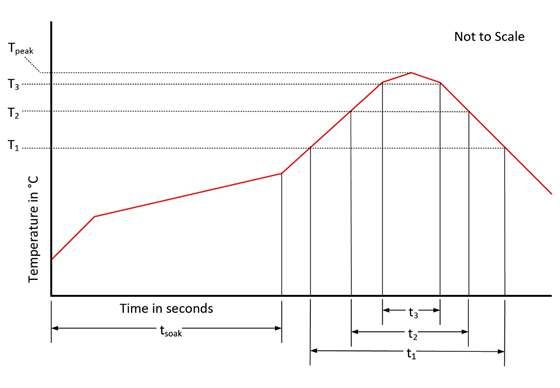
TBODY Package Body Temperature 260 °C IPC/JEDEC J-STD-020 (1)
Relative Humidity (non-
RHNC 5 85 %
condensing)
Maximum floor life time of
MSL Moisture Sensitivity Level 3
168h
(1) The reflow peak soldering temperature (body temperature) is specified according to IPC/JEDEC J-STD-020
“Moisture/Reflow Sensitivity Classification for Nonhermetic Solid State Surface Mount Devices.” The lead finish for
Pb-free leaded packages is “Matte Tin” (100 % Sn)
Datasheet • PUBLIC
DS000640 • v4-00 • 2020-Feb-28 54 │ 9AS6500
Recommended Operation Conditions
5 Recommended Operation Conditions
Recommended operating ratings indicate conditions for which the device is functional, but do not
guarantee specific performance limits. Test conditions for guaranteed specification are expressly
denoted.
Figure 6:
Recommended Operation Conditions of AS6500
Symbol Pin Description Min Typ Max Unit
Power-Supply
DVDD33,
VDD33 TVDD33, Supply Voltage 2.4 3.3 3.6 V
RVDD33
DVDD18, Core Supply Voltage
VDD18 TVDD18, powered by integrated 1.7 1.8 1.9 V
CVDD18 regulator, pin VDD18O
Temperature
Operating free air
TA -40 125 °C
temperature(1)
Reference & Stop Inputs
VIL,CMOS STOP1, STOP2, CMOS Input Low Voltage 0.4 V
STOP3, STOP4,
VIH,CMOS REFCLK, VDD33
RSTIDX, CMOS Input High Voltage V
– 0.4
DISBALE
SPI-Interface
VIL Digital Input LOW Voltage 0.8 V
SCK, MOSI, SSN 0.7 ×
VIH Digital Input HIGH Voltage V
VDD33
INTERRUPT, Load Capacitance to
CLOAD 20 pF
MISO Ground
(1) Recommended Operating Ratings indicate conditions for which the device is functional, but do not guarantee specific
performance limits. Test conditions for guaranteed specification are explicitly denoted.
Datasheet • PUBLIC
DS000640 • v4-00 • 2020-Feb-28 54 │ 10AS6500
Typical Characteristics
6 Typical Characteristics
The following test levels apply to all following characteristics:
Figure 7:
Test Levels
Test Level Description
I 100% production tested.
II 100% production tested at 25°C and guaranteed by design and
characterization testing
III Parameter is guaranteed by design and characterization testing
IV Sample tested
V Parameter is a typical value only.
6.1 Converter Characteristics
General Conditions: VDD33 = 3.3 V; VDD18 = 1.8 V; TA = 0 °C to 80 °C.
Figure 8:
Converter Characteristics
Symbol Description Condition TL Min Typ Max Unit
Accuracy of Time Measurement
RMS Single-shot RMS High_Resolution = 0 (off) 20 30
resolution High_Resolution = 1 (2x) IV 15 20 ps
High_Resolution = 2 (4x) 10 15
INL Integral non-linearity IV 20 ps
DNL Differential non-
V 5 ps
linearity
No missing code At time quantization level III Assured
Channel to channel
At same times measured IV 20 100 ps
isolation
Offset error High_Resolution = 0 (off) 100
High_Resolution = 1 (2x) V 150 ps
High_Resolution = 2 (4x) 200
Datasheet • PUBLIC
DS000640 • v4-00 • 2020-Feb-28 54 │ 11AS6500
Typical Characteristics
Symbol Description Condition TL Min Typ Max Unit
Offset error High_Resolution = 0 (off) 0.5 3
temperature drift High_Resolution = 1 (2x) IV 1 ps/K
High_Resolution = 2 (4x) 1.5
Switching Performance
tCONV Converter latency High_Resolution = 0 (off) 20
High_Resolution = 1 (2x) III 50 ns
High_Resolution = 2 (4x) 100
Peak conversion rate High_Resolution = 0 (off) 50
High_Resolution = 1 (2x) III 20 MSPS
High_Resolution = 2 (4x) 10
Maximal read-out rate SCK = 50MHz
SPI : Opcode + 48-Bit III 0.9 MSPS
Opcode + 16 Bit Opcode + 16-Bit 2.1
6.2 Power Supply Characteristics
General Conditions: VDD33 = 3.3 V; VDD18 = 1.8 V; TA = 0 °C to 80 °C.
Figure 9:
Power Supply Characteristics
Symbol Description Condition TL Min Typ Max Unit
Supply Voltage
tVDD18O Delay from power-
up of RVDD33 to
Cload = 100 µF V 100 ms
TVDD18, CVDD18,
DVDD18 stable
PTOT,MIN Minimum total CMOS inputs and SPI
power dissipation read
V 60 mW
fREFCLK = 5 MHz
conversion rate 1MSPS
Detailed Current Consumption
IDVDD18,REFCLK Core current into
fREFCLK = 5 MHz V 2 mA
REFCLK
IDVDD18,STOP Current per stop
Stop rate = 0.5 MHz V 0.5 mA
channel
ICVDD18 Current with
V 14 mA
activated TDC core
ITVDD18,REFOSC Quartz oscillator
fREFOSC = 4 MHz III 2 mA
current if used
Datasheet • PUBLIC
DS000640 • v4-00 • 2020-Feb-28 54 │ 12AS6500
Typical Characteristics
Symbol Description Condition TL Min Typ Max Unit
IDDQ Quiescent current
II 60 100 µA
mainly by IRVDD33
ILKG Input leakage
CMOS, Digital II -10 1 µA
current
6.3 Reference Clock and Stop Input Requirements
General Conditions: VDD33 = 3.3 V; VDD18 = 1.8 V; TA = 0 °C to 80 °C; VID = 200mV; VIC = 1.25 V;
VIL = 0 V; VIH = 3.3 V
Figure 10:
Clock and Input Characteristics
Symbol Description Condition TL Min Typ Max Unit
fREFCLK Reference clock High_Resolution = 0 (off) 2 5 12.5
frequency High_Resolution = 1 (2x) III 2 5 12.5 MHz
High_Resolution = 2 (4x) 2 5 10.0
TREFCLK Reference clock III 83 200 500 ns
period
Reference clock
V 100 ps
jitter
Reference clock
No requirement
stability
tPWH,STOP Minimum pulse
CMOS III 5 10 ns
width
tPPS Minimum pulse-to- High_Resolution = 0 (off) 20
pulse spacing High_Resolution = 1 (2x) III 50 ns
High_Resolution = 2 (4x) 100
tPPS,CCH Minimum pulse-to-
pulse spacing for a CHANNEL_COMBINE = 1 III 20 ns
single pair of pulses
tSU,RST Setup Time from
III 5 ns
RSTIDX to REFCLK
tHD,RST Hold Time from
III 5 ns
RSTIDX to REFCLK
tPIN_ENA Pin Activation Time
from configuration of Pins: RSTIDX, REFCLK,
PIN_ENA… III 200 µs
STOPA/B
to valid data
Datasheet • PUBLIC
DS000640 • v4-00 • 2020-Feb-28 54 │ 13AS6500
Typical Characteristics
Symbol Description Condition TL Min Typ Max Unit
tPOR Delay between
power-on or Delay between power-on or
initialization reset initialization reset and next III 100 µs
and next communication
communication
Figure 11:
Timing Symbols and Parameters
REFCLK N-1 N 0 1
tSU,RST tHD,RST
TREFCLK tPWH,STO
P
RSTIDX
tPWH,STOP tPWH,STOP
STOP#
tPPS, CCH tPPS, CCH
tPPS
6.4 Serial Communication Interface
General Conditions: VDD33 = 3.3 V; VDD18 = 1.8 V; TA = 0 °C to 80 °C; VIL = 0V; VIH = 3.3 V
Figure 12:
Serial Communication Interface Characteristics
Symbol Description Condition TL Min Typ Max Unit
Electrical Characteristics
VOL Digital Output LOW
IO = 2 mA III 0.3 mV
Voltage
VOH Digital Output DVDD33
IO = 2 mA III mV
HIGH Voltage -0.3
Timing Characteristics
fSCK Serial clock
CL = 5 pF III 50 MHz
frequency
tPWH,SCK Serial clock pulse
III 10 ns
width HI state
Datasheet • PUBLIC
DS000640 • v4-00 • 2020-Feb-28 54 │ 14AS6500
Typical Characteristics
Symbol Description Condition TL Min Typ Max Unit
tPWL,SCK Serial clock pulse
III 10 ns
width LO state
tPWH,SSN SSN pulse width
between write III 10 ns
cycles
tSU,SSN SSN setup time
III 20 ns
after SCK falling
tHD,SSN SSN hold time
III 20 ns
before SCK rising
tSU,MOSI Data setup time
III 5 ns
prior to clock edge
tHD, MOSI Data hold time
III 5 ns
after clock edge
tDV,MISO Data valid after
III 8 ns
rising clock edge
tZX,MISO HighZ to output
III 8 ns
time
tXZ,MISO Output to HighZ
III 8 ns
time
Figure 13:
Write and Incremental Write
tPWH,SSN
SSN
tSU,SSN tPWH,SCK tPWL,SCK tHD,SSN
SCK
tSU,MOSI tHD,MOSI
MOSI O7 O6 O5 A4 A3 A2 A1 A0 D7 D6 D5 D4 D3 D2 D1 D0 D7 D6 D5 D4 D3 D2 D1 D0
opcode register-addr databyte for register databyte for next register
Datasheet • PUBLIC
DS000640 • v4-00 • 2020-Feb-28 54 │ 15AS6500
Typical Characteristics
Figure 14:
Read and Incremental Read
tPWH,SSN
SSN
tSU,SSN tPWH,SCK tPWL,SCK tHD,SSN
SCK
tSU,MOSI tHD,MOSI
MOSI O7 O6 O5 O4 O3 O2 O1 O0
tZX,MISO tDV,MISO tDV,MISO tXZ,MISO
MISO D7 D6 D5 D4 D3 D2 D1 D0 D7 D6 D5 D4 D3 D2 D1 D0
opcode register-addr result byte from register result byte from next register
6.5 Typical Operating Characteristics
Figure 15:
STOP, HIGHRES 4x, Histogram 100000 Values
Histogram STOP,
High-Resolution 4x, tSTOP = 3690 ps, std.dev. 8.6 ps
6000
5000
4000
3000
FWHM ≈ 20 ps
2000
1000
0
3657
3662
3667
3672
3677
3682
3687
3692
3697
3702
3707
3712
3717
3722
3727
[ps]
Datasheet • PUBLIC
DS000640 • v4-00 • 2020-Feb-28 54 │ 16AS6500
Typical Characteristics
Figure 16:
STOPB – STOPA, HIGHRES 4x, Histogram 100000 Values
Histogram STOPB - STOPA,
High-Resolution 4x, tSTOPB-tSTOPA = 96.4 ns, std.dev. 9.3 ps
7000
6000
5000
4000
3000
FWHM ≈ 23 ps
2000
1000
0
96391
96361
96366
96371
96376
96381
96386
96396
96401
96406
96411
96416
96421
96426
96431
96436
[ps]
Figure 17:
STOP – REFCLK, HIGHRES Off, Histogram 100000 Values
Histogram STOP,
High-Resolution off, tSTOP = 3720 ps, std.dev. 22.5 ps
12000
10000
8000
6000
4000
2000
0
3645
3655
3665
3675
3685
3695
3705
3715
3725
3735
3745
3755
3765
3775
3785
3795
[ps]
Datasheet • PUBLIC
DS000640 • v4-00 • 2020-Feb-28 54 │ 17AS6500
Typical Characteristics
Figure 18:
STOPB – STOPA, HIGHRES Off, Histogram 100000 Values
Histogram STOPB - STOPA,
High-Resolution off, tSTOPB-tSTOPA = 96 ns, std.dev. 20 ps
50000
45000
40000
35000
30000
25000
≈ 40 ps
20000
15000
10000
5000
0
96465
96375
96385
96395
96405
96415
96425
96435
96445
96455
96475
96485
96495
96505
96515
96525
[ps]
Figure 19:
Integral Non-Linearity
Integral Non Linearity < 4ps
50ns time steps counted from a 20MHz quartz. Reference Clock
Difference betweeen two measured time
800ns (16 Periods of 20MHz)
50003
50002
50001
/ ps
50000
49999
49998
49997
50 100 150 200 250 300 350 400 450 500 550 600 650 700 750 800
Time generated by Quartz / ns
Datasheet • PUBLIC
DS000640 • v4-00 • 2020-Feb-28 54 │ 18AS6500
Register Description
7 Register Description
7.1 Register Overview
The configuration registers are organized in 17 addresses of one byte. All configuration registers are
accessible via the SPI interface with the spiopc_write_config and spiopc_read_config. The result read
registers are organized in 12 addresses of one byte. All result read registers are accessible via the
SPI interface with spiopc_read_result. Users can read and write register individually or with an
incremental access.
Figure 20:
Configuration Register Overview
Addr Name
PIN_ PIN_ PIN_ PIN_ PIN_ PIN_ PIN_
Fixed
0 CFG0 ENA_ ENA_ ENA_ ENA_ ENA_ ENA_ ENA_
value: (0b)
RSTIDX DISABLE REFCLK STOP4 STOP3 STOP2 STOP1
HIT_ HIT_ HIT_ HIT_
HIGH_ CHANNEL_
1 CFG1 ENA_ ENA_ ENA_ ENA_
RESOLUTION COMBINE
STOP4 STOP3 STOP2 STOP1
BLOCK
COMMON_
WISE_
2 CFG2 FIFO_ Fixed value: (000000b)
FIFO
READ
READ
3 CFG3 REFCLK_DIVISIONS (Lower byte)
4 CFG4 REFCLK_DIVISIONS (Middle byte)
5 CFG5 Fixed value: (0000b) REFCLK_DIVISIONS (Upper bits)
6 CFG6 Fixed value: (11000000b)
REFCLK
7 CFG7 _BY Fixed value: (10100011b)
_XOSC
8 CFG8 Fixed value: (10100001b)
9 CFG9 Fixed value: (00010011b)
10 CFG10 Fixed value: (00000000b)
11 CFG11 Fixed value: (00001010b)
12 CFG12 Fixed value: (11001100b)
13 CFG13 Fixed value: (00000101b)
14 CFG14 Fixed value: (11110001b)
15 CFG15 Fixed value: (01111101b)
16 CFG16 Fixed value: (00000100b)
All register are read/write with 0 as default value, besides registers 13 and 14 with 5 as default value.
The fixed values are assigned by ams: Unless otherwise suggested, they should be set as shown in
this table.
Datasheet • PUBLIC
DS000640 • v4-00 • 2020-Feb-28 54 │ 19AS6500
Register Description
Figure 21:
Result Register Overview
Addr Name
0 to 7 n.c.
8 REFERENCE INDEX CHANNEL 1 BYTE #3
9 REFERENCE INDEX CHANNEL 1 BYTE #2
10 REFERENCE INDEX CHANNEL 1 BYTE #1
CHANNEL1
11 STOP RESULT CHANNEL 1 BYTE #3
12 STOP RESULT CHANNEL 1 BYTE #2
13 STOP RESULT CHANNEL 1 BYTE #1
14 REFERENCE INDEX CHANNEL A BYTE #3
15 REFERENCE INDEX CHANNEL A BYTE #2
16 REFERENCE INDEX CHANNEL A BYTE #1
CHANNEL2
17 STOP RESULT CHANNEL A BYTE #3
18 STOP RESULT CHANNEL A BYTE #2
19 STOP RESULT CHANNEL A BYTE #1
20 REFERENCE INDEX CHANNEL 3 BYTE #3
21 REFERENCE INDEX CHANNEL 3 BYTE #2
22 REFERENCE INDEX CHANNEL 3 BYTE #1
CHANNEL3
23 STOP RESULT CHANNEL 3 BYTE #3
24 STOP RESULT CHANNEL 3 BYTE #2
25 STOP RESULT CHANNEL 3 BYTE #1
26 REFERENCE INDEX CHANNEL 4 BYTE #3
27 REFERENCE INDEX CHANNEL 4 BYTE #2
28 REFERENCE INDEX CHANNEL 4 BYTE #1
CHANNEL4
29 STOP RESULT CHANNEL 4 BYTE #3
30 STOP RESULT CHANNEL 4 BYTE #2
31 STOP RESULT CHANNEL 4 BYTE #1
Datasheet • PUBLIC
DS000640 • v4-00 • 2020-Feb-28 54 │ 20AS6500
Register Description
7.2 Detailed Register Description
7.2.1 CFG0 Register (Address 0)
Figure 22:
CFG0 Register
Addr: 0 CFG0
De- Ac-
Bit Bit Name fault cess Bit Description
Activation on stop event input pin STOP1
PIN_ENA_
0 0 RW 0:= Stop input pins not active
STOP1
1:= Stop input pins active
Activation on stop event input pin STOP2
PIN_ENA_
1 0 RW 0:= Stop input pins not active
STOP2
1:= Stop input pins active
Activation on stop event input pin STOP3
PIN_ENA_
2 0 RW 0:= Stop input pins not active
STOP3
1:= Stop input pins active
Activation on stop event input pin STOP4
PIN_ENA_
3 0 RW 0:= Stop input pins not active
STOP4
1:= Stop input pins active
PIN_ENA_ 0:= REFCLK input pins not active
4 0 RW
REFCLK 1:= REFCLK input pins active
5 Fixed value: 0 RW (0b)
0:= Stop disable pin is not active. The stop measurement
PIN_ENA_ on all channels is always active according to configuration.
6 0 RW
DISABLE 1:= Stop disable pin is active. The stop measurements are
disabled if the DISABLE pin on the PCB is set to HIGH
PIN_ENA_ 0:= Deactivation of reference clock index counter reset pin
7 0 RW
RSTIDX 1:= Activation of reference clock index counter reset pin
Datasheet • PUBLIC
DS000640 • v4-00 • 2020-Feb-28 54 │ 21AS6500
Register Description
7.2.2 CFG1 Register (Address 1)
Figure 23:
CFG1 Register
Addr: 1 CFG1
De- Ac-
Bit Bit Name fault cess Bit Description
0:= Stop events are internally rejected. The pin enabling of
HIT_ENA_ STOP1 is not affected.
0 0 RW
STOP1 1:= Stop events are internally accepted and processed.
Normal working condition
0:= Stop events are internally rejected. The pin enabling of
HIT_ENA_ STOP2 is not affected.
1 0 RW
STOP2 1:= Stop events are internally accepted and processed.
Normal working condition
0:= Stop events are internally rejected. The pin enabling of
HIT_ENA_ STOP3 is not affected.
2 0 RW
STOP3 1:= Stop events are internally accepted and processed.
Normal working condition
0:= Stop events are internally rejected. The pin enabling of
HIT_ENA_ STOP4 is not affected.
3 0 RW
STOP4 1:= Stop events are internally accepted and processed.
Normal working condition
The two stop channels may be combined for improved pulse
pair resolution or higher conversion rate.
00b := Normal operation with two independent stop channels
01b := “Pulse distance”
CHANNEL_ Stop events at STOPA are measured alternatingly by stop
4, 5 0 RW
COMBINE channels A & B
10b := “Pulse width”
The rising edges at STOPA are measured by stop channel
A, the falling edges at STOPA are measured by stop channel
B
A stop event is internally delayed, measured several times
and summed up in order to one result to increase the time
resolution.
HIGH_
6, 7 0 RW 00b := 0 (Off): standard resolution with minimal pulse-to-
RESOLUTION
pulse spacing.
01b := 1 (2x): A stop event is measured twice
10b := 2 (4x): A stop event is measured four times
Datasheet • PUBLIC
DS000640 • v4-00 • 2020-Feb-28 54 │ 22AS6500
Register Description
7.2.3 CFG2 Register (Address 2)
Figure 24:
CFG2 Register
Addr: 2 CFG2
De- Ac-
Bit Bit Name fault cess Bit Description
[5:0] Fixed value: 0 RW (000000b)
0:= Off
INTERRUPT pin is set to zero, as soon as one FIFOs
does have a value.OFF.
1:= On
COMMON_
6 0 RW INTERRUPT pin is set to zero, as soon as all active
FIFO_READ
FIFOs have value.
In combination with BLOCKWISE_READ this option
guaranties successive measurements in parallel on all
stop channels
0:= OFF, Operation with standard FIFO function
1:= Data output is not started before a channel FIFO is
BLOCKWISE_ full. Once FIFO is full, measurement is not restarted
7 0 RW
FIFO_READ before FIFO is completely read-out. This option
guaranties successive measurements at high stop
event rate or slow read-out speeds
7.2.4 CFG3, CFG4, CFG5 Registers (Addresses 3 to 5)
These registers combine for a 20-bit value.
Figure 25:
CFG3, CFG4, CFG5 Registers
Addr: CFGRG3
De- Ac-
Bit Bit Name fault cess Bit Description
Defines a LSB at the output interface as fraction of
the reference clock period.
REFCLK_DIVISIONS
0 to 7 0 RW The most convenient way is applying a LSB of 1ps
Lower 8 bits
by configuring REFCLK_DIVISIONS to the
picosecond value of the reference clock period
Addr: 4 CFGRG4
REFCLK_DIVISIONS
0 to 7 0 RW See above
Middle 8 bits
Datasheet • PUBLIC
DS000640 • v4-00 • 2020-Feb-28 54 │ 23AS6500
Register Description
Addr: 5 CFGRG5
REFCLK_DIVISIONS
0 to 3 0 RW See above
High 4 bits
4 to 7 Fixed value: 0 RW (0000b)
7.2.5 CFG6 Register (Address 6)
Figure 26:
CFG6 Register
Addr: 6 CFG6
De- Ac-
Bit Bit Name fault cess Bit Description
0 to 7 Fixed value: 0 RW (11000000b)
7.2.6 CFG7 Register (Address 7)
Figure 27:
CFG7 Register
Addr: 7 CFG7
De- Ac-
Bit Bit Name fault cess Bit Description
0 to 6 Fixed value: 0 RW (100011b)
0:= Reference pulses have to be applied at
REFCLK pins. The circuit for driving the external
quartz is not in use.
7 REFCLK_BY_XOSC 0 RW 1:= The reference clock is generated by a quartz
which is connected to the AS6500; REFCLK
pins are not in use and should be disabled with
PIN_ENA_REFCLK.
7.2.7 CFG8 to CFG15 Register (Addresses 8 to 15)
For registers 8 to 15 use the default fixed values as shown in the Register Overview.
Datasheet • PUBLIC
DS000640 • v4-00 • 2020-Feb-28 54 │ 24AS6500
Register Description
7.2.8 CFG16 Register (Address 16)
Figure 28:
CFG16 Register
Addr: 16 CFG16
De- Ac-
Bit Bit Name fault cess Bit Description
0 to 7 Fixed value: 0 RW (00000100b)
7.2.9 CHANNEL1 Result Register (Addresses 8 to 13)
Channel1 register is made of 6 bytes. Three bytes for the reference index REFID, three bytes for the
time stamp:
Figure 29:
CHANNEL1 Register
Address Name Description Format
8 REFERENCE INDEX CH1 BYTE #3
9 REFID1 REFERENCE INDEX CH1 BYTE #2 REFID = 216×BYTE#3 + 28×BYTE#2 + BYTE#1
10 REFERENCE INDEX CH1 BYTE #1
11 STOP RESULT CH1 BYTE #3
12 TSTOP1 STOP RESULT CH1 BYTE #2 TSTOP = 216×BYTE#3 + 28×BYTE#2 + BYTE#1
13 STOP RESULT CH1 BYTE #1
REFID is the reference index of the preceding reference clock edge.
TSTOP is the ratio of the internal measured times of t STOP over tREF scaled by the configured
REFCLK_DIVISONS. For details see section Time Measurements and Results.
7.2.10 CHANNEL2 Result Register (Addresses 14 to 19)
Channel2 register is made of 6 bytes. Three bytes for the reference index REFID, three bytes for the
time stamp:
Datasheet • PUBLIC
DS000640 • v4-00 • 2020-Feb-28 54 │ 25AS6500
Register Description
Figure 30:
CHANNEL2 Register
Address Name Description Format
14 REFERENCE INDEX CH2 BYTE #3
15 REFID2 REFERENCE INDEX CH2 BYTE #2 REFID = 216×BYTE#3 + 28×BYTE#2 + BYTE#1
16 REFERENCE INDEX CH2 BYTE #1
17 STOP RESULT CH2 BYTE #3
18 TSTOP2 STOP RESULT CH2 BYTE #2 TSTOP = 216×BYTE#3 + 28×BYTE#2 + BYTE#1
19 STOP RESULT CH2 BYTE #1
REFID is the reference index of the preceding reference clock edge.
TSTOP is the ratio of the internal measured times of t STOP over tREF scaled by the configured
REFCLK_DIVISONS. For details see section Time Measurements and Results.
7.2.11 CHANNEL3 Result Register (Addresses 20 to 25)
Channel3 register is made of 6 bytes. Three bytes for the reference index REFID, three bytes for the
time stamp:
Figure 31:
CHANNEL3 Register
Address Name Description Header row left aligned
20 REFERENCE INDEX CH3 BYTE #3
21 REFID3 REFERENCE INDEX CH3 BYTE #2 REFID = 216×BYTE#3 + 28×BYTE#2 + BYTE#1
22 REFERENCE INDEX CH3 BYTE #1
23 STOP RESULT CH3 BYTE #3
24 TSTOPB STOP RESULT CH3 BYTE #2 TSTOP = 216×BYTE#3 + 28×BYTE#2 + BYTE#1
25 STOP RESULT CH3 BYTE #1
REFID is the reference index of the preceding reference clock edge.
TSTOP is the measured time as ratio of the internal measured times of tSTOP over tREF scaled by the
configured REFCLK_DIVISONS. For details see section Time Measurements and Results.
7.2.12 CHANNEL4 Result Register (Addresses 26 to 31)
Channel4 register is made of 6 bytes. Three bytes for the reference index REFID, three bytes for the
time stamp:
Datasheet • PUBLIC
DS000640 • v4-00 • 2020-Feb-28 54 │ 26AS6500
Register Description
Figure 32:
CHANNEL4 Register
Address Name Description Header row left aligned
26 REFERENCE INDEX CH4 BYTE #3
27 REFID4 REFERENCE INDEX CH4 BYTE #2 REFID = 216×BYTE#3 + 28×BYTE#2 + BYTE#1
28 REFERENCE INDEX CH4 BYTE #1
29 STOP RESULT CH4 BYTE #3
30 TSTOP4 STOP RESULT CH4 BYTE #2 TSTOP = 216×BYTE#3 + 28×BYTE#2 + BYTE#1
31 STOP RESULT CH4 BYTE #1
REFID is the reference index of the preceding reference clock edge.
TSTOP is the measured time as ratio of the internal measured times of tSTOP over tREF scaled by the
configured REFCLK_DIVISONS. For details see section Time Measurements and Results.
Datasheet • PUBLIC
DS000640 • v4-00 • 2020-Feb-28 54 │ 27AS6500
Detailed Description
8 Detailed Description
8.1 Time Measurements and Results
8.1.1 Measurements of AS6500
The reference clock is the framework for all time measurements. The clock pulses are measured
continuously by the TDC as time reference point for stop pulses and as internal reference period. The
measurement of the stop events always refers to the preceding reference clock. Additionally, the
reference clock is counted continuously and the actual count is assigned as reference index to a stop
pulse.
● tREF is the internal TDC measurement of the reference clock period
● tSTOP is the internal TDC measurement of a stop to the preceding reference clock
● REFID is the index of reference period where the measured stop occurred
Figure 33:
AS6500 Time Measurement
REFID N N+1
REFCLK
STOP
tSTOP
REFID = N
tREF
8.1.2 Output Results
Each stop generates a dataset that consists of two values TSTOP and REFID:
REFID is the reference index of the preceding reference clock pulse to TSTOP. The reference index is
necessary to indicate the relationship of stop pulses that belong to different reference clock periods.
The maximum length of the reference index is 20 bits.
TSTOP is the ratio of the internal measured times of t STOP over tREF scaled by the configured
REFCLK_DIVISONS. The readout result TSTOP is always less than configured REFCLK_DIVISONS.
The resulting LSB at the output interface should be chosen much lower than the single shot resolution
of AS6500. For details, see chapter Coding of Results. Suitable values are e.g. 1 ps, 5 ps or 10 ps.
Datasheet • PUBLIC
DS000640 • v4-00 • 2020-Feb-28 54 │ 28AS6500
Detailed Description
Figure 34:
Time Calculation
tSTOP = TSTOP × LSB
tSTOP tREFCLK-PER IOD
× REFCLK_DIVISIONS
tREF REFCLK_DIVISIONS
LSB resulting by the
Ratio of internal period of the applied
time measurements reference clock
and by the configured
Internal calculated result for read-out REFCLK_DIVISIONS
8.1.3 Calculation of Time Differences
The results of the AS6500 are the time intervals from stop event pulses to the preceding reference
clock pulses. In many applications, the time difference between stop event pulses is desired. This
happens e.g. in case of a quartz as a reference clock. Depending on the application and the
measurement setup, several approaches are possible to calculate the time between two stops in the
connected microprocessor or FPGA.
Figure 35:
Calculating Time Differences
tREF
REFID N N+1
REFCLK
Δt13
Δt12 Δt23
STOP
tSTOP1 tSTOP3
REFID1=N REFID3=N+1
tSTOP2
REFID2=N
Datasheet • PUBLIC
DS000640 • v4-00 • 2020-Feb-28 54 │ 29AS6500
Detailed Description
GENERAL APPROACH
Both data REFID and TSTOP are available on the output interface. With these data, it is possible to
calculate time differences between stops. The maximum time difference depends on the bit width of
the reference index (see also chapter Maximum Time Differences).
∆t13 = (TSTOP3 – TSTOP1) + (REFID3 - REFID1) * REFCLK_DIVISIONS
In two special cases it is not necessary to readout the REFID:
● STOPS IN THE SAME REFERENCE CLOCK PERIOD
In applications where stops occur always in the same reference period, it is not necessary to read out
the reference index. It is sufficient to read out just the stop results and to calculate the difference:
∆t12 = TSTOP2 – TSTOP1 if REFID2 = REFID1
● TIME DIFFERENCE SMALLER THAN REFERENCE CLOCK
In applications where the measured time difference ∆t is always smaller than the reference clock
period TREF but not necessarily in the same reference clock period, it is often sufficient to read out
just the stop results without the reference index by distinguishing positive and negative time
difference:
∆t23 = (TSTOP3 – TSTOP2) if TSTOP3 – TSTOP2 > 0
∆t23 = (TSTOP3 – TSTOP2) + REFCLK_DIVISIONS if TSTOP3 – TSTOP2 < 0
8.2 Resolution
8.2.1 RMS-Resolution versus Effective Resolution
The RMS resolution of a TDC is the root-mean-square-value of a set of single shot time
measurements. TDC do not have an obvious full scale definition, as the time they are measuring is
unlimited. Therefore, the definition of an effective resolution in number of bits likewise in ADC is not
feasible.
8.2.2 High Resolution
For achieving best single-shot RMS resolution, AS6500 offers a complete integrated solution. During
the initial sampling, the stop event is internally delayed and sampled again, after the first sample was
stored in the FIFO. All samples of one stop event are averaged inside of the AS6500 and occur as one
result with lower conversion noise at the output interface. With HIGH_RESOLUTION it is possible to
configure internal 2 or 4 samples of one event. Due of the internal delay and the multiple samples the
conversion latency tconv and the pulse-to-pulse spacing tPPS increase as well as the maximum
FIFO_DEPTH decreases. In order to compensate these drawbacks, it is possible to use
Datasheet • PUBLIC
DS000640 • v4-00 • 2020-Feb-28 54 │ 30AS6500
Detailed Description
HIGH_RESOLUTION with both CHANNEL_COMBINATION modes and to achieve the excellent
pulse-to-pulse spacing of channel combination mode, doubled FIFO depth per stop input and higher
resolution.
8.3 Combining Two Stop Channels
8.3.1 Channel Combination for Low Pulse-to-Pulse Spacing
With CHANNEL_COMBINE set to “PULSE_SPACING”, the two stop channels A & B are connected to
one input pin STOPA. The stop events at the input pin are distributed alternatingly between the
combined channels. Readout is indicated via FRAME or INTERRUPT pins when both channels have
results in their FIFO. The advantage of combining channels lies in improved pulse-to-pulse spacing
● Excellent pulse-to-pulse spacing
● Doubled FIFO depth per stop input pin
● Higher burst storage capability
● HIGH_RESOLUTION is applicable
Figure 36:
Channel Combination Low Pulse-to-Pulse Spacing
HIT_ENA_STOP1
CHANNEL_COMBINE = 1
STOP1
1 2 HIT_ENA_STOP3
STOP1
STOP3
HIT_ENA_STOP2
CHANNEL_COMBINE = 1
STOP2
1 2 HIT_ENA_STOP4
STOP2
STOP4
DISABLE
The outstanding low pulse-to-pulse spacing tPPS,CCH is achievable only for a single pulse pair. After a
pulse pair, the regular pulse-to-pulse spacing tPPS must be awaited, before capturing the next pulse
becomes possible. Measurements with HIGH_RESOLUTION will increase the regular pulse-to-pulse
spacing but the low pulse-to-pulse spacing tPPS,CCH is not affected.
Datasheet • PUBLIC
DS000640 • v4-00 • 2020-Feb-28 54 │ 31AS6500
Detailed Description
Figure 37:
Channel Combination Low Pulse-to-Pulse Spacing
STOP1 #1 #2 #3 #4
tPPS,CCH tPPS,CCH
tPPS
INTERRUPT
Information
SPI readout of combined channel pairs is permitted only pairwise like ch1-ch3-ch1-ch3- or ch2-ch4-
ch2-ch4-… . Also, incremental readout like ch1-ch2-ch3-ch4… is possible. But it is not permitted to
read one channel twice like ch1-ch1-ch3-ch3- or ch2-ch2-ch4-ch4.
8.3.2 Channel Combination for Pulse Width Measurement
With CHANNEL_COMBINE set to “PULSE_WIDTH” the two internal stop channels 1 & 3 are
connected to one input pin STOPA. The rising edges are measured by channel A, falling edges are
measured by channel B. Readout starts on both channels simultaneous when a rising and falling
edge was measured.
HIGH_RESOLUTION or COMMON_FIFO_READ is fully applicable
Figure 38:
Channel Combination Pulse Width Measurement
HIT_ENA_STOP1
CHANNEL_COMBINE = 2
STOP1
1 2 HIT_ENA_STOP3
STOP1P
STOP3
HIT_ENA_STOP2
CHANNEL_COMBINE = 2
STOP2
1 2 HIT_ENA_STOP4
STOP2P
STOP4
DISABLEP
Datasheet • PUBLIC
DS000640 • v4-00 • 2020-Feb-28 54 │ 32AS6500
Detailed Description
Note: For internal processing reasons, after the conversion latency tPPS the next pulses can be
captured earliest. Measurements with HIGH_RESOLUTION will increase the conversion latency but
minimum pulse width tPWH,STOP is not affected.
Figure 39:
Channel Combination Pulse Width Measurement
Information
SPI readout of combined channel pairs is permitted only pairwise like ch1-ch3-ch1-ch3 or ch2-ch4-
ch2-ch4-… . Also, incremental readout like ch1-ch2-ch3-ch4… is possible. But it is not permitted to
read one channel twice like ch1-ch1-ch3-ch3- or ch2-ch2-ch4-ch4.
8.4 Input Pins for Time Measurement
Besides the STOP inputs, there are other inputs relevant for the time measurement:
● REFCLK
● REFOSC
● REFRES
● DISABLE
8.4.1 REFCLK: Reference Clock Input
The reference clock serves as universal time base. Due to internal averaging, the phase jitter of the
reference clock is non-critical. The accuracy and drift of the reference clock also does not affect the
proper working of AS6500 itself. But it will directly affect the quality of the time measurement results.
8.4.2 RSTIDX: Reference Index Counter Reset
With pin RSTIDX the internal counter for the reference index is set back to zero. This option may
simply the overview on the reference index in the output data stream. RSTIDX is applied
synchronously to the reference clock for at least a single period. After release of RSTIDX, one
reference clock cycle passes before stop events are assigned with zero as reference index. The pin
has to be activated with PIN_ENA_RSTIDX.
Datasheet • PUBLIC
DS000640 • v4-00 • 2020-Feb-28 54 │ 33AS6500
Detailed Description
Figure 40:
Reference Index Counter Reset
Reference
N-2 N-1 N 0 1 2
Index
REFCLK N-1 N 0 1 2 3
RSTIDX
8.4.3 STOP1 to STOP4: Stop Channels
Inputs for the stop signals. The positive edges of the stop signals are measured versus the preceding
reference clock edge.
The chip has four independent stop channels. With CHANNEL_COMBINE variations of this normal
operation mode can be achieved.
8.4.4 DISABLE: Stop Disable
With setting stop disable pin to HIGH, the measurement on all four stops is disabled. The reference
clock is not affected and internal reference measurements are continued. The DISABLE should meet
the timing requirement with regards to a stop event. The pin has to be activated by configuring
PIN_ENA_DISABLE to 1.
SOFTWARE ENABLE (HIT_ENA_STOP1…4)
Setting the configuration bits HIT_ENA_STOP1 to HIT_ENA_STOP4 applies a software enable for
stop channels 1 to 4.
PIN ENABLE (PIN_ENA_XXX)
The pin enable registers PIN_ENA_STOP1 to PIN_ENA_STOP4, PIN_ENA_REFCLK,
PIN_ENA_RSTIDX and PIN_ENA_DISABLE activate the input drivers of the related pins.
Datasheet • PUBLIC
DS000640 • v4-00 • 2020-Feb-28 54 │ 34AS6500
Detailed Description
8.5 SPI Communication Interface
8.5.1 General
The SPI interface is implemented to
● Reset the chip to power on state
● Write configuration registers
● Verify configuration or status registers
● Initialize and restart measurements
● Byte-wise readout of results from the read registers
The serial interface is compatible with the 4-wire SPI standard in Motorola specification:
Clock Phase Bit = 1 Clock Polarity Bit = 0
8.5.2 Detailed Pin Description
● Pin SSN
The ‘Slave Select Not’ line is the HIGH-active reset for the serial interface. When set to LOW, the
interface is ready for serial shift of data into or out of the device. Each access POR, INIT, READ or
WRITE has to start with a positive pulse on SSN.
● Pin SCK
The ‘Serial Clock’ line is the driving clock which starts at LOW level and expects HIGH active pulses.
● Pin MOSI
The ‘Master Out Slave In’ line is the serial data input of the device. Data takeover is done with the
falling edge of SCK. The MSB is sent first.
● Pin MISO
At ‘Master In Slave Out’ line, the serial data are clocked out of the chip with the rising edge of SCK.
When SSN is set to HIGH, then the data output pin MISO is in high-Z state. The MSB is sent first.
● Pin INTERRUPT
A low level at the interrupt pin indicates to the receiving device that data are available.
Datasheet • PUBLIC
DS000640 • v4-00 • 2020-Feb-28 54 │ 35AS6500
Detailed Description
8.5.3 Communication Commands (Opcodes)
Figure 41:
Opcodes Overview
Opcode Hex / BIN Description
spiopc_power 0x30 = 0b00110000 Power on reset and stop measurement
spiopc_init 0x18 = 0b00011000 Initializes Chip and starts measurement
spiopc_write_config 0x80 = 0b100XXXXX 0x60 = 0b011XXXXX
spiopc_read_results 0x60 = 0b011XXXXX Read opcode for result and status register X=8..31
spiopc_read_config 0x40 = 0b010XXXXX Readout of configuration register X=0..17
● Power-ON Reset
After stabilization of all VDD33 and VDD18 the device expects the opcode spiopc_power = 0x30 to be
sent via the SPI interface for power on reset. After the last bit of the opcode the reset remains active
during tHD,SSN before the device is ready for the next read or write access. After the reset, the
measurement stops and the configuration registers are set to internal defaults of the chip.
Figure 42:
Power-On Reset Opcode
SSN
SCK
MOSI 0 0 1 1 0 0 0 0
Opcode 0x30
● Initialization Reset
After the configuration, the initialization opcode spiopc_init = 0x18 resets again the chip to power on
state, but preserves the configuration and starts the measurement. The initialization reset can be send
while the reference clock or stops are applied. It takes 16 pulses of the reference clock before the stop
channels opens internally. After the initialization reset the delay tPOR has to be waited before next
communication. The initialization reset can be applied also during measurements to restart the chip,
but preserves measured data in FIFOs.
Datasheet • PUBLIC
DS000640 • v4-00 • 2020-Feb-28 54 │ 36AS6500
Detailed Description
Figure 43:
Init Reset Opcode
SSN
SCK
MOSI 0 0 0 1 1 0 0 0
Opcode 0x18
● Write / Incremental Write
Write access is permitted to the configuration registers exclusively. The access starts by sending the
opcode spiopc_write_config = 0x80 after a positive SSN pulse. The register address is just added to
spiopc_write_config. The data are sent after the opcode. Incremental write access to the successive
registers is possible by sending the next data bytes. A complete configuration starts normally at
register 0, followed by all register data bytes.
Figure 44:
SPI Incremental Write
SSN
SCK
MOSI 1 0 0 A4 A3 A2 A1 A0 D7 D6 D5 D4 D3 D2 D1 D0 D7 D6 D5 D4 D3 D2 D1 D0
Opcode Register address Data byte of addressed register Data byte of next register
● Read / Incremental Read
The read access to registers starts by sending the opcodes spiopc_read_results =0x60 or
spiopc_read_config = 0x40 after a positive SSN pulse. The register address is just added to the
opcode. After the opcode the data are clocked out at the MISO line. Incremental read access to
following registers is possible by continuously reading bytes. Each register is suitable as start address
for incremental access.
Datasheet • PUBLIC
DS000640 • v4-00 • 2020-Feb-28 54 │ 37AS6500
Detailed Description
Figure 45:
SPI Incremental Read
SSN
SCK
MOSI 0 1 0 A4 A3 A2 A1 A0
Opcode Register address
MISO D7 D6 D5 D4 D3 D2 D1 D0 D7 D6 D5 D4 D3 D2 D1 D0
Result byte from addressed register Result byte from next register
8.5.4 Data Readout via SPI Interface
Reading results byte-wise from AS6500 e.g. by an external microcontroller is fully supported.
When reading an empty channel the results of REFINDEX and STOPRESULT are marked with
0xFFFFFF. Typically, the measurement rate of AS6500 is much higher than the readout rate possible
with SPI. In this case using COMMON_FIFO_READ and BLOCKWISE_FIFO_READ is helpful to get
sequential results which were measured in parallel in AS6500.
REF_INDEX_BITWIDTH and STOP_DATA_BITWIDTH are not relevant for reading via SPI.
8.6 Coding of Results
8.6.1 Configuration of LSB by REFCLK_DIVISIONS
The reference clock period is divided into subdivisions by REFCLK_DIVISIONS for the definition of the
LSB of the stop results at the output interface. One subdivision corresponds to the LSB and the stop
results scale into multiples of this LSB. In order to avoid quantization artefacts of the output interface,
the resulting LSB has to be much smaller than the single shot resolution of AS6500. The most
convenient way is choosing an LSB of 1 ps by configuring REFCLK_DIVISIONS to the picosecond
value of the reference clock period. Other LSB settings are possible as well, like LSB of 5 ps or 10 ps.
Datasheet • PUBLIC
DS000640 • v4-00 • 2020-Feb-28 54 │ 38AS6500
Detailed Description
Figure 46:
LSB Configuration
Reference Clock Reference Clock REFCLK_ DIVISIONS REFCLK_ DIVISIONS REFCLK_ DIVISIONS
Period Frequency LSB = 1 ps LSB = 5 ps LSB = 10 ps
500 ns 2 MHz 500000 100000 50000
250 ns 4 MHz 250000 50000 25000
200 ns 5 MHz 200000 40000 20000
100 ns 10 MHz 100000 20000 10000
80 ns 12.5 MHz 80000 16000 8000
8.6.2 Examples for Codes of Time Measurements Results
Figure 47:
LSB Configuration
Readout of Stop Result Resulting Stop Time with an Assumed LSB of
Note
Hexadecimal Decimal LSB = 1ps LSB = 5ps LSB = 10ps
0x1 1 1 ps 5 ps 10 ps
0x2 2 2 ps 10 ps 20 ps
0xA 10 10 ps 50 ps 100 ps
0x64 100 100 ps 500 ps 1000 ps
0x3E8 1000 1000 ps 5000 ps 10000 ps
0x2710 10000 10000 ps 50000 ps 100000 ps
0x61A7 24999 24999 ps 124995 ps 249990 ps
(2) (1)
refclk-period
0xC34F 49999 49999 ps 249995 ps
tREFCLK =250ns
0x3D08F 249999 249999 ps (2) (1) (1)
(1)
0x1869F 99999 99999 ps 499995 ps
(1) (1)
refclk-period
0x30D3F 199999 199999 ps
tREFCLK =1µs
(1) (1) (1)
0xF423F 999999
0x3FFF 16383 16383 ps 81915 ps 163830 ps
0xFFFF 65335 65335 ps 326675 ps 653350 ps
(1) (1)
0x3FFFF 262143 262143 ps
(1) (1)
0x0FFFFF 1048575 1048575 ps SPI: max readout
with 20Bit (2)
(1) Time difference exceed AS6500 specification for reference clock period
(2) REFCLK_DIVISIONS decreased by one is the highest possible readout value
(3) With SPI read-out the four upper bits are unused
Datasheet • PUBLIC
DS000640 • v4-00 • 2020-Feb-28 54 │ 39AS6500
Detailed Description
8.6.3 Maximum Time Differences
The following table shows the maximum possible time differences between stops, depending on the
reference index bit width.
Figure 48:
Maximum Time Differences
Max. Time Difference with
REF_ INDEX_ Mode Maximum Maximum
BITWIDTH Readout Readout fREFCLK fREFCLK fREFCLK
Hexadecimal Decimal = 2 MHz = 5 MHz = 10 MHz
0 Bit SPI No read-out No read-out 0.5 µs 200 ns 100 ns
8 Bit SPI 0xFF 255 128 µs 51.2 µs 25.6 µs
16 Bit SPI 0xFFFF 65335 32 ms 13.0 ms 6.5 ms
8.7 Conversion Latency and Conversion Rate
The conversion latency tCONV is the time need when an event at a stop input pin occurs until it is
processed and ready for output through the interface.
Figure 49:
Conversion Latency
1 2 3
STOP
INTERRUPT Interrupt for STOP3
tCONV,INTERRUPT tCONV,INTERRUPT tCONV,INTERRUPT
SDO STOP1 STOP2
The conversion and synchronization latency is only applied to single events. During an output
sequence of several events the conversion latency is processed in parallel during the remaining time.
Converter Latency
The conversion latency tCONV is the time needed when an event at a stop input pin occurs until it is
processed. Once a stop event is recognized, it has to be converted into the results of TSTOP and
REFID. After the conversion latency has passed, the INTERRUPT pin is set to zero (if not already
Datasheet • PUBLIC
DS000640 • v4-00 • 2020-Feb-28 54 │ 40AS6500
Detailed Description
zero from a previous stop) and the stop result is ready for readout via the SPI interface. The
conversion latency depends also on the HIGH_RESOLUTION configuration.
8.8 Conversion Rate
Conversion rate is the rate where stop events can be measured. It is determined or limited by the peak
input conversion rate or the read-out rate. The conversion rate of the stop events at the input can be
higher or also lower than the read-out rate output interface. In any case, the FIFO will adapt a variable
peak stop event rate and to the read-out rate.
8.8.1 Peak Conversion Rate
The peak input conversion rate is limited by the ability of AS6500 to sample, convert and store stop
events in the FIFOs. The maximum peak conversion rate is limited minimal pulse-to-pulse-spacing
tPPS of the chosen measuring mode. The number of conversions at peak conversion rate is given by
the FIFO depth and to a certain extent by the read out rate of the interface.
8.8.2 Read-Out Rate
If read-out rate is slower than the input conversion rate, then time measurements necessarily are
getting lost because the FIFO may be full. In this case, the configuration of BLOCKWISE_FIFO_READ
and COMMON_FIFO_READ is an option even to get measured a sequence of successive stops
8.8.3 Average Conversion Rate
The average conversion rate is determined either by the
● Peak input conversion rate: if the read-out rate is higher than peak input conversion rate no time
event is getting lost because of a full FIFO.
● Read-out rate: if read-out rate is always slower than the input conversion rate then time
measurements necessarily are getting lost because the FIFO may be full. This is typically the
case when reading out via SPI. In this case the configuration of BLOCKWISE_FIFO_READ and
COMMON_FIFO_READ is an option even to get measured a sequence of successive stops
8.8.4 FIFOs for Adapting Peak and Average Conversion Rate
Each channel of AS6500 has a First-In-First-Out data buffer (FIFO). Generally, AS6500 is capable of
measuring the incoming stops faster than the length of an output sequence. The FIFO is capable of
storing up to data of 16 stop events until the data are read out. Up to a certain degree, the FIFO
prevents rejection of stop events for a short time when the input stop event rate is higher than the
read-out rate. But when the input data rate is constantly higher than the read-out rate, then the FIFO
gets full and stop events are rejected. After a full FIFO was read out and empty space is available for
stop measurement further two stops are needed to restart the FIFO (tFIFO_RESTART).
Datasheet • PUBLIC
DS000640 • v4-00 • 2020-Feb-28 54 │ 41AS6500
Detailed Description
The maximum FIFO depth is 16, 8 or 4 stages, depending on the HIGH_RESOLUTION configuration
(off, 2x, 4x).
The following figures illustrate the typical dependencies between stop event rate and the read out rate.
The INTERRUPT pin indicates that the result is available for read-out through the SPI interface. For
SPI a continuous readout is assumed as long as the interrupt is on low level. The interrupt goes back
to HIGH when all FIFOs are empty. In the figures FIFO_DEPTH = 4 is assumed. The FIFO LEVEL
indicates the stop event buffered in the FIFO. A stop event will increase FIFO LEVEL by one, reading
out will decrease the FIFO LEVEL.
Figure 50:
Input Stop Event Rate Is Lower than the Readout Rate
STOP
#1 #2 #3
FIFO LEVEL 0 1 0 1 0 1 0
INTERRUPT
SDO Stop#1 Stop#2 Stop#3
● Enough time for complete readout of first stop before the next stop event arises
● Interrupt goes back to high because the FIFO is empty after read-out
● In this example, no stop events are rejected. All stops are measured and read out
Figure 51:
Average Stop Event Rate Is Lower, but Peak Stop Event Rate Is Higher than the Readout Rate
STOP
#1 #2 #3 #4 #5 #6 #7 #8
FIFO LEVEL 0 1 2 1 2 1 2 1 2 3 2 3 2 3 2 1 0
INTERRUPT
SDO Stop#1 Stop#2 Stop#3 Stop#4 Stop#5 Stop#6 Stop#7 Stop#8
● Stop events during read-out are stored in FIFO
● Stop events buffer up to FIFO LEVEL 3
● In this example, no stop events are rejected. All stops are measured and read out.
● Interrupt goes back to high when all data are readout and the FIFO is empty.
● Maximal FIFO_DEPTH and HIGH_RESOLUTION limits the peak event storage
Datasheet • PUBLIC
DS000640 • v4-00 • 2020-Feb-28 54 │ 42AS6500
Detailed Description
Figure 52:
Stop Event Rate Is Higher than the Readout Rate
STOP
#1 #2 #3 #4 #5 #10 #14 #18 #23 #27 #31
FIFO LEVEL 0 1 2 1 2 3 4 3 4 3 4 3 4 3 4 3 4 3 4
INTERRUPT
SDO Stop#1 Stop#2 Stop#3 Stop#4 Stop#5 Stop#10 Stop#14
● During read-out stop events (dots) are ignored when FIFO full at FIFO LEVEL 4.
● After reading a result from a full FIFO the next two stops events (dashed) are still ignored but
used to restart the FIFO
● Interrupt is always zero because the FIFO never gets empty.
Figure 53:
Stops On All Four Channels
STOP1
1 2 3
STOP2
1 2 3
STOP3
1 2 3
STOP4
1 2 3
INTERRUPT
● All four channels are completely independent from each other (COMMON_FIFO_READ=0)
● In this example no stop events are rejected, because FIFOs never get full
● Interrupt remains zero as long as at least one FIFO has a valid data, interrupt gets high when all
FIFO are empty
Datasheet • PUBLIC
DS000640 • v4-00 • 2020-Feb-28 54 │ 43AS6500
Detailed Description
Figure 54:
BLOCKWISE_FIFO_READ
STOP
#1 #2 #3 #4 #20 #21 #22 #23
FIFO LEVEL 0 1 2 3 4 3 2 1 0 1 2 3 4 3 2
INTERRUPT
SDO Stop#1 Stop#2 Stop#3 Stop#4 Stop#20 ...
● A block of successive stop events are measured in a block before readout
● Readout of FIFO starts not before the FIFO is full.
● During read-out stop events (dots) are ignored when FIFO full at FIFO level 4…1.
● After reading all result from the FIFO the next two stops events (dashed) are still ignored but
used to restart the FIFO
● Measurement starts not before the FIFO is empty.
● COMMON_FIFO_READ is applicable.
Figure 55:
COMMON_FIFO_READ
STOPA
1 2 3
STOPB
1 2 3
INTERRUPT
FRAMEA 1 2 3
FRAMEB 1 2 3
● As long as one FIFO has no valid data, no readout is done
● Interrupt doesn’t fall to low before all active FIFOs have valid data
● In this example no stop events are rejected, because FIFOs never get full.
● BLOCKWISE_FIFO_READ is fully applicable
● Readout only successively of all active FIFOs (1, 2, 3, 4 …). It is not permitted to read one
channel twice (e.g 1 & 1, 2 & 2 …)
Datasheet • PUBLIC
DS000640 • v4-00 • 2020-Feb-28 54 │ 44AS6500
Application Information
9 Application Information
9.1 Configuration Examples
Typical configuration:
1 org ROM_ADD_CFG // AS6500_default_01.cfg saved on 19.11.2018
2 equal 0x40DF0303 // Register 3, 2, 1, 0
3 equal 0xD3C0030D // Register 7, 6, 5, 4
4 equal 0x0A0013A1 // Register 11, 10, 9, 8
5 equal 0x7DF1CCCC // Register 15, 14, 13, 12
6 equal 0x00000004 // Register 19, 18, 17, 16
7 equal 0x00000000 // Register 23, 22, 21, 20
9.2 Example C++ Code
The following C++ code is provided to give an overview about how to organize the initial steps of a
microprocessor, to be able to conduct a typical time measurement task with AS6500.
8 #include
9 // This is an imaginary header file defined to support this example code
10 // --------------------------------------------------------------------------
11 // *** uProcessor.h ***
12 // --------------------------------------------------------------------------
13 // Almost every microprocessor has a specific C++ libraries (header files)
14 // that introduce
15 // specific commands for data readout. Therefore, this imaginary header data
16 // is given to support this example code.
17 // The intention of each virtual function on this header is clearly explained
18 // as follows.
19 // In real projects, instead of these functions, // the user should use the
20 // similar functions of the micro-processor which is used with AS6500.
21 // Virtual functions:
22 // send_byte_to_SPI( Var1 ); : send Var1 (8 Bits) through the SPI
23 // read_byte_from_SPI( Var1 ); : read 1 Byte data from SPI and write it
24 // to Var1
25 // Virtual pin variables:
26 // GPIO_SSN : Variable (1 Bit) to control the output pin which is
27 // supposed to be connected the SSN pin of the AS6500
28 // GPIO_INTERRUPT: Variable (1 Bit) to monitor the input pin which is
29 // supposed to be connected INTERRUPT pin of the AS6500
30 // --------------------------------------------------------------------------
31 // *** Configuration Registers ***
Datasheet • PUBLIC
DS000640 • v4-00 • 2020-Feb-28 54 │ 45You can also read


