Beyond VQA: Generating Multi-word Answer and Rationale to Visual Questions
←
→
Page content transcription
If your browser does not render page correctly, please read the page content below
Noname manuscript No.
                                         (will be inserted by the editor)

                                         Beyond VQA: Generating Multi-word Answer and Rationale
                                         to Visual Questions
                                         Radhika Dua · Sai Srinivas Kancheti · Vineeth N Balasubramanian
arXiv:2010.12852v1 [cs.CV] 24 Oct 2020

                                         Received: date / Accepted: date

                                         Abstract Visual Question Answering is a multi-modal        consists of either open-ended or multiple choice answers
                                         task that aims to measure high-level visual understand-    to a question about the image. There are an increasing
                                         ing. Contemporary VQA models are restrictive in the        number of models devoted to obtaining the best pos-
                                         sense that answers are obtained via classification over    sible performance on benchmark VQA datasets, which
                                         a limited vocabulary (in the case of open-ended VQA),      intend to measure visual understanding based on visual
                                         or via classification over a set of multiple-choice-type   questions. Most existing works perform VQA by using
                                         answers. In this work, we present a completely gener-      an attention mechanism and combining features from
                                         ative formulation where a multi-word answer is gener-      two modalities for predicting answers. However, an-
                                         ated for a visual query. To take this a step forward, we   swers in existing VQA datasets and models are largely
                                         introduce a new task: ViQAR (Visual Question Answer-       one-word answers (average length is 1.1 words), which
                                         ing and Reasoning), wherein a model must generate the      gives existing models the freedom to treat answer gener-
                                         complete answer and a rationale that seeks to justify the  ation as a classification task. For the open-ended VQA
                                         generated answer. We propose an end-to-end architec-       task, the top-K answers are chosen, and models perform
                                         ture to solve this task and describe how to evaluate it.   classification over this vocabulary.
                                         We show that our model generates strong answers and            However, many questions which require common-
                                         rationales through qualitative and quantitative evalua-    sense reasoning cannot be answered in a single word. A
                                         tion, as well as through a human Turing Test.              textual answer for a sufficiently complicated question
                                         Keywords Visual Commonsense Reasoning · Vi-                may need to be a sentence. For example, a question
                                         sual Question Answering · Model with Generated             of the type ”What will happen....” usually cannot be
                                         Explanations                                               answered completely using a single word. Fig 2 shows
                                                                                                    examples of such questions where multi-word answers
                                                                                                    are required (the answers and rationales in this figure
                                         1 Introduction
                                                                                                    are generated by our model in this work). Current VQA
                                         Visual Question Answering(VQA) (Thomason et al. 2018; systems are not well-suited for questions of this type.
                                         Lu et al. 2019; Storks et al. 2019; Jang et al. 2017; Lei  To reduce this gap, more recently, the Visual Common-
                                         et al. 2018) is a vision-language task that has seen a lot sense Reasoning (VCR) task (Zellers et al. 2018; Lu
                                         of attention in recent years. In general, the VQA task     et al. 2019; Dua et al. 2019; Zheng et al. 2019; Talmor
                                                                                                    et al. 2018; Lin et al. 2019a) was proposed, which re-
                                         Radhika Dua
                                         Indian Institute of Technology, Hyderabad, India
                                                                                                    quires a greater level of visual understanding and an
                                         E-mail: radhikadua1997@gmail.com                           ability to reason about the world. More interestingly,
                                         Sai Srinivas Kancheti
                                                                                                    the VCR dataset features multi-word answers, with an
                                         Indian Institute of Technology, Hyderabad, India           average answer length of 7.55 words. However, VCR
                                         E-mail: sai.srinivas.kancheti@gmail.com                    is still a classification task, where the correct answer
                                         Vineeth N Balasubramanian                                  is chosen from a set of four answers. Models which
                                         Indian Institute of Technology, Hyderabad, India           solve classification tasks simply need to pick an answer
                                         E-mail: vineethnb@iith.ac.in                               in the case of VQA, or an answer and a rationale for
2                                                                                     R. Dua, S. Kancheti, V. Balasubramanian

                Input Image                     Answer choices from VCR dataset

                                           Question: Why are person3 and person4          Other possible multi-word answers:
                                           sitting at the table?                           ● person3 and person4 are in a party
                                           a) person3 and person4 are having tea           ● They are having drinks in a birthday
                              person4      b) they are eating dinner                         party
    person3
                                           c) person3 and person4 are waiting for          ● person3 and person4 are attending
                                                breakfast                                    a friend’s birthday party
                                           d) person3 and person4 are celebrating a
                                                                                           ● They are talking to each other at
                                                birthday
                                                                                              a party

Fig. 1 An example from the VCR dataset (Zellers et al. 2018) shows that there can be many correct multi-word answers
to a question, which makes classification setting restrictive. The highlighted option is the correct option present in the VCR
dataset, the rest are examples of plausible correct answers.

VCR. However, when multi-word answers are required                  generated answer will help patients/doctors trust the
for a visual question, options are not sufficient, since            models outcome and also understand the exact cause
the same ’correct’ answer can be paraphrased in a mul-              for the disease.
titude of ways, each having the same semantic meaning                   In addition to formalizing this new task, we pro-
but differing in grammar. Fig 1 shows an image from                 vide a simple yet reasonably effective model consisting
the VCR dataset, where the first highlighted answer                 of four sequentially arranged recurrent networks to ad-
is the correct one among a set of four options pro-                 dress this challenge. The model can be seen as having
vided in the dataset. The remaining three answers in                two parts: a generation module (GM), which comprises
the figure are included by us here (not in the dataset)             of the first two sequential recurrent networks, and a
as other plausible correct answers. Existing VQA mod-               refinement module (RM), which comprises of the final
els are fundamentally limited by picking a right option,            two sequential recurrent networks. The GM first gen-
rather to answer in a more natural manner. Moreover,                erates an answer, using which it generates a rationale
since the number of possible ‘correct’ options in multi-            that explains the answer. The RM generates a refined
word answer settings can be large (as evidenced by Fig              answer based on the rationale generated by GM. The
1), we propose that for richer answers, one would need              refined answer is further used to generate a refined ra-
to move away from the traditional classification set-               tionale. Our overall model design is motivated by the
ting, and instead let our model generate the answer to              way humans think about answers to questions, wherein
a given question. We hence propose a new task which                 the answer and rationale are often mutually dependent
takes a generative approach to multi-word VQA in this               on each other (one could motivate the other and also
work.                                                               refine the other). We seek to model this dependency
                                                                    by first generating an answer-rationale pair and then
     Humans when answering questions often use a ra-                using them as priors to regenerate a refined answer
tionale to justify the answer. In certain cases, humans             and rationale. We train our model on the VCR dataset,
answer directly from memory (perhaps through asso-                  which contains open-ended visual questions along with
ciations) and then provide a post-hoc rationale, which              answers and rationales. Considering this is a genera-
could help improve the answer too - thus suggesting an              tive task, we evaluate our methodology by comparing
interplay between an answer and its rationale. Follow-              our generated answer/rationale with the ground truth
ing this cue, we also propose to generate a rationale               answer/rationale on correctness and goodness of the
along with the answer which serves two purposes: (i)                generated content using generative language metrics,
it helps justify the generated answer to end-users; and             as well as by human Turing Tests.
(ii) it helps generate a better answer. Going beyond                    Our main contributions in this work can be sum-
contemporary efforts in VQA, we hence propose, for the              marized as follows: (i) We propose a new task ViQAR
first time to the best of our knowledge, an approach that           that seeks to open up a new dimension of Visual Ques-
automatically generates both multi-word answers and                 tion Answering tasks, by moving to a completely gen-
an accompanying rationale, that also serves as a textual            erative paradigm; (ii) We propose a simple and effec-
justification for the answer. We term this task Visual              tive model based on generation and iterative refinement
Question Answering and Reasoning( ViQAR) and pro-                   for ViQAR(which could serve as a baseline to the com-
pose an end-to-end methodology to address this task.                munity); (iii) Considering generative models in general
This task is especially important in critical AI tasks              can be difficult to evaluate, we provide a discussion on
such as VQA in the medical domain, where simply an-                 how to evaluate such models, as well as study a com-
swering questions about the medical images is not suf-              prehensive list of evaluation metrics for this task; (iv)
ficient. Instead, generating a rationale to justify the             We conduct a suite of experiments which show promise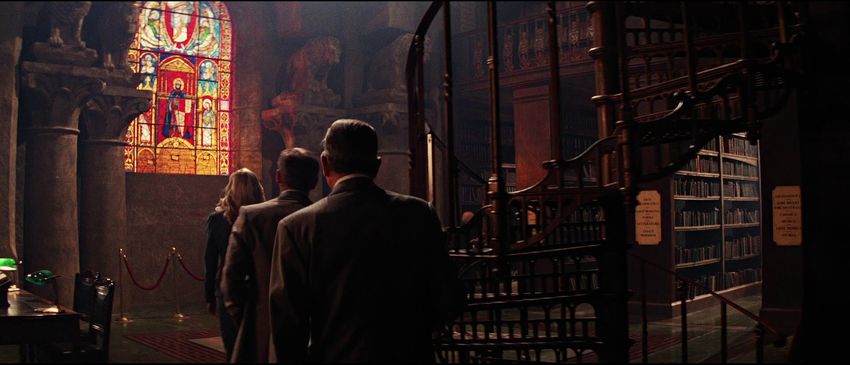
Beyond VQA: Generating Multi-word Answer and Rationale to Visual Questions                                                                        3

                                    Question: Why is person1 covering his                                Question: What is person8 doing right
                                    face ?                                               person 8        now?
                          person1      Generated answer: he is trying to                                    Generated answer: person8 is giving
                                       avoid getting burned                                                 a speech
                                     Why this                                                             Why this
                                     answer?                                                              answer?
                                       Generated reason: there is a fire                                    Generated reason: person8 is
                                       right in front of him                                                standing in front of a microphone

                                    Question: Why is person2 wearing
                      person2
                                    tie1?
                                        Generated answer: person2 is
                                        wearing a tie because he is at a
                                        wedding
                                      Why this
                                      answer?
               tie1
                                        Generated reason: people wear
                                        ties to formal events

Fig. 2 Given an image and a question about the image, we generate a natural language answer and reason that explains
why the answer was generated. The images shown above are examples of outputs that our proposed model generates. These
examples also illustrate the kind of visual questions for which a single-word answer is insufficient. Contemporary VQA models
handle even such kinds of questions only in a classification setting, which is limiting.

of the proposed model for this task, and also perform                       2017). Visual Dialog (Das et al. 2018; Zheng et al. 2019)
ablation studies of various choices and components to                       extends VQA but requires an agent to hold a meaning-
study the effectiveness of the proposed methodology on                      ful conversation with humans in natural language based
ViQAR. We believe that this work could lead to further                      on visual questions.
efforts on common-sense answer and rationale genera-                            The efforts closest to ours are those that provide
tion in vision tasks in the near future. To the best of                     justifications along with answers (Li et al. 2018b; Hen-
our knowledge, this is the first such effort of automati-                   dricks et al. 2016; Li et al. 2018a; Park et al. 2018;
cally generating a multi-word answer and rationale to a                     Wu et al. 2019b; Park et al. 2018; Rajani and Mooney
visual question, instead of picking answers from a pre-                     2017), each of which however also answers a question as
defined list.                                                               a classification task (and not in a generative manner)
                                                                            as described below. (Li et al. 2018b) create the VQA-E
2 Related Work                                                              dataset that has an explanation along with the answer
In this section, we review earlier efforts from multiple                    to the question. (Wu et al. 2019b) provide relevant cap-
perspectives that may be related to this work: Visual                       tions to aid in solving VQA, which can be thought of
Question Answering, Visual Commonsense Reasoning                            as weak justifications. More recent efforts (Park et al.
and Image Captioning in general.                                            2018; Patro et al. 2020) attempt to provide visual and
                                                                            textual explanations to justify the predicted answers.
Visual Question Answering (VQA): VQA (Antol
                                                                            Datasets have also been proposed for VQA in the re-
et al. 2015; Goyal et al. 2016; Jabri et al. 2016; Selvaraju
                                                                            cent past to test visual understanding (Zhu et al. 2015;
et al. 2020) refers to the task of answering questions re-
                                                                            Goyal et al. 2016; Johnson et al. 2016); for e.g., the
lated to an image. VQA and its variants have been the
                                                                            Visual7W dataset (Zhu et al. 2015) contains a richer
subject of much research work recently. A lot of recent
                                                                            class of questions about an image with textual and vi-
work has focused on varieties of attention-based mod-
                                                                            sual answers. However, all these aforementioned efforts
els, which aim to ’look’ at the relevant regions of the
                                                                            continue to focus on answering a question as a classifica-
image in order to answer the question (Anderson et al.
                                                                            tion task (often in one word, such as Yes/No), followed
2017; Lu et al. 2016b; Yu et al. 2017a; Xu and Saenko
                                                                            by simple explanations. We however, in this work, focus
2015; Yi et al. 2018; Xu and Saenko 2015; Shih et al.
                                                                            on generating multi-word answers with a corresponding
2015; Chen et al. 2015; Yang et al. 2015). Other recent
                                                                            multi-word rationale, which has not been done before.
work has focused on better multimodal fusion meth-
ods (Kim et al. 2018; 2016; Fukui et al. 2016; Yu et al.                    Visual Commonsense Reasoning (VCR): VCR
2017b), the incorporation of relations (Norcliffe-Brown                     (Zellers et al. 2018) is a recently introduced vision-
et al. 2018; Li et al. 2019; Santoro et al. 2017), the use                  language dataset which involves choosing a correct an-
of multi-step reasoning (Cadène et al. 2019; Gan et al.                    swer (among four provided options) for a given ques-
2019; Hudson and Manning 2018), and neural module                           tion about the image, and then choosing a rationale
networks for compositional reasoning (Andreas et al.                        (among four provided options) that justifies the an-
2016; Johnson et al. 2017; Chen et al. 2019; Hu et al.                      swer. The task associated with the dataset aims to test
4                                                                                    R. Dua, S. Kancheti, V. Balasubramanian

for visual commonsense understanding and provides im-               The generative task, proposed here in ViQAR, is harder
ages, questions and answers of a higher complexity than             to solve when compared to VQA and VCR. One can
other datasets such as CLEVR (Johnson et al. 2016).                 divide ViQAR into two sub-tasks:
The dataset has attracted a few methods over the last                – Answer Generation: Given an image, its caption,
year (Zellers et al. 2018; Lu et al. 2019; Dua et al. 2019;             and a complex question about the image, a multi-
Zheng et al. 2019; Talmor et al. 2018; Lin et al. 2019a;b;              word natural language answer is generated:
Wu et al. 2019a; Ayyubi et al. 2019; Brad 2019; Yu                      (I, Q, C) → A
et al. 2019; Wu et al. 2019a), each of which however                 – Rationale Generation: Given an image, its cap-
follow the dataset’s task and treat this as a classifica-               tion, a complex question about the image, and an
tion problem. None of these efforts attempt to answer                   answer to the question, a rationale to justify the
and reason using generated sentences.                                   answer is generated: (I, Q, C, A) → R
Image Captioning and Visual Dialog: One could                       We also study variants of the above sub-tasks (such as
also consider the task of image captioning (Xu et al.               when captions are not available) in our experiments.
2015; You et al. 2016; Lu et al. 2016a; Anderson et al.             Our experiments suggest that the availability of cap-
2017; Rennie et al. 2016), where natural language cap-              tions helps performance for the proposed task, expect-
tions are generated to describe an image, as being close            edly. We now present a methodology built using known
to our objective. However, image captioning is more a               basic components to study and show that the proposed,
global description of an image than question-answering              seemingly challenging, new task can be solved with ex-
problems that may be tasked with answering a question               isting architectures. In particular, our methodology is
about understanding of a local region in the image.                 based on the understanding that the answer and ra-
    In contrast to all the aforementioned efforts, our              tionale can help each other, and hence needs an itera-
work, ViQAR, focuses on automatic complete generation               tive refinement procedure to handle such a multi-word
of the answer, and of a rationale, given a visual query.            multi-output task. We consider the simplicity of the
This is a challenging task, since the generated answers             proposed solution as an aspect of our solution by design,
must be correct (with respect to the question asked),               more than a limitation, and hope that the proposed ar-
be complete, be natural, and also be justified with a               chitecture will serve as a baseline for future efforts on
well-formed rationale. We now describe the task, and                this task.
our methodology for addressing this task.
                                                                    4 Proposed Methodology
3 ViQAR: Task Description                                           We present an end-to-end, attention-based, encoder-
Let V be a given vocabulary of size |V| and A = (a1 , a2 ,          decoder architecture for answer and rationale genera-
...ala ) ∈ V la , R = (r1 , r2 , ...rlr ) ∈ V lr represent answer   tion which is based on an iterative refinement proce-
sequences of length la and rationale sequences of length            dure. The refinement in our architecture is motivated
lr respectively. Let I ∈ RD represent the image repre-              by the observation that answers and rationales can in-
sentation, and Q ∈ RB be the feature representation of              fluence one another mutually. Thus, knowing the an-
a given question. We also allow the use of an image cap-            swer helps in generation of a rationale, which in turn
tion, if available, in this framework given by a feature            can help in the generation of a more refined answer. The
representation C ∈ RB . Our task is to compute a func-              encoder part of the architecture generates the features
tion F : RD ×RB ×RB → V la ×V lr that maps the input                from the image, question and caption. These features
image, question and caption features to a large space of            are used by the decoder to generate the answer and
generated answers A and rationales R, as given below:               rationale for a question.
                                                                    Feature Extraction: We use spatial image features as
                  F(I, Q, C) = (A, R)                    (1)        proposed in (Anderson et al. 2017), which are termed
                                                                    bottom-up image features. We consider a fixed number
Note that the formalization of this task is different from
                                                                    of regions for each image, and extract a set of k features,
other tasks in this domain, such as Visual Question An-
                                                                    V , as defined below:
swering (Agrawal et al. 2015) and Visual Commonsense
Reasoning (Zellers et al. 2018). The VQA task can be                         V = {v1 , v2 , ..., vk } where vi ∈ RD         (2)
formulated as learning a function G : RD × RB → C,                  We use BERT (Devlin et al. 2019) representations to
where C is a discrete, finite set of choices (classification        obtain fixed-size (B) embeddings for the question and
setting). Similarly, the Visual Commonsense Reason-                 caption, Q ∈ RB and C ∈ RB respectively. The ques-
ing task provided in (Zellers et al. 2018) aims to learn a          tion and caption are projected into a common feature
function H : RD ×RB → C1 ×C2 , where C1 is the set of               space T ∈ RL given by:
possible answers, and C2 is the set of possible reasons.                    T = g(WtT (tanh(WqT Q) ⊕ tanh(WcT C)))          (3)
Beyond VQA: Generating Multi-word Answer and Rationale to Visual Questions                                              5

Fig. 3 The decoder of our proposed architecture: Given an image and a question on the image, the model must generate an
answer to the question and a rationale to justify why the answer is correct.

where g is a non-linear function, ⊕ indicates concate-        The LSTMs: The two layers of each stacked LSTM
nation and Wt ∈ RL×L , Wq ∈ RB×L and Wc ∈ RB×L                (Hochreiter and Schmidhuber 1997) are referred to as
are learnable weight matrices of the layers (we use two       the Attention-LSTM (La ) and Language-LSTM (Ll )
linear layers in our implementation in this work).            respectively. We denote hat and xat as the hidden state
    Let the mean of the extracted spatial image fea-          and input of the Attention-LSTM at time step t respec-
tures (as in Eqn 2) be denoted by V̄ ∈ RD . These are         tively. Analogously, hlt and xlt denote the hidden state
concatenated with the projected question and caption          and input of the Language-LSTM at time t. Since the
features to obtain F:                                         four LSTMs are identical in operation, we describe the
                       F = V̄ ⊕ T                    (4)      attention and sequence generation modules of one of
We use F as the common input feature vector to all the        the sequential LSTMs below in detail.
LSTMs in our architecture.
Architecture: Fig. 3 shows our end-to-end architec-           Spatial Visual Attention: We use a soft, spatial-
ture to address ViQAR. As stated earlier, our architec-       attention model, similar to (Anderson et al. 2017) and
ture has two modules: generation (GM ) and refinement         (Lu et al. 2016a), to compute attended image features
(RM ). The GM consists of two sequential, stacked LSTMs,      V̂. Given the combined input features F and previous
henceforth referred to as answer generator (AG) and ra-       hidden states hat−1 , hlt−1 , the current hidden state of
tionale generator (RG) respectively. The RM seeks to          the Attention-LSTM is given by:
refine the generated answer as well as rationale, and is                     xat ≡ hp ⊕ hlt−1 ⊕ F ⊕ πt              (5)
an important part of the proposed solution as seen in
                                                                               hat = La (xat , hat−1 )                (6)
our experimental results. It also consists of two sequen-                     T
tial, stacked LSTMs, which we denote as answer refiner        where πt = We 1t is the embedding of the input word,
(AR) and rationale refiner (RR).                              We ∈ R|V|×E is the weight of the embedding layer, and
                                                              1t is the one-hot representation of the input at time t.
    Each sub-module (presented inside dashed lines in
                                                              hp is the hidden representation of the previous LSTM
the figure) is a complete LSTM. Given an image, ques-
                                                              (answer or rationale, depending on the current LSTM).
tion, and caption, the AG sub-module unrolls for la
time steps to generate an answer. The hidden state of             The hidden state hat and visual features V are used
Language and Attention LSTMs after la time steps is a         by the attention module (implemented as a two-layered
representation of the generated answer. Using the rep-        MLP in this work) to compute the normalized set of
resentation of the generated answer from AG, RG sub-          attention weights αt = {α1t , α2t , ..., αkt } (where αit is
module unrolls for lr time steps to generate a rationale      the normalized weight of image feature vi ) as below:
                                                                                   T              T       T a
and obtain its representation. Then the AR sub-module                    yi,t = Way  (tanh(Wav      vi + Wah ht ))    (7)
uses the features from RG to generate a refined answer.                  αt = softmax(y1t , y23 , ..., ykt )  (8)
Lastly, the RR sub-module uses the answer features            In the above equations, Way ∈ RA×1 , Wav ∈ RD×A
from AR to generate a refined rationale. Thus, a re-          and Wah ∈ RH×A are weights learned by the attention
fined answer is generated after la + lr time steps and a      MLP, H is the hidden size of the LSTM and A is the
refined rationale is generated after la further time steps.   hidden size of the attention MLP.
The complete architecture runs in 2la + 2lr time steps.
6                                                                                         R. Dua, S. Kancheti, V. Balasubramanian

                                                   Pk
The attended image feature vector V̂t =               i=1    αit vi is   where θi represents the ith sub-module LSTM, pt is
the weighted sum of all visual features.                                 the conditional probability of the tth word in the input
Sequence Generation: The attended image features                         sequence as calculated by the corresponding LSTM, la
V̂t , together with T and hat , are inputs to the language-              indicates the ground-truth answer length, and lr the
LSTM at time t. We then have:                                            ground truth rationale length. Other loss formulations,
                  xlt ≡ hp ⊕ V̂t ⊕ hat ⊕ T              (9)              such as a weighted average of the cross entropy terms
                                                                         did not perform better than a simple sum. We tried
                   hlt = Ll (xlt , hlt−1 )                       (10)    weights from 0.0, 0.25, 0.5, 0.75, 1.0 for the loss terms.
                            T l
                   yt =   Wlh ht   + blh                         (11)    More implementation details are provided in Section 5.
                  pt = sof tmax(yt )                (12)
where h is the hidden state of the previous LSTM, hlt
         p
                                                                         5 Experiments and Results
is the output of the Language-LSTM, pt is the condi-
tional probability over words in V at time t. The word                   In this section, we describe the dataset used for this
at time step t is generated by a single-layered MLP with                 work, implementation details, as well as present the re-
learnable parameters: Wlh ∈ RH×|V| , blh ∈ R|V|×1 . The                  sults of the proposed method and its variants.
attention MLP parameters Way , Wav and Wah , and em-                     Dataset: Considering there has been no dataset ex-
bedding layer’s parameters We are shared across all four                 plicitly built for this new task, we study the perfor-
LSTMs. (We reiterate that although the architecture is                   mance of the proposed method on the recent VCR (Zellers
based on well-known components, the aforementioned                       et al. 2018) dataset, which has all components needed
design decisions were obtained after significant study.)                 for our approach. We train our proposed architecture on
Loss Function: For a better understanding of our ap-                     VCR, which contains ground truth answers and ground
proach, Figure 4 presents a high-level illustration of our               truth rationales that allow us to compare our generated
proposed generation-refinement model.                                    answers and rationales against. We also show in Section
                                                                         6 on how a model trained on the VCR dataset can be
                                                                         used to give a rationale for images from Visual7W (Zhu
                                                                         et al. 2015), a VQA dataset with no ground-truth ra-
                                                                         tionale.
          F         AG          RG           AR        RR
                                                                             VCR is a large-scale dataset that consists of 290k
Fig. 4 High-level illustration of our proposed Generation-               triplets of questions, answers, and rationales over 110k
Refinement model                                                         unique movie scene images. For our method, we also
                                                                         use the captions provided by the authors of VCR as in-
    Let A1 = (a11 , a12 , ..., a1la ), R1 = (r11 , r12 , ..., r1lr ),
                                                                         put to our method (we later perform an ablation study
A2 = (a21 , a22 , ..., a2la ) and R2 = (r21 , r22 , ..., r2lr ) be
                                                                         without the captions). At inference, captions are gen-
the generated answer, generated rationale, refined an-
                                                                         erated using (Vinyals et al. 2014) (trained on provided
swer and refined rationale sequences respectively, where
                                                                         captions) and use them as input to our model. Since
aij and rij are discrete random variables taking values
                                                                         the test set of the dataset is not provided, we randomly
from the common vocabulary V. Given the common
                                                                         split the train set into train-train-split (202,923 sam-
input F , our objective is to maximize the likelihood
                                                                         ples) and train-val-split (10,000 samples) while using
P (A1 , R1 , A2 , R2 |F ) given by:
                                                                         the validation set as our test data (26,534 samples). All
P (A1 , R1 , A2 , R2 |F ) = P (A1 , R1|F )P (A2 , R2 |F, A1 , R1 )       our baselines are also compared on the same setting for
                          = P (A1 |F )P (R1 |F, A1 )                     fair comparison.
                       P (A2 |F, A1 , R1 )P (R2 |F, A1 , R1 , A2 )
                                                            (13)          Dataset   Avg. A      Avg. Q     Avg. R     Complexity
                                                                                    length      length     length
In our model design, each term in the RHS of Eqn 13 is                    VCR       7.55        6.61       16.2       High
computed by a distinct LSTM. Hence, minimizing the                        VQA-E     1.11        6.1        11.1       Low
sum of losses of the four LSTMs becomes equivalent to                     VQA-X     1.12        6.13       8.56       Low
maximizing the joint likelihood. Our overall loss is the                 Table 1 Statistical comparison of VCR with VQA-E, and
sum of four cross-entropy losses, one for each LSTM, as                  VQA-X datasets. VCR dataset is highly complex as it is made
given below:                                                             up of complex subjective questions.
       Xla             lr             la             lr
                                                                             VQA-E (Li et al. 2018b) and VQA-X (Park et al.
                        X              X              X
L=−         log pθt 1 +    log pθt 2 +    log pθt 3 +    log pθt 4
          t=1             t=1            t=1           t=1               2018) are competing datasets that contains explana-
                                                                 (14)    tions along with question-answer pairs. Table 1 shows
Beyond VQA: Generating Multi-word Answer and Rationale to Visual Questions                                           7

the high-level analysis of the three datasets. Since VQA-   including SkipThought cosine similarity (Kiros et al.
E and VQA-X are derived from VQA-2, many of the             2015), Vector Extrema cosine similarity (Forgues and
questions can be answered in one word (a yes/no an-         Pineau 2014), Universal sentence encoder (Cer et al.
swer or a number). In contrast, VCR asks open-ended         2018), Infersent (Conneau et al. 2017) and BERTScore
questions and has longer answers. Since our task aims       (Zhang et al. 2019). We use a comprehensive suite of all
to generate rich answers, the VCR dataset provides a        the aforementioned metrics to study the performance of
richer context for this work. CLEVR (Johnson et al.         our model. Subjective studies are presented later in this
2016) is another VQA dataset that measures the log-         section.
ical reasoning capabilities by asking the question that     Classification Accuracy: We also evaluate the per-
can be answered when a certain sequential reasoning         formance of our model on the classification task. For
is followed. This dataset however does not contain rea-     every question, there are four answer choices and four
sons/rationales on which we can train. Also, we do not      rationale choices provided in the VCR dataset. We com-
perform a direct evaluation on CLEVR because our            pute the similarity scores between each of the options
model is trained on real-world natural images while         and our generated answer/ rationale, and choose the
CLEVR is a synthetic shapes dataset.                        option with the highest similarity score. Accuracy per-
    In order to study our method further, we also study     centage for answer classification, rationale classification
the transfer of our learned model to another challenging    and overall answer+rationale classification (denoted as
dataset, Visual7W (Zhu et al. 2015), by generating an       Overall) are reported in Table 2. Only samples that
answer/ rationale pair for visual questions in Visual7W     correctly predict both answers and rationales are con-
(please see Section 6 more more details). Visual7W is       sidered for overall answer+rationale classification accu-
a large-scale visual question answering (VQA) dataset,      racy. The results show the difficulty of the ViQARtask,
which has multi-modal answers i.e visual ’pointing’ an-     expounding the need for opening up this problem to the
swers and textual ’telling’ answers.                        community.
Implementation Details: We use spatial image fea-           Results: Qualitative Results: Fig 5 shows examples of
tures generated from (Anderson et al. 2017) as our          images and questions where the proposed model gener-
image input. Fixed-size BERT representations of ques-       ates a meaningful answer with a supporting rationale.
tions and captions are used. Hidden size of all LSTMs is    Qualitative results indicate that our model is capable
set to 1024 and hidden size of the attention MLP is set     of generating answer-rationale pairs to complex sub-
to 512. We trained using the ADAM optimizer with a          jective questions starting with ’Why’, ’What’, ’How’,
decaying learning rate starting from 4e−4 , using a batch   etc. Given the question, ”What is person8 doing right
size of 64. Dropout is used as a regularizer. Our code is   now?”, the generated rationale: ”person8 is standing
publicly available at radhikadua123.github.io/ViQAR.        in front of a microphone” actively supports the gen-
Evaluation Metrics: We use multiple objective eval-         erated answer: ”person8 is giving a speech”, justify-
uation metrics to evaluate the goodness of answers and      ing the choice of a two-stage generation-refinement ar-
rationales generated by our model. Since our task is        chitecture. For completeness of understanding, we also
generative, evaluation is done by comparing our gen-        present a few examples on which our model fails to
erated sentences with ground-truth sentences to assess      generate the semantically correct answer in Fig. S2.
their semantic correctness as well as structural sound-     However, even on these results, we observe that our
ness. To this end, we use a combination of multiple ex-     model does generate both answers and rationales that
isting evaluation metrics. Word overlap-based metrics       are grammatically correct and complete (where ratio-
such as METEOR (Lavie and Agarwal 2007), CIDEr              nale supports the generated answer). Improving the se-
(Vedantam et al. 2014) and ROUGE (Lin 2004) quan-           mantic correctness of the generations will be an impor-
tify the structural closeness of the generated sentences    tant direction of future work. More qualitative results
to the ground-truth. While such metrics give a sense of     are presented in the supplementary owing to space con-
the structural correctness of the generated sentences,      straints.
they may however be insufficient for evaluating genera-     Quantitative Results: Quantitative results on the suite
tion tasks, since there could be many valid generations     of evaluation metrics stated earlier are shown in Table
which are correct, but not share the same words as a        3. Since this is a new task, there are no known meth-
single ground truth answer. Hence, in order to mea-         ods to compare against. We hence compare our model
sure how close the generation is to the ground-truth in     against a basic two-stage LSTM that generates the an-
meaning, we additionally use embedding-based metrics        swer and reason independently as a baseline (called
(which calculate the cosine similarity between sentence     Baseline in Table 3), and a VQA-based method (An-
embeddings for generated and ground-truth sentences)        derson et al. 2017) that extracts multi-modal features to
8                                                                                                             R. Dua, S. Kancheti, V. Balasubramanian

    Metrics                         Q+I+C                                                  Q+I                                                 Q+C
                           Answer   Rationale               Overall             Answer   Rationale      Overall              Answer           Rationale               Overall
    Infersent               34.90     31.78                  11.91               34.73     31.47         11.68                30.50             27.99                  9.17
    USE                     34.56     30.81                  11.13               34.7      30.57         11.17                30.15             27.57                  8.56
Table 2 Quantitative results on the VCR dataset. Accuracy percentage for answer classification, rationale classification and
overall answer-rationale classification is reported.

       person2                                                                                person2                         Question: What does person2 think of person1?

                                                                                                                   person1
                                                                                                                              Answer: person2 is worried about person1
                                                                                                                              Reason: person2 is looking down at person1, and
                                                                                                                              person1 is stressed

                                                                                                                              Answer: person2 thinks person1 is a strange guy
                                                                                                                              Reason: person2 is looking at person1 with a suspicious
                                                                                                                              look

                                                                                          book1                    person1
           person4
                                    Question: Why is person4 wearing a tie?

                                    Answer: he is at a business meeting
                     tie
                                    Reason: business attire is a suit and tie

                                    Answer: he is a businessman
                                    Reason: business men wear suits and ties to work

Fig. 5 (Best viewed in color) Sample qualitative results for ViQAR from our proposed Generation-Refinement architecture.
Blue box = question about image; Green = Ground truth answer and rationale; Red = Answer and rationale generated by
our architecture. (Object regions shown on image is for reader’s understanding and are not given as input to model.)

                                                                                                         person1

                                                                                                                              Question: Where are person1 person2 person3 going ?

                                                                                                                              Answer: person1 person2 person3 are going into the
                                                                                                                              library inside a churge .
                                                                                                                              Reason: person1 person2 person3 are walking past the
       bottle3                                                                                                                church ' s stain glass window toward a room filled with
             bottle4                                                                                                          books .
            bottle1
              bottle2
                                                                                                                              Answer: they are walking to their next class
                                                                                                                              Reason: they are walking in a hallway of a building

Fig. 6 (Best viewed in color) Challenging inputs for which our model fails to generate the semantically correct answer, but
the generated answer and rationale still show grammatical correctness and completeness, showing the promise of the overall
idea. Blue box = question about the image; Green = Ground truth; Red = Results generated by our architecture. (Object
regions shown on image are for reader’s understanding and are not given as input to model.)

generate answers and rationales independently (called                                    man Turing test on the generated answers and ratio-
VQA- Baseline in Table 3). (Comparison with other                                        nales. 30 human evaluators were presented each with
standard VQA models is not relevant in this setting,                                     50 randomly sampled image-question pairs, each con-
since we perform a generative task, unlike existing VQA                                  taining an answer to the question and its rationale.
models.) We show results on three variants of our pro-                                   The test aims to measure how humans score the gen-
posed Generation-Refinement model: Q+I+C (when ques-                                     erated sentences w.r.t. ground truth sentences. Sixteen
tion, image and caption are given as inputs), Q+I (ques-                                 of the fifty questions had ground truth answers and ra-
tion and image alone as inputs), and Q+C (question                                       tionales, while the rest were generated by our proposed
and caption alone as inputs). Evidently, our Q+I+C                                       model. For each sample, the evaluators had to give a
performed the most consistently across all the evalu-                                    rating of 1 to 5 for five different criteria, with 1 being
ation metrics. (The qualitative results in Fig 5 were                                    very poor and 5 being very good. The results are pre-
obtained using the (Q+I+C) setting.) Importantly, our                                    sented in Table 4. Despite the higher number of gen-
model outperforms both baselines, including the VQA-                                     erated answer-rationales judged by human users, the
based one, on every single evaluation metric, showing                                    answers and rationales produced by our method were
the utility of the proposed architecture.                                                deemed to be fairly correct grammatically. The evalua-
Human Turing Test: In addition to the study of the                                       tors also agreed that our answers were relevant to the
objective evaluation metrics, we also performed a hu-
Beyond VQA: Generating Multi-word Answer and Rationale to Visual Questions                                              9

      Metrics                  VQA-Baseline (Anderson et al. 2017) Baseline Q+I+C                    Q+I       Q+C
      Univ Sent Encoder CS                      0.419                         0.410      0.455       0.454     0.440
      Infersent CS                              0.370                         0.400      0.438      0.442      0.426
      Embedding Avg CS                          0.838                         0.840      0.846      0.853      0.845
      Vector Extrema CS                         0.474                         0.444      0.493       0.483     0.475
      Greedy Matching Score                     0.662                         0.633      0.672       0.661     0.657
      METEOR                                    0.107                         0.095      0.116       0.104     0.103
      Skipthought CS                            0.430                         0.359      0.436       0.387     0.385
      RougeL                                    0.259                         0.206      0.262       0.232     0.236
      CIDEr                                     0.364                         0.158      0.455       0.310     0.298
      F-BERTScore                               0.877                         0.860      0.879       0.867     0.868
Table 3 Quantitative evaluation on VCR dataset; CS = cosine similarity; we compare against a basic two-stage   LSTM model
and a VQA model (Anderson et al. 2017) as baselines; remaining columns are proposed model variants

question and the generated rationales are acceptably          the refinement module, supporting our claim. More re-
relevant to the generated answer.                             sults are presented in the supplementary.
                                                              Transfer to Other Datasets: We also studied whether
6 Discussions and Analysis
                                                              the proposed model, trained on the VCR dataset, can
Ablation Studies on Refinement Module: We eval-               provide answers and rationales to visual questions in
uated the performance of the following variations of          other VQA datasets (which do not have ground truth
our proposed generation-refinement architecture M : (i)       rationale provided). To this end, we tested our trained
M − RM : where the refinement module is removed;              model on the widely used Visual7W Zhu et al. (2015)
and (ii) M + RM : where a second refinement module            dataset without any additional training. Fig 8 presents
is added, i.e. the model has one generation module and        qualitative results for ViQAR task on the Visual7W dataset.
two refinement modules (to see if further refinement of       We also perform a Turing test on the generated an-
answer and rationale helps). Table 5 shows the quanti-        swers and rationales to evaluate the model’s perfor-
tative results.                                               mance on Visual7W. Thirty human evaluators were pre-
                                                              sented each with twenty five hand-picked image-question
                                      #Refine Modules         pairs, each of which contains a generated answer to
 Metrics                             0          1     2       the question and its rationale. The results, presented
 Univ Sent Encoder                   0.453 0.455 0.430        in Table 6 show that our algorithm generalizes rea-
 Infersent                           0.434 0.438 0.421
 Embedding Avg Cosine similarity     0.85   0.846 0.840
                                                              sonably well to the other VQA dataset and generates
 Vector Extrema Cosine Similarity    0.482 0.493 0.462        answers and rationales relevant to the image-question
 Greedy Matching Score               0.659 0.672 0.639        pair, without any explicit training for this dataset. This
 METEOR                              0.101 0.116 0.090        adds a promising dimension to this work. More results
 Skipthought Cosine Similarity       0.384 0.436 0.375        are presented in the supplementary.
 RougeL                              0.234 0.262 0.198
 CIDEr                               0.314 0.455 0.197
                                                                  More results, including qualitative examples, for var-
 F-BertScore                         0.868 0.879 0.861        ious settings are included in the Supplementary Sec-
Table 5 Comparison of proposed Generation-Refinement
                                                              tion. Since ViQAR is a completely generative task, ob-
Architecture with variations in num of Refinement modules     jective evaluation is a challenge, as in any other gen-
                                                              erative methods. For comprehensive evaluation, we use
                                                              a suite of objective metrics typically used in related
    We observe that our proposed model, which has one
                                                              vision-language tasks. We perform a detailed analysis
refinement module has the best results. Adding addi-
                                                              in the Supplementary material and show that even our
tional refinement modules causes the performance to go
                                                              successful results (qualitatively speaking) may have low
down. We hypothesize that the additional parameters
                                                              scores on objective evaluation metrics at times, since
(in a second Refinement module) in the model makes
                                                              generated sentences may not match a ground truth sen-
it harder for the network to learn. Removal of the re-
                                                              tence word-by-word. We hope that opening up this di-
finement module also causes performance to drop, sup-
                                                              mension of generated explanations will only motivate a
porting our claim on the usefulness for a Refinement
                                                              better metric in the near future.
module too. We also studied the classification accu-
racy in these variations, and observed that 1-refinement      7 Conclusion
model (original version of our method) with 11.9% ac-         In this paper, we propose ViQAR, a novel task for gen-
curacy outperforms 0-refinement model (11.64%) and            erating a multi-word answer and a rationale given an
2-refinement model (10.94%) for the same reasons. Fig.        image and a question. Our work aims to go beyond
7 provides a few qualitative results with and without         classical VQA by moving to a completely generative
10                                                                                                                 R. Dua, S. Kancheti, V. Balasubramanian

 Criteria                                                                                                                       Generated              Ground-truth
                                                                                                                                Mean ± std               Mean ± std
 How well-formed and grammatically correct is the answer?                                                                        4.15 ± 1.05              4.40 ± 0.87
 How well-formed and grammatically correct is the rationale?                                                                     3.53 ± 1.26              4.26 ± 0.92
 How relevant is the answer to the image-question pair?                                                                          3.60 ± 1.32              4.08 ± 1.03
 How well does the rationale explain the answer with respect to the image-question pair?                                         3.04 ± 1.36              4.05 ± 1.10
 Irrespective of the image-question pair, how well does the rationale explain the answer ?                                       3.46 ± 1.35              4.13 ± 1.09
Table 4 Results of human Turing test performed with 30 people who rated samples consisting of question, corresponding
answer and rationale on 5 criteria. For each criterion, a rating of 1 to 5 was given. Results show mean score and standard
deviation for each criterion for generated and ground truth samples.

             Image

                                                                                               What are person1, person2,
                                                          What if person1 refused to                                             Why is person2 putting her
            Question      Where are they at?                                                   person3, person4, and
                                                          shake the hand of person2?                                             hand on person1?
                                                                                               person5 doing here?

                                                                                              Answer: they are studying a
                                                          Answer: person1 would push it                                          Answer: person2 is dancing
          Generation     Answer: they are in a library                                        class
                                                          off                                                                    with 1
           Module        Reason: there are shelves of                                         Reason: they are all sitting in
                                                          Reason: person1 is not wearing                                         Reason: 2 is holding 1 s hand
                         books behind them                                                    a circle and there is a teacher
                                                          a shirt and person2 is not                                             and is smiling
                                                                                              in front of them

                         Answer: they are in a liquor                                         Answer: they are all to attend
         Generation -                                     Answer: he would be angry                                              Answer: she wants to kiss him
                         store                                                                a funeral
         Refinement                                       Reason: 1 is angry and is not                                          Reason: she is looking at him
                         Reason: there are shelves of                                         Reason: they are all wearing
           Module                                         paying attention to 2                                                  with a smile on her face
                         liquor bottles on the shelves                                        black

Fig. 7 Qualitative results for our model with (in green, last row) and without (in red, penultimate row) Refinement module

         Question: What are the men            Question: Why are the people all        Question: Where is this taking
                                                                                                                                Question: Where is this at?
         doing?                                dressed up?                             place?
         Answer: Person2 and Person1 are       Answer: They are celebrating a          Answer: City street. it is located in    Answer: She is at the beach
         cooking for food                      costume party                           a city                                   Reason: There are surfboards in
         Reason: They are holding a table      Reason: They are all dressed in         Reason: There are buildings in the       the background and lots of
         and the table has food                nice dresses and in fancy clothes       background and there is taxi cars        surfboards everywhere

Fig. 8 Qualitative results on Visual7W dataset (note that there is no rationale provided in this dataset, and all above rationales
were generated by our model)

            Criteria                                                                                                                          Generated
                                                                                                                                              Mean ± std
            How well-formed and grammatically correct is the answer?                                                                           3.98 ± 1.08
            How well-formed and grammatically correct is the rationale?                                                                        3.80 ± 1.04
            How relevant is the answer to the image-question pair?                                                                             4.11 ± 1.17
            How well does the rationale explain the answer with respect to the image-question pair?                                            3.83 ± 1.23
            Irrespective of the image-question pair, how well does the rationale explain the answer ?                                          3.83 ± 1.28
Table 6 Results of the Turing test on Visual7W dataset performed with 30 people who had to rate samples consisting of a
question and its corresponding answer and rationales on five criteria. For each criterion, a rating of 1 to 5 was given. The table
gives the mean score and standard deviation for each criterion for the generated samples.

paradigm. To solve ViQAR, we present an end-to-end                                        model on the VCR dataset both qualitatively and quan-
generation-refinement architecture which is based on                                      titatively, and our human Turing test showed results
the observation that answers and rationales are depen-                                    comparable to the ground truth. We also showed that
dent on one another. We showed the promise of our                                         this model can be transferred to tasks without ground
Beyond VQA: Generating Multi-word Answer and Rationale to Visual Questions 11
truth rationale. We hope that our work will open up a Das A, Kottur S, Gupta K, Singh A, Yadav D, Lee S,
broader discussion around generative answers in VQA Moura JMF, Parikh D, Batra D (2018) Visual dialog.
and other deep neural network models in general. IEEE TPAMI 41
Devlin J, Chang MW, Lee K, Toutanova K (2019) Bert:
Acknowledgements We acknowledge MHRD and DST,
Pre-training of deep bidirectional transformers for
Govt of India, as well as Honeywell India for partial sup-
language understanding. In: NAACL-HLT
port of this project through the UAY program, IITH/005.
Dua D, Wang Y, Dasigi P, Stanovsky G, Singh S, Gard-
We also thank Japan International Cooperation Agency
ner M (2019) Drop: A reading comprehension bench-
and IIT Hyderabad for the generous compute support.
mark requiring discrete reasoning over paragraphs.
In: NAACL-HLT
Forgues G, Pineau J (2014) Bootstrapping dialog sys-
tems with word embeddings
References
Fukui A, Park DH, Yang D, Rohrbach A, Darrell
T, Rohrbach M (2016) Multimodal compact bilin-
Agrawal A, Lu J, Antol S, Mitchell M, Zitnick CL,
ear pooling for visual question answering and visual
Parikh D, Batra D (2015) Vqa: Visual question an-
grounding. In: EMNLP
swering. ICCV
Gan Z, Cheng Y, Kholy AE, Li L, Liu J, Gao J (2019)
Anderson P, He X, Buehler C, Teney D, Johnson M,
Multi-step reasoning via recurrent dual attention for
Gould S, Zhang L (2017) Bottom-up and top-down
visual dialog. In: ACL
attention for image captioning and visual question
Goyal Y, Khot T, Summers-Stay D, Batra D, Parikh D
answering. CVPR
(2016) Making the v in vqa matter: Elevating the role
Andreas J, Rohrbach M, Darrell T, Klein D (2016) Neu-
of image understanding in visual question answering.
ral module networks. 2016 IEEE Conference on Com-
CVPR
puter Vision and Pattern Recognition (CVPR) pp
Hendricks LA, Akata Z, Rohrbach M, Donahue J,
39–48
Schiele B, Darrell T (2016) Generating visual expla-
Antol S, Agrawal A, Lu J, Mitchell M, Batra D, Zitnick
nations. In: ECCV
CL, Parikh D (2015) Vqa: Visual question answering.
Hochreiter S, Schmidhuber J (1997) Long short-term
In: ICCV
memory. Neural Computation 9:1735–1780
Ayyubi HA, Tanjim MM, Kriegman DJ (2019) En-
Hu R, Andreas J, Rohrbach M, Darrell T, Saenko K
forcing reasoning in visual commonsense reasoning.
(2017) Learning to reason: End-to-end module net-
ArXiv abs/1910.11124
works for visual question answering. 2017 IEEE In-
Brad F (2019) Scene graph contextualization in visual
ternational Conference on Computer Vision (ICCV)
commonsense reasoning. In: ICCV 2019
pp 804–813
Cadène R, Ben-younes H, Cord M, Thome N (2019)
Hudson DA, Manning CD (2018) Compositional at-
Murel: Multimodal relational reasoning for visual
tention networks for machine reasoning. ArXiv
question answering. 2019 IEEE/CVF Conference on
abs/1803.03067
Computer Vision and Pattern Recognition (CVPR)
Jabri A, Joulin A, van der Maaten L (2016) Revisiting
pp 1989–1998
visual question answering baselines. In: ECCV
Cer D, Yang Y, yi Kong S, Hua N, Limtiaco N, John
Jang Y, Song Y, Yu Y, Kim Y, Kim G (2017) Tgif-qa:
RS, Constant N, Guajardo-Cespedes M, Yuan S, Tar
Toward spatio-temporal reasoning in visual question
C, Sung YH, Strope B, Kurzweil R (2018) Universal
answering. 2017 IEEE Conference on Computer Vi-
sentence encoder. ArXiv
sion and Pattern Recognition (CVPR) pp 1359–1367
Chen K, Wang J, Chen L, Gao H, Xu W, Nevatia
Johnson J, Hariharan B, van der Maaten L, Fei-Fei L,
R (2015) ABC-CNN: an attention based convolu-
Zitnick CL, Girshick RB (2016) Clevr: A diagnostic
tional neural network for visual question answer-
dataset for compositional language and elementary
ing. CoRR abs/1511.05960, URL http://arxiv.
visual reasoning. CVPR
org/abs/1511.05960, 1511.05960
Johnson J, Hariharan B, van der Maaten L, Hoffman J,
Chen W, Gan Z, Li L, Cheng Y, Wang WWJ, Liu J
Fei-Fei L, Zitnick CL, Girshick RB (2017) Inferring
(2019) Meta module network for compositional visual
and executing programs for visual reasoning supple-
reasoning. ArXiv abs/1910.03230
mentary material
Conneau A, Kiela D, Schwenk H, Barrault L, Bordes
Kim J, On KW, Lim W, Kim J, Ha J, Zhang B
A (2017) Supervised learning of universal sentence
(2016) Hadamard product for low-rank bilinear pool-
representations from natural language inference data.
ing. CoRR abs/1610.04325, URL http://arxiv.
CoRR12 R. Dua, S. Kancheti, V. Balasubramanian
org/abs/1610.04325, 1610.04325 Santoro A, Raposo D, Barrett DGT, Malinowski M,
Kim JH, Jun J, Zhang BT (2018) Bilinear attention Pascanu R, Battaglia PW, Lillicrap TP (2017) A sim-
networks. ArXiv abs/1805.07932 ple neural network module for relational reasoning.
Kiros R, Zhu Y, Salakhutdinov R, Zemel RS, Urtasun In: NIPS
R, Torralba A, Fidler S (2015) Skip-thought vectors. Selvaraju RR, Tendulkar P, Parikh D, Horvitz E,
In: NIPS Ribeiro MT, Nushi B, Kamar E (2020) Squinting
Lavie A, Agarwal A (2007) Meteor: An automatic met- at vqa models: Interrogating vqa models with sub-
ric for mt evaluation with high levels of correlation questions. ArXiv abs/2001.06927
with human judgments. In: WMT@ACL Shih KJ, Singh S, Hoiem D (2015) Where to look: Fo-
Lei J, Yu L, Bansal M, Berg TL (2018) Tvqa: Localized, cus regions for visual question answering. 2016 IEEE
compositional video question answering. In: EMNLP Conference on Computer Vision and Pattern Recog-
Li L, Gan Z, Cheng Y, Liu J (2019) Relation-aware nition (CVPR) pp 4613–4621
graph attention network for visual question answer- Storks S, Gao Q, Chai JY (2019) Commonsense rea-
ing. 2019 IEEE/CVF International Conference on soning for natural language understanding: A survey
Computer Vision (ICCV) pp 10312–10321 of benchmarks, resources, and approaches. ArXiv
Li Q, Fu J, Yu D, Mei T, Luo J (2018a) Tell-and-answer: Talmor A, Herzig J, Lourie N, Berant J (2018) Com-
Towards explainable visual question answering using monsenseqa: A question answering challenge target-
attributes and captions. In: EMNLP ing commonsense knowledge. In: NAACL-HLT
Li Q, Tao Q, Joty SR, Cai J, Luo J (2018b) Vqa-e: Thomason J, Gordon D, Bisk Y (2018) Shifting the
Explaining, elaborating, and enhancing your answers baseline: Single modality performance on visual nav-
for visual questions. In: ECCV igation and qa. In: NAACL-HLT
Lin BY, Chen X, Chen J, Ren X (2019a) Kagnet: Vedantam R, Zitnick CL, Parikh D (2014) Cider:
Knowledge-aware graph networks for commonsense Consensus-based image description evaluation.
reasoning. ArXiv CVPR
Lin CY (2004) Rouge: A package for automatic evalu- Vinyals O, Toshev A, Bengio S, Erhan D (2014) Show
ation of summaries. In: ACL and tell: A neural image caption generator. CVPR
Lin J, Jain U, Schwing AG (2019b) Tab-vcr: Tags and Wu A, Zhu L, Han Y, Yang Y (2019a) Connective cogni-
attributes based vcr baselines. In: NeurIPS tion network for directional visual commonsense rea-
Lu J, Xiong C, Parikh D, Socher R (2016a) Knowing soning. In: NeurIPS
when to look: Adaptive attention via a visual sentinel Wu J, Hu Z, Mooney RJ (2019b) Generating question
for image captioning. CVPR relevant captions to aid visual question answering.
Lu J, Yang J, Batra D, Parikh D (2016b) Hierarchical In: ACL
question-image co-attention for visual question an- Xu H, Saenko K (2015) Ask, attend and answer: Ex-
swering. In: NIPS ploring question-guided spatial attention for visual
Lu J, Batra D, Parikh D, Lee S (2019) Vilbert: Pre- question answering. In: ECCV
training task-agnostic visiolinguistic representations Xu K, Ba J, Kiros R, Cho K, Courville AC, Salakhutdi-
for vision-and-language tasks. ArXiv nov R, Zemel RS, Bengio Y (2015) Show, attend and
Norcliffe-Brown W, Vafeias E, Parisot S (2018) Learn- tell: Neural image caption generation with visual at-
ing conditioned graph structures for interpretable vi- tention. In: ICML
sual question answering. In: NeurIPS Yang Z, He X, Gao J, Deng L, Smola AJ (2015)
Park DH, Hendricks LA, Akata Z, Rohrbach A, Schiele Stacked attention networks for image question an-
B, Darrell T, Rohrbach M (2018) Multimodal expla- swering. 2016 IEEE Conference on Computer Vision
nations: Justifying decisions and pointing to the evi- and Pattern Recognition (CVPR) pp 21–29
dence. CVPR Yi K, Wu J, Gan C, Torralba A, Kohli P, Tenenbaum
Patro BN, Pate S, Namboodiri VP (2020) Robust JB (2018) Neural-symbolic vqa: Disentangling rea-
explanations for visual question answering. ArXiv soning from vision and language understanding. In:
abs/2001.08730 NeurIPS
Rajani NF, Mooney RJ (2017) Ensembling visual ex- You Q, Jin H, Wang Z, Fang C, Luo J (2016) Image
planations for vqa captioning with semantic attention. CVPR
Rennie SJ, Marcheret E, Mroueh Y, Ross J, Goel V Yu D, Fu J, Mei T, Rui Y (2017a) Multi-level attention
(2016) Self-critical sequence training for image cap- networks for visual question answering. CVPR
tioning. CVPR Yu W, Zhou J, Yu W, Liang X, Xiao N (2019) Hetero-
geneous graph learning for visual commonsense rea-Beyond VQA: Generating Multi-word Answer and Rationale to Visual Questions 13 soning. In: NeurIPS Yu Z, Yu J, Fan J, Tao D (2017b) Multi-modal factor- ized bilinear pooling with co-attention learning for visual question answering. 2017 IEEE International Conference on Computer Vision (ICCV) pp 1839– 1848 Zellers R, Bisk Y, Farhadi A, Choi Y (2018) From recog- nition to cognition: Visual commonsense reasoning. In: CVPR Zhang T, Kishore V, Wu F, Weinberger KQ, Artzi Y (2019) Bertscore: Evaluating text generation with bert. ArXiv abs/1904.09675 Zheng Z, Wang W, Qi S, Zhu SC (2019) Reasoning vi- sual dialogs with structural and partial observations. In: CVPR Zhu Y, Groth O, Bernstein MS, Fei-Fei L (2015) Visual7w: Grounded question answering in images. CVPR
14                                                                            R. Dua, S. Kancheti, V. Balasubramanian

Supplementary Material: Beyond VQA: Gener-                   S3 Impact of Refinement Module
ating Multi-word Answer and Rationale to Vi-
                                                             Figure S4 provides a few examples to qualitatively com-
sual Questions
                                                             pare the model with and without the refinement mod-
In this supplementary section, we provide additional         ule, in continuation to the discussion in Section 6. We
supporting information including:                            observe that the model without the refinement mod-
                                                             ule fails to generate answers and rationale for complex
 – Additional qualitative results of our model (exten-       image-question pairs. However, our proposed Generation-
   sion of Section 5 of main paper)                          Refinement model is capable of generating a meaningful
 – More results on transferring our model to the VQA         answer with a supporting explanation. Hence the addi-
   task (extension of results in Section 6 of main paper)    tion of the refinement module to our model is useful to
 – More results on impact of the Refinement module           generate answer-rationale pairs to complex questions.
   in our model, and a study on the effect of adding             We also performed a study on the effect of adding
   refinement module to VQA-E                                refinement to VQA models, particularly to VQA-E Li
 – A discussion on existing objective evaluation met-        et al. (2018b), which can be considered close to our
   rics for this task, and the need to go beyond (exten-     work since it provides explanations as a classification
   sion of section 6 of our paper)                           problem (it classifies the explanation among a list of
 – A study, using our attention maps, on the inter-          options, unlike our model which generates the explana-
   pretability of our results                                tion). To add refinement, we pass the last hidden state
                                                             of the LSTM that generates the explanation along with
S1 Additional Qualitative Results                            joint representation to another classification module.
                                                             However, we did not observe improvement in classifi-
In addition to the qualitative results presented in Sec 5    cation accuracy when the refinement module is added
of the main paper, Fig S1 presents more qualitative re-      for such a model. This may be attributed to the fact
sults from our proposed model on the VCR dataset for         that the VQA-E dataset consists largely of one-word
the ViQAR task. We observe that our model is capable of      answers to visual questions. We infer that the interplay
generating answer-rationale pairs to complex subjective      of answer and rationale, which is important to generate
questions of the type: Explanation (why, how come),          a better answer and provide justification, is more useful
Activity (doing, looking, event), Temporal (happened,        in multi-word answer settings which is the focus of this
before, after, etc), Mental (feeling, thinking, love, up-    work.
set), Scene (where, time) and Hypothetical sentences
(if, would, could). For completeness of understanding,       S4 On Objective Evaluation Metrics for
we also show a few examples on which our model fails         Generative Tasks: A Discussion
to generate a good answer-rationale pair in Fig S2. As
stated earlier in Section 5, even on these results, we ob-     Since ViQAR is a completely generative task, objective
serve that our model does generate both answers and            evaluation is a challenge, as in any other generative
rationales that are grammatically correct and complete.        methods. Hence, for comprehensive evaluation, we use
Improving the semantic correctness of the generations          a suite of several well-known objective evaluation met-
will be an important direction of future work.                 rics to measure the performance of our method quan-
                                                               titatively. There are various reasons why our approach
                                                               may seem to give relatively lower scores than typical
S2 More Qualitative Results on Transfer to                     results for these scores on other language processing
VQA Task                                                       tasks. Such evaluation metrics measure the similarity
                                                               between the generated and ground-truth sentences. For
As stated in Section 6 of the main paper, we also stud-
                                                               our task, there may be multiple correct answers and ra-
ied whether the proposed model, trained on the VCR
                                                               tionales, and each of them can be expressed in numer-
dataset, can provide answers and rationales to visual
                                                               ous ways. Figure S5 shows a few examples of images
questions in standard VQA datasets (which do not have
                                                               and questions along with their corresponding ground-
ground truth rationale provided). Figure S3 presents
                                                               truth, generated answer-rationale pair, and correspond-
additional qualitative results for ViQAR task on the Vi-
                                                               ing evaluation metric scores. We observe that gener-
sual7W dataset. We observe that our algorithm gener-
                                                               ated answers and rationales are relevant to the image-
alizes reasonably well to the other VQA dataset and
                                                               question pair but may be different from the ground-
generates answers and rationales relevant to the image-
                                                               truth answer-rationale pair. Hence, the evaluation met-
question pair, without any explicit training for this dataset.
                                                               rics reported here have low scores even when the results
This adds a promising dimension to this work.
You can also read


