Biology and Management of Hessian Fly in the Southeast - ANR-1069 - www.aces.edu
←
→
Page content transcription
If your browser does not render page correctly, please read the page content below
A L A B A M A    A & M   A N D   A U B U R N   U N I V E R S I T I E S

                                                                         ANR-1069

                                                  Biology and
                                                  Management
                                                  of Hessian
                                                  Fly in the
                                                  Southeast
                www.aces.edu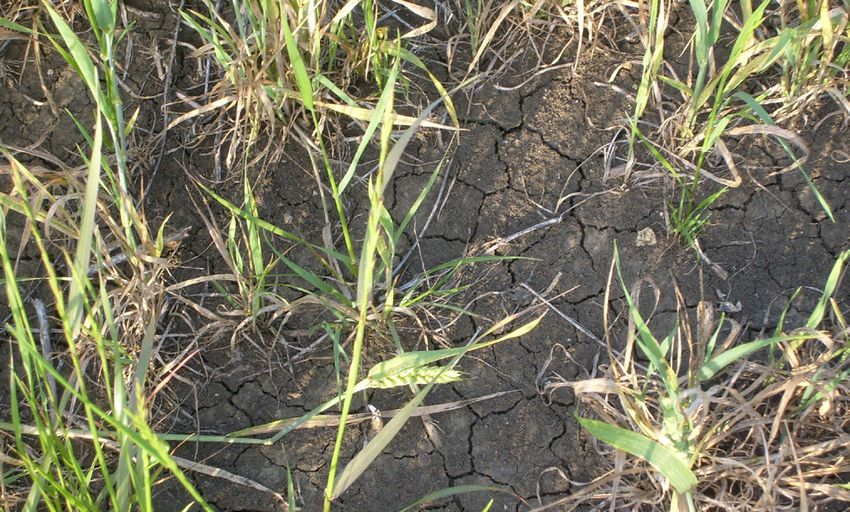
Figure 1. Hessian fly adult (Photo credit: Scott Bauer, USDA   Figure 2. Hessian fly eggs on a leaf
Agricultural Research Service, Bugwood.org)                    (Photo credit: Dominic Reisig)

H
            essian fly, Mayetiola destructor (Say), is a       in wheat fields. Hessian fly adults can sometimes
            serious pest of winter wheat in the south-         be distinguished from other small flies of similar
                                                               size by the presence of twelve to sixteen segmented
            eastern United States. Severity of Hessian fly
                                                               bead-like (moniliform) antennae, black-colored
infestation varies from year to year and by location.          wings, and legs as long as or longer than the body
Outbreaks of this insect have occurred periodically in         length. Adult females live 1 to 2 days and can lay
the United States since its introduction the mid-1800s.        two hundred fifty to three hundred small, elliptical,
The Hessian fly is believed to have been introduced            orange-colored eggs in grooves on the upper side
                                                               of wheat leaves (Figure 2). Often Hessian flies begin
into Long Island, New York, in straw bedding used              depositing eggs soon after seedling emergence.
by Hessian soldiers during the Revolutionary War.              Eggs are deposited singly or end to end in “egg
Hessian fly prefers to feed on wheat, but may also             lines” between the veins on the upper surface of the
infest triticale, barley, and rye. Hessian fly does            young leaves.
not attack oats or ryegrass. In the coming years,
                                                                               For more information:
entomologists expect the risk of economic losses
                                                                               www.aces.edu/HessianFly/
from Hessian fly to continue. Reasons for this include                         PicturesofHessianFly.php
adoption of crop rotation schemes that lead to plant-
ing wheat in the same field in consecutive years,                   The maggots (larvae) hatch from the eggs after
use of wheat as a cover crop, shifts to an earlier             3 to 10 days and are orange-colored for 4 or 5 days
wheat planting date, and increased wheat acreage.              before turning white (Figure 3). As larvae mature, a
                                                               translucent green stripe appears down the middle
Emergence of Hessian fly biotypes that overcome
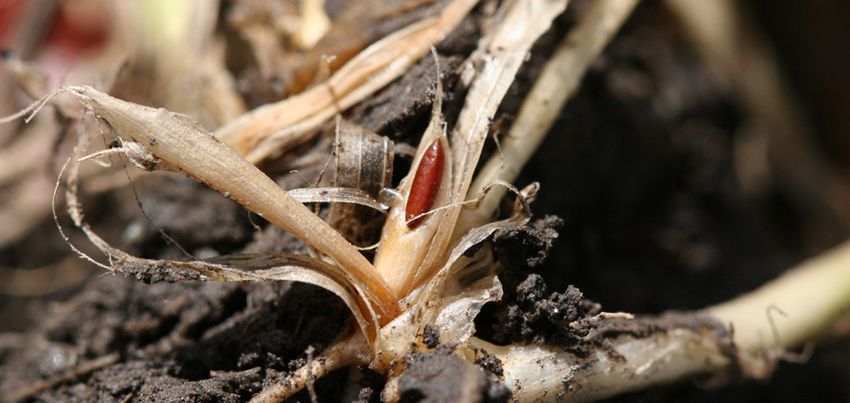
                                                               of the back. The maggot is about ¼-inch long when
resistance in most wheat varieties has led to supply           fully grown. The last stage of the maggot is spent
shortages of wheat varieties resistant to Hessian fly.         inside the flaxseed or puparium. The flaxseed is a
This publication discusses the biology of the Hessian          shiny, brown protective case about 1⁄8-inch long
                                                               (Figure 4). It is built from the insect’s skin and named
fly and provides suggestions for managing this insect.
                                                               for its resemblance to a seed from the flax plant.
                                                               It is not uncommon to find Hessian fly maggots or
Description and Life Cycle                                     flaxseeds stacked up one behind the other (Figure
                                                               5), particularly in heavy infestations. If weather
    The Hessian fly (Figure 1) is a small, mosquito-           conditions are favorable, the Hessian flies will pupate
like fly, about 1⁄8-inch long. The female Hessian fly          (transform into adults) inside the flaxseed. Adults then
adult is reddish brown to black in color, whereas              emerge and start a new generation. If it is too hot
the slightly smaller males are brown or black. Many            or cold, Hessian flies remain as maggots inside the
adult flies that resemble Hessian flies can be found           flaxseed until the weather moderates.

2 Alabama Cooperative Extension System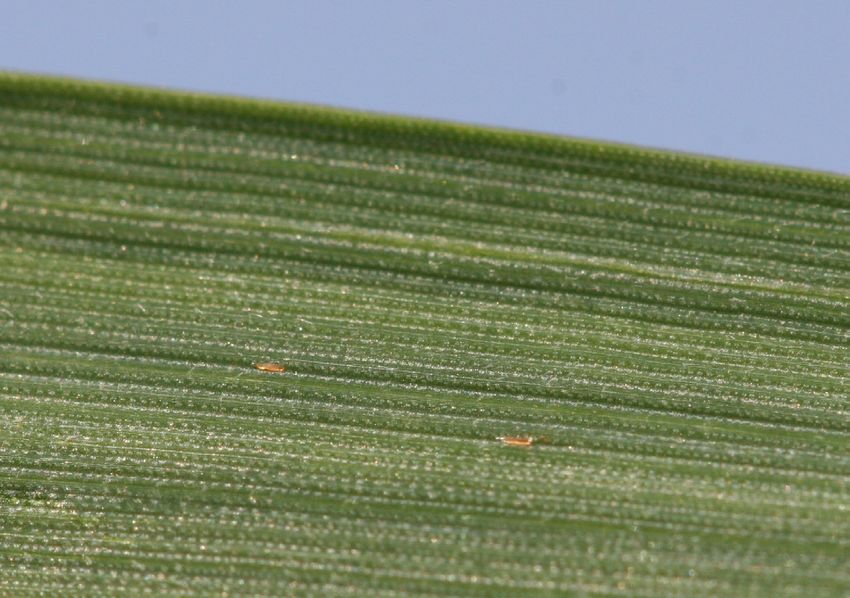
Figure 4. Hessian fly puparium (flaxseed) at the base of a
                                                         wheat plant (Photo credit: Dominic Reisig)

Figure 3. Hessian fly larva (Photo credit: USDA ARS)     Figure 5. In heavy infestations, many Hessian flies can be
                                                         found behind a single leaf sheath. (Photo credit: Rudy Yates)

                                                         winter or spring, adults emerge and start a new
               www.aces.edu/HessianFly/                  generation when temperatures reach between 50 to
               HessianFlyBiology.php                     60 degrees F. There is usually one spring generation
                                                         in northern Alabama, northern Georgia and North
                                                         Carolina, but there may be two spring generations in
                                                         southern Alabama and southern Georgia.
     There are three to six generations per year of
this pest in the South, with fewer generations in            Newly hatched Hessian fly maggots migrate
northern latitudes. Generations tend to overlap. The     behind the leaf sheaths and move downward,
entire life cycle requires about 35 days at 70 degrees   ultimately locating below ground at the base of the
F, but takes longer at cool temperatures because         small wheat plants, where they feed. The larvae can
insects are cold-blooded. Maggots continue feeding       feed for 14 to 30 days, depending on temperature,
as long as temperatures are above 40 degrees F           and can injure the plants by rupturing leaf or stem
and below 80 degrees F. The pest oversummers             cells. They also cause the plant to form an area of
as flaxseeds in wheat stubble. The first generation      nutritive tissue around the base to enhance their
develops during September or October, depending          feeding, which can result in tiller stunting and die-
on latitude and is generally on found on volunteer       back. Plants infested with Hessian fly show various
wheat or wild grass hosts, the most important of
which is little barley, Hordeum pusillum. There are
                                                                         www.aces.edu/HessianFly/
often two more generations in the fall and early win-                    HessianFlyDamagedWheat.php
ter in Alabama and Georgia, but only one generation
during the fall and winter in North Carolina. In late

                                                              Biology and Management of Hessian Fly in the Southeast     3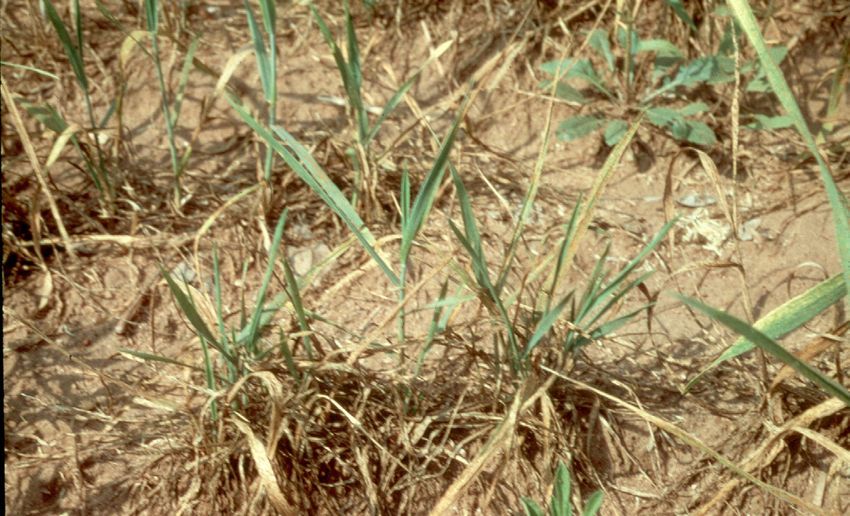
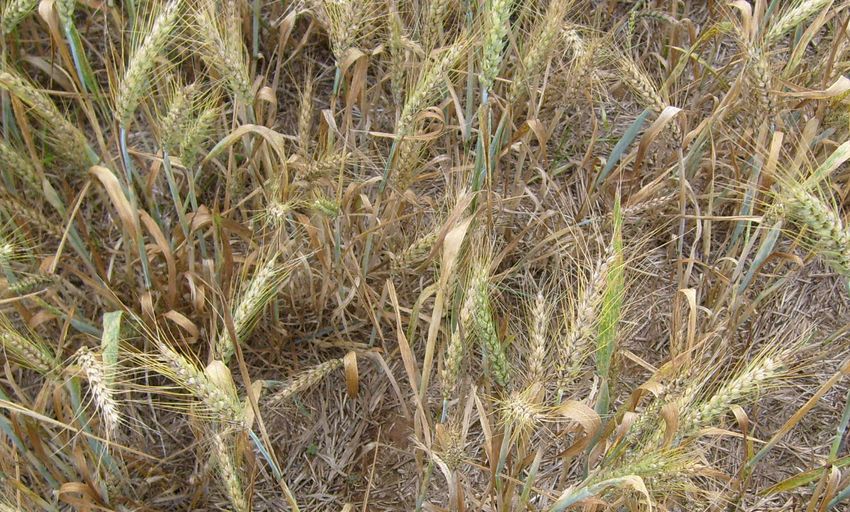
Figure 6. Dead and stunted tillers caused by an early infesta-   Figure 7. Thin stand and stunted plants resulting from a
tion of Hessian fly                                              severe Hessian fly infestation

symptoms. Stunted or dead tillers (Figure 6), and                infested in spring, yield losses can be expected if
thin wheat stands are typical signs of early season              15 to 20 percent of stems are infested with Hessian
infestation (Figures 7 and 8). Stunted vegetative til-           fly. Hessian fly reduces forage yield production of
lers are often dark green and sometimes have a blue              winter wheat, but does not greatly affect wheat
tinge. Leaf blades on infested tillers are wider and             forage quality.
shorter than normal, and leaf sheaths are shorter
(Figure 9). If tillers that were infested when they
were small survive and produce grain heads, the
                                                                 Management Strategies
heads are small and the stems are stunted.
Hessian fly adults preferably lay eggs on the upper-             Resistant and Tolerant Varieties
most leaves. Therefore, as the plant grows, maggots
will be found further up the plant, but always
behind the leaf sheath just above a stem joint. A                                www.aces.edu/HessianFly/
shorter distance between joints is a symptom of                                  ResistantVarieties.php
Hessian fly infestation. Tillers infested in spring
when they are older may have weakened stems,
small heads, and poorly filled grain heads with                      Correct varietal selection is probably the most
low-quality kernels. Often, wheat lodges in seriously            inexpensive and effective method of Hessian fly
infested fields.                                                 management. This resistance often works by causing
                                                                 cell death and fortification of the cell wall around
                                                                 the nutritive tissue where the Hessian fly feeds.
                www.aces.edu/HessianFly/                         Many wheat varieties are advertised as having
                EffectonWheatYield.php
                                                                 Hessian fly resistance.

     A thin stand consisting of stunted wheat plants                             www.aces.edu/HessianFly/
with few heads is the sign of an extremely heavy                                 Geneeffectiveness.php
Hessian fly infestation that began when the plants
were small. A moderate infestation may result in
yield loss with less obvious symptoms. Yield loss                    In most cases, resistance is based on a single
is usually significant if more than 5 to 8 percent               gene present in the variety that must match a gene
of tillers are infested in the early tiller stage. Late          in the Hessian fly. Unfortunately, the Hessian fly can
winter or early spring generations of Hessian fly                overcome host plant resistance mechanisms, result-
can also cause considerable damage. In some areas,               ing in the formation of new strains called biotypes.
such as Kentucky, spring infestations of Hessian fly             Plant breeders try to stay ahead of the biotypes by
are more common than fall infestations. If tillers are           producing wheat varieties with different resistance

4 Alabama Cooperative Extension System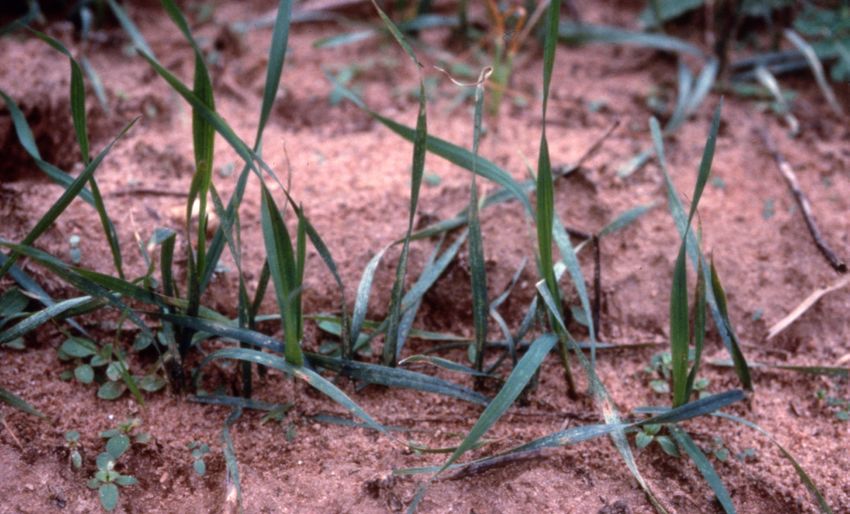
Figure 8. Thin stand and stunted plants resulting from a se-   Figure 9. Wheat tillers that are infested early have short-
vere Hessian fly infestation                                   ened leaf sheaths

genes. To be effective, wheat varieties must be spe-           Control Volunteer Wheat
cifically resistant to the local Hessian fly genotype.
                                                                    Control of volunteer wheat well before planting
In addition to the information provided at the addi-
                                                               is recommended because Hessian flies are attracted
tional information link, growers can get information
                                                               to volunteer wheat when they emerge in September.
on Hessian-fly-resistant varieties from their local
                                                               Additionally, this practice will reduce the prob-
land-grant university. In most cases, varieties rated
                                                               ability of infestation by wheat curl mite, the vector
as having “good” resistance should provide enough
                                                               of wheat streak mosaic virus. Wildlife plantings
protection to avoid economic losses due to Hessian
                                                               of wheat, which are often planted early, can be a
fly. In areas with severe Hessian fly problems, the
                                                               source of Hessian flies.
use of resistant and tolerant varieties may not be
sufficient to prevent infestations from occurring.             Cover Crops
Rotation                                                             Serious Hessian fly infestations have occurred
                                                               where wheat for grain was planted near early-
    Although Hessian fly can become serious under
                                                               planted wheat for cover or where early-planted
other situations, the most serious infestations occur
                                                               wheat was present for wildlife. In cropping systems
when wheat is planted early into wheat stubble
                                                               where cover crops are used, such as tobacco, strip-
or into fields next to wheat stubble, because the
                                                               till cotton, or peanut production, the use of other
Hessian fly oversummers in wheat stubble. Crop
                                                               small grains will reduce Hessian fly populations.
rotations that prevent new wheat from being
                                                               Although Hessian fly can develop on grasses in
planted into or near a previous wheat crop’s stubble
                                                               more than seventeen genera, some are more favor-
will reduce the chances of Hessian fly infestation.
                                                               able hosts for egg laying and development. Oats are
Continuous no-tillage wheat may result in severe
                                                               not favorable for Hessian fly reproduction and do
problems with Hessian fly as well as Take-All
                                                               not serve as a nursery, making this grain preferable
Disease and should be avoided. The Hessian fly is a
                                                               over wheat for cover cropping in areas where wheat
weak flier, so putting distance between the location
                                                               for grain is also produced.
of new wheat plantings and the previous season’s
wheat fields will help prevent infestations.

                www.aces.edu/HessianFly/
                AgronomicPractices.php#rotation

                                                                    Biology and Management of Hessian Fly in the Southeast   5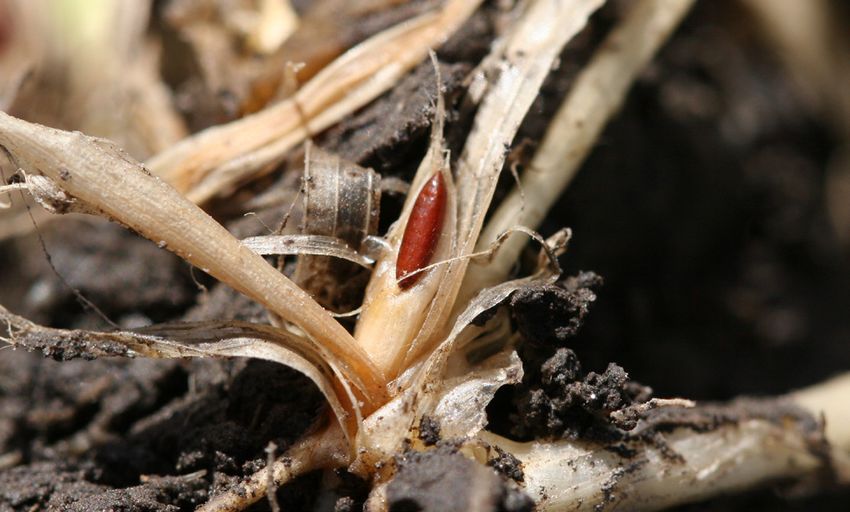
Tillage and Burning                                        Foliar Insecticides
    No-till planted small grains tend to grow more              Foliar pyrethroid insecticides applied shortly
slowly in the fall than those planted in conven-           after wheat emerges (at or before the two- to three-
tionally tilled fields. Hessian fly seems to infest        leaf stage) have been effective to manage Hessian
both no-till and conventional-till at the same rate.       fly. If applied at the right time, a pyrethroid will
However, conventionally tilled wheat grows fast            kill the adult flies and may also kill freshly hatched
enough that it can usually produce new tillers faster      larvae before they become embedded behind the
than the fly maggots kill infected ones. Conversely,       leaf sheaths. At least three of the following condi-
the slower growth in no-till plants cannot keep up         tions should be met before using a pyrethroid for
with the maggot feeding, and the plants eventually         early season Hessian fly control: 1) wheat has been
die. Plowing or disking wheat stubble after harvest        planted in the same field, adjacent to, or close
effectively kills the Hessian fly by burying the over-     (within 400 yards) to the previous year’s crop, 2)
summering flaxseeds. Planting soybean no-till into         a resistant wheat variety has not been planted, 3)
wheat stubble enhances Hessian fly survival by pre-        the seeds were not treated with a neonicotinoid
serving the site where puparia spend the summer.           insecticide, 4) Hessian fly has caused yield losses on
    Burning wheat straw will reduce oversummering          this farm or nearby in previous years or 5) Hessian
puparia, but many puparia are found below the              fly eggs are present on the wheat leaves.
soil surface where they are unaffected by the burn.
Therefore, burning is not as effective as disking and
                                                                          www.aces.edu/HessianFly/
is not recommended as a management method.                                FoliarInsecticides.php
Additionally, burning wheat can predispose fields to
increased incidence of lesser cornstalk borer infesta-
tion in double-cropped soybean.                                Fields that passed the winter with a significant
                                                           Hessian fly infestation will also be attacked by the
                                                           next generation of larvae re-cycling in the crop.
               www.aces.edu/HessianFly/                    Fields with low tiller counts should be examined in
               AgronomicPractices.php#tillage
                                                           January or February for Hessian fly before making
                                                           the customary nitrogen applications in late winter.
                                                           To judge the need for a pyrethroid treatment,
Systemic Seed Treatments                                   examine the plants for flaxseeds to identify fields
     When applied at the correct rates, use of systemic    that will have high fly numbers. Squeeze some
insecticidal seed treatments (neonicotinoid treat-         flaxseeds and see if the resulting fluids are white
ments) can reduce populations of Hessian flies in the      and milky (still larvae or early pupae) or reddish
first part of the growing season. Generally, the highest   and relatively dry (adults about to emerge). Later
labeled rates of clothianidin, thiamethoxam, or imi-       scouting should focus on heavily infested fields for
dacloprid provide fair to good control of Hessian fly.     eggs on the top surface of new leaves. Eggs are
However, when Hessian fly abundance is high, the           very small, about 1/32 inch long, and magnification
use of these seed treatments is not always effective.      may be needed. An experienced person with good
Seed treatments will not control the late winter and       eyesight can detect Hessian fly eggs, especially
spring generations of Hessian fly. The lowest labeled      in direct sunlight because the eggs will shine.
rates of these seed treatments are designed for aphid      Egg counts of four or more per leaf may justify a
control and are not effective against Hessian fly.         pyrethroid application. Tillers, especially dead tillers
Because seed treatments are expensive, they should         and stunted tillers, should be examined by peeling
be used only after careful consideration of current        the leaf sheaths back carefully to look for Hessian
production economics.                                      fly maggots or pupae. If 20 percent of the tillers are
                                                           infested with Hessian fly maggots or pupae at this
                                                           time, significant yield losses can be expected and
               www.aces.edu/HessianFly/                    the money spent on nitrogen may not produce the
               SeedTreatments.php                          desired yield response. If a pyrethroid is applied as

6 Alabama Cooperative Extension System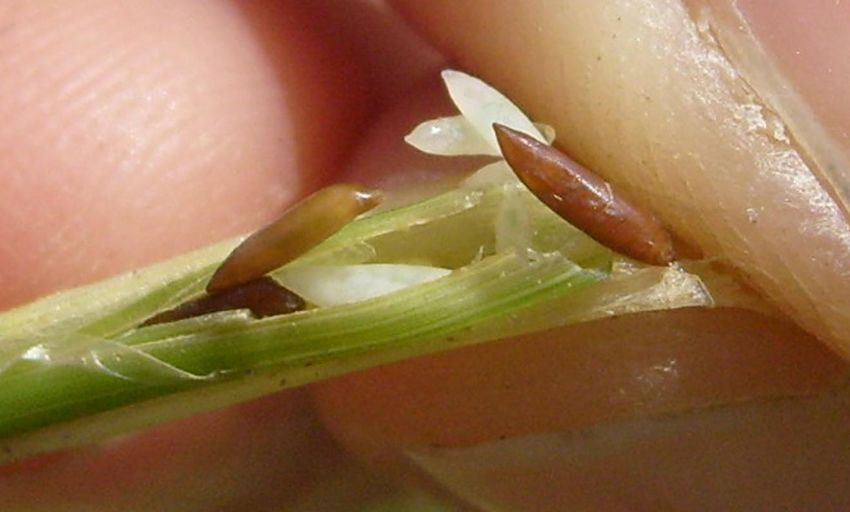
the flies emerge and lay eggs some control may be        Postharvest Practices that Spread
accomplished. This spring rescue treatment is rarely     Hessian Fly
effective, and when it is, it is generally only effec-       Hessian fly pupae can survive the process of
tive in high-pressure situations.                        straw harvest. Therefore Hessian flies can be moved
Delayed Planting                                         to new locations where that straw is used. This
                                                         can increase the speed at which new biotypes of
     Growers are advised to plant during the             Hessian fly are disseminated.
planting dates recommended for wheat in their
state. Planting before these dates increases the         Summary of Hessian Fly
risk of Hessian fly infestation and diseases, such       Management Practices
as barley yellow dwarf and wheat streak mosaic.
                                                             For a management program to be most effec-
Planting after these dates usually results in reduced
                                                         tive, growers must implement a combination of the
yield potential. Because freezing temperatures
                                                         techniques mentioned above, preferably in coordi-
kill Hessian fly adults, a traditional method for
                                                         nation with neighboring producers. The efforts of a
preventing Hessian fly infestation is to delay
                                                         producer who rotates his or her wheat may be frus-
planting until after the first freeze (often called
                                                         trated by a neighbor who plants wheat as a cover
the fly-free date). Historically, the Hessian fly-free
                                                         crop or who has a no-till, double-crop soybean field
date was reported to be October 9 in the latitude
                                                         adjacent to his or her farm. One or a combination of
of northern Kentucky, October 16 in the latitude
                                                         these management strategies will minimize Hessian
of northern Tennessee, and October 23 to 27
                                                         fly damage:
in northern Georgia, southern Tennessee, and
                                                             • Select a Hessian-fly-resistant variety.
northern Alabama. This concept has not worked
                                                             • For grazing or cover cropping, plant oats or
well further south or in Virginia and North and                   some other crop that is not a host for
South Carolina because an early freeze is not a                   Hessian fly.
dependable event. Indeed, a killing freeze may not           • If possible, use a tillage method that will
occur until December, long after the recommended                  bury wheat debris.
planting date for wheat. Even in areas such as               • Control volunteer wheat.
Kentucky, growers are advised to look at the 30- to          • Do not use susceptible wheat for
60-day weather outlook and delay planting further if              wildlife plantings.
warmer than normal temperatures are predicted.               • Avoid planting into or near old
                                                                  wheat stubble.
                                                             • Do not plant wheat before the recommended
               www.aces.edu/HessianFly/                           planting date for your area. If possible, plant
               AgronomicPractices.php#plantingdate                after the first frost.
                                                             • Consider using a systemic seed treatment if
                                                                  a susceptible wheat variety is grown.
                                                             • Consider an early season foliar insecticide
                                                                  if three of the five conditions mentioned
                                                                  above are true.

                    To see all the supporting web pages go to:
                                           www.aces.edu/HessianFly

                                                              Biology and Management of Hessian Fly in the Southeast   7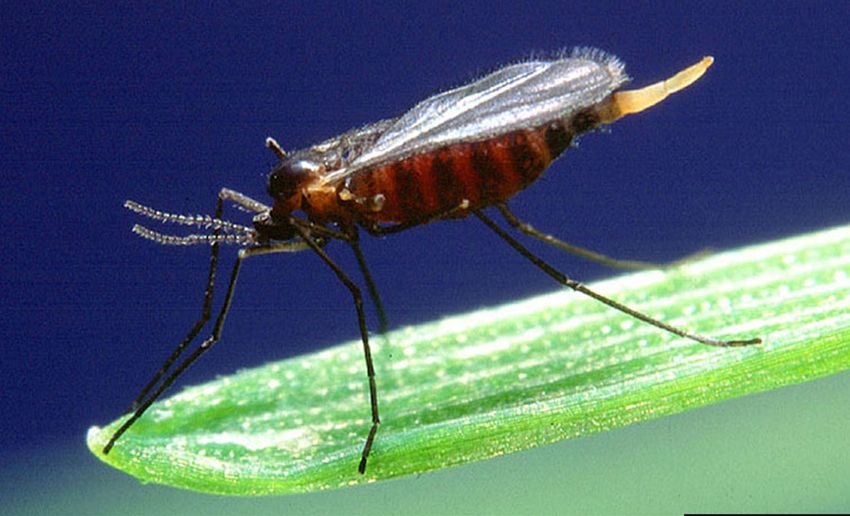
Kathy L. Flanders, Extension Specialist and Professor, Entomology and Plant Pathology,
           Auburn University
           Dominic D. Reisig, Extension Specialist and Assistant Professor, Entomology, North
           Carolina State University
           G. David Buntin, Professor, Entomology, University of Georgia
           Matthew Winslow, Graduate Research Assistant, Virginia Polytechnic Institute and University
           D. Ames Herbert Jr., Professor, Entomology, Virginia Polytechnic Institute
           and University
           Douglas W. Johnson, Extension Professor of Entomology and IPM Coordinator,
ANR-1069   Entomology, University of Kentucky
           For more information, call your county Extension office. Look in your telephone directory under your county’s
           name to find the number.
           Use pesticides only according to the directions on the label. Follow all directions, precautions, and restrictions
           that are listed. Do not use pesticides on plants that are not listed on the label.
           The pesticide rates in this publication are recommended only if they are registered with the Environmental
           Protection Agency and the Alabama Department of Agriculture and Industries or equivalent state agency. If
           a registration is changed or cancelled, the rate listed here is no longer recommended. Before you apply any
           pesticide, fungicide or herbicide, check with your county Extension agent for the latest information.
           Trade names are used only to give specific information. The Alabama Cooperative Extension System does not
           endorse or guarantee any product and does not recommend one product instead of another that might be similar.
           Trade and brand names used in this publication are given for information purposes only. No guarantee,
           endorsement, or discrimination among comparable products is intended or implied by the Alabama Cooperative
           Extension System.
           Published by the Alabama Cooperative Extension System (Alabama A&M University and Auburn University), an
           equal opportunity educator and employer.
                                                                                          2.5M, Revised Jan 2013, ANR-1069
           © 2013 by the Alabama Cooperative Extension System. All rights reserved.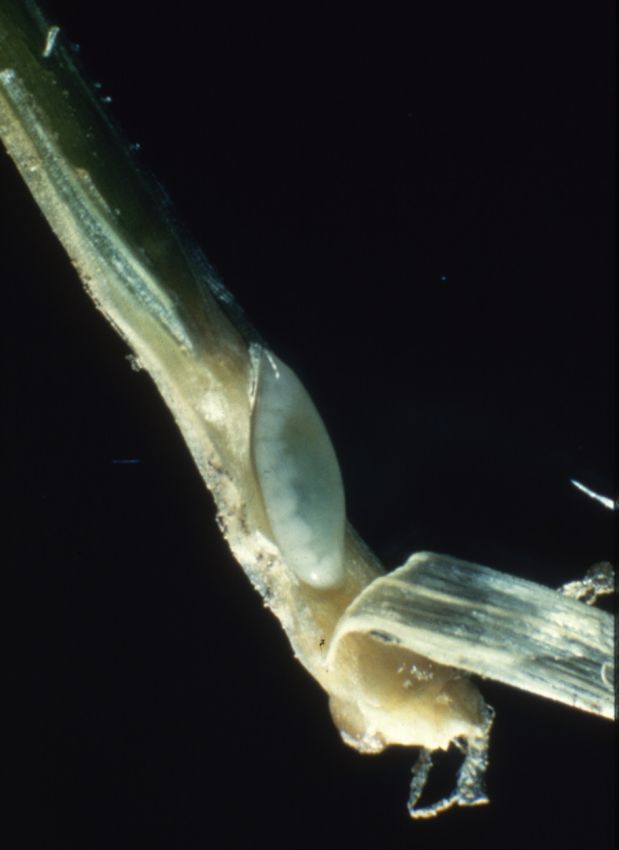
You can also read


