CASA W3 | W4 XS SMART - Installation, commissioning and maintenance instruction - Swegon
←
→
Page content transcription
If your browser does not render page correctly, please read the page content below
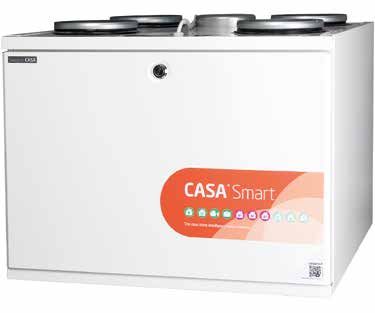
TECHNICAL MANUAL

      CASA W3 | W4 XS SMART
      Installation, commissioning and maintenance instruction

W3W4_XS_d_EN-t
W3 | W4 Smart
Contents
Technical Guide
for design engineers, installation engineers and service personnel
The section 1 describes the high lights of the unit.
All information for mechanical installation is found from section 2.
Instructions for basic commissioning is found from section 3.
Units external connections to the systems or devices like Modbus, DI, DO, AI, etc. is found from section 4.
Units functions description and usage is found from section 5.
Units periodically maintenance and service is described in section 6.
If a malfunction or alarm occurs the instructions are found from section 7.
All technical data is found from section 8.
Important information.............................................. 3 5.1.6 Automatic Home/Away/Boost function........................19
5.1.7 Automatic humidity control.........................................20
1. General Description............................................... 4 5.1.8 Automatic air quality control........................................20
1.1 Enclosure..........................................................................4 5.1.9 Weekly program..........................................................20
1.2 Fans..................................................................................4 5.2 Supply air temperature control........................................21
1.3 Demand ventilation control...............................................5 5.2.1 Temperature control settings .......................................21
1.4 Filter.................................................................................5 5.2.2 Temperature measurement..........................................21
1.5 Heat exchanger.................................................................5 5.2.3 External heating and cooling units...............................22
1.6 Temperature.....................................................................5 5.3 Defrosting.......................................................................22
1.7 External connections.........................................................5 5.4 Restoring factory settings................................................22
1.8 Protective functions..........................................................5 5.6 Changing settings password...........................................22
5.7 Use.................................................................................22
2. Installation.............................................................. 6
6. Service................................................................... 23
2.1 Unboxing .........................................................................6
2.2 Lifting the ventilation unit ................................................6 6.1 Service reminder.............................................................23
2.3 Ventilation unit’s installation site.......................................6 6.2 Opening the ventilation unit...........................................23
2.3.1 Wall mounting...............................................................6 6.3 Filters..............................................................................23
2.3.2 Ceiling mounting...........................................................7 6.4 Heat exchanger...............................................................23
2.4 Condensate discharge.......................................................7 6.5 Fans................................................................................23
2.5 Ducts................................................................................8 6.6 Other servicing................................................................23
2.5.1 Enabling kitchen bypass.................................................8 6.7 Diagnostics.....................................................................25
2.6 Electric and control cables.................................................9 7. Alarms and Troubleshooting............................... 26
2.7 Installation of the Smart control panel...............................9
2.8 Smart automation packages............................................10 7.1 Alarm indication, cooker hood........................................26
2.9 Accessories.....................................................................10 7.2 Alarm indication, control panel.......................................26
7.3 Troubleshooting..............................................................26
3. Commissioning..................................................... 12 7.4 Alarm descriptions..........................................................27
3.1 Air flows.........................................................................12 8. Technical data....................................................... 28
3.1.1 Setting the basic airflows.............................................12
3.1.2 Travelling.....................................................................12 8.1 List of components.........................................................28
3.1.3 Maximum automatic boost..........................................12 8.2 Air flows (EN 13141-4)....................................................29
3.1.4 General notifications....................................................12 8.2.1 W3..............................................................................29
3.2 Cooker hood function.....................................................13 8.2.2 W4..............................................................................29
8.3 Connection outputs........................................................30
4. Units external connections................................. 14 8.4 Acoustic data..................................................................30
4.1 Modbus..........................................................................14 8.5 Electrical wiring diagram.................................................30
4.2 Switch inputs (DI)............................................................15 8.6 Control diagram and description of functions.................31
4.3 Voltage inputs (AI)..........................................................15 8.7 Measurements................................................................32
4.4 Relay outputs..................................................................16 8.8 Ventilation unit codes.....................................................33
4.5 Voltage outputs (AO)......................................................16 8.9 Accessories for controlling..............................................33
4.6 Smart Access..................................................................16 Commissioning form................................................ 34
5. Functions and use................................................ 18
5.1 Functions........................................................................18
5.1.1 Shortcuts.....................................................................18
5.1.2 Summer night cooling..................................................18
5.1.3 Cooker hood function..................................................19
5.1.4 Central vacuum function..............................................19 NOTE! The manual’s original language is
5.1.5 Fireplace function........................................................19
English.
2
All rights to changes reserved. 2021-06-18W3 | W4 Smart
! Important information
This document is intended for everyone involved in the installation work for or the use of a Swegon CASA venti-
lation unit. Read Instructions for Use before you use the ventilation unit. Save the Instructions for Use for future
use. This document is available in our website.
This appliance can be used by children aged from 8 years and above and persons with reduced physical, sensory
or mental capabilities ar lack of experience and knowledge if they have been given supervision or instruction con-
cerning use of the appliance in a safe way and understand the hazards involved. Children shall not play with the
appliance. Cleaning and user maintenance shall not be made by children without supervision.
Installation and commissioning Separate extract air
Only qualified personnel should carry out installation, (bypass for cooker hood)
configuration and commissioning. Only a qualified The separate extract air duct runs past the heat
electrician is allowed to make electrical installations exchanger. The extract air from the kitchen should be
in accordance with national regulations. conducted to the ventilation unit’s extract air duct.
Note that separate extract air flow affects the ventila-
The national standards and regulations dealing with tion unit’s annual efficiency.
unit installation, configuration and commissioning
must be followed.
Condensation
Do not use the ventilation unit until all work that The surface temperature of the ventilation unit can
produces large quantities of dust or other impurities drop down to low during periods of extremely low
has been completed. outdoor temperature and depending on the moisture
content of the air surrounding the unit, moisture may
The duct connections of the ventilation unit must be condense on the surface. Condensation should be
covered by lids until it is mounted at its final location. taken into account when choosing furnishings that
Make sure that the ventilation unit, filters and ducts are to be installed in the vicinity of the ventilation
are clean and that there are no loose objects in them unit.
before you commission the ventilation system.
To open the ventilation unit for service
Electrical work and connections Always isolate the ventilation unit’s power supply cable
before you open the inspection door! Wait a few min-
If you carry out voltage tests, measure the electrical
utes before you open the inspection door so that the
insulation resistance at various points or perform
fans are stopped and electrical heaters are cooled.
other remedial measures that could damage sensitive
electronic equipment, you must first isolate the venti- There are no components inside the electrical box
lation unit from the electrical supply grid. that can be serviced by the user. In case of malfunc-
tion, do not restart the ventilation unit before the
It is recommended that all Smart ventilation units
cause of the fault is identified and fixed.
should be equipped with a surge protection device
and a residual current circuit breaker. Comply with
local electrical safety regulations. Filters
The ventilation unit must not be operated without
If the supply cord is damaged, it must be replaced by
filters! Use only original Swegon filters. Find the cor-
the manufacturer or its service agent or a similarly
rect filter in the section ”Technical data”.
qualified person in order to avoid a hazard.
Drying laundry Warranty conditions
Warranty conditions are included in delivery of the
A tumbler dryer of extract air type or a drying cabinet
unit as a separate document.
must not be connected to the system due to the high
moisture content in the air it discharges.
Declaration of conformity
Models with water-based air heater Link to the declaration of conformity:
When there is a water-based heater in the ventilation
system the system should be equipped with damper
in outdoor air duct so that the air heater cannot
freeze during a power failure and unit freezing pro-
tection works correctly. casahelp.fi
3
2021-06-18 All rights to changes reserved.W3 | W4 Smart
The document is valid for following 1. General Description
ventilation units:
The most important function of the ventilation system
• Swegon CASA W3 XS Smart (C, SW ver. 3.3)
is to ensure clean and fresh indoor air and to remove
• Swegon CASA W4 XS Smart (C, SW ver. 3.3) moisture. The air in the home should be changed at
Check the SW version from the type plate inside the unit. a continuous and sufficient rate to ensure a pleasant
indoor climate and avoid damage to building elements
caused by dampness.
The delivery includes:
Swegon CASA W3 is designed for detached houses,
• Ventilation unit
multi-dwelling houses and holiday cottages less than
• Anti-vibration mountings (2 pcs.) 150 m2 and W4 for less than 200 m2 detached houses,
• Instructions for Use (FI, SE, EN + NO, DE) multi-dwelling houses and holiday cottages. The venti-
• Installation, commissioning and maintenance lation unit can be used both for new construction and
instructions (FI+SE) renovation projects.
• Warranty Conditions • Air flow interval: W3 10 - 80 l/s | W4 10 - 97 l/s
• “Remember to change the filter” decal • Heat exchanger temperature efficiency up to 82 %
• Product fiche (EN 308)
• Very low structure
• Built-in humidity sensor as standard.
Standard connections: • Learning and demand defrosting
• Power cord with earthed plug (2 m) • Continuous control of the supply air temperature
• Modular cable with RJ9 connector (1.5 m) (Comfort)
• Freely configurable I/O contacts for connection of • Energy-efficient and quiet EC fans
accessories (2 pcs.) • CASA Smart control system
• The ventilation unit can be controlled from a control
panel, from the cooker hood, via external switch-
Accessories: es, vai Modbus or with Smart Access mobile user
• Modular cable, 20 m, adapter interface.
• Smart control panel • Energy class A according to the Ecodesign directive
• Wall mounting bracket
1.1 Enclosure
• Ceiling mounting frame
The ventilation unit conforms to enclosure class IP34
• Mounting frame with vapour barrier when the cover is closed.
• Water trap
• Condensate discharge hose 1.2 Fans
• SEC: IO extension cable with Modbus RTU The Swegon CASA ventilation units are equipped with
• SEM: IO extension module with relay and Modbus energy efficient EC fans.
RTU (input and output connections) The fans can be controlled in four operating modes and
• Waterborne air heater/air cooler for installation in ducts steplessly with Smart functions:
• Electric air heater for installation in ducts • Boost = maximum commissioned air flow is used
• Smart automation packages: when the ventilation requirement increases, e.g. for
- Auto Home/Away/Boost function + cooking, showering or drying laundry.
Auto humidity control (CO2 + RH) • Home = normal air flow. In normal cases guarantees
- Auto Air Quality control + Auto humidity healthy indoor air quality.
control (VOC + RH) • Away = low air flow. Reduces power consumption
• Room temperature sensor when no one is in the house.
• Set for constant duct pressure • Travelling = very low air flow and lower supply air tem-
• Smart Access mobile user interface perature. Used when house is empty long period. (Can
only be selected from a Smart control panel.)
The unit’s weekly timer can change operation modes and
temperature setpoint at the preset times. It is always possi-
ble to override the weekly timer and change the operation
mode from a control panel or a Smart cooker hood.
You can select an air flow boost time of 30, 60 or
120 minutes or continuous boost from a Smart control
4
All rights to changes reserved. 2021-06-18W3 | W4 Smart
panel. When the unit is controlled from a cooker hood, The control mode for the supply air is selected from the
the fan’s air flow boost time is 60 minutes. temperature control settings. The default mode is Eco.
The temperature setpoint can be adjusted using the
1.3 Demand ventilation control control panel, weekly program, operating mode selec-
Ventilation can be controlled by demand with following tion or based on room temperature.
Smart functions:
Automatic summer night cooling recognizes the
• Stepless Home/Away/Boost Control = ventilation need for cooling. The function lowers the supply air
level is controlled according to the CO2 level. temperature setting and bypasses the heat exchanger
• Humidity Control = ventilation is boosted steplessly for best cooling performance. The unit can’t produce
according to the moisture load caused by people. cooler supply air than the outside air.
• Air Quality Control = ventilation is boosted steplessly The unit can be equipped with an optional cooling coil,
according to VOC level. which allows active cooling of the supply air.
• Smart Balancing Functions = supply and extract air
flow balance is controlled to maintain room pressure 1.7 External connections
level constant. i.e. cooker hood, fireplace or central Plug-in modules are available for external connections.
vacuum cleaner functions. Wide variety of IO functions are available.
• Smart Cooling Boost = ventilation is boosted
The ventilation unit is equipped with In-build Modbus.
according to cooling need.
Modbus cabling can be made easily with external mod-
ule (SEM). Unit can be fully controlled via Modbus.
1.4 Filter
The ventilation unit is equipped with supply air filter
1.8 Protective functions
according to filter class ISO ePM1 50% (F7) and with
extract air filter according to filter class ISO coarse (G3). The heat exchanger freeze protection
The need of filter replacement is indicated on the con- The defrosting function guarantees continuous ventila-
trol panel and on a CASA Smart cooker hood. tion even during extreme conditions.
The fan overheating protection
1.5 Heat exchanger The fan overheat protection stops the fan if the tempera-
The ventilation unit is equipped with a plate heat ture rises too high and is reseted automatically. If protec-
exchanger which is based on the counterflow tion stops the fans an alarm is generated.
technology. The incoming and outgoing air flows in a Electric air heaters
counterflow plate heat exchanger use separate chan- The electric heater is equipped with automatic and
nels, and thanks to this the heat exchanger does not manual overtemperature protection. Overheat cuts the
return any odours back into the room air. It also does heating circuit and generates an alarm.
not return moisture and is therefore very well suited to
dwellings with high humidity (eg abundant sauna and Water-based air heaters
laundry). The ventilation unit with water-based air heater/cooler
has a temperature sensor that protects the coil from
The heat exchanger operates with the best possible effi- freezing. Protection generates the alarm and starts
ciency in all conditions. This is possible with the demand freezing prevention. If freezing prevention is not enough
and learning defrosting technology, which steplessly the unit is stopped and demanded shut-off dampers are
controls the heaters. Intelligent defrosting never leads closed. Freezing prevention is reseted automatically.
cold outdoor air past the heat exchanger, keeping the
supply air temperature constantly at a comfortable level. Cold supply air
The ventilation unit has built-in condensation protection.
1.6 Temperature If the supply air is too cold, the ventilation unit stops and
an alarm is generated
The supply air temperature is regulated by changing the
temperature efficiency, with an integrated air heater or High temperature
with an air cooler, which is sold as an accessory. If supply air or units internal temperature is detected
dangerously high the unit is stopped and an alarm is
In Eco mode the ventilation unit works with the best generated.
possible temperature efficiency. It must be noted here
that the higher the extract air temperature, the greater Temperature sensors
the direct effect will be on the supply air temperature. If a sensor fault is detected, the ventilation unit runs in
The supply air temperature can be adjusted if necessary restricted mode. The ventilation unit’s returns to normal
by warmer supply air. mode once the fault has been corrected.
In Comfort mode the supply air temperature is kept
even with the help of partially passing heat recovery, i.e.
by controlling the temperature efficiency. It must be not-
ed here that the unit is not able to produce supply air
that is cooler than the outdoor air.
5
2021-06-18 All rights to changes reserved.W3 | W4 Smart
2. Installation 1
2.1 Unboxing
The ventilation unit is delivered in a cardboard box.
Remove the staples to open the box cover. The best way
to take the unit out is by opening the vertical seam of the
cardboard box and spreading it out from around the unit.
2.2 Lifting the ventilation unit
The ventilation unit is heavy and is not intended to be
2
moved by hand. When installing the ventilation unit, it is 2
1 3
lifted with a suitable lifting device that lifts evenly from
the bottom of the unit.
2.3 Ventilation unit’s installation site
The temperature in the space where the unit will be installed
must be more than +10 °C. The ventilation unit can be 1. Horizontal stud for the ventilation
installed in a machine room, laundry room, store room, etc. unit’s mounting bracket
2. Acoustic insulation
Due to the risk of disruptive noise, the ventilation unit
should not be installed on the wall towards the living 1. Insulated wall
room or bedroom. 2. Horizontal stud
Make sure it is easy to access the power and control 3. Wall mounting
bracket
cables as well as accessories.
The ventilation unit can be mounted either on the wall
with a wall mounting bracket or on the ceiling with a 299 299
ceiling mounting frame. The required mounting bracket
14
is purchased separately as an accessory.
The unit should be installed on the wall and ceiling so
that the ducts remain above the ceiling surface. The 299 299
68
space between the unit and the wall/ceiling must be
14
insulated to prevent the transmission of sound coming
54
from the rear wall and top of the unit to the room. 505
Particularly noteworthy; if the unit is not mounted on
68
the ceiling, the sound from top of the unit and from the
duct connections must be isolated from the room space. Wall mounting bracket’s dimensions
54
Connect the extract air from a CASA cooker hood, if in- 505
stalled, via a duct to the extra duct connection spigot on the
top side of the ventilation unit, which on delivery is plugged.
2.3.1 Wall mounting
If the wall is composed of vertical studs and wallboards,
the wall must be reinforced with horizontal studs that
will support the weight of the unit. Swegon also recom-
300
370
mends that the wall be insulated with mineral wool or
similar insulation for preventing sound from propagat-
ing to other rooms.
Screw the wall mounting bracket firmly in a horizontal
position onto the wall where a wall stud will support
the weight of the unit. Lift the ventilation unit onto the
76
wall mounting bracket so that the ears on the bracket
engage in the corresponding notches at the top on the
backside of the unit. 505
The ventilation unit’s door and heat exchanger can be removed
to make it easier to lift the unit. See the ”Service” section.
Set the final position of the ventilation unit with the
help of the adjustable anti-vibration mountings so that
the ventilation unit tilts slightly backward.
439
6
All rights to changes reserved. 2021-06-18W3 | W4 Smart
2.3.2 Ceiling mounting touching the front plate of the mounting frame and
The ventilation unit can be mounted on the ceiling with a can be seen from the openings on the front edge of the
ceiling mounting bracket which is available as an accessory. frame. (see picture)
Fasten the ceiling mounting frame in ceiling anchor
sleeves with four M8 threaded rods. The length of rods
must be adjusted so that they will be positioned max.
15 mm under the inner surface of the ceiling mounting
bracket. Otherwise, the rods will hit the upper surface of
the ventilation unit. Install at least three threaded rods in
the corners of the ceiling mounting bracket. To avoid a
possible collision with the ducts, one of the threaded rods
can be located in the hole next to the corner.
x
Screw in the M8 nuts onto the threaded rods to such a
height that the ceiling mounting bracket will be hori-
zontal when the top of the frame goes against the nuts.
Fit the ceiling mounting bracket through the selected
holes towards the nuts of the threaded rods and lock
the frame into position with nuts from underneath. Finally adjust the position of the ventilation unit using
Adapt the installation height so that the locking pins in the adjustable anti-vibration mountings, so that the unit
the mounting bracket’s front section will stay sufficiently tilts backward by a few degrees. Make sure that a hard
far below the ceiling. twist is not subjected to the ceiling mounting bracket.
! Important !
2.4 Condensate discharge
Improper tightening of the ceiling moun-
Connect the discharge hose to the ventilation unit’s con-
ting bracket can cause the bracket to warp
densate discharge connection (3/8” male threads). The
and the unit will not fit in it. condensate is led off to a floor drain or the like using a
hose or pipe with an inner diameter of at least 12 mm.
Run the mounting hooks through the assembly open- The hose must not be led off directly to the drain. The
ings above the ventilation unit and secure them with tube must not have a second water trap or be run hor-
tension rivets. Position the hooks so that the sharp point izontally. The damming height of the water trap should
is facing the rear side of the ventilation unit. be at least 100 mm.
The hooks must absolutely not be secured with riv- Check that the condensate discharge outlet is not
ets directly above the ventilation unit. clogged and check its outflow by pouring water on the
bottom of the ventilation unit. The condensate discharge
connection is located on the rear of the unit under the
heat exchanger.
A hose to lead off the condensate is available as an
accessory (CDH3). The hose has a ready-made loop that
serves as a water trap.
3/8” male thread
Run the power supply and control cables through the 200 mm
ceiling mounting bracket.
Screw the anti-vibration mountings in position on the
lower edge of the rear wall of the ventilation unit before
lifting the unit onto the bracket. The ventilation unit’s
door and heat exchanger can be removed to make it
easier to lift the unit. See the ”Service” section.
Lift the ventilation unit so that the hooks go through
the fastening holes in the mounting bracket. The venti-
lation unit is locked in place when the locking pins are The metal water trap (UVLL) is available as an accessory.
7
2021-06-18 All rights to changes reserved.W3 | W4 Smart
2.5 Ducts It is important to the ensure the tightness of the vapour
barrier at the penetration collars. We recommend the
! Important ! use of a mounting frame with vapour barrier designed
for the ventilation unit (accessory, W3:PW080YP / W4:
Check whether the ventilation unit is a left PW100YP) for sealing the vapour barrier.
or right-hand version, to be sure to connect
the ventilation ducts to the correct duct 2.5.1 Enabling kitchen bypass
connections. The ventilation unit has extra duct connection for ex-
tract air from the cooker hood. The extract air from the
cooker hood flows directly out through the unit’s extract
R. Right-hand version air fan and does not pass the heat exchanger. For this
L. Left-hand version reason, the kitchen’s general ventilation must not take
place via the cooker hood. On delivery, the duct outlet
that bypass the heat exchanger are fitted with cover.
1. Supply air
2. Extract air The duct between the cooker hood and the unit must
3. Outdoor air be installed in such a way that it’s possible to clean it
4. Exhaust air from outside of the unit.
5. Extract air from the
cooker hood
! Important !
The kitchen bypass is intended for use
when the air flows from the cooker hood/
kitchen are boosted. The kitchen’s general
ventilation must take place via the extract
air duct. If the general ventilation takes
place continuously via the cooker hood, the
supply air and extract air flows through the
heat exchanger will be out of balance, and
this will lower the efficiency and impair
the ventilation unit’s anti-freeze protection
Install the ducts according to the ventilation drawings.
functions during the winter.
Do not mount ducts directly against structural elements
to avoid the propagation of sound.
Insulate the ventilation ducts to prevent leakage of heat,
cold and sound, as well as water condensing. Fire insulate
the ducts according to national regulations. Pay particular
attention to insulate cold ducts without gaps in the
insulation, so that moisture cannot condense.
The thickness of the insulation must be sufficient for the
insulation material, for the climate area and according
to local regulations. Most manufacturers of insulation
material offer calculation programs for the calculation of
correct and sufficient insulation.
Supply air duct should be fitted with acoustic insulation
along the stretch between the unit duct outlet and the
sound attenuator, so that fan sound will not be propa-
gated out into the room.
Generally, ventilation ducts should be insulated as follows:
• Insulate the outdoor ducts that pass through warm
spaces.
• Exhaust air ducts should always be insulated in ac-
cordance with national regulations.
• Insulate supply air ducts in cold spaces.
• Insulate extract air ducts in cold spaces.
• If the air inside the duct is colder than in the sur-
roundings; the insulation should be protected by a
vapour barrier.
8
All rights to changes reserved. 2021-06-18W3 | W4 Smart
2.6 Electric and control cables 2.7 Installation of the Smart control panel
The ventilation unit has a power cable with earthed plug. A maximum of two Smart control panels can be con-
The plug serves as the ventilation nit’s main switch and nected to the ventilation unit. These should be con-
should be connected to an easily accessible wall socket. figured with different ID numbers (Settings/Display/
Display ID). A Smart control panel can be mounted up
There is a modular cable on top of the ventilation unit to
to 40 meters from the unit (using 2 x 20 meter long
control the unit. The maximum length of the modular
modular cables).
cable is 40 meters. If you route the modular cable within a
building element, the cable must be routed in a ∅ 20 mm The front panel on the Smart control panel is released
conduit, bearing in mind any subsequent cable replacement. using a screwdriver to push the retaining clips through
the holes on either side.
Ensure during the installation of the ventilation unit that
it is easy to access the cable connectors, among others,
for servicing and setting up.
Accessories are either connected to the ventilation unit’s
four-way connector (2 extra functions) or the external
connection modules (3 extra functions). The cables are
routed through the cable entries that are on top of
the ventilation unit. The connection of accessories is
described in the section “Units external connections”.
Connection cables for connection modules and accesso-
ries are not included in the supply.
B
If several control panels are connected in chain, the
middle panel’s bus termination is moved to the “Open”
position. The jumpers do not need to be adjusted if only
one control panel is used.
A
Bus termination: Terminated Bus termination: Open
The modular cable can be connected to any outlet
socket on the panel.
A. Cable entry for accessory cables.
B. Terminal blocks for connection of accessories.
! Important !
Only a qualified electrician may carry out
electrical installations, according to natio-
nal regulations.
Finally, refit the front panel.
9
2021-06-18 All rights to changes reserved.W3 | W4 Smart
2.8 Smart automation packages 2.9 Accessories
• Auto humidity control (SRH) Installation instructions for accessories are included in
• Auto Home/Away/Boost function + Auto humidity the delivery of the each product.
control (SRHCO2)
• Auto Air Quality control + Auto humidity control
(SRHVOC).
The ventilation unit has a connection cable for the
sensor package. The sensor package is secured with a
clip on the bottom of the case. The installation position
for the Sensor package is located behind the summer
bypass damper in the extract air chamber.
The position of the sensor package in the ventilation
unit is shown in the image below. The extract air filter
and the heat exchanger must be dismantled from the
ventilation unit, and the summer bypass damper must
be set to the “winter” position, while the installation is
performed.
All sensor combinations are encapsulated in the same
way. If there is a sensor package version installed in
the ventilation unit, you can replace it with an optional
sensor package. See the section Functions and use for
information about the automatic functions.
10
All rights to changes reserved. 2021-06-18W3 | W4 Smart
11
2021-06-18 All rights to changes reserved.W3 | W4 Smart
3. Basic commissioning
Before commissioning, all tasks in Installation section must be completed. Before the ventilation system can be taken in
use, the basic supply and extract air flows must be adjusted. If cooker hood is used, the cooker hood function boost air
flow and balancing should be adjusted. If the automatic Home/Away/Boost Smart function is used it must be commis-
sioned, see section 4.
Commissioning is made from the password-protected NOTE! Depending on the state of the ventilation unit, it
“Settings” menu on a Smart control panel. To open the may take some time for the commissioning mode to be
menu, enter code 1234. (The code can be changed). activated. A message will appear on the screen.
Settings Adjust the fan control (%) for the operating modes
Home, Away and Boost so that the planned air flow
Airflow adjustments rates are reached.
IO controls
3.1.2 Travelling
Smart functions
Travelling mode reduces ventilation unit’s power con-
Heating / Cooling sumption. Travelling mode can be used when the home
is empty for long periods.
Defrost settings
Adjust the supply fan control (%) for the Travelling
Modbus
mode. The extract air flow is defined automatically
Reset factory settings based on the basic air flows.
Change service code 3.1.3 Maximum automatic boost
Automatic boost level can be limited if it’s disturbing.
3.1 Air flows Adjust the supply fan control (%) for the max Smart
Particular airflows should be found from house venti- boost. The extract air flow is defined automatically
lation plan. The units air flow curves are found in the based on the basic air flows.
section “Technical data”. A qualified person should ad-
just the ventilation air flows with the help of measurement 3.1.4 General notifications
equipment so that they correspond with the ventilation plan. In new homes, there is still construction moisture and the
Air flows for all basic operating modes must be set higher ventilation level is needed to remove the moisture.
so that the ventilation unit works correctly! Enter If there is a sauna, pool or other moisture producer in
the settings in the commissioning report. the home, It is recommended to boost ventilation on
Before you start to adjust the air flows, ensure that the demand. This can be managed with Smart humidity
filters are clean and that there are no foreign objects or control or active use the ventilation unit’s boost mode.
debris inside the ventilation unit.
3.1.1 Setting the basic air flows
Choose commissioning mode. The ventilation unit’s fans
run at the selected speed and functions, such as anti-freeze
protection and heat exchanger by-pass, are disabled.
Airflow adjustments
Commissioning mode
Control type Fan control
! Important !
Home (supply) 48% The system should be commissioned by a
qualified person. The air flows must not be
Home (extract) 50% changed by the user, because it could dis-
Away (supply) 35% rupt the ventilation system operation.
Away (extract) 38%
Air flows must be adjusted according to the
Boost (supply) 90% local regulations.
Boost (extract) 92%
Never adjust the air flows under the units
Travelling (supply) 35%
specified minimum.
Max Smart boost (supply) 82%
12
All rights to changes reserved. 2021-06-18W3 | W4 Smart
3.2 Cooker hood function
The cooker hood function balances the air flows when the
cooker hood is used. This will help to prevent house nega-
tive pressure and improves fume extraction capability. The
ventilation boost level during the function can be defined.
The function starts automatically when the damper in a
Swegon CASA cooker hood is opened or when a cooker
hood defined IO is active.
The function and the air flows can be commisioned
from the menu Settings/(1234)/Smart functions/Cooker
hood boost.
Cooker hood function
Home state Compensation 10%
Boost state Compensation 0%
Hood boost 30%
Roof fan
In use
Commissioning mode
Choose commissioning mode. The ventilation unit’s fans
run at the selected speed and functions, such as anti-freeze
protection and heat exchanger by-pass, are disabled.
Open the cooker hood damper.
Define the cooker hood air flows in order to adjust
function values.
Home state Compensation. Adjust the Home mode
compensation value so that the supply and extract +
cooker hood air flows are in balance. Compensation
increases supply air flow. (If roof fan compensation is
selected, the extract air flow is first reduced).
Boost state Compensation. Fine tune Boost mode
compensation value if necessary.
Hood boost adjusts the ventilation level during the func-
tion, for example, to achieve sufficient discharge velocity
or odour extraction.
Choose Roof fan when using a cooker hood which is
connected to the roof fan. Compensation is achieved by
slowing the extract air fan.
13
2021-06-18 All rights to changes reserved.W3 | W4 Smart
4. Units external connections
This section contains information to connect ventilation unit to external devices or system. The unit has in build Modbus
RTU interface to complete control. The units operating modes and functions can be controlled with switch inputs (DI)
or with voltage (0...10 V). The unit state can be monitored from relay outputs or voltage output (0...10 V).
4.1 Modbus Input registers
Unit has in build Modbus RTU interface (slave) and it’s
available in a SEC* or SEM* module. SEC IO-extension 3x6201 Fresh air temperature 0,1 °C
cable Modbus interface is designed for single point 3x6203 Supply air temperature 0,1 °C
connection. SEM IO-extension module Modbus interface
is designed for easy connection to large network with in 3x6204 Extract air temperature 0,1 °C
and out connectors for A, B and for two shield or ground 3x6213 CO2 PPM
connectors.
3x6214 RH %
Installation
Install Modbus network cabling as described in external 3x6217 VOC PPM eqv.
connections diagram. 3x6205 Supply fan RPM 1/s
NOTE! Install bus termination to chains last unit (in SEM
3x6206 Extract fan RPM 1/s
use bus terminated jumper, JP1).
NOTE! Shielded cable must be grounded only from one 3x6301 Unit state 0 = Ext. stop
point (master). SEM has two internally connected connec- 1 = User stop
tors for shield/ground chaining. 2 = Start
3 = Normal
Settings 4 = Commissioning
Modbus settings can be changed in Settings/(1234)/
Modbus menu. 3x6302 Operating mode 0 = Stop
1 = Away
Modbus 2 = Home
3 = Boost
Address 1 4 = Travelling
Baud 38 400 3x6136 Combined alarm See full list
Data bits 8 3x6137 Combined info See full list
Stop bits 1
None Full register list:
Parity
www.swegon.com
Smart Access
If Smart Access is connected to the SEC/SEM module
select Smart Access for correct settings. Normally Smart
Access cable should be connected inside electrical box.
Register access
Modbus registers defined in registers list are direct ac-
cessible without password. All defined registers are PLC
addresses (base 1). Most commonly used registers are
listed below.
Holding control registers
4x5001 Operating mode 0 = Stop
1 = Away
2 = Home
3 = Boost
4 =38 400
Travelling
4x5018 Emergency stop 0 = Disabled
1 = Active
2 = Over
pressurising
38 400
4x5101 Temperature setpoint °C
4x5406 Reset all alarms 1 = Reset
*) Accessory
14
All rights to changes reserved. 2021-06-18W3 | W4 Smart
4.2 Switch inputs (DI) 4.3 Voltage inputs (AI)
Unit operating modes and functions can be controlled Unit operating modes can be controlled with analog
with switch (digital) inputs. All inputs are configurable to voltage (0...10V) and different sensors can be connected
any operation, and input polarity (NC/NO) can be select- to voltage inputs. The unit has two inputs (IO1 and IO2).
ed. The unit has two inputs (IO1 and IO2). SEC/SEM* SEC/SEM* modules has three inputs more (IO3, IO4 and
modules has three inputs more (IO3, IO4 and IO5). IO5).
Installation Installation
Install switch devices to selected inputs (IO1-IO5) and Install control or sensor cable to selected inputs (IO1-IO5)
ground. and ground.
Settings Settings
IO settings can be changed in Settings/(1234)/IO controls IO settings can be changed in Settings/(1234)/IO controls
menu. Configure input type to switch input. Select ac- menu. Configure input type to voltage input.
tive state according to application. Closed selection will
Operations
active function when input is connected to ground (NO).
Select required analog input function:
Operations
1. Operating mode
Select required switch function:
Operating mode control 0...10 VDC (+/- 0.5 V)
1. Emergency stop 0 V = Control disabled
Emergency stop when input active. 1 V = Travelling
2. Stop 2 V = Away
Unit stopped when input active. 5 V = Home
8 V = Boost
3. Fireplace
10 V = Stopped
Fireplace function activated by input pulse, function
time defined in Smart settings. 2. Operating mode, stepless
Operating mode control 0...10 VDC (+/- 0.5 V)
4. Hood
0 V = Control disabled
Cooker hood function active when input active.
1 V = Travelling
5. Central vacuum (CVC) 2 V = Away
Central vacuum cleaner function active when input Stepless control between Away and Home
active. 5 V = Home
6. Boost force Stepless control between Home and Boost
Boost mode active when input active, overrides 8 V = Boost
Away mode. 10 V = Stopped
7. Away 3. Modbus AI
Away mode active when input active. Analog voltage can be read from Modbus.
8. Boost 4. PA supply air**
Boost mode active when input active. 5. PA extract air**
9. Modbus (not priority) 6. l/s (supply air)**
Input status can be read from Modbus.
7. l/s (extract air)**
10. Relay control (not priority)
8. RH AI**
Input status can control relay output.
9. CO2 AI**
11. Emergency stop resettable
Emergency stop activation. Emergency stop is reset 10. VOC AI**
from user panel.
12. External alarm.
Alarm indication for external devices.
*) Accessory **) Instructions are supplied with accessory
15
2021-06-18 All rights to changes reserved.W3 | W4 Smart
4.4 Relay outputs 4.5 Voltage outputs (AO)
External devices or systems can be controlled with relay External devices or systems can be controlled with analog
control outputs (+ 24 VDC). The units two inputs (IO1 output (0...10 V). SEM/SEC* module has one analog
and IO2) can control external relays. SEM* module has output (AO4).
one inbuilt relay (IO3) and two outputs for external relays
Installation
(IO4 and IO5). IO5 is grounding digital output for direct
Install device or control cable to AO4 and ground.
connection to automation system.
Settings
Installation
IO settings can be changed in Settings/(1234)/IO con-
Install external relay or system according to drawings.
trols/AO4 menu.
NOTE! The control card can be damaged if you short-
circuit the IO connection selected by the relay output. Operations
Select required output function:
Settings
Relay settings can be changed in Settings/(1234)/IO con- 1. Operating mode
trols menu. Configure input type to relay output. Select Operating mode output 0...10 VDC
active state according to application. Closed selection 0 V = NA
will close/activate the relay output when function is 1 V = Travelling
active (NO). 2 V = Away
5 V = Home
Operations 8 V = Boost
Select required relay function: 10 V = Stopped
1. Damper 2. Operating mode, stepless
Output is active when unit is running. Operating mode output 0...10 VDC
2. Away 0 V = Control disabled
Output is active when unit is in Away mode. 1 V = Travelling
2 V = Away
3. Boost
Stepless output between Away and Home
Output is active when unit is in Boost mode.
5 V = Home
4. Modbus Stepless output between Home and Boost
Output is controlled with Modbus. 8 V = Boost
5. DI control 10 V = Stopped
Output is controlled with digital input. Switch input 3. Temperature setpoint
must be defined as relay control. Relay output mini- Temperature setpoint (10-30 °C) corresponds to 0...10 V.
mum and/or maximum active time can be defined
4. Modbus
from IO controls menu.
Output is controlled with Modbus.
6. Manual on
Output is always on. 4.6 Smart Access
7. Travelling Unit can be controlled, monitored and commissioned
Output is active when unit is in Travelling mode. with web service Smart Access*. Smart Access allows
8. Service. automatic alarm and service notifications through email.
Output is active when service reminder is active. Smart Access provides unit specified links to spare parts
9. Critical alarm and filter web shop and to Casahelp.
Output is active when critical alarm is active. Unit is Installation
operating in restricted mode. Install Smart Access device cable to unit internal con-
10. Alarm nector or connect cable to SEC/SEM (Modbus and IO4).
Output is active when any alarm is active. Connect Smart Access to public internet with ethernet
cable (ETH connector).
Settings
If Smart Access is connected to internal connector no
settings are required.
If Smart Access is connected to SEC/SEM module select
Smart Access enabled in Settings/(1234)/Modbus menu.
Operations
Read the QR code from Smart Access device with smart
device and follow the instructions.
*) Accessory
16
All rights to changes reserved. 2021-06-18W3 | W4 Smart
External connections diagram
2 x 0,5
A1
IO1-IO4
8 A2
GND
7
1 = GND
Smart unit
1
2 x 0,5
JP1
AO4
5-24V 2 = AO 4
SEM
A1
2
9 A2
IO5
terminated
3 = GND
3
IO5 IO4(IO3)
4 = (IO 3)
4
Bus
5 = IO 4
o
4
5
Modbus out
6 = IO 5
o
6
3
10 7 = GND
7
B
2
2 x 0,5
+5V
IO1 - IO5 8 = 5 V Out
8
A
GND
1
102TKC
JP1
Smart Extension
Modbus module
NC NC
o
4
1
max 250 V / 6 A
Modbus in
2 x 0,5
Relay X1
o
2
3
11 1
2
IO1 - IO5
B
3
SEM
2
3
GND 4
A
117KHH
1
2 x 1,5
L
230V AC 50Hz
N
2 x 0,5
6
12 NC 1
2 IO1 - IO5 1 = Modbus A
NO 3
GND
105A1
2 = Modbus B
3 = IO 3 SEC
4 = IO 4
5 = IO 5
P
13 1
2 x 0,5
6 = AO 4
2
IO1 - IO5 7 = 5 V Out
3
GND 8 = GND
117PK2
4 x 0,5
5
G+ 24V
G0
OUT1 GND 24V / (5V)
14
OUT2
IO2
M
Relay GND 4 IO1
Relay
OUT4 IO1 - IO5 GND
117HDL
3 x 0,5
G+ 24V
G0 GND
15
OUT1
OUT2
M
IO1 - IO5 1
Relay
Relay
OUT4
117HDL
2 x 0,5
24 V
GND
16 2 x 0,5
IO1 - IO5 3 OPEN
2
IO1 - IO5
OPEN
TERMINATED TERMINATED
102LT
GND BUS TERMINATION BUS TERMINATION
1. Ventilation units external connections
2. Swegon CASA Smart control panel (UP1)
3. Swegon CASA Smart control panel (UP2)
4. Connection points on the ventilation unit: IO1, IO2, 24 V / (5 V), selection from circuit board
5. SET-module, Smart Extension Temperature module, connection card for external duct equipment
6. SEC Smart Extension Cable, IO-extension cable with Modbus RTU (single point connector)
7. SEM Smart Extension Modbus module, IO-extension module with relay and Modbus RTU (in and out connectors)
8. External relay control, alarm signal, duct damper, status signal, Modbus
9. External relay control (earthed output), alarm signal, duct damper, status signal, Modbus
10. Fireplace/boost switch, for control of the fireplace function or boosting
11. Humidity sensor, for control of boosting
12. Timer, for control of the Away/Boost mode
13. Pressure switch, for control of the cooker hood/central vacuum cleaner function.
14. CO2 sensor with relay, for activate the boost mode
15. CO2 sensor, for control of Automatic Home/Away/Boost system
16. Presence sensor
17
2021-06-18 All rights to changes reserved.W3 | W4 Smart
5. Functions and use
This section contains functions detailed description, advanced settings and use. The advanced settings for the functions
can only be accessed from Smart settings with password (1234 / changeable). The normal user settings can be limited.
In the User manual the functions are only covered from the user point of view. User settings are accessed from the
Smart shortcut menu.
5.1 Functions Summer night cooling
The Smart functions can be activated from the control
panel shortcuts, Modbus or via external inputs. Some of Level User
the functions are so-called background functions which Fresh air limit 5°C
work by demand. Advanced settings can be accessed
Fresh air start limit 14°C
from the “Settings/(1234)/Smart functions” menu.
Note, some settings may not be visible depending units Room temperature start limit Off
configuration.
Supply air limit 14°C
Smart functions Boost User
Boost limit (room) 23°C
Shortcuts
Full boost limit (room) 26°C
Summer night cooling
Use in away mode
Cooker hood function
Hood boost
Central vacuum function
Fireplace function In the shortcut menu only preset level and Boost are
selectable. To define advanced function settings select
Auto Home/Away/Boost
“User”.
Auto RH control
Summer night cooling level
Auto Air Quality control Summer night cooling level is defined by cooling need
detection limits and by lowering supply air temperature
setpoint. With preset values the user can select cooling
5.1.1 Shortcuts level: off, low, normal, high or full. Fresh air limit deter-
mines at which outdoor air temperature the function is
From the “Shortcuts” menu you can set which functions
allowed.
are to be visible to the user. Boost selection effects to
Auto RH control, Auto air quality, Auto Home/Away/ By default the cooling need is defined by outside tem-
Boost functions which are available. perature calculations and room temperature changes.
If advanced settings (User) is selected the fresh air start
Shortcuts limit can be changed which effects to the cooling detec-
Fireplace function tion limits.
If “Room air temperature limit” is selected, the cooling
Travelling
need is based on fixed room temperature start limit.
Central vacuum function
The supply air temperature setpoint is defined with
Boost supply air limit during function. If the limit is changed,
Summer night cooling the risk of condensation on the pipes must take into
consideration.
Heating boost
Summer night cooling stepless boost
Shut down Summer night cooling effect is enhanced with boosting
the ventilation if supply air temperature is relatively low.
5.1.2 Summer night cooling With preset values the user can select boosting level:
Automatic Summer night cooling detects cooling need off, low, normal, high or full.
and decreases the supply air temperature, if possible, If advanced settings (User) is selected the boost level can
and boosts the ventilation. Temperature control is be defined with room temperature boost limit and full
applied with heat exchanger efficiency control and with boost limit.
external cooling battery (accessory). Summer night cool-
ing is most efficcient when the outdoor air temperature Select Use in Away mode to allow boost in Away mode.
is relatively low. Select Hood boost to open the damper on CASA Smart
cooker hood when summer night cooling is active.
18
All rights to changes reserved. 2021-06-18W3 | W4 Smart
5.1.3 Cooker hood function The function’s settings can be adjusted from the
The cooker hood function balances the air flows when the Settings/Smart Functions/Fireplace function menu.
cooker hood is used. This will help to prevent house nega- Fireplace function
tive pressure and improves fume extraction capability. The
ventilation boost level during the function can be defined. Run time 15 min
The function starts automatically when the damper in a Speed difference 15 %
Swegon CASA cooker hood is opened or when a cooker
hood defined IO is active.
The function’s maximum level can be adjusted with the
The balancing is applied with increasing the supply air Speed difference setting (max 25 %). The function is
flow. If cooker hood is connected to separate extract applied by demand with first decreasing the extract air
duct and roof fan is selected the balancing is first de- flow and increasing the supply air flow if needed.
creasing the extract air flow and increasing the supply
air flow if needed. If problems occur with the chimney draught when
lighting the fire, the percentage value can be increased
Commissioning and settings for the cooker hood function slightly from the default value.
is described in Basic commissioning section.
Use of the fireplace function repeatedly in extreme cold
5.1.4 Central vacuum function can cause forming of ice in the ventilation unit.
The central vacuum function balances the air flows
5.1.6 Automatic Home/Away/Boost function
when the a central vacuum cleaner is used. This will
help to prevent house negative pressure and improves The function is available only on models equipped with
the cleaning result. The function can be started by ex- a CO2 sensor. The function controls the ventilation
ternal switch connected to input configured as the CVC. steplessly between away and boost levels by demand.
The function will then be activated automatically when When the unit is controlled to away mode temperature
the central vacuum is on. setpoint can be decreased to save even more energy.
The function can also be started from a Smart control The function should always be adjusted to ensure opti-
panel, the function runs until the set time has elapsed mal performance.
(Run time). The function can be activated and adjusted from the
The function’s settings can be adjusted from the Settings/ Settings/(1234)/Smart Functions/Home/Away/Automatic
(1234)/Smart Functions/Central vacuum function menu. Boost menu or from Smart shortcuts menu.
Central vacuum function Auto Home/Away/Boost
Run time 30 min In use
Compensation 20% A+ now 750 ppm
Home limit 700 ppm
The function's balancing level can be adjusted with
Away limit 500 ppm
the Compensation setting (max 50 %). The balancing
is applied with first decreasing the extract air flow and
increasing the supply air flow if needed. The function is adjusted by defining the CO2 limits for
Home and Away. When measured CO2 value is be-
5.1.5 Fireplace function tween these values the air flow is controlled accordingly
between Away and Home. If CO2 value is above Home
The fireplace function helps lighting the fire and en-
limit the air flow is boosted lineary and if CO2 value is
sures that no excess under pressure is generated. The
below Away limit the Away mode is activated.
function can be started from Smart shortcuts menu or
by external switch connected to input configured as the A suitable Home limit value can be defined by reading
fireplace function (IO-control). the measured CO2 level (A+ now) from the menu when
a planned number of people are in the house. Similarly
Problems caused by too little draught in a fireplace
the Away limit value can be defined by reading the
usually occur in the autumn, when the temperature
measured CO2 level (A+ now) from the menu when a
difference between the indoor and outdoor air is slight
house is empty and the CO2 level is settled.
and the chimney is cold. The Fireplace function attempts
to help the situation by giving a temporary positive pres- The ventilation can be raised when people are at home
sure in the home when the fireplace is lighted. by decreasing the Home limit. The away mode can be
activated earlier by increasing the Away limit.
After the lighting phase the function prevents the excess
under pressure formation. The function Run time can be NOTE! The function is only visible if the CO2 sensor has
changed from the settings (max. 60 min). The function been detected.
can be stopped from the control panel. NOTE! Measured CO2 value depends on the ventilation
system but the function is calibrated with the limits.
19
2021-06-18 All rights to changes reserved.W3 | W4 Smart
5.1.7 Automatic humidity control The function can be activated and level selected from
The function is available only on models equipped with the Settings/(1234)/Smart Functions/Auto Air Quality
a humidity sensor. The function boosts the ventilation control menu or from Smart shortcuts menu.
steplessly by demand. For example if humidity in the Auto Air Quality control
house rises due to showering.
Level User
If the humidity level (RH) remains above 60 % for a long
period, we recommend that the ventilation is boosted AQ now 750 ppm
and the humidity source is investigated. Boost limit 800 ppm
The function can be activated and level selected from the Full boost limit 1500 ppm
Settings/(1234)/Smart Functions/Auto RH control menu or
from Smart shortcuts menu. The user can select preset boost levels in the shortcut
menu (off, low, normal, high or full). The preset levels
Auto RH control define Boost limit and Full boost limit. To define these
Level User limits manually select “User” level.
Boost limit The ventilation is boosted steplessly when the VOC has
5 % + RH
risen over Boost limit. The maximum ventilation boost is
Full boost limit 30 % + RH reached when the VOC has risen to the Full boost limit.
Boost delay 0 min Appropriate values can be established based on the AQ
now value shown in the menu.
Boost during delay 5%
The boost can be increased by decreasing the Full boost limit.
The user can select preset boost levels in the shortcut NOTE! The function is only visible if the sensor has been
menu (off, low, normal, high or full). The preset levels detected.
define Boost limit and Full boost limit. To define these NOTE! VOC measurement reacts on air quality changes
limits manually select “User” level. and absolute value can vary highly but by selecting suit-
The ventilation is boosted steplessly when the humidity able boost level the function works effectively.
has risen from average Boost limit defined amount. The
maximum ventilation boost is reached when the humidi- 5.1.9 Weekly program
ty has risen the Full boost limit defined amount from the The ventilation unit’s functions can be controlled with a
average. maximum of four different weekly programs.
Operating mode and temperature for each program can
The boost can be increased by decreasing the Full boost
be selected. Time limits and weekdays for the programs
limit.
can be selected.
The boost start can be delayed with Boost delay. (The
Smart boost can be disabled for a desired time, e.g.
delay is started when humidity is stabilized after show-
during the night by selecting Silent mode.
er or sauna.) Fixed boost level during the delay can be
defined. Weekly programs can be enabled and settings can be
made from Main menu/Weekly programs menu.
NOTE! The function is only visible if the sensor has been
NOTE! Program 1 has highest priority and program 4
detected. The function is enabled automatically when
lowest. Highest priority overrides other active programs.
the sensor is detected.
NOTE! Humidity is measured from extract air and it
represents average of the whole house. Program 1
State Away
5.1.8 Automatic air quality control
The function is available only on models equipped with Temperature 17°C
VOC sensor. The function boosts the ventilation step- Start time 07:00
lessly according to air quality level.
Stop time 16:00
Monday
Tuesday
Wednesday
Thursday
Friday
Saturday
Sunday
20
All rights to changes reserved. 2021-06-18You can also read


