Model 207 eSports Console - User Guide Issue 3, March 2021 This User Guide is applicable for serial numbers - Studio Technologies, Inc.
←
→
Page content transcription
If your browser does not render page correctly, please read the page content below
Model 207 eSports Console

                       User Guide
                      Issue 3, March 2021

       This User Guide is applicable for serial numbers
  M207-00151 and later with application firmware 1.2 and later

Copyright © 2021 by Studio Technologies, Inc., all rights reserved
                        studio-tech.com

                                                                 50648-0321, Issue 3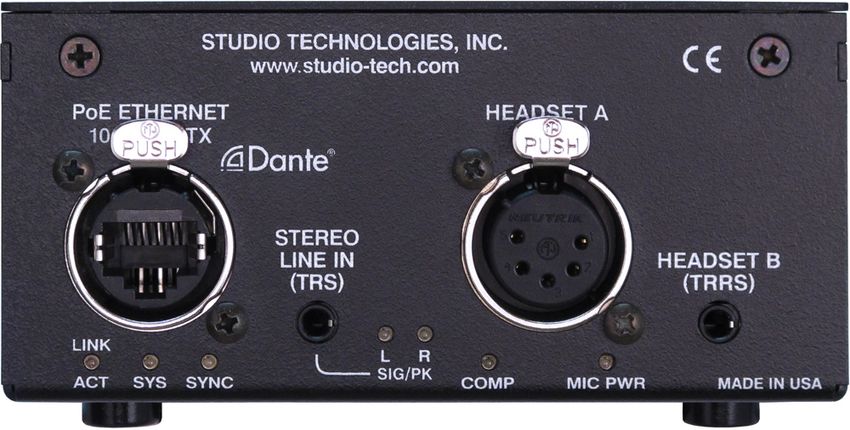
This page intentionally left blank.
MODEL 207
                                                          eSPORTS CONSOLE

                                        Table of Contents
                            Revision History ........................................................... 4
                            Introduction ................................................................... 5
                            Getting Started ............................................................. 8
                            Operation ...................................................................... 19
                            Technical Notes ............................................................ 23
                            Specifications ............................................................... 27
                            Appendix A ................................................................... 28

Model 207 User Guide                                                                                              Issue 3, March 2021
Studio Technologies, Inc.                                                                                                      Page 3
MODEL 207
eSPORTS CONSOLE
Revision History
Issue 3, March 2021:
• Updated document for clarity and consistency.
Issue 2, June 2019:
• Documents addition of Fixed Ch 3 & 4 Level headphone feature.
Issue 1, May 2019:
• Documents miscellaneous perfomance improvements.
Issue Preliminary 1, April 2019:
• Initial release.
Issue 3, March 2021 Model 207 User Guide
Page 4 Studio Technologies, Inc.MODEL 207
eSPORTS CONSOLE
Introduction
The Model 207 eSports Console offers a
unique combination of analog and digital
audio resources specifically intended to
support eSports-related live event, entertain-
ment, and streaming broadcast applications.
The unit is housed in a compact, rugged
steel enclosure that’s intended for table-top
use. Its diminutive size also makes it ideal
for use in space-constrained locations. Blue
LED lights cast a distinctive “underglow”
from the bottom of the enclosure. The Model
207 supports Dante® audio-over-Ethernet
digital media technology with AES67 com-
patibility for integration into contemporary
applications. The unit is extremely simple
to deploy, is “pro” quality throughout, and
provides an intuitive user experience. The
Model 207’s audio quality is excellent, with
low distortion, low noise, and ample head-
room. Careful circuit design and rugged
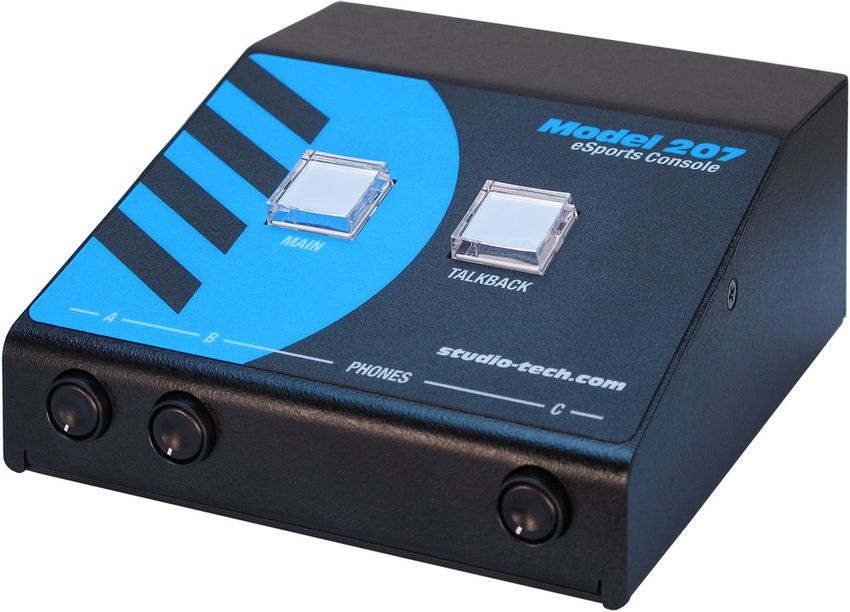
components ensure long, reliable operation. Figure 1. Model 207 eSports Console front and
back views
The Model 207 integrates directly into both
Dante audio-over-Ethernet and standard an-
alog audio environments. With just a Power- for personnel is very limited. Four Dante
over-Ethernet (PoE) connection, a broadcast receiver (input) channels supply the user
or “gaming” headset, and a connection to a with their talent cue (IFB) signals. Should
stereo line-level audio source, a complete the cue signal be “mix-minus” an integrated
player position can be created. sidetone function can provide the user with
a microphone confidence signal. Two Dante
Model 207 operating features are configured audio output channels are associated with a
using the STcontroller software application. connected headset’s microphone, one des-
An extensive set of parameters allows the ignated as main and the other as talkback.
unit’s functions to be tailored to meet the Two additional Dante outputs have signal
needs of many applications. STcontroller is sources derived from the Model 207’s stereo
a fast and simple means of confirming and line input. These two audio channels, typi-
revising the unit’s operating parameters. cally provided by a personal computer, can
also be routed to the headphone output. The
Applications four Dante transmitter (output) channels are
The Model 207 on its own can provide an routed via an associated local area network
“all-Dante” solution for one game player (LAN) to inputs on Dante-compatible de-
location. The unit’s small size makes it ideal vices. Two pushbutton switches, main and
for live applications where physical space talkback, provide the user with direct control
Model 207 User Guide Issue 3, March 2021
Studio Technologies, Inc. Page 5MODEL 207
eSPORTS CONSOLE
over audio routing. The audio switching is level potentiometers. This makes it easy to
performed in the digital domain and is virtu- control the status of the main and talkback
ally “click-free.” Three rotary controls allow outputs as well as adjusting the signals that
the user to create their own headphone are sent to the headphone output channels.
audio mix.
Ethernet Data and PoE
Setup and Operation The Model 207 connects to a local area net-
Set up, configuration, and operation of the work (LAN) by way of a standard 100 Mb/s
Model 207 is simple. An etherCON® RJ45 twisted-pair Ethernet interface. The physical
jack is used to interconnect with a standard 100BASE-TX interconnection is made by way
twisted-pair Ethernet port associated with a of a Neutrik® etherCON RJ45 connector.
PoE-enabled network switch. This connec- While compatible with standard RJ45 plugs,
tion provides both power and bidirectional etherCON allows a ruggedized and locking
digital audio. interconnection for harsh or high-reliability
environments.
A dual-channel (dual-ear or “stereo”) broad-
cast headset can be directly connected to The Model 207’s operating power is provided
the unit’s 5-pin female XLR connector. In by way of the Ethernet interface using the
addition, a 3.5 mm 4-conductor TRRS jack 802.3af Power-over-Ethernet (PoE) standard.
allows direct connection of gaming-style This allows fast and efficient interconnection
headsets. For each headset type, the micro- with the associated data network. To support
phone input is compatible with dynamic or PoE power management, the Model 207’s
electret microphones. The integrated low- PoE interface enumerates (reports) to the
voltage DC source provides power support power sourcing equipment (PSE) that it’s a
for electret microphones. class 2 (low power) device. If a PoE-enabled
Ethernet port can’t be provided by the associ-
A 3.5 mm 3-conductor TRS jack supports
ated Ethernet switch a low-cost PoE midspan
connection of a computer’s analog line-level
power injector can be utilized.
audio output. The Model 207 takes this
computer audio source and makes it part of
Dante Audio-over-Ethernet
the Dante audio network by first converting
Audio data is sent to and received from
it to digital and then outputting it by way of
the Model 207 using the Dante audio-over-
two Dante transmitter (output) channels. The
Ethernet media networking technology. As
audio from the stereo line input can also be
a Dante-compliant device, the Model 207’s
configured to be part of the sidetone confir-
two Dante transmitter (output) channels and
mation signal that is sent to the headphone
four Dante receiver (input) channels can be
output.
assigned (routed or “subscribed”) to other
The STcontroller software application is used devices using the Dante Controller software
to configure the wide range of Model 207 application. The Dante transmitter (output)
operating parameters. This allows the unit’s and receiver (input) channels are limited to
performance to be optimized to meet the supporting four Dante flows, two in each
needs of specific applications. direction. The digital audio’s bit depth is up
to 24 with a sampling rate of 44.1 or 48 kHz.
The user is presented with two pushbutton
Two bi-color LEDs provide an indication of
switches and three push-in/push-out rotary
the Dante connection status. An additional
Issue 3, March 2021 Model 207 User Guide
Page 6 Studio Technologies, Inc.MODEL 207
eSPORTS CONSOLE
LED displays the status of the associated Configuration Flexibility
Ethernet connection. The Model 207 can be configured to meet
The Model 207 is compatible with the AES67 the needs of specific applications and user
interoperability standard. In addition, the unit preferences. All configuration choices are
is compatible with the Dante Domain Man- performed using the STcontroller software
ager™ (DDM) software application. application. Selectable parameters include
microphone preamplifier gain, microphone
Audio Quality power source on/off, button operation, head-
The Model 207’s audio performance is phone source routing and control operation,
completely “pro.” A low-noise, wide dynamic- sidetone operation, and overall unit opera-
range microphone preamplifier and asso- tion. In addition, the intensity of the LED
ciated voltage-controlled-amplifier (VCA) indicators can be configured as desired.
dynamics controller (compressor) ensures The gain of the microphone preamplifier can
the headset’s microphone audio quality is be selected from among five choices. This
preserved while minimizing the chance of allows the Model 207 to match the output
signal overload. The output of the micro- sensitivity of a range of headset-associated
phone preamp and compressor is routed to microphones. A source of low-voltage DC
an analog-to-digital conversion (ADC) sec- power can be enabled if required to support
tion that supports sampling rates of 44.1 electret microphones.
and 48 kHz with a bit depth of up to 24. The main and talkback pushbutton switches
The audio signal, now in the digital domain, can be individually configured. The main but-
routes through a 32-bit microprocessor and ton can be selected to operate from among
on to the Dante interface section where it is six modes while the talkback button can
packetized and prepared for transport over be selected from among four. These choices
Ethernet. allow the Model 207’s operation to be tai-
Audio signals arrive via the four Dante lored to meet the specific needs of many
receiver (input) channels and pass into the applications. As an example, for an on-air
Model 207’s microprocessor. The supported application the main button might need to be
sampling rates are 44.1 and 48 kHz with a configured to provide a push to mute (cough)
bit depth of up to 24. Channel routing, head- function. The microphone signal routed to
phone level control, and sidetone creation the Dante main output channel would re-
are performed within the digital domain. This main active unless a game player needs to
provides flexibility, allowing precise control momentarily disable it. The talkback button
and keeping the three level potentiometers would most likely be set to the push to talk
from having to directly handle analog audio mode as its use would be intermittent.
signals. The audio channels destined for The audio sources and the way in which
the phones outputs are sent to a high- they are assigned to the headphone output
performance digital-to-analog converter channels and front-panel rotary controls can
and then on to robust driver circuitry. High be configured from among many choices.
signal levels can be provided to the connect- Each choice is unique, allowing almost any
ed headset or earbuds with microphone. required headphone monitoring situation to
be implemented.
Model 207 User Guide Issue 3, March 2021
Studio Technologies, Inc. Page 7MODEL 207
eSPORTS CONSOLE
There’s even the ability to route two Dante circuit can be updated via the Ethernet
receiver (input) channels directly to the connection, helping to ensure that its capa-
headphone output channels. In this configu- bilities remain up to date.
ration the level of the audio signals sent to
the headphone output will not be impacted
by the rotary controls. This capability is
included specifically to support gaming ap-
Getting Started
plications where a “masking” audio signal What’s Included
needs to be sent to each player’s headset. Included in the shipping carton are a Model
The integrated sidetone function allows 207 Announcer’s Console and a printed
audio associated with the microphone input copy of this guide. As a device that is Power-
to be sent to the headphone output. This is over-Ethernet (PoE) powered, no external
important as different applications may pro- power source is provided. In most applica-
vide either a “full mix” or a “mix-minus” talent tions an Ethernet switch with PoE capability
cue signal. If a full mix cue signal is provided will be utilized.
then sidetone audio will not be needed and
the function can be disabled. In the case Connections
where a mix-minus signal is present, provid- In this section signal interconnections will be
ing the user with sidetone can be an impor- made using the four connectors located on
tant means of confirming the signal that’s the back of the Model 207’s enclosure. An
coming from the connected microphone. Ethernet data connection with Power-over-
Ethernet (PoE) capability will be made using
Three system modes select the overall way either a standard RJ45 patch cable or an
in which the Model 207 functions. The on- etherCON protected RJ45 plug. A dual-
air mode is optimized for applications where channel or single-channel (dual- or single-
strict separation between on-air and produc- ear) headset will be connected using a
tion audio channels is required. Other ap- cable-mounted 5-pin male XLR connector.
plications will benefit from the two available Alternately, a headset with a 3.5 mm 4-
production modes. conductor TRRS plug can be used. (The
headset’s plug needs to follow the CTIA™/
Future Capabilities and AHJ configuration standard.) A source of
Firmware Updating stereo unbalanced analog audio may be
The Model 207 was designed so that its ca- connected to the Model 207 using a 3.5 mm
pabilities and performance can be enhanced 3-conductor TRS plug.
in the future. A USB connector, located on
Ethernet Connection with PoE
the unit’s main circuit board (underneath the
A 100BASE-TX Ethernet connection that
unit’s cover), allows the application firmware
supports Power-over-Ethernet (PoE) is
(embedded software) to be updated using a
required for Model 207 operation. This one
USB flash drive.
connection will provide both the Ethernet
The Model 207 uses the Audinate Ultimo™ data interface and power for the Model 207’s
integrated circuit to implement the Dante circuitry. A 10BASE-T connection is not suf-
interface. The firmware in this integrated ficient and a 1000BASE-T (GigE) connection
is not supported unless it can automatically
Issue 3, March 2021 Model 207 User Guide
Page 8 Studio Technologies, Inc.MODEL 207
eSPORTS CONSOLE
“fall back” to 100BASE-TX operation. The
Model 207 supports Ethernet switch power
management, enumerating itself as a PoE
class 2 device.
The Ethernet connection is made by way
of a Neutrik etherCON protected RJ45
connector that is located on the back of the
Model 207’s enclosure. This allows connec-
tion by way of a cable-mounted etherCON
connector or a standard RJ45 plug. The
Model 207’s Ethernet interface supports Figure 2. Headset A connection pinout chart
auto MDI/MDI-X so that a crossover cable
To allow users of stereo (dual-earpiece or
is not required.
“double-muff”) headsets to hear a monaural
Headset Connections version of the two headphone output channels
The Model 207 allows two different types of does not require special wiring of the 5-pin
headsets to be connected. A 5-pin female male XLR mating connector. The headset’s
XLR connector, located on the Model 207’s left headphone channel should always be
back panel, allows connection of a standard wired to pin 4 and the right headphone chan-
broadcast- or intercom-style communica- nel to pin 5. Configuration choices, discussed
tions headset. A 3.5 mm 4-conductor TRRS later in this guide, can then be used to create
jack, also located on the back panel, allows the desired monaural output. It’s important
a computer gaming headset to be directly not to connect together (short) pins 4 and 5
connected. The Model 207’s two headset of the headset’s connector as damage to the
connectors are electrically wired in parallel. Model 207’s output circuitry could result.
As such, only one type of headset should A monaural (single-earpiece or “single-muff”)
be connected at one time. headset should be wired such that its head-
Headset A phone is wired only to pin 4; pin 5 should
be remain unused. Configuration choices,
The Model 207 provides a 5-pin female
discussed later in this guide, can be used to
XLR connector that interfaces with the
create a monaural output.
microphone and headphone connections
of a single- or dual-ear intercom or broad- It’s possible that some Beyerdynamic head-
cast-style headset. The connector is labeled set interconnecting cable assemblies termi-
Headset A. Refer to Figure 2 for connection nate the earpiece’s left and right connections
details. The microphone input connections opposite from what the Model 207 and other
are compatible with most unbalanced dy- broadcast equipment require. These cables
namic or electret (low-voltage DC-powered) may terminate the left earpiece to pin 5 of
microphones. A balanced dynamic micro- the 5-pin male XLR connector and the right
phone should, in most cases, also function earpiece to pin 4. If this condition is present
correctly if its signal – (low) is connected to it will require reversing or “flipping” the two
Model 207’s mic in –/shield connection. No wires in a headset’s connector such that the
support is provided for microphones that left earpiece connects to pin 4 and the right
require P12 or P48 phantom power. earpiece to pin 5.
Model 207 User Guide Issue 3, March 2021
Studio Technologies, Inc. Page 9MODEL 207
eSPORTS CONSOLE
If a separate microphone and pair of head- Stereo Line Input
phones need to be connected an adapter The Model 207 provides a 3.5 mm 3-conduc-
cable assembly should be fabricated. It would tor TRS jack for interfacing with a source
consist of a 5-pin male XLR connector wired of unbalanced stereo line-level audio. The
to both a 3-pin female XLR connector for the nominal level of the unbalanced source is
microphone and a ¼-inch or 3.5 mm TRS expected to be in the area of –15 dBV. An
jack for the headphones. In this scenario the STcontroller configuration setting allows the
microphone would in most cases be a dy- stereo line input to be compatible with signals
namic type as the Model 207 provides only that have a fairly wide nominal level range.
low-voltage DC electret power. Phantom-
powered (P12 or P48) microphones would Located on the back panel, the jack is
not be compatible. Most hand-held or “stick” labeled Stereo Line In and is specifically pro-
microphones are dynamic and should func- vided to allow direct interconnection with
tion correctly. a personal computer’s analog line output.
(This is typically the light-green-colored jack
Headset B on a personal computer.) Using a standard
The Model 207 also allows direct connec- patch cord with 3.5 mm 3-conductor TRS
tion of gaming headsets that are ubiquitous plugs on each end will make interconnec-
in the personal computer world. The 3.5 mm tion very simple. As is standard for personal
4-conductor TRRS jack, labeled Headset B, computers and other personal electronics the
is compatible with the CTIA™/AHJ configu- Model 207 implements the jack such that the
ration standard which has the headphone left channel is on the tip lead, the right chan-
left channel on the tip connection, the head- nel is on the ring lead, and common/shield
phone right channel on the ring 1 connection, is on the sleeve lead. Refer to Figure 4 for a
common/shield on the ring 2 connection, detailed view of the appropriate mating plug.
and the microphone on the sleeve con-
nection. Compatible headsets are readily
available, typically described as personal
computer or gaming headsets. The micro-
phones used in these headsets are electret
type which require a low-voltage DC source Figure 4. Stereo line in (TRS) connection pinout
for operation. The Model 207 is able to pro- chart
vide this power and requires only that the ap-
propriate setting in STcontroller be selected. Dante Configuration
Refer to Figure 3 for a detailed description of For audio to pass to and from the Model 207
the compatible TRRS plug. requires that several Dante-related param-
eters be configured. These configuration
settings will be stored in non-volatile memory
within the Model 207’s circuitry. Configuration
will typically be done with the Dante Control-
ler software application which is available for
download free of charge at audinate.com.
Figure 3. Headset B (TRRS) connection pinout Versions of Dante Controller are available
chart to support Windows® and OS X® operating
Issue 3, March 2021 Model 207 User Guide
Page 10 Studio Technologies, Inc.MODEL 207
eSPORTS CONSOLE
systems. The Model 207 uses the Ultimo The Model 207 supports audio sample rates
4-input/4-output integrated circuit to imple- of 44.1 and 48 kHz with no pull-up/pull-down
ment the Dante functionality. The Model 207 values available. In most cases it’s anticipated
is compatible with the Dante Domain Manag- that the default rate of 48 KHz will be appro-
er (DDM) software application. It can also be priate. While technically the Model 207 can
configured for AES67 operation. This requires serve as a clock master for a Dante network
a setting to be enabled within the Device Info (as can all Dante-enabled devices) in virtually
section of the Dante Controller application. all cases the unit will be configured to receive
“sync” from another device.
The four Dante transmitter (output) channels
associated with the Model 207’s Dante inter- The Model 207 has a default Dante device
face must be assigned to the desired receiver name of ST-M207- along with a unique suffix.
channels on associated equipment. This will The suffix identifies the specific Model 207
route the Model 207’s four output audio chan- that is being configured. The suffix’s actual
nels to the device (or devices) that will be alpha and/or numeric characters relate to the
“listening” to them. Within Dante Controller a MAC address of the unit’s Ultimo integrated
“subscription” is the term used for routing a circuit. The four Dante transmitter (output)
transmitter flow (a group of output channels) audio channels have default names of Main,
to a receiver flow (a group of input channels). Talkback, Line In L, and Line In R. The
four Dante receiver (input) audio channels
The number of transmitter flows associated
have default names of Headphone Ch1,
with an Ultimo integrated circuit and, as such
Headphone Ch2, Headphone Ch3, and
the Model 207, is limited to two. These can
Headphone Ch4. Using Dante Controller
either be unicast, multicast, or a combination
the default device name and channel names
of the two. (Note that in the AES67 mode the
can be revised as appropriate for the specific
four transmitter (output) channels will func-
application.
tion in multicast; unicast is not supported.) If
the Model 207’s transmitter channels need to
Model 207 Configuration
be routed to more than two flows it’s possible
The STcontroller software application is used
that an intermediary device with enhanced
to configure the way in which the Model 207
flow capability, such as the Studio Technolo-
functions. No DIP switch settings or other
gies’ Model 5422A Dante Intercom Audio
local actions are used to configure the unit.
Engine, can be used to “repeat” the signals.
This makes it imperative that STcontroller
(Use the Model 5422A’s pass-thru group con-
be available for convenient use in a personal
figuration mode to provide this resource.)
computer that’s connected to the related LAN.
The desired audio sources need to be routed
to the receiver (input) channels associated Installing STcontroller
with the Model 207’s Dante audio inputs. STcontroller is available free of charge on
The unit provides four audio input channels the Studio Technologies’ website. If required,
although the exact number utilized will download and install STcontroller onto a
depend on the specific application. Follow- designated personal computer. This personal
ing the unit’s headphone source and routing computer must be on the same local area
configuration selections these audio signals network (LAN) and subnet as the Model 207
will be sent to the Model 207’s 2-channel unit or units that are to be configured. Immedi-
headphone output. ately after starting STcontroller the application
Model 207 User Guide Issue 3, March 2021
Studio Technologies, Inc. Page 11MODEL 207
eSPORTS CONSOLE
will locate the devices that it can control. The male XLR connectors will not require micro-
one or more Model 207 units to be config- phone power. The on/off status of the micro-
ured will appear in the device list. Use the phone power is displayed by way of an LED,
Identify command to allow easy recognition red in color, that is located on the Model
of a specific Model 207 unit. Double-clicking 207’s back panel adjacent to the Headset A
on a device name will cause the associated connector.
configuration menu to appear. Review the
Note that the Model 207 cannot supply P12
current configuration and make any changes
or P48 phantom power that may be required
that are desired.
for balanced condenser (capacitor) micro-
Parameters phones. In almost all cases this should not
The configurable functions include: pose an issue as phantom-powered micro-
phones are essentially never associated
• Microphone input – electret power on/off
with headsets that are used for Model 207
• Microphone input – gain applications.
• Stereo line input – gain Microphone Input – Gain
• Headphone output routing, controls, and Choices are 24 dB, 30 dB, 36 dB, 42 dB,
sidetone and 48 dB.
• Button Operation – main and talkback The gain of the Model 207’s microphone
• System – operating mode and LED light preamplifier can be selected from among
intensity five choices. The compressor active LED,
located adjacent to the headset A connector,
Changes made using STcontroller will be can act as a guide when setting the preamp
immediately reflected in the unit’s operation; gain. When a voice signal at a normal level
no Model 207 “reboot” is required. Each time is present on the connected headset (A
a change is made the main and talkback but- or B) the compressor active LED should
tons on the front panel will both flash orange light intermittently. If, for example, it rarely
in a distinctive pattern to indicate that a com- lights and the gain is set to 36 dB, it might
mand from STcontroller has been received. be a good idea to change the setting to
Microphone Input – Electret Power 42 dB. If the compressor LED is lit fully
during normal talking and the gain is set for
Choices are Enabled and Disabled.
42 or 48 dB, a change to one of the lower
Enable the Electret Power check box if the values might be warranted. There’s no “hard
connected headset has an electret micro- and fast” rule about which gain setting is
phone which requires a source of low- appropriate. But unless otherwise indicated,
voltage DC power for operation. In virtually 42 dB is typically a good initial choice for a
all cases a gaming or computer headset that headset that uses a dynamic microphone
uses a 3.5 mm TRRS plug will require mi- and 30 dB for a headset that includes an
crophone power. If the associated headset electret microphone.
has a dynamic (non-powered) microphone
do not the Electret Power check box. Most
broadcast headsets that terminate on 5-pin
Issue 3, March 2021 Model 207 User Guide
Page 12 Studio Technologies, Inc.MODEL 207
eSPORTS CONSOLE
Stereo Line Input – Gain Headphone Output – Routing
Choices are –3 dB, 0 dB, 3 dB, 6 dB, 9 dB, Choices are Dual-Channel Stereo, Dual-
and 12 dB. Channel Mono, and Single-Channel Mono.
The gain of the circuitry associated with STcontroller allows selection from among
the stereo line input can be selected from three headphone output routing modes. Each
among six choices. Two bi-color LEDs, mode is distinct and careful selection will help
located adjacent to the stereo line input’s optimize the Model 207’s operation.
3.5 mm connector, can serve as a guide when Dual-Channel Stereo
selecting the gain value. The LEDs serve in
The Dual-Channel Stereo mode is provided
a signal present and peak role, lighting green
for applications where two independent audio
for signals that are in the normal audio range
sources need to be routed to the two head-
and red when they approach or reach audio
phone output channels. Dante audio input
“clipping.”
channel 1 will be routed to the left headphone
The first step to achieving optimal audio per- output channel and Dante audio input chan-
formance is to confirm and, if required, revise nel 2 will be routed to the right headphone
the level of the source. This will typically be output channel. Note that in this mode the
the unbalanced stereo analog audio output of sidetone audio signal will be routed to both
a personal computer. A software configuration the left and right headphone output channels.
setting associated with the personal comput-
Dual-Channel Mono
er’s operating system should allow adjust-
ment of the output level, typically over a range The Dual-Channel Mono mode can be useful
of 0 (mute) to 100 (full level). While there is in applications where the same audio signals
no standard for what these settings represent, need to be provided to the user on both the
selecting 100 can be a good starting point. left and right headphone output channels.
Tests that Studio Technologies performed on In this mode Dante audio inputs 1 and 2 are
multiple personal computers never found that combined (mixed together or “summed”) and
a full level setting had resulted in audio degra- routed to both the left and right headphone
dation (“clipping”). However, if issues do arise output channels. Note that in this mode the
revise the output level downward, first trying sidetone audio signal will be routed to both
90, then 80, then 70, etcetera, until good au- the left and right headphone output channels.
dio performance is obtained. Single-Channel Mono
Once the source level has been established The Single-Channel Mono mode is specifi-
the stereo line input value on STcontroller cally provided for applications where a
can be selected. Use the signal present/peak 2-conductor ¼-inch plug is being used with
(SIG/PK) LEDs on the Model 207 as a ref- the connected headphones, headset, or a
erence when adjusting the gain value. The broadcast-style earpiece. In this mode Dante
LEDs, one for each input channel, should light audio inputs 1 and 2 are combined to monau-
green when signals in an acceptable range ral and routed to only the left channel of the
are present. The LEDs should never light red headphone output; no audio signal is routed
as this indicates imminent or active distortion to the right channel of the headphone output.
of the audio signal. Note that in this mode the sidetone audio sig-
nal will be routed to only the left headphone
output channel.
Model 207 User Guide Issue 3, March 2021
Studio Technologies, Inc. Page 13MODEL 207
eSPORTS CONSOLE
Headphone Output – Controls (A/B/C) Ch 1 & 2 Level / Ch 3 & 4 Level / Line In Level
STcontroller allows selection from among • Dante input channel 1 is routed to the left
nine headphone controls modes. Each mode channel of the headphone output. Dante
is distinct and careful selection will help opti- input channel 2 is routed to the right chan-
mize the Model 207’s operation for a range of nel of the headphone output. Pot A adjusts
applications. The listen audio sources include the level of both Dante input channels 1
the four Dante receiver (input) channels, and 2.
the two channels associated with the stereo • Dante input channel 3 is routed to the left
line input, and audio signal coming from the channel of the headphone output. Dante
microphone preamplifier/compressor which input channel 4 is routed to the right chan-
provides sidetone. There are three rotary nel of the headphone output. Pot B adjusts
level controls across on the bottom front of the level of both Dante input channels 3
the enclosure. Starting from the left side and and 4.
moving to the right side, the controls (poten-
tiometers or “pots”) are referred to as Pot A, • The left channel of the stereo line input
Pot B, and Pot C. is routed to the left channel of the head-
phone output. The right channel of the
Ch 1 & 2 Level / Line In Level / Sidetone Level stereo line input is routed to the right chan-
• Dante input channel 1 is routed to the left nel of the headphone output. Pot C adjusts
channel of the headphone output. Dante in- the level of both of the stereo line input
put channel 2 is routed to the right channel channels.
of the headphone output. Pot A adjusts the
Ch 1 Level / Ch 2 Level / Line In Level
level of both Dante input channels 1 and 2.
• Dante input channel 1 is routed to the left
• The left channel of the stereo line input is channel of the headphone output. Pot A
routed to the left channel of the headphone adjusts the level of Dante input channel 1.
output. The right channel of the stereo line
input is routed to the right channel of the • Dante input channel 2 is routed to the right
headphone output. Pot B adjusts the level channel of the headphone output. Pot B
of both of the stereo line input channels. adjusts the level of Dante input channel 2.
• Pot C adjusts the sidetone level. • The left channel of the stereo line input
is routed to the left channel of the head-
Ch 1 & 2 Level / Ch 3 & 4 Level / Sidetone phone output. The right channel of the
Level
stereo line input is routed to the right
• Dante input channel 1 is routed to the left channel of the headphone output. Pot C
channel of the headphone output. Dante in- adjusts the level of both of the stereo line
put channel 2 is routed to the right channel input channels.
of the headphone output. Pot A adjusts the
Ch 1 Level / Ch 2 Level / Ch 3 & 4 Level
level of both Dante input channels 1 and 2.
• Dante input channel 1 is routed to the left
• Dante input channel 3 is routed to the left channel of the headphone output. Pot A
channel of the headphone output. Dante in- adjusts the level of Dante input channel 1.
put channel 4 is routed to the right channel
of the headphone output. Pot B adjusts the • Dante input channel 2 is routed to the right
level of both Dante input channels 3 and 4. channel of the headphone output. Pot B
adjusts the level of Dante input channel 2.
• Pot C adjusts the sidetone level.
Issue 3, March 2021 Model 207 User Guide
Page 14 Studio Technologies, Inc.MODEL 207
eSPORTS CONSOLE
• Dante input channel 3 is routed to the left • Pot B adjusts the relative level of Dante
channel of the headphone output. Dante input channel 1 versus Dante input chan-
input channel 4 is routed to the right chan- nel 2 as they are routed to the headphone
nel of the headphone output. Pot C adjusts output left and right channels, respectively.
the level of both Dante input channels 3 • Dante input channel 3 is routed to the left
and 4. channel of the headphone output. Dante
Ch 1 Level / Ch 2 Level / Sidetone Level input channel 4 is routed to the right chan-
• Dante input channel 1 is routed to the left nel of the headphone output. Pot C adjusts
channel of the headphone output. Pot A the level of both Dante input channels 3
adjusts the level of Dante input channel 1. and 4.
• Dante input channel 2 is routed to the right Ch 1 & 2 Level / Balance / Sidetone Level
channel of the headphone output. Pot B • Dante input channel 1 is routed to the left
adjusts the level of Dante input channel 2. channel of the headphone output. Dante
• Pot C adjusts the sidetone level. input channel 2 is routed to the right chan-
nel of the headphone output channel.
Ch 1 & 2 Level / Balance / Line In Level Pot A adjusts the level of both Dante
• Dante input channel 1 is routed to the left input channels 1 and 2.
channel of the headphone output. Dante
• Pot B adjusts the relative level of Dante
input channel 2 is routed to the right chan-
input channel 1 versus Dante input chan-
nel of the headphone output. Pot A adjusts
nel 2 as they are routed to the headphone
the level of both Dante input channels 1
output left and right channels respectfully.
and 2.
• Pot C adjusts the sidetone level.
• Pot B adjusts the relative level of Dante
input channel 1 versus Dante input chan- Headphone Output – Fixed Ch 3 & 4 Level
nel 2 as they are routed to the headphone Choices are Off, Low, Medium Low,
output left and right channels, respectively. Medium, Medium High, and High.
• The left channel of the stereo line input When Dante receiver (input) channels 3
is routed to the left channel of the head- and 4 have not been assigned to the rotary
phone output. The right channel of the controls they can be sent to the headphone
stereo line input is routed to the right chan- output channels at a fixed level. Select from
nel of the headphone output. Pot C adjusts among the five level choices to achieve the
the level of both of the stereo line input desired level in the headphone outputs.
channels. Select Off if inputs 3 and 4 are not to be
Ch 1 & 2 Level / Balance / Ch 3 & 4 Level utilized. The ability to send input channels
• Dante input channel 1 is routed to the left 3 and 4 to the headphone outputs at a fixed
channel of the headphone output. Dante level is provided specifically for gaming ap-
input channel 2 is routed to the right chan- plications where a masking signal needs to
nel of the headphone output. Pot A adjusts be sent to Model 207 users.
the level of both Dante input channels 1
and 2.
Model 207 User Guide Issue 3, March 2021
Studio Technologies, Inc. Page 15MODEL 207
eSPORTS CONSOLE
Headphone Output – Sidetone Mode and the Off configuration should be selected.
Choices are Main Active, Talkback Active, (The user will hear themselves by way of
and Main or Talkback Active. audio signals being routed to the Dante
input channels.) But if “mix-minus” audio
This configuration parameter specifies when is being supplied to the Model 207 then se-
the sidetone function will be active. Sidetone lecting a suitable fixed sidetone level can be
is audio associated with the output of the an important means of establishing user
microphone preamplifier and compressor that confidence.
is sent to the headphone output channels.
This can be important, allowing the user to Button Operation – Main
“hear” themselves for performance confirma- Choices are Push to Mute, Push to Talk,
tion and comfort. Three sidetone modes are Latching, Push to Talk/Tap to Latch, Push
available: to Mute/Tap to Latch, and Always On.
Main Active STcontroller allows the configuration of the
In this mode the sidetone function will be main button to be selected.
active whenever the main output function
Push to Mute
is active and microphone input audio is
present on the Dante main output channel. If this mode is selected the main button func-
tion will normally be active and its green LED
Talkback Active lit. The microphone audio signal associated
In this mode the sidetone function will be with the connected headset will be routed to
active whenever the talkback function is ac- the Dante main output channel. Whenever
tive and microphone input audio is present the main button is pressed the audio signal
on the Dante talkback output channel. will mute on the Dante main output channel
Main or Talkback Active
and the button’s LED will change from green
to red.
In this mode the sidetone function will be
active whenever the main or talkback func- Push to Talk
tions are active. In this case audio signal If this mode is selected the main button
associated with the microphone input will function will normally be inactive and the
be present on either or both the Dante main button’s red LED will be lit. The microphone
and talkback output channels. audio signal associated with the connected
headset will not be routed to the Dante main
Headphone Output – Fixed Sidetone Level
output channel. Whenever the main but-
Choices are Off, Low, Medium Low, Medium, ton is pressed the audio signal will become
Medium High, and High. active on the Dante output channel and the
When sidetone has not been assigned to one button’s green LED will light.
of the rotary controls the fixed sidetone func- Latching
tion is active. The user will be presented with If this mode is selected the main button’s
sidetone audio at a fixed audio level estab- function will alternate between its active and
lished by this parameter. Making a specific inactive states whenever the main button is
selection will depend on the needs of the pressed. Upon power up the function will be
application. If a “full mix” is being provided in its inactive state and the red LED associ-
to one of the Model 207’s Dante inputs then ated with the button will be lit.
locally provided sidetone won’t be needed
Issue 3, March 2021 Model 207 User Guide
Page 16 Studio Technologies, Inc.MODEL 207
eSPORTS CONSOLE
Push to Talk/Tap to Latch Button Operation – Talkback
This mode is a combination of the Push to Choices are Push to Talk, Latching, Push
Talk and Latching modes. It’s similar to the to Talk/Tap to Latch, and Disabled.
way talk pushbutton switches function on
The manner in which the talkback button
user stations associated with broadcast or
functions can be configured.
production intercom systems. If the main
button is pressed and held the main button’s Push to Talk
function will be active. It will stay active until If this mode is selected the talkback function
the main button is released. If the main but- will normally be inactive and the LED associ-
ton is momentarily “tapped” the main button’s ated with the talkback button will not be lit.
status will change, either from inactive-to- Whenever the talkback button is pressed the
active or from active-to-inactive. Upon Model talkback function will become active and its
207 power up the main button will be in its green LED will light.
inactive state and its red LED will be lit.
Latching
Push to Mute/Tap to Latch If this mode is selected the talkback function
This mode is a combination of the Push to will alternate between the active and inac-
Mute and Latching modes. Whenever the tive states whenever the talkback button is
main button is momentarily “tapped” the pressed. The button’s green LED will be lit
main button’s status will change, either from whenever the talkback function is active.
active-to-inactive or inactive-to-active. When Upon power up the talkback function will
the main button function is active its green be in its inactive state and its button LED
LED will be lit. The audio signal associated will not be lit.
with the microphone input will be routed to
Push to Talk/Tap to Latch
the Dante main output channel. Whenever
the main button is pressed and held the audio This mode is a combination of the Push to
signal will mute on the Dante main output Talk and Latching modes. It’s similar to the
channel and the button’s LED will change way talk pushbutton switches function on
from green to red. It will stay in this condition user stations associated with broadcast or
until the main button is released. Upon Model production intercom systems. If the talkback
207 power up the main button will be in its button is pressed and held the talkback func-
inactive state and its red LED will be lit. tion will be active. It will stay active until the
talkback button is released. If the talkback
Always On button is momentarily “tapped” the status of
This mode is basically a button inactive the talkback function will change, either from
function. The audio signal associated with inactive-to-active or from active-to-inactive.
the microphone audio signal will always be The button’s green LED will be lit whenever
routed to the Dante main output channel the talkback function is active. Upon Model
and the button’s green LED will be lit. Press- 207 power up the talkback button will be in
ing the button will not impact operation nor its inactive state and its LED will not be lit.
cause its associated LED to change color.
Disabled
If this mode is selected the talkback function
will be disabled and the LED associated
with the talkback button will not be lit. If the
Model 207 User Guide Issue 3, March 2021
Studio Technologies, Inc. Page 17MODEL 207
eSPORTS CONSOLE
talkback button is pressed the red LED will Production With Dim
flash four times as a warning, indicating that When the mode is configured for Production
the function has been disabled. with Dim, the unit will function in a manner
very similar to the Production mode. The
System – Operating Mode
difference is that the headphone output
Choices are On-Air, Production, and channels will dim (reduce in level) when-
Production with Dim. ever either or both the main and talkback
The system mode configures the overall functions are active. This is provided for
manner in which the Model 207 operates. applications where the headphone outputs
Specifically, it determines how the Dante are being connected to inputs on an audio
main output channel operates vis-à-vis the power amplifier or a set of amplified speak-
talkback function. Understanding how each ers. The dim action can help prevent acous-
specifically impacts Model 207 operation tical feedback and/or sonic interference
will help ensure the desired operation is ob- from loudspeakers associated with the
tained and that maximum usability will occur. Model 207.
On-Air System – Button Backlight Intensity
When selected to the on-air mode, audio Choices are Low and High.
on the Dante main output channel will typi-
The caps (top surfaces) of the two pushbut-
cally mute whenever the talkback function is
ton switches are able to be lit using internal
active. The on-air mode should be selected
LEDs, one red and one green. When they
for all on-air broadcast applications when
light and with what color depends on the
it’s imperative that the “on-air” audio signal
configuration of the Model 207 and the cur-
be muted whenever on-air talent uses the
rent operating condition. The intensity of
talkback function to communicate with pro-
these LEDs can be adjusted to perform op-
duction personnel.
timally in relation to the amount of ambient
Production light present in the Model 207’s location.
When the system mode is set for production,
System – Underglow Intensity
the audio signal on the Dante main output
channel is never muted in response to talk- Choices are Off, Low, Medium, and High.
back activity. The main button’s function Two sets of blue LEDs will illuminate the
operates independently of the talkback surface directly below the left and right
button’s function. This mode allows the sides of the Model 207’s enclosure. This
Dante main output channel to be used, for “underglow” is provided strictly as an “image”
example, as an additional talkback output. feature but may also help a user locate the
In this way the Dante main output chan- Model 207 when used in a dark area. Three
nel and the talkback output channel can be configuration choices allow the intensity of
used separately and not impact each other. the LEDs to be selected. In addition, the
This also allows both the main and talkback LEDs can be disabled.
pushbuttons to be used simultaneously.
When selected for the correct application,
the production mode can prove to be very
useful. But it’s not appropriate for on-air use!
Issue 3, March 2021 Model 207 User Guide
Page 18 Studio Technologies, Inc.MODEL 207
eSPORTS CONSOLE
Operation Headset A connector, will flash once in red to
indicate that it is functioning. The green and
At this point all connections and configura- red LEDs within the main and talkback push-
tion steps should have been completed and button switches will also light in a short test
everything should be ready for Model 207 sequence. The lighting of the various LEDs
operation to commence. An Ethernet con- will indicate that the application firmware
nection with Power-over-Ethernet (PoE) (embedded software) has started. Once that
capability should have been made. A head- sequence has completed and the Dante
set or earbuds with microphone should have connection has been established full opera-
been interfaced using either the Headset tion will begin. The various LEDs will then
A or Headset B connector. In most cases a become operational, displaying the status
source of analog audio will have been con- of their designated functions.
nected to the stereo line input jack.
The Model 207’s Dante configuration set-
How to Identify a Specific
tings should have been selected using the Model 207
Dante Controller software application. In this Functions within the Dante Controller and
way the unit’s four Dante audio output chan- STcontroller software applications allow a
nels (Dante transmitter channels) and four specific Model 207 unit to be identified. Each
Dante audio input channels (Dante receiver application provides an “eyeball” icon that
channels) should have been routed, by way when clicked will activate the Identify func-
of Dante “subscriptions,” to the receiver and tion. When Identify is selected it will send a
transmitter channels on associated Dante- command to a specific Model 207 unit. On
enabled equipment. Using the Studio Tech- that unit both the main and talkback buttons’
nologies’ STcontroller software application, red and green LEDs (which together ap-
the Model 207’s configuration should have pear orange) will “flash” approximately eight
been selected to meet the needs of the times; the actual on/off status of the buttons
specific application. will not change. In addition, the SYS and
SYNC status LEDs, located directly below
Initial Operation the etherCON RJ45 connector on the back
The Model 207 will start to function as soon panel, will slowly flash green. After a few
as a Power-over-Ethernet (PoE) power seconds the LED identification pattern will
source is connected. However, it may take cease and normal Model 207 button LED
20 to 30 seconds for full operation to com- and Dante status LED operation will resume.
mence. Upon initial power up the three sta-
tus LEDs, located on the back panel below Ethernet and Dante Status
the RJ45 jack, will begin to light as network LEDs
and Dante connections are established. Three status LEDs are located below the
The compressor (COMP) LED, adjacent to etherCON RJ45 connector on the Model
the Headset A connector, may or may not 207’s back panel. The LINK ACT LED will
flash momentarily. The signal present/peak light green whenever an active connection
(SIG/PK) LEDs, associated with the stereo to a 100 Mb/s Ethernet network has been
line input, will light green and red as part established. It will then flash in response to
of the power-up test sequence. The micro- all Ethernet data packet activity. The SYS
phone power LED, located adjacent to the
Model 207 User Guide Issue 3, March 2021
Studio Technologies, Inc. Page 19MODEL 207
eSPORTS CONSOLE
and SYNC LEDs display the operating sta- level into an associated microphone. But if the
tus of the Dante interface and its associated COMP LED lights solid while a user is talk-
network activity. The SYS LED will light red ing at a normal voice level this will typically
upon Model 207 power up to indicate that indicate that the microphone preamplifier gain
the Dante interface is not ready. After a short setting should be reduced. Conversely, if the
interval it will light green to indicate that it COMP LED almost never lights when nor-
is ready to pass data with another Dante mal talking is taking place, it’s possible that
device. The SYNC LED will light red when changing the gain to a higher value would be
the Model 207 is not synchronized with a beneficial. Note that due to the design of the
Dante network. It will light solid green when circuitry the compressor active LED will func-
the Model 207 is synchronized with a Dante tion whether or not the main or talkback func-
network and an external clock source (tim- tions are active.
ing reference) is being received. It will slowly
flash green when this specific Model 207 Stereo Line Input
is part of a Dante network and is serving Two LEDs, labeled SIG/PK L and R, are
as the clock master. It’s possible that up to located adjacent to the 3.5 mm 3-conductor
30 seconds may be required for the SYNC TRS jack utilized by the stereo line input. The
LED to reach its final state. LEDs are dual color, lighting green and red.
The LEDs will light green as a signal pres-
Microphone Power Status LED ent indication and light red to indicate a peak
An LED indicator is located on the back panel condition. During normal operation the LEDs
adjacent to the microphone input connector. should light green most of the time with an
It is labeled MIC PWR and will light red when- occasional flash of red acceptable. If the LEDs
ever the microphone input’s electret power rarely light green then the input gain configu-
source is active and providing low-voltage DC ration probably needs to be revised to a great-
power to the microphone connections on the er value. If the LEDs light red frequently then
Headset A and Headset B connectors. the input gain configuration should be reduced
to a lower level.
Compressor Active LED and
Mic Preamp Gain Main and Talkback Buttons
An LED indicator, orange in color, is located Two pushbutton switches are used to select
on the back panel adjacent to the Headset how the microphone signal is routed to the two
A connector. It is labeled COMP and dis- Dante output channels. The button labeled
plays the status of the microphone audio MAIN controls the audio signal that can be
compressor function. This function controls sent to the Dante main output channel. How
the dynamic range of the audio signal as- the button functions will depend on the con-
sociated with the microphone input source. figuration choice that has been made using
The compressor LED will light whenever the STcontroller. When the main button’s green
input level from the microphone, along with LED is lit audio will be present on the Dante
the configured microphone preamplifier gain, main output channel. When the main button’s
is such that the dynamic range of the signal red LED is lit audio will not be present on the
is being actively controlled. It’s perfectly ac- Dante main output channel. One configuration
ceptable for this LED to light intermittently choice available to the main button, Always
whenever a user is talking at a normal voice On, forces the button to remain in its on state.
Issue 3, March 2021 Model 207 User Guide
Page 20 Studio Technologies, Inc.MODEL 207
eSPORTS CONSOLE
As such, it will always light green, no matter user stations associated with broadcast or
if the button is pressed or not. production intercom systems. If the main
pushbutton is pressed and held the audio
The talkback function allows the microphone
signal associated with the Dante main output
audio signal to be routed to the Dante talk-
channel will become active and remain active
back output channel. When the talkback
until the pushbutton is released. If the main
function is active the button’s green LED
pushbutton is momentarily “tapped” the audio
will be lit. When the talkback function is
signal will change state. Upon Model 207
not active its button will not be lit. How the
power up the audio signal will be in its muted
talkback button specifically functions and
state.
whether it impacts the main button’s func-
tioning depends on the Model 207’s system Push to Mute/Tap to Latch
configuration. This mode is a combination of the Push to
Mute and Latching modes. Whenever the
Main Button Modes
main button is momentarily “tapped” its status
There are six ways that the main pushbut- will alternate between active and muted.
ton switch can function. The way in which it When the main button’s function is active
specifically operates depends on its selected and the main button is pressed and held the
configuration. audio signal on the Dante main output chan-
Push to Mute nel will mute. It will stay in this condition until
If this mode is selected the audio signal the main button is released. Upon Model 207
associated with the microphone input will power up the main button will be in its muted
normally be active on the Dante main output state and its red LED will be lit.
channel. The audio signal will mute when- Always On
ever the main pushbutton is pressed and In this state microphone audio will always be
held. sent out the Dante main output channel. The
Push to Talk main button’s green LED will always stay lit to
If this mode is selected the audio signal indicate that the main output is active. Press-
associated with the Dante main output chan- ing the main button will not cause any action
nel will normally be muted. The audio signal to take place.
will become active whenever the main push- Talkback Button Modes
button is pressed and held.
Depending on the selected configuration,
Latching the talkback pushbutton will function in one
If this mode is selected the audio signal as- of four possible modes:
sociated with the Dante main output chan- Push to Talk
nel will alternate between the active and
If this mode is selected the audio signal asso-
muted states whenever the main pushbutton
ciated with the Dante talkback output chan-
is pressed. Upon Model 207 power up the
nel is normally muted and neither LED in the
audio signal will be in its muted state.
talkback button will light. The audio signal will
Push to Talk/Tap to Latch become active whenever the talkback push-
This mode is a combination of the Push to button is pressed and held. When talkback is
Talk and Latching actions. It’s similar to the active the button’s green LED will be lit.
way in which talk pushbuttons function on
Model 207 User Guide Issue 3, March 2021
Studio Technologies, Inc. Page 21You can also read


