Characterization of Vaccine Tweets During the Early Stage of the COVID-19 Outbreak in the United States: Topic Modeling Analysis - XSL FO
←
→
Page content transcription
If your browser does not render page correctly, please read the page content below
JMIR INFODEMIOLOGY                                                                                                                     Jiang et al

     Original Paper

     Characterization of Vaccine Tweets During the Early Stage of the
     COVID-19 Outbreak in the United States: Topic Modeling Analysis

     Li Crystal Jiang1, PhD; Tsz Hang Chu1, MPhil; Mengru Sun2, BA
     1
      Department of Media and Communication, City University of Hong Kong, Hong Kong, Hong Kong
     2
      College of Media and International Culture, Zhejiang University, Hangzhou, China

     Corresponding Author:
     Li Crystal Jiang, PhD
     Department of Media and Communication
     City University of Hong Kong
     M5082, Run Run Shaw Creative Media Centre
     18 Tat Hong Avenue, Kowloon
     Hong Kong
     China (Hong Kong)
     Phone: 852 034429332
     Email: crystal.jiang@cityu.edu.hk

     Abstract
     Background: During the early stages of the COVID-19 pandemic, developing safe and effective coronavirus vaccines was
     considered critical to arresting the spread of the disease. News and social media discussions have extensively covered the issue
     of coronavirus vaccines, with a mixture of vaccine advocacies, concerns, and oppositions.
     Objective: This study aimed to uncover the emerging themes in Twitter users’ perceptions and attitudes toward vaccines during
     the early stages of the COVID-19 outbreak.
     Methods: This study employed topic modeling to analyze tweets related to coronavirus vaccines at the start of the COVID-19
     outbreak in the United States (February 21 to March 20, 2020). We created a predefined query (eg, “COVID” AND “vaccine”)
     to extract the tweet text and metadata (number of followers of the Twitter account and engagement metrics based on likes,
     comments, and retweeting) from the Meltwater database. After preprocessing the data, we tested Latent Dirichlet Allocation
     models to identify topics associated with these tweets. The model specifying 20 topics provided the best overall coherence, and
     each topic was interpreted based on its top associated terms.
     Results: In total, we analyzed 100,209 tweets containing keywords related to coronavirus and vaccines. The 20 topics were
     further collapsed based on shared similarities, thereby generating 7 major themes. Our analysis characterized 26.3%
     (26,234/100,209) of the tweets as News Related to Coronavirus and Vaccine Development, 25.4% (25,425/100,209) as General
     Discussion and Seeking of Information on Coronavirus, 12.9% (12,882/100,209) as Financial Concerns, 12.7% (12,696/100,209)
     as Venting Negative Emotions, 9.9% (9908/100,209) as Prayers and Calls for Positivity, 8.1% (8155/100,209) as Efficacy of
     Vaccine and Treatment, and 4.9% (4909/100,209) as Conspiracies about Coronavirus and Its Vaccines. Different themes
     demonstrated some changes over time, mostly in close association with news or events related to vaccine developments. Twitter
     users who discussed conspiracy theories, the efficacy of vaccines and treatments, and financial concerns had more followers than
     those focused on other vaccine themes. The engagement level—the extent to which a tweet being retweeted, quoted, liked, or
     replied by other users—was similar among different themes, but tweets venting negative emotions yielded the lowest engagement.
     Conclusions: This study enriches our understanding of public concerns over new vaccines or vaccine development at early
     stages of the outbreak, bearing implications for influencing vaccine attitudes and guiding public health efforts to cope with
     infectious disease outbreaks in the future. This study concluded that public concerns centered on general policy issues related to
     coronavirus vaccines and that the discussions were considerably mixed with political views when vaccines were not made available.
     Only a small proportion of tweets focused on conspiracy theories, but these tweets demonstrated high engagement levels and
     were often contributed by Twitter users with more influence.

     (JMIR Infodemiology 2021;1(1):e25636) doi: 10.2196/25636

     https://infodemiology.jmir.org/2021/1/e25636                                                 JMIR Infodemiology 2021 | vol. 1 | iss. 1 | e25636 | p. 1
                                                                                                               (page number not for citation purposes)
XSL• FO
RenderX
JMIR INFODEMIOLOGY Jiang et al
KEYWORDS
topic modeling; social media; infoveillance; vaccine; coronavirus; COVID-19
COVID-19, Vaccines, and Social Media
Introduction
Despite the scientific consensus that vaccination is a safe and
Background effective approach to prevent infectious diseases, there is more
The COVID-19 pandemic has affected more than 200 countries controversy over the use of vaccines than over other preventive
and territories, killed more than 1.2 million people, devastated measures (eg, hand hygiene, social distancing). These concerns
the global economy, and disrupted the daily life of billions of include fear of side effects, uncertainty about vaccine efficacy,
people [1]. Owing to the lack of effective containment measures and general mistrust of the sciences and the government. These
during the early stages of the COVID-19 outbreak, many of contentions have resulted in vaccine hesitancy, declines in
those heavily affected placed their hope on the development of immunization, and even small outbreaks of vaccine-preventable
coronavirus vaccines. Ever since the early stages of the outbreak, diseases [27-29]. Controversies over vaccination have often
extensive news coverage followed the progress of vaccine manifested in social media communities, leading to increasing
developments, while web users engaged in heated discussions research investigating the spread of information and opinions
about coronavirus vaccines or vaccines in general on various about vaccines on various social media platforms. This inquiry
social media platforms such as Facebook, Twitter, and Instagram mainly focuses on the intensified competition between
[2-4]. It is crucial to understand media portrayals and public provaccination and antivaccination views on social media in
discussions of coronavirus vaccines during the early stages of recent years [30]. Both manual coding and computational
the outbreak because they influenced policy-making in public methods have identified similar proportions of provaccination
health and public perceptions of and attitudes toward vaccination and antivaccination content on YouTube and Twitter [31-33],
in the later stage [5-11]. A comprehensive understanding of the but antivaccination content—produced by closely connected
public opinion during the initial phase of infectious outbreaks communities and employing sophisticated antivaccination
will inform how public health professionals and policymakers advocacy strategies—often outweigh the provaccination content
make decisions in addressing public concerns in future outbreaks [34,35]. There is some variation across specific types of
of infectious diseases [12]. vaccines. For example, influenza-related videos contain more
anti-immunization content compared to videos on measles,
Infodemic and Early Stages of Outbreaks presumably because influenza vaccination is normally perceived
Frequent infectious outbreaks are an ongoing reality for as new and less efficacious [32].
globalized societies, and the early stage of an outbreak is always Scholars propose several strategies for tackling the vaccine
challenging. The beginning of an outbreak is typically controversy and addressing antivaccination information on
characterized by a lack of accuracy, widespread misinformation, social media [23,24], such as infoveillance. Infoveillance is an
as well as heightened uncertainty and fear among the general emerging approach that tracks what people do and write on the
public [13,14]. In the first couple of months of the COVID-19 internet to reflect public opinions, behaviors, knowledge, and
pandemic, policymakers had limited knowledge about attitudes related to health issues [36]. Major applications of
coronavirus and largely relied on data modeling for predictions infoveillance include but are not limited to monitoring
and decisions. Similarly, owing to the lack of knowledge, there health-relevant messages on the internet (eg, antivaccination
was little consensus among media professionals, public health sites), outlining web-based health information availability (eg,
professionals, and politicians over containment measures [15]. vaccine advocacies), and analyzing search engine queries to
Instead, geopolitical discourses, conspiracy theories, and racial predict disease outbreaks (eg, syndromic inquiry). By analyzing
bigotry created significant amounts of noise for officials trying social media posts related to public health issues, previous
to manage the pandemic [16-19]. All of these issues brought studies have successfully performed surveillance on public
intensified fear and anxiety to the public. opinions and public sentiments [36-40], predicted prevalence
Social media platforms shape public experience and opinions, and mortality across time and space [41,42], and explained how
while also serving as platforms for public health. During the intended or unintended behavioral responses are shaped by
initial phase of the pandemic, social media became the hotspot social networks and other information features [43-45]. In the
of all sorts of issues for the pandemic. Previous studies have case of analyzing vaccine-related social media messages,
shown that social media content about COVID-19 is mixed with infoveillance can provide key stakeholders (eg, health
a deluge of stigmas, rumors, and misinformation [16-18] and organizations, governments) the benefits of revealing public
is highly biased by political and social ideologies [19-21]. On concerns over vaccines and monitoring public sentiments in
February 15, 2020, the World Health Organization officially real-time. It also helps identify influencers and advocates,
coined a phenomenon “infodemic,” which refers to the rapid directly engages with the vaccine targets (ie, people who are at
spread of misinformation through social media platforms and high risk of infection), and manage misinformation and hostile
other outlets on a global scale [22-25]. An infodemic is a serious messages efficiently. Infoveillance is particularly powered by
threat to public health as it greatly advocates hostile attitudes big data and computational techniques as they offer very useful
toward preventive measures and complicates our fight with the tools for understanding social media content in an unstructured,
COVID-19 pandemic [26]. bottom-up manner. Previous studies have successfully used
computational methods to examine public perceptions on
https://infodemiology.jmir.org/2021/1/e25636 JMIR Infodemiology 2021 | vol. 1 | iss. 1 | e25636 | p. 2
(page number not for citation purposes)
XSL• FO
RenderXJMIR INFODEMIOLOGY Jiang et al
influenza vaccine [46], human papilloma virus vaccines [47], to a sharp increase in the coronavirus case count and death toll
and childhood vaccinations [48,49]. in the United States (eg, over 181,000 cases and 3606 deaths
by March 31, 2020). At the end of March 2020, the United
This study aims to investigate the discussion related to
States became the country with the most number of confirmed
coronavirus vaccines on Twitter during the early stage of the
cases in the world. Moreover, in March 2020, most state and
COVID-19 outbreak in the United States (February 20, 2020
local governments declared COVID-19 as a public health
to March 31, 2020). This study will contribute to our
emergency, issued stay-at-home orders, and mandated closures
understanding of coronavirus vaccines and connections to
of schools and public meeting places [54]. We purposely chose
attitudes related to vaccines by tracking back to the initial public
this time frame to capture the tweets during the first phase of
concerns. The findings of this study will elucidate the public
the COVID-19 outbreak in the United States. Meltwater [55],
discussions on new vaccines or vaccines under development,
a commercial web-based media monitoring service, was used
and the concerns and issues revealed in this study can show the
for data collection. Meltwater has access to the full Twitter
implications on public health efforts in coping with infectious
pipelining data hosting service, providing customized reporting
disease outbreaks in the future. Provided that the coronavirus
options with the last 15 months of Twitter history. Meltwater
vaccines show plenty of uncertainty in efficacy and
geotagged each tweet using the user’s Twitter bio-related or
effectiveness, using unsupervised learning methods, we aim to
other geo-related information, thus ensuring that all tweets
explore the main themes that emerged from the tweets related
included in the sample were posted by American Twitter users.
to coronavirus vaccines during the initial stage of the pandemic
in the United States (RQ1). We also seek to examine how these Using the social media monitoring and data collection platform
themes evolved over time (RQ2). provided by Meltwater, we collected tweets originating from
the United States and written in English that were related to the
Out of the different types of misinformation, conspiracy theories
coronavirus vaccine by using the following Boolean query:
have merged as a significant concern in the “social media
(covid OR coronavirus) AND (vaccine OR vaccines OR
infodemic.” Since the COVID-19 pandemic, several studies
vaccination OR vaccinations OR vaccinate OR vax OR vaxine
have analyzed certain types of conspiracy theories such as the
OR vaxx OR vaccinated). Using this strategy, we identified
coronavirus as a bioweapon [49], the 5G coronavirus [50], or
117,718 tweets (including original tweets and quote tweets but
“Film Your Hospital” [51]. However, few studies have looked
not replies and retweets). The text of the tweet and relevant
at the overall spread of conspiracy theories related to
metadata, including username, date of the post, and follower
COVID-19. A recent analysis of German tweets indicated that
count, were stored. We also stored the engagement metric
less than 1% of the tweets analyzed were related to conspiracy
provided by Meltwater, which was a composite score
theories, although partisanship boosted the spread of conspiracy
representing how many times a tweet was retweeted, quoted,
theory tweets [52]. This study examined how conspiracy theories
liked, or prompted a reply by other users. A higher engagement
related to coronavirus vaccines were represented in the
value indicated that the tweet received more attention by other
American tweets at the early stage of the outbreak (RQ3).
Twitter users.
Previous studies also indicate that the spread of conspiracy
theories and antivaccination messages follow a different pattern
Topic Modeling
compared to that of provaccination messages. On social media, To analyze the obtained data set, we applied topic modeling—an
antivaccination content, in general, attracts more likes and unsupervised machine learning algorithm that allows researchers
engages more discussion because content producers are to uncover hidden thematic structures in a sizable collection of
inclined to use a variety of persuasive strategies (eg, health documents [56]. A topic model can “produce a set of
narratives) and present antivaccination in the form of public interpretable topics (groups of words that are associated under
criticism aggressively [30,53]. Antivaccination messages are a single theme) and assess the strength with which each
normally produced by a small proportion of powerful document exhibits those topics” [57]. In this study, we used
influencers, but antivaccination supporters perpetuate echo Latent Dirichlet Allocation (LDA), one of the widely used topic
chambers by actively spreading conspiracy theories and models that groups words that frequently co-occur in documents
misinformation through a more decentralized network [34]. into various topics. By providing the text input and setting the
This study also expected some differences in the influences (ie, desired number of topics, LDA automatically produces a set of
number of followers) and engagement levels when comparing topics, words are allocated to the topics, and the topic
different themes in Twitter vaccine discussions. Specifically, proportions are attributed for each document [58]. We decided
compared to the tweets discussing other vaccine-related themes, to use LDA, as findings yielded by prior studies indicate that it
tweets discussing conspiracy theories were likely contributed performs well with both long and short texts. In addition, it has
by Twitter users with more followers (H1a) and produced more been previously used to examine COVID-19–related discussions
engagement than tweets that discuss other themes (H1b). on Twitter [59].
Data Preprocessing
Methods
To prepare the corpus for LDA topic modeling, we first removed
Data Source the quoted content within the quote tweets and the “QT”
(meaning a quote tweet) to retain only the original content of
The study period was set from February 20 to March 31, 2020.
the tweet. As the length of document plays a significant role in
We marked this period as the early stage because it corresponded
the topic modeling method [60], tweets with fewer than 5 words
https://infodemiology.jmir.org/2021/1/e25636 JMIR Infodemiology 2021 | vol. 1 | iss. 1 | e25636 | p. 3
(page number not for citation purposes)
XSL• FO
RenderXJMIR INFODEMIOLOGY Jiang et al
were removed, leaving a total sample of 100,209 tweets. Number of Topics
Following this, all the URLs within the tweets were removed. To determine the optimal number of topics for this tweet set,
Next, the tweets were preprocessed using standard natural we performed 10 sets of topic models with topic numbers
language processing practice [61]. We converted all the letters ranging from 5 to 50 (with intervals of 5) by implementing the
to lower case, removed all the stop words (eg, the, it, that), LDA model from the Python package MALLET. The topic
lemmatized the words, and removed numbers, white space, coherence —a metric focusing on the interpretability—of the
emoticons, symbols, and punctuation, with the use of Python 10 topic models were then calculated and evaluated for selecting
packages such as NLTK (Apache) [62] and spaCy (Explosion the appropriate number of topics [64,65]. We decided to use
AI) [63]. Bigram and trigram were also created and added. After the topic model with 20 topics in this study because it presented
tokenization, Document-Term-Matrix was built and used for the highest topic coherence as compared with the other candidate
the LDA topic modeling. models. Figure 1 presents the steps of data processing and
creating topic models.
Figure 1. Data processing and analysis flowchart. LDA: Latent Dirichlet Allocation; QT: quote tweet.
https://infodemiology.jmir.org/2021/1/e25636 JMIR Infodemiology 2021 | vol. 1 | iss. 1 | e25636 | p. 4
(page number not for citation purposes)
XSL• FO
RenderXJMIR INFODEMIOLOGY Jiang et al
Topic Interpretation and Further Analyses
Results
The output of the LDA topic model based on 20 topics was
reviewed. Although the LDA model presumed that each Topic Modeling
document contained a mixture of topics and the model produced We analyzed 100,209 tweets in this study. The average number
a probability topic distribution for each topic, we considered of followers of each tweet was 19,300.62 (SD 431,794.41), and
only the dominant topic, that is, the topic with the highest the average engagement value of the tweets was 29.41 (SD
probability in that document, and categorized each tweet subject 624.91). To examine themes that have emerged in coronavirus
to its dominant topic [66,67]. We then reviewed the 20 vaccine discourses on social media (RQ1), LDA modeling with
top-associated terms, together with the top 5 tweets with the 20 topics was performed. During the labeling process, it was
highest topic percentage contribution of each topic, before noticed that 4 of the topics were related to news concerning
labeling each topic. These labels were based on the authors’ human trials and testing of coronavirus vaccines. As the 4 topics
background knowledge regarding vaccine hesitancy as well as were similar and closely related, the 3 authors agreed to merge
the observation of coronavirus vaccine–related news and these discussions into 1 overall topic, that is, News of Vaccine
user-generated opinions on Twitter during the data collection Development. Next, the remaining 17 topics were organized
and analysis [68]. The 3 authors involved in this study into 7 themes. The themes, topic labels, and associated words
independently labeled the topics, and the resulting 3 sets of for each topic are presented in Table 1. The majority of the
topic labels were compared. The diverse topic labels were tweets were labeled as News Related to the Coronavirus and
discussed and 100% agreement between the authors was Vaccine Development (26,234/100,209, 26.2%) and General
reached. The labeled topics were further grouped into distinct Discussion and Seeking of Information on the Coronavirus
themes deductively following discussion. Lastly, differences (25,425/100,209, 25.4%), followed by Financial Concerns
between the themes on the number of followers and levels of (12,882/100,209, 12.9%), Venting Negative Emotions
engagement were examined. Nonparametric tests were used, as (12,696/100,209, 12.7%), Prayers and Calls for Positivity
the outcome variables were not normally distributed within the (9908/100,209, 9.9%), Efficacy of Vaccines and Treatments
current data. (8155/100,209, 8.1%), and Conspiracies about Coronavirus
and Its Vaccines (4909/100,209, 4.9%).
https://infodemiology.jmir.org/2021/1/e25636 JMIR Infodemiology 2021 | vol. 1 | iss. 1 | e25636 | p. 5
(page number not for citation purposes)
XSL• FO
RenderXJMIR INFODEMIOLOGY Jiang et al
Table 1. Themes and topics from coronavirus vaccine discussions on Twitter.
Themes/topics of discussion Associated words Frequency of discussion Percentage of Examples of tweets
(N=100,209) discussion
News related to coronavirus and vaccine developments
News of vaccine develop- human, trial, begin, 17,435 17.4% As said by the US authorities, the first clinical
ments volunteer, receive trial of COVID-19 vaccine on humans has been
planned to begin today. The first human subject
is going to get the dose today.
News of US government re- research, fund, sys- 4012 4.0% The White House approved the emergency fund
search funding/plans for the tem, medical, govern- to deal with COVID-19 in the United States and
pandemic ment abroad. The fund will support the development
of the COVID-19 vaccine by providing money
for new equipment as well as supplies.
News of research plans for pandemic, develop, 4787 4.8% COVID-19: Mainland China has taken a new
vaccines effort, outbreak, step step for developing the vaccine. A team from
around the world will investigate the initial re-
sults on youngsters.
General discussion and seeking of information on coronavirus
Seeking of information on question, under- 3460 3.5% I would like to know how the coronavirus vac-
vaccines stand, information, cine interacts with the flu shot. Although I am
real, cure not that clever to tell if we should be concerned
about it, I want to raise this question out of cu-
riosity.
Discussion about coronavirus case, number, low, 3268 3.3% This will never work. For example, there is a
trend current, increase rising number of confirmed cases in the Republic
of Korea and Taiwan after the ease of restric-
tions. There is going to be nonstop waves of in-
fection if there is no vaccine. The main purpose
of isolation is reducing the load on the health
care system.
Discussion about coronavirus virus, spread, vac- 4860 4.8% Although the mutation of coronavirus is much
and its vaccines cine, fast, mutate slower than that of the flu viruses, it is an RNA
virus, which normally mutates nearly 100 times
faster than viruses based on DNA. It will be
much difficult to control or vaccinate in the fu-
ture if millions of people are infected by it as it
will provide more chance for the coronavirus to
mutate.
Comparisons with influenza flu, kill, deadly sea- 10,145 10.1% First, we have the flu vaccine already. Second,
son, thousand compared with the influenza and the Spanish flu
that have caused over 50 million deaths, the
coronavirus seems more infectious. Third, com-
pared with that with the Spanish flu, the death
rate with the coronavirus is higher. Fourth, while
the influenza virus has more impact on individ-
uals older than 65 years, the coronavirus does
not discriminate individuals according to age.
Preventive measures protect, hand, safe, 3692 3.7% The following steps can help in defeating
force, home COVID-19: stay calm and keep washing your
hands with water and soap or use hand sanitizer.
Keep social distancing, open doors with your
elbow, and do not rub your nose, face, or shake
hands with others.
Financial concerns
https://infodemiology.jmir.org/2021/1/e25636 JMIR Infodemiology 2021 | vol. 1 | iss. 1 | e25636 | p. 6
(page number not for citation purposes)
XSL• FO
RenderXJMIR INFODEMIOLOGY Jiang et al
Themes/topics of discussion Associated words Frequency of discussion Percentage of Examples of tweets
(N=100,209) discussion
Disparity in income American, rich, 5653 5.6% We, the taxpayers, are going to pay for the re-
poor, capitalism, af- search on COVID-19 vaccines, which we deliver
ford to the select few without any compensation. Rich
people can acquire billions from tax cuts and
chief executive officers can acquire millions
from compensation. The capitalism of the Repub-
lican Party is socialism for the rich. We all are
the targets.
Price of vaccine free, affordable, 7229 7.2% The COVID-19 vaccine should be free of charge
cost, charge, insur- for people who do not have enough money for
ance copayment for insurance or those who do not
have medical insurance. The fee of my vaccina-
tion will be covered by my insurance, and I am
able to pay for the difference. We have to ensure
that the health insurance companies pay their
part first.
Efficacy of vaccines and treatments
Efficacy of vaccines prevent, cancer, in- 4096 4.1% A lot of people don’t know about the COVID-
fect, immunity, anti- 19 vaccines. They are not injecting your body
body with the dead virus but harmless spikes. Immu-
nity will be built to the spikes after injecting the
vaccine. This could ease the worries of those
opposing the vaccine.
Efficacy of treatments/preven- test, treatment, effec- 4059 4.1% Lately, many physicians from the United States
tions tive, hospital, prove and France have asserted the effectiveness of
antimalarial medication in treating COVID-19.
Does it mean that the malaria vaccine would
work against COVID-19 also?
Conspiracies about coronavirus and its vaccines
Conspiracies related to compa- profit, market, stock, 4909 4.9% Is it possible that the Republican Party and
nies/stock/government government, attempt Trump manipulated the stock market and profit-
ed through insider trading of Moderna’s stock?
This biotechnology company, which invented
the new vaccine, had its stock increased by 15%.
Venting negative emotions
Negative emotions (toward wrong, damn, busi- 7019 7.0% The vaccine makers could create whatever they
Trump and big pharmacies) ness, stupid, idiot want. Even if someone got injured or died, we
cannot sue them. If someone dies, that’s just bad
luck. If some child dies, that’s just bad luck. If
someone becomes paralyzed, that’s just bad luck.
The profits of the pharmacies grow because we
never fight back. We are just the slaves of the
big pharmacies.
Trump-related trump, lie, truth, 5677 5.7% Agreed. What Trump and his incompetent admin-
blame, reality istration do is to lie about everything: the serious-
ness of the disease, keeping the disease on a tight
rein already, getting a vaccine soon.
Prayers and calls for positivity
Emotions/prayers good, hope, happen, 5228 5.2% That is some good news! All of us need some
pretty, remember optimism.
Calls for positivity great, love, call, 4680 4.7% I enjoy seeing the positivity in the current state.
idea, good
https://infodemiology.jmir.org/2021/1/e25636 JMIR Infodemiology 2021 | vol. 1 | iss. 1 | e25636 | p. 7
(page number not for citation purposes)
XSL• FO
RenderXJMIR INFODEMIOLOGY Jiang et al
Themes and Topics From Coronavirus Vaccine The COVID-19 vaccine should be affordable or free for
Discussions on Twitter everyone!”).
News Related to the Coronavirus and Vaccine Venting Negative Emotions
Development This theme had 2 topics: Negative Emotions (toward Trump
During the COVID-19 pandemic, social media users frequently and big pharmaceutical companies) and Trump-related
shared news related to coronavirus as well as the development frustrations. Negative emotions, including anger and
of coronavirus vaccines. There were 3 topics under this theme: disappointment, toward Donald Trump or big pharmaceutical
News of Vaccine Development, News of US government companies, were presented, as those Twitter users believed that
Research Funding/Plans for the Pandemic, and News of Trump and Big Pharma were trying to profit from the pandemic.
Research Plans for Vaccines. Tweets categorized in this theme Additionally, negative emotions were expressed toward Trump
included general news on the progress of human trials and explicitly owing to claims he made that are believed to have
vaccine development across different countries (eg, Germany), been mistaken, such as the claim that receiving the influenza
announcements of US government funding for scientists and vaccine would prevent COVID-19 (eg, “He [Trump] actually
companies conducting research, and upcoming prevention plans believed that a flu shot could fight COVID-19. I do not
for the pandemic released by official bodies as well as understand how people with brains elected this guy”).
coronavirus vaccine research across the globe (eg, “The White Prayers and Calls for Positivity
House has permitted an emergency funding of US $1 billion
The 2 topics under this theme were Emotional
overall in order to fight the COVID-19 outbreak. The emergency
Expressions/Prayers and Calls for Positivity. Tweets allocated
fund will offer resources as well as financial support for
within these 2 topics included messages that aimed to encourage
COVID-19 vaccine development for the states”).
others during the pandemic, expressed hopes for and needs for
General Discussion and Seeking of Information on the effective coronavirus vaccines, and hopes for an end to the
Coronavirus pandemic (eg, “Let us hope that the COVID-19 situation will
A total of 5 topics were grouped under this theme: Seeking of be resolved when we have a vaccine/cure for it!”).
Information on Vaccines, Discussion of the Coronavirus and Efficacy of the Vaccine and Treatment
Its Vaccines, Discussion of Coronavirus Spread and Infection
The 2 topics under this theme were Efficacy of Vaccine and
Trends, Comparisons with Influenza, and Preventive Measures.
Efficacy of Treatment/Prevention. These topics stressed the
The coronavirus was often compared with the influenza virus
uncertainties of how well the vaccines for coronavirus work as
in terms of death rate, speed of transmission, and so on (eg, “Up
well as the effectiveness of the current treatment and prevention
till now, there is no cure for COVID-19 but only treatment for
strategies (eg, “I have learnt from some journals that medicines
the symptoms. The long-term plan is to invent a new vaccine;
such as chloroquine, hydroxychloroquine, and azithromycin
yet, there would be no vaccine available in the next couple of
could be used as treatment or prophylaxis of COVID-19. I hope
months”). The importance of preventive measures, including
such treatments can help buying us time while getting a vaccine
handwashing and social distancing, was also stressed because
for COVID-19”).
there is currently no vaccine nor effective treatment for the
coronavirus infection (eg, “We all need to get rid of bad habits. Conspiracies About Coronavirus and Its Vaccines
Stop touching your face when you are in public space. Scratch There were different conspiracies about coronavirus and its
your nose only after washing your hands or scratch it with your vaccines on social media (RQ3). Many of these were related to
sleeve. And remember to wash your hands once you get home”). the companies developing coronavirus vaccines, stock markets,
Financial Concerns as well as the government. For example, some tweets were
claiming that the coronavirus vaccine would contain a microchip
There were 2 topics under this theme: Disparity over Income
that would allow the government or company to track the
and Price of the Vaccines. In the topic Disparity over Income,
vaccine receivers (eg, “Once the COVID-19 vaccines are
conversations were related to the gap between the rich and the
launched, people will be motived by fear to receive the vaccines
poor during the pandemic as well as the differences in access
that have microchips in it.”). There were also claims that the
to future coronavirus vaccines (eg, “All this is turning into a
US government spread the coronavirus deliberately and withheld
class war now. Only rich people can get the COVID-19 vaccine
the coronavirus vaccines (eg, “I think the US has the cure
as none of us can be sure that the vaccine will be affordable for
already because it invented this bioweapon. It does not want
everyone”). Worries of inequality brought about by capitalism
other parties to wreck its cautiously crafted plans for devastation
in obtaining vaccination were also expressed (eg, “Capitalism
and racketeering”)
should never get closed to health care systems. The operating
costs of the traditional Medicare and the administrative costs Themes Across Time
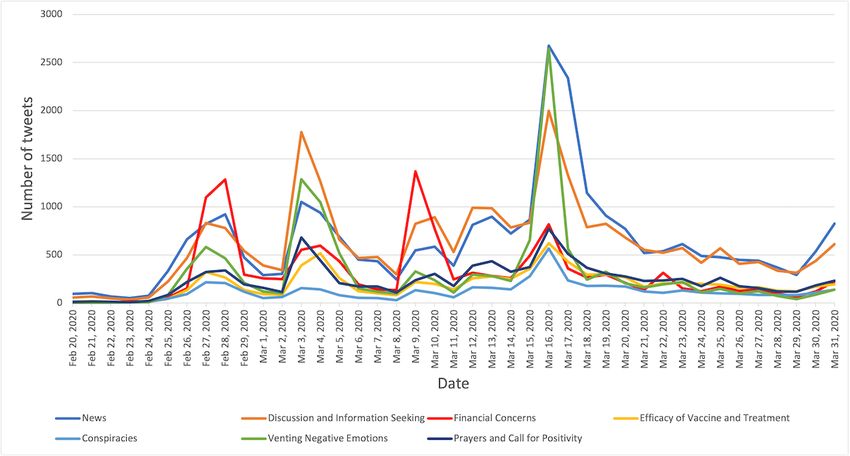
of the US health spending is extremely high. The new vaccine Figure 2 shows the changes in the coronavirus vaccine–related
should be free for everyone”). As for the price of vaccination, discussions on Twitter based on the themes identified across
“free” instead of “affordable” coronavirus vaccines for all the data collection period, that is, February 20, 2020 to March
Americans were urged (eg, “Citizens who were not able to pay 31, 2020 (RQ2). Among the 7 themes identified, News Related
for the COVID-19 vaccine will just keep spreading the disease. to Coronavirus and Vaccine Development and General
Discussion and Seeking of Information on Coronavirus were
https://infodemiology.jmir.org/2021/1/e25636 JMIR Infodemiology 2021 | vol. 1 | iss. 1 | e25636 | p. 8
(page number not for citation purposes)
XSL• FO
RenderXJMIR INFODEMIOLOGY Jiang et al
the most frequently presented overall. Coronavirus promises of free coronavirus vaccine for all Americans on March
vaccine–related discourses on Twitter were promoted by 9, 2020, respectively. We observed some co-occurring patterns
breaking news or announcements and speeches made by the across the themes during the same peaks and time periods.
governments and political elites. As shown in Figure 2, there General discussions and information on coronavirus highly
were several peaks in the coronavirus vaccine–related mirrored the themes of news related to coronavirus and vaccine
discussions at the early stage of the outbreak. The discussions developments. The expression of negative emotions also
were elevated on March 16, 2020, which corresponded to the increased when the discussions of these 2 themes reached a
trending news that the Trump administration was attempting to spike. There were also some observed differences in the themes
offer large sums of money to a German company in exchange across time. The efficacy of the vaccine and treatment,
for exclusive access to a possible coronavirus vaccine on March conspiracies about the coronavirus and vaccines, and prayers
15, 2020. Coronavirus vaccine discourses regarding Financial and calls for positivity appeared more periodically, while other
Concerns reached the peak and exceeded other themes on themes (ie, news related to coronavirus and vaccine
February 28, 2020 and March 9, 2020. The rising discussions developments, general discussion and information on
about the prices and affordability of the coronavirus vaccines coronavirus, financial concerns, venting negative emotions)
were related to Health and Human Services Secretary Alex were more episodic, featured with several peaks instigated by
Azar’s refusal of promising affordable coronavirus vaccines for breaking news or events related to vaccine developments.
all US citizens on February 27, 2020 and Bernie Sanders’
Figure 2. Frequencies of themes of the tweets over time (February 20, 2020 to March 31, 2020).
The data were then entered into the SPSS software (IBM Corp).
Differences in the Follower Numbers and Engagement Next, we created a categorical variable according to the themes
Level and used it as the independent variable to examine the
Analyses of Follower Numbers and Engagement Level differences in the number of followers and levels of engagement
across themes by using the Kruskal-Wallis H test. Post-hoc
H1a and H1b hypothesized that conspiracy tweets’ contributors
analysis was also performed using the Bonferroni-corrected
had more followers, and conspiracy tweets received higher
Dunn test. As the hypotheses focus on the difference between
levels of engagement than tweets with other themes. To examine
conspiracy tweets and the other tweets with themes that
the differences between themes in the number of followers and
presented attitudes and concerns toward the coronavirus
levels of engagement, further analyses were performed. First,
vaccines, tweets labeled as news or discussion/information
the results of classification of LDA topic modeling were attached
seeking were excluded from the analyses. Table 2 presents the
in the original data (which contained the metadata, including
median and mean rank of numbers of followers and levels of
the number of followers and engagement metric of each tweet).
engagement.
https://infodemiology.jmir.org/2021/1/e25636 JMIR Infodemiology 2021 | vol. 1 | iss. 1 | e25636 | p. 9
(page number not for citation purposes)
XSL• FO
RenderXJMIR INFODEMIOLOGY Jiang et al
Table 2. Median and mean ranks of the followers and engagement among themes.
Themes Followers Engagement
Median Mean rank Median Mean rank
Financial concerns 685 24,411.87a 1 20,836.52a
Efficacy of vaccines and treatments 740 24,957.68a,b 1 20,784.34a
Conspiracies about coronavirus and vaccines 770 25,095.54b 1 20,631.67a
Venting negative emotions 616 23,615.43c 0 19,275.31b
Prayers/calls for positivity 620 23,776.11c 1 20,807.51a
a-c
Same superscripts in the same column indicate no significant statistical differences (P>.05); different superscripts in the same column indicate
significant statistical differences (PJMIR INFODEMIOLOGY Jiang et al
Consistent with other studies that examined coronavirus vaccine vaccines [77]. For example, recent research shows that
sentiments and attitudes on social media over different periods attitudinal inoculation (eg, prewarning the audiences with
of the pandemic [34,74,75], our study indicates that the public common vaccine-related conspiracy theories) can develop
had mixed opinions and emotions over coronavirus vaccines, resistance to the influence of vaccine conspiracy theories at a
which may create significant barriers to reaching the later stage [78].
vaccine-induced herd immunity. Antivaccination arguments
Last but not the least, social media influencers (ie, accounts
and conspiracy theories were one of the major sources for
with many followers) play an important role in the spread of
vaccination opposition, although they did not constitute a large
vaccine-related opinions. Fact-checking the content published
part of social media discussions. However, this small proportion
by social media influencers may effectively limit the spread of
of tweets was contributed by Twitter users with more influence.
conspiracy theories, which requires efforts from both social
They also demonstrated higher engagement levels, thus resulting
media platforms and the influencers themselves [79,80]. Twitter
in echo chamber effects among small-size subnetworks [52]. It
recently made some initial moves by introducing a labeling and
is observed that most themes demonstrated peaks and troughs
striking system to identify and remove COVID-19
over time but some themes (eg, Conspiracies and Efficacy of
misinformation [81]. In a related vein, social media influencers
Vaccines and Treatments) were more periodic and some themes
are also encouraged by social media and health organizations
(eg, Venting Negative Emotions) were more episodic. We
to enhance their health literacy and their capacities for
speculate that conspiracies and efficacy concerns were largely
fact-checking before they self-proclaim as vaccine activists or
about unconfirmed but expected issues (eg, pharmacy
public health activists on social media platforms.
conspiracies apply for all the vaccines); thus, such discussions
were likely to merge periodically. However, unexpected events Limitations
(eg, Trump’s claim of using influenza shots to prevent This study has the following limitations. First, the study findings
coronavirus) will stimulate heated discussions, leading to a peak are limited to the Twitter discussions during the first phase of
in the data. When these events were later addressed by the the COVID-19 pandemic in the United States. The public’s
authority’s responses, the discussions gradually vanished. concerns might have changed over time as the development of
Practical Implications vaccines progressed. The recent suspension of a coronavirus
vaccine owing to adverse effects has brought a lot of discussions
This study offers several practical implications for addressing
on vaccine safety [9]. The peculiar political environment (eg,
the infodemic at the early stage of outbreaks or health crises.
presidential election year) may also have contributed to the
First, public health professionals should timely and appropriately
patterns of the results. Further research is encouraged to look
address the public needs for vaccine-related information. Our
at discussions related to coronavirus vaccines on different social
analysis revealed that many Twitter discussions were by people
media forms and in different countries. Longitudinal studies
seeking more information or expressing concerns on coronavirus
and comparisons across countries or regions are particularly
and vaccines. Such surges in information demand should be
preferred to examine the dynamics and heterogeneity in the
addressed by supplying with appropriate information that is
spread of information and opinions. This study only captured
easy to follow.
the Twitter discussions during the first stage of the COVID-19
Second, health communication may differentiate communication pandemic. Future research could employ larger data sets from
strategies for episodic and periodic themes. As indicated by the Twitter or other social media platforms, especially the latest
results, episodic themes (eg, financial concerns, venting negative data sets, to reveal the bigger picture of public concerns over
emotions) tended to emerge when breaking news or unexpected coronavirus vaccines.
events occurred. Quick and appropriate responses to these events
There are also some limitations in this analysis. For example,
would effectively reassure the public and eliminate “epidemics
we relied on keyword inquiry to extract vaccine tweets from a
of fear” [76]. For periodic themes such as conspiracy theories
database, but we cannot guarantee that all posts were related to
and efficacy concerns, regular surveillance and tailored
coronavirus vaccine conversations. Some outliers might have
responses can counterbalance the negative effects of these
been included in the data. When interpreting the topic themes,
themes.
although the 3 authors independently coded the 20 topics, the
Health organizations and health professionals should make more intercoder reliability was not calculated owing to the small
systematic and organized efforts to address antivaccination number of topics revealed from the LDA results. The analysis
content and other vaccine-related misinformation. Together also did not distinguish the nature of Twitter accounts, which
with other studies [47-49], this study indicated that may be a mixture of personal, organizational, and bot accounts.
antivaccination content and misinformation about vaccines were Bot accounts may have contributed to a certain portion of the
contributed by closely connected communities and followed Twitter discussions, but we did not estimate the potential bot
several clear and predictable patterns. When coronavirus traffic. Because Twitter data did not account for users’
vaccines were still under development, antivaccination content demographics, while we had a limited understanding of the
had been spreading on the internet along with these recurring types of users engaged in the discussion (ie, the number of
conspiracy themes, which indicates that the battle with followers), we do not know more details about the users who
conspiracies and antivaccination messages is a long fight. A were contributing to the discourse. Provided the difficulty of
prebunking approach could effectively reduce the negative manual classification, future studies should seek to apply more
outcomes of conspiracy theories and misinformation about sophisticated machine learning techniques to identify the types
https://infodemiology.jmir.org/2021/1/e25636 JMIR Infodemiology 2021 | vol. 1 | iss. 1 | e25636 | p. 11
(page number not for citation purposes)
XSL• FO
RenderXJMIR INFODEMIOLOGY Jiang et al
of Twitter accounts—ideally, the characteristics of personal of the COVID-19 pandemic in the United States, Twitter
accounts (eg, political ideology). Such knowledge will allow discussions related to coronavirus vaccines were centered on
us to go beyond the aggregated data to look at individual users. general policy issues and were largely mixed with political
discussions. The public discussions demonstrated mixed
Conclusion concerns for coronavirus vaccines even before the vaccines
Overall, the spread of information and opinions on social media were available, and some concerns appeared periodically. These
platforms during the early stage of the outbreak has profoundly issues call for more preparatory work to cope with the infodemic
affected individuals’ beliefs and attitudes toward vaccines and, challenge and to handle infectious breaks in the future.
ultimately, their vaccination decisions. During the early stage
Acknowledgments
This project is funded by the Faculty Research Fund, City University of Hong Kong (grant 9618020).
Authors' Contributions
LCJ and THC conceptualized and designed the study. THC and MS collected and analyzed the data. All authors drafted the
manuscript and revised the final manuscript.
Conflicts of Interest
None declared.
References
1. COVID-19 live updates. Worldometer. URL: https://www.worldometers.info/coronavirus/ [accessed 2020-12-30]
2. Merchant RM, Lurie N. Social Media and Emergency Preparedness in Response to Novel Coronavirus. JAMA 2020 May
26;323(20):2011-2012. [doi: 10.1001/jama.2020.4469] [Medline: 32202611]
3. Chan A, Nickson C, Rudolph J, Lee A, Joynt G. Social media for rapid knowledge dissemination: early experience from
the COVID-19 pandemic. Anaesthesia 2020 Dec;75(12):1579-1582 [FREE Full text] [doi: 10.1111/anae.15057] [Medline:
32227594]
4. Callaway E. Coronavirus vaccines: five key questions as trials begin. Nature 2020 Mar;579(7800):481. [doi:
10.1038/d41586-020-00798-8] [Medline: 32203367]
5. Blasi P, King D, Henrikson N. HPV Vaccine Public Awareness Campaigns: An Environmental Scan. Health Promot Pract
2015 Nov;16(6):897-905. [doi: 10.1177/1524839915596133] [Medline: 26220277]
6. Manning ML, Davis J. Journal Club: Twitter as a source of vaccination information: content drivers and what they're saying.
Am J Infect Control 2013 Jun;41(6):571-572. [doi: 10.1016/j.ajic.2013.02.003] [Medline: 23726549]
7. Chen N, Murphy S. Examining the role of media coverage and trust in public health agencies in H1N1 influenza prevention.
International Public Health Journal. 2011. URL: https://www.proquest.com/docview/1727485229/abstract/
B20E36AA192647FCPQ/1?accountid=10134 [accessed 2021-09-07]
8. Chen W, Stoecker C. Mass media coverage and influenza vaccine uptake. Vaccine 2020 Jan 10;38(2):271-277. [doi:
10.1016/j.vaccine.2019.10.019] [Medline: 31699506]
9. Moran MB, Chatterjee JS, Frank LB, Murphy ST, Zhao N, Chen N, et al. Individual, Cultural and Structural Predictors of
Vaccine Safety Confidence and Influenza Vaccination Among Hispanic Female Subgroups. J Immigr Minor Health 2017
Aug;19(4):790-800 [FREE Full text] [doi: 10.1007/s10903-016-0428-9] [Medline: 27154236]
10. Shropshire AM, Brent-Hotchkiss R, Andrews UK. Mass media campaign impacts influenza vaccine obtainment of university
students. J Am Coll Health 2013;61(8):435-443. [doi: 10.1080/07448481.2013.830619] [Medline: 24152021]
11. Xu Z, Ellis L, Laffidy M. News Frames and News Exposure Predicting Flu Vaccination Uptake: Evidence from U.S.
Newspapers, 2011-2018 Using Computational Methods. Health Commun 2020 Sep 14:1-9. [doi:
10.1080/10410236.2020.1818958] [Medline: 32927970]
12. Cuello-Garcia C, Pérez-Gaxiola G, van Amelsvoort L. Social media can have an impact on how we manage and investigate
the COVID-19 pandemic. J Clin Epidemiol 2020 Nov;127:198-201 [FREE Full text] [doi: 10.1016/j.jclinepi.2020.06.028]
[Medline: 32603686]
13. Zhang Y, Tambo E, Djuikoue IC, Tazemda GK, Fotsing MF, Zhou XN. Early stage risk communication and community
engagement (RCCE) strategies and measures against the coronavirus disease 2019 (COVID-19) pandemic crisis. Glob
Health J 2021 Mar;5(1):44-50 [FREE Full text] [doi: 10.1016/j.glohj.2021.02.009] [Medline: 33850632]
14. Lal A, Ashworth HC, Dada S, Hoemeke L, Tambo E. Optimizing Pandemic Preparedness and Response Through Health
Information Systems: Lessons Learned From Ebola to COVID-19. Disaster Med Public Health Prep 2020 Oct 02:1-8 [FREE
Full text] [doi: 10.1017/dmp.2020.361] [Medline: 33004102]
15. Mocatta G, Hawley E. The coronavirus crisis as tipping point: communicating the environment in a time of pandemic.
Media International Australia 2020 Aug 17;177(1):119-124. [doi: 10.1177/1329878x20950030]
https://infodemiology.jmir.org/2021/1/e25636 JMIR Infodemiology 2021 | vol. 1 | iss. 1 | e25636 | p. 12
(page number not for citation purposes)
XSL• FO
RenderXJMIR INFODEMIOLOGY Jiang et al
16. Apuke O, Omar B. Fake news and COVID-19: modelling the predictors of fake news sharing among social media users.
Telematics and Informatics 2021 Jan;56:101475 [FREE Full text] [doi: 10.1016/j.tele.2020.101475]
17. Freckelton Qc I. COVID-19: Fear, quackery, false representations and the law. Int J Law Psychiatry 2020;72:101611 [FREE
Full text] [doi: 10.1016/j.ijlp.2020.101611] [Medline: 32911444]
18. Pennycook G, McPhetres J, Zhang Y, Lu JG, Rand DG. Fighting COVID-19 Misinformation on Social Media: Experimental
Evidence for a Scalable Accuracy-Nudge Intervention. Psychol Sci 2020 Jul;31(7):770-780 [FREE Full text] [doi:
10.1177/0956797620939054] [Medline: 32603243]
19. Calvillo DP, Ross BJ, Garcia RJB, Smelter TJ, Rutchick AM. Political Ideology Predicts Perceptions of the Threat of
COVID-19 (and Susceptibility to Fake News About It). Social Psychological and Personality Science 2020 Jul
22;11(8):1119-1128. [doi: 10.1177/1948550620940539]
20. Jamison A, Broniatowski DA, Smith MC, Parikh KS, Malik A, Dredze M, et al. Adapting and Extending a Typology to
Identify Vaccine Misinformation on Twitter. Am J Public Health 2020 Oct;110(S3):S331-S339. [doi:
10.2105/AJPH.2020.305940] [Medline: 33001737]
21. Rothgerber H, Wilson T, Whaley D, Rosenfeld DL, Humphrey M, Moore AL, et al. Politicizing the COVID-19 Pandemic:
Ideological Differences in Adherence to Social Distancing. PsyArXiv. Preprint posted online April 20, 2020 [FREE Full
text] [doi: 10.31234/osf.io/k23cv]
22. Munich security conference. World Health Organization. 2020 Feb 15. URL: https://www.who.int/dg/speeches/detail/
munich-security-conference [accessed 2020-12-30]
23. Eysenbach G. How to Fight an Infodemic: The Four Pillars of Infodemic Management. J Med Internet Res 2020 Jun
29;22(6):e21820 [FREE Full text] [doi: 10.2196/21820] [Medline: 32589589]
24. Tangcharoensathien V, Calleja N, Nguyen T, Purnat T, D'Agostino M, Garcia-Saiso S, et al. Framework for Managing the
COVID-19 Infodemic: Methods and Results of an Online, Crowdsourced WHO Technical Consultation. J Med Internet
Res 2020 Jun 26;22(6):e19659 [FREE Full text] [doi: 10.2196/19659] [Medline: 32558655]
25. Zarocostas J. How to fight an infodemic. The Lancet 2020 Feb;395(10225):676 [FREE Full text] [doi:
10.1016/s0140-6736(20)30461-x]
26. Abdul-Mageed M, Diab M, Kübler S. SAMAR: Subjectivity and sentiment analysis for Arabic social media. Computer
Speech & Language 2014 Jan;28(1):20-37 [FREE Full text] [doi: 10.1016/j.csl.2013.03.001]
27. Chan M, Jamieson K, Albarracin D. Prospective associations of regional social media messages with attitudes and actual
vaccination: A big data and survey study of the influenza vaccine in the United States. Vaccine 2020 Sep 11;38(40):6236-6247
[FREE Full text] [doi: 10.1016/j.vaccine.2020.07.054] [Medline: 32792251]
28. Hill HA, Elam-Evans LD, Yankey D, Singleton JA, Kang Y. Vaccination Coverage Among Children Aged 19-35 Months
- United States, 2017. MMWR Morb Mortal Wkly Rep 2018 Oct 12;67(40):1123-1128 [FREE Full text] [doi:
10.15585/mmwr.mm6740a4] [Medline: 30307907]
29. More than 140,000 die from measles as cases surge worldwide. World Health Organization. 2019 Dec 05. URL: https:/
/www.who.int/news/item/05-12-2019-more-than-140-000-die-from-measles-as-cases-surge-worldwide [accessed 2020-12-30]
30. Beguerisse-Díaz M, McLennan AK, Garduño-Hernández G, Barahona M, Ulijaszek SJ. The 'who' and 'what' of #diabetes
on Twitter. Digit Health 2017;3:2055207616688841 [FREE Full text] [doi: 10.1177/2055207616688841] [Medline:
29942579]
31. Johnson NF, Velásquez N, Restrepo NJ, Leahy R, Gabriel N, El Oud S, et al. The online competition between pro- and
anti-vaccination views. Nature 2020 Jun;582(7811):230-233. [doi: 10.1038/s41586-020-2281-1] [Medline: 32499650]
32. Dredze M, Broniatowski D, Hilyard K. Zika vaccine misconceptions: A social media analysis. Vaccine 2016 Jun
24;34(30):3441-3442 [FREE Full text] [doi: 10.1016/j.vaccine.2016.05.008] [Medline: 27216759]
33. Yiannakoulias N, Slavik C, Chase M. Expressions of pro- and anti-vaccine sentiment on YouTube. Vaccine 2019 Apr
03;37(15):2057-2064. [doi: 10.1016/j.vaccine.2019.03.001] [Medline: 30862365]
34. Germani F, Biller-Andorno N. The anti-vaccination infodemic on social media: A behavioral analysis. PLoS One
2021;16(3):e0247642 [FREE Full text] [doi: 10.1371/journal.pone.0247642] [Medline: 33657152]
35. Walter D, Ophir Y, Jamieson KH. Russian Twitter Accounts and the Partisan Polarization of Vaccine Discourse, 2015-2017.
Am J Public Health 2020 May;110(5):718-724. [doi: 10.2105/AJPH.2019.305564] [Medline: 32191516]
36. Eysenbach G. Infodemiology and infoveillance: framework for an emerging set of public health informatics methods to
analyze search, communication and publication behavior on the Internet. J Med Internet Res 2009 Mar 27;11(1):e11 [FREE
Full text] [doi: 10.2196/jmir.1157] [Medline: 19329408]
37. Ceron A, Curini L, Iacus SM, Porro G. Every tweet counts? How sentiment analysis of social media can improve our
knowledge of citizens’ political preferences with an application to Italy and France. New Media & Society 2013 Apr
04;16(2):340-358. [doi: 10.1177/1461444813480466]
38. Paul M, Dredze M. Discovering health topics in social media using topic models. PLoS One 2014;9(8):e103408 [FREE
Full text] [doi: 10.1371/journal.pone.0103408] [Medline: 25084530]
39. Stieglitz S, Dang-Xuan L. Emotions and Information Diffusion in Social Media—Sentiment of Microblogs and Sharing
Behavior. Journal of Management Information Systems 2014 Dec 08;29(4):217-248. [doi: 10.2753/MIS0742-1222290408]
https://infodemiology.jmir.org/2021/1/e25636 JMIR Infodemiology 2021 | vol. 1 | iss. 1 | e25636 | p. 13
(page number not for citation purposes)
XSL• FO
RenderXJMIR INFODEMIOLOGY Jiang et al
40. Eichstaedt JC, Schwartz HA, Kern ML, Park G, Labarthe DR, Merchant RM, et al. Psychological language on Twitter
predicts county-level heart disease mortality. Psychol Sci 2015 Feb;26(2):159-169 [FREE Full text] [doi:
10.1177/0956797614557867] [Medline: 25605707]
41. Gibbs M, Meese J, Arnold M, Nansen B, Carter M. Funeral and Instagram: death, social media, and platform vernacular.
Information, Communication & Society 2014 Dec 15;18(3):255-268. [doi: 10.1080/1369118X.2014.987152]
42. Calvo Gallardo E, Fernandez de Arroyabe JC, Arranz N. Preventing Internal COVID-19 Outbreaks within Businesses and
Institutions: A Methodology Based on Social Networks Analysis for Supporting Occupational Health and Safety Services
Decision Making. Sustainability 2020 Jun 06;12(11):4655. [doi: 10.3390/su12114655]
43. Scanfeld D, Scanfeld V, Larson E. Dissemination of health information through social networks: twitter and antibiotics.
Am J Infect Control 2010 Apr;38(3):182-188 [FREE Full text] [doi: 10.1016/j.ajic.2009.11.004] [Medline: 20347636]
44. Valente T, Gallaher P, Mouttapa M. Using social networks to understand and prevent substance use: a transdisciplinary
perspective. Subst Use Misuse 2004;39(10-12):1685-1712. [doi: 10.1081/ja-200033210] [Medline: 15587948]
45. Wood MJ. Propagating and Debunking Conspiracy Theories on Twitter During the 2015-2016 Zika Virus Outbreak.
Cyberpsychol Behav Soc Netw 2018 Aug;21(8):485-490 [FREE Full text] [doi: 10.1089/cyber.2017.0669] [Medline:
30020821]
46. Nawa N, Kogaki S, Takahashi K, Ishida H, Baden H, Katsuragi S, et al. Analysis of public concerns about influenza
vaccinations by mining a massive online question dataset in Japan. Vaccine 2016 Jun 08;34(27):3207-3213. [doi:
10.1016/j.vaccine.2016.01.008] [Medline: 26776467]
47. Pruss D, Fujinuma Y, Daughton A, Paul M, Arnot B, Albers Szafir D, et al. Zika discourse in the Americas: A multilingual
topic analysis of Twitter. PLoS One 2019;14(5):e0216922 [FREE Full text] [doi: 10.1371/journal.pone.0216922] [Medline:
31120935]
48. Tangherlini TR, Roychowdhury V, Glenn B, Crespi CM, Bandari R, Wadia A, et al. "Mommy Blogs" and the Vaccination
Exemption Narrative: Results From A Machine-Learning Approach for Story Aggregation on Parenting Social Media Sites.
JMIR Public Health Surveill 2016 Nov 22;2(2):e166 [FREE Full text] [doi: 10.2196/publichealth.6586] [Medline: 27876690]
49. Hu D, Martin C, Dredze M, Broniatowski D. Chinese social media suggest decreased vaccine acceptance in China: An
observational study on Weibo following the 2018 Changchun Changsheng vaccine incident. Vaccine 2020 Mar
17;38(13):2764-2770 [FREE Full text] [doi: 10.1016/j.vaccine.2020.02.027] [Medline: 32093982]
50. Stephens M. A geospatial infodemic: Mapping Twitter conspiracy theories of COVID-19. Dialogues in Human Geography
2020 Jun 23;10(2):276-281. [doi: 10.1177/2043820620935683]
51. Ahmed W, Vidal-Alaball J, Downing J, López Seguí F. COVID-19 and the 5G Conspiracy Theory: Social Network Analysis
of Twitter Data. J Med Internet Res 2020 May 06;22(5):e19458 [FREE Full text] [doi: 10.2196/19458] [Medline: 32352383]
52. Ahmed W, López Seguí F, Vidal-Alaball J, Katz MS. COVID-19 and the "Film Your Hospital" Conspiracy Theory: Social
Network Analysis of Twitter Data. J Med Internet Res 2020 Oct 05;22(10):e22374 [FREE Full text] [doi: 10.2196/22374]
[Medline: 32936771]
53. Shahrezaye M, Meckel M, Steinacker L, Suter V. COVID-19’s (mis)information ecosystem on Twitter: How partisanship
boosts the spread of conspiracy narratives on German speaking Twitter. In: Advances in Information and Communication.
Future of Information and Communication Conference 2021. Cham: Springer; Sep 27, 2020:1060-1073.
54. Chan C, Shumaker L, Maler S. Confirmed coronavirus cases in U.S. reach 100,000: Reuters tally. Reuters. 2020 Mar 28.
URL: https://www.reuters.com/article/us-health-coronavirus-usa-cases-idUSKBN21E3DA [accessed 2020-12-30]
55. Meltwater. URL: https://www.meltwater.com/en [accessed 2021-09-07]
56. Campbell JC, Hindle A, Stroulia E. Latent dirichlet allocation: extracting topics from software engineering data. In: Bird
C, Menzies T, Zimmermann T, editors. The Art and Science of Analyzing Software Data. 225 Wyman Street, Waltham,
MA 02451, USA: Elsevier; 2015:139-159.
57. DiMaggio P, Nag M, Blei D. Exploiting affinities between topic modeling and the sociological perspective on culture:
Application to newspaper coverage of U.S. government arts funding. Poetics 2013 Dec;41(6):570-606 [FREE Full text]
[doi: 10.1016/j.poetic.2013.08.004]
58. Zhao X, Zhan M, Jie C. Examining multiplicity and dynamics of publics’ crisis narratives with large-scale Twitter data.
Public Relations Review 2018 Nov;44(4):619-632 [FREE Full text] [doi: 10.1016/j.pubrev.2018.07.004]
59. Hung M, Lauren E, Hon ES, Birmingham WC, Xu J, Su S, et al. Social Network Analysis of COVID-19 Sentiments:
Application of Artificial Intelligence. J Med Internet Res 2020 Aug 18;22(8):e22590 [FREE Full text] [doi: 10.2196/22590]
[Medline: 32750001]
60. Tang J, Meng Z, Nguyen X, Mei Q, Zhang M. Understanding the Limiting Factors of Topic Modeling via Posterior
Contraction Analysis. 2014 Presented at: Proceedings of the 31st International Conference on Machine Learning; June
22-24; Beijing, China p. 190-198 URL: http://proceedings.mlr.press/v32/tang14.pdf
61. Grün B, Hornik K. topicmodels: An R Package for Fitting Topic Models. Journal of Statistical Software 2011;40(13):1-30
[FREE Full text] [doi: 10.18637/jss.v040.i13]
62. Natural Language Toolkit. URL: https://www.nltk.org/ [accessed 2021-09-07]
63. Citing spaCy v2 #1555. URL: https://github.com/explosion/spaCy/issues/1555 [accessed 2021-09-07]
https://infodemiology.jmir.org/2021/1/e25636 JMIR Infodemiology 2021 | vol. 1 | iss. 1 | e25636 | p. 14
(page number not for citation purposes)
XSL• FO
RenderXYou can also read


