Diffi culties in Diff erentiating Coronaviruses from Subcellular Structures in Human Tissues by Electron Microscopy
←
→
Page content transcription
If your browser does not render page correctly, please read the page content below
Difficulties in Differentiating
        Coronaviruses from Subcellular
         Structures in Human Tissues
            by Electron Microscopy
        Hannah A. Bullock, Cynthia S. Goldsmith, Sherif R. Zaki, Roosecelis B. Martines, Sara E. Miller

 Efforts to combat the coronavirus disease (COVID-19)                of the virus. Consequently, several articles have er-
 pandemic caused by severe acute respiratory syndrome                roneously described the identification of coronavi-
 coronavirus 2 (SARS-CoV-2) have placed a renewed fo-                rus particles by EM in the lung (1–6), kidney (6–13;
 cus on the use of transmission electron microscopy for              B. Diao et al., unpub. data, https://doi.org/10.1101
 identifying coronavirus in tissues. In attempts to attribute        /2020.03.04.20031120), heart (14,15), brain (16), liver
 pathology of COVID-19 patients directly to tissue damage            (17), intestine (6,18), skin (19), and placenta (20–22)
 caused by SARS-CoV-2, investigators have inaccurately               (Table). However, most of the presumed virus or vi-
 reported subcellular structures, including coated vesicles,         rus-like particles shown in all of these reports either
 multivesicular bodies, and vesiculating rough endoplas-
                                                                     represent normal subcellular organelles previously
 mic reticulum, as coronavirus particles. We describe mor-
 phologic features of coronavirus that distinguish it from
                                                                     demonstrated in cells (23) or, otherwise, lack suffi-
 subcellular structures, including particle size range (60–          cient ultrastructure and morphologic features to be
 140 nm), intracellular particle location within membrane-           conclusively identified as coronavirus. Since early
 bound vacuoles, and a nucleocapsid appearing in cross               May 2020, letters to the editors of several journals
 section as dense dots (6–12 nm) within the particles. In            have refuted these descriptions (24–30), yet the mis-
 addition, although the characteristic spikes of coronavi-           identification of coronavirus particles continues. It
 ruses may be visible on the virus surface, especially on            is essential for our collective understanding of CO-
 extracellular particles, they are less evident in thin sec-         VID-19 clinical pathology and pathogenesis as well
 tions than in negative stain preparations.                          as the field of diagnostic EM that these misidentifica-
                                                                     tions of SARS-CoV-2 particles be addressed.

T   he Coronaviridae family of viruses contains sev-
    eral human pathogens, including severe acute
respiratory syndrome coronavirus 2 (SARS-CoV-2),
                                                                          As of November 2020, only 2 articles and 1 let-
                                                                     ter to the editor had been published documenting
                                                                     clear EM evidence of SARS-CoV-2 directly in tissue
the causative agent of the coronavirus disease (CO-                  samples (30–32), and another 2 articles showed rare
VID-19) pandemic. Since early 2020, the unprec-                      viral particles (33,34). Here, we review published
edented collective response to the COVID-19 pan-                     articles that used EM to search for SARS-CoV-2 in
demic from the scientific and medical community                      patient tissue samples. Our goal is to highlight the
has led to numerous SARS-CoV-2–related publica-                      importance of coronavirus morphology and cellu-
tions and underscored the urgent need to demon-                      lar localization in diagnosis and detection. In ad-
strate and verify the presence of coronavirus direct-                dition, we provide a side-by-side comparison of
ly in tissues. Among these publications are reports                  the subcellular structures that have been most fre-
describing the pathology of SARS-CoV-2 infection                     quently misinterpreted as SARS-CoV-2 along with
in patient specimens, which have been scrutinized                    actual viral particles that have been identified in
intensely by electron microscopy (EM) for evidence                   COVID-19 autopsy tissues.
Author affiliations: Synergy America, Inc., Atlanta, Georgia, USA
(H.A. Bullock); Centers for Disease Control and Prevention,          Coronavirus Structure
Atlanta (C.S. Goldsmith, S.R. Zaki, R.B. Martines); Duke Medical     Knowledge of coronavirus ultrastructure and mor-
Center, Durham, North Carolina, USA (S.E. Miller)                    phogenesis is paramount to avoiding errors in
                                                                     identification. The name coronavirus was coined by
DOI: https://doi.org/10.3201/eid2704.204337

                              Emerging Infectious Diseases • www.cdc.gov/eid • Vol. 27, No. 4, April 2021              1023
SYNOPSIS

June D. Almeida, who visualized the virus by EM                              be observed using 2 techniques, negative stain (36)
in 1967 (35). The name was derived from the sur-                             and thin section (36,37). Negatively stained samples
face peplomers or spikes that give the viral parti-                          are prepared by adsorbing virus suspended in fluid
cles the appearance of having a solar corona. These                          onto a plastic-coated grid, wicking off excess liq-
spikes are one of the more distinctive features for a                        uid, and staining with a heavy-metal salt solution.
coronavirus. For diagnostic EM, coronaviruses can                            The virus is coated with the stain, which penetrates

Table. Structures misidentified as coronavirus particles by transmission electron microscopy in publications, March–November 2020*
                                          Structures misidentified as coronavirus
Original reference            Tissue                 (Figure no., panel)                Correct identification        Response
Yao et al. (1)                 Lung     Spiked vesicles in the cytoplasm (1, A–C)               CCVs                     NA
Pesaresi et al. (2)            Lung        Vacuole containing vesicles (1, A, B)                MVB                      NA
                                        Clusters of dark particles some associated       RER and possibly
                                                with membranes (1, C, D)                     ribosomes
                                           Clusters of dark particles (2, A, B, E)    Unidentifiable structures
Grimes et al. (3)                 Lung           Vacuole containing vesicles (2, A)                     MVB                            NA
                                                 Spiked vesicle in cytoplasm (2, B)                 Possible CCV
Ackermann et al. (4)              Lung             Dark circular structures (3, D)             Unidentifiable structure       Scholkmann et al. (29)
Borczuk et al. (5)                Lung       Clusters of dark particles associated with          Vesiculating RER                     NA
                                                         membranes (6, E)
                                                 Spiked vesicle in cytoplasm (7, F)                      CCV
Bradley et al. (6)                Lung            Collections of vesicles (5, A, D)            Unidentifiable structures       Dittmayer et al. (30)
                                                       Coated vesicles (5, B)                           CCVs
                                                 Vacuole containing vesicles (5, C)                      MVB
                                Intestine     Circular membranes in cytoplasm (5, E)           Unidentifiable structures               NA
                                                 Extracellular spiked vesicles (5, F)          Unidentifiable structures
                                 Kidney      Spiked vesicles within a membrane (5, G)                   CCVs                           NA
                                                  Membrane bound vesicles (5, H)               Unidentifiable structures
Su et al. (7)                    Kidney        Spiked vesicles in cytoplasm (2, A–D)                    CCVs                  Calomeni et al. (24);
                                                                                                                                Miller et al. (27);
                                                                                                                              Roufosse et al. (28)
Kissling et al. (8)              Kidney        Vacuole containing vesicles (1, E, F)                     MVB                  Calomeni et al. (24);
                                                                                                                                Miller et al. (27);
                                                                                                                              Roufosse et al. (28)
Varga et al. (9)                 Kidney         Circular membrane structures with                 Vesiculating RER            Goldsmith et al. (26);
                                                  surrounding black dots (1, A, B)                                            Roufosse et al. (28)
Farkash et al. (10)              Kidney        Spiked vesicles in cytoplasm (3, A–C)                     CCVs                   Miller et al. (25);
                                                                                                                              Roufosse et al. (28)
                                                 Vacuole containing vesicles (3, D)                      MVB
B. Diao et al., unpub.           Kidney           Spiked vesicles in cytoplasm (3)                       CCVs                  Roufosse et al. (28)
data,
https://doi.org/10.1101/20
20.03.04.20031120
Abbate et al. (11)               Kidney          Spiked vesicle in cytoplasm (1)                        CCV                            NA
Menter et al. (12)               Kidney       Vacuoles containing vesicles (4, A–C)                     MVB,                           NA
                                             Collection of membrane bound particles            Unidentifiable structure
                                                               (4, D)
Werion et al. (13)               Kidney      Circular vesicles with internal black dots            Outside-in RER                      NA
                                                             (3, A–C)
Tavazzi et al. (14)               Heart       Spiked vesicles in cytoplasm (2, A–F)                     CCVs                   Dittmayer et al. (30)
Dolhnikoff et al. (15)            Heart     Roughly circular black structures (3, A, D)        Unidentifiable structures       Dittmayer et al. (30)
                                                 Clusters of dark particles, some               RER and clusters of
                                              associated with membranes (3, B, C)                    ribosomes
Paniz-Mondolfi et al. (16)        Brain     Vacuole containing circular particles (3, A,       Unidentifiable structures               NA
                                                                 B)
                                              Vacuole containing vesicles (1, C, D)                     MVB
Wang et al. (17)                  Liver     Circular structures with surrounding black            Vesiculating RER                     NA
                                                          dots (1, M; 2, J)
Qian et al. (18)                Intestine     Spiked vesicles in cytoplasm (3, A, B)                    CCVs                           NA
Colmenero et al. (19)             Skin          Spiked vesicle in cytoplasm (4, D)                       CCV                           NA
Hosier et al. (20)              Placenta      Spiked vesicles in cytoplasm (4, C–F)                     CCVs                           NA
                                                    Spherical particles (4, G–I)               Unidentifiable structures
Algarroba et al. (21)           Placenta        Spiked vesicles in cytoplasm (2–6)                      CCVs                           NA
Sisman et al. (22)              Placenta    Vacuole containing circular particles (1, C)       Unidentifiable structures               NA
*CCV, clathrin or coatomer coated vesicles; MVB, multivesicular body; NA, not applicable; RER, rough endoplasmic reticulum.

1024                             Emerging Infectious Diseases • www.cdc.gov/eid • Vol. 27, No. 4, April 2021
Differentiating Coronavirus by Electron Microscopy

between spikes protruding on the virus surface,                     acid; instead, they usually appear as a fuzz on the
making them visible. Thus, negative stain EM im-                    surface of the virus. The difference in the appear-
ages readily show the prominent spikes that are                     ance of the virus in negative stain versus thin sec-
associated with coronaviruses (Figure 1, panel A).                  tion contributes to the confusion and misidentifi-
For thin section EM, tissues or infected cell culture               cation of coronaviruses. Spikes are very rarely as
specimens are fixed in formalin or glutaraldehyde,                  clear in thin-sectioned specimens as they are when
stained with osmium, embedded in epoxy resin,                       seen by negative stain EM.
baked to harden, and sectioned using an ultrami-
crotome. The resulting ultrathin sections show                      Coronavirus Biology
a cross-sectional view of the cells and viruses. In                 Proper identification of coronaviruses within tissue
ultrathin sections of fixed tissues, coronavirus                    samples requires understanding the biology of the
particles are ≈100 nm in diameter including their                   virus and its replicative process (37–39); this knowl-
peplomer spikes and ≈80 nm in diameter excluding                    edge ensures that the microscopist is searching for
spikes (Figure 1, panel B). The spikes on corona-                   it in the correct cellular location, saving valuable
virus particles within cytoplasmic vacuoles (Fig-                   time and helping to avoid misidentifying normal
ure 1, panel C) are not easily visible by thin sec-                 cellular structures as virus. In an infected cell, virus
tion EM, unless the tissue is processed with tannic                 replication takes place within the host cell cytoplasm.

Figure 1. Overview of the ultrastructural features of coronavirus morphology as seen by negative stain and thin section. A)
Extracellular viral particles ≈100 nm in diameter with prominent peplomers (spikes). Prepared from a cell culture sample by
negative stain using heavy metal salt solutions to coat the outside of the virus. Scale bar indicates 100 nm. B) Extracellular
viral particles ≈100 nm in diameter with clearly visible spikes. Cross sections through the helical nucleocapsid are visible on the
interior of the particle as electron-dense black dots, 6–12 nm in diameter. Prepared by thin section from a formalin-fixed autopsy
specimen. Scale bar indicates 100 nm. C) Intracellular viral particles ≈80 nm in diameter held within a membrane-bound vacuole.
Cross sections through the helical nucleocapsid are visible inside the particles. Prepared by thin section from a formalin-fixed
autopsy specimen. Scale bar indicates 200 nm. D) Intracellular viral particles (arrowhead) within a membrane-bound vacuole and
nearby clathrin-coated vesicles (CCV) in the cytoplasm (arrows). CCV spikes directly contact the cell cytosol; viral spikes, barely
visible as a faint fuzz, contact the vacuole contents. Cross sections through the helical nucleocapsid are visible inside the viral
particles but not within the CCVs. Prepared by thin section from a glutaraldehyde-fixed cell culture sample. Scale bar indicates
500 nm.

                             Emerging Infectious Diseases • www.cdc.gov/eid • Vol. 27, No. 4, April 2021                       1025
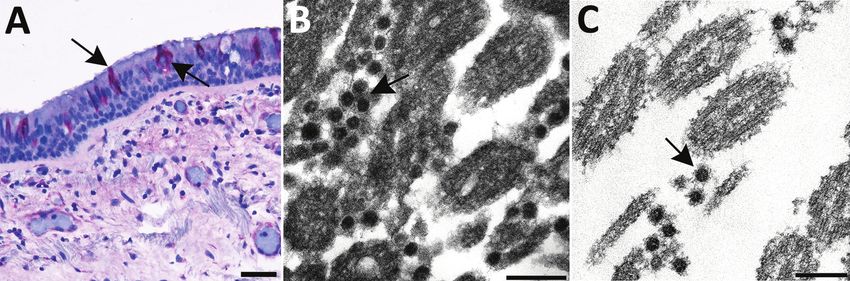
SYNOPSIS Several studies have documented that the coronavi- Structures Commonly Misidentified rus replicative process induces formation of modi- as Coronaviruses fied host cell membranes, including structures like We performed a literature search for reports pub- double-membrane vesicles and convoluted mem- lished during March 1–November 30, 2020, that branes (39,40). Coronavirus structural components, used EM to identify coronavirus directly in patient including envelope, membrane, and spike proteins, specimens. We used the keywords ultrastructure or are inserted into the endoplasmic reticulum (ER) and electron microscopy in conjunction with COVID-19, eventually move to the endoplasmic reticulum–Golgi SARS-CoV-2, or coronavirus when searching Google intermediate compartment (ERGIC) (37,41). Com- Scholar, PubMed, MEDLINE, Web of Science, and plete virions are produced when the helical viral nu- Scopus. We identified 27 reports with EM findings. cleocapsids bud through membranes of the ERGIC, Four of these reports and 1 letter to the editor includ- taking with them ERGIC membrane, which pinches ed correctly identified coronavirus (30–34). The other off to form spherical viral particles inside vesicles; the 23 articles revealed a pattern of subcellular structures budding process provides the viral envelope (37,38). misidentified as virus (Table), including clathrin- This region between the rough ER (RER) and the coated and coatomer-coated vesicles (CCVs; 48%), Golgi complex is known as the budding compart- multivesicular bodies (MVBs; 26%), circular cross- ment. Virions then accumulate in the intracisternal sections through vesiculated RER (19%), spherical space that forms a vacuole; if spikes were visible, they invaginations of RER (4%), and other nonviral struc- would be observed within the area of this membrane- tures (30%). Figure 2 shows an overview of these sub- bound vacuole (Figure 1, panels C, D). The vacuoles cellular components observed within autopsy tissues. with viral particles migrate to the cell surface where The most common structures erroneously iden- the vacuolar and plasma membranes fuse, and the tified as coronaviruses were CCVs (Table; Figure 2, virus is extruded, resulting in extracellular particles panel A), which play essential roles in cellular trans- in which spikes may be more apparent (38) (Figure port. The clathrin protein is associated with vesicle 1, panel B). Of note, accumulations of coronavirus formation and transport at the plasma membrane would not be found free within the cytoplasm of a and trans-Golgi network. Coatomer proteins mediate cell, and at no point would the spikes of a coronavirus transport within the Golgi complex and between the be in direct contact with the cytosol. Golgi complex and ER (42). Although the sizes of the Figure 2. Overview of differential ultrastructural features of subcellular structures commonly misidentified as coronaviruses; all were prepared by thin section from formalin-fixed autopsy specimens. A) Clathrin-coated vesicles (CCVs), circular vesicles with a fringe of clathrin protein (arrow), in the cell cytoplasm range in size from 60 nm−100 nm. Differentiation: clathrin surrounding the vesicle may be misinterpreted as viral spikes, however, CCVs are free in the cell cytoplasm, and clathrin is in direct contact with the cytoplasm. Intracellular coronaviruses are found within membrane-bound vacuoles, and spikes, if visible, are in contact with the vacuolar contents. CCVs lack the internal black dots that signify cross sections through the viral nucleocapsid. Scale bar indicates 200 nm. B) Multivesicular body (MVB), a collection of membrane-bound roughly spherical vesicles formed by the inward budding of an endosomal membrane. Differentiation: MVBs may be confused with a vacuolar accumulation of coronavirus particles. Vesicles within multivesicular bodies do not have internal black dots that signify cross sections through the viral nucleocapsid. Scale bar indicates 200 nm. C) Circular cross sections through rough endoplasmic reticulum (RER) (arrows) found free within the cytoplasm. Differentiation: ribosomes along the endoplasmic reticulum may be confused with viral spikes. Ribosomes of vesiculating RER are in direct contact with the cell cytoplasm, unlike coronavirus spikes, which would be in contact with vacuolar contents. Vesiculating RER lacks cross sections through the viral nucleocapsid. Scale bar indicates 1 µm. 1026 Emerging Infectious Diseases • www.cdc.gov/eid • Vol. 27, No. 4, April 2021
Differentiating Coronavirus by Electron Microscopy

CCVs and the virus may be similar, the cellular lo-             misidentified as virus itself in some recent publica-
cation of each and the lack of cross sections through           tions. A thin section through an area of RER may
the viral nucleocapsid are key differentiating features         give the appearance of a circular membrane with
(Figure 1, panel D). CCVs are found free in the cy-             small dark spikes along the outside edge of the
toplasm, not within the membrane-bound vacuoles                 membrane (Figure 2, panel C). In this instance, the
where intracellular coronavirus particles are found             spikes along the membrane are in fact ribosomes,
(Figure 1, panel D). The clathrin or coatomer projec-           not viral peplomers. The substantial variability in
tions protruding from the vesicles as a fringe can be           size of circular cross sections through the RER in-
easily misinterpreted as viral spikes. These clathrin           dicate that these are not viral particles; coronavirus
and coatomer proteins, however, are in direct con-              particles with spikes are typically around 80–100 nm
tact with the cell cytosol (Figure 1, panel D; Figure 2,        in diameter. Vesiculating RER also lacks the interior
panel A), whereas spikes on intracellular coronavirus           black dots of cross sections through the viral nucleo-
particles, if visible, are within the vacuolar contents         capsid, and the ribosomes, mistaken for spikes, are
and not the cell fluid (Figure 1, panels C, D). An ad-          in direct contact with the host cell cytoplasm, rather
ditional morphologic feature visible in coronaviruses           than the vacuolar content.
in thin section EM is the helical nucleocapsid (41,43),              An additional structure that has misled investiga-
which can be seen in cross sections as electron-dense           tors appears to be an invagination of RER that results
black dots 6–12 nm in diameter on the inside of the             in roughly spherical particles with ribosomes inside
viral particles (Figure 1 panels B-D). CCVs do not              (13), referred to in one paper as outside-in RER (44).
contain these black dots (Figure 1, panel D; Figure 2,          These virus-like particles are uniform and compa-
panel A). The lack of these dots in a subcellular struc-        rable in size to coronaviruses, ≈100 nm in diameter.
ture is a good indicator that it is not coronavirus.            The particles meet the morphological criteria for a
     Several reports have misidentified multivesicu-            coronavirus except that the dots inside are larger (≈20
lar bodies (MVBs) as coronavirus particles (Table).             nm) than those in cross sections through coronavirus
MVBs are a type of late endosome consisting of mul-             nucleocapsids (≈6–12 nm). The exact nature of their
tiple vesicles within a membrane-bound structure                composition or relationship to any cellular processes
formed from the inward budding of an outer endo-                has not been determined.
somal membrane (Figure 2, panel B) and are part of
standard cellular processes for protein degradation             Identifying Coronaviruses Using
(23,24). MVBs may be confused with vacuolar ac-                 Formalin-Fixed Tissue and Formalin-Fixed,
cumulations of coronavirus; both have the appear-               Paraffin-Embedded Samples
ance of a membrane-bound collection of spherical                Although EM alone is a powerful tool, a multipronged
particles (Figure 1, panels C, D; Figure 2, panel B).           approach for detecting and identifying viral particles
The key differentiating feature is the lack of cross            can be key to the prompt and accurate diagnosis of
sections through the viral nucleocapsid within the              the extent of infection and for further investigation
spherical profiles of the MVB. Any purported mem-               into disease pathology. This fact is particularly true
brane-bound accumulation of virus-like particles                in rapidly developing situations, such as the COV-
without the black dots signifying cross sections                ID-19 pandemic, when transmission of high-quality
through the viral nucleocapsid is likely an MVB                 scientific information is of paramount importance.
rather than a vacuole containing coronavirus. MVBs              Although formalin- or glutaraldehyde-fixed tissues
have also been misidentified as double-membrane                 embedded for EM are necessary for accurate classi-
vesicles, a part of the replication complex for coro-           fication of viral morphology and morphogenesis, the
naviruses. However, double-membrane vesicles are                detection of virus within a tissue may require a more
composed of 2 tightly apposed membranes, which                  targeted approach to find the infected area, such as by
is not the case with MVBs (37,40). In a letter to the           working closely with a pathologist to select promising
editor of the journal Kidney International, Calomeni            areas for EM from formalin-fixed tissues displaying
et al. discussed the prevalence of MVBs in kidney               evident disease pathology (e.g., areas of pulmonary
biopsies from the pre–COVID-19 era (24).                        consolidation) or by using formalin-fixed, paraffin-
     Circular cross sections through vesiculated RER,           embedded (FFPE) blocks (31).
with its ribosome-studded membranes, have also                       The benefit of using FFPE samples is the ability
been highlighted as viral particles in tissue samples           to perform a variety of diagnostic methodologies on
(Table). The RER is the site of protein synthesis and           serial sections from the same tissue, enabling com-
plays a role in viral replication; however, it has been         parison and correlation of test results. For example,

                         Emerging Infectious Diseases • www.cdc.gov/eid • Vol. 27, No. 4, April 2021                  1027
SYNOPSIS
immunohistochemistry (IHC) tests using antibod- before being dehydrated and embedded in epoxy for
ies for a specific pathogen can be applied to sec- EM. This deteriorated ultrastructure is particularly
tions of FFPE tissue on glass slides and, based on evident in the on-slide sample (Figure 3, panel B).
the IHC results, areas of interest that are likely to Although morphology is compromised, the presence
contain the antigen or virus can be identified for of large numbers of intracellular and extracellular
EM analysis. The selected areas can be prepared for uniformly sized particles in areas corresponding to
EM by embedding a tissue section 4–6 µm thick af- positive immunostaining or molecular labeling are
fixed to a glass side in situ on the slide (on-slide), or clues to the presence of viruses. The extracellular vi-
the targeted tissue can be removed from the FFPE ral particles are smaller than would be observed in
block using a biopsy punch, deparaffinized, and a typical glutaraldehyde-fixed thin section sample
embedded in epoxy (31,36). However, processing due to shrinkage from processing, closer to 75 nm in
and analyzing each of these sample types presents diameter than 100 nm, but can still be differentiated
challenges; the foremost is the accurate identifica- from the surrounding ciliary structures. Closer ex-
tion of viral particles, because the ultrastructural amination of the FFPE biopsy punch sample (Figure
morphology of the virus and the surrounding tis- 3, panel C) reveals apparent cross sections through
sue may be degraded by the processing for light mi- the viral nucleocapsid as well as a surrounding fuzz
croscopy. Having an area of interest selected that is which is suggestive of peplomers. Using a multifac-
already positive for a virus by another test, such as eted approach such as this for SARS-CoV-2 detection
IHC or in situ hybridization (ISH), aids in viral de- enables accurate determination of the localization of
tection and identification by EM. For this approach the virus within tissues and correlation of histopath-
to be successful, IHC and ISH assays must be rig- ological with ultrastructural features of SARS-CoV-2
orously evaluated and validated by using negative infection.
controls and by testing antibody cross-reactivities
to prevent false positives and the misinterpretation Conclusions
of nonspecific staining. EM is powerful in its ability to provide a window
An example of this approach in autopsy tissues into the ultrastructure, and thus function, of tissues
is shown in Figure 3. We selected an area of inter- and the infectious agents they may contain. It gives
est for EM based on a positive IHC result for SARS- scientists a valuable tool to provide clear visual evi-
CoV-2 in ciliated epithelial cells from the trachea dence of viral infection and disease pathology, unlike
(Figure 3, panel A). Using FFPE samples leads to biochemical tests that require choosing a priori the
compromised ultrastructure and a reduction in vi- correct reagent and may yield false positive or false
ral particle size because of the additional process- negative results. However, knowledge of both viral
ing these samples undergo, including embedding morphogenesis and normal subcellular architecture
in paraffin, deparaffinizing, staining, and drying, is necessary to identify viruses correctly by EM. The
Figure 3. Use of immunohistochemistry and electron microscopy to detect severe acute respiratory syndrome coronavirus 2
(SARS-CoV-2) in formalin-fixed paraffin embedded (FFPE) autopsy tissues. A) Immunostaining (arrows) of SARS-CoV-2 in the
epithelial cells of the trachea. Scale bar indicates 20 µm. B) Ultrastructural features of extracellular SARS-CoV-2 particles (arrow)
in association with ciliated cells of the trachea from paraffin section in panel A, prepared using an FFPE on-slide method. Scale
bar indicates 200 nm. C) Thin section of a biopsy punch from the original FFPE block in panel A showing viral particles (arrow) ≈75
nm. Scale bar indicates 200 nm.
1028 Emerging Infectious Diseases • www.cdc.gov/eid • Vol. 27, No. 4, April 2021Differentiating Coronavirus by Electron Microscopy
issue of virus misidentification within tissue samples of coronaviruses in the natural environment, the
is not unique to coronaviruses or limited to those scientific literature should accurately reflect the
subcellular structures we addressed in this report; nature of SARS-CoV-2 infection, including the ul-
nuclear pores may be mistaken for herpesvirus, peri- trastructure and cellular location within the cell of
chromatin granules for smaller DNA viruses such as the virus. This need is important not only for our
parvoviruses or polyomaviruses, and ribosomes for current understanding of SARS-CoV-2 infection
picornaviruses. Neurosecretory granules and glyco- but also as the public health community prepares
calyceal bodies can also be misidentified as viruses for future outbreaks. Diagnostic EM has played
(23,45,46). Before declaring the presence of viruses, a key role in previous outbreaks of Nipah virus,
particularly complex enveloped viruses with mul- SARS-CoV, monkeypox virus, and Ebola viruses,
tiple appearances in different stages of maturation, as well as many others (49), and will continue to
we recommend consulting with a trained diagnostic be a tool for detecting and characterizing new and
EM professional who has extensive knowledge of vi- emerging pathogens.
ral ultrastructure. If, after such consultation, a defini-
tive identification still cannot be made, a descriptive Acknowledgments
report may be used, including the size, morphology, We thank Natalie Thornburg, Azaibi Tamin, and Jennifer
and cellular location of the particles of interest. One Harcourt for providing SARS-CoV-2–infected Vero cell
should only use the term virus or a more specific cultures. We also thank Brigid Bollweg, Luciana Flannery,
term, such as coronavirus, when the particles in ques- and Pamela Fair for performing the SARS-CoV-2
tion can be positively identified. The term virus-like immunohistochemistry assays.
may be used when only some morphologic criteria
Author contributions: H.B., C.G., R.M., S.Z., and S.M.
for virus identification have been met or in cases of
contributed to the conceptualization of the manuscript.
deteriorated ultrastructure.
H.B., C.G., and S.M. drafted the manuscript. H.B., C.G.,
The use of diagnostic EM for infectious diseas-
R.M., and S.M. performed the literature search and
es pathology research is at its best when it involves
reviewed the literature. H.B., C.G., and R.M. contributed
collaboration between specialists in pathology, mi-
to the figure design and preparation. H.B., C.G., R.M., S.Z.,
croscopy, and microbiology. The scientific commu-
and S.M. contributed to the proofing and revision of the
nity’s interest in diagnostic EM and the need for
manuscript and approved the final version for submission.
trained professionals in this field is highlighted by
the number of recent articles seeking to identify
SARS-CoV-2 particles in patient specimens. In each About the Author
case of erroneously identified coronavirus particles, Dr. Bullock works as an electron microscopist in the In-
the structures mistaken for virus are common cel- fectious Diseases Pathology Branch, Division of High
lular organelles. These misinterpretations are easy Consequences Pathogens and Pathology, National Center
to make without extensive training and are made for Emerging and Zoonotic Infectious Diseases, Centers
easier by the publication of incorrectly identified for Disease Control and Prevention. Her research
viral structures. Articles with misidentified viral interests include emerging infectious diseases and viral
particles are used by others to verify the presence and bacterial ultrastructure.
of viral particles in their own research, potentially
wrongfully documenting the presence of the virus
in damaged tissues. However, rather than actual References
1. Yao XH, He ZC, Li TY, Zhang HR, Wang Y, Mou H, et al.
virus infection of a failing organ, the damage could Pathological evidence for residual SARS-CoV-2 in
be due to lack of support of the infected organ due pulmonary tissues of a ready-for-discharge patient. Cell Res.
to the body’s response to toxins, such as cytokines 2020;30:541–3. https://doi.org/10.1038/s41422-020-0318-5
and circulating debris, or to clotting (47,48). These 2. Pesaresi M, Pirani F, Tagliabracci A, Valsecchi M, Procopio
AD, Busardò FP, et al. SARS-CoV-2 identification in lungs,
continued misinterpretations could have meaning- heart and kidney specimens by transmission and
ful impacts on future publications about coronavi- scanning electron microscopy. Eur Rev Med Pharmacol Sci.
rus detection and research. 2020;24:5186–8.
Coronaviruses have been the cause of 3 life- 3. Grimes Z, Bryce C, Sordillo EM, Gordon RE, Reidy J,
Paniz Mondolfi AE, et al. Fatal pulmonary thromboembolism
threatening human disease outbreaks over the past in SARS-CoV-2 infection. Cardiovasc Pathol. 2020;48:107227.
18 years: SARS-CoV in 2002, Middle East respira- https://doi.org/10.1016/j.carpath.2020.107227
tory syndrome coronavirus in 2012, and finally, the 4. Ackermann M, Verleden SE, Kuehnel M, Haverich A,
2020 SARS-CoV-2 pandemic. Given the abundance Welte T, Laenger F, et al. Pulmonary vascular endothelialitis,
Emerging Infectious Diseases • www.cdc.gov/eid • Vol. 27, No. 4, April 2021 1029SYNOPSIS
thrombosis, and angiogenesis in Covid-19. N Engl J Med. 19. Colmenero I, Santonja C, Alonso-Riaño M, Noguera-Morel L,
2020;383:120–8 https://doi.org/10.1056/NEJMoa2015432 Hernández-Martín A, Andina D, et al. SARS-CoV-2
5. Borczuk AC, Salvatore SP, Seshan SV, Patel SS, Bussel JB, endothelial infection causes COVID-19 chilblains:
Mostyka M, et al. COVID-19 pulmonary pathology: a histopathological, immunohistochemical and ultrastructural
multi-institutional autopsy cohort from Italy and New York study of seven pediatric cases. Br J Dermatol. 2020;183:729–
City. Mod Pathol. 2020;33:2156–68. https://doi.org/10.1038/ 37. https://doi.org/10.1111/bjd.19327
s41379-020-00661-1 20. Hosier H, Farhadian SF, Morotti RA, Deshmukh U,
6. Bradley BT, Maioli H, Johnston R, Chaudhry I, Fink SL, Xu Lu-Culligan A, Campbell KH, et al. SARS-CoV-2 infection
H, et al. Histopathology and ultrastructural findings of fatal of the placenta. J Clin Invest. 2020;130:4947–53.
COVID-19 infections in Washington state: a case series. https://doi.org/10.1172/JCI139569
Lancet. 2020;396:320–32. https://doi.org/10.1016/ 21. Algarroba GN, Rekawek P, Vahanian SA, Khullar P,
S0140-6736(20)31305-2 Palaia T, Peltier MR, et al. Visualization of severe acute
7. Su H, Yang M, Wan C, Yi LX, Tang F, Zhu HY, et al. Renal respiratory syndrome coronavirus 2 invading the human
histopathological analysis of 26 postmortem findings of placenta using electron microscopy. Am J Obstet Gynecol.
patients with COVID-19 in China. Kidney Int. 2020;98: 2020;223:275–8. https://doi.org/10.1016/j.ajog.2020.05.023
219–27. https://doi.org/10.1016/j.kint.2020.04.003 22. Sisman J, Jaleel MA, Moreno W, Rajaram V, Collins RRJ,
8. Kissling S, Rotman S, Gerber C, Halfon M, Lamoth F, Savani RC, et al. Intrauterine transmission of SARS-CoV-2
Comte D, et al. Collapsing glomerulopathy in a COVID-19 infection in a preterm infant. Pediatr Infect Dis J. 2020;39:
patient. Kidney Int. 2020;98:228–31. https://doi.org/ e265–7. https://doi.org/10.1097/INF.0000000000002815
10.1016/j.kint.2020.04.006 23. Ghadially F. Ultrastructural pathology of the cell and matrix.
9. Varga Z, Flammer AJ, Steiger P, Haberecker M, Andermatt R, 4th ed. Boston: Butterworth-Heinemann; 1997.
Zinkernagel AS, et al. Endothelial cell infection and 24. Calomeni E, Satoskar A, Ayoub I, Brodsky S, Rovin BH,
endotheliitis in COVID-19. Lancet. 2020;395:1417–8. Nadasdy T. Multivesicular bodies mimicking SARS-CoV-2
https://doi.org/10.1016/S0140-6736(20)30937-5 in patients without COVID-19. Kidney Int. 2020;98:233–4.
10. Farkash EA, Wilson AM, Jentzen JM. Ultrastructural https://doi.org/10.1016/j.kint.2020.05.003
evidence for direct renal infection with SARS-CoV-2. J Am 25. Miller SE, Goldsmith CS. Caution in identifying coronaviruses
Soc Nephrol. 2020;31:1683–7. https://doi.org/10.1681/ by electron microscopy. J Am Soc Nephrol. 2020;31:2223–4.
ASN.2020040432 https://doi.org/10.1681/ASN.2020050755
11. Abbate M, Rottoli D, Gianatti A. COVID-19 attacks the 26. Goldsmith CS, Miller SE, Martines RB, Bullock HA, Zaki SR.
kidney: ultrastructural evidence for the presence of virus Electron microscopy of SARS-CoV-2: a challenging task.
in the glomerular epithelium. Nephron. 2020;144:341–2. Lancet. 2020;395:e99. https://doi.org/10.1016/
https://doi.org/10.1159/000508430 S0140-6736(20)31188-0
12. Menter T, Haslbauer JD, Nienhold R, Savic S, Hopfer H, 27. Miller SE, Brealey JK. Visualization of putative
Deigendesch N, et al. Postmortem examination of COVID-19 coronavirus in kidney. Kidney Int. 2020;98:231–2.
patients reveals diffuse alveolar damage with severe https://doi.org/10.1016/j.kint.2020.05.004
capillary congestion and variegated findings in lungs and 28. Roufosse C, Curtis E, Moran L, Hollinshead M, Cook T,
other organs suggesting vascular dysfunction. Histopathology. Hanley B, et al. Electron microscopic investigations in
2020;77:198–209. https://doi.org/10.1111/his.14134 COVID-19: not all crowns are coronas. Kidney Int.
13. Werion A, Belkhir L, Perrot M, Schmit G, Aydin S, Chen Z, 2020;98:505–6. https://doi.org/10.1016/j.kint.2020.05.012
et al.; Cliniques universitaires Saint-Luc (CUSL) COVID-19 29. Scholkmann F, Nicholls J. Letter to the editor: pulmonary
Research Group. SARS-CoV-2 causes a specific dysfunction vascular pathology in Covid-19. N Engl J Med. 2020;383:887–
of the kidney proximal tubule. Kidney Int. 2020;98:1296–307. 8. https://doi.org/10.1056/NEJMc2022068
https://doi.org/10.1016/j.kint.2020.07.019 30. Dittmayer C, Meinhardt J, Radbruch H, Radke J, Heppner BI,
14. Tavazzi G, Pellegrini C, Maurelli M, Belliato M, Sciutti F, Heppner FL, et al. Why misinterpretation of electron
Bottazzi A, et al. Myocardial localization of coronavirus in micrographs in SARS-CoV-2-infected tissue goes viral.
COVID-19 cardiogenic shock. Eur J Heart Fail. 2020;22:911–5. Lancet. 2020;396:e64–5. https://doi.org/10.1016/
https://doi.org/10.1002/ejhf.1828 S0140-6736(20)32079-1
15. Dolhnikoff M, Ferreira Ferranti J, de Almeida Monteiro RA, 31. Martines RB, Ritter JM, Matkovic E, Gary J, Bollweg BC,
Duarte-Neto AN, Soares Gomes-Gouvêa M, Viu Degaspare Bullock H, et al.; COVID-19 Pathology Working Group.
N, et al. SARS-CoV-2 in cardiac tissue of a child with Pathology and pathogenesis of SARS-CoV-2 associated with
COVID-19–related multisystem inflammatory syndrome. fatal coronavirus disease, United States. Emerg Infect Dis.
Lancet Child Adolesc Health. 2020;4:790–4. https://doi.org/ 2020;26:2005–15. https://doi.org/10.3201/eid2609.202095
10.1016/S2352-4642(20)30257-1 32. Meinhardt J, Radke J, Dittmayer C, Franz J, Thomas C,
16. Paniz-Mondolfi A, Bryce C, Grimes Z, Gordon RE, Reidy J, Mothes R, et al. Olfactory transmucosal SARS-CoV-2
Lednicky J, et al. Central nervous system involvement invasion as a port of central nervous system entry in
by severe acute respiratory syndrome coronavirus-2 (SARS- individuals with COVID-19. Nat Neurosci. 2020 Nov 30
CoV-2). J Med Virol. 2020;92:699–702. https://doi.org/ [Epub ahead of print]. https://doi.org/10.1038/
10.1002/jmv.25915 s41593-020-00758-5 PMID: 33257876
17. Wang Y, Liu S, Liu H, Li W, Lin F, Jiang L, et al. SARS-CoV-2 33. Falasca L, Nardacci R, Colombo D, Lalle E, Di Caro A,
infection of the liver directly contributes to hepatic Nicastri E, et al. Postmortem findings in Italian patients with
impairment in patients with COVID-19. J Hepatol. COVID-19: A descriptive full autopsy study of cases with
2020;73:807–16. https://doi.org/10.1016/j.jhep.2020.05.002 and without comorbidities. J Infect Dis. 2020;222:1807–15.
18. Qian Q, Fan L, Liu W, Li J, Yue J, Wang M, et al. Direct https://doi.org/10.1093/infdis/jiaa578
evidence of active SARS-CoV-2 replication in the intestine. 34. Carsana L, Sonzogni A, Nasr A, Rossi RS, Pellegrinelli A,
Clin Infect Dis. 2020 Jul 8 [Epub ahead of print]. Zerbi P, et al. Pulmonary post-mortem findings in a series
https://doi.org/10.1093/cid/ciaa925 of COVID-19 cases from northern Italy: a two-centre
1030 Emerging Infectious Diseases • www.cdc.gov/eid • Vol. 27, No. 4, April 2021Differentiating Coronavirus by Electron Microscopy
descriptive study. Lancet Infect Dis. 2020;20:1135–40.
EID Podcast
https://doi.org/10.1016/S1473-3099(20)30434-5
35. Almeida JD, Tyrrell DA. The morphology of three previously
uncharacterized human respiratory viruses that grow in organ
culture. J Gen Virol. 1967;1:175–8. https://doi.org/10.1099/
36.
0022-1317-1-2-175
Hayat M. Principles and techniques of electron microscopy:
biological applications. 4th ed. Cambridge: Cambridge
Livestock, Phages,
37.
University Press; 2000.
Goldsmith CS, Tatti KM, Ksiazek TG, Rollin PE, Comer JA,
Lee WW, et al. Ultrastructural characterization of SARS
MRSA, and
38.
coronavirus. Emerg Infect Dis. 2004;10:320–6.
https://doi.org/10.3201/eid1002.030913
Oshiro LS, Schieble JH, Lennette EH. Electron microscopic
People in Denmark
studies of coronavirus. J Gen Virol. 1971;12:161–8.
https://doi.org/10.1099/0022-1317-12-2-161
39. Snijder EJ, Limpens RWAL, de Wilde AH, de Jong AWM,
Zevenhoven-Dobbe JC, Maier HJ, et al. A unifying structural
and functional model of the coronavirus replication organelle:
tracking down RNA synthesis. PLoS Biol. 2020;18:e3000715.
https://doi.org/10.1371/journal.pbio.3000715
40. Knoops K, Kikkert M, Worm SH, Zevenhoven-Dobbe JC,
van der Meer Y, Koster AJ, et al. SARS-coronavirus
replication is supported by a reticulovesicular network of
modified endoplasmic reticulum. PLoS Biol. 2008;6:e226.
https://doi.org/10.1371/journal.pbio.0060226
41. de Haan CAM, Rottier PJM. Molecular interactions in the
assembly of coronaviruses. Adv Virus Res. 2005;64:165–230.
https://doi.org/10.1016/S0065-3527(05)64006-7
42. Bonifacino JS, Lippincott-Schwartz J. Coat proteins: shaping
membrane transport. Nat Rev Mol Cell Biol. 2003;4:409–14.
https://doi.org/10.1038/nrm1099
43. Chang CK, Hou MH, Chang CF, Hsiao CD, Huang TH. The
SARS coronavirus nucleocapsid protein—forms and func-
tions. Antiviral Res. 2014;103:39–50. https://doi.org/
10.1016/j.antiviral.2013.12.009 Methicillin-resistant Staphylococcus aureus, bet-
44. Hopfer H, Herzig MC, Gosert R, Menter T, Hench J,
Tzankov A, et al. Hunting coronavirus by transmission elec-
ter known as MRSA, is often found on human skin.
tron microscopy—a guide to SARS-CoV-2-associated But MRSA can also cause dangerous infections that
ultrastructural pathology in COVID-19 tissues. Histopathology.
2021;78:358–70. https://doi.org/10.1111/his.14264
are resistant to common antimicrobial drugs. Epide-
45. Haguenau F. “Viruslike” particles as observed with the miologists carefully monitor any new mutations or
electron microscope. In: Dalton AJ, Haguenau F, editors. transmission modes that might lead to the spread of
Ultrastructure of animal viruses and bacteriophages: an atlas.
New York City: Academic Press, Inc; 1973. p. 391–7. this infection.
46. Miller SE. Detection and identification of viruses by Approximately 15 years ago, MRSA emerged in
electron microscopy. J Electron Microsc Tech. 1986;4:265–301.
https://doi.org/10.1002/jemt.1060040305 livestock. From 2008 to 2018, the proportion of in-
47. Azkur AK, Akdis M, Azkur D, Sokolowska M, van de Veen W, fected pigs in Denmark rocketed from 3.5% to 90%.
Brüggen MC, et al. Immune response to SARS-CoV-2 and
mechanisms of immunopathological changes in COVID-19. What happened, and what does this mean for hu-
Allergy. 2020;75:1564–81. https://doi.org/10.1111/all.14364 man health?
48. Jose RJ, Manuel A. COVID-19 cytokine storm: the interplay
between inflammation and coagulation. Lancet Respir In this EID podcast, Dr. Jesper Larsen, a senior re-
Med. 2020;8:e46–7. https://doi.org/10.1016/ searcher at the Statens Serum Institut, describes the
S2213-2600(20)30216-2
49. Goldsmith CS, Ksiazek TG, Rollin PE, Comer JA,
spread of MRSA from livestock to humans.
Nicholson WL, Peret TCT, et al. Cell culture and electron
microscopy for identifying viruses in diseases of unknown
Visit our website to listen:
cause. Emerg Infect Dis. 2013;19:886–91. https://doi.org/ https://go.usa.gov/x74Jh
10.3201/eid1906.130173
Address for correspondence: Hannah Bullock, Centers for Disease
Control and Prevention, 1600 Clifton Rd NE, Mailstop H18-SB,
Atlanta, GA 30329-4027, USA; email: HBullock@cdc.gov
Emerging Infectious Diseases • www.cdc.gov/eid • Vol. 27, No. 4, April 2021 1031You can also read


