From Anonymous to Public Enemy: How Does a Mosquito Become a Feared Arbovirus Vector? - horizon ird
←
→
Page content transcription
If your browser does not render page correctly, please read the page content below
pathogens
Opinion
From Anonymous to Public Enemy: How Does a
Mosquito Become a Feared Arbovirus Vector?
Didier Fontenille 1, * and Jeffrey R. Powell 2
 1   MIVEGEC unit, Université de Montpellier, Institut de Recherche pour le Développement (IRD), CNRS,
     BP 64501, 34394 Montpellier, France
 2   Department of Ecology and Evolutionary Biology, Yale University, 21 Sachem Street, New Haven,
     CT 06511-8934, USA; jeffrey.powell@yale.edu
 *   Correspondence: didier.fontenille@ird.fr

 Received: 6 March 2020; Accepted: 2 April 2020; Published: 5 April 2020

 Abstract: The past few decades have seen the emergence of several worldwide arbovirus epidemics
 (chikungunya, Zika), the expansion or recrudescence of historical arboviruses (dengue, yellow fever),
 and the modification of the distribution area of major vector mosquitoes such as Aedes aegypti and
 Ae. albopictus, raising questions about the risk of appearance of new vectors and new epidemics.
 In this opinion piece, we review the factors that led to the emergence of yellow fever in the Americas,
 define the conditions for a mosquito to become a vector, analyse the recent example of the new
 status of Aedes albopictus from neglected mosquito to major vector, and propose some scenarios for
 the future.

 Keywords: mosquito; culicidae; Aedes aegypti; Aedes albopictus; emergence; arbovirus

1. Introduction
       In a time of major social, climatic and environmental changes, several old concepts are back in
fashion: “health is one” (one health approach), “the microbe is nothing, the context is everything”
(Antoine Béchamp, Louis Pasteur), “diseases will always continue to emerge” [1]. All these old, but
still very relevant views require a holistic approach, taking into account the complexity of interactions
between diseases, microbes, hosts, vectors, environment, and their evolution as described by Mirko
Grmek [2], under the term pathocenosis. Emergence of SARS-Cov2 viruses (Covid-19 disease) in 2019,
dramatically confirms these predictions.
       It is generally accepted that, other than our own species, the “most dangerous animal in the world”
for humankind is the mosquito. This figure of speech, however forceful it may be, is misleading. Yes,
there are mosquitoes responsible for the transmission of major human pathologies (malaria, filariasis,
yellow fever, dengue, Zika, chikungunya, haemorrhagic fevers, encephalitis, etc.), and it is likely
that most blood-sucking mosquitoes transmit some pathogens to some vertebrates. However, given
that only a small minority of the thousands of mosquito species account for the vast majority of
human diseases, “the mosquito” should be afforded the principal of “habeas corpus”, innocent until
proven guilty.
       In this opinion piece, we discuss the factors that lead to the emergence of a vector in the human
environment causing the transmission of viruses pathogenic to humans. A related, but distinct
phenomenon which we do not discuss, is the establishment of newly introduced pathogenic viruses in
sylvatic vectors, leading to new cycles of enzootic transmission.

Pathogens 2020, 9, 265; doi:10.3390/pathogens9040265                        www.mdpi.com/journal/pathogens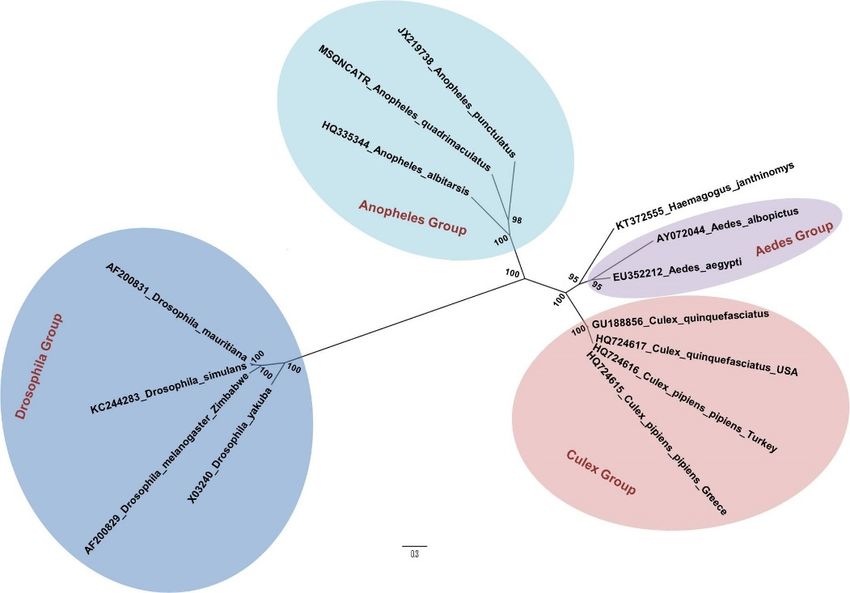
Pathogens 2020, 9, 265                                                                              2 of 11

2. Vector or not yet Vector: Guilty or Presumed Innocent
     Two species of mosquitoes of particular relevance to human public health, Aedes aegypti and
Aedes albopictus, are good models for understanding, estimating and, if possible, anticipating and
limiting the risk of emergence, establishment and transmission of pathogens to humans by vectors [3,4].
Aedes aegypti was suspected to be a vector of the yellow fever virus by Beauperthuy and later Finlay
since the middle of the 19th century [5,6], and experimentally demonstrated as a vector in 1900 by
Reed et al. [7], and therefore an enemy to be killed [8,9]. In contrast, Ae. albopictus became widely
known only over the last 40 years when it was gradually detected on all continents (except Antarctica)
outside its native region of Southeast Asia and implicated in the recent chikungunya pandemic [10,11].
These two species (aegypti and albopictus) of genus Aedes and subgenus Stegomyia are responsible for
virtually all major outbreaks of diseases caused by the major primate arboviruses: dengue, Zika,
chikungunya, and yellow fever. Both mosquitoes are invasive species, spreading thanks to man-made
means of transport, and are extremely well adapted to human environments.
     Transmission of viruses to humans by mosquitoes seems to be the rule for many public health
officers. Actually, it is an exception. The vast majority of mosquitoes do not transmit human diseases.
Of the 3585 species of mosquitoes currently formally described, less than 30 transmit the yellow fever
virus, either naturally or in the laboratory. In other words, more than 3500 species of mosquitoes do
not transmit the yellow fever virus. They are not guilty. There are many reasons for this: (1) the virus
is not present in the geographical area of the vector mosquito species; either by “luck” because it was
never introduced, or due to the absence of vertebrate amplifying hosts allowing the maintenance of
cycles (primates in the case of yellow fever); (2) the mosquito is not competent to transmit (absence of
required receptors or innate immunity controlling the pathogen); (3) the biology of the mosquito is not
compatible with transmission (life span too short, does not take blood meals from primates, etc.).
     However, our present understanding should not be taken as dogma. We must keep an open
mind and explore what factors can make a non-vector mosquito become a vector, or what can cause
a so-called “secondary” vector to become a major vector for humans. To continue our metaphor,
what turns an “innocent” mosquito into a “guilty” menace; then into an effective vector to humans?
In theory, it is very simple. Only two conditions are necessary: (1) the mosquito is physiologically
capable of sustaining a virus infection that spreads to saliva and takes multiple blood meals from
primates, i.e., was always a potential vector, (2) an event or several events occur in its environment
that allow it to express this vector potential. Subsequently, adaptive mechanisms, under selection
pressure, may cause this mosquito to become responsible for severe outbreaks. However, while this
seems simple, in reality, a large number of factors are necessary for the conditions to be met that allow
the emergence of a new vector.

3. Short History of Yellow Fever: Once Upon a Time in America
     The yellow fever virus circulates in African forests from monkey to monkey, transmitted by forest
Aedes (Ae. africanus, Ae. luteocephalus, Ae. furcifer, Ae. simpsoni s.l., Ae. opok, etc.), with incursions
into villages where domestic anthropophilic Ae. aegypti are established, and able to replicate and
transmit YF virus [12]. These domestic Ae. aegypti are themselves the result of a slow adaptation of
forest ancestors to human habitats and blood [13]. The virus, once in humans, following cross species
transmission, can be introduced through the movement of humans into African cities, where it finds
Ae. aegypti populations adapted to urbanisation and able to generate outbreaks.
     This village or urban yellow fever virus, already adapted to human and Ae. aegypti, was introduced
into tropical America, probably via viremic people and/or Ae. aegypti transported on ships, during
the triangular slave trade, which started in the 16th century [14,15]. Upon arrival to the Central and
South American rainforest, not only did the virus find susceptible New World monkeys but also new
competent endemic mosquitoes from two genera, Sabethes sp. and especially Haemagogus sp. Yellow
fever virus thus had a second phase of cross species transmission (African monkeys to American
monkeys, African Aedes mosquitoes to American mosquitoes).
Pathogens 2020, 9, 265 3 of 11
The evolutionary history of Haemagogus genus mosquitoes, which are only found in the New
World, is not well known. Phylogenetically, they seem to be quite close to the Aedes (Figure 1), which
may explain
Pathogens 2020, 9,their
x FORability to transmit, more or less, the same viruses as Aedes aegypti: yellow 3fever,
PEER REVIEW of 10
dengue [16], Zika [17], and chikungunya [18], all introduced into South America. New cycles of jungle
yellow fever
feverhave havethusthus
developed, involving
developed, South American
involving South Americanprimates and tree-dwelling
primates Haemagogus
and tree-dwelling
mosquitoes. These cyclesThese
Haemagogus mosquitoes. have spread
cycles havethroughout
spread South and Central
throughout South America,
and Centralwhere they are
America, still
where
active,
they areasstill
shown by as
active, theshown
2016–2018
by the yellow feveryellow
2016–2018 epidemic in epidemic
fever Brazil, with more than
in Brazil, with700 deaths
more than[19].
700
This
deathscombination of both a sylvan
[19]. This combination of both and an urban
a sylvan andcycle
an urbanfor yellow fever
cycle for in the
yellow Americas
fever regularly
in the Americas
fuelled
regularlyepidemics that greatlythat
fuelled epidemics affected
greatlythe affected
history of colonization
the of the New World
history of colonization of the[20].
New Ae. aegypti
AsWorld [20].
adapted to American cities, even non-tropical locations were subject to yellow
As Ae. aegypti adapted to American cities, even non-tropical locations were subject to yellow fever fever epidemics, such as
the well-known
epidemics, suchPhiladelphia epidemic
as the well-known in 1793 (5000
Philadelphia deaths).inA1793
epidemic largely successful
(5000 deaths). eradication program
A largely successful
against Ae. program
eradication aegypti beganagainstinitially in the
Ae. aegypti 1930sinitially
began and was started
in the 1930sbyand
thewas
Rockefeller
started by Foundation [21],
the Rockefeller
and this continued with DDT after World War II. At the same time, wide vaccination
Foundation [21], and this continued with DDT after World War II. At the same time, wide vaccination coverage was
undertaken.
coverage wasThis led to almost
undertaken. Thisnoledoutbreaks
to almostofno yellow fever of
outbreaks due to Ae.fever
yellow aegypti in to
due theAe.
Americas, since
aegypti in the
about 1970,since
Americas, about Ae.
although 1970,aegypti
althoughis again abundant
Ae. aegypti [22],
is again and able[22],
abundant to transmit
and abledengue fever
to transmit virus
dengue
and
feverthe recently
virus and the introduced Zika virus.Zika
recently introduced It is virus.
thought It isthat the Brazil
thought 2016-18
that the Brazilyellow
2016-18fever outbreak
yellow fever
was almost
outbreak wasentirely
almostdue to spill
entirely dueover fromover
to spill the from
sylvan the cycle andcycle
sylvan involved Haemagogus
and involved and Sabethes
Haemagogus and
mosquitoes [23,24].
Sabethes mosquitoes [23,24].
1. Phylogenetic
Figure 1. Phylogenetic tree
tree built
built by
by the
the method
method of maximumlLikelihood, from sequences of
mitochondrial genes COX1, COX2, NAD4, NAD5 and CYOB of Haemagogus janthinomys and other
species of
of Diptera,
Diptera,from
fromda
daSilva
SilvaLemos
Lemosetet
al.al. 2017
2017 [25].
[25]. TheThe bootstrap
bootstrap values
values are represented
are represented in
in each
each
node.node.
Interestingly,
Interestingly,endemic
endemicyellow
yellow fever
fever has
has never
never been
been reported
reported in
in Asia,
Asia, Madagascar
Madagascar or other Indian
or other Indian
Ocean
Ocean islands,
islands, for
for reasons
reasons that
that are
are still
still poorly
poorly understood.
understood. Primates
Primates (monkeys
(monkeys and
and humans)
humans) from
from
these regions are susceptible, and Ae. aegypti and other experimentally competent Aedes mosquitoes
these regions are susceptible, and Ae. aegypti and other experimentally competent Aedes mosquitoes
are
are present
present there
there [26–28]. Importantly, Haemagogus
[26–28]. Importantly, Haemagogus sp. and Sabethes
sp. and Sabethes sp. are absent
sp. are absent from
from Africa,
Africa, the
the
Indian
Indian Ocean
Ocean and
and Asia.
Asia.
4. The Necessary Conditions
The history of yellow fever leads us to the consideration of the factors necessary, but not always
sufficient, for a mosquito species that was initially of little interest to humans, to become a public
health problem and an enemy to fight.
First of all, the mosquito, or to be precise, a given population of a given species of mosquito,
must be biologically able to transmit the virus. This ability is called vectorial capacity, which includes
vector competence (i.e., the ability of a mosquito to become infected after ingestion of an infectedPathogens 2020, 9, 265 4 of 11
4. The Necessary Conditions
The history of yellow fever leads us to the consideration of the factors necessary, but not always
sufficient, for a mosquito species that was initially of little interest to humans, to become a public
health problem and an enemy to fight.
First of all, the mosquito, or to be precise, a given population of a given species of mosquito,
must be biologically able to transmit the virus. This ability is called vectorial capacity, which includes
vector competence (i.e., the ability of a mosquito to become infected after ingestion of an infected blood
meal and later transmit the virus via its saliva). Both terms, vectorial capacity and vector competence,
have been formalized since MacDonald [29], summarized by Cohuet and coll. [30], and include the
following parameters:
• The vector–host ratio (i.e. the vector density in relation to vertebrate host): m (the mosquito
abundance);
• The human feeding rate: the number of human bites per mosquito, per day: a (mosquito - human
contact);
• The daily survival rate (i.e. the probability of a mosquito surviving each day): p (mosquito
longevity);
• The extrinsic development time, the time necessary for viruses to complete development from
ingestion in midgut to the saliva: n;
• The infectiousness of the mosquito to the vertebrate host: b (largely dependent on virus titre
in saliva)
• The susceptibility of the vertebrate host to the virus (e.g., immune state, age, health, etc): c;
• The vertebrate host infectious period: 1/r (how long the virus titre in the vertebrate remains at a
level needed to infect a mosquito);
Knowing the values of these parameters makes it possible to calculate the basic reproductive rate
of the virus, R0 .
R0 = (ma2 × pn / − ln p) × bc × 1/r (1)
R0 is the total number of cases derived from one infective case that the mosquito population
would distribute to vertebrate hosts. R0 must equal at least 1 for the disease to persist or spread. For
values less than 1, the disease will go extinct.
However, while we can write the simple equation above, in reality the parameters (m, a, p,
n, b, c, r) are themselves complex, being dependent on many other factors. For just the mosquito,
a non-exhaustive list includes mosquito genotype, mosquito microbiome including viruses, integrated
RNA virus sequences in mosquito genomes, predation, competition at larval and adult stage, previous
exposure to related viruses, etc. [31,32]. Moreover, it is not yet known which receptors in the cells of
the stomach and salivary glands of mosquitoes are involved in the entry and exit of flaviviruses, like
yellow fever virus [33].
Just this intrinsic biology of the mosquito is not sufficient to make it a vector. Its environment may,
or may not, allow this vector potential to manifest itself. According to Euzet and Combes [33], the
specificity of the vector–pathogen interaction passes through four stages, which they named encounter
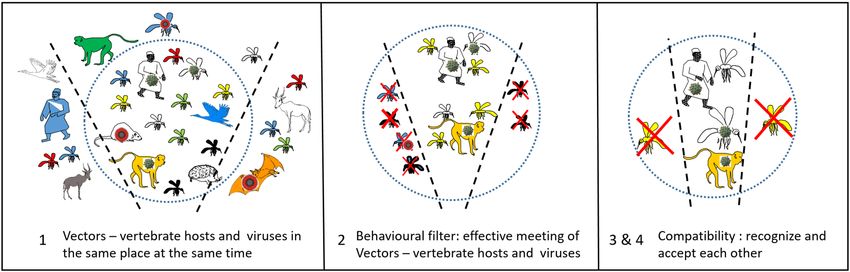
and compatibility filters (Figure 2). These four stages are: (1) to co-occur in space and time, (2) to meet
each other (behavior), (3) to recognize each other (receptors), and (4) to accept each other (immunity).Pathogens 2020, 9, 265 5 of 11
Pathogens 2020, 9, x FOR PEER REVIEW 5 of 10
Figure2.2. Encounter
Figure Encounter and
and compatibility
compatibilityfilters,
filters,from
fromEuzet
Euzetand
andCombes
Combes[34].
[34].
All these
5. Aedes conditions
albopictus: Fromare rarely
Local to met, andConcern
Global it is therefore understandable why being a vector is an
exception. However, considering the very large number of mosquito species and large number of
viruses,Aedes
whilealbopictus became widely
we are presently facing only known only number
a limited over theoflast 50 years,
dangerous when
cycles, it must
this was gradually
be a very
discovered on all continents outside its native Asia and caused a chikungunya
small fraction of thousands, if not millions, of other potential cycles that have failed. The understanding pandemic
[10,11,35,36].
of A total of
the current efficient moreallows
cycles than 40 us viruses can be
to conceive transmitted
possible future naturally
cycles. or experimentally by Ae.
albopictus
We can [36]. Experimentally,
hypothesize that onlyit will takespecies
a few blood fromin themany
generavertebrate species [37].and
Aedes, Haemagogus, It also lives longer
Sabethes have
than Aedes aegypti [38]. Aedes albopictus therefore perfectly fulfils the necessary
the capacity to replicate and transmit yellow fever virus to primates, i.e. (1) possess the receptors for conditions in terms of
biology and events to be an excellent vector of virus to humans.
cellular penetration of the virus, (2) have insufficient innate immunity to suppress virus replication,
(3) liveAedes
in thealbopictus is considered
same environments as to be phylogeographically
viremic vertebrates (monkeys native to Southeast
or humans), Asia
(4) take blood[10].from
This
assumption is based on the fact that this mosquito
these vertebrates, and (5) survive long enough to retransmit the virus. is present everywhere in the forested areas of this
region and that many species close to the Albopictus subgroup, member of the Scutellaris group, are
Aedes in
5.present albopictus:
Southeast From Local to Global
Asia. However, Concern
the notoriety of Ae. albopictus, compared to relatives, comes from
the fact
Aedes albopictus became widely known only over theworldwide
that it has moved out of its area of origin, becoming in 50 years,
last 50 years, when adapting perfectly
it was gradually
to urbanization,
discovered on all temperate
continents climates,
outside its and international
native transport,
Asia and caused as well as being
a chikungunya involved
pandemic in several
[10,11,35,36].
dengue and chikungunya epidemics.
A total of more than 40 viruses can be transmitted naturally or experimentally by Ae. albopictus [36].
In tropical itSoutheast
Experimentally, will take Asia,
bloodthe from five morphologically
many vertebrate species closely related
[37]. It alsospecies of the than
lives longer Albopictus
Aedes
subgroup
aegypti [38].live in forests
Aedes (Aedes
albopictus novalbopictus,
therefore perfectlyAedes
fulfilspatriciae, Aedes seatoi,
the necessary Aedesin
conditions subalbopictus
terms of biologyand Aedes
and
pseudalbopictus)
events and lay their
to be an excellent vectoreggs in tree
of virus to holes
humans.and bamboo stumps [39,40]. These species are likely
to beAedes
vectors of arboviruses
albopictus to vertebrates
is considered to befrom which they take blood.
phylogeographically These
native to forest-confined
Southeast Asia viruses
[10].
are largely unknown, but may emerge through increased contact
This assumption is based on the fact that this mosquito is present everywhere in the forestedwith humans or domestic animals
(see below).
areas They could
of this region thenmany
and that be transmitted
species close by to
domestic vectors, subgroup,
the Albopictus such as Ae.member
aegypti and Ae.Scutellaris
of the albopictus,
in a pattern
group, similarintoSoutheast
are present the emergence of the yellow
Asia. However, the fever virusofinAe.
notoriety Africa from forests
albopictus, compared to villages [12].
to relatives,
In Laos, Ae. albopictus is reported from deep natural forest [41],
comes from the fact that it has moved out of its area of origin, becoming worldwide in 50 years, rubber forest and secondary
forest [42],
adapting as wellto as
perfectly in towns and
urbanization, villages.
temperate In contrast,
climates, in neighbouring
and international countries,
transport, as well such as in
as being
Cambodia, this mosquito was found along hundreds of meters of forest edge, whereas Ae.
involved in several dengue and chikungunya epidemics.
pseudalbopictus, is found in deeper natural forests. Aedes albopictus is frequently found in cities such
In tropical Southeast Asia, the five morphologically closely related species of the Albopictus
as the capital, Phnom Penh (Boyer pers. com.). Similarly, in Malaysia, Ae. albopictus is rare in forests
subgroup live in forests (Aedes novalbopictus, Aedes patriciae, Aedes seatoi, Aedes subalbopictus and Aedes
[43], and in Yunnan Province, China, Ae. albopictus is sometimes more abundant than Ae.
pseudalbopictus) and lay their eggs in tree holes and bamboo stumps [39,40]. These species are likely to
pseudalbopictus in bamboo forests, but is often absent from deep forests [40].
be vectors of arboviruses to vertebrates from which they take blood. These forest-confined viruses are
Outside Asia, Ae. albopictus populations display highly variable success in invading the deep
largely unknown, but may emerge through increased contact with humans or domestic animals (see
forest. In Brazil, where Ae. albopictus was observed for the first time in the 1980s, Pereira dos Santos
below). They could then be transmitted by domestic vectors, such as Ae. aegypti and Ae. albopictus, in a
et al. found that Ae. albopictus was able to enter degraded forest in the Manaus region, up to 750 metres
pattern similar to the emergence of the yellow fever virus in Africa from forests to villages [12].
from the edge [44]. In Gabon, where Ae. albopictus was first reported in 2007, it was captured 12 years
In Laos, Ae. albopictus is reported from deep natural forest [41], rubber forest and secondary
later in the Lopé natural forest, several kilometres from villages or clearings (Paupy pers. com.).
forest [42], as well as in towns and villages. In contrast, in neighbouring countries, such as in Cambodia,
In both its native range Asia and recently invaded South America and Africa, Ae. albopictus has
this mosquito was found along hundreds of meters of forest edge, whereas Ae. pseudalbopictus, is found
retained its ancestral capacity to colonize forest environments, laying eggs in natural pools of water
in deeper natural forests. Aedes albopictus is frequently found in cities such as the capital, Phnom Penh
and taking blood from nondomestic vertebrates. It is logical to think that under these conditions, Ae.
(Boyer pers. com.). Similarly, in Malaysia, Ae. albopictus is rare in forests [43], and in Yunnan Province,
albopictus populations would take blood from vertebrates carrying as yet unknown viruses, such as
from monkeys, terrestrial mammals, birds or reptiles. If these forest-breeding Ae. albopictus are able
to replicate these viruses, and then retransmit them to humans, they would then be excellent bridgePathogens 2020, 9, 265 6 of 11
China, Ae. albopictus is sometimes more abundant than Ae. pseudalbopictus in bamboo forests, but is
often absent from deep forests [40].
Outside Asia, Ae. albopictus populations display highly variable success in invading the deep
forest. In Brazil, where Ae. albopictus was observed for the first time in the 1980s, Pereira dos Santos et
al. found that Ae. albopictus was able to enter degraded forest in the Manaus region, up to 750 metres
from the edge [44]. In Gabon, where Ae. albopictus was first reported in 2007, it was captured 12 years
later in the Lopé natural forest, several kilometres from villages or clearings (Paupy pers. com.).
In both its native range Asia and recently invaded South America and Africa, Ae. albopictus has
retained its ancestral capacity to colonize forest environments, laying eggs in natural pools of water
and taking blood from nondomestic vertebrates. It is logical to think that under these conditions,
Ae. albopictus populations would take blood from vertebrates carrying as yet unknown viruses, such as
from monkeys, terrestrial mammals, birds or reptiles. If these forest-breeding Ae. albopictus are able
to replicate these viruses, and then retransmit them to humans, they would then be excellent bridge
vectors, allowing the emergence of forest viruses hitherto confined to sylvatic Aedes-vertebrates cycles.
We can speculate that this is most likely to occur in Asia. In Africa, Ae. aegypti has already brought
many, perhaps most, human adapted viruses from the forest to human habitats, such as yellow fever,
dengue, chikungunya, and Zika viruses [13].
Mogi et al. [40], suggest that the spreading of Ae. albopictus from its original tropical forest region
was possible following evolution from an ancestral wild species, due to adaptation to man-made
habitats and then migration with humans to temperate climate regions, where Ae. albopictus developed
a winter diapause. In most introduced localities, it probably encountered only limited competition
from native mosquitoes and when it did, Ae. albopictus proved to be a robust competitor, e.g., with
Ae. aegypti [45]. It is likely that the ancestral wild species was already a vector of forest vertebrate
arboviruses, for example, dengue-like flaviviruses, or chikungunya-like alphaviruses, which are
monkey viruses [46].
From the foregoing, it appears that Ae. albopictus, while being ancestrally a forest-breeding
mosquito like its close relatives, among these relatives it is the most closely adapted to forest margins
(ecotone), the transition from forest to degraded or secondary forests, open grasslands or scrub. Aedes
aegypti in Africa is similar [47]. This may have pre-adapted these two Aedes, among all their congeners
in Asia and Africa, to come into contact with human settlements and thus to adapt to this new niche,
human settlements.
From regions recently colonized by Ae. albopictus, “modern” populations, highly adapted to the
urban environment and able to transmit viruses such as chikungunya, Zika and dengue, spread to all
continents. It is likely that invasive populations re-invaded regions where ancestral populations already
existed, such as in Asia and the Indian Ocean. These ancestral populations then found themselves in
unfavourable competition and modern Ae. albopictus replaced them [48].
It is not too difficult to predict the epidemiological future of Ae. albopictus. Its geographical
distribution will increase, especially in temperate regions, its control by insecticides will be more
difficult due to the emergence of resistance, and human pathogenic viruses will adapt to this new
vector, increasing its efficiency to transmit. Ae. albopictus-vectored epidemics are almost certain to
increase. It could be responsible for the epidemics of yellow fever, or of currently unknown viruses
transmitted by forest edge Aedes mosquitoes of South American, South East Asia or Central Africa.
A major unknown for Ae. albopictus’ impact in temperate regions is whether arbovirus replication at
lower temperatures is selected to be rapid enough to reach saliva before the female dies.
6. Scenarios for the Future: The Worst Doesn’t Always Happen
To quote Charles Nicolle [1], it is certain that new epidemics will appear. Mosquitoes and
viruses are poised to ambush humans following changes in vector ecosystems [49]. The process of
establishment may be abrupt and rapid, as was the recent Zika pandemic with Ae. aegypti as vector, orPathogens 2020, 9, 265 7 of 11
more gradual, going through adapting mechanisms, as was the case with the emergence of the West
Nile virus in several temperate cities, particularly in the USA [50].
The optimistic view, but not very realistic, is that the worst is already behind us. Urban environments,
where the majority of the humans now live, are already colonized by Ae. aegypti, Ae albopictus, and/or
Culex pipiens, which transmit or can transmit known viruses of tropical or equatorial origin: dengue,
chikungunya, Zika, yellow fever, West Nile, as well as, at least potentially, many other tropical
viruses like Japanese encephalitis and Rift Valley fever, with variable success depending on species
and environments [13]. However, this optimistic view needs to be tempered. With global changes
(environment, climate, demography, movements), the distribution areas of some of these human adapted
vectors and viruses will continue to expand and we will see a steady increase of epidemics of viruses,
including in temperate regions. While we cannot predict details of time and place, we know it will
happen, and we can prepare for it.
A more pessimistic view is that the reservoir of unknown forest viruses, not presently affecting
humans, but potentially transmissible to domestic animals and humans, is immense in Asia, Central
and South America, and Africa. More than 500 arboviruses have so far been identified and described,
but this is only the tip of the iceberg. From about 1930–1980, the Rockefeller Foundation sponsored a
repository for viruses from field-collected arthropods, primarily mosquitoes, that reached more than
4000 isolates of insect-specific viruses or arboviruses, the vast majority of which are undescribed [51],
and even this collection is far from complete. Consequently, several non-exclusive scenarios for the
emergence of new human viral epidemics are possible:
(1) Via primate-biting bridge vectors such as Ae. albopictus from forest edges in South America, Africa
and Asia, forest Aedes of the Albopictus group in South East Asia, Haemagogus in South America,
Stegomyia from forest galleries in Africa. In South America, Haemagogus and Sabethes are likely to
transmit any new potential human viruses among primates and, as displayed by yellow fever, if
these viruses are capable of transitioning to transmission in human habitats, it is likely to have
already occurred.
(2) By misfortune, as happened with the establishment of a sylvan cycle of yellow fever in Central and
South America 500 years ago, new viruses may appear in transmission cycles that are heretofore
unknown. The increase in trade and travel, and the establishment of invasive species (such as
Ae. albopictus, Ae. koreicus, and Ae. japonicus, and even Ae. aegypti in Europe) suggest that this risk
should not be overlooked.
(3) Via increased human contacts with wild cycles due to deforestation and irrational forest
exploitation. These ecological modifications favour the emergence of viruses from forest edges,
and then to the human environment.
(4) Via zoonotic cycles. For example, many viruses (West Nile, Japanese encephalitis, St Louis
encephalitis virus, Murray valley, usutu) which are bird viruses, can be transmitted from birds (or
mammals such as pigs) to humans, via vectors taking blood meals from both birds and humans,
such as Cx. tritaeniorhynchus or Cx. pipiens, Cx. quinquefasciatus. It is very likely that some of
these viruses, presently confined to wild cycles, will emerge in the coming years somewhere in
the world, as a result of socio-ecological changes. Their shift from endemic to epidemic will be
facilitated by close contact between humans and vertebrate hosts (urban commensal birds or
rodents, farm animals).
(5) By opening an ecological niche in urbanized areas. It is conceivable that local effective vector
control by way of elimination of Ae. aegypti or Ae. albopictus would open their ecological niche in
some areas, allowing a new species, such as Ae. malayensis in South-East Asia, already recognized
as a vector of dengue and chikungunya viruses, to begin to colonize even closer to human
populations. This scenario has not happened yet. Aedes albopictus may have replaced Ae. aegypti
or vice versa, but for the moment no third species, with high vectorial capacity, has occupied
their niches.Pathogens 2020, 9, 265 8 of 11
(6) Via the evolution of viruses already known, but which have not yet found the conditions for
emerging and spreading. Genetic changes in virus strains could lead to better adaptation
to new vectors and a better transmissibility, as happened with the chikungunya virus and
Ae. albopictus [52]. Viruses may also evolve resistance to drugs, when any are used, or human
immune defences. Given the short generation time, large population size, and high mutation rate
of RNA viruses (like yellow fever, dengue, and most pathogenic arboviruses), virus adaptation to
efficient transmission by a human-preferring mosquito is rapid. That is, the virus more readily
adapts to the mosquito (and vertebrate host), not the mosquito to the virus [53].
Among the hundreds of wild animal viruses, several viruses are regularly cited as worthy of
surveillance. This is the case of the Mayaro alphavirus, closely related to the chickungunya virus. It is a
South American virus of mammals, including monkeys, mainly transmitted by Haemagogus mosquitoes,
and which could adapt to urban Ae. aegypti or Ae. albopictus, or to some other anthrophilic Culicidae.
However, these other mosquitoes are considered poor vectors [54,55]. In Africa, the Spondweni virus
is genetically close to the Zika virus, which places it on the list of viruses to keep an eye on. While it is
indeed pathogenic to humans, very few human cases have been detected; it has no known domestic
cycle. It is poorly transmitted experimentally by Aedes (Stegomyia), being efficiently transmitted by
zoophilic mosquitoes (Aedes circumluteolus, Mansonia africana), but this situation could change [56].
Indeed, this virus has already been found in Haiti [57] in Cx. quinquefasciatus, a human-biting mosquito
recorded in all tropical regions.
7. Conclusions
On a final note of optimism, it is expected that new outbreaks can be detected more quickly, thanks
to surveillance and warning systems that have improved greatly in recent decades and thanks to the
development of efficient, rapid and less costly diagnostic techniques. Moreover, not all emergences
will find favourable environments, including encounter and compatibility filters, and are likely to
quickly die out. For public health authorities to succeed in limiting new outbreaks, The International
Health Regulations, published in 2005 by WHO [58], provide a framework and obligations for member
states, and give hope that new epidemics could be brought under control through early detection,
efficient vector control, vaccination when available, and other public health measures. While worst
case scenarios should be planned for, they seldom actually arise. However, they happen regularly and
the recent Covid-19 pandemic, which was not caused by an arbovirus, reminds us that, although we
are aware that this can happen, we are not always properly prepared.
Author Contributions: Both authors, D.F. and J.R.P. wrote the paper. All authors have read and agree to the
published version of the manuscript.
Funding: Publication fees were covered by Institut de Recherche pour le Développement (IRD).
Acknowledgments: We thank Poliana da Silva Lemos, for permission to use Figure 1 on phylogeny of
Haemagogus janthinomys, Christophe Paupy for useful discussion and non-published data, and Sébastien Boyer for
non-published data from Cambodia.
Conflicts of Interest: The authors declare no conflict of interest.
References
1. Nicolle, C. Destin des Maladies Infectieuses; Librairie Félix Alcan: Paris, France, 1933; p. 216.
2. Grmek, M. Les Maladies à L’aube de la Civilisation Occidentale; PAYOT: Paris, France, 1983; p. 527.
3. Weaver, S.C. Prediction and prevention of urban arbovirus epidemics: A challenge for the global virology
community. Antivir. Res. 2018, 156, 80–84. [CrossRef]
4. Brady, O.J.; Hay, S.I. The Global Expansion of Dengue: How Aedes aegypti Mosquitoes Enabled the First
Pandemic Arbovirus. Ann. Rev. Entomol. 2020, 65, 191–208. [CrossRef]
5. Agramonte, A. An account of Dr. Louis-Daniel Beauperthuy, a pioneer in yellow fever research. Boston Med.
Surg. J. 1908, 158, 927–930. [CrossRef]Pathogens 2020, 9, 265 9 of 11
6. Finlay, C.J. The mosquito hypothetically considered as the agent of transmission of yellow fever. Presented at
the Real Academia de Ciencias Medicas, Fısicas y Naturales de La Habana, Havana, Cuba, 14 August 1881.
7. Reed, W.; Carroll, J.; Agramonte, A.; Lazear, J.W. The etiology of yellow fever: A preliminary note. Philad.
Med. J. 1900, 6, 790–796.
8. Christophers, S.R. Aedes aegypti (L.), the Yellow Fever Mosquito. In Its Life History, Bionomics, and Structure;
Cambridge University Press: New York, NY, USA, 1960.
9. Souza-Neto, J.A.; Powell, J.R.; Bonizzoni, M. Aedes aegypti vector competence studies: A review. Infect. Genet.
Evol. 2019, 67, 191–209. [CrossRef]
10. Hawley, A.H. The biology of Aedes albopictus. J. Am. Mosq. Control Assoc. 1988, 1, 1–39.
11. Kotsakiozi, P.; Richardson, J.B.; Pichler, V.; Favia, G.; Martins, A.J.; Urbanelli, S.; Armbruster, P.A.; Caccone, A.
Population genomics of the Asian tiger mosquito, Aedes albopictus: Insights into the recent worldwide
invasion. Ecol. Evol. 2017, 7, 10143–10157. [CrossRef]
12. WHO. Prevention and Control of Yellow Fever in Africa; World Health Organization: Geneva, Switzerland, 1986;
p. 96.
13. Powell, J.R. Mosquito-Borne Human Viral Diseases: Why Aedes aegypti? Am. J. Trop. Med. Hyg. 2018, 98,
1563–1565. [CrossRef]
14. Powell, J.R.; Gloria-Soria, A.; Kotsakiozi, P. Recent history of Aedes aegypti: Vector genomics and epidemiology
records. Bioscience 2018, 68, 854–860. [CrossRef]
15. Chippaux, J.; Chippaux, A. Yellow fever in Africa and the Americas: A historical and epidemiological
perspective. J. Venom. Anim. Toxins Incl. Trop. Dis. 2018, 24, 20. [CrossRef]
16. de Figueiredo, M.L.; de C Gomes, A.; Amarilla, A.A.; de S Leandro, A.; de S Orrico, A.; de Araujo, R.F.; do S
M Castro, J.; Durigon, E.L.; Aquino, V.H.; Figueiredo, L.T. Mosquitoes infected with dengue viruses in Brazil.
Virol. J. 2010, 7, 152. [CrossRef]
17. Fernandes, R.S.; Bersot, M.I.; Castro, M.G.; Telleria, E.L.; Ferreira-de-Brito, A.; Raphael, L.M.; Bonaldo, M.C.;
Lourenço-de-Oliveira, R. Low vector competence in sylvatic mosquitoes limits Zika virus to initiate an
enzootic cycle in South America. Sci. Rep. 2019, 9, 20151. [CrossRef]
18. Figueiredo, L.T.M. Human Urban Arboviruses Can Infect Wild Animals and Jump to Sylvatic Maintenance
Cycles in South America. Front. Cell. Infect. Microbiol. 2019, 9, 259. [CrossRef]
19. Jácome, R.; Carrasco-Hernández, R.; Campillo-Balderas, J.A.; López-Vidal, Y.; Lazcano, A.; Wenzel, R.P.;
Ponce de León, S. A yellow flag on the horizon: The looming threat of yellow fever to North America. Int. J.
Infect. Dis. 2019, 87, 143–150. [CrossRef]
20. McNeill, J.R. Mosquito Empires. In Ecology and War in the Greater Caribbean, 1620–1914; Cambridge University
Press: New York, NY, USA, 2010.
21. Soper, F.L. The elimination of urban yellow fever in the Americas through eradication of Aedes aegypti. Am. J.
Publ. Health 1963, 53, 7–16. [CrossRef]
22. Webb, J.L., Jr. Aedes aegypti suppression in the Americas: Historical perspectives. Lancet 2016, 388, 556–557.
[CrossRef]
23. Couto-Lima, D.; Madec, Y.; Bersot, M.I.; Compos, S.S.; de Albuquerque Motta, M.; Barreto dos Santos, F.;
Vazeille, M.; Vasconcelos, P.F.; Lourenco-de-Oliveira, R.; Failloux, A.B. Potential risk of re-emergence of
urban transmission of yellow fever virus in Brazil facilitated by competent Aedes populations. Sci. Rep. 2017,
7, 4848. [CrossRef]
24. Moreira-Soto, A.; Torres, M.C.; Lima de Mendonça, M.C.; Mares-Guia, M.A.; Dos Santos Rodrigues, C.D.;
Fabri, A.A.; Dos Santos, C.C.; Machado Araújo, E.S.; Fischer, C.; Ribeiro Nogueira, R.M.; et al. Evidence
for multiple sylvatic transmission cycles during the 2016–2017 yellow fever virus outbreak, Brazil. Clin.
Microbiol. Infect. 2018, 24, 1019. [CrossRef]
25. Lemos, P.S.; Monteiro, H.A.O.; Castro, F.C.; Lima, C.P.S.; Silva, D.E.A.; Vasconcelos, J.M.; Oliveira, L.F.;
Silva, S.P.; Cardoso, J.F.; Vianez-Júnior, J.L.S.G.; et al. Caracterização do genoma mitocondrial de Haemagogus
janthinomys (Diptera: Culicidae). DNA Mitocondrial 2017, 28, 50–51. [CrossRef]
26. Tabachnick, W.J.; Wallis, G.P.; Aitken, T.H.G.; Miller, B.R.; Amato, G.D.; Lorenz, L.; Powell, J.R.; Beaty, B.R.
Oral infection of Aedes aegypti with yellow fever virus: Geographical variation and genetic considerations.
Am. J. Trop. Med. Hyg. 1985, 34, 1219–1224. [CrossRef]
27. Wasserman, S.; Tambyah, P.A.; Lim, P.L. Yellow fever cases in Asia: Primed for an epidemic. Int. J. Infect. Dis.
2016, 48, 98–103. [CrossRef]Pathogens 2020, 9, 265 10 of 11
28. Brey, P.T.; Fontenille, D.; Tang, H. Re-evaluate yellow fever risk in Asia-Pacific region. Nature 2018, 554, 31.
[CrossRef]
29. Macdonald, G. The Epidemiology and Control of Malaria; Oxford University Press: Oxford, UK, 1957.
30. Cohuet, A.; Harris, C.; Robert, V.; Fontenille, D. Evolutionary forces on Anopheles: What makes a malaria
vector? Trends Parasitol. 2010, 26, 130–136. [CrossRef]
31. Azar, S.R.; Weaver, S.C. Vector competence: What has Zika virus taught us. Viruses 2019, 11, 867. [CrossRef]
32. Houé, V.; Gabiane, G.; Dauga, C.; Suez, M.; Madec, Y.; Mousson, L.; Marconcini, M.; Yen, P.S.;
de Lamballerie, X.; Bonizzoni, M.; et al. Evolution and biological significance of flaviviral elements
in the genome of the arboviral vector Aedes albopictus. Emerg. Microbes Infect. 2019, 8, 1265–1279. [CrossRef]
33. Smith, D.R. An update on mosquito cell expressed dengue virus receptor proteins. Insect Mol. Biol. 2012, 21,
1–7. [CrossRef]
34. Combes, C. Parasitism: The Ecology and Evolution of Intimate Interactions; University of Chicago Press: Chicago,
IL, USA, 2001; p. 728.
35. Paupy, C.; Delatte, H.; Bagny, L.; Corbel, V.; Fontenille, D. Aedes albopictus, an arbovirus vector: From the
darkness to the light. Microbes Infect. 2009, 11, 1177–1185. [CrossRef]
36. Reiter, P.; Fontenille, D.; Paupy, C. Aedes albopictusas an epidemic vector of Chikungunya virus: Another
emerging problem? Lancet Inf. Dis. 2006, 6, 463–464. [CrossRef]
37. Delatte, H.; Desvars, A.; Bouetard, A.; Bord, S.; Gimonneau, G.; Vourc’h, G.; Fontenille, D. Blood-feeding
behavior of Aedes albopictus, vector of chikungunya on La Reunion. Vector Borne Zoonotic Dis. 2008, 8, 25–34.
[CrossRef]
38. Brady, O.J.; Johansson, M.A.; Guerra, C.A.; Bhatt, S.; Golding, N.; Pigott, D.M.; Delatte, H.; Grech, M.G.;
Leisnham, P.T.; Maciel-de-Freitas, R.; et al. Modelling adult Aedes aegypti and Aedes albopictus survival at
different temperatures in laboratory and field settings. Parasites Vectors 2013, 6, 351. [CrossRef]
39. Huang, Y.M. Contributions to the mosquito fauna of Southeast Asia. XIV. The subgenus Stegomyia of Aedes
in Southeast Asia. I. The scuterallis group of species. Contrib. Am. Entomol. Inst. 1972, 9, 1–109.
40. Mogi, M.; Armbruster, P.A.; Tuno, N.; Aranda, C.; Yong, H.S. The climate range expansion of Aedes albopictus
(Diptera: Culicidae) in Asia inferred from the distribution of Albopictus subgroup species of Aedes (Stegomyia).
J. Med. Entomol. 2017, 54, 1615–1625. [CrossRef] [PubMed]
41. Miot, E. Potential of the mosquito Aedes malayensis as an arbovirus vector in South East Asia. Ph.D. Thesis,
Sorbonne University, Paris, France, 20 December 2019.
42. Tangena, J.A.; Thammavong, P.; Malaithong, N.; Inthavong, T.; Ouanesamon, P.; Brey, P.T.; Lindsay, S.W.
Diversity of mosquitoes (Diptera: Culicidae) attracted to human subjects in rubber plantations, secondary
forests, and villages in Luang Prabang Province, northern Lao PDR. J. Med. Entomol. 2017, 54, 1589–1604.
[CrossRef] [PubMed]
43. Lee, J.M.; Wasserman, R.J.; Gan, J.Y.; Wilson, R.F.; Rahman, F.; Yek, S.H. Human activities attract harmful
mosquitoes in a tropical urban landscape. EcoHealth 2020, 17, 52–63. [CrossRef]
44. Pereira Dos Santos, T.; Roiz, D.; Santos de Abreu, F.V.; Luz, S.L.B.; Santalucia, M.; Jiolle, D.; Santos
Neves, M.S.A.; Simard, F.; Lourenço-de-Oliveira, R.; Paupy, C. Potential of Aedes albopictus as a bridge vector
for enzootic pathogens at the urban-forest interface in Brazil. Emerg. Microbes Infect. 2018, 7, 191. [CrossRef]
45. Lounibos, L.P.H. Invasions by Insect Vectors of Human Disease. Ann. Rev. Entomol. 2002, 47, 233–266.
[CrossRef]
46. Pandit, P.S.; Doyle, M.M.; Smart, K.M.; Young, C.C.W.; Drape, G.W.; Johnson, C.K. Predicting wildlife
reservoirs and global vulnerability to zoonotic Flaviviruses. Nat. Commun. 2018, 9, 5425. [CrossRef]
47. Lounibos, L.P. Habitat segregation among African treehole mosquitoes. Ecol. Entomol. 1981, 6, 129–154.
[CrossRef]
48. Delatte, H.; Bagny, L.; Brengue, C.; Bouetard, A.; Paupy, C.; Fontenille, D. The invaders: Phylogeography of
dengue and chikungunya viruses Aedes vectors, on the South West islands of the Indian Ocean. Infect. Genet.
Evol. 2011, 11, 1769–1781. [CrossRef]
49. Gould, E.; Pettersson, J.; Higgs, S.; Charrel, R.; de Lamballerie, X. Emerging arboviruses: Why today? One
Health 2017, 4, 1–13. [CrossRef]
50. Hadfield, J.; Brito, A.F.; Swetnam, D.M.; Vogels, C.B.F.; Tokarz, R.E.; Andersen, K.G.; Smith, R.C.; Bedford, T.;
Grubaugh, N.D. Twenty years of West Nile virus spread and evolution in the Americas visualized by
Nextstrain. PLoS Pathog. 2019, 15, e1008042. [CrossRef] [PubMed]Pathogens 2020, 9, 265 11 of 11
51. Murphy, F.A.; Calisher, C.H.; Tesh, R.B.; Walker, D.H. In memoriam: Robert Ellis Shope (1929–2004). Emerg.
Infect. Dis. 2004, 10, 762–765. [CrossRef]
52. Schuffenecker, I.; Iteman, I.; Michault, A.; Murri, S.; Frangeul, L.; Vaney, M.C.; Lavenir, R.; Pardigon, N.;
Reynes, J.M.; Pettinelli, F.; et al. Genome Microevolution of Chikungunya Viruses Causing the Indian Ocean
Outbreak. PLoS Med. 2006, 3, e263. [CrossRef]
53. Powell, J.R. An evolutionary perspective on vector-borne diseases. Front. Gent. 2019, 10, 1266. [CrossRef]
[PubMed]
54. Abad-Franch, F.; Grimmer, G.H.; de Paula, V.S.; Figueiredo, L.T.; Braga, W.S.M.; Luz, S.L.B. Mayaro Virus
Infection in Amazonia: A Multimodel Inference Approach to Risk Factor Assessment. PLoS Negl. Trop. Dis.
2012, 6, e1846. [CrossRef] [PubMed]
55. Pezzi, L.; A Diallo, M.; Rosa-Freitas, M.G.; Vega-Rua, A.; Ng, L.F.P.; Boyer, S.; Drexler, J.F.; Vasilakis, N.;
Lourenço-de-Oliveira, R.; Weaver, S.C.; et al. GloPID-R report on chikungunya, o’nyong-nyong and Mayaro
virus, part 5: Entomological aspects. Antivir. Res. 2020, 174, 104670. [CrossRef] [PubMed]
56. Haddow, A.D.; Nasar, F.; Guzman, H.; Ponlawat, A.; Jarman, R.G.; Tesh, R.B.; Weaver, S.C. Genetic
Characterization of Spondweni and Zika Viruses and Susceptibility of Geographically Distinct Strains of
Aedes aegypti, Aedes albopictus and Culex quinquefasciatus (Diptera: Culicidae) to Spondweni Virus. PLoS Negl.
Trop. Dis. 2016, 10, e0005083. [CrossRef]
57. White, S.K.; Lednicky, J.A.; Okech, B.A.; Morris, J.G., Jr.; Dunford, J.C. Spondweni Virus in Field-Caught
Culex quinquefasciatus Mosquitoes, Haiti, 2016. Emerg. Infect. Dis. 2018, 24, 1765–1767. [CrossRef]
58. WHO. International Health Regulations, 3rd ed.; World Health Organization: Geneva, Switzerland, 2005; p. 74.
© 2020 by the authors. Licensee MDPI, Basel, Switzerland. This article is an open access
article distributed under the terms and conditions of the Creative Commons Attribution
(CC BY) license (http://creativecommons.org/licenses/by/4.0/).You can also read


