INVOLVEMENT OF A DIHYDRODIPICOLINATE SYNTHASE GENE (FADHDPS1) IN FUNGAL DEVELOPMENT, PATHOGENESIS AND STRESS RESPONSES IN FUSARIUM ASIATICUM
←
→
Page content transcription
If your browser does not render page correctly, please read the page content below
Ren et al. BMC Microbiology (2018) 18:128
https://doi.org/10.1186/s12866-018-1268-7

 RESEARCH ARTICLE                                                                                                                                 Open Access

Involvement of a dihydrodipicolinate
synthase gene (FaDHDPS1) in fungal
development, pathogenesis and stress
responses in Fusarium asiaticum
Weichao Ren , Jiting Tao, Dongya Shi, Wenchan Chen and Changjun Chen*

  Abstract
  Background: Dihydrodipicolinate synthase (DHDPS) is an allosteric enzyme, which catalyzes the first unique step of
  lysine biosynthesis in prokaryotes, higher plants and some fungi. To date, the biological roles of DHDPS in
  filamentous fungi are poorly understood.
  Results: In this study, on the basis of comparative genome resequencing, a DHDPS gene was found to be specific
  in Fusarium asiaticum, named FaDHDPS1, which showed high amino acid identity to that of entomopathogenic
  fungus. Subcellular localization of the FaDHDPS1-GFP fusion protein was mainly concentrated in the cytoplasm of
  conidia and dispersed in the cytoplasm during conidial germination. To reveal the biological functions, both
  deletion and complementation mutants of FaDHDPS1 were generated. The results showed that the FaDHDPS1
  deletion mutant was defective in conidiation, virulence and DON biosynthesis. In addition, deletion of FaDHDPS1
  resulted in tolerance to sodium pyruvate, lysine, low temperature and Congo red.
  Conclusion: Results of this study indicate that FaDHDPS1 plays an important role in the regulation of vegetative
  differentiation, pathogenesis and adaption to multiple stresses in F. asiaticum.
  Keywords: Fusarium asiaticum, FaDHDPS1, Development, Virulence, Stress responses

Background                                                                             FHB management have not been well established [5].
Fusarium head blight (FHB) is a severely devastating dis-                              Thus, comprehensive understanding of the fundamental
ease of wheat and other cereals caused by a complex of                                 biology of this pathogen can provide the basis for sus-
Fusarium species and leads to significant economic                                     tainable and long-term disease control.
losses worldwide [1]. In addition to quantitative yield                                  Lysine synthesis starts with the condensation of
losses, harvested grain sustains qualitative problems of                               aspartate-β-semialdehyde (ASA) and pyruvate into dihy-
contamination with mycotoxins such as deoxynivalenol                                   drodipicolinic acid in microbes and plants [6]. Dihydro-
(DON), nivalenol (NIV), and zearalenone (ZEN), posing                                  dipicolinate synthase (DHDPS), the enzyme that
an enormous threat to food and feed production [2].                                    catalyzes this reaction, is inhibited by the end-product
Due to diversities in climate and cropping systems, dif-                               lysine and is therefore thought to have a regulatory con-
ferent Fusarium species are associated with FHB in dif-                                trol on lysine synthesis [7, 8]. DHDPS has been exten-
ferent wheat growing areas. For Asia, one of the most                                  sively studied in bacteria and been purified to
common Fusarium species responsible for FHB is F.                                      homogeneity from Escherichia coli [9, 10]. Studies of
asiaticum [3, 4]. Despite the high economic impact of                                  mechanisms in E. coli indicated that DHDPS catalyzes
FHB on agricultural production, efficient strategies for                               the condensation reaction by means of a ping-pong
                                                                                       mechanism, that pyruvate binds to a lysine residue in
* Correspondence: changjun-chen@njau.edu.cn
                                                                                       the active site forming a Schiff base, and then the bind-
College of Plant Protection, Nanjing Agricultural University, Nanjing 210095,          ing of ASA is followed by condensation and release of
Jiangsu, China

                                         © The Author(s). 2018 Open Access This article is distributed under the terms of the Creative Commons Attribution 4.0
                                         International License (http://creativecommons.org/licenses/by/4.0/), which permits unrestricted use, distribution, and
                                         reproduction in any medium, provided you give appropriate credit to the original author(s) and the source, provide a link to
                                         the Creative Commons license, and indicate if changes were made. The Creative Commons Public Domain Dedication waiver
                                         (http://creativecommons.org/publicdomain/zero/1.0/) applies to the data made available in this article, unless otherwise stated.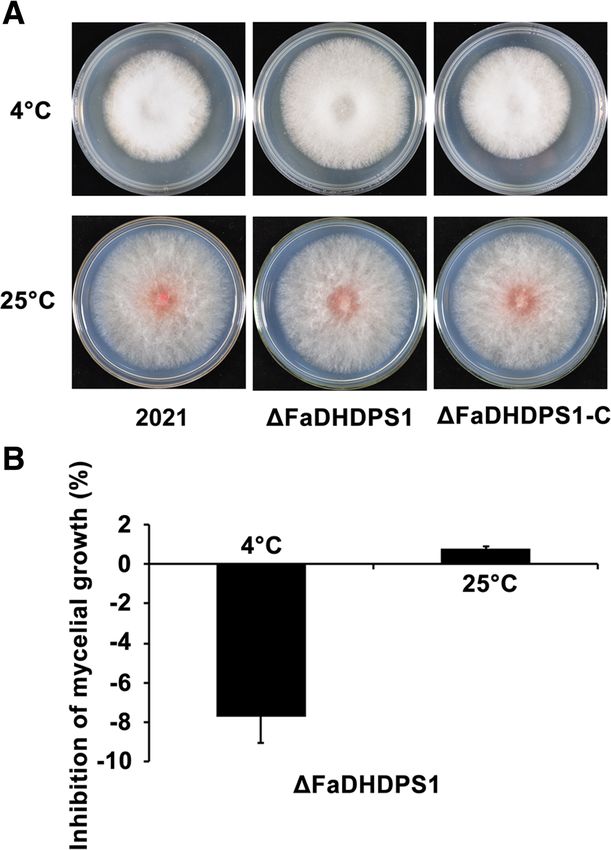
Ren et al. BMC Microbiology (2018) 18:128                                                                     Page 2 of 11

dihydrodipicolinic acid [9]. Besides lysine synthesis, this   1 L water for 20 min and filtered through cheese-
pathway produces some intermediate products that are re-      cloth) was used for conidiation assays [21]. Yeast ex-
quired for the synthesis of cell wall, housekeeping pro-      tract peptone dextrose (YEPD, 20 g dextrose, 10 g
teins, and virulence factors [11, 12]. Given its importance   peptone, 3 g yeast extract and 1 L water) was used
to pathogenic bacteria and absence in humans, DHDPS is        for conidial germination.
now regarded as a promising antibiotic target [13].
  DHDPS has also been studied in various plants,              Deletion and complementation of FaDHDPS1 in F.
such as tobacco [14], wheat [15], and maize [16].             asiaticum
Structural biology studies of DHDPS protein from to-          The gene replacement construct for deleting FaDHDPS1
bacco reveals that the plant DHDPS is a homotetra-            was generated using the method described previously
mer, which is made up of dimers [8]. The active site          [22]. Briefly, the 5′ and 3′ flanking regions of
and lysine binding site are located at the center and         FaDHDPS1 were amplified with the primer pairs listed
interface of each monomer, respectively. The structure        in Additional file 1: Table S1, and then fused with the re-
of most DHDPS enzymes from prokaryotes is homo-               sistance cassette carrying the hygromycin B resistance
tetrameric, apart from Staphylococcus aureus and              gene (HPH) and the herpes simplex virus thymidine kin-
Pseudomonas aeruginosa, which being as dimers [17,            ase gene (HSV-tk). The resulting PCR products were
18]. Although DHDPS from both bacteria and plants             transformed into the protoplasts of the WT progenitor
are composed of dimers, they employ a totally differ-         2021, as described previously [23]. Hygromycin B and
ent way of dimer assembly [19]. For higher plants,            5-Fluoro-2′-deoxyuridine were added to a final concen-
the feedback of DHDPS is also inhibited by the                tration of 100 μg mL− 1 and 50 ng mL− 1, respectively,
end-product lysine [20]. Thus, Lysine biosynthesis in         for transformants selection. For complementation, the
plants provides a promising target for the design of          full-length of FaDHDPS1 was amplified from the gen-
novel herbicides by lysine inhibition, or improving the       omic DNA of the strain 2021. Before this vector was
nutritional value of crops by increase of lysine              transformed into the FaDHDPS1 deletion mutant,
production.                                                   FaDHDPS1 in the vector was sequenced to ensure the
  For fungi, DHDPS is found not only in plant patho-          flawlessness of the sequence.
gen, but also in entomogenous fungus, however, to up-            Putative gene deletion mutants were identified by
date, the functions of DHDPS is elusive in filamentous        PCR assays with the relevant primers (Additional file 1:
fungi, including Fusarium spp. Comparing the genome           Table S1), and were further analyzed by the Southern
sequencing data of F. asiaticum wild-type strain 2021         blotting assays (Additional file 2: Figure S1). DNA of
with the F. graminearum sequenced strain PH-1,                each strain was extracted and then digested with the
FaDHDPS1 was unique in F. asiaticum. We hypothe-              appropriate restriction endonuclease, as indicated in
sized that FaDHDPS1 played crucial roles in the devel-        Additional file 2: Figure S1. The probe was labeled with
opment and pathogenesis of F. asiaticum, thus, main           digoxigenin (DIG) using a High Prime DNA Labeling
purposes of this study were to characterize the genetic,      and Detection Starter kit II according to the manufac-
biological and biochemical functions of FaDHDPS1.             turer’s instructions (Roche Diagnostics, Mannheim,
Our study showed that the FaDHDPS1 deletion mutant            Germany).
exhibited obviously phenotype changes in vegetative
differentiation, virulence and stress tolerance.              Mycelial growth and conidiation assays
                                                              To test sensitivity of each strain to different stresses,
Methods                                                       mycelial plugs (5-mm diameter) taken from the edge
Fungal strains and culture conditions                         of a 3-day-old colony were grown in the dark for
F. asiaticum wild-type (WT) strain 2021, which was iso-       3 days at 25 °C in 9-cm diameter Petri plates contain-
lated in wheat field from Zhejiang Province, China, was       ing PDA amended with 1.2 M NaCl or 1.2 M KCl
used as the WT progenitor for sequencing and trans-           (osmotic stress agents), 0.05% (w/v) SDS (a cell
formation receipt strain. The WT strain and transfor-         membrane-damaging agent), 0.05% (w/v) Congo red
mants obtained in this study were cultured at 25 °C           or 5 mM caffeine (cell wall-damaging agents), or
on potato dextrose agar (PDA, 200 g potato, 20 g              5 mM paraquat or 8 mM H2O2 (oxidative pressure
dextrose, 15 g agar and 1 L water) or minimal                 agents). In addition, mycelial plugs were cultured on
medium (MM, 10 mM K2HPO4, 10 mM KH2PO4,                       MM plates with 50 mM sodium pyruvate as the only
4 mM (NH4)2SO4, 2.5 mM NaCl, 2 mM MgSO4,                      carbon source, 2 M lysine as the carbon and nitrogen
0.45 mM CaCl2, 9 mM FeSO4, 10 mM glucose and                  sources, and MM plates without carbon or nitrogen
1 L water, pH 6.9) for mycelial growth assays. Mung           sources to test the nutrient sources sensitivity. Fur-
bean broth (MBL, 30 g of mung beans was boiled in             thermore, mycelial plugs were cultured on PDA plates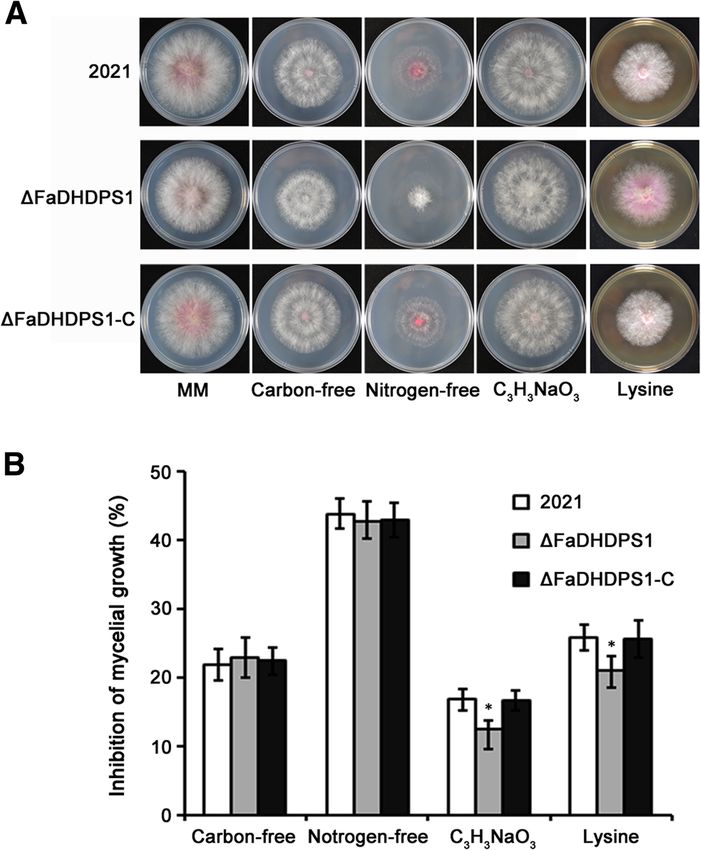
Ren et al. BMC Microbiology (2018) 18:128                                                                                       Page 3 of 11

in the dark for 20 days at 4 °C to test the sensitivity                 each transcript was calculated by the 2-ΔΔCT method
of each strain to low temperature. Each experiment                      [24] with the F. asiaticum actin gene FaActin as the
was repeated three times independently.                                 internal control. The experiment was repeated three
  For conidiation assays, four 5-mm mycelial plugs from                 times independently.
the edge of 3-day-old colony of each strain were inocu-
lated in 30 mL of MBL in a 50-mL flask. After cultivated                Plant infection and DON production assays
in a 185-rpm shaker at 25 °C for 5 days, the conidia of                 For plant infection assays, conidia from 5-day-old
each strain were harvested by filtering through cheese-                 MBL cultures were harvested and resuspended in
cloth and counted by hemacytometer under microscope.                    sterile distilled water at a concentration of 1 × 10⁵
Each experiment with three replicates was repeated                      conidia mL− 1. Wheat germs were inoculated with
three times independently.                                              2 μl conidial suspensions and examined at 10 days
                                                                        post incubation (dpi). Flowering wheat heads of culti-
RNA extraction and quantitative real-time PCR                           var Zhenmai 5 were drop-inoculated with 10 μl of
To extract total RNA, mycelia of each strain were                       conidia suspensions at the central spikelet of the
cultured in glucose yeast extract peptone (GYEP) li-                    spike. 10 μl of sterile distilled water served as con-
quid medium (5% glucose, 0.1% yeast extract and                         trols. Symptomatic spikelets were examined and
0.1% peptone) for 7 days shaking incubation in the                      counted at 15 dpi. For each treatment, 20 samples
dark at 28 °C. Total RNA was extracted using the                        were inoculated.
RNAsimple Total RNA Kit (Tiangen Biotech, Beijing,                        For DON production assays, conidia of each strain
China), and then used for reverse transcription with                    (1 × 10⁵ conidia mL− 1) was added to GYEP liquid
the HiScript Q Select RT SuperMix for qPCR kit                          medium. After 7 days shaking incubation in the dark at
(Vazyme Biotech, Nanjing, China). The expressions                       28 °C, the filtrate was gathered and the mycelia was
of FaTRI5 and FaTRI6 were determined by quantita-                       dried off and weighed. DON was extracted from the fil-
tive real-time PCR, and the relative quantification of                  trate with ethyl acetate, derivatized, mixed with

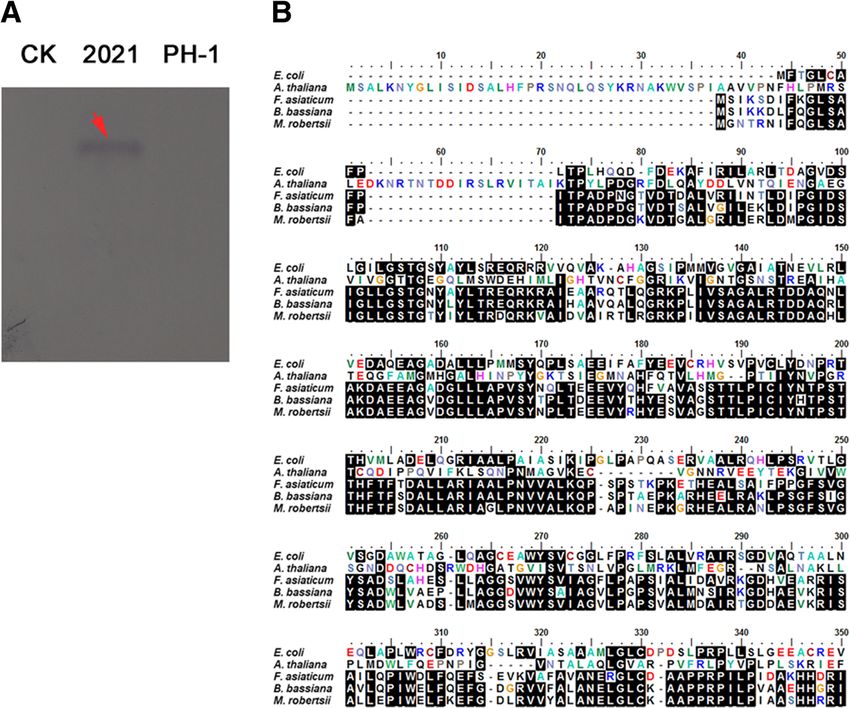
 Fig. 1 FaDHDPS1 exists only in F. asiaticum among Fusarium sp. (a) The full-length of FaDHDPS1 was used as a probe to hybrid the genomic
 DNA of 2021 and PH-1, and water was used as a negative control. (b) Alignment of amino acid sequences of the DHDPS homolog of F. asiaticum
 with those of Escherichia coli, Arabidopsis thaliana, Beauveria bassiana and Metarhizium robertsii. The black shading boxshade was used to
 highlight identical amino acids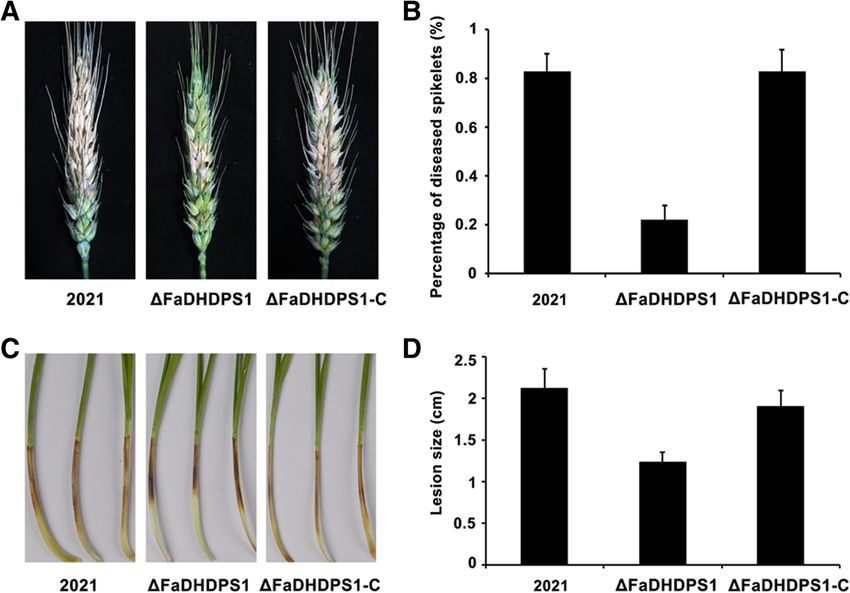
Ren et al. BMC Microbiology (2018) 18:128                                                                              Page 4 of 11

iso-octane and analyzed by gas chromatography-mass          by PCR analysis with the primer pair P7/P8 (Additional
spectrometry (GC-MS) according to the method de-            file 1: Table S1). The gene deletion and complementa-
scribed previously [25]. The experiment was repeated for    tion candidates were further confirmed by Southern
three times.                                                blot experiment, as expected, only a 1934 bp band ap-
                                                            peared in the gene deletion mutant ΔFaDHDPS1, and
Generation of the FaDHDPS1-GFP fusion cassette              only 2253 bp bands appeared in the wild-type progeni-
To construct the FaDHDPS1-GFP fusion cassette,              tor 2021 and complemented strain ΔFaDHDPS1-C
FaDHDPS1 containing the open-reading fragment (with-        (Additional file 2: Figure S1B). The results indicated
out stop codon) and its native promoter region was          that ΔFaDHDPS1 was a null mutant resulting from ex-
amplified from the genomic DNA of 2021. The result-         pected recombination events at the FaDHDPS1 locus,
ing PCR product was cloned into XhoI-digested               and ΔFaDHDPS1 was complemented in situ by a single
pYF11 vector by the yeast gap repair approach [26].         copy of FaDHDPS1.
Subsequently, the FaDHDPS1-GFP fusion construct
was recovered from the yeast transformants using the        Involvement of FaDHDPS1 in conidial production and
Yeast Plasmid Kit (Solarbio Biotech, Beijing, China)        germination
and then transferred into E. coli strain DH5α for           The FaDHDPS1 deletion mutant ΔFaDHDPS1 grew
propagation. The recombinational plasmid was con-           slightly slower than the wild-type progenitor 2021 and
firmed by sequencing analysis to contain the in-frame       the complemented strain ΔFaDHDPS1-C on PDA and
fusion construct and transformed into the FaDHDPS1          MM medium, but the difference is not significant. Since
deletion mutant. The resulting G418-resistant trans-        asexual reproduction is important for the disease spread
formants were screened by PCR and confirmed by              of F. asiaticum, the conidiation capacity was tested.
the presence of GFP signals. The primers used are           After incubated in MBL medium for 5 days, the number
listed in Additional file 1: Table S1.

Results
Identification of FaDHDPS1 in F. asiaticum
The whole genome sequence of F. asiaticum wild-type
strain 2021was sequenced by the second generation of
gene sequencing technology. Compared with the gene
sequenced F. graminearum strain PH-1, FaDHDPS1 was
found to be a specific gene in F. asiaticum. To avoid the
sequencing gap mistakes, the full-length of FaDHDPS1
was labeled as a probe to hybrid the 2021 and PH-1 gen-
omic DNA. As shown in Fig. 1a, the hybrid band was
only observed in 2021 indicating that FaDHDPS1 is
unique in 2021.
  FaDHDPS1 was 906 bp in length without any introns,
and was predicted to encode a protein with 301
amino acid residues. Blastp searches with FaDHDPS1
protein sequence as a query showed that the best hit
was to entomopathogenic fungi, such as Beauveria
bassiana and Metarhizium robertsii with 77% and
73% amino acid sequence identity, respectively. How-
ever, FaDHDPS1 showed low degree of homology
with the counterparts form E. coli and Arabidopsis
thaliana (Fig. 1b).                                          Fig. 2 Impacts of FaDHDPS1 on conidial production and
                                                             germination. (a) Conidia were accounted after incubation of the
                                                             wild-type strain 2021, the FaDHDPS1 deletion mutant ΔFaDHDPS1
Deletion and complementation of FaDHDPS1 in F.
                                                             and complemented strain ΔFaDHDPS1-C in mung bean liquid (MBL)
asiaticum                                                    medium for 5 days in a shaker. Bars denote the standard errors from
To investigate the function of FaDHDPS1, target gene         three experiments. Asterisks indicate statistically significant
deletion mutants of FaDHDPS1 were generated using a          differences (P < 0.05). (b) Percentages of germinated conidia of 2021,
homologous recombination strategy (Additional file 2:        ΔFaDHDPS1 and ΔFaDHDPS1-C after incubated in YEPD medium for
                                                             6 h. Bars denote standard errors from three experiments. Asterisks
Figure S1A). Four putative gene deletion mutants were
                                                             indicate statistically significant differences (P < 0.05)
identified from 16 hygromycin-resistant transformants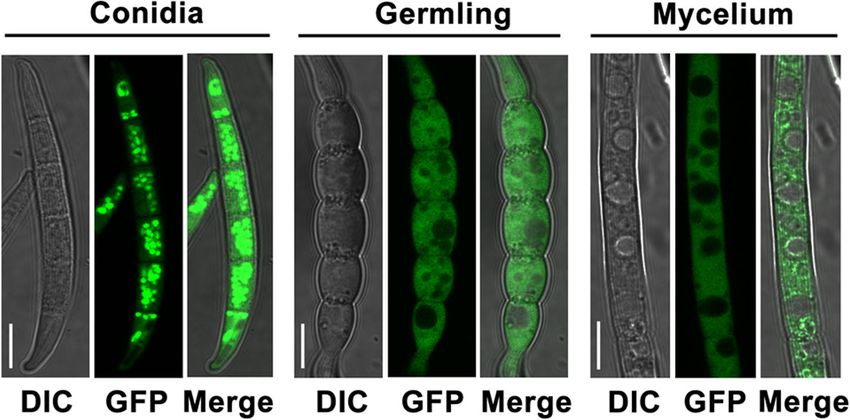
Ren et al. BMC Microbiology (2018) 18:128                                                                                          Page 5 of 11

of conidia produced by ΔFaDHDPS1 was 45% less than                       significantly on MM without nitrogen source (Fig. 3a).
that of the wild-type progenitor 2021 (Fig. 2a). In                      Notably, the inhibition of mycelial growth of
addition, conidial germination was tested, after 6 h incu-               ΔFaDHDPS1 was lower on MM amended with 50 mM
bation in YEPD medium at 25 °C, the germination rate                     sodium pyruvate or 2 M lysine than that of wild-type
was nearly 100% in the strain 2021 but only 48% in                       2021 (Fig. 3b). These results suggested that FaDHDPS1
ΔFaDHDPS1 (Fig. 2b). These results indicate that                         is involved in the regulation of material metabolism in F.
FaDHDPS1 is essential for growth, conidiogenesis and                     asiaticum.
germination in F. asiaticum.

Effects of FaDHDPS1 deletion on sensitivity to nutrient                  Effects of FaDHDPS1 deletion on sensitivity to
sources                                                                  environmental stresses
DHDPS catalyzes the condensation of ASA and pyruvate                     To assess the biological fitness of ΔFaDHDPS1, the sen-
to generate dihydrodipicolinic acid in lysine biosynthesis               sitivity to osmotic stresses KCl and NaCl, oxidative
pathway of bacteria and plants [27]. We, therefore,                      stresses H2O2 and paraquat, and cell wall damaging
tested the sensitivity of ΔFaDHDPS1 to carbon or nitro-                  agents Congo red, caffeine and SDS was examined. The
gen source on MM medium. The mycelial growth rates                       results showed that deletion of FaDHDPS1 did not alter
of ΔFaDHDPS1 was slightly slower than those of 2021                      the sensitivity of ΔFaDHDPS1 to stresses generated by
and ΔFaDHDPS1-C on MM without carbon or nitrogen                         the above substances, except for Congo red (Fig. 4),
source, while its aerial hyphae and pigment decreased                    namely, the sensitivity of ΔFaDHDPS1 to Congo red was

 Fig. 3 Sensitivity of the wild-type strain 2021, FaDHDPS1 deletion mutant ΔFaDHDPS1 and complemented strain ΔFaDHDPS1-C to carbon-
 free,nitrogen-free,C3H3NaO3 and Lysine on MM (a) Colony morphology of 2021, ΔFaDHDPS1 and ΔFaDHDPS1-C, the images were photographed
 after 4 days at 25 °C. (b) Inhibition rate of mycelial growth on each stress indicated in figure. Bars denote the standard errors from three
 experiments. Asterisks indicate statistically significant differences (P < 0.05)
Ren et al. BMC Microbiology (2018) 18:128                                                                                          Page 6 of 11

 Fig. 4 Comparison of sensitivity of 2021, ΔFaDHDPS1 and ΔFaDHDPS1-C to various environmental stresses. Inhibition of mycelial growth was
 examined after each strain had been incubated for 3 days on PDA amended with the osmotic stress NaCl or KCl, the oxidative stress H O or
 paraquat and the cell wall and cytoplasm membrane stress caffeine, Congo red or SDS. Bars denote the standard errors from three experiments.
 Asterisks indicate statistically significant differences (P < 0.05)

significantly decreased compared with wild-type and                       than the wild-type and the complemented strains (Fig.
complemented strains.                                                     6c and d). These results indicate that FaDHDPS1 is re-
                                                                          quired for full virulence of F. asiaticum.
Effects of FaDHDPS1 deletion on sensitivity to low
temperature                                                               Role of FaDHDPS1 in the regulation of deoxynivalenol
The occurrence of FHB is strongly determined by wea-                      (DON) biosynthesis
ther conditions, and temperature is a key factor to affect                Previous studies have shown that DON is a prerequis-
the variety distribution of Fusarium species [28], we,                    ite for primary infection of F. graminearum [29].
therefore, were interested in the effect of FaDHDPS1 on                   Since the virulence of ΔFaDHDPS1 was significantly
thermosensitivity. As shown in Fig. 5, ΔFaDHDPS1 grew                     reduced, we examined the impact of FaDHDPS1 on
slightly slower than the wild-type strain 2021 on PDA at                  DON biosynthesis. The amount of DON produced by
25 °C, whereas ΔFaDHDPS1 grew significantly faster                        ΔFaDHDPS1 was one-half less than the wild-type and
than 2021 in low temperature 4 °C. These results suggest                  complemented strains (Fig. 7a). To get more clues,
that FaDHDPS1 plays an important role in cold stress                      we detected the transcriptional levels of two tricho-
adaption.                                                                 thecene biosynthesis genes, TRI5 and TRI6, by quanti-
                                                                          tative real-time PCR. Compared with the wild-type
Requirement of FaDHDPS1 in the pathogenicity of F.                        and complemented strains, the expression levels of
asiaticum                                                                 TRI5 and TRI6 in ΔFaDHDPS1 reduced by 36% and
To determine whether FaDHDPS1 is related to patho-                        45%, respectively (Fig. 7b). These results indicate that
genicity in F. asiaticum, the virulence of ΔFaDHDPS1                      FaDHDPS1 plays a critical role in DON biosynthesis
was evaluated by point inoculation of conidial suspen-                    in F. asiaticum.
sion on flowering wheat heads. 15 days after inocula-
tion, scab symptoms caused by ΔFaDHDPS1 were                              Subcellular localization of FaDHDPS1-GFP fusion protein
restricted near the inoculated spikelets. However, the                    To further explore the function of FaDHDPS1, we
wild-type and the complemented strains caused severe                      generated FaDHDPS1-GFP fusion construct and trans-
and typical scab symptoms (Fig. 6a and b), suggesting                     formed it into ΔFaDHDPS1. The expression of
that FaDHDPS1 is required for full virulence of F.                        FaDHDPS1-GFP fusion protein was detected by Western
asiaticum.                                                                blotting using anti-GFP antibody (Additional file 3: Fig-
  Pathogenicity was also assessed on wheat germs, the                     ure S2). The phenotypic defects of ΔFaDHDPS1 were re-
ΔFaDHDPS1 strain caused significantly smaller lesions                     stored, which indicated that the FaDHDPS1-GFP fusion
Ren et al. BMC Microbiology (2018) 18:128 Page 7 of 11
Fig. 5 Sensitivity determination of the FaDHDPS1 deletion mutant to temperature. (a) Colony growth of the wild-type 2021, the FaDHDPS1
deletion mutant △FaDHDPS1 and complemented strain FaDHDPS1-C on PDA at 4 °C and 25 °C. Colonies were photographed after 20 days and
3 days for 4 °C and 25 °C, respectively. (b) The inhibition rate of mycelial growth on PDA at 4 °C and 25 °C. Values are the means ± standard error
(SE) of three repeated experiments
protein was fully functional (data not shown). potential of lysine biosynthesis as an anti-microbial
FaDHDPS1-GFP was mainly localized in the cytoplasm target is increased because diaminopimelate, a precur-
of both conidia and hyphae (Fig. 8). Further examination sor in the mesodiaminopimelic acid pathway to lysine,
showed that the GFP fluorescence which concentrated is essential in bacterial cell-wall development [30]. Ly-
in conidia diffused in cytoplasm of germinated conidia sine biosynthesis has also attracted the attention of
and growing hyphae (Fig. 8) suggesting that FaDHDPS1 biotechnologists, since lysine is nutritionally limiting
is crucial for conidial germination, which is consistent for humans and livestock in most cereal crops and
with the germination delay of ΔFaDHDPS1. feeds [31], and understanding the regulatory mecha-
nisms of this pathway is thus critical for the gener-
Discussion ation of ‘high-lysine’ plants. However, up to now,
Lysine is one of the most essential amino acids that DHDPS has not been functionally characterized in
cannot be synthesized in human and animal [6]. In filamentous fungi. In the present study, a DHDPS
prokaryotes and higher plants, DHDPS catalyzes the gene was identified and characterized in F. asiaticum,
first unique step of lysine biosynthesis [8]. The a severe fungal pathogen of cereal crops. Our dataRen et al. BMC Microbiology (2018) 18:128 Page 8 of 11 Fig. 6 Virulence of the FaDHDPS1 deletion mutant. (a) Wheat germs were incubated with conidial suspensions of 2021, ΔFaDHDPS1 and ΔFaDHDPS1-C and examined after 10 days post incubation (dpi). (b) The lengths of diseased lesions of wheat germs were measures 10 dpi. (c) Flowering wheat heads were incubated with the conidia of each strain and photographed at 15 dpi. (d) Percentage of diseased spikes on inoculated wheat heads. Values are the means ± standard error (SE) of three repeated experiments showed that FaDHDPS1 is required for fungal devel- parental strain 2021 and complemented strain. The spe- opment, virulence and stress responses in F. asiati- cific function of DHDPS in the lysine biosynthesis path- cum. To our knowledge, this is the first report about way of F. asiaticum needs further research. biological functions of DHDPS in filamentous fungi. DHDPS delivers the direct precursor of dipicolinic Homologous sequence alignment via Blast showed no acid which plays a key role in the bacterial sporulation DHDPS counterparts exist in other Fusarium species, process [33]. In this study, the ΔFaDHDPS1 mutant pre- and the FaDHDPS1 coding amino acids showed high sented serious defects in conidiation, which is consistent homology to that of entomopathogenic fungi, but low with the crucial role of DHDPS in bacteria [32]. In homology to that of bacteria and plants, indicating that addition, the conidial germination is severely delayed in DHDPS may perform a specific role in kingdoms. ΔFaDHDPS1 mutant compared with that in wild-type The deletion of FaDHDPS1 in F. asiaticum was viable. strain. Furthermore, the dynamic change of the Previous studies reported that DHDPS is related to FaDHDPS1-GFP fusion protein also demonstrated that growth in Streptococcus pneumonia, a Gram-positive FaDHDPS1 is required for conidiation. Thus, FaDHDPS1 bacterium [32], and lacking the DHDPS gene in S. pneu- may be essential for providing materials for conidial for- moniae is unable to grow. In this study, the FaDHDPS1 mation and germination. deletion mutant showed slightly reduced mycelial FaDHDPS1 was lysine-insensitive in F. asiaticum. The growth rate on PDA and MM medium, even in MM sensitivity of DHDPS to lysine differs widely. DHDPS without carbon or nitrogen sources, while the obvious from plants is strongly inhibited by lysine [34], while reduction of aerial hyphae and pigment in the DHDPS from gram-negative bacteria such as E. coli [35] FaDHDPS1 deletion mutant was found when cultured is less strongly inhibited by lysine, and most on MM without nitrogen source. The results indicated gram-positive bacteria, such as Bacillus subtilis [36] and that FaDHDPS1 is not only associated with the assimila- Corynebacterium glutamicum [37], DHDPS is not inhib- tion of carbon and nitrogen sources, but also involved in ited by lysine at all. Therefore, FaDHDPS1 was similar pigment biosynthesis in F. asiaticum. Although the in- to the DHDPS from most gram-positive bacteria. hibition ratio of ΔFaDHDPS1 mutant is lower on MM FaDHDPS1 may be involved in the regional distribu- with sodium pyruvate and lysine respectively, its colony tion of F. asiaticum. The response of ΔFaDHDPS1 mu- diameter was not significantly different from the tant to low temperature decreased significantly when
Ren et al. BMC Microbiology (2018) 18:128                                                                                          Page 9 of 11

                                                                            compared with the parental strain 2021, and this may be
                                                                            explained at a certain extend that the population distri-
                                                                            bution of F. asiaticum in China, where FHB caused by F.
                                                                            asiaticum mainly dominates in the south of the Yangtze
                                                                            river, in which the annual average temperature is greater
                                                                            than 15 degrees, whereas F. graminearum s.st. mainly
                                                                            thrives in the north of the Huanghe river, where the an-
                                                                            nual average temperature is less than 15 degrees [38].
                                                                              The previous study reported that DHDPS is required for
                                                                            virulence in human pathogen Neisseria meningitides [39].
                                                                            In this study, the FaDHDPS1 deletion mutant showed
                                                                            considerably attenuated virulence on both germ and spike
                                                                            of wheat. In addition, the FaDHDPS1 deletion mutant ex-
                                                                            hibited significantly reduced deoxynivalenol production in
                                                                            vitro which is consistent with the inability of ΔFaDHDPS1
                                                                            mutant to infect plant. To further confirm this result, the
                                                                            expression level of two trichothecene biosynthesis genes
                                                                            TRI5 and TRI6 were detected by quantitative real-time
                                                                            PCR. The expression levels of these two genes were con-
                                                                            siderably decreased in the ΔFaDHDPS1 mutant. The dele-
                                                                            tion of FaDHDPS1 might reduce trichothecene
                                                                            biosynthesis through an indirect effect on secondary me-
                                                                            tabolism, which is consistent with the conclusion that
 Fig. 7 Deoxynivalenol (DON) production and the expression of DON           knockouts of most genes reduce toxin biosynthesis and at-
 biosynthesis genes. (a) DON production by each strain in GYEP              tenuate virulence [40] (Kazan et al., 2012).
 medium was examined by gas chromatography. Line bars in each
 column denote standard errors of three repeated experiments.
 Asterisks indicate statistically significant differences (P < 0.05). (b)
 Relative expression levels of TRI5 and TRI6 were measured by
                                                                            Conclusion
 quantitative real-time PCR. Line bars in each column denote                Our data provided strong evidence that FaDHDPS1 is
 standard errors of three repeated experiments                              involved in diverse cellular processes in filamentous
                                                                            fungi F. asiaticum, including conidiation, conidial ger-
                                                                            mination, cell wall pressure response, low temperature
                                                                            tolerance, carbon/nitrogen sources utilization, secondary
                                                                            metabolism and virulence. The future work will focus on
                                                                            the role of FaDHDPS1 in lysine biosynthesis.

 Fig. 8 Subcellular localization of FaDHDPS1 in various developmental stages of Fusarium asiaticum. A FaDHDPS1-GFP fusion construct under
 native promoter was introduced into the FaDHDPS1 deletion mutant. The fluorescence signals were detected in conidia, germlings and
 mycelia. Bar = 10 μm
Ren et al. BMC Microbiology (2018) 18:128 Page 10 of 11
Additional files 3. Qu B, Li HP, Zhang JB, Xu YB, Huang T, Wu AB, et al. Geographic
distribution and genetic diversity of Fusarium graminearum and F. asiaticum
on wheat spikes throughout China. Plant Pathol. 2008;57:15–24.
Additional file 1: Table S1. Oligonucleotide primers used in this study.
4. Ren W, Zhao H, Shao W, Ma W, Wang J, Zhou M, et al. Identification of a
(DOCX 18 kb)
novel phenamacril-resistance-related gene by the cDNA-RAPD method in
Additional file 2: Figure S1. Generation and identification of Fusarium Fusarium asiaticum. Pest Manag Sci. 2016;72:1558–65.
asiaticum FaDHDPS1 gene deletion mutants. (A) Gene replacement and 5. Steiner B, Kurz H, Lemmens M, Buerstmayr H, et al. Differential gene expression
complementation strategy for FaDHDPS1. The gene replacement cassette of related wheat lines with contrasting levels of head blight resistance after
HPH-HSV-tk contains the hygromycin resistance gene and the herpes Fusarium graminearum inoculation. Theo Appl Genet. 2009;118:753–64.
simplex virus thymidine kinase gene. Primer binding sites are indicated 6. Dobson RCJ, Griffin MDW, Roberts SJ, Gerrard JA. Dihydrodipicolinate
by arrows (see Additional file 1: Table S1 for the primer sequences). (B) synthase (DHDPS) from Escherichia coli displays partial mixed inhibition with
Southern blot hybridization analysis of 2021, ΔFaDHDPS1 and respect to its first substrate, pyruvate. Biochimie. 2004;86:311–5.
ΔFaDHDPS1-C using the upstream fragment of FsDHDPS1 as a probe, 7. Yugari Y, Gilvarg C. The condensation step in diaminopimelate synthesis. J
and genomic DNA were digested with SphI. (TIF 1328 kb) Biol Chem. 1965;240:4710–6.
Additional file 3: Figure S2. Western blotting assays of the expression 8. Blickling S, Renner C, Laber B, Pohlenz H-D, Holak TA, Huber R. Reaction
of FaDHDPS1-GFP fusion protein. The total proteins from ΔFaDHDPS1::- mechanism of Escherichia coli dihydrodipicolinate synthase investigated by
FaDHDPS1-GFP strains were detected with the anti-GFP antibody. The X-ray crystallography and NMR spectroscopy. Biochemistry. 1997;36:24–33.
wild-type strain 2021 and ΔFaDHDPS1::GFP were used as controls. 9. Shedlarski JG, Gilvarg C. The pyruvate-aspartic semialdehyde condensing
(TIF 1911 kb) enzyme of Escherichia coli. J Biol Chem. 1970;245:1362–73.
10. Skovpen YV, Palmer DRJ. Dihydrodipicolinate synthase from Campylobacter
jejuni: kinetic mechanism of cooperative allosteric inhibition and inhibitor-
Abbreviations
induced substrate cooperativity. Biochemistry. 2013;52:5454–62.
ASA: Aspartate-β-semialdehyde; DHDPS: Dihydrodipicolinate synthase;
11. Soares da Costa TP, Christensen JB, Desbois S, Gordon SE, Gupta R, Hogan
DON: Deoxynivalenol; dpi: days post incubation; FHB: Fusarium head blight;
CJ, et al. Quaternary structure analyses of an essential oligomeric enzyme.
GC-MS: Gas chromatography-mass spectrometry; GYEP: Glucose yeast extract
Methods in Enzymol. 2015;562:205–23.
peptone; HPH: Hygromycin B resistance gene; HSV-tk: Herpes simplex virus
12. Grant Pearce F, Hudson AO, Loomes K, Dobson RCJ. Dihydrodipicolinate
thymidine kinase gene; MBL: Mung bean broth; MM: Minimal medium;
synthase: structure, dynamics, function, and evolution. Subcell Biochem.
NIV: Nivalenol; PDA: Potato dextrose agar; RGI: Mycelial growth inhibition;
2017;83:271–89.
WT: Wild-type; ZEN: Zearalenone
13. Gillner DM, Becker DP, Holz RC. Lysine biosynthesis in bacteria: a
metallodesuccinylase as a potential antimicrobial target. J Biol Inorg Chem.
Funding
2013;18:155–63.
This work was funded by National Key Research and Development (R&D) Plan
14. Ghislain M, Frankard V, Jacobs M. Dihydrodipicolinate synthase of Nicotiana
of China (2016YED0201007 and 2018YFD0201002), the National Natural Science
sylvestris, a chloroplast-localized enzyme of the lysine pathway. Planta. 1990;
Foundation of China (31672065), Special Fund for Agro-scientific Research in
180:480–6.
the Public Interest (201303023 and 201303025) and Agricultural Projects of
15. Kumpaisal R, Hashimoto T, Yamada Y. Purification and characterization of
Jiangsu Province, China [BE2018378 and CX(18)2005]. The funding bodies did
dihydrodipicolinate synthase from wheat suspension cultures. Plant Physiol.
not have any influence in the design of the study or the collection, analysis,
1987;85:145–51.
and interpretation of data as well as in writing the manuscript.
16. Frisch DA, Gengenbach BG, Tommey AM, Sellner JM, Somers DA, Myers DE.
Isolation and characterization of dihydrodipicolinate synthase from maize.
Availability of data and materials
Plant Physiol. 1991;96:444–52.
All data generated or analyzed in this study are included in this published
17. Burgess BR, Dobson RCJ, Bailey MF, Atkinson SC, Griffin MDW, Jameson GB,
article and its Additional files 1, 2 and 3.
et al. Structure and evolution of a novel dimeric enzyme from a clinically
important bacterial pathogen. J Biol Chem. 2008;283:27598–603.
Authors’ contributions
18. Kaur N, Gautam A, Kumar S, Singh A, Singh N, Sharma S, et al. Biochemical
CC and WR designed this study; WR and JT performed most part of the
studies and crystal structure determination of dihydrodipicolinate synthase
experimental work; WR, DS and WC analyzed the data; CC and WR wrote the
from Pseudomonas aeruginosa. Int J Biol Macromol. 2011;48:779–87.
manuscript. All authors read and approved the final manuscript.
19. Griffin MDW, Dobson RCJ, Pearce FG, Antonio L, Whitten AE, Liew CK, et al.
Evolution of quaternary structure in a homotetrameric enzyme. J Mol Biol.
Ethics approval and consent to participate
2008;380:691–703.
Not applicable.
20. Arruda P, Kemper EL, Papes F, Leite A. Regulation of lysine catabolism in
higher plants. Trends Plant Sci. 2000;5:324–30.
Consent for publication
Not applicable. 21. Bai G, Shaner G. Variation in Fusarium graminearum and cultivar resistance
to wheat scab. Plant Dis. 1996;80:975–9.
Competing interests 22. Yu J-H, Hamari Z, Han K-H, Seo J-A, Reyes-Domínguez Y, Scazzocchio C.
The authors declare that they have no conflict of interest related to the Double-joint PCR: a PCR-based molecular tool for gene manipulations in
manuscript. filamentous fungi. Fungal Genet Biol. 2004;41:973–81.
23. Hou Z, Xue C, Peng Y, Katan T, Kistler HC, Xu J-R. A mitogen-activated
protein kinase gene (MGV1) in Fusarium graminearum is required for female
Publisher’s Note fertility, heterokaryon formation, and plant infection. Mol Plant Microbe In.
Springer Nature remains neutral with regard to jurisdictional claims in 2002;15:1119–27.
published maps and institutional affiliations. 24. Livak KJ, Schmittgen TD. Analysis of relative gene expression data using
real-time quantitative PCR and the 2-ΔΔCT method. Methods. 2001;25:402–8.
Received: 16 October 2017 Accepted: 27 September 2018 25. Zheng Z, Gao T, Hou Y, Zhou M. Involvement of the anucleate primary
sterigmata protein FgApsB in vegetative differentiation, asexual
development, nuclear migration, and virulence in Fusarium graminearum.
References FEMS Microbiol Let. 2013;349:88–98.
1. Mcmullen M, Jones R, Gallenberg D. Scab of wheat and barley: a re-emerging 26. Ma H, Kunes S, Schatz PJ, Botstein D. Plasmid construction by homologous
disease of devastating impact. Plant Dis. 1997;81:1340–8. recombination in yeast. Gene. 1987;58:201–16.
2. Starkey DE, Ward TJ, Aoki T, Gale LR, Kistler HC, Geiser DM, et al. Global 27. Christensen JB, Soares da Costa TP, Faou P, Pearce FG, Panjikar S, Perugini
molecular surveillance reveals novel Fusarium head blight species and MA. Structure and function of cyanobacterial DHDPS and DHDPR. Sci Rep.
trichothecene toxin diversity. Fungal Genet Biol. 2007;44:1191–204. 2016;6:37111.Ren et al. BMC Microbiology (2018) 18:128 Page 11 of 11
28. Backhouse D. Global distribution of Fusarium graminearum, F. asiaticum and
F. boothii from wheat in relation to climate. Eur J Plant Pathol. 2014;139:
161–73.
29. Proctor RH, Hohn TM, Mccormick SP. Reduced virulence of Gibberella zeae
caused by disruption of a trichothecene toxin biosynthetic gene. Mol Plant
Microbe In. 1995;8:593–601.
30. Guo BB, Devenish SRA, Dobson RCJ, Muscroft-Taylor AC, Gerrard JA. The C-
terminal domain of Escherichia coli dihydrodipicolinate synthase (DHDPS) is
essential for maintenance of quaternary structure and efficient catalysis.
Biochem Bioph Res Co. 2009;380:802–6.
31. Wallsgrove RM, Mazelis M. The enzymology of lysine biosynthesis in higher
plants: complete localization of the regulatory enzyme dihydrodipicolinate
synthase in the chloroplasts of spinach leaves. FEBS Let. 1980;116:189–92.
32. Dogovski C, Gorman MA, Ketaren NE, Praszkier J, Zammit LM, Mertens HD,
et al. From knock-out phenotype to three-dimensional structure of a
promising antibiotic target from Streptococcus pneumoniae. PLoS One. 2013;
e83419:8.
33. Hoganson DA, Stahly DP. Regulation of dihydrodipicolinate synthase during
growth and sporulation of Bacillus cereus. J Bacteriol. 1975;124:1344–50.
34. Mazelis M, Whatley FR, Whatley J. The enzymology of lysine biosynthesis in
higher plants: the occurrence, characterization and some regulatory
properties of dihydrodipicolinate synthase. FEBS Let. 1977;84:236–40.
35. Geng F, Chen Z, Zheng P, Sun J, Zeng A-P. Exploring the allosteric
mechanism of dihydrodipicolinate synthase by reverse engineering of the
allosteric inhibitor binding sites and its application for lysine production.
Appl Microbiol Biot. 2013;97:1963–71.
36. Vold B, Szulmajster J, Carbone A. Regulation of dihydrodipicolinate synthase
and aspartate kinase in Bacillus subtilis. Journal of Bacteriol. 1975;121:970–4.
37. Cremer J, Eggeling L, Sahm H. Control of the lysine biosynthesis sequence
in Corynebacterium glutamicum as analyzed by overexpression of the
individual corresponding genes. Appl Environ Microb. 1991;57:1746–52.
38. Xu XM, Parry DW, Nicholson P, Thomsett MA, Simpson D, Edwards SG, et al.
Within-field variability of Fusarium head blight pathogens and their
associated mycotoxins. Eur J Plant Pathol. 2008;120:21–34.
39. Devenish SRA, Huisman FHA, Parker EJ, Hadfield AT, Gerrard JA. Cloning and
characterisation of dihydrodipicolinate synthase from the pathogen
Neisseria meningitidis. BBA-Proteins Proteom. 1794;2009:1168–74.
40. Kazan K, Gardiner DM, Manners JM. On the trail of a cereal killer: recent
advances in Fusarium graminearum pathogenomics and host resistance.
Mol Plant Pathol. 2012;13:399–413.You can also read


