King County Courthouse - Initial Conditions Report University of Washington Department of Urban Design & Planning Winter 2020 - CDN
←
→
Page content transcription
If your browser does not render page correctly, please read the page content below
King
County
Courthouse
Initial Conditions Report
University of Washington
Department of Urban Design & Planning
Winter 2020
This Initial Conditions Report is the work of students from the University of Washington’s
Masters of Urban Planning program. It was undertaken as part of the coursework for
URBDP 506: Studio Prep. The students who contributed to this report are:
       Dre Avila
       Cristina Cano-Calhoun
       Cara Donovan
       Gillian Hagstrom
       Stephanie Kennedy
       Chaim Simon
       Jordan Sliz
       Lauren Stevens
       Romana Haque Suravi
       Grace Young
       Liwangzhi Zhai
       Jude Zhu

We would like to thank the following people for their advice and support throughout
this process:
      Branden Born, Instructor for URBDP 506, University of Washington
      Lan Nguyen, Teaching Assistant for URBDP 506, University of Washington
      David Blum, Affiliate Instructor, University of Washington
      Lyle Bicknell, Principal Urban Designer, City of Seattle

March, 2020

                                                                                             3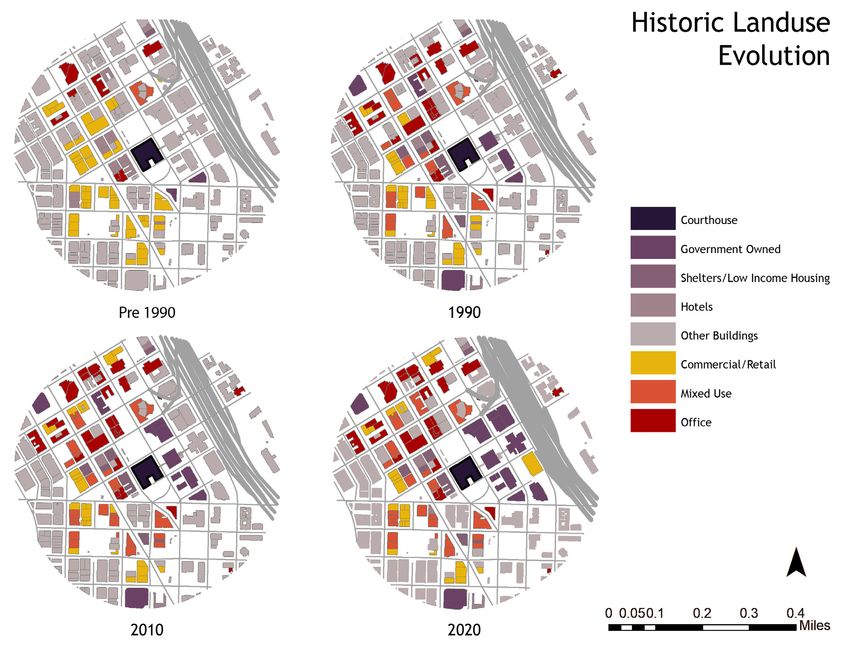
Table of Contents
    Table of Contents 5
    List of Figures 7
    Executive Summary 9
        Statement of Purpose 9
        Site Context       9
        Community Context 9
        Public Perception and the Media 10
        Public Spaces      10
        Population and Economy      10
        Capital Facilities 11
        Existing Plans     12
    Site Context   14
        History of the Courthouse   14
        History of the Study Area   15
        Current Context 17
    Community Context 18
        Community Organizations and Shelters 18
    Public Perception & the Media         20
    Public Spaces 22
    Population & Economy 24
        Homelessness    24
        Demographics 25
        Courthouse Area 26
        Other Downtown Census Tracts      26
        Housing & Income Context 27
        Office Vacancy 28
    Law Enforcement & Crime         29
    Transportation 33
        Transit     33
        Cycling Infrastructure 34
        Pedestrian Infrastructure   35
        Personal Vehicles36
    Urban Form     38
        King County Courthouse Building 41
    Existing Plans & Studies 44
        Vision 2050: Equity Briefing Paper 44
        King County Equity and Social Justice Strategic Plan, 2016-2020   44
4                                                                              5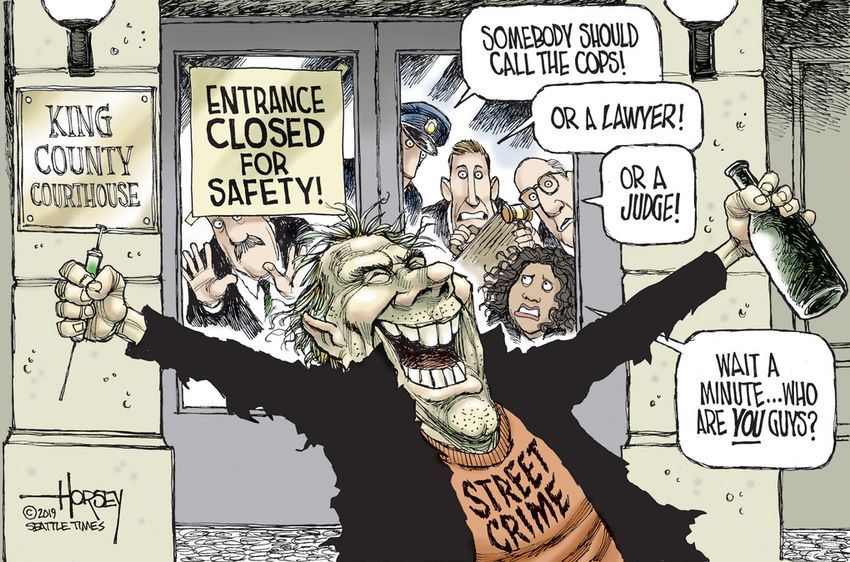
List of Figures
    Existing Plans & Studies (continued)                              Figure   1: The King County Courthouse prior to its renovation 14
         Race and Social Justice Initiative 2019-2021 Strategy   44   Figure   2: Land uses throughout time      15
         Seattle Comprehensive Plan, 2035 44                          Figure   3: Flyer announcing the grand opening of the Hotel Frye      16
         Washington Courthouse Security Report 45                     Figure   4: Third Avenue looking north from Yesler Way		         17
         Downtown Urban Center Neighborhood Plan 45                   Figure   5: The Lyon Building 17
         Seattle Municipal Civic Center Master Plan    46             Figure   6: Shelters and other services for homeless and low-income residents   19
    Impacts & Implications      47                                    Figure   7: Editorial cartoon from the Seattle Times 21
    References    49                                                  Figure   8: Prefontaine Fountain, 1968     22
                                                                      Figure   9: Prefontaine Fountain, present 22
                                                                      Figure   10: Statistics about homelessness in King County 24
                                                                      Figure   11: Real estate statistics 28
                                                                      Figure   12: Crime by Seattle PD Beat      29
                                                                      Figure   13: Overall number of crimes, 2018      31
                                                                      Figure   14: Overall number of crimes, January to May 2019       32
                                                                      Figure   15: Transit routes that come within one quarter mile    33
                                                                      Figure   16: Transit routes located within a quarter mile radius 34
                                                                      Figure   17: Cycling infrastructure within a quarter mile 35
                                                                      Figure   18: Sidewalk conditions within a quarter mile      37
                                                                      Figure   19: Average weekday traffic within a quarter mile 37
                                                                      Figure   20: Occidental Park 38
                                                                      Figure   21: City Hall Park and the King County Courthouse		     38
                                                                      Figure   22: Publicly owned buildings in the study area     39
                                                                      Figure   24: King County Administrative Building      40
                                                                      Figure   23: City Hall    40
                                                                      Figure   25: King County Courthouse viewed from the north        41
                                                                      Figure   26: The former main entrance of the Courthouse on the south side 42
                                                                      Figure   27: King County Courthouse with the vacant parcel to the north    43

6                                                                                                                                                          7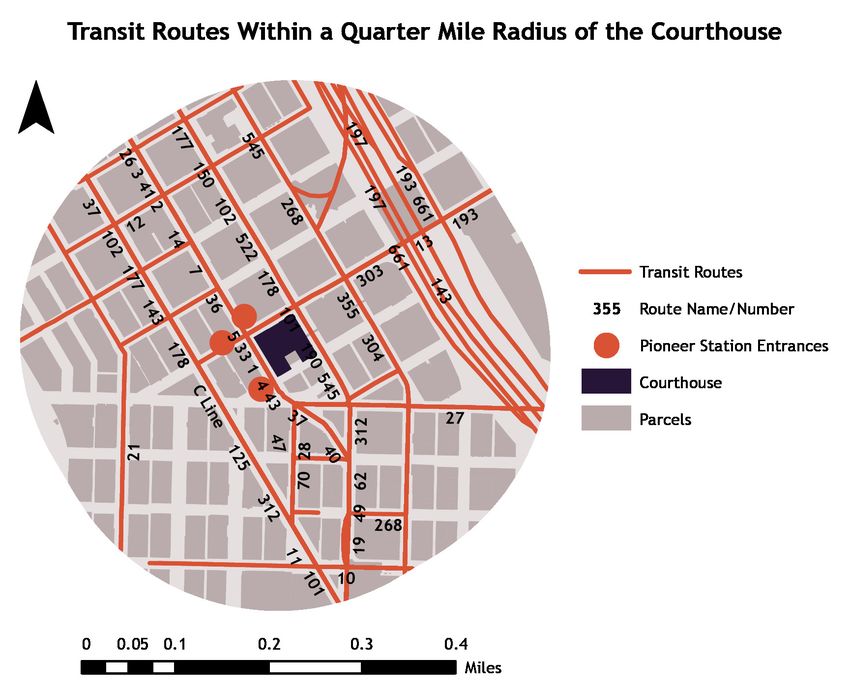
Executive Summary
                                                                                     Statement of Purpose
                                                                                     On December 3rd, 2019, Superior Court Presiding Judge James E. Rogers issued
                                                                                     an order closing the King County Courthouse’s Third Avenue entrance in Seattle,
                                                                                     Washington. A string of violent assaults and increasing safety concerns pressured city
                  King County Courthouse Context Map                                 officials to take actions to protect pedestrians and employees. The City of Seattle, in an
                                                                                     effort to reduce these incidents of violence, has approached the University of Washington
                                                                                     Department of Urban Design and Planning to develop potential recommendations. It is the goal
                                                                                     of this report to highlight relevant facts of the site’s context in order to inform these future
                                                                                     recommendations.

                                                                                     Site Context
                                                                                     History of the Courthouse
                                                                                     The King County Courthouse is currently located at the corner of Third Avenue and James Street
                                                                                     in the Downtown and Pioneer Square area of Seattle, Washington. The institution was moved
                                                                                     to this location after it outgrew two previous locations. Construction of the building began in
                                                                                     1914, and by 1930 the original five-story building had ballooned to a 14-story structure. In
                                                                                     1967, renovations and updates to the building led to the original entrance facing City Hall Park
                                                                                     becoming a loading dock which subsequently pushed the main entrance to Third Avenue.

                                                                                     History of the Study Area
    0   2.5   5      10       0   0.5   1   2
                                                                                     The area around the Courthouse used to be a busy commercial, retail, and hotel district. The
                                                     0   0.1    0.2       0.4
                      Miles                  Miles                          Miles    Morrison is located directly across from the Courthouse on Third Avenue. While it currently

    ¯
                                                                                     houses the Downtown Emergency Service Center’s main shelter, when it opened in 1909 it
                                                               Courthouse
                                                                                     housed the Arctic Club, a social and business club, and the Seward Hotel. This historic location is
                                                               Quarter Mile Radius   just one of a number of similar buildings within the relevant study area: the Frye Hotel and Lyon
                                                               Half Mile Radius      Building are prominent examples.

                                                                                     Current Context
                                                                                     Today the King County District Court, which is housed in the Courthouse, is the the largest court
                                                                                     in the state of Washington and is currently responsible for processing a quarter of a million
                                                                                     matters per year. Safety concerns have grown as the rates of assaults and general harassment
                                                                                     remain unwaveringly high in front of this heavily trafficked site. In December 2019, the Third
                                                                                     Avenue entrance was closed following a particularly harrowing assault against an employee.

                                                                                     Community Context
                                                                                     Community Organizations and Shelters
                                                                                     There are more than ten shelters and related services within a quarter-mile of the Courthouse.
8                                                                                                                                                                                          9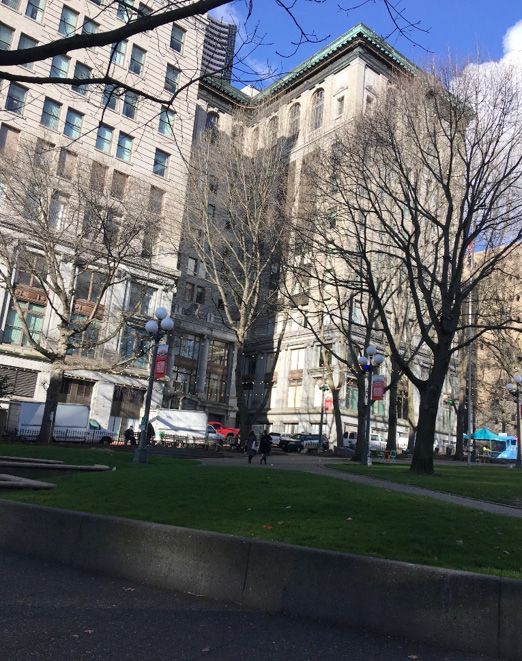
Directly across the street from the Third Avenue entrance is the DESC Morrison Hotel, the                is home to over 80,000 people. While the area is predominantly home to White residents, 29%
     organization’s main shelter. Emergency services respond to the most calls in all of Seattle from         of this population are either citizens not born in the United States, or they are not citizens at all.
     this address alone. This includes calls to law enforcement, but a majority of these calls are            A majority of this population have a secondary degree: 54% have a bachelor’s and/or master’s
     medical in nature.                                                                                       degree. Though half of the Downtown Seattle population has never been married, children -
                                                                                                              particularly infants and toddlers - are the fastest growing age group.
     Public Perception and the Media
     The numerous incidents occurring in front of the Courthouse have been documented in media                Housing and Income Context
     like The Seattle Times and KOMO News with great frequency. The public perception of this area            Housing in Downtown Seattle and Pioneer Square is notoriously unaffordable. Often, property
     and its safety is generally negative. Employees of the King County Courthouse are particularly           managers require that applicants provide proof that their household income exceeds twice the
     vocal about their concerns of personal safety, and express anxiety due to the chronic nature of          monthly rent. A market rate unit tenant would have to earn at least $35,000-$60,000 per year in
     attacks. City officials are critical of the state in front of the Courthouse; some express frustration   order to meet this requirement. However, it is generally considered prudent to spend no more
     at the fact that an institution for criminal justice is not safe to occupy.                              than 30% of one’s salary on rent. To meet this, one would need to earn $64,000-$100,000 per
                                                                                                              year. The median household income in Pioneer Square is about $48,000 per year.
     Public Spaces
                                                                                                              Office Vacancy
     Parks and public spaces in Pioneer Square around the Courthouse are places of both opportunity
                                                                                                              Office and commercial space in Downtown Seattle and Pioneer Square is in high demand and
     and contention. There are three parks and public seating spaces in close proximity to the site:
                                                                                                              its valuation has continued to grow in recent years. During the first quarter of 2018, the office
     City Hall Park, Prefontaine Place, and Fortson Square. An absence of activation of these spaces
                                                                                                              vacancy rate was around 7.8%. By the last quarter of 2019, it was around 5.24%.
     has led to a reduction in their use and they have largely fallen into disrepair. As a result, many
     organizations are working to improve the conditions of these parks. The Alliance for Pioneer
     Square has successfully supported a number of neighborhood activation projects and business              Capital Facilities
     developments. They boast a long list of projects currently underway around the Courthouse in             Law Enforcement and Crime
     partnership with associated agencies.                                                                    Downtown Seattle has higher reported crime rates than other Seattle neighborhoods. This data
                                                                                                              does not account for the fact that victims of criminal activity might choose not to report it to
                                                                                                              police for a variety of reasons. Citizens who are staying at shelters in the region may be part of
     Population and Economy
                                                                                                              communities uncomfortable with law enforcement, so the number of crimes in this area could
     Homelessness
                                                                                                              be higher than reported.
     Seattle’s most recent Point-in-Time Count data, collected in 2019, reveals much about the
     homeslessness crisis overwhelming the city. This annual surveying event counts all individuals
                                                                                                              Transportation
     living in public or private shelters, including those spending the night in spaces not designated
                                                                                                              Downtown Seattle and Pioneer Square are not only utilized by residents and those who live close
     for sleeping. The January 2019 survey found that 7,797 persons were identified as experiencing
                                                                                                              to the area. They attract people from all over the city and region. There are almost 50 different
     homelessness on the night of the count. Of these individuals, 46% were unsheltered overnight.
                                                                                                              transit routes that pass within a quarter-mile of the courthouse. Third Avenue has more buses
     Nearly two-thirds of survey respondents reported at least one health condition, the most
                                                                                                              per hour during peak times than any other street in the US or Canada
     common being psychiatric or emotional conditions, which 36% indicated they suffer from.
     Nearly a quarter of participants self-reported that the loss of a job was their leading cause of
                                                                                                              Urban Form
     homelessness.
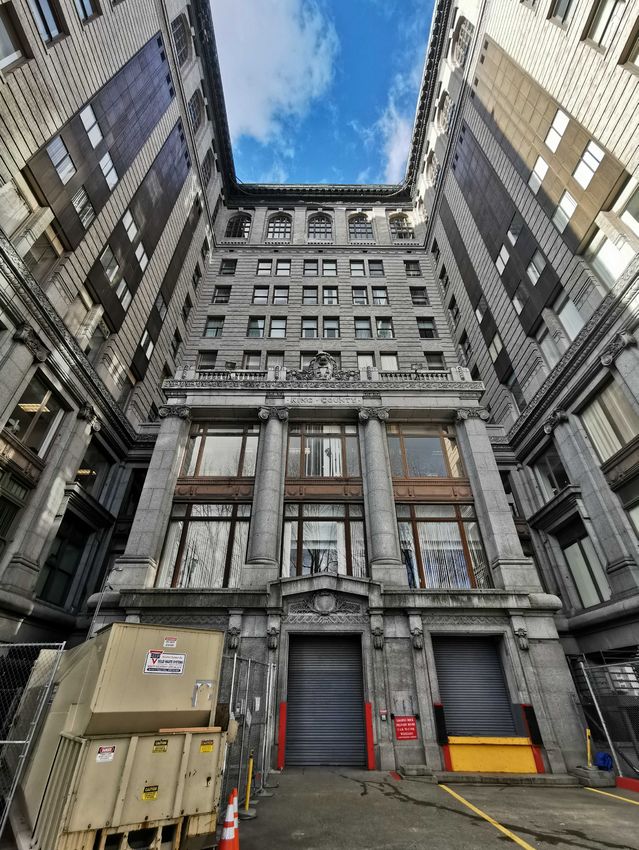
                                                                                                              The King County Courthouse is a nine story, H-shaped building that is over 100 years old. Currently,
                                                                                                              its main pedestrian entrance is on Third Avenue, although there is a tunnel from the King County
     Demographics
                                                                                                              Administrative Building east of the site as well. This new entrance is not a grand point of entry
     Downtown Seattle’s population grew 47% between 2010 and 2018. Seattle’s downtown corridor
10                                                                                                                                                                                                                     11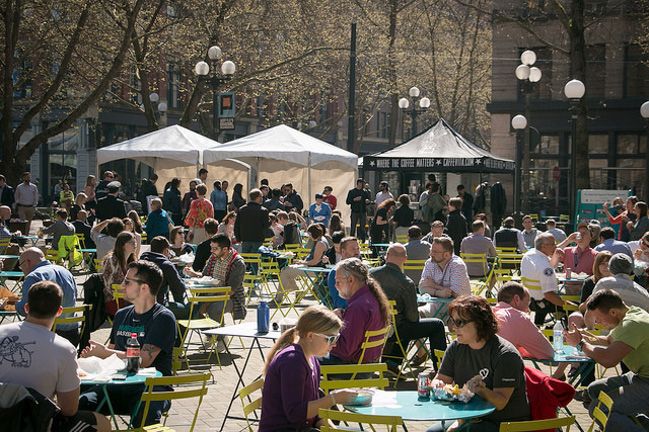
and there is little signage to indicate the building as the King County Courthouse. The entry ways      the main characteristic of downtown Seattle as “pre-eminent regional center.” It also presents
     themselves have a step up which is not ADA accessible. The windows have bars installed on the           other development goals for the downtown urban center, such as encouraging economic
     lower sections, creating an atmosphere of distrust on the street. The windows also have blinds          opportunities, promoting culture and entertainment activities, encouraging public and private
     drawn closed which block interaction between people inside the Courthouse and pedestrians.              development, accommodating the needs of a wide range of office and commercial activities,
                                                                                                             seeking housing opportunities for people of all income levels, and promoting public safety. It is
     Existing Plans & Studies                                                                                estimated to achieve 12,000 new housing units and 35,000 new jobs.
     Visions 2050: Equity Briefing Paper
     Vision 2050 provides background on the Puget Sound Regional Council’s work regarding equity             Washington Courthouse Security Report
     and provides additional information from peer organizations. It identifies the products PSRC            From 2005 to 2012, Washington State had the 8th most documented courthouse security
     will develop as part of VISION 2050 and considerations for how equity could be addressed in             incidents in the nation, according to the National Center for State Courts (NCSC). This particular
     VISION 2050 and future PSRC work. VISION 2050 presents an opportunity to consider equity                study identified that more than half of Washington’s 39 counties do not have security screening
     throughout the plan, from health disparities to displacement to demographics and services               at their central courthouses. Additionally, courthouse personnel are not being trained to handle
     for unincorporated communities. It shows PSRC’s emphasis on social equity and the trend of              active shooters and are not being offered other security-related trainings.
     increasing the consideration of social equity in the process of plan making.
                                                                                                             Downtown Urban Center Neighborhood Plan
     King County Equity and Social Justice Strategic Plan, 2016-2020                                         This neighborhood plan offers examples of the emphasis being placed on the built environment
     This plan envisions a future where equitable outcomes are ensured for all people in King County.        and its impact on community building. It encourages a variety of architectural character and
     The document includes a four-prong implementation strategy: invest upstream and where                   building scale while striving to maintain the neighborhood’s historic, cultural and visual resources.
     needs are greatest, invest in community partnerships, invest in employees, and do this with             The Downtown Urban Center Plan also seeks to provide housing affordable to households with
     accountable and transparent leadership. The strategies inform goals for the major functions of          a range of income levels. The plan emphasizes a goal to take advantage of opportunities to
     the King County government, including: leadership, operations and services, plans, policies and         develop new public open space, and encourage development of a system of connected green
     budgets, workplace and workforce, community partnerships, communication and education,                  spaces and open public areas.
     and facility and system improvements. (King County, 2016).
                                                                                                             Current and Future Land Use
     Race and Social Justice Initiative 2019-2021 Strategy                                                   While most of Pioneer Square is currently zoned as a special district, it contains mostly mixed-
     This City of Seattle Strategy brings forward guiding principles such as undoing systematic              use and midrise land uses. The same is true for the Downtown Office Core and Downtown Retail
     racism, sharing culture, and learning from history. Its four key strategies to apply the principles     Core directly to the north of the Courthouse. Future land use maps show these special districts
     to Seattle City government are: build an anti-racist network within the city government, shift          will likely be combined into a single special distinction, the Urban Center.
     internal practices and develop decision-making skills that eliminate institutional and structural
     racism, transform the internal government culture of the city toward one rooted in racial               Seattle Municipal Civic Center Master Plan
     justice, humanistic relationships, belonging and wellbeing, and to align racial justice efforts with    The Civic Center Master Plan deals with creating a revitalized, connected space between the
     local community organizing and strengthen relationships with communities most impacted by               City’s civic buildings, hoping to draw the community into more active engagement with the way
     structural racism. Additionally, this plan seeks to partner with national and regional racial justice   their city operates. The Plaza is the centerpiece for this plan, and will soon be under construction.
     leaders from all communities and sectors to advance racial justice.                                     New retail space in the lower three floors of the new building will hopefully draw people into
                                                                                                             this open space. However, given what we have discovered about the urban form in this area and
     Seattle Comprehensive Plan, 2035                                                                        its lack of support for food and retail, it is uncertain how to encourage the public to connect this
     The Downtown Neighborhood Plan section of the Seattle 2035 Comprehensive Plan proposes                  square with other spaces adjacent currently.

12                                                                                                                                                                                                                   13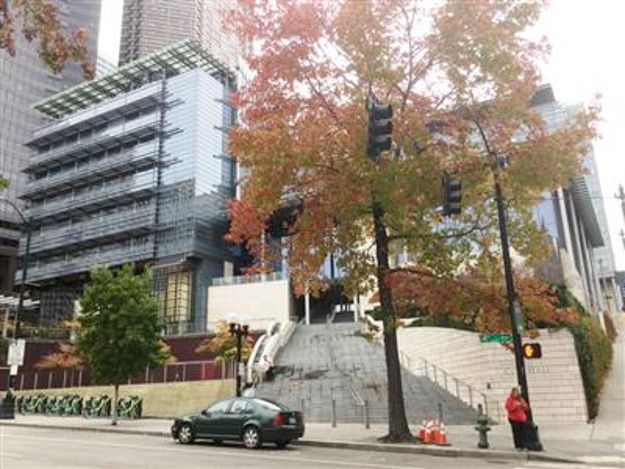
Site Context
     History of the Courthouse                                                                                                   Street entrance was to be used as a loading dock rather than the building’s
     The King County Courthouse has experienced a number of moves in its history; since the county’s                             main entrance. Because the original entrance was repurposed, it was necessary
     earliest need for a courthouse, the institution has existed at three locations. By 1900, the Alaskan                        to redesignate the Third Avenue entrance as the Courthouse’s main ingress (King
     Gold Rush and the growingly influential railroad saw another major population boom in Seattle                               County, 2017). This reduced the significance of the City Hall Park, which has since
     (King County, 2017). As the needs of the city grew and the requisite number of employees                                    fallen into disuse.

                                                                                                                                 In 1976, the Pioneer Square National Historic District was extended to include the courthouse.
                                                                                                                                 In 1987, the King County Courthouse was finally registered as a King County landmark. This
                                                                                                                                 not only placed importance on the structure as a historical marker, but it also encouraged
                                                                                                                                 restoration of the building. As a historic landmark, Courthouse restoration had to comply with
                                                                                                                                 the requirements of the Landmark Commission, which included restoring many public domains
                                                                                                                                 in the building (as well as courtrooms) to their 1923 appearance (King County, 2017). The City
                                                                                                                                 Hall Park also was recognized as being integral in the historic preservation of this district. In
                                                                                                                                 1993, City Hall Park was restored to the citizens of King County as a beautiful, usable open space
                                                                                                                                 (King County, 2017).

                                                                                                                                 History of the Study Area

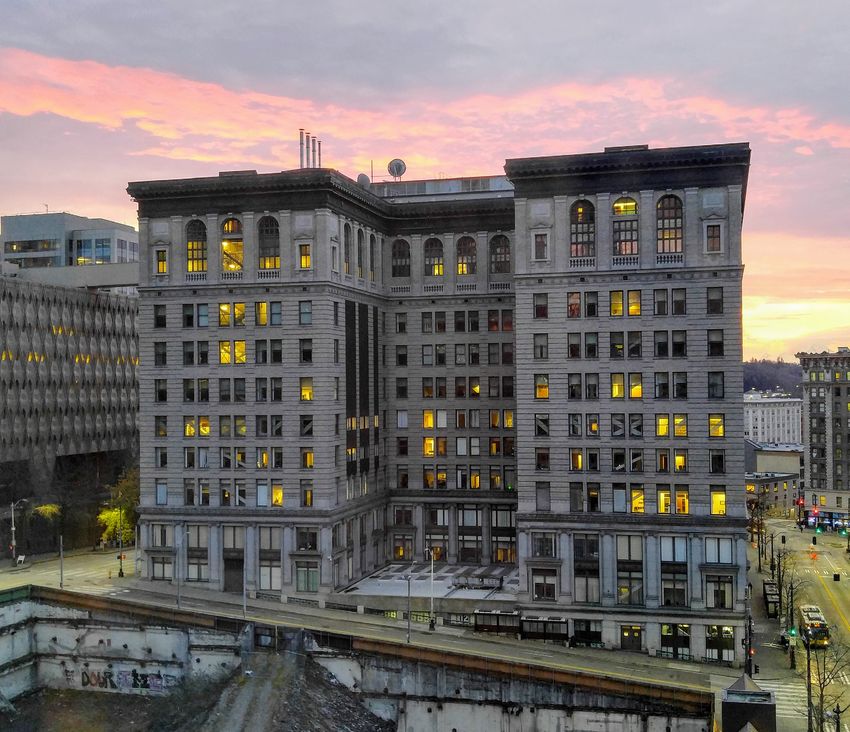
             Figure 1: The King County Courthouse prior to its renovation (Seattle Municipal Archives, 1928, Identifier 2930).
     to function increased, the County Courthouse sought a new home. Accessibility was another
     serious influencing factor for those tasked with identifying this new location. County workers
     were frustrated by the constant need to scale “Profanity Hill” to get from downtown to the
     Courthouse and city officials wanted to create a building that could be accessible to the masses
     (King County, 2017). It is here in the Courthouse’s history that symbolism and prestige began to
      lose out to practicality (King County, 2017).

           Ground was broken in 1914 for a new five-story steel frame and reinforced concrete
             structure on the corner of Third Avenue and James Street. On May 4, 1916, it was
                dedicated as the City-County Building. In 1930, six floors were added, and later a
                   three-story “attic” (King County, 2017). Modernization efforts by the architectural
                      firm of Paul Delaney and Associates in 1967 added air conditioning and
                          drastically altered the appearance of the building. As a result, the Jefferson
                                                                                                                                      Figure 2: Land uses throughout time within a quarter mile of the study area.
14                                                                                                                                                                                                                                    15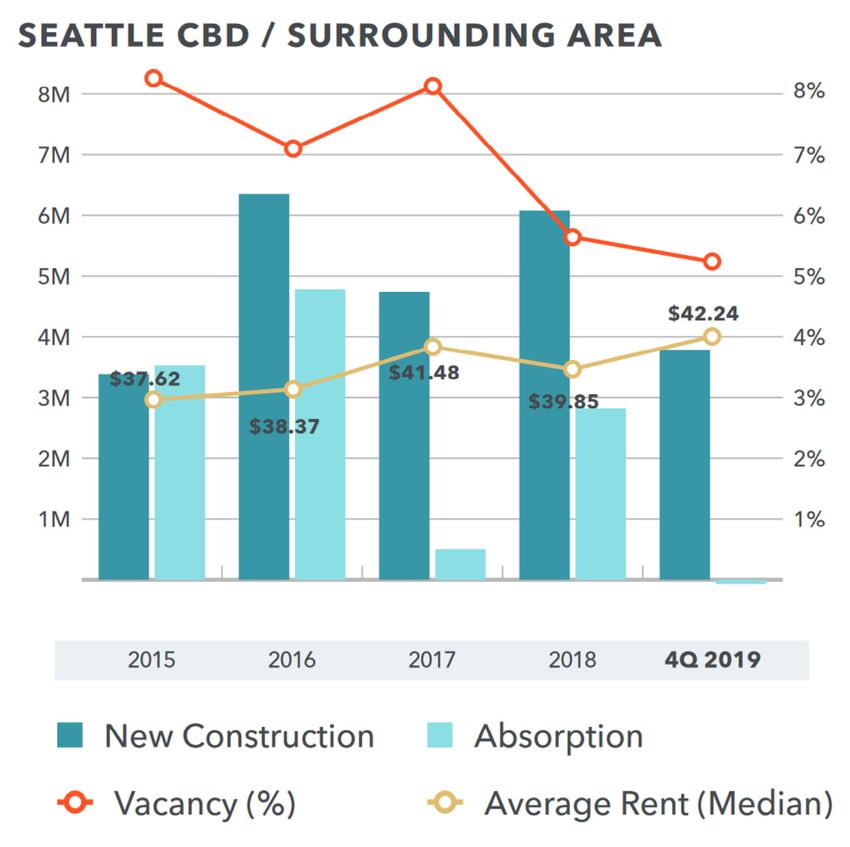
The area around the Courthouse used to be a busy commercial, retail, and hotel district. The           constructed using funds related to the Alaska gold rush. It used to have ground floor residential
     Morrison is located directly across from the Courthouse on Third Avenue. It is now run as              with offices above, but was converted to housing for people with HIV and AIDS in 1997 (National
     permanent supportive housing by DESC, and also provides medical care, case management, and             Parks Service, n.d.). It is now owned and operated by DESC.
     mental health care (Downtown Emergency Services Center, 2018). However, when it opened in
     1909, it housed the Arctic Club, a social and business club, and the Seward Hotel.

     The Frye Hotel is located directly south of the Courthouse at 223 Yesler Way. It was designed in
     the Beaux Arts style and was the largest hotel north of San Francisco when it was completed in
     1911. It was converted to low-income apartments in the 1970s and was purchased by the Low
     Income Housing Institute in 1997 (Low Income Housing Institute, n.d.).

     The Lyon Building, located at the northwest corner of James Street and Third Avenue, was

                                                                                                            Figure 4: Third Avenue looking north from Yesler Way. The Courthouse is    Figure 5: The Lyon Building. (National Parks Service, n.d.).
                                                                                                            on the right, and the Morrison is on the left. (University of Washington
                                                                                                            Libraries, 1926).

                                                                                                            Current Context
                                                                                                            Today, the King County District Court, which is housed in the Courthouse, is the largest court in
                                                                                                            the state of Washington and is currently responsible for processing a quarter of a million matters
                                                                                                            per year (King County, 2019). The court also has the greatest number of problem solving courts
                                                                                                            within a court of limited jurisdiction in Washington (King County, 2019). These facts illustrate the
                                                                                                            impact and importance the court holds and, by extension, the Courthouse.

                                                                                                            The Courthouse presently is fraught with assaults, harassment, and general discomfort just
                                                                                                            outside of the building’s walls. This reality is creating challenges for pedestrians, residents, and
                                                                                                            employees alike. While located in a metropolitan city center, there is a distinct lack of amenities.
                                                                                                            This detracts from the area’s overall livability. The campus of city, county, and federal offices
                                                                                                            converge with a visible concentration of homelessness and social services, forming two distinct
                                                                                                            and separate use patterns throughout the area. However, with the historical buildings, established
                                                                                                            businesses, and an increasingly celebrated restaurant scene, there are many resources that can
                                                                                                            be utilized to anchor change.

     Figure 3: Flyer announcing the grand opening of the Hotel Frye (Low Income Housing Institute, n.d.).

16                                                                                                                                                                                                                                                    17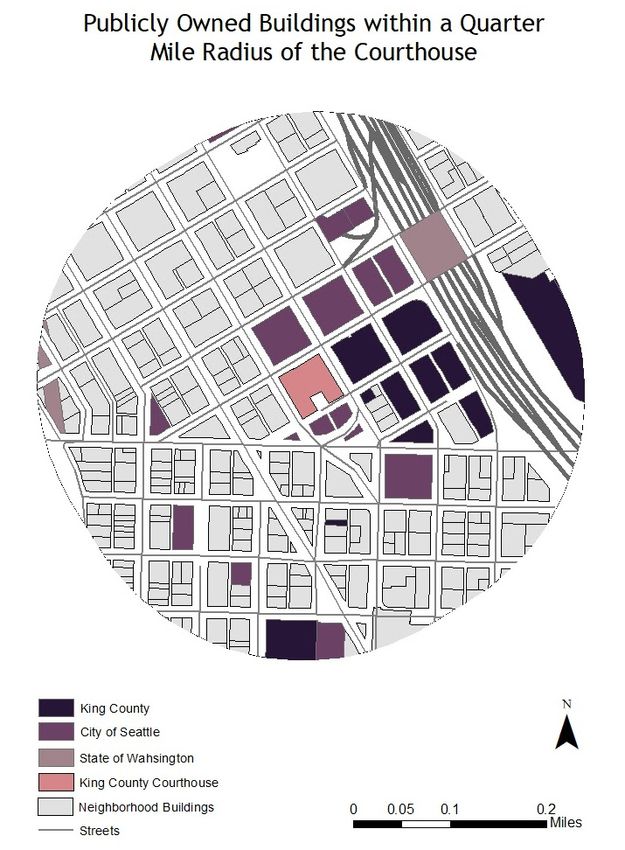
Community Context
     Community Organizations and Shelters                                                                    Shelters and Other Services Within a Quarter Mile Radius of the Courthouse
     Security concerns at the King County Courthouse cannot be divorced from the surrounding

                                                                                                               ¯
     community context of the immediate neighborhood. There is a concentration of homeless and
     other vulnerable populations around the Courthouse. This is partially due to the abundant
     services and shelters located a short walk from the site. There are also public open spaces that
     are often occupied by unhoused people. The street life of the area is primarily concentrated
     during the weekdays as people come and go to work in the various offices in the area. The
     street in front of the Courthouse, Third Avenue, is also the busiest transit corridor in Seattle,
     supporting numerous bus routes and entrances to the Link light rail. Historic buildings and tourist
     attractions, such as Pioneer Square and Smith Tower, also bring visitors to the area.

     Within a quarter-mile of the King County Courthouse there are a variety of shelters and
     organizations offering resources to those in the area: DESC, Seattle’s Union Gospel Mission,
     Bread of Life Mission, Compass Housing Alliance, All Home King County, Chief Seattle Club Inc.,
     Coordinated Entry for All, Housing Justice Project, United Way of King County, Path With Art,
     Seattle King County Coalition on Homelessness, OSL, and the Medina Foundation are all located
     around the site.

     The Downtown Emergency Services Center’s main shelter at The Morrison Hotel is directly
     across the street from the Third Avenue entrance. The organization offers services such as long
     term housing, medical interventions, and addiction management. Other resources include day
     shelters providing showers, meals, and clothing; as well as overnight shelters, free legal counsel,
     mental health counseling, and jobs programs. These services are provided by public and private
     entities, religious congregations, and non-profit groups.

     The Morrison Hotel is the most frequent address given for emergency services calls in Seattle,
     which results in a nearly constant presence of Police, Fire, and medical vehicles. The ubiquitous
     emergency vehicles outside The Morrison give a perception of danger and chaos, although many
     of these calls are medical emergencies and not criminal in nature. These vehicles add to the
                                                                                                                                  0       0.05       0.1                 0.2                 0.3                 0.4
     obstruction of pedestrian and transit routes throughout the space.                                                                                                                                            Miles

                                                                                                                              Assisted Housing                  Publicly Owned Buildings                 Housing Justice Project
                                                                                                                              Work Release                      Courthouse                               Coordinated Entry for All
                                                                                                                              Missions                          Parks                                    Outdoor Meal Site
                                                                                                                              DESC
                                                                                                                              Other Services
                                                                                                           Figure 6: Shelters and other services for homeless and low-income residents within a quarter mile radius of the Courthouse.

18                                                                                                                                                                                                                                       19
Public Perception & the Media
The numerous conflicts at the Courthouse have been chronicled in The Seattle Times and KOMO David Horsey from the Seattle Times reviewed the situation in December with
News with great frequency. The homelessness issue at large has been at the forefront of Seattle’s a strong message:
collective consciousness in recent years and has been discussed in opinion and news pieces in “This center of our justice system — where lawyers, judges, jurors, police
nearly every media outlet. Other important publications that document the existing conditions officers, witnesses and common citizens should be able to come and go freely
include Crosscut, The Strangers, and Real Change. Some of this coverage is in the form of opinion — is under siege from a few antisocial offenders and [...] no one can figure out
pieces, and others are news updates on camp closures or other events. Often, these reports what to do about it. One day last week, an attorney was attacked at the entrance by a
have some inherent anti-homeless tone throughout, such as the highly discussed “Seattle is man who had already been arrested four times on the same block — only to be released
Dying” segment by KOMO News. each time. This is nuts and, so far, the powers that be have only managed to wring their
hands and wish for more drug treatment and mental health services. I’ve got an idea; how
Employees of the King County Courthouse make up the largest population of victims of assault about providing that treatment inside a jail instead of letting the same problem repeat
and harassment in front of the site. Many have spoken out about their safety concerns while in itself again and again out on the street?” (Horsey, 2019).
and around the courthouse. A courthouse employee listed drug deals, threats, assault, urination,
defecation, and indecent exposure as taking place directly outside the courthouse (Esteban, This text was accompanied by the following image:
2019). Courthouse employees are scared of the area and feel that it is dangerous to come to
work. Another employee stated “for those of us who work in the courthouse, it’s not if we are
going to get assaulted, it’s when.” Some employees go so far as to state that they hate coming to
work at the courthouse (Esteban, 2019).
Some King County officials blame the neighborhood problems on the City of Seattle, particularly
for “not providing enough police or prosecution resources in the area” (Wisdom, 2019). Patrol
officers in the precinct dropped from 129 in 2010 to 95 officers currently (Carter, Beekman, and
Mayo, 2019). In 2019, the patrol officers spent 5,700 hours patrolling outside of the courthouse.
During this time, 292 people were arrested, 76 of whom were repeat offenders (Quinn, 2020).
There are concerns that the criminal justice system is broken and repeat criminals cycle through
with few consequences (Wisdom, 2019). Drug addiction has also been raised as a concern in
Seattle and around the courthouse (Seattle Times editorial board, 2019).
Some believe the problems experienced on the block are symptoms of a greater issue in Seattle.
Councilmember Peter von Reichbauer states that “the streets of the city are not safe. In many
ways, the Courthouse is the canary in the coal mine. If people are not safe in the building that
supposedly houses justice, where are they safe in the City of Seattle?” (Kiggins, 2020). King
County Superior Court Judge O’Donnell states that “tragedy awaits if the status quo is
maintained” (Connelly, 2019). The County is considering selling the courthouse property
to pay for a new courthouse (Kiggins, 2020). Figure 7: Editorial cartoon from the Seattle Times (Horsey, 2019).
20 21Public Spaces
Parks and public spaces in the Pioneer Square neighborhood are places of opportunity and Pioneer Square to make it more accessible to people of all ages, including
contention. The most basic public space, a sidewalk, becomes a site for violent assaults and a new playground and sponsored activities. People of all demographics are
harassment. The Pioneer Square neighborhood as a whole has been attempting to solve utilizing the space, including those who reside in the neighborhood’s shelters. It
this dilemma, however the area surrounding the King County Courthouse provides a unique has set a model for other parks in the neighborhood for activating space.
concentration of problems in the public realm. However, this also presents opportunities for
government agencies, non-profits, and community members to work together in creating The Seattle Department of Transportation has partnered with Seattle Parks and Recreation
solutions. to create the Yesler Crescent Public Life Action Plan (SDOT, 2020). This plan has identified several
areas of opportunity, including the Chief Seattle Club Expansion in Fortson Square, set to begin in
2021, and the Metropole Building improvement, which is still currently in the planning process.
It is important to note, however, that Fortson Square is already undergoing a full, community-
informed design project by the Chief Seattle Club and The Alliance for Pioneer Square (Alliance
for Pioneer Square, 2020). With so many agencies, public space non-profits, and urban planning
firms located in and around the Pioneer Square neighborhood, there are an abundance of ideas
and plans for improving the neighborhood.
The Alliance for Pioneer Square has had success supporting neighborhood activation projects and
business development, and are moving forward with the Northeast Pioneer Square Framework
Plan. Their list of active public space projects in partnership with associated agencies and firms
includes many notable locations around the Courthouse: the King County Civic Campus Master
Plan (King County), Prefontaine Fountain, City Hall Park, Third Avenue Design and Connections
Figure 8: Prefontaine Fountain, constructed in 1926, was designed Figure 9: Prefontaine Fountain has now fallen into disrepair (Seattle (Seattle Parks), Courthouse Vicinity Improvement Committee (King County), Pioneer Square
b y Carl F. Gould in the Beaux Arts style (Seattle Municipal Archives, Department of Neighborhoods, n.d.).
1968, Identifier 30037). Transit Entrance Headhouse (Sound Transit), Civic Square (Bosa Development), Third Avenue
There are three park and public seating spaces directly around the Courthouse: City Hall Park, Transit Corridor Improvements Project (King County, SDOT), and the Third Avenue Design Vision
Prefontaine Place, and Fortson Square. Current issues that prohibit active use by all demographics & Quick Wins (Downtown Seattle Association).
in the neighborhood include safety concerns, cleanliness, lack of seating or an unwelcoming
environment. All three of these parks are listed by the Alliance for Pioneer Square as current Finally, Waterfall Park is a private park in the area, developed and maintained by UPS to
project sites. APS started the master planning process for the space in the Summer of 2019. commemorate the original UPS store. It has a guarded staff at all times, is heavily fenced, and
Currently, City Hall Park has a $1 million budget allocated from the most recent city budget, the doors to access it close in the afternoon. It should be clear, then, that use of the park is highly
spearheaded by Councilmember Sally Bagshaw. This plan is to fund park activation programming, policed, formally and informally, which has led to an unrepresentative population of users.
staff, and facility upgrades similar to the work being done by the Downtown Seattle Association
in Westlake Center and Occidental Park in Pioneer Square.
Occidental Park is further away in the study area but still draws pedestrians from the
surrounding municipal buildings. The park is surrounded by high-end restaurants,
retail, and coffee shops in addition to lunch-focused restaurants to meet the
needs of the surrounding office spaces. Occidental Park has gone through
significant programming and design changes through the efforts of the
Downtown Seattle Association, Parks and Recreation, and Alliance for
22 23Population & Economy
Homelessness twenty were most recently were housed in jail or prison, compared to the two-
Given the concentration of public buildings, parks, and low-income resources surrounding the thirds coming from living in their own home or with friends. Survey participants
King County Courthouse, homelessness is ultra-visible every day, with many people conducting self-reported that the loss of a job was the leading cause of homelessness (24%),
their lives in the public sphere. Because these people are highly mobile, no high-level spatial data followed by alcohol or drug use (16%), and the vast majority said the support they
exists to track where residents really live on a day-to-day basis. However, the U.S. Department needed came in the form of more affordable housing or rental assistance (King County,
of Housing and Urban Development requires all Continuums of Care to conduct biennial Point- 2019).
in-Time counts of all unsheltered persons within their jurisdiction. King County and Seattle
performed the most recent count on January 24, 2020, but that data is not yet available. As a Demographics
result, the following report relies on data collected from January 2019, aggregated at the city With the appropriate context of those experiencing homelessness in Seattle, understanding the
level. While our area and people of interest are occurring at a smaller scale, this data provides residents that call Downtown Seattle and Pioneer Square home will be crucial to uncovering
general information about overall population demographics. causes for the symptoms felt on Third Avenue. Downtown Seattle is an intersection for many
backgrounds and lifestyles. This is supported by the fact that in 2018, 35% of Downtown Seattle
residents moved from somewhere outside of Seattle or Washington (Point2Homes, n.d). It is fair
to say that Downtown Seattle has no uniform culture; it has no uniform residents. This major
step toward diversity can create a point of conflict when considering communication, customs,
norms, and shared investment.
The Downtown Seattle resident is highly educated. A majority of this population have a secondary
degree: 54% have a bachelor’s and/or master’s degree. Perhaps unsurprisingly, the area is
overwhelmingly home to “white-collar” employers and this is reflected in the residents as only
4% are employed in “blue-collar” sectors (Point2Homes, n.d).
Though half of the Downtown Seattle population has never been married, children - particularly
infants and toddlers - are the fastest growing demographic in the area. This point rings as
Figure 10: Statistics about homelessness in King County (Data source: All Home, 2019).
particularly salient given the growing safety concerns in the area and the glaring lack of park
These counts include all persons living in public or private shelters and those spending nights and green space access for children. Additionally, accessible and welcoming schools are not
in spaces not designated for sleeping. This data specifically excludes people living with friends, present in the neighborhood either. There is one high school, the Interagency Academy’s Youth
or in hotels, motels, jails, hospitals, or rehabilitation centers. Overnight, volunteers performed Education Program, which is an alternative school with the Seattle School Districts. Located
a visual count of residents who fit the criteria followed by a survey conducted in the weeks towards downtown is the Ideal School, a private bilingual elementary school, which can be found
following. Among the limitations given are undercounting due to concealment efforts and the in an office building. There are also no higher education institutions or satellite locations within
nature of a single night count. Pioneer Square, creating an overall lack of academic presence in the neighborhood.
As of January 24, 2019, there were 7,797 people experiencing homelessness within the Males are overrepresented in the area, making up 58% of the population (Point2Homes, n.d).
City of Seattle limits (King County, 2019). Of those, 46% were unsheltered overnight. This is perhaps unsurprising given the ubiquitous nature of many information technology and
Almost two-thirds of survey respondents reported at least one health condition, software companies to have largely male workforces.
most commonly psychiatric or emotional conditions (36%), post-traumatic
stress disorder (35%), and drug or alcohol abuse (32%). About one in
24 25Courthouse Area Other Downtown Census Tracts
Courthouse Migration Migration Other Downtown Tracts Migration
The information to the left shows how the demographics of the residents around the King
Moved from a different Moved from within the County Courthouse compare to those of the rest of downtown. The census tract that contains
the Courthouse, plus the tract directly to the south, was compared to the other downtown
country (2.2%) state (3.0%)
Moved from within the Moved from a different
state (3.9%) country (3.5%)
census tracts. The total study area is bounded by Mercer Street to the north, I-5 to the east,
Moved from a different Moved from a different
state (6.5%) state (15.0%) South Jackson Street, to the south, and Elliot Bay to the west. All data is taken from the American
Community Survey, 2017.
Moved from within the Moved from within the
same county (19.5%) same county (18.6%)
Courthouse Area Education Level Other Downtown Tracts Education Levels
Though almost half of the Downtown Seattle units house families, access to groceries in and
Education Levels
around the area is limited to say the least (Point2Homes, n.d). There are two stores within the
study area, and both would be considered “convenience stores” more so than grocery stores. They
Less than highschool (1%) Less than highschool (3%) both have almost exclusively boxed or canned food and minimal produce. Drexel Deli & Grocery
Highschool Graduate (6%) Highschool Graduate (7%) is directly across the street from the Courthouse entrance on Third Avenue. The Saveway Market
Some college, or Some college, or is further into Pioneer Square, in the walking path towards Occidental Square. Similar to Drexel,
the Saveway Market has primarily frozen or boxed food. There is currently no grocery store
associate's degree (24%) associate's degree (21%)
Bachelor's degree or higher Bachelor's degree or higher
(69%) (69%)
within the study area that could provide fresh produce and meat, or adequate options for those
with significant dietary restrictions. The closest option is a high-end grocery store with restricted
Unemployment Rate hours all the way across Pioneer Square, almost in the Stadium District. Cone & Steiner has some
7.20% 4.79%
fresh and prepared foods, but operates mostly as a lunch counter or supplemental grocery store,
without many affordable options. Employees and residents in Pioneer Square do not have access
to a grocery store that could meet their needs within their neighborhood.
Median Household Income
$56,178 $88,430 Housing & Income Context
A majority of housing in downtown Seattle is occupied by renters and are households without
Households with an Annual Income ofLaw Enforcement & Crime
employed people in Pioneer Square cannot responsibly afford to live there without some non- Understanding the people who make up the context around the King County
market intervention. When people are unable to save for emergencies because more than 30% Courthouse is one part of the complex issues occurring in this area. This issue
of their income is going to rent, they are much more vulnerable to experiencing homelessness. can be further investigated by analyzing crime data. The Person Crime by Beat map
Although there are currently “income restricted” units available, subsidized housing wait times shows crimes by police beat for 2018 and January to May, 2019. This was the most
often exceed 3-4 years (Seattle Housing, 2019). recent data available at the time of the map’s creation, but year to date data can now
Person Crime by Beat be viewed through Seattle
There are three major employers in the study area. Weyerhaueser, which employs some 2018 January - May 2019 PD’s online Crime Dashboard.
10,000 individuals, pays an average Person crimes include crimes
of $82,000 a year (Payscale, n.d). such as assault, kidnapping, and
The King County Government has rape. Total crimes indicates the
approximately 13,000 employees, number of all crimes reported.
with a wide range of pay. Nuance There is no discernible pattern
Communications is also within in the data. Analysis is hindered
the walkshed, and has an average due to the Courthouse’s
pay of $110,000 a year (Glassdoor, location at the edge of a police
2020). On the whole, the labor beat, and lack of availability
force is increasing, especially in the of data on a level other than
technology and information sectors. beat (such as census tract). As
The City of Seattle has identified a result, qualitative information
Downtown Seattle and Pioneer regarding criminality of the
Total Crime by Beat
Square as an urban center to which 2018 January - May 2019
study area is more useful, and
growth will be directed. was discussed in the Public
Perception & the Media section.
Office Vacancy
With land in Downtown Seattle and An overview of crime in Seattle
Pioneer Square seeing its highest Figure 11: Real estate statistics (Kidder, 2020). can be seen in the figures on
valuation in the city’s history, page 29 and 30. These charts
understanding the current inventory of office and commercial space in the economic hub is show the overall number of
crucial. Downtown Seattle has seen office vacancy rates trending downward since 2017. During crime report records from
the first quarter of 2018 the OVR was around 7.8%. By the last quarter of 2019, the OVR was Seattle PD in 2018 and January
floating around 5.24%. The average cost per square foot of these spaces is anywhere between to May 2019 by neighborhood.
$35-$40 (Kidder, 2019). As the few remaining lots of unoccupied land are developed in Downtown The Courthouse is located in the
Seattle and Pioneer Square, it is clear that there is money to be made on these properties, be Pioneer Square neighborhood,
them residential or office space. As the latter continues to represent a growing proportion of the but is next to the border for
land use in the area, prices will continue to rise for the residential spaces around them. Crimes per Beat Streets the Downtown Commercial
0 0.25 0.5 1 Lowest Highest Courthouse
Miles Quarter Mile Radius neighborhood. Downtown has
Figure 12: Crime by Seattle PD Beat (Data Source: City of Seattle, 2019). higher reported crime rates
than other Seattle neighborhoods. It has a large number of residents, but also has a much higher
28 29share of jobs compared to other regions. People also come downtown to visit tourist attractions, Crime by Neighborhood, 2018
for special events, and sports (Carter et al., 2019). Because of these factors, it is understandable 0 500 1000 1500 2000 2500 3000 3500 4000 4500 5000
that the overall incidents of crimes would be higher. Alaska Junction 831
Alki 205
Ballard North 1117
Ballard South 1892
Another important consideration when viewing the crime data is that this only represents crimes Belltown 1342
reported to the Seattle Police Department. Victims of criminal activity could choose not to report Bitterlake
Brighton/Dunlap 506
916
it to police for a variety of reasons. For example, members of marginalized communities could Capitol Hill 3002
Central Area/Squire Park 1060
have previous negative experience with the police. Citizens who are staying at shelters in the Chinatown/International District 1784
region may be part of these communities, so the number of crimes in this area could be higher Claremont/Rainier Vista
Columbia City
274
295
than reported. Courthouse employees may also choose to not report crimes, viewing them as a Commercial Duwamish 44
Commercial Harbor Island 26
daily occurrence, or not wanting to disrupt their day any more than it might be already. Downtown Commercial 4802
Eastlake - East 61
Eastlake - West 258
Fauntleroy SW 236
First Hill 1297
Fremont 1300
Genesee 121
Georgetown 740
Greenwood 1102
High Point 324
Highland Park 601
Hillman City 166
Judkins Park/North Beacon Hill 492
Lakecity 1291
Lakewood/Seward Park 236
Madison Park 150
Madrona/Leschi 547
Magnolia 848
Mid Beacon Hill 464
Miller Park 294
Montlake/Portage Bay 309
Morgan 482
Mount Baker 813
New Holly 224
North Admiral 483
North Beacon Hill 826
North Delridge 348
Northgate 2976
Phinney Ridge 472
Pigeon Point 65
Pioneer Square 788
Queen Anne 2684
Rainier Beach 512
Rainier View 462
Roosevelt/Ravenna 1968
Roxhill/Westwood/Arbor Heights 758
Sandpoint 956
Slu/Cascade 2132
Sodo 1166
South Beacon Hill 181
South Delridge 236
South Park 424
University 2062
Unknown 379
Wallingford 972
Figure 13: Overall number of crimes reported to Seattle PD, 2018. (Data Source: City of Seattle, 2019).
30 31Transportation
Crime by Neighborhood, January to May 2019 Transit
0 250 500 750 1000 1250 1500 Downtown Seattle and Pioneer Square are not only utilized by residents and
Alaska Junction
Alki 47
273
those who live close to the area. They attract people from all over the city and
Ballard North 368 region. Figure 15 shows the entire length of transit routes that come within one quarter-
Ballard South 591
Belltown 340 mile of the Courthouse. The study area has high accessibility to other regions of the city,
Bitterlake
Brighton/Dunlap 177
298
as well as access to areas throughout the Puget Sound region. There are almost 50 different
Capitol Hill 884 transit routes that pass within a quarter-mile of the courthouse. These routes include buses,
Central Area/Squire Park 312
Chinatown/International District 472 Transit Routes that Come Within street cars, and the Link light rail. This
Claremont/Rainier Vista 57
Columbia City 82 a Quarter Mile of the Courthouse network allows easy access to and from the
Commercial Duwamish
Commercial Harbor Island
4
6
study area, and provides an inexpensive
Downtown Commercial 1465 transportation option for users. The map
Eastlake - East 21
Eastlake - West 64 only shows direct routes, and one could
Fauntleroy SW
First Hill
81
500
access a much greater portion of Seattle if
Fremont 377 they transferred between routes.
Genesee 25
Georgetown 197
Greenwood
High Point 91
321
There is a high concentration of transit
Highland Park 194
Transit Routes
routes along third avenue, adjacent to the
Hillman City 53
Judkins Park/North Beacon Hill 131 main courthouse entrance. This street is
Lakecity 1/4 Mile Radius
Lakewood/Seward Park 50
420
closed to private automobiles for portions
Madison Park 29 City of Seattle Boundaries of the day, cementing the importance of
Madrona/Leschi 165
Magnolia 288 transit along this corridor. Third Avenue
Mid Beacon Hill 124
Miller Park 109 has more buses per hour during peak times
Montlake/Portage Bay
Morgan
91
106
than any other street in the US or Canada
Mount Baker 256 (Downtown Seattle Association, 2019, p.
New Holly 68
North Admiral 155 9). Approximately 52,000 transit users rode
North Beacon Hill
North Delridge 98
242
buses along Third Avenue every day in 2018
Northgate 896 (Ibid., 2019, p. 5). The Pioneer Square Link
Phinney Ridge 104
Pigeon Point 15 0 1 2 4 6 light rail station, which has an entrance
Miles
Figure 15: Transit routes that come within one quarter mile of theacross the street from the Courthouse, has
Pioneer Square 250
Queen Anne 857
courthouse (Data Source: King County Metro, 2020).
Rainier Beach 147 an average of 4,602 weekday boardings
Rainier View 120
Roosevelt/Ravenna 686 (Sound Transit, November 2019, p. 4). This is the 7th highest boarding volume out of the 16
Roxhill/Westwood/Arbor Heights 263
Sandpoint 265 operating stations.
Slu/Cascade 671
Sodo 420
South Beacon Hill 63 Public transit is an important means of transportation for many people in Seattle, with Seattle
South Delridge 60
South Park 139 having the highest transit ridership in the US (Downtown Seattle Association, p. 6). King County
University
Unknown 104
664
Metro ridership has increased almost every year since 2010, with a total of 122,446,992 trips in
Wallingford 268 2018 (King County Metro). Sound Transit had a total of 48,217,648 boardings in 2018, which was
Figure 14: Overall number of crimes reported to Seattle PD, January to May 2019. (Data Source: City of Seattle, 2019).
32 33up 2.9% from 2017 (Sound Transit, February 2018, p. 1). It is easy for cyclists to connect to the separated lane on Second Avenue or the Elliot Bay Trail.
This connectivity is aided by lower traffic volumes on Yesler Way to the south of the Courthouse
The frequency of trips and large number of transit routes near the courthouse provide excellent (see Figure 19). Third Avenue does not have cycling infrastructure, presumably due to the high
accessibility, especially for people who do not have access to a car. However, the large number of volume of buses on this street.
buses passing in front of the courthouse creates an off putting pedestrian experience. Downtown Bike Facilities Within a Quarter Mile Radius of the Courthouse
Seattle Association notes that the large number of buses causes an “overcrowded public realm”
as bus riders wait for their bus, leading to “little discretionary staying or lingering” (Downtown
Seattle Association, 2019, p. 11). Although the sidewalk in front of the courthouse is over 13’
wide and could provide ample space for public amenities, it is left clear to provide standing room
for transit patrons.
Bike Facilities
Sharrow
In Street, Minor Separation
In Street, Major Separation
Multi-use Trail
Courthouse
Parcels
0 0.05 0.1 0.2 0.3 0.4
Miles
Figure 17: Cycling infrastructure within a quarter mile of the courthouse (Data Source: City of Seattle, 2018).
Pedestrian Infrastructure
Pedestrian access is another important aspect of transportation in Downtown Seattle. The
sidewalks around the Courthouse are better than other parts of the city. None of the adjacent
sidewalks are in “very poor” condition. The sidewalk in front of the Third Avenue entrance is
Figure 16: Transit routes located within a quarter mile radius of the courthouse (Data Source: King County Metro, 2020). one of the best sidewalks in the quarter-mile radius. It is over 13’ wide and listed in “excellent
condition”, which is the best condition category included in the data. However, this doesn’t seem
Cycling Infrastructure to promote usage as an active pedestrian corridor. As mentioned above, the sidewalk is wide,
Cycle infrastructure also helps connect this area to other regions within the city of Seattle. There but mostly empty. There are two bus shelters, one of which does not have any benches. The lack
are multiple types of cycling infrastructure within the study area. Sharrows are painted on street of pedestrian amenities makes the space feel unwelcoming. This is exacerbated by the constant
arrows. “In street, minor separation” is an on street bike lane. “In street, major separation” flow of transit patrons who use the space for a short period of time before getting on their bus,
indicates a bike lane that provides some sort of physical separation between the cyclists and but do not inhabit the space. Unlike other transit stops along Third Avenue and throughout
vehicles, such as planters or permanent plastic rods. The multi-use trail is the Elliot Bay Trail, which downtown, this stop has no retail, food options, or public art to encourage pedestrians to stay
goes north to Interbay and Magnolia. The Courthouse is well connected to cycling infrastructure. in the space. In contrast, the sidewalk across Third Avenue in front of the DESC shelter has a
34 35Sidewalk Conditions and Widths
larger number of people using the space and living in public. This occurs despite the fact that the Within a Quarter Mile Radius of the Courthouse
sidewalk is in worse condition.
Sidewalk Width
Personal Vehicles 30” - 37”
Figure 19, Average Weekday Traffic, emphasizes the importance of transit and other modes of 38” - 72”
transportation within the study area over the use of private automobiles. In fact, only 25% of 73” - 108”
people who work in downtown Seattle commute alone by car (Downtown Seattle Association, 109” - 143”
2019, p. 6). As mentioned previously, Third Avenue is closed for portions of the day to private 144” - 178”
automobile traffic, which contributes to the lower traffic numbers on the west side of the
179” - 346”
Courthouse.
Unknown Width/
Condition
Once the East Link light rail line is running, Pioneer Square Station will have access to two light Courthouse
rail lines (the Red Line is already in service). Service is expected to begin in the next few years; Parcels
when it does, there will be a much higher volume of riders using the station, especially when
Sidewalk Condition
combined with the Red Line extension.
Excellent Good Very Poor
0 0.05 0.1 0.2 0.3 0.4
Miles
Figure 18: Sidewalk conditions within a quarter mile of the courthouse (Data Source: City of Seattle, 2020).
Average Weekday Traffic
Number of Vehicles
(thousands)
775 - 1,437
1,438 - 7,718
7,719 - 13,999
14,000 - 20,280
20,281 - 26,561
26,562 - 33487
Courthouse
Parcels
0 0.05 0.1 0.2 0.3 0.4
Miles
Figure 19: Average weekday traffic within a quarter mile of the courthouse (Data Source: City of Seattle, 2020).
36 37Urban Form
As public transit usership shapes the experience around the Courthouse, so too does the built workers, or residents to spend time in the park. Prefontaine is directly across
environment impact users. A significant portion of the buildings surrounding the King County the street from City Hall Park, however, the four lane road separating the spaces
Courthouse, particularly north of Yesler accommodates an enormous volume of bus traffic. As a result of this traffic, the
Way, are government owned (see Figure noise pollution is often unbearable. The park itself contains a fountain which appears to
22). While there are many government be in disrepair. One
buildings within a half-mile radius of the entrances to the
of the Courthouse, most properties Pioneer Street light rail
surrounding the site are owned and station is located in this
operated by the City of Seattle and King triangular plot as well. The
County. There are five parks within the entrance faces West, away
study area. Union Station Square is the from the fountain and City
farthest south of the parks in the study Hall Park. This creates even
area. It is directly north of King Street less traffic for the area
Figure 20: Occidental Park - A charismatic public park filled with trees and Train Station. It is a small, triangular directly surrounding the
lined with storefronts (Seattle Parks and Recreation, n.d.). park with a tree canopy. There is stone Courthouse as it promotes
seating available for users, primarily commuters, which is otherwise dominated by bus stops movement away from the
and busy streets. building.
Pioneer Square and Occidental Square are potentially inviting spaces, with various seating The King County buildings in
options, art, and activity spaces available to users. Both parks are dominated by a green tree the study area consist of the
canopy. The two parks are loosely connected by First King County Courthouse,
Avenue and Occidental Avenue South. These green, tree- the County Administration
lined streets are comfortable pedestrian spaces and create Building, the King County
a human-scaled walkway between the two public spaces. Correctional Facility, the
Both parks are lined by relatively small buildings with Chinook Building, the Yesler
large, groundlevel windows. These spaces are occupied Building, and the King Street
by active retail shops that create movement and invite Center. The City owns and
park users to the stay in the area. operates City Hall, the
Seattle Municipal Court, the
City Hall Park is directly south of the Courthouse, separated Central Building, and the
by a fence but connected by public sidewalks. The park Seattle Municipal Tower.
is bordered on its other sides by heavily trafficked The only Federal building in
streets and a parking lot. The park has a large tree the study area is 300 Fifth
canopy and walkways criss-crossing the space. Figure 22: Publicly owned buildings in the study area (Data Source: King County, 2020). Avenue, the Seattle Passport
City Hall Park has few seating options Agency. City Hall is a unique, recently constructed building that includes public gathering space
aside from benches on the north side outside and retail spaces at the pedestrian level of the building. Central Building, also operated
of the park. There is little draw to Figure 21: City Hall Park and the King County
by the City of Seattle, has retail on the ground level as well. Aside from these exceptions, the
invite pedestrians, downtown Courthouse, Viewed from the south. government buildings in the study area do not have designated outdoor public areas available
38 39You can also read


