Mineral and Power Resources - NCERT
←
→
Page content transcription
If your browser does not render page correctly, please read the page content below
Mineral and
                                                  Power Resources

                                                  Kiri was visiting Sukant in his
                                                  native place near Dhanbad. Kiri
                                                  was amazed to see that large
                                                  areas were black. “Sukant, why
                                                  is this place so black and dusty?”
                                                  she asked. “This is because of the
                                                  coal mines nearby. Do you see
                                                  the trucks? They are carrying the
                                                  mineral coal”, replied Sukant.
                                                      “What are minerals?,” asked
                                                  Kiri. Sukant replied, “Have
                                                  you ever seen a baker baking
        Fig. 3.1: Loading of a truck in           biscuits? The flour, milk, sugar
                  a coal mine                     and sometimes eggs are mixed
                           together. While eating the baked biscuits can you see
                           these ingredients separately? Just as in the biscuits,
                           there are a number of things that you cannot see,
                           rocks on this earth have several materials called
                           minerals mixed in them. These minerals are scattered
                           throughout the earth’s rocky crust”.
                              A naturally occurring substance that has a definite
                           chemical composition is a mineral. Minerals are not
                           evenly distributed over space. They are concentrated in
                           a particular area or rock formations. Some minerals are
Do you know?               found in areas which are not easily accessible such as
The salt in your           the Arctic ocean bed and Antarctica.
food and graphite in          Minerals are formed in different types of geological
your pencil are also
                           environments, under varying conditions. They are
minerals.
                           created by natural processes without any human
                           interference. They can be identified on the basis of their
                           physical properties such as colour, density, hardness
                           and chemical property such as solubility.

                                    2021–22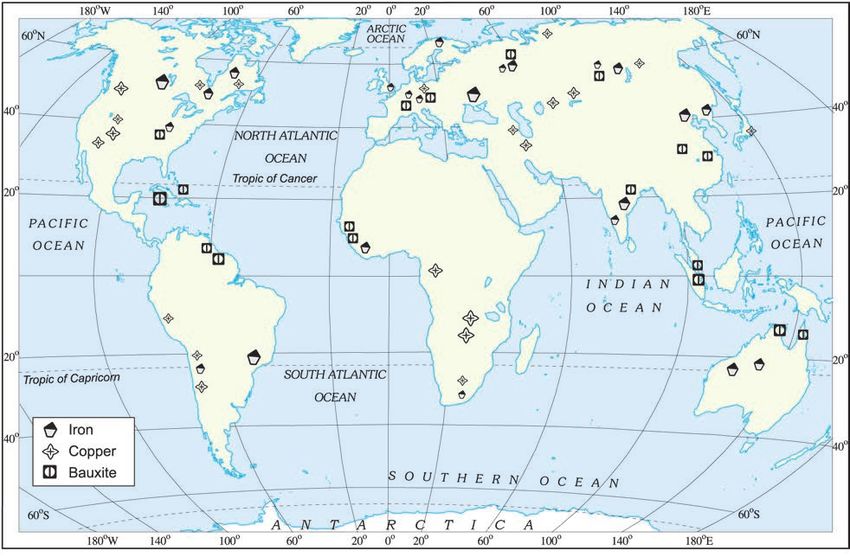
Types   of   Minerals
                                                                                Do you know?
There are over three thousand different minerals.
                                                                                A rock is an
On the basis of composition, minerals are classified
                                                                                aggregate of one or
mainly as metallic and non-metallic minerals (Fig. 3.2).                        more minerals but
                                                                                without definite
                               Minerals
                                                                                composition of
                                              Non-metallic                      constituent of
                   Metallic
                                                                                mineral. Rocks
                                                                                from which
      Ferrous            Non-ferrous                                            minerals are mined
                Fig. 3.2: Classification of Minerals                            are known as ores.
                                                                                Although more
Metallic minerals contain metal in raw form. Metals are                         than 2,800 types
hard substances that conduct heat and electricity and                           of minerals have
have a characteristic lustre or shine. Iron ore, bauxite,                       been identified,
                                                                                only about 100
manganese ore are some examples. Metallic minerals
                                                                                are considered ore
may be fer rous or non-ferrous. Ferrous minerals like                           minerals.
iron ore, manganese and chromites contain iron. A
non-ferrous mineral does not contain iron but may contain
some other metal such as gold, silver, copper or lead.
   Non-metallic minerals do not contain metals.
Limestone, mica and gypsum are examples of such
minerals. The mineral fuels like coal and petroleum are
also non-metallic minerals.
   Minerals can be extracted by mining, drilling or
quarrying (Fig 3.3).

                   Extraction of Minerals

             Mining                Drilling         Quarrying

    Open cast             Shaft
     mining               mining

                 Fig. 3.3: Extraction of Minerals
    The process of taking out minerals from rocks buried
under the earth’s surface is called mining. Minerals that
lie at shallow depths are taken out by removing the surface
layer; this is known as open-cast mining. Deep bores, called
shafts, have to be made to reach mineral deposits that lie
at great depths. This is called shaft mining. Petroleum
and natural gas occur far below the earth’s surface. Deep
wells are bored to take them out, this is called drilling
(Fig 3.4). Minerals that lie near the surface are simply dug                    Fig. 3.4: Off shore
out, by the process known as quarrying.                                            drilling of oil

                                                                Mineral   and   Power Resources   23

                                                 2021–22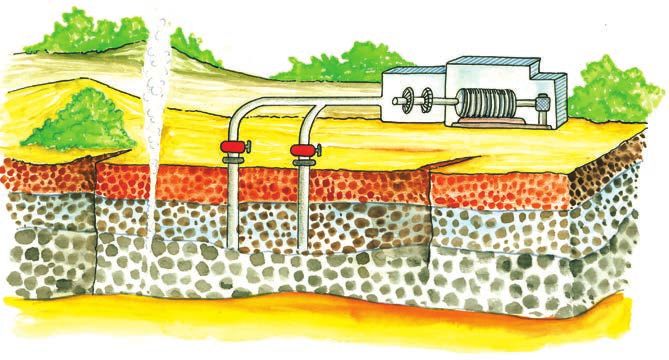
Distribution    of   Minerals
                                      Minerals occur in different types of rocks. Some are
                                      found in igneous rocks, some in metamorphic rocks
     Do you know?                     while others occur in sedimentary rocks. Generally,
     You can always tell              metallic minerals are found in igneous and metamorphic
     if a rock contains               rock formations that form large plateaus. Iron-ore in
     copper because                   north Sweden, copper and nickel deposits in Ontario,
     then the rock looks              Canada, iron, nickel, chromites and platinum in South
     blue in colour.                  Africa are examples of minerals found in igneous and
                                      metamorphic rocks. Sedimentary rock formations of
                                      plains and young fold mountains contain non-metallic
                                      minerals like limestone. Limestone deposits of Caucasus
                                      region of France, manganese deposits of Georgia and
                                      Ukraine and phosphate beds of Algeria are some
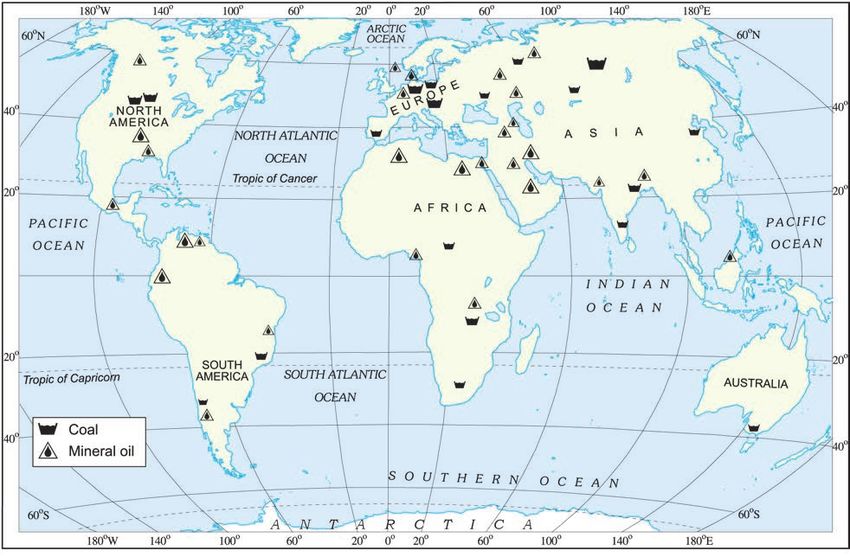
                                      examples. Mineral fuels such as coal and petroleum are
                                      also found in the sedimentary strata.

                                      Asia
                                      China and India have large iron ore deposits.
                                      The continent produces more than half of the world’s tin.

                         Fig. 3.5: World: Distribution of Iron, Copper and Bauxite

24    Resources   and   Development

                                                2021–22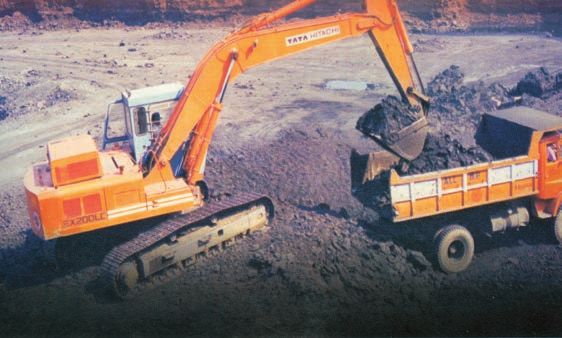
China, Malaysia and Indonesia are among the world’s
leading tin producers. China also leads in production of
lead, antimony and tungsten. Asia also has deposits of
manganese, bauxite, nickel, zinc and copper.

Europe
                                                                       Do you know?
Europe is the leading producer of iron-ore in the world.
                                                                       Switzerland has
The countries with large deposits of iron ore are Russia,              no known mineral
Ukraine, Sweden and France. Minerals deposits of                       deposit in it.
copper, lead, zinc, manganese and nickel are found in
eastern Europe and European Russia.

North America                                                          Let’s do
The mineral deposits in North America are located in                   Identify the
three zones: the Canadian region north of the Great                    Canadian Shield,
Lakes, the Appalachian region and the mountain ranges                  the Appalachians,
of the west. Iron ore, nickel, gold, uranium and copper                Western Cordilleras
                                                                       and Lake Superior
are mined in the Canadian Shield Region, coal in the
                                                                       with the help of an
Appalachians region. Western Cordilleras have vast                     atlas.
deposits of copper, lead, zinc, gold and silver.

                   Fig 3.6: World: Distribution of Mineral Oil and Coal
                                                            Mineral   and   Power Resources   25

                                           2021–22
South America
                                      Brazil is the largest producer of high grade iron-ore
                                      in the world. Chile and Peru are leading producers of
                                      copper. Brazil and Bolivia are among the world’s largest
                                      producers of tin. South America also has large deposits of
                                      gold, silver, zinc, chromium, manganese, bauxite, mica,
     Do you know?                     platinum, asbestos and diamond. Mineral oil is found in
     • A green                        Venezuela, Argentina, Chile, Peru and Columbia.
       diamond is the
       rarest diamond.                Africa
     • The oldest rocks
       in the world                   Africa is rich in mineral resources. It is the world’s
       are in Western                 largest producer of diamonds, gold and platinum. South
       Australia. They                Africa, Zimbabwe and Zaire produce a large portion of
       date from 4,300                the world’s gold. The other minerals found in Africa
       million years                  are copper, iron ore, chromium, uranium, cobalt and
       ago, only 300
                                      bauxite. Oil is found in Nigeria, Libya and Angola.
       million years
       after the earth
       was formed.                    Australia
                                      Australia is the largest producer of bauxite in the world.
                                      It is a leading producer of gold, diamond, iron ore, tin
                                      and nickel. It is also rich in copper, lead, zinc and
                                      manganese. Kalgoorlie and Coolgardie areas of western
                                      Australia have the largest deposits of gold.

                                      Antarctica
                                      The geology of Antarctica is sufficiently well known to
                                      predict the existence of a variety of mineral deposits,
                                      some probably large. Significant size of deposits of
                                      coal in the Transantarctic Mountains and iron near
                                      the Prince Charles Mountains of East Antarctica is
                                      forecasted. Iron ore, gold, silver and oil are also present
                                      in commercial quantities.

                                      Uses   of   Minerals
                                      Minerals are used in many industries. Minerals which
                                      are used for gems are usually hard. These are then
     Let’s do
                                      set in various styles for jewellery. Copper is another
     List uses of any
                                      metal used in everything from coins to pipes. Silicon,
     five minerals.
                                      used in the computer industry is obtained from quartz.
                                      Aluminum obtained from its ore bauxite is used in
                                      automobiles and airplanes, bottling industry, buildings
                                      and even in kitchen cookware.
26    Resources   and   Development

                                                  2021–22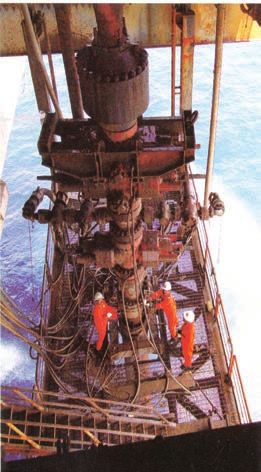
Conservation       of   Minerals
Minerals are a non-renewable resource. It takes

                                                                                            Re
                                                                        se
thousands of years for the formation and concentration

                                                                                              du
                                                                      u
                                                                   Re
of minerals. The rate of formation is much smaller than

                                                                                                 ce
the rate at which the humans consume these minerals.                             Minerals

It is necessary to reduce wastage in the process of
mining. Recycling of metals is another way in which the
mineral resources can be conserved.
                                                                                Recycle
Power Resources                                                               Think and Act
Sunny’s mother begins her day by switching on the
geyser. She irons Sunny’s school uniform before waking
him up. She then rushes to the kitchen to prepare a glass
of orange juice for him in the blender.
    “Sunny, have you finished taking bath? Come and
have your breakfast”, calls out mother while preparing
breakfast on the gas stove for Sunny.
    While going to school Sunny forgets to switch off
lights and fans. When mother switches them off she
thinks that life in the cities may be more comfortable, but
its dependency on more and more gadgets all of which
consume energy has led to a wide gap between the
demand and the supply. With the advent of science and
technology the life styles are changing very fast.
   Power or energy plays a vital role in our lives. We also need    Fig. 3.7: National Power
power for industry, agriculture, transport, communication           Grid to supply Electricity
and defense. Power resources may be broadly categorised
as conventional and non-conventional resources.

Conventional Sources
Conventional sources of energy are those which have
been in common use for a long time. Firewood and fossil
fuels are the two main conventional energy sources.

Firewood
It is widely used for cooking and heating. In our country
more than fifty per cent of the energy used by villagers
comes from fire wood.
    Remains of plants and animals which were buried
under the earth for millions of years got converted by the
heat and pressure into fossil fuels. Fossil fuel such as
coal, petroleum and natural gas are the main sources of

                                                              Mineral   and   Power Resources     27

                                             2021–22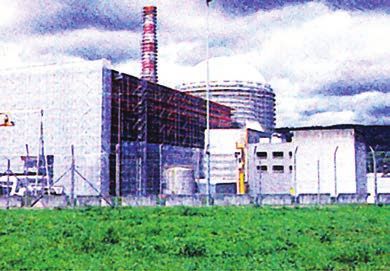
Fig 3.8: Conventional Sources of Energy

                                       conventional energy. The reserves of these minerals are
                                       limited. The rate at which the growing world population
                                       is consuming them is far greater than the rate of their
                                       formation. So, these are likely to be exhausted soon.

                                       Coal
                                       This is the most abundantly found fossil fuel. It is used
                                       as a domestic fuel, in industries such as iron and steel,
      Fig 3.9: A woman
     carrying firewood in              steam engines and to generate electricity. Electricity
       North East India                from coal is called thermal power. The coal which we
                                             are using today was formed millions of years ago
                                             when giant ferns and swamps got buried under the
                                             layers of earth. Coal is therefore referred to as
                                             Buried Sunshine.
                                                The leading coal producers of the world are
                                             China, USA, Germany, Russia, South Africa
                                             and France. The coal producing areas of India
                                             are Raniganj, Jharia, Dhanbad and Bokaro in
                                             Jharkhand.
 Fig 3.10: A view of a Thermal
        Power Station
28     Resources   and   Development

                                                  2021–22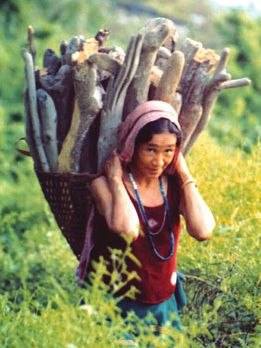
Petroleum
The petrol that keeps your car running as well as
the oil that keeps your cycle from squeaking, both
                    began as a thick black liquid called
                    Petroleum. It is found between the              Word Origin
                    layers of rocks and is drilled from             The word
                                                                    petroleum is
                    oil fields located in off-shore and
                                                                    derived from
                    coastal areas. This is then sent to             Latin words
                    refineries which process the crude              –Petra meaning
                    oil and produce a variety of products           rock, oleum
                    like diesel, petrol, kerosene, wax,             meaning oil. So,
                    plastics and lubricants. Petroleum              petroleum means
                                                                    rock oil.
Fig 3.11: Crude Oil and its derivatives are called Black
                    Gold as they are very valuable. The
chief petroleum producing countries are Iran, Iraq,
Saudi Arabia and Qatar. The other major producers
are USA, Russia, Venezuela, and Algeria. The leading
producers in India are Digboi in Assam, Bombay
High in Mumbai and the deltas of Krishna and
Godavari rivers.

Natural Gas
Natural gas is found with petroleum deposits and is
released when crude oil is brought to the surface. It
can be used as a domestic and industrial fuel. Russia,             Do you know?
Norway, UK and the Netherlands are the major producers             Compressed
of natural gas.                                                    natural gas (CNG)
    In India Jaisalmer, Krishna Godavari delta, Tripura            is a popular eco-
                                                                   friendly automobile
and some areas off shore in Mumbai have natural gas                fuel as it causes
resources. Very few countries in the world have sufficient         less pollution than
natural gas reserves of their own.                                 petroleum and
    The sharp increase in our consumption of fossil fuels          diesel.
has led to their depletion at an alarming rate. The toxic
pollutants released from burning these fuels are also a
cause for concern. Unchecked burning of fossil fuel is
like an unchecked dripping tap which will eventually
run dry. This has led to the tapping of various non-
conventional sources of energy that are cleaner
alternatives to fossil fuels.

                                                        Mineral   and   Power Resources   29

                                         2021–22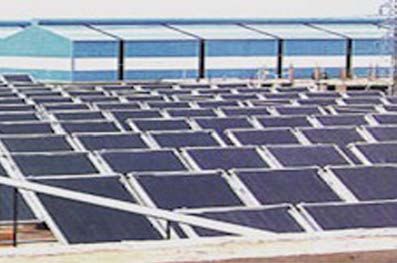
Hydel Power
     Do you know?                      Rain water or river water stored in dams is made to
     Norway was the                    fall from heights. The falling water flows through pipes
     first country in the
                                       inside the dam over turbine blades placed at the bottom
     world to devlop
     hydroelectricity.                 of the dam. The moving blades then turn the generator
                                       to produce electricity. This is called hydro electricity.
                                       The water discharged after the generation of electricity is
                                       used for irrigation. One fourth of the world’s electricity is
                                       produced by hydel power. The leading producers of hydel
                                       power in the world are Paraguay, Norway, Brazil, and
                                       China. Some important hydel power stations in India
                                       are Bhakra Nangal, Gandhi Sagar, Nagarjunsagar and
                                       Damodar valley projects.

     Do you know?
     The site of the
     world’s first solar
     and wind powered
     bus shelter is in
                                                                   Generator
     Scotland.                         Water
                                       reservoir

                                                                  Turbine

                                                    Fig. 3.12: Hydel Power

                                        Non-conventional Sources               of   Energy
                                        The increasing use of fossil fuels is leading to its shortage.
                                        It is estimated that if the present rate of consumption
                                        continues, the reserves of these fuel will get exhausted.
                                               Moreover, their use also causes environmental
                                               pollution. Therefore, there is need for using non-
                                               conventional sources such as solar energy, wind
                                               energy, tidal energy which are renewable.

                                                   Solar energy
                                                   Sun’s heat and light energy can be felt by us every
                                                   day. Solar energy trapped from the sun can be used
Fig. 3.13: Salal Hydroelectric                     in solar cells to produce electricity. Many of these
Project Jammu and Kashmir                          cells are joined into solar panels to generate
30     Resources   and   Development

                                                        2021–22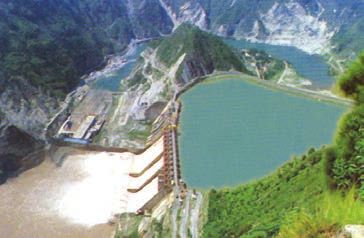
Fig 3.14: Non-conventional Sources of Energy

power for heating and lighting purpose. The
technology of utilising solar energy benefits a
lot of tropical countries that are blessed with
abundant sun shine. Solar energy is also used
in solar heaters, solar cookers, solar dryers
besides being used for community lighting and
traffic signals.

Wind Energy
                                                        Fig 3.15: Solar Panels to trap
Wind is an inexhaustible source of energy. Wind
                                                                solar energy
mills have been used for grinding grain and
lifting water since times immemorial. In modern time wind
mills, the high speed winds rotate the wind mill which is
connected to a generator to produce electricity. Wind farms
having clusters of such wind mills are located in coastal
regions and in mountain passes where strong and steady
                                                            Mineral   and   Power Resources   31

                                           2021–22
winds blow. Windfarms are found in Netherlands, Germany,
Denmark, UK, USA and Spain are noted for their wind
Activity energy production.
Solar Cooker
Take an old car
Nuclear Power
tube. Inflate it and
keep it on a wooden Nuclear power is
platform. Paint an obtained from energy
aluminium vessel stored in the nuclei
black from outside
of atoms of naturally
and add 1 cup rice
with 2 cups of water occurring radio active
to it. Close the vessel elements like uranium
with a lid and place and thorium. These
the vessel in the fuels undergo nuclear
inner circle of the fission in nuclear
tube. Now place a
glass frame over the
reactors and emit Fig. 3.16 : Nuclear power station ,
Kalpakkam
tube and keep the power. The greatest
set out in the sun. producers of nuclear power are USA and Europe.
After the glass frame In India Rajasthan and Jharkhand have large deposits
is placed, air can of Uranium. Thorium is found in large quantities in the
neither come in nor
Monozite sands of Kerala. The nuclear power stations
go out but the sun
rays coming into in India are located in Kalpakkam in Tamilnadu,
the closed cavity Tarapur in Maharastra, Ranapratap Sagar near Kota
enclosed by the in Rajasthan, Narora in Uttar Pradesh and Kaiga
tube, get trapped in Karnataka.
and cannot escape.
The temperature
increases slowly Geothermal Energy
cooking the rice over Heat energy obtained from the earth is called
a few hours. geothermal energy. The temperature in the interior of
the earth rises steadily as we go deeper. Some times
this heat energy may surface itself in the form of hot
springs. This heat energy can be used to generate power.
Fig. 3.17 : Nuclear Energy
32 Resources and Development
2021–22Geothermal energy in the form (a) (b)
of hot springs has been used for
cooking, heating and bathing
for several years. USA has the
world’s largest geothermal
power plants followed by New
Zealand, Iceland, Philippines
and Central America. In India,
geothermal plants are located
in Manikaran in Himachal Fig. 3.18 : (a) Geothermal Energy in Manikaran
Pradesh and Puga Valley in (b) Cooking food with the help of Geothermal Energy
Ladakh.
turbine
generator
Natural crack
Steam
Well Water
Fig. 3.19 : Geothermal Energy
Do you know?
Tidal Energy
The first tidal
Energy generated from tides is called tidal energy. Tidal energy station was
energy can be harnessed by building dams at narrow built in France.
Fig. 3.20: Tidal Energy
Mineral and Power Resources 33
2021–22openings of the sea. During high tide the energy of the tides
is used to turn the turbine installed in the dam to produce
electricity. Russia, France and the Gulf of Kachchh in
India have huge tidal mill farms.
Biogas
Organic waste such as dead plant and animal material,
animal dung and kitchen waste can be converted into a
gaseous fuel called biogas. The organic
waste is decomposed by bacteria in
biogas digesters to emit biogas which
is essentially a mixture of methane
and carbon dioxide. Biogas is an
excellent fuel for cooking and lighting
and produces huge amount of organic
manure each year.
Energy is everywhere but we can
see that harnessing this energy is both
Fig. 3.21 : Biogas
difficult as well as costly. Each one of
us can make a difference by not wasting energy. Energy
saved is energy generated. Act now and make brighter
energy future.
Exercises
1. Answer the following questions.
(i) Name any three common minerals used by you every day.
(ii) What is an ore? Where are the ores of metallic minerals generally
located?
(iii) Name two regions rich in natural gas resources.
(iv) Which sources of energy would you suggest for
(a) rural areas (b) coastal areas (c) Arid regions
(v) Give five ways in which you can save energy at home.
34 Resources and Development
2021–222. Tick the correct answer.
(i) Which one of the following is NOT a characteristic of minerals?
(a) They are created by natural processes.
(b) They have a definite chemical composition.
(c) They are inexhaustible.
(d) Their distribution is uneven.
(ii) Which one of the following is a leading producer of copper in the world?
(a) Bolivia (c) Chile
(b) Ghana (d) Zimbabwe
(iii) Which one of the following practices will NOT conserve LPG in your
kitchen.
(a) Soaking the dal for some time before cooking it.
(b) Cooking food in a pressure cooker.
(c) Keeping the vegetables chopped before lighting the gas for cooking.
(d) Cooking food in an open pan kept on low flame.
3. Give reasons.
(i) Environmental aspects must be carefully looked into before building
huge dams.
(ii) Most industries are concentrated around coal mines.
(iii) Petroleum is referred to as “black gold”.
(iv) Quarrying can become a major environmental concern.
4. Distinguish between the followings.
(i) Conventional and non conventional sources of energy
(ii) Biogas and natural gas
(iii) Ferrous and nonferrous minerals
(iv) Metallic and nonmetallic minerals
5. Activity
(i) Use pictures from old magazines to show different kinds of fuels used by
us in our lives and display them on your bulletin board.
(ii) Design a poster highlighting energy conservation tips you would take for
your school.
(iii) Salma’s class took up an action campaign to do an energy audit of their
school by surveying electricity consumption.They prepared survey sheets
for the students of the school.
Mineral and Power Resources 35
2021–22Electricity Audit
S. No. Appliance Quantity Usage Time Quantity Is it
(No. being (Approx. (No. actual- switched
used) No. of ly needed) on even
working when not
hours) in use?
(Yes or No)
1. Fluorescent Tube
light 40 W
2. Incandescent Bulb
40 W / 60 W
3. Co-impact
fluorescent lamps
4. Fans
5. Exhaust Fans
6. Electric Bell / Buzzer
7. TV
8. Computers
9. Air
Conditioners
10. Refrigerators
11. Oven / Hot Case
12. Public Address
System
13. Water Pump / Water
Cooler
14. Overhead
Projector
15. Photostat
Machine
16. Any other
Using the data collected during the survey, students calculated the units
consumed for one month and the approximate expenditure and compared
it with the electricity bill of the previous month. They also calculated the
approximate cost of electricity consumed by fans, lights and other appliances
not switched off. Thus, they highlighted the amount that could be saved and
suggested simple energy conservation habits like
• Switching off the appliances when not in use.
• Minimal usage as per requirement.
36 Resources and Development
2021–22• Maximising the use of natural breeze and light by keeping the windows
open.
• Keeping the lights dust free.
• The appropriate maintenance and usage of appliances as per the given
instructions.
Can you add some more tips to this list?
You could conduct a similar survey at home and then extend it to your
appartment and make your neighbours also energy wise.
Mineral and Power Resources 37
2021–22You can also read


