Next Generation Immunotherapy - September 2021 - Investors & Media
←
→
Page content transcription
If your browser does not render page correctly, please read the page content below

Next Generation
Immunotherapy
September 2021

Titelmasterformat durch Klicken bearbeiten

This slide presentation includes forward-looking statements
 This presentation contains forward-looking statements within the meaning of the Private Securities Litigation Reform Act of 1995, as amended, including, but not limited to, statements concerning:
 our expected revenues and net profit related to sales of our COVID-19 vaccine, referred to as COMIRNATY® in the European Union as authorized for use under conditional marketing approval, in
 territories controlled by our collaboration partners, particularly for those figures that are derived from preliminary estimates provided by our partners; our pricing and coverage negotiations with
 governmental authorities, private health insurers and other third-party payors after our initial sales to national governments; the extent to which a COVID-19 vaccine continues to be necessary in the
 future; competition from other COVID-19 vaccines or related to our other product candidates, including those with different mechanisms of action and different manufacturing and distribution
 constraints, on the basis of, among other things, efficacy, cost, convenience of storage and distribution, breadth of approved use, side-effect profile and durability of immune response; the rate and
 degree of market acceptance of our COVID-19 vaccine and our investigational medicines, if approved; the initiation, timing, progress, results, and cost of our research and development programs
 and our current and future preclinical studies and clinical trials, including statements regarding the timing of initiation and completion of studies or trials and related preparatory work, the period
 during which the results of the trials will become available and our research and development programs; the timing of and our ability to obtain and maintain regulatory approval for our product
 candidates; the collaboration between BioNTech and Pfizer to develop a COVID-19 vaccine (including a potential booster dose of BNT162b2 and/or a potential booster dose of a variation of
 BNT162b2 having a modified mRNA sequence); the ability of BNT162b2 to prevent COVID-19 caused by emerging virus variants; our ability to identify research opportunities and discover and
 develop investigational medicines; the ability and willingness of our third-party collaborators to continue research and development activities relating to our development candidates and investiga-
 tional medicines; the impact of the COVID-19 pandemic on our development programs, supply chain, collaborators and financial performance; unforeseen safety issues and claims for personal
 injury or death arising from the use of our COVID-19 vaccine and other products and product candidates developed or manufactured by us; BioNTech’s Malaria, Tuberculosis and HIV programs;
 timing for selecting clinical candidates for these programs and the commencement of a clinical trial, as well as any data readouts; the nature of the collaboration with the African Union and the
 Africa CDC; the nature and duration of support from WHO, the European Commission and other organizations with establishing infrastructure; the development of sustainable vaccine production
 and supply solutions on the African continent and the nature and feasibility of these solutions; our estimates of research and development revenues, commercial revenues, cost of sales, research
 and development expenses, sales and marketing expenses, general and administrative expenses, other operating income less expenses, finance income less expenses, income taxes, shares
 outstanding and basic and diluted profit for the period per share and our needs for or ability to obtain additional financing; our ability to identify, recruit and retain key personnel; our and our
 collaborators’ ability to protect and enforce our intellectual property protection for our proprietary and collaborative product candidates, and the scope of such protection; the development of and
 projections relating to our competitors or our industry; our ability and that of our collaborators to commercialize and market our product candidates, if approved, including our COVID-19 vaccine; the
 amount of and our ability to use net operating losses and research and development credits to offset future taxable income; our ability to manage our development and expansion; regulatory deve-
 lopments in the United States and foreign countries; our ability to effectively scale our production capabilities and manufacture our products, including our target COVID-19 vaccine pro-duction
 levels, and our product candidates; our ability to implement, maintain and improve effective internal controls; our plans for expansion in southeast Asia and China, including our planned regional
 headquarters and manufacturing facility in Singapore as well as the joint venture with Fosun Pharma; and other factors not known to us at this time. In some cases, forward-looking statements can
 be identified by terminology such as “will,” “may,” “should,” “expects,” “intends,” “plans,” “aims,” “anticipates,” “believes,” “estimates,” “predicts,” “potential,” “continue,” or the negative of these terms
 or other comparable terminology, although not all forward-looking statements contain these words. The forward-looking statements in this quarterly report are neither promises nor guarantees, and
 you should not place undue reliance on these forward-looking statements because they involve known and unknown risks, uncertainties, and other factors, many of which are beyond BioNTech’s
 control and which could cause actual results to differ materially from those expressed or implied by these forwardlooking statements. You should review the risks and uncertainties described under
 the head-ing “Risk Factors” in this quarterly report and in subsequent filings made by BioNTech with the SEC, which are available on the SEC’s website at https://www.sec.gov/. Except as required
 by law, BioNTech disclaims any intention or responsibility for updating or revising any for-ward-looking statements contained in this quarterly report in the event of new information, future
 developments or otherwise. These forward-looking statements are based on BioNTech’s current expectations and speak only as of the date hereof.

 2
Titelmasterformat durch Klicken bearbeiten

Safety Information
AUTHORIZED USE IN THE U.S.:
The Pfizer-BioNTech COVID19 Vaccine is authorized for use under an Emergency Use Authorization (EUA) for active immunization to prevent coronavirus disease 2019 (COVID-19) caused by severe acute
respiratory syndrome coronavirus 2 (SARS-CoV-2) in individuals 12 years of age and older.

IMPORTANT SAFETY INFORMATION FROM U.S. FDA EMERGENCY USE AUTHORIZATION PRESCRIBING INFORMATION:
• Do not administer Pfizer-BioNTech COVID-19 Vaccine to individuals with known history of a severe allergic reaction (eg, anaphylaxis) to any component of the Pfizer-BioNTech COVID-19 Vaccine
• Appropriate medical treatment used to manage immediate allergic reactions must be immediately available in the event an acute anaphylactic reaction occurs following administration of Pfizer-BioNTech
  COVID-19 Vaccine
• Monitor Pfizer-BioNTech COVID-19 Vaccine recipients for the occurrence of immediate adverse reactions according to the Centers for Disease Control and Prevention guidelines
  (https://www.cdc.gov/vaccines/covid-19/clinical-considerations/managing-anaphylaxis.html)
• Reports of adverse events following use of the Pfizer-BioNTech COVID-19 Vaccine under EUA suggest increased risks of myocarditis and pericarditis, particularly following the second dose. The decision
  to administer the Pfizer-BioNTech COVID-19 Vaccine to an individual with a history of myocarditis or pericarditis should take into account the individual’s clinical circumstances
• Syncope (fainting) may occur in association with administration of injectable vaccines, in particular in adolescents. Procedures should be in place to avoid injury from fainting
• Immunocompromised persons, including individuals receiving immunosuppressant therapy, may have a diminished immune response to the Pfizer-BioNTech COVID-19 Vaccine
• The Pfizer-BioNTech COVID-19 Vaccine may not protect all vaccine recipients
• In clinical studies, adverse reactions in participants 16 years of age and older included pain at the injection site (84.1%), fatigue (62.9%), headache (55.1%), muscle pain (38.3%), chills (31.9%), joint pain
  (23.6%), fever (14.2%), injection site swelling (10.5%), injection site redness (9.5%), nausea (1.1%), malaise (0.5%), and lymphadenopathy (0.3%)
• In a clinical study, adverse reactions in adolescents 12 through 15 years of age included pain at the injection site (90.5%), fatigue (77.5%), headache (75.5%), chills (49.2%), muscle pain (42.2%), fever
  (24.3%), joint pain (20.2%), injection site swelling (9.2%), injection site redness (8.6%), lymphadenopathy (0.8%), and nausea (0.4%)
• Following administration of the Pfizer-BioNTech COVID-19 Vaccine, the following have been reported outside of clinical trials:
         • severe allergic reactions, including anaphylaxis, and other hypersensitivity reactions, diarrhea, vomiting, and pain in extremity (arm)
         • myocarditis and pericarditis
• Additional adverse reactions, some of which may be serious, may become apparent with more widespread use of the Pfizer-BioNTech COVID-19 Vaccine
• Available data on Pfizer-BioNTech COVID-19 Vaccine administered to pregnant women are insufficient to inform vaccine-associated risks in pregnancy
• Data are not available to assess the effects of Pfizer-BioNTech COVID-19 Vaccine on the breastfed infant or on milk production/excretion
• There are no data available on the interchangeability of the Pfizer-BioNTech COVID-19 Vaccine with other COVID-19 vaccines to complete the vaccination series. Individuals who have received one dose
  of Pfizer-BioNTech COVID-19 Vaccine should receive a second dose of Pfizer-BioNTech COVID-19 Vaccine to complete the vaccination series
• Vaccination providers must report Adverse Events in accordance with the Fact Sheet to VAERS online at https://vaers.hhs.gov/reportevent.html. For further assistance with reporting to VAERS call 1-800-
  822-7967. The reports should include the words “Pfizer-BioNTech COVID-19 Vaccine EUA” in the description section of the report
• Vaccination providers should review the Fact Sheet for Information to Provide to Vaccine Recipients/Caregivers and Mandatory Requirements for Pfizer-BioNTech COVID-19 Vaccine Administration
  Under Emergency Use Authorization
• Before administration of Pfizer-BioNTech COVID-19 Vaccine, please see Emergency Use Authorization (EUA) Fact Sheet for Healthcare Providers Administering Vaccine (Vaccination Providers)
  including Full EUA Prescribing Information available at www.cvdvaccine-us.com.

Please see Emergency Use Authorization (EUA) Fact Sheet for Healthcare Providers Administering Vaccine (Vaccination Providers) including Full EUA Prescribing Information available at www.cvdvaccine-
us.com.
 3
Titelmasterformat durch Klicken bearbeiten
Safety Information
COMIRNATY® ▼(COVID-19 mRNA Vaccine) has been granted conditional marketing authorisation by the European Medicines Agency to prevent coronavirus disease 2019 (COVID-19) in people
from 12 years of age. EMA’s human medicines committee (CHMP) has completed its rigorous evaluation of COMIRNATY®, concluding by consensus that sufficiently robust data on the quality,
safety and efficacy of the vaccine are now available.
Important safety information
• Events of anaphylaxis have been reported. Appropriate medical treatment and supervision should always be readily available in case of an anaphylactic reaction following the administration of
the vaccine
• The efficacy, safety and immunogenicity of the vaccine has not been assessed in immunocompromised individuals, including those receiving immunosuppressant therapy. The efficacy of
COMIRNATY® may be lower in immunosuppressed individuals.
• As with any vaccine, vaccination with COMIRNATY® may not protect all vaccine recipients. Individuals may not be fully protected until 7 days after their second dose of vaccine.
• In clinical studies, adverse reactions in participants 16 years of age and older included pain at the injection site (84.1%), fatigue (62.9%), headache (55.1%), muscle pain (38.4%), chills (31.9%)
joint pain (23.6%), fever (14.2%), injection site swelling (10.5%), injection site redness (9.5%), nausea (1.1%), malaise (0.5%), and lymphadenopathy (0.3%)
• The overall safety profile of COMIRNATY® in adolescents 12 to 15 years of age was similar to that seen in participants 16 years of age and older. The most frequent adverse reactions in clinical
trial participants 12 to 15 years of age were injection site pain (> 90%), fatigue and headache (> 70%), myalgia and chills (> 40%), arthralgia and pyrexia (> 20%).
• There is limited experience with use of COMIRNATY® in pregnant women. Administration of COMIRNATY® in pregnancy should only be considered when the potential benefits outweigh any
potential risks for the mother and foetus.
• It is unknown whether COMIRNATY® is excreted in human milk.
• Interactions with other medicinal products or concomitant administration of COMIRNATY® with other vaccines has not been studied.
• Very rare cases of myocarditis and pericarditis have been observed following vaccination with COMIRNATY® primarily in younger males, after the second dose, within 14 days following
vaccination
The black equilateral triangle denotes that additional monitoring is required to capture any adverse reactions. This will allow quick identification of new safety information. You can help by reporting
any side effects you may get. Side effects can be reported to EudraVigilance [http://www.adrreports.eu/] or directly to BioNTech using email medinfo@biontech.de, telephone +49 6131 9084 0, or
our website https://medicalinformation.biontech.de/
4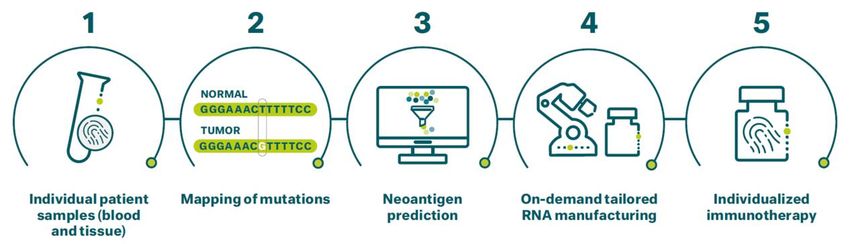
Titelmasterformat durch Klicken bearbeiten

                                             Building a fully integrated
                                             biopharmaceutical company

     Next generation
     Immunotherapy
                                             Immunotherapies for cancer &
                                             infectious diseases and beyond

      Harnessing the full                    Broad suite of novel
                                             technologies
        potential of the
       immune system
                                             Industry-leading global
                                             collaborations

 5
Titelmasterformat durch Klicken bearbeiten

Transformed Into a Fully Integrated, Global Immunotherapy Company

                             Deep Immunology
                             Expertise
                                                  A Robust Pipeline of 20+ Candidates
Fully Integrated Structure

                             Broad Suite of
                             Novel Technologies                     ICON

                             Bioinformatics
                             Approach                        Next-Gen
                                                                                          Potential to
                                                     Immunotherapies & Vaccines         Launch Multiple
                             In-House                  Oncology, Infectious Disease
                                                                                          Products in
                             Manufacturing                    and Beyond
                                                                                         Next 5 Years

                             Commercial
                             Capabilities          Accelerated by Proven Execution
                                                   and COVID-19 Vaccine Cash Flow
                             Global Team
                             of 2,000+
        6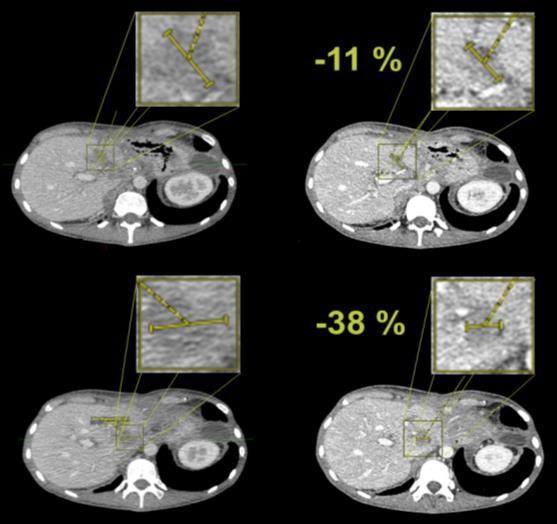
Titelmasterformat durch Klicken bearbeiten

mRNA Technology Poised to Revolutionize Immunotherapy

                      Today                                  Tomorrow                           The Future

                                                                                       mRNA potential to open up
      mRNA vaccines established as a               mRNA technology potential to           new opportunities
            New Drug Class                        Displace Traditional Modalities
                                                                                         Beyond the Horizon

                                                 ▪ mRNA infectious disease          ▪ Autoimmune diseases
                 BNT162b2                          vaccines
                                                                                    ▪ Allergy
                                                 ▪ mRNA cancer vaccines
                                                                                    ▪ Inflammation
       Diversification and maturation of         ▪ CAR-T cell amplifying mRNA
        our mRNA technology enabled                vaccine                          ▪ Regenerative medicine
       the accelerated development of
            our COVID-19 vaccine                 ▪ Systemic mRNA encoded            ▪ Other therapeutic areas
                                                   immuno-therapies

        modRNA             taRNA             Broad IP portfolio covering technologies, targets and formulations.
 uRNA             saRNA             Deep expertise and know-how built over the course of more than a decade.

 7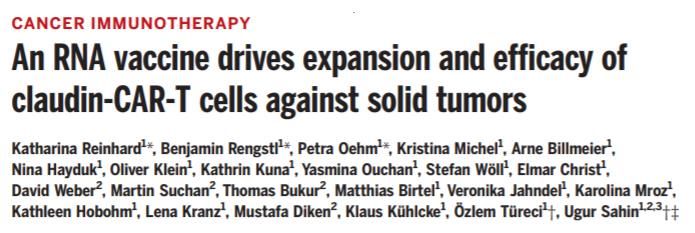
Infectious Diseases: A Long-term Growth Pillar

mRNA vaccines to combat major                                                      Opportunity to impact infectious                           BNT161 influenza vaccine
global health burden                                                               diseases with high unmet need                              candidate designed to improve
                                                                                                                                              traditional vaccines

Malaria1:                                                                          • Up to 10 mRNA vaccine candidates
                                                                                                                                              • FIH trial expected Q3 2021
• Development of first mRNA-based                                                    in preclinical development3
                                                                                                                                              • Eligible for milestone payments
  Malaria vaccine recently started
                                                                                                                                                and royalties through Pfizer
• Implementation of sustainable                                                                                                                 agreement
  end-to-end vaccine supply
  solutions in Africa planned
HIV and tuberculosis2:
• Preclinical development of
  multiple product candidates
  ongoing

    1 Collaboration   with kENUP Foundation; 2Collaboration with Bill & Melinda Gates Foundation; 3University of Pennsylvania collaboration
8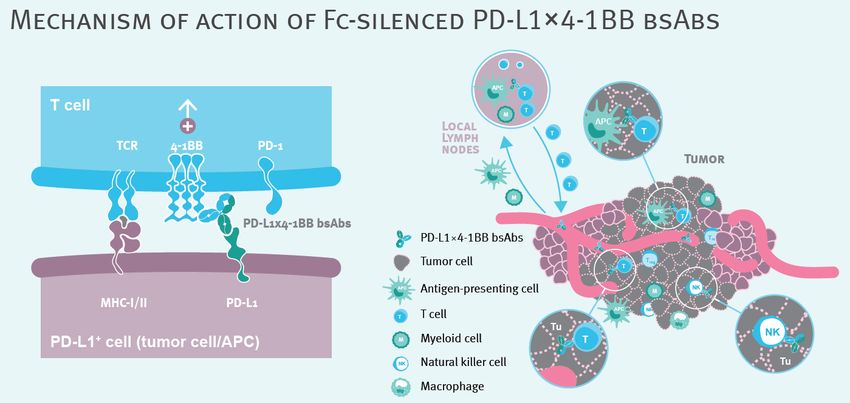
Titelmasterformat durch Klicken bearbeiten

Potential to Tackle Multiple Diseases with Different Therapeutic Modalities

                                                                                                                                                                                   Next Generation
           mRNA Cancer Vaccines
                                                                                                                                                                                 Immunomodulators
 iNeST FixVac                                                                                                                                                               Bispecifics
• Multi-specificity, multi-valency, high (neo)antigen specific                                                                                                            • Next-generation checkpoint inhibitors to address a
     T cell responses with unprecedented potency                                                                                                                            broad range of cancers

• 3 Phase 2 randomized trials (iNeST and 2 FixVac)                                                                                                                        • Phase 1/2 trials of 2 bi-specific antibodies

                                                                                                                                                                                      Ribocytokines
  Next Gen CAR-T Cell /                                                                                                 +                                                             • mRNA encoded cytokines with a prolonged
                                                                                                                                                                                        T1/2 and improved safety profile
  Neoantigen-based T Cell Therapy
                                                                                        Targeted                             TLR-7 Agonist                                            • Potential to amplify vaccines and CPIs
 • Phase 1 FIH trials started in Feb. and Apr 2021                                                                           • Potently modulates innate immunity
                                                                                Cancer Antibodies                                                                                     • Phase 1 FIH trials started in Feb. and
                                                                    • CA19-9 antibody in 1L pancreatic cancer                • Potential for combination with other IO                  Jun. 2021
                                                                                                                               agents
                                                                    • Phase 1/2 trial                                                                                                                   Engineered
                                                                                                                             • Phase 1 trial
            Cell Therapies
                                                                                                                                                                                                        Biologicals
                                                                                                                                     Small Molecule
                                                                                 Antibodies
                                                                                                                                   Immunomodulators

         Oncology: Multiple product opportunities with unique combination potential in clinical testing
       CAR, Chimeric antigen receptor; CA 19-9: Cancer antigen 19-9; IO, Immuno-oncology; CPI, Check-point Inhibitor; FIH, First-in-human; TLR-7, Toll-like receptor 7;
 9     T1/2, half-life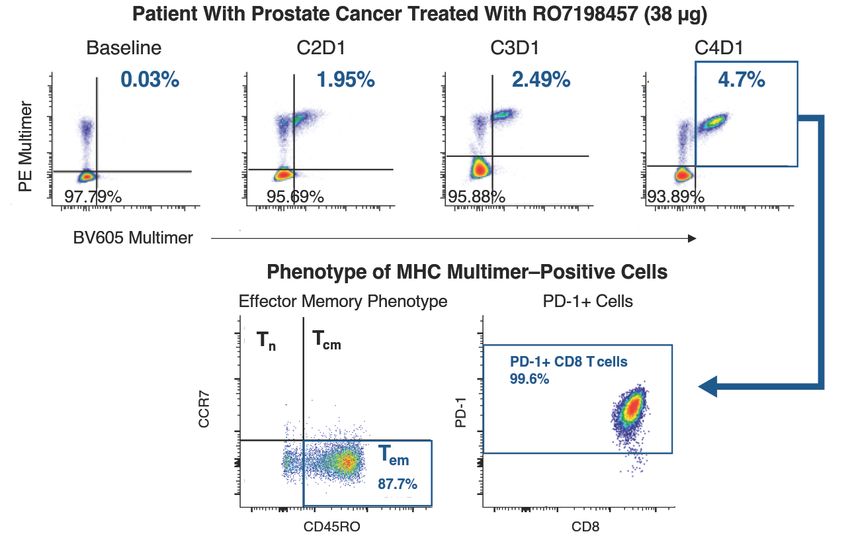
Titelmasterformat durch Klicken bearbeiten
A Technology Agnostic Approach Targets a Broader Addressable Cancer
Market

 Cancer segment                   Patient Population           Challenge                       Our Therapeutic Strategies

 High mutational burden/          Significant portion          Poor risk-benefit profile of    • mRNA Neoantigen
 adjuvant stage cancers           of cancer patients           checkpoint inhibitors             Immunotherapy (iNeST)

                                                                                               • Shared Antigens
 Low mutational burden                                         Poor response to
                                  >60% of cancers                                                (FixVac, CAR-T cells, Neoantigen-
 cancers                                                       checkpoint inhibitors
                                                                                                 targeted T cells, Antibodies)

                                                                                               • RNA Immunotherapy
                                  >40% of high-mutational      Poor infiltration and
 “Immune desert” cancers                                                                       • Immunostimulatory Compounds
                                  cancers                      activation of T-cells in TME1
                                                                                                 (intratumoral, RiboCytokines)

 Cancers with MHC / B2M           20-30% of CPI-experienced    Failure of immune system        • Antibodies
 loss                             advanced cancers             to recognize tumor cells        • CAR-Ts

                                  Patients with large tumors
                                                                                               • Cell Therapies
 Refractory tumors                and multiple resistance      Few treatment options
                                                                                               • Combination Therapies
                                  mechanisms

 10   1Tumor   microenvironment
Titelmasterformat durch Klicken bearbeiten
Next Wave Oncology Advancing Innovation Beyond Current Boundaries
CARVac NEOSTIM T cell therapy RiboCytokines RiboMabs2
CAR-T cell amplifying mRNA Individualized Neoantigen mRNA encoded mRNA encoded
therapy for solid tumors1 specific T cell therapy Cytokines Antibodies
• BNT211 (CLDN 6 CAR) • BNT221 • BNT151 • BNT141
Next generation CAR-T PBMC derived ex (modified IL-2) (undisclosed)
targeting CLDN6 with vivo T cell therapy • BNT152 + BNT153 • BNT142
CARVac (IL-2/IL-7) (CD3xCLDN6)
✓ ✓ ✓ ✓
Wholly
owned:
FIH BNT151: FPD Feb. 2021
start: FPD Feb. 2021 FPD Apr. 2021 BNT152+BNT153: FPD June 2021
2H 2021
FPD, first patient dosed; CLDN6, Claudin-6, CAR-T cells, chimeric antigen receptor T cells; IL-2, interleukin 2;
11 IL-7, Interleukin 7; PBMC, peripheral blood mononuclear cells; FIH, first in human
1 Reinhard K, et al. Cancer Immunotherapy 2020; 367:446-453; 2 Stadler et al, Oncoimmunology 2018Titelmasterformat durch Klicken bearbeiten
On Track to Achieve Multiple Significant Data & Clinical Milestones in 2H 2021
Six Clinical Trial Initiations in 1H 2021, Including Two Randomized Phase 2
3 Randomized 7 First-in-human
5+ Trial Updates
Phase 2 Trial Starts Phase 1 Trial Starts
✓• BNT162b2: Multiple updates ✓• BNT111: FixVac + CPI in CPI-R/R ✓✓ BNT211: CLDN-6 CAR-T + CARVac
melanoma in solid tumors
• BNT311: Bi-specific CPI:
✓• BNT113: FixVac HPV16+ + CPI in ✓✓ BNT221: NEOSTIM individualized
PD-L1 x 4-1BB in solid tumors 1L HNSCC neoantigen-T cell therapy in melanoma
• BNT312: Bi-specific CPI: • BNT122: iNeST (autogene ✓✓ BNT151: Ribocytokine
CD40 x 4-1BB in solid tumors cevumeran) in adjuvant mCRC (modified IL-2)
• BNT211: CLDN-6 CAR-T + ✓• BNT152+153: RiboCytokine
CARVac in solid tumors IL-7 / IL-2 combo in solid tumors
• BNT411: TLR-7 agonist +/- CPI • BNT141: RiboMab (undisclosed)
in solid tumors
• BNT142: RiboMab bi-specific CPI in solid
tumors (CD3xCLDN6)
• BNT161: Influenza vaccine program
PD-L1, programmed death-ligand 1; CLDN6, Claudin-6, CAR-T Cells, Chimeric Antigen Receptor T Cells; IL-2, Interleukin 2; IL-7, Interleukin 7; TLR-7, Toll-like receptor-7
12 CPI, Check-Point Inhibitor; HNSCC, Head and Neck Squamous Cell Carcinoma; mCRC, Metastatic Colorectal Cancer; iNeST is partnered with Genentech/Roche;
BNT311 and BNT312 partnered with Genmab;Titelmasterformat durch Klicken bearbeiten
Building a 21st Century Global Immunotherapy Powerhouse
Increase global Expand integrated Rapidly
footprint infrastructure advance pipeline
• New regional headquarters • Continue investment in innovation to • 15 product candidates in 18 ongoing
planned in Singapore support future product launches clinical trials
• Commercial subsidiaries • Invest in clinical, commercial and • 3 potentially registrational phase 2
established in Germany and manufacturing, and digital capabilities trials initiating in 2021
Turkey • Advance innovations into first-in-human
• Attract and retain top talent
studies
• Offices established in the
United States • Strategic in-licensing to complement
internal R&D
13Titelmasterformat durch Klicken bearbeiten
We Collaborate with Global Leaders in Our Industry
Collaborations for clinical stage programs
FixVac Melanoma
COVID-19 Vaccine iNeST Bispecific mABs Intra-tumoral mRNA
Each company to keep 100%
50:50 gross profit share1 50:50 cost & profit share 50:50 cost & profit share cost & profit share
of rights to own product
Pre-clinical collaborations
Up to 10 Infectious 5 Rare Disease
Seasonal Influenza HIV, Tuberculosis
Disease Indications Indications
royalties & milestones developed world rights
worldwide opt-in right 50:50 cost & profit share
University of
Pennsylvania
14 150:50 cost & profit share refers to terms of Pfizer collaboration only (world-wide ex-China)Titelmasterformat durch Klicken bearbeiten
Agenda
Overview and business outlook
Pipeline
Deeper dive on our key programs
COVID-19 vaccine program (project “Lightspeed”)
mRNA vaccines – FixVac and iNeST
Antibodies
Cell Therapies – CARVac and NEO-STIM T cell therapy
Small Molecule Immunomodulators
RiboCytokines
15Titelmasterformat durch Klicken bearbeiten
Oncology: 15 Product Candidates in 18 Ongoing Clinical Trials
Product Rights
Drug class Platform Candidate Indication (Targets) Preclinical Phase 1 Phase 2 Phase 3 Collaborator Milestones
BNT111 advanced melanoma fully-owned
FixVac BNT112 prostate cancer fully-owned
(fixed combination of
shared cancer antigens) BNT113 HPV16+ head and neck cancer1 fully-owned
BNT115 ovarian cancer1 fully-owned
mRNA
iNeST autogene 1L melanoma Genentech
(patient specific cancer cevumeran (global 50:50
Phase 2 trial planned in adjuvant CRC:
antigen therapy) (BNT122) solid tumors profit/loss)
FPD4 in 2H 2021
Sanofi
Intratumoral SAR441000 solid tumors (IL-12sc,
IL-15sushi, GM-CSF, IFNα) (global
Immunotherapy (BNT131)
profit/loss share)
solid tumors
BNT151 fully-owned
RiboCytokines (optimized IL-2)
(mRNA-encoded Cytokines) BNT152 + solid tumors
BNT153 (IL-7, IL-2) fully-owned
GEN1046 solid tumors
(PD-L1×4-1BB) Genmab Data update in 2H 2021
Antibodies
Next-Gen CP2 (BNT311)
(global 50:50
Immunomodulators GEN1042 solid tumors profit/loss) Data update in 2H 2021
(BNT312) (CD40×4-1BB)
Targeted Cancer BNT321
pancreatic cancer (sLea) fully-owned
Antibodies (MVT-5873)
Toll-Like
SMIM3 BNT411 solid tumors (TLR7) fully-owned Data update in 2H 2021
Receptor Binding
solid tumors
CAR-T Cells BNT211 (CLDN6) fully-owned Data update in 2H 2021
Cell
Therapies Neoantigen-based T cell BNT221
solid tumors fully-owned
therapy (NEO-PTC-01)
16 1BNT113 and BNT115 are currently being studied in investigator-initiated Phase 1 trials. 3Small Molecule Immunomodulators.
2Checkpoint Inhibitor. 4FPD = First Patient DosedTitelmasterformat durch Klicken bearbeiten
Early-stage Oncology Pipeline: 2 Additional FIH1 Trials to Begin in 2021
Drug class Platform Product Candidate Indication (Targets) Rights Collaborator Milestones
FixVac BNT116 NSCLC fully-owned
mRNA
RiboMabs BNT141 solid tumors fully-owned Phase 1 start in 2H 2021
(mRNA-encoded
antibodies) BNT142 solid tumors (CD3+CLDN6) fully-owned Phase 1 start in 2H 2021
CAR-T Cells BNT212 pancreatic, other cancers (CLDN18.2) fully-owned
Cell
Therapies TCRs to be selected all tumors fully-owned
1first-in-human
17Titelmasterformat durch Klicken bearbeiten
Broad Infectious Disease Pipeline
Rights /
Drug Class Product Candidate Indication (Targets) Pre-clinical Phase 1 Phase 2 Phase 3 Commercial Collaborator
BNT162b2 COVID-19 Pfizer/Fosun
BNT161 Seasonal Influenza Pfizer
Un-named program Malaria Fully-owned
mRNA Vaccine
Un-named program Tuberculosis BMGF*
Un-named program HIV BMGF*
5 un-named programs Undisclosed indications Fully-owned
Antibodies Undisclosed program COVID-19 Fully-owned
*BMGF= Bill & Melinda Gates Foundation
18Titelmasterformat durch Klicken bearbeiten
Agenda
Overview and business outlook
Pipeline
Deeper dive on our key programs
COVID-19 vaccine program (project “Lightspeed”)
mRNA vaccines – FixVac and iNeST
Antibodies
Cell Therapies – CARVac and NEO-STIM T cell therapy
Small Molecule Immunomodulators
RiboCytokines
19Titelmasterformat durch Klicken bearbeiten
Shipped >1 Billion Doses to >100 Countries & Territories Worldwide1
A concerted and large-scale global effort
Conditional Marketing
Authorization in the EU and
Switzerland2
Approved Emergency Use
Authorization / Temporary
Use Approval
Ongoing Phase 2 trial in China
Submissions ongoing to pursue regulatory approvals in
countries where emergency use authorizations or
equivalents were initially granted are ongoing or planned.
1As of July 21, 2021
20 2The vaccine is indicated for active immunisation to prevent COVID-19 caused by SARS-CoV-2 virus, in individuals 12 years of age and older.Titelmasterformat durch Klicken bearbeiten
Project Lightspeed – a 10-month Journey to an Effective and Safe Vaccine
COVID-19 mRNA Vaccine Initiated Pivotal Phase
2 / 3 Trial Phase 3 trial meets all
Program Initiation primary efficacy
Lead mRNA vaccine candidate
January 27, 2020
chosen; up to 44,000 subjects
endpoints; vaccine
July 27, 2020 efficacy rate of 95%
November 18, 2020
SARS-CoV-2 Phase 1 / 2 Trial Initiated Rolling Global roll-out has begun
Genetic Sequence Germany Started April 23, 2020 Submissions Approval for emergency use /
Made Public U.S. Started May 4, 2020 EMA: October 6, 2020 temporary supply or Conditional
January 12, 2020 Collaborations 4 vaccine candidates enter FDA Fast Track Canada: October 7, 2020 Marketing Authorization in more than
clinical testing designation UK: October 9, 2020 80 countries worldwide including the
Fosun Pharma:
Singapore U.S. and EU
March 16, 2020 July 13, 2020
New Zealand December 2020
Pfizer: …and other countries
March 17, 2020
21Titelmasterformat durch Klicken bearbeiten
How mRNA Vaccines Work – Training the Immune System for a Real Infection
Cap
5’UTR Spike 3’UTR AAAAAA
CD4+
1 modRNA APCs Helper T Cell
formulated in present
LNP enters cell S protein B Cell Virus Neutralizing
fragments Antibodies
Activates Bind Spike proteins and
4 prevent virus infection
T and B cells
of human cells
2
3
mRNA is Spike Memory T and B cells
CD8+
released protein is Provide immune memory to
Cytotoxic
made and ensure longer-term protection
T Cell
processed against SARS-CoV-2
Eliminates virus infected
cells; potentially increases
length of protection
22mRNA is a Natural Solution for Vaccines Especially in a Pandemic
Does not require addition of
adjuvants or use of a vector for Highly scalable production
Natural molecule with administration
well-characterized
Non-integrating into DNA and
bio-safety properties non-infectious
High purity and animal free
unlike attenuated live virus and
DNA based vaccines
I R TI
R
5 a 5 UTR IR U TI 3 UTR ta
enet c n
Genetic rmat n
information acc ne
Vaccine mR
mRNA n ca
Clinical ase 33
Phase u /
EUA acc nat n
Vaccination
R
SARS-CoV-2 mRmRNA LNP Test n
testing tr as
trials r a
approval
23Titelmasterformat durch Klicken bearbeiten
A Leading Provider Globally of COVID-19 Vaccines:
~2.2 Bn Doses Contracted for 2021*
Selected Targeting up to 3.0 bn doses capacity in 2021
2021 Orders 2022 and beyond
Regions
and up to 4.0 bn in 2022*
900 m doses
EU 660 m (plus option for
additional 900 m)
U.S. 410 m 90 m
Kalamazoo, MI
Canada, Israel Puurs, Belgium
Other ~1.150 m Marburg, Germany
and others
Andover, MA Mainz, Germany
St. Louis, MO
TOTAL ~2.2 bn > 1 bn (excl. options)
Ongoing discussions for additional doses in 2021/2022
and beyond
Marburg facility:
2 bn doses pledged over the next 18 Targeting 1 bn dose annual run-rate capacity once fully
months to ensure global equitable operational
vaccine access
1As of July 21, 2021.
24 *This assumes continuous process improvements and expansion at our current facilities and contingent upon adding more suppliers and contract manufacturers.Titelmasterformat durch Klicken bearbeiten
Significant Progress Across Six Key Levers to Expand COVID-19
Vaccine Reach
• South African collaboration with Biovac to expand BNT/Pfizer manufacturing network with fill and finish
Increased Manufacturing Capacity and distribution
• Continued efforts to establish multi-continent manufacturing capabilities to support global vaccine needs
• Expansion of authorizations for adolescents 12 years of age and older in U.S., EU and other countries
Label Expansion to Additional • Ongoing trial in children 2 to 11 years and 6 months to 2 years of age: data expected Q3 and Q4 2021
Populations • Global Phase 2/3 trial in healthy pregnant women: data expected Q3 2021
• U.S. rolling BLA submission finalized; FDA granted priority review; PDUFA date: Jan. 2022
Regulatory Advancement Across
• Converting existing emergency use authorizations into regulatory approvals globally
All Geographies • Regulatory submission for BLA in China underway
Optimize Formulations to Further • Storage at 2-8 °C for 31 days approved by multiple regulators, including EMA and FDA
Simplify Access Worldwide • Phase 3 trial for ready-to-use and lyophilized formulations: data expected Q3 2021
Addressing Waning • Expanded trials for third booster dose of BNT162b2 and multiple variant-specific approaches in both
Immune Reponses vaccine-naive and previously vaccinated individuals 6-12 months post dose 2
• Initial, preliminary booster data: ~6 months after dose 2 of BNT162b2 show overall consistent tolerability
profile while eliciting SARS-CoV-2 neutralization titers against wild type, Beta and Delta variant
Addressing SARS-CoV-2 Variants
25 EMA, European Medicines Agency; FDA, U.S. Food and Drug Administration;Titelmasterformat durch Klicken bearbeiten
Strong Clinical Results:
Vaccine Efficacy Remains High up to 6 Months Following 2nd Dose1,2
Clinical profile
▪ 95% effective against symptomatic COVID-191
▪ Up to 6 months after dose 22:
▪ 91.2% effective against symptomatic disease
▪ 95.7% effective against severe disease
▪ Well tolerated safety profile
▪ High titers of neutralizing antibodies
▪ Robust and poly-epitopic CD8+ and Th1 CD4+
T-cell responses3
1Polack FP, et al. NEJM 2020, 383:2603-2615
26 2Thomas SJ et al. medRxiv Preprint, July 29, 2021. Available at https://www.medrxiv.org/content/10.1101/2021.07.28.21261159v1.full.pdf.
3Sahin U, et al. preprint 2020 (https://www.medrxiv.org/content/10.1101/2020.12.09.20245175v1)Titelmasterformat durch Klicken bearbeiten
Data Demonstrates Protection Against Circulating SARS-CoV-2 Variants
Including Delta Variant
Neutralizing antibody titers Poly-specific T cell responses
Reduced, yet preserved in vitro neutralizing Vaccinated individuals generate a T cell response targeting epitopes conserved
activity of immune sera against several variants across a number of variants, including the Delta variant2,4
of concern, including: Alpha, Gamma, Beta, Eta,
Delta1, 2, 3
Real world data
Observed effectiveness against variants of concern including Delta variant (95%CI)
Real-World Study Timepoint Infection Symptomatic Hospitalization
Public Health England, NEJM ≥14d post 2d
88 (78-93) -- 96 (86-99)
July 20215; preprint July 20216 – up to 2-3m
Public Health Ontario, Canada, ≥7d post 2d –
-- 87 (64-95) 100
preprint July 20217 up to 1-2m
Public Health Scotland, Lancet ≥14d post 2d
79 (75-82) -- --
June 20218 – up to 2-3m
≥7d post 2d –
Israel, MoH9 39 (9-59) 41 (9-61) 88 (79-93)
up to 6m
1. Liu J et al Nature 2021https://www.nature.com/articles/s41586-021-03693-y. 2. Xie X et al Nature Med https://doi.org/10.1038/s41591-021-01270-4 2021. 3. Liu J et al Nature Med 2021
https://doi.org/10.1038/s41586-021-03693-y. 4. Sahin U et al Nature 2021 https://www.nature.com/articles/s41586-021-03653-6 5. Bernal et al. NEJM 2021
27 https://www.nejm.org/doi/pdf/10.1056/NEJMoa2108891?articleTools=true 6. Stowe et al (preprint) available from https://media.tghn.org/articles/Effectiveness_of_COVID-
19_vaccines_against_hospital_admission_with_the_Delta_B._G6gnnqJ.pdf 7. Nasreen et al MedRxiv preprint 10.1101/2021.06.28.21259420 8. Sheikh et al. Lancet 2021 doi: 10.1016/s0140-
6736(21)01358-1; 9. Press release Israel MoH https://www.gov.il/BlobFolder/reports/vaccine-efficacy-safety-follow-up-committee/he/files_publications_corona_two-dose-vaccination-data.pdfBNT162b2 Booster Dose Results in a Broad, Robust Neutralisation Response
Booster dose could prolong protection and further increase
breadth of protection against SARS-CoV-2 variants
• 3rd dose strongly boosts neutralizing titers both in younger and
older adults against1
• Wild type > 5-8-fold
• Delta variant > 5-11-fold
• Beta variant > 15-21-fold
when comparing month 1 data after dose 2 or dose 3
• Wild type and Beta variant titers continue to increase comparing
day 7/month 1 data after dose 2 versus dose 3
• Overall consistent tolerability profile
Data being prepared for submission to regulatory authorities globally.
28 1 Data submitted for publication.Titelmasterformat durch Klicken bearbeiten
Preemptive Strategy to Address SARS-CoV-2 Variants
• Establishing development, manufacturing and regulatory pathway for variant-specific prototype approach
Prototype Approach substantiated by broad clinical data
1 2 3 4
Multivalent Delta + Alpha
Beta:
BNT162b2: 3rd dose BNT162b2: 3rd dose rd or Delta or Alpha:
3 dose or naïve
Safety & immunogenicity trial Safety & efficacy trial
Safety & immunogenicity trial
3rd dose or naïve:
Safety & immunogenicity trial
Study Start March 2021 July 2021 March 2021 Expected August 2021
Nb of
• N=23 (ph 1) • N=~300 (ph 3) • N=~600
participants (trial • N=~10,000 (ph 3)
• N=~300 (ph 2/3) • N=~300 (naïve) • N=~300 (naïve)
phase)
Boosting
6-12 months 6 months 5-7 months >6 months
post dose 2
Data expected First data published Q4 2021 Q3 2021 Q4 2021
29Titelmasterformat durch Klicken bearbeiten
Flexible Manufacturing Allows Rapid Adaptation to Variants
Drug substance
DNA template purification and
production concentration Sterile filtration & filling
~1-2 Days ~1-2 Days ~1-2 Days
1 2 3 4 5
mRNA production LNP formulation
~1-2 Days ~3-4 Days
Quality control and
release 4-5 weeks
30Titelmasterformat durch Klicken bearbeiten
Global Consortium to Address Pandemic - BNT162 Global Collaborations
▪ Co-development and co-commercialization worldwide (ex China) if approved
▪ Combined upfront payment and equity investment of $185 million to BioNTech received in April
▪ Capital expenditures to be funded by each party independently
▪ Companies to share development expenses and gross profits on a 50:50 basis
▪ BioNTech eligible to receive further development & sales milestones up to $563 million
▪ Co-development with Fosun Pharma to hold exclusive marketing rights in China if approved
▪ Combined upfront payment and equity investment of $51 million to BioNTech received in April
▪ Fosun Pharma to fund development expenses in China
▪ BioNTech and Fosun to share gross profits on the sale of the vaccine in China
▪ BioNTech eligible to receive further China development & sales milestones up to $84 million
31Titelmasterformat durch Klicken bearbeiten
Agenda
Overview and business outlook
Pipeline
Deeper dive on our key programs
COVID-19 vaccine program (project “Lightspeed”)
mRNA vaccines – FixVac and iNeST
Antibodies
Cell Therapies – CARVac and NEO-STIM T cell therapy
Small Molecule Immunomodulators
RiboCytokines
32Titelmasterformat durch Klicken bearbeiten
Our mRNA Vaccine Platforms: FixVac and iNeST
FixVac
FixVac iNeST
▪ Off-the-shelf mRNA immunotherapy ▪ Fully individualized mRNA immunotherapy
▪ Targeting a fixed combination of shared antigens ▪ Targeting 20 neo-antigens unique to each patient
▪ Non-mutated shared antigens shared across patients ▪ Vast majority of neo-antigens are unique to individual patients
▪ Applicable for almost all types of tumor antigens ▪ Applicable across solid tumor types
Proprietary RNA-LPX formulation for systemic dendritic cell targeting
Strong immunogenicity observed in vivo via TLR7-driven adjuvant effect
Potent induction of strong ex vivo CD4+ and CD8+ T cell responses
33 Kranz et al., Nature 2016Titelmasterformat durch Klicken bearbeiten
Our RNA-LPX Vaccine Approach
Strong vaccine-induced ex vivo CD8+ T cell responses1 across different cancer types
10.1% 2.1% 5.0% 10.3%
.
NY-ESO-1 MAGE-A3 HPV16-E7 Mutant Neoantigen
Melanoma Melanoma Head Neck Cancer TNBC
BNT111, Lipo-MERIT trial BNT111, Lipo-MERIT trial BNT113, HARE40 trial BNT114, TNBC MERIT trial
FixVac iNeST
1T cell responses analyzed by ex vivo multimer staining analysis in blood
34Titelmasterformat durch Klicken bearbeiten
FixVac: Leveraging Shared Antigens to Break Immune Tolerance
Off-the Shelf Concept: Scalable for multiple indications
Vaccine Backbone Lipoplex Shared Antigens FixVac
Proprietary RNA-LPX Multi-antigen
Optimized, unmodified mRNA
+ formulation (IV) + approach per =
tailored to each
ANTIGEN CASSETTE AAAA
indication Fixed vaccine combination
Poly(A) tail
against shared tumor-
associated antigens
Targeting antigen presenting cells to Product
Indication (Targets) Preclinical Phase 1 Phase 2
Candidate3
stimulate antigen-specific T cell Advanced
BNT111
responses melanoma
BNT112 Prostate cancer
• Strong immunogenicity observed in vivo via HPV16+ head and
BNT113
TLR-driven adjuvant effect1 neck cancer
BNT116 NSCLC
• Potent induction of strong ex vivo CD4+ and
CD8+ T cell responses1
RNA-LPX. RNA-Lipoplex; IV, intravenous; TLR7, Toll-like receptor; NY-ESO-1, New York esophageal squamous cell carcinoma-1; MAGE-A3, melanoma-associated antigen 3; HPV-E7, Human
35 papillomavirus (type 16) E7 oncoprotein; HPV, Human papillomavirus; NSCLC, Non small cell lung cancer; HLA, human leukocyte antigen; CD, cluster of differentiation
1Sahin U, et al. Nature 2020; 585:107-112 ; 2T cell responses analyzed by ex vivo multimer staining analysis in blood; 3Additional exploratory indication: Ovarian CancerTitelmasterformat durch Klicken bearbeiten
BNT111 FixVac Melanoma: Started Randomized Phase 2 Trial
▪ Phase 1 trial data in CPI-experienced patients in monotherapy and in combination with anti-PD1
Ongoing Phase previously reported in July 2020 and published in Nature
1 trial in ▪ All patients showed tumor associated antigen (TAA) specific T cell responses with In vitro stimulation,
Advanced and > 75% of patients showed immune responses against ≥ 1 TAA on an ex vivo basis
Melanoma ▪ T cells responses ramped up over 4-8 weeks and increased or remained stable up to over one
year with monthly maintenance therapy
published in
▪ Reported durable clinical responses in monotherapy and in combination with anti-PD1
Nature
accompanied by high magnitude CD4+ and CD8+ response
▪ Strategic collaboration to jointly conduct randomized Phase 2 trial with BNT111 and Libtayo®
Regeneron (cemiplimab anti-PD-1 therapy)
strategic ▪ Targeting patients with anti-PD1-refractory/relapsed, unresectable Stage III or IV cutaneous melanoma
collaboration
and ongoing ▪ Companies to share development costs equally and keep full commercial rights to own programs
Phase 2 trial ▪ First patient was dosed in June 2021
36Titelmasterformat durch Klicken bearbeiten
BNT111: Off-the Shelf Therapeutic Vaccine for Melanoma
Potential to Improve Outcomes in Combination with Anti-PD1 by Rescuing from T Cell Exhaustion
BNT111 encodes 4 tumor-associated
antigens covering >90% of cutaneous
melanoma patients 1
NY-ESO-1 AAAA
Tyrosinase AAAA
MAGE-A3 AAAA Phase 1 trial data published in Nature2:
TPTE AAAA
• Tolerable safety as monotherapy and in combination with anti-PD1
• Durable objective responses in CPI-experienced patients with
unresectable melanoma
• ORR: BNT111 monotherapy: 3/25 PR; 8/25 SD
• ORR: 35% in combination with anti-PD1: 6/17 PR; 2/17 SD
• Clinical responses accompanied by strong CD4+ and CD8+
T cell immunity
NY-ESO-1, New York esophageal squamous cell carcinoma-1; MAGE-A3, melanoma-associated antigen 3; TPTE, transmembrane phosphatase with tensin homology; AAAA, Poly-A tail; PD1,
37 Programmed cell death protein 1; CPI, check point inhibitor; R/R, refractory/resistant; PR, partial response; SD, stable disease; ORR, Overall Response Rate; CD, Cluster of Differentiation;
1Data on file; 2Sahin U, et al. Nature 2020; 585:107-112 (https://www.nature.com/articles/s41586-020-2537-9)Titelmasterformat durch Klicken bearbeiten
BNT111: Treatment Options Needed to Address CPI Failure in Advanced
Melanoma Patients
Significant Opportunity to Improve
on Standard of Care
Melanoma Remains the Deadliest Skin Cancer
• 5-year survival for metastatic melanoma still only 29.8%5
Incidence Deaths CPI R/R patients
• Frontline immunotherapy with CPI induces durable
50% 20% ~ 55% responses in max. 45-50% of patients but with relatively
short PFS4
Annual cases have WHO predicts by patients refractory
increased by nearly 2025, number of to or relapse on CPI • CPI resistant/ refractory patients that fail to respond to
50% to over deaths will increase treatment, leaving CPI or relapse after CPI have an especially poor
287,0001,2 by 20%3 them with limited prognosis with survival as short as 6 months depending
treatment options4
on risk factors
• Advanced CPI R/R melanoma is a high medical need
population with highly unfavorable prognosis
WHO, World Health Organization; CPI, check point inhibitor; R/R, refractory/resistant; mPFS, median progression free survival; ORR, Overall Response Rate; DoR, Duration of Response
1https://www.melanomauk.org.uk/2020-melanoma-skin-cancer-report; 2Global Cancer Observatory – 2018 data from ‘Cancer Today’;
38 3Global Cancer Observatory – projected 2025 data from ‘Cancer Tomorrow’; 4Larkin J. et al. NEJM 2019;381(16):1535-1546; 5https://seer.cancer.gov/statfacts/html/melan.html Accessed August 06, 2021Titelmasterformat durch Klicken bearbeiten
BNT111: Global Phase 2 Clinical Trial in Anti-PD1 R/R Melanoma Patients
BNT111 + cemiplimab
≤ 24 months
n=60
BNT111-01 2:1:1
OS Follow-up
BNT111 every
Patients with R 3 months for
≤ 24 months
anti-PD1-R/R, ≤ 48 months
n=30 Addition of cemiplimab
unresectable from first dose
n=120 upon disease progression
Stage III or IV
melanoma Cemiplimab
≤ 24 months
n=30 Addition of BNT111 upon
disease progression
Primary Endpoints
Open-label, randomized Phase 2 trial • Arm 1: ORR by RECIST 1.1
• BNT111 and cemiplimab in combination or as single agents
• Collaboration with Regeneron Secondary Endpoints
• ORR (key secondary endpoint arms 2, 3)
Success Measures for BNT111 Trial DOR, DCR, TTR, PFS by RECIST 1.1
ORR 30% • OS, safety, tolerability, PRO
PD1, Programmed cell death protein 1; R/R, refractory/relapsed; ORR, overall response rate; DoR, Duration of Response; DCR, disease control rate; TTR, time to response;
39 PFS, progression free survival; OS, overall survival; PRO, patient reported outcomes
https://clinicaltrials.gov/ct2/show/record/NCT04526899Titelmasterformat durch Klicken bearbeiten
BNT113: Potential to Increase Response Rate and DoR to CPI by Stimulating
Immune Response Against HPV16 Proteins
BNT113 encodes HPV16 oncoproteins E6 & E7
• E6 and E7 proven to be well-suited for immunotherapy
intervention 5’
AAAA
HPV-E6 Poly(A) tail
• Exclusively expressed in pre-malignant and malignant tissue
AAAA
• Maintain the transformed state of infected malignant cells 5’ HPV-E7
• Demonstrated immunogenicity
• Not affected by central tolerance mechanisms
BNT113 combination with anti-PD1: Potential for synergistic anti-tumor
effect delaying escalation to toxic chemo
40 HPV, human papilloma virus; DoR, Duration of Response, CPI, check point inhibitorTitelmasterformat durch Klicken bearbeiten
BNT113: Potent Antigen-Specific T Cell Responses in Phase 1 Trial1,2
A Overview of T cell responses Arm 1A
• CD4+ and CD8+ T cell Cohort 1 Cohort 2
Arm 1A patients
15
Type of response to E6
TD 29 µg TD 78.2 µg
responses
Number of patients
Arm 1A, adjuvantX
Patient 10
Patient 11
10 22%
Patient 3
Patient 1
Patient 2
Patient 4
Patient 5
Patient 6
Patient 7
Patient 8
Patient 9
Antigen
• Responses detectable ex 33%
vivo, implying high numbers 5
of T cells CD4/ CD4/ 0
45%
E6 CD8 CD8 CD4 CD8 CD4 CD4 Bulk CD8 NR
CD8 CD8
• Responses against multiple E6 E7
Positive response
CD4 response
CD8 response
E7 NR NR NR NR NR NR CD8 NR NE NR NR
E6 or E7 epitopes No response
Not evaluable CD4/CD8 response
B ELISPOTS3 Patient 7 ELISPOTS3 Patient 6
CD8 response to vaccine targets CD4 response to vaccine targets
Pre vaccination Post vaccination Pre vaccination Post vaccination
Pepmix
Pepmix
E6
E6
Pepmix
E7
PBMCs only PBMCs only
PBMCs only PBMCs only
Anti-CD3 Anti-CD3
TD, total dose; CD, Cluster of Differentiation; NE, Not Evaluated; NR, Not Reported; PBMC, peripheral blood mononuclear cells
1HARE-40 trial
2Presented at CIMT 2019; BNT113 is currently being studied in an investigator-initiated Phase 1 trial.
41 3ELISPOT (Enzyme Linked Immuno Spot Assay) data of selected patients. Data were generated using IFN-γ ELISPOT directly ex-vivo with overlapping peptides covering the whole length of vaccine
antigens (PepMix).BNT113: Unmet Medical Need for HPV-Associated HNSCC
HPV+ Cancer is a Growing Limited treatment options for patients not responding to
Global Public Health Concern or relapse on CPI1
• HPV16+ HNSCC typically occur in younger people and is
not associated with tobacco or alcohol use
• >60% of patients diagnosed with late-stage HNSCC
• Current treatment options carry significant treatment
burden or only work for some patients4:
• Chemotherapy, surgery, radiation
Worldwide HPV-attributable cases (2018) = 690,000 • CPI
(de Martel et al. 2020, Lancet Glob Health)
• Several types: HNSCC, Cervical, Anal, Vulvar, Vaginal, Current SOC for
ORR
mOS
mPFS (months)
recurrent/metastatic HNSCC (months)
Penile
pembrolizumab5 17% 13.6 8.0
• HNSCC is the sixth most common cancer worldwide,
nivolumab6 13.3% 7.7 2.0
with 890,000 new cases and 450,000 deaths in 20182
chemotherapy6 5.8% 5.1 2.3
• Oropharyngeal is most common HNSCC, accounting
for 70% of cases, and 80-90% are HPV16+3
HPV, human papilloma virus; HNSCC, head and neck squamous cell carcinoma, CPI, check point inhibitor; R/R refractory/recurrent
1Sabatini ME and Chiocca S. BJC 2020; 122:306-314, 2Johnson DE, et al., 2020, Nature Reviews Disease Primers 6:92
42 3Saraiya et al. 2015, Vaccines; 4HNSCC NCCN Guidelines 2020, HNSCC ESMO Guidelines 2020; 5Burtness, et al. Lancet 2019 Nov 23; 394(10212):1915-28;
6https://www.ncbi.nlm.nih.gov/pmc/articles/PMC6563923/pdf/nihms-1024161.pdfTitelmasterformat durch Klicken bearbeiten
BNT113: First Patient Dosed in Potentially Registrational Phase 2 Trial in
HPV16+ and PD-L1+ HNSCC
Part A: Safety Run-in
BNT113 +
BNT113
pembrolizumab
Unresectable, n = 12-18 Part B
recurrent or ≤ 24 months
metastatic HPV16+
HNSCC, PD-L1+ BNT113 + pembrolizumab
SRC decision on safety and ≤ 4 m nt s
(CPS ≥1) RP2DR to start Part B based on Part B: Randomization
safety in Part A after one 1:1
n ≤ 285 complete cycle n = 267 Pembrolizumab monotherapy
≤ 4 m nt s
Open-label, controlled, Phase 2 study
• BNT113 in combination with pembrolizumab as frontline treatment for metastatic HPV16+ and PD-L1+ HNSCC
• HPV 16 companion diagnostic is being co-developed and will be clinically validated alongside the trial
Primary Endpoints Secondary Endpoints Success Measures for BNT113 Trial
• Part A: Emergence of TEAEs • PFS, DCR, DOR • mOS: 18 months (HR=0.667)
• Part B: OS, ORR • Safety • ORR: 40%
• Patient reported outcomes
HPV, human papilloma virus; PD-L1, programmed death-ligand 1; CPS, Combined positive score; HNSCC, head and neck squamous cell carcinoma; SRC, safety review committee; TEAEs, treatment
emergent adverse events; OS, overall survival; mOS, median overall survival; ORR, overall response rate; HR, hazard ratio; DOR, duration of response; DCR, disease control rate; PFS, progression free
43 survival
1Burtness, et al. Lancet 2019 Nov 23; 394(10212):1915-28
https://www.clinicaltrials.gov/ct2/show/NCT04534205Titelmasterformat durch Klicken bearbeiten
iNeST1: Tailored Treatment to Exploit Individual Targets
• Fully customized to the individual Patient
• Targeting 20 neo-antigens per patient
ADJUVANT 1L METASTATIC LATE-LINE METASTATIC
Normal Tumor
DNA DNA
Residual cancer cells may remain – Rapidly growing but often still in Bulky tumors with multiple organs
emphasis on recurrence free survival early phase of metastases involved
▪ Phase 2 trial screening for patients ▪ Ongoing Phase 2 trial in 1L ▪ Single agent activity in melanoma2
melanoma and gastric3 cancer
▪ Phase 1 trial data: 8 of 8 stage III/IV
iNeST ▪ Encouraging efficacy signal
melanoma patients with stable disease
cancer free for up to 60 months validates iNeST potential in early
(BNT121)1 settings
1 iNeST is partnered with Genentech/Roche in a 50:50 cost/profit split
44 2 Sahin et. al. Nature 20
3 AACR 2020Titelmasterformat durch Klicken bearbeiten
iNeST: Recent Update from BNT122 Reported at AACR
Phase 1a dose escalation: Monotherapy in locally Phase 1b combination with atezolizumab demonstrated
advanced or metastatic solid tumors clinical activity in heavily pre-treated patients
▪ 31 patients enrolled, cohorts with doses ranging from 25-100ug ▪ 132 patients enrolled, cohorts with doses ranging from 15-50μ
▪ Most common tumor types were HR+/HER2+ breast, prostate, ▪ Heavily pre-treated patient population
and ovarian cancer ▪ Both CPI experienced and inexperienced
▪ Median of 5 lines of prior therapies (range 1-17) ▪ Most patients with low PD-1
▪ Most patients enrolled had low level of PD-L1 expression in
tumor ▪ Clinical responses associated with T cell response, correlating immune
profiling of patients’ T cells to cancer-specific response
▪ Neoantigen-specific T cell responses observed in peripheral blood in 86%
of patients, significant T cell expansion and both naïve and memory ▪ Of 108 patients with at least one tumor assessment
activated phenotype ▪ 1 patient had CR as best response (0.9%),
▪ 8 patients had PR (7.4%), and
▪ Of 26 patients with at least one tumor assessment,
▪ 53 patients had SD (49.1%)
▪ 1 patient with gastric cancer and metastatic liver lesions had
confirmed CR (ongoing for 10 months)
▪ 12 patients had SD
▪ Demonstrates ability to elicit significant T cell responses of both effector and memory phenotype as monotherapy and in combination
▪ Treatment-related adverse events were primarily transient systemic reactions, manifesting as low grade CRS, IRR or flu-like symptoms
▪ Early evidence of clinical activity in highly refractory patient population
45 Note: Patients in both cohorts received personalized product manufactured on per patient basis with up to 20 patient-specific neoantigens, in both cohorts majority of AEs were Grad 1 or Grade 2Titelmasterformat durch Klicken bearbeiten
iNeST: Recent U date r m B T1 Re rted at R nt’d
BNT122 induces CD8+ T cells in CPI-sensitive and BNT122 induces CD8+ T cell
CPI-insensitive tumor types infiltrates in tumors
46Titelmasterformat durch Klicken bearbeiten
BNT122 iNeST Randomized Phase 2 Trials Ongoing and Planned
First-line advanced melanoma Adjuvant colorectal cancer
Study A Phase 2, open-label, multicenter randomized trial of the A Phase 2, open-label, multicenter randomized trial to compare the
design and efficacy and safety of BNT122 in combination with efficacy of BNT122 versus watchful waiting in patients with ctDNA
patient pembrolizumab vs. pembrolizumab in patients with previously positive, surgically resected Stage 2/3 rectal cancer, or Stage 2 high
untreated Advanced Melanoma risk/stage 3 colon cancer
population
▪ Evaluate added benefit of 1L BNT122 in an advanced ▪ Evaluate added benefit of
CPI-sensitive tumor (PFS, ORR) BNT122 in a micrometastatic
Rationale CPI-insensitive tumor (RFS)
▪ Success ungates 1L use of iNeST in CPI-sensitive
advanced cancers for combination therapy ▪ Success unlocks adjuvant use of iNeST for CPI-insensitive
ctDNA+ cancer types
Status Currently enrolling To start in 2H 2021
47Titelmasterformat durch Klicken bearbeiten
BNT122: Randomized Phase 2 Trial in Adjuvant Colorectal Cancer
Patients with resected stage II high-risk / Phase 2, open-label, multicenter randomized trial
stage III CRC post surgery • BNT122 versus watchful waiting in ctDNA positive patients with surgically resected
Stage II (high risk) / stage III colorectal cancer
Primary Endpoints Secondary Endpoints
• DFS • RFS, TTR, TTF, OS
• Change in ctDNA status
patients in biomarker cohort skip screening 1
Screening 1: Biomarker Cohort: BNT122
Adjuvant SOC ctDNA status irrespective of ctDNA status
chemotherapy:
n = 15
Screening 2: iNeST
12 - 24 weeks
neoantigen selection for vaccine Manufacturing
manufacture ≤ 20 neoepitopes
Exploratory Cohort: BNT122
Screening 3: recurrent disease at screening 3
final eligibility n ≤ 20
1:1 R n = 166
Treatment Arm: BNT122 Observational Arm
15 doses (6x q1w, 2x q2w, 7x q6w watchful waiting
CRC, colorectal cancer; ctDNA, circulating tumor DNA; SOC, standard of care; q1w, once weekly; q2w, every two weeks; q6w, every six weeks; DFS, disease-free survival; RFS, relapse-free survival; TTR,
48 time to response; TTF, time to treatment failure; OS, overall survival; https://www.clinicaltrials.gov/ct2/show/NCT04486378;
BNT122/iNeST is partnered with Genentech/RocheYou can also read


