OWNER'S MANUAL 27" ROUTER TABLE ASSEMBLIES - MODEL RT-TGP/RT-BT - SawStop
←
→
Page content transcription
If your browser does not render page correctly, please read the page content below
27” ROUTER TABLE ASSEMBLIES

OWNER’S MANUAL                MODEL RT-TGP/RT-BT
Copyright SawStop, LLC
                               All Rights Reserved

                           3rd printing, September 2021

                          Updates of this manual may be
                          available at www.sawstop.com

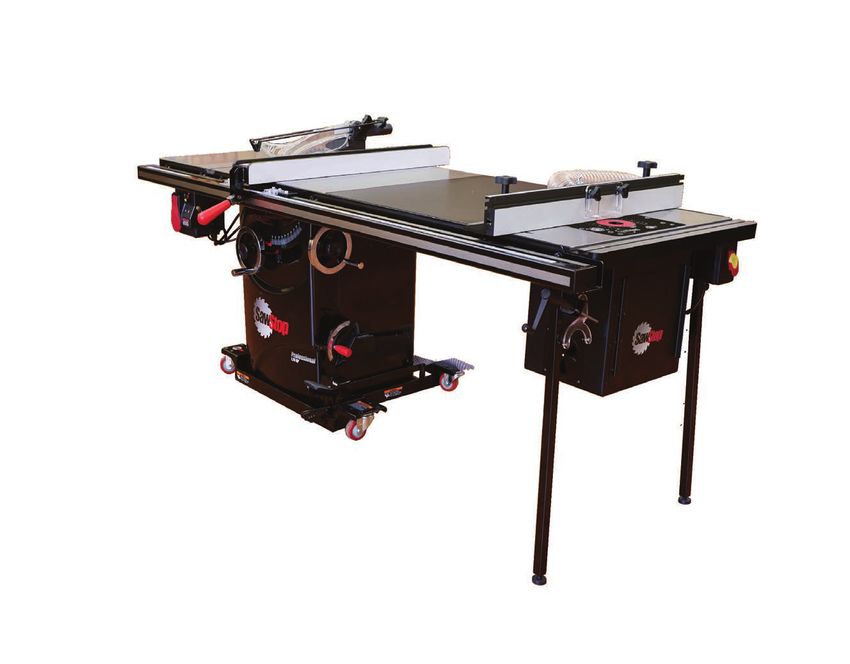
The saw shown on the front cover is the Professional Cabinet Saw, Model PCS with
             Industrial Mobile Base. Your saw may look different.

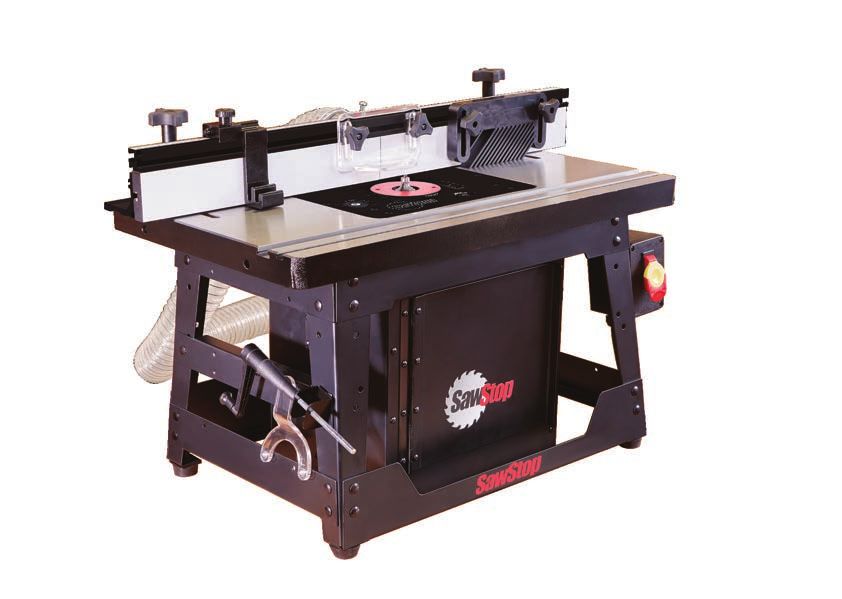
The Benchtop Router Table Assembly shown on the front cover includes the Single
 Vertical Feather Board and Flip Stop. These are optional accessories that do not
 come included with your Benchtop Router Table Assembly. The Four-Post Router
  Lift with Lock and Downdraft Dust Collection Box for Router Lift are also shown
with the Benchtop Router Table Assembly and TGP2 In-Line Router Table Assembly
configurations. The Four-Post Router Lift with Lock and Downdraft Dust Collection
Box for Router Lift are not included and your Router Table setup may look different.

SawStop, the SawStop blade logo, and the configuration of this product are either
  registered trademarks or trademarks of SawStop, LLC. Software copyright by
                       SawStop, LLC. All rights reserved.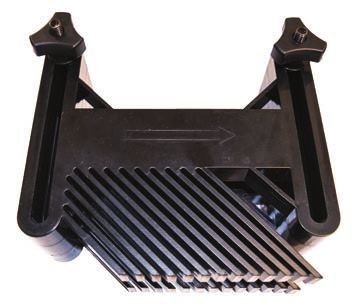
TO OUR CUSTOMERS

Thank you for purchasing the SawStop Benchtop Router Table Assembly or TGP2
In-Line Router Table Assembly. We are confident you will be pleased with this assembly’s
quality and performance.

This manual tells you more about the Benchtop Router Table Assembly and TGP2 In-Line
Router Table Assembly for the Professional Cabinet Saw (PCS) or Contractor Saw (CNS)
and how to operate and maintain them. Please read the manual carefully. The manual also
includes our warranty and important safety information.

If you ever have any questions or comments, feel free to contact us at the address below.

                                   SawStop, LLC
                 11555 SW Myslony Street | Tualatin, Oregon 97062 USA
                                  Phone: (503) 570-3200
                                    Fax: (503) 570-3303
                                 Email: info@sawstop.com
                                    www.sawstop.com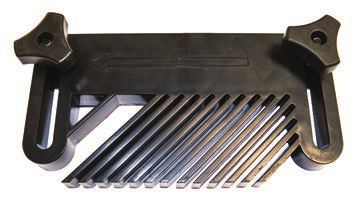
HOW TO GET HELP

          Missing Parts? Have Questions?
             Our technical support team is standing by
                      M-F, 6:30am-5pm PST
                  to help with whatever you need.

                  Give us a call at
                  503.582.9934

                  Email us at
                  SERVICE@SAWSTOP.COM
TABLE OF CONTENTS

Product Specifications........................................................................... 1
Assembly Options.................................................................................. 2
      Benchtop Stand .............................................................................................................             2
      In-Line Left of Left Wing (PCS or CNS)............................................................................                       3
      In-Line Right: Between 36” Rails (PCS ONLY)...............................................................                               4
      In-Line Right: Between 52” Rails (PCS ONLY)...............................................................                               4

Parts Inventory....................................................................................... 5
      Parts & Hardware Lists..................................................................................................... 10

Assembly & Installation.......................................................................... 11
      Assembling the Table........................................................................................................             11
      Assembling the Benchtop Stand......................................................................................                      13
      Installing the Table on the Benchtop Stand.......................................................................                        18
      Assembling and Installing the Support Legs and Power Switch.....................................                                         19
      Installing In-Line Left of Left Wing (PCS or CNS)..........................................................                              24
      Rail Requirements: In-Line Right of PCS Right Wing.......................................................                                27
      Installing In-Line Right: Between PCS 36” Rails...........................................................                               28
      Installing In-Line Right: Between PCS 52” Rails...........................................................                               34
      Assembling the Fence......................................................................................................               40

Reference.............................................................................................. 45
      Warranty...........................................................................................................................      45
      Safety................................................................................................................................   46
      Warnings..........................................................................................................................       46
      Exploded View 1: Cast Iron Router Table (RT-C27) ...........................................................                             49
      Parts List 1: Cast Iron Router Table (RT-C27) ..................................................................                         50
      Exploded View 2: Benchtop Stand (RT-STB) ..................................................................                              51
      Parts List 2: Benchtop Stand (RT-STB) ..............................................................................                     52
      Exploded View 3: Support Legs (RT-ST2) ........................................................................                          53
      Parts List 3: Support Legs (RT-ST2) ................................................................................                     54
      Exploded View 4: Power Switch (RT-PSW) ......................................................................                            55
      Parts List 4: Power Switch (RT-PSW) ...............................................................................                      56
      Exploded View 5: 27” Fence Assembly (RT-F27) ..............................................................                              57
      Parts List 5: 27” Fence Assembly (RT-F27) ......................................................................                         58
      Exploded View 6: Intermediate Cast Iron Wing (RT-ICW) .................................................                                  59
      Parts List 6: Intermediate Cast Iron Wing (RT-ICW) ..........................................................                            60
Available Accessories............................................................................ 61
PRODUCT SPECIFICATIONS

The 27” x 16” Cast Iron Router Table is compatible with the Benchtop Stand,
the Professional Cabinet Saw, and the Contractor Saw with cast iron wings.

                                         Benchtop Stand
               Stand Height (Without Table)      14 ½”

               Stand Footprint (Without Table)   23” (Front) x 15 ½” (Side)

                                 27” x 16” Cast Iron Router Table
               Cast Iron Table                   27” x 16”

               Maximum Fence Travel              5 ½”

               Front T-Slot to Arbor Center      6 ½”

                                                 ½” at top,
               Width of Front T-Slot             3
                                                  ⁄8” at bottom

               Rear T-Slot to Arbor Center       5”

                                                 1” at top,
               Width of Rear T-Slot
                                                 ¾” at bottom

                                       27” Fence Assembly
               Length                            30 ¾”

               Height                            3 ½”

               Depth                             4”

1   RT-TGP/RT-BT OWNER’S MANUAL
ASSEMBLY OPTIONS                                                                 PAGES:
                                                                                  2-4

The 27” x 16” Cast Iron Router Table can be mounted to the Benchtop Stand or to your
SawStop table saw in any of four different configurations depending on your needs.
The 27” Fence Assembly for Router Tables is compatible with all four configurations.

    Benchtop Stand                  Option 1 of 4

This configuration maximizes the portability and placement flexibility of your
router assembly.

The picture shows the Benchtop
Stand for Router Table (RT-STB) with
the 27” x 16” Cast Iron Router Table
(RT-C27).

                                                        RT-TGP/RT-BT OWNER’S MANUAL       2
In-Line Left of Left Wing (PCS or CNS)                              Option 2 of 4

This configuration extends the table surface of your SawStop table saw, maintains the
existing table to the right of the blade, and includes:

• 27” x 16” Cast Iron Router Table (RT-C27)
• Support Legs (RT-ST2)
• Power Switch (RT-PSW)

Professional Cabinet Saw (PCS)                               Contractor Saw (CNS)

        The 27” x 16” Cast Iron Router Table is only compatible with the SawStop

    i
        Contractor Saw if cast iron wings are installed.

        The standard stamped wings on the Contractor Saw cannot support the
        weight of the 27” x 16” cast iron router table.
                                                                                        stamped
                                                                                          wing

3   RT-TGP/RT-BT OWNER’S MANUAL
In-Line Right: Between 36” Rails (PCS ONLY)                      Option 3 of 4

This configuration is installed in place of the extension table, and minimizes the total
footprint of your SawStop table saw and router table assembly. An intermediate cast iron
wing (sold separately) can be installed to fill the gap between the right cast iron wing and
the router table.

Shown:
• 27” x 16” Cast Iron Router Table (RT-C27)
• Support Legs (RT-ST2)
• Power Switch (RT-PSW)
• Intermediate Cast Iron Wing (RT-ICW) - sold
separately

    In-Line Right: Between 52” Rails (PCS ONLY)                      Option 4 of 4

This configuration is installed in place of the extension table, and reduces the total
footprint of your SawStop table saw and router table assembly while maintaining the
most ripping capacity to the right of the saw blade. The 36” extension table (sold
separately) can be installed to fill the gap between the right cast iron wing and the
router table.

Shown:
• 27” x 16” Cast Iron Router Table (RT-C27)
• Support Legs (RT-ST2)
• Power Switch (RT-PSW)
• 36” Extension Table (TGP2-T36A) - sold separately

                                                        RT-TGP/RT-BT OWNER’S MANUAL            4
PARTS INVENTORY                                                                    PAGES:
                                                                                   5-10
Parts and Hardware Lists

Please unpack the parts carefully and confirm you have received each item on the
list below.

           IF YOU CANNOT FIND AN ITEM ON THIS LIST, CHECK THE MOUNTING
           LOCATIONS OR EXAMINE THE PACKAGING MATERIALS VERY CAREFULLY.
           CERTAIN COMPONENTS MAY HAVE BEEN PRE-INSTALLED FOR
           SHIPPING PURPOSES.

    27” x 16” Cast Iron Router Table
A. 27” x 16” Cast Iron Router Table (1)
B. M6 x 1.0 Hex Nut (10)                                 A
C. M6 x 1.0 x 40 Flat Head
    Phillips Screw (10)                       B
                                          C

You will also need the following tools to complete the
27” x 16” Cast Iron Router Table assembly:
• Phillips Head Screwdriver
See Exploded View #1 on page 49 for more information.

5    RT-TGP/RT-BT OWNER’S MANUAL
Benchtop Stand for Router Table
A. Upper Front/Rear Bracket (2) Hardware Pack:
B. Rear Panel (1) I. M6 x 1.0 Hex Nut (38)
C. Upper Side Bracket (2) J. M6 x 16 x 2 Washer (42)
D. Tool Storage Plate (1) K. Support Foot (4)
E. Lower Side Bracket (2) L. M6 x 1.0 x 20 Pan Head Phillips Screw (4)
F. Front Panel (1) M. M6 x 1.0 x 15 Carriage Head Bolt (34)
G. Benchtop Stand Switch Box (1) N. M4 x 0.7 x 20 Pan Head Phillips Screw (2)
H. Stand Leg (4) O. M4 x 0.7 Hex Nut (2)
Pre-installed on Switch Box: P. Handle Mounting Bracket (1)
S. M5 x 0.8 x 8 Pan Head Phillips Screw (2) Q. M6 Lock Washer (4)
T. M5 x 12 x 1 Washer (2) R. M6 x 1.0 x 16 Socket Head Cap Screw (4)
A G
B
C
D
E
F
H
S
T
HARDWARE PACK
J
M
N Q
O P
I K L R
You will also need the following tools to complete the Benchtop Stand assembly:
• Phillips Head Screwdriver • 10mm Wrench
• 8mm Wrench (x2) • 5mm Hex Wrench
See Exploded View #2 on page 51 for more information.
RT-TGP/RT-BT OWNER’S MANUAL 6Support Legs for In-Line Router Tables
A. Support Leg (2)
B. M8 x 1.25 Hex Nut (2)
C. Foot (2)
A
B
C
You will also need the following tools to complete the Support Legs assembly:
• 13mm Wrench
See Exploded View #3 on page 53 for more information.
7 RT-TGP/RT-BT OWNER’S MANUALPower Switch for In-Line Router Tables
A. Power Switch Box with Mounting E. Wing Mounting Hardware Pack (1)
Bracket Assembly (1) • M8 x 1.25 x 45 Hex
Head Bolt (4)
B. Handle Mounting Bracket (1)
• M8 x 19 x 2 Washer (8)
C. Leg Mounting Bracket (1) • M8 Lock Washer (4)
D. Leg Mounting Hardware Pack (1) • M8 x 1.25 x 12 Hex Nut (4)
• M10 x 1.5 x 45 Hex Head Bolt (4) F. Rail Mounting Hardware Pack (1)
• M10 x 19 x 2 Washer (8) • M8 x 1.25 x 25 Flat Head
• M10 x 1.5 Lock Nut (4) Socket Screw (4)
• M6 Lock Washer (4) • M8 x 19 x 2 Washer (4)
• M6 x 1.0 x 12 Socket Head Cap • M8 Lock Washer (4)
Screw (4) • M8 x 1.25 x 12 Hex Nut (4)
• M5 x 0.8 x 30 Pan Head Phillips
Screw (1)
• M5 Lock Washer (2)
• M5 x 12 x 1 Washer (2)
• M5 x 0.8 x 8 Pan Head Phillips
Screw (1)
A
B
C
D
E
F
You will also need the following tools to complete the Power Switch for Router Tables
assembly:
• Phillips Head Screwdriver • 5mm Hex Wrench
• 16mm Wrench (x2) • Level or Straight Edge
• 13mm Wrench (x2)
See Exploded View #4 on page 55 for more information.
RT-TGP/RT-BT OWNER’S MANUAL 827” Fence Assembly for Router Tables
A. 27” Router Table Fence (1) H. 2 1/2” Dust Port (1)
B. Fence Lock Knob (2) I. 1/4” - 20 x 3/4” Pan Head Phillips Screw (2)
C. M8 x 23 x 2 Washer (2) J. 1/4” - 20 Square Nut (2)
D. 23mm Wide Lock Knob Nut (2) K. Face Plate Space Bar (2)
E. Fence Face Plate Lock Knob (8) L. Router Fence Face Plate (2)
F. M6 x 16 x 2 Washer (8) M. Router Fence Guard (1)
G. M6 x 1.0 x 35 T-Bolt (8) N. Router Fence Guard Spacer (2)
A
B
C
D
E
F
G
K
H L
I
M
J
N
You will also need the following tools to complete the 27” Fence Assembly for Router
Tables:
• Phillips Head Screwdriver
See Exploded View #5 on page 57 for more information.
9 RT-TGP/RT-BT OWNER’S MANUALIntermediate Cast Iron Wing
A. Intermediate Cast Iron Wing (1)
B. M8 x 1.25 x 25 Flat Head Socket Screw (2)
C. M8 x 20 x 2 Washer (10)
D. M8 Lock Washer (6)
A
E. M8 x 1.25 Hex Nut (6)
F. M8 x 1.25 x 35 Hex Head Bolt (4)
B
C
D
E
F
You will also need the following tools to complete the Intermediate Cast
Iron Wing assembly:
• 13mm Wrench (x2)
• 5mm Hex Wrench
See Exploded View #6 on page 59 for more information.
i Important Part Identification Note:
Throughout the manual, the exploded views are referenced to clarify the location and
name of each part. There are multiple exploded views in this manual, so a
decimal point system is used. The number before the decimal point refers to the
exploded view number (in this case, 1 through 6). The number after the decimal point
refers to the part number (as indicated by the number in the balloon in the exploded
view). For example, a part referenced as “1.1” would be the part labeled with a “1.1”
balloon in the exploded view #1.
• Exploded View #1: 27” x 16” Cast Iron Router Table – See page 49
• Exploded View #2: Benchtop Stand for Router Table – See page 51
• Exploded View #3: Support Legs for In-Line Router Tables – See page 53
• Exploded View #4: 32” Power Switch for In-Line Router Tables – See page 55
• Exploded View #5: 27” Fence Assembly for Router Tables – See page 57
• Exploded View #6: Intermediate Cast Iron Wing – See page 59
RT-TGP/RT-BT OWNER’S MANUAL 10ASSEMBLY & INSTALLATION PAGES:
11-44
Assembling the 27” x 16” Cast Iron Router Table
Requires: 27” x 16” Cast Iron Router Table with Hardware
Phillips Head Screwdriver
1 Remove the protective covering from
the table. (1.1) Wipe off the oil with a 1.1
soft, clean cloth.
2 Thread ten hex nuts (1.2) halfway onto
ten flat head Phillips screws (1.3). 1.2
1.3
x10
3 Place the router table (1.1) upside down
on a flat surface and thread the flat head
Phillips screws (1.3) into the threaded 1.1
holes around the insert opening in the
table until they extend about ¼” below
the table’s top surface. These screws
will support and level the router lift
relative to the table top. The 2 holes in
the center of the opening (shown in red) 1.3
do not receive leveling screws; they will
be used later to attach the router lift to
the router table.
11 RT-TGP/RT-BT OWNER’S MANUAL4 Finger tighten the hex nuts up against
the bottom of the table. You will adjust
the screws and fully tighten the hex nuts
later, after you install your router lift.
5 If you plan on installing the router table
in-line on your SawStop Professional
Cabinet Saw and you have the ICS
Mobile Base with PCS Conversion Kit
already installed on your saw, ensure
that the hold-down straps on the mobile
base have been secured to the saw ! W
NG
ARNI gers,
fin
place body pa
Never other e base.
or
rts
cabinet (these hold-down straps were
bil
toes the mo
r
unde
included with your ICS Mobile Base
with PCS Conversion Kit). If you did
not install them and no longer have
access to these straps, please contact
our Service Department for assistance:
service@sawstop.com or 503-582-9934.
NEXT: INSTALL THE ROUTER TABLE on either the Benchtop Stand or in-line.
See page 2 for details.
• For mounting to the Benchtop Stand, proceed to the next page.
• For mounting to the left extension wing of your Professional Cabinet Saw
or Contractor Saw, proceed to page 19.
i
The router table is only compatible with the SawStop Contractor Saw
if cast iron wings are installed. The standard stamped wings on the
Contractor Saw cannot support the weight of the router table.
stamped
wing
• For right mounting between the rails of your Professional Cabinet Saw,
proceed to page 19.
RT-TGP/RT-BT OWNER’S MANUAL 12Assembling the Benchtop Stand for Router Table
Requires: Components and Hardware for Benchtop Stand
Phillips Head Screwdriver
8mm Wrench
10mm Wrench
Benchtop Stand for Router Table Hardware Pack
THE BENCHTOP STAND SHOULD ONLY BE USED ON A FLAT SURFACE (SUCH
AS A STURDY WORK BENCH) THAT IS STABLE AND STRONG ENOUGH TO
SUPPORT THE COMBINED WEIGHT OF THE ROUTER, CAST IRON TABLE,
BENCHTOP STAND, AND WORKPIECE.
THE BENCHTOP STAND SHOULD NEVER BE PLACED NEAR THE EDGE OF AN
ELEVATED SURFACE (SUCH AS A BENCHTOP OR TABLE), SINCE IT COULD
FALL AND CAUSE SERIOUS DAMAGE AND/OR PERSONAL INJURY.
THE BENCHTOP STAND CAN BE USED IN TWO DIFFERENT WAYS:
1. THE RUBBER SUPPORT FEET (INCLUDED) CAN BE INSTALLED AT THE
BASE OF ALL FOUR STAND LEGS. THE SUPPORT FEET CAN HELP
PREVENT THE BENCHTOP STAND FROM SHIFTING.
2. THE RUBBER SUPPORT FEET (AND ACCOMPANYING HARDWARE) CAN BE
SET ASIDE, AND ALTERNATE HARDWARE (NOT INCLUDED) CAN BE USED.
IN THIS CASE, DRILL FOUR HOLES IN YOUR WORK BENCH OR TABLE
THAT ALIGN WITH THE FOUR HOLES IN THE BASES OF THE STAND LEGS,
ALIGN THE BENCHTOP STAND WITH THOSE HOLES, AND MOUNT THE
BENCHTOP STAND TO THE TABLE USING A BOLT, TWO FLAT WASHERS, A
LOCK WASHER, AND A HEX NUT (OR A BOLT, TWO FLAT WASHERS, AND A
LOCK NUT) ON EACH STAND LEG.
13 RT-TGP/RT-BT OWNER’S MANUAL1 Using your Benchtop Stand Hardware
Pack and labeled parts, insert one of
the four, pan head Phillips screws (L) up
through a support foot (K), then through
H
the hole in the bottom of a stand leg
(H), a washer (J), and a hex nut (I). Use x4
a Phillips screwdriver and a 10 mm I
wrench to tighten the hex nut. Repeat
this process for the remaining three J
stand legs. K
L
2 Arrange the upper front/rear brackets
H
(A), upper side brackets (C), stand legs
B
(H), front panel (F), rear panel (B), lower
E
side brackets (E), and tool storage plate
(D) on a flat surface (such as a floor or
table). All of the brackets and panels will
C A C E
be attached to the outside of the stand
legs, and all the folded sections will
extend in between the stand legs. D
F
3 Assemble the front of the stand by
attaching two of the stand legs (H) to
an upper front/rear bracket (A) and
the front panel (F). Make sure that the A
legs are behind the bracket and panel.
Attach the legs to the bracket and panel
using eight carriage head bolts (M), H
eight washers (J), and eight hex nuts
(I). Only finger tighten the nuts at this
F I
time. Leaving the nuts loose will make
it easier to align holes as you assemble J
the rest of the stand.
M
RT-TGP/RT-BT OWNER’S MANUAL 144 Assemble the rear of the stand by
J
attaching the remaining two stand legs
A
(H) to the remaining upper front/rear I M
bracket (A) and the rear panel (B). Make
sure that the bracket and panel are on
the outside of the legs. Attach the legs
to the bracket and panel using eight H
carriage head bolts (M), eight washers
(J), and eight hex nuts (I). Only finger B
tighten the nuts. If you are planning
on installing the Downdraft Dust
Collection Box, wait to install
the rear panel (B) until after you
have installed the Downdraft Dust
Collection Box.
5 Attach one of the upper side brackets
(C) and lower side brackets (E) between I
the front and rear portions of the stand J
using eight carriage head bolts (M), C
eight washers (J), and eight hex nuts (I).
Make sure that the brackets are on the
outside of the legs. Do not fully tighten M
the nuts.
E
6 Repeat the prior step to attach the
remaining upper side bracket (C) and
lower side bracket (E) to the opposite
side of the stand. C
E
15 RT-TGP/RT-BT OWNER’S MANUAL7 Next, attach the tool storage plate (D) to
the left side of the stand, and attach the
handle mounting bracket (P) at the front
edge of the plate. Insert a carriage head
bolt (M) through the handle mounting
D
bracket (P) and tool storage plate (D),
then through the hole in the front, left
I
stand leg (H). Secure the bolt with a
washer (J) and a hex nut (I). J
P FRONT-LEFT
Attach the other side of the tool storage STAND LEG (H)
plate (D) to the other stand leg (H) using M
another carriage head bolt (M), washer
(J), and hex nut (I).
The shaft of the elevation handle for
your router lift can be inserted through
the holes in the tool storage plate in P
D
order to store the elevation handle.
8 Use a 10mm wrench to tighten the 34 nuts on the bolts in the stand legs.
9 Thread a hex nut (O) partway onto each
of the two pan head Phillips screws (N),
then thread the screws into each of the
two threaded holes near the front end
of the tool storage plate. Use a Phillips
screwdriver to hold the screws still, and
use an 8mm wrench to tighten the nuts
against the tool storage plate.
N O
RT-TGP/RT-BT OWNER’S MANUAL 1610 Use a Phillips screwdriver to remove
the two pan head Phillips screws (S) G
and washers (T) that are pre-installed
in the side of your switchbox mounting
bracket assembly (G). Position the
switchbox mounting bracket assembly
(G) next to the front, right stand leg (H), H
so the mounting holes in the switchbox
mounting bracket align with two
exposed mounting holes on the right
edge of the stand leg. Insert each T S
pan head Phillips screw (S) through a
washer (T), and thread each into one
of the exposed mounting holes in the
stand leg and switchbox mounting
bracket.
You should now have four socket head cap screws
i
(R), four washers (J), and four lock washers (Q)
leftover from your Benchtop Stand hardware bag.
They will be used to attach the benchtop stand to
the router table.
i Make sure the switchbox assembly is facing the same way as the “SawStop” logo on the front of
the stand.
17 RT-TGP/RT-BT OWNER’S MANUALInstalling the Table on the Benchtop Stand
Requires: Assembled Router Table and Benchtop Stand
Remaining Hardware from Benchtop Stand
1 If you wish to install the optional
Downdraft Dust Collection Box For
Router Lift, do so at this time, following
the instructions in your Four-Post
Router Lift with Lock manual. You can
download copies of your manuals at
www.sawstop.com.
2 Set the upside-down benchtop stand
on the upside-down router table, and
align the four threaded stand mounting
holes in the underside of the table with
the threaded hole at each end of the R
assembled table. Make sure that the
front of the table (the side with the miter Q
slots) is facing the same direction as
J
the switchbox on the benchtop stand.
Attach the benchtop stand to the router
table using four socket head cap screws
(R), four lock washers (Q), and four
washers (J). Use a 5 mm hex wrench to
tighten the screws.
3 Turn over the table and stand, so the
stand rests on the four support feet.
Congratulations! You have completed the 27” x 16” Cast Iron Router Table – Benchtop Stand
Assembly and Installation. Continue to page 40 for next steps.
RT-TGP/RT-BT OWNER’S MANUAL 18Assembling and Installing the Support Legs and Power Switch
Requires: Assembled Router Table
Components and Hardware for Power Switch and Support Legs
Phillips Head Screwdriver
5mm Hex Wrench
17mm Wrench (x2)
i The hardware for step 1 can be found in the box for the Support Legs for In-Line Router Tables
(RT-ST2).
If you are planning on installing your router table on the right side of your Professional Cabinet Saw, and
i
your 36” or 52” extension table is already installed, refer to your table saw fence manual for instructions
on how to remove the extension table and support legs. You can reuse the support legs, if you wish.
Remove the brackets from the top of the support legs. You can then skip step 1, if you have two
assembled support legs with feet.
1 Begin by assembling the two support
legs. Thread a hex nut (3.2) all the way
onto a foot (3.3), then thread the foot all
the way into the base of a support leg x2
(3.1). Repeat this process with another
hex nut, foot, and support leg.
3.1
3.2
3.3
19 RT-TGP/RT-BT OWNER’S MANUALi The hardware for the following steps can be found in the “Leg Mounting Hardware” bag from the Power
Switch for In-Line Router Tables box.
2 Align two holes in one of the support
legs with the two holes on the inside of
the right edge of the in-line switch box
4.1
mounting bracket assembly (4.1) (from
the perspective of the front of the power
switch).
3 Insert a hex head bolt (4.2) through a
washer (4.3), then through one of the 4.4
4.3
exposed mounting holes in the bracket
(4.1) and support leg (3.1), through
another washer (4.3), and then through
a lock nut (4.4). Repeat this process for
the other set of exposed mounting holes
in the bracket and support leg. Use two 4.1
17mm wrenches to tighten the lock nuts
on the bolts.
3.1 4.3 4.2
4 Align two of the holes in the other
support leg with the two holes on the
left side of the leg mounting bracket
(4.7) (from the perspective of the flat
edge of the bracket).
4.7
RT-TGP/RT-BT OWNER’S MANUAL 205 Insert a hex head bolt (4.2) through a
washer (4.3), then through one of the
exposed mounting holes in the leg
mounting bracket (4.7) and support
leg (3.1), through another washer (4.3), 4.2
and then through a lock nut (4.4). 4.3
4.3 4.4
Repeat this process for the other set
of exposed mounting holes in the 4.7
bracket and support leg. Use two 17mm
wrenches to tighten the lock nuts on 3.1
the bolts.
6 Next, mount the handle mounting
bracket (4.11) to the front of the leg
mounting bracket without the power
switch (4.7). Align the square hole in the 4.11
handle mounting bracket with the left of
the two holes in the front of the bracket.
4.7
7 Insert the shorter pan head Phillips
screw (4.12) through one of the two
smaller lock washers (4.9) and a washer
(4.10), then through the exposed
mounting holes in the handle mounting
bracket and leg mounting bracket. Use 4.9
a Phillips screwdriver to secure the 4.12
screw.
4.10
21 RT-TGP/RT-BT OWNER’S MANUAL8 Next, install the screw that is used to
store the insert wrench that comes with
your router lift. Insert the longer pan
head Phillips screw (4.8) through one of
the two smaller lock washers (4.9) and a 4.8
washer (4.10), then all the way through 4.9
4.10
the back of the remaining small hole in
the front of the leg mounting bracket.
Use a Phillips screwdriver to secure
the screw.
9 You will now attach the support legs
to the underside of your router table.
Place your table upside-down on a flat
surface. Find the two sets of threaded
holes near the front of the table. The
leg mounting brackets can each be
installed on either the left or right side
of your table, depending on the user’s
preference regarding the location of the
switchbox.
10 Position one of the leg mounting
brackets (and attached support leg)
upside-down above the router table,
with the front of the leg mounting
bracket (either the switchbox or the
handle mounting bracket) facing
towards the front of the table so it will
be accessible when the table is flipped
back over and installed on your saw.
RT-TGP/RT-BT OWNER’S MANUAL 2211 Insert a socket head cap screw (4.6) 4.6
through a lock washer (4.5) and then
through one of the exposed holes in the 4.5
leg mounting bracket and router table.
Use a 5mm hex wrench to tighten the
screw. Repeat this process for the other
hole in the leg mounting bracket that
lines up with a threaded hole in
the table.
12 Repeat the previous two steps with
the other support leg and leg mounting
bracket, but install it on the other end of
the router table.
Next, install the router table in one of the three in-line configurations for your Professional Cabinet
Saw or Contractor Saw with T-Glide Professional Series II (TGP2) rails and cast iron wings. See
page 2-4 for details regarding the configurations and the figures on page 27 for the correct rail
requirements.
• For mounting in-line left of the left wing on a Professional Cabinet Saw or Contractor Saw,
proceed to the next page.
i
The router table is only compatible with the Contractor Saw if cast iron wings are
installed on the saw. The standard stamped metal wings on the Contractor Saw
cannot support the weight of the router table.
stamped
wing
• For mounting in-line right: between Professional Cabinet Saw 36” rails, with or without
the optional intermediate cast iron wing, verify your rails on page 27 and then proceed to
page 28.
• For mounting in-line right: between Professional Cabinet Saw 52” rails, verify your rails on
page 27 and then proceed to page 34.
23 RT-TGP/RT-BT OWNER’S MANUALIn-Line Left of Left Wing (PCS or CNS)
Requires: “Wing Mounting Hardware” Bag for Power Switch for In-Line Router Tables
Assembled Router Table with Support Legs
Installed Left Cast Iron Wing (CNS)
Straight Edge
13mm Wrench (x2)
THIS PROCEDURE REQUIRES TWO PEOPLE. THE CAST IRON TABLE IS HEAVY
AND CAN CAUSE SERIOUS PERSONAL INJURY OR DAMAGE IF DROPPED.
i The figures show a Professional Cabinet Saw, but the procedure is the same for a Contractor Saw with
cast iron wings.
1 Align four of the mounting holes in the A
router table (indicated by the red arrows
in Figure A) with the four holes in the
left extension wing of your saw (as
indicated by the red arrows in Figure B).
B
RT-TGP/RT-BT OWNER’S MANUAL 24i The hardware for the following step can be found in your “Wing Mounting Hardware” bag (4.21) from
your Power Switch for In-Line Router Tables box.
2 Insert a hex head bolt (4.13) through a
4.16
washer (4.14), through one of the holes 4.15
in the extension wing, then through one 4.14 4.13
of the holes in the router table. Secure
the bolt with another washer (4.14), a
lock washer (4.15), and a hex nut (4.16).
Only finger tighten the nut at this time.
Repeat this process for the remaining
three holes in the extension wing and
router table.
4.14
4.15 4.14 4.13
4.16
3 Lay a straight edge across the front of
the extension wing so that it extends
over the top of the router table. Ensure
the router table is flush with the top of
the extension wing and then use two
13mm wrenches to tighten the bolt
and hex nut closest to the front of the
extension wing. Repeat the process
at the rear of the extension wing, then
recheck both ends and tighten the two
center bolts and hex nuts.
25 RT-TGP/RT-BT OWNER’S MANUAL4 Adjust the feet in the support legs until
they contact the ground and keep the
router table level. Then use a 13mm
wrench to tighten the hex nuts (3.2) up
against the bottoms of the support legs.
3.2
Congratulations! You have completed the In-Line Left of Left Wing setup. Continue to page 40 for
the next steps.
RT-TGP/RT-BT OWNER’S MANUAL 26Rail Requirements: In-Line, Right-Hand Side Installation
Use the figures below to verify your rails are compatible with the In-Line configuration on
the right-hand side of your Professional Cabinet Saw. If your rails are not already
compatible,
you may choose to:
• Install your In-Line Router Table to the left of the left wing
• Purchase new Rail Assemblies with notched end and compatible hole patterns (in green
below)
• Modify your existing rails. NOTE: SawStop-approved installation requires using SawStop-
manufactured RT rails. No cut templates for rail modification are available from SawStop.
36” Rails
REAR RAIL REAR RAIL
FRONT RAIL
CORRECT HOLE
PATTERNS
FRONT RAIL
TUBE
36" TGP2 Rails 36" TGP2 Rails
Part Number: TGP2-R36A Part Number: TGP2-R36A2
NOT COMPATIBLE COMPATIBLE
(Notice notched ends and additional
mounting holes in front and rear rails)
52” Rails
REAR RAIL
REAR RAIL
FRONT RAIL
CORRECT HOLE
FRONT RAIL PATTERNS
TUBE
52" TGP2 Rails 52" TGP2 Rails
Part Number: TGP2-R52A Part Number: TGP2-R52A2
NOT COMPATIBLE COMPATIBLE
(Notice notched ends and additional
mounting holes in front and rear rails)
27 RT-TGP/RT-BT OWNER’S MANUALIn-Line Right: Between PCS 36” Rails
Requires: “Wing Mounting Hardware” Bag for Power Switch for In-Line Router Tables
“Rail Mounting Hardware” Bag from Power Switch for In-Line Router Tables
Assembled Router Table with Support Legs
Straight Edge
13mm Wrench (x2)
5mm Hex Wrench
Sold Separately: Intermediate Cast Iron Wing and Accompanying Hardware
Sold Separately: 36” RT-Ready TGP2 SawStop rail kit. Refer to the figure
on the previous page for reference.
THIS PROCEDURE REQUIRES TWO PEOPLE. THE ROUTER TABLE AND
OPTIONAL INTERMEDIATE CAST IRON WING ARE HEAVY AND CAN CAUSE
SERIOUS PERSONAL INJURY OR DAMAGE IF DROPPED.
1 If your rails are not installed on your
saw, install them now according to the
instructions in your table saw fence
manual, but do not fully tighten the
hardware. If your rails are already
installed, use a 5mm hex wrench and a
13mm wrench to loosen the hardware
securing your rear rail to your table
saw. See your table saw fence manual
for further information. Copies of your
manuals can be downloaded at
www.sawstop.com. SawStop
recommends removing the main tube
and loosening the hardware securing
your front rail to your table saw.
If you are installing the intermediate cast iron wing, proceed to step 2 below.
Otherwise, start at step 10.
RT-TGP/RT-BT OWNER’S MANUAL 282 The intermediate cast iron wing is
shipped with a coating of oil to prevent
the cast iron from rusting. Remove the
protective covering wipe the oil off with
a soft, clean cloth. The wing comes
with hardware to mount it to the right
extension wing of your Professional
Cabinet Saw.
6.1
3 Align four of the holes in the
intermediate cast iron wing (indicated 6.1
by the red arrows) with the four
holes in the left extension wing of
your Professional Cabinet Saw. The
chamfered edge of the intermediate
cast iron wing should align with the
chamfered edge of the front of the
extension wing, and the hole in each
end of the intermediate cast iron wing
should align with holes in the front
and rear rails.
i The hardware for the next steps can be found in the hardware bag that came with the intermediate cast
iron wing.
4 Mount the intermediate cast iron wing
to the extension wing using four hex
head bolts (6.6), eight washers (6.3),
four lock washers (6.4), and four hex
nuts (6.5). Insert the four hex head bolts
through four washers, then through the
intermediate cast iron wing and extension
wing. Then install four washers, four lock
washers, and four hex nuts (in that order) 6.6
on the bolts. Only finger tighten the 6.3
nuts at this time. 6.4
6.5
29 RT-TGP/RT-BT OWNER’S MANUAL5 Attach the intermediate cast iron wing
to the front and rear rails. Insert a flat 6.2
head socket screw (6.2) through the
exposed mounting hole in the front
rail and front edge of the intermediate
cast iron wing. Secure the screw with
a washer (6.3), a lock washer (6.4), and 6.3
6.4
a hex nut (6.5). Repeat this process for
6.5
the exposed mounting hole in the rear
rail and intermediate cast iron wing.
Only finger tighten the nuts at
this time.
6 Lay a straight edge across the front of
the extension wing so that it extends
over the top of the intermediate cast
iron wing.
To adjust for a flush installation, push
down or pull up on the intermediate
cast iron wing and then tighten the
nuts to hold it in place. Make sure the
intermediate cast iron wing is flush with
the top of the extension wing and then
use two 13mm wrenches to tighten the
hex head bolt and hex nut closest to the
front of the extension wing. Use a 5mm
hex wrench and a 13mm wrench to
tighten the socket head screw and hex
nut at the front edge of the intermediate
cast iron wing.
Repeat the process at the rear of the
extension wing, then recheck both ends
and tighten the two center bolts and
hex nuts.
RT-TGP/RT-BT OWNER’S MANUAL 30i The hardware for the next steps can be found in the “Wing Mounting Hardware” bag from your Power
Switch for In-Line Router Tables (RT-PSW) box.
7 Align the four upper mounting holes
in the router table (indicated by the
red arrows) with the four holes in the
intermediate cast iron wing.
8 Next, mount the router table to the
intermediate cast iron wing using the
hardware from the “Wing Mounting
Hardware” bag (4.21) from your Power
Switch (RT-PSW) box.
Insert four hex head bolts (4.13) through
four washers (4.14), then through the
intermediate cast iron wing and router 4.14 4.13
table. Secure the bolts with four more 4.16 4.15
washers (4.14), four lock washers (4.15),
and four hex nuts (4.16). Only finger
tighten the nuts at this time.
31 RT-TGP/RT-BT OWNER’S MANUAL9 Lay a straight edge across the front of
the right extension wing and intermediate
cast iron wing (if installed), so that it
extends over the top of the router table.
Adjust the height of the router table
relative to the intermediate cast iron wing.
To do this, you can push down or pull up
on the cast iron table and then tighten the
nuts to hold it in place.
Make sure the router table is flush with
the top of the optional intermediate
cast iron wing and then use two 13mm
wrenches to tighten the bolt and hex nut
closest to the front of the router table.
Repeat the process at the rear of the
router table, then recheck both ends and
tighten the two center bolts and hex nuts.
i The hardware for the next steps can be found in the “Rail Mounting Hardware” bag from your Power
Switch for In-Line Router Tables (RT-PSW) box. You will not use all of the hardware in the bag.
10 Next, attach the router table to the 4.17
front and rear rails using the hardware
from the “Rail Mounting Hardware” bag
(4.22). Insert a flat head socket screw
(4.17) through both holes in the front
rail and router table. Secure each screw
with a washer (4.18), a lock washer
(4.19), and a hex nut (4.20).
4.18 4.19 4.20
RT-TGP/RT-BT OWNER’S MANUAL 3211 Repeat the previous step for the holes
in the rear rail and rear edge of the
router table. Use a 5mm hex wrench
and a 13mm wrench to tighten the hex
nuts.
12 Adjust the feet in the support legs until
they contact the ground and keep the
cast iron table level. Then use a 13mm
wrench to tighten the hex nuts (3.2) up
against the bottoms of the support legs.
3.2
13 See your table saw fence manual for instructions on how to re-tighten the hardware
securing your rear rail to your table saw and how to reinstall the main tube. It is very
important to install and align the main tube correctly.
Congratulations! You have completed the In-Line Right: Between PCS 36” Rails Installation.
Continue to page 40 for the next steps.
33 RT-TGP/RT-BT OWNER’S MANUALIn-Line Right: Between PCS 52” Rails
Requires: “Wing Mounting Hardware” Bag for Power Switch for In-Line Router Tables
“Rail Mounting Hardware” Bag from Power Switch for In-Line Router Tables
Assembled Router Table with Support Legs
Straight Edge
5mm Hex Wrench
13mm Wrench (x2)
C-Clamp (x2)
Drill
3/8” Drill Bit
Sold Separately: 36” Extension Table
Sold Separately: 52” RT-Ready TGP2 SawStop rail kit. Refer to the figure
on page 27 for reference.
THIS PROCEDURE REQUIRES TWO PEOPLE. THE ROUTER TABLE IS HEAVY
AND CAN CAUSE SERIOUS PERSONAL INJURY OR DAMAGE IF DROPPED.
i The hardware for the following steps can be found in the box for your 36” extension table.
1 If your rails are not installed on your
saw, install them now according to
the instructions in your table saw
fence manual, but do not fully tighten
the hardware. If your rails are already
installed on your saw, use a 13mm
wrench to remove the main tube (set it
aside) and use a 13mm wrench and a
5mm hex wrench to loosen the hardware
securing the rear rail to the saw. See
your table saw fence manual for further
information. (Copies of your manuals can
be downloaded at www.sawstop.com.)
If you do not wish to install the 36” Extension Table, skip ahead to step 13. You will need a
5mm hex wrench and a 13mm wrench. Otherwise, proceed to the next page.
RT-TGP/RT-BT OWNER’S MANUAL 34i
Once the rails are in place, you can mount the extension table to the rails. You will not use all the
hardware or brackets that are included with your 36” extension table. Follow the instructions in your
table saw fence manual to install the table. First, drill holes in the sides of the table to mount it to
the rails.
2 Place the extension table between the
rails and carefully slide it towards the
extension wing, making sure it does
not fall. The extension table mounts to
the rails with bolts that pass through
holes in the rails and extension table.
Take two M8 x 1.25 x 40 flat head
rear rail
socket screws from your extension table
hardware, and insert one through the
hole in the front rail closest to the saw
and the other through the hole in the
rear rail closest to the saw. Place an M8
washer, M8 lock washer, and an M8 hex
nut on the threaded end of each bolt,
keeping them loose.
front rail
3 Use a level or straight edge to make
sure the extension table is flush with the
right wing of your saw. Then use two
C-clamps to secure the right end of the clamp table
extension table to the rails. Mark the to rear rail
extension table in the center of each of rear rail
the holes in the front and rear rails.
front rail
clamp
table to
front rail
35 RT-TGP/RT-BT OWNER’S MANUAL4 Remove the C-clamps and the
extension table. Use a 3/8” drill bit to
drill holes in the extension table in the
locations you marked in the
previous step.
5 Follow the instructions in your table
saw fence manual to install the 36”
extension table between your 52” rails. For this step, please refer
to your table saw fence manual.
6 Align the router table (with attached
support legs) with the right edge of the
36” extension table. Make sure that the
tops of the router table and extension
table are flush.
7 There are two sets of holes in the edge
of your router table. Mark the 36”
extension table in the center of each
of the three lower holes in the router
table. Then set the router table (and
attached support legs) aside.
RT-TGP/RT-BT OWNER’S MANUAL 368 Use a 3/8” drill bit to drill holes in the
edge of the 36” extension table at the
three spots you marked in the previous
step, as indicated by the red arrows.
9 Align the three lower holes in the router
table with the holes you just drilled in
the 36” extension table.
i
The hardware for the next steps can be found in the “Wing Mounting Hardware” bag from your Power
Switch for In-Line Router Tables (RT-PSW) box. You will not use all the hardware to attach the cast iron
table to the extension table.
10 Next, mount the router table to the 36”
extension table. Insert three hex head
bolts (4.13) through three washers
(4.14), then through the router table and
36” extension table. Secure the bolts
with three more washers (4.14), three
lock washers (4.15), and three hex nuts
(4.16). Only finger tighten the hex nuts 4.16
at this time. 4.15
4.14
4.13
37 RT-TGP/RT-BT OWNER’S MANUAL11 Lay a straight edge across the front of
the extension table so that it extends
over the top of the router table. To
adjust the height, push down or pull up
on the cast iron table and then tighten
the nuts to hold it in place. Make sure
the 36” extension table is flush with the
top of the router table and then use two
13mm wrenches to tighten the bolt and
hex nut closest to the front of the
router table.
Repeat the process at the rear of the
router table, then recheck both ends
and tighten the center bolt and hex nut.
12 Adjust the feet in the support legs until
they contact the ground and keep the
router table level. Then use a 13mm
wrench to tighten the hex nuts (3.2) up
against the bottoms of the support legs.
3.2
RT-TGP/RT-BT OWNER’S MANUAL 38i The hardware for the next steps can be found in the “Rail Mounting Hardware” bag from your Power
Switch for In-Line Router Tables (RT-PSW) box.
13 Next, mount the router table to the front
4.17
and rear rails of your saw. Insert two flat
head socket screws (4.17) through the
holes in the front rail and router table.
Secure the screws with two washers
(4.18), two lock washers (4.19), and two
hex nuts (4.20). Repeat the previous
step for the holes in the rear rail and
rear edge of the cast iron table. Use a 4.18
5mm hex wrench and a 13mm wrench 4.19
to tighten the hex nuts.
4.20
14
See your table saw fence manual for instructions on how to re-tighten the hardware
securing your rear rail to your table saw and how to reinstall the main tube. It is very
important to install and align the front tube correctly.
Congratulations! You have completed the In-Line Right: Between PCS 52” Rails Installation.
Continue to the following page for the next steps.
39 RT-TGP/RT-BT OWNER’S MANUALAssembling the 27” Fence Assembly for Router Tables
Requires: Hardware and Components for 27” Fence Assembly for Router Tables
Phillips Head Screwdriver
1 Thread a pan head Phillips screw (5.11)
5.11
into one of the two holes on the side of
the 2 ½” dust port (5.10), then thread a 5.10
square nut (5.12) partway onto the end
of the screw. Repeat this process with 5.12
another pan head Phillips screw and
square nut, but thread the screw in the
hole on the other side of the dust port.
2 Slide the two square nuts into the lower
T-slot on the back of the router table
fence (5.1) until the dust port is aligned
5.1
with the large opening in the back of
the fence. Use a Phillips screwdriver to
tighten the screws to secure the dust
port to the router table fence.
RT-TGP/RT-BT OWNER’S MANUAL 403 Insert a T-bolt (5.8) through one of the
six holes in the vertical portion of the
router table fence, so the head of the 5.6
T-bolt is on the front of the fence (the 5.7
side with three T-slots) and the threaded
portion of the T-bolt is on the rear of
the fence (the side with two T-slots and
the bent edge). Slide one of the eight
smaller washers (5.7) onto the end of 5.8
the T-bolt and then thread a fence face
plate lock knob (5.6) onto the T-bolt,
until the end of the T-bolt is flush with
the outer edge of the lock knob. Repeat
this process for the remaining five holes
in the vertical portion of the router
table fence.
4 Slide the T-slot in the back of a router
fence face plate (5.14) onto three of the
T-bolts installed in Step 3.
5.14
5 Slide the other router fence face plate
onto the other three T-bolts installed in
Step 3. The two router fence face plates
should now completely cover the front
of the router fence.
41 RT-TGP/RT-BT OWNER’S MANUAL6 Tighten the six lock knobs to secure
the router fence face plates. To adjust
the router fence face plates, loosen the
lock knobs on the back of the fence
and slide the router fence face plates
away from each other until they do not
interfere with the router bit, then re-
tighten the lock knobs.
ALWAYS MAKE SURE THE LOCK KNOBS ARE FULLY TIGHTENED BEFORE
USING THE FENCE!
7 Insert a T-bolt (5.8) through a router
5.8
fence guard spacer (5.16), with the
5.16
square part of the spacer adjacent the
head of the T-bolt and the rounded part 5.15
of the spacer facing away from the head
5.7
of the T-bolt. Repeat this process with
another T-bolt and another router fence 5.6
guard spacer. Slide the router fence
guard (5.15) onto the two T-bolts, so the
rounded parts of the spacers extend
into the elongated vertical holes in the
router fence guard. Secure each T-bolt
with one of the two remaining smaller
washers (5.7) and a fence face plate
lock knob (5.6), but do not tighten the
lock knobs.
RT-TGP/RT-BT OWNER’S MANUAL 428 Slide the heads of the T-bolts into the
top T-slot in the front of the vertical
section of the router fence. The
semicircular, bent portion of the router
fence guard should face away from the
router table fence. The height of the
router fence guard relative to the cast
iron table can be adjusted by loosening
the lock knobs, moving the router fence
guard up or down, and re-tightening the
lock knobs.
10 Attach the router table fence to the
router table: Insert a fence lock knob
(5.2) through one of the two larger
washers (5.3), then through one of the 5.2
two elongated holes in the rear of the
router table fence, then through one of 5.3
the round ends of the elongated fence
mounting holes in the router table.
Thread a 23mm wide lock knob nut
(5.4) partway onto the end of the fence
lock knob. Repeat this process with
5.4
another fence lock knob (5.2), washer
(5.3), and lock knob nut (5.4). Slide the
lock knob nuts into the round ends
of the elongated holes in your router
table, then slide the router table fence
forward. Use the fence lock knobs to
lock the router table fence
in place.
11 If you have a Downdraft Dust Collection Box (RT-DCB) installed, use the dust
hose and hose clamps that came with the dust box to secure the 2 ½” dust port
in the router table fence to the dust port splitter on the Downdraft Dust Collection
Box. Further information can be found in your Router Lift manual, which includes
information about the Dust Collection Box as well. Copies of your manuals can be
downloaded at www.sawstop.com.
If you do NOT have the Dust Collection Box, use a 2 ½” dust hose (not provided)
and two dust hose clamps (not provided) to attach the 2 1/2” dust port directly to
a dust collection system.
43 RT-TGP/RT-BT OWNER’S MANUALi If there is excess dust hose length between the 27” fence and the Downdraft Dust Collection Box for
Router Lift, you can shorten the dust hose.
5.1
When making jointer cuts, it can be
useful to offset one router fence face 5.13
plate (5.14) relative to the other router
fence face plate. Two fence face plate
space bars (5.13) are used to do this,
5.6 5.13
and they can be installed to offset
the router fence face plates by either
0.7mm or 1.5mm. It is important to
install both fence face plate space
i bars facing the same direction, so they
both extend either 0.7mm or 1.5mm
beyond the edge of the fence. To install
the fence face plate space bars (5.13),
loosen the three lock knobs (5.6) on
one side of the back of the router table
fence (5.1), and slide the two fence face
plate space bars onto the two T-shaped
extensions behind the fence face plate.
Then re-tighten the three lock knobs to
secure the fence face plate in place.
Congratulations! You have completed the assembly for the 27” Fence Assembly for Router Tables.
Your router table setup is now complete.
RT-TGP/RT-BT OWNER’S MANUAL 44REFERENCE PAGES:
45-60
Warranty
SawStop warrants to the original retail purchaser of a new Benchtop Router Table
Assembly/TGP2 In-Line Router Table Assembly from an authorized SawStop distributor
that the Benchtop Router Table Assembly/TGP2 In-Line Router Table Assembly
will be free from defects in material and workmanship for ONE YEAR from the date
of purchase. SawStop warrants to the original retail purchaser of a refurbished,
demonstration or floor model Benchtop Router Table Assembly/TGP2 In-Line Router
Table Assembly from an authorized SawStop distributor that the Benchtop Router
Table Assembly/TGP2 In-Line Router Table Assembly will be free from defects in
material and workmanship for SIX MONTHS from the date of purchase.
This warranty does not apply to defects arising from misuse, abuse, negligence,
accidents, normal wear-and-tear, unauthorized repair or alteration, or lack of
maintenance. This warranty is void if the Benchtop Router Table Assembly/TGP2 In-
Line Router Table Assembly or any portion of the Benchtop Router Table Assembly/
TGP2 In-Line Router Table Assembly is modified without the prior written permission of
SawStop, LLC, or if the Benchtop Router Table Assembly/TGP2 In-Line Router Table
Assembly is located or has been used outside of the country where the authorized
SawStop distributor from whom the Benchtop Router Table Assembly/TGP2 In-Line
Router Table Assembly was purchased resides.
Please contact SawStop to take advantage of this warranty. If SawStop determines the
Benchtop Router Table Assembly/TGP2 In-Line Router Table Assembly is defective in
material or workmanship, and not due to misuse, abuse, negligence, accidents, normal
wear-and-tear, unauthorized repair or alteration, or lack of maintenance, then SawStop
will, at its expense and upon proof of purchase, send replacement parts to the original
retail purchaser necessary to cure the defect. Alternatively, SawStop will repair the
Benchtop Router Table Assembly/TGP2 In-Line Router Table Assembly provided it is
returned to SawStop, shipping prepaid, with proof of purchase and within the warranty
period.
SawStop disclaims any and all other express or implied warranties, including
merchantability and fitness for a particular purpose. SawStop shall not be liable for
death, injuries to persons or property, or incidental, consequential, contingent or
special damages arising from the use of the Benchtop Router Table Assembly/TGP2
In-Line Router Table Assembly.
This warranty gives you specific legal rights. You may have other rights which, in the
United States, vary from state to state.
45 RT-TGP/RT-BT OWNER’S MANUALSafety
Table saws and routers are dangerous tools and there are hazards inherent with
using them. Some of these hazards are discussed below. Use common sense when
operating your table saw and router and use them only as instructed.
You are responsible for your own safety!
Warnings
1. Read and understand the instruction manual and all safety warnings before
operating the saw and Benchtop Router Table Assembly/TGP2 In-Line Router
Table Assembly. Failure to follow instructions or heed warnings may result in
electric shock, fire, serious personal injury or property damage. Save these
instructions and refer to them whenever necessary.
2. Read and understand the instruction manual and all safety warnings of your router
before using it with the Benchtop Router Table Assembly/TGP2 In-Line Router
Table Assembly.
3. WARNING: This product contains one or more chemicals known to the State of
California to cause cancer and birth defects or other reproductive harm. In addition,
some types of dust created by sawing, power sanding, grinding, drilling, and other
construction activities also contain chemicals known to cause cancer, birth defects
or other reproductive harm. Some examples of these chemicals are lead from lead-
based paints, crystalline silica from bricks, cement, and other masonry products,
and arsenic and chromium from chemically treated lumber. In addition, wood dust
has been listed as a known human carcinogen by the U.S. government. The risk
from exposure to these chemicals and to dust varies depending on how often you
do this type of work. To reduce your exposure, work in a well ventilated area and
work with approved safety equipment including dust masks or respirators designed
to filter out such dust and chemicals.
4. Keep guards in place and in working order.
5. Wear proper apparel when using the saw and Benchtop Router Table Assembly/
TGP2 In-Line Router Table Assembly. Do not wear loose clothing, gloves, neckties,
rings, bracelets, or other jewelry which may get caught in moving parts. Non-slip
footwear is recommended. Wear a protective hair covering to contain long hair.
RT-TGP/RT-BT OWNER’S MANUAL 466. Always wear safety glasses when using the Benchtop Router Table Assembly/
TGP2 In-Line Router Table Assembly. Also use a face or dust mask if the cutting
operation is dusty. Everyday eyeglasses are not safety glasses.
7. Keep hands away from router bits. Never reach around or over the router. Use
feather boards and/or push sticks to keep your hands away from the router bit.
Keep proper footing and balance at all times.
8. Always run your workpiece against the rotation direction of the router bit. Never
cut pieces between the fence and the router bit.
9. Always ensure the router bit is in good working condition before use. Examine the
router bit prior to use and replace the bit if it is damaged.
10. Ensure the TGP2 In-Line Router Table Assembly is installed securely when
mounted in-line on your Professional Cabinet Saw or Contractor Saw. If you are
using the Benchtop Router Table Assembly with the benchtop stand, be sure that it
is secured to a table or work surface before use.
11. Maintain the Benchtop Router Table Assembly/TGP2 In-Line Router Table
Assembly as specified in this manual. Use only identical replacement parts
when servicing the Benchtop Router Table Assembly/TGP2 In-Line Router Table
Assembly.
12. Turn the power disconnect switch to OFF before servicing the Benchtop Router
Table Assembly/TGP2 In-Line Router Table Assembly or router. Always ensure the
power is OFF before changing components or accessories such as router bits,
guards, and the like.
13. Check to make sure the Benchtop Router Table Assembly/TGP2 In-Line Router
Table Assembly is in proper working order before use. For example, check
the alignment of moving parts, look to see whether moving parts are binding
or rubbing, check to see whether parts are broken, make sure accessories are
properly mounted in the saw, and check any other conditions that may affect the
operation of the Benchtop Router Table Assembly/TGP2 In-Line Router Table
Assembly. Any parts that are damaged should be properly repaired or replaced.
14. Never use the Benchtop Router Table Assembly/TGP2 In-Line Router Table
Assembly if your saw is raised off the floor (i.e. if the wheels on a mobile base are
supporting the saw) and the Benchtop Router Table Assembly/TGP2 In-Line Router
Table Assembly is installed in the in-line configuration.
47 RT-TGP/RT-BT OWNER’S MANUALYou can also read


